Results by title
22279 books match the query 'Social Science' and 851 start with i
In the Shadows of the State
Indigenous Politics, Environmentalism, and Insurgency in Jharkhand, IndiaAlpa Shah
Duke University Press, 2010

In the Sierra Madre
Jeff Biggers
University of Illinois Press, 2006
A stunning history of legendary treasure seekers and enigmatic natives in Mexico's Copper Canyon
Based on his one-year sojourn in Copper Canyon among the Raramuri/Tarahumara, award-winning journalist Jeff Biggers offers a rare look into the ways of the most resilient indigenous culture in the Americas, the exploits of Mexican mountaineers, and the fascinating parade of argonauts and accidental travelers who have journeyed into the Sierra Madre over centuries. From African explorers, Bohemian friars, Confederate and Irish war deserters, French poets, Boer and Russian commandos, Apache and Mennonite communities, bewildered archaeologists, addled writers, and legendary characters including Antonin Artaud, Henry Flipper, B. Traven, Sergei Eisenstein, George Patton, Geronimo, and Pancho Villa, Biggers uncovers the remarkable treasures of the Sierra Madre.
In the Skin of the City
Spatial Transformation in LuandaAntónio Tomás
Duke University Press, 2022
In the Space of Theory
Postfoundational Geographies of the Nation-StateMatthew Sparke
University of Minnesota Press, 2005
In the Space of Theory details the territorial implications of the Iraq war, NAFTA, welfare reform, constitutional reform, cross-border regional development, and the legal battles of First Nations. In using antiessentialist arguments to elucidate the complexity of these developments, Sparke seeks to ground and critique postfoundational theory itself. He shows how the postfoundational arguments of Homi Bhabha, Arjun Appadurai, Timothy Mitchell, Ernesto Laclau, Chantal Mouffe, Michael Hardt, and Antonio Negri obscure politically important processes of reterritorialization at the same time they deterritorialize diverse theoretical assumptions about the nation-state. Engaged with theory and grounded in close study of cultural, political, and economic change, In the Space of Theory explores the geographies of struggle that at once underlie and undermine the hyphen in contemporary nation-states.
Matthew Sparke is associate professor of geography and international studies at the University of Washington.
In the Spirit of Alinsky
Community Organizing’s Fight to Strengthen DemocracyRobert T. Gannett Jr.
University of Illinois Press, 2026
As Gannett shows, the methods pioneered by legendary activist Saul Alinsky provide the means for channeling citizens’ anger and frustration into meaningful social change. Gannett weaves his personal journey as an “outside agitator” through in-depth studies of successful and unsuccessful campaigns. Gannett places financial sustainability, political independence, and a commitment to process as much as to purpose at the core of organizing. He also focuses on the importance of veterans mentoring the next generation to meet the challenges of the future.
Hard-headed but hopeful, In the Spirit of Alinsky distills decades of on-the-ground experience into a guide for effective radical action.
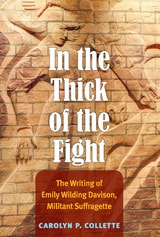
In the Thick of the Fight
The Writing of Emily Wilding Davison, Militant SuffragetteCarolyn P. Collette
University of Michigan Press, 2013
One of the most memorable images of the British women’s suffrage movement occurred on June 4, Derby Day, 1913. As the field of horses approached a turning at Epsom, militant suffragette Emily Wilding Davison ducked out from under the railing and ran onto the track, reaching for the bridle of the King’s horse, and was killed in the collision. While her death transformed her into a heroine, it all but erased her identity. To identify what impelled Davison to suffer multiple imprisonments, to experience the torture of force-feedings and the insults of hostile members of the crowds who came to hear her speak, Carolyn P. Collette explores a largely ignored source—the writing to which Davison dedicated so much time and effort during the years from 1908 to 1913. Davison’s writing is an implicit apologia for why she lived the life of a militant suffragette and where she continually revisits and restates the principles that guided her: that woman suffrage was necessary to improve the lives of men, women, and children; that the freedom and justice women sought was sanctioned by God and unjustly withheld by humans whose opposition constituted a tyranny that had to be opposed; and that the evolution of human progress demanded that women become fully equal citizens of their nation in every respect— politically, economically, and culturally.
In the Thick of the Fight makes available for the first time the archive of published and unpublished writings of Emily Wilding Davison. Collette reorients both scholarly and public attention away from a single, defining event to the complexity of Davison’s contributions to modern feminist discourse, giving the reader a sense of the vibrancy and diversity of Davison’s suffrage writings.
In the Time of Cannibals
The Word Music of South Africa's Basotho MigrantsDavid B. Coplan
University of Chicago Press, 1994
Coplan discusses every aspect of the Basotho musical literature, taking into account historical conditions, political dynamics, and social forces as well as the styles, artistry, and occasions of performance. He engages the postmodern challenge to decolonize our representation of the ethnographic subject and demonstrates how performance formulates local knowledge and communicates its shared understandings.
Complete with transcriptions of full male and female performances, this book develops a theoretical and methodological framework crucial to anyone seeking to understand the relationship between orality and literacy in the context of performance. This work is an important contribution to South African studies, to ethnomusicology and anthropology, and to performance studies in general.
In the Time of Trees and Sorrows
Nature, Power, and Memory in RajasthanAnn Grodzins Gold and Bhoju Ram Gujar
Duke University Press, 2002
Based on testimonies from the 1990s, this book stands as a polyvocal account of the radical political and environmental changes the region and its people have faced in the twentieth century. Not just the story of modernity from the perspective of a rural village, these interviews and author commentaries narrate this small rural community’s relatively sudden transformation from subjection to a local despot and to a remote colonial power to citizenship in a modern postcolonial democracy. Unlike other recent studies of Rajasthan, the current study gives voice exclusively to former subjects who endured the double oppression of colonial and regional rulers. Gold and Gujar thus place subjective subaltern experiences of daily routines, manifestations of power relations, and sweeping changes to the environment (after the fall of kings) that turned lush forests into a barren landscape on equal footing with historical “fact” and archival sources. Ambiguous, complex, and culturally laden as it is in Western thought, the concept of nature is queried in this ethnographic text. For persons in Sawar the environment is not only a means of sustenance, its deterioration is linked to human morality and to power, both royal and divine. The framing questions of this South Asian history revealed through memories are: what was it like in the time of kings and what happened to the trees?

In the Voice of Others
Chinese Music Bureau PoetryJoseph R. Allen
University of Michigan Press, 1992

In the Wake of Disaster
Religious Responses to Terrorism and CatastropheHarold G Koenig
Templeton Press, 2006
In a timely book with a powerful and persuasive message, Dr. Harold G. Koenig addresses federal, state, and local government policy leaders, urging them to more fully integrate religious organizations into the formal disaster response system, and he then provides recommendations on how this can effectively be done. Koenig also advocates faith communities and organizations to learn more about the role they can play in responding to disasters and terrorism.

In the Wake
On Blackness and BeingChristina Sharpe
Duke University Press, 2016
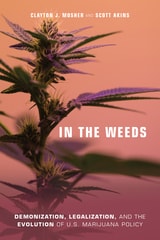
In the Weeds
Demonization, Legalization, and the Evolution of U.S. Marijuana PolicyClayton J. Mosher and Scott Aikins
Temple University Press, 2019
More and more states are legalizing marijuana in some form. Moreover, a majority of the U.S. population is in favor of the drug for recreational use. In the Weeds looks at how our society has become more permissive in the past 150 years—even though marijuana is still considered a Schedule I drug by the American government.
Sociologists Clayton Mosher and Scott Akins take a deep dive into marijuana policy reform, looking at the incremental developments and the historical, legal, social, and political implications of these changes. They investigate the effects, medicinal applications, and possible harms of marijuana. In the Weeds also considers arguments that youth will be heavy users of legalized cannabis, and shows how “weed” is demonized by exaggerations of the drug’s risks and claims of its lack of medicinal value. Mosher and Akins end their timely and insightful book by tracing the distinct paths to the legalization of recreational marijuana in the United States and other countries as well as discussing what the future of marijuana law holds.
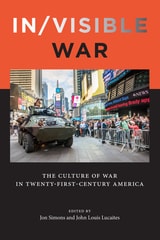
In/visible War
The Culture of War in Twenty-first-Century AmericaJon Simons and John Louis Lucaites
Rutgers University Press, 2017
Yet, the normalization of twenty-first century war also renders it highly visible. War is made visible through popular, commercial, mediated culture. The spectacle of war occupies the contemporary public sphere in the forms of celebrations at athletic events and in films, video games, and other media, coming together as MIME, the Military-Industrial-Media-Entertainment Network.

InDEBTed to Intervene
Critical Lessons in Debt, Communication, Art, and Theoretical PracticeOliver Vodeb and Nikola Janovic Kolenc
Intellect Books, 2013
Inaccessible Access
Rethinking Disability Inclusion in Academic Knowledge CreationKelly Fagan Robinson
Rutgers University Press, 2025
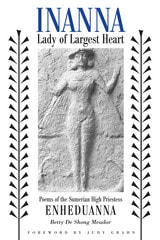
Inanna, Lady of Largest Heart
Poems of the Sumerian High Priestess EnheduannaBy Betty De Shong Meador
University of Texas Press, 2001
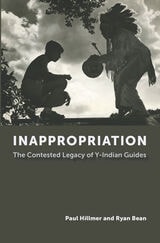
Inappropriation
The Contested Legacy of Y-Indian GuidesPaul Hillmer
University of Missouri Press, 2023
The Y-Indian Guides was a father-son (and later parent-child) program that encouraged real and enduring bonds through play and an authentic appreciation of family. While “playing Indian” seemed harmless to most participants during the program’s heyday, Paul Hillmer and Ryan Bean demonstrate the problematic nature of its methods. In the process of seeking to admire and emulate Indigenous Peoples, Y-Indian Guide participants often misrepresented American Indians and reinforced harmful stereotypes. Ultimately, this history demonstrates many ways in which American culture undermines and harms its Indigenous communities.
Inari Sámi Folklore
Stories from AanaarAugust V. Koskimies and Toivo I. Itkonen, revised by Lea Laitinen; Edited and translated by Tim Frandy
University of Wisconsin Press, 2020
First published in 1918 only in the Aanaar Sámi language and in Finnish, this anthology is now available in a centennial English-language edition for a global readership. Translator Tim Frandy has added biographies of the storytellers, maps and period photos, annotations, and a glossary. In headnotes that contextualize the stories, he explains such underlying themes as Aanaar conflicts with neighboring Sámi and Finnish communities, the collapse of the wild reindeer populations less than a century before, and the pre-Christian past in Aanaar. He introduces us to the bawdy humor of Antti Kitti, the didacticism of Iisakki Mannermaa, and the feminist leanings of Juho Petteri Lusmaniemi, emphasizing that folktales and proverbs are rooted in the experiences of individuals who are links in a living tradition.

Inauthentic
The Anxiety over Culture and IdentityVincent J. Cheng
Rutgers University Press, 2004
Modern and contemporary cultures are increasingly marked by an anxiety over a perceived loss of authentic cultural identity. In this book, Vincent J. Cheng examines why we still cling to notions of authenticity in an increasingly globalized world that has exploded notions of authentic essences and absolute differences.
Who is “authentic” and who is “other” in a given culture? Who can speak for the “other?” What do we mean by authenticity? These are critical questions that today’s world––brought closer together and yet pulled farther apart by globalism and neocolonialism––has been unable to answer. Inauthentic compellingly probes these issues through revealing case studies on the pursuit of authenticity and identity.
Each chapter explores the ways in which we construct “authenticity” in order to replace seemingly vacated identities, including: the place of minorities in academia; mixed-race dynamics; the popularity of Irish culture in America; the Good Friday agreement in Northern Ireland; Jewish American identity; the status of Jewish America in relation to Israel and Palestine; the cultural problems of international adoptions; and the rapidly changing nature of the Asian American population in the United States.
Inauthentic combines the scholarly and the personal, informed argument and human interest. It will undoubtedly appeal to academic scholars, as well as to a broader reading audience.

Incarceration Games
A History of Role-Play in Psychology, Prisons, and PerformanceStephen Scott-Bottoms
University of Michigan Press, 2024

Incarceration and Race in Michigan
Grounding the National Debate in State PracticeLynn O. Scott
Michigan State University Press, 2019
Incense and Performance
The Lives of Mexica Ritual SpecialistsSánchez-Perry, Josefrayn
University of Arizona Press, 2026
At the time of the conquest of Mexico, the anonymous authors of the Anales de Tlatelolco (1560s) recorded the deaths of two Mexica ritual specialists. During the tumultuous events of the times, Quauhnochtli (a telpochcalli specialist) and Quauhcoatl (a calmecac specialist) died protecting the temple of Huitzilopochtli and his bundled embodiement in the neighborhood of Huitznahuac.
Scholar Josefrayn Sánchez-Perry reconstructs the lives and labors of the two specialists, articulated through Nahuatl-language texts, material culture from neighborhood and temple spaces, and the academic study of religion. The book expands on known theories on Mexica ritual specialists by providing new insights about telpochcalli and calmecac duties, their interrelated educational models, and the collective practices that brought people, animals, flora, specialists, and teteo (more-than-human forces) together. The book demonstrates that telpochcalli and calmecac specialists shared the ritual responsibilities of collective and elective practices.
Giving care to teteo, giving life, and giving offerings were balanced with giving war, giving council, and giving music and dance. As Quauhnochtli and Quauhcoatl ensured the safety of the bundled Huitzilopochtli, they characterized how a Mexica ritual specialist lived and what they did.
Incidence of Travel
Recent Journeys in Ancient South AmericaJerry D. Moore
University Press of Colorado, 2017
In Incidence of Travel, archaeologist Jerry Moore draws on his personal experiences and historical and archaeological studies throughout South America to explore and understand the ways traditional peoples created cultural landscapes in the region. Using new narrative structures, Moore introduces readers to numerous archaeological sites and remains, describing what it is like to be in the field and sparking further reflection on what these places might have been like in the past.
From the snow-capped mountains of Colombia to the arid deserts of Peru and Chile, ancient peoples of South America built cities, formed earthen mounds, created rock art, and measured the cosmos—literally inscribing their presence and passage throughout the continent. Including experiences ranging from the terrifying to the amusing, Moore’s travels intersect with the material traces of traditional cultures. He refers to this intersection as "the incidence of travel." Braiding the tales of his own journeys with explanations of the places he visits through archaeological, anthropological, and historical contexts, Moore conveys the marvelous and intriguing complexities of prehistoric and historic peoples of South America and the ways they marked their presence on the land.
Combining travel narrative and archaeology in a series of essays—accounts of discoveries, mishaps of travel, and encounters with modern people living in ancient places—Incidence of Travel will engage any general reader, student, or scholar with interest in archaeology, anthropology, Latin American history, or storytelling.

Incidental Racialization
Performative Assimilation in Law SchoolYung-Yi Diana Pan
Temple University Press, 2017
Despite the growing number ofAsian American and Latino/a law students, many panethnic students still feel as if they do not belong in this elite microcosm, which reflects the racial inequalities in mainstream American society. While in law school, these students—often from immigrant families, and often the first to go to college—have to fight against racialized and gendered stereotypes. In Incidental Racialization, Diana Pan rigorously explores how systemic inequalities are produced and sustained in law schools.
Through interviews with more than 100 law students and participant observations at two law schools, Pan examines how racialization happens alongside professional socialization. She investigates how panethnic students negotiate their identities, race, and gender in an institutional context. She also considers how their lived experiences factor into their student organization association choices and career paths.
Incidental Racialization sheds light on how race operates in a law school setting for both students of color and in the minds of white students. It also provides broader insights regarding racial inequalities in society in general.
Inclusion in New Danish Cinema
Sexuality and Transnational BelongingMeryl Shriver-Rice
Intellect Books, 2015
Inclusion
The Politics of Difference in Medical ResearchSteven Epstein
University of Chicago Press, 2007
With Inclusion, Steven Epstein argues that strategies to achieve diversity in medical research mask deeper problems, ones that might require a different approach and different solutions.
Formal concern with this issue, Epstein shows, is a fairly recent phenomenon. Until the mid-1980s, scientists often studied groups of white, middle-aged men—and assumed that conclusions drawn from studying them would apply to the rest of the population. But struggles involving advocacy groups, experts, and Congress led to reforms that forced researchers to diversify the population from which they drew for clinical research. While the prominence of these inclusive practices has offered hope to traditionally underserved groups, Epstein argues that it has drawn attention away from the tremendous inequalities in health that are rooted not in biology but in society.
“Epstein’s use of theory to demonstrate how public policies in the health profession are shaped makes this book relevant for many academic disciplines. . . . Highly recommended.”—Choice
“A masterful comprehensive overview of a wide terrain.”—Troy Duster, Biosocieties
Inclusive Dance
The Story of Touchdown DanceKaty Dymoke
Intellect Books, 2023
Inclusive Dance offers a concise ethnography of disability arts and a historiographic overview of the field in the 1980s when many new disability arts groups emerged in the UK. It focuses in particular on the inclusive teaching modalities of Touchdown Dance, which was the work of dancer Steve Paxton and theater-maker and psychotherapist Anne Kilcoyne. It involved visually impaired and sighted adults in a dyadic movement form called Contact Improvisation. Katy Dymoke took over Touchdown Dance in 1994, and this book draws on archives, participant accounts, and personal experience to detail the work of Touchdown Dance and its effects on its participants since its founding. Three guests from Touchdown Dance contribute eyewitness accounts of the methods and performance projects.

Inclusive Play
Magic Commander and Community PracticeJohn Banks
University of Michigan Press, 2027
Magic: The Gathering, considered to be the first collectible trading card game, was conceived by Richard Garfield in 1991 and commercially released by Wizards of the Coast in 1993. Since then, Magic has exerted profound influence on hobbyist board gaming through its distinctive and innovative mechanics and practices of collecting cards from periodic set releases and deckbuilding for competitive play. Originating in the Magic player community, the Commander format became popular for casual play and a more inclusive style of social play. Like games cultures more broadly, Magic has been characterized by oppressions that exclude marginalized people.
Drawing on his research of the player community at his local game store in Brisbane, Australia; interviews with Sheldon Menery and members of the Commander Rules Committee and Advisory Group; and research in the field of game studies, John Banks considers how games like Commander can be approached and played more inclusively. Banks argues that there is an ethical dimension to how players approach inclusion. While not all games or communities embody inclusivity, Commander play has integral practices that exemplify virtuous play: an ethic of play rooted in respect, care, and community. Inclusive Play shows that games such as Commander are culturally significant as they provide opportunity for meaningful inclusive cultural change.
Incognegro
A Memoir of Exile and ApartheidFrank B. Wilderson III
Duke University Press, 2008

Income Volatility and Implications for Food Assistance Programs
Special Issue of Journal of Human Resources 38:Supplement (2003)John Karl Scholz
University of Wisconsin Press, 2010
These articles cover a wide range of topics related to income volatility and food assistance programs and evaluation of the safety net.
Incommunicable
Toward Communicative Justice in Health and MedicineCharles L. Briggs
Duke University Press, 2024
Inconstant Companions
Archaeology and North American Indian Oral TraditionsRonald J. Mason
University of Alabama Press, 2008
Inconstant Landscape
The Maya Kingdom of El Zotz, GuatemalaThomas G. Garrison
University Press of Colorado, 2020
In this volume, contributors address the challenges faced by smaller polities on the peripheries of powerful kingdoms and ask how subordination was experienced and independent policy asserted. Leading experts provide cutting-edge analysis in varied topics and detailed discussion of the development of this major site and the region more broadly. The first half of the volume contains a historical narrative of the cultural sequence of El Zotz, tracing the changes in occupation and landscape use across time; the second half provides deep technical analyses of material evidence, including soils, ceramics, stone tools, and bone.
The ever-changing, inconstant landscapes of peripheral kingdoms like El Zotz reveal much about their more dominant—and better known—neighbors. An Inconstant Landscape offers a comprehensive, multidisciplinary view of this important but under-studied site, an essential context for the study of the Classic Maya in Guatemala, and a premier reference on the subject of peripheral kingdoms at the height of Maya civilization.
Contributors: Timothy Beach, Nicholas Carter, Ewa Czapiewska-Halliday, Alyce de Carteret, William Delgado, Colin Doyle, James Doyle, Laura Gámez, Jose Luis Garrido López, Yeny Myshell Gutiérrez Castillo, Zachary Hruby, Melanie Kingsley, Sheryl Luzzadder-Beach, Cassandra Mesick Braun, Sarah Newman, Rony Piedrasanta, Edwin Román, and Andrew K. Scherer
Inconvenient Strangers
Transnational Subjects and the Politics of CitizenshipShui-yin Sharon Yam
The Ohio State University Press, 2019
Inconvenient Strangers: Transnational Subjects and the Politics of Citizenship draws attention to how intersecting networks of power—particularly race and ethnicity, gender, and social class—marginalize transnational subjects who find themselves outside a dominant citizenship that privileges familiarity and socioeconomic and racial superiority. In this study of how neoliberal ideas limit citizenship for marginalized populations in Hong Kong, Shui-yin Sharon Yam examines how three transnational groups—mainland Chinese maternal tourists, Southeast Asian migrant domestic workers, and South Asian permanent residents—engage with the existing citizenry and gain recognition through circulating personal narratives.
Coupling transnational feminist studies with research on emotions, Yam analyzes court cases, interviews, social media discourse, and the personal narratives of Hong Kong’s marginalized groups to develop the concept of deliberative empathy—critical empathy that prompts an audience to consider the structural sources of another’s suffering while deliberating one’s own complicity in it. Yam argues that storytelling and familial narratives can promote deliberative empathy among the audience as both a political and ethical response—carrying the affective power to jolt the dominant citizenry out of their usual xenophobic attitudes and ultimately prompt them to critically consider the human conditions they share with the marginalized and move them toward more ethical coalitions.
Incorporating the Digital Commons
Corporate Involvement in Free and Open Source SoftwareBenjamin J. Birkinbine
University of Westminster Press, 2020
The concept of ‘the commons’ has been used as a framework to understand resources shared by a community rather than a private entity, and it has also inspired social movements working against the enclosure of public goods and resources. One such resource is free (libre) and open source software (FLOSS). FLOSS emerged as an alternative to proprietary software in the 1980s. However, both the products and production processes of FLOSS have become incorporated into capitalist production. For example, Red Hat, Inc. is a large publicly traded company whose business model relies entirely on free software, and IBM, Intel, Cisco, Samsung, Google are some of the largest contributors to Linux, the open-source operating system. This book explores the ways in which FLOSS has been incorporated into digital capitalism. Just as the commons have been used as a motivational frame for radical social movements, it has also served the interests of free-marketeers, corporate libertarians, and states to expand their reach by dragging the shared resources of social life onto digital platforms so they can be integrated into the global capitalist system.
The book concludes by asserting the need for a critical political economic understanding of the commons that foregrounds (digital) labour, class struggle, and uneven power distribution within the digital commons as well as between FLOSS communities and their corporate sponsors.
Incorporations
Race, Nation, and the Body Politics of CapitalEva Cherniavsky
University of Minnesota Press, 2006
An exploration of race, Hollywood, and the commodification of the body
Incorporations offers a new way of thinking about issues of race, bodies, and commodity culture. Moving beyond the study of identity and difference in media, Eva Cherniavsky asserts that race can be understood as a sign of the body’s relation to capital.
In Incorporations, Cherniavsky interrogates the interplay of nationalism, colonialism, and capitalism in the production of racial embodiment. Testing the links between race and capital, Incorporations examines how media culture transmutes white bodies into commodity-images in such films as Blonde Venus, A Touch of Evil, and Fargo, in the television series The Simpsons, and in the fiction of Octavia Butler and Leslie Marmon Silko. Cherniavsky posits an innovative approach to whiteness studies that does not focus on the emancipatory possibilities of cross-racial identification.Working with the tools of critical race theory as well as postcolonial and cultural studies, Cherniavsky demonstrates how representations of racial embodiment have evolved, and suggests that “race” is the condition of exchangeable bodies under capital.
Incorrigibles and Innocents
Constructing Childhood and Citizenship in Progressive Era ComicsSaguisag, Lara
Rutgers University Press, 2019
Histories and criticism of comics note that comic strips published in the Progressive Era were dynamic spaces in which anxieties about race, ethnicity, class, and gender were expressed, perpetuated, and alleviated. The proliferation of comic strip children—white and nonwhite, middle-class and lower class, male and female—suggests that childhood was a subject that fascinated and preoccupied Americans at the turn of the century. Many of these strips, including R.F. Outcault’s Hogan’s Alley and Buster Brown, Rudolph Dirks’s The Katzenjammer Kids and Winsor McCay’s Little Nemo in Slumberland were headlined by child characters. Yet no major study has explored the significance of these verbal-visual representations of childhood. Incorrigibles and Innocents addresses this gap in scholarship, examining the ways childhood was depicted and theorized in late nineteenth- and early twentieth-century comic strips. Drawing from and building on histories and theories of childhood, comics, and Progressive Era conceptualizations of citizenship and nationhood, Lara Saguisag demonstrates that child characters in comic strips expressed and complicated contemporary notions of who had a right to claim membership in a modernizing, expanding nation.
Indebted Mobilities
Indian Youth, Migration, and the Internationalizing UniversitySusan Thomas
University of Chicago Press, 2024
As states have reduced funding to public universities, many of those institutions have turned to overseas students as a vital, alternative source of revenue. Students from India have especially been seen as among the most desirable populations, as they’re typically fluent in English and overwhelmingly enroll in professional fields deemed critical to the knowledge economy. The large numbers of these youth migrating for their education tend to be viewed as a shining example of the value of the contemporary global university and how it enables ambitious people to secure opportunities not available to them in their home nation.
However, a deeper examination of these young people’s encounters reveals a more complicated story than glossy brochures and paeans to American higher education would suggest. Indebted Mobilities draws on Susan Thomas’s close shadowing of a group of middle-class Indian migrant men who attended a public university in New York just as the institution sought to “internationalize” its campus in the wake of ongoing withdrawal of state funding. Thomas takes the reader along with the young men as they study, work, and socialize, pursuing the successful futures they believed to be promised when they migrated for an American education. All the while, they must face their marginalization as they become enmeshed in the fraught inclusion politics of contemporary university life in the United States. At the heart of these encounters is these students’ relationship to debt—not just material ones that include student loans, but moral and affective debts as well. This indebtedness, which keeps them tied to both India and the United States, is meaningful to how Indian middle-class men make sense of their experiences as student-migrants. These youth long to be modern “men of the world.” Yet Thomas illuminates how the complex realities that arise for them, informed by the logic of US exceptionalism, force a reckoning with their anxieties about successful masculinities and the precarity of being drawn into the global knowledge economy as indebted migrants.

Indecomposable Continuum
Topology and the Arts in JapanSteven C. Ridgely
University of Minnesota Press, 2027
Locating the diffusion of mathematical concepts into modern literature, experimental music, and critical theory in twentieth-century Japan
In Indecomposable Continuum, Steven C. Ridgely explores where theoretical mathematics meets culture in twentieth-century Japan, tracing how concepts from relativity theory and topology migrated into Japanese art and literature. Through readings of avant-garde fiction, experimental sound practices, and postmodern theory, Ridgely demonstrates how topology became a language for rethinking space and perception.
Ridgely focuses on abstract models such as the Klein bottle, non-Euclidean geometry, and the Lakes of Wada to reveal how Japanese artists and intellectuals like Yuasa Jōji, Inagaki Taruho, and Asada Akira transformed difficult mathematical ideas into powerful aesthetic and social imaginaries in surprising and clever ways. Rather than treating mathematics as separate from cultural studies, Ridgely positions topology itself as a cultural form whose abstractions generated new possibilities for artistic creation and theoretical inquiry in music, novels, and popular media.
Indecomposable Continuum demonstrates how Japanese artists made seemingly impossible abstractions accessible and compelling, revealing the unexpected creativity that emerged when modern mathematics entered the cultural sphere. In doing so, the book offers a fresh perspective on the relationship between scientific thought and artistic modernism in Japan.
Retail e-book files for this title are screen-reader friendly with images accompanied by short alt text and/or extended descriptions.
Indelible Inequalities in Latin America
Insights from History, Politics, and CulturePaul Gootenberg and Luis Reygadas, eds.
Duke University Press, 2010
Contributors
Jeanine Anderson
Javier Auyero
Odette Casamayor
Christina Ewig
Paul Gootenberg
Margaret Gray
Eric Hershberg
Lucio Renno
Luis Reygadas
Indenture Aesthetics
Afro-Indian Femininities and the Queer Limits of South African BlacknessJordache A. Ellapen
Duke University Press, 2025

Independent Stardom
Freelance Women in the Hollywood Studio SystemBy Emily Carman
University of Texas Press, 2015
Bringing to light an often-ignored aspect of Hollywood studio system history, this book focuses on female stars who broke the mold of a male-dominated, often manipulative industry to dictate the path of their own careers through freelancing.
Runner-up, Richard Wall Memorial Award, Theatre Library Association, 2016
During the heyday of Hollywood’s studio system, stars were carefully cultivated and promoted, but at the price of their independence. This familiar narrative of Hollywood stardom receives a long-overdue shakeup in Emily Carman’s new book. Far from passive victims of coercive seven-year contracts, a number of classic Hollywood’s best-known actresses worked on a freelance basis within the restrictive studio system. In leveraging their stardom to play an active role in shaping their careers, female stars including Irene Dunne, Janet Gaynor, Miriam Hopkins, Carole Lombard, and Barbara Stanwyck challenged Hollywood’s patriarchal structure.
Through extensive, original archival research, Independent Stardom uncovers this hidden history of women’s labor and celebrity in studio-era Hollywood. Carman weaves a compelling narrative that reveals the risks these women took in deciding to work autonomously. Additionally, she looks at actresses of color, such as Anna May Wong and Lupe Vélez, whose careers suffered from the enforced independence that resulted from being denied long-term studio contracts. Tracing the freelance phenomenon among American motion picture talent in the 1930s, Independent Stardom rethinks standard histories of Hollywood to recognize female stars as creative artists, sophisticated businesswomen, and active players in the then (as now) male-dominated film industry.

Independent Women
Work and Community for Single Women, 1850-1920Martha Vicinus
University of Chicago Press, 1985
"Feminist insight combines with vast research to produce a dramatic narrative. Independent Women chronicles the energetic lives and imaginative communal structures invented by women who 'pioneered new occupations, new living conditions, and new public roles.'"—Lee R. Edwards, Ms.
"Vicinus is to be congratulated for her brave and unflinching portraits of twisted spinsters as well as stolid saints. That she stretches her net up into the '20s and covers the women's suffrage momement is a brilliant stroke, for one may see clearly how it was possible for women to mount such an enormous and successful political campaign."—Jane Marcus, Chicago Tribune Book World
"Vicinus' beautifully written book abounds in rich historical detail and in subtle psychological insights in the character of its protagonists. The author understands the complexities of the interplay between economic and social conditions, cultural values, and the aims and aspirations of individual personalities who act in history. . . . A superb achievement."—Gerda Lerner, Reviews in American History
"Martha Vicinus has with intelligence and energy paved and landscaped the road on which scholars and students of activist women all travel for many years."—Blanche Wiesen Cook, Women's Review of Books
"Independent Women can be read by anyone with an interest in women's history. But for all contemporary women, unconsciously enjoying privileges and freedoms once bought so dearly, this book should be required reading."—Catharine E. Boyd, History
Independent for Life
Homes and Neighborhoods for an Aging AmericaEdited by Henry Cisneros, Margaret Dyer-Chamberlain, and Jane Hickie
University of Texas Press, 2012
Do you want to age independently in your own home and neighborhood? Staying home, aging in place, is most people's preference, but most American housing and communities are not adapted to the needs of older people. And with the fastest population growth among people over 65, finding solutions for successful aging is important not only for individual families, but for our whole society. In Independent for Life, former HUD Secretary Henry Cisneros and a team of experts on aging, architecture, construction, health, finance, and politics assess the current state of housing and present new possibilities that realistically address the interrelated issues of housing, communities, services, and financial concerns.
Independent for Life covers a wide range of smart solutions, including remodeling current housing and building new homes for accessibility and safety, retrofitting existing neighborhoods to connect needed services and amenities, and planning new communities that work well for people of all ages. Case studies show how the proposals can be implemented. The authors offer action plans for working with policy makers at local, state, and national levels to address the larger issues of aging in place, including family financial security, real estate markets, and the limitations of public support. Lists of essential resources, including a detailed "to do" list of aging in place priorities and an individual home assessment, complete the volume.
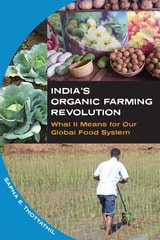
India's Organic Farming Revolution
What It Means for Our Global Food SystemSapna E. Thottathil
University of Iowa Press, 2014
Sapna Thottathil calls on us to rethink the politics of organic food by focusing on what it means for the people who grow and sell it—what it means for their health, the health of their environment, and also their economic and political well-being. Taking readers to the state of Kerala in southern India, she shows us a place where the so-called “Green Revolution” program of hybrid seeds, synthetic fertilizers, and rising pesticide use had failed to reduce hunger while it caused a cascade of economic, medical, and environmental problems. Farmers burdened with huge debts from buying the new seeds and chemicals were committing suicide in troubling numbers. Farm laborers suffered from pesticide poisoning and rising rates of birth defects. A sharp fall in biodiversity worried environmental activists, and everyone was anxious about declining yields of key export crops like black pepper and coffee.
In their debates about how to solve these problems, farmers, environmentalists, and policymakers drew on Kerala’s history of and continuing commitment to grassroots democracy. In 2010, they took the unprecedented step of enacting a policy that requires all Kerala growers to farm organically by 2020. How this policy came to be and its immediate economic, political, and physical effects on the state’s residents offer lessons for everyone interested in agriculture, the environment, and what to eat for dinner. Kerala’s example shows that when done right, this kind of agriculture can be good for everyone in our global food system.
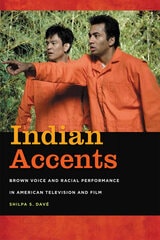
Indian Accents
Brown Voice and Racial Performance in American Television and FilmShilpa S. Dave
University of Illinois Press, 2013
Indian Assimilation in the Franciscan Area of Nueva Vizcaya
William B. Griffen
University of Arizona Press, 1979
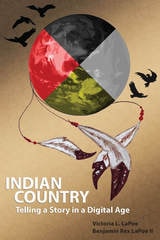
Indian Country
Telling a Story in a Digital AgeVictoria L. LaPoe
Michigan State University Press, 2017
Indian Enough
EssaysPaul Chaat Smith
University of Minnesota Press, 2027
An acerbic, candid reckoning with Indigenous identity, visibility, and the messy realities of cultural change
In Indian Enough, curator and critic Paul Chaat Smith probes the paradox of contemporary Indigeneity: enormous, hard-won cultural visibility in museum exhibits, land acknowledgments, mascot removals, and more alongside persistent erasure in everyday life. Rejecting the easy comforts of identity politics (he was, he admits, a fan of the Land O’Lakes Butter Maiden), Smith brings “honest confusion” to his inquiry, using sharp wit and wry humor to confront the gap between symbolism and lived reality.
Both memoir and cultural critique, Indian Enough follows Smith from a suburban childhood in Washington, D.C., filled with Kurt Vonnegut and Vine Deloria Jr., through teenage years steeped in Native politics leading to a thrilling and eventually disillusioning stint with the American Indian Movement, to his pivotal role in creating the inaugural exhibitions at the National Museum of the American Indian. His insider account of NMAI exposes how well-meaning efforts to redress Native erasure can simply swap one set of stereotypes for another, and his candor shows how institutions and activists—himself included—all grapple with the tension between good intentions and political realities.
Irreverent and searching, Indian Enough tackles culture writ large—the rise of punk and the fall of AIM, pop culture as a battleground, Indigenous slaveowners and other histories we’d rather forget, MAGA Indians, and what it means to win when the ground keeps shifting. Together these essays reveal a truth that’s hard to reconcile in an era of “progress”: representation is everywhere, certainty is not.
Retail e-book files for this title are screen-reader friendly with images accompanied by short alt text and/or extended descriptions.
Indian Given
Racial Geographies across Mexico and the United StatesMaría Josefina Saldaña-Portillo
Duke University Press, 2016