Results by title
28164 books match the query 'History' and 997 start with i
In the Neighborhood
Women's Publication in Early AmericaCaroline Wigginton
University of Massachusetts Press, 2016
Winner of the 2018 Early American Literature Book Prize
In this compelling and original book, Caroline Wigginton reshapes our understanding of early American literary history. Overturning long-standing connections between the male-dominated print culture of pamphlets, broadsides, and newspapers and the transformative ideas that instigated the American Revolution, Wigginton explores how women's “relational publications”—circulated texts, objects, and performances—transformed their public and intimate worlds. She argues that Native, black, and white women's interpersonal "publications" revolutionized the dynamics of power and connection in public and private spaces, whether those spaces were Quaker meeting houses, Creek talwas, trading posts, burial grounds, or the women's own "neighborhoods."
Informed by deep and rich archival research, Wigginton's case studies explore specific instances of “relational publication.” The book begins with a pairing of examples—the statement a grieving Lenape mother made through a wampum belt and the political affiliations created when a salon hostess shared her poetry. Subsequent chapters trace a history of women's publication practice, including a Creek woman's diplomatic and legal procession-spectacles in the colonial Southeast, a black mother's expression of protest in Newport, Rhode Island, and the resulting evangelical revival, Phillis Wheatley's elegies that refigured neighborhoods of enslaved and free Bostonians, and a Quaker woman's pious and political commonplace book in Revolutionary Philadelphia.

In the Nineties
John Stokes
University of Chicago Press, 1990
Spurning fixed boundaries, Stokes relates the controversial topics of the day—the status of the "New Journalism," the "degenerative" influence of Impressionist painting, the dubious morality of the music hall, the urgent need for prison reform, and the prevalence of suicide—to primary literary texts, such as The Ballad of Reading Gaol, The Importance of Being Earnest, Jude the Obscure, and Portrait of a Lady. And in the process, he explores crucial areas of sociological and psychological interest: criminality, sexuality, madness, and "morbidity."
Each of the book's six chapters opens with a look at the correspondence columns of daily newspapers and goes on, with a keen eye for the hidden link, to pursue a particular theme. Locations shift from Leicester Square and the Thames embankment to the Normandy coast and the Paris morgue and feature, along with famous names, a lesser known company of acrobats, convicts, aesthetes, "philistines," and mysterious suicides.
Nearly a century later, John Stokes's unrivalled knowledge of how the arts actually functioned in the nineties makes this book a major contribution to modern cultural studies.
In the Palace of Nezahualcoyotl
Painting Manuscripts, Writing the Pre-Hispanic Past in Early Colonial Period Tetzcoco, MexicoBy Eduardo de J. Douglas
University of Texas Press, 2010
Around 1542, descendants of the Aztec rulers of Mexico created accounts of the pre-Hispanic history of the city of Tetzcoco, Mexico, one of the imperial capitals of the Aztec Empire. Painted in iconic script ("picture writing"), the Codex Xolotl, the Quinatzin Map, and the Tlohtzin Map appear to retain and emphasize both pre-Hispanic content and also pre-Hispanic form, despite being produced almost a generation after the Aztecs surrendered to Hernán Cortés in 1521. Yet, as this pioneering study makes plain, the reality is far more complex.
Eduardo de J. Douglas offers a detailed critical analysis and historical contextualization of the manuscripts to argue that colonial economic, political, and social concerns affected both the content of the three Tetzcocan pictorial histories and their archaizing pictorial form. As documents composed by indigenous people to assert their standing as legitimate heirs of the Aztec rulers as well as loyal subjects of the Spanish Crown and good Catholics, the Tetzcocan manuscripts qualify as subtle yet shrewd negotiations between indigenous and Spanish systems of signification and between indigenous and Spanish concepts of real property and political rights. By reading the Tetzcocan manuscripts as calculated responses to the changes and challenges posed by Spanish colonization and Christian evangelization, Douglas's study significantly contributes to and expands upon the scholarship on central Mexican manuscript painting and recent critical investigations of art and political ideology in colonial Latin America.
In the Path of the Storms
Bayou La Batre, Coden, and the Alabama CoastFrye Gaillard
University of Alabama Press, 2008
A Powerful Portrait of Resilience, Heritage, and Change on Alabama's Gulf Coast.
The Gulf Coast villages of Bayou La Batre and Coden are two of Alabama’s most distinctive, with roots going back to the French settlements of the 18th century. For generations, the proud inhabitants of these communities have extracted their modest livings from the sea, sustained by a lesson handed down over time— that providing for the needs of one’s family is the only true measure of success. But the world has changed drastically for them. A global economy of higher gas prices and cheap imported seafood has threatened the lifeblood of the area. And in recent years a rash of hurricanes, culminating with Hurricane Katrina, has battered the hopes and dreams of these Bayou towns.
But they have known hard times and massive changes before. In the 1970s, refugees from Vietnam, Cambodia, and Laos flooded into the area and within a few years made up a third of the local population. Three Buddhist temples soon took their places among the Catholic, Baptist, and Pentecostal churches that predominated, and for a time the different ethnic groups coexisted in a kind of uneasy peace. But now they are learning to pull together in an uncertain struggle to rebuild their communities.
In the Path of the Storms is a powerful portrait in words and photographs of a unique and unforgettable place. It is a story of tradition, and forces of change, and the epic struggle of these Gulf Coast communities to survive and thrive.

In the Philippines and Okinawa
A Memoir, 1945-1948William S. Triplet & Edited by Robert H. Ferrell
University of Missouri Press, 2001
In the Philippines and Okinawa, the third volume of Colonel William S. Triplet's memoirs, tells of Triplet's experiences during the American occupations in the early years after World War II. Continuing the story from the preceding books of his memoirs, A Youth in the Meuse-Argonne and A Colonel in the Armored Divisions, Triplet takes us to the Philippines, where his duties included rounding up isolated groups of Japanese holdouts, men who refused to believe or admit that their nation had lost the war, and holding them until the time came to transport them back to Japan.
Triplet also had to reorganize his battalions and companies to raise morale, which had plummeted with the end of the war and the seemingly dull tasks of occupation. When he took over his assignment of commanding a regiment in a division, he was dismayed to discover the unmilitary habits of almost everyone, regardless of rank. A strict disciplinarian himself, Colonel Triplet, who had served in both world wars, at one time commanding a four-thousand-man combat group, brought his regiment of garrison troops back into shape in a short time.
Okinawa presented the new challenge of bringing order to an island that had seen the deaths of one hundred thousand civilians. Virtually every building on the island had been leveled, and tens of thousands of Japanese defenders had been killed. Triplet was also obliged to oversee the temporary burial of thirteen thousand U.S. servicemen, both soldiers and sailors.
In the Philippines and Okinawa portrays the ever-changing, very human, and frequently dangerous occupation of two East Asian regions that are still important to American foreign policy. Any reader interested in military history or American history will find this memoir engaging.
In the Place of Origins
Modernity and Its Mediums in Northern ThailandRosalind C. Morris
Duke University Press, 2000
Through her careful examination of the transformations of spirit mediumship wrought by the mass media, Morris takes readers into the world of the northern Thai past to discover the anticipations of future histories. In this process, she finds new objects for anthropological inquiry, including romantic love and epistolary poetry. She then turns her eye toward the relationships between commodification and prosaic form and photography and the discourses of gendered and national identity. Attending to these issues as they manifest themselves in the practices of mediums, Morris describes both the mundane activities of spirit mediums and the grand ambitions to political authority that are embodied in the increasingly spectacular forms of possession that are becoming so popular with both tourists and local culture brokers. In the Place of Origins traverses this ground with accounts of right-wing militarism and ritual revival during the 70s, and of the democracy movement of 1992, when a global mass media was galvanized by images of military repression and the spectacle of traditional ritual power in cursing. Finally, considering the claims that mediums make to magical power in the face of both AIDS and the Asian economic crisis, Morris reveals the potency of extrajudicial forms of power and violence in the late modern era.
This provocative study will interest anthropologists, historians, Asianists, and those involved in gender, performance, media, and literary studies.

In the Presence of Gods and Spirits
Hirata Atsutane and His CollaboratorsAnne Walthall
University of Michigan Press, 2025
In the Realm of Nachan Kan
Postclassic Maya Archaeology at Laguna De On, BelizeMarilyn A. Masson
University Press of Colorado, 2000
In the Realm of Nachan Kan opens a window on Postclassic Maya patterns of cultural development and organization through a close examination of the small rural island of Laguna de On, a location that was distant from the governing political centers of the day. Using diachronic analysis of regional settlement patterns, ceramic traditions, household and ritual features, and artifacts from the site, Masson tracks developmental changes throughout the Postclassic period. These data suggest that affluent patterns of economic production and local and long-distance exchange were established within northern Belize by the eleventh century, and continued to develop, virtually uninterrupted, until the time of Spanish arrival.
In addition, Masson analyzes contemporary political and religious artistic traditions at the temples of Mayapan, Tulum, and Santa Rita to provide a regional context for the changes in community patterns at Laguna de On. These cultural changes, she maintains, are closely correlated with the rise of Mayapan to power and participation of sites like Laguna de On in a pan-lowland economic and ritual interaction sphere. Offering a thoroughly new interpretation of Postclassic Mayan civilization. In the Realm of Nachan Kan is a must for scholars of Mesoamerican history and culture.
In the Realms of Gold
Pioneering in African HistoryRoland Oliver
University of Wisconsin Press, 1997
In the Realms of Gold is Oliver’s account of his life and work. He writes in a deft and lively style about the circumstances of his early life that shaped his education and outlook: his childhood on a river houseboat in Kashmir, the influential teachers and friends met at Stowe and Cambridge, and his service in World War II as a cryptographer in British intelligence, where he met his first wife, Caroline Linehan. His interest in church history while at Cambridge led him to study the historical effects of Christian missionaries in Africa, and thus his career began.
The core of the book is Oliver’s account of his research travels throughout tropical Africa from the 1940s to the 1980s; his efforts to train and foster African graduate students to teach in African universities; his role in establishing conferences and journals to bring together the work of historians and archaeologists from Europe and Africa; his encounters with political and religious leaders, scholars, soldiers, and storytellers; and the political and economic upheavals of the continent that he witnessed.

In the Shade of the Pine
Artists, Writers, and Trees in America, 1825-1876Christiana Payne
University of Arkansas Press, 2026
In the Shade of the Pine: Artists, Writers, and Trees in America, 1825–1876 explores the significance of trees in the visual and literary imagination of mid-nineteenth-century America through the work of seven artists and writers: Thomas Cole’s explorations of the Catskills; Albert Bierstadt’s portrayal of the splendid trees of California, including the ancient giant sequoias; the paintings and drawings of Asher Brown Durand and Frederic Edwin Church; the photographs of William James Stillman; and the environmental writings of Susan Fenimore Cooper and Henry David Thoreau.
This richly illustrated volume shows the unique influence the ecology of their land had on the emotional and intellectual landscapes of a generation. In their careful study of the woods—the beauty of trees, their practical importance to human beings and other living creatures, and the power of the forest to confer spiritual and emotional benefits—these artists and writers laid the groundwork for an ecological consciousness that remains vitally relevant today.
In the Shadow of Cortés
Conversations Along the Route of ConquestKathleen Ann Myers
University of Arizona Press, 2015
Following the route of Hernán Cortés, In the Shadow of Cortés offers a visual and cultural history of the legacy of contact between Spaniards and indigenous civilizations. The book is a reflective journey that presents a diversity of voices, images, and ideas about history and conquest. Specialist in Mexican culture Kathleen Ann Myers teams up with prize-winning translators and photographers to offer a unique reading experience that combines accessible interpretative essays with beautifully translated interviews and dozens of historical and contemporary black-and-white and color images, including some by award-winner Steven Raymer. The result offers readers multiple perspectives on these pivotal events as imagined and re-envisioned today by Mexicans both in their homeland and in the United States.
In the Shadow of Cortés offers an extensive visual narrative about conquest and, ultimately, about Mexican history. It traces the symbolic geography of the conquest and shows how the historical memory of colonialism continues to shape lives today.

In the Shadow of Diagnosis
Psychiatric Power and Queer LifeRegina Kunzel
University of Chicago Press, 2024
In the mid-twentieth century, American psychiatrists proclaimed homosexuality a mental disorder, one that was treatable and amenable to cure. Drawing on a collection of previously unexamined case files from St. Elizabeths Hospital, In the Shadow of Diagnosis explores the encounter between psychiatry and queer and gender-variant people in the mid- to late-twentieth-century United States. It examines psychiatrists’ investments in understanding homosexuality as a dire psychiatric condition, a judgment that garnered them tremendous power and authority at a time that historians have characterized as psychiatry’s “golden age.” That stigmatizing diagnosis made a deep and lasting impact, too, on queer people, shaping gay life and politics in indelible ways. In the Shadow of Diagnosis helps us understand the adhesive and ongoing connection between queerness and sickness.

In the Shadow of Diagnosis
Psychiatric Power and Queer LifeRegina Kunzel
University of Chicago Press, 2024
A look at the history of psychiatry’s foundational impact on the lives of queer and gender-variant people.
In the mid-twentieth century, American psychiatrists proclaimed homosexuality a mental disorder, one that was treatable and amenable to cure. Drawing on a collection of previously unexamined case files from St. Elizabeths Hospital, In the Shadow of Diagnosis explores the encounter between psychiatry and queer and gender-variant people in the mid- to late-twentieth-century United States. It examines psychiatrists’ investments in understanding homosexuality as a dire psychiatric condition, a judgment that garnered them tremendous power and authority at a time that historians have characterized as psychiatry’s “golden age.” That stigmatizing diagnosis made a deep and lasting impact, too, on queer people, shaping gay life and politics in indelible ways. In the Shadow of Diagnosis helps us understand the adhesive and ongoing connection between queerness and sickness.
In the Shadow of Empire
Art in Occupied JapanAlicia Volk
University of Chicago Press, 2025
Alicia Volk brings to light a significant body of postwar Japanese art, exploring how it accommodated and resisted the workings of the American empire during the early Cold War. Volk’s groundbreaking account presents the points of view of Japanese artists and their audiences under American occupation and amid the ruins of war. Each chapter reveals how artists embraced new roles for art in the public sphere—at times by enacting radical critiques of established institutions, values, and practices—and situates a range of compelling art objects in their intersecting artistic and political worlds.
Centering on the diverse and divisive terrain of Japanese art between 1945 and 1952, In the Shadow of Empire creates a fluid map of relationality that brings multiple Cold War spheres into dialogue, stretching beyond US-occupied Japan to art from China, Europe, the Soviet Union, and the United States, and demonstrates the rich potential of this transnational site of artmaking for rethinking the history of Japanese and global postwar art.
In the Shadow of Empire
Israel and Judah in the Long Sixth Century BCEPamela Barmash
SBL Press, 2021
Empires Come and Go, Homelands Never
Readers of the Hebrew Bible know the basic story line: during the early sixth century BCE the Babylonian ruler Nebuchadnezzar sacked Jerusalem, deported a portion of the population to Mesopotamia, and triggered a crisis of faith in the minds of prophets, priests, and liturgists that still echoes through the centuries. Though many Judahites chose to make their way home under Persian imperial control, the straightforward biblical story of exile and return masks many complex issues of evidence and fact. Unlike previous studies that focused narrowly on the Babylonian exile of the Judahite elites, this volume widens the geographical and temporal scope to include the Assyrian, Babylonian, and Persian Empires. Improved access to and understanding of relevant texts, iconography, and material culture provide an opportunity for scholars to reappraise methods of imperial control and the responses of those in exile and under occupation. Contributors Pamela Barmash, Ryan P. Bonfiglio, Caralie Cooke, Lisbeth S. Fried, Martien A. Halvorson-Taylor, Mark W. Hamilton, Matt Waters, and Ian D. Wilson lay a firm foundation for future work on the long sixth century.
In the Shadow of Freedom
The Politics of Slavery in the National CapitalPaul Finkelman
Ohio University Press, 2011
Few images of early America were more striking, and jarring, than that of slaves in the capital city of the world’s most important free republic. Black slaves served and sustained the legislators, bureaucrats, jurists, cabinet officials, military leaders, and even the presidents who lived and worked there. While slaves quietly kept the nation’s capital running smoothly, lawmakers debated the place of slavery in the nation, the status of slavery in the territories newly acquired from Mexico, and even the legality of the slave trade in itself.
This volume, with essays by some of the most distinguished historians in the nation, explores the twin issues of how slavery made life possible in the District of Columbia and how lawmakers in the district regulated slavery in the nation.
Contributors: David Brion Davis, Mary Beth Corrigan, A. Glenn Crothers, Jonathan Earle, Stanley Harrold, Mitch Kachun, Mary K. Ricks, James B. Stewart, Susan Zaeske, David Zarefsky
In the Shadow of Hitler
Alabama's Jews, the Second World War, and the HolocaustDan J. Puckett
University of Alabama Press, 2014
In this extensive study of how southern Jews in the United States responded to the Nazi persecution of European Jews, Dan J. Puckett recounts the divisions between Alabama Jews in the early 1930s. As awareness of the horrors of the Holocaust spread, Jews across Alabama from different backgrounds and from Reform, Conservative, and Orthodox traditions worked to bridge their internal divisions in order to mount efforts to save Jewish lives in Europe. Only by leveraging their collective strength were Alabama’s Jews able to sway the opinions of newspaper editors, Christian groups, and the general public as well as lobby local, state, and national political leaders.
Puckett’s comprehensive analysis is enlivened and illustrated by true stories that will fascinate all readers of southern history. One such story concerns the Altneuschule Torah of Prague and describes how the Nazis, during their brutal occupation of Czechoslovakia, confiscated 1,564 Torahs and sacred Judaic objects from communities throughout Bohemia and Moravia as exhibits in a planned museum to the extinct Jewish race. Recovered after the war by the Czech Memorial Scrolls Trust, the Altneuschule Torah was acquired in 1982 by the Orthodox congregation Ahavas Chesed of Mobile. Ahavas Chesed re-consecrated the scroll as an Alabama memorial to Czech Jews who perished in Nazi death camps.
In the Shadow of Hitler illustrates how Alabama’s Jews, in seeking to influence the national and international well-being of Jews, were changed, emerging from the war period with close cultural and religious cooperation that continues today.

In the Shadow of Jane Addams
Hull-House and Planning in a Working-Class NeighborhoodAnn Durkin Keating and Rima Lunin Schultz
University of Illinois Press, 2027
The authors focus on five plans proposed between 1889 and 1961 by Hull-House, the US government, the Chicago Plan Commission, residents, and finally the 1961 University of Illinois plan that destroyed the existing neighborhood. Proposals often expected residents to leave while eliminating the diversity of people, industries, and businesses in favor of the homogeneity favored by the middle and upper classes. At the same time, other plans tried but failed to improve the Near West Side’s inadequate housing, environmental conditions, and poor access to social services. Keating and Schultz also show how the definition of urban planning changed over time and how it impacted ideas for the neighborhood.
Detailed and perceptive, In the Shadow of Jane Addams explores how power, policy, and local voices shaped urban neighborhoods in Chicago and across the United States.
In the Shadow of Marriage
Gender and Justice in an African CommunityAnne M. O. Griffiths
University of Chicago Press, 1997
Griffiths's analysis is based on careful observation of how people actually experience the law as well as the more standard tools of statutes and cases familiar to Western legal scholars. She explains how women's access to law is determined by social relations over which they have little control. In this powerful feminist critique of law and anthropology, Griffiths shows how law and custom are inseparable for Kwena women. Both colonial common law and customary law pose comparable and constant challenges to Kwena women's attempts to improve their positions in society.
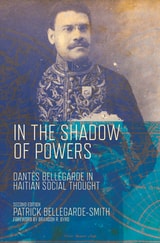
In the Shadow of Powers
Dantes Bellegarde in Haitian Social ThoughtPatrick Bellegarde-Smith
Vanderbilt University Press, 2019
Throughout much of the twentieth century and even to this day, there has been a dearth of scholarship on the intellectual and political contributions of Haitians. In the Shadow of Powers, first published in 1985, was a corrective to this oversight and remains a foundational text. Bellegarde-Smith traces the history of Haiti through the life and career of his grandfather Dantès Bellegarde, one of Haiti's influential diplomats and preeminent thinkers. As Brandon R. Byrd describes in his foreword to this new edition, "Bellegarde was driven by a subversive, racially inclusive vision of civilized progress. He believed in and continued to push for Haiti to establish an existence for itself, black people, and the colonized world independent of the considerable shadow cast by the world's military, economic, and industrial powers." Scholars and students who want to learn about the intellectual and political foundations of Haiti, its influence on other intellectuals worldwide, and its struggles against imperialism continue to find this to be an invaluable classic.

In the Shadow of Salem
The Andover Witch Hunt of 1692Richard Hite
Westholme Publishing, 2024
By July 1692, the witch hunt surrounding the town of Salem and Salem Village had been raging for four months. The Massachusetts Bay colony’s new governor, William Phips, had established a special court to try the suspected witches and the trials were well under way. No new arrests had taken place for nearly six weeks and residents had every reason to believe the crisis soon would be over. However, a middle-aged woman in nearby Andover lay gravely ill. Her husband suspected witchcraft as the cause and invited some of the afflicted girls from Salem Village to the town, thinking they could determine whether his suspicions were valid. Not surprisingly, they confirmed his supposition. The first person these girls accused in Andover—a frail and elderly widow bereaved by a series of family tragedies over the previous three years—not only confessed, but stated that there were more than three hundred witches in the region, five times more than the number of suspects already in jail. This touched off a new wave of accusations, confessions, and formal charges. Before the witchcraft crisis ended, forty-five residents of Andover found themselves jailed on suspicion of witchcraft—more than the combined total of suspects from Salem Village and the town of Salem. Of these, three were hanged and one died while awaiting execution.
Based on extensive primary source research, In the Shadow of Salem: The Andover Witch Hunt of 1692, by historian and archivist Richard Hite, tells for the first time the fascinating story of this long overlooked phase of the largest witch hunt in American history. Untangling a net of rivalries and ties between families and neighbors, the author explains the actions of the accusers, the reactions of the accused, and their ultimate fates. In the process, he shows how the Andover arrests prompted a large segment of the town’s population to openly oppose the entire witch hunt and how their actions played a crucial role in finally bringing the 1692 witchcraft crisis to a close.
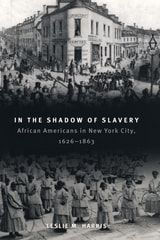
In the Shadow of Slavery
African Americans in New York City, 1626-1863Leslie M. Harris
University of Chicago Press, 2003
In 1991 in lower Manhattan, a team of construction workers made an astonishing discovery. Just two blocks from City Hall, under twenty feet of asphalt, concrete, and rubble, lay the remains of an eighteenth-century "Negro Burial Ground." Closed in 1790 and covered over by roads and buildings throughout the nineteenth and twentieth centuries, the site turned out to be the largest such find in North America, containing the remains of as many as 20,000 African Americans. The graves revealed to New Yorkers and the nation an aspect of American history long hidden: the vast number of enslaved blacks who labored to create our nation's largest city.
In the Shadow of Slavery lays bare this history of African Americans in New York City, starting with the arrival of the first slaves in 1626, moving through the turbulent years before emancipation in 1827, and culminating in one of the most terrifying displays of racism in U.S. history, the New York City Draft Riots of 1863. Drawing on extensive travel accounts, autobiographies, newspapers, literature, and organizational records, Leslie M. Harris extends beyond prior studies of racial discrimination by tracing the undeniable impact of African Americans on class, politics, and community formation and by offering vivid portraits of the lives and aspirations of countless black New Yorkers.
Written with clarity and grace, In the Shadow of Slavery is an ambitious new work that will prove indispensable to historians of the African American experience, as well as anyone interested in the history of New York City.
In the Shadow of Slavery
African Americans in New York City, 1626-1863Leslie M. Harris
University of Chicago Press, 2024
The popular understanding of the history of slavery in America almost entirely ignores the institution’s extensive reach in the North. But the cities of the North were built by—and became the home of—tens of thousands of enslaved African Americans, many of whom would continue to live there as free people after Emancipation.
In the Shadow of Slavery reveals the history of African Americans in the nation’s largest metropolis, New York City. Leslie M. Harris draws on travel accounts, autobiographies, newspapers, literature, and organizational records to extend prior studies of racial discrimination. She traces the undeniable impact of African Americans on class distinctions, politics, and community formation by offering vivid portraits of the lives and aspirations of countless black New Yorkers. This new edition includes an afterword by the author addressing subsequent research and the ongoing arguments over how slavery and its legacy should be taught, memorialized, and acknowledged by governments.
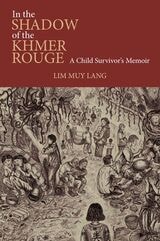
In the Shadow of the Khmer Rouge
A Child Survivor's MemoirMuy Lang Lim
National University of Singapore Press, 2025
Forty-five years have passed since the end of Khmer Rouge rule in Cambodia in 1979. Angkar, the hidden, menacing face of the revolutionary leadership, is gone, yet the misery, death, and destruction they wrought in the name of revolution cannot be forgotten. In In the Shadow of the Khmer Rouge, a voice is given to these memories by a child survivor of the catastrophe that engulfed Cambodia in the 1970’s.
Muy Lang's memoir begins by recalling her gentle childhood with her Sino-Cambodian family in Phnom Penh. With the fall of the city to the Khmer Rouge and its brutal emptying, the country descended into a utopian hell in which drastic economic ideas were enforced with deadly fervor. Muy Lang was only nine years old when she and her family were marched at gunpoint out of Phnom Penh in 1975. Within three years, she was completely alone; tragically, the seven other members of her family were all killed.
Muy Lang survived nearly four years of starvation, sickness, brutality, and threatened death in the Cambodian countryside. She ultimately escaped to Thailand with the first group of refugees to navigate a treacherous descent from the border through the landmine-infested Dângrêk Mountains. In the Shadow of the Khmer Rouge pays tribute to Muy Lang’s family and to other war victims who shared their stories with her. It offers future generations a personal reflection on themes such as displacement, loss of cultural identity, hope, and resilience in the face of unimaginable circumstances, and is an unflinching account of Cambodia's darkest years.

In the Shadow of the Magic Mountain
The Erika and Klaus Mann StoryAndrea Weiss
University of Chicago Press, 2008
Thomas Mann’s two eldest children, Erika and Klaus, were unconventional, rebellious, and fiercely devoted to each other. Empowered by their close bond, they espoused vehemently anti-Nazi views in a Europe swept up in fascism and were openly, even defiantly, gay in an age of secrecy and repression. Although their father’s fame has unfairly overshadowed their legacy, Erika and Klaus were serious authors, performance artists before the medium existed, and political visionaries whose searing essays and lectures are still relevant today. And, as Andrea Weiss reveals in this dual biography, their story offers a fascinating view of the literary and intellectual life, political turmoil, and shifting sexual mores of their times.
In the Shadow of the Magic Mountain begins with an account of the make-believe world the Manns created together as children—an early sign of their talents as well as the intensity of their relationship. Weiss documents the lifelong artistic collaboration that followed, showing how, as the Nazis took power, Erika and Klaus infused their work with a shared sense of political commitment. Their views earned them exile, and after escaping Germany they eventually moved to the United States, where both served as members of the U.S. armed forces. Abroad, they enjoyed a wide circle of famous friends, including Andre Gide, Christopher Isherwood, Jean Cocteau, and W. H. Auden, whom Erika married in 1935. But the demands of life in exile, Klaus’s heroin addiction, and Erika’s new allegiance to their father strained their mutual devotion, and in 1949 Klaus committed suicide.
Beautiful never-before-seen photographs illustrate Weiss’s riveting tale of two brave nonconformists whose dramatic lives open up new perspectives on the history of the twentieth century.
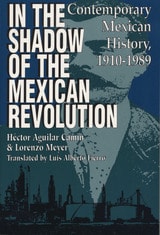
In the Shadow of the Mexican Revolution
Contemporary Mexican History, 1910–1989By Héctor Aguilar Camín and Lorenzo Meyer
University of Texas Press, 1993
Héctor Aguilar Camín and Lorenzo Meyer, two of Mexico's leading intellectuals, set out to fill a void in the literature on Mexican history: the lack of a single text to cover the history of contemporary Mexico during the twentieth century. A la sombra de la Revolución Mexicana, now available in English as In the Shadow of the Mexican Revolution, covers the Mexican Revolution itself, the gradual consolidation of institutions, the Cárdenas regime, the "Mexican economic miracle" and its subsequent collapse, and the recent transition toward a new historical period.
The authors offer a comprehensive and authoritative study of Mexico's turbulent recent history, a history that increasingly intertwines with that of the United States. Given the level of interest in Mexico—likely to increase still more as a result of the recent liberalization of trade policies—this volume will be useful in affording U.S. readers an intelligent, comprehensive, and accessible study of their neighbor to the south.
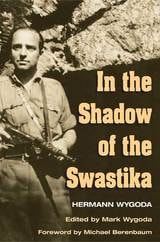
In the Shadow of the Swastika
Hermann Wygoda
University of Illinois Press, 1998

In the Shadows of State and Capital
The United Fruit Company, Popular Struggle, and Agrarian Restructuring in Ecuador, 1900-1995Steve Striffler
Duke University Press, 2002
In the Shadows of State and Capital tells the story of how Ecuadorian peasants gained, and then lost, control of the banana industry. Providing an ethnographic history of the emergence of subcontracting within Latin American agriculture and of the central role played by class conflict in this process, Steve Striffler looks at the quintessential form of twentieth-century U.S. imperialism in the region—the banana industry and, in particular, the United Fruit Company (Chiquita). He argues that, even within this highly stratified industry, popular struggle has contributed greatly to processes of capitalist transformation and historical change.
Striffler traces the entrance of United Fruit into Ecuador during the 1930s, its worker-induced departure in the 1960s, the troubled process through which contract farming emerged during the last half of the twentieth century, and the continuing struggles of those involved. To explore the influence of both peasant activism and state power on the withdrawal of multinational corporations from banana production, Striffler draws on state and popular archives, United Fruit documents, and extensive oral testimony from workers, peasants, political activists, plantation owners, United Fruit administrators, and state bureaucrats. Through an innovative melding of history and anthropology, he demonstrates that, although peasant-workers helped dismantle the foreign-owned plantation, they were unable to determine the broad contours through which the subsequent system of production—contract farming—emerged and transformed agrarian landscapes throughout Latin America.
By revealing the banana industry’s impact on processes of state formation in Latin America, In the Shadows of State and Capital will interest historians, anthropologists, and political scientists, as well as scholars of globalization and agrarian studies.

In the Shadows of the State
Indigenous Politics, Environmentalism, and Insurgency in Jharkhand, IndiaAlpa Shah
Duke University Press, 2010

In the Sierra Madre
Jeff Biggers
University of Illinois Press, 2006
A stunning history of legendary treasure seekers and enigmatic natives in Mexico's Copper Canyon
Based on his one-year sojourn in Copper Canyon among the Raramuri/Tarahumara, award-winning journalist Jeff Biggers offers a rare look into the ways of the most resilient indigenous culture in the Americas, the exploits of Mexican mountaineers, and the fascinating parade of argonauts and accidental travelers who have journeyed into the Sierra Madre over centuries. From African explorers, Bohemian friars, Confederate and Irish war deserters, French poets, Boer and Russian commandos, Apache and Mennonite communities, bewildered archaeologists, addled writers, and legendary characters including Antonin Artaud, Henry Flipper, B. Traven, Sergei Eisenstein, George Patton, Geronimo, and Pancho Villa, Biggers uncovers the remarkable treasures of the Sierra Madre.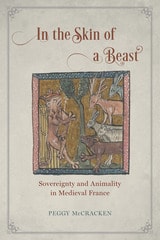
In the Skin of a Beast
Sovereignty and Animality in Medieval FrancePeggy McCracken
University of Chicago Press, 2017
Peggy McCracken discusses a range of literary texts and images from medieval France, including romances in which animal skins appear in symbolic displays of power, fictional explorations of the wolf’s desire for human domestication, and tales of women and snakes converging in a representation of territorial claims and noble status. These works reveal that the qualities traditionally used to define sovereignty—lineage and gender among them—are in fact mobile and contingent. In medieval literary texts, as McCracken demonstrates, human dominion over animals is a disputed model for sovereign relations among people: it justifies exploitation even as it mandates protection and care, and it depends on reiterations of human-animal difference that paradoxically expose the tenuous nature of human exceptionalism.
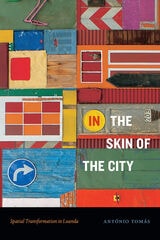
In the Skin of the City
Spatial Transformation in LuandaAntónio Tomás
Duke University Press, 2022
In the Smaller Scope of Conscience
The Struggle for National Repatriation Legislation, 1986–1990C. Timothy McKeown
University of Arizona Press, 2014
In 1989, The National Museum of the American Indian Act (NMAIA) was successfully passed after a long and intense struggle. One year later, the Native American Graves Protection and Repatriation Act (NAGPRA) followed. These federal repatriation statutes—arguably some of the most important laws in the history of anthropology, museology, and American Indian rights—enabled Native Americans to reclaim human remains, funerary objects, sacred objects, and objects of cultural patrimony.
Twenty years later, the controversy instigated by the creation of NMAIA and NAGPRA continues to simmer. In the Smaller Scope of Conscience is a thoughtful and detailed study of the ins and outs of the four-year process behind these laws. It is a singular contribution to the history of these issues, with the potential to help mediate the ongoing debate by encouraging all sides to retrace the steps of the legislators responsible for the acts.
Few works are as detailed as McKeown’s account, which looks into bills that came prior to NMAIA and NAGPRA and combs the legislative history for relevant reports and correspondence. Testimonies, documents, and interviews from the primary players of this legislative process are cited to offer insights into the drafting and political processes that shaped NMAIA and NAGPRA.
Above all else, this landmark work distinguishes itself from earlier legislative histories with the quality of its analysis. Invested and yet evenhanded in his narrative, McKeown ensures that this journey through history—through the strategies and struggles of different actors to effect change through federal legislation—is not only accurate but eminently intriguing.

In the Solitude of My Soul
The Diary of Genevieve Breton, 1867-1871James Smith Allen
Southern Illinois University Press, 1994
Originally published to glowing reviews and literary prizes in France in 1985, this revealing diary not only recounts the moving and tragic relationship of its author, Geneviève Bréton, with the rising young nineteenth-century artist Henri Regnault, it also serves as a valuable historical document concerning the social, cultural, and political life of the French Second Empire.
The young Geneviève Bréton began her journal in 1867 as a consolation for the death of her eldest brother, Antoine. She met Regnault soon after on a trip to Rome. Throughout the next four years of their relationship, Bréton eloquently describes the personal, cultural, and political turbulence that affected her life. Writing against the backdrop of France’s fateful conflict with Prussia and the hardships and dangers of the siege of Paris and the Commune, Bréton, with innate candor and lyricism, creates a text that beautifully illuminates French art, literature, family life, society, and politics of the time. Her poignant account of her love for and engagement to Regnault reveals special insight into the life and mind of an extraordinary, though little known, literary talent. At Regnault’s death in 1871 during the Franco–Prussian War, the expression of her anguish is as much testimony to the political and cultural disorder of the time as it is to her own personal tragedy.
Following Bréton’s own instructions that she left before her death in 1918, this English version of the diary reincorporates material that was deleted from the French edition. Graced by rare photographs of the Bréton family as well as Regnault’s paintings, the book contains a touching foreword by the author’s granddaughter, Daphné Doublet-Vaudoyer. In its first English translation, it is a book for lovers of French life and culture, as well as students of French history; literature, and art.
In the Spirit of Alinsky
Community Organizing’s Fight to Strengthen DemocracyRobert T. Gannett Jr.
University of Illinois Press, 2026
As Gannett shows, the methods pioneered by legendary activist Saul Alinsky provide the means for channeling citizens’ anger and frustration into meaningful social change. Gannett weaves his personal journey as an “outside agitator” through in-depth studies of successful and unsuccessful campaigns. Gannett places financial sustainability, political independence, and a commitment to process as much as to purpose at the core of organizing. He also focuses on the importance of veterans mentoring the next generation to meet the challenges of the future.
Hard-headed but hopeful, In the Spirit of Alinsky distills decades of on-the-ground experience into a guide for effective radical action.
In the Spirit of H. Chandler Davis
Activism and the Struggle for Academic FreedomEdited by Michael Atzmon, John Cheney-Lippold , Gary D. Krenz, and Melanie S. Tanielian
Disobedience Press, 2026
The essays collected in this book honor H. Chandler Davis (1926-2022), a University of Michigan faculty member who became a symbol of principled dissent when suspended and fired in 1954 for refusing to testify about his political affiliations to the House Un-American Activities Committee. Invoking academic freedom and First Amendment protection, Davis was convicted of contempt of Congress. He served six months in prison before moving to Canada, where he established himself as a brilliant mathematician, prolific writer, and ardent and much beloved advocate for justice.
At a time when a new McCarthyism has come roaring back to threaten free inquiry everywhere, the 12 contributors to this book argue against censorship, the suppression of protest, the policed and surveilled campus, the self-silencing of "institutional neutrality," and other enemies of academic freedom. Also included in this volume is posthumously published work by Davis and by his late wife, the historian Natalie Zemon Davis, which reflects on the importance of facing, and not accepting, authoritarian threats.
Inspired by Chandler Davis’ courage, integrity, and devotion to the struggle against oppression, injustice, and the persecution of speech, these essays offer crucial insights into the importance of defending intellectual independence, institutional autonomy, and the right to free expression.
Contributors: Michael Bérubé, Juan Cole, H. Chandler Davis, Stefan Hanß, Marjorie Heins, Dima Khalidi, Gene Nichol, Henry Reichman, Ellen Schrecker, Joan Scott, Catharine R. Stimpson, Alan Wald, Silke-Maria Weineck, and Natalie Zemon Davis.
In the Sun King's Cosmos
Comets and the Cultural Imagination of Seventeenth-Century FranceClaire Goldstein
Northwestern University Press, 2025
Offering a new history of a formative cultural and political era through the cosmic phenomena that captured the public’s imagination
In the winters of 1664–65 and 1680–81, the French public was galvanized by two bright comets whose elliptical orbits could not be mapped with contemporary geometry and that thus seemed to appear in random and unpredictable locations. Bookending the period during which Louis XIV’s sun king mythology was created, these comets defied the heliocentric order to which French politics and culture aspired. As Claire Goldstein demonstrates, literary texts, cultural institutions, and architecture inspired by comets offer a different perspective on the relationship between sensory experience, ideology, and artistic form.
In the Sun King’s Cosmos: Comets and the Cultural Imagination of Seventeenth-Century France presents an alternative view of a formative era in cultural and political history, when distinctly modern forms of power and control were established through a regime of the spectacular. Goldstein shows how comets allow us to see the seventeenth century in ways that complicate the narrative of a race toward rationalization, classicism, and modernity, indexing instead a messy period in which the spectacular was sometimes also inscrutable.
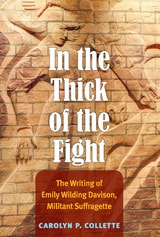
In the Thick of the Fight
The Writing of Emily Wilding Davison, Militant SuffragetteCarolyn P. Collette
University of Michigan Press, 2013
One of the most memorable images of the British women’s suffrage movement occurred on June 4, Derby Day, 1913. As the field of horses approached a turning at Epsom, militant suffragette Emily Wilding Davison ducked out from under the railing and ran onto the track, reaching for the bridle of the King’s horse, and was killed in the collision. While her death transformed her into a heroine, it all but erased her identity. To identify what impelled Davison to suffer multiple imprisonments, to experience the torture of force-feedings and the insults of hostile members of the crowds who came to hear her speak, Carolyn P. Collette explores a largely ignored source—the writing to which Davison dedicated so much time and effort during the years from 1908 to 1913. Davison’s writing is an implicit apologia for why she lived the life of a militant suffragette and where she continually revisits and restates the principles that guided her: that woman suffrage was necessary to improve the lives of men, women, and children; that the freedom and justice women sought was sanctioned by God and unjustly withheld by humans whose opposition constituted a tyranny that had to be opposed; and that the evolution of human progress demanded that women become fully equal citizens of their nation in every respect— politically, economically, and culturally.
In the Thick of the Fight makes available for the first time the archive of published and unpublished writings of Emily Wilding Davison. Collette reorients both scholarly and public attention away from a single, defining event to the complexity of Davison’s contributions to modern feminist discourse, giving the reader a sense of the vibrancy and diversity of Davison’s suffrage writings.
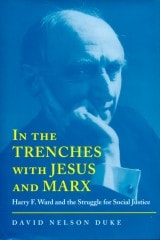
In the Trenches with Jesus and Marx
Harry F. Ward and the Struggle for Social JusticeDavid Duke
University of Alabama Press, 2006
The story of a Social Gospel leader who brought faith, activism, and social justice into the heart of modern American politics.
Radical religious and political leader Harry F. Ward started life quietly enough in a family of Methodist shopkeepers and butchers in London. But his relentless pursuit of social justice would lead him to the United States and a long career of religious activism. Ward served as professor of Christian ethics at the Union Theological Seminary and chairman of the board of the American Civil Liberties Union for two decades. He also became a leader in labor groups, Protestant activist organizations, and New York intellectual circles.
David Duke builds his comprehensive story of this fiery leader from extensive archival sources, including FBI files and private correspondence, sermons, class notes, and other unpublished material. Duke skillfully charts Ward's rise from an idealistic Methodist minister in a Chicago stockyard parish to a prominent national religious leader and influential political figure. Ultimately, Ward's lifelong attempt to synthesize the beliefs of Jesus and Marx and his role as an admirer of the Soviet Union put him on a collision course with McCarthyism in Cold War America. Viewed by some as a prophet and by others as a heretic, traitor, and communist, Ward became increasingly marginalized as he stubbornly maintained his radical positions. Even in his own circle, he went from being a figure of unquestioned integrity who eloquently spoke his convictions to a tragically short-sighted idealogue whose unwavering pro-Soviet agenda blinded him to the horrors of Stalinist oppression.
Harry Ward's long, colorful career intersected nearly every intellectual current in American culture for more than a half century. This biography will be important for scholars of American religious history, students of liberalism and politics, social Christians, and general readers who enjoy a compelling tour into the private and public lives of notable figures of history.
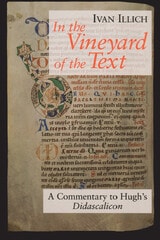
In the Vineyard of the Text
A Commentary to Hugh's DidascaliconIvan Illich
University of Chicago Press, 1993
Examining the Didascalicon of Hugh of St. Victor, Illich celebrates the culture of the book from the twelfth century to the present. Hugh's work, at once an encyclopedia and guide to the art of reading, reveals a twelfth-century revolution as sweeping as that brought about by the invention of the printing press and equal in magnitude only to the changes of the computer age—the transition from reading as a vocal activity done in the monastery to reading as a predominantly silent activity performed by and for individuals.
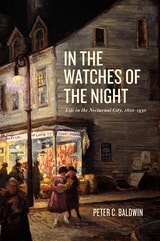
In the Watches of the Night
Life in the Nocturnal City, 1820-1930Peter C. Baldwin
University of Chicago Press, 2011
Before skyscrapers and streetlights glowed at all hours, American cities fell into inky blackness with each setting of the sun. But over the course of the nineteenth and early twentieth century, new technologies began to light up streets, sidewalks, buildings, and public spaces. Peter C. Baldwin’s evocative book depicts the changing experience of the urban night over this period, visiting a host of actors—scavengers, newsboys, and mashers alike—in the nocturnal city.
In the Work of Their Hands Is Their Prayer
Cultural Narrative and Redemption on the American Frontiers, 1830-1930Joel Daehnke
Ohio University Press, 2003
Westward expansion on the North American continent by European settlers generated a flurry of writings on the frontier experience over the course of a hundred years. Asserting that the dominant ideology of America’s Manifest Destiny embodied a tense, often contradictory union of Christian and secular republican views of social progress, In the Work of Their Hands Is Their Prayer investigates the ambivalence of the frontier as it was inscribed with redemptive, historical significance by a host of frontier writers.
Enlisting canonical and noncanonical sources, Joel Daehnke examines the manner in which the imagery of the human figure at work and play in the frontier landscape participated in the nationalist, “civilizing” project of westward expansion. While he acknowledges the growing secularization of American life, Professor Daehnke surveys the continuing claims of the Christian redemptive scheme as a powerful symbolic domain for these writers’ meditations on social progress and the potential for human perfectibility in the landscapes of the West.
Whether discussing the Edenic imagery of women’s gardens, the advocacy of an ethics of land use, or the affairs of fortune in the mining districts of Nevada, In the Work of Their Hands Is Their Prayer presents an enlightening reexamination of an American ideology of progress and its enduring fascination with mission, Manifest Destiny, and the ends of history.
In the Work of Their Hands Is Their Prayer is a welcome addition to the extended library of critical attention to the ideology, history, and literary traditions of the American frontier.

In the Workshop of History
François Furet
University of Chicago Press, 1985
Furet views history as a field bounded at each end by two ideal types. One end is concerned with the history of periods and with the empiricism of "facts" rather than received ideas. At the other end is problem-oriented history, which substitutes for the supposed coherence of a "period" the analytical examination of a question. Furet's own work leans toward the second, more conceptually oriented kind of historiography. The essays in this volume, most of them never before published in English, illustrate the breadth of his approach. Furet's discussion ranges through Tocqueville's conceptual system to present-day America, from the origins of history in France to the Jewish experience in the late twentieth century. Among Furet's recurrent themes is the contention that the historian constructs the object or field of his research rather than receiving it from the past.
In-action
Viennese Actionism and the Passivities of Performance ArtCaroline Lillian Schopp
University of Chicago Press, 2025
Viennese Actionism represents a notorious case within art history, often cited but little studied, especially in the United States. By carefully looking at the unsettling performances that define this movement, Caroline Lillian Schopp offers a vital corrective to the narrative. Schopp observes that contrary to the reception of their graphic violence, many performances explore passivity, vulnerability, and dependence in gestures of “in-action.” Viennese Actionism registers hesitations about the liberatory ethos of the 1960s, amplified by Austria’s marginalized postwar social and artistic culture. In dialogue with feminist theory, In-action assembles a vocabulary for performance art without the standards of self-assertion, emancipation, and expressive action that continue to inform how art and politics are understood today.
Decentering the traditional focus on the male protagonists of Viennese Actionism—Günter Brus, Otto Muehl, Hermann Nitsch, and Rudolf Schwarzkogler—Schopp draws attention to women who performed with them, including Anna Brus, Hanel Koeck, and Ingrid Wiener. Doing so brings into view how these performances scrutinize intimate relationships like marriages, partnerships, and friendships, as well as the conventions of traditional artistic media such as painting and tapestry.
In-laws and Outlaws
Lessons in Research and Friendship and a Report from the ArchivesSarah Barringer Gordon
Utah State University Press, 2007
In/visible War
The Culture of War in Twenty-first-Century AmericaJon Simons and John Louis Lucaites
Rutgers University Press, 2017
Yet, the normalization of twenty-first century war also renders it highly visible. War is made visible through popular, commercial, mediated culture. The spectacle of war occupies the contemporary public sphere in the forms of celebrations at athletic events and in films, video games, and other media, coming together as MIME, the Military-Industrial-Media-Entertainment Network.
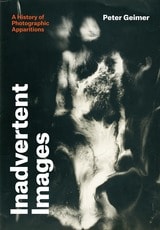
Inadvertent Images
A History of Photographic ApparitionsPeter Geimer
University of Chicago Press, 2018
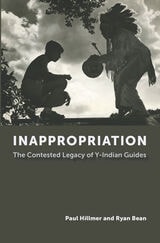
Inappropriation
The Contested Legacy of Y-Indian GuidesPaul Hillmer
University of Missouri Press, 2023
The Y-Indian Guides was a father-son (and later parent-child) program that encouraged real and enduring bonds through play and an authentic appreciation of family. While “playing Indian” seemed harmless to most participants during the program’s heyday, Paul Hillmer and Ryan Bean demonstrate the problematic nature of its methods. In the process of seeking to admire and emulate Indigenous Peoples, Y-Indian Guide participants often misrepresented American Indians and reinforced harmful stereotypes. Ultimately, this history demonstrates many ways in which American culture undermines and harms its Indigenous communities.

Inari Sámi Folklore
Stories from AanaarAugust V. Koskimies and Toivo I. Itkonen, revised by Lea Laitinen; Edited and translated by Tim Frandy
University of Wisconsin Press, 2020
First published in 1918 only in the Aanaar Sámi language and in Finnish, this anthology is now available in a centennial English-language edition for a global readership. Translator Tim Frandy has added biographies of the storytellers, maps and period photos, annotations, and a glossary. In headnotes that contextualize the stories, he explains such underlying themes as Aanaar conflicts with neighboring Sámi and Finnish communities, the collapse of the wild reindeer populations less than a century before, and the pre-Christian past in Aanaar. He introduces us to the bawdy humor of Antti Kitti, the didacticism of Iisakki Mannermaa, and the feminist leanings of Juho Petteri Lusmaniemi, emphasizing that folktales and proverbs are rooted in the experiences of individuals who are links in a living tradition.

Inaugural Wounds
The Shaping of Desire in Five Nineteenth-Century English NarrativesRobert E. Lougy
Ohio University Press, 2004
Desire, Jacques Lacan suggests, is a condition or expression of our wounded nature. But because such desire is also unconscious, it can be expressed only indirectly, for what we consciously desire is hardly ever what we really want. Desire makes itself known, but disguises its presence—appearing, for example, in unconscious but repetitive, and sometimes even self-destructive, patterns of behavior.
Informed by the voices of Freud and Lacan regarding the nature of language and desire, Inaugural Wounds examines the ways in which five major nineteenth-century English writers explored the trajectories and shapes of desire. Arguing that we need to give to novels the same kind of close scrutiny we give to poetry, author Robert Lougy suggests that when we do so, we discover that they often astound us by the resonance and range of their language, as well as by their ability to take us to strange and haunting places.
The five narratives examined—Charles Dickens’s Martin Chuzzlewit, William Thackeray’s Journey from Cornhill to Grand Cairo, Elizabeth Gaskell’s Ruth, Wilkie Collins’s The Woman in White, and Thomas Hardy’s Jude the Obscure—testify to the mysterious origins of desire. Although each of the novels tells its own story in its own way, they share a fascination with the nature of desire itself.
Drawing upon recent work that has challenged historicist approaches toward nineteenth-century British literature, Professor Lougy uses the insights of psychoanalysis to enable us to more fully appreciate the depth and power of these novels. Of great value to Victorian and psychoanalytic scholars, Inaugural Wounds will be useful for teaching undergraduates as well.