Results by title
18284 books match the query 'United States' and 274 start with j
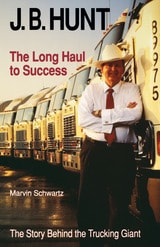
J. B. Hunt
The Long Haul to SuccessMarvin Schwartz
University of Arkansas Press, 1992
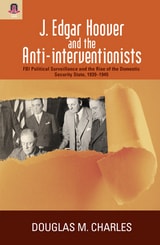
J. Edgar Hoover and the Anti-interventionists
FBI Political Surveillance and the Rise of the Domestic Security State, 1939–1945Douglas M. Charles
The Ohio State University Press, 2007
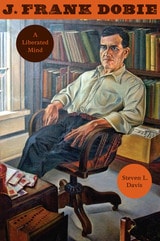
J. Frank Dobie
A Liberated MindBy Steven L. Davis
University of Texas Press, 2009
The first Texas-based writer to gain national attention, J. Frank Dobie proved that authentic writing springs easily from the native soil of Texas and the Southwest. In best-selling books such as Tales of Old-Time Texas, Coronado's Children, and The Longhorns, Dobie captured the Southwest's folk history, which was quickly disappearing as the United States became ever more urbanized and industrial. Renowned as "Mr. Texas," Dobie paradoxically has almost disappeared from view—a casualty of changing tastes in literature and shifts in social and political attitudes since the 1960s.
In this lively biography, Steven L. Davis takes a fresh look at a J. Frank Dobie whose "liberated mind" set him on an intellectual journey that culminated in Dobie becoming a political liberal who fought for labor, free speech, and civil rights well before these causes became acceptable to most Anglo Texans. Tracing the full arc of Dobie's life (1888–1964), Davis shows how Dobie's insistence on "free-range thinking" led him to such radical actions as calling for the complete integration of the University of Texas during the 1940s, as well as taking on governors, senators, and the FBI (which secretly investigated him) as Texas's leading dissenter during the McCarthy era.

J. K. Rowling and the Anti-Trans Panic
Gina Gwenffrewi
The Ohio State University Press, 2026
In J. K. Rowling and the Anti-Trans Panic, Gina Gwenffrewi weaves her own experience as a trans woman living in Edinburgh, Scotland, with analysis of political and pop cultural discourses and artifacts to deliver a trenchant study of how fellow Edinburgh resident J. K. Rowling’s emergence as a major anti-trans campaigner and the years-long entrenchment of existing anti-trans forces have converged. Analyzing Rowling’s output since 2020, a series of anti-trans events at the University of Edinburgh, the transphobic comedy of Ricky Gervais within the British media landscape, YouTube commentaries, and more, Gwenffrewi creates a potent taxonomy of the rhetorical devices and foundational assumptions of anti-trans discourse. While the 2020s UK has proved fertile ground for “gender-critical” feminism, she argues, it has also provided the foundation for sites of resistance and for bolstering transgender voices worldwide. In celebrating trans activism and trans joy amid adversity, Gwenffrewi beautifully captures the light and dark of being out as trans in the city that—if it can fairly be called ground zero for anti-trans fervor—also embodies liberatory possibilities for trans people worldwide.
JOAN
Jake Rose
University of Chicago Press, 2026
Longlisted for the 2026 National Book Award for Poetry. A narrative sequence of lyric poems reimagining Joan of Arc as a framework for queer identity, transformation, and poetic voice.
Collapsing biography and autobiography, the poetry of Jake Rose’s debut explores queer identity, grief, and desire through the historical framework of Joan of Arc’s life. Moving through rural landscapes of the speaker’s youth, contradictions of faith, consequences of desire, and fragmentations of trauma, JOAN is structured as an excavation of the speaker’s most intimate moments, combining poetry with historical quotations, visual collage, and a sequence of film stills. Through vivid lyric moments, the poems construct a speaker and world both intimate and charged—“I have to touch my farthest feeling,” “the sapphire dusk draping its lace arias”—with clarity and vibrant intensity. Refusing resolution, these poems dwell in rupture, reinvention, and fluid forms of gender that come to life outside of inherited boundaries. This collection speaks from the margins, searching for a body the self might inhabit and asking what it means to transform through language, gender, and desire.
JOAN is the winner of the Phoenix Emerging Poet Book Prize.

JOHN PEALE BISHOP
A BIOGRAPHYELIZABETH C. SPINDLER
West Virginia University Press, 1980
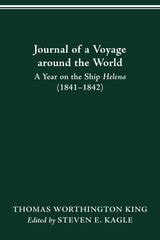
JOURNAL OF A VOYAGE AROUND THE WORLD
A YEAR ON THE SHIP HELENA (1841-1842)THOMAS WORTHINGTON KING
The Ohio State University Press, 2002
In 1841 Thomas Worthington King accepted a position as supercargo on the Helena, a ship some have called “the first American clipper,” as it was about to make its maiden voyage to China. Journal of a Voyage around the World recounts the travel of Thomas Worthington King on the Helena from 1841 to 1842.
In full and well-written entries, King recounts the routines and surprises of life at sea, where storms and calms could be equally threatening, and the next day might bring a stop at St. Helena to see Napoleon’s tomb or an encounter with pirates. King provides details often missing from histories that give a real sense of the period. In his description of Chile and Peru we learn about activities as diverse as cockfighting and courtship. We learn about produce and prisons, mints and monasteries, fruits and fashions. In his account of China, King vividly describes rivers so full of boats that one could “see no water—nothing but the large mat sales” and calm groves of “green lychee, or broad leaved & rustling plantain.”
Perhaps the most important subject of the diary is the diarist himself, whose talent and confidence develop on the pages of his record. Thomas Worthington King was born and raised in Chillicothe, Ohio, and was the grandson of two Ohio Senators: Rufus King and Thomas Worthington.

JUSTIFIABLE HOMICIDE
BATTERED WOMEN, SELF-DEFENSE AND THE LAWCynthia K. Gillespie
The Ohio State University Press, 1990

Jack Dempsey
THE MANASSA MAULERRandy Roberts
University of Illinois Press, 1979
In this incisive, fast-paced biography, Randy Roberts charts the life and career of a man widely regarded as one of the toughest ever to enter the ring. He details Dempsey's transition from barroom fights to professional boxing and his emerging reputation for fast, brutal knockouts. Roberts draws on a wealth of newspaper articles and interviews to chronicle Dempsey's rise to the heavyweight championship and his six title defenses. Also included are accounts of the eventual loss of his title to Gene Tunney in 1926, and the rematch in 1927, which Dempsey also lost in the infamous "long count." After continuing to fight in exhibitions, Dempsey retired from boxing in 1940 with an astonishing 64 victories, 49 of them knockouts.
Roberts tells of the building of this record, including accounts of Dempsey's forays into Hollywood, the controversy over his alleged draft-dodging, his long life after retirement, and his enduring legacy as one of the greatest fighters in boxing history.
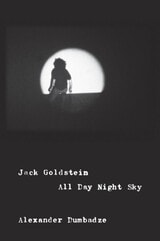
Jack Goldstein
All Day Night SkyAlexander Dumbadze
University of Chicago Press, 2025
A defining figure of the 1970s–80s New York art world, Jack Goldstein’s wide-ranging body of work, which included immaculate color films and radiant paintings of appropriated images composed by assistants, is both seductive and interpretively elusive. Goldstein’s legacy has been complicated by the mythology of his later years. Consumed by drug addiction, he dropped out of the art world in the 1990s, lived alone in an East Los Angeles trailer park, and resurfaced in a wave of critical fanfare at the turn of the millennium, before taking his own life in 2003.
Employing his signature blend of biography, theoretical reflection, and archival research, Alexander Dumbadze examines Goldstein’s life and career, homing in on the artist’s refusal to distinguish between mental and actual images. Progressing chronologically through key moments in Goldstein’s artistic and intellectual formation, the book offers a deeply complex portrait of this significant artist, along with a nuanced meditation on the nature of images, the meaning of artistic subjectivity, and the consequences of holding unwavering faith in art.
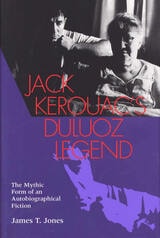
Jack Kerouac's Duluoz Legend
The Mythic Form of an Autobiographical FictionJames T. Jones
Southern Illinois University Press, 1999
In the only critical examination of all of Jack Kerouac's published prose, James T. Jones turns to Freud to show how the great Beat writer used the Oedipus myth to shape not only his individual works but also the entire body of his writing.
Like Balzac, Jones explains, Kerouac conceived an overall plan for his total writing corpus, which he called the Duluoz Legend after Jack Duluoz, his fictional alter ego. While Kerouac's work attracts biographical treatment—the ninth full-length biography was published in 1998—Jones takes a Freudian approach to focus on the form of the work. Noting that even casual readers recognize family relationships as the basis for Kerouac's autobiographical prose, Jones discusses these relationships in terms of Freud's notion of the Oedipus complex.
After establishing the basic biographical facts and explaining Freud's application of the Oedipus myth, Jones explicates Kerouac's novels of childhood and adolescence, focusing on sibling rivalry. Supporting his contention that the Beat writer worked according to a plan, Jones then shows how Kerouac revised The Town and the City (1950), his first published novel, in Vanity of Duluoz, the last novel published in his lifetime, to de-emphasize the death of the father. He treats three versions of Kerouac's road novel—including On the Road—as versions of Oedipus's fateful journey from Corinth to Thebes. And he argues that Pic, often considered peripheral to the Duluoz Legend, replicates the Oedipal themes.
Jones demonstrates that Maggie Cassidy, The Subterraneans, and Tristessa share a form that results from Kerouac's unresolved rivalry with his father for the love of his mother. He discusses Kerouac's replacement of the destructive brother figures in On the Road and Visions of Cody with the constructive hero of The Dharma Bums. He also shows how the Oedipal structure of the Duluoz Legend applies to Kerouac's nonfiction.
In the penultimate chapter, Jones explains how Big Sur, Kerouac's story of his alcohol-induced nervous breakdown, actually marks the climax of the Duluoz Legend. The alcoholism, Jones insists, is not the cause but a symptom of a breakdown brought on by his attachment to his mother. He shows how Kerouac's obsession with his family repeats Oedipal themes throughout the Duluoz Legend. Finally, he deals with Oedipal themes in Kerouac's nonnarrative work, including Old Angel Midnight, Some of the Dharma, The Scripture of the Golden Eternity, and several poems.
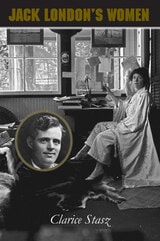
Jack London's Women
Clarice Stasz
University of Massachusetts Press, 2001
Using newly available letters and diaries from private collections, Stasz brings this diverse constellation of women to life. London was the son of freethinking Flora Wellman, yet found more maternal comfort from freed slave Jennie Prentiss and his stepsister Eliza. His early loves included a British-born consumptive, a Jewish socialist, and an African American. His first wife, Bess Maddern, was a teacher and devoted mother to daughters Bess and Joan, while his second wife, Charmian Kittredge, shared his passion for adventure and served as a model for many characters in his writings. Following his death, the various women who survived him both promoted his legacy and suffered the consequences of being constantly identified with a famous man.
In recasting London's life through the eyes of three generations of women, Stasz manages to untangle his seemingly contradictory attitudes and actions. She also reveals the struggle that ensued, after his death, among family members and scholars over how he should be remembered. What emerges from this well-researched book is a new understanding of London and a compelling portrayal of the women who knew him best.
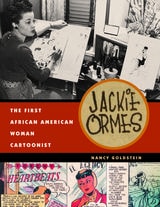
Jackie Ormes
The First African American Woman CartoonistNancy Goldstein
University of Michigan Press, 2008
At a time of few opportunities for women in general and even fewer for African American women, Jackie Ormes (1911–85) blazed a trail as a popular cartoonist with the major black newspapers of the day. Her cartoon characters (including Torchy Brown, Candy, Patty-Jo, and Ginger) delighted readers and spawned other products, including an elegant doll with a stylish wardrobe and “Torchy Togs” paper dolls. Ormes was a member of Chicago’s black elite, with a social circle that included the leading political figures and entertainers of the day. Her cartoons and comic strips provide an invaluable glimpse into American culture and history, with topics that include racial segregation, U.S. foreign policy, educational equality, the atom bomb, and environmental pollution, among other pressing issues of the times—and of today’s world as well. This celebrated biography features a large sampling of Ormes’s cartoons and comic strips, and a new preface.

Jacksonian America
Society, 0ality, and PoliticsEdward Pessen
University of Illinois Press, 1985
Jacob H. Schiff
A Study in American Jewish LeadershipNaomi W. Cohen
Brandeis University Press, 1999
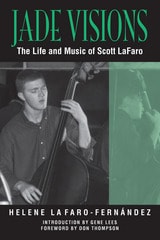
Jade Visions
The Life and Music of Scott LaFaroHelene LaFaro-Fernandez
University of North Texas Press, 2009

Jaguar
A Story of Africans in AmericaPaul Stoller
University of Chicago Press, 1999
Faced with economic hardship in Africa, Issa has left his home in Niger and his new wife, Khadija, to seek his fortune in America. Devout Muslims, the couple has entered into a "modern" marriage: Khadija is permitted to run her own business, and Issa has agreed not to take additional wives. Issa quickly adapts to his new surroundings, however, and soon attracts several girlfriends. Aided by a network of immigrants, he easily slips through gaps in the "system" and extends his stay in America indefinitely. Following a circuit of African-American cultural festivals across America, he marvels at African-Americans' attitudes toward Africa, and wonders if he'll ever return to Niger. Meanwhile, Khadija also struggles to make it—to become a "Jaguar"—as she combats loneliness, hostile in-laws, and a traditional, male-dominated society. The eventual success of her dry goods shop and her growing affection for a helpful Arab merchant make her wonder if she'll ever join Issa in America.
Drawing on his own decades of experience among Africans both in Niger and in New York, Paul Stoller offers enormous insight into the complexities of contemporary Africa. Alive with detail, Jaguar is a story of triumph and disappointment, of dislocation and longing, and of life lived in a world that no longer recognizes boundaries.
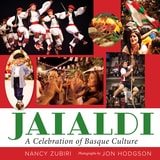
Jaialdi
A Celebration of Basque CultureNancy Zubiri
University of Nevada Press, 2022
Organized and staffed entirely by volunteers, Jaialdi attracts 35,000 to 50,000 visitors from around the world. Attendees enjoy festivities featuring Basque culture, including dancing, music, food, and competitive feats of strength. Photographer Jon C. Hodgson captures the spirit and merriment of the festival in vivid detail, taking readers on a journey into the heart of Basque culture. Coupled with author Nancy Zubiri’s observations from her own attendance at nearly every Jaialdi since 1987, the book reveals how Boise’s Basque community has committed to host the festival and why the celebration remains so popular today.
The Basque diaspora to the United States began in the late 1800s when these determined immigrants came seeking a new life filled with opportunities. Many were sheepherders who adapted to American life while maintaining their ties to the traditions of the Basque Country. Jaialdi: A Celebration of Basque Culture illuminates how this festival honors these traditions and captures the essence of the ancient Basque people, who are preserving their heritage while embracing life in the twenty-first-century West.
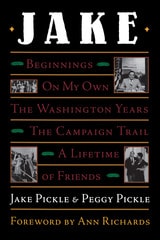
Jake
By Jake Pickle and Peggy Pickle
University of Texas Press, 1997
"My life has been given special purpose," Jake Pickle says. "Some men live to make money, drink, chase women, collect art, excel at a sport, or pursue other things that give them pleasure. The thing I got hooked on was helping people. And I've had the privilege of helping people by the thousands. Serving in Congress was the greatest honor of my life."
In this book, Jake Pickle tells the story of a lifetime in public service, including thirty-one years as Representative for Texas' Tenth Congressional District. Jake tells his story by telling stories—most of them humorous, some poignant—that add up to a warmly personal account of his life and career.
At the heart of the book are Jake's stories of political life in Washington, Austin, and on the campaign trail. These range from hilarious accounts of all that can and does happen at small-town Texas parades and rallies to clear, no-baloney explanations of some of the major legislation that Jake helped to pass. His stories about Social Security reform, tax-exempt organizations, and pension fund reform legislation make these complex topics easy to understand.
This book was written as a collaboration between Jake and his daughter, Peggy Pickle. It offers the fun of listening to a born raconteur spin his tales, while it reveals the ethics and integrity of a man who never forgot that the people elected him to serve them.
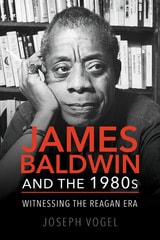
James Baldwin and the 1980s
Witnessing the Reagan EraJoseph Vogel
University of Illinois Press, 2018
Joseph Vogel offers the first in-depth look at Baldwin's dynamic final decade of work. Delving into the writer's creative endeavors, crucial essays and articles, and the impassioned polemic The Evidence of Things Not Seen, Vogel finds Baldwin as prescient and fearless as ever. Baldwin's sustained grappling with "the great transforming energy" of mass culture revealed his gifts for media and cultural criticism. It also brought him into the fray on issues ranging from the Reagan-era culture wars to the New South, from the deterioration of inner cities to the disproportionate incarceration of black youth, and from pop culture gender-bending to the evolving women's and gay rights movements.
Astute and compelling, James Baldwin and the 1980s revives and redeems the final act of a great American writer.
James Baldwin and the Heavenly City
Prophecy, Apocalypse, and DoubtChristopher Z. Hobson
Michigan State University Press, 2018
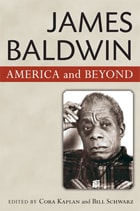
James Baldwin
America and BeyondBill Schwarz and Cora Kaplan, editors
University of Michigan Press, 2011
"This fine collection of essays represents an important contribution to the rediscovery of Baldwin's stature as essayist, novelist, black prophetic political voice, and witness to the Civil Rights era. The title provides an excellent thematic focus. He understood both the necessity, and the impossibility, of being a black 'American' writer. He took these issues 'Beyond'---Paris, Istanbul, various parts of Africa---but this formative experience only returned him to the unresolved dilemmas. He was a fine novelist and a major prophetic political voice. He produced some of the most important essays of the twentieth century and addressed in depth the complexities of the black political movement. His relative invisibility almost lost us one of the most significant voices of his generation. This welcome 'revival' retrieves it. Close call."
---Stuart Hall, Professor Emeritus, Open University
This interdisciplinary collection by leading writers in their fields brings together a discussion of the many facets of James Baldwin, both as a writer and as the prophetic conscience of a nation. The core of the volume addresses the shifting, complex relations between Baldwin as an American—“as American as any Texas GI” as he once wryly put it—and his life as an itinerant cosmopolitan. His ambivalent imaginings of America were always mediated by his conception of a world “beyond” America: a world he knew both from his travels and from his voracious reading. He was a man whose instincts were, at every turn, nurtured by America; but who at the same time developed a ferocious critique of American exceptionalism. In seeking to understand how, as an American, he could learn to live with difference—breaking the power of fundamentalisms of all stripes—he opened an urgent, timely debate that is still ours. His America was an idea fired by desire and grief in equal measure. As the authors assembled here argue, to read him now allows us to imagine new possibilities for the future.
With contributions by Kevin Birmingham, Douglas Field, Kevin Gaines, Briallen Hopper, Quentin Miller, Vaughn Rasberry, Robert Reid-Pharr, George Shulman, Hortense Spillers, Colm Tóibín, Eleanor W. Traylor, Cheryl A. Wall, and Magdalena Zaborowska.
James Barbour, a Jeffersonian Repulican
Charles D. Lowery
University of Alabama Press, 1984
Barbour, a Virginia contemporary of Thomas Jefferson and James Madison, during a long public career spanning the years 1798-1842, exerted a constructive influence on the nation’s history. Active in state and national politics during the formative decades of the republic, Barbour was a political nationalist who grafted to the dominant political philosophy of the day those elements of the Hamiltonian Federalist creed necessary for governing a dynamic, changing nation.
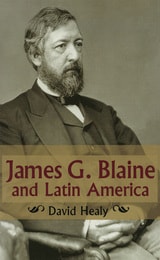
James G. Blaine and Latin America
David Healy
University of Missouri Press, 2001
James G. Blaine was one of the leading national political figures of his day, and probably the most controversial. Intensely partisan, the dominant leader of the Republican Party, and a major shaper of national politics for more than a decade, Blaine is remembered chiefly for his role as architect of the post-Civil War GOP and his two periods as secretary of state. He also was the Republican presidential candidate in the notorious mud-slinging campaign of 1884. His foreign policy was marked by its activism, its focus on Latin America, and its attempt to increase U.S. influence there.
James G. Blaine and Latin America asserts that Latin America lay at the heart of Blaine's foreign policy and his vision for America. David Healy examines seven major issues that collectively defined the secretary of state's methods, goals, and views regarding Latin America and, more broadly, the international role of the United States. Healy places his explorations within the larger context of Blaine's ongoing role as a national party leader, his relations with the presidents under whom he served, and the responses of his predecessors and successors toward the issues at hand in Latin America.
The result is a deeper understanding of Blaine's ambitious vision for his country's international role, his energy and aggressiveness in moving to achieve that vision, and his effective efforts to transmit his worldview to the public. Blaine's emphasis on the importance of Latin America to the United States and his conviction that his country should be a world power influenced a new generation of leaders who, at the end of the century, would go beyond his goals and usher in a new era.

James Jesus Angleton, the CIA, and the Craft of Counterintelligence
Michael Holzman
University of Massachusetts Press, 2008
As chief of counterintelligence for the Central Intelligence Agency from the early 1950s to the early 1970s, James Jesus Angleton built a formidable reputation. Although perhaps best known for leading the agency's notorious “Molehunt”—the search for a Soviet spy believed to have infiltrated the upper levels of the American government—Angleton also played a key role in the U.S. intervention in the Italian election of 1948, in Israel's development of nuclear weapons, and in the management of the CIA's investigation of the assassination of John F. Kennedy. He later led CIA efforts to contain the Vietnam-era antiwar movement, including the campaign to destroy the liberal Catholic magazine Ramparts.
In this deeply researched biography, Michael Holzman uses Angleton's story to illuminate the history of the CIA from its founding in the late 1940s to the mid-1970s. Like many of his colleagues in the CIA, James Angleton learned the craft of espionage during World War II as an officer in the Office of Strategic Services (OSS), where he became a friend and protégé of the British double agent Kim Philby. Yet Angleton's approach to counterintelligence was also influenced by his unusual Mexican American family background and his years at Yale as a student of the New Critics and publisher of modernist poets. His marriage to Cicely d'Autremont and the couple's friendship with E. E. and Marion Cummings became part of a network of cultural connections that linked the U.S. secret intelligence services and American writers and artists during the postwar period.
Drawing on a broad range of sources, including previously unexamined archival documents, personal letters, and interviews, Holzman looks beneath the surface of Angleton's career to reveal the sensibility that governed not only his personal aims and ambitions but those of the organization he served and helped shape.
James M. Cain and the American Authors' Authority
By Richard Fine
University of Texas Press, 1992
The 1940s offered ever-increasing outlets for writers in book publishing, magazines, radio, film, and the nascent television industry, but the standard rights arrangements often prevented writers from collecting a fair share of the profits made from their work. To remedy this situation, novelist and screenwriter James M. Cain (The Postman Always Rings Twice,Double Indemnity, Mildred Pierce) proposed that all professional writers, including novelists, playwrights, poets, and screenwriters, should organize into a single cartel that would secure a fairer return on their work from publishers and producers. This organization, conceived and rejected within one turbulent year (1946), was the American Authors' Authority (AAA).
In this groundbreaking work, Richard Fine traces the history of the AAA within the cultural context of the 1940s. After discussing the profession of authorship as it had developed in England and the United States, Fine describes how the AAA, which was to be a central copyright repository, was designed to improve the bargaining position of writers in the literary marketplace, keep track of all rights and royalty arrangements, protect writers' interests in the courts, and lobby for more favorable copyright and tax legislation.
Although simple enough in its design, the AAA proposal ignited a firestorm of controversy, and a major part of Fine's study explores its impact in literary and political circles. Among writers, the AAA exacerbated a split between East and West Coast writers, who disagreed over whether writing should be treated as a money-making business or as an artistic (and poorly paid) calling. Among politicians, a move to unite all writers into a single organization smacked of communism and sowed seeds of distrust that later flowered in the Hollywood blacklists of the McCarthy era.
Drawing insights from the fields of American studies, literature, and Cold War history, Fine's book offers a comprehensive picture of the development of the modern American literary marketplace from the professional writer's perspective. It uncovers the effect of national politics on the affairs of writers, thus illuminating the cultural context in which literature is produced and the institutional forces that affect its production.

James Madison
Liberty's AdvocateJohn P. Kaminski
Wisconsin Historical Society Press, 2018
America has had few political thinkers who have rivalled James Madison. The son of a wealthy planter, Madison was an unhealthy child and was beset by physical infirmities throughout his long life, and grew into a cerebral man. Madison left Virginia to attend the College of New Jersey, but returned to his native state after completing his studies. Though he aspired to be a college professor, Madison instead went into public service and became one of the most influential, guiding voices of the Founding Era. Madison’s Virginia Plan would be used as a blueprint for the Constitutional Convention, where the Articles of Confederation would be replaced with a new Constitution that bore traces of Madison’s influence throughout.
Editor John Kaminski has gathered a remarkable collection of quotations by and about James Madison for the third installment of his Word Portraits of America’s Founders series. Through these words by and about Madison, we learn more about one of the country’s most influential Founding Fathers, who held a lifelong commitment to liberty and opposed oppression.
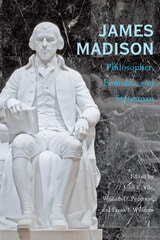
James Madison
Philosopher, Founder, and StatesmanJohn R. Vile
Ohio University Press, 2008
James Madison: Philosopher, Founder, and Statesman presents fresh scholarship on the nation’s fourth president, who is often called both the father of the U.S. Constitution and the father of the Bill of Rights. These essays by historians and political scientists from the United States and abroad focus on six distinct aspects of Madison’s life and work: his personality and development as a statesman; his work at the Constitutional Convention of 1787 and contributions to larger constitutional design; his advocacy for the adoption of the Bill of Rights; his controversial role as a party leader; his presidency; and his life after leaving office.
James Madison continues to be regarded as one of America’s great political theorists, a man who devoted his life to, and who found fulfillment in, public service. His philosophical contributions remain vital to any understanding of the modern American polity. This book will be of great interest to political scientists and theorists, as well as to historians of early American history and politics.
James Madison
The Founding FatherRobert Allen Rutland
University of Missouri Press, 1997
Available for the first time in paperback, James Madison: The Founding Father is a lively portrait of the man who essentially fathered our constitutional guarantees of civil and religious liberty. Focusing on the role Madison played at the Continental Congress and in each stage of the formation of the American Republic, Robert Allen Rutland also covers Madison's relationship with his beloved wife, Dolley, his fifty-year friendship with Thomas Jefferson, and his years as a respected elder statesman after serving as secretary of state and fourth president of the United States.
James Milton Turner and the Promise of America
The Public Life of a Post-Civil War Black LeaderGary R. Kremer
University of Missouri Press, 2020
Born a slave, Turner gained freedom when he was a child and received his education in clandestine St. Louis schools, later briefly attending Oberlin College. A self-taught lawyer, Turner earned a statewide reputation and wielded power far out of proportion to Missouri's relatively small black population.
After working nearly a decade in Liberia, Turner never regained the prominence he had enjoyed during Reconstruction.

James Naismith
The Man Who Invented BasketballRob Rains with Hellen Carpenter, Foreword by Roy Williams
Temple University Press, 2009
James Naismith reveals how Naismith invented basketball in part to find an indoor activity to occupy students in the winter months. When he realized that the key to his game was that men could not run with the ball, and that throwing and jumping would eliminate the roughness of force, he was on to something. And while Naismith thought that other sports provided better exercise, he was pleased to create a game that “anyone could play.”
With unprecedented access to the Naismith archives and documents, Rains and Carpenter chronicle how Naismith developed the 13 rules of basketball, coached the game at the University of Kansas—establishing college basketball in the process—and was honored for his work at the 1936 Olympic games in Berlin.

James Oliver Curwood
God's Country and the ManJudith A. Eldridge
University of Wisconsin Press, 1993
When the wounded bear he faced on a mountain ledge that day turned aside, James Curwood felt that he had been spared. From this encounter he became an avid conservationist. He wrote relentlessly—magazine stories and books and then for the new medium of motion pictures. Like many authors of his time, he was actively involved in movie-making until the plight of the forests and wildlife in his home state of Michigan turned his energies toward conservation.
A man ahead of his time, and quickly forgotten after his death in 1927, his gift of himself to his readers and to nature has finally come to be appreciated again two generations later.
James P. Cannon and the Origins of the American Revolutionary Left, 1890-1928
Bryan D. Palmer
University of Illinois Press, 2010
James Selkirk's Revolutionary War
The Memoir of a Continental SergeantRobb K. Haberman
Westholme Publishing, 2027
A Significant Personal Account by a Continental Soldier, in Print for the First Time
In the twilight years of his life, James Selkirk (1757–1820), a modest tailor and Revolutionary War veteran residing in Bethlehem, New York, composed a memoir about his wartime experiences in the Continental Army. Selkirk’s memoir tells the story of a young Scottish immigrant who served well and faithfully as a non-commissioned officer in three different corps from April 1776 through June 1783. During this period, Selkirk fought in several engagementsthat ranged from the wilderness of northern New York to the waters of Chesapeake Bay. In addition to chronicling his participation in these campaigns, the memoir contains Selkirk’s personal observations and anecdotes about the daily rigors and duties common to an enlisted soldier in Continental service. James Selkirk’s Revolutionary War, edited by historian Robb K. Haberman, discusses how Selkirk endured over seven years of soldiering with the Continental Army. It also explores how Selkirk’s decision to write his memoir occurred as politicians and citizens debated whether the federal government should enact a pension program in support of the nation’s aged and mostly impoverished community of Revolutionary-era veterans. Through his writing, Selkirk weighed in on this issue, drawing attention to the deserved rights and recognition due to his surviving brothers in arms. Just as he had taken up a musket in earlier decades in the struggle for national independence, Selkirk now wielded a pen on behalf of the aging cohort of American veterans who were experiencing hardship in the era of the early republic. Selkirk planned to share his recollections of the war with a broader audience, but his death in December 1820 precluded the publication of the manuscript memoir as a printed book until now. James Selkirk’s memoir ranks among the earliest known writings that reveal unique and personal assessments of a common soldier’s existence during the American Revolution, from slogging on the march and performing duties in camp to facing the terrors of the battlefield.
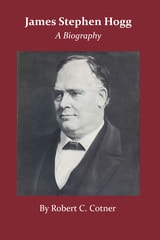
James Stephen Hogg
A BiographyBy Robert C. Cotner
University of Texas Press, 1959
No other governor has become so completely identified with Texas and its citizens as Jim Hogg, the first native Texan to hold the state's highest office. His fame was not, however, easily earned. Orphaned at twelve, he worked as farmhand, typesetter, and country editor to finance his study of law, an endeavor that eventually led him into public life.
Even before his admission to the bar in 1875 he served as justice of the peace in Wood County. Later, in two terms as district attorney (1881–1885), he proved himself a fearless prosecutor. His growing reputation, with his magnetic personality, brought him the attorney generalship in 1887, and in that office he fulfilled his campaign promises to enforce all laws. During Hogg's tenure, suits brought by his department resulted in the restoration of more than a million acres of state lands held by the railroads.
In 1890 Hogg was elected governor. Early the next year he began urging his reform program, the keystone of which was establishment of the Railroad Commission. He also brought about the passage of laws preventing the watering of railroad securities, the indiscriminate issuance of municipal securities, and the establishment of landholding companies. Land ownership by aliens was likewise restricted.
Throughout Hogg's public life, from iustice of the peace to governor, he was motivated by his concern for the welfare of the people. Invariably his criterion for evaluation of an issue was the effect of a decision upon the common welfare. In this democratic progressivism he was the Texas version of Thomas Jefferson or Theodore Roosevelt. Molded by his varied experiences, Jim Hogg was a man of many professions—printer, lawyer, politician, statesman, oil magnate. In these relationships he was still a warmly human person, a loving son, brother, husband, father, friend. His ambition to provide abundantly for his family was expansive enough to include all Texans; so his love for "the people" was reiterated in his public benefactions, through which Texans are even today still sharing his wealth.
Jim Hogg's varied public life and his heart-warming personal life are dramatically presented in this absorbing biography. In it, the far-sweeping panorama of Texas development in the late nineteenth and early twentieth centuries is shown in relation to his dreams and achievements.
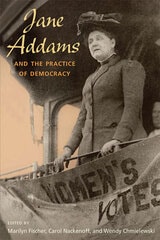
Jane Addams and the Practice of Democracy
Edited by Marilyn Fischer, Carol Nackenoff, and Wendy Chmielewski
University of Illinois Press, 2008
Using a rich array of newly available sources and contemporary methodologies from many disciplines, the ten original essays in this volume give a fresh appraisal of Addams as a theorist and practitioner of democracy. In an increasingly interdependent world, Addams's life work offers resources for activists, scholars, policy makers, and theorists alike. This volume demonstrates how scholars continue to interpret Addams as a model for transcending disciplinary boundaries, generating theory out of concrete experience, and keeping theory and practice in close and fruitful dialogue.
Contributors are Harriet Hyman Alonso, Victoria Bissell Brown, Wendy Chmielewski, Marilyn Fischer, Shannon Jackson, Louise W. Knight, Carol Nackenoff, Karen Pastorello, Wendy Sarvasay, Charlene Haddock Seigfried, and Camilla Stivers.
Jane Addams in the Classroom
Edited by David Schaafsma
University of Illinois Press, 2014
Balancing theoretical and practical considerations, the collection examines Addams's emphasis on listening to and learning from those around her and encourages contemporary educators to connect with students through innovative projects and teaching methods. In the first essays, Addams scholars lay out how her narratives drew on experience, history, and story to explicate theories she intended as guides to practice. Six teacher-scholars then establish Addams's ongoing relevance by connecting her principles to exciting events in their own classrooms. An examination of the Jane Addams Children's Book Award and a fictional essay on Addams's work and ideas round out the volume.
Accessible and wide-ranging, Jane Addams in the Classroom offers inspiration for educators while adding to the ongoing reconsideration of Addams's contributions to American thought.
Contributors include Todd DeStigter, Lanette Grate, Susan Griffith, Lisa Junkin, Jennifer Krikava, Lisa Lee, Petra Munro, Bridget O'Rourke, David Schaafsma, Beth Steffen, Darren Tuggle, Erin Vail, and Ruth Vinz.
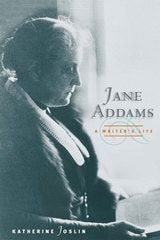
Jane Addams, a Writer's Life
Katherine Joslin
University of Illinois Press, 2003
Jane Addams, a Writer's Life is an expansive, revealing, and refreshing reexamination of the renowned reformer as an imaginative writer. Jane Addams is best known for her groundbreaking social work at Hull-House, the force of her efforts toward Progressive political and social reform, and the bravery of her commitment to pacifism, for which she received the Nobel Peace Prize. Katherine Joslin moves beyond this history to present Addams as a literary figure, one whose writing employed a synthesis of fictional and analytical prose that appealed to a wide audience.
Joslin traces Addams's style from her early works, Philanthropy and Social Progress and her contributions to Hull House Maps and Papers, influenced by Florence Kelley, to her modernist and experimental last books, The Second Twenty Years at Hull-House and My Friend, Julia Lathrop, placing Addams in the context of other Chicago writers including Theodore Dreiser, Upton Sinclair, Harriet Monroe, Frank Norris and James T. Farrell. Joslin's close readings showcase Addams's distinguishing literary devices, such as using stories about people rather than sociological argument to make moral points. As Joslin pursues the argument that Addams's power as a public figure stemmed from the success of her books and essays, Addams herself emerges as a literary woman.
Jane Addams
A BIOGRAPHYJames Weber LinnIntroduction by Anne Firor Scott
University of Illinois Press, 1935
James Weber Linn's life of this forceful public figure offers a rare glimpse of the private Addams, from her childhood and schooling through her first efforts in public service and her rise to a position of national influence. Linn's biography is based on Addams's personal papers, which she turned over to him before she died: files of her manuscripts, published and unpublished, along with all of her letters and papers, from her first valentine to her last speech. Out of this treasure trove, in combination with Addams's substantial published works, he has written a unique life of his aunt, beautifully illuminating her private reflections and inner strength as well as her formidable public persona.

Jane Addams
The Most Dangerous Woman in AmericaMarlene Targ Brill
Ohio University Press, 2024

Jane Fonda
There's a Great Deal to SayMarilyn S. Greenwald
Rutgers University Press, 0
Since the late 1960s, Jane Fonda has identified as an activist first and an actor second, using her celebrity as a vehicle to convey her views and her advocacy. Few stars of her stature have been as simultaneously acclaimed and vilified as Fonda. Even as she won two Academy Awards and was a major box office draw of the 1970s and 1980s, she received reams of hate mail for her political activism and antiwar stances. This book explores Fonda’s devotion to movement politics—sometimes at the expense of her career and her personal safety.
Digging deep into rare material from cinema archives and Fonda’s own personal papers, journalist Marilyn Greenwald tells the story of how Fonda came to view acting as a “side gig” that gives her a worldwide platform to convey her personal and political views. Charting the evolution of her activism and the merging of her acting and producing with her advocacy, Greenwald focuses on the years from 1968—when she was jarred out of complacency by the Vietnam War—to 1980, after the release of The China Syndrome and the advent of the Three Mile Island nuclear crisis, which brought to light the possible dangers of nuclear energy. Greenwald details how three of her films—Klute (1971), Coming Home (1978), and The China Syndrome (1979)—were designed to further her personal beliefs. She also considers how Fonda has weathered changes in the entertainment industry and public tastes to produce and star in decades' worth of socially conscious projects. Charting Fonda’s personal and professional growth while offering a candid account of her struggles, this book shows how Fonda viewed movies as an influential storytelling tool that can influence public opinion, change minds, and trigger social change.
Jane Froman
Missouri's First Lady of SongIlene Stone
University of Missouri Press, 2003
Japan and American Children's Books
A JourneySybille Jagusch
Rutgers University Press, 2021
For generations, children’s books provided American readers with their first impressions of Japan. Seemingly authoritative, and full of fascinating details about daily life in a distant land, these publications often presented a mixture of facts, stereotypes, and complete fabrications.
This volume takes readers on a journey through nearly 200 years of American children’s books depicting Japanese culture, starting with the illustrated journal of a boy who accompanied Commodore Matthew Perry on his historic voyage in the 1850s. Along the way, it traces the important role that representations of Japan played in the evolution of children’s literature, including the early works of Edward Stratemeyer, who went on to create such iconic characters as Nancy Drew. It also considers how American children’s books about Japan have gradually become more realistic with more Japanese-American authors entering the field, and with texts grappling with such serious subjects as internment camps and the bombing of Hiroshima and Nagasaki.
Drawing from the Library of Congress’s massive collection, Sybille A. Jagusch presents long passages from many different types of Japanese-themed children’s books and periodicals—including travelogues, histories, rare picture books, folktale collections, and boys’ adventure stories—to give readers a fascinating look at these striking texts.
Published by Rutgers University Press, in association with the Library of Congress.

Japan in the World
Masao Miyoshi and H. D. Harootunian, eds.
Duke University Press, 1993
Among the many topics covered are: racism in U.S.-Japanese relations; productivity and workplace discourse; Western cultural hegemony; the constructing of a Japanese cultural history; and the place of the novelist in today's world. Originally published as a special issue of boundary 2 (Fall 1991), this edition includes four new essays on Japanese industrial revolution; the place of English studies in Japan; how American cultural, historical, and political discourse represented Japan and in turn how America's version of Japan became Japan's version of itself; and an "archaeology" of hegemonic relationships between Japan and America and Britain in the first half of the twentieth century.
Contributors. Eqbal Ahmad, Perry Anderson, Bruce Cumings, Arif Dirlik, H.D. Harootunian, Kazuo Ishuro, Fredric Jameson, Kojin Karatani, Oe Kenzaburo, Masao Miyoshi, Tetsuo Najita, Leslie Pincus, Naoki Sakai, Miriam Silverberg, Christena Turner, Rob Wilson, Mitsuhiro Yoshimoto

Japan in the World, the World in Japan
Fifty Years of Japanese Studies at MichiganEdited by the Center for Japanese Studies, University of Michigan
University of Michigan Press, 2001
Japanese American Midwives
Culture, Community, and Health Politics, 1880-1950Susan L. Smith
University of Illinois Press, 2005
In the late nineteenth century, Japan's modernizing quest for empire transformed midwifery into a new woman's profession. With the rise of Japanese immigration to the United States, Japanese midwives (sanba) served as cultural brokers as well as birth attendants for Issei women. They actively participated in the creation of Japanese American community and culture as preservers of Japanese birthing customs and agents of cultural change.
Japanese American Midwives reveals the dynamic relationship between this welfare state and the history of women and health. Susan L. Smith blends midwives' individual stories with astute analysis to demonstrate the impossibility of clearly separating domestic policy from foreign policy, public health from racial politics, medical care from women's caregiving, and the history of women and health from national and international politics. By setting the history of Japanese American midwives in this larger context, Smith reveals little-known ethnic, racial, and regional aspects of women's history and the history of medicine.
Japanese American Millennials
Rethinking Generation, Community, and DiversityMichael Omi
Temple University Press, 2019
Whereas most scholarship on Japanese Americans looks at historical case studies or the 1.5 generation assimilating, this pioneering anthology, Japanese American Millennials, captures theexperiences, perspectives, and aspirations of Asian Americans born between 1980 and 2000. The editors and contributors present multiple perspectives on who Japanese Americans are, how they think about notions of community and culture, and how they engage and negotiate multiple social identities.
The essays by scholars both in the United States and Japan draw upon the Japanese American millennial experience to examine how they find self-expression in Youth Basketball Leagues or Christian youth camps as well as how they grapple with being mixed-race, bicultural, or queer. Featuring compelling interviews and observations, Japanese American Millennials dislodges the dominant generational framework toaddress absences in the current literature and suggests how we might alternatively study Japanese Americans as a whole.
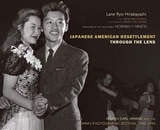
Japanese American Resettlement through the Lens
Hikaru Iwasaki and the WRA's Photographic Section, 1943-1945Lane Ryo Hirabayashi
University Press of Colorado, 2009
In Japanese American Resettlement through the Lens, Lane Ryo Hirabayashi gathers a unique collection of photographs by War Relocation Authority photographer Hikaru Iwasaki, the only full-time WRA photographer from the period still living.
With substantive focus on resettlement - and in particular Iwasaki's photos of Japanese Americans following their release from WRA camps from 1943 to 1945 - Hirabayashi explores the WRA's use of photography in its mission not only to encourage "loyal" Japanese Americans to return to society at large as quickly as possible but also to convince Euro-Americans this was safe and advantageous. Hirabayashi also assesses the relative success of the WRA project, as well as the multiple uses of the photographs over time, first by the WRA and then by students, scholars, and community members in the present day.
Although the photos have been used to illustrate a number of publications, this book is the first sustained treatment addressing questions directly related to official WRA photographs. How and under what conditions were they taken? Where were they developed, selected, and stored? How were they used during the 1940s? What impact did they have during and following the war?
By focusing on the WRA's Photographic Section, Japanese American Resettlement through the Lens makes a unique contribution to the body of literature on Japanese Americans during World War II.
Japanese Americans
The Formation and Transformations of an Ethnic GroupSpickard, Paul
Rutgers University Press, 2008
In this concise history, Paul Spickard traces the struggles and achievements of Japanese Americans in claiming their place in American society. He outlines three forces shaping ethnic groups in general: shared interests, shared institutions, and shared culture, and chronicles the Japanese American experience within this framework, showing how these factors created and nurtured solidarity.
Japanese Women and the Transnational Feminist Movement before World War II
Taeko Shibahara
Temple University Press, 2014
This book traces the development of feminist consciousness in Japan from 1871 to 1941. Taeko Shibahara uncovers some fascinating histories as she examines how middle-class women navigated between domestic and international influences to form ideologies and strategies for reform. They negotiated a humanitarian space as Japan expanded its nationalist, militarist, imperialist, and patriarchal power.
Focusing on these women's political awakening and activism, Shibahara shows how Japanese feminists channeled and adapted ideas selected from international movements and from interactions with mainly American social activists.
Japanese Women and the Transnational Feminist Movement before World War II also connects the development of international contacts with the particular contributions of Ichikawa Fusae to the suffrage movement, Ishimoto Shidzue to the birth control movement, and Gauntlett Tsune to the peace movement by touching on issues of poverty, prostitution, and temperance. The result provides a window through which to view the Japanese women's rights movement with a broader perspective.