Results by title
5159 books match the query 'Biography' and 45 start with k
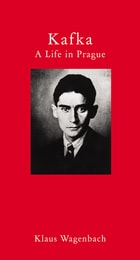
Kafka's Prague
Klaus Wagenbach
Haus Publishing, 2020
Drawing from a range of documents and historical materials, this is the first book specifically dedicated to the relationship between Kafka and Prague. Klaus Wagenbach’s account of Kafka’s life in the city is a meticulously researched insight into the author’s family background, his education and employment, his attitude toward the town of his birth, his literary influences, and his relationships with women. The result is a fascinating portrait of the twentieth century’s most enigmatic writer and the city that provided him with so much inspiration. W. G. Sebald recognized that “literary and life experience overlap” in Kafka’s works, and the same is true of this book.
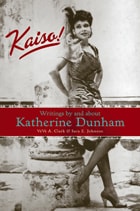
Kaiso!
Writings by and about Katherine DunhamEdited by VeVe A. Clark and Sara E. Johnson
University of Wisconsin Press, 2006

Kakungulu and the Creation of Uganda, 1868–1928
1868-1928Michael Twaddle
Ohio University Press, 1993
This is a history of the early days of Uganda. The account has an African focus because it shows the British takeover through the experiences of an extraordinary leader.
“At this spot in the year 1901 the British flag was first hoisted by Semei Kakanguru, emissary and loyal servant of His Majesty the King. He built here a boma which was for a short time the headquarters of the district. From this beginning came the establishment of peace and the development of orderly progress in this part of Uganda.”
Michael Twaddle was shown this plaque in 1963 by a local government official who said “That man created the Uganda we Ugandans are fighting for today.” And yet the local people had had the plaque removed to a bicycle shed.
How do people regard an African who had an active role in the creation of the imperial state? Was this man “a hero,” “a collaborator,” “a warlord”? The reaction of colonial officials was mixed. One considered him “…in point of general intelligence, progressive ideas and charm of manner…far above all other natives in the Protectorate…” Another dismissed him, along with his companions, as “no better than Masai or Nandi cattle lifters.” And yet another viewed him as “undoubtedly…a partial religious maniac.”
The story of this man is an example of the dilemma for a whole generation of East Africans at the turn of the last century. This book has been compared in its importance to Shepperson’s and Price’s Independent African.
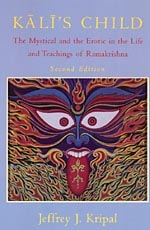
Kali's Child
The Mystical and the Erotic in the Life and Teachings of RamakrishnaJeffrey J. Kripal
University of Chicago Press, 1998
In a substantial new preface to this second edition, Kripal answers his critics, addresses the controversy the book has generated in India, and traces the genealogy of his work in the history of psychoanalytic discourse on mysticism, Hinduism, and Ramakrishna himself. Kali's Child has already proven to be provocative, groundbreaking, and immensely enjoyable.
"Only a few books make such a major contribution to their field that from the moment of publication things are never quite the same again. Kali's Child is such a book."—John Stratton Hawley, History of Religions
Winner of the American Academy of Religion's History of Religions Prize for the Best First Book of 1995

Kali's Child
The Mystical and the Erotic in the Life and Teachings of RamakrishnaJeffrey J. Kripal
University of Chicago Press, 1995
In this work, Jeffrey J. Kripal attempts to untangle the paradox. He demonstrates that Ramakrishna's famous mystical experiences were driven by erotic energies that he neither fully accepted nor understood; the key to understanding this extraordinary figure, Kripal argues, lies in Tantra and its ritual, symbolic, and doctrinal equation of the mystical and the erotic.
Moving through Ramakrishna's world both chronologically and conceptually, Kali's Child employs two complementary interpretive strategies, a nuanced phenomenological reinterpretation of original Bengali texts and a nonreductive psychoanalytic reading of Ramakrishna's mystical eroticism. Kripal shows how the heterosexual structure of Tantric symbolism, the abusive way its rituals were often forced upon the saint, and Ramakrishna's own homosexual desires all came together to produce in him profound feelings of shame, disgust, and fear. Kripal establishes that the homosexuality of this great, if unwilling, Tantric mystic is linked inextricably to virtually every aspect of his life and teachings.
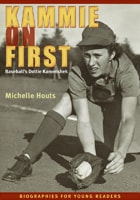
Kammie on First
Baseball’s Dottie KamenshekMichelle Houts
Ohio University Press, 2014
Dorothy Mary Kamenshek was born to immigrant parents in Norwood, Ohio. As a young girl, she played pickup games of sandlot baseball with neighborhood children; no one, however, would have suspected that at the age of seventeen she would become a star athlete at the national level.
The outbreak of World War II and the ensuing draft of able-bodied young men severely depleted the ranks of professional baseball players. In 1943, Philip K. Wrigley, owner of the Chicago Cubs, led the initiative to establish a new league—a women’s league—to fill the ballparks while the war ground on in Europe and the Pacific. Kamenshek was selected and assigned to the Rockford Peaches in their inaugural season and played first base for a total of ten years, becoming a seven-time All-Star and holder of two league batting titles. When injuries finally put an end to her playing days, she went on to a successful and much quieter career in physical therapy. Fame came again in 1992, when Geena Davis portrayed a player loosely based on Kamenshek in the hit movie A League of Their Own.
Kammie on First is a real-life tale that will entertain and inspire young readers, both girls and boys. It is the first book in a new series, Biographies for Young Readers, from Ohio University Press.
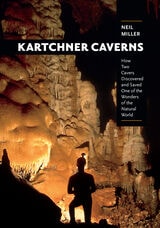
Kartchner Caverns
How Two Cavers Discovered and Saved One of the Wonders of the Natural WorldNeil Miller
University of Arizona Press, 2008
Award-winning author Neil Miller soon tells us that what lay in front of amateur spelunkers Randy Tufts and Gary Tenen was anything but routine. These young men had crawled into a virgin cave, a landscape untouched and unseen for hundreds of thousands of years. In cave terminology, this underground oasis was “living”—water still seeped down the limestone walls, depositing minerals that slowly built up into stunningly beautiful formations.
In a time when countless caves had been destroyed by vandals and looters who had defaced the walls and had broken formations, this pristine discovery was every caver’s dream. While duplicating that moment might seem difficult, this fascinating account of the fight to preserve Kartchner Caverns lends us the same sense of awe and urgency. In an arresting tale spanning the twenty-five-year period in which Tufts and Tenen struggled to protect their find, Miller skillfully weaves together personal interviews, biographical information, political maneuvering, and geological facts. Presented in full color with dazzling photographs showcasing the natural wonder of the caverns, this is an invitation to take in the mysterious, stunning beauty of a cave as if discovering it for the first time.
The triumph of the conservationists and the opening of Kartchner Caverns as a state park are known to anyone who has visited the caves as a tourist. But this narrative offers a chance to go beyond the guidebooks with its revealing look at this unspoiled natural wonder and the science of cave conservation. With as much depth and colorful detail as the caverns themselves, this page-turning account will captivate anyone interested in caves and the preservation of natural wonders.
Katherine Anne Porter Remembered
Darlene Harbour Unrue
University of Alabama Press, 2010
Katherine Anne Porter Remembered is a collection of reminiscences and memoirs by contemporaries, friends, and associates of Porter offering a revealing and intimate portrait of the elusive and complex American writer.
From a fractured and vagabond girlhood in Texas, Porter led a wildly itinerant life that took her through five marriages, innumerable love affairs, and homes in Colorado, New York, Paris, Mexico, Louisiana, California, and Maryland. With very little formal education, she grew through sheer force of will to become a major American writer of short stories and the author of several books including Flowering Judas and other stories; Ship of Fools; Pale Horse; Pale Ride; Noon Wine; and The Collected Stories of Katherine Anne Porter, which won both the Pulitzer Prize and the National Book Award.
Because of Porter’s own dissembling and half-truths about her life, as well as the numerous factual errors that persist in biographical entries and literary dictionaries, a complete and accurate portrait of her life has been hard to establish. The 63 reminiscences gathered in this book paint a vivid portrait of Porter and are testaments to her extraordinary beauty, her gift for mesmerizing and charming audiences and friends, her yearnings for a lasting home, her delusions about love, the astonishing range and scope of her reading, her sharp tongue and vindictiveness, and her final paranoid renunciations of friends and family. Along the way, Porter formed friendships with Eudora Welty, Elizabeth Hardwick, Flannery O’Connor, and CleanthBrooks whose remembrances of her are included in this volume.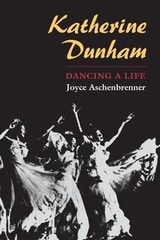
Katherine Dunham
DANCING A LIFEJoyce Aschenbrenner
University of Illinois Press, 2002
Founder of the first self-supporting African American dance company, Dunham relied on her fieldwork as an anthropologist to fundamentally change modern dance. She shaped new dance techniques and introduced other cultures to U.S. and European audiences by fusing Caribbean and African-based movement with ballet and modern dance. Her revolutionary approaches to dance and its greater connection to the world have influenced a generation of dancers, theatrical performers, and scholars. She believes that dance involves the development of an entire person and the rituals and traditions of dance are integral to the study of culture. Throughout her career she has been a living model of the socially responsible artist working to whet cultural appetites and combat social injustice.
Joyce Aschenbrenner's multifaceted portrait blends personal observations based on her own interactions with Dunham, archival documents, and interviews with Dunham's colleagues, students, and members of the Katherine Dunham Dance Company.
Integrating these sources, Aschenbrenner characterizes the social, familial, and cultural environment of Dunham's upbringing and the intellectual and artistic community she embraced at the University of Chicago that laid the groundwork for her development as a dancer, anthropologist, and humanitarian. The book vividly depicts Dunham's and her dancers' touring experiences and includes detailed descriptions of her community cultural and educational programs in East St. Louis.
Kay Boyle
A Twentieth-Century Life in LettersEdited and with an Introduction by Sandra Spanier
University of Illinois Press, 2015
<p>Kay Boyle shared the first issue of <i>This Quarter</i> with Gertrude Stein and Ernest Hemingway, expressed her struggles with poetry to William Carlos Williams and voiced warm admiration to Katherine Anne Porter, fled WWII France with Max Ernst and Peggy Guggenheim, socialized with the likes of James Joyce, Marcel Duchamp, and Samuel Beckett, and went to jail with Joan Baez. The letters in this first-of-its-kind collection, authorized by Boyle herself, bear witness to a transformative era illuminated by genius and darkened by Nazism and the Red Scare. Yet they also serve as milestones on the journey of a woman who possessed a gift for intense and enduring friendship, a passion for social justice, and an artistic brilliance that earned her inclusion among the celebrated figures in her ever-expanding orbit.
Keats
Andrew Motion
University of Chicago Press, 1999
"Motion has given us a new Keats, one who is skinned alive, a genius who wrote in a single month all the poems we cherish, a victim who was tormented by the best doctors of the age. . . . This portrait, stripped of its layers of varnish and restored to glowing colours, should last us for another generation."—Edmund White, The Observer Review
"Keats's letters fairly leap off the page. . . . [Motion] listens for the 'freely associating inquiry and incomparable verve and dash,' the 'headlong charge,' of Keats's jazzlike improvisations, which give us, like no other writing in English, the actual rush of a man thinking, a mind hurtling forward unpredictably and sweeping us along."—Morris Dickstein, New York Times Book Review
"Scrupulous and eloquent."—Gregory Feeley, Philadelphia Inquirer
Keep On Fighting
The Life and Civil Rights Legacy of Marian A. SpencerDorothy H. Christenson
Ohio University Press, 2015
Marian Alexander Spencer was born in 1920 in the Ohio River town of Gallipolis, Ohio, one year after the “Red Summer” of 1919 that saw an upsurge in race riots and lynchings. Following the example of her grandfather, an ex-slave and community leader, Marian joined the NAACP at thirteen and grew up to achieve not only a number of civic leadership firsts in her adopted home city of Cincinnati, but a legacy of lasting civil rights victories.
Of these, the best known is the desegregation of Cincinnati’s Coney Island amusement park. She also fought to desegregate Cincinnati schools and to stop the introduction of observers in black voting precincts in Ohio. Her campaign to raise awareness of industrial toxic-waste practices in minority neighborhoods was later adapted into national Superfund legislation.
In 2012, Marian’s friend and colleague Dot Christenson sat down with her to record her memories. The resulting biography not only gives us the life story of remarkable leader but encapsulates many of the twentieth century’s greatest struggles and advances. Spencer’s story will prove inspirational and instructive to citizens and students alike.
Keep True
A Life in PoliticsHoward Pawley
University of Manitoba Press, 2011
Keep Your Airspeed Up
The Story of a Tuskegee AirmanHarold H. Brown and Marsha S. Bordner
University of Alabama Press, 2017
Inspiring memoir of Colonel Harold H. Brown, one of the 930 original Tuskegee pilots, whose dramatic wartime exploits and postwar professional successes contribute to this extraordinary account.
Keep Your Airspeed Up: The Story of a Tuskegee Airman is the memoir of an African American man who, through dedication to his goals and vision, overcame the despair of racial segregation to great heights, not only as a military aviator, but also as an educator and as an American citizen.
Unlike other historical and autobiographical portrayals of Tuskegee airmen, Harold H. Brown’s memoir is told from its beginnings: not on the first day of combat, not on the first day of training, but at the very moment Brown realized he was meant to be a pilot. He revisits his childhood in Minneapolis where his fascination with planes pushed him to save up enough of his own money to take flying lessons. Brown also details his first trip to the South, where he was met with a level of segregation he had never before experienced and had never imagined possible.
During the 1930s and 1940s, longstanding policies of racial discrimination were called into question as it became clear that America would likely be drawn into World War II. The military reluctantly allowed for the development of a flight-training program for a limited number of African Americans on a segregated base in Tuskegee, Alabama. The Tuskegee Airmen, as well as other African Americans in the armed forces, had the unique experience of fighting two wars at once: one against Hitler’s fascist regime overseas and one against racial segregation at home.
Colonel Brown fought as a combat pilot with the 332nd Fighter Group during World War II, and was captured and imprisoned in Stalag VII A in Moosburg, Germany, where he was liberated by General George S. Patton on April 29, 1945. Upon returning home, Brown noted with acute disappointment that race relations in the United States hadn’t changed. It wasn’t until 1948 that the military desegregated, which many scholars argue would not have been possible without the exemplary performance of the Tuskegee Airmen.
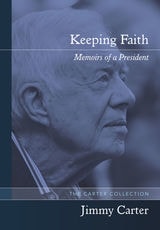
Keeping Faith
Memoirs of a PresidentJimmy Carter
University of Arkansas Press, 1995
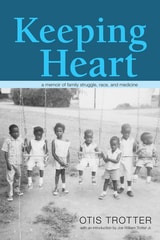
Keeping Heart
A Memoir of Family Struggle, Race, and MedicineOtis Trotter
Ohio University Press, 2015
“After saying our good-byes to friends and neighbors, we all got in the cars and headed up the hill and down the road toward a future in Ohio that we hoped would be brighter,” Otis Trotter writes in his affecting memoir, Keeping Heart: A Memoir of Family Struggle, Race, and Medicine.
Organized around the life histories, medical struggles, and recollections of Trotter and his thirteen siblings, the story begins in 1914 with his parents, Joe William Trotter Sr. and Thelma Odell Foster Trotter, in rural Alabama. By telling his story alongside the experiences of his parents as well as his siblings, Otis reveals cohesion and tensions in twentieth-century African American family and community life in Alabama, West Virginia, and Ohio.
This engaging chronicle illuminates the journeys not only of a black man born with heart disease in the southern Appalachian coalfields, but of his family and community. It fills an important gap in the literature on an underexamined aspect of American experience: the lives of blacks in rural Appalachia and in the nonurban endpoints of the Great Migration. Its emotional power is a testament to the importance of ordinary lives.
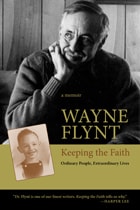
Keeping the Faith
Ordinary People, Extraordinary LivesWayne Flynt
University of Alabama Press, 2011
Keewaydinoquay, Stories from My Youth
Keewaydinoquay Peschel
University of Michigan Press, 2006
Michael Blake's Dances with Wolves transformed denigrating Indian sterotypes and created widespread interest in Native American culture. The subsequent popularity of books on this topic underscores the power of a tale well told. While Blake's story relates the early chapters of Native Americans' survival struggles, later accounts of this struggle remain untold.
The Indians of Hungry Hollow authentically presents these later chapters. The days of Hungry Hollow have long passed, but the opportunity to capture its lessons of community, strong values, and an urge to thrive in matters of the heart and soul are still very much with us.
These are stories of survival, community, sharing, and caring. The situations are often dire: winter in the middle of the Depression; an Indian settlement illegally taken from its inhabitants and set on fire; boaters stranded by bad weather and threatened with death. But if the situations are extreme, the telling of the stories is consistently optimistic yet completely without self-pity or sentimentality, and the characters always find a way through the darkness.
Dunlop's unique style of storytelling is compelling and informative, and these historically significant stories help to elucidate the transition of the American Indian culture from post-tribal days to the present.
Bill Dunlop is a respected Ottawa elder and storyteller. Marcia Fountain-Blacklidge is a professional writer, counselor, and consultant.
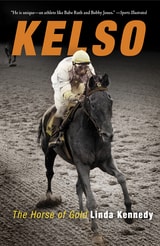
Kelso
The Horse of GoldLinda Kennedy
Westholme Publishing, 2007
Praise for Kelso: The Horse of Gold:
“Ms. Kennedy has captured the grandeur of the horse in a simple, straightforward way that will charm and excite those who saw Kelso run and remember his stirring deeds. . . . Kelso's racing record through eight seasons is simply breathtaking.”—Wall Street Journal
“In this concise, entertaining account, Kennedy tells the story of Kelso, a scrawny ungainly gelding who just happened to be one of the greatest Thoroughbreds that ever lived.”—Publishers Weekly
“An excellent portrayal... so intense that one has the sensation of being right there with the crowd and cheering Kelso on.”—Tom Trotter, Former New York Racing Secretary
“He was the greatest horse I ever rode.”—Eddie Arcaro, rider of Triple Crown champions Whirlaway, Assault, and Citation
At his three-year debut in June 1960, no one could know that Mrs. Allaire DuPont’s small, deerlike gelding named Kelso would come to dominate American racing like no other horse before or since. For five unprecedented years, he would reign as Horse of the Year, setting records and endearing himself to millions of fans. Always considered among the top four horses of all time—with Man O' War, Secretariat, and Citation—for many, Kelso is the greatest racehorse, since he won at sprints and endurance races, won on turf and dirt, carried unprecedented handicap weights, and raced both foreign and national thoroughbreds. Kelso was crowned champion of the Jockey Gold Cup, one of the most prestigious racing events, an astounding five straight times. Like Seabiscuit, Kelso was not earmarked as a contender and missed the Triple Crown races. But Kelso's greatness was decisive: he regularly defeated Triple Crown race winners. In Kelso: The Horse of Gold, Linda Kennedy tells the remarkable story of one of the greatest athletes of the ages, recreating the excitement of "Kelly's" unique and brilliant career while placing his unparalleled achievements in the context of racing history.
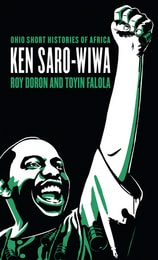
Ken Saro-Wiwa
Roy Doron
Ohio University Press, 2016
Hanged by the Nigerian government on November 10, 1995, Ken Saro-Wiwa became a martyr for the Ogoni people and human rights activists, and a symbol of modern Africans’ struggle against military dictatorship, corporate power, and environmental exploitation. Though he is rightly known for his human rights and environmental activism, he wore many hats: writer, television producer, businessman, and civil servant, among others. While the book sheds light on his many legacies, it is above all about Saro-Wiwa the man, not just Saro-Wiwa the symbol.
Roy Doron and Toyin Falola portray a man who not only was formed by the complex forces of ethnicity, race, class, and politics in Nigeria, but who drove change in those same processes. Like others in the Ohio Short Histories of Africa series, Ken Saro-Wiwa is written to be accessible to the casual reader and student, yet indispensable to scholars.
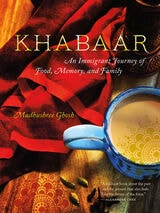
Khabaar
An Immigrant Journey of Food, Memory, and FamilyMadhushree Ghosh
University of Iowa Press, 2022
Khabaar is a food memoir and personal narrative that braids the global journeys of South Asian food through immigration, migration, and indenture. Focusing on chefs, home cooks, and food stall owners, the book questions what it means to belong and what does belonging in a new place look like in the foods carried over from the old country? These questions are integral to the author’s own immigrant journey to America as a daughter of Indian refugees (from what’s now Bangladesh to India during the 1947 Partition of India); as a woman of color in science; as a woman who left an abusive marriage; and as a woman who keeps her parents’ memory alive through her Bengali food.
Kicking
Jules Boykoff
Duke University Press, 2026
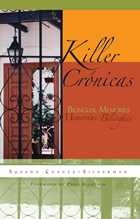
Killer Crónicas
Bilingual MemoriesSusana Chavez-Silverman
University of Wisconsin Press, 2004
Includes a chapter that was awarded first prize in El Andar magazine’s Chicano Literary Excellence Contest in the category of personal memoir.

Killer on the Road
Violence and the American InterstateBy Ginger Strand
University of Texas Press, 2012
Starting in the 1950s, Americans eagerly built the planet’s largest public work: the 42,795-mile National System of Interstate and Defense Highways. Before the concrete was dry on the new roads, however, a specter began haunting them—the highway killer. He went by many names: the “Hitcher,” the “Freeway Killer,” the “Killer on the Road,” the “I-5 Strangler,” and the “Beltway Sniper.” Some of these criminals were imagined, but many were real. The nation’s murder rate shot up as its expressways were built. America became more violent and more mobile at the same time.
Killer on the Road tells the entwined stories of America’s highways and its highway killers. There’s the hot-rodding juvenile delinquent who led the National Guard on a multistate manhunt; the wannabe highway patrolman who murdered hitchhiking coeds; the record promoter who preyed on “ghetto kids” in a city reshaped by freeways; the nondescript married man who stalked the interstates seeking women with car trouble; and the trucker who delivered death with his cargo. Thudding away behind these grisly crime sprees is the story of the interstates—how they were sold, how they were built, how they reshaped the nation, and how we came to equate them with violence.
Through the stories of highway killers, we see how the “killer on the road,” like the train robber, the gangster, and the mobster, entered the cast of American outlaws, and how the freeway—conceived as a road to utopia—came to be feared as a highway to hell.
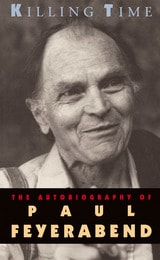
Killing Time
The Autobiography of Paul FeyerabendPaul Feyerabend
University of Chicago Press, 1995
Trained in physics and astronomy, Feyerabend was best known as a philosopher of science. But he emphatically was not a builder of theories or a writer of rules. Rather, his fame was in powerful, plain-spoken critiques of "big" science and "big" philosophy. Feyerabend gave voice to a radically democratic "epistemological anarchism:" he argued forcefully that there is not one way to knowledge, but many principled paths; not one truth or one rationality but different, competing pictures of the workings of the world. "Anything goes," he said about the ways of science in his most famous book, Against Method. And he meant it.
Here, for the first time, Feyerabend traces the trajectory that led him from an isolated, lower-middle-class childhood in Vienna to the height of international academic success. He writes of his experience in the German army on the Russian front, where three bullets left him crippled, impotent, and in lifelong pain. He recalls his promising talent as an operatic tenor (a lifelong passion), his encounters with everyone from Martin Buber to Bertolt Brecht, innumerable love affairs, four marriages, and a career so rich he once held tenured positions at four universities at the same time.
Although not written as an intellectual autobiography, Killing Time sketches the people, ideas, and conflicts of sixty years. Feyerabend writes frankly of complicated relationships with his mentor Karl Popper and his friend and frequent opponent Imre Lakatos, and his reactions to a growing reputation as the "worst enemy of science."
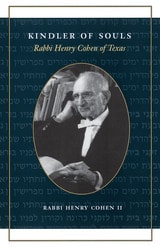
Kindler of Souls
Rabbi Henry Cohen of TexasBy Rabbi Henry Cohen II
University of Texas Press, 2007
In September 1930, the New York Times published a list of the clergy whom Rabbi Stephen Wise considered "the ten foremost religious leaders in this country." The list included nine Christians and Rabbi Henry Cohen of Galveston, Texas. Little-known today, Henry Cohen was a rabbi to be reckoned with, a man Woodrow Wilson called "the foremost citizen of Texas" who also impressed the likes of William Howard Taft and Clarence Darrow. Cohen's fleeting fame, however, was built not on powerful friendships but on a lifetime of service to needy Jews—as well as gentiles—in London, South Africa, Jamaica, and, for the last sixty-four years of his life, Galveston, Texas.
More than 10,000 Jews, mostly from Eastern Europe, arrived in Galveston in the early twentieth century. Rabbi Cohen greeted many of the new arrivals in Yiddish, then helped them find jobs through a network that extended throughout the Southwest and Midwest United States. The "Galveston Movement," along with Cohen's pioneering work reforming Texas prisons and fighting the Ku Klux Klan, made the rabbi a legend in his time. As this portrait shows, however, he was also a lovable mensch to his grandson. Rabbi Henry Cohen II reminisces about his grandfather's jokes while placing the legendary rabbi in historical context, creating the best picture yet of this important Texan, a man perhaps best summarized by Rabbi Wise in the New York Times as "a soul who touches and kindles souls."
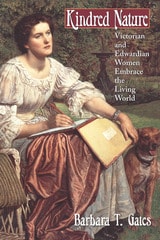
Kindred Nature
Victorian and Edwardian Women Embrace the Living WorldBarbara T. Gates
University of Chicago Press, 1999
Some of these women discovered previously unknown species, others wrote and illustrated natural histories or animal stories, and still others educated women, the working classes, and children about recent scientific advances. A number of women also played pivotal roles in the defense of animal rights by protesting overhunting, vivisection, and habitat destruction, even as they demanded their own rights to vote, work, and enter universities.
Kindred Nature shows the enormous impact Victorian and Edwardian women had on the natural sciences and the environmental movement, and on our own attitudes toward nature and human nature.

King Fisher
The Short Life and Elusive Legend of a Texas DesperadoChuck Parsons
University of North Texas Press, 2022
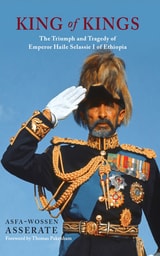
King of Kings
The Triumph and Tragedy of Emperor Haile Selassie I of EthiopiaAsfa-Wossen Asserate
Haus Publishing, 2015
Written by Asfa-Wossen Asserate, Haile Selassie’s grandnephew, this is the first major biography of this final “king of kings.” Asserate, who spent his childhood and adolescence in Ethiopia before fleeing the revolution of 1974, knew Selassie personally and gained intimate insights into life at the imperial court. Introducing him as a reformer and an autocrat whose personal history—with all of its upheavals, promises, and horrors—reflects in many ways the history of the twentieth century itself, Asserate uses his own experiences and painstaking research in family and public archives to achieve a colorful and even-handed portrait of the emperor.
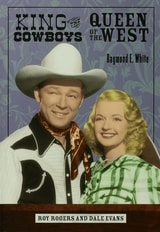
King of the Cowboys, Queen of the West
Roy Rogers and Dale EvansRaymond E. White
University of Wisconsin Press, 2006
King of the Cowboys, Queen of the West presents these two celebrities in the most comprehensive and inclusive account to date. Part narrative, part reference, this impeccably researched, highly accessible survey spans the entire scope of Rogers's and Evans's careers, illuminating and celebrating their place in twentieth-century American popular culture. Following the pair through each stage of their professional and personal trajectories, author Raymond E. White explores the unique alchemy of the singing cowboy and his free-spirited yet feminine partner. In a dual biography, he shows how Rogers and Evans carefully husbanded their public image and—of particular note—incorporated their Christian faith into their performances. And in a series of exhaustive appendixes, he documents their contributions to each medium they worked in. Testifying to both the breadth and the longevity of their careers, the book includes radio logs, discographies, filmographies, and comicographies that will delight historians and collectors alike. With its engaging tone and meticulous research, King of the Cowboys, Queen of the West is bound to become the definitive source on the lives of these two great American icons.
King
A BiographyDavid Levering Lewis
University of Illinois Press, 2013
Kipling
Jad Adams
Haus Publishing, 2005
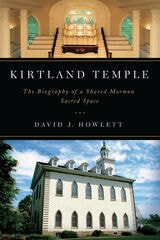
Kirtland Temple
The Biography of a Shared Mormon Sacred SpaceDavid J. Howlett
University of Illinois Press, 2014
David J. Howlett sets the biography of Kirtland Temple against the backdrop of religious rivalry. The two sides have long contested the temple's ownership, purpose, and significance in both the courts and Mormon literature. Yet members of each denomination have occasionally cooperated to establish periods of co-worship, host joint tours, and create friendships. Howlett uses the temple to build a model for understanding what he calls parallel pilgrimage--the set of dynamics of disagreement and alliance by religious rivals at a shared sacred site. At the same time, he illuminates social and intellectual changes in the two main branches of Mormonism since the 1830s, providing a much-needed history of the lesser-known Community of Christ.
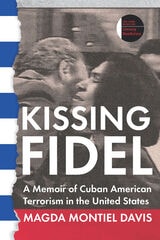
Kissing Fidel
A Memoir of Cuban American Terrorism in the United StatesMagda Montiel Davis
University of Iowa Press, 2020
What does it mean to be instantly transformed into the most hated person in your community? After meeting Fidel Castro at a Havana reception in 1994, Cuban-born Magda Montiel Davis, founder of one of the largest immigration law firms in South Florida, soon found out. The reception—attended by hundreds of other Cuban émigrés—was videotaped for historical archives. In a seconds-long clip, Fidel pecks the traditional protocol kiss on Montiel Davis’s cheek as she thanks him for the social benefits conferred upon the Cuban people. The video, however, was mysteriously sold to U.S. reporters and aired incessantly throughout South Florida. Soon the encounter was an international cause célèbre.
Life as she knew it was over for Montiel Davis and her family, including a father who worked with the CIA to topple Fidel, a nohablo-inglés mother who lived with the family, her five children, and her Jewish Brooklyn-born attorney husband. Kissing Fidel shares the sometimes dismal, sometimes comical realities of an ordinary citizen being thrown into a world of death threats, mob attacks, and terrorism.
Klondike Women
True Tales of the 1897–1898 Gold RushMelanie J. Mayer
Ohio University Press, 1989
Challenging the myth that the only women who participated in gold rushes were prostitutes and gold-diggers of the euphemistic sort, Melanie Mayer shows us that Klondike women came from all walks of life—socialites to poor immigrants, single women, wives, widows, and children. They planned to make their money through many different undertakings including mining, business, entertainment, professional, and service enterprises. Their approaches to life were as varied as their roles—optimistic or skeptical; cautious or adventuresome; gregarious or self-contained; contemplative or active. There was no typical Klondike woman. Individually, their stories can be funny, hopeful, tragic, or poignant. Taken together, they give rich, complex images of the people, times, and places of the gold rush.
A visually exciting book, Klondike Women features over 150 photographs and illustrations. This volume should appeal not only to the general reader, but to those interested in history, women’s studies, and the Pacific Northwest as well.
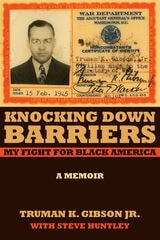
Knocking Down Barriers
My Fight for Black AmericaTruman K. Gibson Jr. with Steve Huntley
Northwestern University Press, 2005
Recipient, 2007 Hyde Park Historical Society Paul Cornell Award
Sixty years ago, when Truman Gibson reported for duty at the War Department, Washington, D.C. was a southern city in its unbending segregation as well as in its steamy summers. Gibson had no illusions, but as someone who'd enjoyed the best of the vibrant black culture of prewar America, he was shocked to find the worst of the Jim Crow South in the nation's capital. What Gibson accomplished as an advocate for African American soldiers-first as a lawyer working for the Secretary of War, then as a member of President Truman's "Black Cabinet"--is a large part of the history of the struggle for civil rights in the American military; and it is a compelling part of the story that Gibson tells in this book, a memoir of a life spent making a difference in the world one step at a time.
A graduate of the University of Chicago Law School, Gibson took his fight for racial justice to the corridors of powers, arguing against restrictive real estate covenants before the U.S. Supreme Court, opposing such iconic figures as Generals Dwight Eisenhower and George C. Marshall in campaigning for the integration of the armed forces, and challenging white control of professional sports by creating a boxing promotion empire that made television history. A firsthand account of the nitty-gritty of twentieth-century race relations in the worlds of law, the military, sports, and entertainment, Gibson's memoir is also an engaging recollection of encounters with the likes of Thurgood Marshall, W. E. B. DuBois, Eleanor Roosevelt, George Patton, Jackie Robinson, and Joe Louis, among others. As a historical record and as an intimate look at a bygone era with all its charms and hardships, the book is an essential chapter in our nation's story.
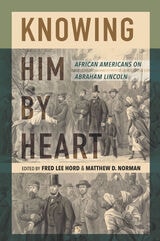
Knowing Him by Heart
African Americans on Abraham LincolnEdited by Frederick Hord and Matthew D. Norman
University of Illinois Press, 2023
Winner of an Abraham Lincoln Institute Book Award
Though not blind to Abraham Lincoln's imperfections, Black Americans long ago laid a heartfelt claim to his legacy. At the same time, they have consciously reshaped the sixteenth president's image for their own social and political ends. Frederick Hord and Matthew D. Norman's anthology explores the complex nature of views on Lincoln through the writings and thought of Frederick Douglass, Ida B. Wells-Barnett, Mary McLeod Bethune, Thurgood Marshall, Malcolm X, Gwendolyn Brooks, Barbara Jeanne Fields, Barack Obama, and dozens of others. The selections move from speeches to letters to book excerpts, mapping the changing contours of the bond--emotional and intellectual--between Lincoln and Black Americans over the span of one hundred and fifty years.
A comprehensive and valuable reader, Knowing Him by Heart examines Lincoln’s still-evolving place in Black American thought.
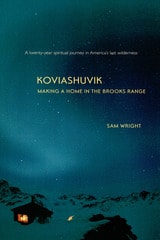
Koviashuvik
Making a Home in the Brooks RangeSam Wright
University of Arizona Press, 1997
Kropotkin and the Anarchist Intellectual Tradition
Jim MacLaughlin
Pluto Press, 2015

Kurt Schwitters
Space, Image, ExileMegan R. Luke
University of Chicago Press, 2014
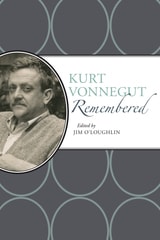
Kurt Vonnegut Remembered
Edited by Jim O'Loughlin
University of Alabama Press, 2019
Kurt Vonnegut (1922–2007), who began his writing career working for popular magazines, held both literary aspirations and an attraction to genre fiction. His conspicuous refusal to respect literary boundaries was part of what made him a countercultural icon in the 1960s and 1970s. Vonnegut’s personal life was marked in large part by public success and private turmoil. Two turbulent marriages, his sudden adoption of his late sister’s four children (and the equally sudden removal of one of those children), and a mid-eighties suicide attempt all signaled the extent of Vonnegut’s inner troubles. Yet, he was a generous friend to many, maintaining close correspondences throughout his life.
Kurt Vonnegut Remembered gathers reminiscences—by those who knew him intimately, and from those met him only once—that span Vonnegut’s entire life. Among the anecdotes in this collection are remembrances from his immediate family, reflections from his comrades in World War II, and tributes from writers he worked with in Iowa City and from those who knew him when he was young. Editor Jim O’Loughlin offers biographical notes on Vonnegut’s relationship with each of these figures.
Since Vonnegut’s death, much has been written on his life and work, but this new volume offers a more generous view of his life, particularly his last years. In O’Loughlin’s introduction to the volume, he argues that we can locate and understand Vonnegut’s best self through his public persona, and that in his performance as the kind and humane figure that many of the speakers here knew him as, Vonnegut became a better person than he ever felt himself to be.
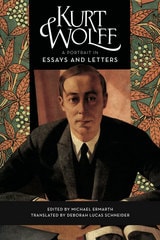
Kurt Wolff
A Portrait in Essays and LettersKurt Wolff
University of Chicago Press, 1991
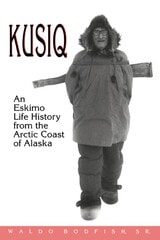
Kusiq
An Eskimo Life History from the Arctic Coast of Alaska.Waldo Bodfish Sr.
University of Alaska Press, 1991
(Journal of the West)
A vivid 'inside' account of an observant Eskimo male who mastered much of the traditional subsistence technology and lore and who lived through the end of commercial whaling, the development and decline of introduced reindeer herding and the fur market, and through World War II and its aftermath. In its scope as well as in the presentation of historical, cultural, and linguistic context,Kusiq is far more extensive than [other] autobiographies.
(American Indian Culture and Research Journal)
Kusiq represents a new wave in literature, the expressions of cultural awakenings among native American cultures, the attempt to redefine the native world in written form, to recast history, a history for too long the domain of the white system.
(ARCTIC)
It would be difficult to find a better, more interesting first-person account of Eskimo life during the first half of this century. [It is] second in an ambitious series of oral histories developed by the University of Alaska Press.
(Scan-A-Book)
The collaborators for this book include William Schneider, curator of oral history at the Elmer E. Rasmuson Library, University of Alaska Fairbanks; Leona Kisautaq Okakok, manager of the Arctic Education Foundation at the Arctic Slope Regional Corporation; and James Mumigana Nageak, coordinator of bilingual and multicultural instruction at the North Slope Borough School District. Schneider recorded and compiled Bodfish's stories, while Okakok and Nageak, both Inupiaq Eskimo language specialists, contributed their skills in interviewing, translating, and clarifying Inupiaq concepts. The book contains twelve chapters of Bodfish's narrative, background and commentary by the collaborators, and information on pronunciation, personal names, genealogical relations, and place names.
Kwame Nkrumah
The Father of African NationalismJeffrey S. Ahlman
Ohio University Press, 1998
Kwame Nkrumah
Visions of LiberationJeffrey S. Ahlman
Ohio University Press, 2021