Results by title
4743 books match the query 'Religion' and 38 start with k
Kabbalah and Art
Léo Bronstein
University Press of New England, 2002
Kabbalistic Revolution
Reimagining Judaism in Medieval SpainLachter, Hartley
Rutgers University Press, 2014
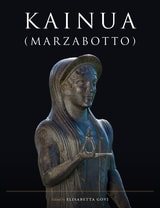
Kainua (Marzabotto)
Edited by Elisabetta Govi
University of Texas Press, 2023
This volume brings together leading scholars of Etruria to provide up-to-date findings from the key archaeological site of Kainua. Located in what is now the Italian town of Marzabotto, Kainua is the only Etruscan site whose complete urban layout has been preserved, making it possible to trace houses, roads, drainage systems, cemeteries, craft workshops, and an acropolis.
Under excavation since the 1850s, Kainua offers a trove of insights into Etruscan culture and society. The volume’s editor, Elisabetta Govi, and her fellow experts examine the material evidence underlying our understanding of the history, economy, religion, and social structures of Kainua, including trade routes that linked the city with the wider Mediterranean. Particularly exciting are recent discoveries of sanctuaries dedicated to Tinia and Uni, analogous to the Greek Zeus and Hera, which provide new information about Etruscan cults. Kainua (Marzabotto) also draws on the latest research to reconstruct the city’s foundation rites, a sacred charter, and urban plan. Finally, the authors explore the site’s archaeological history, discussing new knowledge made possible since the introduction of modern techniques of remote sensing and 3D modeling.

Kali's Child
The Mystical and the Erotic in the Life and Teachings of RamakrishnaJeffrey J. Kripal
University of Chicago Press, 1995
In this work, Jeffrey J. Kripal attempts to untangle the paradox. He demonstrates that Ramakrishna's famous mystical experiences were driven by erotic energies that he neither fully accepted nor understood; the key to understanding this extraordinary figure, Kripal argues, lies in Tantra and its ritual, symbolic, and doctrinal equation of the mystical and the erotic.
Moving through Ramakrishna's world both chronologically and conceptually, Kali's Child employs two complementary interpretive strategies, a nuanced phenomenological reinterpretation of original Bengali texts and a nonreductive psychoanalytic reading of Ramakrishna's mystical eroticism. Kripal shows how the heterosexual structure of Tantric symbolism, the abusive way its rituals were often forced upon the saint, and Ramakrishna's own homosexual desires all came together to produce in him profound feelings of shame, disgust, and fear. Kripal establishes that the homosexuality of this great, if unwilling, Tantric mystic is linked inextricably to virtually every aspect of his life and teachings.
Kantian Transpositions
Derrida and the Philosophy of ReligionEddis N. Miller
Northwestern University Press, 2019
Kantian Transpositions presents an important new reading of Jacques Derrida’s writings on religion and ethics. Eddis Miller argues that Derrida’s late texts on religion constitute an interrogation of the meaning and possibility of a “philosophy of religion.” It is the first book to fully engage Derrida’s claim, in “Faith and Knowledge: The Two Sources of ‘Religion’ at the Limits of Reason Alone” to be transposing the Kantian gesture of thinking religion “within the limits of reason alone.”
Miller outlines the terms of this “transposition” and reads Derrida’s work as an attempt to enact such a transposition. Along the way, he stakes out new ground in the debate over deconstruction and ethics, showing—against recent interpretations of Derrida’s work—that there is an ethical moment in Derrida’s writings that cannot be understood properly without accounting for the decisive role played by Kant’s ethics. The result is the most sustained demonstration yet offered of Kant’s indispensible contribution to Derrida’s thought.

Karl Rahner's Theological Aesthetics
Peter Joseph Fritz
Catholic University of America Press, 2014
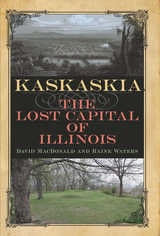
Kaskaskia
The Lost Capital of IllinoisDavid MacDonald and Raine Waters
Southern Illinois University Press, 2019
At the outset the Kaskaskia tribe, along with Jesuit missionaries and French traders, settled near the confluence of the Kaskaskia and Mississippi rivers, about sixty miles south of modern-day St. Louis. The town quickly became the largest French town and most prosperous settlement in the Illinois Country. After French control ended, Kaskaskia suffered under corrupt British and then inept American rule. In the 1790s the town revived and became the territorial capital, and in 1818 it became the first state capital. Along the way Kaskaskia was beset by disasters: crop failures, earthquakes, tornadoes, floods, epidemics, and the loss of the capital-city title to Vandalia. Likewise, human activity and industry eroded the river’s banks, causing the river to change course and eventually wash away the settlement. All that remains of the state’s first capital today is a village several miles from the original site.
MacDonald and Waters focus on the town’s growth, struggles, prosperity, decline, and obliteration, providing an overview of its domestic architecture to reveal how its residents lived. Debunking the notion of a folklore tradition about a curse on the town, the authors instead trace those stories to late nineteenth-century journalistic inventions. The result is a vibrant, heavily illustrated, and highly readable history of Kaskaskia that sheds light on the entire early history of Illinois.
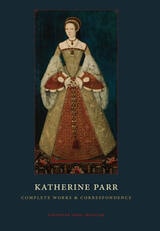
Katherine Parr
Complete Works and CorrespondenceKatherine Parr
University of Chicago Press, 2011
To the extent that she is popularly known, Katherine Parr (1512–48) is the woman who survived King Henry VIII as his sixth and last wife. She merits far greater recognition, however, on several other fronts. Fluent in French, Italian, and Latin, Parr also began, out of necessity, to learn Spanish when she ascended to the throne in 1543. As Henry’s wife and queen of England, she was a noted patron of the arts and music and took a personal interest in the education of her stepchildren, Princesses Mary and Elizabeth and Prince Edward. Above all, Parr commands interest for her literary labors: she was the first woman to publish under her own name in English in England.
For this new edition, Janel Mueller has assembled the four publications attributed to Parr—Psalms or Prayers, Prayers or Meditations, The Lamentation of a Sinner, and a compilation of prayers and Biblical excerpts written in her hand—as well as her extensive correspondence, which is collected here for the first time. Mueller brings to this volume a wealth of knowledge of sixteenth-century English culture. She marshals the impeccable skills of a textual scholar in rendering Parr’s sixteenth-century English for modern readers and provides useful background on the circumstances of and references in Parr’s letters and compositions. Given its scope and ambition, Katherine Parr: Complete Works and Correspondence will be an event for the English publishing world and will make an immediate contribution to the fields of sixteenth-century literature, reformation studies, women’s writing, and Tudor politics.
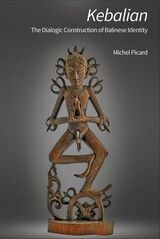
Kebalian
The Dialogic Construction of Balinese IdentityMichel Picard
National University of Singapore Press, 2024
Over the past one hundred years, the Balinese have been challenged by colonial occupation, political turbulence, and, most recently, tourism. In response, they have come to rely on the idea of “Kebalian,” or Balinese-ness. Kebalian is likened to a tree whose roots are religion (agama), the trunk is tradition (adat), and the fruits, Balinese culture (budaya). To understand how this sense of Balinese-ness came to be, Michel Picard examines the dialogues that the Balinese have engaged in both among themselves and with outsiders by conducting over a hundred interviews with Balinese opinion leaders, officials, and religious reformers. A key throughline in the construction of Kebalian is what Picard identifies as a twofold process of “religionization” and “Hinduization.” This process began with the first years of the incorporation of Bali into the Dutch East Indies and became more urgent with Indonesia’s independence. Kebalian today encompasses the tension between those Balinese eager to defend their customary ritual practices and advocates of Hinduism who deny that such local traditions qualify as agama. Kebalian presents a fascinating picture of religious change, identities in motion, and culture. Scholars of religion, cultural change, and Southeast Asian area studies will find this to be a fascinating and important book.
Keepers of the Sacred Chants
The Poetics of Ritual Power in an Amazonian SocietyJonathan D. Hill
University of Arizona Press, 1993
Keeping the Feast
Metaphors of Sacrifice in 1 Corinthians and PhilippiansJane Lancaster Patterson
SBL Press, 2015
Develop a keener ear for Paul’s rhetorical strategy
Patterson uses cognitive metaphor theory to trace the apostle Paul’s use of metaphors from the Jewish sacrificial system in his moral counsels to the Philippians and the Corinthians. In these letters, Paul moves from the known (the practice of sacrifice) to the unknown (how to live in accord with the life, death, and resurrection of Jesus Christ). Patterson illustrates that the significant sacrificial metaphors in 1 Corinthians and Philippians are not derived from Jewish sacrifices of atonement, but rather from the Passover and sacrifices of thanksgiving. Attention to these metaphors demonstrates that imagery drawn from these sacrifices shapes the overall moral counsel of the letters, reveals more varied and nuanced interpretations of sacrificial references in Paul’s letters, and sheds light on Paul’s continuity with Jewish cultic practice.
Features
- Clarification of the strategic function of metaphors as a means of establishing an imaginative framework for ethical deliberation
- Evidence of Paul’s active processes of theological reflection
- Exploration of the intertwining of Jewish cultic practice with the rhetoric of moral commitment within early Christian churches

Kentucky
I. J. Schwartz
University of Alabama Press, 1990
An epic poem about life in America in the early 20th century, as perceived by a Jewish immigrant.
Kentucky is the first major work in Yiddish literature to present America as its primary theme. The long epic poem paints a rich picture of life in Kentucky just after the Civil War. Written between 1918 and 1922 by Lithuanian-born writer, I. J. Schwartz, it first appeared in the Yiddish journal Zukunft and later, in 1925, was published as a book. Although unknown to English readers until this translation, the book was a primary text for immigrants and potential immigrants in places as remote as Poland and Argentina who received their first impressions of America from its pages. Parts of it were even set to music and sung in choruses around the world.

Kibbutz Buchenwald
Survivors and PioneersJudith Tydor Baumel
Rutgers University Press, 1997
Kibbutz Buchenwald is the story of a nightmare that became a dream and a dream that became a reality. Emerging from the depths of the liberated concentration camp Buchenwald in the spring of 1945, a group of sixteen gaunt and battered young men organized and formed Kibbutz Buchenwald, the first agricultural collective in postwar Germany designed to prepare Jews for emigation to Palestine. What caused a handful of survivors to take their fate into their own hands within days of their liberation, at a time when most survivors were passively awaiting orders from the occupying forces? From what wellsprings did they draw the physical and emotional strength to begin life anew as Zionist pioneers in a world which had turned upside down?
Judith Baumel's moving account of this courageous group is divided into two parts. Part One, entitled "The Dream," examines the kibbutz from its creation in Germany until the departure of the founding group for Palestine in the summer of 1945. Part Two, "The Reality," follows the members of Kibbutz Buchenwald into Palestine, where they eventually established their own independent settlement in 1948. This settlement exists as Kibbutz Netzer Sereni today.
Drawing from the diaries of the kibbutz's founding members, Baumel provides a detailed account of an incredible story and places the central narrative in the larger contexts of communal living, European politics after the war, and the link between European Jewry and Israeli postwar nationhood. An afterword, "Where Are They Now," briefly describes the later life of each of the original kibbutz members.

Kidnapped From That Land
The Government Raids on the Short Creek PolygamistMartha S Bradley
University of Utah Press, 1993
In the early morning hours of July 26, 1953, several hundred Arizona state officials and police officers moved into the polygamist community of Short Creek, Arizona, to serve warrants on thirty-six men and eighty-six women. Officials staging the raid believed they were rescuing the community’s 263 children from a life of bondage and immorality.
Kidnapped from that Land is the first book to bring together the story of the 1953 raid and two previous raids in 1935 and 1944. Martha Bradley tells the story with insight and compassion for the families that were fragmented by the arrests. She also deals with the complex legal issues that persist in both Arizona and Utah, where the practice of polygamy is a felony that is no longer prosecuted.
Kidnapped from that Land will appeal to those interested in the study of Mormon history, of polygamy, and of western regional and American social history.

Kidnapped to the Underworld
Memories of XibalbaVíctor Montejo; Translated by Sean S. Sell
University of Arizona Press, 2024
Narrated from Antonio’s perspective, the reader follows along on a journey to the Maya underworld of Xibalba, accompanied by two spirit guides. Antonio traverses Xibalba’s levels of heaven and hell, encountering instructive scenes of punishment and reward: in one chapter, conquistadors are perpetually submerged in a pool of their victims’ blood; in another, the souls of animal abusers are forever unable to cross a crocodile-infested river. Infused with memory, the author illustrates Guatemala’s unique religious syncretism, exploring conceptions of heaven and hell shared between Catholicism and Indigenous Maya spirituality. In the tradition of both the Popol Vuh and the Divine Comedy, Montejo’s narrative challenges easy categorization—this is a work of family history, religious testimony, political allegory, and sacred literature.
Kids on the Street
Queer Kinship and Religion in San Francisco's TenderloinJoseph Plaster
Duke University Press, 2023
Kincraft
The Making of Black Evangelical SocialityTodne Thomas
Duke University Press, 2021
Kindness and Joy
Expressing the Gentle LoveHarold G Koenig
Templeton Press, 2006
This book includes guidance as well as information and inspiration. There are practical recommendations on how to perform acts of kindness in personal lives and at work, toward friends, colleagues, and family members—even with one's enemies. Suggestions are also offered on ways to encourage others to be kind so they, too, can experience the joy that results.
Kindred Spirits
Friendship and Resistance at the Edges of Modern CatholicismBrenna Moore
University of Chicago Press, 2021
Kindred Spirits takes us inside a remarkable network of Catholic historians, theologians, poets, and activists who pushed against both the far-right surge in interwar Europe and the secularizing tendencies of the leftist movements active in the early to mid-twentieth century. With meticulous attention to the complexity of real lives, Brenna Moore explores how this group sought a middle way anchored in “spiritual friendship”—religiously meaningful friendship understood as uniquely capable of facing social and political challenges.
For this group, spiritual friendship was inseparable from resistance to European xenophobia and nationalism, anti-racist activism in the United States, and solidarity with Muslims during the Algerian War. Friendship, they believed, was a key to both divine and human realms, a means of accessing the transcendent while also engaging with our social and political existence. Some of the figures are still well known—philosopher Jacques Maritain, Nobel Prize laureate Gabriela Mistral, influential Islamicist Louis Massignon, poet of the Harlem renaissance Claude McKay—while others have unjustly faded from memory. Much more than an idealized portrait of a remarkable group of Catholic intellectuals from the past, Kindred Spirits is a compelling exploration of both the beauty and flaws of a vibrant social network worth remembering.
King David in the Deuteronomistic History
Collected StudiesWalter Dietrich
SBL Press, 2025
King's Vibrato
Modernism, Blackness, and the Sonic Life of Martin Luther King Jr.Maurice O. Wallace
Duke University Press, 2022
Kingdom Come
The Politics of Faith and Freedom in Segregationist South Africa and BeyondTshepo Masango Chéry
Duke University Press, 2023

Kingdom at Any Cost
Right-Wing Visions of Apocalypse in AmericaJohnnie Chamberlin
Parkhurst Brothers, Inc., 2009

Kingdom on the Mississippi Revisited
NAUVOO IN MORMON HISTORYEdited by Roger D. Launius and John E. Hallwas
University of Illinois Press, 1996
of understanding reflective of the latest and best in Mormon history."
-- Paul M. Edwards, author of Our Legacy of Faith: A Brief History
of the RLDS
Who were the Nauvoo Mormons? Were they Jacksonian Americans or did they
embody some other weltanschaung? Why did this tiny Illinois town
become such a protracted battleground for the Mormons and non-Mormons
in the region? And what is the larger meaning of the Nauvoo experience
for the various inheritors of the legacy of Joseph Smith, Jr.?
Kingdom on the Mississippi Revisited includes fourteen thoughtful
explanations that represent the most insightful and imaginative work on
Mormon Nauvoo published in the last thirty years. The range of topics
includes the Nauvoo Legion, the Mormon press, the political kingdom of
God, the opposition of non-Mormons, the martyrdom of Joseph Smith, and
the meaning of Nauvoo for Mormons. The introduction provides a critique
of Nauvoo scholarship, and a closing bibliographical essay analyzes the
historical literature on the Mormon experience at Nauvoo.

Kingdoms of the Night Sky
Burgess, G. Thomas
Signature Books, 2026
It is 2026, and millions of Americans are getting ready to form separate communities so they may live by the principles taught in The Book of Shem. Calling themselves “Fellows,” they revere Isaac Snow, the deceased author of The Book of Shem, as their prophet. To settle the question of whether he’s a prophet, a fraud, or something else, Snow’s son sets out to tell his father’s story. Inspired by the 1960s folk music revival and his experiences with the beatniks, hippies, and Mormons, Isaac has crafted a unique message that millions of Americans find irresistible, but only after his many years of feeling cursed and forsaken. Set in New York City, San Francisco, and Provo, Utah, the story blends tragedy, humor, and redemption. Kingdoms of the Night Sky is a rollicking journey of discovery that reminds us of the fractured nature of reality itself.
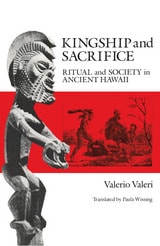
Kingship and Sacrifice
Ritual and Society in Ancient HawaiiValerio Valeri
University of Chicago Press, 1985
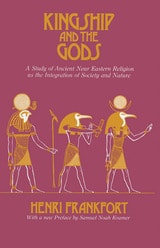
Kingship and the Gods
A Study of Ancient Near Eastern Religion as the Integration of Society and NatureHenri Frankfort
University of Chicago Press, 1948
Frank's superb work, first published in 1948 and now supplemented with a preface by Samuel Noah Kramer, demonstrates how the Egyptian and Mesopotamian attitudes toward nature related to their concept of kingship. In both countries the people regarded the king as their mediator with the gods, but in Mesopotamia the king was only the foremost citizen, while in Egypt the ruler was a divine descendant of the gods and the earthly representative of the God Horus.

Kirtland Temple
The Biography of a Shared Mormon Sacred SpaceDavid J. Howlett
University of Illinois Press, 2014
David J. Howlett sets the biography of Kirtland Temple against the backdrop of religious rivalry. The two sides have long contested the temple's ownership, purpose, and significance in both the courts and Mormon literature. Yet members of each denomination have occasionally cooperated to establish periods of co-worship, host joint tours, and create friendships. Howlett uses the temple to build a model for understanding what he calls parallel pilgrimage--the set of dynamics of disagreement and alliance by religious rivals at a shared sacred site. At the same time, he illuminates social and intellectual changes in the two main branches of Mormonism since the 1830s, providing a much-needed history of the lesser-known Community of Christ.
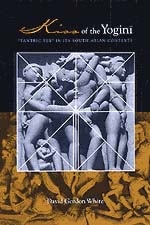
Kiss of the Yogini
"Tantric Sex" in its South Asian ContextsDavid Gordon White
University of Chicago Press, 2003
Kiss of the Yogini focuses on what White identifies as the sole truly distinctive feature of South Asian Tantra: sexualized ritual practices, especially as expressed in the medieval Kaula rites. Such practices centered on the exchange of powerful, transformative sexual fluids between male practitioners and wild female bird and animal spirits known as Yoginis. It was only by "drinking" the sexual fluids of the Yoginis that men could enter the family of the supreme godhead and thereby obtain supernatural powers and transform themselves into gods. By focusing on sexual rituals, White resituates South Asian Tantra, in its precolonial form, at the center of religious, social, and political life, arguing that Tantra was the mainstream, and that in many ways it continues to influence contemporary Hinduism, even if reformist misunderstandings relegate it to a marginal position.
Kiss of the Yogini contains White's own translations from over a dozen Tantras that have never before been translated into any European language. It will prove to be the definitive work for persons seeking to understand Tantra and the crucial role it has played in South Asian history, society, culture, and religion.
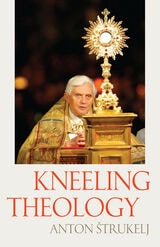
Kneeling Theology
Anton Strukelj
Catholic University of America Press, 2022
Knot of the Soul
Madness, Psychoanalysis, IslamStefania Pandolfo
University of Chicago Press, 2018
Knot of the Soul moves from the experience of psychosis in psychiatric hospitals, to the visionary torments of the soul in poor urban neighborhoods, to the melancholy and religious imaginary of undocumented migration, culminating in the liturgical stage of the Qur’anic cure. Demonstrating how contemporary Islamic cures for madness address some of the core preoccupations of the psychoanalytic approach, she reveals how a religious and ethical relation to the “ordeal” of madness might actually allow for spiritual transformation.
This sophisticated and evocative work illuminates new dimensions of psychoanalysis and the ethical imagination while also sensitively examining the collective psychic strife that so many communities endure today.
Knowing God by Experience
The Spiritual Senses in the Theology of William of AuxerreBoyd Taylor Coolman
Catholic University of America Press, 2004
Knowing Jesus Christ
An Introduction to ChristologyFrancis Selman
Catholic University of America Press, 2026
Knowing, Seeing, Being
Jonathan Edwards, Emily Dickinson, Marianne Moore, and the American Typological TraditionJennifer L. Leader
University of Massachusetts Press, 2016
Scholars no longer see Jonathan Edwards as the fire-and-brimstone preacher who deemed his parishioners “sinners in the hands of an angry god.” Edwards now figures as caring and socially conscious and exerts increased influence as a philosopher of the American school of Protestantism. In this study, he becomes the progenitor of an alternative tradition in American letters.
In Knowing, Seeing, Being, Jennifer L. Leader argues that Edwards, the nineteenth-century poet Emily Dickinson, and the twentieth-century poet Marianne Moore share a heretofore underrecognized set of religious and philosophical preoccupations. She contends that they represent an alternative tradition within American literature, one that differs from Transcendentalism and is grounded in Reformed Protestantism and its ways of reading and interpreting the King James Bible and the natural world. According to Leader, these three writers' most significant commonality is the Protestant tradition of typology, a rigorous mode of interpreting scripture and nature through which certain figures or phenomena are read as the fulfillment of prophecy and of God's work. Following from their similar ways of reading, they also share philosophical and spiritual questions about language, epistemology (knowing), perception (seeing), and physical and spiritual ontology (being). In connecting Edwards to these two poets, in exploring each writer's typological imagination, and through a series of insightful readings, this innovative book reevaluates three major figures in American intellectual and literary history and compels a reconsideration of these writers and their legacies.
Knowledge and the Transcendent
An Inquiry into the Mind's Relationship to GodPaul A. Macdonald Jr.
Catholic University of America Press, 2009
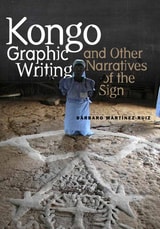
Kongo Graphic Writing and Other Narratives of the Sign
Barbaro Martinez-Ruiz
Temple University Press, 2013
Author Bárbaro Martínez-Ruiz, a practitioner of the Palo Monte devotional arts, illustrates with graphics and rock art how the Bakongo’s ideographic and pictographic signs are used to organize daily life, enable interactions between humans and the natural and spiritual worlds, and preserve and transmit cosmological and cosmogonical belief systems.
Exploring cultural diffusion and exchange, collective memory and identity, Kongo Graphic Writing and Other Narratives of the Sign artfully brings together analyses of the complex interconnections among Kongo traditions of religion, philosophy and visual/gestural communication on both sides of the African Atlantic world.
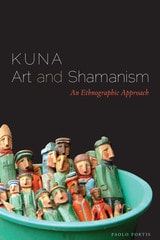
Kuna Art and Shamanism
An Ethnographic ApproachBy Paolo Fortis
University of Texas Press, 2013
Known for their beautiful textile art, the Kuna of Panama have been scrutinized by anthropologists for decades. Perhaps surprisingly, this scrutiny has overlooked the magnificent Kuna craft of nuchukana—wooden anthropomorphic carvings—which play vital roles in curing and other Kuna rituals. Drawing on long-term fieldwork, Paolo Fortis at last brings to light this crucial cultural facet, illuminating not only Kuna aesthetics and art production but also their relation to wider social and cosmological concerns.
Exploring an art form that informs birth and death, personhood, the dream world, the natural world, religion, gender roles, and ecology, Kuna Art and Shamanism provides a rich understanding of this society’s visual system, and the ways in which these groundbreaking ethnographic findings can enhance Amerindian scholarship overall. Fortis also explores the fact that to ask what it means for the Kuna people to carve the figure of a person is to pose a riddle about the culture’s complete concept of knowing.
Also incorporating notions of landscape (islands, gardens, and ancient trees) as well as cycles of life, including the influence of illness, Fortis places the statues at the center of a network of social relationships that entangle people with nonhuman entities. As an activity carried out by skilled elderly men, who possess embodied knowledge of lifelong transformations, the carving process is one that mediates mortal worlds with those of immortal primordial spirits. Kuna Art and Shamanism immerses readers in this sense of unity and opposition between soul and body, internal forms and external appearances, and image and design.
Kupilikula
Governance and the Invisible Realm in MozambiqueHarry G. West
University of Chicago Press, 2005
In this historical ethnography of sorcery, Harry G. West draws on a decade of fieldwork and combines the perspectives of anthropology and political science to reveal how Muedans expect responsible authorities to monitor the invisible realm of sorcery and to overturn or, as Muedans call it, "kupilikula" sorcerers' destructive attacks by practicing a constructive form of counter-sorcery themselves. Kupilikula argues that, where neoliberal policies have fostered social division rather than security and prosperity, Muedans have, in fact, used sorcery discourse to assess and sometimes overturn reforms, advancing alternative visions of a world transformed.