Results by title
22279 books match the query 'Social Science' and 145 start with k
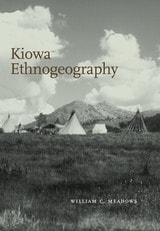
Kiowa Ethnogeography
By William C. Meadows
University of Texas Press, 2008
Examining the place names, geographical knowledge, and cultural associations of the Kiowa from the earliest recorded sources to the present, Kiowa Ethnogeography is the most in-depth study of its kind in the realm of Plains Indian tribal analysis. Linking geography to political and social changes, William Meadows applies a chronological approach that demonstrates a cultural evolution within the Kiowa community.
Preserved in both linguistic and cartographic forms, the concepts of place, homeland, intertribal sharing of land, religious practice, and other aspects of Kiowa life are clarified in detail. Native religious relationships to land (termed "geosacred" by the author) are carefully documented as well. Meadows also provides analysis of the only known extant Kiowa map of Black Goose, its unique pictographic place labels, and its relationship to reservation-era land policies. Additional coverage of rivers, lakes, and military forts makes this a remarkably comprehensive and illuminating guide.
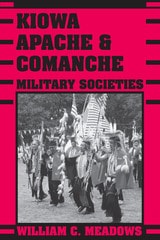
Kiowa, Apache, and Comanche Military Societies
Enduring Veterans, 1800 to the PresentBy William C. Meadows
University of Texas Press, 1999
A CHOICE Outstanding Academic Book
For many Plains Indians, being a warrior and veteran has long been the traditional pathway to male honor and status. Men and boys formed military societies to celebrate victories in war, to perform community service, and to prepare young men for their role as warriors and hunters. By preserving cultural forms contained in song, dance, ritual, language, kinship, economics, naming, and other semireligious ceremonies, these societies have played an important role in maintaining Plains Indian culture from the pre-reservation era until today.
In this book, Williams C. Meadows presents an in-depth ethnohistorical survey of Kiowa, Apache, and Comanche military societies, drawn from extensive interviews with tribal elders and military society members, unpublished archival sources, and linguistic data. He examines their structure, functions, rituals, and martial symbols, showing how they fit within larger tribal organizations. And he explores how military societies, like powwows, have become a distinct public format for cultural and ethnic continuity.

Kiss My Relics
Hermaphroditic Fictions of the Middle AgesDavid Rollo
University of Chicago Press, 2011

Kiss Of Death
Joseph Bastien
University of Utah Press, 1998

Kiss of Death
Contagion, Contamination, and FolkloreAndrea Kitta
Utah State University Press, 2019
Using ethnographic, media, and narrative analysis, this book explores the vernacular explanatory models used in decisions concerning contagion to better understand the real fears, risks, concerns, and doubts of the public. Kitta explores immigration and patient zero, zombies and vampires, Slender Man, HPV, and the kiss of death legend, as well as systematic racism, homophobia, and misogyny in North American culture, to examine the nature of contagion and contamination.
Conversations about health and risk cannot take place without considering positionality and intersectionality. In The Kiss of Death, Kitta isolates areas that require better communication and greater cultural sensitivity in the handling of infectious disease, public health, and other health-related disciplines and industries.
Kitchens of Hope
Immigrants Share Stories of Resilience and Recipes from HomeLinda S. Svitak
University of Minnesota Press, 2025
Culinary journeys from around the globe: recipes and stories from immigrants to the United States
Immigrants carry more than hope as they cross oceans and traverse continents to come to the United States. They hold tightly to stories and recipes, remembrances of what they left behind. Kitchens of Hope brings together these memories from contributors who hail from more than thirty countries, offering a glimpse into their kitchens and insight into their lives. This book is a celebration of people and cuisines from around the world, infused with the aromas of epazote and cardamom, the tang of fish sauce, the heat of chile peppers, and the bite of mustard greens.
With tales as compelling as the brimming bowls and overflowing platters of these foods that represent home, Kitchens of Hope features immigrants coming from vastly varied circumstances. Some arrived in the United States fleeing war and violence, others were seeking education and opportunity; some have called the United States home for years, and others have only recently arrived. Despite the differing situations that brought them here, the contributors all find comfort and tradition as they gather to share meals with family and friends. They are activists and entrepreneurs, parents and community leaders, and some are affiliated with the Minnesota-based nonprofit the Advocates for Human Rights, the organization that inspired the creation of this book.
Structured around the contributors’ personal stories of their journeys, the chapters reflect the main themes connecting them: community, resilience, opportunity, justice, hope, and celebration. In these pages, readers will find inspiration, along with more than fifty recipes, from curry, mole, biryani, and borscht, to pita, pho, sambusa, pupusas, and so much more. Welcome to the Kitchens of Hope table.
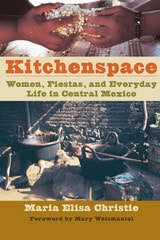
Kitchenspace
Women, Fiestas, and Everyday Life in Central MexicoBy Maria Elisa Christie
University of Texas Press, 2008
Throughout the world, the kitchen is the heart of family and community life. Yet, while everyone has a story to tell about their grandmother's kitchen, the myriad activities that go on in this usually female world are often devalued, and little scholarly attention has been paid to this crucial space in which family, gender, and community relations are forged and maintained. To give the kitchen the prominence and respect it merits, Maria Elisa Christie here offers a pioneering ethnography of kitchenspace in three central Mexican communities, Xochimilco, Ocotepec, and Tetecala.
Christie coined the term "kitchenspace" to encompass both the inside kitchen area in which everyday meals for the family are made and the larger outside cooking area in which elaborate meals for community fiestas are prepared by many women working together. She explores how both kinds of meal preparation create bonds among family and community members. In particular, she shows how women's work in preparing food for fiestas gives women status in their communities and creates social networks of reciprocal obligation. In a culture rigidly stratified by gender, Christie concludes, kitchenspace gives women a source of power and a place in which to transmit the traditions and beliefs of older generations through quasi-sacramental food rites.
Klaverjas and the Hidden Sporting Heritage of South Africa
Card Games, Community, and Black HistoryHendrik Snyders
Central European University Press, 2026

Klezmer
Music and Community in Twentieth-Century Jewish PhiladelphiaHankus Netsky
Temple University Press, 2017
Netsky defines what klezmer music is, how it helped define Jewish immigrant culture in Philadelphia, and how its current revival has changed klezmer’s meaning historically. Klezmer also addresses the place of musicians and celebratory music in Jewish society, the nature of klezmer culture, the tensions between sacred and secular in Jewish music, and the development of Philadelphia's distinctive “Russian Sher” medley, a unique and masterfully crafted composition.
Including a significant amount of musical transcriptions, Klezmer chronicles this special musical genre from its heyday in the immigrant era, through the mid-century period of its decline through its revitalization from the 1980s to today.

Klondike Women
True Tales of the 1897–1898 Gold RushMelanie J. Mayer
Ohio University Press, 1989
Challenging the myth that the only women who participated in gold rushes were prostitutes and gold-diggers of the euphemistic sort, Melanie Mayer shows us that Klondike women came from all walks of life—socialites to poor immigrants, single women, wives, widows, and children. They planned to make their money through many different undertakings including mining, business, entertainment, professional, and service enterprises. Their approaches to life were as varied as their roles—optimistic or skeptical; cautious or adventuresome; gregarious or self-contained; contemplative or active. There was no typical Klondike woman. Individually, their stories can be funny, hopeful, tragic, or poignant. Taken together, they give rich, complex images of the people, times, and places of the gold rush.
A visually exciting book, Klondike Women features over 150 photographs and illustrations. This volume should appeal not only to the general reader, but to those interested in history, women’s studies, and the Pacific Northwest as well.
Kneeling Before Corn
Recuperating More-than-Human Intimacies on the Salvadoran MilpaMike Anastario, Elena Salamanca, and Elizabeth Hawkins
University of Arizona Press, 2024
Kneeling Before Corn focuses on the intimate relations that develop between plants and humans in the milpas of the northern rural region of El Salvador. It explores the ways in which more-than-human intimacies travel away from and return to the milpa through human networks.
Collective and multivocal, this work reflects independent lines of investigation and multiple conversations between co-authors—all of whom have lived in El Salvador for extended periods of time. Throughout the six chapters, the co-authors invite readers to consider more-than-human intimacies by rethinking, experimenting with, and developing new ways of documenting, analyzing, and knowing the intimacies that form between humans and the plants that they cultivate, conserve, long for, and eat. This book offers an innovative account of rural El Salvador in the twenty-first century.
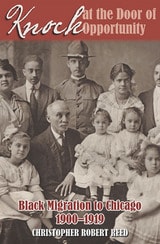
Knock at the Door of Opportunity
Black Migration to Chicago, 1900-1919Christopher Robert Reed
Southern Illinois University Press, 2014
Disputing the so-called ghetto studies that depicted the early part of the twentieth century as the nadir of African American society, this thoughtful volume by Christopher Robert Reed investigates black life in turn-of-the-century Chicago, revealing a vibrant community that grew and developed on Chicago’s South Side in the early 1900s. Reed also explores the impact of the fifty thousand black southerners who streamed into the city during the Great Migration of 1916–1918, effectively doubling Chicago’s African American population. Those already residing in Chicago’s black neighborhoods had a lot in common with those who migrated, Reed demonstrates, and the two groups became unified, building a broad community base able to face discrimination and prejudice while contributing to Chicago’s growth and development.
Reed not only explains how Chicago’s African Americans openly competed with white people for jobs, housing and an independent political voice but also examines the structure of the society migrants entered and helped shape. Other topics include South Side housing, black politics and protest, the role of institutionalized religion, the economic aspects of African American life, the push for citizenship rights and political power for African Americans, and the impact of World War I and the race riot of 1919. The first comprehensive exploration of black life in turn-of-the-century Chicago beyond the mold of a ghetto perspective, this revealing work demonstrates how the melding of migrants and residents allowed for the building of a Black Metropolis in the 1920s.
2015 ISHS Superior Achievement Award

Knocking on Heaven’s Door
Six Minor Leaguers in Search of the Baseball DreamMarty Dobrow
University of Massachusetts Press, 2010
The rich slice of Americana found in minor league baseball presents a contradictory culture. On the one hand, the minors are filled with wholesome, family-friendly entertainment-fluffy mascots, kitschy promotions, and earnest young men signing autographs for wide-eyed Little Leaguers. On the other, they comprise a world of cutthroat competition in which a teammate's failure or injury can be the cause of quiet celebration and 90 percent of all players never play a single inning in the major leagues.
In Knocking on Heaven's Door, award-winning sportswriter Marty Dobrow examines this double-edged culture by chronicling the lives of six minor leaguers—Brad Baker, Doug Clark, Manny Delcarmen, Randy Ruiz, Matt Torra, and Charlie Zink—all struggling to make their way to “The Show.” What links them together, aside from their common goal, is that they are all represented by the same team of agents—Jim and Lisa Masteralexis and their partner Steve McKelvey—whose own aspirations parallel those of the players they represent.
The story begins during spring training in 2005 and ends in the fall of 2008, followed by a brief epilogue that updates each player's fortunes through the 2009 season. Along the way Dobrow offers a revealing, intimate look at life in minor league baseball: the relentless tedium of its itinerant routines and daily rituals; the lure of performance-enhancing drugs as a means of gaining a competitive edge; the role of agents in negotiating each player's failures as well as his successes; and the influence of wives, girlfriends, and family members who have invested in the dream.
Knot of the Soul
Madness, Psychoanalysis, IslamStefania Pandolfo
University of Chicago Press, 2018
Knot of the Soul moves from the experience of psychosis in psychiatric hospitals, to the visionary torments of the soul in poor urban neighborhoods, to the melancholy and religious imaginary of undocumented migration, culminating in the liturgical stage of the Qur’anic cure. Demonstrating how contemporary Islamic cures for madness address some of the core preoccupations of the psychoanalytic approach, she reveals how a religious and ethical relation to the “ordeal” of madness might actually allow for spiritual transformation.
This sophisticated and evocative work illuminates new dimensions of psychoanalysis and the ethical imagination while also sensitively examining the collective psychic strife that so many communities endure today.

Knowing Silence
How Children Talk about Immigration Status in SchoolAriana Mangual Figueroa
University of Minnesota Press, 2024
Learning from children about citizenship status and how it shapes their schooling
There is a persistent assumption in the field of education that children are largely unaware of their immigration status and its implications. In Knowing Silence, Ariana Mangual Figueroa challenges this “myth of ignorance.” By listening carefully to both the speech and significant silences of six Latina students from mixed-immigration-status families, from elementary school into middle school and beyond, she reveals the complex ways young people understand and negotiate immigration status and its impact on their lives.
Providing these children with iPod Touches to record their own conversations, Mangual Figueroa observes when and how they choose to talk about citizenship at home, at school, and in public spaces. Analyzing family conversations about school forms, in-class writing assignments, encounters with the police, and applications for college, she demonstrates that children grapple with the realities of citizenship from an early age. Educators who underestimate children’s knowledge, Mangual Figueroa shows, can marginalize or misunderstand these students and their families.
Combining significant empirical findings with reflections on the ethical questions surrounding research and responsibility, Mangual Figueroa models new ways scholars might collaborate with educators, children, and families. With rigorous and innovative ethnographic methodologies, Knowing Silence makes audible the experiences of immigrant-origin students in their own terms, ultimately offering teachers and researchers a crucial framework for understanding citizenship in the contemporary classroom.
Knowing What We Know
African American Women's Experiences of Violence and ViolationGarfield, Gail
Rutgers University Press, 2005
In recent years there has been an attempt by activists, service providers, and feminists to think about violence against women in more inclusive ways. In Knowing What We Know, activist and sociologist Gail Garfield argues that this effort has not gone far enough and that in order to understand violence, we must take the lived experiences of African American women seriously. Doing so, she cautions, goes far beyond simply adding voices of black women to existing academic and activist discourses, but rather, requires a radical shift in our knowledge of these women’s lives and the rhetoric used to describe them.
Bringing together a series of life-history interviews with nine women, this unique study urges a departure from established approaches that position women as victims of exclusively male violence. Instead, Garfield explores what happens when women’s ability to make decisions and act upon those choices comes into conflict with cultural and social constraints. Chapters explore how women experience racialized or class-based violence, how these forms of violence are related to gendered violence, and what these violations mean to a woman’s sense of identity. By showing how women maintain, sustain, and in some instances regain their sense of human worth as a result of their experiences of violation, Garfield complicates the existing dialogue on violence against women in new and important ways.
Knowing Where It Comes From
Labeling Traditional Foods to Compete in a Global MarketFabio Parasecoli
University of Iowa Press, 2017
Labeling regimes have moved beyond intellectual property to embrace community-based protections, intangible cultural heritage, cultural landscapes, and indigenous knowledge. Reflecting a rich array of juridical, regulatory, and activist perspectives, these approaches seek to level the playing field on which food producers and consumers interact.
Knowing as Moving
Perception, Memory, and PlaceSusan Leigh Foster
Duke University Press, 2025
Knowing by Ear
Listening to Voice Recordings with African Prisoners of War in German Camps (1915–1918)Anette Hoffmann
Duke University Press, 2024
Knowing the Day, Knowing the World
Engaging Amerindian Thought in Public ArchaeologyLesley Green and David R. Green
University of Arizona Press, 2013
The structure of the book reflects a gradual comprehension of Palikur ways of knowing during the course of field research. The text enters into the ethnographic material from the perspective of familiar disciplines—history, geography, astronomy, geometry, and philosophy—and explores the junctures in which conventional disciplinary frameworks cannot adequately convey Palikur understandings. Beginning with reflections on questions of personhood, ethics, and ethnicity, the authors rethink assumptions about history and geography. They learn and recount an alternative way of thinking about astronomy from the Palikur astronomical narratives, and they show how topological concepts embedded in everyday Palikur speech extend to different ways of conceptualizing landscape. In conclusion, they reflect on the challenges of comprehending alternative cosmologies and consider the insights that come from allowing ethnographic material to pose questions of modernist frameworks.
Knowing, Seeing, Being
Jonathan Edwards, Emily Dickinson, Marianne Moore, and the American Typological TraditionJennifer L. Leader
University of Massachusetts Press, 2016
Scholars no longer see Jonathan Edwards as the fire-and-brimstone preacher who deemed his parishioners “sinners in the hands of an angry god.” Edwards now figures as caring and socially conscious and exerts increased influence as a philosopher of the American school of Protestantism. In this study, he becomes the progenitor of an alternative tradition in American letters.
In Knowing, Seeing, Being, Jennifer L. Leader argues that Edwards, the nineteenth-century poet Emily Dickinson, and the twentieth-century poet Marianne Moore share a heretofore underrecognized set of religious and philosophical preoccupations. She contends that they represent an alternative tradition within American literature, one that differs from Transcendentalism and is grounded in Reformed Protestantism and its ways of reading and interpreting the King James Bible and the natural world. According to Leader, these three writers' most significant commonality is the Protestant tradition of typology, a rigorous mode of interpreting scripture and nature through which certain figures or phenomena are read as the fulfillment of prophecy and of God's work. Following from their similar ways of reading, they also share philosophical and spiritual questions about language, epistemology (knowing), perception (seeing), and physical and spiritual ontology (being). In connecting Edwards to these two poets, in exploring each writer's typological imagination, and through a series of insightful readings, this innovative book reevaluates three major figures in American intellectual and literary history and compels a reconsideration of these writers and their legacies.

Knowledge LTD
Toward a Social Logic of the DerivativeRandy Martin
Temple University Press, 2015
In Knowledge LTD, Martin explores how both the limits of knowledge and the social constructions of culture reflect the way we organize social life in the face of disasters and their aftermath. He examines this crisis of knowledge as well as the social movements that rose up in its wake. Martin not only treats derivatives as financial contracts for pricing risk, but also shows how the derivative works in economic terms, where the very unity of the economy is undone.
Knowledge LTD ultimately points to a more comprehensive reordering of the once separate spheres of economy, polity, and culture. Martin provides a new way of understanding the social significance of the all-pervasive derivative logic.
Knowledge Sovereignty Among African Cattle Herders
Zeremariam Fre
University College London, 2018
In this book, the first to study Beni-Amer practices, Zeremariam Fre argues for the importance of their knowledge, challenging the preconceptions that regard it as untrustworthy when compared to scientific knowledge from more developed regions. Empirical evidence suggests that there is much one could learn from the other, since elements of pastoralist technology, such as those related to animal production and husbandry, make a direct contribution to our knowledge of livestock production. It is this potential for hybridization, as well as the resilience of the herders, at the core of the indigenous knowledge system.
Fre also argues that indigenous knowledge can be viewed as a stand-alone science, and that a community’s rights over ownership should be defended by government officials, development planners and policy makers, making the case for a celebration of the knowledge sovereignty of pastoralist communities
Knowledge and Knowing in Media and Film Studies
Steve Connolly
University College London, 2025
The nature of knowledge in the curriculum is well-defined for traditional subjects like History and Science, but for newer disciplines like Media and Film Studies, the boundaries are far less clear. Knowledge and Knowing in Media and Film Studies is the first book to explore this question in depth, tracing the epistemological foundations of these subjects and their place in the English school curriculum.
Steve Connolly argues that while both Media and Film Studies have distinct intellectual traditions, their inclusion of craft skills alongside theoretical and factual knowledge has shaped a different set of criteria for what counts as valuable knowledge. Consisting of historical sources and interviews with teachers, this work goes against the assumption that these are novel subjects and shows their deep parallels with more established fields. Essential reading for educators and researchers, the book provides a necessary framework for understanding how knowledge in these disciplines is taught and legitimized in schools today.
Knowledge and Social Imagery
David Bloor
University of Chicago Press, 1991
Knowledge in Motion
Constellations of Learning Across Time and PlaceEdited by Andrew P. Roddick and Ann B. Stahl
University of Arizona Press, 2019
In the last twenty-five years, scholars from a number of disciplines have explored “situated learning,” specifically investigating how learning relates to social reproduction and daily life. In Knowledge in Motion, contributors focus on learning through time and at a variety of scales, particularly as they relate to power and politics, with implications for emergent communities and constellations of practice.
This volume brings together archaeologists, historians, and cultural anthropologists to examine communities engaged in a range of learning practices around the globe, from Africa to the Americas. Contributors draw on the growing interdisciplinary scholarship on situated learning to explore those processes in relation to power and broader forces that shape knowledge during times of turbulent change.
Enriching the diversity of regions and disciplines, Knowledge in Motion focuses on how learning, knowledge transmission, and the emergent qualities of communities and constellations of practice are shaped by changing spheres of interaction or other unstable events and influences. The contributions forge productive theories and methodologies for exploring situated learning and its broad-ranging outcomes.
Knowledge in the Age of Digital Capitalism
An Introduction to Cognitive MaterialismMariano Zukerfeld
University of Westminster Press, 2017
Author Mariano Zukerfeld was awarded the best book prize by The Association ESOCITE (Asociación Latinamericana de Estudios Sociales de la Cience y la Tecnología).
“the book is a refreshing, dynamic approach leading back into discussions which have been neglected during the last 20 years.” -https://www.triple-c.at/index.php/tripleC/article/view/971
Knowledge in the Age of Digital Capitalism proposes a new critical theory concerning the functioning of capitalism and how we consider knowledge and information. This ambitious book systematically and lucidly introduces contemporary phenomena into the framework of cognitive materialism to address some of the great themes of the social sciences: knowledge, exploitation and social class in an account of capitalism's totality in the present day. Author Mariano Zukerfeld reinvigorates materialist study of communications, presenting a typology of knowledge to explain the underlying material forms of information, intellectual property and cognitive work in contemporary societies. Using current examples the book also examines concerns such as free labour and the pivotal role of intellectual property. The book offers nothing less than an introduction to the theory of cognitive materialism and an account of the entirety of the digital (or knowledge) capitalism of our time.

Knowledge in the Time of Cholera
The Struggle over American Medicine in the Nineteenth CenturyOwen Whooley
University of Chicago Press, 2013
These cholera outbreaks raised fundamental questions about medical knowledge and its legitimacy, giving fuel to alternative medical sects that used the confusion of the epidemic to challenge both medical orthodoxy and the authority of the still-new American Medical Association. In Knowledge in the Time of Cholera, Owen Whooley tells us the story of those dark days, centering his narrative on rivalries between medical and homeopathic practitioners and bringing to life the battle to control public understanding of disease, professional power, and democratic governance in nineteenth-century America.
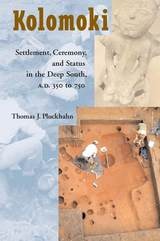
Kolomoki
Settlement, Ceremony, and Status in the Deep South, A.D. 350 to 750Thomas J. Pluckhahn
University of Alabama Press, 2003
A Dan Josselyn Memorial Publication
The first comprehensive and systematic investigation of a Woodland period ceremonial center.
Kolomoki, one of the most impressive archaeological sites in the southeastern United States, includes at least nine large earthen mounds in the lower Chattahoochee River valley of southwest Georgia. The largest, Mound A, rises approximately 20 meters above the terrace that borders it. From its flat-topped summit, a visitor can survey the string of smaller mounds that form an arc to the south and west.
Archaeological research had previously placed Kolomoki within the Mississippian period (ca. A.D. 1000-1500) primarily because of the size and form of the mounds. But this book presents data for the main period of occupation and mound construction that confirm an earlier date, in the Woodland period (ca. A.D. 350-750). Even though the long-standing confusion over Kolomoki’s dating has now been settled, questions remain regarding the lifeways of its inhabitants. Thomas Pluckhahn's research has recovered evidence concerning the level of site occupation and the house styles and daily lives of its dwellers. He presents here a new, revised history of Kolomoki from its founding to its eventual abandonment, with particular attention to the economy and ceremony at the settlement.
This study makes an important contribution to the understanding of middle range societies, particularly the manner in which ceremony could both level and accentuate status differentiation within them. It provides a readable overview of one of the most important but historically least understood prehistoric Native American sites in the United States.

Konduru
Structure and Integration in a South Indian VillagePaul G. Hiebert
University of Minnesota Press, 1971
Konduru was first published in 1971. Minnesota Archive Editions uses digital technology to make long-unavailable books once again accessible, and are published unaltered from the original University of Minnesota Press editions.
This is a detailed anthropological description and analysis of life in Konduru, a village in the central part of southern India about one hundred miles south of Hyderabad. The study is based on field work done by Professor Hiebert over a period of several years when he lived in the village, spoke its language, Telugu, and became closely acquainted with the people and their culture.
After sketching the geographic and historical setting of the village, Professor Hiebert describes and discusses the social structure, including the societal categories, the various castes, the social groups including family, patrilineage, associations, and communities, and hamlets, villages, and towns in the region. There are chapters on status and power, networks of interpersonal relationships, panchayats (the system of justice), and rituals. Finally, the author discusses changes which are taking place in the society and culture of Konduru and presents his conclusions. He points out that this study of Konduru illustrates the importance of the village within the social order but at the same time demonstrates that the village cannot be understood apart from the other social groups in which its members are involved and interrelated, and that these relationships are neither static nor simple. But, as he concludes, the village is, for the individual, the concrete expression of his society.
The book is illustrated with photographs, maps, and drawings. E. Adamson Hoebel, Regents' professor of anthropology at the University of Minnesota, writes a foreword.
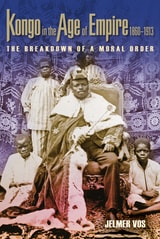
Kongo in the Age of Empire, 1860–1913
The Breakdown of a Moral OrderJelmer Vos
University of Wisconsin Press, 2015
Vos underlines that Kongo's incorporation in the European state system also had tragic consequences, including the undermining of local African structures of authority—on which the colonial system actually depended. Kongo in the Age of Empire carefully documents the involvement of Kongo's royal court in the exercise of Portuguese rule in northern Angola and the ways that Kongo citizens experienced colonial rule as an increasingly illegitimate extension of royal power.

Korean "Comfort Women"
Military Brothels, Brutality, and the Redress MovementPyong Gap Min
Rutgers University Press, 2021
Korean “Comfort Women” synthesizes the previous major findings about Japanese military sexual slavery and legal recommendations, and provides new findings about the issues “comfort women” faced for an English-language audience. It also examines the transnational redress movement, revealing that the Japanese government has tried to conceal the crime of sexual slavery and to resolve the women’s human rights issue with diplomacy and economic power.
Korean Families Yesterday and Today
Hyunjoon Park and Hyeyoung Woo, Editors
University of Michigan Press, 2020
Korean families have changed significantly during the last few decades in their composition, structure, attitudes, and function. Delayed and forgone marriage, fertility decline, and rising divorce rates are just a few examples of changes that Korean families have experienced at a rapid pace, more dramatic than in many other contemporary societies. Moreover, the increase of marriages between Korean men and foreign women has further diversified Korean families. Yet traditional norms and attitudes toward gender and family continue to shape Korean men and women’s family behaviors.
Korean Families Yesterday and Today portrays diverse aspects of the contemporary Korean families and, by explicitly or implicitly situating contemporary families within a comparative historical perspective, reveal how the past of Korean families evolved into their current shapes. While the study of families can be approached in many different angles, our lens focuses on families with children or young adults who are about to forge family through marriage and other means. This focus reflects that delayed marriage and declined fertility are two sweeping demographic trends in Korea, affecting family formation. Moreover, “intensive” parenting has characterized Korean young parents and therefore, examining change and persistence in parenting provides important clues for family change in Korea.
This volume should be of interest not only to readers who are interested in Korea but also to those who want to understand broad family changes in East Asia in comparative perspective.
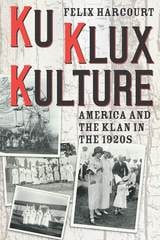
Ku Klux Kulture
America and the Klan in the 1920sFelix Harcourt
University of Chicago Press, 2017
Ku Klux Kulture reveals the extent to which the KKK participated in and penetrated popular American culture, reaching far beyond its paying membership to become part of modern American society. The Klan owned radio stations, newspapers, and sports teams, and its members created popular films, pulp novels, music, and more. Harcourt shows how the Klan’s racist and nativist ideology became subsumed in sunnier popular portrayals of heroic vigilantism. In the process he challenges prevailing depictions of the 1920s, which may be best understood not as the Jazz Age or the Age of Prohibition, but as the Age of the Klan. Ku Klux Kulture gives us an unsettling glimpse into the past, arguing that the Klan did not die so much as melt into America’s prevailing culture.
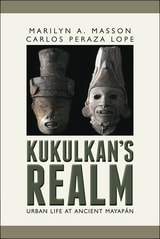
Kukulcan's Realm
Urban Life at Ancient MayapánMarilyn Masson
University Press of Colorado, 2014
Masson and Peraza Lope's detailed overview provides evidence of a vibrant market economy that played a critical role in the city's political and economic success. They offer new perspectives from the homes of governing elites, secondary administrators, affluent artisans, and poorer members of the service industries. Household occupational specialists depended on regional trade for basic provisions that were essential to crafting industries, sustenance, and quality of life. Settlement patterns reveal intricate relationships of households with neighbors, garden plots, cultivable fields, thoroughfares, and resources. Urban planning endeavored to unite the cityscape and to integrate a pluralistic populace that derived from hometowns across the Yucatán peninsula.
New data from Mayapán, the pinnacle of Postclassic Maya society, contribute to a paradigm change regarding the evolution and organization of Maya society in general and make Kukulcan's Realm a must-read for students and scholars of the ancient Maya and Mesoamerica.
Kuna Art and Shamanism
An Ethnographic ApproachBy Paolo Fortis
University of Texas Press, 2013
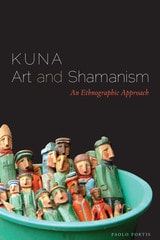
Known for their beautiful textile art, the Kuna of Panama have been scrutinized by anthropologists for decades. Perhaps surprisingly, this scrutiny has overlooked the magnificent Kuna craft of nuchukana—wooden anthropomorphic carvings—which play vital roles in curing and other Kuna rituals. Drawing on long-term fieldwork, Paolo Fortis at last brings to light this crucial cultural facet, illuminating not only Kuna aesthetics and art production but also their relation to wider social and cosmological concerns.
Exploring an art form that informs birth and death, personhood, the dream world, the natural world, religion, gender roles, and ecology, Kuna Art and Shamanism provides a rich understanding of this society’s visual system, and the ways in which these groundbreaking ethnographic findings can enhance Amerindian scholarship overall. Fortis also explores the fact that to ask what it means for the Kuna people to carve the figure of a person is to pose a riddle about the culture’s complete concept of knowing.
Also incorporating notions of landscape (islands, gardens, and ancient trees) as well as cycles of life, including the influence of illness, Fortis places the statues at the center of a network of social relationships that entangle people with nonhuman entities. As an activity carried out by skilled elderly men, who possess embodied knowledge of lifelong transformations, the carving process is one that mediates mortal worlds with those of immortal primordial spirits. Kuna Art and Shamanism immerses readers in this sense of unity and opposition between soul and body, internal forms and external appearances, and image and design.
Kupilikula
Governance and the Invisible Realm in MozambiqueHarry G. West
University of Chicago Press, 2005
In this historical ethnography of sorcery, Harry G. West draws on a decade of fieldwork and combines the perspectives of anthropology and political science to reveal how Muedans expect responsible authorities to monitor the invisible realm of sorcery and to overturn or, as Muedans call it, "kupilikula" sorcerers' destructive attacks by practicing a constructive form of counter-sorcery themselves. Kupilikula argues that, where neoliberal policies have fostered social division rather than security and prosperity, Muedans have, in fact, used sorcery discourse to assess and sometimes overturn reforms, advancing alternative visions of a world transformed.
Kurdistan on the Global Stage
Kinship, Land, and Community in IraqKing, Diane E
Rutgers University Press, 2014
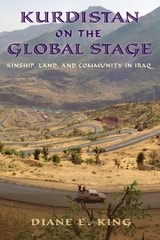
Anthropologist Diane E. King has written about everyday life in the Kurdistan Region of Iraq, which covers much of the area long known as Iraqi Kurdistan. Following the overthrow of Saddam Hussein’s Ba’thist Iraqi government by the United States and its allies in 2003, Kurdistan became a recognized part of the federal Iraqi system. The Region is now integrated through technology, media, and migration to the rest of the world.
Focusing on household life in Kurdistan’s towns and villages, King explores the ways that residents connect socially, particularly through patron-client relationships and as people belonging to gendered categories. She emphasizes that patrilineages (male ancestral lines) seem well adapted to the Middle Eastern modern stage and viceversa. The idea of patrilineal descent influences the meaning of refuge-seeking and migration as well as how identity and place are understood, how women and men interact, and how “politicking” is conducted.
In the new Kurdistan, old values may be maintained, reformulated, or questioned. King offers a sensitive interpretation of the challenges resulting from the intersection of tradition with modernity. Honor killings still occur when males believe their female relatives have dishonored their families, and female genital cutting endures. Yet, this is a region where modern technology has spread and seemingly everyone has a mobile phone. Households may have a startling combination of illiterate older women and educated young women. New ideas about citizenship coexist with older forms of patronage.
King is one of the very few scholars who conducted research in Iraq under extremely difficult conditions during the Saddam Hussein regime. How she was able to work in the midst of danger and in the wake of genocide is woven throughout the stories she tells. Kurdistan on the Global Stage serves as a lesson in field research as well as a valuable ethnography.
Kuria Cattle Raiders
Violence and Vigilantism on the Tanzania/Kenya FrontierMichael L. Fleisher
University of Michigan Press, 2000
The reciprocal raiding of cattle by pastoralists has a long and venerable history in East Africa, but there has been, until now, no book-length treatment of the practice, and, more importantly, no detailed case study of the newer, "modern" form of cattle raiding described here. In addition, the phenomenon of Kuria cattle raiding conveys significant implications for our understanding of informal economies and globalization processes.
Kuria Cattle Raiders engages issues of theoretical as well as practical significance for anthropologists, sociologists, criminologists, cultural ecologists, economic development agencies, and all those concerned with the pressing issues of globalization and rapid social and cultural change.
Michael L. Fleisher, a Post-Doctoral Research Fellow in the Department of Rangeland Resources, Utah State University, is currently engaged in a study of conflict among pastoralists in southern Ethiopia as part of a research project jointly administered by the University of Kentucky, Utah State University, and Cornell University under a grant from U.S.A.I.D.
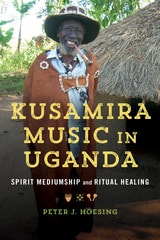
Kusamira Music in Uganda
Spirit Mediumship and Ritual HealingPeter J. Hoesing
University of Illinois Press, 2021
In southern Uganda, ritual healing traditions called kusamira and nswezi rely on music to treat sickness and maintain well-being. Peter J. Hoesing blends ethnomusicological fieldwork with analysis to examine how kusamira and nswezi performance socializes dynamic processes of illness, wellness, and health. People participate in these traditions for reasons that range from preserving ideas to generating strategies that allow them to navigate changing circumstances. Indeed, the performance of kusamira and nswezi reproduces ideas that remain relevant for succeeding generations. Hoesing shows the potential of this social reproduction of well-being to shape development in a region where over 80 percent of the population relies on traditional healers for primary health care.
Comprehensive and vivid with eyewitness detail, Kusamira Music in Uganda offers insight into important healing traditions and the overlaps between expressive culture and healing practices, the human and other-than-human, and Uganda's past and future.
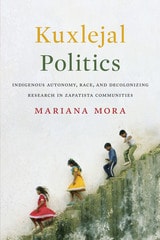
Kuxlejal Politics
Indigenous Autonomy, Race, and Decolonizing Research in Zapatista CommunitiesBy Mariana Mora
University of Texas Press, 2017
Over the past two decades, Zapatista indigenous community members have asserted their autonomy and self-determination by using everyday practices as part of their struggle for lekil kuxlejal, a dignified collective life connected to a specific territory. This in-depth ethnography summarizes Mariana Mora’s more than ten years of extended research and solidarity work in Chiapas, with Tseltal and Tojolabal community members helping to design and evaluate her fieldwork. The result of that collaboration—a work of activist anthropology—reveals how Zapatista kuxlejal (or life) politics unsettle key racialized effects of the Mexican neoliberal state.
Through detailed narratives, thick descriptions, and testimonies, Kuxlejal Politics focuses on central spheres of Zapatista indigenous autonomy, particularly governing practices, agrarian reform, women’s collective work, and the implementation of justice, as well as health and education projects. Mora situates the proposals, possibilities, and challenges associated with these decolonializing cultural politics in relation to the racialized restructuring that has characterized the Mexican state over the past twenty years. She demonstrates how, despite official multicultural policies designed to offset the historical exclusion of indigenous people, the Mexican state actually refueled racialized subordination through ostensibly color-blind policies, including neoliberal land reform and poverty alleviation programs. Mora’s findings allow her to critically analyze the deeply complex and often contradictory ways in which the Zapatistas have reconceptualized the political and contested the ordering of Mexican society along lines of gender, race, ethnicity, and class.
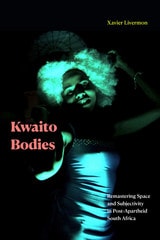
Kwaito Bodies
Remastering Space and Subjectivity in Post-Apartheid South AfricaXavier Livermon
Duke University Press, 2020

Kwaito's Promise
Music and the Aesthetics of Freedom in South AfricaGavin Steingo
University of Chicago Press, 2016
Politicians and cultural critics have long criticized kwaito for failing to provide any meaningful contribution to a society that desperately needs direction. As Steingo shows, however, these criticisms are built on problematic assumptions about the political function of music. Interacting with kwaito artists and fans, he shows that youth aren’t escaping their social condition through kwaito but rather using it to expand their sensory realities and generate new possibilities. Resisting the truism that “music is always political,” Steingo elucidates a music that thrives on its radically ambiguous relationship with politics, power, and the state.
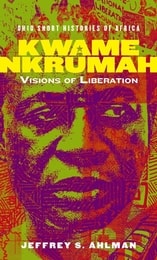
Kwame Nkrumah
The Father of African NationalismJeffrey S. Ahlman
Ohio University Press, 1998

Kyongju Things
Assembling PlaceRobert Oppenheim
University of Michigan Press, 2008
Kyongju is South Korea's preeminent "culture city," an urban site rich with archaeological wonders that residents compare to those of Nara, Xian, and Rome. By examining these ancient objects in relation to the controversies that engulfed South Korea's high-speed railway line when it was first proposed in the 1990s, Kyongju Things offers a grounded and theoretically sophisticated account of South Korean development and citizenship in the last quarter of the twentieth century. Its sensitivity to issues of place, knowledge, and cultural heritage and its innovative use of network theory will be of interest to a wide range of scholars in anthropology, Asian studies, the history of science and technology, cultural geography, urban planning, and political science.
Robert Oppenheim is Assistant Professor of Asian Studies at the University of Texas at Austin.
"A tale of South Korea's new politics involving antiquarians, weekend hikers, activists, and entrepreneurs, told with wit and theoretical sophistication."
---Laurel Kendall, Curator, Division of Anthropology, American Museum of Natural History
"In Kyongju Things, Robert Oppenheim employs an innovative theoretical blend to insightfully illuminate the interactions of agency and objects in the making of a 'place.'"
---Roger L. Janelli, Professor Emeritus, Department of East Asian Languages and Cultures and Department of Folklore and Ethnomusicology, Indiana University
"Kyongju Things is responsible, pathbreaking, and ambitious, with a stunning and welcoming introduction . . . Oppenheim calls upon a theoretical tool kit that allows him to productively re-think place, locality, technology, things, and subjectivity in ways that really do challenge the existing scholarship on South Korea. Kyongju Things will make a splash in Korean studies."
---Nancy Abelmann, Associate Professor of Anthropology, University of Illinois at Urbana-Champaign, and author of Echoes of the Past, Epics of Dissent: A South Korean Social Movement