Results by title
1038 books match the query 'Antiquities' and 41 start with l
La Consentida
Settlement, Subsistence, and Social Organization in an Early Formative Mesoamerican CommunityGuy David Hepp
University Press of Colorado, 2019
La Consentida explores Early Formative period transitions in residential mobility, subsistence, and social organization at the site of La Consentida in coastal Oaxaca, Mexico. Examining how this site transformed during one of the most fundamental moments of socioeconomic change in the ancient Americas, the book provides a new way of thinking about the social dynamics of Mesoamerican communities of the period.
Guy David Hepp summarizes the results of several seasons of fieldwork and laboratory analysis under the aegis of the La Consentida Archaeological Project, drawing on various forms of evidence—ground stone tools, earthen architecture, faunal remains, human dental pathologies, isotopic indicators, ceramics, and more— to reveal how transitions in settlement, subsistence, and social organization at La Consentida were intimately linked. While Mesoamerica is too diverse for research at a single site to lay to rest ongoing debates about the Early Formative period, evidence from La Consentida should inform those debates because of the site’s unique ecological setting, its relative lack of disturbance by later occupations, and because it represents the only well-documented Early Formative period village in a 300-mile stretch of Mexico’s Pacific coast.
One of the only studies to closely document multiple lines of evidence of the transition toward a sedentary, agricultural society at an individual settlement in Mesoamerica, La Consentida is a key resource for understanding the transition to settled life and social complexity in Mesoamerican societies.
La Harpe's Post
Tales of French-Wichita Contact on the Eastern PlainsGeorge H. Odell
University of Alabama Press, 2002
This major contribution to contact period studies points to the Lasley Vore site in modern Oklahoma as the most likely first meeting place of Plains Indians and Europeans more than 300 years ago.
In 1718, Jean-Baptiste Bénard, Sieur de la Harpe, departed St. Malo in Brittany for the New World. La Harpe, a member of the French bourgeoisie, arrived at Dauphin Island on the Gulf coast to take up the entrepreneurial concession provided by the director of the French colony, Jean Baptiste LeMoyne de Bienville. La Harpe's charge was to open a trading post on the Red River just above a Caddoan village not far from present-day Texarkana. Following the establishment of this post, La Harpe ventured farther north to extend his trade market into the region occupied by the Wichita Indians. Here he encountered a Tawakoni village with an estimated 6,000 inhabitants, a number that swelled to 7,000 during the ten-day visit.
Despite years of ethnohistoric and archaeological research, no scholar had successfully established where this important meeting took place. Then in 1988, George Odell and his crew surveyed and excavated an area 13 miles south of Tulsa, along the Arkansas River, that revealed undeniable association of Native American habitation refuse with 18th-century European trade goods.
Odell here presents a full account of the presumed location of the Tawakoni village as revealed through the analysis of excavated materials from nine specialist collaborators. In a strikingly well-written narrative report, employing careful study and innovative analysis supported by appendixes containing the excavation data, Odell combines documentary history and archaeological evidence to pinpoint the probable site of the first European contact with North American Plains Indians.
Lamar Archaeology
Mississippian Chiefdoms in the Deep SouthEdited by Mark Williams and Gary Shapiro
University of Alabama Press, 1990
A Dan Josselyn Memorial Publication
Lamar Archaeology provides a comprehensive and detailed review of our knowledge of the late prehistoric Indian societies in the Southern Appalachian area and its peripheries. These Lamar societies were chiefdom-level groups who built most of the mounds in this large region and were ancestors of later tribes, including the Creeks and Cherokees. This book begins with a history of the last 50 years of archaeological and historical research and brings together for the first time all the available data on this early culture. It also provides an invaluable model for books about Southeastern Indian societies by combining purely descriptive information with innovative analyses, advancing our knowledge of the past while remaining firmly grounded in the archaeological evidence as fact.
Contributors include:
Frankie Snow, Chad O. Braley, James B. Langford Jr., Marvin T. Smith, Daniel T. Elliott, Richard R. Polhemus, C. Roger Nance, Gary Shapiro, Mark Williams, John F. Scarry, David G. Anderson, andCharles M. Hudson
Land of Water, City of the Dead
Religion and Cahokia's EmergenceSarah E. Baires
University of Alabama Press, 2017
Explores the embodiment of religion in the Cahokia land and how places create, make meaningful, and transform practices and beliefs
Cahokia, the largest city of the Mississippian mound cultures, lies outside present-day East St. Louis. Land of Water, City of the Dead reconceptualizes Cahokia’s emergence and expansion (ca. 1050–1200), focusing on understanding a newly imagined religion and complexity through a non-Western lens. Sarah E. Baires argues that this system of beliefs was a dynamic, lived component, based on a broader ontology, with roots in other mound societies. This religion was realized through novel mortuary practices and burial mounds as well as through the careful planning and development of this early city’s urban landscape.
Baires analyzes the organization and alignment of the precinct of downtown Cahokia with a specific focus on the newly discovered and excavated Rattlesnake Causeway and the ridge-top mortuary mounds located along the site axes. Land of Water, City of the Dead also presents new data from the 1954 excavations of the ridge-top mortuary Wilson Mound and a complete analysis of the associated human remains. Through this skeletal analysis, Baires discusses the ways that Cahokians processed and buried their ancestors, identifying unique mortuary practices that include the intentional dismemberment of human bodies and burial with marine shell beads and other materials.
Land of the Tejas
Native American Identity and Interaction in Texas, A.D. 1300 to 1700By John Wesley Arnn III
University of Texas Press, 2012
Combining archaeological, historical, ethnographic, and environmental data, Land of the Tejas represents a sweeping, interdisciplinary look at Texas during the late prehistoric and early historic periods. Through this revolutionary approach, John Wesley Arnn reconstructs Native identity and social structures among both mobile foragers and sedentary agriculturalists. Providing a new methodology for studying such populations, Arnn describes a complex, vast, exotic region marked by sociocultural and geographical complexity, tracing numerous distinct peoples over multiple centuries.
Drawing heavily on a detailed analysis of Toyah (a Late Prehistoric II material culture), as well as early European documentary records, an investigation of the regional environment, and comparisons of these data with similar regions around the world, Land of the Tejas examines a full scope of previously overlooked details. From the enigmatic Jumano Indian leader Juan Sabata to Spanish friar Casanas's 1691 account of the vast Native American Tejas alliance, Arnn's study shines new light on Texas's poorly understood past and debunks long-held misconceptions of prehistory and history while proposing a provocative new approach to the process by which we attempt to reconstruct the history of humanity.
Landscape Learning in the Pleistocene Great Basin
David B. Hunt
University of Utah Press, 2025
Hunt seeks insight into the initial development of adaptive strategies related to the procurement of essential resources within a region. Incorporating data from archaeological investigation at the Old River Bed Delta in Utah and focusing specifically on the lithics recovered, Hunt develops what he terms the Discoverability Model. He proposes this model as a way for archaeologists to begin quantifying the qualitative aspects of colonization and landscape learning models.
Landscape and Interaction. The Troodos Archaeological and Environmental Survey Project, Cyprus. Volume 1. Methodology, Analysis and Interpretation
Michael Given
Council for British Research in the Levant, 2013
Landscape of the Spirits
Hohokam Rock Art at South Mountain ParkText by Todd W. Bostwick; Photographs by Peter Krocek; Illustrations by Todd W. Bostwick and Peter Krocek
University of Arizona Press, 2002
Todd Bostwick, an archaeologist who has studied the Hohokam for more than twenty years, and Peter Krocek, a professional photographer with a passion for archaeology, have combed the South Mountains to locate nearly all of the ancient petroglyphs found in the canyons and ridges. Their years of learning the landscape and investigating the ancient designs have resulted in a book that explores this wealth of prehistoric rock art within its natural and cultural contexts, revealing what these carvings might mean, how they got there, and when they were made.
Landscape of the Spirits is the first book to cover these ancient images and is one of the most comprehensive treatments of a rock art location ever published. It conveys the range of different rock art elements and compositions found in the South Mountains—animals, humans, and geometric shapes, as well as celestial and calendrical markings at key sites—through accurate descriptions, drawings, and photographs. Interpretations of the petroglyphs are based on Native American ethnographic accounts and consider the most recent theories concerning shamanism and archaeoastronomy.
Written in a simple and accessible style, Landscape of the Spirits is an indispensable volume for anyone exploring the South Mountains, and for rock art enthusiasts everywhere who wish to broaden their understanding of the prehistoric world. It is both an authoritative overview of these ancient wonders and an unprecedented benchmark in southwestern rock art research at a single geographic location.
Landscapes in Transition
B. Finlayson
Council for British Research in the Levant, 2010
Landscapes of Social Transformation in the Salinas Province and the Eastern Pueblo World
Edited by Katherine A. Spielmann
University of Arizona Press, 2017
Landscapes of Social Transformation in the Salinas Province and the Eastern Pueblo World investigates relationships between diverse regional and local changes in the Rio Grande and Salinas areas from 1100 to 1500 C.E. The contributing authors draw on the results of sixteen seasons of archaeological survey and excavation in the Salinas Province of central New Mexico. The chapters offer cross-scale analyses to compare broad perspectives in well-researched southwestern culture changes to the finer details of stability and transformation in Salinas. This stability—which was unusual in the Pueblo Southwest—from the 1100s until its abandonment in the 1670s provides an interesting contrast to migration-based transformations studied elsewhere in the Rio Grande region.
CONTRIBUTORS
Patricia Capone
Matthew Chamberlin
Tiffany C. Clark
William M. Graves
Cynthia L. Herhahn
Deborah Huntley
Keith Kintigh
Ann Kinzig
Jeannette L. Mobley-Tanaka
Alison E. Rautman
Jonathan Sandor
Grant Snitker
Julie Solometo
Katherine A. Spielmann
Colleen Strawhacker
Maryann Wasiolek
Las Varas
Ritual and Ethnicity in the Ancient AndesHoward Tsai
University of Alabama Press, 2020
Recent popular discourse on nationalism and ethnicity assumes that humans by nature prefer “tribalism,” as if people cannot help but divide themselves along lines of social and ethnic difference. Research from anthropology, history, and archaeology, however, shows that individuals actively construct cultural and social ideologies to fabricate the stereotypes, myths, and beliefs that separate “us” from “them.” Archaeologist Howard Tsai and his team uncovered a thousand-year-old village in northern Peru where rituals were performed to recognize and reinforce ethnic identities.
This site—Las Varas—is located near the coast of Peru in a valley leading into the Andes. Excavations revealed a western entrance to Las Varas for those arriving from the coast and an eastern entryway for those coming from the highlands. Rituals were performed at both of these entrances, indicating that the community was open to exchange and interaction, yet at the same time controlled the flow of people and goods through ceremonial protocols. Using these checkpoints and associated rituals, the villagers of Las Varas were able to maintain ethnic differences between themselves and visitors from foreign lands.
Las Varas: Ritual and Ethnicity in the Ancient Andes reveals a rare case of finding ethnicity relying solely on archaeological remains. In this monograph, data from the excavation of Las Varas are analyzed within a theoretical framework based on current understandings of ethnicity. Tsai’s method, approach, and inference demonstrate the potential for archaeologists to discover how ethnic identities were constructed in the past, ultimately making us question the supposed naturalness of tribal divisions in human antiquity.
Late Holocene Research on Foragers and Farmers in the Desert West
Barbara J. Roth and Maxine E. McBrinn
University of Utah Press, 2015
Three main themes link these papers: the role of the environment in shaping prehistoric behavior, flexibility in foraging and farming adaptations, and diversity in settlement strategies. Contributors cover a range of topics including the varied ways hunter-gatherers adapted to arid environments, the transition from hunting and gathering to farming and the reasons for it, the variation in early farmers across the Southwest and Great Basin, and the differing paths followed as they developed settled villages.
Late Intermediate Occupation at Cerro Azul, Perú, A Preliminary Report
Joyce Marcus
University of Michigan Press, 1987
Late Prehistoric Hunter-Gatherers and Farmers of the Jornada Mogollon
Thomas R. Rocek
University Press of Colorado, 2023
The Jornada branch of the Mogollon culture and its inhabitants played a significant economic, political, and social role at multiple scales. This volume draws together results from recent large-scale CRM work that has amassed among the largest data sets in the Southwest with up-to-date chronological, architectural, faunal, ceramic, obsidian sourcing, and other specialized studies. Chapters by some of the most active researchers in the area address topics that reach beyond the American Southwest, such as mobility, forager adaptations, the transition to farming, responses to environmental challenges, and patterns of social interaction.
Late Prehistoric Hunter-Gatherers and Farmers of the Jornada Mogollon is an up-to-date summary of the major developments in the region and their implications for Southwest archaeology in particular and anthropological archaeological research more generally.
The publication of this book is supported in part by the Arizona Archaeological and Historical Society and the Center for Material Culture Studies at the University of Delaware.
Contributors: Rafael Cruz Antillón, Douglas H. M. Boggess, Peter C. Condon, Linda Scott Cummings, Moira Ernst, Tim Graves, David V. Hill, Nancy A. Kenmotsu, Shaun M. Lynch, Arthur C. MacWilliams, Mary Malainey, Timothy D. Maxwell, Myles R. Miller, John Montgomery, Jim A. Railey, Thomas R. Rocek, Matt Swanson, Christopher A. Turnbow, Javier Vasquez, Regge N. Wiseman, Chad L. Yost
Later Prehistory of Badia
Excavation and Surverys in Eastern Jordan, Volume 2A. Betts
Council for British Research in the Levant, 2013
Latin American Indigenous Warfare and Ritual Violence
Edited by Richard J. Chacon and Rubén G. Mendoza
University of Arizona Press, 2007
All of the chapters advance our knowledge of the causes, extent, and consequences of indigenous violence—including ritualized violence—in Latin America. Each major historical/cultural group in Latin America is addressed by at least one contributor. Incorporating the results of dozens of years of research, this volume documents evidence of warfare, violent conflict, and human sacrifice from the fifteenth century to the twentieth, including incidents that occurred before European contact. Together the chapters present a convincing argument that warfare and ritual violence have been woven into the fabric of life in Latin America since remote antiquity.
For the first time, expert subject-area work on indigenous violence—archaeological, osteological, ethnographic, historical, and forensic—has been assembled in one volume. Much of this work has heretofore been dispersed across various countries and languages. With its collection into one English-language volume, all future writers—regardless of their discipline or point of view—will have a source to consult for further research.
CONTENTS
Acknowledgments
Introduction
Richard J. Chacon and Rubén G. Mendoza
1. Status Rivalry and Warfare in the Development and Collapse of Classic Maya Civilization
Matt O’Mansky and Arthur A. Demarest
2. Aztec Militarism and Blood Sacrifice: The Archaeology and Ideology of Ritual Violence
Rubén G. Mendoza
3. Territorial Expansion and Primary State Formation in Oaxaca, Mexico
Charles S. Spencer
4. Images of Violence in Mesoamerican Mural Art
Donald McVicker
5. Circum-Caribbean Chiefly Warfare
Elsa M. Redmond
6. Conflict and Conquest in Pre-Hispanic Andean South America: Archaeological Evidence from Northern Coastal Peru
John W. Verano
7. The Inti Raymi Festival among the Cotacachi and Otavalo of Highland Ecuador: Blood for the Earth
Richard J. Chacon, Yamilette Chacon, and Angel Guandinango
8. Upper Amazonian Warfare
Stephen Beckerman and James Yost
9. Complexity and Causality in Tupinambá Warfare
William Balée
10. Hunter-Gatherers’ Aboriginal Warfare in Western Chaco
Marcela Mendoza
11. The Struggle for Social Life in Fuego-Patagonia
Alfredo Prieto and Rodrigo Cárdenas
12. Ethical Considerations and Conclusions Regarding Indigenous Warfare and Ritual Violence in Latin America
Richard J. Chacon and Rubén G. Mendoza
References
About the Contributors
Index
Latin Inscriptions in the Kelsey Museum
The Dennison and De Criscio CollectionsSteven L. Tuck
University of Michigan Press, 2006
The 400 entries in this volume include all of the Latin inscriptions on stone or metal in the Kelsey Museum of Archaeology at the University of Michigan; they represent the largest, and arguably the most important, collection of Latin inscriptions in the Western Hemisphere. The collection is notable not just for its size but for the fact that almost all the inscriptions were acquired by purchase for their scholarly and educational value to the members of the university community. Because of this, the collection is also an important testimony to a seminal phase in the development of the study of Classics at the University of Michigan. For the first time ever, this project makes the Latin inscriptions of the Kelsey available in one volume and has provided an opportunity to reexamine some texts that have not been edited in over a century. The commentaries for this edition have benefited from a wealth of recent scholarship resulting in some amended readings and reidentification of texts.
Steven L. Tuck is Assistant Professor of Classics at Miami University of Ohio.
The Kelsey Museum Studies series, edited by University of Michigan professors Elaine Gazda, Margaret Cool Root, and John Pedley, is designed to publish unusual material in the Museum's collections, together with reports of current and past archaeological expeditions sponsored by the University of Michigan.
Legacies of The Basin of Mexico
Carlos E. Cordova
University Press of Colorado, 2023
More than four decades after that book’s publication, the fourteen contributions in this volume review and analyze its theoretical and methodological influence in light of recent research across disciplines. Among a spectrum of authors representing several generations are those who participated directly in the Basin of Mexico surveys—including the late Jeffrey R. Parsons—as well as those who have been actively working on recent projects in the basin and neighboring regions.
Providing a broad and multidisciplinary perspective of the present and future state of research in the area, The Legacies of The Basin of Mexico will be of interest to Mesoamerican and Latin American archaeologists as well as geographers, geologists, historians, and specialists in the study of past environments.
Contributors: Guillermo Acosta Ochoa, Aleksander Borejsza, Destiny Crider, Charles Frederick, Raúl García-Chávez, Larry Gorenflo, Angela Huster, Georgina Ibarra Arzave, Charles Kolb, Frank Lehmkuhl, Abigail Meza Peñaloza, Emily McClung de Tapia, John K. Millhauser, Deborah Nichols, Jeffrey R. Parsons, Serafin Sánchez Pérez, Philipp Schulte, Sergey Sedov, Elizabeth Solleiro Rebolledo, Daisy Valera Fenández, Federico Zertuche

Letters from Wupatki
Courtney Reeder Jones; Edited by Lisa Rappoport
University of Arizona Press, 1995
The year was 1938, and the newlyweds had come to Wupatki National Monument as full-time National Park Service caretakers for the ruin. Remote in time and place, their story as described in Courtney's letters will take readers into a dramatic landscape of red rocks, purple volcanoes, and endless blue sky. Here, some 60 years ago, two young people came to terms with their new life together and with their nearly total reliance upon each other and their Navajo neighbors.
"They helped us in any way that a neighbor would, and we helped them as we could," wrote Courtney in her memoirs years later. Vivid and engaging, her letters home spill over with descriptions of their friendship with local Navajo families, their sings and celebrations, and her good luck in being able to be a part of it all.
Letters from Wupatki captures a more innocent era in southwestern archaeology and the history of the National Park Service before the post-war years brought paved roads, expanded park facilities, and ever-increasing crowds of visitors. Courtney's letters to her family and friends reflect all the charm of the earlier time as they convey the sense of rapid transition that came after the war.
Tracking those changes in the development of Wupatki National Monument and the National Park Service, the letters also—and perhaps more important—reveal changes in the Joneses themselves. Of particular interest to anthropologists and historians, their story also gives the general reader captivating glimpses of a partnership between two people who only grew stronger for the struggles they shared together.
Life And Death At Paloma
Practices In Peruvian VillageJeffrey Quilter
University of Iowa Press, 1989
Life and Land Use on the Bahrain Islands
The Geoarchaeology of an Ancient SocietyCurtis E. Larsen
University of Chicago Press, 1983
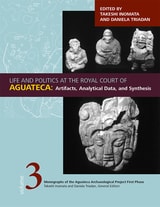
Life and Politics at the Royal Court of Aguateca
Artifacts, Analytical Data, and SynthesisTakeshi Inomata
University of Utah Press, 2014
Because of the surprise nature of the attack, most artifacts were left in their original locations, providing unprecedented views of the daily life of the Classic Maya. Detailed analyses of these objects and their distribution has shown that Mayan elites stored some of their food in their residences and that they also conducted various administrative duties there. The presence of numerous precious ornaments indicates that many of the Maya elite were also skilled craft producers.
Life and Politics at the Royal Court of Aguateca is the third and final volume of the monograph series on Aguateca. It presents the analyses of items not covered in the first two volumes, including figurines, ceramic laminates and masks, spindle whorls, ground stone, and bone artifacts, as well as hieroglyphic texts and plant and animal remains. It discusses the broad implications of this remarkable data set and provides a summation of the project.
Life in a Mississippian Warscape
Common Field, Cahokia, and the Effects of WarfareMeghan E. Buchanan
University of Alabama Press, 2022
Analyzes Mississippian daily life at Cahokia’s environs during wartime
In Life in a Mississippian Warscape: Common Field, Cahokia, and the Effects of Warfare Meghan E. Buchanan posits that to understand the big histories of warfare, political fragmentation, and resilience in the past archaeologists must also analyze and interpret the microscale actions of the past. These are the daily activities of people before, during, and after historical events. Within warscapes, battles take place in peoples’ front yards, family members die, and the impacts of violence in near and distant places are experienced on a daily basis. This book explores the microscale of daily lives of people living at Common Field, a large, palisaded mound center, during the period of Cahokia’s abandonment and the spread of violence and warfare throughout the Southeast.
Linking together ethnographic, historic, and archaeological sources, Buchanan discusses the evidence that the people of Common Field engaged in novel and hybrid practices in these dangerous times. At the microscale, they adopted new ceramic tempering techniques, produced large numbers of serving vessels decorated with warfare-related imagery, adapted their food practices, and erected a substantial palisade with specially prepared deposits. The overall picture that emerges at Common Field is of a people who engaged in risk-averse practices that minimized their exposure to outside of the palisade and attempted to seek intercession from otherworldly realms through public ceremonies involving warfare-related iconography.
Life on the Periphery
Economic Change in Late Prehistoric Southeastern New MexicoEdited by John D. Speth
University of Michigan Press, 2004
Life, Death, and Archaeology at Fort Blue Mounds
A Settlers’ Fortification of the Black Hawk WarRobert A. Birmingham
Wisconsin Historical Society Press, 2012
Life, Death, and Archaeology at Fort Blue Mounds is an archaeological detective story illuminating the lives of white settlers in the lead-mining region during the tragic events of the historically important conflict known as the Black Hawk War.
Focusing on the strategically located Fort Blue Mounds in southwestern Wisconsin, Robert A. Birmingham summarizes the 1832 conflict and details the history of the fort, which played a major role not only in U.S. military and militia operations but also in the lives of the white settlers who sought refuge there. Birmingham then transports us to the site decades later, when he and fellow Wisconsin Historical Society archaeologists and dedicated volunteers began their search for the fort. The artifacts they unearthed provide fascinating—and sometimes surprising—insights into the life, material culture, and even the food of the frontier.
Recommended for readers interested in the Black Hawk War, frontier life, Native American history, military history, and archaeology, Life, Death, and Archaeology at Fort Blue Mounds is grounded by a sense of place and the discovery of what a careful examination of our surroundings can tell us about the past.
Lifeways in the Northern Maya Lowlands
New Approaches to Archaeology in the Yucatán PeninsulaEdited by Jennifer P. Mathews and Bethany A. Morrison
University of Arizona Press, 2006
By exploring various social and political levels of Maya society through a broad expanse of time, Lifeways in the Northern Maya Lowlands not only reconstructs a little-known past, it also suggests the broad implications of archaeology for related studies of tourism, household economies, and ethnoarchaeology. It is a benchmark work that pointedly demonstrates the need for researchers in both north and south to ignore modern geographic boundaries in their search for new ideas to further their understanding of the ancient Maya.
Light on the Path
The Anthropology and History of the Southeastern IndiansThomas J. Pluckhahn
University of Alabama Press, 2006
The scholarship underlying this shift comes from many directions, but much of the groundwork can be attributed to Charles Hudson. The papers in this volume were contributed by Hudson’s colleagues and former students (many now leading scholars themselves) in his honor. The assumption links these papers is that of a historical transformation between Mississippian societies and the Indian societies of the historic era that requires explanation and critical analysis.
In all of the chapters, the legacy of Hudson’s work is evident. Anthropologists, archaeologists, and historians are storming the bridge that connects prehistory and history in a manner unimaginable 20 years ago. While there remains much work to do on the path toward understanding this transformation and constructing a complete social history of the Southeastern Indians, the work of Charles Hudson and his colleagues have shown the way.
Lightning Gods and Feathered Serpents
The Public Sculpture of El TajínBy Rex Koontz
University of Texas Press, 2009
El Tajín, an ancient Mesoamerican capital in Veracruz, Mexico, has long been admired for its stunning pyramids and ballcourts decorated with extensive sculptural programs. Yet the city's singularity as the only center in the region with such a wealth of sculpture and fine architecture has hindered attempts to place it more firmly in the context of Mesoamerican history. In Lightning Gods and Feathered Serpents, Rex Koontz undertakes the first extensive treatment of El Tajín's iconography in over thirty years, allowing us to view its imagery in the broader Mesoamerican context of rising capitals and new elites during a period of fundamental historical transformations.
Koontz focuses on three major architectural features—the Pyramid of the Niches/Central Plaza ensemble, the South Ballcourt, and the Mound of the Building Columns complex—and investigates the meanings of their sculpture and how these meanings would have been experienced by specific audiences. Koontz finds that the iconography of El Tajín reveals much about how motifs and elite rites growing out of the Classic period were transmitted to later Mesoamerican peoples as the cultures centered on Teotihuacan and the Maya became the myriad city-states of the Early Postclassic period.
By reexamining the iconography of sculptures long in the record, as well as introducing important new monuments and contexts, Lightning Gods and Feathered Serpents clearly demonstrates El Tajín's numerous iconographic connections with other areas of Mesoamerica, while also exploring its roots in an indigenous Gulf lowlands culture whose outlines are only now emerging. At the same time, it begins to uncover a largely ignored regional artistic culture of which Tajín is the crowning achievement.
Lightning Warrior
Maya Art and Kingship at QuiriguaBy Matthew G. Looper
University of Texas Press, 2003
The ancient Maya city of Quirigua occupied a crossroads between Copan in the southeastern Maya highlands and the major centers of the Peten heartland. Though always a relatively small city, Quirigua stands out because of its public monuments, which were some of the greatest achievements of Classic Maya civilization. Impressive not only for their colossal size, high sculptural quality, and eloquent hieroglyphic texts, the sculptures of Quirigua are also one of the few complete, in situ series of Maya monuments anywhere, which makes them a crucial source of information about ancient Maya spirituality and political practice within a specific historical context.
Using epigraphic, iconographic, and stylistic analyses, this study explores the integrated political-religious meanings of Quirigua's monumental sculptures during the eighth-century A.D. reign of the city's most famous ruler, K'ak' Tiliw. In particular, Matthew Looper focuses on the role of stelae and other sculpture in representing the persona of the ruler not only as a political authority but also as a manifestation of various supernatural entities with whom he was associated through ritual performance. By tracing this sculptural program from its Early Classic beginnings through the reigns of K'ak' Tiliw and his successors, and also by linking it to practices at Copan, Looper offers important new insights into the politico-religious history of Quirigua and its ties to other Classic Maya centers, the role of kingship in Maya society, and the development of Maya art.
Lithic Technologies in Sedentary Societies
Rachel A. Horowitz
University Press of Colorado, 2019
Lithic analysis focused on sedentary societies, especially in places like Mesoamerica, has previously been neglected mostly because of the high frequency of informal tools, but such bias limits the ways in which both lithic production and economic organization are investigated. Bringing the importance of studying such technologies to the fore and emphasizing the vital anthropological questions that lithics can answer, Lithic Technologies in Sedentary Societies is a valuable resource for scholars and students of lithic technology and sedentary, complex societies.
Contributors: Fumi Arakawa, Mary A. Davis, James Enloe, Dan Healan, Francesca Manclossi, Theodore Marks, Jayur Madhusudan Mehta, Jason S. R. Paling, Steve Rosen, John Whittaker
Living Ruins
Native Engagements with Past Materialities in Contemporary Mesoamerica, Amazonia, and the AndesPhilippe Erikson
University Press of Colorado, 2022
Ten case studies from the Maya region, Amazonia, and the Andes detail and contextualize narratives, rituals, and a range of practices and attitudes toward different kinds of vestiges. The chapters engage with recently debated issues such as regimes of historicity and knowledge, cultural landscapes, conceptions of personhood and ancestrality, artifacts, and materiality. They focus on Indigenous perspectives rather than mainstream narratives such as those mediated by UNESCO, Hollywood, travel agents, and sometimes even academics. The contributions provide critical analyses alongside a multifaceted account of how people relate to the place/time nexus, expanding our understanding of different ontological conceptualizations of the past and their significance in the present.
Living Ruins adds to the lively body of work on the invention of tradition, Indigenous claims on their lands and history, “retrospective ethnogenesis,” and neo-Indianism in a world where tourism, NGOs, and Western essentialism are changing Indigenous attitudes and representations. This book is significant to anyone interested in cultural heritage studies, Amerindian spirituality, and Indigenous engagement with archaeological sites in Latin America.
Contributors: Cedric Becquey, Laurence Charlier Zeineddine, Marie Chosson, Pablo Cruz, Philippe Erikson, Antoinette Molinié, Fernando Santos-Granero, Emilie Stoll, Valentina Vapnarsky, Pirjo Kristiina Virtanen

Living and Dying on the Periphery
The Archaeology and Human Remains from Two 13th-15th Century AD Villages in Southeastern New MexicoJamie L. Clark and John D. Speth
University of Utah Press, 2022
Summarizing results from eight seasons of research, Clark and Speth document human burials and associated grave offerings from the two sites. They discuss evidence for pathologies and trauma, raising questions about the nature and causes of violence that led to the demise of Henderson and Bloom Mound, and the abandonment of many other farming-hunting communities in the surrounding region.
Living and Leaving
A Social History of Regional Depopulation in Thirteenth-Century Mesa VerdeDonna M. Glowacki
University of Arizona Press, 2015
Much of the focus on this topic has been directed at understanding the role of climate change, drought, violence, and population pressure. The role of social factors, particularly religious change and sociopolitical organization, are less well understood. Bringing together multiple lines of evidence, including settlement patterns, pottery exchange networks, and changes in ceremonial and civic architecture, this book takes a historical perspective that naturally forefronts the social factors underlying the depopulation of Mesa Verde.
Author Donna M. Glowacki shows how “living and leaving” were experienced across the region and what role differing stressors and enablers had in causing emigration. The author’s analysis explains how different histories and contingencies—which were shaped by deeply rooted eastern and western identities, a broad-reaching Aztec-Chaco ideology, and the McElmo Intensification—converged, prompting everyone to leave the region. This book will be of interest to southwestern specialists and anyone interested in societal collapse, transformation, and resilience.
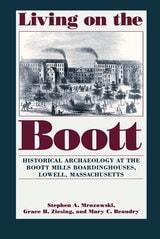
Living on the Boott
Historical Archaeology at the Boott Mills Boardinghouses of Lowell, MassachusettsStephen A. Mrozowski
University of Massachusetts Press, 1996
Lowell, Massachusetts was the first fully planned industrial city in the United States, and the Boott Mill, established in the 1820s along the Merrimack River, stood at the center of this bold experiment in industrial capitalism. For decades, the company-owned boardinghouses that housed the mills' workers were as much a part of the Lowell system as the looms themselves: a managed, closely supervised domestic world where the rhythms of mill life extended from the factory floor into every corner of daily existence.
Living on the Boott brings this vanished world back to life through rigorous historical archaeology. Drawing on excavations conducted at the Boott Mills boardinghouse complex, Stephen A. Mrozowski, Grace H. Ziesing, and Mary C. Beaudry examine the material remains of the men and women who lived and worked in Lowell's textile industry from the early nineteenth century through its long decline. Through painstaking analysis of ceramics, faunal assemblages, tobacco-related artifacts, and other recovered objects, the authors reconstruct the daily lives, diets, domestic routines, and social relationships of successive generations of boardinghouse residents—from the young "mill girls" recruited from rural New England who made Lowell famous, to the Irish immigrant workers who increasingly replaced them as the century progressed.
The result is a richly documented social history written not from official records alone, but from the objects people actually used, discarded, and left behind. The book illuminates how class, gender, ethnicity, and labor intersected in the intimate spaces of the boardinghouse, and documents the profound changes in living conditions as the Lowell system evolved and the workforce transformed. A landmark contribution to historical archaeology, industrial archaeology, and the history of American labor, Living on the Boott demonstrates the unique power of archaeological evidence to recover the lives of those too often overlooked by conventional historical sources.
Living with the Dead in the Andes
Edited by Izumi Shimada and James L. Fitzsimmons
University of Arizona Press, 2015
Living with the Dead in the Andes considers recent research by archaeologists, bioarchaeologists, ethnographers, and ethnohistorians whose work reveals the diversity and complexity of the dead-living interaction. The book’s contributors reap the salient results of this new research to illuminate various conceptions and treatments of the dead: “bad” and “good” dead, mummified and preserved, the body represented by art or effigies, and personhood in material and symbolic terms.
Death does not end or erase the emotional bonds established in life, and a comprehensive understanding of death requires consideration of the corpse, the soul, and the mourners. Lingering sentiment and memory of the departed seems as universal as death itself, yet often it is economic, social, and political agendas that influence the interactions between the dead and the living.
Nine chapters written by scholars from diverse countries and fields offer data-rich case studies and innovative methodologies and approaches. Chapters include discussions on the archaeology of memory, archaeothanatology (analysis of the transformation of the entire corpse and associated remains), a historical analysis of postmortem ritual activities, and ethnosemantic-iconographic analysis of the living-dead relationship. This insightful book focuses on the broader concerns of life and death.
Living with the Dead
Mortuary Ritual in MesoamericaEdited by James L. Fitzsimmons and Izumi Shimada
University of Arizona Press, 2011
This book results from a symposium organized by the editors for an annual meeting of the Society for American Archaeology. The contributors employ historical sources, comparative art history, anthropology, and sociology, as well as archaeology and anthropology, to uncover surprising commonalities across cultures, including the manner in which the dead were politicized, the perceptions of reciprocity between the dead and the living, and the ways that the dead were used by the living to create, define, and renew social as well as family ties. In exploring larger issues of a “good death” and the transition from death to ancestry, the contributors demonstrate that across Mesoamerica death was almost never accompanied by the extinction of a persona; it was more often the beginning of a social process than a conclusion.
Looking Beneath the Surface
The Story of Archaeology in New JerseyMounier, R. Alan
Rutgers University Press, 2002
For more than ten thousand years, humans have lived in New Jersey. From Summit to Cape May, from Trenton to the Jersey Shore, the state is a treasure trove of archaeological artifacts, revealing much about those who occupied the region prior to European settlement. As a rule, only the most durable of human creations¾items of stone and pottery¾survive the ravages of time. To complicate matters, the onslaught of our own culture and the indiscriminate looting of sites by greedy collectors have further diminished the cultural materials left behind. The task of the archaeologist is to gather and interpret these scraps for the benefit of science and the public. But digging up relics is a trivial pursuit if the only outcome is a collection of artifacts, however attractive or valuable they may be. Understanding what those relics mean in human terms is crucial.
In Looking beneath the Surface, R. Alan Mounier looks at the human past of New Jersey. With particular focus on the ancient past and native cultures, the author tells the story of archaeology in the state as it has unfolded, and as it continues to unfold. New investigations and discoveries continually change our views and interpretations of the past. In jargon-free language, Mounier provides an in-depth introduction offering information to understand general archaeological practices as well as research in New Jersey. Subsequent chapters describe artifact types, archaeological settlements, and burial practices in detail. He concludes with vignettes of twenty-one archaeological investigations throughout the state to illustrate the variability of sites and the accomplishments of dedicated archaeologists, both professional and amateur.
Lords of Lambityeco
Political Evolution in the Valley of Oaxaca during the Xoo PhaseMichael Lind
University Press of Colorado, 2010
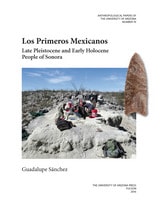
Los Primeros Mexicanos
Late Pleistocene and Early Holocene People of SonoraGuadalupe Sánchez
University of Arizona Press, 2016
Los Primeros Mexicanos explores the Clovis occupation of Mexico’s northwest region of Sonora. Using extensive primary data concerning specific artifacts, assemblages, and Paleoindian archaeology, Mexican archaeologist Guadalupe Sánchez presents a synopsis and critical review of current data and a unique summary of information about the First People of México that is difficult to find in Spanish and until now not available in English.
Sánchez’s essential framework for early Sonora prehistory includes the Sonoran landscape, the biotic communities, a history of investigations, the regional cultural-historical chronology of Sonora, and the Clovis record in the surrounding area. The Sonoran settlement pattern, she asserts, indicates that Clovis groups were hunter-gatherers who exploited a wide range of environments, locating their settlements near lithic sources for tool-making, water sources, large-prey animals, and a variety of edible plants and small animals.
In 1592, a Jesuit priest, José de Acosta, chronicled his puzzlement over when man first arrived in the New World. Four hundred years later, the peopling of the American continent is still intensely interesting to scientists and researchers. Los Primeros Mexicanos offers an exhaustive synthesis of available archaeological evidence to shed light on Clovis occupation in Sonora, Mexico.
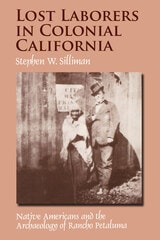
Lost Laborers in Colonial California
Native Americans and the Archaeology of Rancho PetalumaStephen W. Silliman
University of Arizona Press, 2004
This study focuses on Rancho Petaluma north of San Francisco Bay, a large livestock, agricultural, and manufacturing operation on which several hundred—perhaps as many as two thousand—Native Americans worked as field hands, cowboys, artisans, cooks, and servants. One of the largest ranchos in the region, it was owned from 1834 to 1857 by Mariano Guadalupe Vallejo, one of the most prominent political figures of Mexican California. While historians have studied Vallejo, few have considered the Native Americans he controlled, so we know little of what their lives were like or how they adjusted to the colonial labor regime.
Because Vallejo’s Petaluma Adobe is now a state historic park and one of the most well-protected rancho sites in California, this site offers unparalleled opportunities to investigate nineteenth-century rancho life via archaeology. Using the Vallejo rancho as a case study, Stephen W. Silliman examines this California rancho with a particular eye toward Native American participation. Through the archaeological record—tools and implements, containers, beads, bone and shell artifacts, food remains—he reconstructs the daily practices of Native peoples at Rancho Petaluma and the labor relations that structured indigenous participation in and experience of rancho life. This research enables him to expose the multi-ethnic nature of colonialism, counterbalancing popular misconceptions of Native Americans as either non-participants in the ranchos or passive workers with little to contribute to history.
Lost Laborers in Colonial California draws on archaeological data, material studies, and archival research, and meshes them with theoretical issues of labor, gender, and social practice to examine not only how colonial worlds controlled indigenous peoples and practices but also how Native Americans lived through and often resisted those impositions. The book fills a gap in the regional archaeological and historical literature as it makes a unique contribution to colonial and contact-period studies in the Spanish/Mexican borderlands and beyond.
Lulu Linear Punctated
Essays in Honor of George Irving QuimbyEdited by Robert C. Dunnell, Donald K. Grayson, and Walter N. Koelz
University of Michigan Press, 1983