Results by title
127 books match the query 'Leadership' and 17 start with l
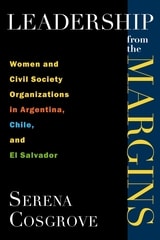
Leadership From the Margins
Women and Civil Society Organizations in Argentina, Chile, and El SalvadorCosgrove, Serena
Rutgers University Press, 2010
Leadership from the Margins describes and analyzes the unique leadership styles and challenges facing the women leaders of CSOs in Argentina, Chile, and El Salvador. Based on ethnographic research, Serena Cosgrove's analysis offers a nuanced account of the distinct struggles facing women, and how differences of class, political ideology, and ethnicity have informed their outlook and organizing strategies. Using a gendered lens, she reveals the power and potential of women's leadership to impact the direction of local, regional, and global development agendas.
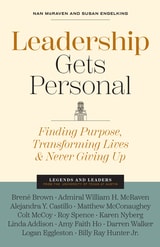
Leadership Gets Personal
Finding Purpose, Transforming Lives, and Never Giving UpNan McRaven and Susan Engelking
University of Texas Press, 2026
How the University of Texas shaped twelve people who changed the world.
College is a time for personal growth. But any Biology 101 student knows that growth (personal or otherwise) requires the right environment. Collecting the revealing and deeply personal stories of twelve UT alumni who became leaders in their fields, Leadership Gets Personal honors the transformative impact of the Forty Acres on those who learn and grow there.
Matthew McConaughey, Academy Award-winning actor and #1 New York Times best-selling author, was destined for law school, but with the encouragement of his UT community, he realized he was a born storyteller. Brené Brown, author of the #1 New York Times bestseller Dare to Lead, struggled for years before finding her purpose in the Social Work Department. Dr. Amy Ho knew she wanted to change the American health care system, and at UT she gained the confidence and skills to make a difference. Astronaut Karen Nyberg was a shy kid; her UT graduate studies propelled her to space. And Darren Walker would go on to become president of the Ford Foundation, taking inspiration from the financial aid counselors who made sure he got the education he yearned for. For these and other outstanding alumni profiled here, the road was often rocky. Through perseverance, humility, and collaboration, they learned not only to exercise leadership but to live it.
Leadership Organizations in the House of Representatives
Party Participation and Partisan PoliticsScott R. Meinke
University of Michigan Press, 2016

Leadership and Organizational Culture
New Perspectives on Administrative Theory and PracticeEdited by Thomas J. Sergiovanni and John E. Corbally
University of Illinois Press, 1984
Leadership in Committee
A Comparative Analysis of Leadership Behavior in the U.S. SenateC. Lawrence Evans
University of Michigan Press, 2001
How does the leadership of a Senate committee influence the outcome of bills? In Leadership in Committee C. Lawrence Evans delves into the behavior of legislative leaders and the effects of what they do, how their tactics vary, and why. Using evidence gleaned from personal interviews with a large number of U.S. senators and Senate staff, the author compares the leadership styles of eight committee chairs and ranking minority members in the U.S. Senate. The result is a significant contribution to the literature on American politics, the first book-length, comparative analysis of legislative leadership behavior in the modern Senate.
". . . .this book is highly recommended reading for those interested in both legislative politics and political leadership. . . .Leadership in Committee establishes Evans as one of the handful of political scientists who have done justice to the subtleties of politics in the modern Senate."
---Randall Strahan, Journal of Politics
"Larry Evans has significantly influenced my own work over the years, and Leadership in Committee is one reason why. It is a model of great scholarship, the best work on committee leadership ever written. It has the discriminatory sense of context that appears only when the author truly knows his subject. It is theoretical without being reductionist or vacuously abstract. Its principal claims are general yet sufficiently concrete to be testable, and Evans provides systematic, comparative evidence to support (or qualify) each of them. Larger issues of agenda-setting, institutional structure, partisanship, anticipated reactions, participation, committee-floor bargaining, and strategic action of various kinds receive thoughtful and insightful examination. And the book is simply a terrific read. Too long in coming, the publication of Leadership in Committee in paperback ought to spark a well-deserved revival of interest in this work."
---Richard L. Hall, University of Michigan
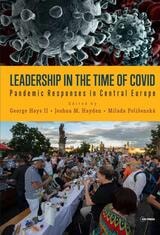
Leadership in the Time of Covid
Pandemic Responses in Central EuropeMilada Polisenská
Central European University Press, 2023
The Covid pandemic has put all modern societies to a serious test of resilience. The interdisciplinary research on which this book is based examined how four European governments behaved in these circumstances. During the months of the crisis, the team of experts coordinated by the editors of this volume took a close look at the decision-making processes in the Czech Republic, Hungary, Poland, and Slovakia – the so-called Visegrad Four.
The inquiries focused on experiences from the academic, health, economic and social fields. The methods of comparison included surveys, interviews, discourse analysis, for which the adaptive leadership theory provided the conceptual framework.
The conclusions are both academic and practical. Aside the description of the pandemic responses, the research had a formative dimension: how can an adaptive leadership approach better help societies manage the health and societal impacts of similar challenges? The spectrum of emerging anti-democratic tendencies in the region provided the specific context of the exercise. The four states face varying degrees of democratic backsliding as well as illiberal influences that have affected their response to the pandemic, which gives this research on the Visegrad Four a worldwide resonance.

Leadership
Beyond Establishment ViewsEdited by James G. Hunt, Uma Sekaran, and Chester A. Schriesheim
Southern Illinois University Press, 1981
Volume 6 of the Leadership Symposia—sponsored by the Department of Administrative Sciences and College of Business Administration at Southern Illinois University, Carbondale—charts the state of the field of leadership through a judicious mixture of established and emerging scholars.
The text is broken into four parts, with each part containing an Introduction by the editors. Part 1 consists of “Leadership and Managerial Behavior as Loosely Coupled Systems for Moving Beyond Establishment Views,” by the editors; “The Relevance of Some Studies of Managerial Work and Behavior to Leadership Research,” Rosemary Stewart; “Unstructured, Nonparticipant Observation and the Study of Leaders’ Interpersonal Contacts,” Robert S. Bussom, Lars L. Larson, and William M. Vicars; “Leaders on Line,” Michael M. Lombardo and Morgan W. McCall, Jr.; and “Various Paths Beyond Establishment Views,” Bernard Wilpert.
Part 2 contains “Multiplexed Supervision and Leadership,” Fred Dansereau, Jr., Joseph A. Alutto, Steven E. Markham, and MacDonald Dumas; “A Theory of Leadership Categorization,” Robert G. Lord, Roseanne J. Foti, and James S. Phillips; “Leadership Activation Theory,” John E. Sheridan, Jeffrey L. Kerr, and Michael A. Abelson; and “Intensity of Relation, Dyadic-Group Considerations, Cognitive Categorization, and Transformational Leadership,” Bernard M. Bass; “Strategies for Dealing with Different Processes in Different Contexts,” Ian Morley, “A Multiplexed Response to Bass and Morley,” Fred Dansereau, Jr., Joseph A. Alutto, Steven E. Markham, and MacDonald Dumas; and “Properly Categorizing the Commentary,” Roseanne J. Foti, Robert G. Lord, and James S. Phillips.
Part 3 contains “SYMLOG and Leadership Theory,” Robert F. Bales and Daniel J. Isenberg; “Toward a Macro-Oriented Model of Leadership: An Odyssey,” James G. Hunt and Richard N. Osborn; and “Toward a Paradigm Shift in the Study of Leadership,” Henry J. Tosi, Jr.
Essays in part 4 are “If You’re Not Serving Bill and Barbara, Then You’re Not Serving Leadership,” Henry Mintzberg; “Beyond Establishment Leadership Views: An Epilog,” by the editors; “Leadership Research and the European Connection: An Epilog,” Dian-Marie Hosking and James G. Hunt; and “Conclusion: The Leadership-Management Controversy Revisited,” Schriesheim, Hunt, and Sekaran.
Leadership
Lessons from a Life in DiplomacySimon Mcdonald
Haus Publishing, 2023
Simon McDonald argues that we should reflect on the nature and strategies of leadership before entering a leadership role, and we should look to examples of others to help us in shaping our own approaches.
Over nearly four decades in Her Majesty's Diplomatic Service, McDonald worked for four permanent under-secretaries and a dozen senior ambassadors before becoming a permanent under-secretary himself and leading the Service—which has over 14,000 staff members in 270 countries—for five years. He also worked directly for six foreign secretaries and under five prime ministers. Observing these people undertaking such important and difficult work, McDonald saw the behaviors which helped them achieve their objectives, as well as those which hindered them.
In this book, McDonald synthesizes the skills he’s learned through his many years working in diplomacy, offering an insightful contribution amid heightening debates over the leadership of the United Kingdom. Considering the future of British leadership, he makes a case for the reform of the monarchy, the cabinet, civil service, and, in particular, the House of Lords, of which he has been a member since 2021.

Leadership
Strategic Thinking, Decision Making, Communication, and Relationship BuildingAnn M. Martin
American Library Association, 2022

Leading Change In Academic Libraries
Colleen Boff
Assoc of College & Research Libraries, 2020
Leading Libraries
How to Create a Service CultureWyoma vanDuinkerken
American Library Association, 2015
Leading for School Librarians
There Is No Other OptionHilda K. Weisburg
American Library Association, 2017
Leading for Tomorrow
A Primer for Succeeding in Higher Education LeadershipPamela L. Eddy
Rutgers University Press, 2020
Using an engaging case study approach, Leading for Tomorrow provides readers with real-world examples that will help them reflect on their own management and communication styles. It also shows newly minted administrators how they can follow best practices while still developing a style of leadership that is authentic and uniquely their own.
The book’s case studies offer practical solutions for how to deal with emerging trends and persistent problems in the field of higher education, from decreasing state funding to political controversies on campus. Leading for Tomorrow gives readers the tools they need to get the best out of their team, manage conflicts, support student success, and instill a campus culture of innovation that will meet tomorrow’s challenges.
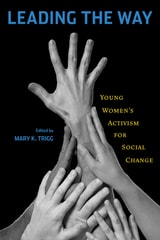
Leading the Way
Young Women's Activism for Social ChangeTrigg, Mary K
Rutgers University Press, 2009
Bringing together graduates of a women's leadership certificate program at Rutgers University's Institute for Women's Leadership, these essays provide a contrasting picture to assumptions about the current death of feminism, the rise of selfishness and individualism, and the disaffected Millennium Generation. Reflecting on a critical juncture in their lives, the years during college and the beginning of careers or graduate studies, the contributors' voices demonstrate the ways that diverse, young, educated women in the United States are embodying and formulating new models of leadership, at the same time as they are finding their own professional paths, ways of being, and places in the world. They reflect on controversial issues such as gay marriage, gender, racial profiling, war, immigration, poverty, urban education, and health care reform in a post-9/11 era.
Leading the Way introduces readers to young women who are being prepared and empowered to assume leadership roles with men in all public arenas, and to accept equal responsibility for making positive social change in the twenty-first century.
Lessons in Leadership
Steve Adubato, PhD
Rutgers University Press, 2016

Liberalism and Leadership
The Irony of Arthur Schlesinger, Jr.Emile Lester
University of Michigan Press, 2019
Most scholars and pundits today view Franklin Delano Roosevelt and John F. Kennedy as aggressive liberal leaders, while viewing Schlesinger’s famous histories of their presidencies as celebrations of their steadfast progressive leadership. A more careful reading of Schlesinger’s work demonstrates that he preferred an ironic political outlook emphasizing the virtues of restraint, patience, and discipline. For Schlesinger, Roosevelt and Kennedy were liberal heroes and models as much because they respected the constraints on their power and ideals as because they tested traditional institutions and redefined the boundaries of presidential power.
Aggressive liberalism involves the use of inspirational rhetoric and cunning political tactics to expand civil liberties and insure economic equality. Schlesinger’s emphasis on the crucial role that irony has played and should play in liberalism poses a challenge to the aggressive liberalism advocated by liberal activists, political thinkers, and pundits. That his counsel was grounded in conservative insights as well as liberal values makes it accessible to leaders across the political spectrum.
Libraries, Leadership, and Scholarly Communication
Essays by Rick AndersonRick Anderson
American Library Association, 2016