Results by title
2194 books match the query 'Women's Studies' and 72 start with l
La Partera
Story of a MidwifeFran Leeper Buss
University of Michigan Press, 2001
This is Jesusita's story, told in her own words. She describes her early training as a midwife, her forced departure from home due to two unmarried pregnancies, and her solitary struggle to support her children. La Partera tells how she gradually emerged as a leader in her community, painstakingly building by hand a small maternity center for her patients while gaining the respect of the Anglo medical community.
As Jesusita's story unfolds, so too does the story of the women of the region. Supplemental sections by the author illuminate Jesusita's culture and past, along with a historical account of the network of medical care provided by Hispanic and Anglo female healers. Illustrated with photographs of both people and places, La Partera reflects the culture of an era through the prism of Jesusita's hard and useful life.
Fran Leeper Buss lives and teaches in Tucson, Arizona.
La Partera
Story of a MidwifeFran Leeper Buss
University of Michigan Press, 1980
Laboring to Learn
Women's Literacy and Poverty in the Post-Welfare EraLorna Rivera
University of Illinois Press, 2007
The American adult education system has become an alternative for school dropouts, with some state welfare policies requiring teen mothers and women without high school diplomas to participate in adult education programs to receive aid. Currently, low-income women of color are more likely to be enrolled in the lowest levels of adult basic education. Very little has been published about women's experiences in these mandatory programs and whether the programs reproduce the conditions that forced women to drop out in the first place.
Lorna Rivera bridges the gap with this important study, the product of ten years' active ethnographic research with formerly homeless women who participated in adult literacy education classes before and after welfare reform. She draws on rich interviews with organizers and participants in the Adult Learners Program at Project Hope, a women's shelter and community development organization in Boston's Dudley neighborhood, one of the poorest in the city.
Analyzing the web of ideological contradictions regarding "work first" welfare reform policies, Rivera argues that poverty is produced and reproduced when women with low literacy skills are pushed into welfare-to-work programs and denied education. She examines how various discourses about individual choice and self-sufficiency shape the purposes of literacy, how low-income women express a sense of personal responsibility for being poor, and how neoliberal ideologies and practices compromise the goals of critical literacy programs. Throughout this study, the voices and experiences of formerly homeless women challenge cultural stereotypes about poor women, showing in personal and structural terms how social and economic forces shape and restrict opportunities for low-income women of color.
Ladies Errant
Wayward Women and Social Order in Early Modern ItalyDeanna Shemek
Duke University Press, 1998
Seeing errancy as an act of resistance rather than of error, Shemek carries her study beyond the didactic and prescriptive literature on femininity in early modern Italy to an arena in which theories about femininity are considered jointly with real and fictional instances of women’s waywardness. As prostitutes, warriors, lovers, and poets, the women of Shemek’s study are found in canonical texts, marginal works, and popular artistic activity, appearing, for instance, in literature, paintings, legal proceedings, and accounts of public festivals. By juxtaposing these varied places of errancy—from Ariosto’s chivalric Orlando furioso to the prostitutes’ race in the Palio di San Giorgio—Shemek points to the important contact between elite and popular cultures in early modernity, revealing the strength and flexibility of a gender boundary fundamental to early modern conceptions of social order.
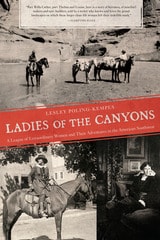
Ladies of the Canyons
A League of Extraordinary Women and Their Adventures in the American SouthwestLesley Poling-Kempes
University of Arizona Press, 2015
Educated, restless, and inquisitive, Natalie Curtis, Carol Stanley, Alice Klauber, and Mary Cabot Wheelwright were plucky, intrepid women whose lives were transformed in the first decades of the twentieth century by the people and the landscape of the American Southwest. Part of an influential circle of women that included Louisa Wade Wetherill, Alice Corbin Henderson, Mabel Dodge Luhan, Mary Austin, and Willa Cather, these ladies imagined and created a new home territory, a new society, and a new identity for themselves and for the women who would follow them.
Their adventures were shared with the likes of Theodore Roosevelt and Robert Henri, Edgar Hewett and Charles Lummis, Chief Tawakwaptiwa of the Hopi, and Hostiin Klah of the Navajo. Their journeys took them to Monument Valley and Rainbow Bridge, into Canyon de Chelly, and across the high mesas of the Hopi, down through the Grand Canyon, and over the red desert of the Four Corners, to the pueblos along the Rio Grande and the villages in the mountains between Santa Fe and Taos.
Although their stories converge in the outback of the American Southwest, the saga of Ladies of the Canyons is also the tale of Boston’s Brahmins, the Greenwich Village avant-garde, the birth of American modern art, and Santa Fe’s art and literary colony.
Ladies of the Canyons is the story of New Women stepping boldly into the New World of inconspicuous success, ambitious failure, and the personal challenges experienced by women and men during the emergence of the Modern Age.
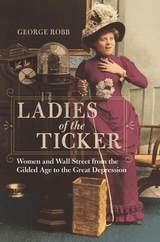
Ladies of the Ticker
Women and Wall Street from the Gilded Age to the Great DepressionGeorge Robb
University of Illinois Press, 2017
George Robb’s pioneering study explores the financial methods, accomplishments, and careers of three generations of women. Plumbing sources from stock brokers’ ledgers to media coverage, Robb reveals the many ways women invested their capital while exploring their differing sources of information, approaches to finance, interactions with markets, and levels of expertise. He also rediscovers the forgotten women bankers, brokers, and speculators who blazed new trails--and sparked public outcries over women’s unsuitability for the predatory rough-and-tumble of market capitalism.
Entertaining and vivid with details, Ladies of the Ticker sheds light on the trailblazers who transformed Wall Street into a place for women’s work.
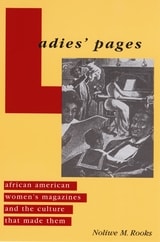
Ladies' Pages
African American Women's Magazines and the Culture That Made ThemRooks, Noliwe M
Rutgers University Press, 2004
Beginning in the late nineteenth century, mainstream magazines established ideal images of white female culture, while comparable African American periodicals were cast among the shadows. Noliwe M. Rooks’s Ladies’ Pages sheds light on the most influential African American women’s magazines––Ringwood’s Afro-American Journal of Fashion, Half-Century Magazine for the Colored Homemaker, Tan Confessions, Essence, and O, the Oprah Magazine––and their little-known success in shaping the lives of black women.
Ladies’ Pages demonstrates how these rare and thought-provoking publications contributed to the development of African American culture and the ways in which they in turn reflect important historical changes in black communities. What African American women wore, bought, consumed, read, cooked, and did at home with their families were all fair game, and each of the magazines offered copious amounts of advice about what such choices could and did mean. At the same time, these periodicals helped African American women to find work and to develop a strong communications network. Rooks reveals in detail how these publications contributed to the concepts of black sexual identity, rape, migration, urbanization, fashion, domesticity, consumerism, and education. Her book is essential reading for everyone interested in the history and culture of African Americans.
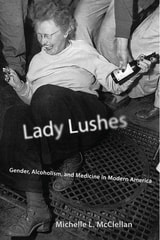
Lady Lushes
Gender, Alcoholism, and Medicine in Modern AmericaMcClellan, Michelle L
Rutgers University Press, 2017
In Lady Lushes, medical historian Michelle L. McClellan traces the story of the female alcoholic from the late-nineteenth through the twentieth century. She draws on a range of sources to demonstrate the persistence of the belief that alcohol use is antithetical to an idealized feminine role, particularly one that glorifies motherhood. Lady Lushes offers a fresh perspective on the importance of gender role ideology in the formation of medical knowledge and authority.
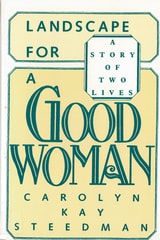
Landscape for a Good Woman
A Story of Two LivesCarolyn Kay Steedman
Rutgers University Press, 1987
This book is about lives lived out on the borderlands, lives for which the central interpretative devices of the culture don't quite work. It has a childhood at its centre - my childhood, a personal past - and it is about the disruption of that fifties childhood by the one my mother had lived out before me, and the stories she told about it.'
Intricate and inspiring, this unusual book uses autobiographical elements to depict a mother and her daughter and two working-class childhoods (Burnley in the 1920s, South London in the 1950s) and to find a place for their stories in history and politics, in psychoanalysis and feminism.
'Provocative and quite dazzling in its ambitions. . . Beautifully written, intellectually compelling'.' Judith Walkowitz
--From 500 Great Books by Women; review by Jesse Larsen.
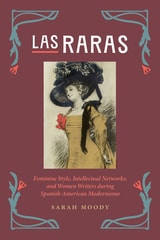
Las Raras
Feminine Style, Intellectual Networks, and Women Writers during Spanish-American ModernismoSarah Moody
Vanderbilt University Press, 2024
Premio al Mejor Libro en Humanidades, Latin American Studies Association–Nineteenth-Century Section, 2025
Premio Victoria Urbano de Monografía Crítica, Association of Gender and Sexuality Studies, 2025 (co-winner)
Segundo Premio, Adela Zamudio Prize, Feministas Unidas, 2025
Las Raras proposes that the Modernistas’ advocacy for a writing style they considered feminine helps us to understand why so few (and perhaps no) women were accepted as active participants in Modernismo. Author Sarah Moody studies how particular writers contributed to the idea of a feminine aesthetic and tracks the intellectual networks of Modernismo through periodicals and personal papers, such as albums and correspondence. Buenos Aires, Paris, and Montevideo figure prominently in this transatlantic study, which reexamines some of the most important period writers in Spanish, including Rubén Darío, Amado Nervo, and Enrique Gómez Carrillo.
This book also considers the critiques launched by women writers, such as Aurora Cáceres, Clorinda Matto de Turner, and María Eugenia Vaz Ferreira, who experienced Modernista exclusion firsthand, deconstructed the Modernista discourse of a modern, “feminine” style, and built literary success in alternative terms. These writers reoriented the discussion about women in modernity to address women’s education, professionalization, and advocacy for social and civic improvements. In this study, Modernismo emerges as both a literary style and an intellectual network, in which style and sociability are mutually determining and combine to form a system of prestige and validation that excluded women writers.
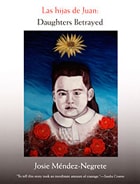
Las hijas de Juan
Daughters BetrayedJosie Méndez-Negrete
Duke University Press, 2006
Méndez-Negrete was born in Mexico, in the state of Zacatecas. She recalls a joyous childhood growing up in the midst of Tabasco, a vibrant town filled with extended family. Her father, though, had dreams of acquiring wealth in el norte. He worked sun-up to sun-down in the fields of south Texas. Returning home to Mexico, his pockets full of dollars, he spent evenings drinking and womanizing.
When Méndez-Negrete was eleven, her father moved the family to the United States, where they eventually settled in California’s Santa Clara Valley. There her father began molesting his daughters, viciously beating them and their mother. Within the impoverished immigrant family, the abuse continued for years, until a family friend brought it to the attention of child welfare authorities. Méndez-Negrete’s father was tried, convicted, and imprisoned.
Las hijas de Juan is told chronologically, from the time Méndez-Negrete was a child until she was a young adult trying, along with the rest of her family, to come to terms with her father’s brutal legacy. It is a harrowing story of abuse and shame compounded by cultural and linguistic isolation and a system of patriarchy that devalues the experiences of women and girls. At the same time, Las hijas de Juan is an inspiring tale, filled with strong women and hard-won solace found in traditional Mexican cooking, songs, and storytelling.
Latin American Women and the Search for Social Justice
Francesca Miller
University Press of New England, 1991
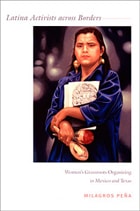
Latina Activists across Borders
Women's Grassroots Organizing in Mexico and TexasMilagros Peña
Duke University Press, 2007
Drawing on interviews with the leaders of more than two dozen women’s NGOs in Michoacán and El Paso/Ciudad Juárez, Peña examines the influence of the Roman Catholic Church and liberation theology on Latina activism, and she describes how activist affiliations increasingly cross ethnic, racial, and class lines. Women’s NGOs in Michoacán put an enormous amount of energy into preparations for the 1995 United Nations–sponsored World Conference on Women in Beijing, and they developed extensive activist networks as a result. As Peña demonstrates, activists in El Paso/Ciudad Juárez were less interested in the Beijing conference; they were intensely focused on issues related to immigration and to the murders and disappearances of scores of women in Ciudad Juárez. Ultimately, Peña’s study highlights the consciousness-raising work done by NGOs run by and for Mexican and Mexican American women: they encourage Latinas to connect their personal lives to the broader political, economic, social, and cultural issues affecting them.
Latina Lives in Milwaukee
Theresa Delgadillo
University of Illinois Press, 2015
Latinas on the Line
Invisible Information Workers in TelecommunicationsMelissa Villa-Nicholas
Rutgers University Press, 2022
Laughing at the Devil
Seeing the World with Julian of NorwichAmy Laura Hall
Duke University Press, 2018
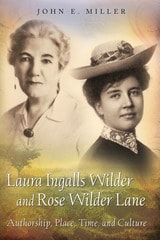
Laura Ingalls Wilder and Rose Wilder Lane
Authorship, Place, Time, and CultureJohn E. Miller
University of Missouri Press, 2008
Interpreting these writers in their larger historical and cultural contexts, Miller reconsiders their formidable artistic, political, and literary contributions to American cultural life in the 1930s. He looks at what was happening in 1932—from depression conditions and politics to chain stores and celebrity culture—to shed light on Wilder’s life, and he shows how actual “little houses” established ideas of home that resonated emotionally for both writers.
In considering each woman’s ties to history, Miller compares Wilder with Frederick Jackson Turner as a frontier mythmaker and examines Lane’s unpublished history of Missouri in the context of a contemporaneous project, Thomas Hart Benton’s famous Jefferson City mural. He also looks at Wilder’s Missouri Ruralist columns to assess her pre–Little House values and writing skills, and he readdresses her literary treatment of Native Americans. A final chapter shows how Wilder’s and Lane’s conservative political views found expression in their work, separating Lane’s more libertarian bent from Wilder’s focus on writing moralist children’s fiction.
These nine thoughtful essays expand the critical discussion on Wilder and Lane beyond the Little House. Miller portrays them as impassioned and dedicated writers who were deeply involved in the historical changes and political challenges of their times—and contends that questions over the books’ authorship do not do justice to either woman’s creative investment in the series. Miller demystifies the aura of nostalgia that often prevents modern readers from seeing Wilder as a real-life woman, and he depicts Lane as a kindred artistic spirit, helping readers better understand mother and daughter as both women and authors.
Lavender Fields
Black Women Experiencing Fear, Agency, and Hope in the Time of COVID-19Edited by Julia S. Jordan-Zachery
University of Arizona Press, 2023
Black women and girls in the United States are among the hardest hit by the pandemic in terms of illnesses, deaths, evictions, and increasing economic inequality. Riffing off Alice Walker’s telling of her search for Zora Neal Hurston, the authors of these essays and reflections offer raw tellings of Black girls’ and women’s experiences written in real time, as some of the contributors battled COVID-19 themselves.
The essays center Black girls and women and their testimonies in hopes of moving them from the margin to the center. With a diversity of voices and ages, this volume taps into the Black feminine interior, that place where Audre Lorde tells us that feelings lie, to access knowledge—generational, past, and contemporary—to explore how Black women navigate COVID-19. Using womanism and spirituality, among other modalities, the authors explore deep feelings, advancing Black feminist theorizing on Black feminist praxis and methodology.
In centering the stories of Black girls and women’s experiences with COVID-19, this work brings much-needed justice and equity to conversations about the pandemic. Just as Walker worked diligently to find Hurston, Lavender Fields attempts to “find” Black women amid all we are experiencing, ensuring visibility and attention.
Contributors
Tamaya Bailey
reelaviolette botts-ward
Kyrah K. Brown
Brianna Y. Clark
Kenyatta Dawson
LeConté J. Dill
Maryam O. Funmilayo
Brandie Green
Courtney Jackson
Sara Jean-Francois
Julia S. Jordan-Zachery
Angela K. Lewis-Maddox
Annet Matebwe
Mbali Mazibuko
Radscheda Nobles
Nimot Ogunfemi
J. Mercy Okaalet
Chizoba Uzoamaka Okoroma
Peace Ossom-Williamson
Elizabeth Peart
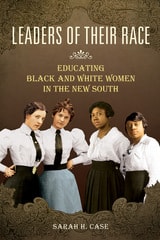
Leaders of Their Race
Educating Black and White Women in the New SouthSarah Case
University of Illinois Press, 2017
Leadership From the Margins
Women and Civil Society Organizations in Argentina, Chile, and El SalvadorCosgrove, Serena
Rutgers University Press, 2010
Leadership from the Margins describes and analyzes the unique leadership styles and challenges facing the women leaders of CSOs in Argentina, Chile, and El Salvador. Based on ethnographic research, Serena Cosgrove's analysis offers a nuanced account of the distinct struggles facing women, and how differences of class, political ideology, and ethnicity have informed their outlook and organizing strategies. Using a gendered lens, she reveals the power and potential of women's leadership to impact the direction of local, regional, and global development agendas.
Leading the Way
Young Women's Activism for Social ChangeTrigg, Mary K
Rutgers University Press, 2009
Bringing together graduates of a women's leadership certificate program at Rutgers University's Institute for Women's Leadership, these essays provide a contrasting picture to assumptions about the current death of feminism, the rise of selfishness and individualism, and the disaffected Millennium Generation. Reflecting on a critical juncture in their lives, the years during college and the beginning of careers or graduate studies, the contributors' voices demonstrate the ways that diverse, young, educated women in the United States are embodying and formulating new models of leadership, at the same time as they are finding their own professional paths, ways of being, and places in the world. They reflect on controversial issues such as gay marriage, gender, racial profiling, war, immigration, poverty, urban education, and health care reform in a post-9/11 era.
Leading the Way introduces readers to young women who are being prepared and empowered to assume leadership roles with men in all public arenas, and to accept equal responsibility for making positive social change in the twenty-first century.
Left of Karl Marx
The Political Life of Black Communist Claudia JonesCarole Boyce Davies
Duke University Press, 2007
Claudia Cumberbatch Jones was born in Trinidad. In 1924, she moved to New York, where she lived for the next thirty years. She was active in the Communist Party from her early twenties onward. A talented writer and speaker, she traveled throughout the United States lecturing and organizing. In the early 1950s, she wrote a well-known column, “Half the World,” for the Daily Worker. As the U.S. government intensified its efforts to prosecute communists, Jones was arrested several times. She served nearly a year in a U.S. prison before being deported and given asylum by Great Britain in 1955. There she founded The West Indian Gazette and Afro-Asian Caribbean News and the Caribbean Carnival, an annual London festival that continues today as the Notting Hill Carnival. Boyce Davies examines Jones’s thought and journalism, her political and community organizing, and poetry that the activist wrote while she was imprisoned. Looking at the contents of the FBI file on Jones, Boyce Davies contrasts Jones’s own narration of her life with the federal government’s. Left of Karl Marx establishes Jones as a significant figure within Caribbean intellectual traditions, black U.S. feminism, and the history of communism.

Legalizing Plural Marriage
The Next Frontier in Family LawMark Goldfeder
Brandeis University Press, 2017
Legislating the French Family
Feminism, Theater, and Republican Politics: 1870-1920Jean Elisabeth Pedersen
Rutgers University Press, 2003

Les Guerilleres
Monique Wittig. Translated from the French by David Le Vay
University of Illinois Press, 2007
One of the most widely read feminist texts of the twentieth century, and Monique Wittig’s most popular novel, Les Guérillères imagines the attack on the language and bodies of men by a tribe of warrior women. Among the women’s most powerful weapons in their assault is laughter, but they also threaten literary and linguistic customs of the patriarchal order with bullets. In this breathtakingly rapid novel first published in 1969, Wittig animates a lesbian society that invites all women to join their fight, their circle, and their community. A path-breaking novel about creating and sustaining freedom, the book derives much of its energy from its vaunting of the female body as a resource for literary invention.

Lesbian Psychologies
EXPLORATIONS AND CHALLENGESEdited by the Boston Lesbian Psychologies Collective
University of Illinois Press, 1987

Lesbians on Television
New Queer Visibility & the Lesbian NormalKate McNicholas Smith
Intellect Books, 2020
A look at the emergence of queer women characters in popular storytelling and the wide-ranging effects of this mainstream representation.
The twenty-first century has seen LGBTQ+ rights emerge at the forefront of public discourse and national politics in ways that would once have been hard to imagine. In Lesbians on Television, Kate McNicholas Smith maps concurrent contemporary shifts in lesbian visibility within popular media, focusing on the small screens of Europe and North America. Central to these shifts has been a re-imagining of queer lives—or a “new queer visibility”—as LGBTQ+ characters have become increasingly visible within popular culture. Kate McNicholas Smith explores this increased visibility through the lens of television, and in doing so, she identifies a “new lesbian normal”—a normalization of lesbian subjects that both helps and hinders those it represents.
Structured around five central case studies of popular British and American television shows featuring lesbian, bisexual, and queer women characters—The L Word, Skins, Glee, Coronation Street, and The Fosters—the book develops a detailed analysis of the shaping of a new “lesbian normal” through representations of LGBTQ+ figures and examines their televisual representation and reception. Presenting critical queer and feminist theory alongside empirical research that includes interviews and multi-platform media analyses, McNicholas Smith works to untangle the social, political, and cultural implications of new visibility in a period of significant social change in the LGBTQ+ experience.
Let Something Good Be Said
Speeches and Writings of Frances E. WillardFrances E. Willard. Edited by Carolyn De Swarte Gifford and Amy R. Slagell
University of Illinois Press, 2007
Celebrated as the most famous woman in America at the time of her death in 1898, Frances E. Willard was a leading nineteenth-century American temperance and women's rights reformer and a powerful orator. President of Evanston College for Ladies (before it merged with Northwestern University) and then professor of rhetoric and aesthetics and the first dean of women at Northwestern, Willard is best known for leading the Woman's Christian Temperance Union (WCTU), America's largest women's organization. The WCTU shaped both domestic and international opinion on major political, economic, and social reform issues, including temperance, women's rights, and the rising labor movement. In what Willard regarded as her most important and far-reaching reform, she championed a new ideal of a powerful, independent womanhood and encouraged women to become active agents of social change. Willard's reputation as a powerful reformer reached its height with her election as president of the National Council of Women in 1888.
This definitive collection follows Willard's public reform career, providing primary documents as well as the historical context necessary to clearly demonstrate her skill as a speaker and writer who addressed audiences as diverse as political conventions, national women's organizations, teen girls, state legislators, church groups, and temperance advocates. Including Willard's representative speeches and published writings on everything from temperance and women's rights to the new labor movement and Christian socialism, Let Something Good Be Said is the first volume to collect the messages of one of America's most important social reformers who inspired a generation of women to activism.
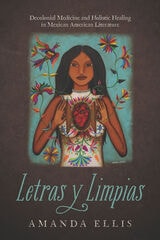
Letras y Limpias
Decolonial Medicine and Holistic Healing in Mexican American LiteratureAmanda Ellis
University of Arizona Press, 2021
Ellis explores the curandera in relationship to decoloniality, bioethics, and the topic of healing while recognizing the limitations and spiritual shortcomings of Western medicine. Ellis argues that our contemporary western health-care system does not know how to fully grapple with illnesses that patients face. Ellis reads the curandera’s perennial representation as an ongoing example of decolonial love useful for deconstructing narrow definitions of health and personhood, and for grappling with the effects of neoliberalism and colonialism on the health-care industry.
Letras y Limpias draws from Chicana feminist theory to assert the importance of the mindbodyspirit connection. Ellis conveys theoretical insights about the continual reimagining of the figure of the curandera as a watermark across Mexican American literary texts. This literary figure points to the oppressive forces that create susto and reminds us that healing work requires specific attention to colonialism, its legacy, and an intentional choice to carry forward the traditional practices rooted in curanderismo passed on from prior generations. By turning toward the figure of the curandera, readers are better poised to challenge prevailing ideas about health, and imagine ways to confront the ongoing problems that coloniality creates. Letras y Limpias shows how the figure of the curandera offers us ways to heal that have nothing to do with copays or medical professionals refusing care, and everything to do with honoring the beauty and complexity of any, every, and all humans.
Levirate Marriage and the Family in Ancient Judaism
Dvora E. Weisberg
Brandeis University Press, 2009
Lewd and Notorious
Female Transgression in the Eighteenth CenturyKatharine Kittredge, Editor
University of Michigan Press, 2003
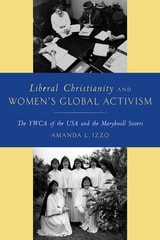
Liberal Christianity and Women's Global Activism
The YWCA of the USA and the Maryknoll SistersAmanda L. Izzo
Rutgers University Press, 2018
Focusing on the histories of two highly influential groups, the Young Women’s Christian Association of the USA, an interdenominational Protestant organization, and the Maryknoll Sisters, a Roman Catholic religious order, Izzo offers new perspectives on the contributions of these women to transnational social movements, women’s history, and religious studies, as she traces the connections between turn-of-the-century Christian women’s reform culture and liberal and left-wing religious social movements of the 1960s and 1970s. Izzo suggests that shared ethical, theological, and institutional underpinnings can transcend denominational divides, and that strategies for social change often associated with secular feminism have ties to spiritually inspired social movements.
Liberating Economics
Feminist Perspectives on Families, Work, and GlobalizationDrucilla K. Barker and Susan F. Feiner
University of Michigan Press, 2004
Rooted in the two disciplines, this book draws on the rich tradition of interdisciplinary work in feminist social science scholarship to construct a parallel between the notions that the "personal is political" and "the personal is economic."
Drucilla K. Barker is Professor of Economics and Women's Studies, Hollins University.
Susan F. Feiner is Associate Professor of Economics and Women's Studies, University of Southern Maine.
Liberating Hollywood
Women Directors and the Feminist Reform of 1970s American CinemaSmukler, Maya M
Rutgers University Press, 2019
Liberating Hollywood examines the professional experiences and creative output of women filmmakers during a unique moment in history when the social justice movements that defined the 1960s and 1970s challenged the enduring culture of sexism and racism in the U.S. film industry. Throughout the 1970s feminist reform efforts resulted in a noticeable rise in the number of women directors, yet at the same time the institutionalized sexism of Hollywood continued to create obstacles to closing the gender gap. Maya Montañez Smukler reveals that during this era there were an estimated sixteen women making independent and studio films: Penny Allen, Karen Arthur, Anne Bancroft, Joan Darling, Lee Grant, Barbara Loden, Elaine May, Barbara Peeters, Joan Rivers, Stephanie Rothman, Beverly Sebastian, Joan Micklin Silver, Joan Tewkesbury, Jane Wagner, Nancy Walker, and Claudia Weill. Drawing on interviews conducted by the author, Liberating Hollywood is the first study of women directors within the intersection of second wave feminism, civil rights legislation, and Hollywood to investigate the remarkable careers of these filmmakers during one of the most mythologized periods in American film history.

Liberating Method
Feminism and Social ResearchMarjorie Devault
Temple University Press, 1999
DeVault believes in "writing carefully," that is with care (precision) and caring (empathy). In addition to essays on how women write, are silenced, and can speak up, she includes an autobiographical sketch, a discussion of "the self as resource," and a section on what she calls "excavation," or the work of recovering unrecognized or suppressed aspects of women's experience. She explores the sources and meanings of feminist methodology, the strategies of reflexive analysis, and the issues that arise when writing and teaching feminist research. Committed to a feminism attentive to oppressions that operate simultaneously with gender, DeVault considers exclusions and distortions in feminist research and strategies for building more inclusive approaches. Including a closing essay that presents "practical advice" for oppositional researchers, LiberatingMethod reflects DeVault's conviction that feminist insights can and should contribute to a sounder, more rigorous social science.
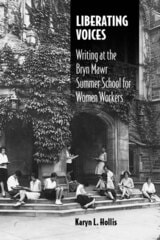
Liberating Voices
Writing at the Bryn Mawr Summer School for Women WorkersKaryn L. Hollis
Southern Illinois University Press, 2004
During the 1920s and 1930s at the Bryn Mawr Summer School for Women Workers, working-class women were educated in the liberal arts and instructed in writing to assume more powerful roles in the industrial workplace. In Liberating Voices: Writing at the Bryn Mawr Summer School for Women Workers, Karyn L. Hollis tells the remarkable story of how this multiclass, multiethnic American institution rooted in composition pedagogy, literary history, and leftist thought emerged from the broad social, economic, and ideological trends of the era. The summer school curriculum, Hollis shows, enhanced the individual and collective self-confidence of the 1,800 women who studied there between 1921 and 1938.
Drawing heavily on the women’s writings—including autobiography, poetry, labor drama, humor, and economic reporting—Liberating Voices adds significantly to the small oeuvre of published writing by working-class women, who were, in this case, mostly nontraditional students, immigrants, and minorities. Outlining a materialist pedagogy that centers on the women’s daily economic struggles as well as their family and community experiences, Hollis reveals the tensions that stemmed from differences in race, ethnicity, class, and religion. She also shows how the students exploited cultural scripts and drew strength from their diversity, eventually insisting on a democratic sharing of power with faculty and administrators at the Summer School.
Hollis provides a thorough ethnography of the Summer School with respect to its place in the social and political history of the 1920s and 1930s, and then situates the school’s pedagogy within the history of American education and composition instruction. Concepts from literary criticism and composition theory provide the framework for an analysis of the working women’s autobiographical writing, revealing how the narrative voice of their prose grew from weak and individualized to empowered and collective as the women described their families, childhood, work, unions, and education over time. The volume is complemented by sixteen illustrations.
Additional analysis of the women’s poetry points to their skill as both producers and consumers of literature. The common theme of body versus a powerful machine in the workplace bears witness to the industrial exploitation the women endured. Taking up postmodern questions of agency and voice, Hollis argues that the women used a variety of cultural texts to construct discourses that reflected their needs and desires. Liberating Voices not only provides a previously untold chapter in the history of American worker education, it also showcases a liberating pedagogy that has salient implications for contemporary classrooms.

Liberty, Equality, and Justice
Civil Rights, Women’s Rights, and the Regulation of Business, 1865–1932Ross Evans Paulson
Duke University Press, 1997
Surveying a crucial period in the formation of the modern state and society, Paulson examines the prevailing conflicts of the time and the limitations of various attempts to institute reform, radical change, or ritualistic renewal of American society. His reading of existing scholarship highlights contested social constructs, clashing priorities, changing meanings of key terms, and shifting institutional dynamics in light of their contributions to a complex tragedy in which all parties fell short of the demands for democratic mutuality. Along with discussions of the movements and manipulations of presidential, congressional, and judicial politics, he integrates the experiences of diverse populations—including African Americans, women, Asian immigrants, Native Americans, and working people—and offers a new interpretation of the ways in which social change and political events interact to reframe the many possibilities of American society.
Life Interrupted
Trafficking into Forced Labor in the United StatesDenise Brennan
Duke University Press, 2014
All royalties from this book will be donated to the nonprofit Survivor Leadership Training Fund administered through the Freedom Network.
Life Writing in the Long Run
A Smith and Watson Autobiography Studies ReaderSidonie Smith and Julia Watson
Michigan Publishing Services, 2016
Available in print, eBook, and open access versions, this collection captures decades of exciting developments in the field, making it indispensable reading for courses on modes and media of self-presentation in cultural, gender, and literary studies and feminist theory.
Life and Death in a Venetian Convent
The Chronicle and Necrology of Corpus Domini, 1395-1436Sister Bartolomea Riccoboni
University of Chicago Press, 2000
While the chronicle recounts the history of the nuns' collective life, the necrology provides highly individualized biographies of nearly fifty women who died in the convent between 1395 and 1436. We follow the fascinating stories that led these women, from adolescent girls to elderly widows, to join the convent; and we learn of their cultural backgrounds and intellectual accomplishments, their ascetic practices and mystical visions, their charity and devotion to each other and their fortitude in the face of illness and death.
The personal and social meaning of religious devotion comes alive in these texts, the first of their kind to be translated into English.
Life in Language
Mission Feminists and the Emergence of a New Protestant SubjectIngie Hovland
University of Chicago Press, 2025
The language of the Bible is a powerful lens through which many Protestants understand themselves and their world, and its prohibitions on women’s speech pose complicated challenges to women. Nevertheless, women frequently serve as vocal leaders in Protestant organizations, including the early twentieth-century Norwegian Mission Society. In Life in Language, Ingie Hovland offers a unique biography of Henny Dons, a leader of the society’s so-called mission feminists, that grapples with ways Protestant women crafted innovative, expansive self-understandings through Christian language. More than their male peers, the mission feminists turned to religious speech to express material, as well as heavenly, desires for paid work, voting rights, and more, and Hovland argues that these experiments in women speaking, reading, writing, and listening paved the way for a new way of being in the world.
Lift High the Cross
Where White Supremacy and the Christian Right ConvergeAnn Burlein
Duke University Press, 2002
Arguing that today’s right engenders its popularity not by overt bigotry or hatred but by focusing on people’s hopes for their children, Burlein finds a politics of grief at the heart of such rhetoric. While demonstrating how religious symbols, rituals, texts, and practices shape people’s memories and their investment in society, she shows how Peters and Dobson each construct countermemories for their followers that reframe their histories and identities—as well as their worlds—by reversing mainstream perspectives in ways that counter existing power relations. By employing the techniques of niche marketing, the politics of scandal, and the transformation of political issues into “gut issues” and by remasculinizing the body politic, Burlein shows, such groups are able to move people into their realm of influence without requiring them to agree with all their philosophical, doctrinal, or political positions.
Lift High the Cross will appeal to students and scholars of religion, American cultural studies, women’s studies, sociology, and gay and lesbian studies, as well as to non-specialists interested in American politics and, specifically, the right.
Lifted Masks and Other Works
Susan Glaspell
University of Michigan Press, 1993
Light in the Dark/Luz en lo Oscuro
Rewriting Identity, Spirituality, RealityGloria E. Anzaldua
Duke University Press, 2015
Like Family
Narratives of Fictive KinshipMargaret K. Nelson
Rutgers University Press, 2020
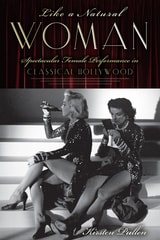
Like a Natural Woman
Spectacular Female Performance in Classical HollywoodPullen, Kirsten
Rutgers University Press, 2014
Bringing a fresh perspective to film history through the lens of performance studies, Kirsten Pullen explores the ways in which these actresses, who always appeared to be “playing themselves,” responded to the naturalist notion that actors should create authentic characters by drawing from their own lives. At the same time, she examines how Hollywood presented these female stars as sex objects, focusing on their spectacular bodies at the expense of believable characterization or narratives.
Pullen not only helps us appreciate what talented actresses these five women actually were, but also reveals how they sought to express themselves and maintain agency, even while meeting the demands of their directors, studios, families, and fans to perform certain feminine roles. Drawing from a rich collection of classic films, publicity materials, and studio archives, Like a Natural Woman lets us take a new look at both Hollywood acting techniques and the performance of femininity itself.
Lillie Devereux Blake
Retracing a Life ErasedGrace Farrell
University of Massachusetts Press, 2002
Yet for all her remarkable accomplishments, Lillie Blake's story has been all but forgotten. As Grace Farrell reveals in this richly textured biography, Blake's creative writings did not survive the canonical purges of women authors at the turn of the twentieth century, and her contributions to the suffrage movement were simply ignored in the official histories sanctioned by Susan B. Anthony. From the traces that remain, Farrell reconstructs an extraordinary life of passion and purpose. She chronicles Blake's literary career from Civil War correspondent to novelist and provides an inside view of suffrage politics, correcting some long held misconceptions perpetuated by Anthony and her supporters.
At the same time, Farrell expands the generic boundaries of biography by recounting not only a life and the causes of its erasure but also her own process of recovering that life. She brings the reader along with her as she follows Blake's path in the world, touches her diary, reads her letters, and campaigns to prevent Yale University from demolishing Blake's childhood home in New Haven.
Lines of Activity
Performance, Historiography, Hull-House DomesticityShannon Jackson
University of Michigan Press, 2001
This groundbreaking book demonstrates how performance analysis can contribute to the historical study of American reform as well as to critical inquiry on the arts and social change. She develops connections between performativity and sex/gender difference by interpreting Hull-House as a sphere of queer kinship and alternative gender performance. Lines of Activity also engages a variety of debates on the nature of historical representation, and the role of "theory" in historical writing.
As the notion of "performance historiography" gains currency, Jackson's study exposes the gender politics of such scholarly trends. By selecting the Progressive Era and Hull-House as arenas of inquiry, Jackson foregrounds how past discourses of domesticity, pragmatism, transnationalism, and environmentalism already contain performance-centered notions of identity, space, and community. Through these and other arguments, Lines of Activity reveals the intimate connection between a history of Hull-House performance and the performance of Hull-House history.
Shannon Jackson is Assistant Professor of Rhetoric and of Dramatic Art and Dance, University of California, Berkeley.
Literary Sisters
Dorothy West and Her Circle, A Biography of the Harlem RenaissanceMitchell, Verner D
Rutgers University Press, 2012
Harlem Renaissance writer Dorothy West led a charmed life in many respects. Born into a distinguished Boston family, she appeared in Gershwin’s Porgy and Bess, then lived in the Soviet Union with a group that included Langston Hughes, to whom she proposed marriage. She later became friends with Jacqueline Kennedy Onassis, who encouraged her to finish her second novel, The Wedding, which became the octogenarian author’s first bestseller.
Literary Sisters reveals a different side of West’s personal and professional lives—her struggles for recognition outside of the traditional literary establishment, and her collaborations with talented African American women writers, artists, and performers who faced these same problems. West and her “literary sisters”—women like Zora Neale Hurston and West’s cousin, poet Helene Johnson—created an emotional support network that also aided in promoting, publishing, and performing their respective works. Integrating rare photos, letters, and archival materials from West’s life, Literary Sisters is not only a groundbreaking biography of an increasingly important author but also a vivid portrait of a pivotal moment for African American women in the arts.
Live Form
Women, Ceramics, and CommunityJenni Sorkin
University of Chicago Press, 2016
Sorkin focuses on three Americans who promoted ceramics as an advanced artistic medium: Marguerite Wildenhain, a Bauhaus-trained potter and writer; Mary Caroline (M. C.) Richards, who renounced formalism at Black Mountain College to pursue new performative methods; and Susan Peterson, best known for her live throwing demonstrations on public television. Together, these women pioneered a hands-on teaching style and led educational and therapeutic activities for war veterans, students, the elderly, and many others. Far from being an isolated field, ceramics offered a sense of community and social engagement, which, Sorkin argues, crucially set the stage for later participatory forms of art and feminist collectivism.