Results by title
28164 books match the query 'History' and 932 start with l
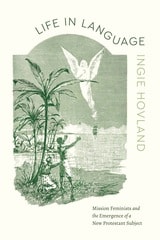
Life in Language
Mission Feminists and the Emergence of a New Protestant SubjectIngie Hovland
University of Chicago Press, 2025
The language of the Bible is a powerful lens through which many Protestants understand themselves and their world, and its prohibitions on women’s speech pose complicated challenges to women. Nevertheless, women frequently serve as vocal leaders in Protestant organizations, including the early twentieth-century Norwegian Mission Society. In Life in Language, Ingie Hovland offers a unique biography of Henny Dons, a leader of the society’s so-called mission feminists, that grapples with ways Protestant women crafted innovative, expansive self-understandings through Christian language. More than their male peers, the mission feminists turned to religious speech to express material, as well as heavenly, desires for paid work, voting rights, and more, and Hovland argues that these experiments in women speaking, reading, writing, and listening paved the way for a new way of being in the world.

Life in Laredo
A Documentary History from the Laredo ArchivesRobert D. Wood
University of North Texas Press, 2004
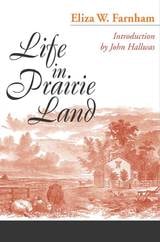
Life in Prairie Land
Eliza W. Farnham
University of Illinois Press, 1988
Life in Prairie Land is a complex portrait of the midwestern wilderness during the 1830s--beautiful and ugly, beneficent and threatening. Farnham's vivid recreation of her experiences on the Illinois frontier offers a realistic depiction of the harsh pioneer lifestyle as well as a romantic view of an Edenic landscape.
Life in Prairie Land includes descriptions of Farnham's encounters with early settlers and Native Americans, her eye-opening experiences with birth and death, the flora and fauna that surrounded her, and the developing towns she passed through in her travels. Farnham's years on the Illinois frontier showed her the possibilities of a less restrictive society and planted the seeds that would later grow into firmly held and eloquently expressed views on women's equality.
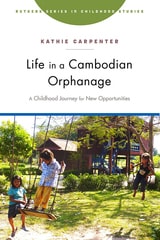
Life in a Cambodian Orphanage
A Childhood Journey for New OpportunitiesKathie Carpenter
Rutgers University Press, 2021
Life in a Mississippian Warscape
Common Field, Cahokia, and the Effects of WarfareMeghan E. Buchanan
University of Alabama Press, 2022
Analyzes Mississippian daily life at Cahokia’s environs during wartime
In Life in a Mississippian Warscape: Common Field, Cahokia, and the Effects of Warfare Meghan E. Buchanan posits that to understand the big histories of warfare, political fragmentation, and resilience in the past archaeologists must also analyze and interpret the microscale actions of the past. These are the daily activities of people before, during, and after historical events. Within warscapes, battles take place in peoples’ front yards, family members die, and the impacts of violence in near and distant places are experienced on a daily basis. This book explores the microscale of daily lives of people living at Common Field, a large, palisaded mound center, during the period of Cahokia’s abandonment and the spread of violence and warfare throughout the Southeast.
Linking together ethnographic, historic, and archaeological sources, Buchanan discusses the evidence that the people of Common Field engaged in novel and hybrid practices in these dangerous times. At the microscale, they adopted new ceramic tempering techniques, produced large numbers of serving vessels decorated with warfare-related imagery, adapted their food practices, and erected a substantial palisade with specially prepared deposits. The overall picture that emerges at Common Field is of a people who engaged in risk-averse practices that minimized their exposure to outside of the palisade and attempted to seek intercession from otherworldly realms through public ceremonies involving warfare-related iconography.
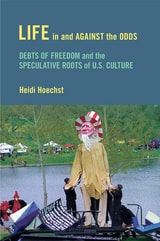
Life in and against the Odds
Debts of Freedom and the Speculative Roots of U.S. CultureHeidi Hoechst
Temple University Press, 2015
Somehow people continue to imagine a world of justice against the odds of a deck that has been stacked against them. In her urgent and perceptive book, Life in and against the Odds, Hoechst focuses on the particular circumstances and conditions of different phases of speculative expansion in the United States. She traces the roots of the nation-state to nineteenth-century land markets and slave exchanges. Hoechst also chronicles how these racial foundations extend through corporate capitalism from the 1920s and ´30s to the present era of financialized capitalism and the recent housing bubble.
Life in and against the Odds identifies where and how speculative nationalism creates roadblocks to freedom. Hoechst retells the history of the United States with a perspective on how human lives are made, destroyed, reconfigured, and claimed under the systemic violence of a nation that is rooted in the racializing futurity of speculative capitalism.
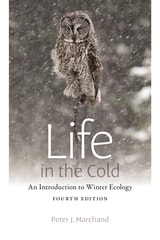
Life in the Cold
An Introduction to Winter Ecology, fourth editionPeter J. Marchand
University Press of New England, 2014
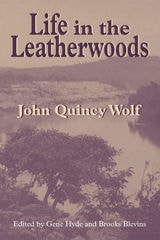
Life in the Leatherwoods
New EditionJohn Quincy Wolf
University of Arkansas Press, 2000
Originally published by Memphis State University Press in 1974, this new edition includes additional writings of John Q. Wolf and a continuation of the autobiographical narrative after his 1887 move to Batesville. Wolf’s writings are valuable resources for southern historians, folklorists, general readers, and scholars of Ozarkiana because they provide a rare glimpse into the social and family life of a largely misunderstood and stereotyped people—the independent hill farmers of the Arkansas Ozarks of the 1870s and 1880s. With Life in the Leatherwoods, Wolf bestows a benediction upon a society that existed vibrantly and humorously in his memory—one that has now forever disappeared from the American countryside.

Life in the Shadows of the Crystal Palace, 1910–1927
Ford Workers in the Model T EraClarence Hooker
University of Wisconsin Press, 1997

Life is War
Surviving Dictatorship in Communist AlbaniaShannon Woodcock
Intellect Books, 2016
In Life in War, the reader accompanies Shannon Woodcock, the author and historian, through intimate interviews with six Albanian men and women. We hear how everyday people survived shocking living conditions, political persecution and oppression dependent on ethnicity, political status, gender and sexuality.
This is a thorough and vivid history of lived communism in Albania, charting political and ideological shifts through the experiences of those who survived. Life is War stands as remarkable and profound testimony to the resilience of humanity in the face of unrelenting political terror.
An accurate and precise historical work, engagingly rendered from life narratives, it plunges the reader into the difficult emotional truths that are at the core of remembering Albania’s communist past.
Life is War is a valuable contribution to studies of everyday life under communism and dictatorship. Eloquently written and expertly researched, it will appeal to readers interested in life histories, war, communism, European history and trauma studies.
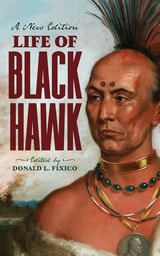
Life of Black Hawk
A New EditionDonald L. Fixico
Westholme Publishing, 2026
Born in 1767 at Saukenuk on the Rock River in western Illinois, Black Hawk of the Sauk and Fox Nation rose from young warrior to fierce defender of his people as the United States pushed relentlessly westward. His autobiography, originally dictated in 1833, is one of the earliest Native American life narratives recorded: a warrior’s unfiltered account of betrayal, resistance, and the patriotic fight to protect his homeland. In 1832, Black Hawk led his people to reclaim Saukenuk. Settlers had destroyed their homes and crops and illegally occupied their land that had been recognized as Sauk and Fox by treaty. After winning the first two battles against the U.S. military and volunteer militia in Wisconsin, Black Hawk’s band lost the final one at Bad Axe. Black Hawk’s people were forced to accept permanent removal to the west, and he became a prisoner of war at the Fort Jefferson barracks near St. Louis. It was there that he dictated his autobiography to an interpreter.
Introduced and edited by historian Donald L. Fixico, this new edition of Life of Black Hawk brings fresh context and cultural depth to Black Hawk’s words, illuminating the Sauk and Fox worldview, the sacred traditions of the Thunder Clan, and the spiritual life that shaped this remarkable leader. Black Hawk's account conveys what it was like to be a Sauk warrior in the early 1800s. He explains the Medicine Way of his people and how the traditional worldview of Black Hawk was quickly changing from a harmonious relationship with nature to unavoidable frontier hostilities with an expanding United States. You feel the frustrating dilemma of Black Hawk, who knows that defending his people and fighting to save his homeland is morally right. Timely, intimate, and essential, this volume is both a vivid window into the Indigenous experience on the frontier and a testament to a man who stands alongside the great Native patriots. For readers of Native American history, military history, and American biography, this is an extraordinary story that has never been more important to hear.

Life of the 381st Bomb Group
The World War II Diary of Eighth Air Force Chaplain James Good BrownBob Korkuc
University of Missouri Press, 2026
While working on his first book, Bob Korkuc became intimately familiar with the 381st Bombardment Group of the Mighty Eighth Air Force and met the group’s chaplain, James Good Brown. Brown kept a diary during his time with the bomb group (1943 to 1945) in which he chronicled the daily experiences of the men.
Years after the war, Brown self-published his diary, which today is hard to find. Through his friendship with Brown, Korkuc gained access to and chose to edit the original docu - ment so that more readers might appreciate this insightful wartime eyewitness account.
Serving in his early forties alongside men twenty years his junior—whom he called the “Mighty Men of the 381st”—Brown took part in morning briefings, shared meals with crews, and anxiously awaited their return from dangerous daylight bombing missions. Flying as a noncombatant, an unnecessary eleventh crewmember, Brown describes his own observations of a Flying Fortress combat mission over Germany. Writing with extraordinary candor, Brown documents the inner workings of a bomb group that flew 297 combat missions over Europe, providing vivid character assessments of his fellow airmen and capturing both their victories and devastating losses.
In addition to judiciously editing Brown’s original diary for readability, Korkuc created a unique appendix, which reveals the fate of every airman who served with Brown. The immediacy of Brown’s narration combined with Korkuc’s meticulous editing make this a promising new resource for scholars and general readers alike.
Life of the Marlows
A True Story of Frontier Life of Early DaysWilliam Rathmell
University of North Texas Press, 2004
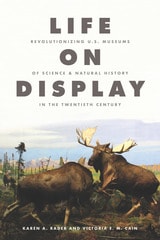
Life on Display
Revolutionizing U.S. Museums of Science and Natural History in the Twentieth CenturyKaren A. Rader and Victoria E. M. Cain
University of Chicago Press, 2014
Rader and Cain explain why science and natural history museums began to welcome new audiences between the 1900s and the 1920s and chronicle the turmoil that resulted from the introduction of new kinds of biological displays. They describe how these displays of life changed dramatically once again in the 1930s and 1940s, as museums negotiated changing, often conflicting interests of scientists, educators, and visitors. The authors then reveal how museum staffs, facing intense public and scientific scrutiny, experimented with wildly different definitions of life science and life science education from the 1950s through the 1980s. The book concludes with a discussion of the influence that corporate sponsorship and blockbuster economics wielded over science and natural history museums in the century’s last decades.
A vivid, entertaining study of the ways science and natural history museums shaped and were shaped by understandings of science and public education in the twentieth-century United States, Life on Display will appeal to historians, sociologists, and ethnographers of American science and culture, as well as museum practitioners and general readers.
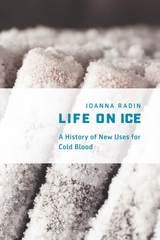
Life on Ice
A History of New Uses for Cold BloodJoanna Radin
University of Chicago Press, 2017
The Cold War projects Radin tracks were meant to form an enduring total archive of indigenous blood before it was altered by the polluting forces of modernity. Freezing allowed that blood to act as a time-traveling resource. Radin explores the unique cultural and technical circumstances that created and gave momentum to the phenomenon of life on ice and shows how these preserved blood samples served as the building blocks for biomedicine at the dawn of the genomic age. In an era of vigorous ethical, legal, and cultural debates about genetic privacy and identity, Life on Ice reveals the larger picture—how we got here and the promises and problems involved with finding new uses for cold human blood samples.
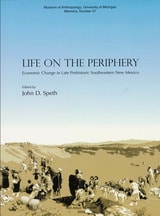
Life on the Periphery
Economic Change in Late Prehistoric Southeastern New MexicoEdited by John D. Speth
University of Michigan Press, 2004
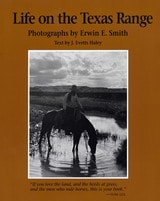
Life on the Texas Range
Photographs by Erwin E. SmithText by J. Evetts Haley
University of Texas Press, 1952
First published in 1953, this photographic record of the real life and work of cowboys remains a perennial favorite. Erwin E. Smith was the outstanding cowboy photographer of the West, and these eighty photographs were among those he chose for an exhibit of his best work at the 1936 Texas Centennial. The text by J. Evetts Haley, a noted historian of the range, skillfully complements Smith's visual record of a vanishing way of life.
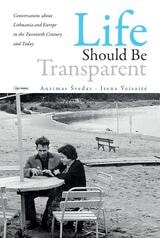
Life should be Transparent
Conversations about Lithuania and Europe in the Twentieth Century and TodayAurimas Svedas
Central European University Press, 2020
This book of thirteen conversations introduces us to the life of an exceptional person—theatre critic, Germanist, and long-time chair of the Open Lithuania Fund board—Irena Veisaitė. The dialogue between Lithuanian historian Aurimas Švedas and a woman who reflects deeply on her experiences reveals both one individual’s historically dramatic life and the fate of Europe and Lithuania in the twentieth century.
Through the complementary lenses of history and memory, we confront with Veisaitė the horrific events of the Holocaust, which brought about the end of the Lithuanian Jewish world. We also meet an array of world-class cultural figures, see fragments of legendary theatre performances, and hear meaningful words that were spoken or heard decades ago.
This book’s interlocutors do not so much seek to answer the question “What was it like?” but instead repeatedly ask each other: “What, how, and why do we remember? What is the meaning of our experiences? How can history help us to live in the present and create the future? How do we learn to understand and forgive?”
A series of Veisaitė’s texts, statements, and letters, presented at the end of the book suggest further ways of answering these questions.
Life's Journey—Zuya
Oral Teachings from RosebudAlbert White Hat Sr
University of Utah Press, 2012
“Our people are very lucky to be here,” says Albert White Hat Sr. He has lived through a time when Indians were sent to boarding schools and were not permitted to practice their own rituals. Although the Lakota people can practice their beliefs openly once again, things have changed and old ways have been forgotten. As a teacher at Sinte Gleska University in South Dakota, White Hat seeks to preserve the link the Lakota people have with their past. In Life’s Journey—Zuya, White Hat has collected and translated the stories of medicine men, retaining the simplicity of their language so as not to interpret their words through a Western lens. This is Zuya, oral history that is lived and handed down over the generations.
White Hat also shares stories from his own experience. Using anecdotes he shows not only how the Lakota lifestyle has been altered but also how Lakota words have begun to take on new meanings that lack their original connotations and generate a different picture of Lakota philosophy. Language, interwoven with history, tells the people where they came from and who they are. By gathering the traditions and ceremonies in a single volume, with the history of how they evolved, he has secured the meaning of these practices for futre generations. Filled with warmth and humor, Life’s Journey—Zuya is an enjoyable and enlightening read.
Life's Splendid Drama
Evolutionary Biology and the Reconstruction of Life's Ancestry, 1860-1940Peter J. Bowler
University of Chicago Press, 1996
"Intriguing and insightful."—William Kimler, American Scientist
"[A] volume of impressive scholarship and extensive references."—Library Journal
"One of Bowler's best."—Kevin Padian, Nature
"[Bowler's] comprehensive review of the various debates and ideas in taxonomy, morphology, and vertebrate evolution . . . deserves the attention of biologists and other scholars interested in the history of ideas."—Choice
"The persistence of pre-Darwinian modes of thought in contemporary biology underlines the importance of Bowler's book. Its value is not only in the history it provides, but also in the way it illumines the present."—Peter J. Causton, Boston Book Review
Life, Death, and Archaeology at Fort Blue Mounds
A Settlers’ Fortification of the Black Hawk WarRobert A. Birmingham
Wisconsin Historical Society Press, 2012
Life, Death, and Archaeology at Fort Blue Mounds is an archaeological detective story illuminating the lives of white settlers in the lead-mining region during the tragic events of the historically important conflict known as the Black Hawk War.
Focusing on the strategically located Fort Blue Mounds in southwestern Wisconsin, Robert A. Birmingham summarizes the 1832 conflict and details the history of the fort, which played a major role not only in U.S. military and militia operations but also in the lives of the white settlers who sought refuge there. Birmingham then transports us to the site decades later, when he and fellow Wisconsin Historical Society archaeologists and dedicated volunteers began their search for the fort. The artifacts they unearthed provide fascinating—and sometimes surprising—insights into the life, material culture, and even the food of the frontier.
Recommended for readers interested in the Black Hawk War, frontier life, Native American history, military history, and archaeology, Life, Death, and Archaeology at Fort Blue Mounds is grounded by a sense of place and the discovery of what a careful examination of our surroundings can tell us about the past.
Life, Death, and Entertainment in the Roman Empire
D. S. Potter and D. J. Mattingly, Editors
University of Michigan Press, 1999
D. J. Mattingly is Professor of Roman Archaeology, University of Leicester.
Life, Death, and Entertainment in the Roman Empire
D. S. Potter and D. J. Mattingly, Editors
University of Michigan Press, 2010
"[T]his handsomely-produced volume performs admirably as a series of introductions to sources, approaches, and the state of scholarship on major topics in Roman social history . . . Collections of essays come and go, but this one will stay in wide use. Each essay can stand alone but, tied together by the theme of dominance, the whole is greater than the sum of its parts."
---Donald Kyle, Bryn Mawr Classical Review
"This collection of essays is intended to serve as a coursebook for introductory lecture series on Roman civilization; the essays are concentrated on fundamental aspects of Roman society, and no prior knowledge of antiquity on the reader's part is assumed. . . . The book as a whole is entirely successful in its projected aim: an immense range of detailed information about antiquity is presented in readable and largely sophisticated discussion. . . . Increasingly we need to be able to suggest to our students reading that is introductory but also in-depth and challenging, and this book is one possible reading that we can offer."
---Ellen O'Gorman, Classical Review
Life, Death, and Entertainment gives those with a general interest in Roman antiquity a starting point, informed by the latest developments in scholarship, for understanding the extraordinary range of Roman society. Family structure, slavery, gender identity, food supply, religion, and entertainment---all crucial parts of the Roman world---are discussed here, in a single volume that offers an approachable guide for readers of all backgrounds. The collection unites a series of general introductions on each of these topics, bringing readers in touch with a broad range of evidence, as well as with a wide variety of approaches to basic questions about the Roman world.
The newly expanded edition includes historian Keith Hopkins' pathbreaking article on Roman slaves. Volume editor David Potter has contributed two new translations of documents from emperors Hadrian and Marcus Aurelius. Hadrian's letters document a reorganization of the festival cycle in the Empire and reassert the importance of the Olympic Games; the letter to Marcus provides the most important surviving evidence for how gladiatorial games were actually organized.
Contributors to the volume include Greg S. Aldrete, Hazel Dodge, Bruce W. Frier, Maud W. Gleason, Ann E. Hanson, Keith Hopkins, David J. Mattingly, and David S. Potter.
D.S. Potter is Professor of Classics and Arthur F. Thurnau Professor, University of Michigan.
D.J. Mattingly is Professor of Roman Archaeology, University of Leicester, and a Fellow of the British Academy.
Cover illustrations: top left, Karanis Excavation, courtesy Kelsey Museum; bottom right, Monte Testacchio, courtesy David J. Mattingly; center, Pollice Verso by Jean-Léon Gérôme, courtesy Phoenix Art Museum, Museum Purchase.
Life, Earth, Colony
Friedrich Ratzel's Necropolitical GeographyIan Klinke
University of Michigan Press, 2023
Life, Earth, Colony finds that there is an as yet unexplored necropolitical impulse at the heart of Ratzel’s entire oeuvre, a preoccupation with death and dying, which had a profound impact on twentieth-century history.
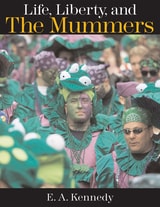
Life, Liberty, and the Mummers
Ed Kennedy
Temple University Press, 2007
Noted photographer E. A. Kennedy spent four years documenting the Mummers and their parade. He has personally selected the striking images included here -- more than 150 in all -- and he has written an engaging history of the parade itself. As Kennedy explains, and as his photos make clear, "mummery" is a way of life for Mummers, who have deep attachments to their clubs, associations, and brigades.
For all its glitz, the Mummers Parade remains a folk parade. This is the captivating story of the folks behind the parade.
Life, Work, and Rebellion in the Coal Fields
The Southern West Virginia Miners, 1880-1922 2nd EditionDavid Corbin
West Virginia University Press, 2015
Between 1880 and 1922, the coal fields of southern West Virginia witnessed two bloody and protracted strikes, the formation of two competing unions, and the largest armed conflict in American labor history—a week-long battle between 20,000 coal miners and 5,000 state police, deputy sheriffs, and mine guards. These events resulted in an untold number of deaths, indictments of over 550 coal miners for insurrection and treason, and four declarations of martial law. Corbin argues that these violent events were collective and militant acts of aggression interconnected and conditioned by decades of oppression. His study goes a long way toward breaking down the old stereotypes of Appalachian and coal mining culture. This second edition contains a new preface and afterword by author David A. Corbin.

Life-Writing in the History of Archaeology
Critical perspectivesEdited by Clare Lewis and Gabriel Moshenska
University College London, 2023
Travels and adventures of the “great archaeologists” have generated centuries worth of bestselling books that, in turn, have shaped the public perception of archaeology. The lives of archaeologists are entangled with histories of museums and collections, developments in science and scholarship, and narratives of nationalism and colonialism into the present. In recent years, life-writing has played an important role in the surge of new research in the history of archaeology, including ground-breaking studies of discipline formation, institutionalization, and social and intellectual networks. Sources such as diaries, wills, film, and the growing body of digital records are powerful tools for highlighting the contributions of hitherto marginalized archaeological lives including many pioneering women, hired laborers, and other “hidden hands.”
This book brings together critical perspectives on life-writing in the history of archaeology from leading figures in the field. These include studies of archive formation and use, the concept of “dig-writing” as a distinctive genre of archaeological creativity, and reviews of new sources for already well-known lives. Several chapters reflect on the experience of life-writing, review the historiography of the field, and assess the intellectual value and significance of life-writing as a genre. Together, they work to problematize underlying assumptions about this genre, foregrounding methodology, social theory, ethics, and other practice-focused frameworks in conscious tension with previous practices.
Life
A Modern InventionDavide Tarizzo
University of Minnesota Press, 2017
The word “biology” was first used to describe the scientific study of life in 1802, and as Davide Tarizzo demonstrates in his reconstruction of the genealogy of the concept of life, our understanding of what being alive means is an equally recent invention. Focusing on the histories of philosophy, science, and biopolitics, he contends that biological life is a metaphysical concept, not a scientific one, and that this notion has gradually permeated both European and Anglophone traditions of thought over the past two centuries.
Building on the work undertaken by Foucault in the 1960s and ‘70s, Tarizzo analyzes the slow transformation of eighteenth-century naturalism into a nineteenth-century science of life, exploring the philosophical landscape that engendered biology and precipitated the work of such foundational figures as Georges Cuvier and Charles Darwin.
Tarizzo tracks three interrelated themes: first, that the metaphysics of biological life is an extension of the Kantian concept of human will in the field of philosophy; second, that biology and philosophy share the same metaphysical assumptions about life originally advanced by F. W. J. Schelling and adopted by Darwin and his intellectual heirs; and third, that modern biopolitics is dependent on this particularly totalizing view of biological life.
Circumventing tired debates about the validity of science and the truth of Darwinian evolution, this book instead envisions and promotes a profound paradigm shift in philosophical and scientific concepts of biological life.
Lifeblood
Oil, Freedom, and the Forces of CapitalMatthew T. Huber
University of Minnesota Press, 2013
If our oil addiction is so bad for us, why don’t we kick the habit? Looking beyond the usual culprits—Big Oil, petro-states, and the strategists of empire—Lifeblood finds a deeper and more complex explanation in everyday practices of oil consumption in American culture. Those practices, Matthew T. Huber suggests, have in fact been instrumental in shaping the broader cultural politics of American capitalism.
How did gasoline and countless other petroleum products become so central to our notions of the American way of life? Huber traces the answer from the 1930s through the oil shocks of the 1970s to our present predicament, revealing that oil’s role in defining popular culture extends far beyond material connections between oil, suburbia, and automobility. He shows how oil powered a cultural politics of entrepreneurial life—the very American idea that life itself is a product of individual entrepreneurial capacities. In so doing he uses oil to retell American political history from the triumph of New Deal liberalism to the rise of the New Right, from oil’s celebration as the lifeblood of postwar capitalism to increasing anxieties over oil addiction.
Lifeblood rethinks debates surrounding energy and capitalism, neoliberalism and nature, and the importance of suburbanization in the rightward shift in American politics. Today, Huber tells us, as crises attributable to oil intensify, a populist clamoring for cheap energy has less to do with American excess than with the eroding conditions of life under neoliberalism.

Lifebuoy Men, Lux Women
Commodification, Consumption, and Cleanliness in Modern ZimbabweTimothy Burke
Duke University Press, 1996
With particular attention to cosmetic products and the contrast between colonial and pre-colonial ideas of cleanliness, Burke examines the role played by commodity culture, changing patterns of consumption, and the spread of advertising in the making of modern Zimbabwe. His work combines history, anthropology, and political economy to show how the development of commodification in the region relates to the social history of hygiene. Within this framework, and drawing on a wide variety of historical sources, Burke explores dense interactions between commodity culture and embodied aspects of race, gender, sexuality, domesticity, health, and aesthetics in a colonial society. Rather than viewing the production of needs simply as an imposition from above, Lifebuoy Men, Lux Women shows what heterogeneous and complex processes, involving the aims and histories of both colonizers and colonized, produced these changes in Zimbabwean society.
Integrating political economy, cultural studies, and a wide range of the social sciences, Lifebuoy Men, Lux Women will find readers among scholars of colonialism, African history, and ethnography as well those for whom the problem of commodification is a significant theoretical issue.
Lifelines
The Traffic of TraumaHarris Solomon
Duke University Press, 2022
Lifespan Narratives
Ten Stories from a Time of Disruption; Chronicle of Emotions, Notebook 3Alexander Kluge
Seagull Books, 2025
A poignant exploration of post–World War II life, blending fictional and non-fictional stories that challenge traditions and reflect on the enduring impact of historical disruptions.
Lifespan Narratives has to do with stories, fictitious and not, which present a sad chronicle and question tradition from several different perspectives. Originally comprising Alexander Kluge’s first book, these stories were written between the years 1958 and 1962, in which he emphasizes the importance of continuously questioning our past. He underscores the necessity of recounting lifespan narratives even from today’s viewpoint, proposing that “life in a time of disruption” should be viewed as a constant experiential substance, transcending any single era.
In Lifespan Narratives, readers are invited to explore the enduring impact of historical disruptions through Kluge’s masterful storytelling, which remains as relevant today as it was in the years following the Second World War. For this edition, the English translation of a selection of stories by Leila Vennewitz has been expanded by Alexander Booth in conjunction with the author.
Lift Every Voice
African American Oratory, 1787-1901Philip S. Foner
University of Alabama Press, 1997
The essential collection of African American voices that shaped the struggle for freedom, equality, and citizenship.
Lift Every Voice is a completely revised, updated, and expanded version of Philip Foner's 1972 classic Voice of Black America, which Library Journal hailed as "indispensable.""This well-edited and
richly inclusive work," wrote Benjamin Quarles, "unveils the full sweep of Black expression as found in platform addresses" by "men and women who join eloquence with reason in articulating their
grievances and their aspirations and in arousing their listeners with their ringing and prophetic challenges." This new collection includes over 60 additional texts and revised and expanded introductory essays that provide historical, biographical, and critical information for each speech.
For Americans of the 19th century, as W. E. B. Du Bois observed, eloquent speeches were 'the shining lights of civilization' that both expressed and sought to improve the lives and communities from which they sprang. Through political speeches, sermons, lectures, oral testimonies, and ceremonial addresses, African Americans offered diverse responses to the issues and events of their times, including not only slavery and racial equality but also women's rights, education, religion, immigration, socialism, war, Indian policy, and labor organization, among others. The speeches in this
collection are among the most powerful expressions of African American opinions on these issues and were delivered on occasions and before audiences where the speakers believed their words might be transformative.
Containing more than 150 speeches, this anthology represents the most extensive and diverse collection of African American oratory of the 18th and 19th centuries ever published. Lift Every Voice makes readily accessible not only the classic orations of such well-known figures as Frederick Douglass, Sojourner Truth, and Booker T. Washington but also dozens of lesser-known but important speeches deserving greater recognition and study. Many of these speeches are previously unpublished, uncollected, or long out of print.
Lifting the Fog of Peace
How Americans Learned to Fight Modern WarJanine Davidson
University of Michigan Press, 2011
"Lifting the Fog of Peace is a captivating study of an agile and adaptive military evolving through the chaos of the post-9/11 world. In what is certain to be regarded as the definitive analysis of the reshaping of American combat power in the face of a complex and uncertain future, Dr. Janine Davidson firmly establishes herself as a rising intellectual star in government and politics. A thoroughly captivating study of organizational learning and adaptation—a 'must read' for leaders in every field."
---LTG William B. Caldwell, IV, Commanding General, NATO Training Mission - Afghanistan
"In Lifting the Fog of Peace, Dr. Janine Davidson explains how the American military has adapted itself to succeed in the wars in Afghanistan and Iraq that are the most likely future face of combat. The book is informed by her experience of these wars in the Department of Defense, where she now plays a critical role in continuing the process of learning that has so visibly marked the military's performance in today's wars. Highly recommended."
---John A. Nagl, President, Center for a New American Security
"Janine Davidson’s Lifting the Fog of Peace is a superb, concise, and well-written book that makes important contributions in three areas. It advances our knowledge of organizational learning in the Armed Forces. It also accurately captures the rich post-Vietnam operational and doctrinal history of the Army and the Marine Corps. The simplistic cartoon of dim-witted generals fixated on the Fulda Gap is replaced here by a more accurate version, where engaged senior officers studied the security environment, absorbed important lessons, and began to improve the learning capacity of the military services. Finally, Lifting the Fog of Peace assesses the state of contemporary stability operations and what must be done to further prepare our Armed Forces for modern war on the low end of the spectrum of conflict. It will be a 'must read' on the E-Ring of the Pentagon and in security studies programs across the nation."
---Joseph J. Collins, Professor, National War College, and former Deputy Assistant Secretary of Defense for Stability Operations
Counterinsurgency and stability operations in Iraq and Afghanistan are only the most recent examples of the U.S. Armed Forces fighting insurgents, building infrastructure, enforcing laws, and governing cities. For more than two centuries, these assignments have been a regular part of the military's tasks; yet until recently the lessons learned from the experiences have seldom been formally incorporated into doctrine and training. As a result, each generation of soldiers has had to learn on the job.
Janine Davidson traces the history of the U.S. military's involvement in these complex and frustrating missions. By comparing the historical record to the current era, Davidson assesses the relative influence of organizational culture and processes, institutional structures, military leadership, and political factors on the U.S. military's capacity to learn and to adapt. Pointing to the case of Iraq, she shows that commanders serving today have benefited at the tactical level from institutional changes following the Vietnam War and from the lessons of the 1990s. Davidson concludes by addressing the question of whether or not such military learning, in the absence of enhanced capabilities and capacity in other U.S. government agencies, will be sufficient to meet the complex challenges of the 21st century.
Janine Davidson, a former Air Force pilot, is a professor of national security at George Mason University, currently serving in the Pentagon as Deputy Assistant Secretary of Defense for Plans.
The views presented in this book are those of the author and do not necessarily represent the views of the Department of Defense or its Components.
Lifting the Shadow
Reshaping Memory, Race, and Slavery in U.S. MuseumsAmy Sodaro
Rutgers University Press, 2025
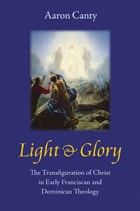
Light and Glory
The Transfiguration of Christ in Early Franciscan and Dominican TheologyAaron Canty
Catholic University of America Press, 2011
Light in Germany
Scenes from an Unknown EnlightenmentT. J. Reed
University of Chicago Press, 2015
Reed looks closely at the arguments, achievements, conflicts, and controversies of these major thinkers and how their development of a lucid and active liberal thinking matured in the late eighteenth century into an imaginative branching that ran through philosophy, theology, literature, historiography, science, and politics. He traces the various pathways of their thought and how one engendered another, from the principle of thinking for oneself to the development of a critical epistemology; from literature’s assessment of the past to the formulation of a poetic ideal of human development. Ultimately, Reed shows how the ideas of the German Enlightenment have proven their value in modern secular democracies and are still of great relevance—despite their frequent dismissal—to us in the twenty-first century.
Light of Reason, Light of Faith
Joseph Ratzinger and the German EnlightenmentMaurice Ashley Agbaw-Ebai
St. Augustine's Press, 2021
Ratzinger’s extraordinary and sympathetic understanding of the sources of contemporary secularism equipped him to appreciate the gains of the Enlightenment, while still being a fierce critic of the losses humanity has suffered when reason falsely excludes faith. Fr. Agbaw-Ebai’s account reveals Ratzinger, in relation to his various interlocutors, to be the truly “enlightened” one because he demonstrates a truly balanced understanding of the human mind. To be truly rational one must be able to hold to faith and reason both, reason informed by faith in Jesus Christ.
A particular merit of this book is Agbaw-Ebai’s presentation of Ratzinger’s treatment of the German Enlightenment’s greatest contributors: Kant, Nietzche, Hegel and Habermas, among others. In the postscript George Weigel characterizes what this study accomplishes in the larger framework of scholarship. “[Ratzinger’s] position remains too often misunderstood, and sometimes deliberately misinterpreted, throughout the whole Church. And to misunderstand, or misinterpret, Ratzinger is to misunderstand or misinterpret both the modern history of theology and the Second Vatican Council.” Agbaw-Ebai masterfully positions Ratzinger correctly in the history of ideas, and exhibits why Ratzinger will be remembered as one of its main players. Pure rationalists and true believers are equally indebted to him.
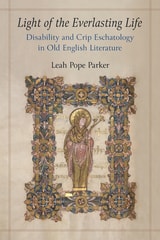
Light of the Everlasting Life
Disability and Crip Eschatology in Old English LiteratureLeah Pope Parker
University of Michigan Press, 2025
From disability metaphors to narratives structured around bodies presented as aberrant, early medieval English thoughtworlds conveyed the promise of resurrection and the hope of salvation through crip and disabled bodies. Light of the Everlasting Life argues that early medieval Christian eschatology, as manifested in Old English literary texts, was a crip eschatology: a theology of the afterlife that relied upon disabled bodies and concepts related to disability in order to convey promises of resurrection and salvation. In addition to demonstrating how literature manifested theological approaches to the afterlife, Leah Pope Parker articulates the ways of thinking about bodies and disability that were available to ordinary early medieval people, many of whom experienced their bodies in ways that resonate with what we call disability today, but who rarely appear in the historical record.
By analyzing Old English texts, including Alfredian translations, Ælfric’s saints’ lives, and poetry from the Exeter and Vercelli Books, Parker introduces novel ways of characterizing disability’s effects in literature. “Spiritual prosthesis” reveals rhetorical, narrative, and theological reliance upon disability to convey the promise of a Christian afterlife. “Systems of aberrance” emerge as a result, in which bodies marked as deviant—including disabled, monstrous, heroic, saintly, and dead bodies—form a network of embodiments that reinforce the narratives they inhabit and that of Christian salvation history. Locating crip eschatology in early medieval literature, Light of the Everlasting Life rewrites standard histories of disability, of the body, and of medieval Christian eschatology.
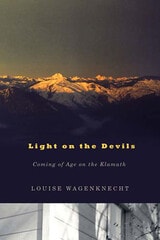
Light on the Devils
Coming of Age on the KlamathLouise Wagenknecht
Oregon State University Press, 2011
When Louise Wagenknecht’s family arrived in the remote logging town of Happy Camp in 1962, a boundless optimism reigned. Whites and Indians worked together in the woods and the lumber mills of northern California’s Klamath country. Logging and lumber mills, it seemed, would hold communities together forever.
But that booming prosperity would come to an end. Looking back on her teenage years spent along the Klamath River, Louise Wagenknecht recounts a vanishing way of life. She explores the dynamics of family relationships and the contradictions of being female in a western logging town in the 1960s. And she paints an evocative portrait of the landscape and her relationship with it.
Light on the Devils is a captivating memoir of place. It will appeal to general readers interested in the rural West, personal memoir, history, and natural history.
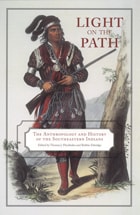
Light on the Path
The Anthropology and History of the Southeastern IndiansThomas J. Pluckhahn
University of Alabama Press, 2006
The scholarship underlying this shift comes from many directions, but much of the groundwork can be attributed to Charles Hudson. The papers in this volume were contributed by Hudson’s colleagues and former students (many now leading scholars themselves) in his honor. The assumption links these papers is that of a historical transformation between Mississippian societies and the Indian societies of the historic era that requires explanation and critical analysis.
In all of the chapters, the legacy of Hudson’s work is evident. Anthropologists, archaeologists, and historians are storming the bridge that connects prehistory and history in a manner unimaginable 20 years ago. While there remains much work to do on the path toward understanding this transformation and constructing a complete social history of the Southeastern Indians, the work of Charles Hudson and his colleagues have shown the way.
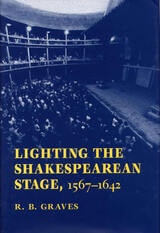
Lighting the Shakespearean Stage, 1567 - 1642
R. B. Graves
Southern Illinois University Press, 1999
In Lighting the Shakespearean Stage, 1567–1642,R. B. Graves examines the lighting of early modern English drama from both historical and aesthetic perspectives. He traces the contrasting traditions of sunlit amphitheaters and candlelit hall playhouses, describes the different lighting techniques, and estimates the effect of these techniques both indoors and outdoors.
Graves discusses the importance of stage lighting in determining the dramatic effect, even in cases where the manipulation of light was not under the direct control of the theater artists. He devotes a chapter to the early modern lighting equipment available to English Renaissance actors and surveys theatrical lighting before the construction of permanent playhouses in London. Elizabethan stage lighting, he argues, drew on both classical and medieval precedents.
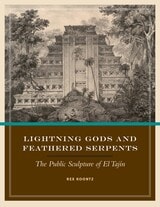
Lightning Gods and Feathered Serpents
The Public Sculpture of El TajínBy Rex Koontz
University of Texas Press, 2009
El Tajín, an ancient Mesoamerican capital in Veracruz, Mexico, has long been admired for its stunning pyramids and ballcourts decorated with extensive sculptural programs. Yet the city's singularity as the only center in the region with such a wealth of sculpture and fine architecture has hindered attempts to place it more firmly in the context of Mesoamerican history. In Lightning Gods and Feathered Serpents, Rex Koontz undertakes the first extensive treatment of El Tajín's iconography in over thirty years, allowing us to view its imagery in the broader Mesoamerican context of rising capitals and new elites during a period of fundamental historical transformations.
Koontz focuses on three major architectural features—the Pyramid of the Niches/Central Plaza ensemble, the South Ballcourt, and the Mound of the Building Columns complex—and investigates the meanings of their sculpture and how these meanings would have been experienced by specific audiences. Koontz finds that the iconography of El Tajín reveals much about how motifs and elite rites growing out of the Classic period were transmitted to later Mesoamerican peoples as the cultures centered on Teotihuacan and the Maya became the myriad city-states of the Early Postclassic period.
By reexamining the iconography of sculptures long in the record, as well as introducing important new monuments and contexts, Lightning Gods and Feathered Serpents clearly demonstrates El Tajín's numerous iconographic connections with other areas of Mesoamerica, while also exploring its roots in an indigenous Gulf lowlands culture whose outlines are only now emerging. At the same time, it begins to uncover a largely ignored regional artistic culture of which Tajín is the crowning achievement.
Lightning through the Clouds
?Izz al-Din al-Qassam and the Making of the Modern Middle EastBy Mark Sanagan
University of Texas Press, 2020
Lightning through the Clouds is the first English-language life-and-times biography of ‘Izz al-Din al-Qassam, a preeminent figure who helped to reshape the political and religious landscape of the region. A Syrian-born, Egyptian-educated cleric, he went from the battlefields of World War I to join the anticolonialist fight against the French in Syria. Sentenced to be executed by the French military, he managed to escape to Palestine, where he became an increasingly popular presence, moved by the plight of the poor and disenfranchised. Outraged by British rule and the encroachment of Zionism, he formed a secret society to resist the colonization of Palestine first by the British and then by Jewish immigrants from Europe, once again taking up arms and advocating for a moral, political, and military jihad as the only solution. His death at the hands of Palestine Police in 1935 drew thousands to his funeral and sparked the 1936–1939 Arab Revolt.
His influence continues to be felt in the region; for example, the military wing of the Palestinian Hamas organization is named the ‘Izz al-Din al-Qassam Brigades. Al-Qassam is either revered or reviled, depending on the observers’ perspective, but he is without doubt a fascinating and historically significant individual whose influence on the past, and our present, makes this examination of his life both important and timely.
Like Andy Warhol
Jonathan Flatley
University of Chicago Press, 2017
Jonathan Flatley’s Like Andy Warhol is a revelatory look at the artist’s likeness-producing practices, not only reflected in his famous Campbell’s soup cans and Marilyn Monroe silkscreens but across Warhol’s whole range of interests including movies, drag queens, boredom, and his sprawling collections. Flatley shows us that Warhol’s art is an illustration of the artist’s own talent for “liking.” He argues that there is in Warhol’s productions a utopian impulse, an attempt to imagine new, queer forms of emotional attachment and affiliation, and to transform the world into a place where these forms find a new home. Like Andy Warhol is not just the best full-length critical study of Warhol in print, it is also an instant classic of queer theory.
Like Beads on a String
A Culture History of the Seminole Indians in North Peninsular FloridaBrent Richards Weisman
University of Alabama Press, 1989
Florida's Seminole Indians are exerting an ever increasing influence on crucial issues in state politics, economy, and law. From a position of near obscurity less than a century ago, these Native Americans have staged a remarkable comeback to take an active hand in shaping Florida society, present and future. Anthropologists have long been fascinated with the Seminoles and have often remarked upon their ability to adapt to new circumstances while preserving the core features of their traditional culture. Early observers of the Seminoles also commented on the dynamic tension that existed for the individual, clan, and tribe, that drew them together, "like beads on a string," into a resilient and viable society. This study traces the emergence of these qualities in the late prehistoric and early historic period in the Southeast and demonstrates their influence on the course of Seminole culture history.
Like Cattle and Horses
Nationalism and Labor in Shanghai, 1895-1927S. A. Smith
Duke University Press, 2002
While the massive wave of labor protest in the 1920s was principally an expression of militant nationalism rather than of class consciousness, Smith argues, elements of a precarious class identity were in turn forged by the very discourse of nationalism. By linking work-related demands to the defense of the nation, anti-imperialist nationalism legitimized participation in strikes and sensitized workers to the fact that they were worthy of better treatment as Chinese citizens. Smith shows how the workers’ refusal to be treated “like cattle and horses” (a phrase frequently used by workers to describe their condition) came from a new but powerfully felt sense of dignity. In short, nationalism enabled workers to interpret the anger they felt at their unjust treatment in the workplace in political terms and to create a link between their position as workers and their position as members of an oppressed nation. By focusing on the role of the working class, Like Cattle and Horses is one of very few studies that examines nationalism “from below,” acknowledging the powerful agency of nonelite forces in promoting national identity.
Like Cattle and Horses will interest historians of labor, modern China, and nationalism, as well as those engaged in the study of revolutions and revolt.
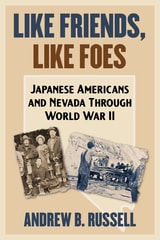
Like Friends, Like Foes
Japanese Americans and Nevada through World War IIAndrew B. Russell
University of Nevada Press, 2026
Like Friends, Like Foes offers a comprehensive analysis of how Nevada residents responded and reacted to the “Japanese Question” during World War II. Both before and during the war, the experience of Japanese American residents of Nevada varied widely. Once the war started, Japanese immigrants experienced an unusual case of mass internment from the mining towns of Ruth and McGill, Nevada, while Japanese American railroad workers and their families, scattered across the state, faced sudden layoffs and evictions. At the same time, most of the Japanese Americans living in Nevada fared much better than their counterparts who resided in the surrounding states.
Andrew Russell’s study examines how variations in local history and local circumstances generated starkly different perspectives and responses to the supposed “Japanese problems” confronting Nevada’s small communities, the state, and the larger region. While Russell’s interpretive history spotlights some highly unusual developments, it nevertheless offers fresh evidence of how individuals or small groups can play significant roles in combating the abuse of civil rights during times of fear and uncertainty.
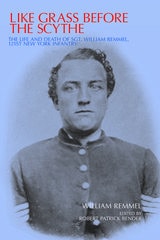
Like Grass before the Scythe
The Life and Death of Sgt. William Remmel 121st New York InfantryWilliam Remmel
University of Alabama Press, 2007
Sergeant William Remmel was a German immigrant who had settled with his parents and family in far upstate New York. His letters collected in Like Grass before the Scythe cover more than two full years of his service and provide details on military and social history in the eastern theater of operations and on the experience of the home front in upstate New York among a largely immigrant, working-class family and community.
Remmel wrote in English and apparently his parents responded in German. In addition to the important material on an immigrant family’s experience, Remmel also deals with the question of slavery, illness and hospital care (when he was wounded), the problem of hard war/total war, as well as the campaigns of Chancellorsville, Gettysburg, and the Shenandoah Valley in 1864.
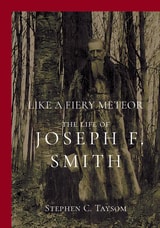
Like a Fiery Meteor
The Life of Joseph F. SmithStephen C. Taysom
University of Utah Press, 2023
Joseph F. Smith was born in 1838 to Hyrum Smith and Mary Fielding Smith. Six years later both his father and his uncle, Joseph Smith Jr., the founding prophet of the Church of Jesus Christ of Latter-day Saints, were murdered in Carthage, Illinois. The trauma of that event remained with Joseph F. for the rest of his life, affecting his personal behavior and public tenure in the highest tiers of the LDS Church, including the post of president from 1901 until his death in 1918. Joseph F. Smith laid the theological groundwork for modern Mormonism, especially the emphasis on temple work. This contribution was capped off by his “revelation on the redemption of the dead,” a prophetic glimpse into the afterlife. Taysom’s book traces the roots of this vision, which reach far more deeply into Joseph F. Smith’s life than other scholars have previously identified.
In this first cradle-to-grave biography of Joseph F. Smith, Stephen C. Taysom uses previously unavailable primary source materials to craft a deeply detailed, insightful story of a prominent member of a governing and influential Mormon family. Importantly, Taysom situates Smith within the historical currents of American westward expansion, rapid industrialization, settler colonialism, regional and national politics, changing ideas about family and masculinity, and more. Though some writers tend to view the LDS Church and its leaders through a lens of political and religious separatism, Taysom does the opposite, pushing Joseph F. Smith and the LDS Church closer to the centers of power in Washington, DC, and elsewhere.