Results by title
3576 books match the query 'American' and 132 start with l
Life Pig
Alan Shapiro
University of Chicago Press, 2016
Outside is inside now.
The pyramid whose point
we are is weightless
and invisible
and has become itself the night
in which alone
together
on a high plateau
we go on shouting
out whatever name
those winds keep blowing back
into the mouth that’s shouting it.
Alan Shapiro’s newest book of poetry is situated at the intersection between private and public history, as well as individual life and the collective life of middle-class America in the twentieth and twenty-first centuries. Whether writing about an aged and dying parent or remembering incidents from childhood and adolescence, Shapiro attends to the world in ways that are as deeply personal as they are recognizable and freshly social—both timeless and utterly of this particular moment.
Life between Two Deaths, 1989-2001
U.S. Culture in the Long NinetiesPhillip E. Wegner
Duke University Press, 2009
Wegner shows how phenomena including the debate on globalization, neoliberal notions of the end of history, the explosive growth of the Internet, the efflorescence of new architectural and urban planning projects, developments in literary and cultural production, new turns in theory and philosophy, and the rapid growth of the antiglobalization movement came to characterize the long nineties. He offers readings of some of the most interesting cultural texts of the era: Don DeLillo’s White Noise; Joe Haldeman’s Forever trilogy; Octavia Butler’s Parable novels; the Terminator films; the movies Fight Club, Independence Day, Cape Fear, and Ghost Dog; and the television series Buffy the Vampire Slayer. In so doing, he illuminates fundamental issues concerning narrative, such as how beginnings and endings are recognized and how relationships between events are constructed.
Life in Plastic
Artistic Responses to PetromodernityCaren Irr
University of Minnesota Press, 2021
A vital contribution to environmental humanities that explores artistic responses to the plastic age
Since at least the 1960s, plastics have been a defining feature of contemporary life. They are undeniably utopian—wondrously innovative, cheap, malleable, durable, and convenient. Yet our proliferating use of plastics has also triggered catastrophic environmental consequences. Plastics are piling up in landfills, floating in oceans, and contributing to climate change and cancer clusters. They are derived from petrochemicals and enmeshed with the global oil economy, and they permeate our consumer goods and their packaging, our clothing and buildings, our bodies and minds. Plastic reshapes our cultural and social imaginaries.
With impressive breadth and compelling urgency, the essays in Life in Plastic examine the arts and literature of the plastic age. Focusing mainly on post-1960s North America, the collection spans a wide variety of genres, including graphic novels, superhero comics, utopic and dystopic science fiction, poetry, and satirical prose, as well as vinyl records and visual arts. Essays by a remarkable lineup of cultural theorists interrogate how plastic—as material and concept—has affected human sensibilities and expression. The collection reveals the place of plastic in reshaping how we perceive, relate to, represent, and re-imagine bodies, senses, environment, scale, mortality, and collective well-being.
Ultimately, the contributors to Life in Plastic think through plastic with an eye to imagining our way out of plastic, moving toward a postplastic future.
Contributors: Crystal Bartolovich, Syracuse U; Maurizia Boscagli, U of California, Santa Barbara; Christopher Breu, Illinois State U; Loren Glass, U of Iowa; Sean Grattan, U of Kent; Nayoung Kim, Brandeis U; Jane Kuenz, U of Southern Maine; Paul Morrison, Brandeis U; W. Dana Phillips, Towson U in Maryland and Rhodes U in Grahamstown, South Africa; Margaret Ronda, UC-Davis; Lisa Swanstrom, U of Utah; Jennifer Wagner-Lawlor, Pennsylvania State U; Phillip E. Wegner, U of Florida; Daniel Worden, Rochester Institute of Technology.
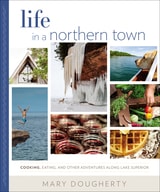
Life in a Northern Town
Cooking, Eating, and Other Adventures along Lake SuperiorMary Dougherty
Wisconsin Historical Society Press, 2017
—from the Introduction
In 2007, Mary Dougherty and her family moved from St. Paul to the tiny Bayfield Peninsula, surrounded by the waters of Lake Superior and Chequamegon Bay in far northwestern Wisconsin. There they set out to live their lives against a backdrop of waterfalls, beaches, farm stands, and a quintessential small town of 487 people. Through recipes, stories, and photos, this book explores what it means to nourish a family and a community. As Mary Dougherty incorporates what is grown and raised in northern Wisconsin into her family’s favorite dishes, she continues a cultural tradition begun by immigrants hundreds of years ago. The result is a one-of-a-kind collection of globally and regionally inspired recipes featuring local cheeses, meats, and produce from the farmers in and around Bayfield—pho made with beef bones from a farm in Mellen, Indian meatballs with curry powder made in Washburn, chowder with corn and potatoes from a farm stand in Ashland. As she knits herself into the Bayfield community, Dougherty comes to more fully grasp the intricate relationship between food and community.
Life in and against the Odds
Debts of Freedom and the Speculative Roots of U.S. CultureHeidi Hoechst
Temple University Press, 2015
Somehow people continue to imagine a world of justice against the odds of a deck that has been stacked against them. In her urgent and perceptive book, Life in and against the Odds, Hoechst focuses on the particular circumstances and conditions of different phases of speculative expansion in the United States. She traces the roots of the nation-state to nineteenth-century land markets and slave exchanges. Hoechst also chronicles how these racial foundations extend through corporate capitalism from the 1920s and ´30s to the present era of financialized capitalism and the recent housing bubble.
Life in and against the Odds identifies where and how speculative nationalism creates roadblocks to freedom. Hoechst retells the history of the United States with a perspective on how human lives are made, destroyed, reconfigured, and claimed under the systemic violence of a nation that is rooted in the racializing futurity of speculative capitalism.
Lifted Masks and Other Works
Susan Glaspell
University of Michigan Press, 1993
Like Ghosts of Eagles
Robert Francis
University of Massachusetts Press, 1974
Marianne Moore said of Robert Francis's poetry, “He is so penetrating, delicate, and wise, one goes away without having said a word, merely grateful to have received so much.”
Francis readers will welcome this new volume of verse which features poems in the whole technical gamut of Francis styles, including word count, with which he first delighted critics in Come out into the Sun.
Like Ghosts of Eagles also presents for the first time entirely new Francis styles and techniques. Such poems as “Bloodstains,” “Going to the Funeral,” and “Silent Poem” are distinguished by “fragmented surface,” a technique in which single words or short phrases are delivered without connecting tissue. Also new to his work are poems in which sentences are fused together in one continuous stream, as in “The Mountain,” “The Righteous,” and “The Peacock.”
The works are equally diversified in mood, ranging from the bitterly satirical through the elegiac, lyrical and playful, to poems of pure celebration. “Few others writing today work with such fragile sounds and with such delicate, almost pastel perceptions,” wrote David Clark upon first reading the manuscript of Like Ghosts of Eagles.
Like Love
Michele Morano
The Ohio State University Press, 2020
Crushes. Infatuations. Attractions. Unexpected, inexplicable allure. Entanglements steeped in taboo and disruption. In Like Love, nothing is off limits.
In these remarkable essays, Michele Morano explores the pleasures, possibilities, strangeness, and lessons of unconsummated romance. With insight and imagination, Like Love interweaves poignant, humorous episodes from adulthood with the backstory of a young family’s turbulent breakup. When Morano was an adolescent in blue-collar Poughkeepsie, New York, her mother left her father for a woman in an era when LGBTQ parents were widely viewed as “unfit.” Through the turmoil, adolescent Morano paid attention, tucking away the stories that were shaping her and guiding her understanding of love.
Turning romantic clichés inside out and challenging us to rethink our notions about what it means to love, Like Love tells hard and necessary truths about the importance of desire in growing, traveling, mourning, parenting, and figuring out who you are in the world. With precision and depth, Morano explores what it means to find ourselves in relationships that are not quite—but almost—like love.
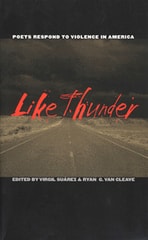
Like Thunder
Poets Respond to Violence in AmericaVirgil & Ryan G. Suarez & Van Cleave
University of Iowa Press, 2002
More than 140 poems by 120 of America's best poets that focus on the effects of violence in contemporary America.
From Waco to Columbine, from Oklahoma City to New York City, from domestic abuse and drive-by shootings to religious fanaticism and acts of terrorism, the poems in Like Thunder are for those who have perished and those who have survived. More than 140 poems by 120 poets focus, in the editors' words, on “the violence in the news, the violence in our schools, the violence in our homes, as well as the violence in our own minds.”
The poets gathered here articulate terror and suffering but also present images of hope and redemption; they write of individual menaces and individual victims and the melding of the two that potentially exists in everyone. By transforming horrifying details into larger truths, they create a poetry of witness, of survival, and of remembrance.
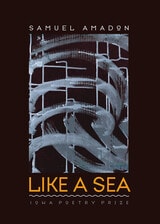
Like a Sea
Samuel Amadon
University of Iowa Press, 2010
Drawing equally from Wallace Stevens, Gertrude Stein, John Berryman, and Robert Frost, Samuel Amadon’s award-winning Like a Sea is a collection of poems where personality is foregrounded and speech is both bizarre and familiar. Central to this weirdly talky work is “Each H,” a sequence of eleven monologues and dialogues wherein an unknown number of speakers examine their collective and singular identities while simultaneously distorting them. From a sequence of pared-down sonnets to a more traditional lyric to a procedural collage inspired by J. D. Salinger, Ezra Pound, Robert Lowell, Walter Benjamin, Jane Kenyon, Joris-Karl Huysmans, Primo Levi, Eugenio Montale, and Edwin Arlington Robinson, Like a Sea is a book of significant variation and originality.
Amadon’s electric collection begins with the line “I could not sound like anyone but me,” and through a wide range of forms and styles and voices he tests the true limits of that statement. The image of a half-abandoned Hartford, Connecticut, remains in the background of these poems, casting a tone of brokenness and haplessness. Ultimately Amadon’s poems present the confusion and fear of the current moment, of Stevens’s “river that flows nowhere, like a sea,” equally alongside its joyful ridiculousness and possibility. Rather than create worlds, they point out what a strange world already exists.
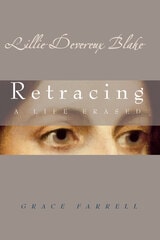
Lillie Devereux Blake
Retracing a Life ErasedGrace Farrell
University of Massachusetts Press, 2002
Yet for all her remarkable accomplishments, Lillie Blake's story has been all but forgotten. As Grace Farrell reveals in this richly textured biography, Blake's creative writings did not survive the canonical purges of women authors at the turn of the twentieth century, and her contributions to the suffrage movement were simply ignored in the official histories sanctioned by Susan B. Anthony. From the traces that remain, Farrell reconstructs an extraordinary life of passion and purpose. She chronicles Blake's literary career from Civil War correspondent to novelist and provides an inside view of suffrage politics, correcting some long held misconceptions perpetuated by Anthony and her supporters.
At the same time, Farrell expands the generic boundaries of biography by recounting not only a life and the causes of its erasure but also her own process of recovering that life. She brings the reader along with her as she follows Blake's path in the world, touches her diary, reads her letters, and campaigns to prevent Yale University from demolishing Blake's childhood home in New Haven.
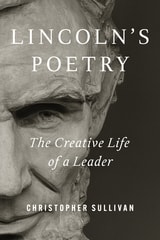
Lincoln's Poetry
The Creative Life of a LeaderChristopher Sullivan
University of Illinois Press, 2026
Christopher Sullivan’s engaging exploration focuses on the role of poetry in Lincoln’s life and thought. As Sullivan shows, the poetic prose of Lincoln’s most famous writings and oratory drew on an ear for verse he began to cultivate during his frontier youth. Full versions of Lincoln’s own published and unpublished poetry provide fascinating context for his work before and during his political career while shedding light on his state of mind during the crisis of an existential war. Sullivan also considers Lincoln’s relationship with poetry against a backdrop of what poetry is, how it operates, and how it may resurface in prose.
A journalistic look at the crossroads of art and leadership, Lincoln’s Poetry adds a surprising yet vital dimension to our perceptions of the sixteenth president.
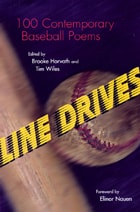
Line Drives
100 Contemporary Baseball PoemsEdited by Brooke Horvath and Tim Wiles. Foreword by Elinor Nauen
Southern Illinois University Press, 2002
“We wait for baseball all winter long,” Bill Littlefield wrote in Boston Magazine a decade ago, “or rather, we remember it and anticipate it at the same time. We re-create what we have known and we imagine what we are going to do next. Maybe that’s what poets do, too.”
Poetry and baseball are occasions for well-put passion and expressive pondering, and just as passionate attention transforms the prose of everyday life into poetry, it also transforms this game we write about, play, or watch. Editors Brooke Horvath and Tim Wiles unite their own passion for baseball and poetry in this collection, Line Drives: 100 Contemporary Baseball Poems, providing a forum for ninety-two poets. Line after line, like baseball itself game after game and season after season, these poems manage to make the old and the familiar new and surprising.
The poems in these pages invite interrogation, and the reader—like the true baseball fan—must be willing to play the game, for these poems are fun, fresh, angry, nostalgic, meditative, and meant to be read aloud. They are keen on taking us deeply into baseball as sport and intent on offering countless metaphors for exploring history, religion, love, family, and self-identity. Each poem delivers images of pure beauty as the poets speak of murder and ghost runners and old ball gloves, of baseball as a tie that binds families—and indeed the nation—together, of the game as a stage upon which no-nonsense grit and skill are routinely displayed, and of the delight experienced in being one amid a mindlessly happy crowd. This book is true to the game’s long season and to the lives of those the game engages.
Lineages of the Literary Left
Essays in Honor of Alan M. WaldHoward Brick, Robbie Lieberman, and Paula Rabinowitz, Editors
Michigan Publishing Services, 2015
Lines of Flight
Discursive Time and Countercultural Desire in the Work of Thomas PynchonStefan Mattessich
Duke University Press, 2002
Mattessich theorizes a new kind of time—subjective displacement—dramatized in the parody, satire, and farce deployed through Pynchon’s oeuvre. In particular, he is interested in showing how this sense of time relates to the counterculture of the 1960s and 1970s. Examining this movement as an instance of flight or escape and exposing the beliefs behind it, Mattessich argues that the counterculture’s rejection of the dominant culture ultimately became an act of self-cancellation, a rebellion in which the counterculture found itself defined by the very order it sought to escape. He points to parallels in Pynchon’s attempts to dramatize and enact a similar experience of time in the doubling-back, crisscrossing, and erasure of his writing. Mattessich lays out a theory of cultural production centered on the ethical necessity of grasping one’s own susceptibility to discursive forms of determination.
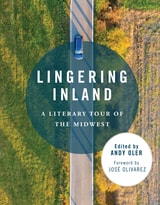
Lingering Inland
A Literary Tour of the MidwestEdited by Andy Oler Foreword by José Olivarez
University of Illinois Press, 2025
Lionel Trilling and the Fate of Cultural Criticism
Mark Krupnick
Northwestern University Press, 1986
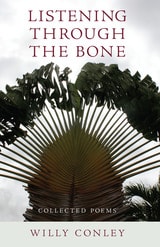
Listening through the Bone
Collected PoemsWilly Conley
Gallaudet University Press, 2018
In Listening through the Bone, Willy Conley bears witness to life’s moments and renders them into poems that are at once irreverent and tender. His poetry examines life cycles, the natural world, and his experiences as a Deaf individual. It is presented in five parts:
- Inaudibles
- Existentials
- Quizzicals
- Irrevocables
- Environmentals
Lit from Within
Contemporary Masters on the Art and Craft of WritingKevin Haworth; Dinty W. Moore
Ohio University Press, 2011
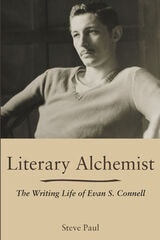
Literary Alchemist
The Writing Life of Evan S. ConnellSteve Paul
University of Missouri Press, 2021
Winner, 2022 Society of Midland Authors award for Biography/Memoir
Evan S. Connell (1924–2013) emerged from the American Midwest determined to become a writer. He eventually made his mark with attention-getting fiction and deep explorations into history. His linked novels Mrs. Bridge (1959) and Mr. Bridge (1969) paint a devastating portrait of the lives of a prosperous suburban family not unlike his own that, more than a half century later, continue to haunt readers with their minimalist elegance and muted satire. As an essayist and historian, Connell produced a wide range of work, including a sumptuous body of travel writing, a bestselling epic account of Custer at the Little Bighorn, and a singular series of meditations on history and the human tragedy.
This first portrait and appraisal of an under-recognized American writer is based on personal accounts by friends, relatives, writers, and others who knew him; extensive correspondence in library archives; and insightful literary and cultural analysis of Connell’s work and its context. It also illuminates aspects of American publishing, Hollywood, male anxieties, and the power of place.
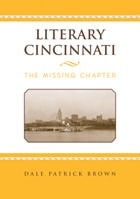
Literary Cincinnati
The Missing ChapterDale Patrick Brown
Ohio University Press, 2011
The history of Cincinnati runs much deeper than the stories of hogs that once roamed downtown streets. In addition to hosting the nation’s first professional baseball team, the Tall Stacks riverboat celebration, and the May Festival, there’s another side to the city—one that includes some of the most famous names and organizations in American letters.
Literary Cincinnati fills in this missing chapter, taking the reader on a joyous ride with some of the great literary personalities who have shaped life in the Queen City. Meet the young Samuel Clemens working in a local print shop, Fanny Trollope struggling to open her bizarre bazaar, Sinclair Lewis researching Babbitt, hairdresser Eliza Potter telling the secrets of her rich clientele, and many more who defined the nineteenth- and early twentieth-century Queen City.
For lovers of literature everywhere—but especially in Cincinnati—this is a literary tour that will entertain, inform, and amuse.
Literary Gestures
The Aesthetic in Asian American Writingedited by Rocío G. Davis and Sue-Im Lee
Temple University Press, 2005
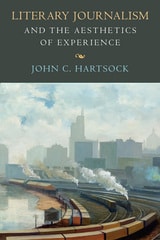
Literary Journalism and the Aesthetics of Experience
John C. Hartsock
University of Massachusetts Press, 2016
Proponents and practitioners of narrative literary journalism have sought to assert its distinctiveness as both a literary form and a type of journalism. In Literary Journalism and the Aesthetics of Experience, John C. Hartsock argues that this often neglected kind of journalism—exemplified by such renowned works as John Hersey's Hiroshima, James Agee's Let Us Now Praise Famous Men, and Joan Didion's Slouching Towards Bethlehem—has emerged as an important genre of its own, not just a hybrid of the techniques of fiction and the conventions of traditional journalism.
Hartsock situates narrative literary journalism within the broader histories of the American tradition of “objective” journalism and the standard novel. While all embrace the value of narrative, or storytelling, literary journalism offers a particular “aesthetics of experience” lacking in both the others. Not only does literary journalism disrupt the myths sustained by conventional journalism and the novel, but its rich details and attention to everyday life question readers' cultural assumptions. Drawing on the critical theories of Nietzsche, Bakhtin, Benjamin, and others, Hartsock argues that the aesthetics of experience challenge the shibboleths that often obscure the realities the other two forms seek to convey.
At a time when print media appear in decline, Hartsock offers a thoughtful response to those who ask, “What place if any is there for a narrative literary journalism in a rapidly changing media world?”
Literary Luxuries
American Writing at the End of the MillenniumJoe David Bellamy
University of Missouri Press, 1995
From the Iowa Writers Workshop to the halls of Congress and the National Endowment for the Arts, from the world of literary magazines and writers' conferences to the bizarre realm of the late-twentieth-century American English department, Literary Luxuries takes the reader on a guided tour of American literary life in our time--and the forces threatening its existence.
Joe David Bellamy has been a significant figure on the literary scene during the last three decades; as a "literary Everyman," he offers in Literary Luxuries a distinctive and valuable perspective on the culture wars, on education and the imagination, on particular writers and major literary and aesthetic movements, on the role of government in fostering cultural development, and on the day-to-day strife of the writer's life in the United States.
As director of the literature program of the National Endowment for the Arts, Bellamy had the unenviable task of trying to persuade Congress and ordinary citizens that American literature is worthy of support, and in Literary Luxuries he continues that debate and helps us to understand its implications: "Literature is our national treasury of language and style and our best reckoning about human life, as it is lived in this time and place."
Part memoir, part critique, part impassioned defense of American literary culture and the values it espouses and struggles to uphold, Literary Luxuries offers unforgettable commentary on the literary life in the United States during the last decades of the twentieth century as described from the perspective of one of its key participants.
Literary Modernism and the Transformation of the Work
James F. Knapp
Northwestern University Press, 1988
Literary Nevada
Writings from the Silver StateCheryll Glotfelty
University of Nevada Press, 2008
Literary Publishing in America, 1790-1850
William Charvat
University of Massachusetts Press, 1993
Available for the first time in paperback, this book is a succinct distillation of the work and thought of William Charvat, a pioneer in the study of the history of the American book. This burgeoning field of inquiry investigates the social and cultural context of the act of literary creation by relating it to the modes of its production and distribution. This new edition of Literary Publishing in America contains an afterword by Michael Winship that discusses scholarship in the field since publication of Charvat's groundbreaking work.
Literature Incorporated
The Cultural Unconscious of the Business Corporation, 1650-1850John O'Brien
University of Chicago Press, 2015
Examining British and American essays, poems, novels, and stories from the seventeenth through the nineteenth centuries, O’Brien pursues the idea of incorporation as a trope discernible in a wide range of texts. Key authors include John Locke, Eliza Haywood, Harriet Martineau, and Edgar Allan Poe, and each chapter is oriented around a type of corporation reflected in their works, such as insurance companies or banks. In exploring issues such as whether sentimental interest is the same as economic interest, these works bear witness to capitalism’s effect on history and human labor, desire, and memory. This period’s imaginative writing, O’Brien argues, is where the unconscious of that process left its mark. By revealing the intricate ties between literary models and economic concepts, Literature Incorporated shows us how the business corporation has shaped our understanding of our social world and ourselves.
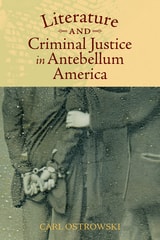
Literature and Criminal Justice in Antebellum America
Carl Ostrowski
University of Massachusetts Press, 2016
Drawing on an eclectic range of sources including newspaper arrest reports, prison reform periodicals, popular literary magazines, transatlantic travel narratives, popular crime novels, anthologies of prison poetry, and the memoirs of prison chaplains, Ostrowski analyzes how authors as canonical as Nathaniel Hawthorne and as obscure as counterfeiter/poet/prison inmate Christian Meadows adapted, manipulated, or rejected prevailing narratives about criminality to serve their artistic and rhetorical ends. These narratives led to the creation of new literary subgenres while also ushering in psychological interiority as an important criterion by which serious fiction was judged. Ostrowski joins and extends recent scholarly conversations on subjects including African American civic agency, literary sentimentalism, outsider authorship, and the racial politics of antebellum prison reform.
Literature and Science
Cultural Forms, Conceptual Exchanges, Volume 74Wai Chee Dimock and Priscilla Wald, eds.
Duke University Press, 0
The essays address the mutual impact of literature and science through a range of issues: “geek novels” as a subgenre of literature about science, the relationship of narrative form to risk analysis and ecological disaster, the impact of realism and contemporary developments in neurology and brain biology, and the use of technology in the humanities. The essays also examine how the humanities explore scientific issues such as in vitro fertilization and human existence, cloning and molecular biology, and the concept of time.
Contributors. Jay Clayton, Wai Chee Dimock, N. Katherine Hayles, Ursula Heise, Randall Knoper, Martha Nell Smith, Stephanie Turner, Priscilla Wald, Robyn Wiegman
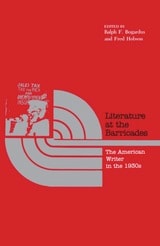
Literature at the Barricades
The American Writer in the 1930sEdited by Ralph F. Bogardus and Fred Hobson
University of Alabama Press, 1982
This collection captures the sense—at times the ordeal—of the 1930s literary experience in America. Fourteen essayists deal with the experience of being a writer in a time of overwhelming economic depression and political ferment, and thereby illuminate the social, political, intellectual, and aesthetic problems and pressures that characterized the experience of American writers and influenced their works.
The essays, as a group, constitute a reevaluation of the American literature of the 1930s. At the same time they support and reinforce certain assumptions about the decade of the Great Depression—that it was grim, desperate, a time when dreams died and poverty became something other than genteel—they challenge other assumptions, chief among them in the notion that 1930s literature was uniform in content, drab in style, anti-formalist, and always political or sociological in nature. They leave us with an impression that there was variety in American writing of the 1930s and a convincing argument that the decade was not a retreat from the modernism of the 1920s. Rather it was a transitional period in which literary modernism was very much an issue and a force that bore imaginative fruit.
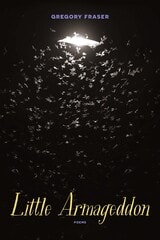
Little Armageddon
PoemsGregory Fraser
Northwestern University Press, 2021
It is our everyday explorations—the small explosions within life, family, and “ordinary” survival—that make up Gregory Fraser’s fourth collection of poetry, Little Armageddon. Fraser writes at eye level, detailing the experiences of fatherhood, love, and the quiet of daily life, poised at the brink of abrupt upheaval.
These poems are an exercise in precision and reflection. Free verse and prose show readers the life within the landscape. In “My Daughter and the Lizard,” the speaker reflects on grace, meditating on the reptile his child is inspecting: “I scissor-jab three holes through the lid / of a Mason jar and tell her to be gentle, / ‘It’s a living thing,’ I say, ‘not a toy.’”
We are how we live. These poems balance imagination and truth telling with rich verse that brings the reader’s ear closer to the quiet—and how intense it truly is.
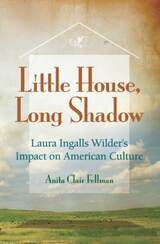
Little House, Long Shadow
Laura Ingalls Wilder's Impact on American CultureAnita Clair Fellman
University of Missouri Press, 2008
Beyond their status as classic children’s stories, Laura Ingalls Wilder’s Little House books play a significant role in American culture that most people cannot begin to appreciate. Millions of children have sampled the books in school; played out the roles of Laura and Mary; or visited Wilder homesites with their parents, who may be fans themselves. Yet, as Anita Clair Fellman shows, there is even more to this magical series with its clear emotional appeal: a covert political message that made many readers comfortable with the resurgence of conservatism in the Reagan years and beyond.
In Little House, Long Shadow, a leading Wilder scholar offers a fresh interpretation of the Little House books that examines how this beloved body of children’s literature found its way into many facets of our culture and consciousness—even influencing the responsiveness of Americans to particular political views. Because both Wilder and her daughter, Rose Wilder Lane, opposed the New Deal programs being implemented during the period in which they wrote, their books reflect their use of family history as an argument against the state’s protection of individuals from economic uncertainty. Their writing emphasized the isolation of the Ingalls family and the family’s resilience in the face of crises and consistently equated self-sufficiency with family acceptance, security, and warmth.
Fellman argues that the popularity of these books—abetted by Lane’s overtly libertarian views—helped lay the groundwork for a negative response to big government and a positive view of political individualism, contributing to the acceptance of contemporary conservatism while perpetuating a mythic West. Beyond tracing the emergence of this influence in the relationship between Wilder and her daughter, Fellman explores the continuing presence of the books—and their message—in modern cultural institutions from classrooms to tourism, newspaper editorials to Internet message boards.
Little House, Long Shadow shows how ostensibly apolitical artifacts of popular culture can help explain shifts in political assumptions. It is a pioneering look at the dissemination of books in our culture that expands the discussion of recent political transformations—and suggests that sources other than political rhetoric have contributed to Americans’ renewed appreciation of individualist ideals.
Little Kisses
Lloyd Schwartz
University of Chicago Press, 2017
Little River
New and Selected PoemsLinda McCarriston
Northwestern University Press, 2002
Little Sound
Katherine Gibbel
University of Chicago Press, 2026
Attentive to echo and resonance, this debut collection ranges across and makes connections among natural, musical, and literary histories.
The title for Katherine Gibbel’s debut collection plays with the etymology of the sonnet, or sonnetto in Italian: a little song or little sound. Exploring the possibility of words and the limits inherent in both language and form, Little Sound asks its reader, “Did you hear that?” and tunes in to what echoes when we listen.
Divided into three long poems, Little Sound explores language, gossip, reading practices, love, and death, tracing webs of meaning across a range of seemingly disparate topics. Gibbel’s speaker interrogates partial histories and turns them into meditations on the literary, the natural, and the personal, including the subdivided memorial prairies of the Midwest, family history, pipe organs, and medieval theology. Associative, funny, curious, bell-like, and elaborately architectural, Gibbel’s poems offer a study in emotional nuance, knowing winks, and sonic attentiveness.
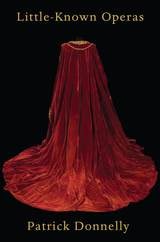
Little-Known Operas
Patrick Donnelly
Four Way Books, 2019
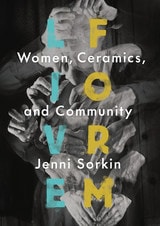
Live Form
Women, Ceramics, and CommunityJenni Sorkin
University of Chicago Press, 2016
Sorkin focuses on three Americans who promoted ceramics as an advanced artistic medium: Marguerite Wildenhain, a Bauhaus-trained potter and writer; Mary Caroline (M. C.) Richards, who renounced formalism at Black Mountain College to pursue new performative methods; and Susan Peterson, best known for her live throwing demonstrations on public television. Together, these women pioneered a hands-on teaching style and led educational and therapeutic activities for war veterans, students, the elderly, and many others. Far from being an isolated field, ceramics offered a sense of community and social engagement, which, Sorkin argues, crucially set the stage for later participatory forms of art and feminist collectivism.
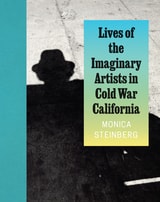
Lives of the Imaginary Artists in Cold War California
Monica Steinberg
University of Chicago Press, 2025
This book explores how a group of real California artists created imaginary artists, engaging with the political climate of the Cold War era and frustrating the discipline of art history. They employed pseudonymity, obfuscation, anonymity, (auto)biografiction, imaginary portraiture, heteronymity, role-playing, doubling, and alter ego. Often laced with humor, these exploits facilitated stylistic experimentation, provoking reactions from art viewers and governing authorities alike, and disrupting reliance on documentation and attribution within art history.
In the 1950s and early 1960s, Ed Kienholz, Walter Hopps, Robert Alexander, Wally Hedrick, George Herms, and Wallace Berman activated imagined and secret identities, provoking reactions within a conservative environment gripped by communist paranoia. As political concerns shifted in the 1960s and 1970s to movements for peace and equality, artists including Billy Al Bengston, Ed Ruscha, Joe Goode, Lynda Benglis, Larry Bell, Judy Chicago, Lowell Darling, and Eleanor Antin redirected these tactics to probe the rise of celebrity culture and the administrative state. These practices also became the precursor for later interventions by Bruce Conner, Asco, Allen Ruppersberg, Senga Nengudi, and others.
Considering a compelling range of visual material, including paintings, sculptures, and performed intrusions as well as publications, postcards, and advertisements, Monica Steinberg examines why these imaginary artists appeared when and where they did—and to what ends.
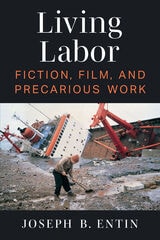
Living Labor
Fiction, Film, and Precarious WorkJoseph B. Entin
University of Michigan Press, 2023
Cover attribution: Allan Sekula, Shipwreck and worker, Istanbul, from TITANIC’s wake, 1998/2000. Courtesy of the Allan Sekula Studio.
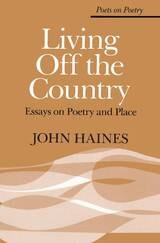
Living Off the Country
Essays on Poetry and PlaceJohn Haines
University of Michigan Press, 1981
We live on the surface, he discovered. It is the land that makes people. If a poet will see, will feel, will interpret his place and then relate that experience to what he knows of the world at large, he will have a life in imagination, a vitality beyond appearances.
John Haines is author of At the End of Summer: Poems 1948-1954; Fables and Distances: New and Selected Essays; and The Owl in the Mask of the Dreamer. He received the Lenore Marshall Poetry Prize in 1991.
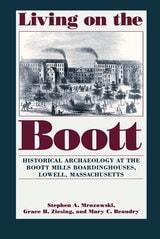
Living on the Boott
Historical Archaeology at the Boott Mills Boardinghouses of Lowell, MassachusettsStephen A. Mrozowski
University of Massachusetts Press, 1996
Lowell, Massachusetts was the first fully planned industrial city in the United States, and the Boott Mill, established in the 1820s along the Merrimack River, stood at the center of this bold experiment in industrial capitalism. For decades, the company-owned boardinghouses that housed the mills' workers were as much a part of the Lowell system as the looms themselves: a managed, closely supervised domestic world where the rhythms of mill life extended from the factory floor into every corner of daily existence.
Living on the Boott brings this vanished world back to life through rigorous historical archaeology. Drawing on excavations conducted at the Boott Mills boardinghouse complex, Stephen A. Mrozowski, Grace H. Ziesing, and Mary C. Beaudry examine the material remains of the men and women who lived and worked in Lowell's textile industry from the early nineteenth century through its long decline. Through painstaking analysis of ceramics, faunal assemblages, tobacco-related artifacts, and other recovered objects, the authors reconstruct the daily lives, diets, domestic routines, and social relationships of successive generations of boardinghouse residents—from the young "mill girls" recruited from rural New England who made Lowell famous, to the Irish immigrant workers who increasingly replaced them as the century progressed.
The result is a richly documented social history written not from official records alone, but from the objects people actually used, discarded, and left behind. The book illuminates how class, gender, ethnicity, and labor intersected in the intimate spaces of the boardinghouse, and documents the profound changes in living conditions as the Lowell system evolved and the workforce transformed. A landmark contribution to historical archaeology, industrial archaeology, and the history of American labor, Living on the Boott demonstrates the unique power of archaeological evidence to recover the lives of those too often overlooked by conventional historical sources.
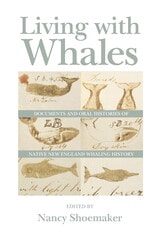
Living with Whales
Documents and Oral Histories of Native New England Whaling HistoryNancy Shoemaker
University of Massachusetts Press, 2014
Native Americans along the coasts of southern New England and Long Island have had close ties to whales for thousands of years. They made a living from the sea and saw in the world's largest beings special power and meaning. After English settlement in the early seventeenth century, the region's natural bounty of these creatures drew Natives and colonists alike to develop whale hunting on an industrial scale. By the nineteenth century, New England dominated the world in whaling, and Native Americans contributed substantially to whaleship crews.
In Living with Whales, Nancy Shoemaker reconstructs the history of Native whaling in New England through a diversity of primary documents: explorers' descriptions of their “first encounters,” indentures, deeds, merchants' accounts, Indian overseer reports, crew lists, memoirs, obituaries, and excerpts from journals kept by Native whalemen on their voyages. These materials span the centuries-long rise and fall of the American whalefishery and give insight into the far-reaching impact of whaling on Native North American communities. One chapter even follows a Pequot Native to New Zealand, where many of his Maori descendants still reside today.
Whaling has left behind a legacy of ambivalent emotions. In oral histories included in this volume, descendants of Wampanoag and Shinnecock whalemen reflect on how whales, whaling, and the ocean were vital to the survival of coastal Native communities in the Northeast, but at great cost to human life, family life, whales, and the ocean environment.
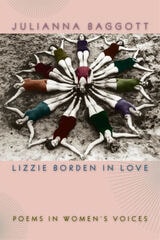
Lizzie Borden in Love
Poems in Women's VoicesJulianna Baggott
Southern Illinois University Press, 2006
Women’s voices offering an intimate view into women’s lives
Lizzie Borden in Love, a collection of poems by national bestselling author Julianna Baggott, offers poignant commentary in the voices of women as varied as Mary Todd Lincoln and Monica Lewinsky. The poems often focus on a particular moment in life: Katherine Hepburn discovers the dead body of her brother in an attic, or painter Mary Cassatt mourns the failure of her eyesight. Sometimes heartbreaking, sometimes ecstatic, the poems in this collection never fail the trust of the subjects of their intimate portrayals
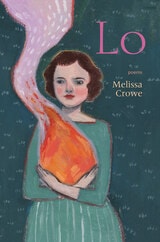
Lo
Melissa Crowe
University of Iowa Press, 2023
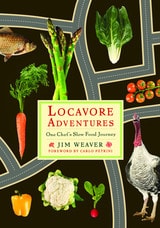
Locavore Adventures
One Chef's Slow Food JourneyWeaver, Jim
Rutgers University Press, 2012
America’s fast food culture reflects not only what we eat—foods that are processed and packaged for convenience—but also how we eat—munching as we multitask and not really tasting the super-sized meals we ingest. But in recent years, a more thoughtful philosophy about food has emerged. Developed in Italy, where fresh ingredients and artisanal techniques are prized, the Slow Food movement has rapidly gained a following in North America. The skeptics among us might wonder if it is possible truly to enjoy a Slow Food lifestyle—one based around local, seasonal ingredients—in our fast-paced world.
In Locavore Adventures, acclaimed New Jersey chef and restaurateur Jim Weaver shares his personal story of how he came to solve this problem—building a local slow food culture that is ecologically responsible and also yields delicious results. Weaver tells of his odyssey founding the Central New Jersey chapter of Slow Food, connecting local farmers, food producers, and chefs with the public to forge communities that value the region’s unique bounty. More than forty recipes throughout the book, from Hot Smoked Brook Trout with Asparagus Puree and Pickled Cippollini Onions to Zuppa di Mozzarella, will inspire readers to be creative in their own kitchens. Locavore Adventures is a thoughtful memoir about growing a sustainable food culture and a guide to slowing down, savoring locally grown food, and celebrating life.
Locus
Jason Bayani
Omnidawn, 2019
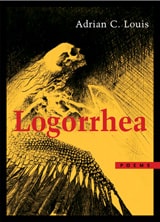
Logorrhea
PoemsAdrian C. Louis
Northwestern University Press, 2006
In a torrent of rage, love, and irony, Adrian C. Louis explodes all the myths and hypocrisy of Middle America in the twenty-first century. This is how Walt Whitman or Allen Ginsburg might have written about our post-9/11 world--where the realities of poverty on Indian reservations and the plight of Hurricane Katrina victims come in second place to the vagaries of Homeland Security. For Louis, both he and our nation face an uncertain future. Like many of us he is trapped in a surreal void of the present, where he is faced with middle age and isolation, the death of loved ones, an unsatisfying job, and the battle against loneliness and self-destruction. He writes as if he has nothing left to lose but then fills the page with bittersweet sorrow for everything that has been lost. Armed with unforgettable images, relentless rhythms, and a dark and scathing humor, Louis takes aim at this American life.
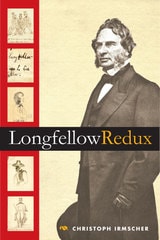
Longfellow Redux
Christoph Irmscher
University of Illinois Press, 2005
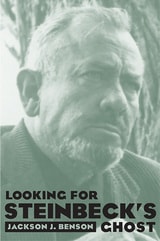
Looking For Steinbeck's Ghost
Jackson J. Benson
University of Nevada Press, 2002