Results by title
3071 books match the query 'Business & Economics' and 118 start with l
Le spectre du capital
Joseph Vogl
Diaphanes, 2010

Leadership
Beyond Establishment ViewsEdited by James G. Hunt, Uma Sekaran, and Chester A. Schriesheim
Southern Illinois University Press, 1981
Volume 6 of the Leadership Symposia—sponsored by the Department of Administrative Sciences and College of Business Administration at Southern Illinois University, Carbondale—charts the state of the field of leadership through a judicious mixture of established and emerging scholars.
The text is broken into four parts, with each part containing an Introduction by the editors. Part 1 consists of “Leadership and Managerial Behavior as Loosely Coupled Systems for Moving Beyond Establishment Views,” by the editors; “The Relevance of Some Studies of Managerial Work and Behavior to Leadership Research,” Rosemary Stewart; “Unstructured, Nonparticipant Observation and the Study of Leaders’ Interpersonal Contacts,” Robert S. Bussom, Lars L. Larson, and William M. Vicars; “Leaders on Line,” Michael M. Lombardo and Morgan W. McCall, Jr.; and “Various Paths Beyond Establishment Views,” Bernard Wilpert.
Part 2 contains “Multiplexed Supervision and Leadership,” Fred Dansereau, Jr., Joseph A. Alutto, Steven E. Markham, and MacDonald Dumas; “A Theory of Leadership Categorization,” Robert G. Lord, Roseanne J. Foti, and James S. Phillips; “Leadership Activation Theory,” John E. Sheridan, Jeffrey L. Kerr, and Michael A. Abelson; and “Intensity of Relation, Dyadic-Group Considerations, Cognitive Categorization, and Transformational Leadership,” Bernard M. Bass; “Strategies for Dealing with Different Processes in Different Contexts,” Ian Morley, “A Multiplexed Response to Bass and Morley,” Fred Dansereau, Jr., Joseph A. Alutto, Steven E. Markham, and MacDonald Dumas; and “Properly Categorizing the Commentary,” Roseanne J. Foti, Robert G. Lord, and James S. Phillips.
Part 3 contains “SYMLOG and Leadership Theory,” Robert F. Bales and Daniel J. Isenberg; “Toward a Macro-Oriented Model of Leadership: An Odyssey,” James G. Hunt and Richard N. Osborn; and “Toward a Paradigm Shift in the Study of Leadership,” Henry J. Tosi, Jr.
Essays in part 4 are “If You’re Not Serving Bill and Barbara, Then You’re Not Serving Leadership,” Henry Mintzberg; “Beyond Establishment Leadership Views: An Epilog,” by the editors; “Leadership Research and the European Connection: An Epilog,” Dian-Marie Hosking and James G. Hunt; and “Conclusion: The Leadership-Management Controversy Revisited,” Schriesheim, Hunt, and Sekaran.
Leading Roles
50 Questions Every Arts Board Should AskMichael M. Kaiser
Brandeis University Press, 2010
Leading for Tomorrow
A Primer for Succeeding in Higher Education LeadershipPamela L. Eddy
Rutgers University Press, 2020
Using an engaging case study approach, Leading for Tomorrow provides readers with real-world examples that will help them reflect on their own management and communication styles. It also shows newly minted administrators how they can follow best practices while still developing a style of leadership that is authentic and uniquely their own.
The book’s case studies offer practical solutions for how to deal with emerging trends and persistent problems in the field of higher education, from decreasing state funding to political controversies on campus. Leading for Tomorrow gives readers the tools they need to get the best out of their team, manage conflicts, support student success, and instill a campus culture of innovation that will meet tomorrow’s challenges.
Leading with the Brain
The 7 Neurobiological Factors to Boost Employee Satisfaction and Business ResultsSebastian Purps-Pardigol
Campus Verlag, 2016
In Leading with the Brain, Purps-Pardigol presents seven factors all business leaders should keep in mind to not only make their workforce feel more satisfied, but also to increase the overall health and well-being of their staff. Drawing on real-life examples of businesses that succeed by managing according to scientific findings, Purps-Pardigol shows that by leading in a people-oriented, humane way, managers can release their employees’ hidden energies to the benefit of all.

Learning From Robben Island
Govan Mbeki’s Prison WritingsGovan Mbeki
Ohio University Press, 1991
In the late fifties and early sixties, Govan Mbeki was a central figure in the African National Congress and director of the ANC campaigns from underground. Born of a chief and the daughter of a Methodist minister in the Transkei of South Africa in 1910, he worked as a teacher, journalist, and tireless labor organizer in a lifetime of protest against the government policy of apartheid. Over two decades of imprisonment on Robben Island did not consign him to obscurity. Along with Nelson Mandela and Walter Sisulu, his name has become a symbol of resistance, not only to the oppressed people of South Africa, but also to the international community who have conferred on him many honors and awards.
Learning by Doing in Markets, Firms, and Countries
Edited by Naomi R. Lamoreaux, Daniel M. G. Raff, and Peter Temin
University of Chicago Press, 1998
The first three essays in this volume explore techniques firms have used to both manage information to create valuable asymmetries and to otherwise suppress unwelcome competition. The next three focus on the ways in which firms have built special capabilities over time, capabilities that have been both sources of competitive advantage and resistance to new opportunities. The last two extend the notion of learning from the level of firms to that of nations. The collection as a whole builds on the previous two volumes to make the connection between information structure and product market outcomes in business history.
Learning from Shenzhen
China’s Post-Mao Experiment from Special Zone to Model CityEdited by Mary Ann O'Donnell, Winnie Wong, and Jonathan Bach
University of Chicago Press, 2017
Bringing China studies into dialogue with urban studies, the contributors explore how the post-Mao Chinese appropriation of capitalist logic led to a dramatic remodeling of the Chinese city and collective life in China today. These essays show how urban villages and informal institutions enabled social transformation through cases of public health, labor, architecture, gender, politics, education, and more. Offering scholars and general readers alike an unprecedented look at one of the world’s most dynamic metropolises, this collective history uses the urban case study to explore critical problems and possibilities relevant for modern-day China and beyond.
Learning to Love Form 1040
Two Cheers for the Return-Based Mass Income TaxLawrence Zelenak
University of Chicago Press, 2013
Learning to Work
The Case for Reintegrating Job Training and EducationW. Norton Grubb
Russell Sage Foundation, 1996

Leave Me Alone and I'll Make You Rich
How the Bourgeois Deal Enriched the WorldDeirdre Nansen McCloskey and Art Carden
University of Chicago Press, 2020
For readers looking for a distillation of McCloskey’s magisterial work, Leave Me Alone and I’ll Make You Rich is what you’ve been waiting for. In this lively volume, McCloskey and the economist and journalist Carden bring together the trilogy’s key ideas and its most provocative arguments. The rise of the west, and now the rest, is the story of the rise of ordinary people to a dignity and liberty inspiring them to have a go. The outcome was an explosion of innovation after 1800, and a rise of real income by an astounding 3,000 percent. The Great Enrichment, well beyond the conventional Industrial Revolution, did not, McCloskey and Carden show, come from the usual suspects, capital accumulation or class struggle. It came from the idea of economic liberty in Holland and the Anglosphere, then Sweden and Japan, then Italy and Israel and China and India, an idea that bids fair in the next few generations to raise up the wretched of the earth. The original shift to liberalism arose from 1517 to 1789 from theological and political revolutions in northwest Europe, upending ancient hierarchies. McCloskey and Carden contend further that liberalism and “innovism” made us better humans as well as richer ones. Not matter but ideas. Not corruption but improvement.
Leave Me Alone and I’ll Make You Rich draws in entertaining fashion on history, economics, literature, philosophy, and popular culture, from growth theory to the Simpsons. It is the perfect introduction for a broad audience to McCloskey’s influential explanation of how we got rich. At a time when confidence in the economic system is under challenge, the book mounts an optimistic and persuasive defense of liberal innovism, and of the modern world it has wrought.

Leaving Science
Anne E. Preston
Russell Sage Foundation, 2004

Left Behind
Latin America and the False Promise of PopulismSebastian Edwards
University of Chicago Press, 2010
The political and economic history of Latin America has been marked by great hopes and even greater disappointments. Despite abundant resources—and a history of productivity and wealth—in recent decades the region has fallen further and further behind developed nations, surpassed even by other developing economies in Southeast Asia and elsewhere.
In Left Behind, Sebastian Edwards explains why the nations of Latin America have failed to share in the fruits of globalization and forcefully highlights the dangers of the recent turn to economic populism in the region. He begins by detailing the many ways Latin American governments have stifled economic development over the years through excessive regulation, currency manipulation, and thoroughgoing corruption. He then turns to the neoliberal reforms of the early 1990s, which called for the elimination of deficits, lowering of trade barriers, and privatization of inefficient public enterprises—and which, Edwards argues, held the promise of freeing Latin America from the burdens of the past. Flawed implementation, however, meant the promised gains of globalization were never felt by the mass of citizens, and growing frustration with stalled progress has led to a resurgence of populism throughout the region, exemplified by the economic policies of Venezuela’sHugo Chávez. But such measures, Edwards warns, are a recipe for disaster; instead, he argues, the way forward for Latin America lies in further market reforms, more honestly pursued and fairly implemented. As an example of the promise of that approach, Edwards points to Latin America's giant, Brazil, which under the successful administration of President Luis Inácio da Silva (Lula) has finally begun to show signs of reaching its true economic potential.
As the global financial crisis has reminded us, the risks posed by failing economies extend far beyond their national borders. Putting Latin America back on a path toward sustained growth is crucial not just for the region but for the world, and Left Behind offers a clear, concise blueprint for the way forward.
Legacies, Logics, Logistics
Essays in the Anthropology of the Platform EconomyJane I. Guyer
University of Chicago Press, 2016
Focusing on economic actors—whether ordinary consumers or financial experts—Guyer traces how people and institutions hold together past experiences (legacies), imagined scenarios and models (logics), and situational challenges (logistics) in a way that makes the performance of economic life (on platforms made of these legacies, logics, and logistics) work in practice. Individual essays explore a number of topics—including time frames and the future, the use of percentages in observations and judgments, the explanation of prices, the coexistence of different world currencies, the reapplication of longtime economic theories in new settings, and, crucially, how we talk about the economy, how we use stable terms to describe a turbulent system. Valuable as standalone pieces, the essays build into a cogent method of economic anthropology.
Legal Instruments of Foundations
Frank Emerson Andrews
Russell Sage Foundation, 1958

Legal Writing in Plain English
A Text with ExercisesBryan A. Garner
University of Chicago Press, 2001
Replete with common sense and wit, the book draws on real-life writing samples that Garner has gathered through more than a decade of teaching in the field. Trenchant advice covers all types of legal materials, from analytical and persuasive writing to legal drafting. Meanwhile, Garner explores important aspects of document design. Basic, intermediate, and advanced exercises in each section reinforce the book's principles. (An answer key to basic exercises is included in the book; answers to intermediate and advanced exercises are provided in a separate Instructor's Manual, free of charge to instructors.) Appendixes include a comprehensive punctuation guide with advice and examples, and four model documents.
Today more than ever before, legal professionals cannot afford to ignore the trend toward clear language shorn of jargon. Clients demand it, and courts reward it. Despite the age-old tradition of poor writing in law, Legal Writing in Plain English shows how legal writers can unshackle themselves.
Legal Writing in Plain English includes:
*Tips on generating thoughts, organizing them, and creating outlines.
*Sound advice on expressing your ideas clearly and powerfully.
*Dozens of real-life writing examples to illustrate writing problems and solutions.
*Exercises to reinforce principles of good writing (also available on the Internet).
*Helpful guidance on page layout.
*A punctuation guide that shows the correct uses of every punctuation mark.
*Model legal documents that demonstrate the power of plain English.
Legalized Inequalities
Immigration and Race in the Low-wage WorkplaceKati L. Griffith
Russell Sage Foundation, 2025
Drawing on interviews with over three hundred low-wage Haitian and Central American workers and worker advocates, Griffith, Gleeson, Dubuisson, and Campos-Medina reveal how U.S. policies produce and sustain job instability and insecurity. Together, contemporary U.S. labor and employment law, immigration policy, and enduring racial inequality work in tandem to keep workers’ wages low, lock them into substandard working conditions, and minimize opportunities to push for change. Workplace regulations meant to protect workers are weak and underenforced, privileging employers over workers. At-will employment policies, which allow employers to terminate employees without cause, discourage workers from bargaining for better jobs or holding employers accountable for even the most egregious mistreatment. Federal immigration policy further disempowers workers by deputizing employers to act as immigration enforcement agents through immigration status verification requirements. Undocumented workers often believe they must endure maltreatment or risk deportation. Anti-immigrant sentiment—encouraged by U.S. policy—impacts workers across all status groups. Additionally, despite a proliferation of civil rights legislation, racial disparities remain in the workplace. Workers of color are often paid less, forced to complete more dangerous and demeaning tasks, and subjected to racial harassment.
While these workers face formidable barriers to fighting for their rights, they are not entirely powerless. Some low-wage workers filed formal complaints with government agencies. Others, on their own or collectively, confronted their employers to demand fair and dignified treatment. Some even quit in protest of their poor working conditions. The authors argue that reforming labor and employment law, immigration law, and Civil Rights law is necessary to reshape the low-wage workplace. They suggest increasing funding for workers’ rights enforcement agencies, removing the mandate for employers to verify a worker’s immigration status, and making it easier to prove that employment discrimination has occurred, among other policy proposals, to help empower and protect low-wage immigrant workers of color.
Legalized Inequalities not only highlights the crushing consequences of U.S. policy on low-wage immigrant workers of color but showcases their resilience in the face of these obstacles.
Legitimacy of Philanthropic Foundations
United States and European PerspectivesKenneth Prewitt
Russell Sage Foundation, 2006
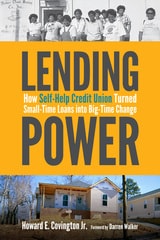
Lending Power
How Self-Help Credit Union Turned Small-Time Loans into Big-Time ChangeHoward E. Covington Jr.
Duke University Press, 2017
In Lending Power journalist and historian Howard E. Covington Jr. narrates the compelling story of Self-Help's founders and coworkers as they built a progressive and community-oriented financial institution. First established to assist workers displaced by closed furniture and textile mills, Self-Help created a credit union that expanded into providing home loans for those on the margins of the financial market, especially people of color and single mothers.
Using its own lending record, Self-Help convinced commercial banks to follow suit, extending its influence well beyond North Carolina. In 1999 its efforts led to the first state law against predatory lending. A decade later, as the Great Recession ravaged the nation's economy, its legislative victories helped influence the Dodd-Frank Wall Street Reform and Consumer Protection Act and the formation of the Consumer Financial Protection Bureau. Self-Help also created a federally chartered credit union to expand to California and later to Illinois and Florida, where it assisted ailing community-based credit unions and financial institutions.
Throughout its history, Self-Help has never wavered from its mission to use Dr. Martin Luther King Jr.'s vision of justice to extend economic opportunity to the nation's unbanked and underserved citizens. With nearly two billion dollars in assets, Self-Help also shows that such a model for nonprofits can be financially successful while serving the greater good. At a time when calls for economic justice are growing ever louder, Lending Power shows how hard-working and dedicated people can help improve their communities.
Lessons from East Asia
Danny M. Leipziger, Editor
University of Michigan Press, 2001
Lessons in Leadership
Steve Adubato, PhD
Rutgers University Press, 2016

Let Me Live
Angelo Herndon
University of Michigan Press, 2007
Let Me Live tells the remarkable story of Angelo Herndon, a coal miner who worked as a labor organizer in Alabama and Georgia in the 1930s. Herndon led a racially integrated march of the unemployed in 1932 and was subsequently arrested when Communist Party literature was found in his bedroom. His trial made only small headlines at first, but eventually an international campaign to free him emerged, thanks to the efforts of the Communist Party and of labor unions interested in protecting the right to organize in the South. Herndon was finally set free by the U.S. Supreme Court, with the help of well-known leaders including C. Vann Woodward, Thurgood Marshall, A. Philip Randolph, and Whitney North Seymour, Sr.
Written while Herndon was in prison, Let Me Live tells the story behind his arrest and his struggle through the courts. It also describes his early life as a young boy in poverty, as a laborer in the Kentucky mines, and as a construction gang worker and traces the birth and development of his passion for the Communist Party. Originally published in 1937, this is the first new edition of Let Me Live since 1969, when Howard N. Meyer rescued it from obscurity. The book features texts from the Georgia and U.S. Supreme Court decisions, the text of Herndon’s speech, and newspaper editorials from the era. A substantive and thought-provoking introduction by Marlon B. Ross of the University of Virginia sheds light on this unique story and its importance to our understanding of the intersection of race and class in America—past and present.
“A book which every thoughtful American may do well to read. It is moving and challenging as the story of one man’s life and the question of one man’s fate.”
—New York Times
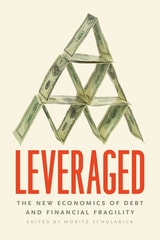
Leveraged
The New Economics of Debt and Financial FragilityEdited by Moritz Schularick
University of Chicago Press, 2022
The 2008 financial crisis was a seismic event that laid bare how financial institutions’ instabilities can have devastating effects on societies and economies. COVID-19 brought similar financial devastation at the beginning of 2020 and once more massive interventions by central banks were needed to heed off the collapse of the financial system. All of which begs the question: why is our financial system so fragile and vulnerable that it needs government support so often?
For a generation of economists who have risen to prominence since 2008, these events have defined not only how they view financial instability, but financial markets more broadly. Leveraged brings together these voices to take stock of what we have learned about the costs and causes of financial fragility and to offer a new canonical framework for understanding it. Their message: the origins of financial instability in modern economies run deeper than the technical debates around banking regulation, countercyclical capital buffers, or living wills for financial institutions. Leveraged offers a fundamentally new picture of how financial institutions and societies coexist, for better or worse.
The essays here mark a new starting point for research in financial economics. As we muddle through the effects of a second financial crisis in this young century, Leveraged provides a road map and a research agenda for the future.
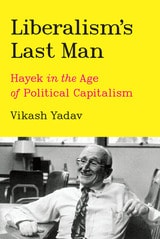
Liberalism's Last Man
Hayek in the Age of Political CapitalismVikash Yadav
University of Chicago Press, 2023
A modern reframing of Friedrich Hayek’s most famous work for the 21st century.
Friedrich Hayek’s The Road to Serfdom was both an intellectual milestone and a source of political division, spurring fiery debates around capitalism and its discontents. In the ensuing discord, Hayek’s true message was lost: liberalism is a thing to be protected above all else, and its alternatives are perilous.
In Liberalism’s Last Man, Vikash Yadav revives the core of Hayek’s famed work to map today’s primary political anxiety: the tenuous state of liberal meritocratic capitalism—particularly in North America, Europe, and Asia—in the face of strengthening political-capitalist powers like China, Vietnam, and Singapore. As open societies struggle to match the economic productivity of authoritarian-capitalist economies, the promises of a meritocracy fade; Yadav channels Hayek to articulate how liberalism’s moral backbone is its greatest defense against repressive social structures.
Liberalism's Last Man
Hayek in the Age of Political CapitalismVikash Yadav
University of Chicago Press, 2023
A modern reframing of Friedrich Hayek’s most famous work for the 21st century.
Friedrich Hayek’s The Road to Serfdom was both an intellectual milestone and a source of political division, spurring fiery debates around capitalism and its discontents. In the ensuing discord, Hayek’s true message was lost: liberalism is a thing to be protected above all else, and its alternatives are perilous.
In Liberalism’s Last Man, Vikash Yadav revives the core of Hayek’s famed work to map today’s primary political anxiety: the tenuous state of liberal meritocratic capitalism—particularly in North America, Europe, and Asia—in the face of strengthening political-capitalist powers like China, Vietnam, and Singapore. As open societies struggle to match the economic productivity of authoritarian-capitalist economies, the promises of a meritocracy fade; Yadav channels Hayek to articulate how liberalism’s moral backbone is its greatest defense against repressive social structures.

Liberating Economics, Second Edition
Feminist Perspectives on Families, Work, and GlobalizationDrucilla K. Barker, Suzanne Bergeron, and Susan F. Feiner
University of Michigan Press, 2021
With all new and updated chapters, the second edition of Liberating Economics examines recent trends in inequality, global indebtedness, crises of care, labor precarity, and climate change. Taking an interdisciplinary and intersectional feminist approach, the new edition places even more emphasis on the ways that gender, race, class, sexuality, and nationality shape the economy. It also highlights the centrality of social reproduction in economic systems and makes connections between the economic circumstances of women in global North and global South. Throughout, the authors reject the idea that there is no alternative to our current neoliberal market economy and offer alternative ways of thinking about and organizing economic systems in order to achieve gender-equitable outcomes.
Written in an accessible and engaging style, this book will be of interest to students and scholars across a range of fields, policymakers, and any reader interested in creating just futures.
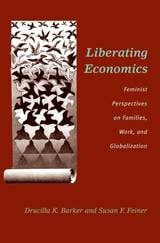
Liberating Economics
Feminist Perspectives on Families, Work, and GlobalizationDrucilla K. Barker and Susan F. Feiner
University of Michigan Press, 2004
Rooted in the two disciplines, this book draws on the rich tradition of interdisciplinary work in feminist social science scholarship to construct a parallel between the notions that the "personal is political" and "the personal is economic."
Drucilla K. Barker is Professor of Economics and Women's Studies, Hollins University.
Susan F. Feiner is Associate Professor of Economics and Women's Studies, University of Southern Maine.
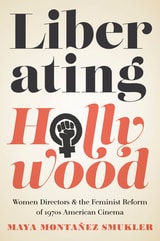
Liberating Hollywood
Women Directors and the Feminist Reform of 1970s American CinemaSmukler, Maya M
Rutgers University Press, 2019
Liberating Hollywood examines the professional experiences and creative output of women filmmakers during a unique moment in history when the social justice movements that defined the 1960s and 1970s challenged the enduring culture of sexism and racism in the U.S. film industry. Throughout the 1970s feminist reform efforts resulted in a noticeable rise in the number of women directors, yet at the same time the institutionalized sexism of Hollywood continued to create obstacles to closing the gender gap. Maya Montañez Smukler reveals that during this era there were an estimated sixteen women making independent and studio films: Penny Allen, Karen Arthur, Anne Bancroft, Joan Darling, Lee Grant, Barbara Loden, Elaine May, Barbara Peeters, Joan Rivers, Stephanie Rothman, Beverly Sebastian, Joan Micklin Silver, Joan Tewkesbury, Jane Wagner, Nancy Walker, and Claudia Weill. Drawing on interviews conducted by the author, Liberating Hollywood is the first study of women directors within the intersection of second wave feminism, civil rights legislation, and Hollywood to investigate the remarkable careers of these filmmakers during one of the most mythologized periods in American film history.
Library Marketing
From Passion to PracticeJill Stover Heinze
Against the Grain, LLC, 2017
The Charleston Briefings are written by authorities who provide an effective, readable overview of their topics—not an academic monograph. The intended audience is busy nonspecialist readers who want to be informed concerning important issues in our industry in an accessible and timely manner.
Why do librarians have so many problems with marketing?
At a time when universities and colleges demand that libraries demonstrate their value and users have so many other options to discover information, it seems bizarre that librarians would be so much against a tool that allows them to engage closely with the very users who are the lifeblood of libraries.
As Jill Heinze makes clear in this lively and passionate briefing, marketing is a tool that allows an institution to assess their place in a market and to communicate value to their users based on the users’ needs and problems. This marketing tool need have no relationship to traditional business concerns, and, indeed, mission- based marketing is now important even to for- profit institutions.
Embracing key marketing concepts and planning, says Heinze, can demand that libraries rethink organizational structures, operations, and missions, but she also demonstrates that this rethinking can be entirely commensurate with the mission of libraries within an educational context.
Lie Of The Land
Migrant Workers and the California LandscapeDon Mitchell
University of Minnesota Press, 1996
A hard-hitting look at the story behind California's famous scenery.
The beauty of the California landscape is integral to its place in the imagination of generations of people around the world. In The Lie of the Land, geographer Don Mitchell looks at the human costs associated with this famous scenery. Through an account of the labor history of the state, Mitchell examines the material and ideological struggles over living and working conditions that played a large part in the construction of the contemporary California landscape.
The Lie of the Land examines the way the California landscape was built on the backs of migrant workers, focusing on migratory labor and agribusiness before World War II. The book relates the historical geography of California to the processes of labor that made it, discussing not only significant strikes but also on the everyday existence of migrant workers in the labor camps, fields, and “Hoovervilles” where they lived. Mitchell places class struggle at the heart of social development, demonstrating concretely how farm workers affected their social and material environment, as well as exploring how farm owners responded to their workers’ efforts to improve their living and working conditions. Mitchell also places “reformers” in context, revealing the actual nature of their role in relation to migrant workers’ efforts—that of undermining the struggle for genuine social change. In addition, this volume captures the significance of the changing composition of the agricultural workforce, particularly in racial terms, as the class struggle evolved over a period of decades. Mitchell has written a narrative history that describes the intimate connection between landscape representations and the material form of geography. The Lie of the Land places people squarely in the middle of the landscapes they inhabit, shedding light on the complex and seemingly contradictory interactions between progressive state agents, radical workers, and California growers as they seek to remake the land in their own image.
Life and Research
A Survival Guide for Early-Career Biomedical ScientistsParis H. Grey and David G. Oppenheimer
University of Chicago Press, 2022
Building and maintaining a mentoring network, practicing self-care and having a life outside of the lab, understanding that what works perfectly for a labmate might not work for you—these are just a few of the strategies that lab manager and molecular biologist Paris H. Grey and PI and geneticist David G. Oppenheimer wished they had implemented far sooner in their careers. They also offer practical advice on managing research projects, sharing your work on social media, and attending conferences. Above all, they coach early-career scientists to avoid burnout and make the most of every lab experience to grow and learn.

Life beyond Medicine
The Joys and Challenges of Physician RetirementSharon Romm
Dartmouth College Press, 2018
Life on Display
Revolutionizing U.S. Museums of Science and Natural History in the Twentieth CenturyKaren A. Rader and Victoria E. M. Cain
University of Chicago Press, 2014
Rader and Cain explain why science and natural history museums began to welcome new audiences between the 1900s and the 1920s and chronicle the turmoil that resulted from the introduction of new kinds of biological displays. They describe how these displays of life changed dramatically once again in the 1930s and 1940s, as museums negotiated changing, often conflicting interests of scientists, educators, and visitors. The authors then reveal how museum staffs, facing intense public and scientific scrutiny, experimented with wildly different definitions of life science and life science education from the 1950s through the 1980s. The book concludes with a discussion of the influence that corporate sponsorship and blockbuster economics wielded over science and natural history museums in the century’s last decades.
A vivid, entertaining study of the ways science and natural history museums shaped and were shaped by understandings of science and public education in the twentieth-century United States, Life on Display will appeal to historians, sociologists, and ethnographers of American science and culture, as well as museum practitioners and general readers.

Lifebuoy Men, Lux Women
Commodification, Consumption, and Cleanliness in Modern ZimbabweTimothy Burke
Duke University Press, 1996
With particular attention to cosmetic products and the contrast between colonial and pre-colonial ideas of cleanliness, Burke examines the role played by commodity culture, changing patterns of consumption, and the spread of advertising in the making of modern Zimbabwe. His work combines history, anthropology, and political economy to show how the development of commodification in the region relates to the social history of hygiene. Within this framework, and drawing on a wide variety of historical sources, Burke explores dense interactions between commodity culture and embodied aspects of race, gender, sexuality, domesticity, health, and aesthetics in a colonial society. Rather than viewing the production of needs simply as an imposition from above, Lifebuoy Men, Lux Women shows what heterogeneous and complex processes, involving the aims and histories of both colonizers and colonized, produced these changes in Zimbabwean society.
Integrating political economy, cultural studies, and a wide range of the social sciences, Lifebuoy Men, Lux Women will find readers among scholars of colonialism, African history, and ethnography as well those for whom the problem of commodification is a significant theoretical issue.
Lincoln and the Economics of the American Dream
Gabor S. Boritt
University of Illinois Press, 1994
Lineages of Despotism and Development
British Colonialism and State PowerMatthew Lange
University of Chicago Press, 2009
Traditionally, social scientists have assumed that past imperialism hinders the future development prospects of colonized nations. Challenging this widespread belief, Matthew Lange argues in Lineages of Despotism and Development that countries once under direct British imperial control have developed more successfully than those that were ruled indirectly.
Combining statistical analysis with in-depth case studies of former British colonies, this volume argues that direct rule promoted cogent and coherent states with high levels of bureaucratization and inclusiveness, which contributed to implementing development policy during late colonialism and independence. On the other hand, Lange finds that indirect British rule created patrimonial, weak states that preyed on their own populations. Firmly grounded in the tradition of comparative-historical analysis while offering fresh insight into the colonial roots of uneven development, Lineages of Despotism and Development will interest economists, sociologists, and political scientists alike.
Linkages of Financial Groups in the European Union
Financial Conglomeration Developments in the Old and New Member StatesIngrid Ulst
Central European University Press, 2005
Liquidated
An Ethnography of Wall StreetKaren Ho
Duke University Press, 2009
Ho, who worked at an investment bank herself, argues that bankers’ approaches to financial markets and corporate America are inseparable from the structures and strategies of their workplaces. Her ethnographic analysis of those workplaces is filled with the voices of stressed first-year associates, overworked and alienated analysts, undergraduates eager to be hired, and seasoned managing directors. Recruited from elite universities as “the best and the brightest,” investment bankers are socialized into a world of high risk and high reward. They are paid handsomely, with the understanding that they may be let go at any time. Their workplace culture and networks of privilege create the perception that job insecurity builds character, and employee liquidity results in smart, efficient business. Based on this culture of liquidity and compensation practices tied to profligate deal-making, Wall Street investment bankers reshape corporate America in their own image. Their mission is the creation of shareholder value, but Ho demonstrates that their practices and assumptions often produce crises instead. By connecting the values and actions of investment bankers to the construction of markets and the restructuring of U.S. corporations, Liquidated reveals the particular culture of Wall Street often obscured by triumphalist readings of capitalist globalization.
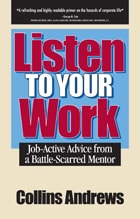
Listen to Your Work
Job-Active Advice from a Battle-Scarred MentorCollins Andrews
Parkhurst Brothers, Inc., 2009
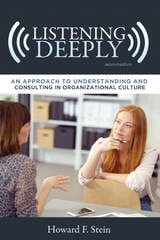
Listening Deeply
An Approach to Understanding and Consulting in Organizational Culture, Second EditionHoward F. Stein
University of Missouri Press, 2017
This new edition of Listening Deeply updates historical context, theory, method, and organizational stories. A psychodynamic orientation informs much of the book and the language Stein uses is direct. His lessons are useful to the manager in any kind of organization, as well as practitioners of psychology, sociology, business management, medicine, and education.
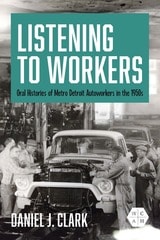
Listening to Workers
Oral Histories of Metro Detroit Autoworkers in the 1950sDaniel J. Clark
University of Illinois Press, 2024
Historians and readers alike often overlook the everyday experiences of workers. Drawing on years of interviews and archival research, Daniel J. Clark presents the rich, interesting, and sometimes confounding lives of men and women who worked in Detroit-area automotive plants in the 1950s.
In their own words, the interviewees frankly discuss personal matters like divorce and poverty alongside recollections of childhood and first jobs, marriage and working women, church and hobbies, and support systems and workplace dangers. Their frequent struggles with unstable jobs and economic insecurity upend notions of the 1950s as a golden age of prosperity while stories of domestic violence and infidelity open a door to intimate aspects of their lives. Taken together, the narratives offer seldom-seen accounts of autoworkers as complex and multidimensional human beings.
Compelling and surprising, Listening to Workers foregoes the union-focused strain of labor history to provide ground-level snapshots of a blue-collar world.
Literature Incorporated
The Cultural Unconscious of the Business Corporation, 1650-1850John O'Brien
University of Chicago Press, 2015
Examining British and American essays, poems, novels, and stories from the seventeenth through the nineteenth centuries, O’Brien pursues the idea of incorporation as a trope discernible in a wide range of texts. Key authors include John Locke, Eliza Haywood, Harriet Martineau, and Edgar Allan Poe, and each chapter is oriented around a type of corporation reflected in their works, such as insurance companies or banks. In exploring issues such as whether sentimental interest is the same as economic interest, these works bear witness to capitalism’s effect on history and human labor, desire, and memory. This period’s imaginative writing, O’Brien argues, is where the unconscious of that process left its mark. By revealing the intricate ties between literary models and economic concepts, Literature Incorporated shows us how the business corporation has shaped our understanding of our social world and ourselves.
Live Wire
Women and Brotherhood in the Electrical IndustryAuthored by Fran Moccio
Temple University Press, 2010
Belonging to a union can bring higher wages, fringe benefits, greater job security and, sometimes, training. But unions—still known as "brotherhoods"—often remain rigidly segregated by gender, despite the fact that sexual harassment and discrimination in employment are illegal. Live Wire is an in-depth case study of Local 3 of the International Brotherhood of Electrical Workers, arguably the most powerful and influential building trades local in the United States. Francine Moccio brings to life forty years of public policy failure that has resulted in restricted opportunities for women in skilled blue-collar jobs.
Live Wire is a unique foray into the gender dynamics of one trade and one union in historical depth, based on extensive primary, secondary, and archival research. It contributes much-needed research about sex segregation in blue-collar occupations, particularly in unions and fraternal organizations. And it provides important insights into complex interactions of work, union, and family life.

Living Up to the Ads
Gender Fictions of the 1920sSimone Weil Davis
Duke University Press, 2000
Materials from advertising firms—including memos, manuals, meeting minutes, and newsletters—are considered alongside the fiction of Sinclair Lewis, Nella Larsen, Bruce Barton, F. Scott Fitzgerald, and Zelda Fitzgerald. Davis engages such books as Babbitt, Quicksand, and Save Me the Waltz in original and imaginative ways, asking each to participate in her discussion of commodity culture, gender, and identity. To illuminate the subjective, day-to-day experiences of 1920s consumerism in the United States, Davis juxtaposes print ads and industry manuals with works of fiction. Capturing the maverick voices of some of the decade’s most influential advertisers and writers, Davis reveals the lines that were drawn between truths and lies, seduction and selling, white and black, and men and women.
Davis’s methodology challenges disciplinary borders by employing historical, sociological, and literary practices to discuss the enduring links between commodity culture, gender, and identity construction. Living Up to the Ads will appeal to students and scholars of advertising, American studies, women’s studies, cultural studies, and early-twentieth-century American history.
Living by the Rules of the Sea
David M. Bush, Orrin H. Pilkey and William J. Neal
Duke University Press, 1996
Living by the Rules of the Sea is a primer for people living along the nation's coastlines, those considering moving to the coast, or those who want a greater understanding of the risks and dangers posed by living at the seacoast. Published as part of Duke University Press's Living with the Shore series, but without a direct focus on the coastline of one particular state, this book is intended as an overall guide to coastal physical processes, risk assessment of potential property damage from coastal natural hazards, and property damage mitigation.
Over the past twenty years, the authors have mapped and studied most of the barrier islands in the United States and have experienced coastal processes such as storms and shoreline retreat at close range. They represent a coastal geology/oceanographic perspective that is decidedly in favor of preserving the natural protective capabilities of the native coastal environment. While strongly anti-engineering in outlook, Living by the Rules of the Sea does provide a review of coastal engineering techniques. It also examines methods of repairing damage to the natural environment that lessen the prospect of further property damage. Finally, it employs a more inclusive "coastal zone" approach rather than simply concentrating on a more narrowly defined shoreline. Barrier islands are viewed as part of a larger system in which changes in one part of the system—for example, the mining of sand dunes or dredging offshore for beach replenishment sand—can have profound effects on another part of the system, predictable effects even though they may not be visible for years or decades.
A comprehensive handbook with references to recent storms including hurricanes Andrew, Gilbert, Hugo, Emily, and Opal, Living by the Rules of the Sea is designed to help people make better and more informed choices about where or if to live at the coast.
Living on the Edge of the Gulf
The West Florida and Alabama CoastDavid M. Bush, Norma J. Longo, William J. Neal, Luciana S. Esteves, Orrin H. Pilkey, Deborah F. Pilkey, Craig A. Webb
Duke University Press, 2001
The Gulf coast of Florida and Alabama is a fragile combination of barrier islands, low-lying marshes, and highly erodable mainland shores. In addition to sea-level rise, winter storms, and altered sediment supplies, hurricanes frequently damage or destroy the human developments and infrastructures that line this coast. Indeed, a single storm can cause billions of dollars in losses. Memories of such hurricanes as Camille, Frederic, Opal, and Andrew cause great concern for residents and property owners alike; events of equal magnitude are always just beyond the horizon and the uninformed have much to lose.
The authors of Living on the Edge of the Gulf seek to counteract potential loss by providing an illustrated introduction to coastal processes, a history of hazards for the region, and risk-reduction guidance in the form of site evaluations, community mitigation techniques, and storm-resistant construction practices. Risk maps that focus on individual coastal beaches are designed to assist property owners, community planners, and officials in prudent decision making, while a review of coastal regulations helps owners to understand and navigate various permit requirements.
This latest book in the Living with the Shore series replaces the earlier guide Living with the West Florida Shore and supplements the Alabama portion of Living with the Alabama/Mississippi Shore.
Living with Long Island's South Shore
Larry McCormick, William Neal, Orrin Pilkey Jr., and Orrin Pilkey, Sr.
Duke University Press, 1984
The south shore of Long Island, one of New York's greatest recreational assets, is receding at the rate of up to six feet per year. In many cases, efforts to halt this erosion actually have increased it. Buildings cone thought safely constructed back from high tidemarks today protrude far into the water.
Even more, the number of homes an facilities built too close to the sea's edge has dramatically increased, making the south shore probably less ready to withstand a major storm than at the time of the cataclysmic hurricane of 1938.
Thus, the question of what to do now to overcome and avoid these hazards takes on real urgency. Pointing to past mistakes, many Long Islanders insist that only by acting in an informed reasonable way can safe and environmentally sound development be possible for everyone.
Living with the Alabama/Mississippi Shore
Wayne F. Canis, William F. Neal, Orrin H. Pilkey Jr. and Orrin H. Pilkey Sr.
Duke University Press, 1985
Yet this same serene shoreline has been ravaged by seven major hurricanes during this century. Several years more than one fearful storm has come hurtling in during a single "season." Loss of life an property damage have been devastating. And newcomers seem almost unaware of the potential dangers.
The authors of this book offer a vivid, historical overview for understanding the environment of the Alabama-Mississippi shore. They describe the risks faced by new residents, and they point the way toward safe and sane coastal development.
Living with the Chesapeake Bay and Virginia's Ocean Shores
Larry G. Ward, Peter S. Rosen, William J. Neal. Orrin H. Pilkey Jr., Orrin H. Pilkey Sr., Gary L. Anderson, and Stephen J. Howie
Duke University Press, 1989
Living with the Coast of Maine
Joseph T. Kelley and Alice R. Kelley
Duke University Press, 1989
Maine is known for its rockbound coast and pristine shoreline. Yet there is more to this shore than rocky cliffs. This book describes the origin of the more common "soft coast" of eroding bluffs, sand beaches, and salt marshes. A central theme is the formation of the present shoreline during the current ongoing rise in sea level and the ways in which coastal residents can best cope with the changes to come. Although it is not widely known, Maine is experiencing a rapid, uneven drowning of its shore at the same time that coastal development is at an all-time high. The authors explain how the shoreline is changing and provide a series of highly detailed maps that show the relative safety of particular locations on the coast.
Specific guidelines for recognizing various safe and unsafe coastal settings are presented, as are recommendations for sound construction techniques in hazardous coastal areas. Photographs and drawings illustrate the danger of living too near the shoreline, and an up-to-date review of Maine's regulations governing coastal construction is simply and readably described. A bibliography of important coastal literature is also included, as well as a guide to federal, state, and local sources of information.