Results by title
4531 books match the query 'Cultural & Ethnic Studies' and 166 start with l
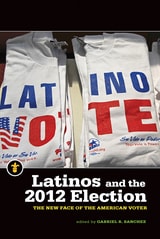
Latinos and the 2012 Election
The New Face of the American VoterGabriel R. Sanchez
Michigan State University Press, 2015
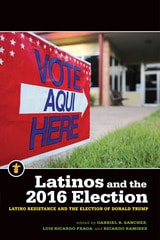
Latinos and the 2016 Election
Latino Resistance and the Election of Donald TrumpGabriel R. Sanchez
Michigan State University Press, 2020
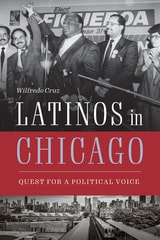
Latinos in Chicago
Quest for a Political VoiceWilfredo Cruz
Southern Illinois University Press, 2022
The path to political power for Latinos in Chicago
In the Midwest’s largest city, Latinos have been fighting for political representation for more than half a century. In this exploration of urban politics in Chicago, Wilfredo Cruz shows for the first time how Latinos went from being ignored by the Irish-controlled political machine to becoming a respected constituency.
Beginning with the Latino community’s first attempt to acquire a political voice in Chicago politics in 1911 and continuing through Latino officeholders of the early twenty-first century, Cruz surveys not only the struggles of this community—specifically the two largest Latino groups in the city, Mexicans and Puerto Ricans—but also the ways in which Chicago’s Latinos overcame those challenges to gain their political voice.
For most of the twentieth century, Chicago politicians ignored the growing Latino community. This disregard changed with the 1983 election of Mayor Harold Washington, an African American who defied the political machine and actively recruited Latinos to his administration and helped them win city and statewide political offices. His actions opened the doors of government for Latinos in Chicago. Subsequent mayors, seeing the political success of Washington’s move, continued his policies.
Many up-and-coming Latino politicians making strides in Chicago, including state representative Aarón Ortíz, Alderman Andre Vasquez, and Alderman Rossana Rodríguez-Sanchez, contribute their takes on the struggle for political power and the challenges facing the rising new generation of elected officials. With this book, Cruz asks and answers this question: What does the future hold for Latinos politically in Chicago?
Latinos in Nevada
A Political, Economic, and Social ProfileJohn P. Tuman
University of Nevada Press, 2021
This extensive study by a distinguished and multidisciplinary team of scholars discusses the impact of the Latinx population from the early development of the state of Nevada and highlights their roles in society, as well as the specific implications of their growing presence in the state. It also contemplates the future of the Latinx population and the role they will continue to play in politics and the economy.
This in-depth examination of a large and relatively understudied population will be of interest to scholars and students who study disparities in health and education opportunities as well as the political and economic climate among Latinos and other groups in Nevada and beyond. A political, economic, and demographic profile, this book:
- Explores the history, growth, and diversity of the Latinx population.
- Draws on an array of census data, voter surveys, statistics, interviews, and health, education, employment, wages, and immigration statistics.
- Evaluates key trends in employment, education, religion, and health.
- Analyzes the dynamics of political participation, including implications of a growing Latino political electorate in a western swing state.
- Assesses key determinants of health disparities, educational inequities, and civic engagement among Latinos in the state.
- Demonstrates the impact of the Great Recession of 2008 and provides a preliminary assessment of the COVID-19 pandemic on Latino employment.
Latinos in New England
edited by Andrés Torres
Temple University Press, 2006
Latinos in the Midwest
Rubén O. Martinez
Michigan State University Press, 2011
Latinx Art
Artists, Markets, and PoliticsArlene Dávila
Duke University Press, 2020
Latinx Belonging
Community Building and Resilience in the United StatesEdited by Natalia Deeb-Sossa and Jennifer Bickham Mendez
University of Arizona Press, 2022
What does it mean to be Latinx? This pressing question forms the core of Latinx Belonging, which brings together cutting-edge research to discuss the multilayered ways this might be answered.
Latinx Belonging is anchored in the claim that Latinx people are not defined by their marginalization but should instead be understood as active participants in their communities and contributors to U.S. society. The volume’s overarching analytical approach recognizes the differences, identities, and divisions among people of Latin American origin in the United States, while also attending to the power of mainstream institutions to shape their lives and identities. Contributors to this volume view “belonging” as actively produced through struggle, survival, agency, resilience, and engagement.
This work positions Latinxs’ struggles for recognition and inclusion as squarely located within intersecting power structures of gender, race, sexuality, and class and as shaped by state-level and transnational forces such as U.S. immigration policies and histories of colonialism. From the case of Latinxs’ struggles for recognition in the arts, to queer Latinx community resilience during COVID-19 and in the wake of mass shootings, to Indigenous youth’s endurance and survival as unaccompanied minors in Los Angeles, the case studies featured in this collection present a rich and textured picture of the diversity of the U.S. Latinx experience in the twenty-first century.
Contributors
Andrés Acosta
Jack “Trey” Allen
Jennifer Bickham Mendez
Stephanie L. Canizales
Christopher Cuevas
Natalia Deeb-Sossa
Yvette G. Flores
Melanie Jones Gast
Monika Gosin
Pierrette Hondagneu-Sotelo
Nolan Kline
Verónica Montes
Yvonne Montoya
Michael De Anda Muñiz
Suzanne Oboler
Gilda L. Ochoa
Dina G. Okamoto
Marco Antonio Quiroga
Michelle Téllez
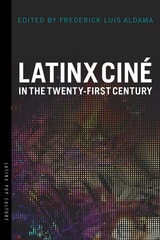
Latinx Ciné in the Twenty-First Century
Edited by Frederick Luis Aldama
University of Arizona Press, 2019
Twenty-first-century Latinx film offers much to celebrate, but as noted pop culture critic Frederick Luis Aldama writes, there’s still room to be purposefully critical. In Latinx Ciné in the Twenty-First Century contributors offer groundbreaking scholarship that does both, bringing together a comprehensive presentation of contemporary film and filmmakers from all corners of Latinx culture.
The book’s seven sections cover production techniques and evolving genres, profile those behind and in front of the camera, and explore the distribution and consumption of contemporary Latinx films. Chapters delve into issues that are timely, relevant, and influential, including representation or the lack thereof, identity and stereotypes, hybridity, immigration and detention, historical recuperation, and historical amnesia.
With its capacious range and depth of vision, this timeless volume of cutting-edge scholarship blazes new paths in understanding the full complexities of twenty-first century Latinx filmmaking.
Contributors
Contributors
Iván Eusebio Aguirre Darancou
Frederick Luis Aldama
Juan J. Alonzo
Lee Bebout
Debra A. Castillo
Nikolina Dobreva
Paul Espinosa
Mauricio Espinoza
Camilla Fojas
Rosa-Linda Fregoso
Desirée J. Garcia
Enrique García
Clarissa Goldsmith
Matthew David Goodwin
Monica Hanna
Sara Veronica Hinojos
Carlos Gabriel Kelly
Jennifer M. Lozano
Manuel M. Martín-Rodríguez
J. V. Miranda
Valentina Montero Román
Danielle Alexis Orozco
Henry Puente
John D. “Rio” Riofrio
Richard T. Rodríguez
Ariana Ruiz
Samuale Saldívar III
Jorge Santos
Rebecca A. Sheehan
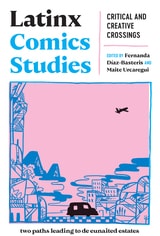
Latinx Comics Studies
Critical and Creative CrossingsFernanda Díaz-Basteris
Rutgers University Press, 2025
This collection moves beyond simply cataloguing and celebrating Latinx representation within comics. It examines how comics by, for, and about Latinx peoples creatively and conceptually experiment with the very boundaries of “Latinx” and portray the diverse lived experiences therein.
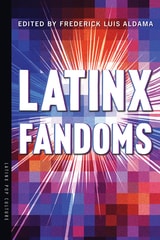
Latinx Fandoms
Edited by Frederick Luis Aldama
University of Arizona Press, 2027
What makes one a fan? What’s the difference between cultivating taste for a genre and dedicating time, space, labor, and resources to collecting, practicing, and following in a singularly focused way? What does fandom look like and what does it do when racialized communities embrace media that rarely imagined them?
Latinx Fandoms is the first book to theorize the intersection of fandoms and Latinx identity. This groundbreaking collection examines how Latinx fans create meaning, build community, and imagine new worlds through their engagement with popular culture. From comics, science fiction, and gaming to music, sports, wrestling, television, and fan fiction, the essays demonstrate how fandoms become powerful sites of identity formation, cultural expression, and belonging for communities often overlooked in both media industries and academic scholarship.
Spanning thirty-six chapters organized into eight thematic sections, Latinx Fandoms explores a remarkable range of fan practices and cultural phenomena. Contributors examine topics as diverse as Pokémon, Barbie, Star Wars, Hello Kitty, Taylor Swift, BTS, Bad Bunny, lucha libre, fútbol, Nintendo, cosplay, fan fiction, bodybuilding, and Latinx goth subcultures. Through historical analysis, personal narrative, ethnography, and cultural critique, the essays reveal how Latinx fans transform global media into spaces of creativity, resistance, joy, and connection. The collection confronts enduring questions about race, representation, gender, sexuality, language, and power within contemporary fan cultures.
A foundational volume in the Latinx Pop Culture series, this collection shows that Latinx fans are not simply consumers of culture but active creators of scenes of joy and struggle, memory and invention, resistance, and sometimes complicity.
Contributors
Paloma Ada Aguirre
Frederick Luis Aldama
René X. Arteaga
Ryan Banfi
Lucas Leite Borba
Jennifer Caroccio Maldonado
Melissa Castillo-Garsow
Samantha Ceballos
Nicholas F. Centino
Andrea M. Escalante
Mauricio Espinoza
Laura Fernández
Elena Foulis
Kathryn M. Frank
Jennifer Gómez Menjívar
Christopher González
Rachel V. González-Martin
Itzayana Gutiérrez Arillo
Cristina Herrera
Dan Johnson
Carlos Gabriel Kelly González
Alexander Lalama
Héctor Fernández L’Hoeste
Regina Marie Mills
Guilherme Sfredo Miorando
Josh Mishaw
Meagan Negron
Dante Olivas
Rose Padilla
Domino Perez
Ricardo Quintana-Vallejo
Nayeli Rincon
Jessica Rutherford
Martín Alejandro Salinas
Alexandra Sanchez
Nicholas Villanueva Jr.
Ralph Villanueva
Benjamin Woo
Cassandra Yatron
Irma J. Zamora Fuerte

Latinx Lives in Hemsipheric Context
Maria A. Windell, special issue editor
Duke University Press, 2018
Contributors: Elise Bartosik-Vélez, Ralph Bauer, Rachel Conrad Bracken, Anna Brickhouse, John Alba Cutler, Kenya C. Dworkin y Méndez, Joshua Javier Guzmán, Anita Huizar-Hernández, Kelley Kreitz, Rodrigo Lazo, Marissa K. López, Claudia Milian, Yolanda Padilla, Juan Poblete, David Sartorius, Alberto Varon
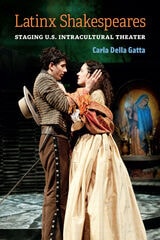
Latinx Shakespeares
Staging U.S. Intracultural TheaterCarla Della Gatta
University of Michigan Press, 2023
2024 American Society for Theatre Research Barnard Hewitt Award Finalist
- 2023 Theatre Library Association George Freedley Memorial Award Finalist
- Best Academic-Themed Book, College-Level - English at the International Latino Book Awards Honorable Mention
Latinx peoples and culture have permeated Shakespearean performance in the United States for over 75 years—a phenomenon that, until now, has been largely overlooked as Shakespeare studies has taken a global turn in recent years. Author Carla Della Gatta argues that theater-makers and historians must acknowledge this presence and influence in order to truly engage the complexity of American Shakespeares. Latinx Shakespeares investigates the history, dramaturgy, and language of the more than 140 Latinx-themed Shakespearean productions in the United States since the 1960s—the era of West Side Story. This first-ever book of Latinx representation in the most-performed playwright’s canon offers a new methodology for reading ethnic theater looks beyond the visual to prioritize aural signifiers such as music, accents, and the Spanish language.
The book’s focus is on textual adaptations or performances in which Shakespearean plays, stories, or characters are made Latinx through stage techniques, aesthetics, processes for art-making (including casting), and modes of storytelling. The case studies range from performances at large repertory theaters to small community theaters and from established directors to emerging playwrights. To analyze these productions, the book draws on interviews with practitioners, script analysis, first-hand practitioner insight, and interdisciplinary theoretical lenses, largely by scholars of color. Latinx Shakespeares moves toward healing by reclaiming Shakespeare as a borrower, adapter, and creator of language whose oeuvre has too often been mobilized in the service of a culturally specific English-language whiteness that cannot extricate itself from its origins within the establishment of European/British colonialism/imperialism.
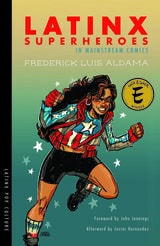
Latinx Superheroes in Mainstream Comics
Frederick Luis Aldama; Foreword by John Jennings; Afterword by Javier Hernandez
University of Arizona Press, 2017
Whether good or evil, beautiful or ugly, smart or downright silly, able-bodied or differently abled, gay or straight, male or female, young or old, Latinx superheroes in mainstream comic book stories are few and far between. It is as if finding the Latinx presence in the DC and Marvel worlds requires activation of superheroic powers.
Latinx Superheroes in Mainstream Comics blasts open barriers with a swift kick. It explores deeply and systematically the storyworld spaces inhabited by brown superheroes in mainstream comic book storyworlds: print comic books, animation, TV, and film. It makes visible and lets loose the otherwise occluded and shackled. Leaving nothing to chance, it sheds light on how creators (authors, artists, animators, and directors) make storyworlds that feature Latinos/as, distinguishing between those that we can and should evaluate as well done and those we can and should evaluate as not well done.
The foremost expert on Latinx comics, Frederick Luis Aldama guides us through the full archive of all the Latinx superheros in comics since the 1940s. Aldama takes us where the superheroes live—the barrios, the hospitals, the school rooms, the farm fields—and he not only shows us a view to the Latinx content, sometimes deeply embedded, but also provokes critical inquiry into the way storytelling formats distill and reconstruct real Latinos/as.
Thoroughly entertaining but seriously undertaken, Latinx Superheroes in Mainstream Comics allows us to truly see how superhero comic book storyworlds are willfully created in ways that make new our perception, thoughts, and feelings.
Latinx TV in the Twenty-First Century
Edited by Frederick Luis Aldama
University of Arizona Press, 2022
In this volume, editor Frederick Luis Aldama brings together leading experts who show how Latinx TV is shaped by historical, social, cultural, regional, and global contexts. Contributors address head on harmful stereotypes in Latinx representation while giving key insights to a positive path forward. TV narratives by and about Latinx people exist across all genres. In this century, we see Latinx people in sitcoms, sci-fi, noir, soap operas, rom-coms, food shows, dramas, action-adventure, and more. Latinx people appear in television across all formats, from quick webisodes, to serialized big-arc narratives, to animation and everything in between. The diverse array of contributors to this volume delve into this rich landscape of Latinx TV from 2000 to today, spanning the ever-widening range of genres and platforms.
Latinx TV in the Twenty-First Century argues that Latinx TV is not just television—it’s an entire movement. Digital spaces and streaming platforms today have allowed for Latinx representation on TV that speaks to Latinx people and non-Latinx people alike, bringing rich and varied Latinx cultures into mainstream television and addressing urbanization, immigration, family life, language, politics, gender, sexuality, class, race, and ethnicity.
Once heavily underrepresented and harmfully stereotypical, Latinx representation on TV is beginning to give careful nuance to regional, communal, and familial experiences among U.S. Latinx people. This volume unpacks the negative implications of older representation and celebrates the progress of new representation, recognizing that television has come a long way, but there is still a lot of important work to do for truly diverse and inclusive representation.
Latinx Teens
U.S. Popular Culture on the Page, Stage, and ScreenTrevor Boffone and Cristina Herrera
University of Arizona Press, 2022
In this exciting new book, Trevor Boffone and Cristina Herrera explore the diverse ways that contemporary mainstream film, television, theater, and young adult literature invokes, constructs, and interprets adolescent Latinidad. Latinx Teens shows how coming-of-age Latinx representation is performed in mainstream media, and how U.S. audiences consume Latinx characters and stories. Despite the challenges that the Latinx community face in both real and fictional settings, Latinx teens in pop culture forge spaces that institutionalize Latinidad. Teen characters make Latinx adolescence mainstream and situate teen characters as both in and outside their Latinx communities and U.S. mainstream culture, conveying the complexities of “fitting in,” and refusing to fit in all at the same time.
Fictional teens such as Spider-Man’s Miles Morales, I Am Not Your Perfect Mexican Daughter’s Julia Reyes, Party of Five’s Acosta siblings, and In the Heights’s Nina Rosario comprise a growing body of pop culture media that portray young Latinxs as three-dimensional individuals who have agency, authenticity, and serious charisma. Teenagers and young adults have always had the power to manifest social change, and this book acknowledges, celebrates, and investigates how Latinx teens in popular culture take on important current issues.
With a dynamic interdisciplinary approach, Latinx Teens explores how Latinxs on the cusp of adulthood challenge, transform, expand, and reimagine Latinx identities and their relationships to mainstream U.S. popular culture in the twenty-first century.
The book makes a critical intervention into Latinx studies, youth studies, and media cultures. Students and scholars alike will benefit from the book’s organization, complete with chapters that focus on specific mediums and conclude with suggestions for further reading and viewing. As the first book that specifically examines Latinx adolescence in popular culture, Latinx Teens insists that we must privilege the stories of Latinx teenagers in television, film, theater, and literature to get to the heart of Latinx popular culture. Exploring themes around representation, identity, gender, sexuality, and race, the works explored in this groundbreaking volume reveal that there is no single way to be Latinx, and show how Latinx youth are shaping the narrative of the Latinx experience for a more inclusive future.
Laughing Mad
The Black Comic Persona in Post-Soul AmericaHaggins, Bambi
Rutgers University Press, 2007
Winner of the 2008 Katherine Singer Kovacs Book Award
Prior to the civil rights movement, comedians performed for audiences that were clearly delineated by race. Black comedians performed for black audiences and white comedians performed for whites. Yet during the past forty-five years, black comics have become progressively more central to mainstream culture.
In Laughing Mad , Bambi Haggins looks at how this transition occurred in a variety of media and shows how this integration has paved the way for black comedians and their audiences to affect each other. Historically, African American performers have been able to use comedy as a pedagogic tool, interjecting astute observations about race relations while the audience is laughing. And yet, Haggins makes the convincing argument that the potential of African American comedy remains fundamentally unfulfilled as the performance of blackness continues to be made culturally digestible for mass consumption.
Rather than presenting biographies of individual performers, Haggins focuses on the ways in which the comic persona is constructed and changes across media, from stand-up, to the small screen, to film. She examines the comic televisual and cinematic personae of Dick Gregory, Bill Cosby, Flip Wilson, and Richard Pryor and considers how these figures set the stage for black comedy in the next four decades. She reads Eddie Murphy and Chris Rock as emblematic of the first and second waves of post-civil rights era African American comedy, and she looks at the socio-cultural politics of Whoopi Goldberg's comic persona through the lens of gender and crossover. Laughing Mad also explores how the comedy of Dave Chappelle speaks to and for the post-soul generation.
A rigorous analytic analysis, this book interrogates notions of identity, within both the African American community and mainstream popular culture. Written in engaging and accessible prose, it is also a book that will travel from the seminar room, to the barbershop, to the kitchen table, allowing readers to experience the sketches, stand-up, and film comedies with all the laughter they deserve.

Laughing to Keep from Dying
African American Satire in the Twenty-First CenturyDanielle Fuentes Morgan
University of Illinois Press, 2020
Adventurous and perceptive, Laughing to Keep from Dying reveals how African American satirists unmask the illusions and anxieties surrounding race in the twenty-first century.
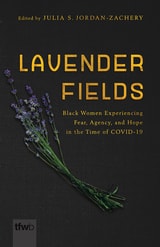
Lavender Fields
Black Women Experiencing Fear, Agency, and Hope in the Time of COVID-19Edited by Julia S. Jordan-Zachery
University of Arizona Press, 2023
Black women and girls in the United States are among the hardest hit by the pandemic in terms of illnesses, deaths, evictions, and increasing economic inequality. Riffing off Alice Walker’s telling of her search for Zora Neal Hurston, the authors of these essays and reflections offer raw tellings of Black girls’ and women’s experiences written in real time, as some of the contributors battled COVID-19 themselves.
The essays center Black girls and women and their testimonies in hopes of moving them from the margin to the center. With a diversity of voices and ages, this volume taps into the Black feminine interior, that place where Audre Lorde tells us that feelings lie, to access knowledge—generational, past, and contemporary—to explore how Black women navigate COVID-19. Using womanism and spirituality, among other modalities, the authors explore deep feelings, advancing Black feminist theorizing on Black feminist praxis and methodology.
In centering the stories of Black girls and women’s experiences with COVID-19, this work brings much-needed justice and equity to conversations about the pandemic. Just as Walker worked diligently to find Hurston, Lavender Fields attempts to “find” Black women amid all we are experiencing, ensuring visibility and attention.
Contributors
Tamaya Bailey
reelaviolette botts-ward
Kyrah K. Brown
Brianna Y. Clark
Kenyatta Dawson
LeConté J. Dill
Maryam O. Funmilayo
Brandie Green
Courtney Jackson
Sara Jean-Francois
Julia S. Jordan-Zachery
Angela K. Lewis-Maddox
Annet Matebwe
Mbali Mazibuko
Radscheda Nobles
Nimot Ogunfemi
J. Mercy Okaalet
Chizoba Uzoamaka Okoroma
Peace Ossom-Williamson
Elizabeth Peart

Laying Claim
African American Cultural Memory and Southern IdentityPatricia G. Davis
University of Alabama Press, 2016
Reclaiming Southern history through the voices, memories, and experiences of African Americans.
In Laying Claim: African American Cultural Memory and Southern Identity, Patricia Davis identifies the Civil War as the central narrative around which official depictions of southern culture have been defined. Because that narrative largely excluded African American points of view, the resulting southern identity was monolithically white. Davis traces how the increasing participation of black public voices in the realms of Civil War memory—battlefields, museums, online communities—has dispelled the mirage of “southernness” as a stolid cairn of white culture and has begun to create a more fluid sense of southernness that welcomes contributions by all of the region’s peoples.
Laying Claim offers insightful and penetrating examinations of African American participation in Civil War reenactments; the role of black history museums in enriching representations of the Civil War era with more varied interpretations; and the internet as a forum within which participants exchange and create historical narratives that offer alternatives to unquestioned and dominant public memories. From this evolving cultural landscape, Davis demonstrates how simplistic caricatures of African American experiences are giving way to more authentic, expansive, and inclusive interpretations of southernness.
As a case-study and example of change, Davis cites the evolution of depictions of life at Thomas Jefferson’s Monticello. Where visitors to the site once encountered narratives that repeated the stylized myth of Monticello as a genteel idyll, modern accounts of Jefferson’s day offer a holistic, inclusive, and increasingly honest view of Monticello as the residents on every rung of the social ladder experienced it.
Contemporary violence and attacks about or inspired by the causes, outcomes, and symbols of the Civil War, even one hundred and fifty years after its end, add urgency to Davis’s argument that the control and creation of public memories of that war is an issue of concern not only to scholars but all Americans. Her hopeful examination of African American participation in public memory illuminates paths by which this enduring ideological impasse may find resolutions.
Leadership From the Margins
Women and Civil Society Organizations in Argentina, Chile, and El SalvadorCosgrove, Serena
Rutgers University Press, 2010
Leadership from the Margins describes and analyzes the unique leadership styles and challenges facing the women leaders of CSOs in Argentina, Chile, and El Salvador. Based on ethnographic research, Serena Cosgrove's analysis offers a nuanced account of the distinct struggles facing women, and how differences of class, political ideology, and ethnicity have informed their outlook and organizing strategies. Using a gendered lens, she reveals the power and potential of women's leadership to impact the direction of local, regional, and global development agendas.
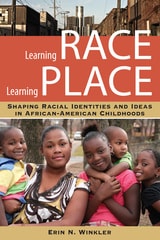
Learning Race, Learning Place
Shaping Racial Identities and Ideas in African American ChildhoodsWinkler, Erin N
Rutgers University Press, 2012
In an American society both increasingly diverse and increasingly segregated, the signals children receive about race are more confusing than ever. In this context, how do children negotiate and make meaning of multiple and conflicting messages to develop their own ideas about race? Learning Race, Learning Place engages this question using in-depth interviews with an economically diverse group of African American children and their mothers.
Through these rich narratives, Erin N. Winkler seeks to reorient the way we look at how children develop their ideas about race through the introduction of a new framework—comprehensive racial learning—that shows the importance of considering this process from children’s points of view and listening to their interpretations of their experiences, which are often quite different from what the adults around them expect or intend. At the children’s prompting, Winkler examines the roles of multiple actors and influences, including gender, skin tone, colorblind rhetoric, peers, family, media, school, and, especially, place. She brings to the fore the complex and understudied power of place, positing that while children’s racial identities and experiences are shaped by a national construction of race, they are also specific to a particular place that exerts both direct and indirect influence on their racial identities and ideas.
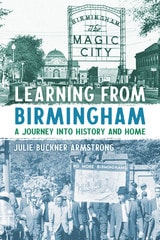
Learning from Birmingham
A Journey into History and HomeJulie Buckner Armstrong
University of Alabama Press, 2023
A steel town daughter’s search for truth and beauty in Birmingham, Alabama
“As Birmingham goes, so goes the nation,” Fred Shuttlesworth observed when he invited Martin Luther King Jr. to the city for the transformative protests of 1963. From the height of the Civil Rights Movement through its long aftermath, images of police dogs, fire hoses and four girls murdered when Ku Klux Klan members bombed the Sixteenth Street Baptist Church have served as an uncomfortable racial mirror for the nation. Like many white people who came of age in the Civil Rights Movement’s wake, Julie Buckner Armstrong knew little about this history. Only after moving away and discovering writers like Toni Morrison and Alice Walker did she realize how her hometown and family were part of a larger, ongoing story of struggle and injustice.
When Armstrong returned to Birmingham decades later to care for her aging mother, Shuttlesworth’s admonition rang in her mind. By then an accomplished scholar and civil rights educator, Armstrong found herself pondering the lessons Birmingham holds for a twenty-first century America. Those lessons extended far beyond what a 2014 Teaching Tolerance report describes as the common distillation of the Civil Rights Movement into “two names and four words: Martin Luther King Jr, Rosa Parks, and ‘I have a dream.’” Seeking to better understand a more complex local history, its connection to broader stories of oppression and resistance, and her own place in relation to it, Armstrong embarked on a journey to unravel the standard Birmingham narrative to see what she would find.
Beginning at the center, with her family’s 1947 arrival to a housing project near the color line, within earshot of what would become known as Dynamite Hill, Armstrong works her way over time and across the map. Weaving in stories of her white working-class family, classmates, and others not traditionally associated with Birmingham’s civil rights history, including members of the city’s LGBTQ community, she forges connections between the familiar and lesser-known. The result is a nuanced portrait of Birmingham--as seen in public housing, at old plantations, in segregated neighborhoods, across contested boundary lines, over mountains, along increasingly polluted waterways, beneath airport runways, on highways cutting through town, and under the gaze of the iconic statue of Vulcan.
In her search for truth and beauty in Birmingham, Armstrong draws on the powers of place and storytelling to dig into the cracks, complicating easy narratives of civil rights progress. Among the discoveries she finds in America’s racial mirror is a nation that has failed to recognize itself in the horrific images from Birmingham’s past and to acknowledge the continuing inequalities that make up the Civil Right’s Movement’s unfinished business. Learning from Birmingham reminds us that stories of civil rights, structural oppression, privilege, abuse, race and gender bias, and inequity are difficult and complicated, but their telling, especially from multiple stakeholder perspectives, is absolutely necessary.
Learning to Be Latino
How Colleges Shape Identity PoliticsReyes, Daisy Verduzco
Rutgers University Press, 2018
Drawing on extensive ethnographic observations, Reyes shows how college campuses shape much more than students’ academic and occupational trajectories; they mold students’ ideas about inequality and opportunity in America, their identities, and even how they intend to practice politics.
Learning to Lead
Grassroots Organizing in Immigrant CommunitiesVeronica Terriquez
Russell Sage Foundation, 2026
Children of immigrants make up more than one in four people in the United States under the age of thirty. Amid today’s multipronged attacks on immigrant communities and growing threats to democratic participation, these young people often encounter significant barriers to political participation. Despite these challenges, some children of immigrants and refugees engage in nonpartisan grassroots campaigns, addressing issues such as education, health, environmental justice, immigrant rights, housing, and voting rights. In Learning to Lead, sociologist Veronica Terriquez examines how youth organizing groups facilitate the civic and political engagement of low-income, second-generation immigrant adolescents, enabling them to collectively exercise power alongside their non-immigrant peers and adult allies.
Drawing on extensive survey, semi-structured interview, and other data, Terriquez shows that nonprofit youth organizing groups strengthen adolescents’ capacity to address the systemic challenges facing their communities through political engagement. Although these groups vary in the quality of their programming, they generally share a commitment to supporting young people’s healthy development, offer a critical form of civics education, and provide extensive guidance on how to participate in civic life. These groups adapt their programming in response to local demographic and political dynamics.
Many adolescents who join grassroots organizing groups face overlapping stresses related to poverty, immigration status, neighborhood violence, and other hardships. In response, youth organizing groups create spaces that support emotional well-being while also encouraging academic success and job-readiness. At the same time, they help young people develop a critical understanding of social inequality, power, and public policy. Through ethnic studies workshops and other activities, youth explore their own identities and learn about the histories and struggles of diverse communities.
This education often motivates second-generation immigrant and refugee youth to work in solidarity with their non-immigrant Black and Indigenous peers and deepens their understanding of the historical, economic, and political roots of community problems, as well as potential policy solutions. Unlike many youth-focused interventions, organizing groups also provide sustained, hands-on training in how to collectively exercise their voice in policy debates and government elections, effectively functioning as civic apprenticeships. Staff and experienced members mentor newer participants in basic civic skills such as public speaking, event planning, and community outreach, while also coaching them on strategies for mobilize peers and adult allies to contribute to nonpartisan campaigns.
Because of these intensive and formative experiences, adolescents who participate in youth organizing during high school tend to remain highly active in civic life into early adulthood. Terriquez concludes that these groups offer important lessons for schools and other youth-serving institutions seeking to strengthen engagement in a multiracial democracy.
Learning to Lead offers a thorough examination of the role of how young people acquire the capacities to become a meaningful political force.
Learning to Lead
Undocumented Students Mobilizing EducationJennifer R. Nájera
Duke University Press, 2024
Learning to Unlearn
Decolonial Reflections from Eurasia and the AmericasMadina V. Tlostanova and Walter D. Mignolo
The Ohio State University Press, 2012
Learning to Unlearn: Decolonial Reflections from Eurasia and the Americas is a complex, multisided rethinking of the epistemic matrix of Western modernity and coloniality from the position of border epistemology. Colonial and imperial differences are the two key concepts to understanding how the logic of coloniality creates ontological and epistemic exteriorities. Being at once an enactment of decolonial thinking and an attempt to define its main grounds, mechanisms, and concepts, the book shifts the politics of knowledge from “studying the other” (culture, society, economy, politics) toward “the thinking other” (the authors).
Addressing areas as diverse as the philosophy of higher education, gender, citizenship, human rights, and indigenous agency, and providing fascinating and little-known examples of decolonial thinking, education, and art, Madina V. Tlostanova and Walter D. Mignolo deconstruct the modern architecture of knowledge—its production and distribution as manifested in the corporate university. In addition, the authors dwell on and define the echoing global decolonial sensibilities as expressed in the Americas and in peripheral Eurasia. The book is an important addition to the emerging transoceanic inquiries that introduce decolonial thought and non-Western border epistemologies not only to update or transform disciplines but also to act and think decolonially in the global futures to come.
Leaving the Tomboy Behind
Sinophone Lesbian Subjectivities and Transnational Queer MediaCarman K. M. Fung
University of Michigan Press, 2027
For decades queer women in the Sinophone world have followed a strict dating custom: a lesbian relationship usually consists of a masculine partner, known as a tomboy, and a feminine counterpart. In the 2010s, however, many queer women have come to reject this custom and abandon their own former identities as tomboys. Leaving The Tomboy Behind follows their journey moving beyond lesbian masculinity and turning towards global LGBTQ+ media from Japan, Thailand, and the United States to explore new forms of gender expressions. Carman K. M. Fung offers a rich ethnography of the impacts media has had on queer Sinophone women’s lives, focusing on transnational interpretations and misinterpretations, and how media globalization shapes viewers’ perceptions of unfamiliar places. Through a combination of personal interviews and analysis of the global media these communities consume, Fung traces the genealogy of the tomboy identity in China, Hong Kong, and Taiwan in relation to global queer and trans cultures.
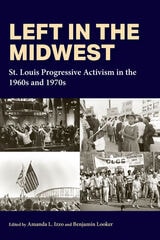
Left in the Midwest
St. Louis Progressive Activism in the 1960s and 1970sAmanda L. Izzo
University of Missouri Press, 2023
Despite St. Louis’s mid-twentieth-century reputation as a conservative and sleepy midwestern metropolis, the city and its surrounding region have long played host to dynamic forms of social-movement organizing. This was especially the case during the 1960s and 1970s, when a new generation of local activists lent their energies to the ongoing struggles for Black freedom, lesbian and gay liberation, feminist social transformations, environmental protection, an end to the Vietnam War, and more. This volume, the first of its kind, offers fifteen scholarly contributions that together bring into focus the exceptional range of progressive activist projects that took shape in a single midwestern city during these tumultuous decades.
In contrast to scholarship that seeks to interpret the era’s social-movement initiatives in a primarily national context, the works presented in this expansive collection emphasize the importance of locality, neighborhood, community institutions, and rooted social networks. Documenting wrenching forces of metropolitan change as well as grassroots resilience, Left in the Midwest shows us how place powerfully shaped agendas, worldviews, and opportunities for the disparate groups that dedicated themselves to progressive visions for their city. By revising our sense of the region’s past, this volume also expands our sense of the possibilities that the future may hold for activist movements seeking change in St. Louis and beyond.
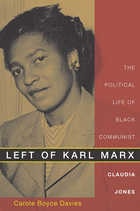
Left of Karl Marx
The Political Life of Black Communist Claudia JonesCarole Boyce Davies
Duke University Press, 2007
Claudia Cumberbatch Jones was born in Trinidad. In 1924, she moved to New York, where she lived for the next thirty years. She was active in the Communist Party from her early twenties onward. A talented writer and speaker, she traveled throughout the United States lecturing and organizing. In the early 1950s, she wrote a well-known column, “Half the World,” for the Daily Worker. As the U.S. government intensified its efforts to prosecute communists, Jones was arrested several times. She served nearly a year in a U.S. prison before being deported and given asylum by Great Britain in 1955. There she founded The West Indian Gazette and Afro-Asian Caribbean News and the Caribbean Carnival, an annual London festival that continues today as the Notting Hill Carnival. Boyce Davies examines Jones’s thought and journalism, her political and community organizing, and poetry that the activist wrote while she was imprisoned. Looking at the contents of the FBI file on Jones, Boyce Davies contrasts Jones’s own narration of her life with the federal government’s. Left of Karl Marx establishes Jones as a significant figure within Caribbean intellectual traditions, black U.S. feminism, and the history of communism.
Legacies Of Lynching
Racial Violence And MemoryJonathan Markovitz
University of Minnesota Press, 2004
Traces the changing meanings of lynching and examines the political power of lynching as metaphor
Between 1880 and 1930, thousands of African Americans were lynched in the United States. Beyond the horrific violence inflicted on these individuals, lynching terrorized whole communities and became a defining characteristic of Southern race relations in the Jim Crow era. As spectacle, lynching was intended to serve as a symbol of white supremacy. Yet, Jonathan Markovitz notes, the act's symbolic power has endured long after the practice of lynching has largely faded away.
Legacies of Lynching examines the evolution of lynching as a symbol of racial hatred and a metaphor for race relations in popular culture, art, literature, and political speech. Markovitz credits the efforts of the antilynching movement with helping to ensure that lynching would be understood not as a method of punishment for black rapists but as a terrorist practice that provided stark evidence of the brutality of Southern racism and as America’s most vivid symbol of racial oppression. Cinematic representations of lynching, from Birth of a Nation to Do the Right Thing, he contends, further transform the ways that American audiences remember and understand lynching, as have disturbing recent cases in which alleged or actual acts of racial violence reconfigured stereotypes of black criminality. Markovitz further reveals how lynching imagery has been politicized in contemporary society with the example of Clarence Thomas, who condemned the Senate's investigation into allegations of sexual harassment during his Supreme Court confirmation hearings as a “high-tech lynching.”Even today, as revealed by the 1998 dragging death of James Byrd in Jasper, Texas, and the national soul-searching it precipitated, lynching continues to pervade America's collective memory. Markovitz concludes with an analysis of debates about a recent exhibition of photographs of lynchings, suggesting again how lynching as metaphor remains always in the background of our national discussions of race and racial relations.
Legacies of The Basin of Mexico
Carlos E. Cordova
University Press of Colorado, 2023
More than four decades after that book’s publication, the fourteen contributions in this volume review and analyze its theoretical and methodological influence in light of recent research across disciplines. Among a spectrum of authors representing several generations are those who participated directly in the Basin of Mexico surveys—including the late Jeffrey R. Parsons—as well as those who have been actively working on recent projects in the basin and neighboring regions.
Providing a broad and multidisciplinary perspective of the present and future state of research in the area, The Legacies of The Basin of Mexico will be of interest to Mesoamerican and Latin American archaeologists as well as geographers, geologists, historians, and specialists in the study of past environments.
Contributors: Guillermo Acosta Ochoa, Aleksander Borejsza, Destiny Crider, Charles Frederick, Raúl García-Chávez, Larry Gorenflo, Angela Huster, Georgina Ibarra Arzave, Charles Kolb, Frank Lehmkuhl, Abigail Meza Peñaloza, Emily McClung de Tapia, John K. Millhauser, Deborah Nichols, Jeffrey R. Parsons, Serafin Sánchez Pérez, Philipp Schulte, Sergey Sedov, Elizabeth Solleiro Rebolledo, Daisy Valera Fenández, Federico Zertuche
Legacy and Legitimacy
Black Americans and the Supreme CourtRosalee A. Clawson and Eric N. Waltenburg
Temple University Press, 2008
Thoroughly grounded in the latest scholarly literature, theoretical sources, and experimental results, Legacy and Legitimacy substantially advances understanding of Black Americans’ attitudes toward the Supreme Court, the Court’s ability to influence Blacks’ opinions about the legitimacy of public institutions and policies, and the role of media in shaping Blacks’ judgments.
Drawing on legitimacy theory—which explains the acceptance of or tolerance for controversial policies—the authors begin by reexamining the significance of “diffuse support” in establishing legitimacy. They provide a useful overview of the literature on legitimacy and a concise history of the special relationship between Blacks and the Court. They investigate the influences of group attitudes and media “framing.” And they employ data from large-scale surveys to show that Blacks with greater levels of diffuse support for the Court are more likely to adopt positions consistent with Court rulings.
With its broad scope and inclusion of new experimental findings, Legacy and Legitimacy will interest students and scholars of judicial politics, racial politics, media and politics, black studies and public opinion.

Legal Fictions
Constituting Race, Composing LiteratureKarla FC Holloway
Duke University Press, 2014

Legal Spectatorship
Slavery and the Visual Culture of Domestic ViolenceKelli Moore
Duke University Press, 2022
Duke University Press Scholars of Color First Book Award recipient
Legalized Inequalities
Immigration and Race in the Low-wage WorkplaceKati L. Griffith
Russell Sage Foundation, 2025
Drawing on interviews with over three hundred low-wage Haitian and Central American workers and worker advocates, Griffith, Gleeson, Dubuisson, and Campos-Medina reveal how U.S. policies produce and sustain job instability and insecurity. Together, contemporary U.S. labor and employment law, immigration policy, and enduring racial inequality work in tandem to keep workers’ wages low, lock them into substandard working conditions, and minimize opportunities to push for change. Workplace regulations meant to protect workers are weak and underenforced, privileging employers over workers. At-will employment policies, which allow employers to terminate employees without cause, discourage workers from bargaining for better jobs or holding employers accountable for even the most egregious mistreatment. Federal immigration policy further disempowers workers by deputizing employers to act as immigration enforcement agents through immigration status verification requirements. Undocumented workers often believe they must endure maltreatment or risk deportation. Anti-immigrant sentiment—encouraged by U.S. policy—impacts workers across all status groups. Additionally, despite a proliferation of civil rights legislation, racial disparities remain in the workplace. Workers of color are often paid less, forced to complete more dangerous and demeaning tasks, and subjected to racial harassment.
While these workers face formidable barriers to fighting for their rights, they are not entirely powerless. Some low-wage workers filed formal complaints with government agencies. Others, on their own or collectively, confronted their employers to demand fair and dignified treatment. Some even quit in protest of their poor working conditions. The authors argue that reforming labor and employment law, immigration law, and Civil Rights law is necessary to reshape the low-wage workplace. They suggest increasing funding for workers’ rights enforcement agencies, removing the mandate for employers to verify a worker’s immigration status, and making it easier to prove that employment discrimination has occurred, among other policy proposals, to help empower and protect low-wage immigrant workers of color.
Legalized Inequalities not only highlights the crushing consequences of U.S. policy on low-wage immigrant workers of color but showcases their resilience in the face of these obstacles.
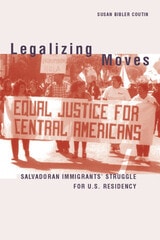
Legalizing Moves
Salvadoran Immigrants' Struggle for U.S. ResidencySusan Bibler Coutin
University of Michigan Press, 2003
Susan Bibler Coutin is Assistant Professor in the Department of Criminology, Law, and Society, at the University of California, Irvine.
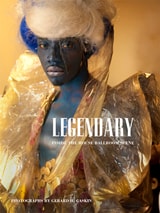
Legendary
Inside the House Ballroom SceneGerard H. Gaskin
Duke University Press, 0
From the quiet backstage, to the shimmering energies of the runway. to the electricity of the crowd, Gaskin's photographs take us to the ball. Legendary, comprised of photos taken at events in the New York city area, Philadelphia, Richmond, and Washington, D.C., is a collaboration between Gaskin, a camera-laden outsider who has been attending balls for twenty years, and the house members who let him enter the intimate world of ball culture. In addition to an introduction by Deborah Willis, Legendary includes an essay, "The Queer Undercommons," by Frank Roberts.

Legends of the Warring States
Persuasions, Romances, and Stories from <em>Chan-kuo Ts'e</em>J. I. Crump
University of Michigan Press, 1998
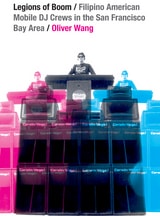
Legions of Boom
Filipino American Mobile DJ Crews in the San Francisco Bay AreaOliver Wang
Duke University Press, 2015

Lessons from "Take Me Home, Country Roads"
Identity, (Be)Longing, and Imagined LandscapesSarah L. Morris
West Virginia University Press, 2025
This book examines “Country Roads” as it illuminates a universal sense of belonging to place even as it obscures the literality of the place it names. In examining “Country Roads” as anthem, text, artifact, and rhetoric, this work untangles ideas related to place, belonging, identity, and pedagogy. Sarah L. Morris uses the Welsh term hiraeth, which is an existential longing for an idealized, sometimes imaginary home, as a governing framework for this work. She explores the song in various contexts, such as how it pertains to West Virginia geography and heritage and the diversity of these beliefs, external perceptions of the state, concepts of home and belonging, and the song as a phenomenon across different media platforms. “Take Me Home, Country Roads,” while being about West Virginia, has registered as a global phenomenon.
Lessons from East Asia
Danny M. Leipziger, Editor
University of Michigan Press, 2001
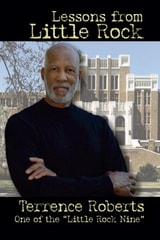
Lessons from Little Rock
Terrance Roberts
Butler Center for Arkansas Studies, 2009
Lessons in Modern Hebrew
Level 1Edna Amir Coffin
University of Michigan Press, 1977
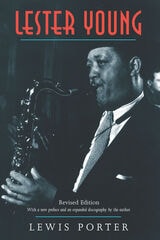
Lester Young
Lewis Porter
University of Michigan Press, 2005
". . . a schematic of unparalleled insight and detail."
---Down Beat
"A monumental work."
---Dizzy Gillespie
". . . a major contribution to jazz scholarship . . . for its illumination of Lester Young's music and for setting the biographical record straight."
---Dan Morgenstern
Several new biographies of Lester Young have been published in the years since Lewis Porter's Lester Young first appeared, but none have supplanted or even attempted the in-depth study that Porter brings to his subject's music. With the same care and scholarship that characterized his John Coltrane, Porter analyzes the music that made Lester Young "the most original tenor sax in jazz."
In addition to helping us understand Lester Young's playing and stylistic evolution, Porter's analysis demonstrates that Young's playing at the end of his career did not mark a serious decline over his earlier style, as many critics have claimed.
Let Me Live
Angelo Herndon
University of Michigan Press, 2007
Let Me Live tells the remarkable story of Angelo Herndon, a coal miner who worked as a labor organizer in Alabama and Georgia in the 1930s. Herndon led a racially integrated march of the unemployed in 1932 and was subsequently arrested when Communist Party literature was found in his bedroom. His trial made only small headlines at first, but eventually an international campaign to free him emerged, thanks to the efforts of the Communist Party and of labor unions interested in protecting the right to organize in the South. Herndon was finally set free by the U.S. Supreme Court, with the help of well-known leaders including C. Vann Woodward, Thurgood Marshall, A. Philip Randolph, and Whitney North Seymour, Sr.
Written while Herndon was in prison, Let Me Live tells the story behind his arrest and his struggle through the courts. It also describes his early life as a young boy in poverty, as a laborer in the Kentucky mines, and as a construction gang worker and traces the birth and development of his passion for the Communist Party. Originally published in 1937, this is the first new edition of Let Me Live since 1969, when Howard N. Meyer rescued it from obscurity. The book features texts from the Georgia and U.S. Supreme Court decisions, the text of Herndon’s speech, and newspaper editorials from the era. A substantive and thought-provoking introduction by Marlon B. Ross of the University of Virginia sheds light on this unique story and its importance to our understanding of the intersection of race and class in America—past and present.
“A book which every thoughtful American may do well to read. It is moving and challenging as the story of one man’s life and the question of one man’s fate.”
—New York Times
Letras y Limpias
Decolonial Medicine and Holistic Healing in Mexican American LiteratureAmanda Ellis
University of Arizona Press, 2021
Ellis explores the curandera in relationship to decoloniality, bioethics, and the topic of healing while recognizing the limitations and spiritual shortcomings of Western medicine. Ellis argues that our contemporary western health-care system does not know how to fully grapple with illnesses that patients face. Ellis reads the curandera’s perennial representation as an ongoing example of decolonial love useful for deconstructing narrow definitions of health and personhood, and for grappling with the effects of neoliberalism and colonialism on the health-care industry.
Letras y Limpias draws from Chicana feminist theory to assert the importance of the mindbodyspirit connection. Ellis conveys theoretical insights about the continual reimagining of the figure of the curandera as a watermark across Mexican American literary texts. This literary figure points to the oppressive forces that create susto and reminds us that healing work requires specific attention to colonialism, its legacy, and an intentional choice to carry forward the traditional practices rooted in curanderismo passed on from prior generations. By turning toward the figure of the curandera, readers are better poised to challenge prevailing ideas about health, and imagine ways to confront the ongoing problems that coloniality creates. Letras y Limpias shows how the figure of the curandera offers us ways to heal that have nothing to do with copays or medical professionals refusing care, and everything to do with honoring the beauty and complexity of any, every, and all humans.
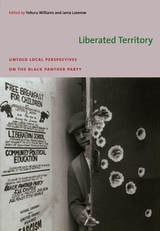
Liberated Territory
Untold Local Perspectives on the Black Panther PartyYohuru Williams and Jama Lazerow, eds.
Duke University Press, 2008
The histories and character of the party branches vary as widely as their locations. The Cape Verdeans of New Bedford, Massachusetts, were initially viewed as a particular challenge for the local Panthers but later became the mainstay of the Boston-area party. In the early 1970s, the Winston-Salem, North Carolina, chapter excelled at implementing the national Black Panther Party’s strategic shift from revolutionary confrontation to mainstream electoral politics. In Detroit, the Panthers were defined by a complex relationship between their above-ground activities and an underground wing dedicated to armed struggle. While the Milwaukee chapter was born out of a rising tide of black militancy, it ultimately proved more committed to promoting literacy and health care and redressing hunger than to violence. The Alabama Black Liberation Front did not have the official imprimatur of the national party, but it drew heavily on the Panthers’ ideas and organizing strategies, and its activism demonstrates the broad resonance of many of the concerns articulated by the national party: the need for jobs, for decent food and housing, for black self-determination, and for sustained opposition to police brutality against black people. Liberated Territory reveals how the Black Panther Party’s ideologies, goals, and strategies were taken up and adapted throughout the United States.
Contributors: Devin Fergus, Jama Lazerow, Ahmad A. Rahman, Robert W. Widell Jr., Yohuru Williams
Liberation and Education
Perspectives on Black Educational ThoughtRonald E. Chennault
Rutgers University Press, 2026
Liberation and Education brings together a collection of essays about Black educators’ and organizations’ quests to cultivate and employ educational strategies for the liberation of Black people. The contributions examine the enduring nature of Black people’s thinking about education prior to and through enslavement to the present. It documents a variety of critical accounts of how Black people have developed ways to free themselves mentally from the legacies of slavery, the view of Black inferiority, and historical and systemic racism.
Life Undocumented
Latinx Youth Navigating Place and BelongingEdelina M. Burciaga
University of Arizona Press, 2025
The book is about how undocumented young adults in these two contexts navigate the pathway to and through adulthood, and the powerful role state laws and policies play in shaping their prospects for social mobility and their sense of belonging. Edelina M. Burciaga examines how state laws and policies in California and Georgia shape the pathways to adulthood for these individuals. California, with its supportive legal frameworks, contrasts sharply with Georgia’s restrictive environment, highlighting the significant impact of state-level immigration policies.
The book highlights the complexities and contradictions that emerge from these distinct legal ecologies, which include the intersections of federal, state, local, familial, and individual dynamics, and shape the daily lives and future orientations of undocumented young adults. This book underscores the resilience and agency of undocumented youth as they confront and resist the structural constraints imposed by immigration laws, offering a vivid portrayal of their emotional and social journeys. This book is a vital resource for anyone committed to creating equitable and inclusive systems for undocumented students.