Results by title
22279 books match the query 'Social Science' and 714 start with l
Latinx Teens
U.S. Popular Culture on the Page, Stage, and ScreenTrevor Boffone and Cristina Herrera
University of Arizona Press, 2022
In this exciting new book, Trevor Boffone and Cristina Herrera explore the diverse ways that contemporary mainstream film, television, theater, and young adult literature invokes, constructs, and interprets adolescent Latinidad. Latinx Teens shows how coming-of-age Latinx representation is performed in mainstream media, and how U.S. audiences consume Latinx characters and stories. Despite the challenges that the Latinx community face in both real and fictional settings, Latinx teens in pop culture forge spaces that institutionalize Latinidad. Teen characters make Latinx adolescence mainstream and situate teen characters as both in and outside their Latinx communities and U.S. mainstream culture, conveying the complexities of “fitting in,” and refusing to fit in all at the same time.
Fictional teens such as Spider-Man’s Miles Morales, I Am Not Your Perfect Mexican Daughter’s Julia Reyes, Party of Five’s Acosta siblings, and In the Heights’s Nina Rosario comprise a growing body of pop culture media that portray young Latinxs as three-dimensional individuals who have agency, authenticity, and serious charisma. Teenagers and young adults have always had the power to manifest social change, and this book acknowledges, celebrates, and investigates how Latinx teens in popular culture take on important current issues.
With a dynamic interdisciplinary approach, Latinx Teens explores how Latinxs on the cusp of adulthood challenge, transform, expand, and reimagine Latinx identities and their relationships to mainstream U.S. popular culture in the twenty-first century.
The book makes a critical intervention into Latinx studies, youth studies, and media cultures. Students and scholars alike will benefit from the book’s organization, complete with chapters that focus on specific mediums and conclude with suggestions for further reading and viewing. As the first book that specifically examines Latinx adolescence in popular culture, Latinx Teens insists that we must privilege the stories of Latinx teenagers in television, film, theater, and literature to get to the heart of Latinx popular culture. Exploring themes around representation, identity, gender, sexuality, and race, the works explored in this groundbreaking volume reveal that there is no single way to be Latinx, and show how Latinx youth are shaping the narrative of the Latinx experience for a more inclusive future.

Latter-day Screens
Gender, Sexuality, and Mediated MormonismBrenda R. Weber
Duke University Press, 2019

Laud Humphreys
Prophet of Homosexuality and SociologyJohn F. Galliher, Wayne Brekhus, and David P. Keys
University of Wisconsin Press, 2004
Laughing Mad
The Black Comic Persona in Post-Soul AmericaHaggins, Bambi
Rutgers University Press, 2007
Winner of the 2008 Katherine Singer Kovacs Book Award
Prior to the civil rights movement, comedians performed for audiences that were clearly delineated by race. Black comedians performed for black audiences and white comedians performed for whites. Yet during the past forty-five years, black comics have become progressively more central to mainstream culture.
In Laughing Mad , Bambi Haggins looks at how this transition occurred in a variety of media and shows how this integration has paved the way for black comedians and their audiences to affect each other. Historically, African American performers have been able to use comedy as a pedagogic tool, interjecting astute observations about race relations while the audience is laughing. And yet, Haggins makes the convincing argument that the potential of African American comedy remains fundamentally unfulfilled as the performance of blackness continues to be made culturally digestible for mass consumption.
Rather than presenting biographies of individual performers, Haggins focuses on the ways in which the comic persona is constructed and changes across media, from stand-up, to the small screen, to film. She examines the comic televisual and cinematic personae of Dick Gregory, Bill Cosby, Flip Wilson, and Richard Pryor and considers how these figures set the stage for black comedy in the next four decades. She reads Eddie Murphy and Chris Rock as emblematic of the first and second waves of post-civil rights era African American comedy, and she looks at the socio-cultural politics of Whoopi Goldberg's comic persona through the lens of gender and crossover. Laughing Mad also explores how the comedy of Dave Chappelle speaks to and for the post-soul generation.
A rigorous analytic analysis, this book interrogates notions of identity, within both the African American community and mainstream popular culture. Written in engaging and accessible prose, it is also a book that will travel from the seminar room, to the barbershop, to the kitchen table, allowing readers to experience the sketches, stand-up, and film comedies with all the laughter they deserve.
Laughing Saints and Righteous Heroes
Emotional Rhythms in Social Movement GroupsErika Summers Effler
University of Chicago Press, 2010
To explore these questions, Erika Summers Effler undertook three years of ethnographic fieldwork with two groups: anti–death penalty activists STOP and the Catholic Workers, who strive to alleviate poverty. In both communities, members must contend with problems that range from the broad to the intimately personal. Adverse political conditions, internal conflict, and fluctuations in financial resources create a backdrop of daily frustration—but watching an addict relapse or an inmate’s execution are much more devastating setbacks. Summers Effler finds that overcoming these obstacles, recovering from failure, and maintaining the integrity of the group require a constant process of emotional fine-tuning, and she demonstrates how activists do this through thoughtful analysis and a lucid rendering of their deeply affecting stories.
Laughing Whitefish
Robert Traver
Michigan State University Press, 2011
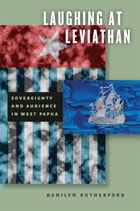
Laughing at Leviathan
Sovereignty and Audience in West PapuaDanilyn Rutherford
University of Chicago Press, 2012
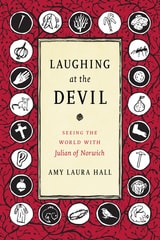
Laughing at the Devil
Seeing the World with Julian of NorwichAmy Laura Hall
Duke University Press, 2018

Laughing at the End of the World
Unsettling Laughter in Black LiteratureDiego A. Millan
Duke University Press, 2027
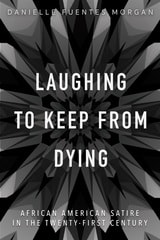
Laughing to Keep from Dying
African American Satire in the Twenty-First CenturyDanielle Fuentes Morgan
University of Illinois Press, 2020
Adventurous and perceptive, Laughing to Keep from Dying reveals how African American satirists unmask the illusions and anxieties surrounding race in the twenty-first century.
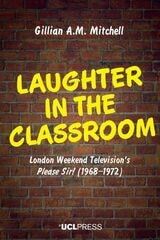
Laughter in the Classroom
London Weekend Television’s Please Sir! (1968–1972)Gillian A.M. Mitchell
University College London, 2026
The first academic study dedicated to Please Sir!, a program that provides valuable insights into British society, television culture, education, and youth culture during the late 1960s and early 1970s.
The situation comedy Please Sir! was televised from 1968 to 1972. This book explores its background, comedic style, cast of characters, its depictions of contemporary issues, and the impact of crises faced by its production company. It argues that Please Sir! reveals much about the social, cultural, and televisual era in which it was produced.
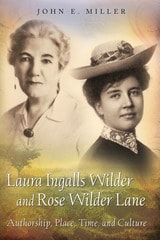
Laura Ingalls Wilder and Rose Wilder Lane
Authorship, Place, Time, and CultureJohn E. Miller
University of Missouri Press, 2008
Interpreting these writers in their larger historical and cultural contexts, Miller reconsiders their formidable artistic, political, and literary contributions to American cultural life in the 1930s. He looks at what was happening in 1932—from depression conditions and politics to chain stores and celebrity culture—to shed light on Wilder’s life, and he shows how actual “little houses” established ideas of home that resonated emotionally for both writers.
In considering each woman’s ties to history, Miller compares Wilder with Frederick Jackson Turner as a frontier mythmaker and examines Lane’s unpublished history of Missouri in the context of a contemporaneous project, Thomas Hart Benton’s famous Jefferson City mural. He also looks at Wilder’s Missouri Ruralist columns to assess her pre–Little House values and writing skills, and he readdresses her literary treatment of Native Americans. A final chapter shows how Wilder’s and Lane’s conservative political views found expression in their work, separating Lane’s more libertarian bent from Wilder’s focus on writing moralist children’s fiction.
These nine thoughtful essays expand the critical discussion on Wilder and Lane beyond the Little House. Miller portrays them as impassioned and dedicated writers who were deeply involved in the historical changes and political challenges of their times—and contends that questions over the books’ authorship do not do justice to either woman’s creative investment in the series. Miller demystifies the aura of nostalgia that often prevents modern readers from seeing Wilder as a real-life woman, and he depicts Lane as a kindred artistic spirit, helping readers better understand mother and daughter as both women and authors.
Laurent Clerc
The Story of His Early YearsCathryn Carroll
Gallaudet University Press, 1991
Laurent Clerc won lasting renown as the deaf teacher who helped Thomas Hopkins Gallaudet establish schools to educate deaf Americans in the 19th century. Now, his character as a young boy growing up in Paris has been captured in the novel Laurent Clerc.
In his own voice, Clerc vividly relates the experiences that led to his later progressive teaching methods. Especially influential was his long stay at the Royal National Institute for the Deaf in Paris, where he encountered sharply distinct personalities — the saintly, inspiring deaf teacher Massieu, the vicious Dr. Itard and his heartless “experiments” on deaf boys, and the “Father of the Deaf,” Abbe Sicard, who could hardly sign.
Young adult readers will find his story richly entertaining as well as informative.
Lavender Fields
Black Women Experiencing Fear, Agency, and Hope in the Time of COVID-19Edited by Julia S. Jordan-Zachery
University of Arizona Press, 2023
Black women and girls in the United States are among the hardest hit by the pandemic in terms of illnesses, deaths, evictions, and increasing economic inequality. Riffing off Alice Walker’s telling of her search for Zora Neal Hurston, the authors of these essays and reflections offer raw tellings of Black girls’ and women’s experiences written in real time, as some of the contributors battled COVID-19 themselves.
The essays center Black girls and women and their testimonies in hopes of moving them from the margin to the center. With a diversity of voices and ages, this volume taps into the Black feminine interior, that place where Audre Lorde tells us that feelings lie, to access knowledge—generational, past, and contemporary—to explore how Black women navigate COVID-19. Using womanism and spirituality, among other modalities, the authors explore deep feelings, advancing Black feminist theorizing on Black feminist praxis and methodology.
In centering the stories of Black girls and women’s experiences with COVID-19, this work brings much-needed justice and equity to conversations about the pandemic. Just as Walker worked diligently to find Hurston, Lavender Fields attempts to “find” Black women amid all we are experiencing, ensuring visibility and attention.
Contributors
Tamaya Bailey
reelaviolette botts-ward
Kyrah K. Brown
Brianna Y. Clark
Kenyatta Dawson
LeConté J. Dill
Maryam O. Funmilayo
Brandie Green
Courtney Jackson
Sara Jean-Francois
Julia S. Jordan-Zachery
Angela K. Lewis-Maddox
Annet Matebwe
Mbali Mazibuko
Radscheda Nobles
Nimot Ogunfemi
J. Mercy Okaalet
Chizoba Uzoamaka Okoroma
Peace Ossom-Williamson
Elizabeth Peart

Lavender Sounds
From Lesbian Radio to Queer Feminist SoundworkStacey Copeland
University of Michigan Press, 2026
Stacey Copeland’s Lavender Sounds explores lesbian radio history and its evolution into queer feminist podcasting today, exploring the politics, aesthetics, and cultural activism embedded in queer feminist soundwork. Through deeply personal and archival explorations, Stacey Copeland traces the emergence of queer feminist soundwork—a unique blend of community-led storytelling, political resistance, and creative expression rooted in feminist and LGBTQ+ activism. At the heart of the book lies a powerful idea: sound is not just heard but felt, connecting generations through shared voices and struggles. In conversation with award-winning and cutting-edge queer and feminist podcast producers from across Canada and the U.S., Lavender Sounds invites us to turn a feminist-embodied ear to the past to uncover the ways gender, race, and sexual orientations are embedded in our everyday media listening practices. From pioneering Canadian radio shows like Vancouver's The Lesbian Show and Montreal's Dykes on Mykes to today’s queer chumcasts and audio documentary, Lavender Sounds is a journey through auditory landscapes where joy, protest, intimacy, and identity intersect. This book opens a vibrant conversation about how radio and podcasting are vital tools for marginalized communities to connect, create, and claim space in the media world.
Law Stories
Gary Bellow and Martha Minow, Editors
University of Michigan Press, 1998
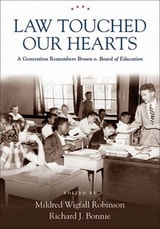
Law Touched Our Hearts
A Generation Remembers Brown v. Board of EducationMildred Wigfall Robinson
Vanderbilt University Press, 2008
What Brown did was to elevate race from the country's dirty secret to its most urgent topic of conversation. This book stands alone in presenting, in one source, stories of black and white Americans, men and women, from all parts of the nation, who were public school students during the years immediately after Brown. All shared an epiphany. Some became aware of race and the burden of racial separation. Others dared to hope that the yoke of racial oppression would at last be lifted.
The editors surveyed 4750 law professors born between 1936 and 1954, received 1000 responses, and derived these forty essays from those willing to write personal accounts of their childhood experiences in the classroom and in their communities. Their moving stories of how Brown affected them say much about race relations then and now. They also provide a picture of how social change can shape the careers of an entire generation in one profession.
Contributors provide accounts from across the nation. Represented are
-de jure states, those segregated by law at the time of Brown, including Alabama, Florida, Georgia, Louisiana, Maryland, Mississippi, North Carolina, South Carolina, Tennessee, Virginia, as well as the District of Columbia
-de facto states, those where segregation was illegal but a common practice, including California, Illinois, Kansas, Massachusetts, Missouri, New Jersey, New York, Ohio, Washington, and Wisconsin.
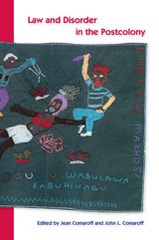
Law and Disorder in the Postcolony
Edited by Jean Comaroff and John L. Comaroff
University of Chicago Press, 2006
Are postcolonies haunted more by criminal violence than other nation-states? The usual answer is yes. In Law and Disorder in the Postcolony, Jean and John Comaroff and a group of respected theorists show that the question is misplaced: that the predicament of postcolonies arises from their place in a world order dominated by new modes of governance, new sorts of empires, new species of wealth—an order that criminalizes poverty and race, entraps the “south” in relations of corruption, and displaces politics into the realms of the market, criminal economies, and the courts.
As these essays make plain, however, there is another side to postcoloniality: while postcolonies live in states of endemic disorder, many of them fetishize the law, its ways and itsmeans. How is the coincidence of disorder with a fixation on legalities to be explained? Law and Disorder in the Postcolony addresses this question, entering into critical dialogue with such theorists as Benjamin, Agamben, and Bayart. In the process, it also demonstrates how postcolonies have become crucial sites for the production of contemporary theory, not least because they are harbingers of a global future under construction.
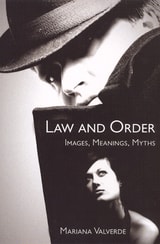
Law and Order
Images, Meanings, MythsValverde, Mariana
Rutgers University Press, 2006
But with television courtrooms appearing more like the studio of The Jerry Springer Show than institutions of justice, and with weekly dramas seamlessly blending cutting-edge forensic science with exaggerated fictions, it calls to question: just what is it about these shows that has the public so captivated? And, what effects do the images of crime and order presented through the media have on society's view of the actual legal and criminal justice systems?
In Law and Order: Images, Meanings, Myths, Mariana Valverde draws on examples from film, television, and newspapers to examine these questions and to demonstrate how popular culture is creating an unrealistic view of crime and crime control. Valverde argues that understanding the impact of media representations of courtrooms, police departments, prisons, and the people who populate them is essential to comprehending the reality of criminal justice.
Introducing a wealth of resources in social and cultural studies along with suggestions for classroom discussions and assignments, this book pushes the field of criminology in new and exciting theoretical directions. It is essential reading for students and scholars of criminal justice and law.

Law and the Balance of Power
The Automobile Manufacturers and their DealersStewart Macaulay
Russell Sage Foundation, 1966

Law and the Environment
A Multidisciplinary ReaderRobert Percival
Temple University Press, 1997
Law and the Environment: A Multidisciplinary Reader brings together for the first time some of the most important original work on environmental policy by scientists, ecologists, philosophers, historians, economists, and legal scholars. Each of the book's four parts provides a different focus on the nature and scope of environmental problems and attempts to use public policy to address these concerns. Part I examines how ecology, economics, and ethics analyze environmental problems and why they support collective action to respond to them. Part II examines the history and present state of environmental law, from early attempts to engage the government to current debate over the effectiveness of environmental policy. Part III explores the process by which environmental law gets translated into regulatory policy. Part IV considers the future of environmental law at a time when international environmental concerns have become a major force in global diplomacy and international trade agreements.
In drawing together a wide variety of perspectives on these issues, Robert V. Percival and Dorothy C. Alevizatos offer a comprehensive examination of how society has responded to the difficult challenges posed by environmental problems. The selections provide a rich introduction to the complexities of environmental policy disputes.
Law and the Social Sciences
Leon Lipson
Russell Sage Foundation, 1987
The notion of law as a social phenomenon would have surprised educators and scholars a century ago. For them, law was a science and the library was the ultimate source of all legal knowledge. Our contemporary willingness to see law in a social context—reflecting social relations, for example, or precipitating social changes—is a relatively recent development, spurred during the last quarter century by the work of a generation of scholars (mostly social scientists and law professors) who believe the perspectives of the social sciences are essential to a better understanding of the law.
Law and the Social Sciences provides a unique and authoritative assessment of modern sociolegal research. Its impressive range and depth, the centrality of its concerns, and the stature of its contributors all attest to the vitality of the law-and-society movement and the importance of interdisciplinary work in this field.
Each chapter is both an exposition of its author’s point of view and a survey of the pertinent literature. In treating such topics as law and the economic order, legal systems of the world, the deterrence doctrine, and access to justice, the authors explore overlapping themes—the tension between public and private domains, between diffused and concentrated power, between the goals of uniformity and flexibility, between costs and benefits—that are significant to observers not only of our legal institutions but of other social systems as well.

Law and the Social Sciences
The Second Half CenturyJulius Stone
University of Minnesota Press, 1966
Law and the Social Sciences was first published in 1966. Minnesota Archive Editions uses digital technology to make long-unavailable books once again accessible, and are published unaltered from the original University of Minnesota Press editions.
The author, a distinguished authority on law, provides an illuminating and challenging discussion of the social aspects of law and legal problems. As a background to some penetrating observations, he takes stock of the contributions and interrelations of the bodies of knowledge, from both the juristic and the social science side, which bear upon the study of law at the present time. He is concerned to show the respects in which jurisprudential ideas in this area have been stimulated and clarified by work in the social sciences, and, conversely, to draw attention to the need for the increased interest of social scientists in this area to take account of juristic insights, many of them of long standing. He points out some of the dangers, not limited to waste of effort, arising from "parochialism" on the part of either the lawyer or the social scientist. The final section is devoted to a study of the contributions, potentialities, and limits of behavioralist and computer techniques in understanding and operating the appellate judicial process.
The book is based on a series of three lectures given by the author as the William S. Pattee Memorial Lectures sponsored by the University of Minnesota Law School.
Law and the Visible
Edited by Austin Sarat, Lawrence Douglas, and Martha Merrill Umphrey
University of Massachusetts Press, 2021
Individual essays discuss the culpability of those who record violence, the history of racialized violence as it streams through police bodycams, the idea of digital images as objective or neutral, the logics of surveillance and transparency, and a defense of anonymity in the digital age.
Contributors include Benjamin J. Goold, Torin Monahan, Kelli Moore, Eden Osucha, Jennifer Peterson, and Carrie A. Rentschler.
Law by Night
Jonathan Goldberg-Hiller
Duke University Press, 2023
Law in a Lawless Land
Diary of a Limpieza in ColombiaMichael Taussig
University of Chicago Press, 2005
Law in a Lawless Land offers a rare and penetrating insight into the nature of Colombia's present peril. In a nuanced account of the human consequences of a disintegrating state, anthropologist Michael Taussig chronicles two weeks in a small town in Colombia's Cauca Valley taken over by paramilitaries that brazenly assassinate adolescent gang members. Armed with automatic weapons and computer-generated lists of names and photographs, the paramilitaries have the tacit support of the police and even many of the desperate townspeople, who are seeking any solution to the crushing uncertainty of violence in their lives. Concentrating on everyday experience, Taussig forces readers to confront a kind of terror to which they have become numb and complacent.
"If you want to know what it is like to live in a country where the state has disintegrated, this moving book by an anthropologist well known for his writings on murderous Colombia will tell you."—Eric Hobsbawm
Law in the Domains of Culture
Austin Sarat and Thomas R. Kearns, Editors
University of Michigan Press, 2000
Law's Madness
Austin Sarat, Lawrence Douglas, and Martha Merrill Umphrey, Editors
University of Michigan Press, 2006
The distinguished contributors to Law's Madness propose a fascinating interdisciplinary approach to the instability and mutual permeability of law and madness. Their essays examine a variety of discursive forms—from the literary to the historical to the psychoanalytic—in which law is driven more by narrative than by reason. Their studies delineate the ways in which the law takes its definition in part from that which it excludes, suppresses, or excises from itself, illuminating the drive to enforce barriers between non-reason and legality, while simultaneously shedding new light on the constitutive force of the irrational in legal doctrine.
Law's Madness suggests that the tense and paradoxical relationship between law and madness is precisely what erects and sustains law. This provocative collection asks what must be forgotten in order to uphold the rule of law.
Austin Sarat is William Nelson Cromwell Professor of Jurisprudence and Political Science at Amherst College. Lawrence Douglas is Associate Professor of Law, Jurisprudence, and Social Thought at Amherst College. Martha Merrill Umphrey is Associate Professor of Law, Jurisprudence, and Social Thought at Amherst College.

Law's Violence
Austin Sarat and Thomas R. Kearns, Editors
University of Michigan Press, 1995

Law, Sex, and Christian Society in Medieval Europe
James A. Brundage
University of Chicago Press, 1990
"Brundage's book is consistently learned, enormously useful, and frequently entertaining. It is the best we have on the relationships between theological norms, legal principles, and sexual practice."—Peter Iver Kaufman, Church History
Lawful Repair
Reimagining Law Through Queer DissentDanish Sheikh
Duke University Press, 2027

Lawfully Wedded Husband
How My Gay Marriage Will Save the American FamilyJoel Derfner
University of Wisconsin Press, 2013
Add to the mix a reality show whose director forces them to keep signing and notarizing applications for a wedding license until the cameraman gets a shot she likes; a family marriage history that includes adulterers, arms smugglers, and poisoners; and discussions of civil rights, Sophocles, racism, grammar, and homemade Ouija boards—coupled with Derfner's gift for getting in his own way—and what results is a story not just of gay marriage and the American family but of what it means to be human.
Lawn People
How Grasses, Weeds, and Chemicals Make Us Who We ArePaul Robbins
Temple University Press, 2007
For some people, their lawn is a source of pride, and for others, caring for their lawn is a chore. Yet for an increasing number of people, turf care is a cause of ecological anxiety. In Lawn People, author Paul Robbins, asks, "How did the needs of the grass come to be my own?" In his goal to get a clearer picture of why people and grasses do what they do, Robbins interviews homeowners about their lawns, and uses national surveys, analysis from aerial photographs, and economic data to determine what people really feel about-and how they treat-their lawns.
Lawn People places the lawn in its ecological, economic, and social context. Robbins considers the attention we pay our turfgrass-the chemicals we use to grow lawns, the hazards of turf care to our urban ecology, and its potential impact on water quality and household health. He also shows how the ecology of cities creates certain kinds of citizens, deftly contrasting man's control of the lawn with the lawn's control of man.
Lawn People provides an intriguing examination of nature's influence on landscape management and on the ecosystem.

Laws of Chance
Brazil's Clandestine Lottery and the Making of Urban Public LifeAmy Chazkel
Duke University Press, 2011
Laws of Our Fathers
Popular Culture and the U.S. ConstitutionEdited by Ray B. Browne and Glenn J. Browne
University of Wisconsin Press, 1986
Laws of the Postcolonial
Eve Darian-Smith and Peter Fitzpatrick, Editors
University of Michigan Press, 1999
In perceptions of Western law there is an enduring disparity between law's pervasive power and its fragility. Many of these essays provide graphic accounts of law's tremendous shaping power in that massive occidental movement which settled and unsettled the globe. These accounts point to the West's encompassing and transforming of other peoples and other legal systems in ways which constitute and confirm the West in its own self-creation. Other essays deal with situations "within" the West which show how its identity is created, sustained, and also challenged in a constant reference to those contrary "others" which a powerful law has shaped and transformed. This challenge comes not least from the resistance of those "others" --resistances that profoundly disrupt the West and its law, revealing them as fractured at the seemingly confident core of their own self-constitution.
Contributors include Antony Anghie, Rolando Gaete, Alan Norrie, Dianne Otto, Paul Passavant, Jeannine Perdy, Colin Perrin, Annelise Riles, Roshan de Silva, and John Strawson, in addition to the editors.
Eve Darian-Smith is Assistant Professor of Anthropology, University of California, Santa Barbara. Peter Fitzpatrick is Professor of Law, Queen Mary and Westfield College, University of London.
Lawyer and Client
Who's in ChargeDouglas E. Rosenthal
Russell Sage Foundation, 1974

Laying Claim
African American Cultural Memory and Southern IdentityPatricia G. Davis
University of Alabama Press, 2016
Reclaiming Southern history through the voices, memories, and experiences of African Americans.
In Laying Claim: African American Cultural Memory and Southern Identity, Patricia Davis identifies the Civil War as the central narrative around which official depictions of southern culture have been defined. Because that narrative largely excluded African American points of view, the resulting southern identity was monolithically white. Davis traces how the increasing participation of black public voices in the realms of Civil War memory—battlefields, museums, online communities—has dispelled the mirage of “southernness” as a stolid cairn of white culture and has begun to create a more fluid sense of southernness that welcomes contributions by all of the region’s peoples.
Laying Claim offers insightful and penetrating examinations of African American participation in Civil War reenactments; the role of black history museums in enriching representations of the Civil War era with more varied interpretations; and the internet as a forum within which participants exchange and create historical narratives that offer alternatives to unquestioned and dominant public memories. From this evolving cultural landscape, Davis demonstrates how simplistic caricatures of African American experiences are giving way to more authentic, expansive, and inclusive interpretations of southernness.
As a case-study and example of change, Davis cites the evolution of depictions of life at Thomas Jefferson’s Monticello. Where visitors to the site once encountered narratives that repeated the stylized myth of Monticello as a genteel idyll, modern accounts of Jefferson’s day offer a holistic, inclusive, and increasingly honest view of Monticello as the residents on every rung of the social ladder experienced it.
Contemporary violence and attacks about or inspired by the causes, outcomes, and symbols of the Civil War, even one hundred and fifty years after its end, add urgency to Davis’s argument that the control and creation of public memories of that war is an issue of concern not only to scholars but all Americans. Her hopeful examination of African American participation in public memory illuminates paths by which this enduring ideological impasse may find resolutions.
Lazy Virtues
Teaching Writing in the Age of WikipediaRobert E. Cummings
Vanderbilt University Press, 2008
Focusing largely on the controversial website Wikipedia, the author explores the challenges confronting teachers of college writing in the increasingly electronic and networked writing environments their students use every day. Rather than praising or condemning that site for its role as an encyclopedia, Cummings instead sees it as a site for online collaboration between writers and a way to garner audience for student writing.
Applying an understanding of Commons-Based Peer Production theory, as developed by Yochai Benkler, this text is arranged around the following propositions:
-- Commons-Based Peer Production is a novel economic phenomenon which informs our current teaching model and describes a method for making sense of future electronic developments.
-- College writers are motivated to do their best work when they write for an authentic audience, external to the class.
-- Writing for a networked knowledge community invites students to participate in making knowledge, rather than only consuming it.
-- A plan for integrating networked writing for an external audience helps students understand the transition from high school to college writing.
-- Allowing students to review and self-select points of entry into electronic discourse fosters "laziness," or a new work dynamic where writers seek to better understand their own creativity in terms of a project's demands.
Lazy Virtues offers networked writing assignments to foster development of student writers by exposing them to the demands of professional audiences, asking them to identify and assess their own creative impulses in terms of a project's needs, and removing the writing teacher from the role of sole audience.
Le Maya Q’atzij/Our Maya Word
Poetics of Resistance in GuatemalaEmil’ Keme
University of Minnesota Press, 2021
Bringing to the fore the voices of Maya authors and what their poetry tells us about resistance, sovereignty, trauma, and regeneration
In 1954, Guatemala suffered a coup d’etat, resulting in a decades-long civil war. During this period, Indigenous Mayans were subject to displacement, disappearance, and extrajudicial killing. Within the context of the armed conflict and the postwar period in Guatemala, K’iche’ Maya scholar Emil’ Keme identifies three historical phases of Indigenous Maya literary insurgency in which Maya authors use poetry to dignify their distinct cultural, political, gender, sexual, and linguistic identities.
Le Maya Q’atzij / Our Maya Word employs Indigenous and decolonial theoretical frameworks to critically analyze poetic works written by ten contemporary Maya writers from five different Maya nations in Iximulew/Guatemala. Similar to other Maya authors throughout colonial history, these authors and their poetry criticize, in their own creative ways, the continuing colonial assaults to their existence by the nation-state. Throughout, Keme displays the decolonial potentialities and shortcomings proposed by each Maya writer, establishing a new and productive way of understanding Maya living realities and their emancipatory challenges in Iximulew/Guatemala.
This innovative work shows how Indigenous Maya poetics carries out various processes of decolonization and, especially, how Maya literature offers diverse and heterogeneous perspectives about what it means to be Maya in the contemporary world.
Leaders of Their Race
Educating Black and White Women in the New SouthSarah Case
University of Illinois Press, 2017
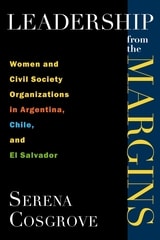
Leadership From the Margins
Women and Civil Society Organizations in Argentina, Chile, and El SalvadorCosgrove, Serena
Rutgers University Press, 2010
Leadership from the Margins describes and analyzes the unique leadership styles and challenges facing the women leaders of CSOs in Argentina, Chile, and El Salvador. Based on ethnographic research, Serena Cosgrove's analysis offers a nuanced account of the distinct struggles facing women, and how differences of class, political ideology, and ethnicity have informed their outlook and organizing strategies. Using a gendered lens, she reveals the power and potential of women's leadership to impact the direction of local, regional, and global development agendas.
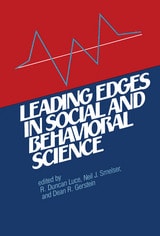
Leading Edges in Social and Behavioral Science
R. Duncan Luce
Russell Sage Foundation, 1990
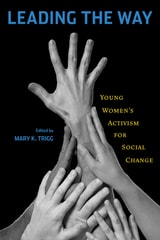
Leading the Way
Young Women's Activism for Social ChangeTrigg, Mary K
Rutgers University Press, 2009
Bringing together graduates of a women's leadership certificate program at Rutgers University's Institute for Women's Leadership, these essays provide a contrasting picture to assumptions about the current death of feminism, the rise of selfishness and individualism, and the disaffected Millennium Generation. Reflecting on a critical juncture in their lives, the years during college and the beginning of careers or graduate studies, the contributors' voices demonstrate the ways that diverse, young, educated women in the United States are embodying and formulating new models of leadership, at the same time as they are finding their own professional paths, ways of being, and places in the world. They reflect on controversial issues such as gay marriage, gender, racial profiling, war, immigration, poverty, urban education, and health care reform in a post-9/11 era.
Leading the Way introduces readers to young women who are being prepared and empowered to assume leadership roles with men in all public arenas, and to accept equal responsibility for making positive social change in the twenty-first century.
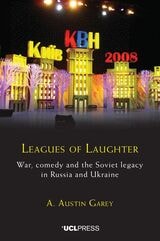
Leagues of Laughter
War, Comedy and the Soviet Legacy in Russia and UkraineA. Austin Garey
University College London, 2025
Leagues of Laughter traces the evolution of a Soviet-created youth game called KVN (Klub veselykh i nakhodchivykh or Club of the Cheerful and Clever) over sixty years as students’ nation-states collapsed, competed, and eventually went to war. Through cross-border narratives, the book shows how humor persists—and transforms—amid authoritarianism, censorship, and conflict. With insight and compassion, author A. Austin Garey reveals how laughter became a mode of resistance, identity, and cultural continuity in the long cultural context of the war in Ukraine. In addition to introducing a novel theory of “tradition as stance” to explain how traditions are reproduced and reinterpreted over time, the book offers a compelling comparative analysis of cultural production under political pressure.
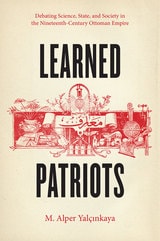
Learned Patriots
Debating Science, State, and Society in the Nineteenth-Century Ottoman EmpireM. Alper Yalçinkaya
University of Chicago Press, 2015
In Learned Patriots, M. Alper Yalçinkaya examines what it meant for nineteenth-century Ottoman elites themselves to have a debate about science. Yalçinkaya finds that for anxious nineteenth-century Ottoman politicians, intellectuals, and litterateurs, the chief question was not about the meaning, merits, or dangers of science. Rather, what mattered were the qualities of the new “men of science.” Would young, ambitious men with scientific education be loyal to the state? Were they “proper” members of the community? Science, Yalçinkaya shows, became a topic that could hardly be discussed without reference to identity and morality.
Approaching science in culture, Learned Patriots contributes to the growing literature on how science travels, representations and public perception of science, science and religion, and science and morality. Additionally, it will appeal to students of the intellectual history of the Middle East and Turkish politics.
Learning More from Social Experiments
Evolving Analytic ApproachesHoward S. Bloom
Russell Sage Foundation, 2005
Learning One’s Native Tongue
Citizenship, Contestation, and Conflict in AmericaTracy B. Strong
University of Chicago Press, 2019
With Learning One’s Native Tongue, Tracy B. Strong explores the development of the concept of American citizenship and what it means to belong to this country,
starting with the Puritans in the seventeenth century and continuing to the present day. He examines the conflicts over the meaning of citizenship in the writings and speeches of prominent thinkers and leaders ranging from John Winthrop and Roger Williams to Thomas Jefferson, Nathaniel Hawthorne, Abraham Lincoln, Frederick Douglass, and Franklin Roosevelt, among many others who have participated in these important cultural and political debates. The criteria that define what being a citizen entails change over time and in response to historical developments, and they are thus also often the source of controversy and conflict, as with voting rights for women and African Americans. Strong looks closely at these conflicts and the ensuing changes in the conception of citizenship, paying attention to what difference each change makes and what each particular conception entails socially and politically.

Learning Politics From Sivaram
The Life and Death of a Revolutionary Tamil Journalist in Sri LankaMark P. Whitaker
Pluto Press, 2007
This remarkable book is both an intimate portrait of the man and a fascinating account of the political dilemmas that he faced—and that still face us today. It explains how an educated man adopts a position of supporting violence. And while his position softens, Sivaram remains critical of the liberal principles that govern Western policy. Written by a close friend, this unique account highlights some of the most difficult political questions facing us today.
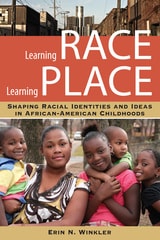
Learning Race, Learning Place
Shaping Racial Identities and Ideas in African American ChildhoodsWinkler, Erin N
Rutgers University Press, 2012
In an American society both increasingly diverse and increasingly segregated, the signals children receive about race are more confusing than ever. In this context, how do children negotiate and make meaning of multiple and conflicting messages to develop their own ideas about race? Learning Race, Learning Place engages this question using in-depth interviews with an economically diverse group of African American children and their mothers.
Through these rich narratives, Erin N. Winkler seeks to reorient the way we look at how children develop their ideas about race through the introduction of a new framework—comprehensive racial learning—that shows the importance of considering this process from children’s points of view and listening to their interpretations of their experiences, which are often quite different from what the adults around them expect or intend. At the children’s prompting, Winkler examines the roles of multiple actors and influences, including gender, skin tone, colorblind rhetoric, peers, family, media, school, and, especially, place. She brings to the fore the complex and understudied power of place, positing that while children’s racial identities and experiences are shaped by a national construction of race, they are also specific to a particular place that exerts both direct and indirect influence on their racial identities and ideas.