Results by title
22279 books match the query 'Social Science' and 714 start with l
Life at Swift Water Place
Northwest Alaska at the Threshold of European ContactEdited by Doug D. Anderson and Wanni W. Anderson
University of Alaska Press, 2019
Life at the Margins of the State
Comparative Landscapes from the Old and New WorldsAlicia M. Boswell
University Press of Colorado, 2022
Case studies from the New and Old Worlds—including historic California, medieval Iceland, ancient Mesoamerica, ancient Nubia, colonial El Salvador, the prehistoric Levant, pre-Columbian Amazon, Africa’s historic central Sahel, and ancient Peru—offer novel perspectives on how borderland societies adapted to the unique human and natural environments of these liminal spaces. Contributors draw on archaeological evidence as well as historical documents and linguistic data to facilitate the documentation of local histories and the strategies employed by communities living in or near ancient states and empires.
This close study of groups on the margins shows that peripheral polities are not simply the by-products of complexity emanating from a political core and demonstrates that traditional assumptions and models need to be reconsidered.
Contributors:
Tara D. Carter, Mikael Fauvelle, Elena A.A. Garcea, Esteban Gomez, Scott MacEachern, Claire Novotny, Bradley J Parker, Erin Smith, John H. Walker
Life beside Bars
Confinement and Capital in an American Prison TownHeath Pearson
Duke University Press, 2024
Life between Two Deaths, 1989-2001
U.S. Culture in the Long NinetiesPhillip E. Wegner
Duke University Press, 2009
Wegner shows how phenomena including the debate on globalization, neoliberal notions of the end of history, the explosive growth of the Internet, the efflorescence of new architectural and urban planning projects, developments in literary and cultural production, new turns in theory and philosophy, and the rapid growth of the antiglobalization movement came to characterize the long nineties. He offers readings of some of the most interesting cultural texts of the era: Don DeLillo’s White Noise; Joe Haldeman’s Forever trilogy; Octavia Butler’s Parable novels; the Terminator films; the movies Fight Club, Independence Day, Cape Fear, and Ghost Dog; and the television series Buffy the Vampire Slayer. In so doing, he illuminates fundamental issues concerning narrative, such as how beginnings and endings are recognized and how relationships between events are constructed.
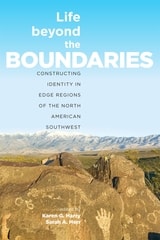
Life beyond the Boundaries
Constructing Identity in Edge Regions of the North American SouthwestKaren Harry
University Press of Colorado, 2018
Life beyond the Boundaries explores identity formation on the edges of the ancient Southwest. Focusing on some of the more poorly understood regions, including the Jornada Mogollon, the Gallina, and the Pimería Alta, the authors use methods drawn from material culture science, anthropology, and history to investigate themes related to the construction of social identity along the perimeters of the American Southwest.
Through an archaeological lens, the volume examines the social experiences of people who lived in edge regions. Through mobility and the development of extensive social networks, people living in these areas were introduced to the ideas and practices of other cultural groups. As their spatial distances from core areas increased, the degree to which they participated in the economic, social, political, and ritual practices of ancestral core areas increasingly varied. As a result, the social identities of people living in edge zones were often—though not always—fluid and situational.
Drawing on an increase of available information and bringing new attention to understudied areas, the book will be of interest to scholars of Southwestern archaeology and other researchers interested in the archaeology of low-populated and decentralized regions and identity formation. Life beyond the Boundaries considers the various roles that edge regions played in local and regional trajectories of the prehistoric and protohistoric Southwest and how place influenced the development of social identity.
Contributors: Lewis Borck, Dale S. Brenneman, Jeffery J. Clark, Severin Fowles, Patricia A. Gilman, Lauren E. Jelinek, Myles R. Miller, Barbara J. Mills, Matthew A. Peeples, Kellam Throgmorton, James T. Watson
Life by Algorithms
How Roboprocesses Are Remaking Our WorldEdited by Catherine Besteman and Hugh Gusterson
University of Chicago Press, 2019
Although automatic processes are designed to be engines of rational systems, the stories in Life by Algorithms reveal how they can in fact produce absurd, inflexible, or even dangerous outcomes. Joining the call for “algorithmic transparency,” the contributors bring exceptional sensitivity to everyday sociality into their critique to better understand how the perils of modern technology affect finance, medicine, education, housing, the workplace, food production, public space, and emotions—not as separate problems but as linked manifestations of a deeper defect in the fundamental ordering of our society.
Contributors
Catherine Besteman, Alex Blanchette, Robert W. Gehl, Hugh Gusterson, Catherine Lutz, Ann Lutz Fernandez, Joseph Masco, Sally Engle Merry, Keesha M. Middlemass, Noelle Stout, Susan J. Terrio
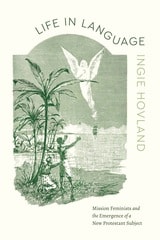
Life in Language
Mission Feminists and the Emergence of a New Protestant SubjectIngie Hovland
University of Chicago Press, 2025
The language of the Bible is a powerful lens through which many Protestants understand themselves and their world, and its prohibitions on women’s speech pose complicated challenges to women. Nevertheless, women frequently serve as vocal leaders in Protestant organizations, including the early twentieth-century Norwegian Mission Society. In Life in Language, Ingie Hovland offers a unique biography of Henny Dons, a leader of the society’s so-called mission feminists, that grapples with ways Protestant women crafted innovative, expansive self-understandings through Christian language. More than their male peers, the mission feminists turned to religious speech to express material, as well as heavenly, desires for paid work, voting rights, and more, and Hovland argues that these experiments in women speaking, reading, writing, and listening paved the way for a new way of being in the world.
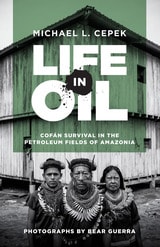
Life in Oil
Cofán Survival in the Petroleum Fields of AmazoniaBy Michael L. Cepek, Photographs by Bear Guerra
University of Texas Press, 2018
Oil is one of the world’s most important commodities, but few people know how its extraction affects the residents of petroleum-producing regions. In the 1960s, the Texaco corporation discovered crude in the territory of Ecuador’s indigenous Cofán nation. Within a decade, Ecuador had become a member of OPEC, and the Cofán watched as their forests fell, their rivers ran black, and their bodies succumbed to new illnesses. In 1993, they became plaintiffs in a multibillion-dollar lawsuit that aims to compensate them for the losses they have suffered. Yet even in the midst of a tragic toxic disaster, the Cofán have refused to be destroyed. While seeking reparations for oil’s assault on their lives, they remain committed to the survival of their language, culture, and rainforest homeland.
Life in Oil presents the compelling, nuanced story of how the Cofán manage to endure at the center of Ecuadorian petroleum extraction. Michael L. Cepek has lived and worked with Cofán people for more than twenty years. In this highly accessible book, he goes well beyond popular and academic accounts of their suffering to share the largely unknown stories that Cofán people themselves create—the ones they tell in their own language, in their own communities, and to one another and the few outsiders they know and trust. Their words reveal that life in oil is a form of slow, confusing violence for some of the earth’s most marginalized, yet resilient, inhabitants.
Life in a Cambodian Orphanage
A Childhood Journey for New OpportunitiesKathie Carpenter
Rutgers University Press, 2021
Life in a Mississippian Warscape
Common Field, Cahokia, and the Effects of WarfareMeghan E. Buchanan
University of Alabama Press, 2022
Analyzes Mississippian daily life at Cahokia’s environs during wartime
In Life in a Mississippian Warscape: Common Field, Cahokia, and the Effects of Warfare Meghan E. Buchanan posits that to understand the big histories of warfare, political fragmentation, and resilience in the past archaeologists must also analyze and interpret the microscale actions of the past. These are the daily activities of people before, during, and after historical events. Within warscapes, battles take place in peoples’ front yards, family members die, and the impacts of violence in near and distant places are experienced on a daily basis. This book explores the microscale of daily lives of people living at Common Field, a large, palisaded mound center, during the period of Cahokia’s abandonment and the spread of violence and warfare throughout the Southeast.
Linking together ethnographic, historic, and archaeological sources, Buchanan discusses the evidence that the people of Common Field engaged in novel and hybrid practices in these dangerous times. At the microscale, they adopted new ceramic tempering techniques, produced large numbers of serving vessels decorated with warfare-related imagery, adapted their food practices, and erected a substantial palisade with specially prepared deposits. The overall picture that emerges at Common Field is of a people who engaged in risk-averse practices that minimized their exposure to outside of the palisade and attempted to seek intercession from otherworldly realms through public ceremonies involving warfare-related iconography.
Life in and against the Odds
Debts of Freedom and the Speculative Roots of U.S. CultureHeidi Hoechst
Temple University Press, 2015
Somehow people continue to imagine a world of justice against the odds of a deck that has been stacked against them. In her urgent and perceptive book, Life in and against the Odds, Hoechst focuses on the particular circumstances and conditions of different phases of speculative expansion in the United States. She traces the roots of the nation-state to nineteenth-century land markets and slave exchanges. Hoechst also chronicles how these racial foundations extend through corporate capitalism from the 1920s and ´30s to the present era of financialized capitalism and the recent housing bubble.
Life in and against the Odds identifies where and how speculative nationalism creates roadblocks to freedom. Hoechst retells the history of the United States with a perspective on how human lives are made, destroyed, reconfigured, and claimed under the systemic violence of a nation that is rooted in the racializing futurity of speculative capitalism.
Life in the Age of Drone Warfare
Lisa Parks and Caren Kaplan, editors
Duke University Press, 2017
Contributors. Peter Asaro, Brandon Wayne Bryant, Katherine Chandler, Jordan Crandall, Ricardo Dominguez, Derek Gregory, Inderpal Grewal, Lisa Hajjar, Caren Kaplan, Andrea Miller, Anjali Nath, Jeremy Packer, Lisa Parks, Joshua Reeves, Thomas Stubblefield, Madiha Tahir
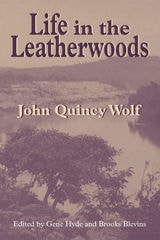
Life in the Leatherwoods
New EditionJohn Quincy Wolf
University of Arkansas Press, 2000
Originally published by Memphis State University Press in 1974, this new edition includes additional writings of John Q. Wolf and a continuation of the autobiographical narrative after his 1887 move to Batesville. Wolf’s writings are valuable resources for southern historians, folklorists, general readers, and scholars of Ozarkiana because they provide a rare glimpse into the social and family life of a largely misunderstood and stereotyped people—the independent hill farmers of the Arkansas Ozarks of the 1870s and 1880s. With Life in the Leatherwoods, Wolf bestows a benediction upon a society that existed vibrantly and humorously in his memory—one that has now forever disappeared from the American countryside.

Life in the Shadows of the Crystal Palace, 1910–1927
Ford Workers in the Model T EraClarence Hooker
University of Wisconsin Press, 1997
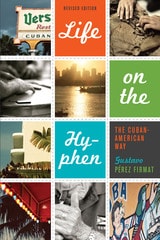
Life on the Hyphen
The Cuban-American WayBy Gustavo Pérez Firmat
University of Texas Press, 2012
An expanded, updated edition of the classic study of Cuban-American culture, this engaging book, which mixes the author’s own story with his reflections as a trained observer, explores how both famous and ordinary members of the “1.5 Generation” (Cubans who came to the United States as children or teens) have lived “life on the hyphen”—neither fully Cuban nor fully American, but a fertile hybrid of both. Offering an in-depth look at Cuban-Americans who have become icons of popular and literary culture—including Desi Arnaz, Oscar Hijuelos, musician Pérez Prado, and crossover pop star Gloria Estefan, as well as poets José Kozer and Orlando González Esteva, performers Willy Chirino and Carlos Oliva, painter Humberto Calzada, and others—Gustavo Pérez Firmat chronicles what it means to be Cuban in America.
The first edition of Life on the Hyphen won the Eugene M. Kayden National University Press Book Award and received honorable mentions for the Modern Language Association’s Katherine Singer Kovacs Prize and the Latin American Studies Association’s Bryce Wood Book Award.
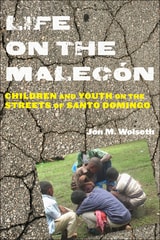
Life on the Malecón
Children and Youth on the Streets of Santo DomingoJon M. Wolseth
Rutgers University Press, 2013
Life on the Malecón is a narrative ethnography of the lives of street children and youth living in Santo Domingo, Dominican Republic, and the non-governmental organizations that provide social services for them. Writing from the perspective of an anthropologist working as a street educator with a child welfare organization, Jon M. Wolseth follows the intersecting lives of children, the institutions they come into contact with, and the relationships they have with each other, their families, and organization workers.
Often socioeconomic conditions push these children to move from their homes to the streets, but sometimes they themselves may choose the allure of the perceived freedoms and opportunities that street life has to offer. What they find, instead, is violence, disease, and exploitation—the daily reality through which they learn to maneuver and survive. Wolseth describes the stresses, rewards, and failures of the organizations and educators who devote their resources to working with this population.
The portrait of Santo Domingo’s street children and youth population that emerges is of a diverse community with variations that may be partly related to skin color, gender, and class. The conditions for these youth are changing as the economy of the Dominican Republic changes. Although the children at the core of this book live and sleep on avenues and plazas and in abandoned city buildings, they are not necessarily glue- and solvent-sniffing beggars or petty thieves on the margins of society. Instead, they hold a key position in the service sector of an economy centered on tourism.
Life on the Malecón offers a window into the complex relationships children and youth construct in the course of mapping out their social environment. Using a child-centered approach, Wolseth focuses on the social lives of the children by relating the stories that they themselves tell as well as the activities he observes.
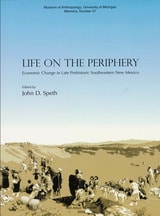
Life on the Periphery
Economic Change in Late Prehistoric Southeastern New MexicoEdited by John D. Speth
University of Michigan Press, 2004
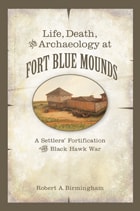
Life, Death, and Archaeology at Fort Blue Mounds
A Settlers’ Fortification of the Black Hawk WarRobert A. Birmingham
Wisconsin Historical Society Press, 2012
Life, Death, and Archaeology at Fort Blue Mounds is an archaeological detective story illuminating the lives of white settlers in the lead-mining region during the tragic events of the historically important conflict known as the Black Hawk War.
Focusing on the strategically located Fort Blue Mounds in southwestern Wisconsin, Robert A. Birmingham summarizes the 1832 conflict and details the history of the fort, which played a major role not only in U.S. military and militia operations but also in the lives of the white settlers who sought refuge there. Birmingham then transports us to the site decades later, when he and fellow Wisconsin Historical Society archaeologists and dedicated volunteers began their search for the fort. The artifacts they unearthed provide fascinating—and sometimes surprising—insights into the life, material culture, and even the food of the frontier.
Recommended for readers interested in the Black Hawk War, frontier life, Native American history, military history, and archaeology, Life, Death, and Archaeology at Fort Blue Mounds is grounded by a sense of place and the discovery of what a careful examination of our surroundings can tell us about the past.
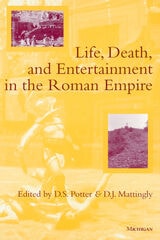
Life, Death, and Entertainment in the Roman Empire
D. S. Potter and D. J. Mattingly, Editors
University of Michigan Press, 1999
D. J. Mattingly is Professor of Roman Archaeology, University of Leicester.
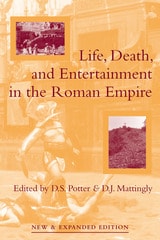
Life, Death, and Entertainment in the Roman Empire
D. S. Potter and D. J. Mattingly, Editors
University of Michigan Press, 2010
"[T]his handsomely-produced volume performs admirably as a series of introductions to sources, approaches, and the state of scholarship on major topics in Roman social history . . . Collections of essays come and go, but this one will stay in wide use. Each essay can stand alone but, tied together by the theme of dominance, the whole is greater than the sum of its parts."
---Donald Kyle, Bryn Mawr Classical Review
"This collection of essays is intended to serve as a coursebook for introductory lecture series on Roman civilization; the essays are concentrated on fundamental aspects of Roman society, and no prior knowledge of antiquity on the reader's part is assumed. . . . The book as a whole is entirely successful in its projected aim: an immense range of detailed information about antiquity is presented in readable and largely sophisticated discussion. . . . Increasingly we need to be able to suggest to our students reading that is introductory but also in-depth and challenging, and this book is one possible reading that we can offer."
---Ellen O'Gorman, Classical Review
Life, Death, and Entertainment gives those with a general interest in Roman antiquity a starting point, informed by the latest developments in scholarship, for understanding the extraordinary range of Roman society. Family structure, slavery, gender identity, food supply, religion, and entertainment---all crucial parts of the Roman world---are discussed here, in a single volume that offers an approachable guide for readers of all backgrounds. The collection unites a series of general introductions on each of these topics, bringing readers in touch with a broad range of evidence, as well as with a wide variety of approaches to basic questions about the Roman world.
The newly expanded edition includes historian Keith Hopkins' pathbreaking article on Roman slaves. Volume editor David Potter has contributed two new translations of documents from emperors Hadrian and Marcus Aurelius. Hadrian's letters document a reorganization of the festival cycle in the Empire and reassert the importance of the Olympic Games; the letter to Marcus provides the most important surviving evidence for how gladiatorial games were actually organized.
Contributors to the volume include Greg S. Aldrete, Hazel Dodge, Bruce W. Frier, Maud W. Gleason, Ann E. Hanson, Keith Hopkins, David J. Mattingly, and David S. Potter.
D.S. Potter is Professor of Classics and Arthur F. Thurnau Professor, University of Michigan.
D.J. Mattingly is Professor of Roman Archaeology, University of Leicester, and a Fellow of the British Academy.
Cover illustrations: top left, Karanis Excavation, courtesy Kelsey Museum; bottom right, Monte Testacchio, courtesy David J. Mattingly; center, Pollice Verso by Jean-Léon Gérôme, courtesy Phoenix Art Museum, Museum Purchase.
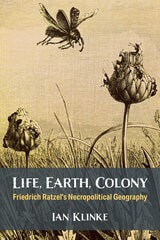
Life, Earth, Colony
Friedrich Ratzel's Necropolitical GeographyIan Klinke
University of Michigan Press, 2023
Life, Earth, Colony finds that there is an as yet unexplored necropolitical impulse at the heart of Ratzel’s entire oeuvre, a preoccupation with death and dying, which had a profound impact on twentieth-century history.
Life, Emergent
The Social in the Afterlives of ViolenceYasmeen Arif
University of Minnesota Press, 2016
How does an inquiry into life as it lives (or dies) amid mass violence look like from the perspective of the “social”? Taking us from Sierra Leone to India to Lebanon, Life, Emergent challenges conventional understandings of biopolitics, weaving a politics of life through the lens of life, not death.
Arguing that the “letting die” element of biopolitics has been overemphasized, Yasmeen Arif zeros in on biopolitics’ other pole: “making live.” She does so by highlighting the various means and the forms of life configured in the aftermath—or afterlives—of violent events in contexts of law, justice, community, and identity. Her analysis of the social repercussions is both global and local in scope. Arif examines the convictions made in the Special Court of Sierra Leone, the first hybrid court of its nature under international criminal law. Next, she explores the making of a justice movement in the context of Hindu–Muslim violence in 2002 in the state of Gujarat, India. From there she revisits the Sikh carnage in Delhi of 1984. Finally, she explores a span of civil violence in Lebanon, and particularly, its effects on the city of Beirut.
This rigorously argued book brings together the various strands of life and the social that each chapter has disentangled—and in doing so it begins to frame a politics of, and in, life.
Life-Altering
Abortion Stories from the MidwestAngie Leventis Lourgos
University of Missouri Press, 2023
Based on her coverage of reproductive rights for the Chicago Tribune, veteran journalist Angie Leventis Lourgos explores these personal accounts to delve into the most nuanced aspects of abortion, from life-threatening cases to terminations later in gestation to restrictions for minors. The reporting spans the time before Roe and continues through the first year after the landmark Supreme Court case’s stunning reversal, which spurred some of the most stringent abortion laws of the past half-century—as well as new and innovative means of access.
From interviews Lourgos conducted with women across the Midwest, Life-Altering examines different facets of abortion from the perspectives of those who ended their pregnancies, illustrating how court cases, state legislation, and religious beliefs can affect the lives and reproductive choices of ordinary people. By looking at myriad factors that influence the decision whether or not to abort a pregnancy— be they socio-economic, religious, legal, or medical—the accounts collected in this volume challenge the conventional labels of “pro-life” and “pro-choice .”

Life-Writing in the History of Archaeology
Critical perspectivesEdited by Clare Lewis and Gabriel Moshenska
University College London, 2023
Travels and adventures of the “great archaeologists” have generated centuries worth of bestselling books that, in turn, have shaped the public perception of archaeology. The lives of archaeologists are entangled with histories of museums and collections, developments in science and scholarship, and narratives of nationalism and colonialism into the present. In recent years, life-writing has played an important role in the surge of new research in the history of archaeology, including ground-breaking studies of discipline formation, institutionalization, and social and intellectual networks. Sources such as diaries, wills, film, and the growing body of digital records are powerful tools for highlighting the contributions of hitherto marginalized archaeological lives including many pioneering women, hired laborers, and other “hidden hands.”
This book brings together critical perspectives on life-writing in the history of archaeology from leading figures in the field. These include studies of archive formation and use, the concept of “dig-writing” as a distinctive genre of archaeological creativity, and reviews of new sources for already well-known lives. Several chapters reflect on the experience of life-writing, review the historiography of the field, and assess the intellectual value and significance of life-writing as a genre. Together, they work to problematize underlying assumptions about this genre, foregrounding methodology, social theory, ethics, and other practice-focused frameworks in conscious tension with previous practices.
Lifelines
The Traffic of TraumaHarris Solomon
Duke University Press, 2022
Lifeways in the Northern Maya Lowlands
New Approaches to Archaeology in the Yucatán PeninsulaEdited by Jennifer P. Mathews and Bethany A. Morrison
University of Arizona Press, 2006
By exploring various social and political levels of Maya society through a broad expanse of time, Lifeways in the Northern Maya Lowlands not only reconstructs a little-known past, it also suggests the broad implications of archaeology for related studies of tourism, household economies, and ethnoarchaeology. It is a benchmark work that pointedly demonstrates the need for researchers in both north and south to ignore modern geographic boundaries in their search for new ideas to further their understanding of the ancient Maya.
Lifeworlds
Essays in Existential AnthropologyMichael Jackson
University of Chicago Press, 2012
Lift Every Voice
African American Oratory, 1787-1901Philip S. Foner
University of Alabama Press, 1997
The essential collection of African American voices that shaped the struggle for freedom, equality, and citizenship.
Lift Every Voice is a completely revised, updated, and expanded version of Philip Foner's 1972 classic Voice of Black America, which Library Journal hailed as "indispensable.""This well-edited and
richly inclusive work," wrote Benjamin Quarles, "unveils the full sweep of Black expression as found in platform addresses" by "men and women who join eloquence with reason in articulating their
grievances and their aspirations and in arousing their listeners with their ringing and prophetic challenges." This new collection includes over 60 additional texts and revised and expanded introductory essays that provide historical, biographical, and critical information for each speech.
For Americans of the 19th century, as W. E. B. Du Bois observed, eloquent speeches were 'the shining lights of civilization' that both expressed and sought to improve the lives and communities from which they sprang. Through political speeches, sermons, lectures, oral testimonies, and ceremonial addresses, African Americans offered diverse responses to the issues and events of their times, including not only slavery and racial equality but also women's rights, education, religion, immigration, socialism, war, Indian policy, and labor organization, among others. The speeches in this
collection are among the most powerful expressions of African American opinions on these issues and were delivered on occasions and before audiences where the speakers believed their words might be transformative.
Containing more than 150 speeches, this anthology represents the most extensive and diverse collection of African American oratory of the 18th and 19th centuries ever published. Lift Every Voice makes readily accessible not only the classic orations of such well-known figures as Frederick Douglass, Sojourner Truth, and Booker T. Washington but also dozens of lesser-known but important speeches deserving greater recognition and study. Many of these speeches are previously unpublished, uncollected, or long out of print.
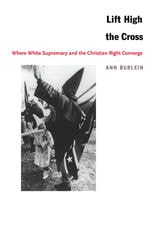
Lift High the Cross
Where White Supremacy and the Christian Right ConvergeAnn Burlein
Duke University Press, 2002
Arguing that today’s right engenders its popularity not by overt bigotry or hatred but by focusing on people’s hopes for their children, Burlein finds a politics of grief at the heart of such rhetoric. While demonstrating how religious symbols, rituals, texts, and practices shape people’s memories and their investment in society, she shows how Peters and Dobson each construct countermemories for their followers that reframe their histories and identities—as well as their worlds—by reversing mainstream perspectives in ways that counter existing power relations. By employing the techniques of niche marketing, the politics of scandal, and the transformation of political issues into “gut issues” and by remasculinizing the body politic, Burlein shows, such groups are able to move people into their realm of influence without requiring them to agree with all their philosophical, doctrinal, or political positions.
Lift High the Cross will appeal to students and scholars of religion, American cultural studies, women’s studies, sociology, and gay and lesbian studies, as well as to non-specialists interested in American politics and, specifically, the right.
Lifted Masks and Other Works
Susan Glaspell
University of Michigan Press, 1993
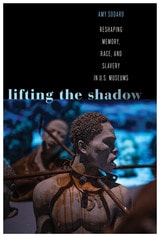
Lifting the Shadow
Reshaping Memory, Race, and Slavery in U.S. MuseumsAmy Sodaro
Rutgers University Press, 2025
Light in the Dark/Luz en lo Oscuro
Rewriting Identity, Spirituality, RealityGloria E. Anzaldua
Duke University Press, 2015
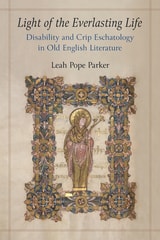
Light of the Everlasting Life
Disability and Crip Eschatology in Old English LiteratureLeah Pope Parker
University of Michigan Press, 2025
From disability metaphors to narratives structured around bodies presented as aberrant, early medieval English thoughtworlds conveyed the promise of resurrection and the hope of salvation through crip and disabled bodies. Light of the Everlasting Life argues that early medieval Christian eschatology, as manifested in Old English literary texts, was a crip eschatology: a theology of the afterlife that relied upon disabled bodies and concepts related to disability in order to convey promises of resurrection and salvation. In addition to demonstrating how literature manifested theological approaches to the afterlife, Leah Pope Parker articulates the ways of thinking about bodies and disability that were available to ordinary early medieval people, many of whom experienced their bodies in ways that resonate with what we call disability today, but who rarely appear in the historical record.
By analyzing Old English texts, including Alfredian translations, Ælfric’s saints’ lives, and poetry from the Exeter and Vercelli Books, Parker introduces novel ways of characterizing disability’s effects in literature. “Spiritual prosthesis” reveals rhetorical, narrative, and theological reliance upon disability to convey the promise of a Christian afterlife. “Systems of aberrance” emerge as a result, in which bodies marked as deviant—including disabled, monstrous, heroic, saintly, and dead bodies—form a network of embodiments that reinforce the narratives they inhabit and that of Christian salvation history. Locating crip eschatology in early medieval literature, Light of the Everlasting Life rewrites standard histories of disability, of the body, and of medieval Christian eschatology.
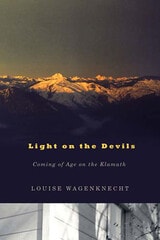
Light on the Devils
Coming of Age on the KlamathLouise Wagenknecht
Oregon State University Press, 2011
When Louise Wagenknecht’s family arrived in the remote logging town of Happy Camp in 1962, a boundless optimism reigned. Whites and Indians worked together in the woods and the lumber mills of northern California’s Klamath country. Logging and lumber mills, it seemed, would hold communities together forever.
But that booming prosperity would come to an end. Looking back on her teenage years spent along the Klamath River, Louise Wagenknecht recounts a vanishing way of life. She explores the dynamics of family relationships and the contradictions of being female in a western logging town in the 1960s. And she paints an evocative portrait of the landscape and her relationship with it.
Light on the Devils is a captivating memoir of place. It will appeal to general readers interested in the rural West, personal memoir, history, and natural history.
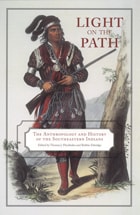
Light on the Path
The Anthropology and History of the Southeastern IndiansThomas J. Pluckhahn
University of Alabama Press, 2006
The scholarship underlying this shift comes from many directions, but much of the groundwork can be attributed to Charles Hudson. The papers in this volume were contributed by Hudson’s colleagues and former students (many now leading scholars themselves) in his honor. The assumption links these papers is that of a historical transformation between Mississippian societies and the Indian societies of the historic era that requires explanation and critical analysis.
In all of the chapters, the legacy of Hudson’s work is evident. Anthropologists, archaeologists, and historians are storming the bridge that connects prehistory and history in a manner unimaginable 20 years ago. While there remains much work to do on the path toward understanding this transformation and constructing a complete social history of the Southeastern Indians, the work of Charles Hudson and his colleagues have shown the way.
Lightning Birds
An Aeroecology of the AirwavesJacob Smith
University of Michigan Press, 2021
The aerosphere is a literal and figurative contact zone for birds and media. Transmission towers become obstacles in birds’ flight paths; radar systems emit signals that reveal the large-scale movements of birds; parabolic microphones directed at the sky detect avian flight calls; and miniature radio transmitters are attached to birds to track their global travels.
Lightning Birds is a multi-media project that consists of a five-episode, podcast-style audiobook, a curatorial essay, and a bibliography. It tells a new story about radio, describes important scientific discoveries about bird migration through interviews with key researchers, and explores a mode of ecocriticism that combines traditional forms of text-based scholarship with sound art, music, and audio storytelling. At a moment when 13% of all bird species are threatened with extinction, Smith writes not only to those working in media studies, environmental studies, and ornithology, but also to a broader public. He argues that by knowing more about how birds use the sky, we might begin to minimize the damage that our buildings, media, and environmental degradation do to the aerosphere.
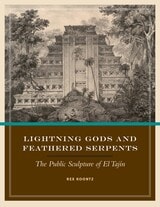
Lightning Gods and Feathered Serpents
The Public Sculpture of El TajínBy Rex Koontz
University of Texas Press, 2009
El Tajín, an ancient Mesoamerican capital in Veracruz, Mexico, has long been admired for its stunning pyramids and ballcourts decorated with extensive sculptural programs. Yet the city's singularity as the only center in the region with such a wealth of sculpture and fine architecture has hindered attempts to place it more firmly in the context of Mesoamerican history. In Lightning Gods and Feathered Serpents, Rex Koontz undertakes the first extensive treatment of El Tajín's iconography in over thirty years, allowing us to view its imagery in the broader Mesoamerican context of rising capitals and new elites during a period of fundamental historical transformations.
Koontz focuses on three major architectural features—the Pyramid of the Niches/Central Plaza ensemble, the South Ballcourt, and the Mound of the Building Columns complex—and investigates the meanings of their sculpture and how these meanings would have been experienced by specific audiences. Koontz finds that the iconography of El Tajín reveals much about how motifs and elite rites growing out of the Classic period were transmitted to later Mesoamerican peoples as the cultures centered on Teotihuacan and the Maya became the myriad city-states of the Early Postclassic period.
By reexamining the iconography of sculptures long in the record, as well as introducing important new monuments and contexts, Lightning Gods and Feathered Serpents clearly demonstrates El Tajín's numerous iconographic connections with other areas of Mesoamerica, while also exploring its roots in an indigenous Gulf lowlands culture whose outlines are only now emerging. At the same time, it begins to uncover a largely ignored regional artistic culture of which Tajín is the crowning achievement.
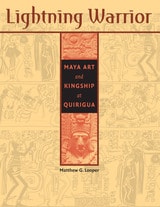
Lightning Warrior
Maya Art and Kingship at QuiriguaBy Matthew G. Looper
University of Texas Press, 2003
The ancient Maya city of Quirigua occupied a crossroads between Copan in the southeastern Maya highlands and the major centers of the Peten heartland. Though always a relatively small city, Quirigua stands out because of its public monuments, which were some of the greatest achievements of Classic Maya civilization. Impressive not only for their colossal size, high sculptural quality, and eloquent hieroglyphic texts, the sculptures of Quirigua are also one of the few complete, in situ series of Maya monuments anywhere, which makes them a crucial source of information about ancient Maya spirituality and political practice within a specific historical context.
Using epigraphic, iconographic, and stylistic analyses, this study explores the integrated political-religious meanings of Quirigua's monumental sculptures during the eighth-century A.D. reign of the city's most famous ruler, K'ak' Tiliw. In particular, Matthew Looper focuses on the role of stelae and other sculpture in representing the persona of the ruler not only as a political authority but also as a manifestation of various supernatural entities with whom he was associated through ritual performance. By tracing this sculptural program from its Early Classic beginnings through the reigns of K'ak' Tiliw and his successors, and also by linking it to practices at Copan, Looper offers important new insights into the politico-religious history of Quirigua and its ties to other Classic Maya centers, the role of kingship in Maya society, and the development of Maya art.
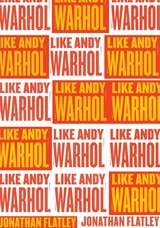
Like Andy Warhol
Jonathan Flatley
University of Chicago Press, 2017
Jonathan Flatley’s Like Andy Warhol is a revelatory look at the artist’s likeness-producing practices, not only reflected in his famous Campbell’s soup cans and Marilyn Monroe silkscreens but across Warhol’s whole range of interests including movies, drag queens, boredom, and his sprawling collections. Flatley shows us that Warhol’s art is an illustration of the artist’s own talent for “liking.” He argues that there is in Warhol’s productions a utopian impulse, an attempt to imagine new, queer forms of emotional attachment and affiliation, and to transform the world into a place where these forms find a new home. Like Andy Warhol is not just the best full-length critical study of Warhol in print, it is also an instant classic of queer theory.
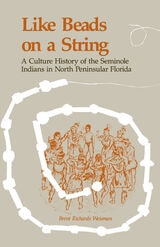
Like Beads on a String
A Culture History of the Seminole Indians in North Peninsular FloridaBrent Richards Weisman
University of Alabama Press, 1989
Florida's Seminole Indians are exerting an ever increasing influence on crucial issues in state politics, economy, and law. From a position of near obscurity less than a century ago, these Native Americans have staged a remarkable comeback to take an active hand in shaping Florida society, present and future. Anthropologists have long been fascinated with the Seminoles and have often remarked upon their ability to adapt to new circumstances while preserving the core features of their traditional culture. Early observers of the Seminoles also commented on the dynamic tension that existed for the individual, clan, and tribe, that drew them together, "like beads on a string," into a resilient and viable society. This study traces the emergence of these qualities in the late prehistoric and early historic period in the Southeast and demonstrates their influence on the course of Seminole culture history.
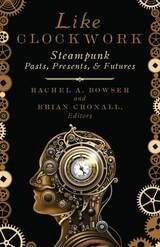
Like Clockwork
Steampunk Pasts, Presents, and FuturesRachel A. Bowser
University of Minnesota Press, 2016
Co-winner, Ray & Pat Browne Award for Best Edited Collection in Popular Culture and American Culture
Once a small subculture, the steampunk phenomenon exploded in visibility during the first years of the twenty-first century, its influence and prominence increasing ever since. From its Victorian and literary roots to film and television, video games, music, and even fashion, this subgenre of science fiction reaches far and wide within current culture. Here Rachel A. Bowser and Brian Croxall present cutting-edge essays on steampunk: its rise in popularity, its many manifestations, and why we should pay attention.
Like Clockwork offers wide-ranging perspectives on steampunk’s history and its place in contemporary culture, all while speaking to the “why” and “why now” of the genre. In her essay, Catherine Siemann draws on authors such as William Gibson and China Miéville to analyze steampunk cities; Kathryn Crowther turns to disability studies to examine the role of prosthetics within steampunk as well as the contemporary culture of access; and Diana M. Pho reviews the racial and national identities of steampunk, bringing in discussions of British chap-hop artists, African American steamfunk practitioners, and multicultural steampunk fan cultures.
From disability and queerness to ethos and digital humanities, Like Clockwork explores the intriguing history of steampunk to evaluate the influence of the genre from the 1970s through the twenty-first century.
Contributors: Kathryn Crowther, Perimeter College at Georgia State University; Shaun Duke, University of Florida; Stefania Forlini, University of Calgary (Canada); Lisa Hager, University of Wisconsin–Waukesha; Mike Perschon, MacEwan University in Edmonton, Alberta; Diana M. Pho; David Pike, American University; Catherine Siemann, New Jersey Institute of Technology; Joseph Weakland, Georgia Institute of Technology; Roger Whitson, Washington State University.
Like Family
Narratives of Fictive KinshipMargaret K. Nelson
Rutgers University Press, 2020
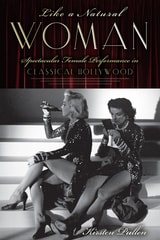
Like a Natural Woman
Spectacular Female Performance in Classical HollywoodPullen, Kirsten
Rutgers University Press, 2014
Bringing a fresh perspective to film history through the lens of performance studies, Kirsten Pullen explores the ways in which these actresses, who always appeared to be “playing themselves,” responded to the naturalist notion that actors should create authentic characters by drawing from their own lives. At the same time, she examines how Hollywood presented these female stars as sex objects, focusing on their spectacular bodies at the expense of believable characterization or narratives.
Pullen not only helps us appreciate what talented actresses these five women actually were, but also reveals how they sought to express themselves and maintain agency, even while meeting the demands of their directors, studios, families, and fans to perform certain feminine roles. Drawing from a rich collection of classic films, publicity materials, and studio archives, Like a Natural Woman lets us take a new look at both Hollywood acting techniques and the performance of femininity itself.
Lillie Devereux Blake
Retracing a Life ErasedGrace Farrell
University of Massachusetts Press, 2002
Yet for all her remarkable accomplishments, Lillie Blake's story has been all but forgotten. As Grace Farrell reveals in this richly textured biography, Blake's creative writings did not survive the canonical purges of women authors at the turn of the twentieth century, and her contributions to the suffrage movement were simply ignored in the official histories sanctioned by Susan B. Anthony. From the traces that remain, Farrell reconstructs an extraordinary life of passion and purpose. She chronicles Blake's literary career from Civil War correspondent to novelist and provides an inside view of suffrage politics, correcting some long held misconceptions perpetuated by Anthony and her supporters.
At the same time, Farrell expands the generic boundaries of biography by recounting not only a life and the causes of its erasure but also her own process of recovering that life. She brings the reader along with her as she follows Blake's path in the world, touches her diary, reads her letters, and campaigns to prevent Yale University from demolishing Blake's childhood home in New Haven.
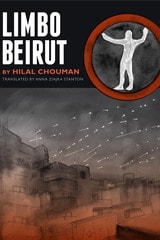
Limbo Beirut
By Hilal Chouman<br>Translated by Anna Ziajka Stanton
University of Texas Press, 2016
In Hilal Chouman’s Limbo Beirut, a gay artist, a struggling novelist, a pregnant woman, a disabled engineering student, a former militia member, and a medical intern all take turns narrating the violent events of May 2008, when Hezbollah militants and Sunni fighters clashed in the streets of Beirut. For most of these young men and women, the Lebanese Civil War (1975–1990) is but a vague recollection, but the brutality of May 2008 serves to reawaken forgotten memories and stir up fears of a revival of sectarian violence. Yet despite these fears, the violence these characters witness helps them to break free from the mundane details of their lives and look at the world anew.
The multiple narrative voices and the dozens of pen-and-ink illustrations that accompany the text allow Chouman to achieve a mesmerizing cinematic quality with this novel that is unique in modern Arabic fiction. Not only will readers appreciate the meaningful exploration of the effects of violence on the psyche, but they will also enjoy discovering how the lives of these characters—almost all of whom are strangers to one another—intersect in surprising ways.
Limits of Citizenship
Migrants and Postnational Membership in EuropeYasemin Nuhoglu Soysal
University of Chicago Press, 1994
Soysal focuses on postwar international migration, paying particular attention to "guestworkers." Taking an in-depth look at France, Germany, the Netherlands, Sweden, Switzerland, and the United Kingdom, she identifies three major patterns that reflect the varying emphasis particular states place on individual versus corporate groups as the basis for incorporation. She finds that the global expansion and intensification of human rights discourse puts nation-states under increasing outside pressure to extend membership rights to aliens, resulting in an increasingly blurred line between citizen and noncitizen. Finally, she suggests a possible accommodation to these shifts: specifically, a model of post-national membership that derives its legitimacy from universal personhood, rather than national belonging.
This fresh approach to the study of citizenship, rights, and immigration will be invaluable to anyone involved in issues of human rights, international migration, and transnational cultural interactions, as well as to those who study the contemporary transformation of the nation-state, nationalism, and globalization.
Limits of the Numerical
The Abuses and Uses of QuantificationEdited by Christopher Newfield, Anna Alexandrova, and Stephen John
University of Chicago Press, 2022
Numbers are both controlling and fragile. They drive public policy, figuring into everything from college rankings to vaccine efficacy rates. At the same time, they are frequent objects of obfuscation, manipulation, or outright denial. This timely collection by a diverse group of humanists and social scientists challenges undue reverence or skepticism toward quantification and offers new ideas about how to harmonize quantitative with qualitative forms of knowledge.
Limits of the Numerical focuses on quantification in several contexts: climate change; university teaching and research; and health, medicine, and well-being more broadly. This volume shows the many ways that qualitative and quantitative approaches can productively interact—how the limits of the numerical can be overcome through equitable partnerships with historical, institutional, and philosophical analysis. The authors show that we can use numbers to hold the powerful to account, but only when those numbers are themselves democratically accountable.
Limits to Culture
Urban Regeneration vs. Dissident ArtMalcolm Miles
Pluto Press, 2015
Limits to Liberation after Apartheid
Citizenship, Governance, & CultureSteven L. Robins
Ohio University Press, 2005
Lincoln and Emancipation
Edna Greene Medford
Southern Illinois University Press, 2015
In this succinct study, Edna Greene Medford examines the ideas and events that shaped President Lincoln’s responses to slavery, following the arc of his ideological development from the beginning of the Civil War, when he aimed to pursue a course of noninterference, to his championing of slavery’s destruction before the conflict ended. Throughout, Medford juxtaposes the president’s motivations for advocating freedom with the aspirations of African Americans themselves, restoring African Americans to the center of the story about the struggle for their own liberation.
Lincoln and African Americans, Medford argues, approached emancipation differently, with the president moving slowly and cautiously in order to save the Union while the enslaved and their supporters pressed more urgently for an end to slavery. Despite the differences, an undeclared partnership existed between the president and slaves that led to both preservation of the Union and freedom for those in bondage. Medford chronicles Lincoln’s transition from advocating gradual abolition to campaigning for immediate emancipation for the majority of the enslaved, a change effected by the military and by the efforts of African Americans. The author argues that many players—including the abolitionists and Radical Republicans, War Democrats, and black men and women—participated in the drama through agitation, military support of the Union, and destruction of the institution from within. Medford also addresses differences in the interpretation of freedom: Lincoln and most Americans defined it as the destruction of slavery, but African Americans understood the term to involve equality and full inclusion into American society. An epilogue considers Lincoln’s death, African American efforts to honor him, and the president’s legacy at home and abroad.
Both enslaved and free black people, Medford demonstrates, were fervent participants in the emancipation effort, showing an eagerness to get on with the business of freedom long before the president or the North did. By including African American voices in the emancipation narrative, this insightful volume offers a fresh and welcome perspective on Lincoln’s America.