Results by title
788 books match the query 'Caribbean & Latin American' and 45 start with m
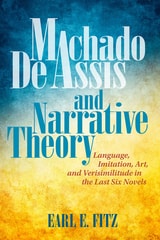
Machado de Assis and Narrative Theory
Language, Imitation, Art, and Verisimilitude in the Last Six NovelsEarl E. Fitz
Bucknell University Press, 2019
Published by Bucknell University Press. Distributed worldwide by Rutgers University Press.
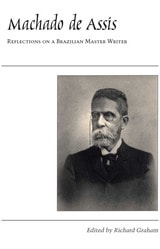
Machado de Assis
Reflections on a Brazilian Master WriterBy Richard Graham
University of Texas Press, 1999
Joaquim Maria Machado de Assis (1839-1908) never left Brazil and rarely traveled outside his native city of Rio de Janeiro, yet he is widely acknowledged by those who have read him as one of the major authors of the nineteenth century. His works are full of subtle irony, relentless psychological insights, and brilliant literary innovations. Yet, because he wrote in Portuguese, a language outside the mainstream of Western culture, those with access to his writings are relatively few.
This book is designed not only to call new attention to this master but also to raise questions about the nature of literature itself and current alternative views on how it can be approached. Four essays address the question of Machado's "realism" in the five masterpiece novels of his maturity, especially Dom Casmurro. The noted contributors include John Gledson (University of Liverpool), João Adolfo Hansen (Universidade de São Paulo), Sidney Chalhoub (Universidade de Campinas), and Daphne Patai (University of Massachusetts at Amherst).
Dain Borges of the University of California at San Diego says, "[This is the] only collection explicitly debating the question that polarizes contemporary Brazilian criticism of Machado de Assis: was he a sophisticated late realist, or was he a pioneering anti-realist, even a postmodernist? The [essayists] marshal their evidence and argument with virtuosity and arrive at sharply opposing conclusions."
Machado de Assis
Toward a Poetics of EmulationJoão Cezar de Castro Rocha
Michigan State University Press, 2015
At the center of this alternative explanation, Castro Rocha situates the fallout from the success enjoyed by Eça de Queirós with the publication of Cousin Basílio and Machado’s two long texts condemning the author and his work. Literary and aesthetic rivalries come to the fore, allowing for a new theoretical framework based on a literary appropriation of “thick description,” the method proposed by anthropologist Clifford Geertz. From this method, Castro Rocha derives his key hypothesis: an unforeseen consequence of Machado’s reaction to Eça’s novel was a return to the classical notion of aemulatio, which led Machado to develop a “poetics of emulation.”
Madwomen
The "Locas mujeres" Poems of Gabriela Mistral, a Bilingual EditionGabriela Mistral
University of Chicago Press, 2008
A schoolteacher whose poetry catapulted her to early fame in her native Chile and an international diplomat whose boundary-defying sexuality still challenges scholars, Gabriela Mistral (1889–1957) is one of the most important and enigmatic figures in Latin American literature of the last century. The Locas mujeres poems collected here are among Mistral’s most complex and compelling, exploring facets of the self in extremis—poems marked by the wound of blazing catastrophe and its aftermath of mourning.
From disquieting humor to balladlike lyricism to folkloric wisdom, these pieces enact a tragic sense of life, depicting “madwomen” who are anything but mad. Strong and intensely human, Mistral’s poetic women confront impossible situations to which no sane response exists. This groundbreaking collection presents poems from Mistral’s final published volume as well as new editions of posthumous work, featuring the first English-language appearance of many essential poems. Madwomen promises to reveal a profound poet to a new generation of Anglophone readers while reacquainting Spanish readers with a stranger, more complicated “madwoman” than most have ever known.
Magical Realism and the History of the Emotions in Latin America
Jerónimo Arellano
Bucknell University Press, 2026
Published by Bucknell University Press. Distributed worldwide by Rutgers University Press.
Making Men
Gender, Literary Authority, and Women’s Writing in Caribbean NarrativeBelinda Edmondson
Duke University Press, 1998
Discussing the canonical Caribbean narrative as it reflects national identity under the domination of English cultural authority, Belinda Edmondson focuses particularly on the pervasive influence of Victorian sensibilities in the structuring of twentieth-century national identity. She shows that issues of race and English constructions of masculinity not only are central to West Indian identity but also connect Caribbean authorship to the English literary tradition. This perspective on the origins of West Indian literary nationalism then informs Edmondson’s search for female subjectivity in current literature by West Indian women immigrants in America. Making Men compares the intellectual exile of men with the economic migration of women, linking the canonical male tradition to the writing of modern West Indian women and exploring how the latter write within and against the historical male paradigm in the continuing process of national definition.
With theoretical claims that invite new discourse on English, Caribbean, and American ideas of exile, migration, race, gender identity, and literary authority, Making Men will be informative reading for those involved with postcolonial theory, African American and women’s studies, and Caribbean literature.
Man-Making Words
Selected Poems of Nicolas GuillenNicolas Guillen
University of Massachusetts Press, 2003
The Cuban poet Nicolás Guillén, who was born in the eastern province of Camagüey in 1902, died in 1989. This new edition of his selected poems, reissued thirty years after its original publication, includes an extensive, new introductory essay by Roberto Márquez, one of the original translators and a leading authority on Caribbean and Latin American literature and culture.
Mano Dura
The Politics of Gang Control in El SalvadorBy Sonja Wolf
University of Texas Press, 2017
In 1992, at the end of a twelve-year civil war, El Salvador was poised for a transition to democracy. Yet, after longstanding dominance by a small oligarchy that continually used violence to repress popular resistance, El Salvador’s democracy has proven to be a fragile one, as social ills (poverty chief among them) have given rise to neighborhoods where gang activity now thrives. Mano Dura examines the ways in which the ruling ARENA party used gang violence to solidify political power in the hands of the elite—culminating in draconian “iron fist” antigang policies that undermine human rights while ultimately doing little to address the roots of gang membership.
Drawing on extensive ethnographic fieldwork and policy analysis, Mano Dura examines the activities of three nongovernmental organizations (NGOs) that have advocated for more nuanced policies to eradicate gangs and the societal issues that are both a cause and an effect of gang proliferation. While other studies of street gangs have focused on relatively distant countries such as Colombia, Argentina, and Jamaica, Sonja Wolf’s research takes us to a country closer to the United States, where forced deportation has brought with it US gang culture. Charting the limited success of NGOs in influencing El Salvador’s security policies, the book brings to light key contextual aspects—including myopic media coverage and the ironic populist support for ARENA, despite the party’s protection of the elite at the expense of the greater society.
Manuel Zapata Olivella and the "Darkening" of Latin American Literature
Antonio D. Tillis
University of Missouri Press, 2005

Mapping an Indigenous Future
The Uppsala Map of Colonial Mexico CityJennifer R. Saracino
University of Texas Press, 0
The only known Indigenous-authored rendering of Mexico City from the sixteenth century.
Rediscovered in a Swedish library in the 1800s, the Uppsala Map of colonial Mexico City is a crucial Indigenous-authored document. Nearly a square meter, it was created by Nahua artists in 1540 shortly after the Spanish invasion. The Franciscan-trained artists have long been characterized as having passively adopted European aesthetics in their representation.
Jennifer Saracino challenges this view, arguing that the artists purposefully blended both Nahua and European visual strategies to legitimize and improve their position in colonial society. Building upon archival, ethnohistorical, and archaeological research, Saracino reinterprets the map’s network of roads and waterways, agricultural and urban features, glyphs, and depictions of Nahua people. Saracino argues that, amid dispossession and exploitation, the artists made a visual case for Nahuas to steward the local population and land in collaboration with colonial officials as privileged intermediaries. Challenging the assumption that the map was made merely in service to the crown, Mapping an Indigenous Future contends that these Nahua mapmakers capitalized on their proximity to viceregal elites to appeal for their rightful role as custodians of New Spain.
Maria Thereza Alves
Seeds of Changeedited by Carin Kuoni and Wilma Lukatsch
Amherst College Press, 2022
The project examines the influx and significance of imported plants, materializing at port cities across several continents: Marseille, Reposaari, Liverpool, Exeter and Topsham, Dunkerque, Bristol, Antwerp, and most recently New York, where it was awarded the Jane Lombard Prize for Art and Social Justice by the Vera List Center for Art and Politics at The New School. In each city, Seeds of Change has revealed the entangled relationship between “alien” plant species and the colonial maritime trade of goods and enslaved peoples, contrasting their seemingly innocuous beauty with the violent history associated with their arrival. By focusing on ballast flora, Alves invites us to de-border postcolonial historical narratives and consider a “borderless history.”
The first monograph of Alves’s historic project, Seeds of Change is edited by Carin Kuoni and Wilma Lukatsch and features essays by the artist as well as Katayoun Chamany, Seth Denizen, Jean Fisher, Yrjö Haila, Richard William Hill, Heli M. Jutila, J. Kēhaulani Kauanui, Lara Khaldi, Tomaž Mastnak, Marisa Prefer, and Radhika Subramaniam.
Mario Vargas Llosa
A Collection of Critical EssaysEdited by Charles Rossman and Alan Warren Friedman
University of Texas Press, 1978
The Peruvian Mario Vargas Llosa has been acclaimed throughout the literary world as one of Latin America's finest writers, yet until recently little has been written about his work in English. While his work has the subject of an increasing flow of critical commentary in Spanish and his major novels have been translated into English, this is the first full-scale critical treatment of Vargas Llosa published in the English language.
These articles by a number of established writers and critics appraise Vargas Llosa's individual novels as well as the body of his work. The Time of the Hero, The Green House, Conversation in The Cathedral, and Pantaleón y las visitadoras are examined in order of publication, A second group of more general essays ranges across Vargas Llosa's work and explores pervasive themes and concerns.
Two pieces by José Miguel Oviedo serve as a coda. In a bilingual interview, Oviedo and Vargas Llosa discuss Vargas Llosa's novel La tía Julia y el escribidor. Oviedo concludes with a critical discussion of that novel. A Vargas Llosa chronology compiled by the editors is also included.
Most of these essays originally appeared in 1977 as a special issue of Texas Studies in Literature and Language. The concluding essay by Oviedo was prepared especially for this edition.
Mario Vargas Llosa
A Life of WritingBy Raymond Leslie Williams
University of Texas Press, 2014
Awarded the Nobel Prize in 2010 at the age of seventy-four, Peruvian writer Mario Vargas Llosa has held pivotal roles in the evolution and revolutions of modern Latin American literature. Perhaps surprisingly, no complete history of Vargas Llosa’s works, placed in biographical and historical context, has been published—until now. A masterwork from one of America’s most revered scholars of Latin American fiction, Mario Vargas Llosa: A Life of Writing provides a critical overview of Vargas Llosa’s numerous novels while reinvigorating debates regarding conventional interpretations of the work.
Weaving analysis with discussions of the writer’s political commentary, Raymond Leslie Williams traces the author’s youthful identity as a leftist student of the 1960s to a repudiation of some of his earlier ideas beginning in the 1980s. Providing a unique perspective on the complexity, nuance, and scope of Vargas Llosa’s lauded early novels and on his passionate support of indigenous populations in his homeland, Williams then turns his eye to the recent works, which serve as a bridge between the legacies of the Boom and the diverse array of contemporary Latin American fiction writers at work today. In addition, Williams provides a detailed description of Vargas Llosa’s traumatic childhood and its impact on him—seen particularly in his lifelong disdain for authority figures—as well as of the authors who influenced his approach, from Faulkner to Flaubert. Culminating in reflections drawn from Williams’s formal interviews and casual conversations with the author at key phases of both men’s careers, this is a landmark publication that will spark new lines of inquiry into an intricate body of work.
Mario Vargas Llosa
Public Intellectual in Neoliberal Latin AmericaJuan E. De Castro
University of Arizona Press, 2011
The idea of a sitting president debating a novelist may seem surprising to readers unfamiliar with Latin American politics, but Vargas Llosa has enjoyed considerable influence in the political arena, thanks in no small part to his run for the Peruvian presidency in 1990. Though he was awarded the Nobel Prize in 2010 for his literary achievements, he is as well known in the Spanish-speaking world for his political columns as he is for his novels. In his widely syndicated political pieces, Vargas Llosa asserts a position he calls “liberal” in the classical sense of affirming the importance of a free market and individual rights, though as De Castro argues, he has often aligned himself with groups that emphasize the former at the expense of the latter.
What makes Vargas Llosa’s rise to political prominence compelling is “not only that he is still a vibrantly active writer, but that he was at the time of the beginning of his rise to literary fame, and throughout the 1960s, a staunch defender of the Cuban Revolution.” While his early literary output seemed to proclaim an allegiance with the Left, Vargas Llosa was soon to take a right turn that De Castro argues was anticipatory and representative of the Latin American embrace of the free market in the 1990s. Understanding Vargas Llosa’s political thought is thus of more than biographical interest. It is a key to understanding the social and cultural shifts that have taken place not only in Peru but throughout Latin America.
Marion Greenwood
Portrait and Self-Portrait—A BiographyJoanne B. Mulcahy
University of Alabama Press, 2025
This new biography reveals Marion Greenwood's central place in the pantheon of history’s remarkable women artists.
Marion Greenwood: Portrait and Self-Portrait—A Biography brings to life a woman who blazed through the twentieth-century art world. Born in Brooklyn in 1909, Greenwood thrived at storied institutions and arts centers such as the Art Students League, the studio of German modernist Winold Reiss, the Woodstock Colony, and Yaddo. In 1933, she catapulted to international fame as the first woman to paint a public mural in Mexico. Diego Rivera celebrated Greenwood as one of “the world’s greatest living women mural painters.” She traveled the globe to create award-winning portraits of people from diverse backgrounds, crossing racial, cultural, and class lines to reflect her vision for a more just world.
This biography, the first about Greenwood, is based on a decade of research and interviews. Author Joanne B. Mulcahy integrates the artist’s adventuresome personal life with her journey to artistic glory. Greenwood comes alive as a notable and spirited part of the heady art scenes of 1920s and 1930s Mexico, New York City, and Paris, and as one of two women artist-correspondents during World War II. After social realism and portraiture fell from favor, Greenwood doggedly stuck with what she called “the human thing” in art. Her freewheeling romantic life and independent spirit defied expectations for women, and she dismissed sexist critics who mixed acclaim for her work with commentary on her stunning beauty.
A feminist pioneer, Greenwood made a living as an artist in a time when few women could. In following Greenwood’s maverick path and artistic achievements, this book reveals her central place in the pantheon of history’s remarkable women artists.
María Izquierdo and Frida Kahlo
Challenging Visions in Modern Mexican ArtBy Nancy Deffebach
University of Texas Press, 2015
María Izquierdo (1902–1955) and Frida Kahlo (1907–1954) were the first two Mexican women artists to achieve international recognition. During the height of the Mexican muralist movement, they established successful careers as easel painters and created work that has become an integral part of Mexican modernism. Although the iconic Kahlo is now more famous, the two artists had comparable reputations during their lives. Both were regularly included in major exhibitions of Mexican art, and they were invariably the only women chosen for the most important professional activities and honors.
In a deeply informed study that prioritizes critical analysis over biographical interpretation, Nancy Deffebach places Kahlo’s and Izquierdo’s oeuvres in their cultural context, examining the ways in which the artists participated in the national and artistic discourses of postrevolutionary Mexico. Through iconographic analysis of paintings and themes within each artist’s oeuvre, Deffebach discusses how the artists engaged intellectually with the issues and ideas of their era, especially Mexican national identity and the role of women in society. In a time when Mexican artistic and national discourses associated the nation with masculinity, Izquierdo and Kahlo created images of women that deconstructed gender roles, critiqued the status quo, and presented more empowering alternatives for women. Deffebach demonstrates that, paradoxically, Kahlo and Izquierdo became the most successful Mexican women artists of the modernist period while most directly challenging the prevailing ideas about gender and what constitutes important art.
Maya Christian Murals of Early Modern Yucatán
Amara SolariLinda K. Williams
University of Texas Press, 2024
The first study of Christian murals created by indigenous artists in sixteenth and seventeenth century Yucatán.
In the sixteenth and seventeenth centuries, Maya artists painted murals in churches and conventos of Yucatán using traditional techniques to depict iconography brought from Europe by Franciscan friars. The fragmentary visual remains and their placement within religious structures embed Maya conceptions of sacredness beyond the didactic imagery. Mobilizing both cutting-edge technology and tried-and-true analytical methods, art historians Amara Solari and Linda K. Williams reexamine the Maya Christian murals, centering the agency of the people who created them.
The first volume to comprehensively document the paintings, Maya Christian Murals of Early Modern Yucatán collects new research on the material composition of the works, made possible by cutting-edge imaging methods. Solari and Williams investigate pigments and other material resources, as well as the artists and historical contexts of the murals. The authors uncover numerous local innovations in form and content, including images celebrating New World saints, celestial timekeeping, and ritual processions. Solari and Williams argue that these murals were not simply vehicles of coercion, but of cultural “grafting,” that allowed Maya artists to shape a distinctive and polyvocal legacy in their communities.
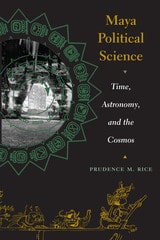
Maya Political Science
Time, Astronomy, and the CosmosBy Prudence M. Rice
University of Texas Press, 2004
How did the ancient Maya rule their world? Despite more than a century of archaeological investigation and glyphic decipherment, the nature of Maya political organization and political geography has remained an open question. Many debates have raged over models of centralization versus decentralization, superordinate and subordinate status—with far-flung analogies to emerging states in Europe, Asia, and Africa. But Prudence Rice asserts that neither the model of two giant "superpowers" nor that which postulates scores of small, weakly independent polities fits the accumulating body of material and cultural evidence.
In this groundbreaking book, Rice builds a new model of Classic lowland Maya (AD 179-948) political organization and political geography. Using the method of direct historical analogy, she integrates ethnohistoric and ethnographic knowledge of the Colonial-period and modern Maya with archaeological, epigraphic, and iconographic data from the ancient Maya. On this basis of cultural continuity, she constructs a convincing case that the fundamental ordering principles of Classic Maya geopolitical organization were the calendar (specifically a 256-year cycle of time known as the may) and the concept of quadripartition, or the division of the cosmos into four cardinal directions. Rice also examines this new model of geopolitical organization in the Preclassic and Postclassic periods and demonstrates that it offers fresh insights into the nature of rulership, ballgame ritual, and warfare among the Classic lowland Maya.
Mayaya Rising
Black Female Icons in Latin American and Caribbean Literature and CultureDawn Duke
Bucknell University Press, 2023
Measuring Cuban Economic Performance
By Jorge F. Pérez-López
University of Texas Press, 1987
Analysts attempting to assess economic growth in revolutionary Cuba are faced with two formidable obstacles: (1) official macroeconomic indicators published by the government are scarce and sometimes inconsistent because of frequent changes in the method of calculation; and (2) these indicators are not compatible with those produced by market economies because of differences in national income concepts. Because of these obstacles, it is difficult to analyze the performance of Cuba’s economy over time and to compare its economic performance directly with that of other nations.
Using a variant of the method developed by Abram Bergson to estimate the growth rates of the Soviet Union and subsequently applied to centrally planned economies in Eastern Europe, Jorge Perez-López has estimated the growth rate of the Cuban economy in real terms for the 1965–1982 period. His estimated indexes suggest that the Cuban economy expanded at a considerably slower pace than would be implied by official data.
By constructing yardsticks of economic performance for revolutionary Cuba that are compatible with those used by Western nations, Perez-López provides for the first time a basis for analyzing the real growth of the Cuban economy during the revolutionary period.
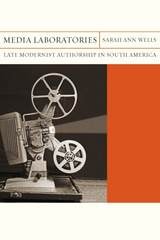
Media Laboratories
Late Modernist Authorship in South AmericaSarah Ann Wells
Northwestern University Press, 2017
Media Laboratories explores a pivotal time for South American literature of the 1930s and ’40s. Cinema, radio, and the typewriter, once seen as promising catalysts for new kinds of writing, began to be challenged by authors, workers, and the public. What happens when media no longer seem novel and potentially democratic but rather consolidated and dominant? Moving among authors from Brazil, Argentina, and Uruguay, and among the genres of fiction, the essay, popular journalism, and experimental little magazines, Sarah Ann Wells shows how writers on the periphery of global modernity were fashioning alternative approaches to these media. Analyzing authors such as Clarice Lispector, Jorge Luis Borges, and Felisberto Hernández, along with their lesser-known contemporaries, Media Laboratories casts a wide net: from spectators of Hollywood and Soviet montage films, to inventors of imaginary media, to proletarian typists who embodied the machine-human encounters of the period. The text navigates contemporary scholarly and popular debates about the relationship of literature to technological innovation, media archaeology, sound studies, populism, and global modernisms. Ultimately, Wells underscores a question that remains relevant: what possibilities emerge when the enthusiasm for new media has been replaced by anxiety over their potentially pernicious effects in a globalizing, yet vastly unequal, world?
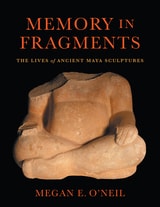
Memory in Fragments
The Lives of Ancient Maya SculpturesMegan E. O'Neil
University of Texas Press, 2024
An exploration of how the ancient Maya engaged with their history by using, altering, and burying stone sculptures.
For the ancient Maya, monumental stone sculptures were infused with agency. As they were used, reused, altered, and buried, such sculptures retained ceremonial meaning. In Memory in Fragments, Megan E. O'Neil explores how ancient Maya people engaged with history through these sculptures, as well as how they interacted with the stones themselves over the course of the sculptures’ long “lives.” Considering Maya religious practices, historiography, and conceptions of materials and things, O’Neil explores how Maya viewers perceived sculptures that were fragmented, scarred, burned, damaged by enemies, or set in unusual locations. In each case, she demonstrates how different human interactions, amid dynamic religious, political, and historical contexts, led to new episodes in the sculptures' lives.
A rare example of cross-temporal and geographical work in this field, Memory in Fragments both compares sculptures within ancient Maya culture across Honduras, Guatemala, Mexico, and Belize over hundreds of years and reveals how memory may accrue around and be evoked in material remains.
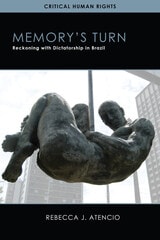
Memory’s Turn
Reckoning with Dictatorship in BrazilRebecca J. Atencio
University of Wisconsin Press, 2014
In clear and engaging prose, Rebecca J. Atencio tells the story of the slow turn to memory in Brazil, a turn that has taken place in both politics and in cultural production. She shows how testimonial literature, telenovelas, literary novels, theatrical plays, and memorials have interacted with policies adopted by the Brazilian state, often in unexpected ways. Under the right circumstances, official and cultural forms of reckoning combine in Brazil to produce what Atencio calls cycles of cultural memory. Novel meanings of the past are forged, and new cultural works are inspired, thus creating the possibility for further turns in the cycle.
The first book to analyze Brazil’s reckoning with dictatorship through both institutional and cultural means, Memory’s Turn is a rich, informative exploration of the interplay between these different modes of memory reconstruction.
Winner, Alfred B. Thomas Award, Southeastern Council of Latin American Studies
Honorable Mention, Roberto Reis Book Prize, Brazilian Studies Association
Mestizo Nations
Culture, Race, and Conformity in Latin American LiteratureJuan E. De Castro
University of Arizona Press, 2002
Through them, he delineates some of the ambiguities and contradictions that have beset this discourse. Among texts considered are the Indianist novel Iracema by the nineteenth-century Brazilian author José de Alencar; the Tradiciones peruanas, Peruvian Ricardo Palma's fictionalizations of national difference; and historical and sociological essays by the Peruvian Marxist José Carlos Mariátegui and the Brazilian intellectual Gilberto Freyre. And because questions raised by this discourse are equally relevant to postmodern concerns with national and transnational heterogeneity, De Castro also analyzes such recent examples as the Cuban dance band Los Van Van's use of Afrocentric lyrics; Richard Rodriguez's interpretations of North American reality; and points of contact and divergence between José María Arguedas's novel The Fox from Up Above and the Fox from Down Below and writings of Gloria Anzaldúa and Julia Kristeva.
By updating the concept of mestizaje as a critical tool for analyzing literary text and cultural trends—incorporating not only race, culture, and nationality but also gender, language, and politics—De Castro shows the implications of this Latin American discursive tradition for current critical debates in cultural and area studies. Mestizo Nations contains important insights for all Latin Americanists as a tool for understanding racial relations and cultural hybridization, creating not only an important commentary on Latin America but also a critique of American life in the age of multiculturalism.
Mexican Anarchism after the Revolution
By Donald C. Hodges
University of Texas Press, 1995
Formal anarchist organizations disappeared in Mexico after the 1910 Revolution, but anarchist principles survive in the popular resistance movements against the post-revolutionary governments. In this book, Donald Hodges offers the first comprehensive treatment of the intellectual foundations, history, politics, and strategy of Mexican anarchism since the Revolution.
Hodges interviewed leading Mexican anarchists, including Mónico Rodríguez Gómez, and gained access to documents of numerous guerrilla organizations, such as the previously missing "Plan de Cerro Prieto." Using both original and published sources, he shows how the political heirs of Ricardo Flores Magón, Mexico's foremost anarchist, agitated for workers' self-management and agrarian reform under the cover of the Mexican Communist party, how they played an important role in the student rebellion, and how, in the face of a labor movement that has come under government control, anarchism is currently experiencing a rebirth under another name.
Mexican Art and the Academy of San Carlos, 1785-1915
By Jean Charlot
University of Texas Press, 1962
Was the Royal Academy of San Carlos, founded in 1785 by the King of Spain, beneficial or detrimental to the development of a valid, living art in Mexico? The answer lies in the archives of the school, but nobody thought about constructing an aesthetic history from them until Jean Charlot accidentally discovered their extent and interest while searching for other material.
In this straightforward, documented account he presents not merely opinions and criticism but evidence, including curricula and contemporary drawings by students and teachers.
Since Pre-Conquest art there have been, it is usually assumed, two periods in Mexican art: the Colonial and the Modern. Between these peaks lies the dark Academy-dominated hiatus called Neo-Classicism, an episode that this treatise makes the first attempt to under-stand. The academic canons imported from Europe during this period were undeniably wrong for the indigenous people, and especially wrong at a time when a revolutionary Mexico was struggling for its own identity. But instead of throwing out this strange episode as foreign and imitative, it now becomes possible to see it as a period of acculturation through which the Mexican spirit emerged.
Aside from its interest as aesthetic history, this book makes an important contribution to the social history of Mexico. Some provocative ideas emerge: the interrelations between cultural and political attitudes, the historical impact of events and personalities on ideology. In the seesaw of political and financial fortunes, the worst moments of confusion were often the most pregnant artistically, with mexicanidad rising inevitably when official guidance weakened. As social history this account constitutes an interesting parallel to similar cultural experiences in the United States and in other countries of the Americas.
Charlot presents this material without special pleading, but not without appraisal. He writes: “… in the periods when the Academy was most strictly run along academic lines, it helped the young, by contrast, to realize the meaning of freedom. When the school was manned by men blind to the Mexican tradition, and sensitive only to European values, their stubborn stand became a most healthy invitation to artistic revolution.”
Mexican Consuls and Labor Organizing
Imperial Politics in the American SouthwestBy Gilbert G. González
University of Texas Press, 1999
Chicano history, from the early decades of the twentieth century up to the present, cannot be explained without reference to the determined interventions of the Mexican government, asserts Gilbert G. González. In this pathfinding study, he offers convincing evidence that Mexico aimed at nothing less than developing a loyal and politically dependent emigrant community among Mexican Americans, which would serve and replicate Mexico's political and economic subordination to the United States.
González centers his study around four major agricultural workers' strikes in Depression-era California. Drawing on a wide variety of sources, he documents how Mexican consuls worked with U.S. growers to break the strikes, undermining militants within union ranks and, in one case, successfully setting up a grower-approved union. Moreover, González demonstrates that the Mexican government's intervention in the Chicano community did not end after the New Deal; rather, it continued as the Bracero Program of the 1940s and 1950s, as a patron of Chicano civil rights causes in the 1960s and 1970s, and as a prominent voice in the debates over NAFTA in the late 1980s and early 1990s.
Mexican Folk Tales
Anthony John Campos
University of Arizona Press, 1977
Mexican Literature
A HistoryEdited by David William Foster
University of Texas Press, 1994
Mexico has a rich literary heritage that extends back over centuries to the Aztec and Mayan civilizations. This major reference work surveys more than five hundred years of Mexican literature from a sociocultural perspective. More than merely a catalog of names and titles, it examines in detail the literary phenomena that constitute Mexico's most significant and original contributions to literature.
Recognizing that no one scholar can authoritatively cover so much territory, David William Foster has assembled a group of specialists, some of them younger scholars who write from emerging trends in Latin American and Mexican literary scholarship. The topics they discuss include pre-Columbian indigenous writing (Joanna O'Connell), Colonial literature (Lee H. Dowling), Romanticism (Margarita Vargas), nineteenth-century prose fiction (Mario Martín Flores), Modernism (Bart L. Lewis), major twentieth-century genres (narrative, Lanin A. Gyurko; poetry, Adriana García; theater, Kirsten F. Nigro), the essay (Martin S. Stabb), literary criticism (Daniel Altamiranda), and literary journals (Luis Peña). Each essay offers detailed analysis of significant issues and major texts and includes an annotated bibliography of important critical sources and reference works.
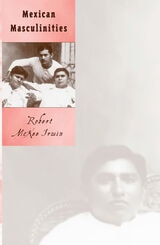
Mexican Masculinities
Robert McKee Irwin
University of Minnesota Press, 2003
A fascinating examination of masculinity in nineteenth- and twentieth-century Mexico
The first of its kind and a powerful challenge to customary views of gender and sexuality in the life and literature of Mexico, this book traces literary representations of masculinity in Mexico from independence in 1810 to the 1960s, and shows how these intersect with the constructions of nation and nationality.
The rhetoric of “Mexicanness” makes constant use of images of masculinity, though it does so in shifting and often contradictory ways. Robert McKee Irwin’s work follows these shifts from the male homosocial bonding that was central to notions of national integration in the nineteenth century, to questioning of gender norms stirred by science and scandals at the turn of the century, to the virulent reaction against gender chaos after the Mexican revolution, to the association of Mexicanness with machismo and homophobia in the literature of the 1940s and 1950s—even as male homosexuality was established as an integral part of national culture.As the first historical study of how masculinity and, particularly, homosexuality were understood in Mexico in the national era, this book not only provides “queer readings” of most major canonical texts of the period in question, but also uncovers a variety of unknown texts from queer Mexican history, including the 1906 novel Los 41, which reenacts the scandal of a turn-of-the-century transvestite ball that launched modern discussion of homosexuality in Mexico. It is a radical undermining of the simple hetero/homosexual and masculine/feminine oppositions that have for so long informed views of the country’s national character.
Mexican Political Biographies, 1884–1934
By Roderic Ai Camp
University of Texas Press, 1991
Here is an authoritative reference work that makes biographies of prominent Mexican national politicians from the period 1884–1934 available in English. Like the author's biographical directory for the years 1935–2009, it draws on many years of research in Mexico and the United States and seeks not only to provide accurate biographical information about each entry but also, where possible and appropriate, to connect these politicians to more recent leadership generations. Thus, Mexican Political Biographies, 1884-1934 not only is a useful historical source but also provides additional information on the family backgrounds of many contemporary figures.
The work includes those figures who have held specific posts at the national level or who have served as state governors. Each biographical entry contains the following information: date of birth, birthplace, education, elective political office, political party positions, appointive governmental posts at all levels, group activities, nongovernmental positions and professions, relatives, mentors and important friends, military experience, unusual career activities, and published biographical sources.
Another unique feature of the directory is appendixes with complete lists of the names and dates of cabinet members, supreme court justices, senators, deputies, selected ambassadors, and party leaders.
Mexican Political Biographies, 1935-2009
Fourth EditionBy Roderic Ai Camp
University of Texas Press, 2011
This fourth edition of Roderic Camp's highly respected Mexican Political Biographies is an updated comprehensive biographical directory of leading state and national politicians in Mexico, covering the years 1935–2009. The original edition, published in 1976, was the first and only comprehensive biographical work on contemporary political figures in any language and served as the prototype for the Mexican government's brief foray into its own official biographical directory. The Mexican Supreme Court has cited every biography of justices in the third edition as the basis of its biographies in the late 1980s.
With updates of the existing biographies and appendices, plus almost 1,000 additional biographies, this fourth edition now features close to 3,000 entries and serves as a unique resource list of the chronological occupants of all leading national political posts. The need for such information has become even more pronounced since Mexico's political transformation from a semi-authoritarian to a democratic model.
This latest edition allows readers access to information about Mexican politicians into the new century, and like its earlier versions, will be a valuable tool for government officials, journalists, historians, social scientists, the business community, and students.
Finally, it includes a detailed bibliographic essay that identifies and explains the significance of biographical sources and has been enhanced by numerous up-to-date Internet sources. An added convenience is an accompanying CD that allows readers to search the biographies and appendices, enhancing the longevity, usefulness, and uniqueness of this edition.
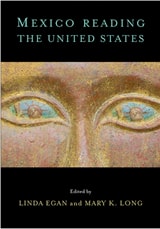
Mexico Reading the United States
Linda Egan
Vanderbilt University Press, 2009
In a time of ever-increasing migration of capital and human beings, this book turns on its head the usual perspective of U.S. economic and cultural dominance in order to deepen understanding of the bi-national relationship.
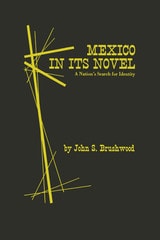
Mexico in Its Novel
A Nation's Search for IdentityBy John S. Brushwood
University of Texas Press, 1966
Mexico in Its Novel is a perceptive examination of the Mexican reality as revealed through the nation's novel. The author presents the Mexican novel as a cultural phenomenon: a manifestation of the impact of history upon the nation, an attempt by a people to come to grips with and understand what has happened and is happening to them.
Written in a clear and graceful style, this study examines the life of the novel as a genre against the background of Mexican chronology. It begins with a survey of the mid-twentieth-century novel, the Mexican novel which came of age in the period following the 1947 publication of Agustín Yáñez's The Edge of the Storm. During this time the novel resolved some of its most complicated problems and, as a result, offered a wider and deeper view of reality.
Having established this circumstance, John Brushwood goes back in time to the Conquest and then moves forward to the twentieth-century novel. Passing from the Colonial Period into the nineteenth century, the author recognizes the relationship between Romanticism and the desire for logical social behavior, and then views this relationship in the perspective of the Reform, an attempt to bring order out of chaos. The novel under the Díaz dictatorship is seen in three different phases, and the last Díaz chapter actually moves into the Revolution itself. The novel during the years of fighting is considered along with the first post-Revolutionary fiction. From that point the developing conflict within Mexican reality itself—a conflict between introversion and extroversion, nationalism and cosmopolitanism—reaches out to seek its solution in the novels of the first chapter.
Mexico's Recent Economic Growth
The Mexican ViewTranslated by Marjory Urquidi; Essays by Enrique Pérez López and others, introduction by Tom E. Davis
University of Texas Press, 1967
The Mexican economy underwent a process of growth and transformation in the twentieth century, which was confirmed by the indexes and figures that economists use to chart the rate of growth, even allowing for possible inaccuracies in these figures.
This volume of six essays makes readily available to English-speaking readers a selection of significant contributions by outstanding Mexican economists dealing with the mid-twentieth-century growth of the Mexican economy.
Enrique Pérez López provides an overview of the development of the gross national product in the economy and the structural changes that were imperative if basic social goals were to be implemented and the optimal adjustments to changing world conditions effected. Ernesto Fernández Hurtado discusses the process of accommodation and cooperation between the public and the private sectors that has contributed significantly to economic growth, stressing particularly the role of agriculture. Mario Ramón Beteta describes central bank policy and the functioning of the Central Bank, showing how control over credit and the banking system assures stability and accelerating growth through its credit rationing.
Alfredo Navarrete R. traces the sources of domestic savings that have provided 90 percent of the capital employed in the economy since the Revolution, and Ifigenia M. de Navarrete demonstrates that rapid economic growth has not resulted in a more equitable distribution of income. Victor Urquidi stresses the balanced growth, achieved by allocating public capital formation to basic infrastructure, that has helped develop agriculture as well as industry, and indicates the nature of the structural change that must occur if the economy is to expand rapidly.
In his introduction Tom E. Davis compares growth in Mexico with developments during the same period in Chile and Argentina.
The country reached its midcentury standard of living after fifty years of drastic social and political changes under a constitution that altered the system and the concept of private property and the role of the state. These new concepts brought about changes in the structure of production and social relationships, together with a rise to new cultural, technical, and moral levels. These changes, in turn, placed Mexico in a new position with new problems. A question that must be answered is whether the economic goals of the future require a reappraisal of social relationships and of the ways of administering and utilizing the country’s resources and potential productivity.
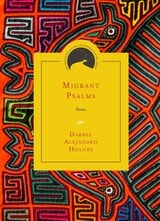
Migrant Psalms
PoemsDarrel Alejandro Holnes
Northwestern University Press, 2021
Migrant Psalms gives us a rare look inside a Panamanian experience of migration, describing the harsh realities of mothers, children, and teens who entered the United States—or tried to do so. Holnes’s poems find the universal through specificity; their exploration of expatriation, assimilation, and naturalization transcends the author’s personal experience to speak to what it means to be “other” anywhere.
The collection begins with “Kyrie,” a coming‑to‑America chronicle that spans three years in Texas, modeled after the liturgical Christian prayer Kyrie Eleison (Lord, have mercy). Other poems experiment with macaronic language and form to parallel shifts in the speaker’s status from immigrant to citizen, ending with “The 21st Century Poem,” which probes what’s “real” in today’s New York City. Through the speaker’s quest to become an American, this collection asks: Who are we becoming as individuals, as a society, as a nation, as a world? And is faith enough to enact change? Or is it just the first step?
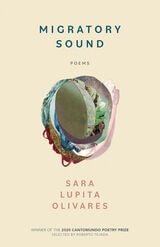
Migratory Sound
PoemsSara Lupita Olivares
University of Arkansas Press, 2020
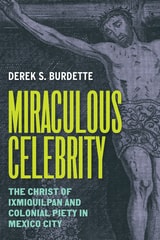
Miraculous Celebrity
The Christ of Ixmiquilpan and Colonial Piety in Mexico CityDerek S. Burdette
University of Texas Press, 2025
A study of the Christ of Ixmiquilpan, a historically beloved religious icon from sixteenth-century Mexico, and its evolving cultural importance.
The life-sized crucifix known as the Christ of Ixmiquilpan (also the Señor de Santa Teresa) was one of the most important artworks in colonial Mexico. The statue began as an ordinary devotional image, but in 1621 devotees witnessed it undergo a miraculous renovation that gave it a supernatural beauty. Over the next two and half centuries, its perceived power increased until it was surpassed in importance only by the Virgin of Guadalupe. Despite its historical significance, the Christ of Ixmiquilpan’s history has yet to be fully told.
Derek Burdette brings the miraculous crucifix out of the shadows and explores its instrumental role in shaping the devotional culture of New Spain. Following the arc of the statue’s life, he chronicles the story of the statue’s creation, miraculous renovation, and subsequent veneration at the heart of Mexico City. He also reveals how colonial politics were woven into the statue’s life from the very start. Reconstructing the history of a key artwork, Miraculous Celebrity sheds new light on the intersection of art, faith, and politics in the Spanish colonial world.
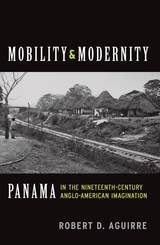
Mobility and Modernity
Panama in the Nineteenth-Century Anglo-American ImaginationRobert D. Aguirre
The Ohio State University Press, 2017
In this study, Robert D. Aguirre provides bold new interpretations of Anthony Trollope, John Lloyd Stephens, and Eadweard Muybridge and also recovers information about literary communities previously lost to history. Mobility and Modernity shows how Panama became defined as a site of incipient globalization and a crucial link of empire. Across this narrow strip of land people and things traveled, technology developed, and political forces erupted. The isthmus became a site of mobility that paradoxically produced varieties of immobility. Parting ways with histories that celebrate the canal as a mighty engineering feat, Mobility and Modernity reveals a more complex story of cultural conflict that began with the first gold rush news in the late 1840s and continued throughout the century.
Modern Peru
A New HistoryPaulo Drinot and Alberto Vergara, editors
Duke University Press, 2025
Contributors. Eduardo Dargent, Paulo Drinot, Cynthia McClintock, José Luis Rénique, Natalia Sobrevilla Perea, Alberto Vergara, Charles Walker
Modernismo, Modernity and the Development of Spanish American Literature
By Cathy L. Jrade
University of Texas Press, 1998
A CHOICE Outstanding Academic Book
Modernismo arose in Spanish American literature as a confrontation with and a response to modernizing forces that were transforming Spanish American society in the later nineteenth century. In this book, Cathy L. Jrade undertakes a full exploration of the modernista project and shows how it provided a foundation for trends and movements that have continued to shape literary production in Spanish America throughout the twentieth century.
Jrade opens with a systematic consideration of the development of modernismo and then proceeds with detailed analyses of works-poetry, narrative, and essays-that typified and altered the movement's course. In this way, she situates the writing of key authors, such as Rubén Darío, José Martí, and Leopoldo Lugones, within the overall modernista project and traces modernismo's influence on subsequent generations of writers.
Jrade's analysis reclaims the power of the visionary stance taken by these creative intellectuals. She firmly abolishes any lingering tendency to associate modernismo with affectation and effete elegance, revealing instead how the modernistas' new literary language expressed their profound political and epistemological concerns.
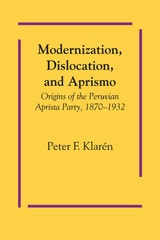
Modernization, Dislocation, and Aprismo
Origins of the Peruvian Aprista Party, 1870-1932By Peter F. Klarén
University of Texas Press, 1973
Since its founding in 1930 the Peruvian Aprista party (APRA) has occupied a place of signal importance in the Peruvian political spectrum, and it is one of the most important political parties to appear in twentieth-century Latin America. Modernization, Dislocation, and Aprismo is the first major analysis of the social and political bases of the Aprista movement. Previous studies of APRA had been chiefly descriptive in nature and did not utilize modern social science approaches in analyzing the movement.
Peter F. Klarén’s major thesis is that APRA emerged in the 1930s as a direct political response to the far-reaching dislocative impact of modernization within the Peruvian sugar industry, a process that unfolded over a period of about four decades beginning in the 1890s and that substantially upset and transformed the traditional structure of society along the north coast.
Jolted by the effects of modernization, elements of the old middle and lower sectors grew increasingly hostile to the existing order. Joined by the new proletariat that was beginning to voice its collective grievances by means of the unionization process, this large, alienated segment of northern society responded overwhelmingly in 1931 to the reformist appeal of the new Aprista party. APRA, many of whose leaders were products of this environment, best expressed politically the general mood of alienation and rebellion of the area’s discontented. The eruption of the bloody and abortive Trujillo Revolution of 1932 is considered as the culmination of this process of social and economic dislocation.
In addition to presenting a major new interpretation of the origins of the Aprista movement, this study places the Aprista party in the larger Latin American context by comparing APRA with other political movements in Mexico, Brazil, Argentina, and Cuba that were responding to similar modernization phenomena.
This study is based not only on a large body of official party literature and local newspapers for the period, but also on the newly discovered records of the Archivo de la Cámara de Comercio, Agricultura e Industria of the Department of La Libertad for the years 1904–1932.
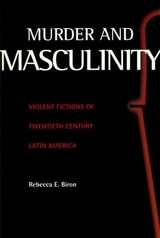
Murder and Masculinity
Violent Fictions of Twentieth-Century Latin AmericaRebecca E. Biron
Vanderbilt University Press, 2000
The introduction to this study deftly situates Biron's work in relation to previous theoretical arguments on the social and political dimensions of Latin American writing. The five subsequent chapters offer superb analyses of the individual texts. Like their male protagonists who experiment with the psychological and legal extremes of gender division, these narratives risk nonconformity to the laws of genre in their quest for liberation from violent social and literary conventions. In combining elements of detective stories, crime narratives, psychological case studies, and magical or grotesque realism, they offer metafictional commentary on a network of discourses that confuses images of masculinity, national identity, and political autonomy in postcolonial Latin America.

Myth and Archive
A Theory of Latin American NarrativeRoberto González-Echevarría
Duke University Press, 1998
Providing ways to link literary and nonliterary narratives, González Echevarría examines a variety of archival writings—from the chronicles of the discovery and conquest of the New World to scientific travel narratives and records of criminal confessions—and explores the relationship of these writings to novels by authors such as García Márquez, Borges, Barnet, Sarmiento, Carpentier, and Garcilaso de la Vega. Moving beyond demonstrating that early forms of creative narrative had their geneses in the sixteenth-century authoritative discourse of the Spanish Empire, González Echevarría shows how this same originating process has been repeated in other key moments in the history of the Latin American narrative. He shows how the discourse of scientific discovery was the model for much nineteenth-century literature, as well as how anthropological writings on the nature of language and myth have come to shape the ideology and form of literature in the twentieth century. This most recent form of Latin American narrative creates its own mythic form through an atavistic return to its legal origins—the archive.
This acclaimed book—originally published in 1990—will be of continuing interest to historians, anthropologists, literary theorists, and students of Latin American culture.
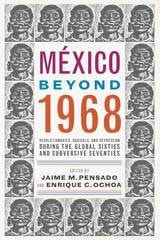
México Beyond 1968
Revolutionaries, Radicals, and Repression During the Global Sixties and Subversive SeventiesEdited by Jaime M. Pensado and Enrique C. Ochoa
University of Arizona Press, 2018
The book illustrates how expressions of resistance developed from the ground up in different regions of Mexico, including Chihuahua, Guerrero, Jalisco, Mexico City, Puebla, and Nuevo León. Movements in these regions took on a variety of forms, including militant strikes, land invasions, cross-country marches, independent forums, popular organizing, and urban and rural guerrilla uprisings.
México Beyond 1968 brings together leading scholars of Mexican studies today. They share their original research from Mexican archives partially opened after 2000 and now closed again to scholars, and they offer analysis of this rich primary source material, including interviews, political manifestos, newspapers, and human rights reports.
By centering on movements throughout Mexico, México Beyond 1968 underscores the deep-rooted histories of inequality and the frustrations with a regime that monopolized power for decades. It challenges the conception of the Mexican state as “exceptional” and underscores and refocuses the centrality of the 1968 student movement. It brings to light the documents and voices of those who fought repression with revolution and asks us to rethink Mexico’s place in tumultuous times.
Contributors:
Alexander Aviña
Adela Cedillo
A. S. Dillingham
Luis Herrán Avila
Fernando Herrera Calderón
Enrique C. Ochoa
Verónica Oikión Solano
Tanalís Padilla
Wil G. Pansters
Jaime M. Pensado
Gema Santamaría
Michael Soldatenko
Carla Irina Villanueva
Eric Zolov