Results by title
3388 books match the query 'Fiction' and 173 start with m
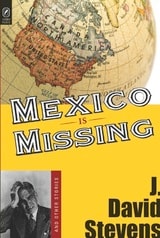
MEXICO IS MISSING
AND OTHER STORIESJ. David Stevens
The Ohio State University Press, 2006
MUSE IN THE MACHINE
AMERICAN FICTION AND MASS PUBLICITYMARK CONROY
The Ohio State University Press, 2004

Macauley's Thumb
Lex Williford
University of Iowa Press, 1994
Lex Williford's seriously eccentric characters find that traveling down life's highway leads to the breakdown lane as quickly as it leads to the fast lane. Their quirky philosophy can best be summed up by Bucklin Rudd, who just lost his business and his wife after losing the last bit of his good sense: “Nothing like working half your life for something just to find out you think you're pretty damn sure you don't want it.” The ten stories in Macauley's Thumb—set variously in Texas, Old and New Mexico, Oklahoma, Arkansas, Alabama, and Illinois—explore the complicated lives of disenchanted characters who find ways to express their grief at the losses they face under impossible circumstances, losses so large and so small that no one—not even Smiling Joe's insurance—can cover them.
A husband and wife, unable to speak to each other without arguing, face the dissolution of their marriage when they smuggle his mother's body out of Mexico. Two boys, confronting abandonment by their father, go to the Texas State Fair and stumble upon a way to get their mother out of bed. Thomas “Hoot” Ponder and his nephew find common ground in whiskey and storytelling amid the comedy surrounding death and dying. A chiropractor who loves science fiction movies struggles with his sexual fantasies about one of his patients, a Wal-Mart cashier who can't stop talking about her pain. In the powerful title story, Cal Macauley—driven mad by his wife's horrible death—faces mourning, regret, and the inevitability of forgetting by striking out against himself and the rattlesnakes on his mountain.

Machine Art and Other Writings
The Lost Thought of the Italian YearsEzra Pound
Duke University Press, 1996
The essays in this volume address Pound’s diverse aesthetic concerns, including his Vorticism and his criticism of Western metaphysics, his advancement of the machine as a new criterion for beauty, his encounter with the German Bauhaus movement, and his search for a type of writing ruled by mathematical rather than grammatical laws. Machine Art and Other Writings documents the wide proportions of Pound’s polemic against the abstractions of modernism and reveals the extent to which he was at odds with the metaphysical assumptions of his time. The volume, edited by Ardizzone, is the result of years of systematic and intensive study of Pound’s manuscripts, including glosses from the texts of his personal library. Proposing an unconventional approach to Pound studies that focuses on marginality and intertextuality, she subverts the canonical hierarchy of Pound’s works by revealing the power of texts considered marginalia.
General readers, students and scholars in the fields of European and American modernism, aesthetics, the history of technology, and art history, as well as Pound specialists and the many poets and writers influenced by Pound, will greet the publication of Machine Art and Other Writings with interest and anticipation.
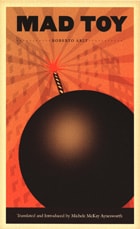
Mad Toy
Roberto Arlt
Duke University Press, 2002
An immigrant son of a German father and an Italian mother, Arlt as a youth was a school dropout, poor and often hungry. In Mad Toy, he incorporates his personal experience into the lives of his characters. Published in 1926 as El juguete rabioso, the novel follows the adventures of Silvio Astier, a poverty-stricken and frustrated youth who is drawn to gangs and a life of petty crime. As Silvio struggles to bridge the gap between exuberant imagination and the sordid reality around him, he becomes fascinated with weapons, explosives, vandalism, and thievery, despite a desperate desire to rise above his origins. Flavored with a dash of romance, a hint of allegory, and a healthy dose of irony, the novel’s language varies from the cultured idiom of the narrator to the dialects and street slang of the novel’s many colorful characters.
Mad Toy has appeared in numerous Spanish editions and has been adapted for the stage and for film. It is the second of Arlt’s novels to be translated into English.
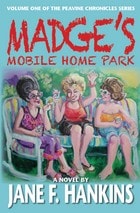
Madge's Mobile Home Park
Volume One of the Peavine ChroniclesJane F. Hankins
Parkhurst Brothers, Inc., 2012
This hilarious send-up of outlandish Southern characters includes a beautician, a luncheonette waitress, a radio evangelist, the widow of a gas and oil distributror and the residents of a fictional mobile home park in Arkansas as they find uproarious ways to enjoy life, needle each other, and remember the dear-departed.
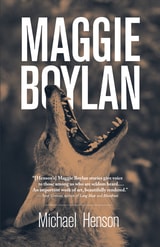
Maggie Boylan
Michael Henson
Ohio University Press, 2018
Finalist, 2019 Weatherford Award (Fiction) • A Great Group Reads Selection for National Reading Group Month from The Women’s National Book Association
Set in Appalachian Ohio amid an epidemic of prescription opiate abuse, Michael Henson’s linked collection tells of a woman’s search for her own peculiar kind of redemption, and brings the novel-in-stories form to new heights. Maggie Boylan is an addict, thief, liar, and hustler. But she is also a woman of deep compassion and resilience. The stories follow Maggie as she spirals through her addictive process, through the court system and treatment, and into a shaky new beginning.
In these masterful stories, we rarely occupy Maggie’s perspective, but instead gain a multilayered portrait of a community as we see other people’s lives bump up against hers—and we witness her inserting herself into their spheres, refusing to be rebuffed. The result is a prismatic view of a community fighting to stay upright against the headwinds of a drug epidemic: always on edge, always human.
Magical Realism
Theory, History, CommunityLois Parkinson Zamora and Wendy B. Faris, eds.
Duke University Press, 1995
Presenting the first English translation of Franz Roh’s 1925 essay in which the term magical realism was coined, as well as Alejo Carpentier’s classic 1949 essay that introduced the concept of lo real maravilloso to the Americas, this anthology begins by tracing the foundations of magical realism from its origins in the art world to its current literary contexts. It offers a broad range of critical perspectives and theoretical approaches to this movement, as well as intensive analyses of various cultural traditions and individual texts from Eastern Europe, Asia, North America, Africa, the Caribbean, and Australia, in addition to those from Latin America. In situating magical realism within the expanse of literary and cultural history, this collection describes a mode of writing that has been a catalyst in the development of new regional literatures and a revitalizing force for more established narrative traditions—writing particularly alive in postcolonial contexts and a major component of postmodernist fiction.
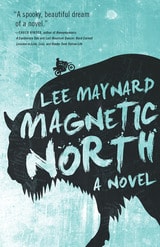
Magnetic North
LEE MAYNARD
West Virginia University Press, 2015
In Magnetic North an aging warrior and his best friend—perhaps his only friend—ride motorcycles to Alaska, with the ultimate goal of riding to the Arctic Circle. It is a ride that mirrors their lives, a ride that causes old stories, old trials, old darkness to come, once again, through the spinning wheels of the machines they are riding.
Morgan is a man who can't give it up. His propensity toward violence has followed him through all the days of his life, and it follows him now.
Slade has shared much of Morgan's life, and he has been the one of the rare stabilizing factors in that life. Without Slade, it is clear that Morgan has no guidance, no goals, and no potential for living much longer than his next encounter with . . . almost anything.
And so the two old friends ride out from New Mexico and Colorado—heading north.
Make Me Do Things
Victoria Redel
Four Way Books, 2013
Make a Wish
Judy Soloway Kay
University of Michigan Press, 2005
Genre: Romance
Length: about 15,000 words
Level: 4th grade

Making Skeletons Dance
Peter Macsovszky
Seagull Books, 2024
Simon Blef, who comes from “a small, stifling country without a sea” in some corner of Europe, has gone to live in the Netherlands. There he has found a wife and hopes he may yet find work. He is making preparations: he carries around a notebook and jots down his thoughts. One day he would like to write a novel, but in the meantime, he records, embellishes, invents, and combines what he sees with what he dreams: the happy, hard-working Dutch, with their seventy-year-old hippies—the “superannuated generation of rockers”— and their new “sexless generation,” as well as the tourists and immigrants from beyond the seven seas.
Set in a single day, Making Skeletons Dance is full of impressionistic musings, in equal measure mordant and humorous. Simon has left his small unhappy country to get away from the past—but how is it that the past is so devilishly resourceful, liable to turn up in any Amsterdam pub? As the afternoon wears on, the drama of his life unfolds in fascinating detail, be it comedy or tragedy, or both.
Making the Ghost Dance
A NovelDavid Kranes
Signature Books, 2006
“For the record, I am in this book and you are in this book. When they make the movie, it’s going to feature everybody. David Kranes writes from the marrow, and this novel is fierce and crammed with heart. It’s cerebral and cinematic, and if feels—like all of Kranes’ prose—like something new and something old. A man loves his life in the ways he can, and Peck’s ways are rich. I would say this book is about family and love and time. But it isn’t about something, it is something! If I were with you now, I’d put it in your hand. Wait, fortune, it has already appeared! So, now you’ll see what I mean.” —Ron Carlson, author of A Kind of Flying.
Malambo
Lucía Charún-Illescas
Swan Isle Press, 2004
“In Malambo . . . the Rimac proudly rubs elbows with the freedmen, the cimarrons, and smuggled slaves. . . It runs united to the other subterranean springs underneath Blanket Street, Weavers Lane, and under Jewish Street . . . and Swordmaker’s Lanes.”
The Rimac shapes the narrative of this compelling historical novel that probes the brutal clash of ethnicity, religion, and class in sixteenth- and seventeenth-century Peru. Set against the backdrop of Spanish colonialism and the Spanish Inquisition in the “New World,” Malambo peels back the layers of Peru’s society to focus on the subtle connections among indigenous peoples— Africans, Jews, Christians, and others—whose cultural fusion pervades Latin American history and culture.
At the heart of the novel is Tomason, an African artist living along the Rimac who paints religious murals for the church and his colonial masters. The intermingling of his Yoruba heritage with his life in a Spanish colony transforms him into a griot figure who unearths the deeper truths of his painful and complex experience by sharing it. Other memorable characters’ stories intertwine with Tomason’s tale, developing a narrative that powerfully reflects on the themes of dislocation and enslavement.
Malambo is an unforgettable work that explores the origins of the Afro-Hispanic experience and offers a profound meditation on the forces of history.
Malawi's Sisters
Melanie S. Hatter
Four Way Books, 2019
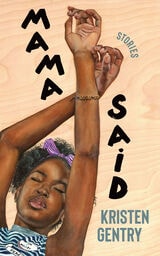
Mama Said
StoriesKristen Gentry
West Virginia University Press, 2023
The linked stories in Mama Said are set in Louisville, Kentucky, a city with a rich history steeped in tobacco, bourbon, and gambling, indulgences that can quickly become gripping and destructive vices. Set amid the tail end of the crack epidemic and the rise of the opioid crisis, Mama Said evokes Black family life in all its complexity, following JayLynn, along with her cousins Zaria and Angel, as they come of age struggling against their mothers’ drug addictions.
JayLynn heads to college intent on gaining distance from her depressed mother, only to learn that her mother’s illness has reached a terrifying peak. She fears the chaos and instability of her extended family will prove too much for her boyfriend, whose idyllic family feels worlds, not miles, apart from her own. When bats invade Zaria’s new home, she is forced to determine how much she is willing to sacrifice to be a good mother. Angel rebels on Derby night, risking her safety to connect with her absent mother and the wild ways that consumed her.
Mama Said separates from stereotypes of Black families, presenting instead the joy, humor, and love that coexist with the trauma of drug abuse within communities. Kristen Gentry’s stories showcase the wide-reaching repercussions of addiction and the ties that forever bind daughters to their mothers, flaws and all.
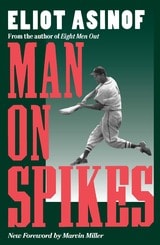
Man on Spikes
Eliot Asinof. Foreword by Marvin Miller
Southern Illinois University Press, 1998
Selected as one of baseball literature's Golden Dozen by Roger Kahn, Man on Spikes is an uncompromisingly realistic novel about a baseball player who struggles through sixteen years of personal crises and professional ordeals before finally appearing in a major league game. In a preface to this new edition, Eliot Asinof reveals the longsuffering ballplayer and friend upon which the novel is based.
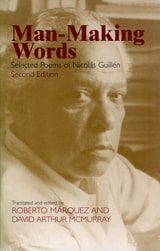
Man-Making Words
Selected Poems of Nicolas GuillenNicolas Guillen
University of Massachusetts Press, 2003
The Cuban poet Nicolás Guillén, who was born in the eastern province of Camagüey in 1902, died in 1989. This new edition of his selected poems, reissued thirty years after its original publication, includes an extensive, new introductory essay by Roberto Márquez, one of the original translators and a leading authority on Caribbean and Latin American literature and culture.
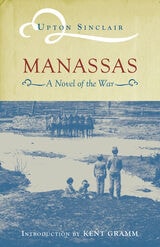
Manassas
A Novel of the WarUpton Sinclair
University of Alabama Press, 2000
Centers on the moral dimension of the conflict as it traces a young Mississippi boy’s conversion from pro-slavery Southerner to abolitionist Union soldier
Allan Montague, born on a Mississippi plantation about twenty years before the Civil War, has grown up with slavery and considers it natural. When his father moves to Boston for business and takes the boy with him, young Allan carries a knife given to him by his cousin to use in killing abolitionists.
The first abolitionist young Allan meets in Boston is Levi Coffin, the reputed founder of the Underground Railroad. In this first of many meetings with historical figures, Allan forms a friendship with Coffin, who eventually takes him to hear a speech by former slave Frederick Douglass. Douglass's powerful words cement Allan's transformation into an abolitionist—a transformation that will lead him back to his Deep South home with the hope of freeing slaves and eventually back to the North and the fateful Battle of Manassas.
Kent Gramm, author of the introduction for this new edition of Manassas, calls the novel “a modern version of the morality play,” with the United States as the central character. “The real story, he writes, is the moral phenomenon of the Civil War.” It is a powerful book that deserves to be revived, read, and studied.
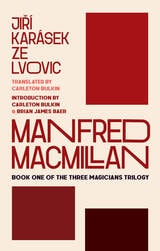
Manfred Macmillan
Book One of the Three Magicians TrilogyBy Jirí Karásek ze Lvovic, translated from the Czech and annotated by Carleton Bulkin with an introduction co-authored by Brian James Baer
Amherst College Press, 2024
Karasék rejected Czech translations of ancient Greek writers that bowdlerized gay themes, and he personally and vigorously defended Oscar Wilde in print, both on the grounds of artistic freedom and of private morality. He also published a cycle of homoerotic poems under the title Sodom, confiscated by the Austrian authorities but republished in 1905 and repeatedly afterward. A colonized subject, a literary decadent, and a sexual outlaw, Karasék’s complex responses to his own marginalization can be traced through his fantastically strange novel trilogy Three Magicians. As the first volume in that series, Manfred Macmillan is a gorgeous, compelling, and important addition to expanding canons of LGBTQI+ literature.
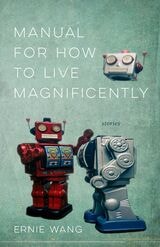
Manual for How to Live Magnificently
StoriesErnie Wang
Acre Books, 2026
This debut collection turns the ordinary into sweeping tragicomedy, probing the small, daily confrontations that shape a life well lived.
In a debut collection at once deeply felt and delightfully playful, Ernie Wang presents ordinary people struggling with challenges that confront many today: how to find steady, meaningful work; how to manage when our healthcare system fails us; how to navigate thorny relationships with lovers, with friends, with children; how to keep one’s dreams alive, and how to let them go. The thirteen stories in Manual for How to Live Magnificently are intriguingly linked, with narrators becoming players and players becoming narrators. Several stories feature cameos by the irrepressible seventy-something Mabel Rogerson, who serves by turns as catalyst, comic relief, and means to catharsis. The book toggles among dramatically different locales—Dayton, Ohio; Las Vegas; Disneyland; Kamisoshigaya, Japan—drawing them thematically into a shared orbit.
Though each of Wang’s offerings has heft and poignancy, the stories also serve up superb comic set pieces. A fake fortuneteller forgoes his crystal ball in favor of a snow globe; a priest moonlights as a professional wrestler named the Grim Preacher; a troubled lawyer who reluctantly cat-sits for a friend winds up finding solace with Killer and Hoedaddy. Revelations are reached at the male strip club Dayton Dix, or during a ritual spanking at Hofbräuhaus just off the Las Vegas Strip, or on Captain Hook’s flying galleon during a theme park ride. And almost everyone eventually ends up at Applebee’s. When storylines converge in a terrifying tragedy, Wang takes the opportunity to explore the complexity of family, to deepen our understanding of sacrifice and the many ways people demonstrate love for one another.
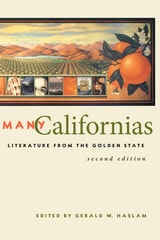
Many Californias
Literature from the Golden StateGerald W. Haslam
University of Nevada Press, 1999
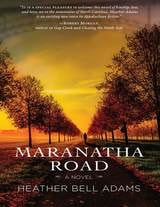
Maranatha Road
Heather Bell Adams
West Virginia University Press, 2017
Sadie knows Tinley must be lying because Mark was engaged and never would have betrayed his fiancée. So she refuses to help, and she doesn’t breathe a word about it to anybody. But in a small, southern town like Garnet, nothing stays secret for long.
Once Sadie starts piecing together what happened to Mark, she discovers she was wrong about Tinley. And when her husband is rushed to the hospital, Sadie must hurry to undo her mistake before he runs out of time to meet their grandchild.
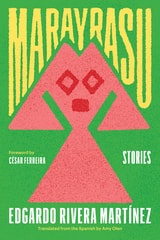
Marayrasu
StoriesEdgardo Rivera Martínez, Amy Olen
Northwestern University Press, 2026
The stories in Marayrasu stage fantastical, mysterious encounters that belie the characters’ often harsh economic and political realities as they seek belonging in modern Peru through art, music, and relationships. Depicted in poetic prose, these characters are loners, orphans, and outcasts experiencing quiet, tender encounters with other people and animals, the creative arts, and the land they find themselves depending on. Living vibrantly within these stories, the leviathan of Inca lore considers its own form, a young boy moves to a mining town and gets involved with a local union leader’s fight for worker rights while feeling the powerful pull of a large mountain overlooking the town, and a Persian cat captures the attention of a family down on its luck. Amy Olen’s translation smoothly captures Rivera Martínez’s impressive stories, offering a unique lens into the region at the heart of this canonical author’s inimitable work.
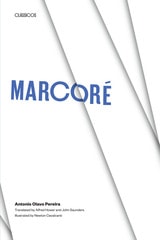
Marcoré
By Antonio Olavo Pereira
University of Texas Press, 1970
Marcoré, first published in Rio de Janeiro in 1957, won the coveted prize for fiction awarded by the Brazilian Academy of Letters and has been praised by leading critics and writers in Brazil. The novel has maintained favor with the Brazilian public and has also been published and received with enthusiasm in Portugal.
Adopting the intimist, introspective approach characteristic of such writers as Machado de Assis and Graciliano Ramos, Pereira tells a moving, bittersweet tale of personal problems and family relationships. The central character of Marcoré is the narrator, a modest, introverted individual who, aware of his own human condition, tends to view life with pessimism tempered with compassion.
As the narrator reflects on his life and relationships in a small town in the state of São Paulo, an unobtrusive document of Brazilian family life unfolds. The novel contains several highly dramatic scenes as well as many tender and entertaining ones and introduces a set of very human, very credible characters, including a most irascible mother-in-law and a wife who makes a strange vow.
The reactions, thoughts, and hidden motivations of the characters are revealed in precise and economical language—evidence of the author's powers of observation and knowledge of human nature.
Rachel de Queiroz has described Marcoré as "a beautiful and tormented book." It has become a modern Brazilian classic.

Mardi and a Voyage Thither
Volume ThreeHerman Melville
Northwestern University Press, 1998
This scholarly edition aims to present a text as close to the author's intention as surviving evidence permits. Based on collations of all editions publishing during Melville's lifetime, it incorporates author corrections and many emendations made by the present editors. This edition of Mardi is an Approved Text of the Center for Editions of American Authors (Modern Language Association of America).
Mardi and a Voyage Thither
Volume Three, Scholarly EditionHerman Melville
Northwestern University Press, 1970
This scholarly edition aims to present a text as close to the author's intention as surviving evidence permits. Based on collations of all editions publishing during Melville's lifetime, it incorporates author corrections and many emendations made by the present editors. This edition of Mardi is an Approved Text of the Center for Editions of American Authors (Modern Language Association of America).
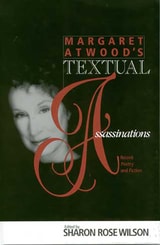
Margaret Atwood’s Textual Assassinations
Recent Poetry and FictionEdited by Sharon Rose Wilson
The Ohio State University Press, 2005
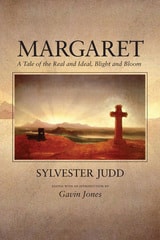
Margaret
A Tale of the Real and Ideal, Blight and BloomSylvester Judd
University of Massachusetts Press, 2009
Praised at the time as the most emphatically “American” book ever written, Margaret is a breathtaking combination of female bildungsroman, utopian novel, and historical romance. First published in 1845, Sylvester Judd's novel centers on the fictional New England village of Livingston, where the young Margaret Hart strives to escape the poverty and vice of her surroundings by learning from a mysterious teacher, the “Master,” and by entwining herself with the powers of nature. But when Margaret's brother is tried and hanged for murder, this rural community collapses, forcing Margaret to face the temptations of an urban underworld and to confront the intrigue of her family history. Margaret is the story of a young woman's attempt to create a new social order, founded on beauty and truth, in a land plagued by violence, debauchery, and political instability.
As Gavin Jones points out in his new introduction, Margaret perhaps stands alone in its creation of a female character who grows in social rather than domestic power. The novel also remains unique in its exploration of transcendental philosophy in novelistic form. Part eco-criticism, part seduction novel, part temperance tract, and part social history, Margaret is a virtual handbook for understanding the literary culture of mid-nineteenth-century America, the missing piece in puzzling out connections between writers such as Hawthorne, Melville, Whitman, and Thoreau.
Margaret was widely read and deeply influential on both British and American writers throughout the nineteenth century but controversial for its representations of alcoholism and capital punishment. Judd's novel remains resonant for today's readers as it overturns conventional views of the literary representation of women and the origins of the American Renaissance.
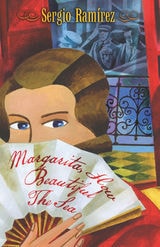
Margarita, How Beautiful the Sea
Sergio Ramírez
Northwestern University Press, 2007
In 1956 in a cafe in León, a group of literati gather, dedicated, among other things, to the rigorous reconstruction of the legend surrounding Darío—but also to conspire. There will be an attempt against dictator Somoza's life, and that little girl with the fan a half-century before will not be a disinterested party.
In Margarita, How Beautiful the Sea, Sergio Ramírez encompasses, in a complete metaphor of reality and legend, the entire history of his country. The narrative moves along paths fifty years apart, which inevitably converge. The story becomes a fascinating exercise on the power of memory, on the influence of the past, fictitious or not, in the finality of reality.
Marginal Voices
Selected StoriesBy Julio Ramón Ribeyro
University of Texas Press, 1993
Julio Ramón Ribeyro has been widely acclaimed Peru's master storyteller. Until now, however, few of his stories have been translated into English. This volume brings together fifteen stories written during the period 1952-1975, which were collected in the three volumes of La palabra del mudo.
Ribeyro's stories treat the social problems brought about by urban expansion, including poverty, racial and sexual discrimination, class struggles, alienation, and violence. At the same time, elements of the fantastic playfully interrupt some of the stories. As Ribeyro's characters become swept up in circumstances beyond their understanding, we see that the only freedom or dignity left them comes from their own imaginations.
The fifteen stories included here are "Terra Incognita," "Barbara," "The Featherless Buzzards," "Of Modest Color," "The Substitute Teacher," "The Insignia," "The Banquet," "Alienation (An Instructive Story with a Footnote)," "The Little Laid Cow," "The Jacaranda Trees," "Bottles and Men," "Nothing to Do, Monsieur Baruch," "The Captives," "The Spanish," and "Painted Papers."
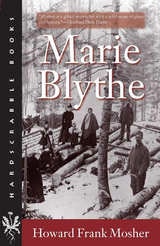
Marie Blythe
Howard Frank Mosher
University Press of New England, 2012
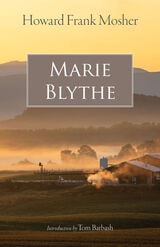
Marie Blythe
Howard Frank Mosher
Brandeis University Press, 2022
Howard Frank Mosher is one of the best-loved writers of northern New England. One of his most vivid and memorable characters is Marie Blythe. At the dawn of the twentieth century, a young girl with a felicitous name immigrates to Vermont from French Canada. She grows up confronting the grim realities of life with an indomitable spirit—nursing victims of a tuberculosis epidemic, enduring a miscarriage alone in the wilderness, and coping with the uncertainties of love. In Marie Blythe, Mosher has created a strong-minded, passionate, and truly memorable heroine. This edition features a new introduction by novelist Tom Barbash.
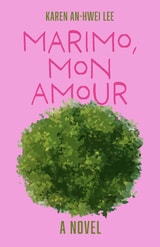
Marimo, Mon Amour
A NovelKaren An-hwei Lee
University of Alabama Press, 2026
WINNER OF THE CATHERINE DOCTOROW INNOVATIVE FICTION PRIZE
A technocratic collapse erases an obscure poet from existence, she and her pet moss ball refuse to disappear
Marimo, Mon Amour is a surreal, contemplative novel set in the quarantined borough of Alphabet City, where a botched data migration leaves obscure poet Zinger Zingiber effectively erased from the record. Furloughed from her jobs as a dumpling-maker and asylum specialist, she withdraws to her apartment with only her pet moss ball, Marimo, for company. As the Bureau of Misidentification bans forbidden words and controls identity, Zinger appoints herself the “Minister of Loneliness,” observing a world suspended in time.
From this quiet refuge, Zinger meditates on solitude, the fragility of memory, and the small, ephemeral moments that become acts of meaning. Her narration drifts between dream and reality, blending whimsy with philosophical inquiry. Lyrical and recursive, the novel draws on the psychological depth of Dostoevsky and the surreal sensibilities of Italo Calvino and Yoko Ogawa as it explores agency a plague of absentia. Marimo, Mon Amour will appeal to readers of literary and speculative fiction, fans of surreal or philosophical narratives, and anyone drawn to meditations on isolation, resistance, and the endurance of the human spirit.
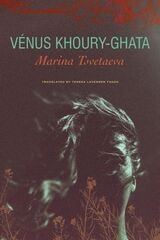
Marina Tsvetaeva
To Die in YelabugaVénus Khoury-Ghata
Seagull Books, 2022
The life of Marina Tsvetaeva (1892–1941) coincided with turbulent years in Russian history. She was an eminent Russian poet and a passionate lover involved with several men at the same time, including Rilke, who chose Lou Andreas-Salomé over her, and Pasternak, who married someone else, but protected her until her death. Her life included many trials such as her poverty during the grueling Russian civil war, her young daughter’s death from hunger in an orphanage, and the death of her husband, who fought against the Communist regime and was executed by the Soviet state. Rejected by official poets, then by the wealthy Russian diaspora in France, she finally returned to her country to end her wandering life. She hanged herself from a rope in an attic from which she could see the field where she had dug with bare hands for potatoes abandoned by local farmers. A poet-martyr of the Stalinist era—buried in an unmarked plot in the cemetery of Yelabuga—Tsvetaeva is brought to life in this poetic biographical novel by celebrated Lebanese author Vénus Khoury-Ghata.
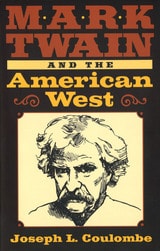
Mark Twain and the American West
Joseph L. Coulombe
University of Missouri Press, 2003
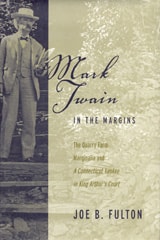
Mark Twain in the Margins
The Quarry Farm Marginalia and a Connecticut Yankee in King Arthur's CourtJoe B. Fulton
University of Alabama Press, 2007
Revealing the notes behind the novel and the scholar behind the legend.
The common characterization of Mark Twain as an uneducated and improvisational writer took hold largely because of the novelist's own frequent claims about his writing practices. But using recently discovered evidence--Twain's marginal notes in books he consulted as he worked on A Connecticut Yankee in King Arthur's Court—Joe Fulton argues for a reconsideration of scholarly views about Twain's writing process, showing that this great American author crafted his novels with careful research and calculated design.
Fulton analyzes Twain's voluminous marginalia in the copies of Macaulay's History of England, Carlyle's History of the French Revolution, and Lecky's History of the Rise of Rationalism and England in the Eighteenth Century available to Twain in the library of Quarry Farm, the New York farm where the novelist and his family routinely spent their summers. Comparing these marginal notes to entries in Twain's writing journal, the manuscript of Connecticut Yankee, and the book as published in 1889, Fulton establishes that Twain's research decisively influenced the novel. Fulton reveals Twain to be both the writer from experience he claimed to be and the careful craftsman that he attempted to downplay. By redefining Twain's aesthetic, Fulton reinvigorates current debates about what constitutes literary realism.
Fulton's transcriptions of the marginalia appear in an appendix; together with his analysis, they provide a valuable new resource for Twain scholars.
Marked Men
StoriesStories by Michael C. White
University of Missouri Press, 2000
From Michael C. White, the author of the critically acclaimed novels A Brother's Blood and The Blind Side of the Heart, comes a new book, Marked Men. It is a gripping collection of twelve wide-ranging stories about those unexpected moments in our lives when the layers of our defenses are peeled away, one by one, and we are left with the harsh inevitability of our fates. Touching on themes of loneliness and isolation, Marked Men deals with characters who have been alienated from society, from family and friends, from their past, and sometimes from their own feelings.
In "Heights," we meet a young woman whose husband is paralyzed and who must come to grips with the life she now finds herself inhabiting; in "Disturbances," a doctor is called to the scene of a brutal murder, only to discover he will be asked to do much more than pronounce the man dead; in "Burn Patterns," an arson investigator traveling to the scene of a fire picks up a young runaway drifter, an event that causes him to reflect on his own failed marriage; in "The Crossing," a recent widow learns to deal with her fears regarding her alien new life; and in "The Cardiologist's House," the narrator builds model houses at night when he can't sleep and at the same time keeps watch on a neighbor who is having an affair.
These are powerful and moving stories told in White's distinctive style. His earlier prose has been hailed by the New York Times as "stunningly well written" and by Booklist as "remarkable." Engaging the reader from the first line, White provides a suspenseful and surprise-filled journey as his characters face and resolve their conflicts.
Market Day
Pál Závada
Seagull Books, 2023
What could bring people to form a mob and attack others? What circumstances could provoke a thirst for blood at the market square? Who will gang up to batter their neighbor, improbably returned from deportation? How can a person be swept up among lynchers?
Pál Závada’s novel examines and analyses the anti-Semitic mass hysteria and political opportunism surrounding the pogroms in Hungary that followed World War II and the Holocaust. In May 1946, at the village market, Mária Csóka witnessed a group of women set upon and beat to death a Jewish egg seller. The wife of a schoolteacher accused of anti-Semitic incitement, and daughter of a respected shopkeeper, Mária fears for her husband’s life yet cannot ignore the victims. The murderous fury spreads through the neighborhood like wildfire, dragging out women, children, and the elderly alike. Mária’s notes from the bloody day at the village market and from the subsequent trial in Budapest testify to a state of human relations that is intimately complex and irreparably scarred.
Marriage to the Sea
Linked NovellasSarah Stone
Four Way Books, 2026
Marta Oulie
A Novel of BetrayalSigrid Undset
University of Minnesota Press, 2014
“I have been unfaithful to my husband.” Marta Oulie’s opening line scandalized Norwegian readers in 1907. And yet, Sigrid Undset had a gift for depicting modern women “sympathetically but with merciless truthfulness,” as the Swedish Academy noted in awarding her the Nobel Prize for Literature in 1928. At the time she was one of the youngest recipients and only the third woman so honored. It was Undset’s honest story of a young woman’s love life—“the immoral kind,” as she herself bluntly put it—that made her first novel an instant sensation in Norway.
Marta Oulie, written in the form of a diary, intimately documents the inner life of a young woman disappointed and constrained by the conventions of marriage as she longs for an all-consuming passion. Set in Kristiania (now Oslo) at the beginning of the twentieth century, Undset’s book is an incomparable psychological portrait of a woman whose destiny is defined by the changing mores of her day—as she descends, inevitably, into an ever-darker reckoning. Remarkably, though Undset’s other works have attracted generations of readers, Marta Oulie has never before appeared in English translation. Tiina Nunnally, whose award-winning translation of Undset’s Kristin Lavransdatter captured the author’s beautifully clear style, conveys the voice of Marta Oulie with all the stark poignancy of the original Norwegian.
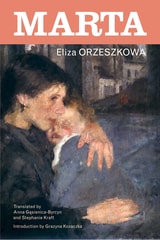
Marta
A NovelEliza Orzeszkowa
Ohio University Press, 2018
Eliza Orzeszkowa was a trailblazing Polish novelist who, alongside Leo Tolstoy and Henryk Sienkiewicz, was a finalist for the 1905 Nobel Prize in Literature. Of her many works of social realism, Marta (1873) is among the best known, but until now it has not been available in English. Easily a peer of The Awakening and A Doll’s House, the novel was well ahead of the English literature of its time in attacking the ways the labor market failed women.
Suddenly widowed, the previously middle-class Marta Świcka is left penniless and launched into a grim battle for her survival and that of her small daughter. As she applies for job after job in Warsaw—portrayed here as an every-city, an unforgiving commercial landscape that could be any European metropolis of the time—she is told time after time that only men will be hired, that men need jobs because they are fathers and heads of families.
Marta burns with Orzeszkowa’s feminist conviction that sexism was not just an annoyance but a threat to the survival of women and children. It anticipated the need for social safety nets whose existence we take for granted today, and could easily read as an indictment of current efforts to dismantle those very programs. Tightly plotted and exquisitely translated by Anna Gąsienica-Byrcyn and Stephanie Kraft, Marta resonates beyond its Polish setting to find its place in women’s studies, labor history, and among other works of nineteenth-century literature and literature of social change.
Martin Faber
The Story of a Criminal with "Confessions of a Murder"William Gilmore Simms
University of Arkansas Press, 2006
Martin Kacur
The Biography of an IdealistIvan Cankar
Central European University Press, 2009
Mary Wroth
The Countess of Montgomery's Urania (Abridged)Edited by Mary Ellen Lamb
Arizona Center for Medieval and Renaissance Studies, 2000
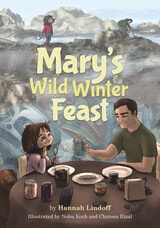
Mary's Wild Winter Feast
Hannah Lindoff
University of Alaska Press, 2014
Featuring brilliant collages from artists Nobu Koch and Clarissa Rizal, Mary’s Wild Winter Feast is a celebration of food, family, and finding fun in unexpected places.
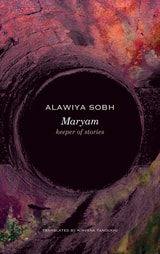
Maryam
Keeper of StoriesAlawiya Sobh
Seagull Books, 2016
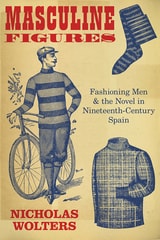
Masculine Figures
Fashioning Men and the Novel in Nineteenth-Century SpainNicholas Wolters
Vanderbilt University Press, 2022
Fictional masculinity performs a symbolic role in representing and negotiating the contradictions male novelists often encountered in their attempts to professionalize not only as writers, but also as businessmen, professors, lawyers, and politicians. Through specific and recurring figures like the student, the priest, the businessman, and the heir, male novelists portray and represent an increasingly middle-class world at odds with the values and virtues it inherited from an imperial Spanish past, and those it imported from more industrialized nations like England and France. The visual culture of the time and place marks the material turn in middle-class masculinity and sets the stage for discussions of race and sexuality.
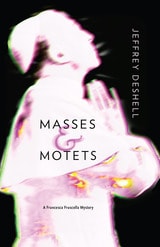
Masses and Motets
A Francesca Fruscella MysteryJeffrey DeShell
University of Alabama Press, 2019
Masses and Motets is a tale composed of four basic interwoven threads, corresponding to the four-part choral writing of Pierre de la Rue’s service music. The first thread comes from the diaries of a recently murdered priest, Father Andrea Vidal, former secretary to the notorious Father Marcial Maciel. The second thread is the mystery story, a police procedural focusing on the efforts of Denver detective Francesca Fruscella to solve the murder and retrieve Vidal’s diary. The third strand is the story of Father Signelli, a priest sent from the Vatican to “fix” the murder. And the fourth strand explores the best and worst of Catholic culture: art and music created by Catholic artists and sexual abuse by Catholic priests.
Vidal’s narrative is the story of a priest who systematically, sincerely, and hopefully tries to destroy his very self through sex, drinking, and drugs in order to get closer to God. Fruscella’s story is that of a middle-aged, female detective trying to solve a ghastly murder while constantly battling the sexism of the Catholic Church. Signelli’s tale is that of an older career priest who, in doing the bidding of his superiors to fix problems that threaten the order of the Church, has perhaps compromised his own soul. By no means a simple narrative of wicked priests, this is a story of men who desperately want to believe, as well as a story of what this belief might shelter and cost.
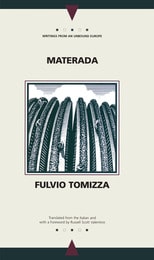
Materada
Fulvio Tomizza
Northwestern University Press, 1999
A picture of a disappearing way of life, a tale of feud and displacement, and imbued with the tastes, tales, and songs of his native Istria, Koslovic's story is a testament to the intertwined ethnic roots of Balkan history.