Results by title
1993 books match the query 'Latin America' and 137 start with m
Madrid Codex
New Approaches to Understanding an Ancient Maya ManuscriptGabrielle Vail
University Press of Colorado, 2004
Contributors include: Harvey M. Bricker, Victoria R. Bricker, John F. Chuchiak IV, Christine L. Hernández, Bryan R. Just, Merideth Paxton, and John Pohl. Additional support for this publication was generously provided by the Eugene M. Kayden Fund at the University of Colorado.
Mafalda
A Social and Political History of Latin America's Global ComicIsabella Cosse
Duke University Press, 2019
Magical Realism and the History of the Emotions in Latin America
Jerónimo Arellano
Bucknell University Press, 2026
Published by Bucknell University Press. Distributed worldwide by Rutgers University Press.
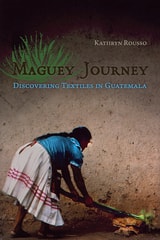
Maguey Journey
Discovering Textiles in GuatemalaKathryn Rousso
University of Arizona Press, 2010
In this fascinating book, Kathryn Rousso, an accomplished textile artist, takes a detailed look at the state of maguey culture, use, and trade in Guatemala. She has spent years traveling in Guatemala, highlighting maguey workers’ interactions in many locations and blending historical and current facts to describe their environments. Along the way, Rousso has learned the process of turning a raw leaf into beautiful and useful textile products and how globalization and modernization are transforming the maguey trade in Guatemala.
Featuring a section of full-color illustrations that follow the process from plant to weaving to product, Maguey Journey presents the story of this fiber over recent decades through the travels of an impassioned artist. Useful to cultural anthropologists, ethnobotanists, fiber artists, and interested travelers alike, this book offers a snapshot of how the industry stands now and seeks to honor those who keep the art alive in Guatemala.
Maguey Utilization in Highland Central Mexico
An Archaeological EthnographyJeffrey R. Parsons and Mary H. Parsons
University of Michigan Press, 1990
Makers of Democracy
A Transnational History of the Middle Classes in ColombiaA. Ricardo López-Pedreros
Duke University Press, 2019
Making Art Panamerican
Cultural Policy and the Cold WarClaire F. Fox
University of Minnesota Press, 2013
Among the buildings on the National Mall in Washington, D.C., only the Pan American Union (PAU) houses an international organization. The first of many anticipated “peace palaces”constructed in the early twentieth century, the PAU began with a mission of cultural diplomacy, and after World War II its Visual Arts Section became a leader in the burgeoning hemispheric arts scene, proclaiming Latin America’s entrée into the international community as it forged connections between a growing base of middle-class art consumers on one hand and concepts of supranational citizenship and political and economic liberalism on the other.
Making Art Panamerican situates the ambitious visual arts programs of the PAU within the broader context of hemispheric cultural relations during the cold war. Focusing on the institutional interactions among aesthetic movements, cultural policy, and viewing publics, Claire F. Fox contends that in the postwar years, the PAU Visual Arts Section emerged as a major transfer point of hemispheric American modernist movements and played an important role in the consolidation of Latin American art as a continental object of study.
As it traces the careers of individual cultural policymakers and artists who intersected with the PAU in the two postwar decades—such as Concha Romero James, Charles Seeger, José Gómez Sicre, José Luis Cuevas, and Rafael Squirru—the book also charts the trajectories and displacements of sectors of the U.S. and Latin American intellectual left during a tumultuous interval that spans the Mexican Revolution, the Spanish Civil War, the New Deal, and the early cold war. Challenging the U.S. bias of conventional narratives about Panamericanism and the postwar shift in critical values from realism to abstraction, Making Art Panamerican illuminates the institutional dynamics that helped shape aesthetic movements in the critical decades following World War II.
Making Cinelandia
American Films and Mexican Film Culture before the Golden AgeLaura Isabel Serna
Duke University Press, 2014
Making Ecuadorian Histories
Four Centuries of Defining PowerBy O. Hugo Benavides
University of Texas Press, 2004
In Ecuador, as in all countries, archaeology and history play fundamental roles in defining national identity. Connecting with the prehistoric and historic pasts gives the modern state legitimacy and power. But the state is not the only actor that lays claim to the country's archaeological patrimony, nor is its official history the only version of the story. Indigenous peoples are increasingly drawing on the past to claim their rights and standing in the modern Ecuadorian state, while the press tries to present a "neutral" version of history that will satisfy its various publics.
This pathfinding book investigates how archaeological knowledge is used for both maintaining and contesting nation-building and state-hegemony in Ecuador. Specifically, Hugo Benavides analyzes how the pre-Hispanic site of Cochasquí has become a source of competing narratives of Native American, Spanish, and Ecuadorian occupations, which serve the differing needs of the nation-state and different national populations at large. He also analyzes the Indian movement itself and the recent controversy over the final resting place for the traditional monolith of San Biritute. Offering a more nuanced view of the production of history than previous studies, Benavides demonstrates how both official and resistance narratives are constantly reproduced and embodied within the nation-state's dominant discourses.
Making Mexican Rock
Censorship, Journalism, and Popular Music after AvándaroAndrew J. Green
Vanderbilt University Press, 2024
Yet in light of the failures of successive democratically elected governments in Mexico, these histories are worth critically revisiting and updating. What stories about music censorship can be told after Mexico’s transition to multi-party democracy? Placing history and ethnography into dialogue, Making Mexican Rock explores historical and recent experiences of censorship and repression against popular music, focusing on the independent rock scene (or “escena independiente”) in Mexico City.
Informed by the so-called new censorship theory, ethnomusicologist Andrew J. Green challenges historical accounts that equate acts of censorship with state activity. The open-ended account of censorship assumed here helps us to understand, instead, how conceptions of censorship and expressive freedom transformed toward the end of single-party rule; how practices of policing live rock adapted to neoliberal securitization; and how histories of rock censorship have been invoked by those seeking to construct and protect emergent music scenes. Making Mexican Rock thus both decenters histories of music censorship from the state, and extends them into the country’s recent history.

Making Music Indigenous
Popular Music in the Peruvian AndesJoshua Tucker
University of Chicago Press, 2019
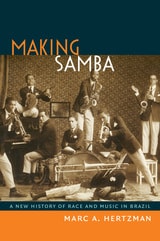
Making Samba
A New History of Race and Music in BrazilMarc A. Hertzman
Duke University Press, 2013
The success of "Pelo telephone" embroiled Donga in controversy. A group of musicians claimed that he had stolen their work, and a prominent journalist accused him of selling out his people in pursuit of profit and fame. Within this single episode are many of the concerns that animate Making Samba, including intellectual property claims, the Brazilian state, popular music, race, gender, national identity, and the history of Afro-Brazilians in Rio de Janeiro. By tracing the careers of Rio's pioneering black musicians from the late nineteenth century until the 1970s, Marc A. Hertzman revises the histories of samba and of Brazilian national culture.
Making a New World
Founding Capitalism in the Bajío and Spanish North AmericaJohn Tutino
Duke University Press, 2011
Mama Africa
Reinventing Blackness in BahiaPatricia de Santana Pinho
Duke University Press, 2010
Pinho explores how Bahian cultural production influences and is influenced by black diasporic cultures and the idealization of Africa—to the extent that Bahia draws African American tourists wanting to learn about their heritage. Analyzing the conceptions of blackness produced by the blocos afro, she describes how Africa is re-inscribed on the body through clothes, hairstyles, and jewelry; once demeaned, blackness is reclaimed as a source of beauty and pride. Turning to the body’s interior, Pinho explains that the myth of Mama Africa implies that black appearances have corresponding black essences. Musical and dance abilities are seen as naturally belonging to black people, and these traits are often believed to be transmitted by blood. Pinho argues that such essentialized ideas of blackness render black culture increasingly vulnerable to exploitation by the state and commercial interests. She contends that the myth of Mama Africa, while informing oppositional black identities, overlaps with a constraining notion of Bahianness promoted by the government and the tourist industry.
Man-Making Words
Selected Poems of Nicolas GuillenNicolas Guillen
University of Massachusetts Press, 2003
The Cuban poet Nicolás Guillén, who was born in the eastern province of Camagüey in 1902, died in 1989. This new edition of his selected poems, reissued thirty years after its original publication, includes an extensive, new introductory essay by Roberto Márquez, one of the original translators and a leading authority on Caribbean and Latin American literature and culture.
Managing the Counterrevolution
The United States and Guatemala, 1954–1961Stephen M. Streeter
Ohio University Press, 2001
The Eisenhower administration’s intervention in Guatemala is one of the most closely studied covert operations in the history of the Cold War. Yet we know far more about the 1954 coup itself than its aftermath. This book uses the concept of “counterrevolution” to trace the Eisenhower administration’s efforts to restore U.S. hegemony in a nation whose reform governments had antagonized U.S. economic interests and the local elite.
Comparing the Guatemalan case to U.S.-sponsored counterrevolutions in Iran, the Dominican Republic, Brazil, and Chile reveals that Washington’s efforts to roll back “communism” in Latin America and elsewhere during the Cold War represented in reality a short-term strategy to protect core American interests from the rising tide of Third World nationalism.
Mapping Diversity in Latin America
Race and Ethnicity from Colonial Times to the PresentEdited by Mabel Moraña and Miguel A. Valerio
Vanderbilt University Press, 2025
Taking an interdisciplinary approach to understanding issues of collective identity, otherness, alterity, and the like, Mapping Diversity in Latin America sheds light on histories that have been traditionally overlooked in texts on race in Latin America, such as the rich history of diasporic Asian, Syrian Lebanese, and Jewish communities, and the more recent emergence of Latinx populations in the United States. The book includes a critical examination of fundamental concepts such as mestizaje, mulataje, creolization, negritud, and blanquitud, as well as critical and theoretical approaches to the study of these issues in postcolonial societies.
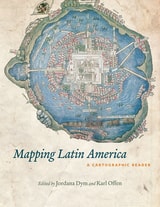
Mapping Latin America
A Cartographic ReaderEdited by Jordana Dym and Karl Offen
University of Chicago Press, 2011
For many, a map is nothing more than a tool used to determine the location or distribution of something—a country, a city, or a natural resource. But maps reveal much more: to really read a map means to examine what it shows and what it doesn’t, and to ask who made it, why, and for whom. The contributors to this new volume ask these sorts of questions about maps of Latin America, and in doing so illuminate the ways cartography has helped to shape this region from the Rio Grande to Patagonia.
In Mapping Latin America,Jordana Dym and Karl Offen bring together scholars from a wide range of disciplines to examine and interpret more than five centuries of Latin American maps.Individual chapters take on maps of every size and scale and from a wide variety of mapmakers—from the hand-drawn maps of Native Americans, to those by famed explorers such as Alexander von Humboldt, to those produced in today’s newspapers and magazines for the general public. The maps collected here, and the interpretations that accompany them, provide an excellent source to help readers better understand how Latin American countries, regions, provinces, and municipalities came to be defined, measured, organized, occupied, settled, disputed, and understood—that is, how they came to have specific meanings to specific people at specific moments in time.
The first book to deal with the broad sweep of mapping activities across Latin America, this lavishly illustrated volume will be required reading for students and scholars of geography and Latin American history, and anyone interested in understanding the significance of maps in human cultures and societies.

Mapping an Indigenous Future
The Uppsala Map of Colonial Mexico CityJennifer R. Saracino
University of Texas Press, 0
The only known Indigenous-authored rendering of Mexico City from the sixteenth century.
Rediscovered in a Swedish library in the 1800s, the Uppsala Map of colonial Mexico City is a crucial Indigenous-authored document. Nearly a square meter, it was created by Nahua artists in 1540 shortly after the Spanish invasion. The Franciscan-trained artists have long been characterized as having passively adopted European aesthetics in their representation.
Jennifer Saracino challenges this view, arguing that the artists purposefully blended both Nahua and European visual strategies to legitimize and improve their position in colonial society. Building upon archival, ethnohistorical, and archaeological research, Saracino reinterprets the map’s network of roads and waterways, agricultural and urban features, glyphs, and depictions of Nahua people. Saracino argues that, amid dispossession and exploitation, the artists made a visual case for Nahuas to steward the local population and land in collaboration with colonial officials as privileged intermediaries. Challenging the assumption that the map was made merely in service to the crown, Mapping an Indigenous Future contends that these Nahua mapmakers capitalized on their proximity to viceregal elites to appeal for their rightful role as custodians of New Spain.
Mapping and Empire
Soldier-Engineers on the Southwestern FrontierEdited by Dennis Reinhartz and Gerald D. Saxon
University of Texas Press, 2005
From the sixteenth through the mid-nineteenth centuries, Spain, then Mexico, and finally the United States took ownership of the land from the Gulf Coast of Texas and Mexico to the Pacific Coast of Alta and Baja California—today's American Southwest. Each country faced the challenge of holding on to territory that was poorly known and sparsely settled, and each responded by sending out military mapping expeditions to set boundaries and chart topographical features. All three countries recognized that turning terra incognita into clearly delineated political units was a key step in empire building, as vital to their national interest as the activities of the missionaries, civilian officials, settlers, and adventurers who followed in the footsteps of the soldier-engineers.
With essays by eight leading historians, this book offers the most current and comprehensive overview of the processes by which Spanish, Mexican, and U.S. soldier-engineers mapped the southwestern frontier, as well as the local and even geopolitical consequences of their mapping. Three essays focus on Spanish efforts to map the Gulf and Pacific Coasts, to chart the inland Southwest, and to define and defend its boundaries against English, French, Russian, and American incursions. Subsequent essays investigate the role that mapping played both in Mexico's attempts to maintain control of its northern territory and in the United States' push to expand its political boundary to the Pacific Ocean. The concluding essay draws connections between mapping in the Southwest and the geopolitical history of the Americas and Europe.

Maras
Gang Violence and Security in Central AmericaEdited by Thomas C. Bruneau, Lucía Dammert, and Elizabeth Skinner
University of Texas Press, 2011
Sensational headlines have publicized the drug trafficking, brutal violence, and other organized crime elements associated with Central America's mara gangs, but there have been few clear-eyed analyses of the history, hierarchies, and future of the mara phenomenon. The first book to look specifically at the Central American gang problem by drawing on the perspectives of researchers from different disciplinary backgrounds, Maras: Gang Violence and Security in Central America provides much-needed insight.
These essays trace the development of the gangs, from Mara Salvatrucha to the 18th Street Gang, in Los Angeles and their spread to El Salvador, Honduras, Guatemala, and Nicaragua as the result of members' deportation to Central America; there, they account for high homicide rates and threaten the democratic stability of the region. With expertise in areas ranging from political science to law enforcement and human rights, the contributors also explore the spread of mara violence in the United States. Their findings comprise a complete documentation that spans sexualized violence, case studies of individual gangs, economic factors, varied responses to gang violence, the use of intelligence gathering, the limits of state power, and the role of policy makers.
Raising crucial questions for a wide readership, these essays are sure to spark productive international dialogues.

Mariátegui and Latin American Marxist Theory
Marc Becker
Ohio University Press, 1993
This volume reviews the essential elements of Mariátegui's thought and important influences on his intellectual development. It demonstrates the role he played in defining a Latin american identity, the nature of his intellectual contribution to the development of indigenous revolutionary movements in Latin America, and the inflluence he had on successful revolutionary movements in Cuba and Nicaragua. An understanding of Mariátegui's thought is fundamental to understanding the nature of revolutionary changes in Latin America.
Marobavi
A Study of an Assimilated Group in Northern SonoraRoger C. Owen
University of Arizona Press, 1959
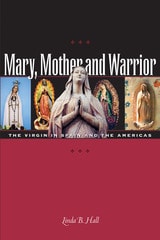
Mary, Mother and Warrior
The Virgin in Spain and the AmericasBy Linda B. Hall
University of Texas Press, 2004
A Mother who nurtures, empathizes, and heals... a Warrior who defends, empowers, and resists oppression... the Virgin Mary plays many roles for the peoples of Spain and Spanish-speaking America. Devotion to the Virgin inspired and sustained medieval and Renaissance Spaniards as they liberated Spain from the Moors and set about the conquest of the New World. Devotion to the Virgin still inspires and sustains millions of believers today throughout the Americas.
This wide-ranging and highly readable book explores the veneration of the Virgin Mary in Spain and the Americas from the colonial period to the present. Linda Hall begins the story in Spain and follows it through the conquest and colonization of the New World, with a special focus on Mexico and the Andean highlands in Peru and Bolivia, where Marian devotion became combined with indigenous beliefs and rituals. Moving into the nineteenth century, Hall looks at national cults of the Virgin in Mexico, Bolivia, and Argentina, which were tied to independence movements. In the twentieth century, she examines how Eva Perón linked herself with Mary in the popular imagination; visits contemporary festivals with significant Marian content in Spain, Peru, and Mexico; and considers how Latinos/as in the United States draw on Marian devotion to maintain familial and cultural ties.
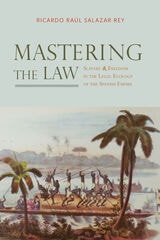
Mastering the Law
Slavery and Freedom in the Legal Ecology of the Spanish EmpireRicardo Raúl Salazar Rey
University of Alabama Press, 2020
Atlantic slavery can be overwhelming in its immensity and brutality, as it involved more than 15 million souls forcibly displaced by European imperialism and consumed in building the global economy. Mastering the Law: Slavery and Freedom in the Legal Ecology of the Spanish Empire lays out the deep history of Iberian slavery, explores its role in the Spanish Indies, and shows how Africans and their descendants used and shaped the legal system as they established their place in Iberoamerican society during the seventeenth century.
Ricardo Raúl Salazar Rey places the institution of slavery and the people involved with it at the center of the creation story of Latin America. Iberoamerican customs and laws and the institutions that enforced them provided a common language and a forum to resolve disputes for Spanish subjects, including enslaved and freedpeople. The rules through which Iberian conquerors, settlers, and administrators incorporated Africans into the expanding Empire were developed out of the need of a distant crown to find an enforceable consensus. Africans and their mestizo descendants, in turn, used and therefore molded Spanish institutions to serve their interests.Salazar Rey mined extensively the archives of secular and religious courts, which are full of complex disputes, unexpected subversions, and tactical alliances among enslaved people, freedpeople, and the crown.
The narrative unfolds around vignettes that show Afroiberians building their lives while facing exploitation and inequality enforced through violence. Salazar Rey deals mostly with cases originating from Cartagena de Indias, a major Atlantic port city that supported the conquest and rule of the Indies. His work recovers the voices and indomitable ingenuity that enslaved people and their descendants displayed when engaging with the Spanish legal ecology. The social relationships animating the case studies represent the broader African experience in the Americas during the sixteenth and seventeenth centuries.

Maturing Masculinities
Aging, Chronic Illness, and Viagra in MexicoEmily A. Wentzell
Duke University Press, 2013
Erectile dysfunction treatments like Viagra are popular in Mexico, where stereotypes of men as sex-obsessed "machos" persist. However, most of the men Wentzell interviewed saw erectile difficulty as a chance to demonstrate difference from this stereotype. Rather than using drugs to continue youthful sex lives, many collaborated with wives and physicians to frame erectile difficulty as a prompt to embody age-appropriate, mature masculinities.
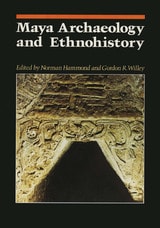
Maya Archaeology and Ethnohistory
Edited by Norman Hammond and Gordon R. Willey
University of Texas Press, 1979
Embracing a wide range of research, this book offers various views on the intellectual history of Maya archaeology and ethnohistory and the processes operating in the rise and fall of Maya civilization.
The fourteen studies were selected from those presented at the Second Cambridge Symposium on Recent Research in Mesoamerican Archaeology and are presented in three major sections.
The first of these deals with the application of theory, both anthropological and historical, to the great civilization of the Classic Maya, which flourished in the Yucatan, Guatemala, and Belize during the first millennium A.D. The structural remains of the Classic Period have impressed travelers and archaeologists for over a century, and aspects of the development and decline of this strange and brilliant tropical forest culture are examined here in the light of archaeological research.
The second section presents the results of field research ranging from the Highlands of Mexico east to Honduras and north into the Lowland heart of Maya civilization, and iconographic study of excavated material.
The third section covers the ethnohistoric approach to archaeology, the conjunction of material and documentary evidence. Early European documents are used to illuminate historic Maya culture. This section includes transcriptions of previously unpublished archival material.
Although not formally linked beyond their common field of inquiry, the essays here offer a conspectus of late-twentieth century Maya research and a series of case histories of the work of some of the leading scholars in the field.
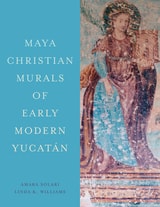
Maya Christian Murals of Early Modern Yucatán
Amara SolariLinda K. Williams
University of Texas Press, 2024
The first study of Christian murals created by indigenous artists in sixteenth and seventeenth century Yucatán.
In the sixteenth and seventeenth centuries, Maya artists painted murals in churches and conventos of Yucatán using traditional techniques to depict iconography brought from Europe by Franciscan friars. The fragmentary visual remains and their placement within religious structures embed Maya conceptions of sacredness beyond the didactic imagery. Mobilizing both cutting-edge technology and tried-and-true analytical methods, art historians Amara Solari and Linda K. Williams reexamine the Maya Christian murals, centering the agency of the people who created them.
The first volume to comprehensively document the paintings, Maya Christian Murals of Early Modern Yucatán collects new research on the material composition of the works, made possible by cutting-edge imaging methods. Solari and Williams investigate pigments and other material resources, as well as the artists and historical contexts of the murals. The authors uncover numerous local innovations in form and content, including images celebrating New World saints, celestial timekeeping, and ritual processions. Solari and Williams argue that these murals were not simply vehicles of coercion, but of cultural “grafting,” that allowed Maya artists to shape a distinctive and polyvocal legacy in their communities.
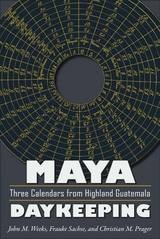
Maya Daykeeping
Three Calendars from Highland GuatemalaJohn M. Weeks
University Press of Colorado, 2009
The use of such calendars is mentioned in historical and ethnographic works, but very few examples are known to exist. Each of the three calendars transcribed and translated by John M. Weeks, Frauke Sachse, and Christian M. Prager - and housed at the University of Pennsylvania Museum of Archaeology and Anthropology - is unique in structure and content. Moreover, except for an unpublished study of the 1722 calendar by Rudolf Schuller and Oliver La Farge (1934), these little-known works appear to have escaped the attention of most scholars. Introductory essays contextualize each document in time and space, and a series of appendixes present previously unpublished calendrical notes assembled in the early twentieth century.
Providing considerable information on the divinatory use of calendars in colonial highland Maya society previously unavailable without a visit to the University of Pennsylvania's archives, Maya Daykeeping is an invaluable primary resource for Maya scholars. Mesoamerican Worlds Series
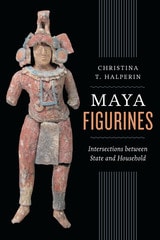
Maya Figurines
Intersections between State and HouseholdBy Christina T. Halperin
University of Texas Press, 2014
Rather than view the contours of Late Classic Maya social life solely from towering temple pyramids or elite sculptural forms, this book considers a suite of small anthropomorphic, zoomorphic, and supernatural figurative remains excavated from household refuse deposits. Maya Figurines examines these often neglected objects and uses them to draw out relationships between the Maya state and its subjects.
These figurines provide a unique perspective for understanding Maya social and political relations; Christina T. Halperin argues that state politics work on the microscale of everyday routines, localized rituals, and small-scale representations. Her comprehensive study brings together archeology, anthropology, and art history with theories of material culture, performance, political economy, ritual humor, and mimesis to make a fascinating case for the role politics plays in daily life. What she finds is that, by comparing small-scale figurines with state-sponsored, often large-scale iconography and elite material culture, one can understand how different social realms relate to and represent one another. In Maya Figurines, Halperin compares objects from diverse households, archeological sites, and regions, focusing especially on figurines from Petén, Guatemala, and comparing them to material culture from Belize, the northern highlands of Guatemala, the Usumacinta River, the Campeche coastal area, and Mesoamerican sites outside the Maya zone. Ultimately, she argues, ordinary objects are not simply passive backdrops for important social and political phenomena. Instead, they function as significant mechanisms through which power and social life are intertwined.
Maya History
By Tatiana Proskouriakoff
University of Texas Press, 1993
Tatiana Proskouriakoff, a preeminent student of the Maya, made many breakthroughs in deciphering Maya writing, particularly in demonstrating that the glyphs record the deeds of actual human beings, not gods or priests. This discovery opened the way for a history of the Maya, a monumental task that Proskouriakoff was engaged in before her death in 1985. Her work, Maya History, has been made ready for press by the able editorship of Rosemary Joyce.
Maya History reconstructs the Classic Maya period (roughly A.D. 250-900) from the glyphic record on stelae at numerous sites, including Altar de Sacrificios, Copan, Dos Pilas, Naranjo, Piedras Negras, Quirigua, Tikal, and Yaxchilan. Proskouriakoff traces the spread of governmental institutions from the central Peten, especially from Tikal, to other city-states by conquest and intermarriage. Thirteen line drawings of monuments and over three hundred original drawings of glyphs amplify the text.
Maya Intellectual Renaissance
Identity, Representation, and LeadershipBy Victor D. Montejo
University of Texas Press, 2005
When Mayan leaders protested the celebration of the Quincentenary of the "discovery" of America and joined with other indigenous groups in the Americas to proclaim an alternate celebration of 500 years of resistance, they rose to national prominence in Guatemala. This was possible in part because of the cultural, political, economic, and religious revitalization that occurred in Mayan communities in the later half of the twentieth century. Another result of the revitalization was Mayan students' enrollment in graduate programs in order to reclaim the intellectual history of the brilliant Mayan past. Victor Montejo was one of those students.
This is the first book to be published outside of Guatemala where a Mayan writer other than Rigoberta Menchu discusses the history and problems of the country. It collects essays Montejo has written over the past ten years that address three critical issues facing Mayan peoples today: identity, representation, and Mayan leadership. Montejo is deeply invested in furthering the discussion of the effectiveness of Mayan leadership because he believes that self-evaluation is necessary for the movement to advance. He also criticizes the racist treatment that Mayans experience, and advocates for the construction of a more pluralistic Guatemala that recognizes cultural diversity and abandons assimilation. This volume maps a new political alternative for the future of the movement that promotes inter-ethnic collaboration alongside a reverence for Mayan culture.
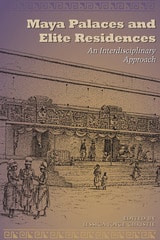
Maya Palaces and Elite Residences
An Interdisciplinary ApproachEdited by Jessica Joyce Christie
University of Texas Press, 2003
Maya "palaces" have intrigued students of this ancient Mesoamerican culture since the early twentieth century, when scholars first applied the term "palace" to multi-room, gallery-like buildings set on low platforms in the centers of Maya cities. Who lived in these palaces? What types of ceremonial and residential activities took place there? How do the physical forms and spatial arrangement of the buildings embody Maya concepts of social organization and cosmology?
This book brings together state-of-the-art data and analysis regarding the occupants, ritual and residential uses, and social and cosmological meanings of Maya palaces and elite residences. A multidisciplinary team of senior researchers reports on sites in Belize (Blue Creek), Western Honduras (Copan), the Peten (Tikal, Dos Pilas, Aguateca), and the Yucatan (Uxmal, Chichen-Itza, Dzibilchaltun, Yaxuna). Archaeologist contributors discuss the form of palace buildings and associated artifacts, their location within the city, and how some palaces related to landscape features. Their approach is complemented by art historical analyses of architectural sculpture, epigraphy, and ethnography. Jessica Joyce Christie concludes the volume by identifying patterns and commonalties that apply not only to the cited examples, but also to Maya architecture in general.
Maya Worldviews at Conquest
Leslie G. Cecil
University Press of Colorado, 2009
Focusing on the Postclassic and Colonial periods, Maya Worldviews at Conquest provides a regional investigation of archaeological and epigraphic evidence of Maya ideology, landscape, historical consciousness, ritual practices, and religious symbolism before and during the Spanish conquest. Through careful investigation, the volume focuses on the impact of conversion, hybridization, resistance, and revitalization on the Mayans’ understanding of their world and their place in it.
The volume also addresses the issue of anthropologists unconsciously projecting their modern worldviews on the culture under investigation. Thus, the book critically defines and strengthens the use of worldviews in the scholarly literature regardless of the culture studied, making it of value not only to Maya scholars but also to those interested in the anthropologist’s projection of worldview on other cultures in general.
Maya after War
Conflict, Power, and Politics in GuatemalaBy Jennifer L. Burrell
University of Texas Press, 2013
Guatemala’s thirty-six-year civil war culminated in peace accords in 1996, but the postwar transition has been marked by continued violence, including lynchings and the rise of gangs, as well as massive wage-labor exodus to the United States. For the Mam Maya municipality of Todos Santos Cuchumatán, inhabited by a predominantly indigenous peasant population, the aftermath of war and genocide resonates with a long-standing tension between state techniques of governance and ancient community-level power structures that incorporated concepts of kinship, gender, and generation. Showing the ways in which these complex histories are interlinked with wartime and enduring family/class conflicts, Maya after War provides a nuanced account of a unique transitional postwar situation, including the complex influence of neoliberal intervention.
Drawing on ethnographic field research over a twenty-year period, Jennifer L. Burrell explores the after-war period in a locale where community struggles span culture, identity, and history. Investigating a range of tensions from the local to the international, Burrell employs unique methodologies, including mapmaking, history workshops, and an informal translation of a historic ethnography, to analyze the role of conflict in animating what matters to Todosanteros in their everyday lives and how the residents negotiate power. Examining the community-based divisions alongside national postwar contexts, Maya after War considers the aura of hope that surrounded the signing of the peace accords, and the subsequent doubt and waiting that have fueled unrest, encompassing generational conflicts. This study is a rich analysis of the multifaceted forces at work in the quest for peace, in Guatemala and beyond.
Mayan Voices for Human Rights
Displaced Catholics in Highland ChiapasBy Christine Kovic
University of Texas Press, 2005
In the last decades of the twentieth century, thousands of Mayas were expelled, often violently, from their homes in San Juan Chamula and other highland communities in Chiapas, Mexico, by fellow Mayas allied with the ruling Institutional Revolutionary Party (PRI). State and federal authorities generally turned a blind eye to these human rights abuses, downplaying them as local conflicts over religious conversion and defense of cultural traditions. The expelled have organized themselves to fight not only for religious rights, but also for political and economic justice based on a broad understanding of human rights.
This pioneering ethnography tells the intertwined stories of the new communities formed by the Mayan exiles and their ongoing efforts to define and defend their human rights. Focusing on a community of Mayan Catholics, the book describes the process by which the progressive Diocese of San Cristóbal and Bishop Samuel Ruiz García became powerful allies for indigenous people in the promotion and defense of human rights. Drawing on the words and insights of displaced Mayas she interviewed throughout the 1990s, Christine Kovic reveals how the exiles have created new communities and lifeways based on a shared sense of faith (even between Catholics and Protestants) and their own concept of human rights and dignity. She also uncovers the underlying political and economic factors that drove the expulsions and shows how the Mayas who were expelled for not being "traditional" enough are in fact basing their new communities on traditional values of duty and reciprocity.
Mayaya Rising
Black Female Icons in Latin American and Caribbean Literature and CultureDawn Duke
Bucknell University Press, 2023
Measuring the New World
Enlightenment Science and South AmericaNeil Safier
University of Chicago Press, 2008

Mediatization(s)
Theoretical Conversations between Europe and Latin AmericaEdited by Carlos A. Scolari, José L. Fernández, and Joan R. Rodríguez-Amat
Intellect Books, 2021
This book presents the work of key authorities on mediatization from Europe and Latin America in one single volume, integrating macro-level theorization with applied observations of mediatization processes from a multidisciplinary perspective. Presented in a handbook format, with comprehensive introductory sections written by the editors and original texts signed by world-renowned researchers, this collection is a vital new resource for researchers and students alike.
Medicine and Nation Building in the Americas, 1890-1940
Jose Amador
Vanderbilt University Press, 2015
Drawing on sources in Cuba, Puerto Rico, Brazil, and the United States, Amador shows that initiatives launched in colonial settings laid the foundation for the rise of public health programs in the hemisphere and transformed debates about the formation of national culture. Writers rethought theories of environmental and racial danger, while Cuban reformers invoked the yellow fever campaign to exclude nonwhite immigrants. Puerto Rican peasants flooded hookworm treatment stations, and Brazilian sanitarians embraced regionalist and imperialist ideologies. Together, these groups illustrated that public health campaigns developed in the shadow of empire propelled new conflicts and conversations about achieving modernity and progress in the tropics.
This book is a recipient of the annual Norman L. and Roselea J. Goldberg Prize for the best project in the area of medicine.
Medicine in Mexico
From Aztec Herbs to BetatronsBy Gordon Schendel
University of Texas Press, 1968
A witch doctor casting an evil spell in a steaming jungle village; a young medical-school graduate cleaning a machete wound in a rat-infested thatched hut; a world-renowned scientist doing research in Mexico City—all were part of the mid-twentieth century medical scene in Mexico, a country of great cultural, socioeconomic, and geographical contrasts.
Gordon Schendel, in collaboration with Dr. José Alvarez Amézquita and Dr. Miguel E. Bustamante, relates the history of medicine and public health and welfare in Mexico. This absorbing story begins with a great indigenous culture; continues with Spanish Colonial rule, the unproductive first century of independence from Spain, and the years of revolution; then concentrates on the modern nation.
The Aztec civilization evidenced a knowledge of pharmacology and the fundamentals of health far in advance of contemporary European societies. And almost one hundred years before the Pilgrims landed on Plymouth Rock, New Spain boasted a comprehensive "Public Health Administration" and a hospital system that served all classes. However, throughout Mexico's three centuries as a Spanish colony and its first century of independence, millions of its citizens suffered abysmal poverty. Thus when the Republic of Mexico entered its post-Revolutionary era, the majority of its citizens were plagued by superstition, illiteracy, malnutrition, and the other "diseases of the poor."
The principal part of this story tells how Mexico attacked these problems, and how in a few short years it became a leader and a model for all Latin America in the fields of medicine and public health and welfare. The book is based on Mr. Schendel's research and observations and on his many interviews with doctors and govemment officials. It will be of interest to the medical profession and to concerned laymen of all nationalities, for it illustrates how a dynamic nation met challenges that all countries of the world, developed and underdeveloped, must face.
Mehinaku
The Drama of Daily Life in a Brazilian Indian VillageThomas Gregor
University of Chicago Press, 1980
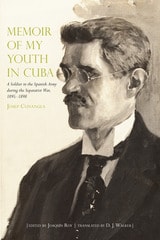
Memoir of My Youth in Cuba
A Soldier in the Spanish Army during the Separatist War, 1895–1898Dolores J. Walker
University of Alabama Press, 2017
A historically significant memoir offering a firsthand perspective on life, identity, and cultural transformation in nineteenth-century Cuba.
Memoir of My Youth in Cuba: A Soldier in the Spanish Army during the Separatist War, 1895–1898 is a translation of the memoir Memorias de mi juventud en Cuba: Un soldado del ejército español en la guerra separatista (1895–1898) by Josep Conangla. The English edition is based on the Spanish version edited by Joaquín Roy, who found the memoir and was given access to the Conangla family archives. Conangla’s memoir, now available in English, is an important addition to the accounts of Spanish and Cuban soldiers who served in Cuba’s second War of Independence.
Spaniard Josep Conangla was conscripted at the age of twenty and sent to Cuba. In the course of his time there, he reaffirmed his pacifism and support of Cuban independence. The young man was a believer who unfailingly connected his view of events to the Christian humanitarianism on which he prided himself. Conangla’s advanced education and the influence of well-placed friends facilitated his assignment to safe bureaucratic positions during the war, ensuring that he would not see combat. From his privileged position, he was a keen observer of his surroundings. He described some of the decisions he made—which at times put him at odds with the military bureaucracy he served—along with what he saw as the consequences of General Valeriano Weyler’s decree mandating the reconcentración, an early version of concentration camps. What Conangla saw fueled his revulsion at the collusion of the Spanish state and its state-sponsored religion in that policy. “Red Mass,” published six years after the War of Independence and included in his memoir, is a vivid expression in verse of his abhorrence.
Conangla’s recollections of the contacts between Spaniards and Cubans in the areas to which he was assigned reveal his ability to forge friendships even with Creole opponents of the insurrection. As an aspiring poet and writer, Conangla included material on fellow writers, Cuban and Spanish, who managed to meet and exchange ideas despite their circumstances. His accounts of the Spanish defeat, the scene in Havana around the end of the war, along with his return to Spain, are stirring.
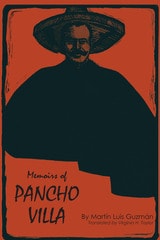
Memoirs of Pancho Villa
By Martín Luis Guzmán
University of Texas Press, 1965
This is a tale that might be told around a campfire, night after night in the midst of a military campaign. The kinetic and garrulous Pancho Villa talking on and on about battles and men; bursting out with hearty, masculine laughter; weeping unashamed for fallen comrades; casually mentioning his hotheadedness—"one of my violent outbursts"—which sent one, two, or a dozen men before the firing squad; recounting amours; and always, always protesting dedication to the Revolutionary cause and the interests of "the people."
Villa saw himself as the champion, eventually almost the sole champion, of the Mexican people. He fought for them, he said, and opponents who called him bandit and murderer were hypocrites.
This is his story, his account of how it all began when as a peasant boy of sixteen he shot a rich landowner threatening the honor of his sister. This lone, starved refugee hiding out in the mountains became the scourge of the Mexican Revolution, the leader of thousands of men, and the hero of the masses of the poor.
Great battles of the Revolution are described, sometimes as broad sweeps of strategy, sometimes as they developed half hour by half hour. Long, dusty horseback forays and cold nights spent pinned down under enemy fire on a mountainside are made vivid and gripping. The assault on Ciudad Juárez in 1911, the battles of Tierra Blanca, of Torreón, of Zacatecas, of Celaya, all are here, told with a feeling of great immediacy. This volume ends as Villa and Obregón prepare to engage each other in the war between victorious generals into which the Revolution degenerated before it finally ended.
Martín Luis Guzmán, eminent historian of Mexico, knew and traveled with Pancho Villa at various times during the Revolution. General Villa offered young Martín Luis a position as his secretary, but he declined. When many years later some of Villa's private papers, records, and what was apparently the beginning of an autobiography came into Guzmán's hands, he was ideally suited to blend all these into an authentic account of the Revolution as Pancho Villa saw it, and of the General's life as known only to Villa himself.
The Memoirs were first published in Mexico in 1951, where they were extremely popular; this volume was the first English publication. Virginia H. Taylor, translator in the Spanish Archives of the State of Texas Land Office, has accurately captured in English the flavor of the narrative.
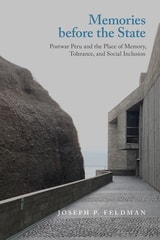
Memories before the State
Postwar Peru and the Place of Memory, Tolerance, and Social InclusionJoseph P. Feldman
Rutgers University Press, 2021
Memories before the State examines the discussions and debates surrounding the creation of the Place of Memory, Tolerance, and Social Inclusion (LUM), a national museum in Peru that memorializes the country’s internal armed conflict of the 1980s and 1990s. Emerging from a German donation that the Peruvian government initially rejected, the Lima-based museum project experienced delays, leadership changes, and limited institutional support as planners and staff devised strategies that aligned the LUM with a new class of globalized memorial museums and responded to political realities of the country’s postwar landscape. The book analyzes forms of authority that emerge as an official institution seeks to incorporate and manage diverse perspectives on recent violence.
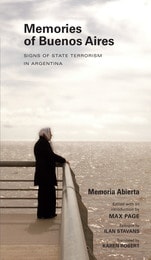
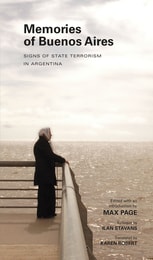
Memories of Buenos Aires
Signs of State Terrorism in ArgentinaMax Page
University of Massachusetts Press, 2013
In the 1970s, Argentina was the leader in the “Dirty War,” a violent campaign by authoritarian South American regimes to repress left-wing groups and any others who were deemed subversive. Over the course of a decade, Argentina's military rulers tortured and murdered upwards of 30,000 citizens. Even today, after thirty years of democratic rule, the horror of that time continues to roil Argentine society.
Argentina has also been in the vanguard in determining how to preserve sites of torture, how to remember the “disappeared,” and how to reflect on the causes of the Dirty War. Across the capital city of Buenos Aires are hundreds of grassroots memorials to the victims, documenting the scope of the state's reign of terror. Although many books have been written about this era in Argentina's history, the original Spanish-language edition of Memories of Buenos Aires was the first to identify and interpret all of these sites. It was published by the human rights organization Memoria Abierta, which used interviews with survivors to help unearth that painful history.
This translation brings this important work to an English-speaking audience, offering a comprehensive guidebook to clandestine sites of horror as well as innovative sites of memory. The book divides the 48 districts of the city into 9 sectors, and then proceeds neighborhood-by-neighborhood to offer descriptions of 202 known “sites of state terrorism” and 38 additional places where people were illegally detained, tortured, and killed by the government.
Memories of Buenos Aires
Signs of State Terrorism in ArgentinaMax Page
University of Massachusetts Press, 2013
In the 1970s, Argentina was the leader in the “Dirty War,” a violent campaign by authoritarian South American regimes to repress left-wing groups and any others who were deemed subversive. Over the course of a decade, Argentina's military rulers tortured and murdered upwards of 30,000 citizens. Even today, after thirty years of democratic rule, the horror of that time continues to roil Argentine society.
Argentina has also been in the vanguard in determining how to preserve sites of torture, how to remember the “disappeared,” and how to reflect on the causes of the Dirty War. Across the capital city of Buenos Aires are hundreds of grassroots memorials to the victims, documenting the scope of the state's reign of terror. Although many books have been written about this era in Argentina's history, the original Spanish-language edition of Memories of Buenos Aires was the first to identify and interpret all of these sites. It was published by the human rights organization Memoria Abierta, which used interviews with survivors to help unearth that painful history.
This translation brings this important work to an English-speaking audience, offering a comprehensive guidebook to clandestine sites of horror as well as innovative sites of memory. The book divides the 48 districts of the city into 9 sectors, and then proceeds neighborhood-by-neighborhood to offer descriptions of 202 known “sites of state terrorism” and 38 additional places where people were illegally detained, tortured, and killed by the government.
Memories of Earth and Sea
An Ethnographic History of the Islands of ChiloéAnton Daughters
University of Arizona Press, 2019
Staring in the 1980s, Chiloé was thrust into the global economy when major companies moved into the region to extract wild stocks of fish and to grow salmon and shellfish for export. The archipelago’s economy shifted abruptly from one of subsistence farming and fishing to wage labor in export industries. Local knowledge, traditions, memories, and identities similarly shifted, with young islanders expressing a more critical view of the rural past than their elders.
This book highlights the region’s unique past, emphasizing the generational tensions, disconnects, and continuities of the last half century. Drawing on interviews, field observations, and historical documents, Anton Daughters brings to life one of South America’s most culturally distinct regions.
Memory, Myth, and Time in Mexico
From the Aztecs to IndependenceBy Enrique Florescano
University of Texas Press, 1994
In Memory, Myth, and Time in Mexico, noted Mexican scholar Enrique Florescano’s Memoria mexicana becomes available for the first time in English. A collection of essays tracing the many memories of the past created by different individuals and groups in Mexico, the book addresses the problem of memory and changing ideas of time in the way Mexicans conceive of their history. Original in perspective and broad in scope, ranging from the Aztec concept of the world and history to the ideas of independence, this book should appeal to a wide readership.
Memory, Oblivion, and Jewish Culture in Latin America
Edited by Marjorie Agosín
University of Texas Press, 2005
Latin America has been a refuge for Jews fleeing persecution from 1492, when Sepharad Jews were expelled from Spain, until well into the twentieth century, when European Jews sought sanctuary there from the horrors of the Nazi Holocaust. Vibrant Jewish communities have deep roots in countries such as Argentina, Mexico, Guatemala, and Chile—though members of these communities have at times experienced the pain of being "the other," ostracized by Christian society and even tortured by military governments. While commonalities of religion and culture link these communities across time and national boundaries, the Jewish experience in Latin America is irreducible to a single perspective. Only a multitude of voices can express it.
This anthology gathers fifteen essays by historians, creative writers, artists, literary scholars, anthropologists, and social scientists who collectively tell the story of Jewish life in Latin America. Some of the pieces are personal tales of exile and survival; some explore Jewish humor and its role in amalgamating histories of past and present; and others look at serious episodes of political persecution and military dictatorship. As a whole, these challenging essays ask what Jewish identity is in Latin America and how it changes throughout history. They leave us to ponder the tantalizing question: Does being Jewish in the Americas speak to a transitory history or a more permanent one?