Results by title
941 books match the query 'Military' and 46 start with m
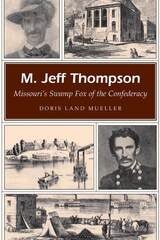
M. Jeff Thompson
Missouri's Swamp Fox of the ConfederacyDoris Land Mueller
University of Missouri Press, 2007
In the treacherous swamps of southeast Missouri, a different kind of Civil War was waged.
Meriwether Jeff Thompson was one of the most intriguing but least-known Missouri participants in the Civil War. He and his troops traveled fast and light to harass Union forces, materializing out of the countryside to surprise the enemy and evading the traps set for them by Northern commanders. Early in the war, Union General Ulysses S. Grant gave Thompson the name “Swamp Fox” for his exploits in the Bootheel region. This book now tells his story—an adventure that will be appreciated by readers of all ages. Doris Mueller has produced a meticulously researched account of Thompson’s life, from his Virginia boyhood and early successes to his wartime exploits and postwar life. When the war began, Thompson left his adopted city of St. Joseph—where he had served as mayor—to fight for the Confederacy. He was elected brigadier general in the First Military District of Southeast Missouri and led poorly equipped and loosely trained men in skirmishes and raids, often using guerrilla tactics. He was captured in August 1863. After being released twelve months later in a prisoner exchange, he joined Sterling Price’s ill-fated raid into Missouri. After the war, he was one of the first Southern leaders to seek reinstatement as a U.S. citizen and worked to allay hostilities among fellow Southerners.
Thompson was also known as the “Poet Laureate of the Marshes,” and Mueller includes numerous excerpts from his writings about his experiences. Her account not only provides a wealth of little-known biographical details about this important Missourian but also offers insight into the state’s unique experiences during that bloody era, personalizing events through the life of this brave soldier.
Scorned by the Northern press for impudence, but beloved as a leader by his men, Thompson was courageous in battle, often to the point of recklessness, making him a constant thorn in the side of Union forces; after the war he was an oft-maligned model for reconciliation. Doris Mueller’s recounting of his life is an action-adventure story that will delight readers as it attests to his important role in Missouri’s heritage.
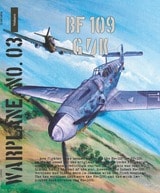
ME109
Sreco Bradic
Amsterdam University Press, 2023
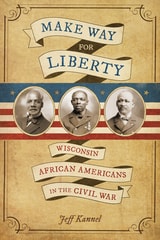
Make Way for Liberty
Wisconsin African Americans in the Civil WarJeff Kannel
Wisconsin Historical Society Press, 2020
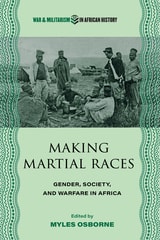
Making Martial Races
Gender, Society, and Warfare in AfricaMyles Osborne
Ohio University Press, 2024
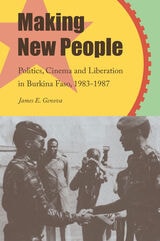
Making New People
Politics, Cinema, and Liberation in Burkina Faso, 1983–1987James Genova
Michigan State University Press, 2022
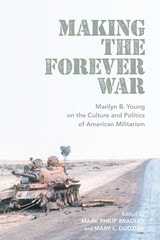
Making the Forever War
Marilyn B. Young on the Culture and Politics of American MilitarismMary L. Dudziak
University of Massachusetts Press, 2021
Making the Forever War brings Young's articles and essays on American war together for the first time, including never before published works. Moving from the first years of the Cold War to Korea, Vietnam, and more recent "forever" wars in Iraq and Afghanistan, Young reveals the ways in which war became ever-present, yet more covert and abstract, particularly as aerial bombings and faceless drone strikes have attained greater strategic value. For Young, U.S. empire persisted because of, not despite, the inattention of most Americans. The collection concludes with an afterword by prominent military historian Andrew Bacevich.
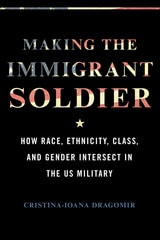
Making the Immigrant Soldier
How Race, Ethnicity, Class, and Gender Intersect in the US MilitaryCristina-Ioana Dragomir
University of Illinois Press, 2023
A compelling union of analysis and rich storytelling, Making the Immigrant Soldier traces the complexities of serving in the military in order to pursue the American dream.
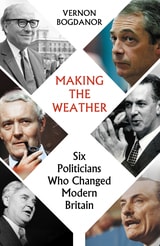
Making the Weather
Six Politicians Who Changed Modern BritainVernon Bogdanor
Haus Publishing, 2025
Making the Weather is the story of six postwar politicians, all of whom exerted an outsized influence on the political life of the United Kingdom—an influence greater than that of most prime ministers. Vernon Bogdanor’s cast includes three from the political Left—Aneurin “Nye” Bevan, Roy Jenkins, and Tony Benn—and three from the Right—Enoch Powell, Keith Joseph, and Nigel Farage. Each study is a fascinating analysis examining how these men achieved such prominence and influence and how, though very different figures in many ways, they came to dominate the political landscape, often for years.
Each of the six made fundamental contributions to the debate about Britain’s future and to the vibrancy of British democracy. From immigration to Europe, from the National Health Service to devolution, the issues and causes that brought these men to prominence are still relevant.
Male Fantasies
Volume 1: Women Floods Bodies HistoryKlaus Theweleit
University of Minnesota Press, 1987
This first volume of Male Fantasies centers on the fantasies that preoccupied a group of men who played a crucial role in the rise of Nazism. These men were officers in the Freikorps--private, volunteer armies that roamed Germany, serving the cause of domestic repression in the aftermath of World War I. Klaus Theweleit draws upon the novels, letters, and autobiographies of these proto-fascists and their contemporaries, as well as cartoons, advertisements, engravings, and posters. He explores these sources, not to discover what their creators thought about fighting or the fatherland, but to seek out and reconstruct their images of women. He shows that the Freikorps male identity was shaped by the dread and revulsion that characterized their relations with women (real or imagined) and that this dread was, in turn, linked to the aggressive racism and anticommunism at the heart of most fascist movements.
Theweleit’s second volume, Male Bodies: Psychoanalyzing the White Terror, carries Male Fantasies from the female image to the self-image of manhood and its ritualized forms of mass behavior, culminating in warfare. It also is available from the University of Minnesota Press.
Male Fantasies
Volume 2: Male Bodies: Psychoanalyzing the White TerrorKlaus Theweleit
University of Minnesota Press, 1989
Theweleit’s project in Male Fantasies is to discover the emotional core of fascism as it was revealed in the novels and memoirs of the Freikorps, mercenary bands that fought Germany’s border disputes and put down worker revolts in the aftermath of World War I. His excavation of Freikorps literary remains (and the writings of some of their protofascist contemporaries) enabled Theweleit to reconstruct the mythical content of the fascist imagination. An integral part of Male Fantasies is Theweleit’s choice of illustrations--cartoons, advertisements, engravings, posters--that serve as an ironic commentary on the text and extend its meaning in time and space.
In this second volume of the two-volume work Theweleit discovers how the repudiation of one’s own body--and of femininity--became a psychic compulsion associating masculinity with hardness, self-denial, and destruction. We are shown how the body becomes a mechanism for eluding the dreaded liquid--the “Red Flood,” lava, mud--and the “feminine” emotions associated with it. Armored, organized by mental and physical procedures like the military drill, the male body is transformed into a “man of steel.” As Theweleit shows, only in war does this body find redemption from constraint.
The first volume of Male Fantasies, also available from the University of Minnesota Press, deals primarily with the image of women in the collective unconscious of the fascist warrior that threatens to engulf the male ego.
Mannerheim
President, Soldier, SpyJonathan Clements
Haus Publishing, 2012
Manufacturing Independence
Industrial Innovation in the American RevolutionRobert F. Smith
Westholme Publishing, 2021
Benjamin Franklin was serious when he suggested the colonists arm themselves with the longbow. The American colonies were not logistically prepared for the revolution and this became painfully obvious in war’s first years. Trade networks were destroyed, inflation undermined the economy, and American artisans could not produce or repair enough weapons to keep the Continental Army in the field. The Continental Congress responded to this crisis by mobilizing the nation’s manufacturing sector for war. With information obtained from Europe through both commercial exchange and French military networks, Congress became familiar with the latest manufacturing techniques and processes of the nascent European industrial revolution. They therefore initiated an innovative program of munitions manufacturing under the Department of the Commissary General of Military Stores. The department gathered craftsmen and workers into three national arsenals where they were trained for the large-scale production of weapons. The department also engaged private manufacturers, providing them with materials and worker training, and instituting a program of inspecting their finished products.
As historian Robert F. Smith relates in Manufacturing Independence: Industrial Innovation in the American Revolution, the colonies were able to provide their military with the arms it needed to fight, survive, and outlast the enemy—supplying weapons for the victory at Saratoga, rearming their armies in the South on three different occasions, and providing munitions to sustain the siege at Yorktown. But this manufacturing system not only successfully supported the Continental Army, it also demonstrated new production ideas to the nation. Through this system, the government went on to promote domestic manufacturing after the war, becoming a model for how the nation could produce goods for its own needs. The War for Independence was not just a political revolution, it was an integral part of the Industrial Revolution in America.
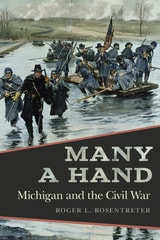
Many a Hand
Michigan and the Civil WarRoger L. Rosentreter
Michigan State University Press, 2026
When war came to the nation in 1861, Michiganians rallied around the Stars and Stripes and readily agreed with a veteran politician who declared, “He who is not for his country is against her.” Even as the conflict grew bloody and costly, they remained committed to suppressing the rebellion. By war’s end, an astonishing 50 percent of its military-age males had enlisted in the army. This Michigan Civil War chronicle is more than a story about soldiers’ heroism on distant battlefields. It also includes the often-overlooked role of women—some of whom refused to stay home and went to war. Also buried in the historical record are accounts of white soldiers whose views on slavery and African Americans, especially those in uniform, were transformed. There is also a much-needed exploration of Michigan’s response to the shocking assassination of a beloved president. Many a Hand captures these stories in a single volume.
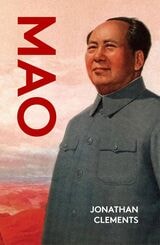
Mao
Jonathan Clements
Haus Publishing, 2026
A concise and comprehensive biography of Mao Zedong, published to coincide with the fiftieth anniversary of his death.
A half-century after his death in September 1976, Mao Zedong remains one of history’s most polarizing figures: a peasant boy who became a revolutionary leader, a general in World War II, and finally the Great Helmsman, the founding father of the People's Republic of China. His legacy is a mix of national liberation and human tragedy. Today, Mao is no static icon on a banknote but the architect of a superpower whose ideas, methods, and personal life are continually reexamined through a modern lens.
This comprehensive biography bridges the gap between the revolutionary and the man without overlooking the events that led to the end of China’s Century of Humiliation, the brutal cost of the Great Leap Forward, and the Cultural Revolution, reevaluating his “mass line” ideology.
Based on new archival information and startling revelations from his inner circle—including his personal physician, Dr. Li Zhisui, and former nurses—Clements offers a clear and accessible portrait of a leader whose persistent influence reminds us why Mao’s story remains essential to understanding the global power dynamics of today.
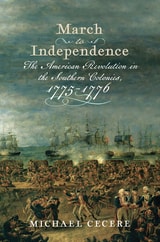
March to Independence
The Revolutionary War in the Southern Colonies, 1775–1776Michael Cecere
Westholme Publishing, 2027
The Independence Trilogy
The American Revolutionary War began when Massachusetts militiamen and British troops clashed at Lexington and Concord on April 19, 1775. Two months later, a much larger engagement occurred at Bunker Hill in Boston. The conflict then expanded into a continent-wide war for independence from Great Britain. Or so we are taught. A closer look at events in the South in the eighteen months following Lexington and Concord tells different story. The practice of teaching the Revolutionary War as one generalized conflict between the American colonies and Great Britain assumes the South’s support for the Revolutionary War was a foregone conclusion. However, once shots were fired, it was not certain that the southern colonies would support the independence movement. What is clear is that both the fledgling American republic and the British knew that the southern colonies were critical to any successful prosecution of the war by either side.
In March to Independence: The American Revolution in the Southern Colonies, 1775–1776, historian Michael Cecere, consulting primary source documents, examines how Virginia, North Carolina, South Carolina, and Georgia ended up supporting the colonies to the north, while East Florida remained within the British sphere. South Carolina, Georgia, and East Florida all retained their royal governors through the summer of 1775, and no military engagements occurred in any of the southern colonies in the six months following the battles in Massachusetts. The situation changed significantly in the fall, however, with armed clashes in Virginia and South Carolina; by early 1776 the war had spread to all of the southern colonies except East Florida. Although their march to independence did not follow the exact route as the colonies to the north, events in the South pulled the southern colonists in the same direction, culminating with a united Declaration of Independence on July 4, 1776. This book explores the crucial events in the southern colonies that led all but East Florida to support the American cause.
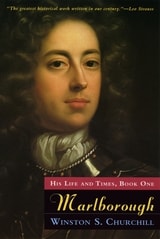
Marlborough
His Life and Times, Book OneWinston S. Churchill
University of Chicago Press, 2002
John Churchill, the Duke of Marlborough (1644-1722), was one of the greatest military commanders and statesmen in the history of England. Victorious in the Battles of Blenheim (1704), Ramillies (1706), and countless other campaigns, Marlborough, whose political intrigues were almost as legendary as his military skill, never fought a battle he didn't win. Although he helped James II crush the rebellion of the Duke of Monmouth, Marlborough later supported William of Orange against James II in the Glorious Revolution of 1688 and brilliantly managed England's diplomatic triumphs during the War of the Spanish Succession. Marlborough also bequeathed the world another great British military strategist and diplomat—his descendant, Winston S. Churchill, who wrote this book to redeem Marlborough's reputation from Macaulay's smears.
One million words long and ten years in the making, Churchill's Marlborough stands as both a literary and historical masterpiece, giving us unique insights into the Churchill of World War II, for just as Churchill's literary skill helps us understand the complexities of Marlborough's life, so too did his writing of Marlborough help Churchill master the arts of military strategy and diplomacy. This two-volume edition includes the entire text and almost all the original maps.
Marlborough
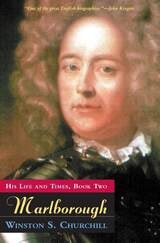
His Life and Times, Book TwoWinston S. Churchill
University of Chicago Press, 2002
John Churchill, the Duke of Marlborough (1644-1722), was one of the greatest military commanders and statesmen in the history of England. Victorious in the Battles of Blenheim (1704), Ramillies (1706), and countless other campaigns, Marlborough, whose political intrigues were almost as legendary as his military skill, never fought a battle he didn't win. Although he helped James II crush the rebellion of the Duke of Monmouth, Marlborough later supported William of Orange against James II in the Glorious Revolution of 1688 and brilliantly managed England's diplomatic triumphs during the War of the Spanish Succession. Marlborough also bequeathed the world another great British military strategist and diplomat—his descendant, Winston S. Churchill, who wrote this book to redeem Marlborough's reputation from Macaulay's smears.
One million words long and ten years in the making, Churchill's Marlborough stands as both a literary and historical masterpiece, giving us unique insights into the Churchill of World War II, for just as Churchill's literary skill helps us understand the complexities of Marlborough's life, so too did his writing of Marlborough help Churchill master the arts of military strategy and diplomacy. This two-volume edition includes the entire text and almost all the original maps.
Martin Mariner
Nico Braas
Amsterdam University Press, 2023
Master of the Air
William Tunner and the Success of Military AirliftRobert A. Slayton
University of Alabama Press, 2010
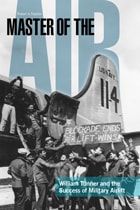
Into this difficult situation the US placed General William Henry Tunner. He was given a task that seemed doomed to failure—to supply a major city by air with everything it needed to survive from food to a winter’s supply of coal—and made it a brilliant success, astonishing the world in a major public relations defeat for the Soviets, and demonstrating the unexpected capacity of air fleets in a postwar world.
Megawatts and Megatons
The Future of Nuclear Power and Nuclear WeaponsRichard L. Garwin and Georges Charpak
University of Chicago Press, 2002
Memoir of My Youth in Cuba
A Soldier in the Spanish Army during the Separatist War, 1895–1898Dolores J. Walker
University of Alabama Press, 2017
A historically significant memoir offering a firsthand perspective on life, identity, and cultural transformation in nineteenth-century Cuba.
Memoir of My Youth in Cuba: A Soldier in the Spanish Army during the Separatist War, 1895–1898 is a translation of the memoir Memorias de mi juventud en Cuba: Un soldado del ejército español en la guerra separatista (1895–1898) by Josep Conangla. The English edition is based on the Spanish version edited by Joaquín Roy, who found the memoir and was given access to the Conangla family archives. Conangla’s memoir, now available in English, is an important addition to the accounts of Spanish and Cuban soldiers who served in Cuba’s second War of Independence.
Spaniard Josep Conangla was conscripted at the age of twenty and sent to Cuba. In the course of his time there, he reaffirmed his pacifism and support of Cuban independence. The young man was a believer who unfailingly connected his view of events to the Christian humanitarianism on which he prided himself. Conangla’s advanced education and the influence of well-placed friends facilitated his assignment to safe bureaucratic positions during the war, ensuring that he would not see combat. From his privileged position, he was a keen observer of his surroundings. He described some of the decisions he made—which at times put him at odds with the military bureaucracy he served—along with what he saw as the consequences of General Valeriano Weyler’s decree mandating the reconcentración, an early version of concentration camps. What Conangla saw fueled his revulsion at the collusion of the Spanish state and its state-sponsored religion in that policy. “Red Mass,” published six years after the War of Independence and included in his memoir, is a vivid expression in verse of his abhorrence.
Conangla’s recollections of the contacts between Spaniards and Cubans in the areas to which he was assigned reveal his ability to forge friendships even with Creole opponents of the insurrection. As an aspiring poet and writer, Conangla included material on fellow writers, Cuban and Spanish, who managed to meet and exchange ideas despite their circumstances. His accounts of the Spanish defeat, the scene in Havana around the end of the war, along with his return to Spain, are stirring.
Men of Terror
A Comprehensive Analysis of Viking CombatWilliam R. Short and Reynir A. Óskarson
Westholme Publishing, 2027
Sometime near the end of the tenth century, a man named Fraði died in Sweden. His kinsmen raised a granite runestone to his memory in Denmark. The carved message appears to tell us that Fraði was “first among all Vikings” and that he was the “terror of men.” Known sources about the Vikings revolve around the constant threat of violence: literary and artistic sources from both inside and outside Viking lands, including poetry, myths, stories, and artwork; law codes; burial practices; weapons; even their ship and house architecture.
Based on nearly two decades of research, Men of Terror: A Comprehensive Analysis of Viking Combat is a richly illustrated interdisciplinary study of the heart of Viking society: weapons and combat. Relying on a vast array of sources from a wide range of fields, research scientist William R. Short and independent scholar and martial arts instructor Reynir A. Óskarson dig deep into the culture of men like Fraði to better understand the mindset and performance of Viking warriors that led them to venerate and praise acts of violence and aggression. In the process they have painstakingly reverse-engineered Viking combat to account for the archaeology we have. Along the way, they answer questions such as: Were there women warriors? Why were acts such as raiding held in such high esteem? What mundane object was the king of Viking weapons and how was it used? Could bowstrings of human hair really work? Through their comprehensive research, the authors present a holistic picture of this society from what previously had only been disparate and intriguing parts. By the end of the book, the reader will understand the importance of combat to Viking society, the nature of that combat, and the code of these “men of terror.”
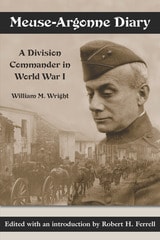
Meuse-Argonne Diary
A Division Commander in World War IWilliam M. Wright & Edited & Intro by Robert H. Ferrell
University of Missouri Press, 2004
September 13, 1918
Got no sleep at all last night.
About two o'clock in the morning Col. Heintzelman, chief of staff of the corps, came out and he was much pleased with what the division had accomplished and with the way they had gone through. It was the division's first battle and it played a very important and creditable part. Certain things fell down. . . . The truth of the matter is the troops got away from the wire and it was impossible to keep the wire up through the tangle of barbed wire and woods. We captured 3,000 prisoners on our front alone and have lost 521.
November 1, 1918 Considerable heavy artillery fire all night. The preparation fire went down promptly at 3:30, it was very heavy. . . . The barrage went down promptly at 5:30. Troops jumped off. At 7:30 thirty prisoners reported from Le Dhuy Fme., taken by the 353rd and 354th infantries. I don't understand what the 353rd Infantry is doing in there, as it is out of the sector. At 7:00 a.m. there was a distinct lull in the artillery fire. . . . I told Hanson at 8:05 to move his troops forward to parallel 86 immediately. He stated that he would get them going about 8:30, but actually did not get them started until about eleven o'clock. I sent for him on arrival and told him to hurry his men up. Before Lee left I had ordered the divisional reserve to move forward with its advance element on the first objective to maintain their echelonment in depth. Smyser came in at one o'clock and I ordered the divisional machine guns to the front to take position about one-half kilometer east of Dhuy Fme. At the time the reserves were ordered forward. I ordered Hanson to take his P.C. to Dhuy Fme. . . . Hanson has just arrived. I do not understand why he is always so slow. He seems to be inordinately stupid.
Mighty by Sacrifice
The Destruction of an American Bomber Squadron, August 29, 1944James L. Noles Sr. and James L. Noles Jr.
University of Alabama Press, 2009
On August 29, 1944, the 15th U.S. Army Air Force unleashed 500 bombers against oil and rail targets throughout central Europe. It dispatched the 20th Squadron of the 2nd Bombardment Group on what they regarded as an easy assignment: attack the Privoser Oil Refinery and associated railroad yards at Moravska Ostrava, Czechoslovakia. This "milk run" deteriorated into the bloodiest day in the 2nd Bombardment Group's history: not a single one of the 20th Squadron's B-17 Flying Fortress bombers returned from the mission. Forty airmen were killed, another 46 spent the rest of the war as POWs, and only four, with the aid of the OSS and anti-German partisans, and sympathetic Czech civilians managed to evade capture.
The ninety airmen on the mission to Moravska Ostrava provide a remarkable personal window into the Allies' Combined Bomber Offensive at its height during WWII. In a microcosm, their stories encapsulate how the U.S. Army Air Forces built, trained, and employed one of the mightiest war machines ever seen. Their stories also illustrate, however, the terrible cost in lives demanded by that same machine.
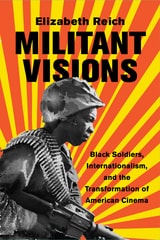
Militant Visions
Black Soldiers, Internationalism, and the Transformation of American CinemaReich, Elizabeth
Rutgers University Press, 2016
Offering a nuanced reading of a figure that was simultaneously conservative and radical, Reich considers how the cinematic black soldier lent a human face to ongoing debates about racial integration, black internationalism, and American militarism. Militant Visions thus not only presents a new history of how American cinema represented race, but also demonstrates how film images helped to make history, shaping the progress of the civil rights movement itself.
Military Institutions and Coercion in the Developing Nations
The Military in the Political Development of New NationsMorris Janowitz
University of Chicago Press, 1988
Military Intervention after the Cold War
The Evolution of Theory and PracticeAndrea Kathryn Talentino
Ohio University Press, 2005
Military Intervention After the Cold War explores how and why this change took place, looking at how both ideas and actions changed in the post-Cold War period to make military intervention a tool of international security and a defining characteristic of the international system. Although it is often touted as a strategy to rebuild collapsed states, the examples of success are few and far between. Andrea Kathryn Talentino argues that standards of human rights and responsible governance have become part of the definition of international security. She addresses questions that are vital in the post-9/11 world, where weak and collapsed states are recognized as permissive and at times supportive environments for criminal actors.
The specter of terrorism has placed even greater emphasis on the need to understand why military intervention happens and how it could be more effective. With the news full of stories on intervention and nation-building, scholars, graduate and undergraduate students, and readers interested in understanding global interdependence will find Military Intervention After the Cold War an indispensable book.Andrea Kathryn Talentino is an assistant professor of international relations at Tulane University, New Orleans.The author of numerous articles on military intervention and post- conflict rebuilding, she is currently focusing on the link between nation-building and political violence.
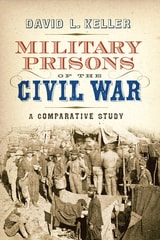
Military Prisons of the Civil War
A Comparative StudyDavid L. Keller
Westholme Publishing, 2021
Over the course of the American Civil War, more than four hundred thousand prisoners were taken by the North and South combined—the largest number in any conflict up to that time, and nearly fifty-eight thousand of these men died while incarcerated or soon after being released. Neither side expected to take so many prisoners in the wake of battles and neither had any experience on how to deal with such large numbers. Prison camps were quickly established, and as the war progressed, reports of sickness, starvation, mistreatment by guards, and other horrors circulated in the press. After the war, recriminations were leveled on both sides, and much of the immediate ill-will between the North and South dealt with prisoners and their treatment.
In Military Prisons of the Civil War: A Comparative Analysis historic preservationist David L. Keller consulted official records, newspaper reports, first-person accounts from prisoners, and other primary source material in order to understand why imprisonment during the Civil War failed on both sides. His research identifies five factors shared among both Union and Confederate prisons that led to so many deaths, including the lack of a strategic plan on either side for handling prisoners, inadequate plans for holding prisoners for long periods of time, and poor selection and training of camp command and guards.
Military Realism
The Logic and Limits of Force and Innovation in the U.S. ArmyPeter Campbell
University of Missouri Press, 2024
In five case studies of U.S. Army doctrine, Campbell pits military realism against bureaucratic and cultural perspectives in three key areas—nuclear versus conventional warfare, preferences for offense versus defense, and COIN missions—and finds that the army has been more doctrinally flexible than those perspectives would predict. He demonstrates that decision makers, while vowing in the wake of Vietnam to avoid (COIN) missions, nonetheless found themselves adapting to the geopolitical realities of fighting “low intensity” conflicts. In essence, he demonstrates that pragmatism has won out over dogmatism. At a time when American policymakers remain similarly conflicted about future defense strategies, Campbell’s work will undoubtedly shape and guide the debate.

Military, Inc.
Inside Pakistan's Military EconomyAyesha Siddiqa
Pluto Press, 2016
This book offers a close look at what the rise of the military has meant for Pakistani society. Ayesha Siddiqa shows how entrenched the military has become, not just in day-to-day governance, but in the Pakistani corporate sector as well. What are the consequences of this unprecedented merging of the military and corporate sectors? What does it mean for Pakistan’s economic development—let alone for hopes of an eventual return to democracy and de-militarization? This new edition brings Siddiqa’s account fully up to date with a new preface and conclusion that emphasize the changing role of the media.
Minuteman
A Technical History of the Missile That Defined American Nuclear WarfareDavid K. Stumpf
University of Arkansas Press, 2021
Minuteman offers a fascinating look at the technological breakthroughs necessary to field this weapon system that has served as a powerful component of the strategic nuclear triad for more than half a century. With exacting detail, Stumpf examines the construction of launch and launch control facilities; innovations in solid propellant, lightweight inertial guidance systems, and lightweight reentry vehicle development; and key flight tests and operational flight programs—all while situating the Minuteman program in the context of world events. In doing so, the author reveals how the historic missile has adapted to changing defense strategies—from counterforce to mutually assured destruction to sufficiency.
Missouri at Sea
Warships with Show-Me State NamesRichard E. Schroeder
University of Missouri Press, 2004
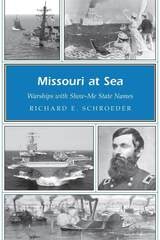
For each vessel, a brief history is supplied, and the book is illustrated with many extraordinary images and photographs taken from official U.S. government records and archives. Schroeder begins his volume with the first St. Louis and other small early ships that were symbolic of America’s modest nineteenth-century commercial and political ambitions. The first Missouri, one of the earliest American steamships, depicts the United States’ move into the industrial and technological revolution of the nineteenth century.
Another Federal St. Louis and a Confederate Missouri highlight the Mississippi River Civil War campaign. Schroeder then turns to America’s rise as a global military power at the beginning of the twentieth century with stories of the St. Louis in the Spanish-American War and the first battleship Missouri of Teddy Roosevelt’s Great White Fleet. The dominance of the U.S. Navy during World War II in the Pacific theater is illustrated by the fourth and most famous of all the ships to bear the name Missouri, whose deck was the site for the Japanese surrender.
The advanced technological achievements of the mid-twentieth century are represented by the nuclear submarines named for one of Missouri’s favorite sons and for its capital: Daniel Boone and Jefferson City. Also highlighted in the volume is the 5,000-crew nuclear aircraft carrier Harry S. Truman, along with smaller ships named for Missouri war heroes. Missouri at Sea will appeal to those readers interested in naval history and technology or Missouri history.
Mitchell Masterpieces 3
An Illustrated History of B-25 Warbirds in BusinessWim Nijenhuis
Amsterdam University Press, 2024
After the Second World War, the B-25 got a role in civil aviation. Many airplanes were stripped of their armament and other military equipment and often came through auctions in the civilian market. They came in private hands and were deployed for transportation of personnel or goods, for training, fire fighting, agricultural spraying of other purposes. Some were converted into a luxury business plane and some were used in the film industry.
This book should serve as a general view of the companies, organisations and owners and the B-25s they flew. Moreover, the book would not be complete if no attention was paid to the civilian B-25s in the various museums and the warbird circuit. All this is described in detail and provided with about 750 pictures, many of which are in full colour.
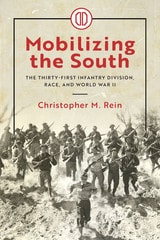
Mobilizing the South
The Thirty-First Infantry Division, Race, and World War IIChristopher M. Rein
University of Alabama Press, 2022
A richly researched account of the social, racial, and political history of a major Deep South infantry division at home and in the Pacific
Chris Rein’s study of the Thirty-First Infantry Division, known officially as the “Dixie Division,” illuminates the complexities in mobilizing American reserve units to meet the global emergency during World War II. Citizen soldiers from Alabama, Florida, Louisiana, and Mississippi formed the core of one of the ninety infantry divisions the Army successfully activated, trained, equipped, and deployed to defeat fascism in Europe and race-based imperialism in the Pacific. But the Army mobilized ideas along with manpower, and soldiers from across the Jim Crow South brought their racial ideas and views with them into the ranks and then exported these across the South Pacific. If the American victory in World War II represents a “double victory” over racism abroad and at home, the division’s service is a cogent reminder that the same powerful force could pull in opposite directions.
While focused on the division’s operational service during the war years, Mobilizing the South: The Thirty-First Infantry Division, Race, and World War II spans the division’s entire service from 1917 to 1967, from an interwar period highlighted by responses to natural disasters and facing down lynch mobs through a postwar service that included protecting activists in the most important struggles of the civil rights era. But the division’s extended service as a training establishment highlights lingering resentments and tensions within the American military system between the active and reserve components. Despite this, the division performed well in General Douglas MacArthur’s island-hopping campaign across the South Pacific. Using official records as well as details drawn from correspondence and oral histories, Rein captures how individual soldiers framed their exposure to a larger world, and how service alongside African American, New Guinean, and Filipino units both reinforced and modified views on race and postwar American society.
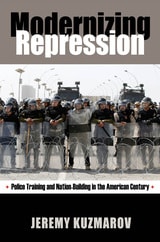
Modernizing Repression
Police Training and Nation-Building in the American CenturyJeremy Kuzmarov
University of Massachusetts Press, 2012
As American troops became bogged down first in Iraq and then Afghanistan, a key component of U.S. strategy was to build up local police and security forces in an attempt to establish law and order. This approach, Jeremy Kuzmarov shows, is consistent with practices honed over more than a century in developing nations within the expanding orbit of the American empire. From the conquest of the Philippines and Haiti at the turn of the twentieth century through Cold War interventions and the War on Terror, police training has been valued as a cost-effective means of suppressing radical and nationalist movements, precluding the need for direct U.S. military intervention and thereby avoiding the public opposition it often arouses.
Unlike the spectacular but ephemeral pyrotechnics of the battlefield, police training programs have had lasting consequences for countries under the American imperial umbrella, fostering new elites, creating powerful tools of social control, and stifling political reform. These programs have also backfired, breeding widespread resistance, violence, and instability—telltale signs of “blowback” that has done more to undermine than advance U.S. strategic interests abroad.
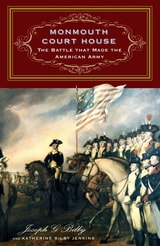
Monmouth Court House
The Battle that Made the American ArmyJoseph G. Bilby
Westholme Publishing, 2010
The Strategic Victory that Established the Continental Army as a True Fighting Force
The battle of Monmouth Court House, New Jersey, is among the most important battles in the history of the American Army. Well known in American mythology as the battle where Molly Pitcher fought alongside her fallen husband, Monmouth Court House is regarded by historians as the moment when the image of the American army in both Europe and the colonies was transformed from that of a rag-tag band of ill-trained civilians to that of a disciplined, well-guided, professional military unit. In June 1778, British General Henry Clinton’s army evacuated Philadelphia and struck out across “the Jerseys” on its way back to New York City. George Washington’s Continental Army, retrained and confident after enduring a winter at Valley Forge and supplemented by a large number of fresh New Jersey militia, marched in pursuit. About 50 miles south of New York City, the armies clashed at Monmouth Court House on June 28, in the last major Revolutionary War battle in the north. Essentially a draw, the battle marked the first time in the war that the Continental Army was able to hold a battlefield, fighting the full force of the British army to a standstill. Monmouth Court House: The Battle that Made the American Army by Joseph G. Bilby and Katherine Bilby Jenkins is the story of this battle, how it came to be, and its influence on the course of the war and American history.
The authors set Monmouth Court House within the context of the American Revolution and the civil war between Tories and Whigs that erupted in New Jersey during that time. The entire campaign and battle are described, including an analysis of the commanders, personnel, organization, training, and weapons of both armies. The book also assesses the historiography and folklore of the battle, including the story of the real “Molly Pitcher,” the use of the battleground as Civil War muster-in camp, its eventual status as Monmouth Battleground State Park, and current efforts at interpretation and battlefield archaeology and how they have changed our understanding of the battle.
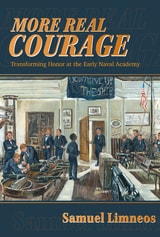
More Real Courage
Transforming Honor at the Early Naval AcademySamuel Limneos
University of Alabama Press, 2026
How discipline and conscience displaced anger and reputation in the early US Navy’s crucible of leadership
More Real Courage: Transforming Honor at the Early Naval Academy is a work of narrative history that traces a hard-fought moral transformation within the United States Navy’s officer corps. Samuel J. Limneos reveals an institutional struggle between competing ideals of courage, as traditional notions of offense, reputation, and aggression collided with emerging values of restraint, loyalty, and duty. Through intensely human stories of conflict, discipline, and conscience, the book shows how honor was contested, defended, and ultimately reshaped into a standard grounded in moral courage and professional responsibility.
Set across three pivotal decades at the Naval Academy, the study examines how midshipmen learned to navigate a culture inherited from European martial traditions while serving a rapidly changing republic. Limneos illuminates the professionalization of naval officers during the mid-nineteenth century, demonstrating how commitment, longsuffering, and performance of duty gradually displaced volatile codes of personal honor. Bridging social, cultural, and institutional history, More Real Courage fills a significant gap in naval historiography and speaks directly to enduring debates over character, leadership, and education in the armed forces. The book offers enduring moral lessons for naval historians, military professionals, and readers seeking to understand how national character is forged amid conflict, reform, and cultural change.
Mormon Battalion
United States Army of the West, 1846-1848Norma Baldwin Ricketts
Utah State University Press, 1997
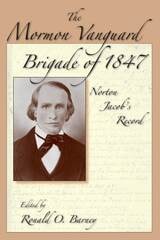
Mormon Vanguard Brigade Of 1847
Norton Jacob's Recordedited by Ronald O. Barney
Utah State University Press, 2005
Mosquito Warrior
Yellow Fever, Public Health, and the Forgotten Career of General William C. GorgasCarol R. Byerly
University of Alabama Press, 2024
A compelling biography of General William C. Gorgas, the US Army doctor's campaign against mosquito-borne disease reshaped public health, military medicine, and U. S. power on the world stage.
Mosquito Warrior tells the engrossing story of General William C. Gorgas (1854–1920), the once-renowned pioneer in tropical disease research and public health. His fascinating life illuminates vast transformations in the United States, including the end of the Civil War and the industrialization of the US military and economy, the emergence of germ theory and the modernization of the public health system, and the rise of the United States as a world power.
A scion of Confederate elites, Gorgas came of age amidst war and disease and the politics of racial segregation. He followed his father into military service as an army medical officer, treating troops on America’s western frontier posts. During the US occupation of Cuba, Gorgas applied Walter Reed’s research on the theory of mosquito-borne disease transmission, ending centuries of yellow fever in Havana through the eradication of the deadly Aedes aegypti mosquito. Applying similar strategies on the isthmus of Panama against yellow fever and malaria, Gorgas enabled the completion of the Panama Canal, then the largest engineering project in the world. Hailed a hero, he pursued his fight against mosquito-borne disease throughout the tropics, expanding American interests as he went. Appointed as US Army surgeon general on the eve of World War I, Gorgas resumed work modernizing the army health care system, strengthening US medical and military authority on the world stage.
Celebrated in life, Gorgas’s reputation fell victim to competing political interests and jealousies after his death, a cautionary tale about historical memory and the politics of science and personality. Carol R. Byerly’s balanced and contemporary examination of Gorgas illuminates his complex legacy in medicine and public health, military history, and American ambitions at the dawn of US global ascendency.
Mountain River
Vietnamese Poetry from the Wars, 1948-1993Kevin Bowen
University of Massachusetts Press, 1998
This landmark bilingual collection presents a comprehensive selection of Vietnamese poetry spanning nearly fifty years of warfare and its aftermath, from the Indochinese War (1946-1954) through the Vietnam War (1961-1975) and into the post-war period. Edited and translated by renowned Vietnam War scholars and poets Kevin Bowen and Bruce Weigl, in collaboration with Vietnamese poet and editor Nguyen Ba Chung, this volume captures the voices of Vietnamese writers who experienced, witnessed, or processed the transformative conflicts that shaped modern Vietnam.
Encompassing poetry from multiple generations, these poems reflect on the diverse responses to conflict: some express patriotic commitment, others grapple with loss and trauma, while many explore the intimate human experiences of war. Mountain River demonstrates how Vietnamese poets drew upon a rich literary tradition while creating new forms of expression to address the unprecedented scale of modern warfare. The result is a collaborative effort that represents a significant achievement in postwar Vietnamese-American literary relations and cross-cultural translation.

Mutant Ecologies
Manufacturing Life in the Age of Genomic CapitalErica Borg
Pluto Press, 2022
How capitalism is reconfiguring the very texture of life
Mutant Ecologies traces the spinning of new synthetic threads into the web of life. It is a critical cartography of the shifting landscapes of capital accumulation conjured by recent developments in genomic science, genome editing, and the biotech industry.
CRISPR crops, fast-growing salmons, heat-resistant Slick™ cows, Friendly™ Mosquitoes, humanized mice, pigs growing human organs – these are but a few of the dazzling new life-forms that have recently emerged from corporate and university laboratories around the world, all promising to lubricate the circuits of capital accumulation in distinct ways. The deliberate induction of genetic mutations is increasingly central to business operations in a number of sectors, from agriculture to pharmaceuticals.
While the Nobel Committee recently proclaimed the life sciences to have entered 'a new epoch', the authors show how these technological innovations continue to operate within a socio-historical context defined by the iron rules of capitalist competition and exploitation. Capital no longer contents itself by simply appropriating the living bodies of plants and animals. It purposefully designs its internal metabolism, and in that way, it redesigns the countless living vectors that constitute the global biosphere. It is driving a biological revolution, which will ripple through the everyday lives of people everywhere.
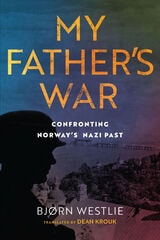
My Father's War
A True Story of Nazism and Treasonby Bjørn Westlie, translated by Dean Krouk
University of Wisconsin Press, 2023
With an insightful introduction from translator Dean Krouk, My Father’s War is a contemporary classic of war literature. Committed to genuine understanding without falling into undue sympathizing, this sober and reflective book presents an eye-opening, moving, intense, and necessary account of the allure of fascism in a world at war—and its personal costs.
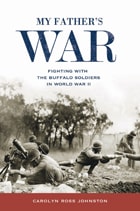
My Father's War
Fighting with the Buffalo Soldiers in World War IICarolyn Ross Johnston
University of Alabama Press, 2012
A compelling story of a unit of Buffalo Soldiers and their white commander fighting on the Italian front during World War II.
The 92nd Division of the Fifth Army was the only African American infantry division to see combat in Europe during 1944 and 1945, suffering more than 3,200 casualties. Members of this unit, known as Buffalo Soldiers, endured racial violence on the home front and experienced racism abroad. Engaged in combat for nine months, they were under the command of southern white infantry officers like their captain, Eugene E. Johnston.
Carolyn Ross Johnston draws on her father’s account of the war and her extensive interviews with other veterans of the 92nd Division to describe the experiences of a naïve southern white officer and his segregated unit on an intimate level. During the war, the protocol that required the assignment of southern white officers to command black units, both in Europe and in the Pacific theater, was often problematic, but Johnston seemed more successful than most, earning the trust and respect of his men at the same time that he learned to trust and respect them. Gene Johnston and the African American soldiers were transformed by the war and upon their return helped transform the nation.
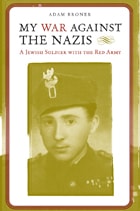
My War against the Nazis
A Jewish Soldier with the Red ArmyAdam Broner, with a foreword by Antony Polonsky
University of Alabama Press, 2007
A poignant account of the perils and fortunes of an indomitable survivor of violence in Eastern Europe during World War II.
In 1939, to escape Nazi occupation, 14-year-old Adam Broner and his older brother Sam left their home and family in Lodz, Poland, and made their way to the Soviet Union. Adam enlisted in the Red Army to join the fight against the Nazis but was sent to work in a Siberian coal mine instead when his nationality was discovered. After a bold and daring escape from Siberia, Broner reached the Soviet Polish Kosciuszko Army, joined the struggle against the Nazis, participated in the liberation of Poland, and rode victorious into Berlin in 1945. He later learned that his parents, siblings (except Sam), and all other close relatives had perished during the war.
Broner rebuilt his life, established a family, returned to Moscow for a degree in economics, and then went back to Poland, where he accepted a job in the Polish central planning agency. Eventually fed up with the growing anti-Semitism of the Communist government there, the author emigrated to the United States in 1969. He earned a doctorate from Princeton University and served as an economic adviser to New Jersey governors and the state legislature. In retirement, Broner learned portrait painting and reproduced the likenesses of his parents and siblings from memory, which are presented along with their biographies in this book.
In recounting his struggle for survival during some of the most dramatic upheavals of the 20th century— the Great Depression, Nazism, World War II, and the spread of Communism in Central Europe— Broner reveals a life dedicated to the ultimate goal of freedom, which he achieved through a combination of arduous effort and fortunate circumstance.
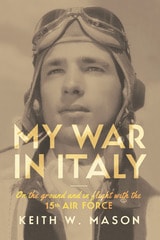
My War in Italy
On the Ground and in Flight with the 15th Air ForceKeith W. Mason
University of Missouri Press, 2027
Six weeks before Pearl Harbor, Keith Mason received a $150 uniform allowance, a pair of silver wings, and his first assignment as a flight instructor: Randolph Field, Texas. Two years later, he was Squadron Officer in the 460th Bomb Group, 15th Air Force in Spinazzola, Italy - flying the harrowing combat missions he dreamed of as a boy in rural Iowa.
As a memoir of one man’s war years, Mason provides insight on the inner workings of serving as an airman during World War II: facing stultifying boredom, stupefying incompetence, paralyzing fear, and stunning success. Details of how crews were selected for combat missions, of the necessity to occasionally break up crews, and of select missions in which Mason was a participant are important additions to the history and literature of this often neglected theater.