Results by title
1017 books match the query 'Reference' and 149 start with m
Major Themes of Robert Frost
Radcliffe Squires
University of Michigan Press, 1963

Making Sense of the Constitution
A Primer on the Supreme Court and Its Struggle to Apply Our Fundamental LawWalter M. Frank
Southern Illinois University Press, 2012
In Making Sense of the Constitution: A Primer on the Supreme Court and Its Struggle to Apply Our Fundamental Law, Walter Frank tackles in a comprehensive but lively manner subjects rarely treated in one volume.
Aiming at both the general reader and students of political science, law, or history, Frank begins with a brief discussion of the nature of constitutional law and why the Court divides so closely on many issues. He then proceeds to an analysis of the Constitution and subsequent amendments, placing them in their historical context. Next, Frank shifts to the Supreme Court and its decisions, examining, among other things, doctrinal developments, the Court’s decision making processes, how justices interact with each other, and the debate over how the Constitution should be interpreted.
The work concludes with a close analysis of Court decisions in six major areas of continuing controversy, including abortion, affirmative action, and campaign finance.
Outstanding by the University Press Books for Public and Secondary Schools
Mammals of Alabama
Troy L. Best and Julian L. Dusi
University of Alabama Press, 2014
Beautifully designed and sturdily bound for rugged field use, Mammals of Alabama is the first and only exhaustive guidebook to Alabama’s diverse and fascinating mammalian fauna.
European and American naturalists visited the territory that would become Alabama as early as the late eighteenth century and marveled at the breadth and variety of its flora and fauna. Yet until today scientists, scholars, and nature enthusiasts had no systematic guide to the state’s mammals. Mammals of Alabama fills the gap.
Naturally occurring in the state are nine orders, twenty-two families, fifty-one genera, and seventy-two species of living mammals. Best and Dusi offer an engaging entry for each as well as additional species that have become extinct through natural processes or human extirpation.
Illustrated with maps and photos, each entry includes:
• Identification notes • Dental formula
• Size and weight • Distribution
• Ecology • Life History
• Behavior • Parasites and Diseases
• Conservation Status • Notes and References
Ideal for backyards, hikes, libraries, and classrooms, Mammals of Alabama includes hundreds of professional, close-up color specimen photographs of both living animals in their natural habitats and skull plates, making identification of animals easy.
Best also offers fascinating and fun facts about Alabama mammals that will delight nature lovers of all ages, such as the surprising and excellent tree-climbing skills of the gray fox, the use in the past of mole skins to apply cosmetics, and the litters of identical quadruplets common to the nine-banded armadillo.
Published in cooperation with the Alabama Wildlife Federation
Mammals of the Southeastern United States
Troy L. Best and John L. Hunt
University of Alabama Press, 2020
First comprehensive account of the mammals of the entire southeastern US
The southeastern United States is home to a remarkable and diverse mammalian fauna that is a significant part of the region’s rich natural heritage. Mammals of the Southeastern United States presents accounts of 137 species that currently or previously occurred in the Southeast. Although accessible and useful for the generalist, this book provides an up-to-date compilation of basic knowledge about native and nonnative mammals of the region that is suitable for students of all ages and for professional mammalogists and biologists alike.
This volume profiles common species like the eastern gray squirrel, the white-tailed deer, and the Virginia opossum, but also includes among its accounts many extant species, such as the jaguar and porcupine, that once occurred in the region; native species, like the Caribbean monk seal, that are now extinct; native species that have been extirpated, or wiped out, from all or part of the region, such as the red wolf, cougar, American bison, and elk; and many introduced species, including the Mexican mouse opossum, common squirrel monkey, and capybara.
Each species account includes full-color images of the animal, plates featuring at least three views of its skull, color distribution maps of its approximate geographic range in the Southeast and in North America, and an up-to-date synthesis of several aspects of its biology, including habitat, diet, predators, parasites, diseases, and behaviors. An introductory chapter on conservation summarizes the current status of mammalian populations in the region and provides insight into some of the threats mammals now encounter in the Southeast.
Managing Archives and Archival Institutions
Edited by James Gregory Bradsher
University of Chicago Press, 1988
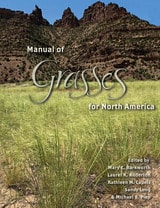
Manual of Grasses for North America
Mary E. Barkworth, Laurel K. Anderton Kathleen M. Capels, Sandy Long, and Michael B. Piep
Utah State University Press, 2007
The Manual of Grasses for North America is designed as a successor to the classic volume by Hitchcock and Chase. It reflects current taxonomic thought and includes keys, illustrations, and distribution maps for the nearly 900 native and 400 introduced species that have been found in North America north of Mexico. In addition, it presents keys and illustrations for several species that are known only in cultivation or are of major agricultural significance, either as progenitors of bread wheat and corn or as a major threat to North American agriculture because of their ability to hybridize with crop species. The Manual is a major reference work for grasses that will retain its value for many years.
Mapping
David Greenhood
University of Chicago Press, 1964
"This book should be welcomed by all students of mapping, for it will take them in uncomplicated stages through the complexities of compiling a map. . . . Mr. Greenwood is to be congratulated on an excellent book."—C.J. Angus, Canadian Geographical Journal
"For the baggy and middle-aged who cannot afford skiing in Austria or sailing off Bimini, Greenhood invites his readers to a sort of intellectual excitement which neither skiing nor sailing could equal. . . . Unless you work professionally with maps to the degree that a navigator does, for instance, this book will fascinate and enthrall you."—Monroe Bush, American Forests
"A teacher who wishes to go into the classroom with a storehouse of knowledge and ideas will find this a remarkable book. It is easy to read, and each page contains information which can be fed into the work in progress no matter which area of the world is being studied."—Instructor
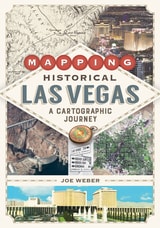
Mapping Historical Las Vegas
A Cartographic JourneyJoe Weber
University of Nevada Press, 2022
Reaching past the city limits, Mapping Historical Las Vegas also examines the development of public lands, military bases, and the canyons and valleys of the Colorado River before the Hoover Dam was built and Lake Mead was created. Weber also includes information on dams, highways, railroads, and other projects that were planned but never constructed— showing what might have been in one of the nation’s largest cities.
With 137 color maps generated using Geographic Information Systems, along with extensive mapping by Weber that draws on his decades of experience in the region, Mapping Historical Las Vegas offers a unique perspective on one of the world’s most famous desert cities.
Mapping It Out
Expository Cartography for the Humanities and Social SciencesMark Monmonier
University of Chicago Press, 1993
In his acclaimed How to Lie with Maps, Mark Monmonier showed how maps can distort facts. In Mapping it Out: Expository Cartography for the Humanities and Social Sciences, he shows authors and scholars how they can use expository cartography—the visual, two-dimensional organization of information—to heighten the impact of their books and articles.
This concise, practical book is an introduction to the fundamental principles of graphic logic and design, from the basics of scale to the complex mapping of movement or change. Monmonier helps writers and researchers decide when maps are most useful and what formats work best in a wide range of subject areas, from literary criticism to sociology. He demonstrates, for example, various techniques for representing changes and patterns; different typefaces and how they can either clarify or confuse information; and the effectiveness of less traditional map forms, such as visibility base maps, frame-rectangle symbols, and complementary scatterplot designs for conveying complex spatial relationships.
There is also a wealth of practical information on map compilation, cartobibliographies, copyright and permissions, facsimile reproduction, and the evaluation of source materials. Appendixes discuss the benefits and limitations of electronic graphics and pen-and-ink drafting, and how to work with a cartographic illustrator.
Clearly written, and filled with real-world examples, Mapping it Out demystifies mapmaking for anyone writing in the humanities and social sciences.
"A useful guide to a subject most people probably take too much for granted. It shows how map makers translate abstract data into eye-catching cartograms, as they are called. It combats cartographic illiteracy. It fights cartophobia. It may even teach you to find your way."—Christopher Lehmann-Haupt, The New York Times
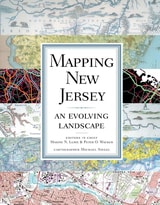
Mapping New Jersey
An Evolving LandscapeMaxine N. Lurie (Editor in Chief), and Peter O. Wacker (Editor in Chief), Michael Siegel (Cartographer)
Rutgers University Press, 2009
Tracing the changes in environment, land use patterns, demography, transportation, economy, and politics over the course of many centuries, Mapping New Jerseyilluminates the state's transformation from a simple agricultural society to a post-industrial and culturally diverse place inhabited by more people per acre than anywhere else in the country.
An innovator in transportation, from railroads to traffic circles to aviation, New Jersey from its beginnings was a "corridor" state, with a dense Native American trail system once crisscrossed on foot, country roads traveled by armies of the American Revolution, and, lately, the rolling wheels of many sedans, SUVs, hybrids, public and commercial vehicles, and freight. Early to industrialize, it also served as the headquarters for Thomas Edison and the development of the modern American economy. Small in territory and crowded with people, the state works to recycle garbage and, at the same time, best utilize and preserve its land.
New Jersey has been depicted in useful and quite stunning historical maps, many of the best included in Mapping New Jerseyùcrude maps drawn by sixteenth-century navigators; complex and beautifully decorated pieces created by early Dutch cartographers; land maps plotted by seventeenth-century English settlement surveyors; examples of the nineteenth century's scientific revolution in map making that helped locate topography and important mineral resources; detailed insurance maps that correct London map maker William Faden's 1777-78 classic rendering of the state; and aerial photos, remote sensing, and global positioning system maps generated through twenty-first-century technology breakthroughs in cartography.
Integrating new maps, graphs, and diagrams unavailable through ordinary research or Internet searches, Mapping New Jersey is divided into six topical chapters, each accompanied by an introduction and overview telling the story of the state's past and detailing its diversity. Mapping New Jersey, dramatically bold and in full color, travels where New Jersey has gone and the rest of the nation is likely to follow.
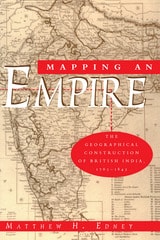
Mapping an Empire
The Geographical Construction of British India, 1765-1843Matthew H. Edney
University of Chicago Press, 1997
"There is much to be praised in this book. It is an excellent history of how India came to be painted red in the nineteenth century. But more importantly, Mapping an Empire sets a new standard for books that examine a fundamental problem in the history of European imperialism."—D. Graham Burnett, Times Literary Supplement
"Mapping an Empire is undoubtedly a major contribution to the rapidly growing literature on science and empire, and a work which deserves to stimulate a great deal of fresh thinking and informed research."—David Arnold, Journal of Imperial and Commonwealth History
"This case study offers broadly applicable insights into the relationship between ideology, technology and politics. . . . Carefully read, this is a tale of irony about wishful thinking and the limits of knowledge."—Publishers Weekly
Maps
Finding Our Place in the WorldEdited by James R. Akerman and Robert W. Karrow Jr.
University of Chicago Press, 2007
The book begins by examining the use of maps for wayfinding, revealing that even maps as common and widely used as these are the product of historical circumstances and cultural differences. The second chapter considers maps whose makers employed the smallest of scales to envision the broadest of human stages—the world, the heavens, even the act of creation itself. The next chapter looks at maps that are, literally, at the opposite end of the scale from cosmological and world maps—maps that represent specific parts of the world and provide a close-up view of areas in which their makers lived, worked, and moved.
Having shown how maps help us get around and make sense of our greater and lesser worlds, Maps then turns to the ways in which certain maps can be linked to particular events in history, exploring how they have helped Americans, for instance, to understand their past, cope with current events, and plan their national future. The fifth chapter considers maps that represent data from scientific instruments, population censuses, and historical records. These maps illustrate, for example, how diseases spread, what the ocean floor looks like, and how the weather is tracked and predicted. Next comes a turn to the imaginary, featuring maps that depict entire fictional worlds, from Hell to Utopia and from Middle Earth to the fantasy game World of Warcraft. The final chapter traces the origins of map consumption throughout history and ponders the impact of cartography on modern society.
A companion volume to the most ambitious exhibition on the history of maps ever mounted in North America, Maps will challenge readers to stretch conventional thought about what constitutes a map and how many different ways we can understand graphically the environment in which we live. Collectors, historians, mapmakers and users, and anyone who has ever “gotten lost” in the lines and symbols of a map will find much to love and learn from in this book.
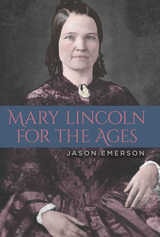
Mary Lincoln for the Ages
Jason Emerson
Southern Illinois University Press, 2019
Mary Lincoln for the Ages first articulates how reliance on limited sources has greatly restricted our understanding of the subject, evaluating their flaws and benefits and pointing out the shallowness of using the same texts to study her life. Emerson then presents more than four hundred bibliographical entries of nonfiction books and pamphlets, scholarly and popular articles, journalism, literature, and juvenilia. More than just listings of titles and publication dates, each entry includes Emerson’s deft analysis of these additional works on Mary Lincoln that should be used—but rarely have been—to better understand who she was during her life and why we see her as we do. The volume also includes rarely used illustrations, including some that have never before appeared in print.
A roadmap for a firmer, more complete grasp of Mary Lincoln’s place in the historical record, this is the first and only extensive, analytical bibliography of the subject. In highlighting hundreds of overlooked sources, Emerson changes the paradigm of Mary Lincoln’s legacy.
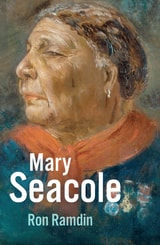
Mary Seacole
Ron Ramdin
Haus Publishing, 2020
Mary Seacole’s remarkable life began in Jamaica, where she was born a free person, the daughter of a black mother and white Scottish army officer. Ron Ramdin—who, like Seacole, was born in the Caribbean and emigrated to the United Kingdom—tells the remarkable story of this woman, celebrated today as a pioneering nurse.
Refused permission to serve as an army nurse, Seacole took the remarkable step of funding her own journey to the Crimean battlefront, and there, in the face of sometimes harsh opposition, she established a hotel for wounded British soldiers. Unlike Florence Nightingale—whose exploits saw her venerated as the “lady with the lamp” for generations afterward—Seacole cared for soldiers perilously close to the fighting. As Ramdin shows in this biography, Seacole’s time in Crimea, for which she is best known, was only the pinnacle of a life of adventure and travel.
Masculinity and Femininity in the MMPI-2 and MMPI-A
Hale Martin
University of Minnesota Press, 2010
Martin and Finn consider the factor structure and correlates of masculinity and femininity in the MMPI in multiple samples. Through their analyses, they are able to address such questions as: Is there such a thing as masculinity/femininity? If so, are masculinity and femininity separate constructs, or are they opposite ends of a bipolar dimension? What are the core aspects of masculinity and femininity? Are they the same for men and women? Do the meanings of masculinity and femininity vary across the human life span and in different cultures? To what extent are masculinity and femininity biologically or socially determined? Can masculinity and femininity be adequately measured by the MMPI-2 and MMPI-A?
This insightful work uses solid empirical methods to clarify significant constructs. It will be an essential resource for researchers in the areas of personality, psychological assessment, and gender studies, as well as for clinicians working with clients who have nontraditional gender identities.
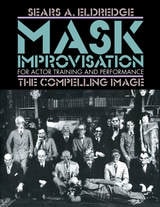
Mask Improvisation for Actor Training and Performance
The Compelling ImageSears Eldredge
Northwestern University Press, 1996
Featuring dozens of improvisational exercises in the innovative spirit of Viola Spolin, and supplemented with practical appendices on mask design and construction, forms and checklists, and other classroom materials, this book is an invaluable tool for teacher and student alike, as well as compelling reading for anyone interested in acquiring a deeper understanding of masks as agents of transformation, creativity, and performance.

Materials & Techniques in the Decorative Arts
An Illustrated DictionaryEdited by Lucy Trench
University of Chicago Press, 2000
Compiled by a team of experts, each with an intimate knowledge of his or her subject, the entries are written in clear, accessible language and supplemented by numerous photographs and drawings. Each core material (glass, ceramics, textiles, paper, plastics, leather, metal, stone, wood, and paint) is covered from its raw state through any processing or preparation to various craft stages and finally, to any surface finishing.
Traditionally, the kind of information found in these pages has been passed on from craftsman to craftsman or confined to highly specialized books, and even common terms are often misunderstood. This dictionary makes the subject accessible to all—from art and architectural historians, curators, collectors, restoration specialists, artists, and museum staff to decorators, aficionados, and those who enjoy watching Antiques Roadshow. In short, this book is for all those who are intrigued by the materials and techniques used to create the beautiful objects that surround us.
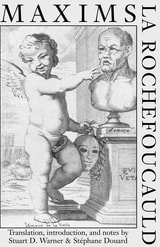
Maxims
La Rochefoucauld
St. Augustine's Press, 2009
This is the first-ever French-English edition of La Rochefoucauld’s Réflexions, ou sentences et maximes morales, long known in English simply as the Maxims. The translation, the first to appear in forty years, is completely new and aims – unlike all previous versions – at being as literal as possible. This involves, among other things, rendering the same word – for example, amour-propre as “self-love” – as consistently throughout as good sense allows. This also means that the translators have made every effort to maintain La Rochefoucauld’s word order. This allows the reader the best vantage point for viewing La Rochefoucauld’s dramatic and paradoxical juxtapositions of words and ideas, juxtapositions of the utmost importance to understanding his thought. Despite the translation’s concern with literalness, careful attention has been paid to the nuances of the literary character of the Maxims. In addition, this work contains a series of detailed indices that will greatly aid the reader in finding just the right maxim, and an updated version, in English, of the original French index of the work.
At the heart of La Rochefoucauld’s Maxims lies the attempt to disclose the great disparity between the exaggerated self-estimation of men and women and their actual condition. As La Rochefoucauld (1613–1680) unremittingly unmasks various pretenses, heelaborately exposes the complexity of motives which underlie and inform human conduct: whereas many endeavor to reveal a unity in plurality, La Rochefoucauld endeavors to reveal a plurality in unity. Playful, yet serious, humorous, ironic yet direct, poetic yet philosophical, the Maxims penetrate to themes at the center of reflection and judgment about the human situation. Worthy of study at any time, the Maxims are especially relevant in the strange times in which we live.
This edition includes the 504 maxims of the definitive, fifth edition of 1678, along with 137 other maxims which were either withdrawn from earlier editions or published posthumously. In addition to the maxims, La Rochefoucauld’s self-portrait and Cardinal de Retz’s portrait of La Rochefoucauld are also included.
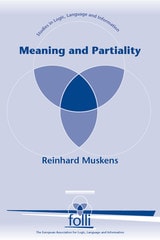
Meaning and Partiality
Reinhard Muskens
CSLI, 1995
Mechanical Vibration, 5th Edition, Solutions Manual
Theory and ApplicationHaym Benaroya
Rutgers University Press, 2022
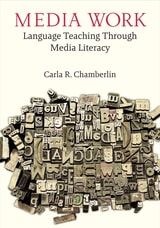
Media Work
Language Teaching Through Media LiteracyCarla R. Chamberlin
University of Michigan Press, 2025
Media Work offers a practical, hands-on approach to illustrate how language, imagery, and media platforms convey meaning. With almost 100 illustrations for use in teaching and many valuable sample lessons, the book brings to life the processes of observing, interrogating, interpreting, reflecting, and responding to a wide variety of media. Drawing upon critical perspectives from applied linguistics, communication, and media studies (e.g., semiotics, critical discourse analysis, media ecology), it develops a conceptual model that can be adapted for a range of ages and contexts. Chamberlin’s approach enables students to investigate the origins, purposes, and implications of messages that surround them in their everyday lives. With sample topics that range from pets and food to identity and discrimination, teachers can give students opportunities to learn more about their own communities and reflect on their reactions to media messages. By addressing the disinformation and propaganda that are prevalent in today’s media, teachers can also help students confront messages about social issues in order to gain knowledge, confidence, and agency.
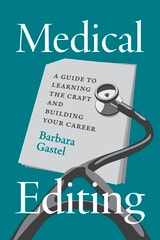
Medical Editing
A Guide to Learning the Craft and Building Your CareerBarbara Gastel
University of Chicago Press, 2025
Medical editing is a thriving and wide-ranging specialty within the editorial profession. Its practitioners occupy a unique ecosystem that involves its own style manuals and the ability to work with highly technical medical terminology and issues, and its work helps ensure that health practitioners, researchers, and the public receive sound, understandable medical information. Today, opportunities abound for medical editors—who come from many backgrounds and work in many settings, such as medical journals, medical institutions, and the freelance realm.
Written by an experienced and award-winning editor, Medical Editing: A Guide to Learning the Craft and Building Your Career provides a thorough introduction to the profession. At levels ranging from the punctuation mark to the publication, Barbara Gastel provides accessible and concrete instruction in editing medical writing. Distinctively, the book also explores ethical issues encountered in medical editing and other topics such as working effectively with medical authors, editing medical writing by and for nonnative users of English, and editing medical conference presentations.
For those considering entering medical editing or transitioning from other employment, the book also provides helpful career guidance. Readers will learn about the range of medical editing positions, receive advice on taking medical editing tests for employment, learn about certificates and certifications in the field, and more.
Enhanced by examples, exercises, and humor, Medical Editing will benefit both prospective and beginning medical editors while serving as a useful resource for experienced editors, teachers of courses in related fields, and supervisors mentoring interns or new hires.
Mental Health Disorders in Adolescents
A Guide for Parents, Teachers, and ProfessionalsHazen, Eric P
Rutgers University Press, 2010
Additionally, Eric P. Hazen, Mark A. Goldstein, and Myrna Chandler Goldstein have compiled two practical appendices-one provides a list of resources, organizations, books, websites, and phone numbers for further information and support. The other serves as a "treatment organizer" to help parents know what school and medical data to bring to a psychiatric evaluation and teach them how to keep track of important discussions related to their child's treatment.
By recognizing the early symptoms of a psychiatric disorder, adults may be able to save a teen's life. Mental Health Disorders in Adolescents offers real options to anyone searching for ways to help at-risk teens.

Michigan Ferns and Lycophytes
A Guide to Species of the Great Lakes RegionDaniel D. Palmer
University of Michigan Press, 2018
Unlike the well-studied flowering plants and gymnosperms, Michigan’s ferns and lycophytes have long lacked a reliable, up-to-date guidebook, and this book fills that gap. Covering all 120 taxa found in the state, it features detailed keys, species descriptions, and range maps alongside precise illustrations. Readers learn about the etymology of species’ common and scientific names as well as interesting facts about their historic uses by humans and place within the Michigan ecosystem. The book also provides information on the challenging taxonomy of many ferns and lycophytes, with special attention given to the species likely to hybridize and those prone to misidentification. This is a must-have reference for anyone who wishes to learn about these important components of the Great Lakes flora.
Middle English Dictionary
A.1Robert E. Lewis, Editor-in-Chief
University of Michigan Press, 1956
Middle English Dictionary
A.2Robert E. Lewis, Editor-in-Chief
University of Michigan Press, 1956
Middle English Dictionary
A.3Robert E. Lewis, Editor-in-Chief
University of Michigan Press, 1956
Middle English Dictionary
A.4Robert E. Lewis, Editor-in-Chief
University of Michigan Press, 1957
Middle English Dictionary
B.1Robert E. Lewis, Editor-in-Chief
University of Michigan Press, 1957
Middle English Dictionary
B.2Robert E. Lewis, Editor-in-Chief
University of Michigan Press, 1957
Middle English Dictionary
B.3Robert E. Lewis, Editor-in-Chief
University of Michigan Press, 1957
Middle English Dictionary
B.4Robert E. Lewis, Editor-in-Chief
University of Michigan Press, 1958
Middle English Dictionary
B.5Robert E. Lewis, Editor-in-Chief
University of Michigan Press, 1958
Middle English Dictionary
C.1Robert E. Lewis, Editor-in-Chief
University of Michigan Press, 1959
Middle English Dictionary
C.2Robert E. Lewis, Editor-in-Chief
University of Michigan Press, 1959
Middle English Dictionary
C.3Robert E. Lewis, Editor-in-Chief
University of Michigan Press, 1959
Middle English Dictionary
C.4Robert E. Lewis, Editor-in-Chief
University of Michigan Press, 1960
Middle English Dictionary
C.5Robert E. Lewis, Editor-in-Chief
University of Michigan Press, 1960
Middle English Dictionary
C.6Robert E. Lewis, Editor-in-Chief
University of Michigan Press, 1960
Middle English Dictionary
D.1Robert E. Lewis, Editor-in-Chief
University of Michigan Press, 1961
Middle English Dictionary
D.2Robert E. Lewis, Editor-in-Chief
University of Michigan Press, 1961
Middle English Dictionary
D.3Robert E. Lewis, Editor-in-Chief
University of Michigan Press, 1961
Middle English Dictionary
D.4Robert E. Lewis, Editor-in-Chief
University of Michigan Press, 1962
Middle English Dictionary
D.5Robert E. Lewis, Editor-in-Chief
University of Michigan Press, 1962
Middle English Dictionary
E.1Robert E. Lewis, Editor-in-Chief
University of Michigan Press, 1952
Middle English Dictionary
E.2Robert E. Lewis, Editor-in-Chief
University of Michigan Press, 1953
Middle English Dictionary
E.3Robert E. Lewis, Editor-in-Chief
University of Michigan Press, 1953
Middle English Dictionary
F.1Robert E. Lewis, Editor-in-Chief
University of Michigan Press, 1953
Middle English Dictionary
F.2Robert E. Lewis, Editor-in-Chief
University of Michigan Press, 1954
Middle English Dictionary
F.3Robert E. Lewis, Editor-in-Chief
University of Michigan Press, 1954