Results by title
1861 books match the query 'Social life and customs' and 102 start with m

MAIN STREET BLUES
THE DECLINE OF SMALL-TOWN AMERICARichard O. Davies
The Ohio State University Press, 1998

Mad Men, Death and the American Dream
Elisabeth Bronfen
Diaphanes, 2016
We are drawn to Mad Men’s dapper cast of characters, argues Elisabeth Bronfen, because, although the series has drawn praise for its depiction of the 1960s and ’70s, it speaks equally well to cultural concerns of the present. The prototypical con man, Don makes a precarious journey from poverty to fame and prosperity that maps the pursuit of moral perfectionism that features prominently throughout American cultural history. Yet a lingering sense of dissatisfaction hints that the lifestyle Don strives for may be a mere manifestation of the illusory American dream—cemented in the same collective desires Don draws on to advertise cigarettes and luxury cars by day.
"Mad Men," Death and the American Dream takes readers through the cultural fantasies that underlie characters’ motivations in this sophisticated and immensely popular television series, showing how—then as now—we turn to fantasy in the face of conflicts that cannot be resolved in political reality. Fascinating and full of accessible insights, the book will appeal to the show’s many fans, as well as anyone interested in American studies, media studies, or cultural history.
Made in America
A Social History of American Culture and CharacterClaude S. Fischer
University of Chicago Press, 2010
Our nation began with the simple phrase, “We the People.” But who were and are “We”? Who were we in 1776, in 1865, or 1968, and is there any continuity in character between the we of those years and the nearly 300 million people living in the radically different America of today?
With Made in America, Claude S. Fischer draws on decades of historical, psychological, and social research to answer that question by tracking the evolution of American character and culture over three centuries. He explodes myths—such as that contemporary Americans are more mobile and less religious than their ancestors, or that they are more focused on money and consumption—and reveals instead how greater security and wealth have only reinforced the independence, egalitarianism, and commitment to community that characterized our people from the earliest years. Skillfully drawing on personal stories of representative Americans, Fischer shows that affluence and social progress have allowed more people to participate fully in cultural and political life, thus broadening the category of “American” —yet at the same time what it means to be an American has retained surprising continuity with much earlier notions of American character.
Firmly in the vein of such classics as The Lonely Crowd and Habits of the Heart—yet challenging many of their conclusions—Made in America takes readers beyond the simplicity of headlines and the actions of elites to show us the lives, aspirations, and emotions of ordinary Americans, from the settling of the colonies to the settling of the suburbs.
Madumo, a Man Bewitched
Adam Ashforth
University of Chicago Press, 2000
So begins this true story of witchcraft and friendship set against the turbulent backdrop of contemporary Soweto. Adam Ashforth, an Australian who has spent many years in the black township, finds his longtime friend Madumo in dire circumstances: his family has accused him of using witchcraft to kill his mother and has thrown him out on the street. Convinced that his life is cursed, Madumo seeks help among Soweto's bewildering array of healers and prophets. An inyanga, or traditional healer, confirms that he has indeed been bewitched. With Ashforth by his side, skeptical yet supportive, Madumo embarks upon a physically grueling treatment regimen that he follows religiously-almost to the point of death-despite his suspicion that it may be better to "Westernize my mind and not think about witchcraft."
Ashforth's beautifully written, at times poignant account of Madumo's struggle shows that the problem of witchcraft is not simply superstition, but a complex response to spiritual insecurity in a troubling time of political and economic upheaval. Post-apartheid Soweto, he discovers, is suffering from a deluge of witchcraft. Through Madumo's story, Ashforth opens up a world that few have seen, a deeply unsettling place where the question "Do you believe in witchcraft?" is not a simple one at all. The insights that emerge as Ashforth accompanies his friend on an odyssey through Soweto's supernatural perils have profound implications even for those of us who live in worlds without witches.

Magic
A Theory from the SouthErnesto de Martino
HAU, 2015
Though his work was little known outside Italian intellectual circles for most of the twentieth century, anthropologist and historian of religions Ernesto de Martino is now recognized as one of the most original thinkers in the field. This book is testament to de Martino’s innovation and engagement with Hegelian historicism and phenomenology—a work of ethnographic theory way ahead of its time.
This new translation of Sud e Magia, his 1959 study of ceremonial magic and witchcraft in southern Italy, shows how De Martino is not interested in the question of whether magic is rational or irrational but rather in why it came to be perceived as a problem of knowledge in the first place. Setting his exploration within his wider, pathbreaking theorization of ritual, as well as in the context of his politically sensitive analysis of the global south’s historical encounters with Western science, he presents the development of magic and ritual in Enlightenment Naples as a paradigmatic example of the complex dynamics between dominant and subaltern cultures. Far ahead of its time, Magic is still relevant as anthropologists continue to wrestle with modernity’s relationship with magical thinking.

Magical Arrows
The Maori, The Greeks, And The Folklore Of The UniverseGregory A. Schrempp
University of Wisconsin Press, 1992
Schrempp suggests that perhaps the most noteworthy Zenoian insight is that paradox is intrinsic to cosmological speculation. But he points out that there are many other characteristics of Zeno’s approach, including the strategy of juxtaposing concrete images to mathematical forms of representation, that reappear persistently in Western intellectual history. Schrempp proceeds through a series of juxtapositions—between Zeno, Kant, Lovejoy, and Lévi-Strauss, and between Western cosmologists and those from other cultures—to highlight subtle similarities and differences among intellectual traditions and to examine the conceptual apparatus of Western social science.
Schrempp concludes that a meaningful comparative cosmology is possible and that the tradition of Zeno provides a propitious starting point for such a perspective.
Making Down Syndrome
Motherhood and Kinship Futures in Urban JordanChristine Sargent
Rutgers University Press, 2026
Making Down Syndrome: Motherhood and Kinship Futures in Urban Jordan draws on ethnographic research conducted primarily in Jordan’s capital city of Amman to explore how the label and identity of Down syndrome is gaining increasing cohesiveness. Focused on the experiences of mothers, who serve as an entry point for understanding broader family dynamics and choices, the book argues that practices and ideologies of care play a central role in making Down syndrome’s embodied and political realities. They do so through the momentum of kinship futures, or futures imagined through the prism of kinship roles and relations, which shape how families organize and distribute care between and beyond kinship networks and under conditions of economic and political uncertainty. By approaching everyday life in Jordan through the lens of disability, Making Down Syndrome offers new insights into how people navigate structures of family, gender, power, inequality, and precarity, all while trying to maintain hope for and cultivate better futures.
Making Michigan Home
Mexican Americans Bridging the Rural-Urban ExperienceBrett T. Olmsted
University of Illinois Press, 2025

Making Music Indigenous
Popular Music in the Peruvian AndesJoshua Tucker
University of Chicago Press, 2019
Making Scenes
Reggae, Punk, and Death Metal in 1990s BaliEmma Baulch
Duke University Press, 2007
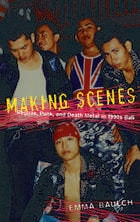
Making Scenes is an exploration of the subtle politics of identity that took place within and among these scenes throughout the course of the 1990s. Participants in the different scenes often explained their interest in death metal, punk, or reggae in relation to broader ideas about what it meant to be Balinese, which reflected views about Bali’s tourism industry and the cultural dominance of Jakarta, Indonesia’s capital and largest city. Through dance, dress, claims to public spaces, and onstage performances, participants and enthusiasts reworked “Balinese-ness” by synthesizing global media, ideas of national belonging, and local identity politics. Making Scenes chronicles the creation of subcultures at a historical moment when media globalization and the gradual demise of the authoritarian Suharto regime coincided with revitalized, essentialist formulations of the Balinese self.
Making a Man
Gentlemanly Appetites in the Nineteenth Century British NovelGwen Hyman
Ohio University Press, 2009
The gentleman, Making a Man argues, is a dangerous alimental force. Threatened with placelessness, he seeks to locate and mark himself through his feasting and fasting. But in doing so, he inevitably threatens to starve, to subsume, to swallow the community around him. The gentleman is at once fundamental and fundamentally threatening to the health of the nation: his alimental monstrousness constitutes the nightmare of the period’s striving, anxious, alimentally fraught middle class.
Making a Man makes use of food history and theory, literary criticism, anthropology, gender theory, economics, and social criticism to read gentlemanly consumers from Mr. Woodhouse, the gruel-eater in Jane Austen’s Emma, through the vampire and the men who hunt him in Bram Stoker’s Dracula. Hyman argues that appetite is a crucial means of casting light on the elusive identity of the gentleman, a figure who is the embodiment of power and yet is hardly embodied in Victorian literature.
Making the American Home
Middle-Class Women and Domestic Material Culture, 1840–1940Marilyn F. Motz
University of Wisconsin Press, 1988
Making the Mark
Gender, Identity, and Genital CuttingMiroslava Prazak
Ohio University Press, 2016
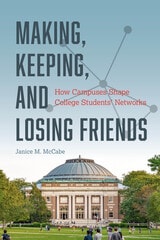
Making, Keeping, and Losing Friends
How Campuses Shape College Students' NetworksJanice M. McCabe
University of Chicago Press, 2025
We’re all familiar with the sentiment that “college is the best time of your life.” Along with a newfound sense of freedom, students have a unique opportunity to forge lifelong friendships at a point in life when friendship is particularly important. Why is it, then, that so many college students are falling victim to what the US Surgeon General termed an “epidemic of loneliness and isolation”? How do different aspects of college life help or hinder students’ ability to form deep connections?
In Making, Keeping, and Losing Friends: How Campuses Shape College Students’ Networks, sociologist Janice M. McCabe shows that the way a college is structured—whether students live in dorms or commute, study abroad or stay close to campus, have plentiful common areas for clubs to meet or not—can either encourage or hinder the making of meaningful friendships. Based on interviews with 95 students on three distinct campuses—a small private college (Dartmouth College), a large public university (University of New Hampshire), and a non-residential community college (Manchester Community College)—McCabe captures a wide range of experiences and discovers how features of the campuses make it easier or harder for students to make and keep friends. She shows how and why, across all three institutions, some students thrive in deep and lasting friendships with their peers.
As McCabe’s research reveals, we need to look at the structures of students’ networks, the institutions they attend, and the importance of their identities in these places if we are to truly uncover and address the loneliness epidemic facing today’s young adults.

Malinowski's Kiriwina
Fieldwork Photography 1915-1918Michael W. Young
University of Chicago Press, 1998
Malinowski's Kiriwina presents nearly two hundred of Malinowski's previously unpublished photographs, taken between 1915 and 1918, of the Trobriand Islanders. The images are more than embellishments of his ethnography; they are a recreation in striking detail of a distant world. Michael Young, an anthropologist and Malinowski's authorized biographer, has selected the photographs based on one of Malinowski's unpublished studies of the region, and the plan of that abandoned project has helped structure this book.
Divided into fourteen sections, Malinowski's Kiriwina is a series of linked photo-essays based on Trobriand institutions and cultural themes as described by Malinowski. The introductory essay by Young appraises the founding anthropologist's photographic oeuvre, explains the historical circumstances and technical aspects of the images, and puts them in their colonial context. Young illuminates the photographs with quotations from Malinowski's diaries, letters, and field notes, thereby giving a biographical dimension to the collection. Commentaries on the images by contemporary Trobrianders add a further layer of interpretation. The result is a stunning record not only of a fascinating place, but of the mutual relationship between ethnography and the visual.

Maltese in Michigan
Joseph M. Lubig
Michigan State University Press, 2011
Maltese in Michigan is an enlivening volume depicting the struggles and accomplishments of a singular culture, an immigrant narrative at once recognizable and enigmatic. Without realizing it, most Americans are probably familiar with the Maltese people through the cross displayed by firefighters, which bears a strong similarity in design and meaning to the one used by the Knights of Malta. The noble qualities embodied by the Maltese Cross are reflected in the pride and accomplishments of Maltese immigrants in Michigan, a small but vibrant ethnic group. Rooted in the post–World War II experiences of the 20th century, the Maltese established themselves in the city of Detroit, and thrived due to a strong work ethic and Catholic faith, while maintaining a strong central identity. This volume is a tribute to the Maltese of Michigan and all who have begun anew in an unfamiliar land and culture.

Man Killed by Pheasant and Other Kinships
John T. Price
University of Iowa Press, 2012

Managing Turbulent Hearts
A Balinese Formula for LivingUnni Wikan
University of Chicago Press, 1990
Wikan's study of the Indonesian island of Bali is an absorbing debate with previous anthropological interpretations as well as an innovative development of the anthropology of experience.
"This is indeed an important book, a landmark in studies of Bali and one surely destined to have major theoretical impact on anthropological research well beyond that famous Indonesian island."—Anthony R. Walker, Journal of Asian and African Studies
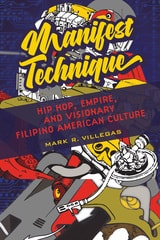
Manifest Technique
Hip Hop, Empire, and Visionary Filipino American CultureMark R. Villegas
University of Illinois Press, 2021
Filipino Americans have been innovators and collaborators in hip hop since the culture’s early days. But despite the success of artists like Apl.de.Ap of the Black Eyed Peas and superstar producer Chad Hugo, the genre’s significance in Filipino American communities is often overlooked. Mark R. Villegas considers sprawling coast-to-coast hip hop networks to reveal how Filipino Americans have used music, dance, and visual art to create their worlds. Filipino Americans have been exploring their racial position in the world in embracing hip hop’s connections to memories of colonial and racial violence. Villegas scrutinizes practitioners’ language of defiance, placing the cultural grammar of hip hop within a larger legacy of decolonization.
An important investigation of hip hop as a movement of racial consciousness, Manifest Technique shows how the genre has inspired Filipino Americans to envision and enact new ideas of their bodies, their history, and their dignity.
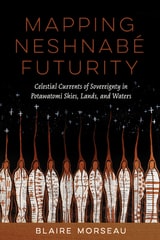
Mapping Neshnabé Futurity
Celestial Currents of Sovereignty in Potawatomi Skies, Lands, and WatersBlaire Morseau; Foreword by Grace L. Dillon
University of Arizona Press, 2025
In Mapping Neshnabé Futurity Blaire Morseau weaves together on-the-ground insights and Indigenous speculative fiction to illustrate the profound ways in which Anishinaabé/Neshnabé (Potawatomi, Odawa, and Ojibwe) communities are reclaiming their sovereignty and crafting vibrant futures. Morseau lays out how Neshnabék have marshaled dissent to hydrologic fracturing, oil pipelines, and other damaging infrastructures of capitalist settler futurity. The book positions these efforts as vital acts of nation building and visionary reclamation of space, both terrestrial and celestial.
Morseau also challenges the hegemonic narratives of settler futurism found in mainstream science fiction, which often perpetuate colonial fantasies and exclude marginalized voices. By fusing ethnography of tribal nation-building projects and analysis of Indigenous speculative fiction, Morseau provides a path to Indigenous futurisms and its role in imagining decolonization. Morseau’s analysis underscores the potency of Indigenous knowledge systems and ceremonial practices in imagining and actualizing alternative futures.
Mapping Neshnabé Futurity is an essential read for scholars and activists alike, urging a rethinking of how we conceive of futurity and sovereignty. This work shows how counter-mapping projects both on the ground and in the skies reclaim space in the Great Lakes region—Neshnabé homelands—and are part of larger constellations of Indigenous futurities and stories of survivance.
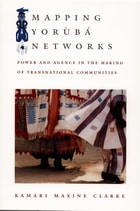
Mapping Yorùbá Networks
Power and Agency in the Making of Transnational CommunitiesKamari Maxine Clarke
Duke University Press, 2004
Examining how the development of a deterritorialized network of black cultural nationalists became aligned with a lucrative late-twentieth-century roots heritage market, Clarke explores the dynamics of Òyótúnjí Village’s religious and tourist economy. She discusses how the community generates income through the sale of prophetic divinatory consultations, African market souvenirs—such as cloth, books, candles, and carvings—and fees for community-based tours and dining services. Clarke accompanied Òyótúnjí villagers to Nigeria, and she describes how these heritage travelers often returned home feeling that despite the separation of their ancestors from Africa as a result of transatlantic slavery, they—more than the Nigerian Yorùbá—are the true claimants to the ancestral history of the Great Òyó Empire of the Yorùbá people. Mapping Yorùbá Networks is a unique look at the political economy of homeland identification and the transnational construction and legitimization of ideas such as authenticity, ancestry, blackness, and tradition.
Margaret Mead, Gregory Bateson, and Highland Bali
Fieldwork Photographs of Bayung Gede, 1936-1939Gerald Sullivan
University of Chicago Press, 1999
Margaret Mead, Gregory Bateson, and Highland Bali includes 200 photographs that the couple took between 1936 and 1939, the vast majority of which have never before been published. They vividly capture the everyday lives of the men, women, and children of Bayung Gedé, their homes and their temples, and many other fascinating details of village life not featured in Mead and Bateson's publications.
In a substantial introductory essay, Gerald Sullivan, who selected the photographs, uses excerpts from fieldnotes and correspondence to illuminate Mead and Bateson's ethnographic work. Tracing the project from its inception in their proposals to the publication of their work, Sullivan shows how they used the photographs both as fieldnotes and as elements in their theoretical argument. Finally, he explores what the photographs reveal—independently of Mead and Bateson's project—about the Balinese character to the contemporary viewer.
The result is a both a substantial contribution to visual anthropology and an invaluable supplement to the published works of Margaret Mead and Gregory Bateson.

Maria Longworth Storer
From Music and Art to Popes and PresidentsConstance J. Moore; Nancy M. Broermann
Ohio University Press, 2019
Published by the University of Cincinnati Press
While the adage may go, “Behind every great man is a great woman,” the story of Maria Longworth Storer necessitates a new adage—at the front of every great city is a great woman. After being shunted into the biographies and history books of other people, Longworth Storer is now finally given center stage on the one hundred and seventieth anniversary of her birth.
Maria Longworth Storer: From Music and Art to Popes and Presidents is the most comprehensive biography of this one of a kind Cincinnatian. Known as the founder of the first female-run manufacturing company in the United States, Rookwood Pottery, Longworth Storer was passionate about women’s rights, her city, and issues of poverty and the arts. She owned Rookwood pottery for nine years, and then transferred ownership after earning recognition at the Exhibition of American Art Industry in Philadelphia and receiving a gold medal at the Exposition Universelle in Paris. Aside from her success with Rookwood, Longworth Storer was central to making the Queen City the major cultural landmark it is today. Although the rest of her life was no less remarkable as the wife of notorious diplomat Bellamy Storer, later embroiled in the famous Roosevelt-Storer scandal, little has been written about her contributions and exploits in diplomatic relations and her powerful influence on turn-of-the-twentieth-century political leaders.
Featuring new archival research, and never before seen photos of the Storer family, authors Constance J. Moore and Nancy M. Broermann have compiled a portrait of Maria Longworth Storer that is rich in detail, fitting to both the wide, often eclectic, breadth of Longworth Storer’s projects, and to the depth of her impact on leaders from Washington D.C. to Europe.
Moving through major moments in both American and Cincinnati history, and intersecting with significant historical figures including Teddy Roosevelt and William Howard Taft, Moore and Broermann expose the broader historical narrative of Longworth Storer’s life without letting her unique spirit and individual accomplishments become overshadowed by them.
Through thoughtful, balanced narrative, readers get to know a remarkable woman whose fascinating and dramatic life as a political figure, women’s rights advocate, and patron of the arts has had a long lasting legacy on the Queen City and the Shaping of our nation’s diplomatic policies.
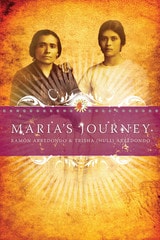
Maria's Journey
Ramon Arredondo and Trisha (Hull) Arredondo
Indiana Historical Society Press, 2010
Marking Indigeneity
The Tongan Art of Sociospatial RelationsTevita O. Ka‘ili; Foreword by ‘Okusitino Mahina
University of Arizona Press, 2017
In Marking Indigeneity, Tevita O. Ka‘ili examines the conflicts and reconciliation of indigenous time-space within the Tongan community in Maui, as well as within the time-space of capitalism. Using indigenous theory, he provides an ethnography of the social relations of the highly mobile Tongans.
Focusing on tauhi vā, Ka‘ili notes certain examples of this time marking: the faikava gatherings that last from sunset to sunrise, long eating gatherings, long conversations (talanoa), the all-night funeral wakes, and the early arrival to and late departure from meetings and celebrations. Ka‘ili also describes the performing art of tauhi vā, which creates symmetry through the performance of social duties (fatongia). This gives rise to powerful feelings of warmth, elation, and honor among the performers. Marking Indigeneity offers an ethnography of the extension of time-space that is rooted in ancient Moana oral traditions, thoughtfully illustrating the continuation of these traditions.
Martin Kacur
The Biography of an IdealistIvan Cankar
Central European University Press, 2009
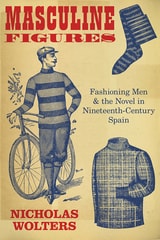
Masculine Figures
Fashioning Men and the Novel in Nineteenth-Century SpainNicholas Wolters
Vanderbilt University Press, 2022
Fictional masculinity performs a symbolic role in representing and negotiating the contradictions male novelists often encountered in their attempts to professionalize not only as writers, but also as businessmen, professors, lawyers, and politicians. Through specific and recurring figures like the student, the priest, the businessman, and the heir, male novelists portray and represent an increasingly middle-class world at odds with the values and virtues it inherited from an imperial Spanish past, and those it imported from more industrialized nations like England and France. The visual culture of the time and place marks the material turn in middle-class masculinity and sets the stage for discussions of race and sexuality.
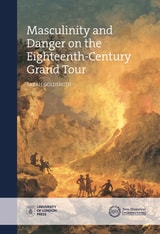
Masculinity and Danger on the Eighteenth-Century Grand Tour
Sarah Goldsmith
University of London Press, 2020
Goldsmith demonstrates that the Grand Tour was a means of constructing Britain’s next generation of leaders. Influenced by aristocratic concepts of honor and inspired by military-style leadership, elite society viewed experiences of danger and hardship as powerfully transformative and therefore as central to constructing masculinity. Scaling mountains, volcanoes, and glaciers, and even encountering war and disease, Grand Tourists willingly tackled a variety of perils. Through her study of these dangers, Goldsmith offers a bold revision of eighteenth-century elite masculine culture and the critical role the Grand Tour played within it.
Masculinity, Motherhood, and Mockery
Psychoanalyzing Culture and the Iatmul Naven Rite in New GuineaEric Kline Silverman
University of Michigan Press, 2001
Throughout this work, Eric Silverman details the dialogics of mothering and manhood throughout Eastern Iatmul culture, including in his analysis cosmology and myth; food- and childraising; architecture and canoes; ethnophysiology and sexuality; shame and hygiene; marriage and kinship; and perhaps most significantly, a ceremonial locus classicus in anthropology: the famous Iatmul naven rite. This book provides the first sustained examination of naven since Bateson, presenting new data and interpretations that are based entirely on original, first-hand ethnographic research.
The sustained engagement with anthropological and psychoanalytic theory coupled with a refreshing examination of a famous and still-enigmatic ritual is sure to make multiple contributions to pressing debates in contemporary anthropology and social theory.
Eric Silverman is Associate Professor of Anthropology, DePauw University.

Masked
The Life of Anna Leonowens, Schoolmistress at the Court of SiamAlfred Habegger
University of Wisconsin Press, 2014
But who was Leonowens and why did her story take hold? Although it has been known for some time that she was of Anglo-Indian parentage and that her tales about the Siamese court are unreliable, not until now, with the publication of Masked, has there been a deeply researched account of her extraordinary life. Alfred Habegger, an award-winning biographer, draws on the archives of five continents and recent Thai-language scholarship to disclose the complex person behind the mask and the troubling facts behind the myth. He also ponders the curious fit between Leonowens’s compelling fabrications and the New World’s innocent dreams—in particular the dream that democracy can be spread through quick and easy interventions.
Exploring the full historic complexity of what it once meant to pass as white, Masked pays close attention to Leonowens’s midlevel origins in British India, her education at a Bombay charity school for Eurasian children, her material and social milieu in Australia and Singapore, the stresses she endured in Bangkok as a working widow, the latent melancholy that often afflicted her, the problematic aspects of her self-invention, and the welcome she found in America, where a circle of elite New England abolitionists who knew nothing about Southeast Asia gave her their uncritical support. Her embellished story would again capture America’s imagination as World War II ended and a newly interventionist United States looked toward Asia.
Best Books for General Audiences, selected by the American Association of School Librarians
Best Regional Special Interest Boosk, selected by the Public Library Reviewers
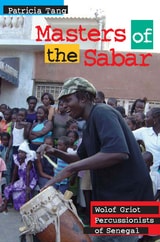
Masters of the Sabar
Wolof Griot Percussionists of SenegalPatricia Tang
Temple University Press, 2006
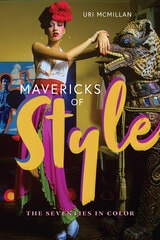
Mavericks of Style
The Seventies in ColorUri McMillan
Duke University Press, 2025
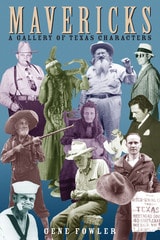
Mavericks
A Gallery of Texas CharactersBy Gene Fowler
University of Texas Press, 2008
Texas has been home to so many colorful characters, out-of-staters might wonder if any normal people live here. And it's true that the "Texian" desire to act out sometimes overcomes even the most sober citizens—which makes it a real challenge for the genuine eccentrics to distinguish themselves from the rest of us. Fortunately, though, many maverick Texans have risen to the test, and in this book, Gene Fowler introduces us to a gallery of Texas eccentrics from the worlds of oil, ranching, real estate, politics, rodeo, metaphysics, showbiz, art, and folklore.
Mavericks rounds up dozens of Fowler's favorite Texas characters, folks like the Trinity River prophet Commodore Basil Muse Hatfield; the colorful poet-politician Cyclone Davis Jr.; Big Bend tourist attraction Bobcat Carter; and the dynamic chief executive of the East Texas Oil Field Governor Willie. Fowler persuasively argues that many of these characters should be viewed as folk performance artists who created "happenings" long before the modern art world took up that practice in the 1960s. Other featured mavericks run the demographic gamut from inspirational connoisseurs of the region's native quirkiness to creative con artists and carnival oddities. But, artist or poser, all of the eccentrics in Mavericks completely embody the style and spirit that makes Texas so interesting, entertaining, and culturally unique.
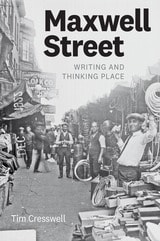
Maxwell Street
Writing and Thinking PlaceTim Cresswell
University of Chicago Press, 2019
In Maxwell Street, Cresswell advocates approaching the study of place as an “assemblage” of things, meanings, and practices. He models this innovative approach through a montage format that exposes the different types of texts—primary, secondary, and photographic sources—that have attempted to capture the essence of the area. Cresswell studies his historical sources just as he explores the different elements of Maxwell Street—exposing them layer by layer. Brilliantly interweaving words and images, Maxwell Street sheds light on a historic Chicago neighborhood and offers a new model for how to write about place that will interest anyone in the fields of geography, urban studies, or cultural history.
Maya Achi Marimba Music In Guatemala
Sergio Navarrete Pellicer
Temple University Press, 2005
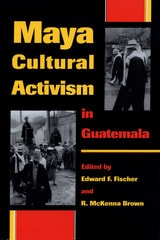
Maya Cultural Activism in Guatemala
Edited by Edward F. Fischer and R. McKenna Brown
University of Texas Press, 1996
Maya Cultural Activism in Guatemala marks a new era in Guatemalan studies by offering an up-to-the-minute look at the pan-Maya movement and the future of the Maya people as they struggle to regain control over their cultural destiny. The successful emergence of what is in some senses a nationalism grounded in ethnicity and language has challenged scholars to reconsider their concepts of nationalism, community, and identity.
Editors Edward F. Fischer and R. McKenna Brown have brought together essays by virtually all the leading U.S. experts on contemporary Maya communities and the top Maya scholars working in Guatemala today. Supplementing scholarly analysis of Mayan cultural activism is a position statement originating within the movement and more wide-ranging and personal reflections by anthropologists and linguists who have worked with the Maya over the years. Among the broader issues that come in for examination are the complex relations between U.S. Mayanists and the Mayan cultural movement, efforts to promote literacy in Mayan languages, the significance of woven textiles and native dress, the relations between language and national identity, and the cultural meanings that the present-day Maya have encountered in ancient Mayan texts and hieroglyphic writing.
Maya Intellectual Renaissance
Identity, Representation, and LeadershipBy Victor D. Montejo
University of Texas Press, 2005
When Mayan leaders protested the celebration of the Quincentenary of the "discovery" of America and joined with other indigenous groups in the Americas to proclaim an alternate celebration of 500 years of resistance, they rose to national prominence in Guatemala. This was possible in part because of the cultural, political, economic, and religious revitalization that occurred in Mayan communities in the later half of the twentieth century. Another result of the revitalization was Mayan students' enrollment in graduate programs in order to reclaim the intellectual history of the brilliant Mayan past. Victor Montejo was one of those students.
This is the first book to be published outside of Guatemala where a Mayan writer other than Rigoberta Menchu discusses the history and problems of the country. It collects essays Montejo has written over the past ten years that address three critical issues facing Mayan peoples today: identity, representation, and Mayan leadership. Montejo is deeply invested in furthering the discussion of the effectiveness of Mayan leadership because he believes that self-evaluation is necessary for the movement to advance. He also criticizes the racist treatment that Mayans experience, and advocates for the construction of a more pluralistic Guatemala that recognizes cultural diversity and abandons assimilation. This volume maps a new political alternative for the future of the movement that promotes inter-ethnic collaboration alongside a reverence for Mayan culture.
Maya Market Women
Power and Tradition in San Juan Chamelco, GuatemalaS. Ashley Kistler
University of Illinois Press, 2014
As cultural mediators, Chamelco's market women offer a model of contemporary Q'eqchi' identity grounded in the strength of the Maya historical legacy. Guatemala's Maya communities have faced nearly five hundred years of constant challenges to their culture, from colonial oppression to the instability of violent military dictatorships and the advent of new global technologies. In spite of this history, the people of San Juan Chamelco, Guatemala, have effectively resisted significant changes to their cultural identities. Chamelco residents embrace new technologies, ideas, and resources to strengthen their indigenous identities and maintain Maya practice in the 21st century, a resilience that sets Chamelco apart from other Maya towns.
Unlike the region's other indigenous women, Chamelco's Q'eqchi' market women achieve both prominence and visibility as vendors, dominating social domains from religion to local politics. These women honor their families' legacies through continuation of the inherited, high-status marketing trade. In Maya Market Women, S. Ashley Kistler describes how market women gain social standing as mediators of sometimes conflicting realities, harnessing the forces of global capitalism to revitalize Chamelco's indigenous identity. Working at the intersections of globalization, kinship, gender, and memory, Kistler presents a firsthand look at Maya markets as a domain in which the values of capitalism and indigenous communities meet.
Maya for Travelers and Students
A Guide to Language and Culture in YucatanBy Gary Bevington
University of Texas Press, 1995
The Yucatan Peninsula draws many North American and European travelers each year to view the ruins of the pre-Columbian Classical Maya civilization and the abundant native flora and fauna. For these travelers, as well as armchair travelers and students, Gary Bevington has prepared the first general English-language introduction to Yucatec Maya, the native language of the people indigenous to the region.
Written in nontechnical terms for learners who have a basic knowledge of simple Mexican Spanish, the book presents easily understood, practical information for anyone who would like to communicate with the Maya in their native language. In addition to covering the pronunciation and grammar of Maya, Bevington includes invaluable tips on learning indigenous languages "in the field." Most helpful are his discussions of the cultural and material worlds of the Maya, accompanied by essential words and expressions for common objects and experiences. A Maya-English-Spanish glossary with extensive usage examples and an English-Maya glossary conclude the book.
Note: The supplemental audiocasette, Spoken Maya for Travelers and Students, is now available as a free download through the book's page on the University of Texas Press's website.

Mayan Drifter
Chicano Poet in the Lowlands of AmericaJuan Herrera
Temple University Press, 1997
Meatless Days
Sara Suleri Goodyear
University of Chicago Press, 1989
"Nine autobiographical tales that move easily back and forth among Pakistan, Britain, and the United States. . . . She forays lightly into Pakistani history, and deeply
into the history of her family and friends. . . . The Suleri women at home in Pakistan make this book sing."—Daniel Wolfe, New York Times Book Review
"A jewel of insight and beauty. . . . Suleri's voice has the same authority when she speaks about Pakistani politics as it does in her literary interludes."—Rone Tempest, Los Angeles Times Book Review
"The author has a gift for rendering her family with a few, deft strokes, turning them out as whole and complete as eggs."—Anita Desai, Washington Post Book World
"Meatless Days takes the reader through a Third World that will surprise and confound him even as it records the author's similar perplexities while coming to terms with the West. Those voyages Suleri narrates in great strings of words and images so rich that they left this reader . . . hungering for more."—Ron Grossman, Chicago Tribune
"Dazzling. . . . Suleri is a postcolonial Proust to Rushdie's phantasmagorical Pynchon."—Henry Louise Gates, Jr., Voice Literary Supplement
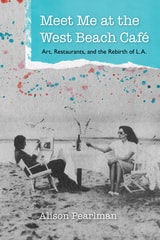
Meet Me at the West Beach Café
Art, Restaurants, and the Rebirth of L.A.Alison Pearlman
University of Nevada Press, 2027
When fine dining met fine art, a new Los Angeles was born.
Between 1979 and 1987, the city witnessed two cultural breakthroughs that may seem unrelated. A wave of bold, design‑forward restaurants helped launch the nationwide “New American” movement, serving innovative cuisine in sleek, modern spaces adorned with contemporary art. At the same time, Los Angeles celebrated a milestone: the opening of the Museum of Contemporary Art (MOCA), its first major museum devoted solely to contemporary art—an institution long missing from a city with global ambitions.
Though often told separately, these stories are deeply intertwined. In this lively, revelatory book, Alison Pearlman uncovers how restaurants became galleries as well as vital crossroads for the chefs, artists, collectors, architects, and civic leaders who reshaped L.A.’s cultural identity. Together, they revived hopes that L.A. could reclaim the creative energy of its 1960s heyday and join the ranks of the world’s cultural capitals.
Drawing on extensive interviews with those who built this transformative era, Pearlman shows how L.A.—through distinctive architecture, daring personalities, and unconventional collaborations—created a cultural moment with national impact. Vivid, engaging, and richly researched, this book brings to life a heady period in the city’s history.
A must‑read for lovers of art, food, and the vibrant alchemy that emerges when creative worlds collide.
Mehinaku
The Drama of Daily Life in a Brazilian Indian VillageThomas Gregor
University of Chicago Press, 1980

Memoirs of an Early Arab Feminist
The Life and Activism of Anbara Salam KhalidiAnbara Salam Khalidi
Pluto Press, 2013
Memoirs of an Early Arab Feminist is the first English translation of the memoirs of Anbara Salam Khalidi, the iconic Arab feminist. At a time when women are playing a leading role in the Arab Spring, this book brings to life an earlier period of social turmoil and women's activism through one remarkable life.
Anbara Salam was born in 1897 to a notable Sunni Muslim family of Beirut. She grew up in 'Greater Syria', in which unhindered travel between Beirut, Jerusalem and Damascus was possible, and wrote a series of newspaper articles calling on women to fight for their rights within the Ottoman Empire. In 1927 she caused a public scandal by removing her veil during a lecture at the American University of Beirut.
Later she translated Homer and Virgil into Arabic and fled from Jerusalem to Beirut following the establishment of Israel in 1948. She died in Beirut in 1986. These memoirs have long been acclaimed by Middle East historians as an essential resource for the social history of Beirut and the larger Arab world in the 19th and 20th centuries.
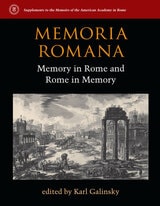
Memoria Romana
Memory in Rome and Rome in Memoryedited by Karl Galinsky
University of Michigan Press, 2014
Concern with memory permeated Roman literature, history, rhetorical training, and art and architecture. This is the first book to look at the phenomenon from a variety of perspectives, including cognitive science. There is no orthodoxy in memory studies and the approaches are both empirical and theoretical. A central issue is: who and what preserved and shaped cultural memory in Rome, and how did that process work? Areas and subjects covered include the Romans' view of the changing physical fabric of the city, monuments (by etymology related to memory) such as the Arch of Constantine, memory and the Roman triumph, Roman copies of Greek sculpture and their relation to memory, the importance of written information and of continuing process, the creation of memory in Republican memoirs and Flavian poetry, the invention of traditions, and the connection of cultural and digital memory.
The ten chapters present original findings that complement earlier scholarship from the perspective of memory and open up new horizons for inquiry. The introduction by volume editor Karl Galinsky situates the work within current studies on cultural and social memory, and the concluding chapter by Daniel Libeskind provides the perspective of a contemporary practitioner.
Additional contributors include Richard Jenkyns, Harriet I. Flower, T. P. Wiseman, Karl-J. Hölkeskamp, Gianpiero Rosati, Diane Favro, Jessica Hughes, Anna Anguissola, Lisa Marie Mignone, and Bernard Frischer.
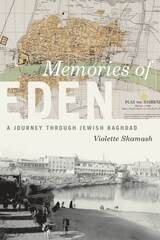
Memories of Eden
A Journey Through Jewish BaghdadViolette Shamash
Northwestern University Press, 2010
According to legend, the Garden of Eden was located in Iraq, and for millennia, Jews resided peacefully in metropolitan Baghdad. Memories of Eden: A Journey Through Jewish Baghdad reconstructs the last years of the oldest Jewish Diaspora community in the world through the recollections of Violette Shamash, a Jewish woman who was born in Baghdad in 1912, sent to her daughter Mira Rocca and son-in-law, the British journalist Tony Rocca. The result is a deeply textured memoir—an intimate portrait of an individual life, yet revealing of the complex dynamics of the Middle East in the twentieth century.
Toward the end of her long life, Violette Shamash began writing letters, notes, and essays and sending them to the Roccas. The resulting book begins near the end of Ottoman rule and runs through the British Mandate, the emergence of an independent Iraq, and the start of dictatorial government. Shamash clearly loved the world in which she grew up but is altogether honest in her depiction of the transformation of attitudes toward Baghdad’s Jewish population. Shamash’s world is finally shattered by the Farhud, the name given to the massacre of hundreds of Iraqi Jews over three days in 1941. An event that has received very slight historical coverage, the Farhud is further described and placed in context in a concluding essay by Tony Rocca.
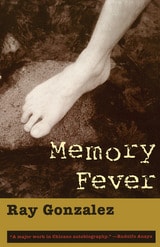
Memory Fever
Ray Gonzalez
University of Arizona Press, 1999
Through 29 storylike essays, Gonzalez takes readers into the heart of the desert and the soul of a developing poet. He introduces us to the people who shaped his life. We learn of his father's difficulties with running a pool hall and of his grandmother's steadfast religious faith. We meet sinister Texas Rangers, hallucinatory poets, illegal aliens, and racist high school jocks. His vivid recollections embrace lizard hunts and rattlesnake dreams, rock music and menudo making—all in stories that convey the pains and joys of growing up on the border. As Gonzalez leads us through his desert of hope and vision, we come to recognize the humor and sadness that permeate this special place.
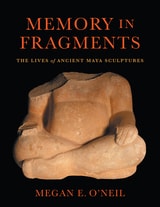
Memory in Fragments
The Lives of Ancient Maya SculpturesMegan E. O'Neil
University of Texas Press, 2024
An exploration of how the ancient Maya engaged with their history by using, altering, and burying stone sculptures.
For the ancient Maya, monumental stone sculptures were infused with agency. As they were used, reused, altered, and buried, such sculptures retained ceremonial meaning. In Memory in Fragments, Megan E. O'Neil explores how ancient Maya people engaged with history through these sculptures, as well as how they interacted with the stones themselves over the course of the sculptures’ long “lives.” Considering Maya religious practices, historiography, and conceptions of materials and things, O’Neil explores how Maya viewers perceived sculptures that were fragmented, scarred, burned, damaged by enemies, or set in unusual locations. In each case, she demonstrates how different human interactions, amid dynamic religious, political, and historical contexts, led to new episodes in the sculptures' lives.
A rare example of cross-temporal and geographical work in this field, Memory in Fragments both compares sculptures within ancient Maya culture across Honduras, Guatemala, Mexico, and Belize over hundreds of years and reveals how memory may accrue around and be evoked in material remains.
Memory, Oblivion, and Jewish Culture in Latin America
Edited by Marjorie Agosín
University of Texas Press, 2005
Latin America has been a refuge for Jews fleeing persecution from 1492, when Sepharad Jews were expelled from Spain, until well into the twentieth century, when European Jews sought sanctuary there from the horrors of the Nazi Holocaust. Vibrant Jewish communities have deep roots in countries such as Argentina, Mexico, Guatemala, and Chile—though members of these communities have at times experienced the pain of being "the other," ostracized by Christian society and even tortured by military governments. While commonalities of religion and culture link these communities across time and national boundaries, the Jewish experience in Latin America is irreducible to a single perspective. Only a multitude of voices can express it.
This anthology gathers fifteen essays by historians, creative writers, artists, literary scholars, anthropologists, and social scientists who collectively tell the story of Jewish life in Latin America. Some of the pieces are personal tales of exile and survival; some explore Jewish humor and its role in amalgamating histories of past and present; and others look at serious episodes of political persecution and military dictatorship. As a whole, these challenging essays ask what Jewish identity is in Latin America and how it changes throughout history. They leave us to ponder the tantalizing question: Does being Jewish in the Americas speak to a transitory history or a more permanent one?
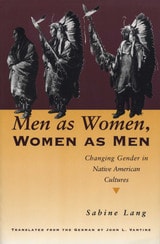
Men as Women, Women as Men
Changing Gender in Native American CulturesBy Sabine Lang
University of Texas Press, 1998
As contemporary Native and non-Native Americans explore various forms of "gender bending" and gay and lesbian identities, interest has grown in "berdaches," the womanly men and manly women who existed in many Native American tribal cultures. Yet attempts to find current role models in these historical figures sometimes distort and oversimplify the historical realities.
This book provides an objective, comprehensive study of Native American women-men and men-women across many tribal cultures and an extended time span. Sabine Lang explores such topics as their religious and secular roles; the relation of the roles of women-men and men-women to the roles of women and men in their respective societies; the ways in which gender-role change was carried out, legitimized, and explained in Native American cultures; the widely differing attitudes toward women-men and men-women in tribal cultures; and the role of these figures in Native mythology. Lang's findings challenge the apparent gender equality of the "berdache" institution, as well as the supposed universality of concepts such as homosexuality.