Results by title
18284 books match the query 'United States' and 949 start with m
Mexican-Origin People in the United States
A Topical HistoryOscar J. Martínez
University of Arizona Press, 2001
Focusing on social, economic, and political change during the twentieth century—particularly in the American West—Martínez provides a survey of long-term trends among Mexican Americans and shows that many of the difficult conditions they have experienced have changed decidedly for the better. Organized thematically, the book addresses population dynamics, immigration, interaction with the mainstream, assimilation into the labor force, and growth of the Mexican American middle class. Martínez then examines the various forms by which people of Mexican descent have expressed themselves politically: becoming involved in community organizations, participating as voters, and standing for elective office. Finally he summarizes salient historical points and offers reflections on issues of future significance. Where appropriate, he considers the unique circumstances that distinguish the experiences of Mexican Americans from those of other ethnic groups.
By the year 2000, significant numbers of people of Mexican origin had penetrated the middle class and had achieved unprecedented levels of power and influence in American society; at the same time, many problems remain unsolved, and the masses face new challenges created by the increasingly globalized U.S. economy. This concise overview of Mexican-origin people puts these successes and challenges in perspective and defines their contribution to the shaping of modern America.

Mexicans and Mexican Americans in Michigan
Rudolph V. Alvarado
Michigan State University Press, 2003
Unlike most of their immigrant counterparts, up until the turn of the twentieth century most Mexicans and Mexican Americans did not settle permanently in Michigan but were seasonal laborers, returning to homes in the southwestern United States or Mexico in the winter. Nevertheless, during the past century the number of Mexicans and Mexican Americans settling in Michigan has increased dramatically, and today Michigan is undergoing its third “great wave” of Mexican immigration. Though many Mexican and Mexican American immigrants still come to Michigan seeking work on farms, many others now come seeking work in manufacturing and construction, college educations, opportunities to start businesses, and to join family members already established in the state. In Mexicans and Mexican Americans in Michigan, Rudolph Valier Alvarado and Sonya Yvette Alvarado examine the settlement trends and growth of this population, as well as the cultural and social impact that the state and these immigrants have had on one another. The story of Mexicans and Mexican Americans in Michigan is one of a steadily increasing presence and influence that well illustrates how peoples and places combine to create traditions and institutions.

Mexicans in California
Transformations and ChallengesEdited by Ramon A. Gutierrez and Patricia Zavella
University of Illinois Press, 2008

Mexicans in Wisconsin
Sergio González
Wisconsin Historical Society Press, 2017
From agricultural and factory workers to renowned writers and musicians, the Mexican immigrants who have made their homes in Wisconsin over the past century have become a significant and diverse part of this state’s cultural and economic history. Coming from a variety of educational and professional backgrounds, the earliest Mexican immigrants traveled north in search of better economic opportunities and relief from the violence and economic turmoil of the Mexican Revolution. They found work in tanneries and foundries, and on beet farms where they replaced earlier European immigrant workers who had moved on to family farms. As Mexican immigration has grown to the present day, these families have become integral members of Wisconsin communities, building businesses, support systems, and religious institutions. But their experience has also been riddled with challenges, as they have fought for adequate working conditions, access to education, and acceptance amid widespread prejudice. In this concise history, learn the fascinating stories of this vibrant and resilient immigrant population: from the Tejano migrant workers who traveled north seasonally to work in the state’s cucumber fields, to the determined labor movement led by Jesus Salas, to the young activists of the Chicano Movement, and beyond.
Mexicans in the Midwest, 1900-1932
Juan R. García
University of Arizona Press, 1996
Here is a book that persuasively challenges many prevailing assumptions about Mexican people and the communities they established in the Midwest. The author notes the commonalities and differences between Mexicans in that region and their compadres who settled elsewhere. He further demonstrates that although Mexicans in the Midwest maintained a strong sense of cultural identity, they were quick to adopt the consumer culture and other elements of U.S. life that met their needs.
Focusing on a people, place, and time rarely covered before now, this wide-ranging work will be welcomed by scholars and students of history, sociology, and Chicano studies. General readers interested in ethnic issues and the multicultural fabric of American society will find here a window to the past as well as new perspectives for understanding the present and the future.

Mexico Mystique
The Coming Sixth World of ConsciousnessFrank Waters
Ohio University Press, 1989
In Mexico Mystique Frank Waters draws us deeply into the ancient but still-living myths of Mexico. To reveal their hidden meanings and their powerful symbolism, he brings to bear his gift for intuitive imagination as well as a broad knowledge of anthropology, Jungian psychology, astrology, and Eastern and esoteric religions. He offers a startling interpretation of the Mayan Great Cycle — our present Fifth World — whose beginning has been projected to 3113 B.C., and whose cataclysmic end has been predicted by 2011 A.D.
Mexico Reading the United States
Linda Egan
Vanderbilt University Press, 2009
In a time of ever-increasing migration of capital and human beings, this book turns on its head the usual perspective of U.S. economic and cultural dominance in order to deepen understanding of the bi-national relationship.
Mexico and Mexicans in the Making of the United States
Edited by John Tutino
University of Texas Press, 2012
Mexico and Mexicans have been involved in every aspect of making the United States from colonial times until the present. Yet our shared history is a largely untold story, eclipsed by headlines about illegal immigration and the drug war. Placing Mexicans and Mexico in the center of American history, this volume elucidates how economic, social, and cultural legacies grounded in colonial New Spain shaped both Mexico and the United States, as well as how Mexican Americans have constructively participated in North American ways of production, politics, social relations, and cultural understandings.
Combining historical, sociological, and cultural perspectives, the contributors to this volume explore the following topics: the Hispanic foundations of North American capitalism; indigenous peoples’ actions and adaptations to living between Mexico and the United States; U.S. literary constructions of a Mexican “other” during the U.S.-Mexican War and the Civil War; the Mexican cotton trade, which helped sustain the Confederacy during the Civil War; the transformation of the Arizona borderlands from a multiethnic Mexican frontier into an industrializing place of “whites” and “Mexicans”; the early-twentieth-century roles of indigenous Mexicans in organizing to demand rights for all workers; the rise of Mexican Americans to claim middle-class lives during and after World War II; and the persistence of a Mexican tradition of racial/ethnic mixing—mestizaje—as an alternative to the racial polarities so long at the center of American life.

Mexico and the United States in the Oil Controversy, 1917–1942
By Lorenzo Meyer; translated by Muriel Vasconcellos
University of Texas Press, 1977
From reviews of the Spanish edition:
“Meyer’s perceptive commentary on Mexican power politics presents new insights into the petroleum lobbies in Mexico City and Washington. With unbiased empathy he shows the validity of Mexico’s complaints about foreigners’ deriving an overabundance of profit from a nonrenewable natural resource. He understands United States history and never abuses his license to criticize.” —Hispanic American Historical Review
“This useful addition to the literature on twentieth-century Mexican–United States diplomatic relations is a scholarly work, worthy of consideration by all students of the subject.”—American Historical Review
Mexico and the United States in the Oil Controversy, 1917–1942 explores the relationship between the United States and Mexico during the first half of the twentieth century, with special attention to the Mexican nationalization of the oil industry. Relying on Mexican archival material never before analyzed, the author presents a unique perspective on the period following the Mexican Revolution and Mexico’s efforts to diminish its economic dependency on the United States. This work not only describes the political and economic struggle between the Mexican government and the U.S. oil companies but also serves to illustrate in general the nature of dependency between Latin American countries and the United States. It will be of interest not only to Mexican specialists but also to diplomatic and economic historians.
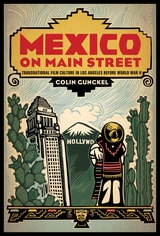
Mexico on Main Street
Transnational Film Culture in Los Angeles before World War IIGunckel, Colin
Rutgers University Press, 2015
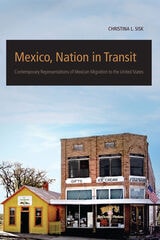
Mexico, Nation in Transit
Contemporary Representations of Mexican Migration to the United StatesChristina L. Sisk
University of Arizona Press, 2011
Sisk’s transnational investigation moves easily across the US–Mexico border, analyzing films made on both sides, literature de la frontera, Mexican rock music, migrant narratives, and texts written by second- and third-generation immigrants. Included are the perspectives of those who left Mexico, those who were left behind, and the children who travel back “home.” Sisk discovers that the loss of Mexicans to the United States through emigration has had an effect on Mexico similar to the impact of the perceived Mexican invasion of the United States.
Spanning the social sciences and the humanities, Mexico, Nation in Transit poses a new transnational alternative to the postnational view that geopolitical borders are being erased by the forces of migration and globalization, and the nationalist view that borders must be strictly enforced. It shows that borders, like identities, are not easy to locate precisely.

Mice in the Freezer, Owls on the Porch
The Lives of Naturalists Frederick and Francis HamerstromHelen M. Corneli
University of Wisconsin Press, 2006
Mice in the Freezer, Owls on the Porch is in many ways a love story—about a quiet scientist and his flamboyant wife, but also about their passions for hunting, for wild lands, and for the grouse and raptor species that they were instrumental in saving from destruction.
From the papers and letters of Frederick and Frances Hamerstrom, the reminiscences of contemporaries, and her own long friendship with this extraordinary couple who were her neighbors, Helen Corneli draws an intimate picture of Fran and "Hammy" from childhood through the genesis and maturation of a romantic, creative, and scientific relationship. Following the Hamerstroms as they give up a life of sophisticated convention and comfort for the more "civilized" (as Aldo Leopold would have it) pleasures of living and conducting on-the-spot research into diminishing species, Corneli captures the spirit of the Hamerstroms, their profession, and the natural and human environments in which they worked. A nuanced account of the labors, adventures, and achievements that distinguished the Hamerstroms over the years—and that inspired a generation of naturalists—this book also provides a dramatic account of conservation history over the course of the twentieth century, particularly in Wisconsin during the eventful years from the 1920s through the 1970s.
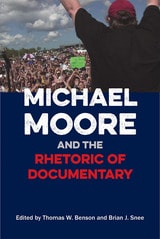
Michael Moore and the Rhetoric of Documentary
Edited by Thomas W. Benson and Brian J. Snee
Southern Illinois University Press, 2015
Not afraid to tackle provocative topics in American culture, from gun violence and labor policies to terrorism and health care, Michael Moore has earned both applause and invective in his career as a documentarian. In such polarizing films as Bowling for Columbine, Fahrenheit 9/11, and Sicko, Moore has established a unique voice of radical nostalgia for progressivism, and in doing so has become one of the most recognized documentary filmmakers of all time.
In the first in-depth study of Moore’s feature-length documentary films, editors Thomas W. Benson and Brian J. Snee have gathered leading rhetoric scholars to examine the production, rhetorical appeals, and audience reception of these films. Contributors critique the films primarily as modes of public argument and political art. Each essay is devoted to one of Moore’s films and traces in detail how each film invites specific audience responses.
Michael Moore and the Rhetoric of Documentary reveals not only the art, the argument, and the emotional appeals of Moore’s documentaries but also how these films have revolutionized the genre of documentary filmmaking.
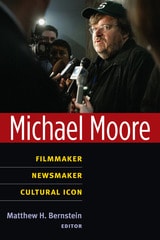
Michael Moore
Filmmaker, Newsmaker, Cultural IconMatthew Bernstein, Editor
University of Michigan Press, 2010
For more than twenty years, Michael Moore has transformed himself from a marginal filmmaker into a cultural icon, unofficial spokesperson for liberals and the Left. American conservatives constantly use him for target practice and target. Book author, film director, television personality, and Web presence, Moore is now a one-man cultural phenomenon. Although Michael Moore is a constant presence on the media landscape, this is the first volume to focus on the Moore phenomenom. It explores Moore's work in film and elsewhere, bringing diverse perspectives on his activities and status as voice of liberal America and the disenfranchised working class. Topics examined include the disjunction between Moore's celebrity status and everyman, middle-western persona, his self-mocking ironic sensibility, his tendency to diagnose American social and political problems in terms of class rather than gender, his reception abroad, and his uneasy relationship with the conventions of documentary filmmaking. The contributors are leading scholars and film critics, including Paul Arthur, Cary Elza, Jeffrey P. Jones, Douglas Kellner, Richard Kilborn, William Luhr, Charles Musser, Richard R. Ness, Miles Orvell, Richard Porton, Sergio Rizzo, Christopher Sharrett, Gaylyn Studlar, and David Teztlaff. The volume features both assessments of Moore's work in general and close analyses of his most successful films. The result is a definitive assessment of Moore's career to date.
Matthew Bernstein is Professor and Chair of Film Studies at Emory University. He is author of Walter Wanger: Hollywood Independent.
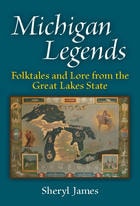
Michigan Legends
Folktales and Lore from the Great Lakes StateSheryl James
University of Michigan Press, 2013
Over the course of its history, the state of Michigan has produced its share of folktales and lore. Many are familiar with the Ojibwa legend of Sleeping Bear Dunes, and most have heard a yarn or two told of Michigan’s herculean lumberjack, Paul Bunyan.
But what about Detroit’s Nain Rouge, the red-eyed imp they say bedeviled the city’s earliest residents? Or Le Griffon, the Great Lakes’ original ghost ship that some believe haunts the waters to this day? Or the Bloodstoppers, Upper Peninsula folk who’ve been known to halt a wound’s bleeding with a simple touch thanks to their magic healing powers?
In Michigan Legends, Sheryl James collects these and more stories of the legendary people, events, and places from Michigan’s real and imaginary past. Set in a range of historical time periods and locales as well as featuring a collage of ethnic traditions—including Native American, French, English, African American, and Finnish—these tales are a vivid sample of the state’s rich cultural heritage. This book will appeal to all Michiganders and anyone else interested in good folktales, myths, legends, or lore.
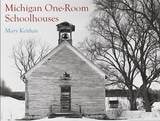
Michigan One-Room Schoolhouses
Mary Keithan
University of Michigan Press, 2008
Nostalgic reminders of a time now past, one-room schoolhouses are deeply embedded in our heritage. Decades after their original purpose and inhabitants have vanished, they dot the rural landscape in all conditions, from neglected and near collapse to handsomely renovated places repurposed into a new existence as living quarters. Today no matter their state they stand as miniature gems of nineteenth-century American history as well as charming examples of rural architecture---above all, things to be treasured and preserved. Mary Keithan's Michigan One-Room Schoolhouses is a beautifully illustrated chronicle that details nearly a hundred of the state's early schoolhouses. Together with information about each schoolhouse's architecture and history, including interviews with former students and teachers, Keithan's photographs bring these structures back to life and assure their place in history.
Mary Keithan is a professional photographer living in Ray, Michigan. Her previous books include Michigan's Heritage Barns and A Time in Michigan: A Photographic Series. New York Times critic Vicki Goldberg selected Keithan's 1995 image "Desert Storm Barn" for the Light Impression Biennial.

Michigan Railway Company
The Northern and Southern DivisionsNorman L. Krentel
Michigan State University Press, 2024
This also explores how electric railway history is intertwined with the state of Michigan. The interurban electric rail system supported automobile manufacturing, allowing for the shipment of parts supplies, and finished automobiles through Michigan, Indiana, Ohio, and Kentucky. Major auto plants like REO and Oldsmobile had rail sidetracks served by Michigan Railway’s interurban freight trains. Electric railway history is thus an essential, previously overlooked factor in Michigan’s industrial development.
Michigan State University
The Rise of a Research University and the New Millennium, 1970-2005Douglas A. Noverr
Michigan State University Press, 2015
Through the vicissitudes of government funding and other challenges, the university has established itself as a renowned research and educational institution with a remarkably rich array of facilities, scientists, and researchers who continue to make landmark contributions to their fields. At the same time it has strived to be known for its accessibility, diversity, equality of opportunity, and antidiscrimination policies and practices. Michigan State University sheds new light on the growth of this dynamic and multifaceted institution.
Michigan Supreme Court Historical Reference Guide, 2nd Edition
David Chardavoyne
Michigan State University Press, 2015
Michigan Visions of Our Past
Richard J. Hathaway
Michigan State University Press, 1989
Throughout the history of michigan, many problems occur and recur: satisfying a diverse population, economic booms and busts, business and labor conflicts, religion in public education, environmental concerns.
A number of writers collaborated to bring such themes to light in 18 illuminating essays. The collection provides a tool for the teacher, a sourse for the scholar, and a pleasurable trip through Michigan history. Michigan: Visions of Our Past, also provides a challenge; a challenge to citizens to understand the past, and apply its lessons to the future of Michigan.

Michigan's Capitol
Construction and RestorationWilliam Seale
University of Michigan Press, 1995
Michigan's Capitol: Construction and Restoration is the history of a great American landmark, one among fifty statehouses. Construction of Michigan's State Capitol began in 1871, six years after the close of the Civil War, and was brought to completion less than a decade later. It has survived for more than a century to become the object of one of America's most authentic restorations. This volume allows the reader to chronicle the building and restoration of Michigan's Capitol through words and magnificent color and black-and-white photographs. An archive of treasured historical images, beginning with a group scene at the time the cornerstone was placed, is also included alongside original architectural drawings and sketches.
Michigan's Capitol: Construction and Restoration is not only the history of a great vision realized, but a celebration of the rediscovery and revival of that vision in the 1980s and 1990s culminating in one of the most comprehensive restorations ever carried out on an American building. The author, William Seale, a part of the restoration team for Michigan's Capitol from the start, has written extensively about many American buildings, including the White House.
Written in a lively, narrative style accessible to readers of all ages, Michigan's Capitol: Construction and Restoration is an especially useful introduction to the art of building as well as the politics of public building.
Michigan's Company K
Anishinaabe Soldiers, Citizenship, and the Civil WarMichelle K Cassidy
Michigan State University Press, 2023
Michigan's Con-Con 11
Women and State Constitution-making in 1961Lynn Liberato
Michigan State University Press, 2025

Michigan's County Courthouses
John Fedynsky
University of Michigan Press, 2011
John Fedynsky documents in narrative and photos every county courthouse of Michigan's eighty-three counties, as well as the Michigan Hall of Justice. These buildings are symbols: physically they stand, but figuratively they speak. They embody the purposes for which they were created: law, order, justice, and the promise of a better tomorrow.
Fedynsky tells the story of each building. For Michigan, the typical evolution begins in the cabin, tavern, or hotel of a prominent local settler and progresses through incarnations of simple log or wooden clapboard, and then opulent stone or brick, before the structure arrives in modern and utilitarian form. But there are myriad exceptions to this rule, and they add to the diversity of Michigan's county courthouses.
In Fedynsky's descriptions, verifiable facts and local lore weave together in dramatic tales of outrageous crime, courtroom intrigue, backroom dealing, jury determination, and judicial prerogative. Released jail inmates assist with evacuating and extinguishing a courthouse fire, residents during a natural disaster seek and find physical refuge behind the sure walls of the courthouse, and vigilant legions of homebound defenders are stationed in wartime throughout the courthouse towers scanning the skies for signs of foreign aircraft.
Then there are the homey touches that emphasize the "house" half of Michigan's courthouses: local folks dropping off plants in the courthouse atrium to use it as a winter greenhouse, cows grazing on the public square, county fairs in or near the courthouse, and locally made artwork hanging in public hallways. The courthouses bear within their walls a richness of soul endowed by the good people who make each one special.
Cover design by Heidi Dailey
Cover photos: John Fedynsky

Michigan's State Forests
A Century of StewardshipWilliam B. Botti
Michigan State University Press, 2006
It has been said that Michigan’s nineteenth century white pine stands were the finest the world has ever seen. Dense, parklike stands, more than 150 feet tall, covered vast areas northward from the Bay City– Muskegon line. The sheer quantity of timber lured many adventurous entrepreneurs and enterprising farmers to Michigan. Lumber became a mainstay of Michigan’s economy as logging interests and railroad entrepreneurs became adept at harvesting, transporting, and processing pine logs. Many considered the pine to be practically limitless.
In October of 1871, the first indication of a troubled future occurred when Michigan settlers experienced fires unlike any they had ever seen. Following two months of serious drought, and fed by hundreds of small fires set by land-clearing operations, much of northern Lower Michigan erupted in flames; dry winds fanned the many small fires into one unbelievable conflagration that swept entirely across the Lower Peninsula, from Lake Michigan to Lake Huron. Many towns were reduced to ashes, among them Holland, Glen Haven, Huron City, Sand Beach, White Rock, and Forestville. Navigation was interrupted on Lake Huron and as far downriver as Detroit because of the heavy smoke. More than 200 people lost their lives.
Michigan’s State Forests recounts how an abandoned, cutover, and often burned wilderness has been converted once again into highly productive and protected public lands. For more than 100 years, these lands have been preserved, managed and developed to form one of Michigan’s great assets, not only for economic development but also as enhancements to our quality of life.

Michigan's Town and Country Inns, 5th Edition
Susan Newhof
University of Michigan Press, 2013
The fifth edition of Michigan’s Town & Country Inns is a guide to more than 50 inns, bed-and-breakfast homes, and historic lodgings in the Upper and Lower Peninsulas of Michigan.
Choose from lighthouses anchored to the rugged shores of Lake Superior, Victorian mansions built by lumber and mining barons, rustic log lodges, and romantic small town hideaways. Meet the innkeepers themselves, who range from retired military officers and corporate heads to artists and poets. You’ll find detailed descriptions of the accommodations along with information about rates, suitability for children, and policies on smoking and pets. Get a sense of the flavor and mood of each and learn about fun things to do in the surrounding areas. Numerous photos enhance the descriptions and provide a visitor’s-eye view of some of the most unusual and delightful places to stay in Michigan.
Michigan
A History of Explorers, Entrepreneurs, and Everyday PeopleRoger L. Rosentreter
University of Michigan Press, 2013
The history of Michigan is a fascinating story of breathtaking geography enriched by an abundant water supply, of bold fur traders and missionaries who developed settlements that grew into major cities, of ingenious entrepreneurs who established thriving industries, and of celebrated cultural icons like the Motown sound. It is also the story of the exploitation of Native Americans, racial discord that resulted in a devastating riot, and ongoing tensions between employers and unions. Michigan: A History of Explorers, Entrepreneurs, and Everyday People recounts this colorful past and the significant role the state has played in shaping the United States. Well-researched and engagingly written, the book spans from Michigan’s geologic formation to important 21st-century developments in a concise but detailed chronicle that will appeal to general readers, scholars, and students interested in Michigan’s past, present, and future.
Michigan’s War
The Civil War in DocumentsJohn W. Quist
Ohio University Press, 2018
When it came to the Civil War, Michiganians never spoke with one voice. At the beginning of the conflict, family farms defined the southern Lower Peninsula, while a sparsely settled frontier characterized the state’s north. Although differing strategies for economic development initially divided Michigan’s settlers, by the 1850s Michiganians’ attention increasingly focused on slavery, race, and the future of the national union. They exchanged charges of treason and political opportunism while wrestling with the meanings of secession, the national union, emancipation, citizenship, race, and their changing economy. Their actions launched transformations in their communities, their state, and their nation in ways that Americans still struggle to understand.
Building upon the current scholarship of the Civil War, the Midwest, and Michigan’s role in the national experience, Michigan’s War is a documentary history of the Civil War era as told by the state’s residents and observers in private letters, reminiscences, newspapers, and other contemporary sources. Clear annotations and thoughtful editing allow teachers and students to delve into the political, social, and military context of the war, making it ideal for classroom use.
Mickey Mouse History and Other Essays on American Memory
Michael Wallace
Temple University Press, 1996

Mickey’s Harvest
A Novel of a Deaf Boy’s Checkered LifeHoward L. Terry
Gallaudet University Press, 2015
Mickey Dunmore’s story begins with the sinking of his father’s merchant sailing ship and ends with a cliffhanger in World War I. In school, after an illness caused his deafness, Mickey finds himself constantly fighting the hearing boys and later competing with the signing students when he attends a residential school for deaf students. In college, he and his best friend Dick Wagner leave early to travel the nation with the hobos, carnies, and grifters. In one town, they outfox a barker who was using a deaf girl to “read” the minds of their marks. Further on, they meet Bunny, the Mighty Mite deaf man who helps expose a hearing woman posing as deaf to scam sympathetic people. Mickey faces his greatest challenge when he falls in love with Marion Carrel, a deaf girl whose hearing father forbids their romance on eugenics grounds.
Terry, who became deaf at the age of 11, states from the outset that he means for his novel to reveal the biases confronting deaf people at the time. As a tonic, he populates Mickey’s Harvest with artistic, talented deaf individuals who engage readers in an earlier, colorful time as they “show their stuff.”

Microbial Resolution
Visualization and Security in the War against Emerging MicrobesGloria Chan-Sook Kim
University of Minnesota Press, 2024
An interdisciplinary study charting the war against microbial futures leads to a new theory of contemporary vision and visuality
In 1989, a group of U.S. government scientists met to discuss some surprising findings: new diseases were appearing around the world, and viruses that they thought long vanquished were resurfacing. Their appearance heralded a future perpetually threatened by unforeseeable biological risks, sparking a new concept of disease: the “emerging microbe.” With the Cold War nearing its end, American scientists and security experts turned to confront this new “enemy,” redirecting national security against its risky horizons. In order to be fought, emerging microbes first needed to be made perceptible; but how could something immaterial, unknowable, and ever mutating be coaxed into visibility, knowability, and operability?
Microbial Resolution charts the U.S.-led war on the emerging microbe to show how their uncertain futures were transformed into objects of global science and security. Moving beyond familiar accounts that link scientific knowledge production to optical practices of visualizing the invisible, Gloria Chan-Sook Kim develops a theory of “microbial resolution” to analyze the complex problematic that arises when dealing with these entities: what can be seen when there is nothing to see? Through a syncretic analysis of data mining, animal-tracking technologies, media networks, computer-modeled futures, and global ecologies and infrastructures, she shows how a visual impasse—the impossibility of seeing microbial futures—forms the basis for new modes of perceiving, knowing, and governing in the present.
Timely and thought provoking, Microbial Resolution opens up the rich paradoxes, irreconcilabilities, and failures inherent in this project and demonstrates how these tensions profoundly animate twenty-first-century epistemologies, aesthetics, affects, and ecologies.
Midcentury Modern Art in Texas
By Katie Robinson Edwards
University of Texas Press, 2014
Winner, Award of Merit for Non-Fiction, The Philosophical Society of Texas, 2015
Before Abstract Expressionism of New York City was canonized as American postwar modernism, the United States was filled with localized manifestations of modern art. One such place where considerable modernist activity occurred was Texas, where artists absorbed and interpreted the latest, most radical formal lessons from Mexico, the East Coast, and Europe, while still responding to the state’s dramatic history and geography. This barely known chapter in the story of American art is the focus of Midcentury Modern Art in Texas.
Presenting new research and artwork that has never before been published, Katie Robinson Edwards examines the contributions of many modernist painters and sculptors in Texas, with an emphasis on the era’s most abstract and compelling artists. Edwards looks first at the Dallas Nine and the 1936 Texas Centennial, which offered local artists a chance to take stock of who they were and where they stood within the national artistic setting. She then traces the modernist impulse through various manifestations, including the foundations of early Texas modernism in Houston; early practitioners of abstraction and non-objectivity; the Fort Worth Circle; artists at the University of Texas at Austin; Houston artists in the 1950s; sculpture in and around an influential Fort Worth studio; and, to see how some Texas artists fared on a national scale, the Museum of Modern Art’s “Americans” exhibitions.
The first full-length treatment of abstract art in Texas during this vital and canon-defining period, Midcentury Modern Art in Texas gives these artists their due place in American art, while also valuing the quality of Texan-ness that subtly undergirds much of their production.
Middle Class Union
Organizing the ‘Consuming Public’ in Post-World War I AmericaMark W. Robbins
University of Michigan Press, 2017
Combining social history with interdisciplinary approaches to the study of consumption and symbolic space, Middle Class Union illustrates how acts of consumption, representations of the middle class in literary, journalistic, and artistic discourses, and ground-level organizing combined to enable white-collar activists to establish themselves as both the middle class and the backbone of the nation. This book contributes to labor history by examining the nexus of class and consumption to show how many white-collar workers drew on their consumer identity to express an anti-labor politics, later facilitating the struggles of unions throughout the post–World War I years. It also contributes to political history by emphasizing how these middle-class activists laid important groundwork for both 1920s business conservatism and New Deal liberalism. They exerted their political influence well before the post–World War II period, when a self-interested and powerful middle-class consumer identity is more widely acknowledged to have taken hold.

Middle Mississippi Exploitation of Animal Populations
Bruce D. Smith
University of Michigan Press, 1975

Middlebrow Queer
Christopher Isherwood in AmericaJaime Harker
University of Minnesota Press, 2013
How could one write about gay life for the mainstream public in Cold War America? Many midcentury gay American writers, hampered by external and internal censors, never managed to do it. But Christopher Isherwood did, and what makes his accomplishment more remarkable is that while he was negotiating his identity as a gay writer, he was reinventing himself as an American one. Jaime Harker shows that Isherwood refashioned himself as an American writer following his emigration from England by immersing himself in the gay reading, writing, and publishing communities in Cold War America.
Drawing extensively on Isherwood’s archives, including manuscript drafts and unpublished correspondence with readers, publishers, and other writers, Middlebrow Queer demonstrates how Isherwood mainstreamed gay content for heterosexual readers in his postwar novels while also covertly writing for gay audiences and encouraging a symbiotic relationship between writer and reader. The result—in such novels as The World in the Evening, Down There on a Visit, A Single Man, and A Meeting by the River—was a complex, layered form of writing that Harker calls “middlebrow camp,” a mode that extended the boundaries of both gay and middlebrow fiction.
Weaving together biography, history, and literary criticism, Middlebrow Queer traces the continuous evolution of Isherwood’s simultaneously queer and American postwar authorial identity. In doing so, the book illuminates many aspects of Cold War America’s gay print cultures, from gay protest novels to “out” pulp fiction.
Middletown families
fifty years of change and continuityTheodore. Caplow
University of Minnesota Press, 1982
Midlife Crisis
The Feminist Origins of a Chauvinist ClichéSusanne Schmidt
University of Chicago Press, 2020
The first book-length history of this controversial concept, Susanne Schmidt’s Midlife Crisis recounts the surprising origin story of the midlife debate and traces its movement from popular culture into academia. Schmidt’s engaging narrative telling of the feminist construction—and ensuing antifeminist backlash—of the midlife crisis illuminates a lost legacy of feminist thought, shedding important new light on the history of gender and American social science in the 1970s and beyond.

Midnight Assassin
A Murder in America's HeartlandPatricia L. Bryan
University of Iowa Press, 2007
On the night of December 1,1900, Iowa farmer John Hossack was attacked and killed while he slept at home beside his wife, Margaret. On April 11, 1901, after five days of testimony before an all-male jury, Margaret Hossack was found guilty of his murder and sentenced to life in prison. One year later, she was released on bail to await a retrial; jurors at this second trial could not reach a decision, and she was freed. She died August 25, 1916, leaving the mystery of her husband's death unsolved.
The Hossack tragedy is a compelling one and the issues surrounding their domestic problems are still relevant today, Margaret's composure and stoicism, developed during years of spousal abuse, were seen as evidence of unfeminine behavior, while John Hossack--known to be a cruel and dangerous man--was hailed as a respectable husband and father.
Midnight Assassin also introduces us to Susan Glaspell, a journalist who reported on the Hossack murder for the Des Moines Daily, who used these events as the basis for her classic short story, " A Jury of Her Peers", and the famous play Trifles.
Based on almost a decade of research, Midnight Assassin is a riveting story of loneliness, fear, and suffering in the rural Midwest.

Midnight Basketball
Race, Sports, and Neoliberal Social PolicyDouglas Hartmann
University of Chicago Press, 2016
Organized in the 1980s and ’90s by dozens of American cities, late-night basketball leagues were designed for social intervention, risk reduction, and crime prevention targeted at African American youth and young men. In Midnight Basketball, Hartmann traces the history of the program and the policy transformations of the period, while exploring the racial ideologies, cultural tensions, and institutional realities that shaped the entire field of sports-based social policy. Drawing on extensive fieldwork, the book also brings to life the actual, on-the-ground practices of midnight basketball programs and the young men that the programs intended to serve. In the process, Midnight Basketball offers a more grounded and nuanced understanding of the intricate ways sports, race, and risk intersect and interact in urban America.

Midnight at the Barrelhouse
The Johnny Otis StoryGeorge Lipsitz
University of Minnesota Press, 2010
Midwest Maize
How Corn Shaped the U.S. HeartlandCynthia Clampitt
University of Illinois Press, 2015

Midwestern Food
A Chef’s Guide to the Surprising History of a Great American Cuisine, with More Than 100 Tasty RecipesPaul Fehribach
University of Chicago Press, 2023
Celebrated chef Paul Fehribach has made his name serving up some of the most thoughtful and authentic regional southern cooking—not in the South, but in Chicago at Big Jones. But over the last several years, he has been looking to his Indiana roots in the kitchen, while digging deep into the archives to document and record the history and changing foodways of the Midwest.
Fehribach is as painstaking with his historical research as he is with his culinary execution. In Midwestern Food, he focuses not only on the past and present of Midwestern foodways but on the diverse cultural migrations from the Ohio River Valley north- and westward that have informed them. Drawing on a range of little-explored sources, he traces the influence of several heritages, especially German, and debunks many culinary myths along the way.
The book is also full of Fehribach’s delicious recipes informed by history and family alike, such as his grandfather's favorite watermelon rind pickles; sorghum-pecan sticky rolls; Detroit-style coney sauce; Duck and manoomin hotdish; pawpaw chiffon pie; strawberry pretzel gelatin salad (!); and he breaks the code to the most famous Midwestern pizza and BBQ styles you can easily reproduce at home. But it is more than just a cookbook, weaving together historical analysis and personal memoir with profiles of the chefs, purveyors, and farmers who make up the food networks of the region.
The result is a mouth-watering and surprising Midwestern feast from farm to plate. Flyover this!

Midwifery and Childbirth in America
Judith Rooks
Temple University Press, 1999
The author vividly describes the history of struggle among health care providers over the meaning and handling of the birth process. The medical model and the midwifery model continue to collide today, the former focusing on pathology and monitoring the patient for it, the latter focusing on birth as a normal, healthy process.
The education and professional training of those who care for women during pregnancy, childbirth, and the important postpartum period reflects these divisions. Obstetrics, family physicians, midwives, nurses, and others play roles in providing the necessary care. In focusing on midwives, Rooks deals fairly and sensitively between certified nurse-midwives and direct-entry midwives, most of whom lack formal educational preparation in midwifery.
This book describes clearly and with documented scientific evidence the specific benefits of the midwifery approach to the care of pregnant women and their families. In clear language accessible to the lay reader, Rooks summarizes the research on the unintended effects of obstetrical interventions, such as episiotomies, epidurals, C-sections, and continuous electronic fetal heart monitoring, and the effectiveness and important benefits of an approach that focuses on the positive potential of childbearing, as contrasted with a narrow focus of potential for pathology. While she acknowledges the importance of access to medical care, extensive research shows the advantages of the midwifery approach. Much that passes for "routine" obstetric care in the United States has been found to be unnecessary, ineffective, or even harmful when applied to women with normal pregnancies.
The arguments over the control of childbirth are set in the context of recent changes in health care, including the current transition to managed care; the impact of the women's movement and movements for natural childbirth, home birth, and breastfeeding; and women's fear of and concern about the pain associated with labor. Rooks also explains the influence of the reports and recommendations of prestigious scientific and health-policy commissions and of federal initiatives and programs on the care provided to pregnant women in this country. She contrasts U.S. practices with those of comparable industrialized countries like the European states, Canada, Australia, New Zealand, and Japan.
Mier Expedition Diary
A Texan Prisoner's AccountJoseph D. McCutchan
University of Texas Press, 1979
Few episodes in Texas history have excited more popular interest than the Mier Expedition of 1842. Nineteen-year-old Joseph D. McCutchan was among the 300 Texans who, without the cover of the Lone Star flag, launched their own disastrous invasion across the Rio Grande.
McCutchan's diary provides a vivid account of his experience—the Texans' quick dispatch by Mexican troops at the town of Mier, the hardships of a forced march to Mexico City, over twenty months of imprisonment, and the journey back home after release. Although there are other firsthand accounts of the Mier Expedition, McCutchan was the only diarist who followed the Tampico route to Mexico City. His account documents a different experience than that of the main body of prisoners who marched to the national capital by way of Monterrey, Saltillo, and Agua Nueva.
Among the last of the prisoners to be freed, McCutchan covers in his journal the whole period of confinement from December 26, 1842, to the final release on September 16, 1844.
The McCutchan diary is set apart from other Mier accounts not only by the new information it provides, but also by Joseph Milton Nance's superb editing. Nance is an acknowledged authority on the hostilities between Texas and Mexico during the era of the Texas Republic. He has transcribed, edited, and annotated the diary with characteristic scholarship and painstaking attention to detail.

Mies van der Rohe
A Critical BiographyFranz Schulze
University of Chicago Press, 1985
“Franz Schulze’s 1985 biography of Ludwig Mies van der Rohe has always been acknowledged as the most comprehensive and thoughtful biography of one of the key figures in twentieth-century architecture. This revised edition with significant new scholarship by its two authors will undoubtedly come to occupy the same position.”—Dietrich Neumann, Brown University

Mighty by Sacrifice
The Destruction of an American Bomber Squadron, August 29, 1944James L. Noles Sr. and James L. Noles Jr.
University of Alabama Press, 2009
On August 29, 1944, the 15th U.S. Army Air Force unleashed 500 bombers against oil and rail targets throughout central Europe. It dispatched the 20th Squadron of the 2nd Bombardment Group on what they regarded as an easy assignment: attack the Privoser Oil Refinery and associated railroad yards at Moravska Ostrava, Czechoslovakia. This "milk run" deteriorated into the bloodiest day in the 2nd Bombardment Group's history: not a single one of the 20th Squadron's B-17 Flying Fortress bombers returned from the mission. Forty airmen were killed, another 46 spent the rest of the war as POWs, and only four, with the aid of the OSS and anti-German partisans, and sympathetic Czech civilians managed to evade capture.
The ninety airmen on the mission to Moravska Ostrava provide a remarkable personal window into the Allies' Combined Bomber Offensive at its height during WWII. In a microcosm, their stories encapsulate how the U.S. Army Air Forces built, trained, and employed one of the mightiest war machines ever seen. Their stories also illustrate, however, the terrible cost in lives demanded by that same machine.
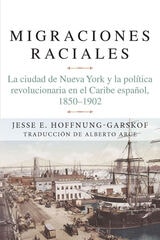
Migraciones raciales
La ciudad de Nueva York y la política revolucionaria en el Caribe hispánicoJesse Hoffnung-Garskof
Michigan Publishing Services, 2019
A fines del siglo XIX, un grupo pequeño de cubanos y puertorriqueños de ascendencia africana se instaló en las viviendas segregadas de la ciudad de Nueva York. En una sociedad de instrucción y recreo que fundaron en Greenwich Village, estos primeros neoyorquinos afrolatinos aprendieron a ser poetas, periodistas y revolucionarios. Al mismo tiempo, estos individuos—liderados por Rafael Serra, tabaquero, escritor y político; Sotero Figueroa, tipógrafo y editor; y Gertrudis Heredia, una de las primeras mujeres afrodescendientes que estudió en la Clínica de Partos de la Universidad de La Habana--construyeron una red política y articularon un ideal de nacionalismo revolucionario centrado en los proyectos de justicia racial y social. Sus esfuerzos tuvieron una profunda influencia en los escritos del poeta y diplomático José Martí sobre raza y en su apuesta por el liderazgo entre los exiliados cubanos. Desde Nueva York, este grupo también luchó en años posteriores por crear espacios para la participación política negra en la República de Cuba.
En Migraciones raciales, Jesse Hoffnung-Garskof presenta un vívido retrato de estos migrantes revolucionarios quienes habían sido, en gran parte, olvidados, entretejiendo sus experiencias de “migrar siendo negros,” sus relaciones con líderes afro-americanos en la lucha por la igualdad racial en Estados Unidos, y su participación en el desarrollo de los movimientos políticos nacionalistas antillanos. Destacando el papel fundamental de los neoyorquinos afrolatinos en la historia de la política revolucionaria del caribe hispánico, Hoffnung-Garskof ofrece una nueva interpretación del movimiento separatista y de su idea de que Cuba podría convertirse en una nación sin divisiones raciales.
Un modelo de investigación transnacional y comparativa, Migraciones raciales revela las complejidades de las formaciones raciales dentro de las comunidades migrantes y el poder de pequeños grupos de inmigrantes para transformar sus sociedades de origen.

Migrant Deaths in the Arizona Desert
La vida no vale nadaEdited by Raquel Rubio-Goldsmith, Celestino Fernández, Jessie K. Finch, and Araceli Masterson-Algar
University of Arizona Press, 2016
Migrant Deaths in the Arizona Desert addresses the tragic results of government policies on immigration. The contributors consist of a multidisciplinary group who are dedicated to the thousands of men, women, and children who have lost their lives while crossing the desert in search of a better life. Each chapter in this important new volume seeks answers to migrant deaths, speaking to the complexity of this tragedy via a range of community and scholarly approaches.
The activists, artists, and scholars included in this volume confront migrant deaths and disappearances in the U.S.-Mexico borderlands as they reflect on the startling realities of death, migration, and public policy. Chapters touch on immigration and how it is studied, community responses to crisis, government policy, definitions of citizenship, and the role of the arts and human expression in response to state violence. Collectively the contributions throw a spotlight on the multivocal, transdisciplinary efforts to address the historical silence surrounding this human tragedy.
Despite numerous changes in the migration processes and growing attention to the problem, many people who attempt border crossings continue to disappear and die. This book offers a timely exploration of the ways that residents, scholars, activists, and artists are responding to this humanitarian crisis on their doorstep.
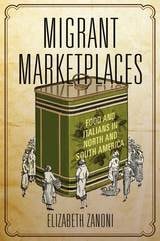
Migrant Marketplaces
Food and Italians in North and South AmericaElizabeth Zanoni
University of Illinois Press, 2018
Elizabeth Zanoni provides a cutting-edge comparative look at Italian people and products on the move between 1880 and 1940. Concentrating on foodstuffs—a trade dominated by Italian entrepreneurs in New York and Buenos Aires—Zanoni reveals how consumption of these increasingly global imports affected consumer habits and identities and sparked changing and competing connections between gender, nationality, and ethnicity. Women in particular—by tradition tasked with buying and preparing food—had complex interactions that influenced both global trade and their community economies. Zanoni conveys the complicated and often fraught values and meanings that surrounded food, meals, and shopping.
A groundbreaking interdisciplinary study, Migrant Marketplaces offers a new perspective on the linkages between migration and trade that helped define globalization in the late nineteenth and early twentieth centuries.

Migrant Psalms
PoemsDarrel Alejandro Holnes
Northwestern University Press, 2021
Migrant Psalms gives us a rare look inside a Panamanian experience of migration, describing the harsh realities of mothers, children, and teens who entered the United States—or tried to do so. Holnes’s poems find the universal through specificity; their exploration of expatriation, assimilation, and naturalization transcends the author’s personal experience to speak to what it means to be “other” anywhere.
The collection begins with “Kyrie,” a coming‑to‑America chronicle that spans three years in Texas, modeled after the liturgical Christian prayer Kyrie Eleison (Lord, have mercy). Other poems experiment with macaronic language and form to parallel shifts in the speaker’s status from immigrant to citizen, ending with “The 21st Century Poem,” which probes what’s “real” in today’s New York City. Through the speaker’s quest to become an American, this collection asks: Who are we becoming as individuals, as a society, as a nation, as a world? And is faith enough to enact change? Or is it just the first step?