Results by title
22279 books match the query 'Social Science' and 1258 start with m
Mexico Unveiled
Resisting Colonial Vices and Other ComplaintsCarlos Pereda; Translated by Noell Birondo with Andres Bonilla
Vanderbilt University Press, 2025
In three engaging essays written in a peerless prose style, Pereda considers the persistent influence of European colonialism on Mexican intellectual life, the politics of inclusion, and the changing ideas of what it means to be Mexican. He identifies three “vices”—social habits, customs, and beliefs inherited from European colonialism—that have influenced the development of Mexican national identity: subaltern fervor, craving for novelty, and nationalist zeal. Pereda demonstrates that these three tendencies have led Mexican intellectuals, and Mexican society more generally, to uncritically adopt a politics of exclusion and destructive nationalist attitudes.
Using a strategy he calls “nomadic” thinking—the act of moving beyond our cultural preconceptions and habits of thinking—Pereda guides readers through a number of examples drawn from Mexican philosophy and culture that illustrate these tendencies. At its core, Mexico Unveiled is an accessible and entertaining introduction to the philosophical themes that have long occupied Pereda’s life and work and Mexican philosophy more generally.
Mexico and Mexicans in the Making of the United States
Edited by John Tutino
University of Texas Press, 2012
Mexico and Mexicans have been involved in every aspect of making the United States from colonial times until the present. Yet our shared history is a largely untold story, eclipsed by headlines about illegal immigration and the drug war. Placing Mexicans and Mexico in the center of American history, this volume elucidates how economic, social, and cultural legacies grounded in colonial New Spain shaped both Mexico and the United States, as well as how Mexican Americans have constructively participated in North American ways of production, politics, social relations, and cultural understandings.
Combining historical, sociological, and cultural perspectives, the contributors to this volume explore the following topics: the Hispanic foundations of North American capitalism; indigenous peoples’ actions and adaptations to living between Mexico and the United States; U.S. literary constructions of a Mexican “other” during the U.S.-Mexican War and the Civil War; the Mexican cotton trade, which helped sustain the Confederacy during the Civil War; the transformation of the Arizona borderlands from a multiethnic Mexican frontier into an industrializing place of “whites” and “Mexicans”; the early-twentieth-century roles of indigenous Mexicans in organizing to demand rights for all workers; the rise of Mexican Americans to claim middle-class lives during and after World War II; and the persistence of a Mexican tradition of racial/ethnic mixing—mestizaje—as an alternative to the racial polarities so long at the center of American life.

Mexico in Space
From la Raza Cósmica to the Space RaceAnne W. Johnson
University of Arizona Press, 2026
From Aztec sun stones to satellite launches, from muralist visions to dark sky parks, Mexico’s engagement with outer space is fundamental to its identity. Mexico in Space offers a groundbreaking look at how the country has navigated the tensions between technological dependence and sovereign dreams.
Anthropologist Anne W. Johnson reveals Mexico’s unique relationship with outer space, describing Indigenous knowledge, nationalist projects, artistic visions, and community practices. Through rich ethnographic detail and historical insight, Johnson challenges the notion that space is for everyone and shows whose voices truly shape the world’s cosmic futures. Johnson introduces us to satellite engineers, community astronomers, space generation youth, and artists imagining Mars, each crafting alternative cosmic futures.
As space exploration increasingly becomes the domain of billionaires and superpowers, this book offers a compelling counternarrative, demonstrating how Mexican cosmic engagements suggest more just, inclusive ways of inhabiting Earth and beyond and providing vital lessons for reimagining humanity’s place in the cosmos.
Mexico on Main Street
Transnational Film Culture in Los Angeles before World War IIGunckel, Colin
Rutgers University Press, 2015

Mexico s New Cultural History
¿Una Lucha Libre?, Volume 79Susan Deans-Smith and Gilbert M. Joseph, eds.
Duke University Press, 0
All the contributors to this issue agree on the importance and relevance of a historical study of culture in its most inclusive sense. But there is much less consensus about the promise and potential of a "new cultural history" of Mexico and Latin America. While some of the contributors celebrate new interpretive and methodological advances, others express concern about the dangers of overinterpretation, untoward speculation, and the imposition of postmodernist concepts.
Contributors and topics covered include:
Susan Deans-Smith and Gilbert M. Joseph on the Arena of Dispute
Eric Van Young on the New Cultural History
William E. French on Cultural History of Nineteenth-Century Mexico
Mary Kay Vaughan on Cultural Approaches to Peasant Politics in the Mexican Revolution
Stephen Haber on Mexico’s "New" Cultural History
Florencia E. Mallon on Cycles of Revisionism
Susan Migden Socolow on Putting the "Cult" in Culture
Claudio Lomnitz on the Politics of the "New Cultural History of Mexico"
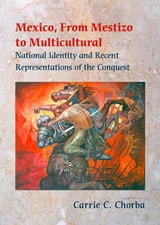
Mexico, From Mestizo to Multicultural
National Identity and Recent Representations of the ConquestCarrie C. Chorba
Vanderbilt University Press, 2006
Throughout the twentieth century, the post-revolutionary Mexican State had used mestizaje as a symbol of national unity and social integration. By the end of the millennium, however, Mexico had gone from a PRI-dominated, economically protectionist nation to a more democratic, economically globalizing one. More importantly, the homogenizing, mestizophile national identity that pervaded Mexico throughout the past century had given way to official admission of Mexico's ethnic and linguistic diversity--or 'pluriculture' according to President Salinas's 1992 constitutional revision.
This book is the first interdisciplinary study of literary, cinematic, and graphic images of Mexican national identity in the 1980s and '90s. Discussing, in depth, writings, films, and cartoons from a vast array of contemporary sources, Carrie C. Chorba creates a social history of this important shift.
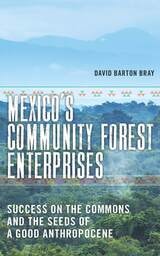
Mexico’s Community Forest Enterprises
Success on the Commons and the Seeds of a Good AnthropoceneDavid Barton Bray
University of Arizona Press, 2020
Mexico presents a unique case in which much of the nation’s forests were placed as commons in the hands of communities, who, with state support and their own entrepreneurial vigor, created community forest enterprises (CFEs). David Barton Bray, who has spent more than thirty years engaged with and researching Mexican community forestry, shows that this reform has transformed forest management in that country at a scale and level of maturity unmatched anywhere else in the world.
For decades Mexico has been conducting a de facto large-scale experiment in the design of a national social-ecological system (SES) focused on community forests. What happens when you give subsistence communities rights over forests, as well as training, organizational support, equipment, and financial capital? Do the communities destroy the forest in the name of economic development, or do they manage them sustainably, generating current income while maintaining intergenerational value as a resource for their children? Bray shares the scientific and social evidence that can now begin to answer these questions. This is an invaluable resource for students, researchers, and the interested public on the future of global forest resilience and the possibilities for a good Anthropocene.

Mezcal in Oaxaca
A Craft Spirit for the Global MarketplaceRonda L. Brulotte
University of Texas Press, 2025
An ethnography of mezcal and how it has become a global, "artisanal" good.
Mezcal is booming. Once considered a peasant drink—the rough, lowbrow cousin of the more refined tequila—the smoky spirit is now prized by connoisseurs the world over. It is also hailed as a savior of Oaxaca, powering a craft industry that can uphold rural economies and Indigenous traditions.
Ronda L. Brulotte traces mezcal’s swift rise and its effects on communities that have distilled and enjoyed the beverage for generations. Only in the late 1990s did mezcal begin to escape its longstanding associations with Indigenous and working-class life, even as these very qualities supply the “authenticity” that elite consumers crave. Through a detailed ethnography of the spirits industry in Oaxaca, Brulotte compares the ideal of the artisanal economy with the reality of participation in global markets. Her findings—focused on tourism-led development and gentrification, the exploitation of women and smallholders, and swelling regional migration pressures—raise troubling questions about the ecological and social sustainability of a new craft imaginary that rebrands rustic products as luxury goods.
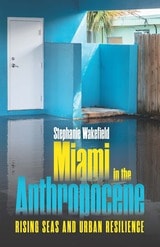
Miami in the Anthropocene
Rising Seas and Urban ResilienceStephanie Wakefield
University of Minnesota Press, 2025
Reimagining adaptation amidst climate change–driven mutations of urban space and life
Between its susceptibility to flooding and an ever-expanding real estate market powered by global surges of people and capital, Miami is an epicenter of the urban Anthropocene and a living laboratory for adaptation to sea level rise. Miami in the Anthropocene explores the social, environmental, and technical transformations involved in climate adaptation infrastructure and imaginaries in a global city seen as climate change ground zero.
Using Miami as a compelling microcosm for understanding the complex interplay between urbanization and environmental upheaval in the twenty-first century, Stephanie Wakefield shows how “aqua-urban futures” are being imagined for the city, from governmental scenario exercises for severe weather events to proposals to transform the city’s metropolitan area into an archipelago of islands connected by bridges. She examines the shifts reweaving the fabric of urban life and presents designs that imagine dramatic new ways of living with water.
Grounded in the dynamic landscape of Miami but reaching far beyond its shores, Miami in the Anthropocene delves into the broader debates shaping urban thought and practice in the Anthropocene. Focusing on postresilience urban designs, Wakefield illuminates the path toward a future where cities embrace opportunities for evolution rather than merely for survival.

Michael Bay
Lutz Koepnick
University of Illinois Press, 2018

Michael Chiago
O’odham Lifeways Through ArtPaintings by Michael Chiago Sr. Text by Amadeo M. Rea
University of Arizona Press, 2022
A wide array of Chiago’s paintings are represented in this book, illustrating past and present Akimel O’odham and Tohono O’odham culture. The paintings show the lives and traditions of O’odham people from both the artist’s parents’ and grandparents’ generations and today. The paintings demonstrate the colonial Spanish, Mexican, and Anglo-American influences on O’odham culture throughout the decades, and the text explains how wells and windmills, schools, border walls, and nonnative crops have brought about significant change in O’odham life. The paintings and text in this book beautifully depict a variety of O’odham lifeways, including the striking Sonoran Desert environment of O’odham country, gathering local foods and cooking meals, shrines, ceremonies, dances, and more.
By combining Chiago’s paintings of his lived experiences with Rea’s ethnographic work, this book offers a full, colorful, and powerful picture of O’odham heritage, culture, and language, creating a teaching reference for future generations.

Michael Field
Decadent ModernsSarah Parker
Ohio University Press, 2019
In the last twenty years, Michael Field has emerged as one of the most fascinating poets of the Victorian era. Through their collaborative partnership as “Michael Field,” Katharine Bradley and Edith Cooper engaged in the aesthetic and decadent movements of the fin de siècle, while their poetry and verse drama articulate ideas associated with the New Woman and boldly express queer and lesbian desire. Michael Field: Decadent Moderns extends the focus on these key literary and cultural contexts by emphasizing their continuing significance within twentieth-century literary modernism. Through a series of interdisciplinary essays, this book addresses Michael Field’s energetic engagements with a range of topics including ecology, perfume, tourism, art history, sculpture, formalism, classics, and book history. In doing so, Michael Field: Decadent Moderns highlights the modernity, radicalism, and relevance of their work, both within the nineteenth and twentieth centuries as well as in our own cultural moment.
Contributors: Leire Barrera-Medrano, Joseph Bristow, Jill R. Ehnenn, Sarah E. Kersh, Kristin Mahoney, Catherine Maxwell, Alex Murray, Sarah Parker, Margaret D. Stetz, Kate Thomas, and Ana Parejo Vadillo.

Michel Foucault
Beyond Structuralism and HermeneuticsHubert L. Dreyfus and Paul Rabinow
University of Chicago Press, 1983
To demonstrate the sense in which Foucault's work is beyond structuralism and hermeneutics, the authors unfold a careful, analytical exposition of his oeuvre. They argue that during the of Foucault's work became a sustained and largely successful effort to develop a new method—"interpretative analytics"—capable fo explaining both the logic of structuralism's claim to be an objective science and the apparent validity of the hermeneutical counterclaim that the human sciences can proceed only by understanding the deepest meaning of the subject and his tradition.
"There are many new secondary sources [on Foucault]. None surpass the book by Hubert Dreyfus and Paul Rabinow. . . . The American paperback edition contains Foucault's 'On the Genealogy of Ethics,' a lucid interview that is now our best source for seeing how he construed the whole project of the history of sexuality."—David Hoy, London Review of Books
Michigan Journal of Community Service Learning
Volume 23 Number 1 - Fall 2016Jeffrey Howard, editor
Michigan Publishing Services, 2017
Each issue consists of articles at the cutting edge of research, theory, pedagogy, and other matters related to academic service-learning, campus-community partnerships, and engaged, public scholarship in higher education that extend the knowledge base and support and strengthen researchers’ and practitioners’ work. We also publish review essays of newly-released books pertinent to service-learning and community engagement.
Michigan Journal of Community Service Learning
Volume 23 Number 2 - Spring 2017Jeffrey Howard, editor
Michigan Publishing Services, 2017
Each issue consists of articles at the cutting edge of research, theory, pedagogy, and other matters related to academic service-learning, campus-community partnerships, and engaged, public scholarship in higher education that extend the knowledge base and support and strengthen researchers’ and practitioners’ work. We also publish review essays of newly-released books pertinent to service-learning and community engagement.

Michigan Legends
Folktales and Lore from the Great Lakes StateSheryl James
University of Michigan Press, 2013
Over the course of its history, the state of Michigan has produced its share of folktales and lore. Many are familiar with the Ojibwa legend of Sleeping Bear Dunes, and most have heard a yarn or two told of Michigan’s herculean lumberjack, Paul Bunyan.
But what about Detroit’s Nain Rouge, the red-eyed imp they say bedeviled the city’s earliest residents? Or Le Griffon, the Great Lakes’ original ghost ship that some believe haunts the waters to this day? Or the Bloodstoppers, Upper Peninsula folk who’ve been known to halt a wound’s bleeding with a simple touch thanks to their magic healing powers?
In Michigan Legends, Sheryl James collects these and more stories of the legendary people, events, and places from Michigan’s real and imaginary past. Set in a range of historical time periods and locales as well as featuring a collage of ethnic traditions—including Native American, French, English, African American, and Finnish—these tales are a vivid sample of the state’s rich cultural heritage. This book will appeal to all Michiganders and anyone else interested in good folktales, myths, legends, or lore.

Micro Media Industries
Hmong American Media Innovation in the DiasporaLori Kido Lopez
Rutgers University Press, 2021
Microbial Resolution
Visualization and Security in the War against Emerging MicrobesGloria Chan-Sook Kim
University of Minnesota Press, 2024
An interdisciplinary study charting the war against microbial futures leads to a new theory of contemporary vision and visuality
In 1989, a group of U.S. government scientists met to discuss some surprising findings: new diseases were appearing around the world, and viruses that they thought long vanquished were resurfacing. Their appearance heralded a future perpetually threatened by unforeseeable biological risks, sparking a new concept of disease: the “emerging microbe.” With the Cold War nearing its end, American scientists and security experts turned to confront this new “enemy,” redirecting national security against its risky horizons. In order to be fought, emerging microbes first needed to be made perceptible; but how could something immaterial, unknowable, and ever mutating be coaxed into visibility, knowability, and operability?
Microbial Resolution charts the U.S.-led war on the emerging microbe to show how their uncertain futures were transformed into objects of global science and security. Moving beyond familiar accounts that link scientific knowledge production to optical practices of visualizing the invisible, Gloria Chan-Sook Kim develops a theory of “microbial resolution” to analyze the complex problematic that arises when dealing with these entities: what can be seen when there is nothing to see? Through a syncretic analysis of data mining, animal-tracking technologies, media networks, computer-modeled futures, and global ecologies and infrastructures, she shows how a visual impasse—the impossibility of seeing microbial futures—forms the basis for new modes of perceiving, knowing, and governing in the present.
Timely and thought provoking, Microbial Resolution opens up the rich paradoxes, irreconcilabilities, and failures inherent in this project and demonstrates how these tensions profoundly animate twenty-first-century epistemologies, aesthetics, affects, and ecologies.
Microfinance and Its Discontents
Women in Debt in BangladeshLamia Karim
University of Minnesota Press, 2010
In 2006 the Grameen Bank of Bangladesh won the Nobel Peace Prize for its innovative microfinancing operations. This path-breaking study of gender, grassroots globalization, and neoliberalism in Bangladesh looks critically at the Grameen Bank and three of the leading NGOs in the country. Amid euphoria over the benefits of microfinance, Lamia Karim offers a timely and sobering perspective on the practical, and possibly detrimental, realities for poor women inducted into microfinance operations.
In a series of ethnographic cases, Karim shows how NGOs use social codes of honor and shame to shape the conduct of women and to further an agenda of capitalist expansion. These unwritten policies subordinate poor women to multiple levels of debt that often lead to increased violence at the household and community levels, thereby weakening women’s ability to resist the onslaught of market forces.
A compelling critique of the relationship between powerful NGOs and the financially strapped women beholden to them for capital, this book cautions us to be vigilant about the social realities within which women and loans circulate—realities that often have adverse effects on the lives of the very women these operations are meant to help.

Microsociology
Discourse, Emotion, and Social StructureThomas J. Scheff
University of Chicago Press, 1990
Thomas J. Scheff brings together the study of communication and the social
psychology of emotions to explore the microworld of thoughts, feelings,
and moods. Drawing on strikingly diverse and rich sources—the findings of
artificial intelligence and cognitive science, and examples from literary
dialogues and psychiatric interviews—Scheff provides an inventive account
of the nature of social life and a theory of motivation that brilliantly
accounts for the immense complexity involved in understanding even the most
routine conversation.
"A major contribution to some central debates in social theory at the
present time. . . . What Thomas Scheff seeks to develop is essentially a
quite novel account of the nature of social life, its relation to language
and human reflexivity, in which he insists upon the importance of a theory
of emotion. . . . A work of true originality and jolting impact. . . .
Microsociology is of exceptional interest, which bears witness to the
very creativity which it puts at the center of human social contact."
—Anthony Giddens, from the Foreword
"Scheff provides a rich theory that can easily generate further exploration. And he drives home the message that sociological work on interaction, social bonds, and society cannot ignore human emotionality."—Candace Clark, American Journal of Sociology
"This outstanding and ground-breaking little volume contains a wealth of original ideas that bring together many insights concerning the relationship of emotion to motivation in a wide variety of social settings. It is strongly recommended to all serious students of emotion, of society, and of human nature."—Melvin R. Lansky, American Journal of Psychiatry

Middle Age and Aging
Edited by Bernice L. Neugarten
University of Chicago Press, 1968
Middle Class Union
Organizing the ‘Consuming Public’ in Post-World War I AmericaMark W. Robbins
University of Michigan Press, 2017
Combining social history with interdisciplinary approaches to the study of consumption and symbolic space, Middle Class Union illustrates how acts of consumption, representations of the middle class in literary, journalistic, and artistic discourses, and ground-level organizing combined to enable white-collar activists to establish themselves as both the middle class and the backbone of the nation. This book contributes to labor history by examining the nexus of class and consumption to show how many white-collar workers drew on their consumer identity to express an anti-labor politics, later facilitating the struggles of unions throughout the post–World War I years. It also contributes to political history by emphasizing how these middle-class activists laid important groundwork for both 1920s business conservatism and New Deal liberalism. They exerted their political influence well before the post–World War II period, when a self-interested and powerful middle-class consumer identity is more widely acknowledged to have taken hold.

Middle Mississippi Exploitation of Animal Populations
Bruce D. Smith
University of Michigan Press, 1975

Middlebrow Queer
Christopher Isherwood in AmericaJaime Harker
University of Minnesota Press, 2013
How could one write about gay life for the mainstream public in Cold War America? Many midcentury gay American writers, hampered by external and internal censors, never managed to do it. But Christopher Isherwood did, and what makes his accomplishment more remarkable is that while he was negotiating his identity as a gay writer, he was reinventing himself as an American one. Jaime Harker shows that Isherwood refashioned himself as an American writer following his emigration from England by immersing himself in the gay reading, writing, and publishing communities in Cold War America.
Drawing extensively on Isherwood’s archives, including manuscript drafts and unpublished correspondence with readers, publishers, and other writers, Middlebrow Queer demonstrates how Isherwood mainstreamed gay content for heterosexual readers in his postwar novels while also covertly writing for gay audiences and encouraging a symbiotic relationship between writer and reader. The result—in such novels as The World in the Evening, Down There on a Visit, A Single Man, and A Meeting by the River—was a complex, layered form of writing that Harker calls “middlebrow camp,” a mode that extended the boundaries of both gay and middlebrow fiction.
Weaving together biography, history, and literary criticism, Middlebrow Queer traces the continuous evolution of Isherwood’s simultaneously queer and American postwar authorial identity. In doing so, the book illuminates many aspects of Cold War America’s gay print cultures, from gay protest novels to “out” pulp fiction.

Middletown Families
Fifty Years of Change and ContinuityTheodore Caplow, Bruce A. Chadwick, Howard M. Bahr, Reuben Hill, and Margaret Holmes Williamson
University of Minnesota Press, 1985
Middletown Families was first published in 1985. Minnesota Archive Editions uses digital technology to make long-unavailable books once again accessible, and are published unaltered from the original University of Minnesota Press editions.
Fifty years after publication of Robert and Helen Lloyd's classic studies, Middletown (1929) and Middletown in Transition (1937), the Middletown III Project picked up and continued their exploration of American values and institutions. By duplicating the original studies - in many cases by using the same questions - this team of social scientists attempted to gauge the changes that had taken place in Muncie, Indiana, since the 1920s. In Middletown Families, the first book to emerge from this project, Theodore Caplow and his colleagues reveal that many widely discussed changes in family life, such as the breakdown of traditional male/female roles, increased conflict between parents and children, and disintegration of extended family ties, are more perceived than actual. Their evidence suggests that the Middletown family seems to be stronger and more tolerant, with closer bonds and greater marital satisfaction than fifty years ago. Instead of breaking it apart, the pressures of modern society may have drawn the family closer together.

Midlife Crisis
The Feminist Origins of a Chauvinist ClichéSusanne Schmidt
University of Chicago Press, 2020
The first book-length history of this controversial concept, Susanne Schmidt’s Midlife Crisis recounts the surprising origin story of the midlife debate and traces its movement from popular culture into academia. Schmidt’s engaging narrative telling of the feminist construction—and ensuing antifeminist backlash—of the midlife crisis illuminates a lost legacy of feminist thought, shedding important new light on the history of gender and American social science in the 1970s and beyond.

Midnight Basketball
Race, Sports, and Neoliberal Social PolicyDouglas Hartmann
University of Chicago Press, 2016
Organized in the 1980s and ’90s by dozens of American cities, late-night basketball leagues were designed for social intervention, risk reduction, and crime prevention targeted at African American youth and young men. In Midnight Basketball, Hartmann traces the history of the program and the policy transformations of the period, while exploring the racial ideologies, cultural tensions, and institutional realities that shaped the entire field of sports-based social policy. Drawing on extensive fieldwork, the book also brings to life the actual, on-the-ground practices of midnight basketball programs and the young men that the programs intended to serve. In the process, Midnight Basketball offers a more grounded and nuanced understanding of the intricate ways sports, race, and risk intersect and interact in urban America.

Midrashic Women
Formations of the Feminine in Rabbinic LiteratureJudith R. Baskin
Brandeis University Press, 2002

Midwest Maize
How Corn Shaped the U.S. HeartlandCynthia Clampitt
University of Illinois Press, 2015

Midwestern Native Shrubs and Trees
Gardening Alternatives to Nonnative Species: An Illustrated GuideCharlotte Adelman, Bernard L. Schwartz
Ohio University Press, 2016
Midwives and Mothers
The Medicalization of Childbirth on a Guatemalan PlantationBy Sheila Cosminsky
University of Texas Press, 2016
The World Health Organization is currently promoting a policy of replacing traditional or lay midwives in countries around the world. As part of an effort to record the knowledge of local midwives before it is lost, Midwives and Mothers explores birth, illness, death, and survival on a Guatemalan sugar and coffee plantation, or finca, through the lives of two local midwives, Doña Maria and her daughter Doña Siriaca, and the women they have served over a forty-year period.
By comparing the practices and beliefs of the mother and daughter, Sheila Cosminsky shows the dynamics of the medicalization process and the contestation between the midwives and biomedical personnel, as the latter try to impose their system as the authoritative one. She discusses how the midwives syncretize, integrate, or reject elements from Mayan, Spanish, and biomedical systems. The midwives’ story becomes a lens for understanding the impact of medicalization on people’s lives and the ways in which women’s bodies have become contested terrain between traditional and contemporary medical practices. Cosminsky also makes recommendations for how ethno-obstetric and biomedical systems may be accommodated, articulated, or integrated. Finally, she places the changes in the birthing system in the larger context of changes in the plantation system, including the elimination of coffee growing, which has made women, traditionally the primary harvesters of coffee beans, more economically dependent on men.
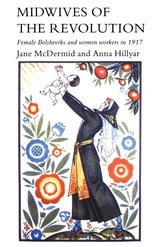
Midwives of the Revolution
Female Bolsheviks and Women Workers in 1917Jane McDermid
Ohio University Press, 1999
The Bolshevik seizure of power in 1917 and the ensuing communist regime have often been portrayed as a man’s revolution, with women as bystanders or even victims. Midwives of the Revolution examines the powerful contribution made by women to the overthrow of tsarism in 1917 and their importance in the formative years of communism in Russia.
Focusing on the masses as well as the high-ranking intelligentsia, Midwives of the Revolution is the first sustained analysis of female involvement in the revolutionary era of Russian history. The authors investigate the role of Bolshevik women and the various forms their participation took. Drawing on the experiences of representative individuals, the authors discuss the important relationship between Bolshevik women and the workers in the turbulent months of 1917.
The authors demonstrate that women were an integral part of the revolutionary process and challenge assumptions that they served merely to ignite an essentially masculine revolt. By placing women center stage, without exaggerating their roles, this study enriches our understanding of a momentous event in twentieth-century history.
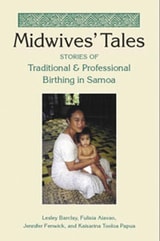
Midwives' Tales
Stories of Traditional and Professional Birthing in SamoaLesley Barclay
Vanderbilt University Press, 2005
The overall picture of changing birthing practices is complex and sometimes tinged with ironies. As the introduction says, "These Samoan nurses and midwives did not immediately attempt to mediate new and old ways of birthing after the colonial leadership of their profession left. They themselves became cultural agents for change as they continued the role of 'colonizing' their own birth tradition and taught the fa'atosaga [Samoan for midwife] Western techniques, at the same time trying to provide a professional midwife for all women. Paradoxically they often chose a social midwife for their own births and supported or at least condoned the social midwives close to them. . . . Kaisarina, while working as the leading professional midwife in the country, and working almost totally in hospital practice herself, simultaneously assisted her mother-in-law with her social practice of midwifery. Vipulo's story shows how a professional midwife preferred to have her mother, a social midwife, deliver her at home."
A particular objective of the authors is to encourage a reconception of maternity care in countries where professional services are rare and not available to all women. The book challenges common assumptions, still held in many postcolonial countries, that a simple migration of Western-style, hospital-focused care is necessarily always an achievable or desirable goal. It also demonstrates the considerable progress that one group has made in rethinking and developing a model of maternity care that works within their society and culture. As these midwives' stories suggest, solutions to some of the problems caused by gaps in the kinds of resources that Westerners take for granted can be found in partnerships and cultural wisdom that already exist in Samoa and, by extension, other developing countries.
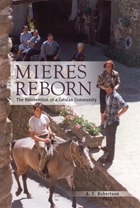
Mieres Reborn
The Reinvention of a Catalan CommunityA. F. Robertson
University of Alabama Press, 2012
Mieres Reborn reveals how patient observation and an analysis of one small community have much to tell us about human progress more generally.
Not long ago Mieres, a village in the eastern foothills of the Pyrenees, seemed destined to die. As in countless thousands of rural communities around the world, young people in Mieres over the years have moved to the towns and cities, leaving behind abandoned fields and meadows, derelict houses, and their aging and disconsolate parents and grandparents.
Close observation of this social microcosm over two decades reveals the capacity of ordinary people in a locality to reinvent themselves, reconstruct relationships with the wider world, and confront new threats to their collective survival. A. F. Robertson describes how the determination that Mieres should survive is most evident in a vigorous round of fiestas, fairs, and other public events in which natives, exiles, and newcomers work to create a lively sense of belonging. Since the 1980s, Mieres has been enlivened by a reverse flow of migrants from the cities, new settlers who have brought an infusion of youth to the community, devised new livelihoods, revitalized the village school, energized the native ”Mierencs,” and provided the impetus for a rediscovery of historical roots and political identity.
The regeneration of life in the countryside, in part a reaction to urban expansion and decay, is a global phenomenon of increasing political, economic, and social significance.

Migrant Bioprecarity
Latinx Lives and Embodied VulnerabilityCatherine S. Ramírez and Jonathan Xavier Inda, editors
Duke University Press, 2027

Migrant Deaths in the Arizona Desert
La vida no vale nadaEdited by Raquel Rubio-Goldsmith, Celestino Fernández, Jessie K. Finch, and Araceli Masterson-Algar
University of Arizona Press, 2016
Migrant Deaths in the Arizona Desert addresses the tragic results of government policies on immigration. The contributors consist of a multidisciplinary group who are dedicated to the thousands of men, women, and children who have lost their lives while crossing the desert in search of a better life. Each chapter in this important new volume seeks answers to migrant deaths, speaking to the complexity of this tragedy via a range of community and scholarly approaches.
The activists, artists, and scholars included in this volume confront migrant deaths and disappearances in the U.S.-Mexico borderlands as they reflect on the startling realities of death, migration, and public policy. Chapters touch on immigration and how it is studied, community responses to crisis, government policy, definitions of citizenship, and the role of the arts and human expression in response to state violence. Collectively the contributions throw a spotlight on the multivocal, transdisciplinary efforts to address the historical silence surrounding this human tragedy.
Despite numerous changes in the migration processes and growing attention to the problem, many people who attempt border crossings continue to disappear and die. This book offers a timely exploration of the ways that residents, scholars, activists, and artists are responding to this humanitarian crisis on their doorstep.
Migrant Feelings, Migrant Knowledge
Building a Community ArchiveRobert McKee Irwin
University of Texas Press, 2022
The digital storytelling project Humanizing Deportation invites migrants to present their own stories in the world’s largest and most diverse archive of its kind. Since 2017, more than 300 community storytellers have created their own audiovisual testimonial narratives, sharing their personal experiences of migration and repatriation. With Migrant Feelings, Migrant Knowledge, the project’s coordinator, Robert Irwin, and other team members introduce the project’s innovative participatory methodology, drawing out key issues regarding the human consequences of contemporary migration control regimes, as well as insights from migrants whose world-making endeavors may challenge what we think we know about migration.
In recent decades, migrants in North America have been treated with unprecedented harshness. Migrant Feelings, Migrant Knowledge outlines this recent history, revealing stories both of grave injustice and of seemingly unsurmountable obstacles overcome. As Irwin writes, “The greatest source of expertise on the human consequences of contemporary migration control are the migrants who have experienced them,” and their voices in this searing collection jump off the page and into our hearts and minds.
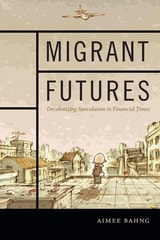
Migrant Futures
Decolonizing Speculation in Financial TimesAimee Bahng
Duke University Press, 2018
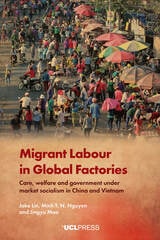
Migrant Labour in Global Factories
Care, welfare and government under market socialism in China and VietnamJake Lin, Minh T. N. Nguyen, and Jingyu Mao
University College London, 2026
This interdisciplinary study investigates the unique challenges faced by migrant workers in the market socialist countries of China and Vietnam.
The labor of hundreds of millions of internal migrant workers plays a crucial role for China and Vietnam’s national development and the expansion of global production chains in these market socialist countries. As the Communist party states have been promoting both marketization and welfare expansion since their respective reforms began, contradictions between the commodification and social protection of labor lead to significant obstacles to migrant workers’ welfare and well-being in the post-reform era.
Bringing into focus the connection between the reconfiguration of labor and changes in the two countries’ welfare systems, Migrant Labour in Global Factories analyzes how these contradictions shape the care of their huge migrant labor forces. It explores how they unfold in the historical and political contexts of both countries, bringing a range of relevant theories about welfare and social policymaking to bear on the features of the market socialist economy. The book argues that the evolving welfare systems in China and Vietnam fail to meaningfully address the social consequences of labor commodification in contexts where neoliberal development is instrumentalized to serve the political control and legitimacy of the party states. This is often at the cost of long-term and sustainable social policies for migrant labor in global factories.

Migrant Marketplaces
Food and Italians in North and South AmericaElizabeth Zanoni
University of Illinois Press, 2018
Elizabeth Zanoni provides a cutting-edge comparative look at Italian people and products on the move between 1880 and 1940. Concentrating on foodstuffs—a trade dominated by Italian entrepreneurs in New York and Buenos Aires—Zanoni reveals how consumption of these increasingly global imports affected consumer habits and identities and sparked changing and competing connections between gender, nationality, and ethnicity. Women in particular—by tradition tasked with buying and preparing food—had complex interactions that influenced both global trade and their community economies. Zanoni conveys the complicated and often fraught values and meanings that surrounded food, meals, and shopping.
A groundbreaking interdisciplinary study, Migrant Marketplaces offers a new perspective on the linkages between migration and trade that helped define globalization in the late nineteenth and early twentieth centuries.
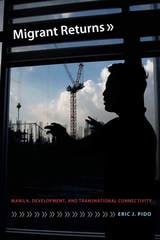
Migrant Returns
Manila, Development, and Transnational ConnectivityEric J. Pido
Duke University Press, 2017

Migrant Sites
America, Place, and Diaspora LiteraturesDalia Kandiyoti
Dartmouth College Press, 2009
Migrant World Making
Sergio F Juárez
Michigan State University Press, 2023

Migrants Who Care
West Africans Working and Building Lives in U.S. Health CareFumilayo Showers
Rutgers University Press, 2023
This book reveals the global, political, social, and economic factors that have facilitated the entry of West African women and men into the health care labor force (home and institutional care for older adults and individuals with physical and intellectual disabilities; and skilled nursing). It highlights these immigrants’ role as labor brokers who tap into their local ethnic and immigrant communities to channel co-ethnics to meet this labor demand. It illustrates how West African care workers understand their work across various occupational settings and segments in the health care industry. This book reveals the transformative processes migrants undergo as they become produced, repackaged, and deployed as health care workers after migration.
Ultimately, this book tells the very real and human story of an immigrant group surmounting tremendous obstacles to carve out a labor market niche in health care, providing some of the most essential and intimate aspects of care labor to the most vulnerable members of society.
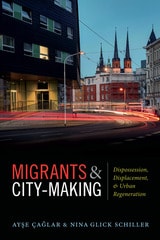
Migrants and City-Making
Dispossession, Displacement, and Urban RegenerationAyse Caglar and Nina Glick Schiller
Duke University Press, 2018
Migrants and Migration in Modern North America
Cross-Border Lives, Labor Markets, and PoliticsDirk Hoerder and Nora Faires, eds.
Duke University Press, 2011
Contributors. Jaime R. Aguila. Rodolfo Casillas-R., Nora Faires, Maria Cristina Garcia, Delia Gonzáles de Reufels, Brian Gratton, Susan E. Gray, James N. Gregory, John Mason Hart, Dirk Hoerder, Dan Killoren, Sarah-Jane (Saje) Mathieu, Catherine O’Donnell, Kerry Preibisch, Lara Putnam, Bruno Ramirez, Angelika Sauer, Melanie Shell-Weiss, Yukari Takai, Omar S. Valerio-Jiménez, Carlos G. Vélez-Ibáñez
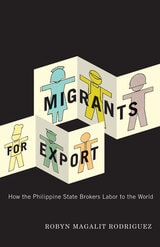
Migrants for Export
How the Philippine State Brokers Labor to the WorldRobyn Magalit Rodriguez
University of Minnesota Press, 2010

Migrating Borders and Citizenship in Law
Scales, Locales, Themes and PracticesDevyani Prabhat
University of London Press, 2026
Borders not only demarcate nations and territories but also transform people into migrants. Together with law and law enforcement, borders create residents and foreigners. The law ascertains who crosses borders and who does not, and determines who remains foreign despite being within national borders. Migrating Borders and Citizenship in Law argues that law has multiple roles and mechanisms for breathing life into borders, operating at different locales and scales (from worldwide to the nation, and from the family to the workplace), and through different practices, including preventing entry and withholding access to resources.
This book examines case law, legislation, and press accounts relating to several key events in recent times that have changed the legal landscape on migration control, such as the Immigration and Nationality Acts in the United Kingdom, the end of the empire, the arrival of Empire Windrush, Brexit, the COVID-19 pandemic, and the case of Shamima Begum. Focusing on race and ethnicity, gender, and class, as well as crime and control, Migrating Borders and Citizenship in Law contextualizes the legal debates around these historical and political developments, the question of who belongs, the consequences of behavior for immigration status and citizenship, and the links with conduct and national security.
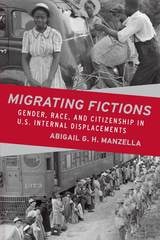
Migrating Fictions
Gender, Race, and Citizenship in U.S. Internal DisplacementsAbigail G. H. Manzella
The Ohio State University Press, 2018
Winner, 2021 CCCC Outstanding Book Award
Migrating Fictions analyzes the role of race, gender, and citizenship in the major internal displacements of the 20th century in history and in narrative. Surveying the particular tactics employed by the United States during the Great Migration, the Dust Bowl, the Japanese American incarceration, and the migrant labor of the Southwest, Abigail G. H. Manzella reveals how the country’s past is imbued with governmentally (en)forced movements that diminished access to full citizenship rights for the laboring class, people of color, and women.
This work is the first book-length study to examine all of these movements together along with their literature, including Zora Neale Hurston’s Their Eyes Were Watching God, Sanora Babb’s Whose Names Are Unknown, Julie Otsuka’s When the Emperor Was Divine, Helena María Viramontes’s Under the Feet of Jesus, and Jesmyn Ward’s Salvage the Bones. Manzella shows how the United States’ history of spatial colonization within its own borders extends beyond isolated incidents into a pattern based on ideology about nation-building, citizenship, and labor. This book seeks to theorize a Thirdspace, an alternate location for social justice that acknowledges the precarity of the internally displaced person.
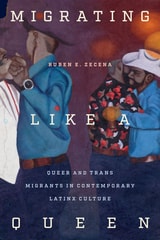
Migrating like a Queen
Queer and Trans Migrants in Contemporary Latinx CultureRuben E. Zecena
University of Texas Press, 2026
An imaginative exploration of queer and trans Latinx migrant survival, examining literature, film, and performance to challenge normative constructions of citizenship and belonging.
Queer and trans migrants in the US face persistent fictions depicting them as powerless. Through the lens of “impossible possibilities,” what Ruben Zecena defines as a space between the possible and impossible, the book presents a complex account of undocumented migrants that goes beyond good and bad dichotomies expressed by the state.
Migrating like a Queen highlights the joy, fabulosity, glamour, and complex desires of queer and trans Latinx migrants in the context of dehumanizing legal and representational structures. Analyzing a rich archive of twenty-first century media and literature, Ruben Zecena reveals how individuals imagine a reality that pushes against the constraints of narrative tropes created by the nation-state. The book foregrounds work by and about queer and trans Latinx migrants, including Alexandra DeRuiz, tatiana de la tierra, Sonia Guiñansaca, and Julián Delgado Lopera, illustrating the defining of a movement. Engaging multiple genres and forms, from testimonio to the bildungsroman, this book is a testament to the ever-shifting cultural strategies of survival that seize power from systems of subjection.