Results by title
22279 books match the query 'Social Science' and 1258 start with m
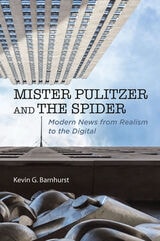
Mister Pulitzer and the Spider
Modern News from Realism to the DigitalKevin G. Barnhurst
University of Illinois Press, 2018
To solve the mystery, Kevin Barnhurst spent thirty years studying news going back to the realism of the 1800s. The usual suspects--technology, business competition, and the pursuit of scoops--are only partly to blame for the fate of news. The main culprit is modernism from the "Mister Pulitzer" era, which transformed news into an ideology called "journalism." News is no longer what audiences or experts imagine. Stories have grown much longer over the past century and now include fewer events, locations, and human beings. Background and context rule instead.
News producers adopted modernism to explain the world without recognizing how modernist ideas influence the knowledge they produce. When webs of networked connectivity sparked a resurgence in realist stories, legacy news stuck to big-picture analysis that can alienate audience members accustomed to digital briefs.
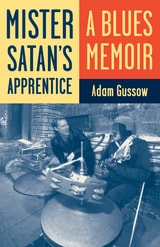
Mister Satan's Apprentice
A Blues MemoirAdam Gussow
University of Minnesota Press, 1998
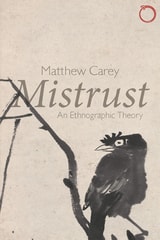
Mistrust
An Ethnographic TheoryMatthew Carey
HAU, 2017
While mistrust can quickly ruin relationships and even dissolve extensive social ties, Carey shows that it might have other values. Drawing on fieldwork in Morocco’s High Atlas Mountains as well as comparative material from regions stretching from Eastern Europe to Melanesia, he examines the impact of mistrust on practices of conversation and communication, friendship and society, and politics and cooperation. In doing so, he demonstrates that trust is not the only basis for organizing human society and cooperating with others. The result is a provocative but enlightening work that makes us rethink social issues such as suspicion, doubt, and uncertainty.

Mitchell Masterpieces 3
An Illustrated History of B-25 Warbirds in BusinessWim Nijenhuis
Amsterdam University Press, 2024
After the Second World War, the B-25 got a role in civil aviation. Many airplanes were stripped of their armament and other military equipment and often came through auctions in the civilian market. They came in private hands and were deployed for transportation of personnel or goods, for training, fire fighting, agricultural spraying of other purposes. Some were converted into a luxury business plane and some were used in the film industry.
This book should serve as a general view of the companies, organisations and owners and the B-25s they flew. Moreover, the book would not be complete if no attention was paid to the civilian B-25s in the various museums and the warbird circuit. All this is described in detail and provided with about 750 pictures, many of which are in full colour.

Mitra-Varuna
An Essay on Two Indo-European Representations of SovereigntyGeorges Dumézil
HAU, 2023
Georges Dumézil’s fascination with the myths and histories of India, Rome, Scandinavia, and the Celts yielded an idea that became his most influential scholarly legacy: the tripartite hypothesis, which divides Indo-European societal functions into three classes: the sacred sovereign, the warrior, and the producer. Mitra-Varuna, originally published in 1940, concentrates on the first function, that of sovereignty. Dumézil identifies two types of rulers, the first judicial and worldly, the second divine and supernatural. These figures, both priestly, are oppositional but complementary. The title nods to these roles, referring to the gods Mitra, a rational mediator, and Varuna, an awesome religious figure.
Stuart Elden’s critical edition, based on the 1988 English translation by Derek Coltman, identifies variations between the first and second French editions and completes—and in places corrects—Dumézil’s references. The editor’s detailed introduction situates Mitra-Varuna within Dumézil’s career, outlines how his treatment of its themes developed over time, and relates the book to the political controversy around his ideas. Two new appendices contain passages that did not appear in the second French edition.

Mixed Heritage in the Family
Racial Identity, Spousal Choice, and ChildrearingCarolyn Liebler
Russell Sage Foundation, 2025
Liebler and Song break new ground by being the first to combine and integrate the study of three aspects of life for people of mixed racial heritage – identity, spouse choice, and childrearing. This integrated approach reveals how complicated racial identification can be, and how it can be expressed in one’s choice of partner or in how one raises their children. The authors draw on census data and interviews with Asian-White, Black-White, and American Indian/Alaska Native-White mixed people to better understand how their identity choices are related to their choice of spouse and how they racially identify and raise their children.
Increasingly, mixed people in the United States are identifying with multiple races. However, the authors find that mixed-race people are not a monolith and that how and why they identify varies considerably between and within each group. They found several common factors that influenced whether mixed-race people choose to identify as biracial, solely White, or solely as a racial minority. These factors include the history of the specific minority race in the U.S., the racial demographics of where they were raised, their social and cultural exposure to their White and non-White backgrounds, their attachment to their racial backgrounds, and how they are seen racially by others.
The way mixed-heritage people identify was closely tied to the race of their spouse. However, having a White spouse did not necessarily mean the mixed-race person felt disconnected from their non-White heritage. White spouses varied in their racial consciousness and their interest in the culture of their mixed-race spouse’s minority ancestry. The spouse’s race, and the nature of racial overlap between the spouses, was also key in the racial upbringing of a mixed-heritage person’s child. In families where the parents share a minority racial heritage, couples lean into their shared ‘family race’, which guides their parenting choices and family life. Many mixed heritage parents found it important to foster racial pride in their children and combat negative racial stereotypes.
Liebler and Song caution against making superficial predictions about the state of race relations in the U.S. based on an increase in the multiracial population. They show that race has not become less salient in the lives of many mixed-race people—American society is not post-racial.
Mixed Heritage in the Family breaks new ground, provides compelling insights in its examination of the lives of mixed-race people, and shows how complicated racial identification can be.

Mixed Media
Feminist Presses and Publishing PoliticsSimone Murray
Pluto Press, 2004
Mixed Messages
Cultural and Genetic Inheritance in the Constitution of Human SocietyRobert A. Paul
University of Chicago Press, 2015
Examining a wide array of cultures, Paul reveals how the inherent tensions between these two modes of transmission generate many of the features of human society, such as marriage rules, initiation rituals, gender asymmetry, and sexual symbolism. Exploring differences in the requirements, range, and agendas of genetic and symbolic reproduction, he shows that a properly conceived dual inheritance model does a better job of accounting for the distinctive character of actual human societies than either evolutionary or socio-cultural construction theories can do alone. Ultimately this book offers a powerful call for a synthesis of the traditions inspired by Darwin, Durkheim, and Freud—one that is critically necessary if we are to advance our understanding of human social life.
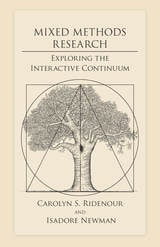
Mixed Methods Research
Exploring the Interactive ContinuumCarolyn S. Ridenour and Isadore Newman
Southern Illinois University Press, 2008
In Mixed Methods Research: Exploring the Interactive Continuum, the second edition of Qualitative-Quantitative Research Methodology, authors Carolyn S. Ridenour and Isadore Newman reject the artificial dichotomy between qualitative and quantitative research strategies in the social and behavioral sciences and argue that the two approaches are neither mutually exclusive nor interchangeable; rather, the actual relationship between the two paradigms is one of isolated events on a continuum of scientific inquiry.
In their original model for research—the “interactive continuum”—Ridenour and Newman emphasize four major points: that the research question dictates the selection of research methods; that consistency between question and design can lead to a method of critiquing research studies in journals; that the interactive continuum model is built around the place of theory; and that the assurance of validity of research is central to all studies. With this edition, the authors incorporate the concept of research purpose into their analysis.
To contextualize their new argument and to propose strategies for enhancement, Ridenour and Newman review the historical and contemporary debates around research frameworks and define the nature of scientific validity. Establishing five criteria that render a study “scientific,” they propose ways to strengthen validity in research design. They argue that by employing multiple methods, researchers may enhance the quality of their research outcomes. By integrating the quantitative research standards of internal and external validity and the qualitative research standards of trustworthiness, Ridenour and Newman suggest a principle for mixed methods research.
Ridenour and Newman apply this theoretical concept to a systematic analysis of four published research studies, with special emphasis on the consistency among research purpose, question, and design.
Ridenour and Newman have completely rewritten their conclusions in light of their evolving analyses. They incorporate their most recent ideas into the qualitative-quantitative continuum and emphasize the “model of consistency” as key for research to meet the standard of “scientific.”
This book occupies a vital place at the junction of methodological theory and scientific practice and makes connections between the traditionally separate realms of quantitative and qualitative research.
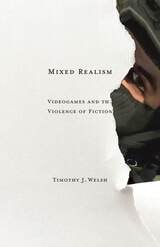
Mixed Realism
Videogames and the Violence of FictionTimothy J. Welsh
University of Minnesota Press, 2016
Mixed Realism is about how we interact with media. Timothy J. Welsh shows how videogames, like novels, both promise and trouble experiences of “immersion.” His innovative methodology offers a new understanding of the expanding role of virtuality in contemporary life.
Today’s wired culture is a mixed reality, conducted as exchanges between virtual and material contexts. We make balance transfers at an ATM, update Facebook timelines, and squeeze in sessions of Angry Birds on the subway. However, the “virtual” is still frequently figured as imaginary, as opposed to “real.” The vision of 1990s writers of a future that would pit virtual reality against actual reality has never materialized, yet it continues to haunt cultural criticism. Our ongoing anxiety about immersive media now surrounds videogames, especially “shooter games,” and manifests as a fear that gamers might not know the difference between the virtual world and the real world.
As Welsh notes, this is the paradox of real virtuality. We understand that the media-generated virtualities that fill our lives are not what they represent. But what are they if they are not real? Do they have presence, significance, or influence exceeding their material presence and the user processes that invoke them? What relationships do they establish through and beyond our interactions with them?
Mixed Realism brims with fresh analyses of literary works such as Truman Capote’s In Cold Blood and Mark Z. Danielewski’s House of Leaves, along with sustained readings of controversial videogames such as Super Columbine Massacre and Call of Duty: Modern Warfare 2. Continually connecting the dots between surprising groupings of texts and thinkers, from David Foster Wallace to the cult-classic videogame Eternal Darkness and from Cormac McCarthy to Grand Theft Auto, it offers a fresh perspective on both digital games and contemporary literature.

Mixed-Blood Histories
Race, Law, and Dakota Indians in the Nineteenth-Century MidwestJameson R. Sweet
University of Minnesota Press, 2025
An unprecedented study that puts mixed-ancestry Native Americans back into the heart of Indigenous history
Historical accounts tend to neglect mixed-ancestry Native Americans: racially and legally differentiated from nonmixed Indigenous people by U.S. government policy, their lives have continually been treated as peripheral to Indigenous societies. Mixed-Blood Histories intervenes in this erasure. Using legal, linguistic, and family-historical methods, Jameson R. Sweet writes mixed-ancestry Dakota individuals back into tribal histories, illuminating the importance of mixed ancestry in shaping and understanding Native and non-Native America from the nineteenth century through today.
When the U.S. government designated mixed-ancestry Indians as a group separate from both Indians and white Americans—a distinction born out of the perception that they were uniquely assimilable as well as manipulable intermediate figures—they were afforded rights under U.S. law unavailable to other Indigenous people, albeit inconsistently, which included citizenship and the rights to vote, serve in public office, testify in court, and buy and sell land. Focusing on key figures and pivotal “mixed-blood histories” for the Dakota nation, Sweet argues that in most cases, they importantly remained Indians and full participants in Indigenous culture and society. In some cases, they were influential actors in establishing reservations and negotiating sovereign treaties with the U.S. government.
Culminating in a pivotal reexamination of the U.S.-Dakota War of 1862, Mixed-Blood Histories brings greater diversity and complexity to existing understandings of Dakota kinship, culture, and language while offering insights into the solidification of racial categories and hierarchies in the United States.
Retail e-book files for this title are screen-reader friendly with images accompanied by short alt text and/or extended descriptions.
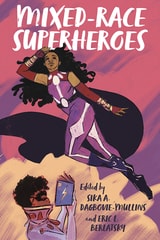
Mixed-Race Superheroes
Sika A. Dagbovie-Mullins
Rutgers University Press, 2021
The essays in this collection contend with the multitude of ways that racial mixedness has been presented in superhero comics, films, television, and literature. They explore how superhero media positions mixed-race characters within a genre that has historically privileged racial purity and propagated images of white supremacy. The book considers such iconic heroes as Superman, Spider-Man, and The Hulk, alongside such lesser-studied characters as Valkyrie, Dr. Fate, and Steven Universe. Examining both literal and symbolic representations of racial mixing, this study interrogates how we might challenge and rewrite stereotypical narratives about mixed-race identity, both in superhero media and beyond.
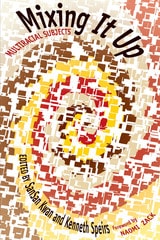
Mixing It Up
Multiracial SubjectsEdited by SanSan Kwan and Kenneth Speirs
University of Texas Press, 2004
The United States Census 2000 presents a twenty-first century America in which mixed-race marriages, cross-race adoption, and multiracial families in general are challenging the ethnic definitions by which the nation has historically categorized its population. Addressing a wide spectrum of questions raised by this rich new cultural landscape, Mixing It Up brings together the observations of ten noted voices who have experienced multiracialism first-hand.
From Naomi Zack's "American Mixed Race: The United States 2000 Census and Related Issues" to Cathy Irwin and Sean Metzger's "Keeping Up Appearances: Ethnic Alien-Nation in Female Solo Performance," this diverse collection spans the realities of multiculturalism in compelling new analysis. Arguing that society's discomfort with multiracialism has been institutionalized throughout history, whether through the "one drop" rule or media depictions, SanSan Kwan and Kenneth Speirs reflect on the means by which the monoracial lens is slowly being replaced.
Itself a hybrid of memoir, history, and sociological theory, Mixing It Up makes it clear why the identity politics of previous decades have little relevance to the fluid new face of contemporary humanity.
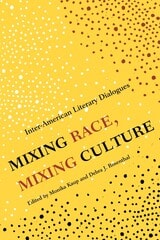
Mixing Race, Mixing Culture
Inter-American Literary DialoguesEdited by Monika Kaup and Debra Rosenthal
University of Texas Press, 2002
Over the last five centuries, the story of the Americas has been a story of the mixing of races and cultures. Not surprisingly, the issue of miscegenation, with its attendant fears and hopes, has been a pervasive theme in New World literature, as writers from Canada to Argentina confront the legacy of cultural hybridization and fusion.
This book takes up the challenge of transforming American literary and cultural studies into a comparative discipline by examining the dynamics of racial and cultural mixture and its opposite tendency, racial and cultural disjunction, in the literatures of the Americas. Editors Kaup and Rosenthal have brought together a distinguished set of scholars who compare the treatment of racial and cultural mixtures in literature from North America, the Caribbean, and Latin America. From various angles, they remap the Americas as a multicultural and multiracial hemisphere, with a common history of colonialism, slavery, racism, and racial and cultural hybridity.

Mixtec Evangelicals
Globalization, Migration, and Religious Change in a Oaxacan Indigenous GroupMary I. O'Connor
University Press of Colorado, 2016
Mixtec Evangelicals is a comparative ethnography of four Mixtec communities in Oaxaca, detailing the process by which economic migration and religious conversion combine to change the social and cultural makeup of predominantly folk-Catholic communities. The book describes the effects on the home communities of the Mixtecs who travel to northern Mexico and the United States in search of wage labor and return having converted from their rural Catholic roots to Evangelical Protestant religions.
O’Connor identifies globalization as the root cause of this process. She demonstrates the ways that neoliberal policies have forced Mixtecs to migrate and how migration provides the contexts for conversion. Converts challenge the set of customs governing their Mixtec villages by refusing to participate in the Catholic ceremonies and social gatherings that are at the center of traditional village life. The home communities have responded in a number of ways—ranging from expulsion of converts to partial acceptance and adjustments within the village—depending on the circumstances of conversion and number of converts returning.
Presenting data and case studies resulting from O’Connor’s ethnographic field research in Oaxaca and various migrant settlements in Mexico and the United States, Mixtec Evangelicals explores this phenomenon of globalization and observes how ancient communities are changed by their own emissaries to the outside world. Students and scholars of anthropology, Latin American studies, and religion will find much in this book to inform their understanding of globalization, modernity, indigeneity, and religious change.
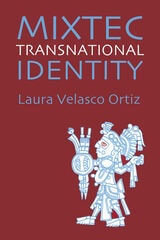
Mixtec Transnational Identity
Laura Velasco Ortiz
University of Arizona Press, 2005
Moala
Culture and Nature on a Fijian IslandMarshall D. Sahlins
University of Michigan Press, 1962
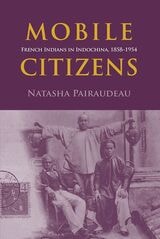
Mobile Citizens
French Indians in Indochina, 1858-1955Natasha Pairaudeau
National University of Singapore Press, 2016
Mobile Cultures
New Media in Queer AsiaChris Berry, Fran Martin, and Audrey Yue, eds.
Duke University Press, 2003
Scholars, artists, and activists from a range of countries, the contributors chronicle the different ways new media galvanize Asian queer communities in Taiwan, South Korea, Japan, Indonesia, Thailand, Malaysia, India, and around the world. They consider phenomena such as the uses of the Internet among gay, lesbian, or queer individuals in Taiwan and South Korea; the international popularization of Japanese queer pop culture products such as Yaoi manga; and a Thai website’s reading of a scientific tract on gay genetics in light of Buddhist beliefs. Essays also explore the politically subversive possibilities opened up by the proliferation of media technologies, examining, for instance, the use of Cyberjaya—Malaysia’s government-backed online portal—to form online communities in the face of strict antigay laws.
Contributors. Chris Berry, Tom Boellstorff, Larissa Hjorth, Katrien Jacobs, Olivia Khoo, Fran Martin, Mark McLelland, David Mullaly, Baden Offord, Sandip Roy, Veruska Sabucco, Audrey Yue

Mobile Households
Indian Ocean Intimate Economies in the Age of AbolitionHollian Wint-Frederick
Duke University Press, 2027
Mobile Museums
Collections in CirculationEdited by Felix Driver, Mark Nesbitt, and Caroline Cornish
University College London, 2021
How did the process of the circulation re-examine, inform, and unsettle common assumptions about the way museum collections have evolved over time and space? Mobile Museums presents an argument for the importance of circulation in the study of museum collections, both past and present. It brings together a diverse array of international scholars and curators from a variety of disciplines to consider the mobility of collections, especially in the context of Indigenous community engagement. By foregrounding the question of circulation, the book represents a paradigm shift in the understanding of the history and future uses of museum collections. Taking on a global perspective and addressing a variety of types of collection, including the botanical, ethnographic, economic, and archaeological, the book helps us to understand why the mobility of museum collections was a fundamental aspect of their history—and why it continues to matter today.
Mobile Orientations
An Intimate Autoethnography of Migration, Sex Work, and Humanitarian BordersNicola Mai
University of Chicago Press, 2018
Using a bold blend of personal narrative and autoethnography, Mai provides intimate portrayals of sex workers from sites including the Balkans, the Maghreb, and West Africa who decided to sell sex as the means to achieve a better life. Mai explores the contrast between how migrants understand themselves and their work and how humanitarian and governmental agencies conceal their stories, often unwittingly, by addressing them all as helpless victims. The culmination of two decades of research, Mobile Orientations sheds new light on the desires and ambitions of migrant sex workers across the world.
Mobile Secrets
Youth, Intimacy, and the Politics of Pretense in MozambiqueJulie Soleil Archambault
University of Chicago Press, 2017
With Mobile Secrets, Julie Soleil Archambault offers a complete rethinking of how we understand uncertainty, truth, and ignorance by revealing how better access to information may in fact be anything but desirable. By engaging with young adults in a Mozambique suburb, Archambault shows how, in their efforts to create fulfilling lives, young men and women rely on mobile communication not only to mitigate everyday uncertainty but also to juggle the demands of intimacy by courting, producing, and sustaining uncertainty. In their hands, the phone has become a necessary tool in a wider arsenal of pretense—a means of creating the open-endedness on which harmonious social relations depend in postwar postsocialist Mozambique. As Mobile Secrets shows, Mozambicans have harnessed the technology not only to acquire information but also to subvert regimes of truth and preserve public secrets, allowing everyone to feign ignorance about the workings of the postwar intimate economy.
Mobile Subjects
Transnational Imaginaries of Gender ReassignmentAren Z. Aizura
Duke University Press, 2018
Mobile Urbanism
Cities and Policymaking in the Global AgeEugene McCann
University of Minnesota Press, 2010
The essays in this volume argue for a theorizing of both urban policymaking and place-making that understands them as groups of territorial and relational geographies. It broadens our comprehension of agents of transference, reconceiving how policies are made mobile, and acknowledging the importance of interlocal policy mobility. Through the richness of its empirical examples from Europe, North America, South America, Africa, Asia, and Australia, contributors bring to light the significant methodological challenges that researchers face in the study of an urban–global, territorial–relational conceptualization of cities and suggest productive new approaches to understanding urbanism in a networked world.
Contributors: S. Harris Ali, York U, Toronto; Allan Cochrane, Open U; Roger Keil , York U, Toronto; Doreen Massey, Open U; Donald McNeill, U of Western Sydney; Jamie Peck, U of British Columbia; Jennifer Robinson, University College London.
Mobility and Migration in Ancient Mesoamerican Cities
M. Charlotte Arnauld
University Press of Colorado, 2024
In a series of data-rich chapters that address specific evidence for movement in their respective study areas, an international group of scholars assesses mobility through the isotopic and demographic analysis of human remains, stratigraphic identification of gaps in occupation, and local intensification of water capture in the Maya lowlands. Others examine migration through the integration of historic and archaeological evidence in Michoacán and Yucatán and by registering how daily life changed in response to the influx of new people in the Basin of Mexico.
Offering a range of critical insights into the vital and under-studied role that mobility and migration played in complex agrarian societies, Mobility and Migration in Ancient Mesoamerican Cities will be of value to Mesoamericanist archaeologists, ethnohistorians, and bioarchaeologists and to any scholars working on complex societies.
Contributors:
Jaime J. Awe, Meggan Bullock, Sarah C. Clayton, Andrea Cucina, Véronique Darras, Nicholas P. Dunning, Mélanie Forné, Marion Forest, Carolyn Freiwald, Elizabeth Graham, Nancy Gonlin, Julie A. Hoggarth, Linda Howie, Elsa Jadot, Kristin V. Landau, Eva Lemonnier, Dominique Michelet, David Ortegón Zapata, Prudence M. Rice, Thelma N. Sierra Sosa, Michael P. Smyth, Vera Tiesler, Eric Weaver
Mobility and Migration
East Anglian Founders of New England, 1629-1640Roger Thompson
University of Massachusetts Press, 1994
During the 1630s, more than 14,000 people sailed from Britain bound for New England, constituting what has come to be known as the Great Migration. This book offers the most extensive study of these emigrants ever undertaken. Focusing on 2,000 individuals who moved from the five counties of eastern England, it provides historians with important new findings on mobility, family life, kinship networks, and community cohesion.
Roger Thompson reveals the personal experiences and ancestral histories of the emigrants. He follows them across the Atlantic and investigates their lives and achievements in the New World. Distinguising between such groups as gentry, entrepreneurs, artisans, farmers, and servants, he explores whether the migration tended to be a solitary uprooting from a stable and predictable world of familiar neighborhoods or simply a longer move among many relocations.
Thompson also sheds light on the issue of motivation: Were these settlers pulled by the hope of eventual enrichment or of founding a purified society, or were they pushed by intolerance and persecution at home? Did they see New England as a haven of escape or an opportunity to exploit? Did New Englanders seek to replicate “English ways,” preserving traditional culture and society, or did they embrace change and innovation? Mobility and Migration provides a wealth of new evidence for historians of both early modern England and colonial America.
Mobility and Modernity
Migration in Germany, 1820-1989Steve Hochstadt
University of Michigan Press, 1999
Mobility of Imagination
A companion guide to international cultural cooperationDragan Klaic
Central European University Press, 2006
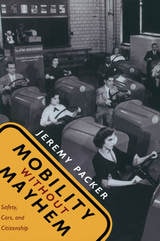
Mobility without Mayhem
Safety, Cars, and CitizenshipJeremy Packer
Duke University Press, 2007
Packer focuses on cultural figures that have been singled out as particularly dangerous. Women drivers, hot-rodders, bikers, hitchhikers, truckers, those who “drive while black,” and road ragers have all been targets of fear. As Packer debunks claims about the dangers posed by each figure, he exposes biases against marginalized populations, anxieties about social change, and commercial and political desires to profit by fomenting fear. Certain populations have been labeled as dangerous or deviant, he argues, to legitimize monitoring and regulation and, ultimately, to curtail access to automotive mobility. Packer reveals how the boundary between personal freedom and social constraint is continually renegotiated in discussions about safe, proper driving.
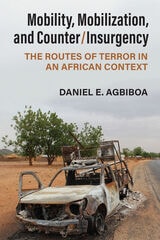
Mobility, Mobilization, and Counter/Insurgency
The Routes of Terror in an African ContextDaniel E. Agbiboa
University of Michigan Press, 2022
In Mobility, Mobilization, and Counter/Insurgency, Daniel Agbiboa takes African insurgencies back to their routes by providing a transdisciplinary perspective on the centrality of mobility to the strategies of insurgents, state security forces, and civilian populations caught in conflict. Drawing on one of the world’s deadliest insurgencies, the Boko Haram insurgency in northeast Nigeria and the Lake Chad region, this well-crafted and richly nuanced intervention offers fresh insights into how violent extremist organizations exploit forms of local immobility and border porosity to mobilize new recruits, how the state’s “war on terror” mobilizes against so-called subversive mobilities, and how civilian populations in transit are treated as could-be terrorists and subjected to extortion and state-sanctioned violence en route. The multiple and intersecting flows analyzed here upend Eurocentric representations of movement in Africa as one-sided, anarchic, and dangerous. Instead, this book underscores the contradictions of mobility in conflict zones as simultaneously a resource and a burden. Intellectually rigorous yet clear, engaging, and accessible, Mobility, Mobilization, and Counter/Insurgency is a seminal contribution that lays bare the neglected linkages between conflict and mobility.
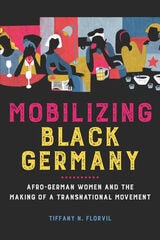
Mobilizing Black Germany
Afro-German Women and the Making of a Transnational MovementTiffany N. Florvil
University of Illinois Press, 2020
Tiffany N. Florvil examines the role of queer and straight women in shaping the contours of the modern Black German movement as part of the Black internationalist opposition to racial and gender oppression. Florvil shows the multifaceted contributions of women to movement making, including Audre Lorde’s role in influencing their activism; the activists who inspired Afro-German women to curate their own identities and histories; and the evolution of the activist groups Initiative of Black Germans and Afro-German Women. These practices and strategies became a rallying point for isolated and marginalized women (and men) and shaped the roots of contemporary Black German activism.
Richly researched and multidimensional in scope, Mobilizing Black Germany offers a rare in-depth look at the emergence of the modern Black German movement and Black feminists’ politics, intellectualism, and internationalism.
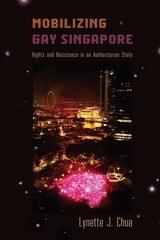
Mobilizing Gay Singapore
Rights and Resistance in an Authoritarian StateLynette J Chua
Temple University Press, 2015
For decades, Singapore's gay activists have sought equality and justice in a state where law is used to stifle basic civil and political liberties. In her groundbreaking book, Mobilizing Gay Singapore, Lynette Chua asks, what does a social movement look like in an authoritarian state? She takes an expansive view of the gay movement to examine its emergence, development, strategies, and tactics, as well as the roles of law and rights in social processes.
Chua tells this important story using in-depth interviews with gay activists, observations of the movement's activities-including "Pink Dot" events, where thousands of Singaporeans gather in annual celebrations of gay pride-movement documents, government statements, and media reports. She shows how activists deploy "pragmatic resistance" to gain visibility and support, tackle political norms that suppress dissent, and deal with police harassment, while avoiding direct confrontations with the law.
Mobilizing Gay Singapore also addresses how these brave, locally engaged citizens come out into the open as gay activists and expand and diversify their efforts in the global queer political movement.
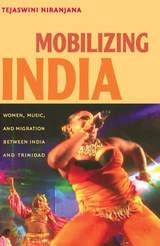
Mobilizing India
Women, Music, and Migration between India and TrinidadTejaswini Niranjana
Duke University Press, 2006
Niranjana draws on nineteenth-century travel narratives, anthropological and historical studies of Trinidad, Hindi film music, and the lyrics, performance, and reception of chutney-soca and calypso songs to argue that perceptions of Indian female sexuality in Trinidad have long been central to the formation and disruption of dominant narratives of nationhood, modernity, and normative sexuality in India. She illuminates debates in India about “the woman question” as they played out in the early-twentieth-century campaign against indentured servitude in the tropics. In so doing, she reveals India’s disavowal of the indentured woman—viewed as morally depraved by her forced labor in Trinidad—as central to its own anticolonial struggle. Turning to the present, Niranjana looks to Trinidad’s most dynamic site of cultural negotiation: popular music. She describes how contested ideas of Indian femininity are staged by contemporary Trinidadian musicians—male and female, of both Indian and African descent—in genres ranging from new hybrids like chutney-soca to the older but still vibrant music of Afro-Caribbean calypso.
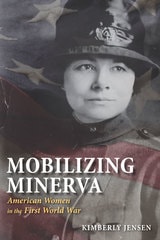
Mobilizing Minerva
American Women in the First World WarKimberly Jensen
University of Illinois Press, 2007
Mobilizing Mutations
Human Genetics in the Age of Patient AdvocacyDaniel Navon
University of Chicago Press, 2019
Drawing on a wealth of fieldwork and historical material, Navon presents a sociological account of the ways genetic mutations have been mobilized and transformed in the sixty years since it became possible to see abnormal human genomes, providing a new vista onto the myriad ways contemporary genetic testing can transform people’s lives.
Taking us inside these shifting worlds of research and advocacy over the last half century, Navon reveals the ways in which knowledge about genetic mutations can redefine what it means to be ill, different, and ultimately, human.
Mobilizing Public Opinion
Black Insurgency and Racial Attitudes in the Civil Rights EraTaeku Lee
University of Chicago Press, 2002
Ultimately, Mobilizing Public Opinion is a timely, cautionary tale about how we view public opinion and a compelling testament to the potential power of ordinary citizens.
Mobilizing Romani Ethnicity
Romani Political Activism in Argentina, Colombia and SpainAnna Mirga-Kruszelnicka
Central European University Press, 2022
The Roma issue is generally treated as a European matter. Indeed, the Roma are the largest European minority—their presence outside of Europe is a result of various waves of migration over the past four hundred years. Likewise, the stereotypes associated with the Roma—the problematized, stigmatized status of a “Gypsy” as well as the historical and contemporary manifestations of antigypsyism—are also of European origin. This book claims, however, that the perception of Roma being strictly a European issue is flawed, and that re-connecting the Roma issue globally represents an important learning experience and an added value.
The book offers a critical exploration of Romani political activism in Colombia and Argentina, and compares it to that in Spain, narrated from the intimate perspective of Romani actors themselves. By outlining parallel lineages of Romani activism in three countries and on two continents, the author arrives at broad conclusions regarding the nature of ethnic mobilization. Mirga-Kruszelnicka proposes a new synergetic conceptualization of this multidirectional concept as an interplay between political opportunities, mobilizing structures, and frames of identity.
Contributing to the vivid debate about the relationship between the researcher and the researched, the book also includes an original discussion of the positionality of scholars of Romani background.
Mobilizing the South
The Thirty-First Infantry Division, Race, and World War IIChristopher M. Rein
University of Alabama Press, 2022
A richly researched account of the social, racial, and political history of a major Deep South infantry division at home and in the Pacific
Chris Rein’s study of the Thirty-First Infantry Division, known officially as the “Dixie Division,” illuminates the complexities in mobilizing American reserve units to meet the global emergency during World War II. Citizen soldiers from Alabama, Florida, Louisiana, and Mississippi formed the core of one of the ninety infantry divisions the Army successfully activated, trained, equipped, and deployed to defeat fascism in Europe and race-based imperialism in the Pacific. But the Army mobilized ideas along with manpower, and soldiers from across the Jim Crow South brought their racial ideas and views with them into the ranks and then exported these across the South Pacific. If the American victory in World War II represents a “double victory” over racism abroad and at home, the division’s service is a cogent reminder that the same powerful force could pull in opposite directions.
While focused on the division’s operational service during the war years, Mobilizing the South: The Thirty-First Infantry Division, Race, and World War II spans the division’s entire service from 1917 to 1967, from an interwar period highlighted by responses to natural disasters and facing down lynch mobs through a postwar service that included protecting activists in the most important struggles of the civil rights era. But the division’s extended service as a training establishment highlights lingering resentments and tensions within the American military system between the active and reserve components. Despite this, the division performed well in General Douglas MacArthur’s island-hopping campaign across the South Pacific. Using official records as well as details drawn from correspondence and oral histories, Rein captures how individual soldiers framed their exposure to a larger world, and how service alongside African American, New Guinean, and Filipino units both reinforced and modified views on race and postwar American society.
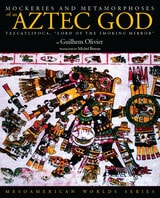
Mockeries and Metamorphoses of an Aztec God
Tezcatlipoca, "Lord of the Smoking Mirror"Guilhem Olivier
University Press of Colorado, 2003
An enigmatic and melodramatic figure, the Lord of the Smoking Mirror was both drunken seducer and mutilated transgressor and although he severely punished those who violated pre-Columbian moral codes, he also received mortal confessions. A patron deity to kings and warriors as well as a protector of slaves, Tezcatlipoca often clashed in epic confrontations with his "enemy brother" Quetzalcoatl, the famed Feathered Serpent. Yet these powers of Mesoamerican mythology collaborated to create the world, and their common attributes hint at a dual character.
In a sophisticated, systematic tour through the sources and problems related to Tezcatlipoca's protean powers and shifting meanings, Olivier guides readers through the symbolic names of this great god, from his representation on skins and stones to his relationship to ritual knives and other deities.
Drawing upon iconographic material, chronicles written in Spanish and in Nahuatl, and the rich contributions of ethnography, Mockeries and Metamorphoses of an Aztec God - like the mirror of Tezcatlipoca in which the fates of mortals were reflected - reveals an important but obscured portion of the cosmology of pre-Columbian Mexico.
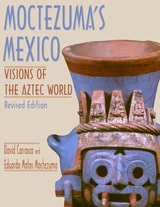
Moctezuma's Mexico
Visions of the Aztec World, Revised EditionDavíd Carrasco
University Press of Colorado, 2003
With nearly 150 full-color illustrations, Moctezuma’s Mexico is an important and handsome book that will appeal to scholars and students of Mexico’s indigenous past.
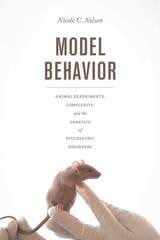
Model Behavior
Animal Experiments, Complexity, and the Genetics of Psychiatric DisordersNicole C. Nelson
University of Chicago Press, 2018
Behavior genetics is a particularly challenging field for making a clear-cut case that mouse experiments work, because researchers believe that both the phenomena they are studying and the animal models they are using are complex. These assumptions of complexity change the nature of what laboratory work produces. Whereas historical and ethnographic studies traditionally portray the laboratory as a place where scientists control, simplify, and stabilize nature in the service of producing durable facts, the laboratory that emerges from Nelson’s extensive interviews and fieldwork is a place where stable findings are always just out of reach. The ongoing work of managing precarious experimental systems means that researchers learn as much—if not more—about the impact of the environment on behavior as they do about genetics. Model Behavior offers a compelling portrait of life in a twenty-first-century laboratory, where partial, provisional answers to complex scientific questions are increasingly the norm.
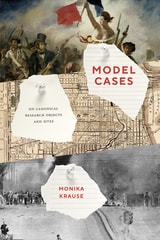
Model Cases
On Canonical Research Objects and SitesMonika Krause
University of Chicago Press, 2021
In Model Cases, Monika Krause asks about the concrete material research objects behind shared conversations about classes of objects, periods, and regions in the social sciences and humanities. It is well known that biologists focus on particular organisms, such as mice, fruit flies, or particular viruses when they study general questions about life, development, and disease. Krause shows that scholars in the social sciences and humanities also draw on some cases more than others, selecting research objects influenced by a range of ideological but also mundane factors, such as convenience, historicist ideas about development over time, schemas in the general population, and schemas particular to specific scholarly communities.
Some research objects are studied repeatedly and shape our understanding of more general ideas in disproportionate ways: The French Revolution has profoundly influenced our concepts of revolution, of citizenship, and of political modernity, just like studies of doctors have set the agenda for research on the professions. Based on an extensive analysis of the role of model cases in different fields, Krause argues that they can be useful for scholarly communities if they are acknowledged and reflected as particular objects; she also highlights the importance of research strategies based on neglected research objects and neglected combinations of research objects and scholarly concerns.
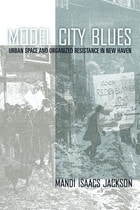
Model City Blues
Urban Space and Organized Resistance in New HavenMandi Isaacs Jackson
Temple University Press, 2008
Model City Blues tells the story of how regular people, facing a changing city landscape, fought for their own model of the “ideal city” by creating grassroots plans for urban renewal. Filled with vivid descriptions of significant moments in a protracted struggle, it offers a street-level account of organized resistance to institutional plans to transform New Haven, Connecticut in the 1960s. Anchored in the physical spaces and political struggles of the city, it brings back to center stage the individuals and groups who demanded that their voices be heard.
By reexamining the converging class- and race-based movements of 1960s New Haven, Mandi Jackson helps to explain the city's present-day economic and political struggles. More broadly, by closely analyzing particular sites of resistance in New Haven, Model City Blues employs multiple academic disciplines to redefine and reimagine the roles of everyday city spaces in building social movements and creating urban landscapes.
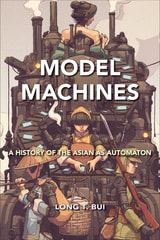
Model Machines
A History of the Asian as AutomatonLong T. Bui
Temple University Press, 2022
In the contemporary Western imagination, Asian people are frequently described as automatons, which disavows their humanity. In Model Machines, Long Bui investigates what he calls Asian roboticism or the ways Asians embody the machine and are given robotic characteristics.
Bui offers the first historical overview of the overlapping racialization of Asians and Asian Americans through their conflation with the robot-machine nexus. He puts forth the concept of the “model machine myth,” which holds specific queries about personhood, citizenship, labor, and rights in the transnational making of Asian/America.
The case studies in Model Machines chart the representation of Chinese laborers, Japanese soldiers, Asian sex workers, and other examples to show how Asians are reimagined to be model machines as a product of globalization, racism, and colonialism. Moreover, it offers examples of how artists and everyday people resisted that stereotype to consider different ways of being human. Starting from the early nineteenth century, the book ends in the present with the new millennium, where the resurgence of China presages the “rise of the machines” and all the doomsday scenarios this might spell for global humanity at large.
Model-Minority Imperialism
Victor Bascara
University of Minnesota Press, 2006
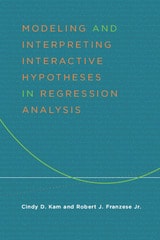
Modeling and Interpreting Interactive Hypotheses in Regression Analysis
Cindy D. Kam and Robert J. Franzese, Jr.
University of Michigan Press, 2007
Social scientists study complex phenomena about which they often propose intricate hypotheses tested with linear-interactive or multiplicative terms. While interaction terms are hardly new to social science research, researchers have yet to develop a common methodology for using and interpreting them. Modeling and Interpreting Interactive Hypotheses in Regression Analysis provides step-by-step guidance on how to connect substantive theories to statistical models and how to interpret and present the results.
"Kam and Franzese is a must-have for all empirical social scientists interested in teasing out the complexities of their data."
---Janet M. Box-Steffensmeier, Ohio State University
"Kam and Franzese have written what will become the definitive source on dealing with interaction terms and testing interactive hypotheses. It will serve as the standard reference for political scientists and will be one of those books that everyone will turn to when helping our students or doing our work. But more than that, this book is the best text I have seen for getting students to really think about the importance of careful specification and testing of their hypotheses."
---David A. M. Peterson, Texas A&M University
"Kam and Franzese have given scholars and teachers of regression models something they've needed for years: a clear, concise guide to understanding multiplicative interactions. Motivated by real substantive examples and packed with valuable examples and graphs, their book belongs on the shelf of every working social scientist."
---Christopher Zorn, University of South Carolina
"Kam and Franzese make it easy to model what good researchers have known for a long time: many important and interesting causal effects depend on the presence of other conditions. Their book shows how to explore interactive hypotheses in your own research and how to present your results. The book is straightforward yet technically sophisticated. There are no more excuses for misunderstanding, misrepresenting, or simply missing out on interaction effects!"
---Andrew Gould, University of Notre Dame
Cindy D. Kam is Assistant Professor, Department of Political Science, University of California, Davis.
Robert J. Franzese Jr. is Associate Professor, Department of Political Science, University of Michigan, and Research Associate Professor, Center for Political Studies, Institute for Social Research, University of Michigan.
For datasets, syntax, and worksheets to help readers work through the examples covered in the book, visit: www.press.umich.edu/KamFranzese/Interactions.html
Models of Management
Work, Authority, and Organization in a Comparative PerspectiveMauro F. Guillén
University of Chicago Press, 1994
Guillén's study of two liberal-democratic societies (the United States and Great Britain) and two corporatist societies (Germany and Spain) reveals significant differences in the way managerial elites and firms have adopted the three models. His data show that ideas themselves—independent of material interests and technology—can cause organizational change. Throughout the book, contrasts between modernist-technocratic and liberal-humanist mentalities, as well as between Protestant and Catholic religious backgrounds, emerge as decisive factors in determining managerial ideology and practice.
In addition to analyzing management methods in organizations, Guillén explores larger issues: the interaction among managerial, government, and labor elites; the impact of the state and the professions on managerial behavior; and the role that managers play in modern societies.
Models of Resistance for a Democracy in Crisis
Geoff Eley
Disobedience Press, 2026
Models of Resistance for a Democracy in Crisis features three historians who examine how political opposition, anti-racist struggle, and artistic intervention serve as vital blueprints for safeguarding our precarious democracy.
Geoff Eley deconstructs Trump-era politics by identifying a dual crisis: the withering of democratic practices and a pervasive cynicism toward government. By analyzing how Germans of the 1930s might have resisted fascism, he reveals the specific forms of opposition needed to uphold democratic accountability today.
Jamon Jordan traces a lineage of anti-racist protest, from the rebellions of the enslaved to the legal and moral defiance of the abolitionist movement. By weaving public tactics, such as demonstrations and boycotts, with the enduring labor of building Black-led institutions and preserving cultural traditions, Jordan reveals a comprehensive framework for contemporary activists.
Megan Flattley examines how artworks challenge repressive regimes. These creative interventions bear witness to traumatic and unjust conditions, use cultural institutions as cover for political action, and stage provocations in public spaces to reveal latent violence and advocate for social change.
Modelwork
The Material Culture of Making and KnowingMartin Brückner
University of Minnesota Press, 2021
How making models allows us to recall what was and to discover what still might be
Whether looking inward to the intricacies of human anatomy or outward to the furthest recesses of the universe, expanding the boundaries of human inquiry depends to a surprisingly large degree on the making of models. In this wide-ranging volume, scholars from diverse fields examine the interrelationships between a model’s material foundations and the otherwise invisible things it gestures toward, underscoring the pivotal role of models in understanding and shaping the world around us. Whether in the form of reproductions, interpretive processes, or constitutive tools, models may bridge the gap between the tangible and the abstract.
By focusing on the material aspects of models, including the digital ones that would seem to displace their analogue forebears, these insightful essays ground modeling as a tactile and emphatically humanistic endeavor. With contributions from scholars in the history of science and technology, visual studies, musicology, literary studies, and material culture, this book demonstrates that models serve as invaluable tools across every field of cultural development, both historically and in the present day.
Modelwork is unique in calling attention to modeling’s duality, a dynamic exchange between imagination and matter. This singular publication shows us how models shape our ability to ascertain the surrounding world and to find new ways to transform it.
Contributors: Hilary Bryon, Virginia Tech; Johanna Drucker, UCLA; Seher Erdoğan Ford, Temple U; Peter Galison, Harvard U; Lisa Gitelman, New York U; Reed Gochberg, Harvard U; Catherine Newman Howe, Williams College; Christopher J. Lukasik, Purdue U; Martin Scherzinger, New York U; Juliet S. Sperling, U of Washington; Annabel Jane Wharton, Duke U.