Results by title
3576 books match the query 'American' and 179 start with m
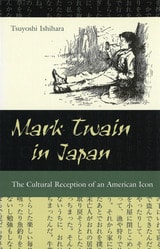
Mark Twain in Japan
The Cultural Reception of an American IconTsuyoshi, Ishihara
University of Missouri Press, 2005
Best known for his sharp wit and his portrayals of life along the banks of the Mississippi River, Mark Twain is indeed an American icon, and many scholars have examined how he and his work are perceived in the United States. In Mark Twain in Japan, however, Tsuyoshi Ishihara explores how Twain’s uniquely American work is viewed in a completely different culture.
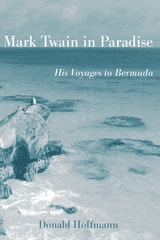
Mark Twain in Paradise
His Voyages to BermudaDonald Hoffman
University of Missouri Press, 2006
This book is the first comprehensive study of Clemens’s love affair with Bermuda, a vivid depiction of a celebrated author on recurring vacations. Donald Hoffmann has culled and clarified passages from Mark Twain’s travel pieces, letters, and unpublished autobiographical dictation—with cross-references to his fiction and infrequently cited short pieces—to create a little-known view of the author at leisure on his fantasy island.
Mark Twain in Paradise sheds light on both Clemens’s complex character and the topography and history of the islands. Hoffmann has plumbed the voluminous Mark Twain scholarship and Bermudian archives to faithfully re-create turn-of-the-century Bermuda, supplying historical and biographical background to give his narrative texture and depth. He offers insight into Bermuda’s natural environment, traditional stone houses, and romantic past, and he presents dozens of illustrations, both vintage and new, showing that much of what Mark Twain described can still be seen today.
Hoffmann also provides insight into the social circles Clemens moved in—and sometimes collected around himself. When visiting the islands, he rubbed shoulders with the likes of socialist Upton Sinclair and multimillionaire Henry H. Rogers; with Woodrow Wilson and his lover, socialite Mary Peck; as well as with the young girls to whom he enjoyed playing grandfather.
“You go to heaven if you want to,” Mark Twain wrote from Bermuda in 1910 during his long last visit. “I’d druther stay here.” And because much of what Clemens enjoyed in the islands is still available to experience today, visitors to Bermuda can now have America’s favorite author as their guide. Mark Twain in Paradise is an unexpected addition to the vast literature by and about Mark Twain and a work of travel literature unlike any other.
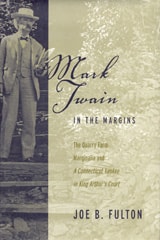
Mark Twain in the Margins
The Quarry Farm Marginalia and a Connecticut Yankee in King Arthur's CourtJoe B. Fulton
University of Alabama Press, 2007
Revealing the notes behind the novel and the scholar behind the legend.
The common characterization of Mark Twain as an uneducated and improvisational writer took hold largely because of the novelist's own frequent claims about his writing practices. But using recently discovered evidence--Twain's marginal notes in books he consulted as he worked on A Connecticut Yankee in King Arthur's Court—Joe Fulton argues for a reconsideration of scholarly views about Twain's writing process, showing that this great American author crafted his novels with careful research and calculated design.
Fulton analyzes Twain's voluminous marginalia in the copies of Macaulay's History of England, Carlyle's History of the French Revolution, and Lecky's History of the Rise of Rationalism and England in the Eighteenth Century available to Twain in the library of Quarry Farm, the New York farm where the novelist and his family routinely spent their summers. Comparing these marginal notes to entries in Twain's writing journal, the manuscript of Connecticut Yankee, and the book as published in 1889, Fulton establishes that Twain's research decisively influenced the novel. Fulton reveals Twain to be both the writer from experience he claimed to be and the careful craftsman that he attempted to downplay. By redefining Twain's aesthetic, Fulton reinvigorates current debates about what constitutes literary realism.
Fulton's transcriptions of the marginalia appear in an appendix; together with his analysis, they provide a valuable new resource for Twain scholars.
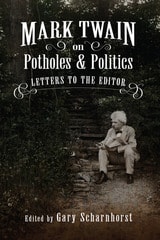
Mark Twain on Potholes and Politics
Letters to the EditorEdited by Gary Scharnhorst
University of Missouri Press, 2014
A frequent outlet for Twain’s wit was in letters to the editors of various newspapers and periodicals. Sharing his thoughts and opinions on topical issues ranging from national affairs to local social events, with swipes along the way at woman suffrage, potholes, literary piracy and other scams, slow mail delivery, police corruption, capital punishment, and the removal of Huck Finn from libraries, Twain never hesitated to speak his mind. And now thanks to Gary Scharnhorst, more than a hundred of these letters are available in one place for us to enjoy.
From his opinions on the execution of an intellectually brilliant murderer, to his scathing review of a bureau he perceived as “a pack of idiots” running on a currency of doughnuts, Twain’s pure, unbridled voice is evident throughout his letters. Mark Twain on Potholes and Politicsgives readers a chance to delve further than ever before into the musings of the most recognizable voice in American literature.

Mark Twain on the Loose
A Comic Writer and the American SelfBruce Michelson
University of Massachusetts Press, 1995
Can we rediscover the wildness in Mark Twain’s humor? Can we understand how that wildness helped make him a national legend and a key figure in the expression of an American self? In Mark Twain on the Loose, Bruce Michelson writes about Twain as a body of literature, as a public personality, and as a myth. Michelson shows that many of Twain’s most ambitious and memorable works, from the very beginning to the end of his career, express a drive for absolute liberation from every social, psychological, and artistic limit.
The outrageous and anarchic sides of Twain play a vital role in his art. But these traits are undervalued even by his admirers, who often favor clean shapes and steady affirmations in Twain’s writing —not the dangerous comic outbreak, or the deep yearning to free the self from every definition and confinement.
Reviewing works from a wide range of Twain’s writings, Michelson brings to light those wild dimensions, their literary consequences, and their cultural importance. He reveals this great author as “the best escape artist in the American canon,” a reflexive, paradoxical, rule-shattering comic genius.
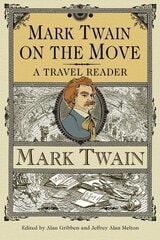
Mark Twain on the Move
A Travel ReaderAlan Gribben
University of Alabama Press, 2008
Journeys, humor, and insight from Mark Twain's travel narratives - America’s literary master.
Mark Twain on the Move gathers the very best passages from all five of Mark Twain’s travel narratives: The Innocents Abroad (1869), Roughing It (1872), A Tramp Abroad (1880), Life on the Mississippi (1883), and Following the Equator (1897). Although Twain’s travel narratives were his best sellers throughout his career, modern readers are largely unfamiliar with them. Thus, readers are not only missing some of Twain’s most hilarious and insightful material, they are also missing a complete understanding of a beloved literary and cultural icon.
Mark Twain on the Move presents the best of these works—sometimes respectful, often irreverent and outlandish—at their most lively and captures his renowned experiences as an American tourist. And they demonstrate why Twain’s greatest popularity in his lifetime derived from his travel writings rather than from his novels. Twain was always entertaining and provocative while on the move and this collection captures that fabled energy for modern readers.
Mark Twain's 1884
A Pivotal Year in the LifeJohn Bird
University of Missouri Press, 2026
Many biographies of Mark Twain cover his entire life, while others focus on specific periods, especially his later years. In this innovative new work, John Bird takes an entirely different approach. Mark Twain’s 1884: A Pivotal Year in the Life is a “micro-biography” that homes in on a single—and pivotal—year.
In 1884, Twain stood at the height of his powers as a writer and enjoyed one of the happiest years in his domestic family life. During the course of the year he was readying his greatest work, Adventures of Huckleberry Finn, for publication, which occurred in England near the end of the year; he was launching his own publishing house, Charles L. Webster and Company, after becoming disillusioned with his previous publishers; and he publicly embroiled himself in presidential politics in a way that presaged his later involvement with American and international politics. Finally, Twain’s 1884 ended with a great deal more public exposure thanks to an extensive multi-city lecture tour he undertook with George Washington Cable, as well as the beginnings of his ultimately successful attempt to secure publishing rights for Ulysses S. Grant’s memoirs.
The level of detail provided by a day-to-day narrative gives the reader a chance to imaginatively live that year in Twain’s life: his work, his family life, his correspondence, his business dealings, his travels, his recreational pursuits, and his political involvement. Bird enlarges upon a great many moments in and aspects of Twain’s life that other biographies barely touch on or ignore completely.
In this new approach to biography, Bird gives readers a broader appreciation not only of Mark Twain the author but of Mark Twain the husband, father, uncle, and friend, and national celebrity and persona.

Mark Twain's Homes and Literary Tourism
Hilary Iris Lowe
University of Missouri Press, 2025
A century after Samuel Clemens’s death, Mark Twain thrives. One way fans still celebrate the first true American writer and his work is by visiting any number of Mark Twain destinations. They believe they can learn something unique by visiting the places where he lived. Mark Twain’s Homes and Literary Tourism untangles the complicated ways that Clemens’s houses, now museums, have come to tell the stories that they do about Twain and, in the process, reminds us that the sites themselves are the products of multiple agendas and, in some cases, unpleasant histories.
Hilary Iris Lowe leads us through four Twain homes, beginning at the beginning—Florida, Missouri, where Clemens was born. Today the site is simply a concrete pedestal missing its bust, a plaque, and an otherwise-empty field. Though the original cabin where he was born likely no longer exists, Lowe treats us to an overview of the history of the area and the state park challenged with somehow marking this site. Next, we travel with Lowe to Hannibal, Missouri, Clemens’s childhood home, which he saw become a tourist destination in his own lifetime. Today mannequins remind visitors of the man that the boy who lived there became and the literature that grew out of his experiences in the house and little town on the Mississippi.
Literary historic sites pin their authority on the promise of exclusive insight into authors and texts through firsthand experience. As tempting as it is to accept the authenticity of Clemens’s homes, Mark Twain’s Homes and Literary Tourism argues that house museums are not reliable critical texts but are instead carefully constructed spaces designed to satisfy visitors. This volume shows us how these houses’ portrayals of Clemens change frequently to accommodate and shape our own expectations of the author and his work.
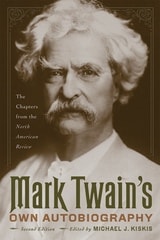
Mark Twain's Own Autobiography
The Chapters from the North American ReviewMark Twain; Edited by Michael J. Kiskis; Foreword by Sheila Leary
University of Wisconsin Press, 2010
More than the story of a literary career, this memoir is anchored in the writer’s relation to his family—what they meant to him as a husband, father, and artist. It also brims with many of Twain’s best comic anecdotes about his rambunctious boyhood in Hannibal, his misadventures in the Nevada territory, his notorious Whittier birthday speech, his travels abroad, and more.
Twain published twenty-five “Chapters from My Autobiography” in the North American Review in 1906 and 1907. “I intend that this autobiography . . . shall be read and admired a good many centuries because of its form and method—form and method whereby the past and the present are constantly brought face to face, resulting in contrasts which newly fire up the interest all along, like contact of flint with steel.”
For this second edition, Michael Kiskis’s introduction references a wealth of critical work done on Twain since 1990. He also adds a discussion of literary domesticity, locating the autobiography within the history of Twain’s literary work and within Twain’s own understanding and experience of domestic concerns.
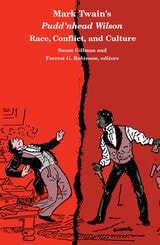
Mark Twain's Pudd'nhead Wilson
Race, Conflict and CultureSusan Gillman and Forrest Robinson, eds.
Duke University Press, 1990
In a variety of ways the essays build arguments out of, not in spite of, the anomalies, inconsistencies, and dead ends in the text itself. Such wrinkles and gaps, the authors find, are the symptoms of an inconclusive, even evasive, but culturally illuminating struggle to confront and resolve difficult questions bearing on race and sex. Such fresh, intellectually enriching perspectives on the novel arise directly from the broad-based interdisciplinary foundations provided by the participating scholars. Drawing on a wide variety of critical methodologies, the essays place the novel in ways that illuminate the world in which it was produced and that further promise to stimulate further study.
Contributors. Michael Cowan, James M. Cox, Susan Gillman, Myra Jehlen, Wilson Carey McWilliams, George E. Marcus, Carolyn Porter, Forrest Robinson, Michael Rogin, John Carlos Rowe, John Schaar, Eric Sundquist
Mark Twain, Travel Books, and Tourism
The Tide of a Great Popular MovementJeffrey Alan Melton
University of Alabama Press, 2008
With the publication of The Innocents Abroad (1869), Mark Twain embarked on a long and successful career as the 19th century's best-selling travel writer. Jeffrey Melton treats Twain's travel narratives in depth, and in the context of his contemporary travel writers and a burgeoning tourism culture. As Melton shows, Twain's five major travel narratives--The Innocents Abroad, Roughing It, Life on the Mississippi, A Tramp Abroad, and Following the Equator--demonstrate Twain's mastery and reinvention of the genre.
Mark Twain, Unsanctified Newspaper Reporter
James E. Caron
University of Missouri Press, 2008
Before Mark Twain became a national celebrity with his best-selling The Innocents Abroad, he was just another struggling writer perfecting his craft—but already “playin’ hell” with the world. In the first book in more than fifty years to examine the initial phase of Samuel Clemens’s writing career, James Caron draws on contemporary scholarship and his own careful readings to offer a fresh and comprehensive perspective on those early years—and to challenge many long-standing views of Mark Twain’s place in the tradition of American humor.
Tracing the arc of Clemens’s career from self-described “unsanctified newspaper reporter” to national author between 1862 and 1867, Caron reexamines the early and largely neglected writings—especially the travel letters from Hawaii and the letters chronicling Clemens’s trip from California to New York City. Caron connects those sets of letters with comic materials Clemens had already published, drawing on all known items from this first phase of his career—even the virtually forgotten pieces from the San Francisco Morning Call in 1864—to reveal how Mark Twain’s humor was shaped by the sociocultural context and how it catered to his audience’s sensibilities while unpredictably transgressing its standards.
Caron reveals how Sam Clemens’s contemporaries, notably Charles Webb, provided important comic models, and he shows how Clemens not only adjusted to but also challenged the guidelines of the newspapers and magazines for which he wrote, evolving as a comic writer who transmuted personal circumstances into literary art. Plumbing Mark Twain’s cultural significance, Caron draws on anthropological insights from Victor Turner and others to compare the performative aspects of Clemens’s early work to the role of ritual clowns in traditional societies
Brimming with fresh insights into such benchmarks as “Our Fellow Savages of the Sandwich Islands” and “Jim Smiley and His Jumping Frog,” this book is a gracefully written work that reflects both patient research and considered judgment to chart the development of an iconic American talent. Mark Twain, Unsanctified Newspaper Reporter should be required reading for all serious scholars of his work, as well as for anyone interested in the interplay between artistic creativity and the literary marketplace.
Mark Twain, the World, and Me
"Following the Equator," Then and NowSusan K. Harris
University of Alabama Press, 2020
A scholar accompanies Twain on his journey around the world
In Mark Twain, the World, and Me: “Following the Equator,” Then and Now, Susan K. Harris follows Twain’s last lecture tour as he wound his way through the British Empire in 1895–1896. Deftly blending history, biography, literary criticism, reportage, and travel memoir, Harris gives readers a unique take on one of America’s most widely studied writers.
Structured as a series of interlocking essays written in the first person, this engaging volume draws on Twain’s insights into the histories and cultures of Australia, India, and South Africa and weaves them into timely reflections on the legacies of those countries today. Harris offers meditations on what Twain’s travels mean for her as a scholar, a white woman, a Jewish American, a wife, and a mother. By treating topics as varied as colonial rule, the clash between indigenous and settler communities, racial and sexual “inbetweenness,” and species decimation, Harris reveals how the world we know grew out of the colonial world Twain encountered. Her essays explore issues of identity that still trouble us today: respecting race and gender, preserving nature, honoring indigenous peoples, and respecting religious differences.
Mark Twain
God's FoolHamlin Hill
University of Chicago Press, 2010
After laughing their way through his classic and beloved depictions of nineteenth-century American life, few readers would suspect that Mark Twain’s last years were anything but happy and joyful. They would be wrong. Contrary to the myth perpetrated by his literary executors Twain ended his life as a frustrated writer plagued by paranoia. He suffered personal tragedies, got involved in questionable business ventures, and was a demanding and controlling father and husband. As Mark Twain: God’s Fool demonstrates, the difficult circumstances of Twain’s personal life make his humorous output all the more surprising and admirable.
“Ham[lin] Hill remains among the smartest, most honest, and most humane of Twain scholars—and . . . God’s Fool parades those qualities on every page.” Jeff Steinbrink, Franklin & Marshall College
“Fills a great, long-standing need for a thoroughly researched book about Mark Twain’s twilight years. . . . Splendidly, grippingly written and excellently documented. . . . Likely to be a standard work for as long as anyone can foresee.” Choice
Mark Twain
The Complete InterviewsEdited by Gary Scharnhorst
University of Alabama Press, 2006
Mark Twain: The Complete Interviews is an annotated and indexed scholarly edition of every known interview with Mark Twain. In these interviews that span his entire career, Twain discusses matters as varied as his lecture style, his writings, and his bankruptcy, while holding forth on such timeless issues as human nature, politics, war and peace, government corruption, humor, race relations, imperialism, international copyright, the elite, and his impressions of other writers.
These interviews are oral performances in their own right and a new basis for evaluating contemporary responses to Twain’s writings. The interviews are records of verbal conversations rather than texts written in Twain’s hand. Four interviews are new to scholarship; fewer than a fifth have ever been reprinted.
.
Markings on Earth
Karenne Wood
University of Arizona Press, 2001
“Ten thousand years of history, and we find the remains
of ancestors removed from their burial mound . . . “
Impressions of the past, markings on earth, are part of the world of Karenne Wood. A member of the Monacan tribe of Virginia, she writes with insight and grace on topics that both reflect and extend her Native heritage.
Markings on Earth is a cyclical work that explores the many dimensions of human experience, from our interaction with the environment to personal relationships. In these pages we relive the arrival of John Smith in America and visit the burial mounds of the Monacan people, experience the flight of the great blue heron and witness the dance of the spider. We also share the personal journey of one individual who seeks to overcome her sense of alienation from her people and her past.
Wood’s palette is not only Nature but human nature as well. She writes pointedly about shameful episodes of American history, such as the devastation of Appalachia by mining companies and the “disappearance” of Indian peoples. She also addresses forms of everyday violence known to many of us, such as alcoholism and sexual abuse. Wood conveys an acceptance of history and personal trauma, but she finds redemption in a return to tradition and a perception of the world’s natural grace.
Through these elegantly crafted words, we come to know that Native writers need not be limited to categorical roles determined by their heritage. Markings on Earth displays a fidelity to human experience, evoking that experience through poems honed to perfection. It is an affirmation of survival, a work that suggests one person’s life cannot be separated from the larger story of its community, its rootedness in history, and its timeless connections to the world.
Mary Austin's Southwest
An Anthology of Her Literary CriticismChelsea Blackbird
University of Utah Press, 2005
In Mary Austin’s Southwest, editors Blackbird and Nelson shine light on Austin’s work, revealing her to be a significant trailblazer for literary diversity. With thoughtful introductions to selected writings on Austin’s prose, drama, and poetry as well as an annotated checklist of her published Southwestern literary criticism, this collection is a celebration of a rich mixed heritage as expressed through the written word.
Mary Chesnut's Civil War Epic
Julia A. Stern
University of Chicago Press, 2009
A genteel southern intellectual, saloniste, and wife to a prominent colonel in Jefferson Davis’s inner circle, Mary Chesnut today is remembered best for her penetrating Civil War diary. Composed between 1861 and 1865 and revised thoroughly from the late 1870s until Chesnut’s death in 1886, the diary was published first in 1905, again in 1949, and later, to great acclaim, in 1981. This complicated literary history and the questions that attend it—which edition represents the real Chesnut? To what genre does this text belong?—may explain why the document largely has, until now, been overlooked in literary studies.
Julia A. Stern’s critical analysis returns Chesnut to her rightful place among American writers. In Mary Chesnut’s Civil War Epic, Stern argues that the revised diary offers the most trenchant literary account of race and slavery until the work of Faulkner and that, along with his Yoknapatawpha novels, it constitutes one of the two great Civil War epics of the American canon. By restoring Chesnut’s 1880s revision to its complex, multidecade cultural context, Stern argues both for Chesnut’s reinsertion into the pantheon of nineteenth-century American letters and for her centrality to the literary history of women’s writing as it evolved from sentimental to tragic to realist forms.
Massachusetts Politics and Public Policy
Studies in Power and LeadershipRichard A. Hogarty
University of Massachusetts Press, 2002
Hogarty examines both the process of policymaking and the complexities of on-the-ground implementation, identifying the various participants and their roles and strategies. He describes power struggles that are entangled in intricate webs of personal and political relationships, and explores their historical antecedents.
Based on an extensive review of newspaper and media accounts, a survey of the surprisingly scanty professional literature, a close scrutiny of public documents, and dozens of personal interviews, the book addresses such topics as the delivery of mental health services, urban transportation, environmental protection, public safety, welfare, corrections, the death penalty, public higher education, ethnic politics, and state ethics reform. Hogarty analyzes the shifting problems of accountability that arise when public services are provided by a variety of political actors and organizations with a wide range of ideological motivations and social and cultural commitments.
Massachusetts and the Civil War
The Commonwealth and National DisunionMatthew Mason
University of Massachusetts Press, 2015
All states are not created equal, at least not when it comes to their influence on American history. That assumption underlies Massachusetts and the Civil War. The volume's ten essays coalesce around the national significance of Massachusetts through the Civil War era, the ways in which the commonwealth reflected and even modeled the Union's precarious but real wartime unification, and the Bay State's postwar return to the schisms that predated the war. Rather than attempting to summarize every aspect of the state's contribution to the wartime Union, the collection focuses on what was distinctive about its influence during the great crisis of national unity.
In the first section, “The Opposition to Slavery,” essays by John Stauffer, Dean Grodzins, Peter Wirzbicki, and Richard S. Newman demonstrate the central role Massachusetts played in the rise of both the antislavery movement and abolitionism. They show how slavery's foes united, planned, and understood their cause, and how they envisioned a postwar nation free of servitude. In the second section, “The War Years,” Matthew Mason, Carol Bundy, and Ronald J. Zboray and Mary Saracino Zboray investigate how the exigencies of war unified the commonwealth across party lines and over the distance between home and the front. In the final section, “Reconciliation,” Sarah J. Purcell, Amy Morsman, and Kanisorn Wongsrichanalai probe postwar efforts to recover from the war's profound disruptions.
Massachusetts at a Glance
A User's Guide to the Bay StateJack Tager
University of Massachusetts Press, 2004
Site of the first Thanksgiving in the seventeenth century and seedbed of revolutionary sentiment during the eighteenth, the Bay State became a center of industrialization during the nineteenth and of the high tech revolution during the twentieth. It has served as home to some of the nation's most renowned writers, from Henry David Thoreau and Ralph Waldo Emerson to Robert Lowell and Sylvia Plath, as well as some of its most prominent public figures, including Samuel Adams, Daniel Webster, W. E. B. Du Bois, and John F. Kennedy.
A professional historian with a long-standing interest in the history of Massachusetts, Jack Tager has organized the book to allow readers to find answers to questions in an efficient and reliable manner. He begins with a compilation of basic facts about Massachusetts, including population data drawn from the latest census, state motto and seal, even the state bird. This is followed by the main section of the book, an A-to-Z list of individuals, events, and sites of interest.
Additional information about the state can be found in a year-by-year chronology of key historical developments, a statistical profile of the state's 351 towns and cities, and lists of the state's museums, historic sites, and state parks as well as its many colleges and universities, with addresses, telephone numbers, and websites for readers who might wish to contact these institutions directly. Finally, an extensive listing of suggested readings is included for those who would like to explore further any of the topics covered in the book.
Massachusetts
A Concise HistoryRichard D. Brown
University of Massachusetts Press, 2000
From the moment the first English colonists landed on the shores of Plymouth Bay, the experiences of the people of Massachusetts have been emblematic of larger themes in American history. The story of the first Pilgrim thanksgiving is commemorated as a national holiday, while the Boston Tea Party and Paul Revere's ride have passed into the national mythology. Even the grimmer aspects of the American experience—Indian warfare and the conquest of an ever expanding frontier—were part of the early history of Massachusetts. In this book, Richard D. Brown and Jack Tager survey the rich heritage of this distinctive, and distinctly American, place, showing how it has long exerted an influence disproportionate to its size.
A seedbed of revolt against British colonial rule, Massachusetts has supplied the nation with a long line of political leaders—from Samuel and John Adams to William Lloyd Garrison and Lucy Stone to John, Robert, and Edward Kennedy. Its early textile mills helped shape the industrial revolution, while its experiences with urbanization, immigration, ethnic conflict, and labor strife reflected the growth of the national economy. In the twentieth century, the state continued to lead the country through a series of wrenching economic changes as it moved from the production of goods to the provision of services, eventually becoming a center of the high-tech revolution in telecommunications. If there is one common theme in the Bay State's history, Brown and Tager make clear, it is the capacity to adapt to change. In part this trait can be attributed to the state's unique blend of resources, including its many distinguished colleges and universities. But it can also be credited to the people themselves, who have created a singular sense of place by reconciling claims of tradition with the possibilities of innovation. This book tells their story.

Massacre of the Innocents
Bin Ramke
University of Iowa Press, 1995
Master Class
Lessons from Leading WritersNancy Bunge
University of Iowa Press, 2005
Master Class: Lessons from Leading Writers gathers more than two decades of wisdom from twenty-nine accomplished authors. It offers previously unpublished interviews along with freshly edited versions of ten interviews from Nancy Bunge's well-received previous collection, Finding the Words. The first section, Theory, incorporates interviews which document the golden age of writing programs in which authors with a strong sense of social and cultural responsibility taught as seriously as they wrote. These conversations delve into the writers' philosophies and teaching methods. The second section, Practice, presents interviews with authors who discuss how they've approached the writing of particular works. Altogether the interviews introduce authors as inspirational models and provide insightful techniques for other writers to try. One piece of advice recurs with striking consistency: to produce fresh, interesting work, aspiring writers must develop a passionate self-trust. This rule has an essential corollary: improving as a writer means constantly stretching oneself with new information and skills. Sure to interest writing and literature teachers as well as writers at every stage of development, Master Class is highly recommended for undergraduate and graduate writing courses.
Interviews with Marvin Bell, Ivan Doig, Sandra Gilbert, Allen Ginsberg, Donald Hall, Jim Harrison, Etheridge Knight, Margot Livesey, Larry McMurtry, James Alan McPherson, Clarence Major, Bobbie Ann Mason, Sue Miller, N. Scott Momaday, Kyoko Mori, Thylias Moss, W. S. Penn, Kit Reed, Alix Kates Shulman, William Stafford, Wallace Stegner, Ruth Stone, Scott Turow, Katherine Vaz, Diane Wakoski, Anne Waldman, Richard Wilbur, Richard Yates, and Helen Yglesias.
Master Suffering
CM Burroughs
Tupelo Press, 2021
Material Witness
The Selected Letters of Fairfield PorterTed Leigh, Editor
University of Michigan Press, 2005
---From the introduction by David Lehman
"In this lifetime of letters, Fairfield Porter reveals the complexity and passion of a protagonist in a novel by Dostoevsky or Henry James."
---Jane Freilicher
Fairfield Porter (1907-75) has been called by poet John Ashbery "perhaps the major American artist of the century." He was also known as a gifted art critic.
Beyond shedding light on his personal views, this collection of Fairfield Porter's letters demonstrates his profound contribution to American art and literature and displays his acumen as a political critic. The letters tell the story of a reserved artist and intellectual, torn between the tensions and pressures he felt among politics, family life, and painting-a man who forged a painting style outside the politically correct artistic perceptions of both left and right.
The collection includes letters from Porter's early travels to the Soviet Union, including a description of an interview with Trotsky, as well as some of his later letters to close friends, including Frank O'Hara, Kenneth Koch, Rod Padgett, Larry Rivers, and James Schuyler, among others. While the letters reveal many sides of the brilliant and independent-minded Porter, they also provide a cultural context for the time period and the circle of artists and poets with whom Porter associated. The letters not only tell a story of the artist himself but are also valuable documents of the political and artistic upheavals of the 1930s, 40s, and 50s.
This rich collection is introduced by poet and critic David Lehman and includes notes by Justin Spring, author of Porter's biography.

Maternal Body and Voice in Toni Morrison, Bobbie Ann Mason, and Lee Smith
Paula Gallant Eckard
University of Missouri Press, 2002
Matter
Bin Ramke
University of Iowa Press, 2004
“When I was a saint,” begins the first poem, “I did not have visions but I could see and did note the color of the world.” Matter is an examination of and a report on the world’s variable colors and possibilities for, if not sanctity, then a certain sanity, a kindness, and some form of salvation.
Maverick Heart
The Further Adventures Of Zane GreyStephen J. May
Ohio University Press, 2000
In 1927, at the peak of his career, Zane Grey bought a three-masted schooner, which he sailed to the Galapagos Islands, later journeying to Tahiti, New Zealand, Australia, and Fiji.
As colorful as his characters were, so too was their creator. A consummate explorer, Zane Grey toured the world, was an acclaimed expert on salt- and freshwater fishing, and incorporated the sights and sounds he witnessed into his writings.
As a companion to his biographical work of Grey’s literary life, Zane Grey: Romancing the West, author Stephen J. May now gives as a remarkable look into another aspect of Grey’s existence, the side little known but central to the measure of the man.
Maverick Heart makes use of Grey’s own memoirs and letters to give an enlightening portrait of this larger-than-life American character and a telling insight into one of the key shapers of the cultural heritage of our country.
May All Your Fences Have Gates
Essyas on the Drama of August WilsonAlan Nadel
University of Iowa Press, 1993
Maybe
Alice Attie
Seagull Books, 2026
The poems in Maybe form a tapestry of voices that slip from visibility to invisibility, illusion to disillusion, the conceivable to the inconceivable. Alice Attie writes of boundaries loosening, of transformations and transfigurations born of the unknown and the uncertain. Her poems suggest that this world will dissolve, and it will reappear as something other, something ineffable yet lodged in language, something fraught with an urgency that is both sublime and unbearable. Attie asks from what vantage point can the seer see, the writer write, the listener hear, learning ultimately that “for the length of my years to lengthen, I place the pebble on my tongue and rearrange the boundaries”?
Maybe It Was So
Reginald Gibbons
University of Chicago Press, 1991
Meadows of Memory
Images of Time and Tradition in American Art and CultureBy Michael Kammen
University of Texas Press, 1992
"History painting," for many people, conjures up Washington Crossing the Delaware and other paintings of heroic historical events. But history has made its way into considerably more American art than such obvious examples, in the view of Michael Kammen. In three thought-provoking and innovative essays, Kammen ranges from the Renaissance to the twentieth century, from central Europe to the western United States, and from elegant oil painting to folk sculpture to show the transformations of Old World icons of time into New World images of social memory and tradition.
In the first essay, Kammen demonstrates how American artists and artisans modified European emblems of time in response to their New World setting. In the second essay concerning nineteenth-century landscape art, he explores how artists used space to represent the movement of American culture through time. In the final essay, he looks at two distinctively American motifs of collective memory and tradition—old houses and elm trees. Throughout this interdisciplinary study, Kammen draws his examples from well-known and lesser-known artists, as well as from diverse American writers. Over 100 black-and-white illustrations accompany the text.
Of interest to all students of American culture, Meadows of Memory raises intriguing questions about the American paradox of desiring to conquer mutability while yearning for emblems of a (perhaps imagined?) past.
Mean
Colette LaBouff Atkinson
University of Chicago Press, 2008
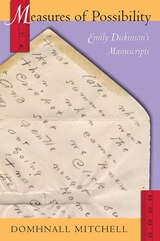
Measures of Possibility
Emily Dickinson's ManuscriptsDomhnall Mitchell
University of Massachusetts Press, 2005
In Measures of Possibility, Domhnall Mitchell sets out to test the hypothesis of Dickinson's textual radicalism, and its consequences for readers, students, and teachers, by looking closely at features such as spacing, the physical direction of the writing, and letter-shapes in handwritten lyric and epistolary texts. Through systematic contextualization and cross-referencing, Mitchell provides the reader with a critical apparatus by which to measure the extent to which contemporary approaches to Dickinson's autograph procedures can reasonably be formulated as corresponding to the poet's own purposes.
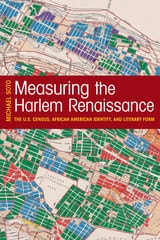
Measuring the Harlem Renaissance
The U.S. Census, African American Identity, and Literary FormMichael Soto
University of Massachusetts Press, 2016
In this provocative study, Michael Soto examines African American cultural forms through the lens of census history to tell the story of how U.S. officialdom—in particular the Census Bureau—placed persons of African descent within a shifting taxonomy of racial difference, and how African American writers and intellectuals described a far more complex situation of interracial social contact and intra-racial diversity. What we now call African American identity and the literature that gives it voice emerged out of social, cultural, and intellectual forces that fused in Harlem roughly one century ago.
Measuring the Harlem Renaissance sifts through a wide range of authors and ideas—from W. E. B. Du Bois, Rudolph Fisher, and Nella Larsen to Zora Neale Hurston, Langston Hughes, and Wallace Thurman, and from census history to the Great Migration—to provide a fresh take on late nineteenth—and twentieth—century literature and social thought. Soto reveals how Harlem came to be known as the “cultural capital of black America,” and how these ideas left us with unforgettable fiction and poetry.

Media of Serial Narrative
Frank Kelleter
The Ohio State University Press, 2017
Media of Serial Narrative focuses on key sites and technologies of popular seriality since the mid-nineteenth century and up to today: newspapers, comics, cinema, television, and digital communication. Paying close attention to the affordances of individual media, as well as to their historical interactions, the fourteen chapters survey the forms, processes, and functions of popular serial storytelling. With individual chapters by Frank Kelleter, Jared Gardner, Daniel Stein, Christina Meyer, Scott Higgins, Shane Denson, Ruth Mayer, Kathleen Loock, Constantine Verevis, Jason Mittell, Sudeep Dasgupta, Sean O’Sullivan, Henry Jenkins, Christine Hämmerling, Mirjam Nast, and Andreas Sudmann, Media of Serial Narrative is an exciting and broad-ranging intervention in the fields of seriality, media, and narrative studies.
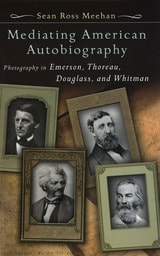
Mediating American Autobiography
Photography in Emerson, Thoreau, Douglass, and WhitmanSean Ross Meehan
University of Missouri Press, 2008
The emergence of photography in the mid-nineteenth century transformed ideas about how the self and nature could be pictured. Although the autobiographical potential of photography seems self-evident today, Sean Meehan takes us back to the birth of the medium when some of America’s preeminent authors began to think about photography’s implications for the representation of identity and the nature of autobiographical writing.
Both photography and autobiography involve a tension between disclosing and concealing their means of production: a chemical process for one, the writing process for the other. Meehan examines how four major authors—Ralph Waldo Emerson, Henry David Thoreau, Frederick Douglass, and Walt Whitman—were well aware of this tension and explored it in their work. By examining the implications of early photography in their writings, he shows how each engaged the new visual medium, how photography mediated their conceptions of self-representation, and how their appropriation of photographic thinking created a new kind of autobiography.
Examining the metonymic nature of photography, Meehan explores how the new medium influenced conceptions of visual and verbal representation. He intertwines these four writers’ reflections on photography—in Emerson’s Representative Men, Thoreau’s journals, Douglass’s narratives of slavery, and Whitman’s Specimen Days—with theories of photography as expounded by its inventors and observers, from Louis Daguerre and William Talbot in Europe to Oliver Wendell Holmes and Marcus Root in America.
As the first book to focus on the emergence of this new visual medium during the American Renaissance, Mediating American Autobiography shows us what photography means for American literature in general and for the genre most closely linked to it in particular. Because the engagement of these writers with photography has been neglected in previous scholarship, Meehan’s work provocatively bridges the study of two media and illuminates an important aspect of American thought and culture at the dawn of the technological era.
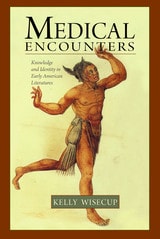
Medical Encounters
Knowledge and Identity in Early American LiteraturesKelly Wisecup
University of Massachusetts Press, 2013
Against the prevailing view that colonial texts provide insight only into their writers' perspectives, Wisecup demonstrates that Europeans, Natives, and Africans held certain medical ideas in common, including a conception of disease as both a spiritual and a physical entity, and a belief in the power of special rituals or prayers to restore health. As a consequence, medical knowledge and practices operated as a shared form of communication on which everyone drew in order to adapt to a world of devastating new maladies and unfamiliar cures.
By signaling one's relation to supernatural forces, to the natural world, and to other people, medicine became an effective means of communicating a variety of messages about power and identity as well as bodies and minds. Native Americans in Virginia and New England, for example, responded to the nearly simultaneous arrival of mysterious epidemics and peoples by incorporating colonists into explanations of disease, while British American colonists emphasized to their audiences back home the value of medical knowledge drawn from cross-cultural encounters in the New World.
Medicine Show
Tom Yuill
University of Chicago Press, 2010
In Medicine Show, inner conflict is wonderfully realized in the clash of down-home plain speech and European high culture utterances. Freely translating and adapting Catullus (Latin), Villon (Middle French), Corbiere (French), Hikmet (Turkish), and Orpheus (Greek), and placing them alongside Jagger and Richards, skinheads, and psalms, Tom Yuill’s book mirrors an old-style hawking of wares, with all the charm and absurdity that results when high culture meets pop, when city meets small town, and when provincialism confronts urbanity. Here, the poems talk to one another, one poem nudging the cusps of many others, those poems touching still others' circumferences. Yuill, by invoking the Rolling Stones as muses and as background music, offers cover versions of Shakespeare, Keats, and Dylan Thomas, ultimately giving us a new kind of verse, funneled through the languages and rhythms of his masters' voices.
Meditations on Rising and Falling
Meditations on Rising and FallingPhilip Pardi
University of Wisconsin Press, 2008
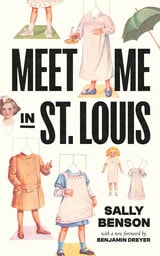
Meet Me in St. Louis
Sally Benson
University of Chicago Press, 2026
Sally Benson’s charming slice-of-life story is back in print for a new generation of readers.
Originally published as World War II raged overseas, Meet Me in St. Louis is Sally Benson’s semi-autobiographical account of the intergenerational Smith family during the twelve months leading up to the 1904 World’s Fair in St. Louis, Missouri. With warmth and tenderness, Benson chronicles the Smiths’ lives as they navigate sibling rivalries, first loves, financial hardship, jealousy, and heartaches in a poignant ode to the bonds of family.
Benson's novel is infused with wit as she details the lighthearted, pleasant existence of the Smith family’s five children—one rife with chaste crushes, victimless pranks, and other childhood escapades. Yet, the novel’s episodic, squeaky-clean veneer belies a dark comedic brilliance that transcends the ages and speaks, even today, to the universal experience of growing up.
Long out of print, this new edition of Benson’s timeless work includes a foreword by bestselling author Benjamin Dreyer, who comments both on the book's origins and its afterlife in popular culture as the source material for Judy Garland’s beloved musical of the same name. An effervescent midcentury novel waiting to be rediscovered, Meet Me in St. Louis is ready to meet its new generation of readers.
Melville Biography
An Inside NarrativeHershel Parker
Northwestern University Press, 2013
Melville Biography: An Inside Narrative is Hershel Parker’s history of the writing of Melville biographies, enriched by a lifetime of intimate working partnerships with great Melville scholars of different generations and by the author’s experience of successive phases of literary criticism. Throughout this bold book, Hershel Parker champions archival-based biography and the all-but-lost art of embodying such scholarship in literary criticism. First is a mesmerizing autobiographical account of what went into creating the award-winning and comprehensive Herman Melville: A Biography. Then Parker traces six decades of the “unholy war” waged against biographical scholarship, in which critics repeatedly imposed the theory of organic unity on Melville’s disrupted life—not just on his writings—while truncating his body of work and ignoring his study of art and aesthetics. In this connection, Parker celebrates discoveries made by “divine amateurs,” before throwing open his workshop to challenge ambitious readers with research projects. This is a book for Melville fans and Parker fans, as well as for readers, writers, and would-be writers of biography.

Melville's Prisoners
Harrison Hayford
Northwestern University Press, 2003
Written over many years, these essays retain the power to enlighten and surprise-and often, as Hershel Parker notes in his Foreword, to dazzle. Along with the never-before-published essay from which the book takes its title, Melville's Prisoners includes "Loomings," widely viewed as the single best piece of criticism ever written on Moby-Dick, and "Unnecessary Duplicates," a classic of textual speculation on Melville's methods. Others offer, along with their enduring insights into Melville's work, example after example of a capacious and astonishingly energetic mind at work and at play-a long view of how scholarship at its best is done. In sum, this volume constitutes the finest set of scholarly-critical essays ever written one of America's great writers.
Melville
The Making of the PoetHershel Parker
Northwestern University Press, 2007
“Who would have looked for philosophy in whales, or for poetry in blubber?” the London John Bull remarked in October of 1851. And yet, the reviewer went on, “few books which professedly deal in metaphysics, or claim the parentage of the muses, contain as much true philosophy and as much genuine poetry as the tale of the Pequod's whaling expedition.” A decade and a half before surprising the world with a book of Civil war poetry, Melville was already confident of what was “poetic” in his prose. As Hershel Parker demonstrates in this book, Melville was steeped in poetry long before he called himself a poet.
Here Parker, the dean of Melville studies, gives a compelling, in-depth account of how one of America’s greatest writers grew into the vocation of a poet. His work corrects two of the most pernicious misconceptions about Melville perpetuated by earlier critics: that he repudiated fiction writing after Pierre, and that he hadn’t begun writing poetry (let alone had a book of poems ready for publication) as early as 1860. In clearing up these misapprehensions, Parker gives a thorough and thoroughly involving account of Melville’s development as a poet. Parker demonstrates for the first time just how crucial poetry was to Melville from childhood to old age, especially its re-emergence in his life after 1849. Drawing on Melville's shrewd annotations of great British poets and on his probing, skeptical engagement with commentaries on poetry (particularly by the great Scots reviewers), Parker paints a richly textured portrait of a hitherto unseen side of Herman Melville.
Memory Fever
Ray Gonzalez
University of Arizona Press, 1999
Through 29 storylike essays, Gonzalez takes readers into the heart of the desert and the soul of a developing poet. He introduces us to the people who shaped his life. We learn of his father's difficulties with running a pool hall and of his grandmother's steadfast religious faith. We meet sinister Texas Rangers, hallucinatory poets, illegal aliens, and racist high school jocks. His vivid recollections embrace lizard hunts and rattlesnake dreams, rock music and menudo making—all in stories that convey the pains and joys of growing up on the border. As Gonzalez leads us through his desert of hope and vision, we come to recognize the humor and sadness that permeate this special place.

Mencken’s America
H. L. MenckenS. T. Joshi
Ohio University Press, 2004
Long famous as a political, social, and cultural gadfly, journalist and essayist H. L. Mencken was unafraid to speak his mind on controversial topics and to express his views in a deliberately provocative manner.
Mencken was prolific; much of his best work lies buried in the newspapers and magazines in which it originally appeared. Mencken’s America is a sampling of this uncollected work, arranged to present the wide-ranging treatise on American culture that Mencken himself never wrote.
The core of the book is a series of six articles on “The American” published in the Smart Set in 1913-14. Never before reprinted, they embody the essence of Mencken’s views on the deficiencies of his countrymen.
What was the problem with America? For Mencken, it could be summed up in one word: Puritanism. Puritanism accounted for much that was wrong with American culture: the prevalence of “militant morality” represented by Prohibition, by campaigns against prostitution, and by religious fundamentalism. American hostility toward the fine arts led to furious attempts to suppress any work of art that was thought to contravene conventional morality-attempts that Mencken chronicles with impressive scholarship in the essay “Puritanism as a Literary Force.”
Mencken reserved his greatest scorn for American political institutions. Opposed to the very principle of democracy and universal suffrage, he maintained that, in the absence of an educated electorate, all politicians are compelled to become demagogues.
Bracing, infuriating, and pungent, H. L. Mencken’s writings retain their relevance even after the passage of nearly a hundred years, cogently discussing issues with which Americans of the twenty-first century are still wrestling. Sagaciously edited by S. T. Joshi, one of the country’s foremost Mencken scholars, Mencken’s America is a superb example of America’s turning the looking glass on itself.
Mending Torn Pages
SonnetsRoger Armbrust
Parkhurst Brothers, Inc., 2021

Mercy Mercy Me
Elena Georgiou
University of Wisconsin Press, 2003

Mercy Seat
Bruce Smith
University of Chicago Press, 1994