Results by title
1668 books match the query 'Popular culture' and 119 start with m
Melt with Me
Coming of Age and Other ’80s PerilsPaul Crenshaw
The Ohio State University Press, 2023
Meltdown Expected
Crisis, Disorder, and Upheaval at the end of the 1970sAaron J. Leonard
Rutgers University Press, 2024
Meltdown Expected tells the story of the power shifts from late 1978 through 1979 whose repercussions are still being felt. Iran’s revolution led to a hostage crisis while neighbouring Afghanistan became the site of a proxy war between the USSR and the US, who supplied aid to Islamic mujahideen fighters that would later form the Taliban. Meanwhile, as tragedies like the Jonestown mass suicide and the assassination of Harvey Milk captured the nation’s attention, the government quietly reasserted and expanded the FBI’s intelligence powers. Drawing from recently declassified government documents and covering everything from Three Mile Island to the rise of punk rock, Aaron J. Leonard paints a vivid portrait of a tumultuous yet pivotal time in American history.
Memory And Representation
Constructed Truths & Competing RealitiesElisabeth Dena Eber
University of Wisconsin Press, 2001
These case studies present a new and creative synthesis of the multiple meanings of memory and representation within the context of contemporary perceptions of truth.
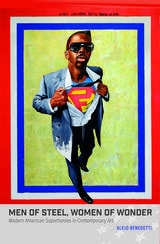
Men of Steel, Women of Wonder
Modern American Superheroes in Contemporary ArtAlejo Benedetti
University of Arkansas Press, 2019
Saturated in patriotic colors, Superman and Wonder Woman are about as American as baseball and apple pie. Superman, created in 1938, materialized as the brawny answer to the Great Depression, and when Wonder Woman arrived three years later, she supported her adopted country by fighting alongside Allied troops in World War II. As the proverbial mother and father of the superhero genre, these icons appeared to a society in crisis as unwavering beacons of national morality, a quality that lent them success on the battlefield—and on the newsstand.
As new crises arise our comic-book champions continue to be called into action. They adapt and evolve but remain the same potent, if flawed, symbols of the American way. The artists in Men of Steel, Women of Wonder, an exhibition organized by Crystal Bridges Museum of American Art, wrestle with Wonder Woman’s standing as a feminist icon, position Superman as a Soviet-era weapon, and question the immigration status of both characters. Featuring more than seventy artworks that range from loving endorsements to brutal critiques of American culture, this exhibition catalog reveals the enduring presence of these characters and the diverse ways artists employ them.

Mercy Mercy Me
Elena Georgiou
University of Wisconsin Press, 2003
Mervyn LeRoy Comes to Town
Murray Pomerance
Rutgers University Press, 2025
Meta-Morphing
Visual Transformation and the Culture of Quick-ChangeVivian Sobchack
University of Minnesota Press, 2000
Metafilm
Materialist Rhetoric and Reflexive CinemaChristopher Carter
The Ohio State University Press, 2018
Ultimately, Metafilm reframes materialism as a multimodal composing-in-action, or reflexive materialism, focusing on movies that dramatize their entanglement in economic and historical trauma while provoking forms of resistance during and after viewing. Carter contends that even as we recognize the division of social power in the films, we must also recognize how the concept is subversive and eludes control. In looking at the interplay between the films’ content and their production, circulation, and reception, Carter explores how the films persuade us to identify with onscreen worlds before probing our expectations—validating some, rejecting others, and sometimes proposing new ways of watching altogether.
Metagaming
Playing, Competing, Spectating, Cheating, Trading, Making, and Breaking VideogamesStephanie Boluk
University of Minnesota Press, 2017
The greatest trick the videogame industry ever pulled was convincing the world that videogames were games rather than a medium for making metagames. Elegantly defined as “games about games,” metagames implicate a diverse range of practices that stray outside the boundaries and bend the rules: from technical glitches and forbidden strategies to Renaissance painting, algorithmic trading, professional sports, and the War on Terror. In Metagaming, Stephanie Boluk and Patrick LeMieux demonstrate how games always extend beyond the screen, and how modders, mappers, streamers, spectators, analysts, and artists are changing the way we play.
Metagaming uncovers these alternative histories of play by exploring the strange experiences and unexpected effects that emerge in, on, around, and through videogames. Players puzzle through the problems of perspectival rendering in Portal, perform clandestine acts of electronic espionage in EVE Online, compete and commentate in Korean StarCraft, and speedrun The Legend of Zelda in record times (with or without the use of vision). Companies like Valve attempt to capture the metagame through international e-sports and online marketplaces while the corporate history of Super Mario Bros. is undermined by the endless levels of Infinite Mario, the frustrating pranks of Asshole Mario, and even Super Mario Clouds, a ROM hack exhibited at the Whitney Museum of American Art.
One of the only books to include original software alongside each chapter, Metagaming transforms videogames from packaged products into instruments, equipment, tools, and toys for intervening in the sensory and political economies of everyday life. And although videogames conflate the creativity, criticality, and craft of play with the act of consumption, we don’t simply play videogames—we make metagames.
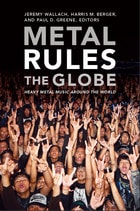
Metal Rules the Globe
Heavy Metal Music around the WorldJeremy Wallach, Harris M. Berger, and Paul D. Greene, eds.
Duke University Press, 2012
Contributors. Idelber Avelar, Albert Bell, Dan Bendrups, Harris M. Berger, Paul D. Greene, Ross Hagen, Sharon Hochhauser, Shuhei Hosokawa, Keith Kahn-Harris, Kei Kawano, Rajko Muršič,Steve Waksman, Jeremy Wallach, Robert Walser, Deena Weinstein, Cynthia P. Wong
Metamorphoses Of The Body
Jose Gil
University of Minnesota Press, 1998
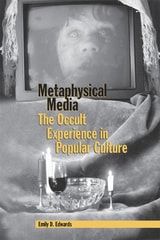
Metaphysical Media
The Occult Experience in Popular CultureEmily D. Edwards
Southern Illinois University Press, 2005
Metaphysical Media focuses on the blurred definitions of topics associated with the occult as they are presented in popular culture to show moving-image media as devices that help structure an understanding of the supernatural world. Edwards examines what media treatment of supernatural subjects and the very characteristics of the media themselves reveal about the persistence of the occult. She maintains that popular art has always had a close association with the paranormal or supernatural— sometimes in illustration of an ideology, sometimes in ridicule of it, and sometimes as invocation itself.
Beginning with an overview of the role of the media in contemporary society and in its use of the occult, Metaphysical Media looks at the properties of media technology that extend human senses beyond biological boundaries. Edwards then discusses specific media treatment of topics related to the occult, including witchcraft, atavism, reincarnation, out-of-body experiences, and lycanthropy. She outlines the interplay of media and folklore regarding taboos about the handling of the dead and investigates media stories about creatures that cross the boundaries between human, beast, and god.
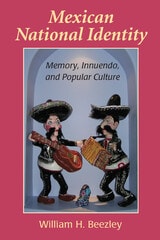
Mexican National Identity
Memory, Innuendo, and Popular CultureWilliam H. Beezley
University of Arizona Press, 2008
In the century that followed Mexico’s independence from Spain in 1821, Beezley maintains, sentiments of nationality were promulgated by people who were concerned not with the promotion of nationalism but with something far more immediate—the need to earn a living. These peddlers, vendors, actors, artisans, writers, publishers, and puppeteers sought widespread popular appeal so that they could earn money. According to Beezley, they constantly refined their performances, as well as the symbols and images they employed, in order to secure larger revenues.
Gradually they discovered the stories, acts, and products that attracted the largest numbers of paying customers. As Beezley convincingly asserts, out of “what sold to the masses” a collective national identity slowly emerged. Mexican National Identity makes an important contribution to the growing body of literature that explores the influences of popular culture on issues of national identity. By looking at identity as it was fashioned “in the streets,” it opens new avenues for exploring identity formation more generally, not just in Mexico and Latin American countries but in every nation.
Check out the New Books in History Interview with Bill Beezley!
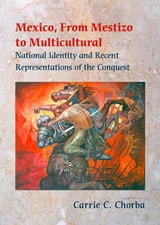
Mexico, From Mestizo to Multicultural
National Identity and Recent Representations of the ConquestCarrie C. Chorba
Vanderbilt University Press, 2006
Throughout the twentieth century, the post-revolutionary Mexican State had used mestizaje as a symbol of national unity and social integration. By the end of the millennium, however, Mexico had gone from a PRI-dominated, economically protectionist nation to a more democratic, economically globalizing one. More importantly, the homogenizing, mestizophile national identity that pervaded Mexico throughout the past century had given way to official admission of Mexico's ethnic and linguistic diversity--or 'pluriculture' according to President Salinas's 1992 constitutional revision.
This book is the first interdisciplinary study of literary, cinematic, and graphic images of Mexican national identity in the 1980s and '90s. Discussing, in depth, writings, films, and cartoons from a vast array of contemporary sources, Carrie C. Chorba creates a social history of this important shift.
Michael Bay
Lutz Koepnick
University of Illinois Press, 2018
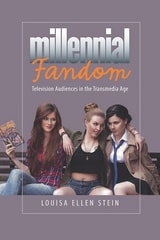
Millennial Fandom
Television Audiences in the Transmedia AgeLouisa Ellen Stein
University of Iowa Press, 2015
These conflicting narratives of entrepreneurial creativity and digital immorality operate to quell the growing threat represented by millennials’ media agency. With fan activities becoming ever more visible on social media platforms including YouTube, Facebook, LiveJournal, Twitter, Polyvore, and Tumblr, the fan has become the avatar of our digital hopes and fears.
In an ambitious study encompassing a wide range of media texts, including popular television series like Kyle XY, Glee, Gossip Girl, Veronica Mars, and Pretty Little Liars and online works like The Lizzie Bennet Diaries, as well as fan texts from blog posts and tweets to remix videos, YouTube posts, and image-sharing streams, author Louisa Ellen Stein traces the circulation of the contradictory tropes of millennial hope and millennial noir. Looking at what millennials do with digital technology demonstrates the molding impact of commercial representations, and at the same time reveals how millennials are undermining, negotiating, and changing those narratives.
This generation—and the fans it represents—is actively transforming the media landscape into a dynamic, culturally transgressive space of collective authorship. Offering a rich and complex vision of the relationship between fandom and millennial culture, Millennial Fandom will interest fans, millennials, students, and scholars of contemporary media culture alike.
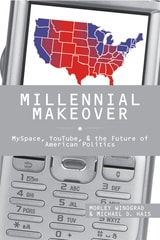
Millennial Makeover
MySpace, YouTube, and the Future of American PoliticsWinograd, Morley
Rutgers University Press, 2008
A 2008 New York Times Notable Book of the Year
It happens in America every four decades and it is about to happen again. America’s demand for change in the 2008 election will cause another of our country’s periodic political makeovers. This realignment, like all others before it, will result from the coming of age of a new generation of young Americans—the Millennial Generation—and the full emergence of the Internet-based communications technology that this generation uses so well. Beginning in 2008, almost everything about American politics and government will transform—voting patterns, the fortunes of the two political parties, the issues that engage the nation, and our government and its public policy.
Building on the seminal work of previous generational theorists,Morley Winograd and Michael D. Hais demonstrate and describe, for the first time, the two types of realignments—“idealist” and “civic”—that have alternated with one another throughout the nation’s history. Based on these patterns, Winograd and Hais predict that the next realignment will be very different from the last one that occurred in 1968. “Idealist” realignments, like the one put into motion forty years ago by the Baby Boomer Generation, produce, among other things, a political emphasis on divisive social issues and governmental gridlock. “Civic” realignments, like the one that is coming, and the one produced by the famous GI or “Greatest” Generation in the 1930s, by contrast, tend to produce societal unity, increased attention to and successful resolution of basic economic and foreign policy issues, and institution-building.
The authors detail the contours and causes of the country’s five previous political makeovers, before delving deeply into the generational and technological trends that will shape the next. The book’s final section forecasts the impact of the Millennial Makeover on the elections, issues, and public policies that will characterize America’s politics in the decades ahead.
For additional information go to:
Millennial Makeover website.
Millennial Makeover
MySpace, YouTube, and the Future of American PoliticsWinograd, Morley
Rutgers University Press, 2008
A 2008 New York Times Notable Book of the Year
It happens in America every four decades and it is about to happen again. America’s demand for change in the 2008 election will cause another of our country’s periodic political makeovers. This realignment, like all others before it, will result from the coming of age of a new generation of young Americans—the Millennial Generation—and the full emergence of the Internet-based communications technology that this generation uses so well. Beginning in 2008, almost everything about American politics and government will transform—voting patterns, the fortunes of the two political parties, the issues that engage the nation, and our government and its public policy.
Building on the seminal work of previous generational theorists,Morley Winograd and Michael D. Hais demonstrate and describe, for the first time, the two types of realignments—“idealist” and “civic”—that have alternated with one another throughout the nation’s history. Based on these patterns, Winograd and Hais predict that the next realignment will be very different from the last one that occurred in 1968. “Idealist” realignments, like the one put into motion forty years ago by the Baby Boomer Generation, produce, among other things, a political emphasis on divisive social issues and governmental gridlock. “Civic” realignments, like the one that is coming, and the one produced by the famous GI or “Greatest” Generation in the 1930s, by contrast, tend to produce societal unity, increased attention to and successful resolution of basic economic and foreign policy issues, and institution-building.
The authors detail the contours and causes of the country’s five previous political makeovers, before delving deeply into the generational and technological trends that will shape the next. The book’s final section forecasts the impact of the Millennial Makeover on the elections, issues, and public policies that will characterize America’s politics in the decades ahead.
For additional information go to:
Millennial Makeover website.
Millennials Killed the Video Star
MTV's Transition to Reality ProgrammingAmanda Ann Klein
Duke University Press, 2021
Mind The Gap
The Education Of A Nature WriterJohn Hay
University of Nevada Press, 2006

Mindful Movement
The Evolution of the Somatic Arts and Conscious ActionMartha Eddy
Intellect Books, 2016

Mirror, Mirror
Reflections on Philly Style, Finding My Voice, and Social JusticeElizabeth Wellington
Temple University Press, 2027
For award-winning fashion writer Elizabeth Wellington, style was initially less about labels and more about how she styled her looks. She knew what looked good and that what she wore was an essential form of self-expression. Mirror, Mirror collects thirty-six of Wellington’s columns for the Philadelphia Inquirer, where she has written about fashion, politics, and pop culture since 2002. Each chapter includes an opening essay defining the era and how Wellington fit into it along with a “Fashion Fast Forward” that reflects how both she and society have evolved.
Wellington started covering fashion when the industry was on the cusp of social and sartorial change. As trends evolved, so too did Wellington, who found her place as she defined Philadelphia’s style scene. She profiles local doyennes Joan Shepp and Toby Lerner and writes about finding the perfect jeans. Wellington also intertwines optics and social justice in columns about First Lady style, the power of the hoodie, and the impact of the CROWN Act, which protects against discrimination based on hair.
Writing thoughtfully about fashion with nostalgia and passion, Wellington covers retail, Fashion Week runways, and the changing political landscape. Mirror, Mirror showcases Wellington’s flair in her work as she writes about style and herself.

Mission Underway
The History of the Popular Culture Association/American Culture Association and the Popular Culture Movement 1967–2001Edited, Revised, and Updated by Ray B. Browne
University of Wisconsin Press, 2002

Mixed Feelings
Feminism, Mass Culture, and Victorian SensationalismCvetkovich, Ann
Rutgers University Press, 1992
Mixed-Race Superheroes
Sika A. Dagbovie-Mullins
Rutgers University Press, 2021
The essays in this collection contend with the multitude of ways that racial mixedness has been presented in superhero comics, films, television, and literature. They explore how superhero media positions mixed-race characters within a genre that has historically privileged racial purity and propagated images of white supremacy. The book considers such iconic heroes as Superman, Spider-Man, and The Hulk, alongside such lesser-studied characters as Valkyrie, Dr. Fate, and Steven Universe. Examining both literal and symbolic representations of racial mixing, this study interrogates how we might challenge and rewrite stereotypical narratives about mixed-race identity, both in superhero media and beyond.
Mixing It Up
Multiracial SubjectsEdited by SanSan Kwan and Kenneth Speirs
University of Texas Press, 2004
The United States Census 2000 presents a twenty-first century America in which mixed-race marriages, cross-race adoption, and multiracial families in general are challenging the ethnic definitions by which the nation has historically categorized its population. Addressing a wide spectrum of questions raised by this rich new cultural landscape, Mixing It Up brings together the observations of ten noted voices who have experienced multiracialism first-hand.
From Naomi Zack's "American Mixed Race: The United States 2000 Census and Related Issues" to Cathy Irwin and Sean Metzger's "Keeping Up Appearances: Ethnic Alien-Nation in Female Solo Performance," this diverse collection spans the realities of multiculturalism in compelling new analysis. Arguing that society's discomfort with multiracialism has been institutionalized throughout history, whether through the "one drop" rule or media depictions, SanSan Kwan and Kenneth Speirs reflect on the means by which the monoracial lens is slowly being replaced.
Itself a hybrid of memoir, history, and sociological theory, Mixing It Up makes it clear why the identity politics of previous decades have little relevance to the fluid new face of contemporary humanity.
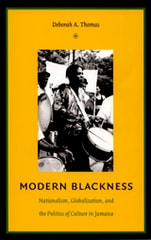
Modern Blackness
Nationalism, Globalization, and the Politics of Culture in JamaicaDeborah A. Thomas
Duke University Press, 2004
Thomas combines historical research with fieldwork she conducted in Jamaica between 1993 and 2003. Drawing on her research in a rural hillside community just outside Kingston, she looks at how Jamaicans interpreted and reproduced or transformed on the local level nationalist policies and popular ideologies about progress. With detailed descriptions of daily life in Jamaica set against a backdrop of postcolonial nation-building and neoliberal globalization, Modern Blackness is an important examination of the competing identities that mobilize Jamaicans locally and represent them internationally.
Modern Chinese Literary and Cultural Studies in the Age of Theory
Reimagining a FieldRey Chow, ed.
Duke University Press, 2000
One of the volume’s provocative suggestions is that the old model of area studies—an offshoot of U.S. Cold War strategy that found its anchorage in higher education—is no longer feasible for the diverse and multifaceted experiences that are articulated under the rubric of “Chineseness.” As Rey Chow argues in her introduction, the notion of a monolithic Chineseness bound ultimately to mainland China is, in itself, highly problematic because it recognizes neither the material realities of ethnic minorities within China nor those of populations in places such as Tibet, Taiwan, and post–British Hong Kong. Above all, this book demonstrates that, as the terms of a chauvinistic sinocentrism become obsolete, the critical use of theory—particularly by younger China scholars whose enthusiasm for critical theory coincides with changes in China’s political economy in recent years—will enable the emergence of fresh connections and insights that may have been at odds with previous interpretive convention.
Originally published as a special issue of the journal boundary 2, this collection includes two new essays and an afterword by Paul Bové that places its arguments in the context of contemporary cultural politics. It will have far-reaching implications for the study of modern China and will be of interest to scholars of theory and culture in general.
Contributors. Stanley K. Abe, Ien Ang, Chris Berry, Paul Bové, Sung-cheng Yvonne Chang, Rey Chow, Dorothy Ko, Charles Laughlin, Leung Ping-kwan, Kwai-cheung Lo, Christopher Lupke, David Der-wei Wang, Michelle Yeh

Modern Noise, Fluid Genres
Popular Music in Indonesia, 1997–2001Jeremy Wallach
University of Wisconsin Press, 2008
Modern Occult Rhetoric
Mass Media and the Drama of Secrecy in the Twentieth CenturyJoshua Gunn
University of Alabama Press, 2005
Uncovering how secrecy, symbolism, and hidden meanings shape modern culture and communication.
The occult has traditionally been understood as the study of secrets of the practice of mysticism or magic. This book broadens our understanding of the occult by treating it as a rhetorical phenomenon tied to language and symbols and more central to American culture than is commonly assumed.
Joshua Gunn approaches the occult as an idiom, examining the ways in which acts of textual criticism and interpretation are occultic in nature, as evident in practices as diverse as academic scholarship, Freemasonry, and television production. Gunn probes, for instance, the ways in which jargon employed by various social and professional groups creates barriers and fosters secrecy. From the theory wars of cultural studies to the Satanic Panic that swept the national mass media in the late 1980s and early 1990s, Gunn shows how the paradox of a hidden, buried, or secret meaning that cannot be expressed in language appears time and time again in Western culture.
These recurrent patterns, Gunn argues, arise from a generalized, popular anxiety about language and its limitations. Ultimately, Modern Occult Rhetoric demonstrates the indissoluble relationship between language, secrecy, and publicity, and the centrality of suspicion in our daily lives.
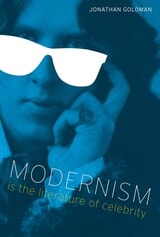
Modernism Is the Literature of Celebrity
By Jonathan Goldman
University of Texas Press, 2011
The phenomenon of celebrity burst upon the world scene about a century ago, as movies and modern media brought exceptional, larger-than-life personalities before the masses. During the same era, modernist authors were creating works that defined high culture in our society and set aesthetics apart from the middle- and low-brow culture in which celebrity supposedly resides. To challenge this ingrained dichotomy between modernism and celebrity, Jonathan Goldman offers a provocative new reading of early twentieth-century culture and the formal experiments that constitute modernist literature's unmistakable legacy. He argues that the literary innovations of the modernists are indeed best understood as a participant in the popular phenomenon of celebrity.
Presenting a persuasive argument as well as a chronicle of modernism's and celebrity's shared history, Modernism Is the Literature of Celebrity begins by unraveling the uncanny syncretism between Oscar Wilde's writings and his public life. Goldman explains that Wilde, in shaping his instantly identifiable public image, provided a model for both literary and celebrity cultures in the decades that followed. In subsequent chapters, Goldman traces this lineage through two luminaries of the modernist canon, James Joyce and Gertrude Stein, before turning to the cinema of mega-star Charlie Chaplin. He investigates how celebrity and modernism intertwine in the work of two less obvious modernist subjects, Jean Rhys and John Dos Passos. Turning previous criticism on its head, Goldman demonstrates that the authorial self-fashioning particular to modernism and generated by modernist technique helps create celebrity as we now know it.
Monster Theory Returns
Jeffrey Jerome Cohen
University of Minnesota Press, 2027
Exploring monsters as critical guides to understanding what it means to be human in a perilous world
Thirty years after the publication of Jeffrey Jerome Cohen’s groundbreaking Monster Theory, the field it helped create has grown into a dynamic and influential area of interdisciplinary scholarship. Monster Theory Returns gathers twenty-six original essays exploring an extraordinary range of monstrous figures, from demons and vampires to microbes and emerging posthuman forms, illuminating urgent questions of belonging, political violence, environmental change, and the boundaries of the human itself.
Combining historical depth with a global perspective, these lively essays show that monsters are far more than figures of fear. They are powerful cultural tools for thinking through crises in a perilous and rapidly changing world.
Contributors: U. Melissa Anyiwo, U of Scranton; Benjamin Ash, Arizona State U; Stephen T. Asma, Columbia College, Chicago; Michael M. Chemers, U of California, Santa Cruz; Eli Cumings, Columbia U; Rebecca Duncan, Linnaeus U; Michael Dylan Foster, U of California, Davis; Renée Fox, U of California, Santa Cruz; Kaja Franck, U of Hertfordshire; Rosemarie Garland-Thomson, Emory U; Brandon R. Grafius, Ecumenical Theological Seminary; Anya Heise-von der Lippe, U of Tübingen; Mary Kate Hurley, Ohio U; Anson Koch-Rein, U of North Carolina; Agnieszka Kotwasińska, U of Warsaw; Riva Lehrer; Sherry C.M. Lindquist, Western Illinois U; Iyad Malouf, Tel Aviv U; Asa Simon Mittman, California State U, Chico; Kirsten Møllegaard, U of Hawai‘i at Hilo; Alan S. Montroso, U of Maryland; David Robinson; Margrit Shildrick, Stockholm U; Jeffrey Andrew Weinstock, Central Michigan U; Emily Zarka, Arizona State U
Retail e-book files for this title are screen-reader friendly with images accompanied by short alt text and/or extended descriptions.
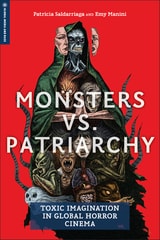
Monsters vs. Patriarchy
Toxic Imagination in Global Horror CinemaPatricia Saldarriaga
Rutgers University Press, 2025
Monsters vs. Patriarchy examines female monstrosity as it appears in horror films from around the world and considers specific political, scientific, and historical contexts to better understand how we construct and reconstruct monstrosity, using an intersectional approach to examine the imposition of gender and racial hierarchies that support national power structures. The authors contend that monstrous female cinematic subjects, including ghosts, witches, cannibals, and posthuman beings, are becoming empowered, using the tools of their monstrification to smash the colonial, white supremacist, and misogynist structures that created them.
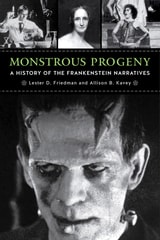
Monstrous Progeny
A History of the Frankenstein NarrativesFriedman, Lester D
Rutgers University Press, 2016
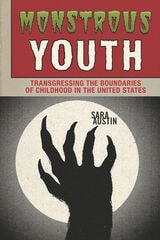
Monstrous Youth
Transgressing the Boundaries of Childhood in the United StatesSara Austin
The Ohio State University Press, 2022
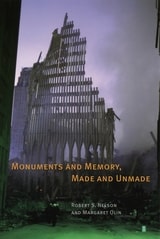
Monuments and Memory, Made and Unmade
Edited by Robert S. Nelson and Margaret Olin
University of Chicago Press, 2003
Examining how monuments preserve memory, these essays demonstrate how phenomena as diverse as ancient drum towers in China and ritual whale-killings in the Pacific Northwest serve to represent and negotiate time. Connecting that history to the present with an epilogue on the World Trade Center, Monuments and Memory, Made and Unmade is pertinent not only for art historians but for anyone interested in the turbulent history of monuments—a history that is still very much with us today.
Contributors:
Stephen Bann, Jonathan Bordo, Julia Bryan-Wilson, Jas Elsner, Tapati Guha-Thakurta, Robert S. Nelson, Margaret Olin, Ruth B. Phillips, Mitchell Schwarzer, Lillian Lan-ying Tseng, Richard Wittman, Wu Hung
More Peoples of Las Vegas
One City, Many FacesJerry L Simich
University of Nevada Press, 2010
The remarkable economic growth of Las Vegas between 1980 and 2007 created a population boom and a major increase in the ethnic and religious diversity of the city. Today, over 21 percent of the city’s population is foreign born, and over 30 percent speak a language other than English at home. The local court system offers interpreters in 82 languages, and in 2005/2006, for example, more than 11,000 people, originating from 138 countries, were naturalized there as American citizens.More Peoples of Las Vegas extends the survey of this city’s cosmopolitan population begun in The Peoples of Las Vegas (University of Nevada Press, 2005). As in the previous book, this volume includes well-established groups like the Irish and Germans, and recently arrived groups like the Ethiopians and Guatemalans. Essays describe the history of each group in Las Vegas and the roles they play in the life and economy of the city. The essays also explore the influence of modern telecommunications and accessible air travel, showing how these factors allow newcomers to create transnational identities and maintain ties with families and culture back home. They also examine the role of local institutions—including clubs, religious organizations, shops, restaurants, and newspapers and other media—in helping immigrants maintain their ethnic and religious identities and in disseminating national and even regional cultures of origin.More Peoples of Las Vegas adds to our awareness of the rich and varied ethnic and religious character of Las Vegans. In a broader context, it offers thoughtful perspectives on the impact of globalization on a major American city and on the realities of immigrant life in the twenty-first century.
More Philadelphia Murals and the Stories They Tell
Jane Golden
Temple University Press, 2006
More Tales of the Defective Detective in the Pulps
Gary Hoppenstand, Garyn G. Roberts, and Ray B. Browne
University of Wisconsin Press, 1985
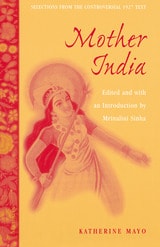
Mother India
Selections from the Controversial 1927 Text, Edited and with an Introduction by Mrinalini SinhaKatherine Mayo
University of Michigan Press, 2000
Mrinalini's Sinha's edition provides selections of this controversial book and commentary on the Mother India phenomenon. It also reprints a range of responses from Mayo's contemporaries. Sinha's edition works to locate the book and the controversy it incited in the context of U.S. domestic, British Imperial, and Indian nationalist politics. Unlike previous editions, Sinha's examines the history of cultural feminisms and the relations between women's movements in the United States, Britain, and India; the examination of these different movements reveals intriguing insights into the nature of the varied reactions to Mayo's book. The edition includes several formerly obscure contemporary responses to Mother India from representatives of the women's movement and of the anti-caste movement in India.
Intended as a tool for students and teachers alike, this book will be an important text in the field of women's studies, cultural studies, political science, history, and religion, among others.
Mrinalini Sinha is Associate Professor of History, Southern Illinois University. She is the author of Colonial Masculinity: The 'Manly Englishman' and the 'Effeminate Bengali' in the Late Nineteenth Century.
Mother of Detective Fiction
The Life and Works of Anna Katharine GreenPatricia D. Maida
University of Wisconsin Press, 1989
In examining the life and works of Anna Katharine Green, one discovers a slice of American life: in the social events of New York City, in the plight of young working women, in the moral dilemmas of upright citizens pursuing the American dream.

Movie Censorship and American Culture
Francis G. Couvares
University of Massachusetts Press, 2006
From the earliest days of public outrage over “indecent” nickelodeon shows, Americans have worried about the power of the movies. The eleven essays in this book examine nearly a century of struggle over cinematic representations of sex, crime, violence, religion, race, and ethnicity, revealing that the effort to regulate the screen has reflected deep social and cultural schisms.
In addition to the editor, contributors include Daniel Czitrom, Marybeth Hamilton, Garth Jowett, Charles Lyons, Richard Maltby, Charles Musser, Alison M. Parker, Charlene Regester, Ruth Vasey, and Stephen Vaughn. Together they make it clear that censoring the movies is more than just a reflex against "indecency," however defined. Whether censorship protects the vulnerable or suppresses the creative, it is part of a broader culture war that breaks out recurrently as Americans try to come to terms with the market, the state, and the plural society in which they live.
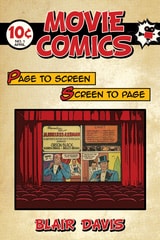
Movie Comics
Page to Screen/Screen to PageDavis, Blair
Rutgers University Press, 2017
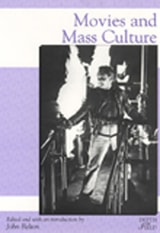
Movies & Mass Culture
Belton, John
Rutgers University Press, 1995
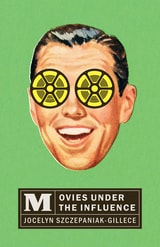
Movies under the Influence
Jocelyn Szczepaniak-Gillece
University of Minnesota Press, 2024
A cultural history of the enduring relationship between film spectatorship and intoxicating substances
Movies under the Influence charts the entangled histories of moviegoing and mind-altering substances from early cinema through the psychedelic 1970s. Jocelyn Szczepaniak-Gillece examines how the parallel trajectories of these two enduring aspects of American culture, linked by their ability to influence individual and collective consciousness, resulted in them being treated and regulated in similar ways. Rather than looking at representations of drug use within film, she regards cinema and intoxicants as kindred experiences of immersion that have been subject to corresponding forces of ideology and power.
Exploring the effects of intoxicants such as caffeine, nicotine, alcohol, marijuana, and psychedelics on film spectatorship, Szczepaniak-Gillece demonstrates how American movie theaters sought to cultivate a dual identity, presenting themselves as both a place of wholesome entertainment and a shadowy zone of illicit behavior. Movies under the Influence highlights the various legislative, legal, and corporate powers that held sway over the darkened anonymity of theaters, locating the convergence of moviegoing and drug use as a site of mediation and social control in America.
As much as substances and cinema are points where power intervenes, they are also settings of potential transcendence, and Movies under the Influence maintains this paradox as a necessary component of American film history. Recontextualizing a wide range of films, from Hollywood to the avant-garde, this book examines the implicit relationship intoxicants suggest between mass media, spectatorship, and governmental regulation and provides a new angle from which to understand cinema’s lasting role in evolving American culture.
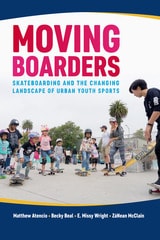
Moving Boarders
Skateboarding and the Changing Landscape of Urban Youth SportsMatthew Atencio
University of Arkansas Press, 2018
This excellent treatise on the contemporary youth sports scene examines how modern families embrace skateboarding and the role commerce plays in this unexpected new parent culture, and highlights how private corporations, community leaders, parks and recreation departments, and nonprofits like the Tony Hawk Foundation have united to energize skate parks—like soccer fields before them—as platforms for community engagement and the creation of social and economic capital.

Moving On
The Heroines of Shirley Ann Grau, Anne Tyler, and Gail GodwinSusan S. Kissel
University of Wisconsin Press, 1996
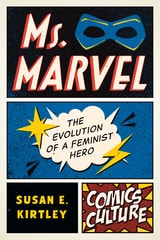
Ms. Marvel
The Evolution of a Feminist HeroSusan E. Kirtley
Rutgers University Press, 2027
Since her first appearance as a superhero in 1977, Ms. Marvel’s most frequent foe has, unfortunately, been herself. In the character’s earliest years, Carol Danvers struggled with two personalities that could not coexist. Later, Sharon Ventura wrestled with choosing between two bodies, one her preferred form and one deemed acceptable by society. Then Carol Danvers returned to the title and fought with a bevy of alternative versions of herself from various dimensions before battling the Dark Avenger version of Ms. Marvel, Karla Sofen. Upon assuming the title after Danvers took on the mantle of Captain Marvel, Kamala Khan inherited this seemingly endless ordeal: clashing with alternate versions of herself, as well as the doppelgänger Stormranger, and even with her own reanimated corpse.
In every iteration, the iconic hero associated with the honorific of women’s liberation continues to act as her own archnemesis, and the self remains the ultimate foe, suggesting that in every universe, women are their own worst enemy.
Much Ado about Culture
North American Trade DisputesKeith Acheson and Christopher Maule
University of Michigan Press, 2001
Multiple Modernities
Cinemas & Popular Media In Transcultural East AsiaJenny Lau
Temple University Press, 2002