Results by title
4127 books match the query 'Science' and 197 start with m

Mirage
Florida and the Vanishing Water of the Eastern U.S.Cynthia Barnett
University of Michigan Press, 2007
“Never before has the case been more compellingly made that America’s dependence on a free and abundant water supply has become an illusion. Cynthia Barnett does it by telling us the stories of the amazing personalities behind our water wars, the stunning contradictions that allow the wettest state to have the most watered lawns, and the thorough research that makes her conclusions inescapable. Barnett has established herself as one of Florida’s best journalists and Mirage is a must-read for anyone who cares about the future of the state.”
—Mary Ellen Klas, Capital Bureau Chief, Miami Herald
“Mirage is the finest general study to date of the freshwater-supply crisis in Florida. Well-meaning villains abound in Cynthia Barnett’s story, but so too do heroes, such as Arthur R. Marshall Jr., Nathaniel Reed, and Marjorie Harris Carr. The author’s research is as thorough as her prose is graceful. Drinking water is the new oil. Get used to it.”
—Michael Gannon, Distinguished Professor of history, University of Florida, and author of Florida: A Short History
“With lively prose and a journalist’s eye for a good story, Cynthia Barnett offers a sobering account of water scarcity problems facing Florida—one of our wettest states—and the rest of the East Coast. Drawing on lessons learned from the American West, Mirage uses the lens of cultural attitudes about water use and misuse to plead for reform. Sure to engage and fascinate as it informs.”
—Robert Glennon, Morris K. Udall Professor of Law and Public Policy, University of Arizona, and author of Water Follies: Groundwater Pumping and the Fate of America’s Fresh Waters
Part investigative journalism, part environmental history, Mirage reveals how the eastern half of the nation—historically so wet that early settlers predicted it would never even need irrigation—has squandered so much of its abundant freshwater that it now faces shortages and conflicts once unique to the arid West.
Florida’s parched swamps and supersized residential developments set the stage in the first book to call attention to the steady disappearance of freshwater in the American East, from water-diversion threats in the Great Lakes to tapped-out freshwater aquifers along the Atlantic seaboard.
Told through a colorful cast of characters including Walt Disney, Jeb Bush and Texas oilman Boone Pickens, Mirage ferries the reader through the key water-supply issues facing America and the globe: water wars, the politics of development, inequities in the price of water, the bottled-water industry, privatization, and new-water-supply schemes.
From its calamitous opening scene of a sinkhole swallowing a house in Florida to its concluding meditation on the relationship between water and the American character, Mirage is a compelling and timely portrait of the use and abuse of freshwater in an era of rapidly vanishing natural resources.
Misbehaving Science
Controversy and the Development of Behavior GeneticsAaron Panofsky
University of Chicago Press, 2014
In Misbehaving Science, Aaron Panofsky traces the field of behavior genetics back to its origins in the 1950s, telling the story through close looks at five major controversies. In the process, Panofsky argues that persistent, ungovernable controversy in behavior genetics is due to the broken hierarchies within the field. All authority and scientific norms are questioned, while the absence of unanimously accepted methods and theories leaves a foundationless field, where disorder is ongoing. Critics charge behavior geneticists with political motivations; champions say they merely follow the data where they lead. But Panofsky shows how pragmatic coping with repeated controversies drives their scientific actions. Ironically, behavior geneticists’ struggles for scientific authority and efforts to deal with the threats to their legitimacy and autonomy have made controversy inevitable—and in some ways essential—to the study of behavior genetics.
Misconceiving Merit
Paradoxes of Excellence and Devotion in Academic Science and EngineeringMary Blair-Loy and Erin A. Cech
University of Chicago Press, 2022
In Misconceiving Merit, sociologists Mary Blair-Loy and Erin A. Cech uncover the cultural foundations of a paradox. On one hand, academic science, engineering, and math revere meritocracy, a system that recognizes and rewards those with the greatest talent and dedication. At the same time, women and some racial and sexual minorities remain underrepresented and often feel unwelcome and devalued in STEM. How can academic science, which so highly values meritocracy and objectivity, produce these unequal outcomes?
Blair-Loy and Cech studied more than five hundred STEM professors at a top research university to reveal how unequal and unfair outcomes can emerge alongside commitments to objectivity and excellence. The authors find that academic STEM harbors dominant cultural beliefs that not only perpetuate the mistreatment of scientists from underrepresented groups but hinder innovation. Underrepresented groups are often seen as less fully embodying merit compared to equally productive white and Asian heterosexual men, and the negative consequences of this misjudgment persist regardless of professors’ actual academic productivity. Misconceiving Merit is filled with insights for higher education administrators working toward greater equity as well as for scientists and engineers striving to change entrenched patterns of inequality in STEM.

Mismatch
Form-Function Incongruity and the Architecture of GrammarEdited by Elaine J. Francis and Laura A. Michaelis
CSLI, 2002

Missionary Scientists
Jesuit Science in Spanish South America, 1570-1810Andres I. Prieto
Vanderbilt University Press, 2011
What becomes clear throughout Missionary Scientists is that early missionaries were adept in adapting to local practices, in order to both understand the scientific foundations of these techniques and ingratiate themselves to the native communities.
Spanning the disciplines of history, religion, and Latin American studies, Missionary Scientists reshapes our understanding of the importance of the Jesuit missions in establishing early scientific traditions in the New World.

Missions for Science
U.S. Technology and Medicine in America's African WorldMcBride, David
Rutgers University Press, 2002
--What specific technologies and medical resources were transferred by U.S. institutions to black populations centers and why?
--How did the professed aims of U.S. technical projects, public health, and military activities differ from their actual effects and consequences?
--Did the U.S. technical transfer amount to a form of political hegemony?
--What lessons can we learn from the history of technology and medicine in these key geographic regions?
Missions for Science is the first book to explain how modern industrial and scientific advances shaped black Atlantic population centers. McBride is the first to provide a historical analysis of how shifting environmental factors and disease-control aid from the United States affected the collective development of these populations. He also discusses how independent black Atlantic republics with close historical links to the United States independently envisioned and attempted to use science and technology to build their nations.

Missouri Geology
Three Billion Years of Volcanoes, Seas, Sediments, and ErosionA. G. Unklesbay & Jerry D. Vineyard
University of Missouri Press, 1992
Intended for the general reader, Missouri Geology is a well-illustrated introduction to the fascinating geology of Missouri.

Mixed Medicines
Health and Culture in French Colonial CambodiaSokhieng Au
University of Chicago Press, 2011
During the first half of the twentieth century, representatives of the French colonial health services actively strove to expand the practice of Western medicine in the frontier colony of Cambodia. But as the French physicians ventured beyond their colonial enclaves, they found themselves negotiating with the plurality of Cambodian cultural practices relating to health and disease. These negotiations were marked by some success, a great deal of misunderstanding, and much failure.
Bringing together colorful historical vignettes, social and anthropological theory, and quantitative analyses, Mixed Medicines examines these interactions between the Khmer, Cham, and Vietnamese of Cambodia and the French, documenting the differences in their understandings of medicine and revealing the unexpected transformations that occurred during this period—for both the French and the indigenous population.
Mixed Messages
Cultural and Genetic Inheritance in the Constitution of Human SocietyRobert A. Paul
University of Chicago Press, 2015
Examining a wide array of cultures, Paul reveals how the inherent tensions between these two modes of transmission generate many of the features of human society, such as marriage rules, initiation rituals, gender asymmetry, and sexual symbolism. Exploring differences in the requirements, range, and agendas of genetic and symbolic reproduction, he shows that a properly conceived dual inheritance model does a better job of accounting for the distinctive character of actual human societies than either evolutionary or socio-cultural construction theories can do alone. Ultimately this book offers a powerful call for a synthesis of the traditions inspired by Darwin, Durkheim, and Freud—one that is critically necessary if we are to advance our understanding of human social life.
Mixed Methods Research
Exploring the Interactive ContinuumCarolyn S. Ridenour and Isadore Newman
Southern Illinois University Press, 2008
In Mixed Methods Research: Exploring the Interactive Continuum, the second edition of Qualitative-Quantitative Research Methodology, authors Carolyn S. Ridenour and Isadore Newman reject the artificial dichotomy between qualitative and quantitative research strategies in the social and behavioral sciences and argue that the two approaches are neither mutually exclusive nor interchangeable; rather, the actual relationship between the two paradigms is one of isolated events on a continuum of scientific inquiry.
In their original model for research—the “interactive continuum”—Ridenour and Newman emphasize four major points: that the research question dictates the selection of research methods; that consistency between question and design can lead to a method of critiquing research studies in journals; that the interactive continuum model is built around the place of theory; and that the assurance of validity of research is central to all studies. With this edition, the authors incorporate the concept of research purpose into their analysis.
To contextualize their new argument and to propose strategies for enhancement, Ridenour and Newman review the historical and contemporary debates around research frameworks and define the nature of scientific validity. Establishing five criteria that render a study “scientific,” they propose ways to strengthen validity in research design. They argue that by employing multiple methods, researchers may enhance the quality of their research outcomes. By integrating the quantitative research standards of internal and external validity and the qualitative research standards of trustworthiness, Ridenour and Newman suggest a principle for mixed methods research.
Ridenour and Newman apply this theoretical concept to a systematic analysis of four published research studies, with special emphasis on the consistency among research purpose, question, and design.
Ridenour and Newman have completely rewritten their conclusions in light of their evolving analyses. They incorporate their most recent ideas into the qualitative-quantitative continuum and emphasize the “model of consistency” as key for research to meet the standard of “scientific.”
This book occupies a vital place at the junction of methodological theory and scientific practice and makes connections between the traditionally separate realms of quantitative and qualitative research.
Mobile Urbanism
Cities and Policymaking in the Global AgeEugene McCann
University of Minnesota Press, 2010
The essays in this volume argue for a theorizing of both urban policymaking and place-making that understands them as groups of territorial and relational geographies. It broadens our comprehension of agents of transference, reconceiving how policies are made mobile, and acknowledging the importance of interlocal policy mobility. Through the richness of its empirical examples from Europe, North America, South America, Africa, Asia, and Australia, contributors bring to light the significant methodological challenges that researchers face in the study of an urban–global, territorial–relational conceptualization of cities and suggest productive new approaches to understanding urbanism in a networked world.
Contributors: S. Harris Ali, York U, Toronto; Allan Cochrane, Open U; Roger Keil , York U, Toronto; Doreen Massey, Open U; Donald McNeill, U of Western Sydney; Jamie Peck, U of British Columbia; Jennifer Robinson, University College London.

Mobility and the Small Town, 1900-1930
Norman T. Moline
University of Chicago Press, 1971

Mobilizing Science
Movements, Participation, and the Remaking of KnowledgeSabrina McCormick
Temple University Press, 2009
Mobilizing Science theoretically and empirically explores the rise of a new kind of social movement—one that attempts to empower citizens through the use of expert scientific research. Sabrina Mccormick advances theories of social movements, development, and science and technology studies by examining how these fields intersect in cases around the globe.
Mccormick grounds her argument in two very different case studies: the anti-dam movement in Brazil and the environmental breast cancer prevention movement in the U.S. These, and many other cases, show that the scientization of society, where expert knowledge is inculcated in multiple institutions and lay people are marginalized, give rise to these new types of movements. While activists who consequently engage in science often instigate new methods that result in new findings and scientific tools, these movements still often fail due to superficial participatory institutions and tightly knit corporate/government relationships.

Modal Logic and Process Algebra
Edited by Alban Ponse, Maarten de Rijke, and Yde Venema
CSLI, 1995
Model Behavior
Animal Experiments, Complexity, and the Genetics of Psychiatric DisordersNicole C. Nelson
University of Chicago Press, 2018
Behavior genetics is a particularly challenging field for making a clear-cut case that mouse experiments work, because researchers believe that both the phenomena they are studying and the animal models they are using are complex. These assumptions of complexity change the nature of what laboratory work produces. Whereas historical and ethnographic studies traditionally portray the laboratory as a place where scientists control, simplify, and stabilize nature in the service of producing durable facts, the laboratory that emerges from Nelson’s extensive interviews and fieldwork is a place where stable findings are always just out of reach. The ongoing work of managing precarious experimental systems means that researchers learn as much—if not more—about the impact of the environment on behavior as they do about genetics. Model Behavior offers a compelling portrait of life in a twenty-first-century laboratory, where partial, provisional answers to complex scientific questions are increasingly the norm.

Model-Based Parameter Estimation in Computational Electromagnetics
Edmund K. Miller
The Institution of Engineering and Technology, 2026
Modeling Nature
Sharon E. Kingsland
University of Chicago Press, 1995
Modern Cows and Bovine Transformations
The Remaking of India's Cattle, 1790-1950David Arnold
University of Chicago Press, 0
Examines how India’s cattle underwent profound changes during the years of British colonial rule.
Drawing on extensive, untapped archives, Modern Cowsand Bovine Transformations illustrates the radical remaking of India’s cattle against the backdrop of colonial policies, environmental change, and anticolonial politics. Historian David Arnold examines the history of cows in India from 1790 to 1950, focusing on science, technology, and medicine to provide a secular account of imperial animal husbandry.
Doing justice to the wide variety of Indian cattle breeds, Arnold unpacks “bovine technology” and its subaltern linkages, covering topics such as the role of cattle in agriculture and the military; haulage and transport; breeding strategies; bacteriology and nutrition science, and India’s milk revolution. He also examines the dispersal of Indian cattle around the globe and the role that colonial policies played in spreading knowledge of Indian cattle breeds and facilitating their export. Finally, he addresses the “cattle crisis” brought on by famines, droughts, and disease, and disputes between colonial rulers and Hindu nationalists. He concludes with the impact of World War II and Partition on bovine populations, illustrating the consequences for independent India’s attempts to restore the milk supply and rebuild cattle breeds while also respecting the Hindu cow protection agenda. In the end, Arnold argues, the history of cattle in India provides us with a new way of understanding the power of the colonial state, its ambitions to transform India, its appropriation of the Indian subcontinent’s resources, and the myriad contradictions of its policies.
Modern Nature
The Rise of the Biological Perspective in GermanyLynn K. Nyhart
University of Chicago Press, 2009
In Modern Nature,Lynn K. Nyhart traces the emergence of a “biological perspective” in late nineteenth-century Germany that emphasized the dynamic relationships among organisms, and between organisms and their environment. Examining this approach to nature in light of Germany’s fraught urbanization and industrialization, as well the opportunities presented by new and reforming institutions, she argues that rapid social change drew attention to the role of social relationships and physical environments in rendering a society—and nature—whole, functional, and healthy.
This quintessentially modern view of nature, Nyhart shows, stood in stark contrast to the standard naturalist’s orientation toward classification. While this new biological perspective would eventually grow into the academic discipline of ecology, Modern Nature locates its roots outside the universities, in a vibrant realm of populist natural history inhabited by taxidermists and zookeepers, schoolteachers and museum reformers, amateur enthusiasts and nature protectionists.
Probing the populist beginnings of animal ecology in Germany, Nyhart unites the history of popular natural history with that of elite science in a new way. In doing so, she brings to light a major orientation in late nineteenth-century biology that has long been eclipsed by Darwinism.
Modularity in Development and Evolution
Edited by Gerhard Schlosser and Günter P. Wagner
University of Chicago Press, 2004
A timely synthesis of a crucial topic, Modularity in Development and Evolution shows the invaluable insights modules can give into both developmental complexities and their evolutionary origins.

Molecular Capture
The Animation of BiologyAdam Nocek
University of Minnesota Press, 2021
How computer animation technologies became vital visualization tools in the life sciences
Who would have thought that computer animation technologies developed in the second half of the twentieth century would become essential visualization tools in today’s biosciences? This book is the first to examine this phenomenon. Molecular Capture reveals how popular media consumption and biological knowledge production have converged in molecular animations—computer simulations of molecular and cellular processes that immerse viewers in the temporal unfolding of molecular worlds—to produce new regimes of seeing and knowing.
Situating the development of this technology within an evolving field of historical, epistemological, and political negotiations, Adam Nocek argues that molecular animations not only represent a key transformation in the visual knowledge practices of life scientists but also bring into sharp focus fundamental mutations in power within neoliberal capitalism. In particular, he reveals how the convergence of the visual economies of science and entertainment in molecular animations extends neoliberal modes of governance to the perceptual practices of scientific subjects. Drawing on Alfred North Whitehead’s speculative metaphysics and Michel Foucault’s genealogy of governmentality, Nocek builds a media philosophy well equipped to examine the unique coordination of media cultures in this undertheorized form of scientific media. More specifically, he demonstrates how governmentality operates across visual practices in the biosciences and the popular mediasphere to shape a molecular animation apparatus that unites scientific knowledge and entertainment culture.
Ultimately, Molecular Capture proposes that molecular animation is an achievement of governmental design. It weaves together speculative media philosophy, science and technology studies, and design theory to investigate how scientific knowledge practices are designed through media apparatuses.

Molecular Politics
Developing American and British Regulatory Policy for Genetic Engineering, 1972-1982Susan Wright
University of Chicago Press, 1994
In this comparative study of the development of regulatory policy for genetic engineering in the United States and the United Kingdom, Susan Wright analyzes government responses to the struggles among corporations, scientists, universities, trade unions, and public interest groups over regulating this new field. Drawing on archival materials, government records, and interviews with industry executives, politicians, scientists, trade unionists, and others on both sides of the Atlantic, Molecular Politics provides a comprehensive account of a crucial set of policy decisions and explores their implications for the political economy of science.
By combining methods from political science and the history of science, Wright advances a provocative interpretation of the evolution of genetic engineering policy and makes a major contribution to science and public policy studies.
Monarchs, Ministers, and Maps
The Emergence of Cartography as a Tool of Government in Early Modern EuropeEdited by David Buisseret
University of Chicago Press, 1992
consolidate their power realized that better knowledge of
their lands would strengthen their control over them. By
1550, the cartographer's art had already become an important
instrument for bringing territories under the control of
centralized government; increasing governmental reliance on
maps stimulated the refinement of cartographic techniques
throughout the following century.
This volume, a detailed survey of the political uses of
cartography between 1400 and 1700 in Italy, France, England,
Poland, Austria, and Spain, answers these questions: When
did monarchs and ministers begin to perceive that maps could
be useful in government? For what purposes were maps
commissioned? How accurate and useful were they? How did
cartographic knowledge strengthen the hand of government?
The chapters offer new insights into the development of
cartography and its role in European history.
Contributors to the volume are John Marino, Peter
Barber, David Buisseret, Geoffrey Parker, James Vann, and
Michael J. Mikòs.

Mondo Nano
Fun and Games in the World of Digital MatterColin Milburn
Duke University Press, 2015

Money Trees
The Douglas Fir and American Forestry, 1900-1944Emily K. Brock
Oregon State University Press, 2015
Money Trees is an interdisciplinary history of the crucial decades that shaped the modern American conception of the value of the forest. It begins with early 20th century environmental changes in the Douglas Fir forests of the Pacific Northwest, which led to increasing divisiveness and controversy among foresters. Brock balances this regional story with a national view of the intellectual and political currents that governed forest management, marshaling archival evidence from industry, government, and scientific sources.
An important contribution to environmental scholarship, Money Trees offers a nuanced vision of forestry’s history and its past relationship to both wilderness activism and scientific ecology. With fresh perspectives on well-known environmental figures such as Bob Marshall and Gifford Pinchot, it will add to the conversation among scholars in environmental history, history of science, and the history of the American West. It will be welcomed as a key resource across the spectrum of environmental studies, and by anyone interested in natural resources, land management, the role of science in environmentalism, and the modern wilderness movement.
Monitoring, Simulation, and Management of Visitor Landscapes
Randy Gimblett
University of Arizona Press, 2008
Conventional methods used in the planning and management of human-landscape interactions fall far short of the needs of today’s land management professionals. Monitoring, Simulation, and Management of Visitor Landscapes presents a growing body of applied research that provides decision makers with tools to maintain the ecological integrity of public places by evaluating the impacts of humans in various landscapes across space and time. This timely volume, available in both print and electronic editions, presents the latest research in this field, specifically focusing on the intersection of research and applied techniques. The contributors examine environmental management from around the world, including river traffic analysis in Melbourne, Australia; wilderness solitude and land use in the backcountry recreation areas of North America; the spatial modeling of visitor behavior at recreational areas near Vienna, Austria; the application of visibility studies and data from automatic visitor counters to simulation models in Denmark; and the integration of recreation and biodiversity in high-use environments in the Netherlands. This invaluable reference will help land managers and policy makers construct strategies for evaluating interactions between humans and the environment and expand the model of land management to include social and geographic, as well as environmental, factors.
Monkeytalk
Inside the Worlds and Minds of PrimatesJulia Fischer
University of Chicago Press, 2017
An eye-opening blend of storytelling, memoir, and science, Monkeytalk takes us into the field and the world’s primate labs to investigate the intricacies of primate social mores through the lens of communication. After first detailing the social interactions of key species from her fieldwork—from baby-wielding male Barbary macaques, who use infants as social accessories in a variety of interactions, to aggression among the chacma baboons of southern Africa and male-male tolerance among the Guinea baboons of Senegal—Fischer explores the role of social living in the rise of primate intelligence and communication, ultimately asking what the ways in which other primates communicate can teach us about the evolution of human language.
Funny and fascinating, Fischer’s tale roams from a dinner in the field shared with lionesses to insights gleaned from Rico, a border collie with an astonishing vocabulary, but its message is clear: it is humans who are the evolutionary mimics. The primate heritage visible in our species is far more striking than the reverse, and it is the monkeys who deserve to be seen. “The social life of macaques and baboons is a magnificent opera,” Fischer writes. “Permit me now to raise the curtain on it.”

Moral Entanglements
Conserving Birds in Britain and GermanyStefan Bargheer
University of Chicago Press, 2018
Moral Politics
How Liberals and Conservatives Think, Third EditionGeorge Lakoff
University of Chicago Press, 2016
Lakoff reveals radically different but remarkably consistent conceptions of morality on both the left and right. Moral worldviews, like most deep ways of understanding the world, are unconscious—part of our “hard-wired” brain circuitry. When confronted with facts that don’t fit our moral worldview, our brains work automatically and unconsciously to ignore or reject these facts, and it takes extraordinary openness and awareness of this phenomenon to pay critical attention to the vast number of facts we are presented with each day. For this new edition, Lakoff has added a new preface and afterword, extending his observations to major ideological conflicts since the book's original publication, from the Affordable Care Act to the wars in Iraq and Afghanistan, the recent financial crisis, and the effects of global warming. One might have hoped such massive changes would bring people together, but the reverse has actually happened; the divide between liberals and conservatives has become stronger and more virulent.
To have any hope of bringing mutual respect to the current social and political divide, we need to clearly understand the problem and make it part of our contemporary public discourse. Moral Politics offers a much-needed wake-up call to both the left and the right.
Morality for Humans
Ethical Understanding from the Perspective of Cognitive ScienceMark Johnson
University of Chicago Press, 2014
Ethical naturalism is not just a revamped form of relativism. Indeed, Johnson attempts to overcome the absolutist-versus-relativist impasse that has been one of the most intractable problems in the history of philosophy. He does so through a careful and inclusive look at the many ways we reason about right and wrong. Much of our moral thought, he shows, is automatic and intuitive, gut feelings that we follow up and attempt to justify with rational analysis and argument. However, good moral deliberation is not limited merely to intuitive judgments supported after the fact by reasoning. Johnson points out a crucial third element: we imagine how our decisions will play out, how we or the world would change with each action we might take. Plumbing this imaginative dimension of moral reasoning, he provides a psychologically sophisticated view of moral problem solving, one perfectly suited for the embodied, culturally embedded, and ever-developing human creatures that we are.
Moralizing Technology
Understanding and Designing the Morality of ThingsPeter-Paul Verbeek
University of Chicago Press, 2011
Morphologic Encyclopedia of Palynology
An International Collection of Definitions and Illustrations of Spores and PollensGerhard Kremp
University of Arizona Press, 0

Morphological Integration
Everett C. Olson and Robert L. Miller
University of Chicago Press, 1999
Everett C. Olson was a professor at the University of Chicago and at the University of California, Los Angeles. He was a former president of the Society of Vertebrate Paleontology. Robert L. Miller was associate professor of geology at the University of Chicago, associate scientist in marine geology at the Woods Hole Oceanographic Institution, and a member of the board of editors of the Journal of Geology.

Mortal Stakes
Hunters and Hunting in Contemporary AmericaJan E. Dizard
University of Massachusetts Press, 2003
Each autumn, millions of men and increasing numbers of women don camouflage or blaze orange outfits and go afield in pursuit of game. For much of American history, there was no need to explain why they did this. Hunting was simply another aspect of the annual cycle of planting, breeding, and harvesting. But modern hunting began separating from its agrarian roots well over a century ago, and although it has retained its connection to the metaphor of the harvest, the self-perceptions and motives of hunters today are no longer transparent, especially to nonhunters. Indeed, hunting—and those who hunt—have become targets of a vocal and growing array of critics.
In Mortal Stakes, Jan E. Dizard examines the place of hunting in contemporary America. Drawing on detailed interviews with hunters as well as opinion surveys and demographic statistics, he analyzes the meanings these men and women attach to hunting and situates this traditional activity in its current setting. He looks at who hunts, how they compare socially and politically with nonhunters, and how they see themselves and are seen by others.
With fewer and fewer Americans closely linked to the land, hunting seems less ordinary and less necessary. As the gulf between hunters and nonhunters widens, hunters have begun to think of themselves as a minority group which, like other minorities, suffers from prejudice and stereotyping. As a result, Dizard argues, hunting is fast becoming one more front in an expanding “culture war” over what it means to be an American.
Mosquito Work
Vectors of Global HealthAnn H. Kelly and Javier Lezaun
Duke University Press, 2026

Mosquitoes of the Southeastern United States
Nathan D. Burkett-Cadena
University of Alabama Press, 2013
The definitive guide to the Southeast’s most persistent—and medically important—tiny predators.
Mosquitoes of the Southeastern United States is a full-color, highly illustrated guide to the sixty-four known species of mosquitoes in eleven genera that populate the South—from the Gulf Coastal states to the Carolinas. In addition to detailed and fully illustrated identification keys for both larvae and adults, it includes information on the mosquito’s lifecycle, interaction with humans, and biological diversity in the southeast.
This area of the country has a rich mosquito fauna with diverse species ranging from the tiny pitcher plant mosquito to the brilliantly colored cannibal mosquito. Close-up photographs of live adults showcase their widely varied and beautiful bodies while remarkable images made with the aid of a microaquarium reveal the differences in larval stages of the subjects. For each species described, Nathan D. Burkett-Cadena provides biological information including distribution maps, habitat associations of the larvae and adults, range of animals fed upon, and importance from a medical standpoint.
This book’s usefulness to mosquito control programs in the Southeast and beyond cannot be overstated. Not only for native species, but for new species introduced from exotic locales, mosquitoes must be properly identified in order to know how best to control them. This volume will also be valuable to medical and public health specialists working on mosquito-borne diseases, such as malaria, dengue, yellow fever, West Nile virus, and filariasis. Mosquitoes of the Southeastern United States is the first guide to integrate full-color photography, illustrated keys, and current information on the biology of mosquitoes into one definitive resource.
Mothering from the Field
The Impact of Motherhood on Site-Based ResearchEdited by Bahiyyah Miallah Muhammad and Mélanie-Angela Neuilly
Rutgers University Press, 2019
Mothering from the Field offers both a mosaic of perspectives from current women scientists’ experiences of conducting field research across a variety of sub-disciplines while raising children, and an analytical framework to understand how we can redefine methodological and theoretical contributions based on mothers’ experiences in order not just to promote healthier, more inclusive, nurturing, and supportive environments in physical, life, and social sciences, but also to revolutionize how we conceptualize research.
Mountain Sheep of North America
Raul Valdez
University of Arizona Press, 1999
This book is a major reference on the natural history, ecology, and management of wild sheep in North America. Written by wildlife biologists who have devoted years of study to the animals, it covers Dall's and Stone's sheep and Rocky Mountain, California, and desert bighorn and examines a variety of factors pertinent to their life histories: habitat, diet, activity, social organization, reproduction, and population dynamics. Additional chapters consider distribution and abundance, adaptive strategies, and management guidelines. Discussions on diseases of wild sheep present a wealth of information that will be of particular use to wildlife biologists, including detailed clinical descriptions of conditions that threaten sheep populations, from pasteurellosis to capture myopathy. An appendix reviews the cytogenetics and genetics of wild sheep.
North American wild sheep may face extinction in many areas unless critical questions concerning their management are answered soon. Prior to the publication of this book, there was no single reference available in which one could find such a synthesis of information. Mountain Sheep of North America provides that source and points toward the preservation of these magnificent wild creatures.

Mountains Without Handrails
Reflections on the National ParksJoseph L. Sax
University of Michigan Press, 1980
Focusing on the long-standing and bitter battles over recreational use of our national parklands, Joseph L. Sax proposes a novel scheme for the protection and management of America's national parks. Drawing upon the most controversial disputes of recent years---Yosemite National Park, the Colorado River in the Grand Canyon, and the Disney plan for California's Mineral King Valley---Sax boldly unites the rich and diverse tradition of nature writing into a coherent thesis that speaks directly to the dilemma of the parks.
Mountains Without Handrails
Reflections on the National ParksJoseph L. Sax
University of Michigan Press, 2018
Beloved by academic and general readers alike, Mountains Without Handrails, Joseph L. Sax’s thought-provoking treatise on America’s national parks, remains as relevant today as when first published in 1980. Focusing on the long-standing and bitter battles over recreational use of our parklands, Sax proposes a novel scheme for the protection and management of America's national parks. Drawing upon still controversial disputes—Yosemite National Park, the Colorado River in the Grand Canyon, and the Disney plan for California's Mineral King Valley—Sax boldly unites the rich and diverse tradition of nature writing into a coherent thesis that speaks directly to the dilemma of the parks.
In a new foreword, environmental law scholar Holly Doremus articulates this book’s enduring importance and reflects on what Sax, her former teacher, might have thought about the encroachment of technology into natural spaces, the impact of social media, and growing threats from climate change. At this moment of great uncertainty for the national parks, Mountains Without Handrails should be read (and re-read) by anyone with a stake in America’s natural spaces.
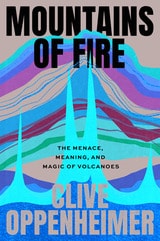
Mountains of Fire
The Menace, Meaning, and Magic of VolcanoesClive Oppenheimer
University of Chicago Press, 2023
In Mountains of Fire, Clive Oppenheimer invites readers to stand with him in the shadow of an active volcano. Whether he is scaling majestic summits, listening to hissing lava at the crater’s edge, or hunting for the far-flung ashes from Earth’s greatest eruptions, Oppenheimer is an ideal guide, offering readers the chance to tag along on the daring, seemingly-impossible journeys of a volcanologist.
In his eventful career as a volcanologist and filmmaker, Oppenheimer has studied volcanoes around the world. He has worked with scientists in North Korea to study Mount Paektu, a volcano name sung in national anthems on both sides of the Demilitarized Zone. He has crossed the Sahara to reach the fabled Tiéroko volcano in the Tibesti Mountains of Chad. He spent months camped atop Antarctica’s most active volcano, Mount Erebus, to record the pulse of its lava lake.
Mountains of Fire reveals how volcanic activity is entangled with our climate and environment, as well as our economy, politics, culture, and beliefs. These adventures and investigations make clear the dual purpose of volcanology—both to understand volcanoes for science’s sake and to serve the communities endangered and entranced by these mountains of fire.
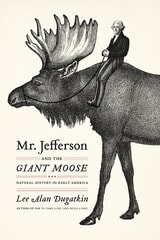
Mr. Jefferson and the Giant Moose
Natural History in Early AmericaLee Alan Dugatkin
University of Chicago Press, 2009
In the years after the Revolutionary War, the fledgling republic of America was viewed by many Europeans as a degenerate backwater, populated by subspecies weak and feeble. Chief among these naysayers was the French Count and world-renowned naturalist Georges-Louis Leclerc de Buffon, who wrote that the flora and fauna of America (humans included) were inferior to European specimens.
Thomas Jefferson—author of the Declaration of Independence, U.S. president, and ardent naturalist—spent years countering the French conception of American degeneracy. His Notes on Virginia systematically and scientifically dismantled Buffon’s case through a series of tables and equally compelling writing on the nature of his home state. But the book did little to counter the arrogance of the French and hardly satisfied Jefferson’s quest to demonstrate that his young nation was every bit the equal of a well-established Europe. Enter the giant moose.
The American moose, which Jefferson claimed was so enormous a European reindeer could walk under it, became the cornerstone of his defense. Convinced that the sight of such a magnificent beast would cause Buffon to revise his claims, Jefferson had the remains of a seven-foot ungulate shipped first class from New Hampshire to Paris. Unfortunately, Buffon died before he could make any revisions to his Histoire Naturelle, but the legend of the moose makes for a fascinating tale about Jefferson’s passion to prove that American nature deserved prestige.
In Mr. Jefferson and the Giant Moose, Lee Alan Dugatkin vividly recreates the origin and evolution of the debates about natural history in America and, in so doing, returns the prize moose to its rightful place in American history.

Multiple Exposures
Chronicles of the Radiation AgeCatherine Caufield
University of Chicago Press, 1990
the history behind the safety standards limiting the effects of high energy
radiation on human beings. . . . Provides an immense amount of information
in a very readable form."—W. Alan Runciman, Prometheus
"From fallout and radon to radioactive smoke detectors and dental X-rays,
Caufield traces the proliferation of the uses of radiation in medicine,
industry and the military, and in generating energy. An intelligent,
non-alarmist history."—Publishers Weekly

Multiplicity in Unity
Plant Subindividual Variation and Interactions with AnimalsCarlos M. Herrera
University of Chicago Press, 2009
Plants produce a considerable number of structures of one kind, like leaves, flowers, fruits, and seeds, and this reiteration is a quintessential feature of the body plan of higher plants. But since not all structures of the same kind produced by a plant are identical—for instance, different branches on a plant may be male or female, leaf sizes in the sun differ from those in the shade, and fruit sizes can vary depending on patterns of physiological allocation among branches—a single plant genotype generally produces a multiplicity of phenotypic versions of the same organ.
Multiplicity in Unity uses this subindividual variation to deepen our understanding of the ecological and evolutionary factors involved in plant-animal interactions. On one hand, phenotypic variation at the subindividual scale has diverse ecological implications for animals that eat plants. On the other hand, by choosing which plants to consume, these animals may constrain or modify plant ontogenetic patterns, developmental stability, and the extent to which feasible phenotypic variants are expressed by individuals.
An innovative study of the ecology, morphology, and evolution of modular organisms, Multiplicity in Unity addresses a topic central to our understanding of the diversity of life and the ways in which organisms have coevolved to cope with variable environments.
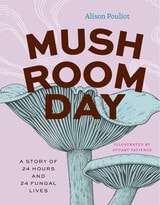
Mushroom Day
A Story of 24 Hours and 24 Fungal LivesAlison Pouliot
University of Chicago Press, 2025
On this mushroom-filled day, ecologist Alison Pouliot tours the world to introduce readers to a fascinating variety of fungi. Each chapter of Mushroom Day introduces a single fungus during a single hour, highlighting twenty-four different species.
In the dark of the night, the green glow of the ghost fungus guides us into the forest to learn about the mysteries of bioluminescence. At dawn, we awaken to find a fairy ring of mushrooms that has appeared overnight like something out of folklore. But we don’t have much time to linger, as we must reach the Italian forest before other porcino hunters forage the morning’s fattest and finest. In the heat of the afternoon, the ripe stench of the stinkhorn might send us out of the woods, while the enticing aroma of the aniseed funnel lures us back in. Late in the evening we spy a fungus known as the witches cauldron and wonder what it might tell us about the future. By the end of our mushroom day, we’ll have glimpsed the diversity of this unique kingdom, met fungus friends that feed and fascinate, and learned how humans can encourage their flourishing.
For each hour, celebrated artist Stuart Patience has depicted these scenes with evocative pen and ink illustrations. Working together to narrate and illustrate these unique moments in time, Pouliot and Patience have created an engaging read that is a perfect way to spend an hour or two—and a true gift for foragers, mycophiles, and anyone who wants to stop and appreciate fungi.

Musical Vitalities
Ventures in a Biotic Aesthetics of MusicHolly Watkins
University of Chicago Press, 2018
Redefining music as “the art of possibly animate things,” Musical Vitalities charts a new path for music studies that blends musicological methods with perspectives drawn from the life sciences. In opposition to humanist approaches that insist on a separation between culture and nature—approaches that appear increasingly untenable in an era defined by human-generated climate change—Musical Vitalities treats music as one example of the cultural practices and biotic arts of the animal kingdom rather than as a phenomenon categorically distinct from nonhuman forms of sonic expression. The book challenges the human exceptionalism that has allowed musicologists to overlook music’s structural resemblances to the songs of nonhuman species, the intricacies of music’s physiological impact on listeners, and the many analogues between music’s formal processes and those of the dynamic natural world. Through close readings of Austro-German music and aesthetic writings that suggest wide-ranging analogies between music and nature, Musical Vitalities seeks to both rekindle the critical potential of nineteenth-century music and rejoin the humans at the center of the humanities with the nonhumans whose evolutionary endowments and planetary fates they share.
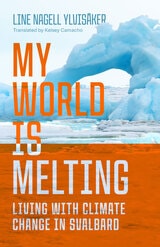
My World Is Melting
Living with Climate Change in SvalbardLine Nagell Ylvisåker, Translated by Kelsey Camacho
University of Wisconsin Press, 2026
In 2015, in a tragic natural disaster, a massive avalanche descended on the small Arctic Norwegian city of Longyearbyen, Svalbard, leveling eleven houses and killing a child and a young father. In this arresting book, journalist Line Nagell Ylvisåker explores the effects of a warming planet up close and personal, from inside a remote community intimately attuned to its environment.
Ylvisåker introduces readers to her friends and neighbors, including dedicated meteorologists racing to anticipate future disasters and a veteran trapper who harbors doubts about climate change even as he bears witness to a constantly shifting landscape. Blending memoir, long-form journalism, and scientific reportage, she provides an intimate picture of life in a place where the effects of climate change can be seen in all their startling reality—and a compelling and hopeful argument for collective and cooperative action across the globe.