Results by title
3064 books match the query 'Social conditions' and 191 start with m
Moses and the Monster and Miss Anne
Carole C. Marks
University of Illinois Press, 2008
All three women lived for a time in close proximity on the Eastern Shore of Maryland, an isolated region that thrived on tobacco and then lost it, procured slaves and then lost them, and produced strong-minded women and then condemned them. Though they never actually met, and their backgrounds and beliefs differed drastically, these women's lives converged through their active experiences of the conflict over slavery in Maryland and beyond, the uncertainties of economic transformation, the struggles in the legal foundation of slavery and, most of all, the growing dispute in gender relations in America.
Throughout this book, Carole C. Marks gleans historical fact and sociological insight from the persistent myths and exaggerations that color the women's legacies, and she investigates the common roots and motivations of three remarkable figures who bucked the era's expectations for women. She also considers how each woman's public identity reflected changing ideas of domesticity and the public sphere, spirituality, and legal rights and limitations. Cannon, Carroll, and Tubman, each in her own way, passionately fought for the future of Maryland and the United States, and from these unique vantage points, Moses and the Monster and Miss Anne portrays the intersecting and conflicting forces of race, economics, and gender that threatened to rend a nation apart.
Mother India
Selections from the Controversial 1927 Text, Edited and with an Introduction by Mrinalini SinhaKatherine Mayo
University of Michigan Press, 2000
Mrinalini's Sinha's edition provides selections of this controversial book and commentary on the Mother India phenomenon. It also reprints a range of responses from Mayo's contemporaries. Sinha's edition works to locate the book and the controversy it incited in the context of U.S. domestic, British Imperial, and Indian nationalist politics. Unlike previous editions, Sinha's examines the history of cultural feminisms and the relations between women's movements in the United States, Britain, and India; the examination of these different movements reveals intriguing insights into the nature of the varied reactions to Mayo's book. The edition includes several formerly obscure contemporary responses to Mother India from representatives of the women's movement and of the anti-caste movement in India.
Intended as a tool for students and teachers alike, this book will be an important text in the field of women's studies, cultural studies, political science, history, and religion, among others.
Mrinalini Sinha is Associate Professor of History, Southern Illinois University. She is the author of Colonial Masculinity: The 'Manly Englishman' and the 'Effeminate Bengali' in the Late Nineteenth Century.

Motherhood in Bondage
Foreword by Margaret MarshMargaret Sanger
The Ohio State University Press, 2000
In Motherhood in Bondage, first published in 1928, Sanger reproduced letters written to her from women and sometimes men from all over the country, in both urban and rural areas, who were seeking advice on reproductive matters and marital relations, but mostly imploring her to help them find ways to avoid more pregnancies. The letters are grouped by theme into sixteen chapters, and Sanger wrote an introduction to each chapter. With clear relevance to the current post-Roe moment, these pleas to Sanger for advice on avoiding unwanted pregnancy dramatically detail the desperation for reproductive agency when birth control was unknown, withheld, or otherwise inaccessible.
In her foreword for this edition, Margaret Marsh describes the controversies surrounding these letters and places them in their historical context.
Mothering through Precarity
Women's Work and Digital MediaJulie A. Wilson and Emily Chivers Yochim
Duke University Press, 2017

Mothers and Daughters
Women of the Intelligentsia in Nineteenth-Century RussiaBarbara Alpern Engel
Northwestern University Press, 2000
Mountains of Injustice
Social and Environmental Justice in AppalachiaMichele Morrone
Ohio University Press, 2011
Research in environmental justice reveals that low-income and minority neighborhoods in our nation’s cities are often the preferred sites for landfills, power plants, and polluting factories. Those who live in these sacrifice zones are forced to shoulder the burden of harmful environmental effects so that others can prosper. Mountains of Injustice broadens the discussion from the city to the country by focusing on the legacy of disproportionate environmental health impacts on communities in the Appalachian region, where the costs of cheap energy and cheap goods are actually quite high.
Through compelling stories and interviews with people who are fighting for environmental justice, Mountains of Injustice contributes to the ongoing debate over how to equitably distribute the long-term environmental costs and consequences of economic development.
Contributors:
Laura Allen, Brian Black, Geoffrey L. Buckley, Donald Edward Davis, Wren Kruse, Nancy Irwin Maxwell, Chad Montrie, Michele Morrone, Kathryn Newfont, John Nolt, Jedediah S. Purdy, and Stephen J. Scanlan.
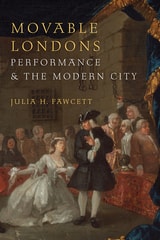
Movable Londons
Performance and the Modern CityJulia H Fawcett
University of Michigan Press, 2025

Moving Against the System
The 1968 Congress of Black Writers and the Shaping of Global Black ConsciousnessEdited by David Austin
Pluto Press, 2018
Against a backdrop of widespread racism in the West and ongoing colonialism and imperialism in the Global South, this group of activists, writers, and political figures gathered to discuss the history and struggles of people of African descent and the meaning of black power.
For the first time since 1968, David Austin brings alive the speeches and debates of the most important international gathering of black radicals of the era. With never-before-seen texts from Stokely Carmichael, Walter Rodney and C.L.R. James, these documents will prove invaluable to anyone interested in black radical thought and political activism of the 1960s.
Moving Blackness
Black Circulation, Racism, and Relations of HomespaceLisa B. Y. Calvente
Rutgers University Press, 2025
Engaging with theories of anti-Black racism, modernity, coloniality, and the Black diaspora, the book frames storytelling and the circulation of narratives as performances deeply rooted in the everyday lives of Black people across the diaspora. Starting with an examination of the racial construction of movement during colonialism and slavery, the book traces how this history shapes contemporary interactions. With its exploration of how Black circulation transforms movement and space, the book introduces a forward-thinking approach to the Black diaspora, anchored in a politics of identification rather than being confined to the past or a specific location. Moving Blackness argues that the desire for homespace, a yearning for belonging that transcends any particular physical space, fuels this envisioned future, rooted in the historical and material conditions of racism and marginalization.
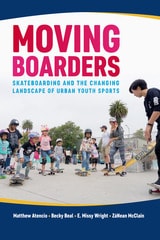
Moving Boarders
Skateboarding and the Changing Landscape of Urban Youth SportsMatthew Atencio
University of Arkansas Press, 2018
This excellent treatise on the contemporary youth sports scene examines how modern families embrace skateboarding and the role commerce plays in this unexpected new parent culture, and highlights how private corporations, community leaders, parks and recreation departments, and nonprofits like the Tony Hawk Foundation have united to energize skate parks—like soccer fields before them—as platforms for community engagement and the creation of social and economic capital.
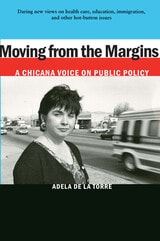
Moving from the Margins
A Chicana Voice on Public PolicyAdela de la Torre
University of Arizona Press, 2002
Addressing immigration, education, health care, and economic and political concerns, Adela de la Torre provides a distinctly Chicana perspective that often differs from that of mainstream readers and voters. Drawn from the author's syndicated column in the Los Angeles Times along with writings from other publications, Moving from the Margins includes incisive and often provocative commentaries that provide insights into the roots of ethnic tensions in the Golden State.
The book also includes readers' reactions to the articles, creating a dialogue of ideas while confronting fears of what many Americans view as an alien culture. Whether addressing entitlements granted to noncitizens, the future of public schools, or access to health care, de la Torre challenges readers to move beyond their own frame of reference and consider new points of view. The issues she faces have shaped today's California—and they also lie at the heart of urban public policy in America for the twenty-first century.

Moving the Mountain
The Women's Movement in America since 1960Flora Davis
University of Illinois Press, 1999
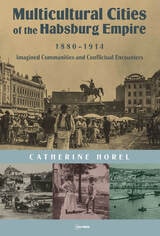
Multicultural Cities of the Habsburg Empire, 1880–1914
Imagined Communities and Conflictual EncountersCatherine Horel
Central European University Press, 2023
Catherine Horel has undertaken a comparative analysis of the societal, ethnic, and cultural diversity in the last decades of the Habsburg Monarchy as represented in twelve cities: Arad, Bratislava, Brno, Chernivtsi, Lviv, Oradea, Rijeka, Sarajevo, Subotica, Timișoara, Trieste, and Zagreb. By purposely selecting these cities, the author aims to counter the disproportionate attention that the largest cities in the empire receive.
With a focus on the aspects of everyday life faced by the city inhabitants (associations, schools, economy, and municipal politics) the book avoids any idealization of the monarchy as a paradise of peaceful multiculturalism, and also avoids exaggerating conflicts. The author claims that the world of the Habsburg cities was a dynamic space where many models coexisted and created vitality, emulation, and conflict. Modernization brought about the dissolution of old structures, but also mobility, the progress of education, the explosion of associative life, and constantly growing cultural offerings.
Multiple InJustices
Indigenous Women, Law, and Political Struggle in Latin AmericaR. Aída Hernández Castillo
University of Arizona Press, 2016
Multiple InJustices synthesizes R. Aída Hernández Castillo’s twenty-four years of activism and research among indigenous women’s organizations in Latin America. As both feminist and critical anthropologist, Hernández Castillo analyzes the context of legal pluralism wherein the indigenous women of Mexico, Guatemala, and Colombia struggle for justice. Through ethnographical research in community, state, and international justice, she reflects on the possibilities and limitations of customary, national, and international law for indigenous women.
Colonialism, racism, and patriarchal violence have been fundamental elements for the reproduction of capitalism, Hernández Castillo asserts. Only a social policy that offers economic alternatives based on distribution of wealth and a real recognition of cultural and political rights of indigenous peoples can counter the damage of outside forces such as drug cartels on indigenous lands.
She concludes that the theories of indigenous women on culture, tradition, and gender equity—as expressed in political documents, event reports, public discourse, and their intellectual writings—are key factors in the decolonization of Latin American feminisms and social justice for all.
Muncie, India(na)
Middletown and Asian AmericaHimanee Gupta-Carlson
University of Illinois Press, 2018

Murder Scenes
Normality, Deviance, and Criminal Violence in Weimar BerlinSace Elder
University of Michigan Press, 2010
---Kenneth Ledford, Case Western Reserve University

Musicians from a Different Shore
Asians and Asian Americans in Classical MusicMari Yoshihara
Temple University Press, 2008
Musicians of Asian descent enjoy unprecedented prominence in concert halls, conservatories, and classical music performance competitions. In the first book on the subject, Mari Yoshihara looks into the reasons for this phenomenon, starting with her own experience of learning to play piano in Japan at the age of three. Yoshihara shows how a confluence of culture, politics and commerce after the war made classical music a staple in middle-class households, established Yamaha as the world's largest producer of pianos and gave the Suzuki method of music training an international clientele. Soon, talented musicians from Japan, China and South Korea were flocking to the United States to study and establish careers, and Asian American families were enrolling toddlers in music classes.
Against this historical backdrop, Yoshihara interviews Asian and Asian American musicians, such as Cho-Liang Lin, Margaret Leng Tan, Kent Nagano, who have taken various routes into classical music careers. They offer their views about the connections of race and culture and discuss whether the music is really as universal as many claim it to be. Their personal histories and Yoshihara's observations present a snapshot of today's dynamic and revived classical music scene.
Muslim Rap, Halal Soaps, and Revolutionary Theater
Artistic Developments in the Muslim WorldEdited by Karin van Nieuwkerk
University of Texas Press, 2011
From "green" pop and "clean" cinema to halal songs, Islamic soaps, Muslim rap, Islamist fantasy serials, and Suficized music, the performing arts have become popular and potent avenues for Islamic piety movements, politically engaged Islamists, Islamic states, and moderate believers to propagate their religio-ethical beliefs. Muslim Rap, Halal Soaps, and Revolutionary Theater is the first book that explores this vital intersection between artistic production and Islamic discourse in the Muslim world.
The contributors to this volume investigate the historical and structural conditions that impede or facilitate the emergence of a "post-Islamist" cultural sphere. They discuss the development of religious sensibilities among audiences, which increasingly include the well-to-do and the educated young, as well as the emergence of a local and global religious market. At the heart of these essays is an examination of the intersection between cultural politics, performing art, and religion, addressing such questions as where, how, and why pop culture and performing arts have been turned into a religious mission, and whether it is possible to develop a new Islamic aesthetic that is balanced with religious sensibilities. As we read about young Muslims and their quest for a "cool Islam" in music, their struggle to quell their stigmatized status, or the collision of morals and the marketplace in the arts, a vivid, varied new perspective on Muslim culture emerges.
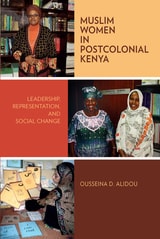
Muslim Women in Postcolonial Kenya
Leadership, Representation, and Social ChangeOusseina D. Alidou
University of Wisconsin Press, 2013
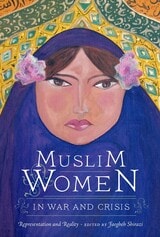
Muslim Women in War and Crisis
Representation and RealityEdited by Faegheh Shirazi
University of Texas Press, 2010
Representing diverse cultural viewpoints, Muslim Women in War and Crisis collects an array of original essays that highlight the experiences and perspectives of Muslim women—their dreams and nightmares and their daily struggles—in times of tremendous social upheaval. Analyzing both how Muslim women have been represented and how they represent themselves, the authors draw on primary sources ranging from poetry and diaries to news reports and visual media. Topics include:
- Peacebrokers in Indonesia
- Exploitation in the Islamic Republic of Iran
- Chechen women rebels
- Fundamentalism in Afghanistan, from refugee camps to Kabul
- Memoirs of Bengali Muslim women
- The 7/7 London bombings, British Muslim women, and the media
Also exploring such images in the United States, Spain, the former Yugoslavia, Tunisia, Algeria, Lebanon, and Iraq, this collection offers a chorus of multidimensional voices that counter Islamophobia and destructive clichés. Encompassing the symbolic national and religious identities of Muslim women, this study goes beyond those facets to examine the realities of day-to-day existence in societies that seek scapegoats and do little to defend the victims of hate crimes. Enhancing their scholarly perspectives, many of the contributors (including the editor) have lived through the strife they analyze. This project taps into their firsthand experiences of war and deadly political oppression.
Muslims in a Post-9/11 America
A Survey of Attitudes and Beliefs and Their Implications for U.S. National Security PolicyRachel M. Gillum
University of Michigan Press, 2018
Muslims in a Post-9/11 America examines how public fears about Muslims in the United States compare with the reality of American Muslims’ attitudes on a range of relevant issues. While most research on Muslim Americans focuses on Arab Muslims, a quarter of the Muslim American population, Rachel Gillum includes perspectives of Muslims from various ethnic and national communities—from African Americans to those of Pakistani, Iranian, or Eastern European descent. Using interviews and one of the largest nationwide surveys of Muslim Americans to date, Gillum examines more than three generations of Muslim American immigrants to assess how segments of the Muslim American community are integrating into the U.S. social fabric, and how they respond to post-9/11 policy changes. Gillum’s findings challenge perceptions of Muslims as a homogeneous, isolated, un-American, and potentially violent segment of the U.S. population.
Despite these realities, negative political rhetoric around Muslim Americans persists. The findings suggest that the policies designed to keep America safe from terrorist attacks may have eroded one of law enforcement’s greatest assets in the fight against violent extremism—a relationship of trust and goodwill between the Muslim American community and the U.S. government. Gillum argues for policies and law enforcement tactics that will bring nuanced understandings of this diverse category of Americans and build trust, rather than alienate Muslim communities.
Muslims of Metropolis
The Stories of Three Immigrant Families in the WestRajagopalan, Kavitha
Rutgers University Press, 2008
The Muslim population globally is comprised of hundreds of ethnic, linguistic, and religious sub-communities. Yet, more often than not, the public conflates these diverse and unrelated communities, branding Muslim immigrants as a single, suspicious, and culturally antagonistic group of people. Generalizations like these have compromised many Muslim immigrants' sense of belonging and acceptance in places where they have lived, in some cases, for three or four generations.
In Muslims of Metropolis, Kavitha Rajagopalan takes a much needed step in personalizing and humanizing our understanding of the Muslim diaspora. Tracing the stories of three very different families-a Palestinian family moving to London, a Kurdish family moving to Berlin, and a Bangladeshi family moving to New York-she reveals a level of complexity and nuance that is seldom considered. Through their voices and in their words, Rajagopalan describes what prompted these families to leave home, what challenges they faced in adjusting to their new lives, and how they came to view their place in society. Interviews with community leaders, social justice organizations, and with academics and political experts in each of the countries add additional layers of insight to how broad political issues, like nationalist conflict, immigration reform, and antiterrorism strategies affect the lives of Muslims who have migrated in search of economic stability and personal happiness.
Although recent thinking about immigration policy in the United States and Europe emphasizes the importance of long-term integration, a global attitude that continues to sensationalize divisions between Muslim and other communities thwarts this possibility. Integration cannot occur with policy solutions alone-people must feel that they belong to a larger society. Whether read as simple stories or broader narratives, the voices in this revealing book are among the many speaking against generalization, prejudice, and fear that has so far surrounded Muslims living in the West.
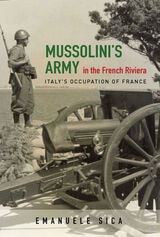
Mussolini's Army in the French Riviera
Italy's Occupation of FranceEmanuele Sica
University of Illinois Press, 2016
Employing a multi-tiered approach, Emanuele Sica examines the simultaneously conflicting and symbiotic relationship between the French population and Italian soldiers. At the grassroots level, Sica asserts that the cultural proximity between the soldiers and the local population, one-quarter of which was Italian, smoothed the sharp angles of miscommunication and cultural faux-pas at a time of great uncertainty. At the same time, it encouraged a laxness in discipline that manifested as fraternization and black marketeering. Sica's examination of political tensions highlights how French prefects and mayors fought to keep the tatters of sovereignty in the face of military occupation. In addition, he reveals the tense relationship between Fascist civilian authorities eager to fulfil imperial dreams of annexation and army leaders desperate to prevent any action that might provoke French insurrection. Finally, he completes the tableau with detailed accounts of how food shortages and French Resistance attacks brought sterner Italian methods, why the Fascists' attempted "Italianization" of the French border city of Menton failed, and the ways the occupation zone became an unlikely haven for Jews.
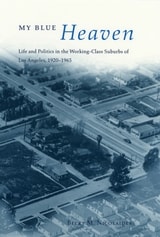
My Blue Heaven
Life and Politics in the Working-Class Suburbs of Los Angeles, 1920-1965Becky M. Nicolaides
University of Chicago Press, 2002
As Becky M. Nicolaides shows in My Blue Heaven, this ethic of self-reliance and homeownership formed the core of South Gate's identity. With post-World War II economic prosperity, the community's emphasis shifted from building homes to protecting them as residents tried to maintain their standard of living against outside threats—including the growing civil rights movement—through grassroots conservative politics based on an ideal of white homeowner rights. As the citizens of South Gate struggled to defend their segregated American Dream of suburban community, they fanned the flames of racial inequality that erupted in the 1965 Watts riots.
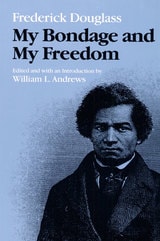
My Bondage and My Freedom
Frederick Douglass
University of Illinois Press, 1988

My Car in Managua
By Forrest D. Colburn
University of Texas Press, 1991
Histories of revolutions often focus on military, political, or economic upheavals but sometimes neglect to connect these larger events to the daily lives of "ordinary" people. Yet the peoples' perception that "things are worse than before" can topple revolutionary governments, as shown by the recent defeat of the Sandinista regime in Nicaragua and the governments of Eastern Europe. Providing the kind of prosaic, revealing details that more formal histories have excluded, My Car in Managua offers an objective, often humorous description of the great difficulties and occasional pleasures of life in Nicaragua during the Sandinista revolution.
During a year's work (1985-1986) at the Instituto Centroamericano de Administración de Empresas (INCAE), Forrest Colburn purchased a dilapidated car—and with it an introduction to everyday life in Nicaragua. His discoveries of the length of time required to register the car (approximately six weeks), the impossibility of finding spare parts (except when U.S. dollars were applied to the search), and the fact that "anyone getting into a car in Managua can be charged a small fee [for car watching] by anyone else" all suggest the difficulties most Nicaraguans faced living in a devastated economy.
Drawing on experiences from visits throughout the revolutionary period (1979-1989), Colburn also sheds light on how the Revolution affected social customs and language, gender roles and family relationships, equality and authority, the availability of goods and services, the status of ethnic minorities, and governmental and other institutions. Illustrations by Nicaragua's celebrated political cartoonist Róger Sánchez Flores enliven the lucid text.

My Cocaine Museum
Michael Taussig
University of Chicago Press, 2004
Combining natural history with political history in a filmic, montage style, Taussig deploys the show-and-tell modality of a museum to engage with the inner life of heat, rain, stone, and swamp, no less than with the life of gold and cocaine.
This effort to find a poetry of words becoming things is brought to a head by the explosive qualities of those sublime fetishes of evil beauty, gold and cocaine. At its core, Taussig's museum is about the lure of forbidden things, charged substances that transgress moral codes, the distinctions we use to make sense of the world, and above all the conventional way we write stories.
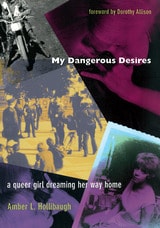
My Dangerous Desires
A Queer Girl Dreaming Her Way HomeAmber L. Hollibaugh
Duke University Press, 2000
In looking at themes such as the relationship between activism and desire or how sexuality can be intimately tied to one’s class identity, Hollibaugh fiercely and fearlessly analyzes her own political development as a response to her unique personal history. She explores the concept of labeling and the associated issues of categories such as butch or femme, transgender, bisexual, top or bottom, drag queen, b-girl, or drag king. The volume includes conversations with other writers, such as Deirdre English, Gayle Rubin, Jewelle Gomez, and Cherríe Moraga. From the groundbreaking article “What We’re Rollin’ Around in Bed With” to the radical “Sex Work Notes: Some Tensions of a Former Whore and a Practicing Feminist,” Hollibaugh charges ahead to describe her reality, never flinching from the truth. Dorothy Allison’s moving foreword pays tribute to a life lived in struggle by a working-class lesbian who, like herself, refuses to suppress her dangerous desires.
Having informed many of the debates that have become central to gay and lesbian activism, Hollibaugh’s work challenges her readers to speak, write, and record their desires—especially, perhaps, the most dangerous of them—“in order for us all to survive.”
My Father's Name
A Black Virginia Family after the Civil WarLawrence P. Jackson
University of Chicago Press, 2012
My Father’s Name is a family story full of twists and turns—and one of haunting familiarity to many Americans, who may question whether the promises of emancipation have ever truly been fulfilled. It is also a resolute look at the duties that come with reclaiming and honoring Americans who survived slavery and a thoughtful meditation on its painful and enduring history.
My Mother Made Me Deaf
Discourse and Identity in a Deaf CommunityBryan K. Eldredge
Gallaudet University Press, 2017
Bryan K. Eldredge seeks to more precisely understand the relationship between ASL use and Deaf identity using the tools of linguistic anthropology. In this work, he presents research resulting from fieldwork with the Deaf community of Utah Valley. Through informal interactions and formal interviews, he explores the role of discourse in the projection and construction of Deaf identities and, conversely, considers how ideas about language affect the discourse that shapes identities. He finds that specific linguistic ideologies exist that valorize some forms of language over others and that certain forms of ASL serve to establish a culturally Deaf identity. My Mother Made Me Deaf demonstrates that the DEAF-WORLD consists of a multitude of experiences and ways of being even as it is bound together by certain essential elements that are common to Deaf people.
My Race Is My Gender
Portraits of Nonbinary People of ColorStephanie Hsu
Rutgers University Press, 2024
Genderqueer and nonbinary people of color often experience increased marginalization, belonging to an ethnic group that seldom recognizes their gender identity and a queer community that subscribes to white norms. Yet for this very reason, they have a lot to teach about how racial, sexual, and gender identities intersect. Their experiences of challenging social boundaries demonstrate how queer communities can become more inclusive and how the recognition of nonbinary genders can be an anti-racist practice.
My Race is My Gender is the first anthology by nonbinary writers of color to include photography and visual portraits, centering their everyday experiences of negotiating intersectional identities. While informed by queer theory and critical race theory, the authors share their personal stories in accessible language. Bringing together Black, Indigenous, Latine, and Asian perspectives, its six contributors present an intergenerational look at what it means to belong to marginalized queer communities in the U.S. and feel solidarity with a global majority at the same time. They also provide useful insights into how genderqueer and nonbinary activism can both energize and be fueled by such racial justice movements as Black Lives Matter.
My Remembers
A Black Sharecropper's Recollections of the DepressionEddie Stimpson Jr.
University of North Texas Press, 1996
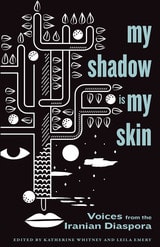
My Shadow Is My Skin
Voices from the Iranian DiasporaEdited by Katherine Whitney and Leila Emery
University of Texas Press, 2020
The Iranian revolution of 1979 launched a vast, global diaspora, with many Iranians establishing new lives in the United States. In the four decades since, the diaspora has expanded to include not only those who emigrated immediately after the revolution but also their American-born children, more recent immigrants, and people who married into Iranian families, all of whom carry their own stories of trauma, triumph, adversity, and belonging that reflect varied and nuanced perspectives on what it means to be Iranian or Iranian American. The essays in My Shadow Is My Skin are these stories.
This collection brings together thirty-two authors, both established and emerging, whose writing captures the diversity of Iranian diasporic experiences. Reflecting on the Iranian American experience over the past forty years and shedding new light on themes of identity, duality, and alienation in twenty-first-century America, the authors present personal narratives of immigration, sexuality, marginalization, marriage, and religion that offer an antidote to the news media’s often superficial portrayals of Iran and the people who have a connection to it. My Shadow Is My Skin illuminates a community that rarely gets to tell its own story.
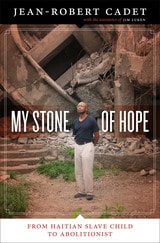
My Stone of Hope
From Haitian Slave Child to AbolitionistBy Jean-Robert Cadet
University of Texas Press, 2011
There are 27 million slaves living in the world today—more than at any time in history. Three hundred thousand of them are impoverished children in Haiti, who "stay with" families as unpaid and uneducated domestic workers, subject to physical, emotional, and sexual abuse. This practice, known locally as restavek ("staying with"), is so widespread that one in ten Haitian children is caught up in this form of slavery.
Jean-Robert Cadet was a restavek in Haiti from the late 1950s until the early 1970s. He told the harrowing story of his youth in Restavec: From Haitian Slave Child to Middle-Class American—a landmark book that exposed ongoing child slavery in Haiti. Now in My Stone of Hope, Cadet continues his story from his early attempts to adjust to freedom in American society to his current life mission of eliminating child slavery through advocacy and education. As he recounts his own struggles to surmount the psychological wounds of slavery, Cadet puts a human face on the suffering that hundreds of thousands of Haitians still endure daily. He also builds a convincing case that child slavery is not just one among many problems that Haiti faces as the Western Hemisphere's poorest nation. Rather, he argues that the systematic abuse of so many of its children is Haiti's fundamental problem, because it creates damaged adults who seem incapable of governing the country justly or managing its economy productively.
For everyone concerned about the fate of Haiti, the welfare of children, and the freedom of people around the globe, My Stone of Hope sounds an irresistible call to action.
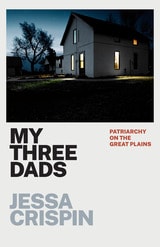
My Three Dads
Patriarchy on the Great PlainsJessa Crispin
University of Chicago Press, 2022
For many Americans, Kansas represents a vision of Midwestern life that is good and wholesome and evokes the American ideals of god, home, and country. But for those like Jessa Crispin who have grown up in Kansas, the realities are much harsher. She argues that the Midwestern values we cling to cover up a long history of oppression and control over Native Americans, women, and the economically disadvantaged.
Blending personal narrative with social commentary, Crispin meditates on why the American Midwest still enjoys an esteemed position in our country's mythic self-image. Ranging from The Wizard of Oz to race, from chastity to rape, from radical militias and recent terrorist plots to Utopian communities, My Three Dads opens on a comic scene in a Kansas rent house the author shares with a (masculine) ghost. This prompts Crispin to think about her intellectual fathers, her spiritual fathers, and her literal fathers. She is curious to understand what she has learned from them and what she needs to unlearn about how a person should be in a family, as a citizen, and as a child of god—ideals, Crispin argues, that have been established and reproduced in service to hierarchy, oppression, and wealth.
Written in Crispin’s well-honed voice—smart, assured, comfortable with darkness—My Three Dads offers a kind of bleak redemption, the insight that no matter where you go, no matter how far from home you roam, the place you came from is always with you, “like it or not.”

Mysore Modern
Rethinking the Region under Princely RuleJanaki Nair
University of Minnesota Press, 2011
Mysore Modern reconceptualizes modernity in India using the history of the Princely State of Mysore. In this forcefully argued work, Janaki Nair critiques earlier notions of the native states of India as spaces that were either defined entirely by the dominant narratives of colonial/national modernity or were relatively untouched by them.
Grounded in political history, and deriving insights from a wide range of visual, social, and legal texts and issues, Mysore Modern reperiodizes the modern by connecting these apparently discrepant registers to build up a case for a specifically regional, “monarchical modern” moment in Indian history. Nair examines mural and portraiture traditions, as well as forms of memorialization and nationalization of art and architectural practices. The volume also considers bureaucratic efforts centered on the use of law and development as instruments of modernity.
As Nair demonstrates, the resolution of struggles about the significance of the past in the present, the control of women’s sexuality and labor, and the role of the bureaucracy in Mysore reveal the imperatives of taking the region as the inaugural site for writing a history of Indian modernity.
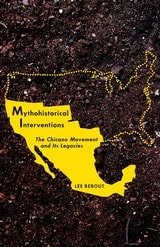
Mythohistorical Interventions
The Chicano Movement and Its LegaciesLee Bebout
University of Minnesota Press, 2010
Examining the deployment of the Aztec eagle by the United Farm Workers union, the poem Yo Soy Joaquín, the document El Plan de Santa Barbara, and icons like La Malinche and La Virgen de Guadalupe, Bebout reveals the centrality of culture to the Chicano movement. For Bebout, the active implementation of cultural narrative was strategically significant in several ways. First, it allowed disparate movement participants to imagine themselves as part of a national, and nationalist, community of resistance. Second, Chicano use of these narratives contested the images that fostered Anglo-American hegemony.
Bringing his analysis up to the present, Bebout delineates how demographic changes have, on the one hand, encouraged the possibility of a panethnic Latino community, while, on the other hand, anti-Mexican nativists attempt to resurrect Chicano myths as a foil to restrict immigration from Mexico.

Myths about the Powerless
Contesting Social InequalitiesM. Brinton Lykes
Temple University Press, 1996
Myths of Modernity
Peonage and Patriarchy in NicaraguaElizabeth Dore
Duke University Press, 2006
Dore seamlessly combines archival research, oral history, and an innovative theoretical approach that unites political economy with social history. She recovers the bygone voices of peons, planters, and local officials within documents such as labor contracts, court records, and official correspondence. She juxtaposes these historical perspectives with those of contemporary peasants, landowners, activists, and politicians who share memories passed down to the present. The reconceptualization of the coffee economy that Dore elaborates has far-reaching implications. The Sandinistas mistakenly believed, she contends, that Nicaraguan capitalism was mature and ripe for socialist revolution, and after their victory in 1979 that belief led them to alienate many peasants by ignoring their demands for land. Thus, the Sandinistas’ myths of modernity contributed to their downfall.

México Between Feast and Famine
Food, Corporate Power, and InequalityEnrique C. Ochoa
University of Arizona Press, 2025
As the birthplace of maize and a celebrated culinary destination, Mexico stands at the crossroads of gastronomic richness and stark social disparities. In México Between Feast and Famine Enrique C. Ochoa unveils the historical and contemporary forces behind Mexico’s polarized food systems.
México Between Feast and Famine provides one of the first comprehensive analyses of Mexico’s food systems and how they reflect the contradictions and inequalities at the heart of Mexico. Ochoa examines the historical roots and contemporary manifestations of neoliberal policies that have reshaped food production, distribution, and consumption in Mexico. Ochoa analyzes the histories of Mexico’s mega food companies, including GRUMA, Bimbo, Oxxo, Aurrera/Walmex, and reveals how corporations have captured the food system at the same time that diet-related diseases have soared. The author not only examines the economic and political dimensions of food production but also interrogates the social and cultural impacts.
As debates around food sovereignty, globalization, and sustainable development intensify globally, México Between Feast and Famine provides a timely analysis that counters conventional narratives about Mexican cuisine. Even as it looks back, this work looks to the future, where more equitable and sustainable food systems prioritize social justice and community well-being.
México Beyond 1968
Revolutionaries, Radicals, and Repression During the Global Sixties and Subversive SeventiesEdited by Jaime M. Pensado and Enrique C. Ochoa
University of Arizona Press, 2018
The book illustrates how expressions of resistance developed from the ground up in different regions of Mexico, including Chihuahua, Guerrero, Jalisco, Mexico City, Puebla, and Nuevo León. Movements in these regions took on a variety of forms, including militant strikes, land invasions, cross-country marches, independent forums, popular organizing, and urban and rural guerrilla uprisings.
México Beyond 1968 brings together leading scholars of Mexican studies today. They share their original research from Mexican archives partially opened after 2000 and now closed again to scholars, and they offer analysis of this rich primary source material, including interviews, political manifestos, newspapers, and human rights reports.
By centering on movements throughout Mexico, México Beyond 1968 underscores the deep-rooted histories of inequality and the frustrations with a regime that monopolized power for decades. It challenges the conception of the Mexican state as “exceptional” and underscores and refocuses the centrality of the 1968 student movement. It brings to light the documents and voices of those who fought repression with revolution and asks us to rethink Mexico’s place in tumultuous times.
Contributors:
Alexander Aviña
Adela Cedillo
A. S. Dillingham
Luis Herrán Avila
Fernando Herrera Calderón
Enrique C. Ochoa
Verónica Oikión Solano
Tanalís Padilla
Wil G. Pansters
Jaime M. Pensado
Gema Santamaría
Michael Soldatenko
Carla Irina Villanueva
Eric Zolov