Results by title
3388 books match the query 'Fiction' and 73 start with n
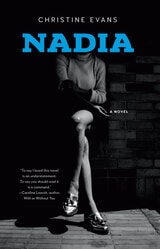
Nadia
Christine Evans
University of Iowa Press, 2023
Nadia moves between the competing perspectives of two survivors of the 1990s Balkan Wars who have escaped to London, only to discover that the war has followed them there. Nadia is a young refugee who just wants to forget the past—until Iggy starts temping at her London office. Afraid he may be a sniper from the war she fled, Nadia starts seeing threats everywhere, alongside unsettling visions of her lost girlfriend, Sanja. As her volatile connection with Iggy unravels, Nadia is forced to face the ethically shaky choices she made to escape the war, her survivor guilt, and her disavowed queer sexuality.
Christine Evans's novel takes us to the recent past of a war that broke apart a European country and that presciently foreshadowed the rise of ethno-nationalism in the West. Tense, suspenseful, and mordantly funny, Nadia tracks the complex ways in which a past marked by political violence can shadow and disrupt the present.
Narrating the Past
Fiction and Historiography in Postwar SpainDavid K. Herzberger
Duke University Press, 1995
The narrative and rhetorical strategies of historical discourse figure in both the fiction and historiography of postwar Spain. Herzberger analyzes these strategies, identifying the structures and vocabularies they use to frame the past and endow it with particular meanings. He shows how Francoist historians sought to affirm the historical necessity of Franco by linking the regime to a heroic and Christian past, while several types of postwar fiction—such as social realism, the novel of memory, and postmodern novels—created a voice of opposition to this practice. Focusing on the concept of writing history that these opposing strategies convey, Herzberger discloses the layering of truth and meaning that lies at the heart of postwar Spanish narrative from the early 1940s to the fall of Franco. His study clearly reveals how the novel in postwar Spain became a crucial form of dissent from the past as it was conceived and used by the State.
Making a decisive intervention in the debate about the ways in which narration determines both the meaning and truth of history and fiction, Narrating the Past will be of special interest to students and scholars of the politics, history, and literature of twentieth-century Spain.
Narrative Consciousness
Structure and Perception in the Fiction of Kafka, Beckett, and Robbe-GrilletBy George H. Szanto
University of Texas Press, 1972
Comparatively little critical attention has been devoted to narrative technique in modern fiction, and formal analysis of the work of Kafka, Beckett, and Robbe-Grillet in particular has for the most part been limited to short studies in journals, many of these in languages other than English. The criticism written in English has dealt primarily with theme with metaphysics and myth and ignored structure and style.
Yet it is structure and style that offer the reader a way into the often bewildering and disturbing fictional worlds these three writers present. The problem confronting writers since the middle of the nineteenth century has been how to cope artistically with an increasingly alienating and mechanized world. As George Szanto sees it, Kafka, Beckett and Robbe-Grillet conclude, by the example of their fictions, that the writer's province is no longer this impossible environment. Instead, the writer must work within the only knowledge available to any one person: the knowledge attained through perceptions. The proper study for a storyteller is thus the search for the unique details, the describable perceptions a person chooses from the outside world and brings into their mind, which in the end define their nature. The shape of the story is determined by the narrating consciousness, that single character through whose awareness the details are filtered. Thus, in a very special sense, the tale and the telling are one.
Szanto's meticulous and thoughtful study of the major fiction of Kafka, Beckett, and Robbe-Grillet searches out these details and examines the manner in which each author, through the minds of his characters, has selected and ordered them. His structural approach not only leads the reader directly into the works under scrutiny, but also provides an understanding of the workings of the art itself.
In the appendices, the author surveys the different ways in which criticism has treated these three writers. His extensive bibliography provides a valuable research tool.
Narrative Innovation and Incoherence
Ideology in Defoe, Goldsmith, Austen, Eliot, and HemingwayMichael M. Boardman
Duke University Press, 1992
Urgent innovations, in this account, can only be understood as unique, individual responses to crises in belief. Taking as a point of departure French theorist Althusser's conviction that ideology is intelligible only through structure, Boardman searches for an explanation of both form and ideology not in Marxist concepts of base and superstructure but in the particular structure of an individual artist's writing career. Narrative ideology here becomes more complex than is generally assumed.
Theoretically informed yet avoiding essentializing explanations of narrative invention, Narrative Innovation and Incoherence offers unexpected insights into the multifaceted relations between form and belief. It will encourage serious students of the novel to reexamine the importance of poetics as a mediating factor in the means of production.
Narratology and Ideology
Negotiating Context, Form, and Theory in Postcolonial NarrativesDivya Dwivedi
The Ohio State University Press, 2018
The thirteen essays in Narratology and Ideology offer compelling readings of individual novels, with a focus upon South Asian literature, that provide a cumulative case study on the value of postcolonial narratology. The essays show not only how narrative theory can be productively applied in service of postcolonial criticism but also how such attention to postcolonial fictions can challenge and refine our theoretical understanding of narrative.
Natch
Darrell Kinsey
University of Iowa Press, 2025
The Center for Fiction 2025 First Novel Prize, Winner
At the age of twenty-nine, tired of trying to get along with members of his crew and tired of the money going into somebody else’s pocket, Natch begins working for himself, climbing and cutting down trees in the foothills of north Georgia. He has his truck, ropes, climbing gear, and a rotating selection of secondhand saws he finds at pawn shops and flea markets. He is free to work as he pleases. And he believes he is fine with his life as it is, living alone in an old hunting cabin at the end of a dirt lane, enjoying his habits, exploring his vices, and living, as he puts it, “like some wild thing let loose on the world.”
Then he meets Asha, an alluring woman who works the nightshift at a convenience store. He finds himself needing her in a way that he has never needed anyone before. Among her charms are her passions for reading and belly dance and her ambition to put herself through school to become a therapist. She believes her studies will cure her of the familial dysfunctions she faced as a child and eventually enable her to help others.
When Asha discovers that she is expecting a child, the young couple struggles to convert the excitement of their early days together into a more steadfast companionship. Over the seasons of her pregnancy, Asha discovers that the freedom of their hardscrabble existence is overshadowed by the constant threat of misfortune and injury, and she finds herself timorous to bring a child into a setting where chainsaws are everywhere, where constant fires burn the bones of felled trees, a world of endless struggle in which finding more work means finding more danger.
Natives of My Person
George Lamming
University of Michigan Press, 1992
Natural Consequences
A NovelElia Barceló
Vanderbilt University Press, 2021
Author Elia Barceló's setup is funny and feminist, and it raises questions of what it means to be "male" or "female"—prescient, considering this novel was first published twenty-five years ago. The anniversary is being celebrated now with the first English-language edition, translated by veteran sci-fi translators Yolanda Molina-Gavilán and Andrea Bell, who also provide a critical introduction.
Natural Shocks
Richard Stern
Northwestern University Press, 2004
One reader writes, "I read Natural Shocks as a student, and this novel has stayed with me over the years. I recall the poignant pain-pleasure I experienced in reading of the approaching death of an 18-year old woman from melanoma, and the protagonist's unaccountable love and grief...rereading the novel, I am better able to place this moment within the book's deeper themes about writing, responsibility, accountability, betrayal, and love."
Natural Wonders
A NovelAngela Woodward, Foreword by Stacey Levine
University of Alabama Press, 2016
Natural Wonders is a novel in the form of a series of lectures about the earth and its prehistory. In it, a grieving widow assembles an idiosyncratic history of the earth’s history based on her understanding and impressions of her deceased husband’s papers.
In Natural Wonders, Jenny is given the task of assembling a memorial edition of her recently deceased husband Jonathan’s lecture series about the physical history of the earth. With little knowledge of his work or of Jonathan himself, Jenny constructs from his fragmentary and disorganized notes her own version of our planet’s past.
Presented as a series of lectures, Jenny’s earth history is an amalgam of stories from science and about scientists—a Serbian mathematician and his theory of the ice ages, a Swiss doctor camped on a glacier, the mysterious materia pinguis thought to have drifted down from stars to form fossils. Into these stories she interweaves scenes from their marriage as well as material she finds on Jonathan’s shelves. In her history, an explanation of continental drift becomes enmeshed with a schoolboy’s erotic encounter with an older woman. Icebergs in an Andean lake launch a woman’s jealous affair with a third-rate actor, and H. G. Wells’s Island of Dr. Moreau is dramatically recounted in new form.
Natural Wonders mixes mythology, popular fiction, and a misfired romance with the story of the earth hurtling around the sun. From intimately human to geologic to cosmic, it explores change, love, and loss.
Natural-Born Proud
A ReveryS.R. Martin Jr.
Utah State University Press, 2010
A young man from Monterey and his younger brother go on their first deer hunt with their minister father and his friends. The setting is 1950s northern California, in country where, from the right height, one can see Mt. Shasta in one direction, Mt. Lassen in the other. It is a region of small, insular towns, and although it is a familiar hunting ground for the Reverend and his buddies, not everyone there welcomes black hunters. Father and son both shoulder their pride, and a racial confrontation seems inevitable.
Among the lessons young Satch learns is the sometime advantage of wit and spine. During their days in the wilderness, the brothers are initiated to the right practice of the hunt and camp and to the ribald talk, needling banter, camp tales, and occasional aggravation of sundry friends. Hunting has a primal nature, but as Satch sees, so may the variable interactions of men.
Navel of the Moon
A NovelMary Helen Lagasse
Northwestern University Press, 2015
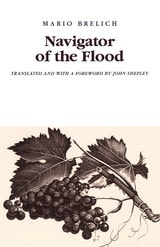
Navigator of the Flood
Mario Brelich
Northwestern University Press, 1991
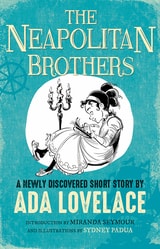
Neapolitan Brothers, The
A Newly Discovered Short StoryAda Lovelace
Bodleian Library Publishing, 2020
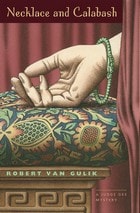
Necklace and Calabash
A Chinese Detective StoryRobert van Gulik
University of Chicago Press, 1967
Necklace and Calabash finds Judge Dee returning to his district of Poo-yang, where the peaceful town of Riverton promises a few days' fishing and relaxation. Yet a chance meeting with a Taoist recluse, a gruesome body fished out of the river, strange guests at the Kingfisher Inn, and a princess in distress thrust the judge into one of the most intricate and baffling mysteries of his career.

Necklace/Choker
then, meanwhile, now./a small novel in fragments/Jana Bodnárová
Seagull Books, 2021
In this highly acclaimed novel, Jana Bodnárová offers an engrossing portrayal of a small Slovak town and its inhabitants in the north of the country against the backdrop of the tumultuous history of the twentieth century. As Sara, the protagonist of Necklace/Choker, returns to her native town after many years in exile to sell the old family house and garden, she begins to piece together her family’s history from snippets and fragments of her own memory and the diaries of her artist father, Imro. A talented painter, he survived the Holocaust only to be crushed by the constraints imposed on his art by Stalinist censorship, and Sara herself was later driven into exile after dreams of socialism with a human face were shattered by the Soviet-led invasion of Czechoslovakia in 1968.
Through their stories, and that of Sara’s friend, Iboja, the daughter of a hotelier, readers will be immersed in key moments of Slovak history and their bearing on the people in this less familiar part of Central Europe.
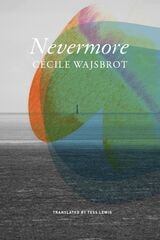
Nevermore
Cécile Wajsbrot
Seagull Books, 2024
An unnamed translator mourning the loss of a close friend retreats to Dresden to translate the “Time Passes” section of Virginia Woolf’s novel To the Lighthouse. Translating this lyrical evocation of time and its devastations in a city with which the writer has no connections and where neither her language nor Woolf’s are spoken offers an interruption to the course of her life. She immerses herself in this prose poem of ephemerality.
The narrator delves into phrases from “Time Passes” and subjects them to the inexact science and imperfect art of translation. This, in turn, leads her to wide-ranging reflections on other instances of loss, destruction, and recovery—the Chernobyl disaster, the High Line in New York City, the bombing of Dresden and Wallmann’s commemorative Bell Requiem Dresden, the evacuation of the Hebridean island Foula, Hiroshi Sugimoto’s photographs of seascapes, Debussy’s “La cathédrale engloutie,” and Ceri Richards’s series of paintings by the same name. She reflects on places that are destined for decay and yet are returning to life, broken worlds in which there is still strength for a new beginning. In Tess Lewis’s visionary English translation, Cécile Wajsbrot’s lyrical exploration of the role of the writer and translator becomes an exquisite meditation on loss and recovery.
New Glory
A NovelGünter de Bruyn
Northwestern University Press, 2009
At the time New Glory (Neue Herrlichkeit) was published in 1984, most dissident authors had fled the German Democratic Republic, then in its final years. Günter de Bruyn courageously remained to satirize the regime from behind the Iron Curtain. He is a popular writer and cultural commentator in unified Germany.
New Glory tells the story of Viktor Kösling, a privileged young man from the GDR about to embark on a diplomatic career. He retreats to "New Glory," a state-run resort in rural Brandenburg run by a corrupt director, to finish his dissertation on "The Foreign Policy of the Prussian Government During the French Revolution with Particular Emphasis on the Effects of Artisan and Peasant Unrest in the Provinces." While there he falls, against his parents’ wishes, for the lisping chambermaid, Thilde. The complex drama that follows, which pays tribute to Mann’s The Magic Mountain and its ironic view of human nature, exposes the moral weakness of Viktor’s character and the farcical distance between official East German ideals and the opportunistic functionaries who enabled the system.

New Hope
Ruth Suckow
University of Iowa Press, 1998
A writer of wide experience, Ruth Suckow nevertheless remained focused on small-town life; one could even call her the Jane Austen of small-town America. Many of her characters were the “sparrows of Iowa,” ordinary folks whom she made extraordinary by writing about them. In her 1942 novel about the little community of New Hope, written during the desperate days of World War II, life is marked by unusual optimism, openness, mutual care, trust, communal spirit, democracy, and above all light.
Life in New Hope recaptures a feeling of youth that would seem overly idealistic if it were not for Suckow's unflinching realism. As seen through the eyes of its Edenic main characters—Clarence Miller, son of the town's banker and chief booster, and Delight Greenwood, daughter of the Congregational minister who serves New Hope during the two years of the novel—the town itself is the protagonist. Death, crime, and heartbreak intervene, but a sense of freedom and possibility, “where all were to share equally in the boundlessness of light and hope,” always illuminates the town. This sunlit novel, with its blend of romance and reality, reintroduces a regional writer whom H. L. Mencken called “unquestionably the most remarkable woman …writing stories in the republic.”
New Mexico Christmas Story
Owl in a Straw Hat 3Rudolfo Anaya
Museum of New Mexico Press, 2020

New Noir
John Shirley
University of Alabama Press, 1993
New Short Fiction from Cuba
Jacqueline Loss and Esther Whitfield
Northwestern University Press, 2007
An eclectic selection, the stories offer an exhilarating sense of a rich literary diversity and cultural history, an experience of Cuban literature that has rarely been available to an English audience. They differ widely, even wildly, in style and theme: from an impromptu encounter with Ernest Hemingway to an imagined romance mapped onto Cuba’s foundational nineteenth-century novel; from a witty, Borgesian satire on bureaucracy and officialist identity to a gothic adventure in homosexual voyeurism and mental illness; from an allegorical travelogue set in repressive China to a semi-surreal celebration of angels in Havana. These are the voices of Cuban fiction today, reflecting the past, anticipating the future, and composing in their infinite variety the stories of their culture.
New Stories from the Midwest
Jason Lee Brown
Ohio University Press, 2011
New Stories from the Midwest presents a collection of stories that celebrate an American region too often ignored in discussions about distinctive regional literature. The editors solicited nominations from more than three hundred magazines, literary journals, and small presses, and narrowed the selection to nineteen authors comprising prize winners and new and established authors.
The stories, written by midwestern writers or focusing on the Midwest, demonstrate how the quality of fiction from and about the heart of the country rivals that of any other region.
The anthology includes an introduction from Lee Martin and short fiction by emerging and established writers such as Rosellen Brown, Bonnie Jo Campbell, Christie Hodgen, Gregory Blake Smith, and Benjamin Percy.
New Stories from the Southwest
D. Seth Horton
Ohio University Press, 2008
The beauty and barrenness of the southwestern landscape naturallylends itself to the art of storytellers. It is a land of heat and dryness, aland of spirits, a land that is misunderstood by those living along thecoasts.
New Stories from the Southwest presents nineteen short stories that appeared in North American periodicals between January and December 2006. Though many of these stories vary by aesthetics, tone, voice, and almost any other craft category one might wish to use, they are nevertheless bound together by at least one factor, which is that the landscape of the region plays a key role in their narratives. They each evoke and explore what it means to exist in thisunique corner of the country.
Selected by editor D. Seth Horton, the former fiction editor for the Sonora Review, from a wide cross-section of journals and magazines, and with a foreword by noted writer Ray Gonzalez, New Stories from the Southwest presents a generous sampling of the best of contemporary fiction situated in this often overlooked area of the country. Swallow Press is particularly pleased to publish this wide-ranging collection of stories from both new and established writers.
Contributors to New Stories from the Southwest are:
- Alan Cheuse
- Matt Clark
- Lorien Crow
- Kathleen De Azvedo
- Alan Elyshevitz
- Marcela Fuentes
- Dennis Fulgoni
- Ray Gonzalez
- Anna Green
- Donald Lucio Hurd
- Toni Jensen
- Charles Kemnitz
- Elmo Lum
- Tom McWhorter
- S. G. Miller
- Peter Rock
- Alicita Rodriguez
- John Tait
- Patrick Tobin
- Valery Varble
New Waw, Saharan Oasis
By Ibrahim al-Koni
University of Texas Press, 2014
Winner, National Translation Award, American Literary Translators Association, 2015
Upon the death of their leader, a group of Tuareg, a nomadic Berber community whose traditional homeland is the Sahara Desert, turns to the heir dictated by tribal custom; however, he is a poet reluctant to don the mantle of leadership. Forced by tribal elders to abandon not only his poetry but his love, who is also a poet, he reluctantly serves as leader. Whether by human design or the meddling of the Spirit World, his death inspires his tribe to settle down permanently, abandoning not only nomadism but also the inherited laws of the tribe. The community they found, New Waw, which they name for the mythical paradise of the Tuareg people, is also the setting of Ibrahim al-Koni’s companion novel, The Puppet.
For al-Koni, this Tuareg tale of the tension between nomadism and settled life represents a choice faced by people everywhere, in many walks of life, as a result of globalism. He sees an inevitable interface between myth and contemporary life.
Newfound
Jim Wayne Miller
Ohio University Press, 1996
Originally published in 1989, this Gnomon Press edition was released in 1996.
In Newfound, Jim Wayne Miller offers a lyrical, plain-spoken coming-of-age story set in Appalachian Tennessee. In episodic vignettes, young Robert navigates his parents’ divorce, life on his grandparents’ farms, and seasonal rhythms. By age seventeen he leaves Newfound Creek for Berea College, shaped by family lore and hard-won lessons. In 1993 Miller published a sequel: His First, Best Country.
News from the New American Diaspora
and Other Tales of ExileBy Jay Neugeboren
University of Texas Press, 2005
Prize-winning novelist Jay Neugeboren's third collection of short stories focuses on Jews in various states of exile and expatriation—strangers in strange lands, far from home. These dozen tales, by an author whose stories have been selected for more than fifty anthologies, including Best American Short Stories and O. Henry Prize Stories, span the twentieth century and vividly capture brief moments in the lives of their characters: a rabbi in a small town in New England struggling to tend to his congregation and himself, retirees who live in Florida but dream of Brooklyn, a boy at a summer camp in upstate New York learning about the Holocaust for the first time, Russians living in Massachusetts with the family who helped them immigrate. In "The Other End of the World," an American soldier who has survived life in a Japanese prisoner of war camp grieves for members of his family murdered in a Nazi death camp, and in "Poppa's Books" a young boy learns to share his father's passion for the rare books that represent the Old World. "This Third Life" tells of a divorced woman who travels across Germany searching for new meaning in her life after her children leave home, while both "His Violin" and "The Golden Years" explore the plight of elderly Jews, displaced from New York City to retirement communities in Florida, who struggle with memory, madness, and mortality.
Set in various times and places, these poignant stories are all tales of personal exile that also illuminate that greater diaspora—geographical, emotional, or spiritual—in which many of us, whether Jews or non-Jews, live.
Nice and Noir
Contemporary American Crime FictionRichard B. Schwartz
University of Missouri Press, 2002
Nietzsche's Kisses
A NovelLance Olsen
University of Alabama Press, 2006

Nigger Heaven
Carl Van Vechten
University of Illinois Press, 1926
"The book and not the title is the thing," James Weldon Johnson insisted with regard to Nigger Heaven, and the book is indeed a nuanced and vibrant portrait of "the great black walled city" of Harlem. Opening on a scene of tawdry sensationalism, Nigger Heaven shifts decisively to a world of black middle-class respectability, defined by intellectual values, professional ambition, and an acute consciousness of class and racial identity.
Here is a Harlem where upper-class elites discuss art in well-appointed drawing rooms; rowdy and lascivious drunks spend long nights in jazz clubs and speakeasies; and politically conscious young intellectuals drink coffee and debate "the race problem" in walk-up apartments. At the center of the story, two young people--a quiet, serious librarian and a volatile aspiring writer--struggle to love each other as their dreams are slowly suffocated by racism.
This reissue is based on the seventh printing, which included poetry composed by Langston Hughes especially for the book. Kathleen Pfeiffer's astute introduction investigates the controversy surrounding the shocking title and shows how the novel functioned in its time as a site to contest racial violence. She also signals questions of racial authenticity and racial identity raised by a novel about black culture written by a white admirer of that culture.
Night Garden
A NovelCarrie Mullins
Ohio University Press, 2016

Night Patrol and Other Stories
Mikhail Kuraev
Duke University Press, 1994
Though steeped in history, his stories pluck from obscurity the little people history ignores—and, in the Soviet Union of Stalin, often crushed. In the complex "Captain Dikshtein," a fictional account of an incident in the 1921 Kronstad, Kuraev evokes life within Soviet military culture and draws a vivid, difficult portrait of one particular life amid the ships and artillery. In "Night Patrol," a lowly member of the Soviet secret police narrates his evening rounds, interspersing the nightly arrests with reflections on his long career in the KGB. In "Petya on His Way to the Heavenly Kingdom," set in a construction site for a hydroelectric dam near Murmansk, a soldier’s murder of the village simpleton resonates through a small community committed to an enormous and enormously dubious technological project. Ranging over a broad landscape of historical foibles, Kuraev’s sympathetic wit and satiric brilliance have invited comparison to Gogol, but are finally unique. In this book, English-reading audiences will discover a new and challenging voice in a tradition that has given the world some of its greatest stories.
Night Roads
A NovelGaito Gazdanov
Northwestern University Press, 2009
Drawing together episodes of rich atmosphere, this novel is as deep and brooding as the Paris nights that serve as its backdrop. Russian writer Gaito Gazdanov arrived in Paris, as so many did, between the wars and would go on, with this fourth novel, to give readers a crisp rendering of a living city changing beneath its people’s feet. Night Roads is loosely based on the author’s experiences as a cab driver in those disorienting, often brutal years, and the narrator moves from episode to episode, holding court with many but sharing his mind with only a few. His companions are drawn straight out of the Parisian past: the legendary courtesan Jeanne Raldi, now in her later days, and an alcoholic philosopher who goes by the name of Plato. Along the way, the driver picks up other characters, such as the dull thinker who takes on the question of the meaning of life only to be driven insane. The dark humor of that young man’s failure against the narrator’s authentic, personal explorations of the same subject is captured in this first English translation. With his trademark émigré eye, Gazdanov pairs humor with cruelty, sharpening the bite of both.
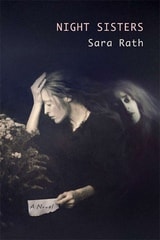
Night Sisters
A NovelSara Rath
University of Wisconsin Press, 2008
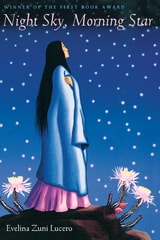
Night Sky, Morning Star
Evelina Zuni Lucero
University of Arizona Press, 2000
At the Indian artisans show in Santa Clara Pueblo, Cecelia Bluespruce sits with her wares in the middle of a row of booths—a good place to catch buyers. She is a successful Native American artist, a sculptor and potter of renown. But Cecelia is in the middle of something deeper than an art show, for she has become trapped by dreams and shadows of her past.
Night Sky, Morning Star is a story of remembrance and reconciliation in one Native American family separated by time and chance. Cecelia’s grown son, Jude, now wants to learn about the father he has never known. Political activist Julian Morning Star, imprisoned twenty years for a crime he did not commit, is unaware that his son even exists. Troubled by dreams, lies, and denial of the past, Cecelia is guided toward wholeness by family and friends who have their own pasts to confront.
This compelling novel plunges readers into the hubbub of the Indian arts market and into the grim reality of prison life. Evelina Zuni Lucero introduces us to experiences we may find unfamiliar: diverse Native American traditions, life on a BIA Indian agency compound, the making of an Indian activist. But she also reintroduces us to two things we all live for: the power of story and the power of love.
Night Sky, Morning Star is the fiction winner of the 1999 First Book Awards competition of the Native Writers’ Circle of the Americas.
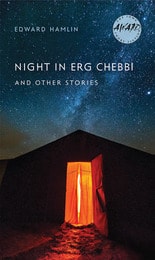
Night in Erg Chebbi and Other Stories
Edward Hamlin
University of Iowa Press, 2015
By turns innocent and canny, the characters of Night in Erg Chebbi and Other Stories must learn to improvise—quickly—when confronted with stark choices they never dreamed they’d have to make. Lyrical, immaculately constructed and deeply felt, these nine stories take us far beyond our comfort zones and deep into the wilds of the human heart.
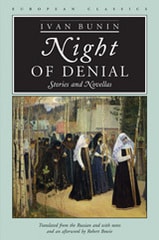
Night of Denial
Stories and NovellasIvan Bunin
Northwestern University Press, 2006
Bunin achieved his greatest mastery in the short story, and much of his finest work appears in this volume-the largest collection of his prose works ever published in English. In Robert Bowie's fine translation, with extensive annotations and a lengthy critical afterword, this work affords readers of English their first opportunity for a sustained encounter with a Russian classic, and one of the great writers of the twentieth century.
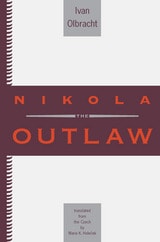
Nikola the Outlaw
Ivan Olbracht
Northwestern University Press, 2001
Ivan Olbracht's reputation as one of Czechoslovakia's most important authors stems from his works dealing with Ruthenia and the tensions between the two major ethnic groups of the region: the Ruthenians and the Jews. Weaving myth with realism, Nikola the Outlaw is considered Olbracht's masterpiece.
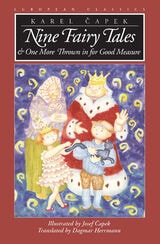
Nine Fairy Tales
and One More Thrown in for Good MeasureKarl Capek
Northwestern University Press, 1996
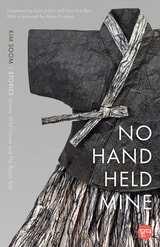
No Hand Held Mine
Stories — "Granny Wild Goose" and "The Root's Tale"Kim Soom
Rutgers University Press, 2026
An elderly Korean woman talking about being forced into sexual slavery during World War II. A modern Korean woman extricating herself from a failing relationship with an artist. Award-winning South Korean writer Kim Soom presents us with portraits of two women who couldn’t be more different but who both show resilience and compassion. No Hand Held Mine: Stories, containing one non-fiction piece and one short story, demonstrates the power and breadth of Kim’s writing. “Granny Wild Goose” uses former Comfort Woman Gil Won-Ok’s own words, recorded during conversations with Kim, to tell her life story of brutality, betrayal, and survival. In “The Root’s Tale,” the female protagonist comes to understand the strength of solitary women. Both devastating and reaffirming, No Hand Held Mine shows why Kim Soom has received every major literary award in Korea. Joon-Li Kim and Doo-Sun Ryu’s sensitive translation maintains Kim’s lyricism and exquisite imagery.
This book is published with the support of The Daesan Foundation.
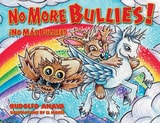
No More Bullies!/¡No Más Bullies
Owl in a Straw Hat 2Rudolfo Anaya
Museum of New Mexico Press, 2019
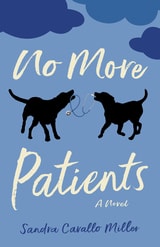
No More Patients
A NovelSandra Cavallo Miller
University of Nevada Press, 2026
Once a free spirit, Vivian celebrated at Woodstock in her thirties and Burning Man in her eighties. Now she spends her time feuding with Marianne Dunwitty, her new rival from the Scrabble Klub. To help resolve her identity crisis, Vivian begins recording reflections on her life, revealing a deep despair that drives her to take on the Klub members, scorn the new cloud-watching man next door, and snoop into a suspected neighborhood homicide.
Norah and Vivian must find ways to deal with their out-of-balance lives, and—most importantly—each other. Picking up where Out of Patients left off, No More Patients is a heartfelt, humorous sequel that stands on its own, about the struggles of healing both patients and relationships alike.
No More Patients
A NovelSandra Cavallo Miller
University of Nevada Press, 2026
Once a free spirit, Vivian celebrated at Woodstock in her thirties and Burning Man in her eighties. Now she spends her time feuding with Marianne Dunwitty, her new rival from the Scrabble Klub. To help resolve her identity crisis, Vivian begins recording reflections on her life, revealing a deep despair that drives her to take on the Klub members, scorn the new cloud-watching man next door, and snoop into a suspected neighborhood homicide.
Norah and Vivian must find ways to deal with their out-of-balance lives, and—most importantly—each other. Picking up where Out of Patients left off, No More Patients is a heartfelt, humorous sequel that stands on its own, about the struggles of healing both patients and relationships alike.
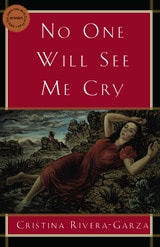
No One Will See Me Cry
Cristina Rivera-Garza
Northwestern University Press, 2003
Winner of the Mexico National Novel Prize, Sor Juana Inés de la Cruz Prize, and IMPACT Prize
Joaquín Buitrago, a photographer in the Castaneda Insane Asylum, believes a patient is a prostitute he knew years earlier. His obsession in confirming Matilde's identity leads him to explore the clinics records, and her tragic history. Joaquín and Matilda begin to tell each other fragmented stories about a past they almost shared, and a future in which they do not believe. Set in 1920s Mexico, this novel is at once an overview of one of the most turbulent times in Mexican history, a love story, and a meditation on the ways in which medical and popular language define insanity. No One Will See Me Cry is a lyrical and startling visitation with the so-called losers of an era as they try to plumb the meaning of their lives.
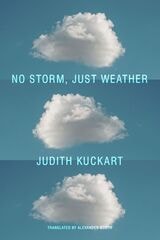
No Storm, Just Weather
Judith Kuckart
Seagull Books, 2023
Sunday evening, Tegel Airport, Berlin: A woman strikes up a conversation with a man, Robert Sturm, who is thirty-six years old and eighteen years her junior. He is on his way to Siberia and will return the following Saturday. She cannot wait . . .
In 1981 she came to West Berlin as an eighteen-year-old to study medicine and met Viktor, who was twice her age. Though he opened the world up to her, he remained closed himself. At the turn of the millennium and thirty-six, she meets Johann. He is thirty-six too. They try to make a life together, but their jobs aren’t the only things that are precarious. Saturday morning, Tegel Airport again: For six days, her everyday life and her memories have become entwined. Why are the men in her life always thirty-six? Is she still the person she remembers? Or, being someone who knows their way around the mind, is she in fact what she has forgotten?
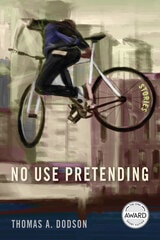
No Use Pretending
Thomas A. Dodson
University of Iowa Press, 2023
The characters in these stories have been forced into conditions of life that they find unbearable, and the stories chart their often tragically misguided attempts to relieve their suffering via connections with other people or through the pursuit of addictive attachments (to opiates in one story, to sleep in another).
This collection encompasses diverse genres, from ecologically informed realism to a Kafkaesque fairy tale, from fabulist “weird fiction” to an episode from The Odyssey that becomes a meditation on what distinguishes human beings from animals. These stories invite the reader to reconsider moral and ideological certainties, to take a fresh look at such issues as fracking and drone warfare. In one story, a petroleum engineer discovers that one of his wastewater wells may be causing earthquakes, and in another the pilot of an Air Force drone seeks to reconcile his conflicting roles as protector and executioner, husband and soldier. The scientist and the serviceman are both presented with problems that have no easy or obvious solutions, situations that force them to confront the messy, compromising complexity of being human.
Noah
A Novel of the Boom TimesHugo Loetscher
Seagull Books, 2012
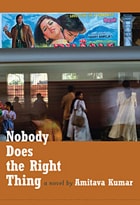
Nobody Does the Right Thing
A NovelAmitava Kumar
Duke University Press, 2010
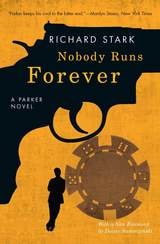
Nobody Runs Forever
A Parker NovelRichard Stark
University of Chicago Press, 2017
Richard Stark's Parker novels are the hardest of hard-boiled, classic crime novels where the heists are huge, the body counts are high, and the bad guys usually win.
The Parker novels have been a huge influence on countless writers and filmmakers, including Quentin Tarantino, Stephen King, George Pelecanos, Colson Whitehead, Lucy Sante, John Banville, and many more. Their stripped-down language and hard-as-nails amorality create an unforgettable world where the next score could be the big one, but your next mistake could also be your last. There's nothing else like them.
Nobody Runs Forever opens with a job at a poker game that sours into a necktie party. When Parker goes in on a messy scam—stealing an armored car—with someone he barely knows, as usual the amateurs get in the way of the job. From a nervous ex-con and his well-intentioned sister to a bank manager's two-timing wife and a beautiful, relentless cop, too many people have their hands too close to Parker's pie. Even when he sees the job turning bad, he can’t let go of the score—and there just might be nowhere left to run . . .
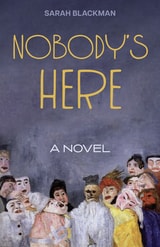
Nobody's Here
A NovelSarah Blackman
University of Alabama Press, 2026
An end-of-life sex worker accused of murdering the man she loved—and a town forced to reckon with what makes a life meaningful
Set amid the lush landscapes and winding waterways of Maryland’s Eastern Shore, Nobody’s Here is a haunting and compassionate novel about love, loss, and the value of a life. Flossie Taw works as an end-of-life sex worker, providing live-in care and companionship to men in their final days. Her latest client, Leonidas “Leo” Bane, has kept her by his side longer than anyone before him. Against her own rules, Flossie falls in love.
When Leo is found dead from what may or may not have been a self-inflicted gunshot wound, Flossie becomes the subject of suspicion in her small Maryland town. As she struggles with an unfamiliar grief, she becomes the subject of intense local speculation as neighbors, friends, police officers, the county coroner, and countless others weigh in on her character, her profession, and her possible role in Leo’s death.
Told through a rich chorus of voices alongside Flossie’s own, Nobody’s Here explores how ordinary people wrestle with life’s biggest questions while navigating the demands of everyday life. As the residents of Canterbury, Maryland, debate Flossie’s culpability, they are also forced to consider what makes a life meaningful and what we owe one another at the end of it. Nobody’s Here asks readers to look beyond appearances and decide for themselves whether Flossie Taw is responsible for Leo’s death, or whether she was responsible for giving his life meaning.