Results by title
344 books match the query 'Nationalism' and 32 start with n
Nation Making
Emergent Identities in Postcolonial MelanesiaRobert J. Foster, Editor
University of Michigan Press, 1997
In this theoretically sophisticated volume, contributors examine the process of nation making in Fiji, Papua New Guinea, the Solomon Islands, and Vanuatu- states that attained formal political independence between 1970 and 1980. The remarkable cultural diversity within these states demands close ethnographic study of different groups and their contesting definitions of nationhood and leads to highly original approaches.
The essays explore the political conditions and cultural assumptions that inform how Melanesians variously imagine a national community. The authors interpret a wide range of materials, from political speeches and official ceremonies of state to newspaper advertisements and life crisis rites. They demonstrate both how the legacies of divisive colonial rule, the weakness of the postcolonial state, and the exigencies of capitalist markets undermine the processes of nation making in contemporary Melanesia and how new forms of popular and consumer culture potentially shape an emergent national consciousness.
Comparative and historical in its orientation, this book will appeal to readers not only in anthropology but in political science, social history, and cultural studies. It will be of special value to those interested in comparative politics and history, Pacific studies, ethnicity and nationalism, and colonial and postcolonial studies.
Robert J. Foster is Assistant Professor of Anthropology, University of Rochester.
Nation Work
Asian Elites and National IdentitiesTimothy Brook and Andre Schmid, Editors
University of Michigan Press, 2000
Nation and Migration
How Citizens in Europe Are Coping with XenophobiaGyörgy Csepeli
Central European University Press, 2021
Nation and Migration provides a way to understand recent migration events in Europe that have attracted the world's attention. The emergence of the nations in the West promised homogenization, but instead the imagined national communities have everywhere become places of heterogeneity, and modern nation states have been haunted by the specter of minorities. This study analyses experiences relating to migration in 23 European countries. It is based on data from the International Social Survey Programme, a global cross-national collaborative exercise, with surveys made in 1995, 2003, and 2013. In the authors' view, a critical test for Europe will be its ability to find adequate responses to the challenges of globalization.
The book provides a detailed overview of how citizens in Europe are coping with a xenophobia fueled by their own sense of insecurity. The authors reconstruct the competing sociological reactions to migration in the forms of integration, assimilation and segregation. Hungary receives special attention: the data show that people living there are far less closed and xenophobic than they might seem through the prism of a media-instigated moral panic.
Nation of Outlaws, State of Violence
Nationalism, Grassfields Tradition, and State Building in CameroonMeredith Terretta
Ohio University Press, 2014
Nation of Outlaws, State of Violence is the first extensive history of Cameroonian nationalism to consider the global and local influences that shaped the movement within the French and British Cameroons and beyond. Drawing on the archives of the United Nations, France, Great Britain, Ghana, and Cameroon, as well as oral sources, Nation of Outlaws, State of Violence chronicles the spread of the Union des populations du Cameroun (UPC) nationalist movement from the late 1940s into the first postcolonial decade. It shows how, in the French and British Cameroon territories administered as UN Trusteeships after the Second World War, notions of international human rights, the promise of Third World independence, Pan-African federation, and national citizenship blended with local political and spiritual practices that resurfaced as the period of European rule came to a close. After French and British administrators banned the party in the mid-1950s, UPC nationalists adopted violence as a revolutionary strategy. In the 1960s, the nationalist vision disintegrated. The postcolonial regime labeled UPC nationalists “outlaws” and rounded them up for imprisonment or execution as the state shifted to single-party rule in 1966.
Nation of Outlaws, State of Violence traces the connection between local and transregional politics in the age of Africa’s decolonization and the early decades of the Cold War. Rather than stop at official independence as most conventional histories of African nationalist movements do, this book considers postindependence events as crucial to the history of Cameroonian nationalism and to an understanding of the postcolonial government that came to power on 1 January 1960. While the history of the UPC is a story that ends with the party’s failure to gain access to political power with independence, it is also a story of the postcolonial state’s failure to become a nation.
Nation, Language, Islam
Tatarstan's Sovereignty MovementHelen M. Faller
Central European University Press, 2011
National Cultures at Grass-root Level
Antonina Kloskowska
Central European University Press, 2001
The major dilemma this volume addresses is the function of national identity in a modern society, for despite the trend towards globalization, the world continues to be riddled with national conflict.
Kłoskowska begins by looking at the controversy between two competing concepts of the origin of the nation – political and ethnic. She examines the central issues of the argument, and in particular, the characteristics and effects of ethnic differences on personal identity and the appropriation of national culture. Her theories are based upon autobiographies by individuals belonging to various national minorities in Poland and other areas where ethnic borders are blurred. The group studied included mostly young intellectuals: Ukrainians, Belarussians and Silesian-Germans. She examines the national attitudes of the various countries the ethnic minorities have been forced to live with. In her conclusion, Kłoskowska takes the view that national cultures are either ‘open’ or ‘closed’ and stresses the importance of participating in more than one cultural medium.
National Cultures at the Grass-Root Level is rich in information on contemporary theories of the nation, on its origin, character and future, and offers a deep insight into the complex and often ambiguous reality of national attitudes.

National Identity
Anthony D. Smith
University of Nevada Press, 1993
National Identity of Romanians in Transylvania
Sorin Mitu
Central European University Press, 2001
This meticulously researched and elegantly written book is the most authoritative study of the emergence of modern Romanian identity in Transylvania during the eighteenth and nineteenth centuries. Based upon a plethora of contemporary published sources, Mitu approaches national identity from a variety of perspectives - from within the Romanian community itself and their reaction to the image others had of them.
The author sheds new light on the problems of self-evaluation using a method he describes as "functional analysis" to examine a complex set of ideologies and propaganda. This approach helps the reader to understand the intricate web of contemporary Romanian nationalism.
National Identity of Romanians in Transylvania appeals to scholars of modern Romanian history, those focusing on the Habsburg Monarchy and the study of modern nationalism. The book is an important contribution to the expanding debate on nationalism and national identity from an East European perspective.
National Romanticism
The Formation of National MovementsMiroslav Hroch
Central European University Press, 2007
Nationalism
Craig Calhoun
University of Minnesota Press, 1998

Nationalism and Beyond
Introducing Moral Debate about ValuesNenad Mišcevic
Central European University Press, 2001
A very readable introduction to the concepts and principles shaping the philosophical debate around nationalism. The book provides portraits of two kinds of nationalists: the tougher type, more common in everyday life, and the ultra-moderate "liberal nationalist" encountered in academia. The author introduces a debate with a "thoughtful nationalist," one who defends the view that states should be organized around national culture and that individuals have basic obligations to their nation. The author attempts to answer his opponent's standard arguments and presents a fully documented critique of his views.
A passion born from Miscevic's encounter with nationalism in the former Yugoslavia glows from every line of the argument. Questions raised and discussed include: Why is radicalism typical of nationalism? How successful is the nation-state? Does nationalism support liberal-democratic values? Is membership in a nation necessary for human fulfillment and for understanding values? Why might nationalism be immoral?
The book is unique not only because it explains a contemporary moral debate, in terms clear to the non-philosopher reader, but also because it has been written from the perspective of Central and Eastern Europe based on the author's personal experience.
Nationalism and Sexuality
Middle-Class Morality and Sexual Norms in Modern EuropeGeorge L. Mosse, With a critical introduction by Mary Louise Roberts
University of Wisconsin Press, 2020

Nationalism and Terror
Ante Pavelic and Ustasha Terrorism from Fascism to the Cold WarGiorgio Cingolani
Central European University Press, 2018

Nationalism and the Economy
Explorations into a Neglected RelationshipStefan Berger
Central European University Press, 2019
Nationalism and the Imagination
Gayatri Chakravorty Spivak
Seagull Books, 2010
Gayatri Chakravorty Spivak has distinguished herself as one of the foremost scholars of contemporary literary and postcolonial theory and feminist thought. Known for her translation of Derrida’s On Grammatology and her groundbreaking essay, “Can the Subaltern Speak?,” Spivak has often focused on subaltern, marginalized women and the role of essentialism in feminist thought to unite women from divergent cultural backgrounds. In Nationalism and the Imagination, Spivak expands upon her previous postcolonial scholarship, employing a cultural lens to examine the rhetorical underpinnings of the idea of the nation-state.
In this gripping and intellectually rigorous work, Spivak specifically analyzes the creation of Indian sovereignty in 1947 and the tone of Indian nationalism, bound up with class and religion, that arose in its wake. Spivak was five years old when independence was declared, and she vividly writes: “These are my earliest memories: Famine and blood on the streets.” As well, she recollects the songs and folklore stories that were prevalent at the time in order to examine the role of the mother tongue and the relationship between language and feelings of national identity. She concludes that nationalism colludes with the private sphere of the imagination in order to command the public sphere.
Originally given as an address at the University of Sofia in Bulgaria, Nationalism and the Imagination provides powerful insight into the historical narrative of India as well as compelling ideas that speak to nationalist concerns around the world. Also included in this book is the discussion with Spivak that followed the speech, making this an essential and informative work for scholars of post-colonialism.
Nationalism and the Moral Psychology of Community
Bernard Yack
University of Chicago Press, 2012
Nationalism is one of modern history’s great surprises. How is it that the nation, a relatively old form of community, has risen to such prominence in an era so strongly identified with the individual? Bernard Yack argues that it is the inadequacy of our understanding of community—and especially the moral psychology that animates it—that has made this question so difficult to answer.
Yack develops a broader and more flexible theory of community and shows how to use it in the study of nations and nationalism. What makes nationalism such a powerful and morally problematic force in our lives is the interplay of old feelings of communal loyalty and relatively new beliefs about popular sovereignty. By uncovering this fraught relationship, Yack moves our understanding of nationalism beyond the oft-rehearsed debate between primordialists and modernists, those who exaggerate our loss of individuality and those who underestimate the depth of communal attachments.
A brilliant and compelling book, Nationalism and the Moral Psychology of Community sets out a revisionist conception of nationalism that cannot be ignored.
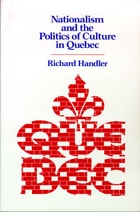
Nationalism and the Politics of Culture in Quebec
Richard Handler
University of Wisconsin Press, 1988
Bringing together methodologies of history, sociology, political science, and philosophy, as well as anthropology, Handler centers on the period 1976–1984, during which the independantiste Parti Québéois was in control of the provincial government and nationalistic sentiment was especially strong. Handler draws on historical and archival research, and on interviews with Quebec and Canadian government officials, as he addresses the central question: Given the similarities between the epistemologies of both anthropology and nationalist ideology, how can one write an ethnography of nationalism that does not simply reproduce—and thereby endorse—nationalistic beliefs? Handler analyzes various responses to the nationalist vision of a threatened existence. He examines cultural tourism, ideology of the Quebec government, legislations concerning historical preservation, language legislation and policies towards immigrants and “cultural minorities.” He concludes with a thoughtful meditation on the futility of nationalisms.
Nationalism and the State
John Breuilly
University of Chicago Press, 1993
Breuilly challenges the conventional view that nationalism emerges from a sense of cultural identity. Rather, he shows how elites, social groups, and foreign governments use nationalist appeals to mobilize popular support against the state. Nationalism, then, is a means of creating a sense of identity. This provocative argument is supported with a wide-ranging analysis of pertinent examples—national opposition in early modern Europe; the unification movement in Germany, Italy, and Poland; separatism under the Hapsburg and Ottoman empires; fascism in Germany, Italy, and Romania; post-war anti-colonialism and the nationalist resurgence following the breakdown of Soviet power.
Still the most comprehensive and systematic historical comparison of nationalist politics, Nationalism and the State is an indispensable book for anyone seeking to understand modern politics.
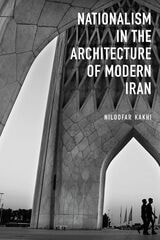
Nationalism in Architecture of Modern Iran
Niloofar Kakhi
Gingko, 2023
Nationalism in Architecture of Modern Iran is the first comprehensive book on modern architecture in Iran to be published in English. It addresses the relationship between nationalism and architecture in Iran and discusses the role Western architects played in the development of modern architecture in the country while introducing some of the most significant and recent projects in Iran. It investigates what it means to design a building that bears an Iranian or Islamic-Iranian identity and how to construct a conceptual platform for critically assessing representations of national identity in contemporary architecture. This book will directly help practicing architects and policymakers of the built environment, especially in Iran, as well as give a comprehensive understanding of the modern history of architecture in Iran to art historians and a broader audience. It introduces some of the most significant and recent projects in Iran for the first time.

Nationalism in India
Past and PresentIrfan Habib
Seagull Books, 2023
What makes a people living in a mere “geographical expression” a nation? From the French Revolution onwards, the word “nation” came to denote a people who wish to be collectively free. But free from what—colonial rule and inequality? Or religious and cultural diversity?
In this timely and succinct essay, Irfan Habib charts India’s struggle to consolidate a nationalist identity, to identify what it sought to be free from. Even as the colonial regime denied the very possibility of nationalism in the subcontinent, opposition to British rule fomented just such a sentiment. But resistance against colonial exploitation alone could not unify the Indian people. Internal inequalities—caste, poverty, religious bigotry—remained (and still remain) to be tackled.

Nationalism, Colonialism, and Literature
Terry Eagleton
University of Minnesota Press, 1990
The three essays constituting this volume were originally published as individual pamphlets by the Field Day Theatre Company, in Derry, Northern Ireland. Each deals with the question of nationalism and the role of cultural production as a force in understanding and analyzing the aftermath of colonization. The authors’ diverse perspectives are demonstrated by the essays’ respective titles: Eagleton, Nationalism: Irony and Commitment; Jameson, Modernism and Imperialism; and Said, Yeats and Decolonization. The essays have implication beyond their immediate topics, bearing upon questions of feminism, decolonization, and modernism to illuminate problems that belong to other groups and regions.

Nationalism, Devolution and the Challenge to the United Kingdom State
Arthur Aughey
Pluto Press, 2001
Nationalist Thought and the Colonial World
A Derivative DiscoursePartha Chatterjee
University of Minnesota Press, 1993
In this book a leading Indian political philosopher criticizes Western theories of Third World nationalism—both liberal and Marxist. He demonstrates how Western theorists, with their emphasis on the power of reason, the primacy of the hard sciences, and the dominance of the empirical method, have assumed that their presuppositions are universally valid, and, through the impact of Western education, have imposed concepts of nationalism on non-Western peoples to the detriment, if not destruction, of their own world-views. The author explores the central contradiction that nationalism in Africa and Asia has consequently experienced: setting out to assert its freedom from European domination, it yet remained a prisoner of European post-Enlightenment rationalist discourse.
Using the case of India, Professor Chatterjee goes on to show how Indian nationalism did effect significant displacements in the framework of modernist thinking imbibed from the West. Yet, despite constituting itself as a different discourse, it remained dominated by the very structure of power it sought to repudiate. And so the historical outcome generally has been the transformation of Third World nationalism by ruling classes into a state ideology legitimizing their own rule, appropriating the life of the nation, and propelling it along the path of ‘universal modernization’. But the spurious ideological unity proclaimed by these classes, and their failure to subsume completely the life of the nation in the life of their new states, raises the historical prospect that a critique of state nationalism will emerge.
This profound exercise in political philosophy questions the legitimacy of the currently predominant formulations of nationalist ideology in the Third World. It anticipates a new generation of popular struggles that will redefine the content of Afro-Asian nationalism and the kinds of society people wish to build.
For scholars, it will make uncomfortable reading because of its radical attack on the fundamentals of Western bourgeois thought, an attack always couched, however, in the rational tones of Western scholarship.

Nationalizing Empires
Stefan Berger
Central European University Press, 2015

Nations and Nationalism
A ReaderSpencer, Philip
Rutgers University Press, 2005
Nationalism has become a topic of wide-ranging significance and heated debate over recent years, with a huge expansion in the amount of literature available. Bringing together the best and most representative of these writings, Nations and Nationalism is an essential reader for students of political theory and related fields.
Assembled by two influential scholars, the volume includes the core, basic texts required for any course on nationalism, along with a selection of less well-known contributions that illuminates the debates. Articles and chapters cover the origins, different types, and concepts of nationalism; its relationship with race, gender, and ethnicity; the impact of globalization, post-communism, and migration; and debates about citizenship and self-determination. Classic writers such as Ernest Gellner, Anthony Smith, Benedict Anderson, and John Breuilly are represented along with younger scholars who have played a critical role in reshaping contemporary attitudes toward the topic.
Selected writings by historians, sociologists, and anthropologists supplement contributions from political scientists so that students will be able to compare theories and debates across a range of disciplines and time periods. Taken together, the chapters provide a balanced and vivid overview of how nationalism has exploded as a topic of inquiry over the last two decades and how it has interacted with other political and social forces.

Negotiating Spain and Catalonia
Competing Narratives of National IdentityFernando León-Solís
Intellect Books, 2013
The two case studies included in this book (dealing with the Football World Cups of 1994 and 2002, and the general elections of 1996 and 2000) examine competing discourses of Spain, Catalonia and their national identities, as constructed in the Spanish press. The conservative discourse offers traditional and unified images of Spain close to the stereotype, whereas more liberal visions of the country regard 'Europeanism' and 'reason' (not 'passive') as the values Spain should aspire to. From a peripheral perspective, Catalan self-definition is of a people that is hardworking, thoughtful, truly European, and different from the rest of the Spaniards.
However, these differences between the discourses are not always so clear-cut. Central to Negotiating Spain and Catalonia is the idea of the constant renegotiation of Spanish and Catalan identities in order to adapt them to the political circumstance: both case studies show how radically different narratives of Spanishness and Catalanicity offered in the turbulent political past tend to merge into the more tranquil present.
Negotiating With ETA
Obstacles To Peace In The Basque Country, 1975-1988Robert P. Clark
University of Nevada Press, 1990
Since the late 1960s, the Basque insurgent organization ETA (Euzkadi ta Askatasuna, or Basque Homeland and Freedom) has been engaged in a violent struggle against the Spanish state in an effort to gain the independence of the Basque Country. ETA violence has led to the death of hundreds of people, making the organization the most violent insurgent group in Europe. Between 1975 and 1988, nearly thirty attempts to negotiate an end to violence, with a few limited exceptions, all ended in failure. This important book examines why the efforts to negotiate have failed and makes suggestions on how to improve the chances for successful discussion in the future. Although Clark does not disprove the conventional wisdom that negotiation with terrorists is a bad idea, he does begin from the opposing point of view that there may be some positive values to be realized from such negotiation.Negotiating with ETA describes the various factions that are interested in the outcome of such negotiations and the Spanish antiterrorist policy throughout the period under examination. The book also recounts the early attempts to negotiate, the first attempt at "social reintegration," various attempts by the Basque Government to get negotiations started, negotiation efforts under the Spanish socialist government of Felipe González, and the lengthy negotiations that took place in Algeria. A wide range of scholars and specialists will find this book valuable, including those interested in contemporary Spanish politics, ethnic nationalism, Basque affairs, the problem of terrorism, and conflict resolution.
Negotiating for the Past
Archaeology, Nationalism, and Diplomacy in the Middle East, 1919-1941By James F. Goode
University of Texas Press, 2007
The discovery of the tomb of Tutankhamun in 1922 was a landmark event in Egyptology that was celebrated around the world. Had Howard Carter found his prize a few years earlier, however, the treasures of Tut might now be in the British Museum in London rather than the Egyptian Museum in Cairo. That's because the years between World War I and World War II were a transitional period in Middle Eastern archaeology, as nationalists in Egypt and elsewhere asserted their claims to antiquities discovered within their borders. These claims were motivated by politics as much as by scholarship, with nationalists seeking to unite citizens through pride in their ancient past as they challenged Western powers that still exercised considerable influence over local governments and economies. James Goode's analysis of archaeological affairs in Turkey, Egypt, Iran, and Iraq during this period offers fascinating new insight into the rise of nationalism in the Middle East, as well as archaeological and diplomatic history.
The first such work to compare archaeological-nationalistic developments in more than one country, Negotiating for the Past draws on published and archival sources in Arabic, English, French, German, Persian, and Turkish. Those sources reveal how nationalists in Iraq and Iran observed the success of their counterparts in Egypt and Turkey, and were able to hold onto discoveries at legendary sites such as Khorsabad and Persepolis. Retaining artifacts allowed nationalists to build museums and control cultural heritage. As Goode writes, "Going to the national museum became a ritual of citizenship." Western archaeologists became identified (in the eyes of many) as agents of imperialism, thus making their work more difficult, and often necessitating diplomatic intervention. The resulting "negotiations for the past" pulled patrons (such as John D. Rockefeller, Jr., and Lord Carnarvon), archaeologists (James Breasted and Howard Carter), nationalist leaders (Ataturk and Sa'd Zaghlul), and Western officials (Charles Evan Hughes and Lord Curzon) into intractable historical debates with international implications that still resonate today.

Neither German nor Pole
Catholicism and National Indifference in a Central European BorderlandJames E. Bjork
University of Michigan Press, 2009
"This is a fascinating local story with major implications for studies of nationalism and regional identities throughout Europe more generally."
---Dennis Sweeney, University of Alberta
"James Bjork has produced a finely crafted, insightful, indeed, pathbreaking study of the interplay between religious and national identity in late nineteenth-century Central Europe."
---Anthony Steinhoff, University of Tennessee at Chattanooga
Neither German nor Pole examines how the inhabitants of one of Europe's most densely populated industrial districts managed to defy clear-cut national categorization, even in the heyday of nationalizing pressures at the turn of the twentieth century. As James E. Bjork argues, the "civic national" project of turning inhabitants of Upper Silesia into Germans and the "ethnic national" project of awakening them as Poles both enjoyed successes, but these often canceled one another out, exacerbating rather than eliminating doubts about people's national allegiances. In this deadlock, it was a different kind of identification---religion---that provided both the ideological framework and the social space for Upper Silesia to navigate between German and Polish orientations. A fine-grained, microhistorical study of how confessional politics and the daily rhythms of bilingual Roman Catholic religious practice subverted national identification, Neither German nor Pole moves beyond local history to address broad questions about the relationship between nationalism, religion, and modernity.
New Ideology of Imperialism
Renewing the Moral ImperativeFrank Furedi
Pluto Press, 1994
Nkrumah and the Ghana Revolution
C. L. R. James
Duke University Press, 2022
Notions of Nationalism
Sukumar Periwal
Central European University Press, 1996
In this highly topical volume, a group of distinguished scholars explore various aspects of nationalism theory and shed light on the current thinking in this area of great contemporary importance. Such topics as primordialism, institutional plurality in multi-ethnic states, historical problems of nationalism, and the importance of local-level understanding in dealing with such problems, are examined with clarity and vision.
Together the essays provide a valuable insight into an intricate debate which is of crucial relevance to the understanding of contemporary politics not only in Central Europe but in the world at large.