Results by title
28164 books match the query 'History' and 647 start with n
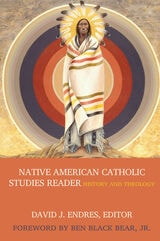
Native American Catholic Studies Reader
History and TheologyDavid J. Endres
Catholic University of America Press, 2022
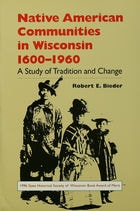
Native American Communities in Wisconsin, 1600–1960
A Study of Tradition and ChangeRobert E. Bieder
University of Wisconsin Press, 1995
The first comprehensive history of Native American tribes in Wisconsin, this thorough and thoroughly readable account follows Wisconsin’s Indian communities—Ojibwa, Potawatomie, Menominee, Winnebago, Oneida, Stockbridge-Munsee, and Ottawa—from the 1600s through 1960. Written for students and general readers, it covers in detail the ways that native communities have striven to shape and maintain their traditions in the face of enormous external pressures.
The author, Robert E. Bieder, begins by describing the Wisconsin region in the 1600s—both the natural environment, with its profound significance for Native American peoples, and the territories of the many tribal cultures throughout the region—and then surveys experiences with French, British, and, finally, American contact. Using native legends and historical and ethnological sources, Bieder describes how the Wisconsin communities adapted first to the influx of Indian groups fleeing the expanding Iroquois Confederacy in eastern America and then to the arrival of fur traders, lumber men, and farmers. Economic shifts and general social forces, he shows, brought about massive adjustments in diet, settlement patterns, politics, and religion, leading to a redefinition of native tradition.
Historical photographs and maps illustrate the text, and an extensive bibliography has many suggestions for further reading.

Native American DNA
Tribal Belonging and the False Promise of Genetic ScienceKim TallBear
University of Minnesota Press, 2013
Who is a Native American? And who gets to decide? From genealogists searching online for their ancestors to fortune hunters hoping for a slice of casino profits from wealthy tribes, the answers to these seemingly straightforward questions have profound ramifications. The rise of DNA testing has further complicated the issues and raised the stakes.
In Native American DNA, Kim TallBear shows how DNA testing is a powerful—and problematic—scientific process that is useful in determining close biological relatives. But tribal membership is a legal category that has developed in dependence on certain social understandings and historical contexts, a set of concepts that entangles genetic information in a web of family relations, reservation histories, tribal rules, and government regulations. At a larger level, TallBear asserts, the “markers” that are identified and applied to specific groups such as Native American tribes bear the imprints of the cultural, racial, ethnic, national, and even tribal misinterpretations of the humans who study them.
TallBear notes that ideas about racial science, which informed white definitions of tribes in the nineteenth century, are unfortunately being revived in twenty-first-century laboratories. Because today’s science seems so compelling, increasing numbers of Native Americans have begun to believe their own metaphors: “in our blood” is giving way to “in our DNA.” This rhetorical drift, she argues, has significant consequences, and ultimately she shows how Native American claims to land, resources, and sovereignty that have taken generations to ratify may be seriously—and permanently—undermined.
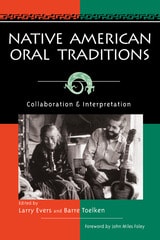
Native American Oral Traditions
Collaboration and InterpretationLarry Evers
Utah State University Press, 2001
This collection provides a benchmark that helps secure the position of collaboration between Native American and non-Native American scholars in the forefront of study of Native oral traditions. Seven sets of intercultural authors present Native American oral texts with commentary, exploring dimensions of perspective, discovery, and meaning that emerge through collaborative translation and interpretation. The texts studied all come from the American West but include a rich variety of material, since their tribal sources range from the Yupik in the Arctic to the Yaqui in the Sonoran Desert.
This presentation of jointly authored work is timely: it addresses increasing interest in, calls for, and movement toward reflexivity in the relationships between scholars and the Native communities they study, and it responds to the renewed commitment in those communities to asserting more control over representations of their traditions. Although Native and academic communities have long tried to work together in the study of culture and literature, the relationship has been awkward and imbalanced toward the academics. In many cases, the contributions of Native assistants, informants, translators, and field workers to the work of professional ethnographers has been inadequately credited, ignored, or only recently uncovered. Native Americans usually have not participated in planning and writing such projects. Native American Oral Traditions provides models for overcoming such obstacles to interpreting and understanding Native oral literature in relation to the communities and cultures from which it comes.
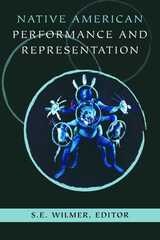
Native American Performance and Representation
Edited by S. E. Wilmer
University of Arizona Press, 2009
This volume examines Native performance using a variety of lenses, such as feminism, literary and film theory, and postcolonial discourse. Through the many unique voices of the contributors, major themes are explored, such as indigenous self-representations in performance, representations by nonindigenous people, cultural authenticity in performance and representation, and cross-fertilization between cultures. Authors introduce important, though sometimes controversial, issues as they consider the effects of miscegenation on traditional customs, racial discrimination, Native women’s position in a multicultural society, and the relationship between authenticity and hybridity in Native performance.
An important addition to the new and growing field of Native performance, Wilmer’s book cuts across disciplines and areas of study in a way no other book in the field does. It will appeal not only to those interested in Native American studies but also to those concerned with women’s and gender studies, literary and film studies, and cultural studies.
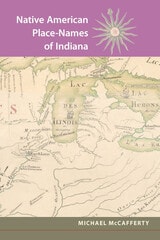
Native American Place Names of Indiana
Michael McCafferty
University of Illinois Press, 2007
A linguistic history of Native American place-names in Indiana
In tracing the roots of Indiana place names, Michael McCafferty focuses on those created and used by local Native Americans. Drawing from exciting new sources that include three Illinois dictionaries from the eighteenth century, the author documents the language used to describe landmarks essential to fur traders in Les Pays d’en Haut and settlers of the Old Northwest territory. Impeccably researched, this study details who created each name, as well as when, where, how and why they were used. The result is a detailed linguistic history of lakes, streams, cities, counties, and other Indiana names. Each entry includes native language forms, translations, and pronunciation guides, offering fresh historical insight into the state of Indiana.

Native American Slavery in the Seventeenth Century
Arne Bialuschewski, special issue editor
Duke University Press, 2017
Contributors. Carolyn Arena, Arne Bialuschewski, Linford D. Fisher, George Edward Milne, Andrés Reséndez
Native Americans and Pennsylvania
Daniel K. Richter
Temple University Press, 2026
Engagingly written, deeply researched, and thoroughly revised to reflect the most recent interdisciplinary scholarship, this new edition of Native Americans and Pennsylvania focuses on Indigenous actors, voices, and landscapes, while tracing interconnections among local, continental, and global trends.
The story begins thousands of years before there was such a thing as “Pennsylvania.” William Penn did not paint his colony on a blank canvas. Colonists adapted ancient patterns of trade and cultural interaction created by the ancestors of Lenape, Conestoga, and Haudenosaunee peoples and convinced themselves they had made them their own. In the process, Pennsylvanians developed moral justifications for the expropriation of Indigenous land, pernicious doctrines about racial superiority, and brutal mechanisms of vigilante violence that profoundly influenced later United States government policies.
Those policies kept Pennsylvania in the foreground of national Native American issues long after the Commonwealth expelled the majority of its Indigenous population to far-flung diasporic homes: forced cultural assimilation at off-reservation boarding schools in the nineteenth century, cultural revitalization and political activism in the twentieth, and struggles with cultural institutions over the repatriation of human remains and controversies over who has the right to claim Indigenous identity in the twenty-first.
In the series Pennsylvania History
Native Evangelism in Central Mexico
By Hugo G. Nutini and Jean F. Nutini
University of Texas Press, 2014
Evangelical Christianity is Mexico’s fastest-growing religious movement, with about ten million adherents today. Most belong to Protestant denominations introduced from the United States (e.g., Jehovah’s Witnesses, Seventh-day Adventists), but perhaps as many as 800,000 are members of homegrown, “native” evangelical sects. These native Mexican sects share much with the American denominations of which they are spinoffs. For instance, they are Trinitarian, Anabaptist, and Millenarian; they emphasize a personal relationship with God, totally rejecting intermediation by saints; and they insist that they are the only true Christians. Beyond that, each native sect has its distinctive characteristics.
This book focuses on two sharply contrastive native evangelical sects in Central Mexico: Amistad y Vida (Friendship and Life) and La Luz del Mundo (The Light of the World). The former, founded in 1982, now has perhaps 120,000 adherents nationwide. It is nonhierarchical, extremely egalitarian, and has no dogmatic directives. It is a cheerful religion that emphasizes charity, community service, and personal kindness as the path to salvation. It attracts new members, mainly from the urban middle class, through personal example rather than proselytizing. La Luz del Mundo, founded in 1926, now has about 350,000 members in Mexico and perhaps one million in the hemisphere. It is hierarchically organized and demands total devotion to the sect’s founder and his son, who are seen as direct links to Jesus on Earth. It is a proselytizing sect that recruits mainly among the urban poor by providing economic benefits within the congregations, but does no community service as such.
Based on ten years of fieldwork (1996–2006) and contextualized by nearly fifty years of anthropological study in the region, Native Evangelism in Central Mexico presents the first ethnography of Mexico’s native evangelical congregations.
Native Foods
Agriculture, Indigeneity, and Settler Colonialism in American HistoryMichael D. Wise
University of Arkansas Press, 2023
Combining original historical research with interdisciplinary perspectives and informed by the work of Indigenous food sovereignty advocates and activists, this study sheds new light on the historical roles of Native American cuisine in American history and the significance of ongoing colonial processes in present-day discussions about the place of Native foods and Native history in our evolving worlds of taste, justice, and politics.
Native Land Talk
Indigenous and Arrivant Rights TheoriesYael Ben-zvi
Dartmouth College Press, 2018
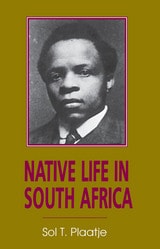
Native Life In South Africa
Before and Since the European War and the Boer RebellionSol T. Plaatje
Ohio University Press, 1991
First published in 1916 and one of South Africa’s great political books, Native Life in South Africa was first and foremost a response to the Native’s Land Act of 1913, and was written by one of the most gifted and influential writers and journalists of his generation. Sol T. Plaatje provides an account of the origins of this crucially important piece of legislation and a devastating description of its immediate effects.
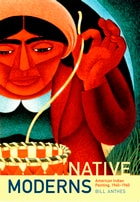
Native Moderns
American Indian Painting, 1940-1960Bill Anthes
Duke University Press, 2006
In the mid-twentieth century, Native artists began to produce work that reflected the accelerating integration of Indian communities into the national mainstream as well as, in many instances, their own experiences beyond Indian reservations as soldiers or students. During this period, a dynamic exchange among Native and non-Native collectors, artists, and writers emerged. Anthes describes the roles of several anthropologists in promoting modern Native art, the treatment of Native American “Primitivism” in the writing of the Jewish American critic and painter Barnett Newman, and the painter Yeffe Kimball’s brazen appropriation of a Native identity. While much attention has been paid to the inspiration Native American culture provided to non-Native modern artists, Anthes reveals a mutual cross-cultural exchange that enriched and transformed the art of both Natives and non-Natives.
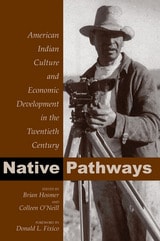
Native Pathways
American Indian Culture and Economic Development in the Twentieth CenturyBrian Hosmer
University Press of Colorado, 2004
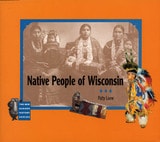
Native People of Wisconsin
Patty Loew
Wisconsin Historical Society Press, 2003
The revised edition ofPatty Loew'sNative People of Wisconsin is now available, ISBN 9780870207488.Native People of Wisconsin, the fifth text in the New Badger History series for upper elementary and middle school students, focuses on the Indian Nations in the state: the Menominee, Ho-Chunk, Ojibwe, Oneida, Mohican Nation, Stockbridge-Munsee Band, and the Brothertown Indians. Patty Loew has followed the same structure she used in Indian Nations of Wisconsin, her book for general audiences, in which she provided chapters on Early History and European Arrivals, then devoted the remaining chapters to each of the Indian Nations in Wisconsin today.
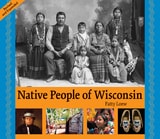
Native People of Wisconsin, Revised Edition
Patty Loew
Wisconsin Historical Society Press, 2015
"So many of the children in this classroom are Ho-Chunk, and it brings history alive to them and makes it clear to the rest of us too that this isn't just...Natives riding on horseback. There are still Natives in our society today, and we're working together and living side by side. So we need to learn about their ways as well." --Amy Laundrie, former Lake Delton Elementary School fourth grade teacher
An essential title for the upper elementary classroom, "Native People of Wisconsin" fills the need for accurate and authentic teaching materials about Wisconsin's Indian Nations. Based on her research for her award-winning title for adults, "Indian Nations of Wisconsin: Histories of Endurance and Survival," author Patty Loew has tailored this book specifically for young readers.
"Native People of Wisconsin" tells the stories of the twelve Native Nations in Wisconsin, including the Native people's incredible resilience despite rapid change and the impact of European arrivals on Native culture. Young readers will become familiar with the unique cultural traditions, tribal history, and life today for each nation.
Complete with maps, illustrations, and a detailed glossary of terms, this highly anticipated new edition includes two new chapters on the Brothertown Indian Nation and urban Indians, as well as updates on each tribe's current history and new profiles of outstanding young people from every nation.
Native People of Wisconsin, TG
Bobbie Malone and Kori Oberle
Wisconsin Historical Society Press, 2003
The revised and updated Teacher's Guide for Native People of Wisconsin is available Winter 2015, ISBN 9780870207495.This teacher's guide helps students grasp fully the rich content of Native People of Wisconsin. The guide offers more structured activities that reengage students in the text itself in a manner that diverges from teacher's guides to our earlier publications. Activities for each chapter focus on interdisciplinary standards-related reading strategies, journaling, and other multidimensional skills that both reinforce and complement the content of the text. Included with the teacher's guide is an accompanying CD-ROM, produced specifically for Native People of Wisconsin of segments from several of the video series on Wisconsin Studies produced by the Wisconsin Educational Communications Board. Such interactive learning integrates reasoning and reading skills (and state standards) beyond the social studies and promise to make Native People of Wisconsin an essential part of the classroom curriculum.
Native Peoples of the Gulf Coast of Mexico
Edited by Alan R. Sandstrom and E. Hugo García Valencia
University of Arizona Press, 2005
Native Peoples of the Gulf Coast of Mexico is the first book to argue that the people of this region constitute a culture area distinct from other parts of Mexico. A pioneering effort by a team of international scholars who summarize hundreds of years of history, this encyclopedic work chronicles the prehistory, ethnohistory, and contemporary issues surrounding the many and varied peoples of the Gulf Coast, bringing together research on cultural groups about which little or only scattered information has been published.
The volume includes discussions of the prehispanic period of the Gulf Coast, the ethnohistory of many of the neglected indigenous groups of Veracruz and the Huasteca, the settlement of the American Mediterranean, and the unique geographical and ecological context of the Chontal Maya of Tabasco. It provides descriptions of the Popoluca, Gulf Coast Nahua, Totonac, Tepehua, Sierra Ñähñu (Otomí), and Huastec Maya. Each chapter contains a discussion of each group’s language, subsistence and settlement patterns, social organization, belief systems, and history of acculturation, and also examines contemporary challenges to the future of each native people.
As these contributions reveal, Gulf Coast peoples share not only major cultural features but also historical experiences, such as domination by Hispanic elites beginning in the sixteenth century and subjection to forces of change in Mexico. Yet as contemporary people have been affected by factors such as economic development, increased emigration, and the spread of Protestantism, traditional cultures have become rallying points for ethnic identity.
Native Peoples of the Gulf Coast of Mexico highlights the significance of the Gulf Coast for anyone interested in the great encuentro between the Old and New Worlds and general processes of culture change. By revealing the degree to which these cultures have converged, it represents a major step toward achieving a broader understanding of the peoples of this region and will be an important reference work on these indigenous populations for years to come.
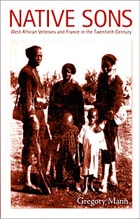
Native Sons
West African Veterans and France in the Twentieth CenturyGregory Mann
Duke University Press, 2006
Focusing on the period between World War I and 1968, Mann draws on archival research and extensive interviews with surviving Malian veterans of French wars to explore the experiences of the African soldiers. He describes the effects their long absences and infrequent homecomings had on these men and their communities, he considers the veterans’ status within contemporary Malian society, and he examines their efforts to claim recognition and pensions from France. Mann contends that Mali is as much a postslavery society as it is a postcolonial one, and that specific ideas about reciprocity, mutual obligation, and uneven exchange that had developed during the era of slavery remain influential today, informing Malians’ conviction that France owes them a “blood debt” for the military service of African soldiers in French wars.
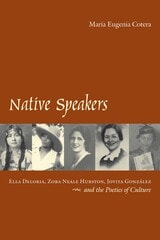
Native Speakers
Ella Deloria, Zora Neale Hurston, Jovita Gonzalez, and the Poetics of CultureBy María Eugenia Cotera
University of Texas Press, 2008
Gloria Anzaldua Book Prize, National Women's Studies Association, 2009
In the early twentieth century, three women of color helped shape a new world of ethnographic discovery. Ella Cara Deloria, a Sioux woman from South Dakota, Zora Neale Hurston, an African American woman from Florida, and Jovita González, a Mexican American woman from the Texas borderlands, achieved renown in the fields of folklore studies, anthropology, and ethnolinguistics during the 1920s and 1930s. While all three collaborated with leading male intellectuals in these disciplines to produce innovative ethnographic accounts of their own communities, they also turned away from ethnographic meaning making at key points in their careers and explored the realm of storytelling through vivid mixed-genre novels centered on the lives of women.
In this book, Cotera offers an intellectual history situated in the "borderlands" between conventional accounts of anthropology, women's history, and African American, Mexican American and Native American intellectual genealogies. At its core is also a meditation on what it means to draw three women—from disparate though nevertheless interconnected histories of marginalization—into conversation with one another. Can such a conversation reveal a shared history that has been erased due to institutional racism, sexism, and simple neglect? Is there a mode of comparative reading that can explore their points of connection even as it remains attentive to their differences? These are the questions at the core of this book, which offers not only a corrective history centered on the lives of women of color intellectuals, but also a methodology for comparative analysis shaped by their visions of the world.
Native Waters
Contemporary Indian Water Settlements and the Second Treaty EraDaniel McCool
University of Arizona Press, 2002
Native Wills from the Colonial Americas
Dead Giveaways in a New WorldMark Z. Christensen and Jonathan Truitt
University of Utah Press, 2015
Native Wills from the Colonial Americas showcases new testamentary sources from the sixteenth to the eighteenth centuries. It provides readers with translations and analyses of wills written in Spanish, Nahuatl, Yucatec Maya, K’iche’ Maya, Mixtec, and Wampanoag.
Divided into three thematic sections, the book provides insights and details that further our understanding of indigenous life in the Americas under colonial rule. Part One employs testaments to highlight the women of Native America and the ways their lives frequently challenged prescribed gender roles and statuses. Part Two uses testaments to illustrate the strategies of the elite in both negotiating and maintaining their power in a colonial, Spanish world. Part Three contributes to our understanding of the individual and collective nature of death by extracting from wills the importance of conversion, kinship, and societal ties in the colonial Americas. Capturing individual voices during dramatic periods of change, the documents presented here help us understand how cultures both adapt and persist.
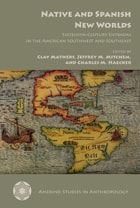
Native and Spanish New Worlds
Sixteenth-Century Entradas in the American Southwest and SoutheastEdited by Clay Mathers, Jeffrey M. Mitchem, and Charles M. Haecker
University of Arizona Press, 2013
No other volume assembles such a wide variety of archaeological, ethnohistorical, environmental, and biological information to elucidate the experience of Natives and Europeans in the early colonial world of Northern New Spain, and the global implications of entradas during this formative period in borderlands history.
Natives Making Nation
Gender, Indigeneity, and the State in the AndesAndrew Canessa
University of Arizona Press, 2005
This volume looks at how metropolitan ideas of nation employed by politicians, the media and education are produced, reproduced, and contested by people of the rural Andes—people who have long been regarded as ethnically and racially distinct from more culturally European urban citizens. Yet these peripheral “natives” are shown to be actively engaged with the idea of the nation in their own communities, forcing us to re-think the ways in which indigeneity is defined by its marginality.
The contributors examine the ways in which numerous identities—racial, generational, ethnic, regional, national, gender, and sexual—are both mutually informing and contradictory among subaltern Andean people who are more likely now to claim an allegiance to a nation than ever before. Although indians are less often confronted with crude assimilationist policies, they continue to face racism and discrimination as they struggle to assert an identity that is more than a mere refraction of the dominant culture. Yet despite the language of multiculturalism employed even in constitutional reform, any assertion of indian identity is likely to be resisted. By exploring topics as varied as nation-building in the 1930s or the chuqila dance, these authors expose a paradox in the relation between indians and the nation: that the nation can be claimed as a source of power and distinct identity while simultaneously making some types of national imaginings unattainable.
Whether dancing together or simply talking to one another, the people described in these essays are shown creating identity through processes that are inherently social and interactive. To sing, to eat, to weave . . . In the performance of these simple acts, bodies move in particular spaces and contexts and do so within certain understandings of gender, race and nation. Through its presentation of this rich variety of ethnographic and historical contexts, Natives Making Nation provides a finely nuanced view of contemporary Andean life.
Natives, Europeans, and Africans in Sixteenth-Century Santiago de Guatemala
By Robinson A. Herrera
University of Texas Press, 2003
The first century of Spanish colonization in Latin America witnessed the birth of cities that, while secondary to great metropolitan centers such as Mexico City and Lima, became important hubs for regional commerce. Santiago de Guatemala, the colonial capital of Central America, was one of these. A multiethnic and multicultural city from its beginning, Santiago grew into a vigorous trading center for agrarian goods such as cacao and cattle hides. With the wealth this commerce generated, Spaniards, natives, and African slaves built a city that any European of the period would have found familiar.
This book provides a more complete picture of society, culture, and economy in sixteenth-century Santiago de Guatemala than has ever before been drawn. Robinson Herrera uses previously unstudied primary sources, including testaments, promissory notes, and work contracts, to recreate the lives and economic activities of the non-elite sectors of society, including natives, African slaves, economically marginal Europeans, and people of mixed descent. His focus on these groups sheds light on the functioning of the economy at the lower levels and reveals how people of different ethnic groups formed alliances to create a vibrant local and regional economy based on credit. This portrait of Santiago also increases our understanding of how secondary Spanish American cities contributed vitally to the growth of the colonies.
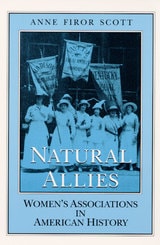
Natural Allies
Women's Associations in American HistoryAnne Firor Scott
University of Illinois Press, 1991
Natural Aristocracy
History, Ideology, and the Production of William FaulknerKevin Railey
University of Alabama Press, 1999
Natural Attachments
The Domestication of American Environmentalism, 1920–1970Pollyanna Rhee
University of Chicago Press, 2025
A massive oil spill in the Pacific Ocean near Santa Barbara, California, in 1969 quickly became a landmark in the history of American environmentalism, helping to inspire the creation of both the Environmental Protection Agency and Earth Day. But what role did the history of Santa Barbara itself play in this? As Pollyanna Rhee shows, the city’s past and demographics were essential to the portrayal of the oil spill as momentous. Moreover, well-off and influential Santa Barbarans were positioned to “domesticate” the larger environmental movement by embodying the argument that individual homes and families—not society as a whole—needed protection from environmental abuses. This soon would put environmental rhetoric and power to fundamentally conservative—not radical—ends.
Natural Attachments
The Domestication of American Environmentalism, 1920–1970Pollyanna Rhee
University of Chicago Press, 2025
A nuanced analysis takes a California oil spill as its point of departure to show how affluent homeowners pushed for an environmentalism that would protect not only the earth but also property and community norms.
A massive oil spill in the Pacific Ocean near Santa Barbara, California, in 1969 quickly became a landmark in the history of American environmentalism, helping to inspire the creation of both the Environmental Protection Agency and Earth Day. But what role did the history of Santa Barbara itself play in this? As Pollyanna Rhee shows, the city’s past and demographics were essential to the portrayal of the oil spill as momentous. Moreover, well-off and influential Santa Barbarans were positioned to “domesticate” the larger environmental movement by embodying the argument that individual homes and families—not society as a whole—needed protection from environmental abuses. This soon would put environmental rhetoric and power to fundamentally conservative—not radical—ends.

Natural Born Celebrities
Serial Killers in American CultureDavid Schmid
University of Chicago Press, 2005
David Schmid provides a historical account of how serial killers became famous and how that fame has been used in popular media and the corridors of the FBI alike. Ranging from H. H. Holmes, whose killing spree during the 1893 Chicago World's Fair inspired The Devil in the White City, right up to Aileen Wuornos, the lesbian prostitute whose vicious murder of seven men would serve as the basis for the hit film Monster, Schmid unveils a new understanding of serial killers by emphasizing both the social dimensions of their crimes and their susceptibility to multiple interpretations and uses. He also explores why serial killers have become endemic in popular culture, from their depiction in The Silence of the Lambs and The X-Files to their becoming the stuff of trading cards and even Web sites where you can buy their hair and nail clippings.
Bringing his fascinating history right up to the present, Schmid ultimately argues that America needs the perversely familiar figure of the serial killer now more than ever to manage the fear posed by Osama bin Laden since September 11.
Natural Landmarks of Arizona
David Yetman
University of Arizona Press, 2021
Whether you have climbed these peaks many times, enjoy seeing them from your car window, or simply want to learn more about southwestern geology and history, reading Natural Landmarks of Arizona is a fascinating way to learn about the ancient and recent history of beloved places such as Cathedral Rock, Granite Dells, Kitt Peak, and many others. With Yetman as your guide, you can tuck this book into your glove box and hit the road with profound new knowledge about the towering natural monuments that define our beautiful Arizona landscapes.

Natural Museums
U.S. National Parks, 1872-1916Kathy S. Mason
Michigan State University Press, 2004
In 1872, the world’s first national park was founded at Yellowstone. Although ideas of nature conservation were not embraced generally by the American public, five more parks were created before the turn of the century. By 1916, the year that the National Park Service was born, the country could boast of fourteen national parks, including such celebrated areas as Yosemite and Sequoia. Kathy Mason demonstrates that Congress, park superintendents, and the American public were forming general, often tacit notions of the parks’ purpose before the new bureau was established.
Although the Park Service recently has placed some emphasis on protecting samples of North America’s ecosystems, the earliest national parks were viewed as natural museums—monuments to national grandeur that would edify visitors. Not only were these early parks to preserve monumental and unique natural attractions, but they also had to be of no use to mining, lumbering, agriculture, and other “productive” industries. Natural Museums examines the notions of park monumentalism, “worthlessness,” and national significance, as well as the parks’ roles as wilderness preserves and recreational centers.
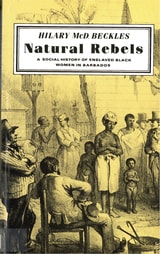
Natural Rebels
A Social History of Enslaved Women in BarbadosHilary McD Beckles
Rutgers University Press, 2012
Beckles details the daily lives of slave women in conditions of extreme exploitation. They suffered from harsh conditions, cruel punishments, malnutrition, disease, high mortality, and fear of abandonment when they were too old to work. He described the various categories and responsibilities of slaves, and the roles of children in the slave economy. Beckles looks at family structures and the complexities of interracial unions. He also shows how female slaves regularly resisted slavery, using both violent and nonviolent means. They never accommodated themselves to the system; as natural rebels, they fought in any way they could for survival.
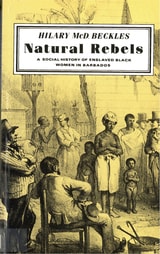
Natural Rebels
A Social History of Enslaved Women in BarbadosBeckles, Hilary
Rutgers University Press, 1990
Beckles details the daily lives of slave women in conditions of extreme exploitation. They suffered from harsh conditions, cruel punishments, malnutrition, disease, high mortality, and fear of abandonment when they were too old to work. He described the various categories and responsibilities of slaves, and the roles of children in the slave economy. Beckles looks at family structures and the complexities of interracial unions. He also shows how female slaves regularly resisted slavery, using both violent and nonviolent means. They never accommodated themselves to the system; as natural rebels, they fought in any way they could for survival.
Natural Resources and the New Frontier
Constructing Modern China's BorderlandsJudd C. Kinzley
University of Chicago Press, 2018
China’s westernmost province of Xinjiang has experienced escalating cycles of violence, interethnic strife, and state repression since the 1990s. In their search for the roots of these growing tensions, scholars have tended to focus on ethnic clashes and political disputes. In Natural Resources and the New Frontier, historian Judd C. Kinzley takes a different approach—one that works from the ground up to explore the infrastructural and material foundation of state power in the region.
As Kinzley argues, Xinjiang’s role in producing various natural resources for regional powers has been an important but largely overlooked factor in fueling unrest. He carefully traces the buildup to this unstable situation over the course of the twentieth century by focusing on the shifting priorities of Chinese, Soviet, and provincial officials regarding the production of various resources, including gold, furs, and oil among others. Through his archival work, Kinzley offers a new way of viewing Xinjiang that will shape the conversation about this important region and offer a model for understanding the development of other frontier zones in China as well as across the global south.
Natural Right and History
Leo Strauss
University of Chicago Press, 1965
"Strauss . . . makes a significant contribution towards an understanding of the intellectual crisis in which we find ourselves . . . [and] brings to his task an admirable scholarship and a brilliant, incisive mind."—John H. Hallowell, American Political Science Review
Leo Strauss (1899-1973) was the Robert Maynard Hutchins Distinguished Service Professor Emeritus in Political Science at the University of Chicago.
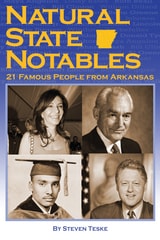
Natural State Notables
Twenty-One Famous People from ArkansasSteven Teske
Butler Center for Arkansas Studies, 2014
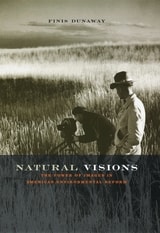
Natural Visions
The Power of Images in American Environmental ReformFinis Dunaway
University of Chicago Press, 2005
In Natural Visions, Finis Dunaway tells the story of how visual imagery—such as wilderness photographs, New Deal documentary films, and Sierra Club coffee-table books—shaped modern perceptions of the natural world. By examining the relationship between the camera and environmental politics through detailed studies of key artists and activists, Dunaway captures the emotional and spiritual meaning that became associated with the American landscape. Throughout the book, he reveals how photographers and filmmakers adapted longstanding traditions in American culture—the Puritan jeremiad, the romantic sublime, and the frontier myth—to literally picture nature as a place of grace for the individual and the nation.
Beautifully illustrated with photographs by Ansel Adams, Eliot Porter, and a host of other artists, Natural Visions will appeal to a wide range of readers interested in American cultural history, the visual arts, and environmentalism.
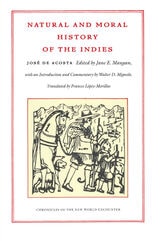
Natural and Moral History of the Indies
José de Acosta
Duke University Press, 2002
A significant contribution to Renaissance Europe's thinking about the New World, Acosta's Natural and Moral History of the Indies reveals an effort to incorporate new information into a Christian, Renaissance worldview. He attempted to confirm for his European readers that a "new" continent did indeed exist and that human beings could and did live in equatorial climates. A keen observer and prescient thinker, Acosta hypothesized that Latin America's indigenous peoples migrated to the region from Asia, an idea put forth more than a century before Europeans learned of the Bering Strait. Acosta's work established a hierarchical classification of Amerindian peoples and thus contributed to what today is understood as the colonial difference in Renaissance European thinking.
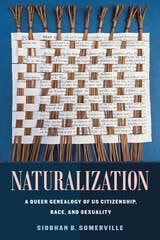
Naturalization
A Queer Genealogy of US Citizenship, Race, and SexualitySiobhan B. Somerville
Duke University Press, 2026
Naturalizing Mexican Immigrants
A Texas HistoryBy Martha Menchaca
University of Texas Press, 2011
2013 — NACCS Book Award – National Association for Chicana and Chicano Studies
During the nineteenth and early twentieth centuries, a majority of the Mexican immigrant population in the United States resided in Texas, making the state a flashpoint in debates over whether to deny naturalization rights. As Texas federal courts grappled with the issue, policies pertaining to Mexican immigrants came to reflect evolving political ideologies on both sides of the border.
Drawing on unprecedented historical analysis of state archives, U.S. Congressional records, and other sources of overlooked data, Naturalizing Mexican Immigrants provides a rich understanding of the realities and rhetoric that have led to present-day immigration controversies. Martha Menchaca's groundbreaking research examines such facets as U.S.-Mexico relations following the U.S. Civil War and the schisms created by Mexican abolitionists; the anti-immigration stance that marked many suffragist appeals; the effects of the Spanish American War; distinctions made for mestizo, Afromexicano, and Native American populations; the erosion of means for U.S. citizens to legalize their relatives; and the ways in which U.S. corporations have caused the political conditions that stimulated emigration from Mexico.
The first historical study of its kind, Naturalizing Mexican Immigrants delivers a clear-eyed view of provocative issues.

Nature Contained
Environmental Histories of SingaporeTimothy P. Barnard
National University of Singapore Press, 2014
Nature Religion in America
From the Algonkian Indians to the New AgeCatherine L. Albanese
University of Chicago Press, 1990
Nature and Antiquities
The Making of Archaeology in the AmericasEdited by Philip L. Kohl, Irina Podgorny, and Stefanie Gänger
University of Arizona Press, 2014
The volume breaks new ground by entreating archaeologists to acknowledge the importance of ways of knowing that resulted from the study of nature in the history of archaeology. Some of the contributions to this volume trace the part conventions, practices, and concepts from natural history and the natural sciences played in the history and making of the discipline. Others set out to uncover, reassemble, or adjust our vision of collections that research historians of archaeology have disregarded or misrepresented—because their nineteenth-century makers would refuse to comply with today’s disciplinary borders and study natural specimens and antiquities in conjunction, under the rubric of the territorial, the curious or the universal. Other contributions trace the sociopolitical implications of studying nature in conjunction with “indigenous peoples” in the Americas—inquiring into what it meant and entailed to comprehend the inhabitants of the American continent in and through a state of nature.
Nature and History in Modern Italy
Marco Armiero
Ohio University Press, 2010
Is Italy il bel paese—the beautiful country—where tourists spend their vacations looking for art, history, and scenery? Or is it a land whose beauty has been cursed by humanity’s greed and nature’s cruelty? The answer is largely a matter of narrative and the narrator’s vision of Italy. The fifteen essays in Nature and History in Modern Italy investigate that nation’s long experience in managing domesxadtixadcated rather than wild natures and offer insight into these conflicting visions. Italians shaped their land in the most literal sense, producing the landscape, sculpting its heritage, embedding memory in nature, and rendering the two different visions inseparxadable. The interplay of Italy’s rich human history and its dramatic natural diversity is a subject with broad appeal to a wide range of readers.

Nature in American Philosophy (Studies in Philosophy and the History of Philosophy, Volume 42)
Jean De Groot
Catholic University of America Press, 2004
Nature in Translation
Japanese Tourism Encounters the Canadian RockiesShiho Satsuka
Duke University Press, 2015
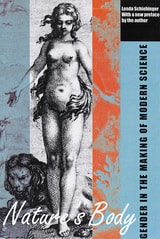
Nature's Body
Gender in the Making of Modern ScienceSchiebinger, Londa
Rutgers University Press, 2004
Eighteenth-century natural historians created a peculiar, and peculiarly durable, vision of nature—one that embodied the sexual and racial tensions of that era. When plants were found to reproduce sexually, eighteenth-century botanists ascribed to them passionate relations, polyandrous marriages, and suicidal incest, and accounts of steamy plant sex began to infiltrate the botanical literature of the day. Naturalists also turned their attention to the great apes just becoming known to eighteenth-century Europeans, clothing the females in silk vestments and training them to sip tea with the modest demeanor of English matrons, while imagining the males of the species fully capable of ravishing women.
Written with humor and meticulous detail, Nature’s Body draws on these and other examples to uncover the ways in which assumptions about gender, sex, and race have shaped scientific explanations of nature. Schiebinger offers a rich cultural history of science and a timely and passionate argument that science must be restructured in order to get it right.
Nature's Burdens
Conservation and American Politics, The Reagan Era to the PresentDaniel Nelson
Utah State University Press, 2017
Nature’s Burdens is a political and intellectual history of American natural resource conservation from the 1980s into the twenty-first century—a period of intense political turmoil, shifting priorities among federal policymakers, and changing ideas about the goals of conservation. Telling a story of persistent activism, conflict, and frustration but also of striking achievement, it is an account of how new ideas and policies regarding human relationships to plants, animals, and their surroundings have become vital features of modern environmentalism.
In the 1960s and 1970s, Congress embraced the largely dormant movement to preserve distinctive landscapes and the growing demand for outdoor recreation, establishing an unprecedented number of parks, monuments, and recreation areas. The election of Ronald Reagan and a shift to a Republican-controlled Senate brought this activity to an abrupt halt and introduced a period of intense partisanship and legislative gridlock that extends to the present. In this political climate, three developments largely defined the role of conservation in contemporary society: environmental organizations have struggled to defend the legal status quo, private land conservation has become increasingly important, and the emergence of potent scientific voices has promoted the protection of animals and plants and injected a new sense of urgency into the larger cause.
These developments mark this period as a distinctive and important chapter in the history of American conservation. Scrupulously researched, scientifically and politically well informed, concise, and accessibly written, Nature’s Burdens is the most comprehensive examination of recent efforts to protect and enhance the natural world. It will be of interest to environmental historians, environmental activists, and any general reader interested in conservation.
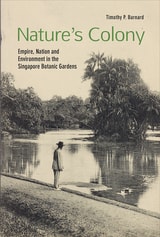
Nature's Colony
Empire, Nation and Environment in the Singapore Botanic GardensTimothy P. Barnard
National University of Singapore Press, 2017
Initially conceived to exploit nature for the benefit of empire, the Gardens were part of a symbolic struggle by administrators, scientists, and gardeners to assert dominance within Southeast Asia’s tropical landscape, reflecting shifting understandings of power, science, and nature among local administrators and distant mentors in Britain. Consequently, as an outpost of imperial science, the Gardens were instrumental in the development of plantation crops, such as rubber and oil palm, which went on to shape landscapes across the globe. Since the independence of Singapore, the Gardens have played a role in the “greening” of the country and have been named as Singapore’s first World Heritage Site. Setting the Gardens alongside the Royal Botanic Gardens, Kew, and botanic gardens in India, Ceylon, Mauritius, and the West Indies, Nature’s Colony provide the first in-depth look at the history of this influential institution.