Results by title
8812 books match the query 'Political Science' and 211 start with n

Never Again? Never Gone!
Old and New Anti-SemitismMichael Wolffsohn
St. Augustine's Press, 2026
Michael Wolffsohn charges head-on the varying reactions to the Hamas "murder orgy" of 7 October 2023. Political leaders proclaim that anti-Semitism has no place in Germany, but Wolffsohn identifies a dangerous resurgence in the wake of these atrocities. On the 85th Anniversary of the November pogrom of 1938, Wolffsohn delivered a passionate speech before the Berlin House of Representatives. Two versions of this speech exist--one written prior the Hamas attacks and another written after the event. The variances highlight the depth of rupture that the responses to the attacks provoked. Both speeches are contained in this book, and they give evidence to the reality that antisemitism was never eradicated, it is simply "old or new." Interwoven with deeply personal reflections, Wolffsohn offers a scathing critique of attempts to cover antisemitism in Europe and questions the authenticity of the vow to eliminate it. This German bestselling account of the cyclical reoccurrence of anti-Semitic campaigns reveals repeated and worsening political and social consequences globally, but especially in Germany where the presumption is that historical memory condemns such thinking.
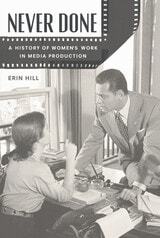
Never Done
A History of Women’s Work in Media ProductionHill, Erin
Rutgers University Press, 2016
Histories of women in Hollywood usually recount the contributions of female directors, screenwriters, designers, actresses, and other creative personnel whose names loom large in the credits. Yet, from its inception, the American film industry relied on the labor of thousands more women, workers whose vital contributions often went unrecognized.
For more information: http://erinhill.squarespace.com
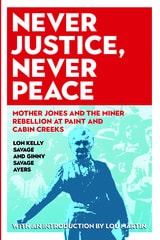
Never Justice, Never Peace
Mother Jones and the Miner Rebellion at Paint and Cabin CreeksGinny Savage Ayers
West Virginia University Press, 2018
In 1986 Lon Savage published Thunder in the Mountains: The West Virginia Mine War, 1920–21, a popular history now considered a classic. Among those the book influenced are Denise Giardina, author of Storming Heaven, and John Sayles, writer and director of Matewan. When Savage passed away, he left behind an incomplete book manuscript about a lesser-known Mother Jones crusade in Kanawha County, West Virginia. His daughter Ginny Savage Ayers drew on his notes and files, as well as her own original research, to complete Never Justice, Never Peace—the first book-length account of the Paint Creek–Cabin Creek Strike of 1912–13.
Savage and Ayers offer a narrative history of the strike that weaves together threads about organizer Mother Jones, the United Mine Workers union, politicians, coal companies, and Baldwin-Felts Detective Agency guards with the experiences of everyday men and women. The result is a compelling and in-depth treatment that brings to light an unjustly neglected—and notably violent—chapter of labor history. Introduced by historian Lou Martin, Never Justice, Never Peace provides an accessible glimpse into the lives and personalities of many participants in this critical struggle.
New Advances in the Study of Civic Voluntarism
Resources, Engagement, and RecruitmentCasey Klofstad
Temple University Press, 2016
Individuals who are civically active have three things in common: they have the capacity to do so, they want to, and they have been asked to participate. New Advances in the Study of Civic Voluntarism is dedicated to examining the continued influence of these factors—resources, engagement, and recruitment—on civic participation in the twenty-first century.
The contributors to this volume examine recent social, political, technological, and intellectual changes to provide the newest research in the field. Topics range from race and religion to youth in the digital age, to illustrate the continued importance of understanding the role of the everyday citizen in a democratic society.
Contributors include:Molly Andolina, Allison P. Anoll, Leticia Bode, Henry E. Brady, Traci Burch, Barry C. Burden, Andrea Louise Campbell, David E. Campbell, Sara Chatfield, Stephanie Edgerly, Zoltán Fazekas, Lisa García Bedoll, Peter K. Hatemi, John Henderson, Krista Jenkins, Yanna Krupnikov, Adam Seth Levine, Melissa R. Michelson, S. Karthick Ramakrishnan, Dinorah Sánchez Loza, Kay Lehman Schlozman, Dhavan Shah, Sono Shah, Kjerstin Thorson, Sidney Verba, Logan Vidal, Emily Vraga, Chris Wells, JungHwan Yang, and the editor.

New Asian Marxisms
Tani E. Barlow, ed.
Duke University Press, 2002
While some of these essays take up key thinkers in Marxist history or draw attention to outstanding problematics, others focus on national literature and discourse in North and South Korea, the "Mao Zedong Fever" of the 1990s, the implications of Li Dazhao's poetry, and the Indian Naxalite movement. Illustrating the importance of central analytical categories like exploitation, alienation, and violence to studies on the politics of knowledge, contributors confront prevailing global consumerist fantasies
with accounts of political struggle, cultural displacement, and theoretical strategies.
Contributors. Tani E. Barlow, Dai Jinhua, Michael Dutton, D. R. Howland, Marshall Johnson, Liu Kang, You-me Park, William Pietz, Claudia Pozzana, Alessandro Russo, Sanjay Seth, Gi-Wook Shin, Sugiyama Mitsunobu, Jing Wang
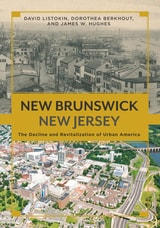
New Brunswick, New Jersey
The Decline and Revitalization of Urban AmericaListokin, David
Rutgers University Press, 2016
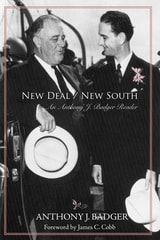
New Deal / New South
An Anthony J. Badger ReaderAnthony J. Badger
University of Arkansas Press, 2007
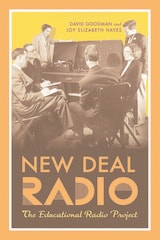
New Deal Radio
The Educational Radio ProjectDavid Goodman
Rutgers University Press, 2022
Contextualizing the different series aired by the Educational Radio Project as part of a unified project about radio and citizenship is crucial to understanding them. New Deal Radio argues that this distinctive government commercial partnership amounted to a critical intervention in US broadcasting and an important chapter in the evolution of public radio in America.
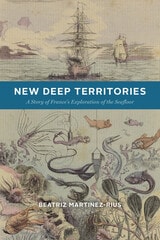
New Deep Territories
A Story of France’s Exploration of the SeafloorBeatriz Martinez-Rius
University of Chicago Press, 2026
Beneath the surface of the seas and oceans lies a territory as important for human societies as the exposed land and the airspace above them: the seafloor. Our daily life is inextricably linked to the seafloor and its resources, from global telecommunications infrastructure to offshore oil and gas extraction to strategic mineral mining.
By focusing on France, a country with an underwater territory seventeen times larger than its emerged lands, New Deep Territories explains how the seafloor emerged as a territory during the second half of the twentieth century. Beatriz Martinez-Rius traces the evolution of the country’s seafloor exploration and the motivations that fueled it from the aftermath of World War I to the late 1970s. In the early 1960s, the seafloor, instead of colonial territories, came to be seen as a source of natural resources. The French government, corporations such as oil companies, and scientists all imagined future uses of the seafloor, and these ever-evolving aspirations drove the development of technologies, techniques, and scientific fields that built up the submerged territory. Government officers and industrial stakeholders massively invested in technoscientific development to prepare for a future reliant on seafloor resources, including oil, gas, and minerals, well before it was technologically possible, economically feasible, and legally acceptable to extract them. The future they envisioned did not arrive, but their investment resulted in an unprecedented understanding of the ocean’s crust. Today, once again, national governments, international organizations, and private stakeholders are turning their attention to the seafloor.
New Frontiers in the Study of the Global African Diaspora
Between Uncharted Themes and Alternative RepresentationsRita Kiki Edozie
Michigan State University Press, 2018
New Global Cities in Latin America and Asia
Welcome to the Twenty-First CenturyPablo Baisotti, Editor
University of Michigan Press, 2022
New Global Cities in Latin America and Asia: Welcome to the Twenty-First Century proposes new visions of global cities and regions historically considered “secondary” in the international context. The arguments are not only based on material progress made by these metropolises, but also on the growing social difficulties experienced (e.g., organized crime, drug trafficking, slums, economic inequalities). The book illustrates the growth of cities according to these problems arising from the modernity of the new century, comparing Latin American and Asian cities.
This book analyzes the complex relationships within cities through an interdisciplinary approach, complementing other research and challenging orthodox views on global cities. At the same time, the book provides new theoretical and methodological tools to understand the progress of “Third World” cities and the way of understanding “globality” in the 21st century by confronting the traditional views with which global cities were appreciated since the 1980s. Pablo Baisotti brings together researchers from various fields who provide new interpretative keys to certain cities in Latin America and Asia.

New Ideology of Imperialism
Renewing the Moral ImperativeFrank Furedi
Pluto Press, 1994

New Imaginaries, Volume 14
Dilip Parameshwar Gaonkar and Benjamin Lee, eds.
Duke University Press, 0
Contributors to this collection include major voices in the fields of philosophy, critical literature, sociology, anthropology, and communication studies. The articles consider how people conceive of and categorize themselves as part of a cohesive group under the multiple rubrics of the public and counterpublic, nation, ethnos, civilization, genealogy, democracy, and the market. Many of the essays are situated in specific national and cultural sites such as Africa, Australia, eighteenth-century England, the European Union, India, and Turkey. Others examine the intersections of global financial markets and democratic institutions.
As a whole, New Imaginaries suggests a new way of synthesizing economic, political, and cultural approaches to social life.
Contributors. Arjun Appadurai, Craig Calhoun, Dilip Parameshwar Gaonkar, Nilüfer Göle, Benjamin Lee, Edward LiPuma, Achille Mbembe, Mary Poovey, Elizabeth A. Povinelli, Charles Taylor, Michael Warner
New Islamic Urbanism
The Architecture of Public and Private Space in Jeddah, Saudi ArabiaStefan Maneval
University College London, 2019
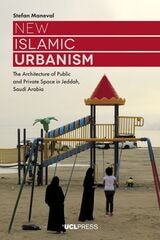
Combining Michael Warner’s concepts of publics and counterpublics with theories of space and sociological approaches to architecture, Stefan Maneval explores the concept of New Islamic Urbanism in Saudi Arabia, arguing that this architectural trend, which is characterized by an emphasis on privacy protection through high enclosures, gates, blinds, and tinted windows, constitutes for some an important element of piety. At the same time, it enables different conceptions of privacy, banned social practices, as well as the formation of publics and counterpublics.
Based on rich ethnographic data collected by the author, New Islamic Urbanism challenges normative assumptions on gender segregation in Muslim societies and provides a nuanced account of the meaning of publicness and privacy in Muslim contexts in general. It will be of particular interest to an academic readership in Middle East and Islamic studies, as well as in architecture, urban planning and anthropology.

New Jersey Dreaming
Capital, Culture, and the Class of '58Sherry B. Ortner
Duke University Press, 2005
Ortner tracked down nearly all 304 of her classmates. She interviewedabout 100 in person and spoke with most of the rest by phone, recording her classmates’ vivid memories of time, place, and identity. Ortner shows how social class affected people’s livesin many hidden and unexamined ways. She also demonstrates that the Class of ‘58’s extreme upward mobility must be understood in relation to the major identity movements of the twentieth century—the campaign against anti-Semitism, the Civil Rights movement, and feminism.
A multisited study combining field research with an interdisciplinary analytical framework, New Jersey Dreaming is a masterly integration of developments at the vanguard of contemporary anthropology. Engaging excerpts from Ortner's field notes are interspersed throughout the book. Whether recording the difficulties and pleasures of studying one's own peer group, the cultures of driving in different parts of the country, or the contrasting experiences of appointment-making in Los Angeles and New York, they provide a rare glimpse into the actual doing of ethnographic research.
New Jersey Politics and Government, 4th edition
The Suburbs Come of AgeSalmore, Barbara G
Rutgers University Press, 2013
Offering a comprehensive overview of New Jersey politics and government, chapters cover the state’s political history; campaigns and elections; interest groups; the constitution; the development of government institutions; relationships with neighboring states, the federal government, and its own municipalities and counties; tax and spending policies; education; and quality of life issues.
New Jersey Politics and Government
The Suburbs Come of AgeSalmore, Barbara G
Rutgers University Press, 2008
New Jersey's Multiple Municipal Madness
Karcher, Alan
Rutgers University Press, 1998
Alan Karcher looks at the history and high cost of New Jersey's multiple municipalities. He investigates the economic considerations, political pressures, and personal agendas that created the bizarre configurations dividing the Garden State, while analyzing the public policies that allowed and even encouraged the formation of new municipalities. Karcher also examines the political dynamics that thwarted every effort of New Jersey metropolises to join the front ranks of major American cities.
Karcher identifies the major motivations behind the unparalleled experience of New Jersey's municipal multiplication. He delves deeply into the primary causes of new lines being drawn, such as road appropriations, the location of a railroad station, control of a local school district, the regulation of alcohol sales, and the preservation of exclusivity prior to the acceptance of zoning. He also assesses the present situation and what has happened in the past 60 years since the municipal multiplication madness ceased, calling on elected officials to confront reality and correct yesterday's excesses.
The genesis of the present political map of the state is a story that while interesting is not always charming, while fascinating is far from edifying. Little in the history can be called quaint. Rather it is a story of separation and exclusion, of division and greed, of preservation of prerogatives and prejudices. It is a story that supports the conclusion that these lines are rarely the product of chance, rather they were drawn by politicians with very human foibles and frailties, and with very narrow agendas-agendas that have proven to be egregiously expensive for today's taxpayers.
Alan Karcher, the former Speaker of the New Jersey Assembly during the activist 1980s, currently practices municipal law in Middlesex County. He represents the third generation of his family to serve as a member of the New Jersey State Legislature.

New Jersey's Postsuburban Economy
James W. Hughes and Joseph J. Seneca
Rutgers University Press, 2015
From the rural agricultural and natural resource based economy and lifestyle of the seventeenth century to today’s postindustrial, suburban-dominated, automobile-dependent economy, the economic drivers which were considered to be an asset are now viewed by many to be the state’s greatest disadvantage. On the brink of yet another transformation, this one driven by a new technology and an internet based global economy, New Jersey will have to adapt itself yet again—this time to a postsuburban digital economy.
Hughes and Seneca describe the forces that are now propelling the state into yet another economic era. They do this in the context of historical economic transformations of New Jersey, setting out the technological, demographic, and transportation shifts that defined and drove them.

New Lives for Ancient and Extinct Crops
Edited by Paul E. Minnis
University of Arizona Press, 2014
New Lives for Ancient and Extinct Crops profiles nine plant species that were important contributors to human diets and had medicinal uses in antiquity: maygrass, chenopod, marshelder, agave, little barley, chia, arrowroot, little millet, and bitter vetch. Each chapter is written by a well-known scholar, who illustrates the global value of the ancient crop record to inform the present. From eastern and western North America, Mesoamerica, South America, western Asia, and south-central Asia, the contributors provide examples of the unexpected wealth of information available in the archaeological record about ancient and extinct crops.
New Materialisms
Ontology, Agency, and PoliticsDiana Coole and Samantha Frost, eds.
Duke University Press, 2010
Coole and Frost argue that contemporary economic, environmental, geopolitical, and technological developments demand new accounts of nature, agency, and social and political relationships; modes of inquiry that privilege consciousness and subjectivity are not adequate to the task. New materialist philosophies are needed to do justice to the complexities of twenty-first-century biopolitics and political economy, because they raise fundamental questions about the place of embodied humans in a material world and the ways that we produce, reproduce, and consume our material environment.
Contributors
Sara Ahmed
Jane Bennett
Rosi Braidotti
Pheng Cheah
Rey Chow
William E. Connolly
Diana Coole
Jason Edwards
Samantha Frost
Elizabeth Grosz
Sonia Kruks
Melissa A. Orlie
New Public Administration
H. George Frederickson
University of Alabama Press, 1980
A foundational exploration of social equity, public service, and the transformation of modern government.
In New Public Administration, H. George Frederickson presents a landmark examination of one of the most influential movements in modern public administration. Challenging traditional bureaucratic models, Frederickson explores how public institutions can become more responsive, equitable, and accountable to the citizens they serve. Emphasizing social equity, ethical governance, and the relationship between public organizations and society, this classic work continues to shape contemporary discussions of public service, government reform, and administrative leadership. This book will appeal to students and scholars of public administration, political science, public policy, government management, and practitioners seeking a deeper understanding of effective and equitable public service.
New Social Movements
From Ideology to Identityedited by Enrique Laraña, Hank Johnston and Joseph R. Gusfield
Temple University Press, 1994
Cultural changes over the past two decades have led to a proliferation of new social movements in Europe and the United States. New social movements such as ecology, peace, ethnicity, New Age philosophies, alternative medicine, and gender and sexual identity are among those that are emerging to challenge traditional categories in social movement theory. Synthesizing classic and modern perspectives the contributors help to redefine the field of social movements and advance an understanding of them through cross-cultural research, comparison with older movements, and an examination of the dimensions of identity—individual, collective, and melding of the two.
New Strategies for Wicked Problems
Science and Solutions in the 21st CenturyEdward P. Weber
Oregon State University Press, 2017
We now live in a world full of wicked problems, most of them urgent challenges calling out for creative, democratic, and effective solutions. Ed Weber, Denise Lach, and Brent Steele, of the Oregon State University School of Public Policy, solicited papers from a wide variety of accomplished scholars in the fields of science, politics, and policy with significant research experience to address this challenge. The resultant collection focuses on major contemporary environmental and natural resource policy issues, and proposes an assortment of alternative problem-solving methodologies to tackle such problems.
New Strategies for Wicked Problems will appeal to scholars, students, and decision-makers wrestling with wicked problems and “post-normal” science settings beyond simply environmental and natural resource-based issues. It will provide much needed guidance to policymakers, citizens, public managers, and various stakeholders who are struggling with wicked problems in their professional lives.
Other Contributors:
Tanya Heikkila
Helen Ingram
Ann C. Keller
Bob Lackey
Anna Pakenham Stevenson
Christopher M. Weible
Daniel R. Williams
New Studies in Philosophy, Politics, Economics, and the History of Ideas
F. A. Hayek
University of Chicago Press, 1978
Following on F. A. Hayek's previous work Studies in Philosophy, Politics, and Economics (1967), New Studies in Philosophy, Politics, Economics and the History of Ideas collects some of Hayek's most notable essays and lectures dealing with problems of philosophy, politics and economics, with many of the essays falling into more than one of these categories. Expanding upon the previous volume the present work also includes a fourth part collecting a series of Hayek's writings under the heading 'History of Ideas.'
Of the articles contained in this volume the lectures on 'The Errors of Constructivism' (chapter 1) and 'Competition as a Discovery Procedure' (chapter 12) have been published before only in German, while the article on 'Liberalism' (chapter 9) was written in English to be published in an Italian translation in the Enciclopedia del Novicento by the Istituto della Enciclopedia Italiana at Rome.

New Testament Manuscripts in the Freer Collection
Part I. The Washington Manuscript of the Four GospelsHenry A. Sanders
University of Michigan Press, 1912
New Threats to Freedom
Adam Bellow
Templeton Press, 2011
New Threats to Freedom
In the twentieth century, free people faced a number of mortal threats,ranging from despotism, fascism,
and communism to the looming menace of global terrorism. While the struggle against some of these overt dangers continues, some insidious new threats seem to have slipped past our intellectual defenses. These often unchallenged threats are quietly eroding our hard-won freedoms and, in some cases, are widely accepted as beneficial.
In New Threats to Freedom, editor and author Adam Bellow has assembled an all-star lineup of innovative thinkers to challenge these insidious new threats. Some leap into already raging debates on issues such as Sharia law in the West, the rise of transnationalism, and the regulatory state. Others turn their attention to less obvious threats, such as the dogma of fairness, the failed promises of the blogosphere, and the triumph of behavioral psychology.
These threats are very real and very urgent, yet this collection avoids projecting an air of doom and gloom. Rather, it provides a blueprint for intellectual resistance so that modern defenders of liberty may better understand their enemies, more effectively fight to preserve the meaning of freedom, and more surely carry its light to a new generation.
What are the new threats to freedom?
when has authority not claimed, when imposing trammels and curbs on liberty, that it does so for a wider good and a greater happiness?” —Christopher Hitchens
“The regulatory state amounts to a regressive tax that penalizes small independent producers and protects
the status quo.” —Max Borders
“Europe tends to favor stability over democracy, America democracy over stability.” —Daniel Hannan
“The value of free expression is perceived to be at odds with goals that were considered ‘more important,’ like inclusiveness, diversity, nondiscrimination, and tolerance.” —Greg Lukianoff
“The masses cannot ultimately be free: only the individual can be.” —Robert D. Kaplan
“That old bugbear of postwar sociology—the mob-self—is now a reality. In a participatory/popularity culture, the freedom to think and act for ourselves becomes harder and harder to achieve.” —Lee Siegel
“As traditional marriage declines, the ranks of single women are growing, and increasingly these women are substituting the security of a husband with the security of the state.” —Jessica Gavora
“Ending the freedom to fail is a mean-spirited attack on the freedom to succeed.” —Michael Goodwin
“The only solution to the new threats to American press freedom lies in organized resistance.” —Katherine Mangu-Ward
“The new behaviorism isn’t interested in protecting people’s freedom to choose; on the contrary, its core principle is the idea that only by allowing an expert elite to limit choice can individuals learn to break their bad habits.” —Christine Rosen
“There’s a world of Travis Bickles out there, and they’re not driving cabs. They’re reading blogs.” —Ron Rosenbaum
“The first amendment ensures not that speech will be fair, but that it will be free. It cannot be both.” —David Mamet
Join the conversation about these issues at www.newthreatstofreedom.com
New York City Politics
Governing GothamBerg, Bruce F
Rutgers University Press, 2018
New York City Politics focuses on the impact of these three forces on the governance of New York City’s political system including the need to promote democratic accountability, service delivery equity, as well as the maintenance of civil harmony. This second edition updates the discussion with examples from the Bloomberg and de Blasio administrations as well as current public policy issues including infrastructure, housing and homelessness, land use regulations, and education.
New York City Politics
Governing GothamBerg, Bruce F
Rutgers University Press, 2007
New York City Politics focuses on the impact of these three forces on the governance of New York City’s political system including the need to promote democratic accountability, service delivery equity, as well as the maintenance of civil harmony. This second edition updates the discussion with examples from the Bloomberg and de Blasio administrations as well as current public policy issues including infrastructure, housing and homelessness, land use regulations, and education.
Newcomers, Outsiders, and Insiders
Immigrants and American Racial Politics in the Early Twenty-first CenturyRonald Schmidt Sr., Yvette M. Alex-Assensoh, Andrew L. Aoki, and Rodney E. Hero
University of Michigan Press, 2009

Newcomers
Gentrification and Its DiscontentsMatthew L. Schuerman
University of Chicago Press, 2019
In Newcomers, journalist Matthew L. Schuerman explains how a phenomenon that began with good intentions has turned into one of the most vexing social problems of our time. He builds a national story using focused histories of northwest Brooklyn, San Francisco’s Mission District, and the onetime site of Chicago’s Cabrini-Green housing project, revealing both the commonalities among all three and the place-specific drivers of change. Schuerman argues that gentrification has become a too-easy flashpoint for all kinds of quasi-populist rage and pro-growth boosterism. In Newcomers, he doesn’t condemn gentrifiers as a whole, but rather articulates what it is they actually do, showing not only how community development can turn foul, but also instances when a “better” neighborhood truly results from changes that are good. Schuerman draws no easy conclusions, using his keen reportorial eye to create sharp, but fair, portraits of the people caught up in gentrification, the people who cause it, and its effects on the lives of everyone who calls a city home.

News That Matters
Television and American OpinionShanto Iyengar and Donald R. Kinder
University of Chicago Press, 1987
"Because of its methodological integrity and richness, News That Matters is likely to be regarded as an impressive, possibliy grounbreaking work."—Neil Postman, New York Times Book Review
News That Matters
Television and American Opinion, Updated EditionShanto Iyengar and Donald R. Kinder
University of Chicago Press, 2010
Almost twenty-five years ago, Shanto Iyengar and Donald R. Kinder first documented a series of sophisticated and innovative experiments that unobtrusively altered the order and emphasis of news stories in selected television broadcasts. Their resulting book News That Matters, now hailed as a classic by scholars of political science and public opinion alike, is here updated for the twenty-first century, with a new preface and epilogue by the authors. Backed by careful analysis of public opinion surveys, the authors show how, despite changing American politics, those issues that receive extended coverage in the national news become more important to viewers, while those that are ignored lose credibility. Moreover, those issues that are prominent in the news stream continue to loom more heavily as criteria for evaluating the president and for choosing between political candidates.
“News That Matters does matter, because it demonstrates conclusively that television newscasts powerfully affect opinion. . . . All that follows, whether it supports, modifies, or challenges their conclusions, will have to begin here.”—The Public Interest
News Values
Ideas for an Information AgeJack Fuller
University of Chicago Press, 1996
"Every talk show host should read this book. So should every newsroom cynic. . . . 'Pursuit of truth is not a license to be a jerk.' In all too many newsrooms, that statement would resound like a three-bell bulletin."—Martin F. Nolan, New York Times Book Review
"[News Values] ought to be required reading not just for those who work for newspapers, but for all those who read and care about them. . . . [This book] seems destined to become one of those slim but important volumes people read for a long time to come."—Richard J. Tofel, Wall Street Journal
"Fuller stays above the fray [of the many books on the media]: His is a deeply intellectual approach, one that provides serious context to the highly complicated issue of how the news 'works.'"—Duncan McDonald, Chicago Tribune Books
"News Values has the touch and feel of knowledgeable, authentic caring about the kind of journalism than can help make society more cohesive, even human." —"Monitor's Pick," Christian Science Monitor

News
The Politics of Illusion, Ninth EditionW. Lance Bennett
University of Chicago Press, 2011

News
The Politics of Illusion, Tenth EditionW. Lance Bennett
University of Chicago Press, 2016
Newspaper Wars
Civil Rights and White Resistance in South Carolina, 1935-1965Sid Bedingfield
University of Illinois Press, 2017
Next to Godliness
Confronting Dirt and Despair in Progressive Era New York CityDaniel Burnstein
University of Illinois Press, 2010
Nicaragua and the Politics of Utopia
Development and Culture in the Modern StateDaniel Chavez
Vanderbilt University Press, 2015
For each era, Chavez reveals the ways Nicaraguan popular culture adapted and interpreted the new political order, shaping, critiquing, or amplifying the regime's message of stability and prosperity for the people. These tactics of interpretation, otherwise known as meaning-making, became all-important for the Nicaraguan people, as they opposed the autocracy of Somocismo, or complemented the Sandinistas, or struggled to find their place in the Neoliberal era. In every case, Chavez shows the reflective nature of cultural production and its pursuit of utopian idealism.

Nietzsche's Corps/e
Aesthetics, Politics, Prophecy, or, the Spectacular Technoculture of Everyday LifeGeoff Waite
Duke University Press, 1996
Waite advances his argument by bringing Marxist—especially Gramscian and Althusserian—theories to bear on the concept of Nietzsche/anism. But he also goes beyond ideological convictions to explore the vast Nietzschean influence that proliferates throughout the marketplace of contemporary philosophy, political and literary theory, and cultural and technocultural criticism. In light of a philological reconstruction of Nietzsche’s published and unpublished texts, Nietzsche’s Corps/e shuttles between philosophy and everyday popular culture and shows them to be equally significant in their having been influenced by Nietzsche—in however distorted a form and in a way that compromises all of our best interests.
Controversial in its “decelebration” of Nietzsche, this remarkable study asks whether the postcontemporary age already upon us will continue to be dominated and oriented by the haunting spectre of Nietzsche’s corps/e. Philosophers, intellectual historians, literary theorists, and those interested in western Marxism, popular culture, Friedrich Nietzsche, and the intersection of French and German thought will find this book both appealing and challenging.

Nietzsche's Earth
Great Events, Great PoliticsGary Shapiro
University of Chicago Press, 2016
Shapiro explores Nietzsche’s rejection of historical inevitability and its idea of the end of history. He highlights Nietzsche’s prescient vision of today’s massive human mobility and his criticism of the nation state’s desperate efforts to sustain its exclusive rule by declaring emergencies and states of exception. Shapiro then explores Nietzsche’s vision of a transformed garden earth and the ways it sketches an aesthetic of the Anthropocene. He concludes with an explanation of the deep political structure of Nietzsche’s “philosophy of the Antichrist,” by relating it to traditional political theology. By triangulating Nietzsche between his time and ours, between Bismarck’s Germany and post-9/11 America, Nietzsche’s Earth invites readers to rethink not just the philosopher himself but the very direction of human history.
Nietzsche's Final Teaching
Michael Allen Gillespie
University of Chicago Press, 2017
Cutting against the grain of most current Nietzsche scholarship, Michael Allen Gillespie presents the thought of the late Nietzsche as Nietzsche himself intended, drawing not only on his published works but on the plans for the works he was unable to complete, which can be found throughout his notes and correspondence. Gillespie argues that the idea of the eternal recurrence transformed Nietzsche’s thinking from 1881 to 1889. It provided both the basis for his rejection of traditional metaphysics and the grounding for the new logic, ontology, theology, and anthropology he intended to create with the aim of a fundamental transformation of European civilization, a “revaluation of all values.” Nietzsche first broached the idea of the eternal recurrence in Thus Spoke Zarathustra, but its failure to gain attention or public acceptance led him to present the idea again through a series of works intended to culminate in a never-completed magnum opus. Nietzsche believed this idea would enable the redemption of humanity. At the same time, he recognized its terrifying, apocalyptic consequences, since it would also produce wars of unprecedented ferocity and destruction.
Through his careful analysis, Gillespie reveals a more radical and more dangerous Nietzsche than the humanistic or democratic Nietzsche we commonly think of today, but also a Nietzsche who was deeply at odds with the Nietzsche imagined to be the forefather of Fascism. Gillespie’s essays examine Nietzsche’s final teaching—its components and its political, philosophical, and theological significance. The book concludes with a critical examination and a reflection on its meaning for us today.
Nietzsche's New Seas
Explorations in Philosophy, Aesthetics, and PoliticsEdited by Michael Allen Gillespie and Tracy B. Strong
University of Chicago Press, 1988
Nightmarch
Among India’s Revolutionary GuerrillasAlpa Shah
University of Chicago Press, 2019
Winner of the 2020 Association for Political and Legal Anthropology Book Prize
Shortlisted for the Orwell Prize
Shortlisted for the New India Foundation Book Prize
Anthropologist Alpa Shah found herself in an active platoon of Naxalites—one of the longest-running guerrilla insurgencies in the world. The only woman, and the only person without a weapon, she walked alongside the militants for seven nights across 150 miles of dense, hilly forests in eastern India. Nightmarch is the riveting story of Shah's journey, grounded in her years of living with India’s tribal people, an eye-opening exploration of the movement’s history and future and a powerful contemplation of how disadvantaged people fight back against unjust systems in today’s world.
The Naxalites have fought for a communist society for the past fifty years, caught in a conflict that has so far claimed at least forty thousand lives. Yet surprisingly little is known about these fighters in the West. Framed by the Indian state as a deadly terrorist group, the movement is actually made up of Marxist ideologues and lower-caste and tribal combatants, all of whom seek to overthrow a system that has abused them for decades. In Nightmarch, Shah shares some of their gritty untold stories: here we meet a high-caste leader who spent almost thirty years underground, a young Adivasi foot soldier, and an Adivasi youth who defected. Speaking with them and living for years with villagers in guerrilla strongholds, Shah has sought to understand why some of India’s poor have shunned the world’s largest democracy and taken up arms to fight for a fairer society—and asks whether they might be undermining their own aims.
By shining a light on this largely ignored corner of the world, Shah raises important questions about the uncaring advance of capitalism and offers a compelling reflection on dispossession and conflict at the heart of contemporary India.
Nightwatch
The Politics of Protest in the AndesOrin Starn
Duke University Press, 1999
Drawing on fieldwork conducted over the course of a decade, Orin Starn chronicles the historical conditions that led to the formation of the rondas, the social and geographical expansion of the movement, and its gradual decline in the 1990s. Throughout this anecdotal yet deeply analytical account, the author relies on interviews with ronda participants, villagers, and Peru’s regional and national leaders to explore the role of women, the involvement of nongovernmental organizations, and struggles for leadership within the rondas. Starn moves easily from global to local contexts and from the fifteenth to the twentieth century, presenting this movement in a straightforward manner that makes it accessible to both specialists and nonspecialists.
An engagingly written story of village mobilization, Nightwatch is also a meditation on the nature of fieldwork, the representation of subaltern people, the relationship between resistance and power, and what it means to be politically active at the end of the century. It will appeal widely to scholars and students of anthropology, Latin American studies, cultural studies, history, subaltern studies, and those interested in the politics of social movements.
Nixon's Court
His Challenge to Judicial Liberalism and Its Political ConsequencesKevin J. McMahon
University of Chicago Press, 2011
Most analysts have deemed Richard Nixon’s challenge to the judicial liberalism of the Warren Supreme Court a failure—“a counterrevolution that wasn’t.” Nixon’s Court offers an alternative assessment. Kevin J. McMahon reveals a Nixon whose public rhetoric was more conservative than his administration’s actions and whose policy towards the Court was more subtle than previously recognized. Viewing Nixon’s judicial strategy as part political and part legal, McMahon argues that Nixon succeeded substantially on both counts.
Many of the issues dear to social conservatives, such as abortion and school prayer, were not nearly as important to Nixon. Consequently, his nominations for the Supreme Court were chosen primarily to advance his “law and order” and school desegregation agendas—agendas the Court eventually endorsed. But there were also political motivations to Nixon’s approach: he wanted his judicial policy to be conservative enough to attract white southerners and northern white ethnics disgruntled with the Democratic party but not so conservative as to drive away moderates in his own party. In essence, then, he used his criticisms of the Court to speak to members of his “Silent Majority” in hopes of disrupting the long-dominant New Deal Democratic coalition.
For McMahon, Nixon’s judicial strategy succeeded not only in shaping the course of constitutional law in the areas he most desired but also in laying the foundation of an electoral alliance that would dominate presidential politics for a generation.

Nkrumah & the Chiefs
The Politics of Chieftaincy in Ghana, 1951–1960Richard Rathbone
Ohio University Press, 1999
Kwame Nkrumah, who won independence for Ghana in 1957, was the first African statesman to achieve world recognition. Nkrumah and his movement also brought about the end of independent chieftaincy—one of the most fundamental changes in the history of Ghana.
Kwame Nkrumah’s Convention Peoples’ Party was committed not only to the rapid termination of British colonial rule but also to the elimination of chiefly power. This book is an account of Kwame Nkrumah and his government’s long struggle to wrest administrative control of the Ghanaian countryside from the chiefs. Based largely upon previously unstudied documentation in Ghana, this study charts the government’s frustrated attempts to democratize local government and the long and bitter campaigns mounted by many southern chiefs to resist their political marginalization.
Between 1951 and the creation of the First Republic in 1960, Ghanaian governments sought to discard the chiefly principle in local government, then to weaken chieftaincy by attrition and eventually, by altering the legal basis of chieftaincy, to incorporate and control a considerably altered chieftaincy. The book demonstrates that chieftaincy was consciously and systematically reconstructed in the decade of the 1950s with implications which can still be felt in modern Ghana.
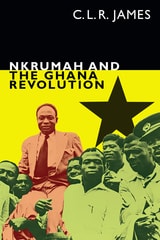
Nkrumah and the Ghana Revolution
C. L. R. James
Duke University Press, 2022

No Band of Brothers
Problems of the Rebel High CommandSteven E. Woodworth
University of Missouri Press, 1999
The Civil War was barely over before Southerners and other students of the war began to examine the Confederate high command in search of an explanation for the South's failure. Although years of research failed to show that the South's defeat was due to a single, overriding cause, the actions of the Southern leaders during the war were certainly among the reasons the South lost the war.
In No Band of Brothers, Steven Woodworth explores, through a series of essays, various facets of the way the Confederacy waged its unsuccessful war for secession. He examines Jefferson Davis and some of his more important generals, including Pierre G. T. Beauregard, Leonidas Polk, Joseph E. Johnston, Robert E. Lee, James Longstreet, and Thomas J. "Stonewall" Jackson; the Confederacy's strategic plans; and the South's success in making competent officers out of men with very little military preparation.
Woodworth particularly looks at the personalities and personal relationships that affected the course and outcome of the war. What made a good general? What could make an otherwise able man a failure as a general? What role did personal friendships or animosities play in the Confederacy's top command assignments and decisions? How successful was the Confederacy in making competent generals out of its civilian leaders? In what ways did Jefferson Davis succeed or fail in maximizing the chances for the success of his cause?
In analyzing the Confederate leadership, Woodworth reveals some weaknesses, many strengths, and much new information. No Band of Brothers will be an important addition to Civil War scholarship and will be welcomed by professional historians, amateur historians, students, and the general reader alike.
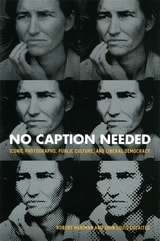
No Caption Needed
Iconic Photographs, Public Culture, and Liberal DemocracyRobert Hariman and John Louis Lucaites
University of Chicago Press, 2007
In No Caption Needed, Robert Hariman and John Louis Lucaites provide the definitive study of the iconic photograph as a dynamic form of public art. Their critical analyses of nine individual icons explore the photographs themselves and their subsequent circulation through an astonishing array of media, including stamps, posters, billboards, editorial cartoons, TV shows, Web pages, tattoos, and more. Iconic images are revealed as models of visual eloquence, signposts for collective memory, means of persuasion across the political spectrum, and a crucial resource for critical reflection.
Arguing against the conventional belief that visual images short-circuit rational deliberation and radical critique, Hariman and Lucaites make a bold case for the value of visual imagery in a liberal-democratic society. No Caption Needed is a compelling demonstration of photojournalism’s vital contribution to public life.