Results by title
22279 books match the query 'Social Science' and 509 start with n
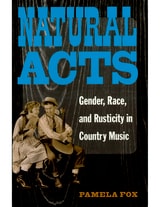
Natural Acts
Gender, Race, and Rusticity in Country MusicPamela Fox
University of Michigan Press, 2009

Natural Allies
Women's Associations in American HistoryAnne Firor Scott
University of Illinois Press, 1991

Natural Born Celebrities
Serial Killers in American CultureDavid Schmid
University of Chicago Press, 2005
David Schmid provides a historical account of how serial killers became famous and how that fame has been used in popular media and the corridors of the FBI alike. Ranging from H. H. Holmes, whose killing spree during the 1893 Chicago World's Fair inspired The Devil in the White City, right up to Aileen Wuornos, the lesbian prostitute whose vicious murder of seven men would serve as the basis for the hit film Monster, Schmid unveils a new understanding of serial killers by emphasizing both the social dimensions of their crimes and their susceptibility to multiple interpretations and uses. He also explores why serial killers have become endemic in popular culture, from their depiction in The Silence of the Lambs and The X-Files to their becoming the stuff of trading cards and even Web sites where you can buy their hair and nail clippings.
Bringing his fascinating history right up to the present, Schmid ultimately argues that America needs the perversely familiar figure of the serial killer now more than ever to manage the fear posed by Osama bin Laden since September 11.
Natural Histories of Discourse
Edited by Michael Silverstein and Greg Urban
University of Chicago Press, 1996
Eleven original essays of "natural history" range in focus from nuptial poetry of insult among Wolof griots to case-based teaching methods in first-year law-school classrooms. Stage by stage, they give an idea of the cultural processes of "entextualization" and "contextualization" of discourse that they so richly illustrate. The contributors' varied backgrounds include anthropology, psychiatry, education, literary criticism, and law, making this collection invaluable not only to anthropologists and linguists, but to all analysts of culture.

Natural Landscape Amenities and Suburban Growth
Metropolitan Chicago, 1970-1980Christopher Mueller-Wille
University of Chicago Press, 1990
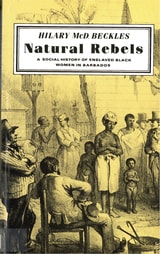
Natural Rebels
A Social History of Enslaved Women in BarbadosHilary McD Beckles
Rutgers University Press, 2012
Beckles details the daily lives of slave women in conditions of extreme exploitation. They suffered from harsh conditions, cruel punishments, malnutrition, disease, high mortality, and fear of abandonment when they were too old to work. He described the various categories and responsibilities of slaves, and the roles of children in the slave economy. Beckles looks at family structures and the complexities of interracial unions. He also shows how female slaves regularly resisted slavery, using both violent and nonviolent means. They never accommodated themselves to the system; as natural rebels, they fought in any way they could for survival.
Natural Rebels
A Social History of Enslaved Women in BarbadosBeckles, Hilary
Rutgers University Press, 1990
Beckles details the daily lives of slave women in conditions of extreme exploitation. They suffered from harsh conditions, cruel punishments, malnutrition, disease, high mortality, and fear of abandonment when they were too old to work. He described the various categories and responsibilities of slaves, and the roles of children in the slave economy. Beckles looks at family structures and the complexities of interracial unions. He also shows how female slaves regularly resisted slavery, using both violent and nonviolent means. They never accommodated themselves to the system; as natural rebels, they fought in any way they could for survival.

Natural Resource Development and Human Rights in Latin America
State and non-state actors in the promotion of and opposition to extractivismEdited by Malayna Raftopoulos and Radoslaw Poweska
University of London Press, 2017
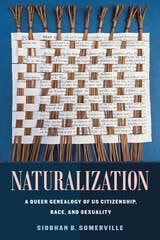
Naturalization
A Queer Genealogy of US Citizenship, Race, and SexualitySiobhan B. Somerville
Duke University Press, 2026
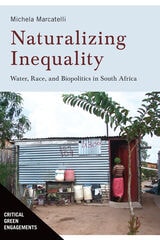
Naturalizing Inequality
Water, Race, and Biopolitics in South AfricaMichela Marcatelli
University of Arizona Press, 2021
Michela Marcatelli unravels this inequality paradox through an ethnography of water in a rural region of the country. The Waterberg Plateau is a space where agriculture, conservation, and extraction coexist and intersect. Marcatelli examines the connections between neoliberalism, race, and the environment by showing that racialized property relations around water and land are still recognized and protected by the post-apartheid state to sustain green growth. She argues that the government depicts growth as the best, if not only, solution to inequality. While white landowners maintain access to water, however, black ex-farmworkers are dispossessed once again of this essential-to-life resource.
If the promise of growth serves to normalize inequality, the call to save nature has the effect of naturalizing it even further.

Naturalizing Mexican Immigrants
A Texas HistoryBy Martha Menchaca
University of Texas Press, 2011
2013 — NACCS Book Award – National Association for Chicana and Chicano Studies
During the nineteenth and early twentieth centuries, a majority of the Mexican immigrant population in the United States resided in Texas, making the state a flashpoint in debates over whether to deny naturalization rights. As Texas federal courts grappled with the issue, policies pertaining to Mexican immigrants came to reflect evolving political ideologies on both sides of the border.
Drawing on unprecedented historical analysis of state archives, U.S. Congressional records, and other sources of overlooked data, Naturalizing Mexican Immigrants provides a rich understanding of the realities and rhetoric that have led to present-day immigration controversies. Martha Menchaca's groundbreaking research examines such facets as U.S.-Mexico relations following the U.S. Civil War and the schisms created by Mexican abolitionists; the anti-immigration stance that marked many suffragist appeals; the effects of the Spanish American War; distinctions made for mestizo, Afromexicano, and Native American populations; the erosion of means for U.S. citizens to legalize their relatives; and the ways in which U.S. corporations have caused the political conditions that stimulated emigration from Mexico.
The first historical study of its kind, Naturalizing Mexican Immigrants delivers a clear-eyed view of provocative issues.
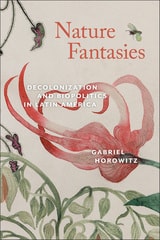
Nature Fantasies
Decolonization and Biopolitics in Latin AmericaGabriel Horowitz
Bucknell University Press, 2024
In this original study, Gabriel Horowitz examines the work of select nineteenth- and twentieth-century Latin American writers through the lens of contemporary theoretical debates about nature, postcoloniality, and national identity. In the work of José Martí, Gertrudis Gómez de Avellaneda, Jorge Luis Borges, Augusto Roa Bastos, Cesar Aira, and others, he traces historical constructions of nature in regional intellectual traditions and texts as they inform political culture on the broader global stage. By investigating national literary discourses from Cuba, Argentina, and Paraguay, he identifies a common narrative thread that imagines the utopian wilderness of the New World as a symbolic site of independence from Spain. In these texts, Horowitz argues, an expressed desire to return to the nation’s foundational nature contributed to a movement away from political and social engagement and toward a “biopolitical state,” in which nature, traditionally seen as pre-political, conversely becomes its center.
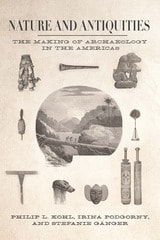
Nature and Antiquities
The Making of Archaeology in the AmericasEdited by Philip L. Kohl, Irina Podgorny, and Stefanie Gänger
University of Arizona Press, 2014
The volume breaks new ground by entreating archaeologists to acknowledge the importance of ways of knowing that resulted from the study of nature in the history of archaeology. Some of the contributions to this volume trace the part conventions, practices, and concepts from natural history and the natural sciences played in the history and making of the discipline. Others set out to uncover, reassemble, or adjust our vision of collections that research historians of archaeology have disregarded or misrepresented—because their nineteenth-century makers would refuse to comply with today’s disciplinary borders and study natural specimens and antiquities in conjunction, under the rubric of the territorial, the curious or the universal. Other contributions trace the sociopolitical implications of studying nature in conjunction with “indigenous peoples” in the Americas—inquiring into what it meant and entailed to comprehend the inhabitants of the American continent in and through a state of nature.

Nature in Translation
Japanese Tourism Encounters the Canadian RockiesShiho Satsuka
Duke University Press, 2015
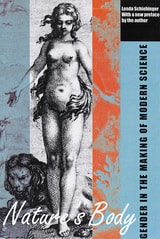
Nature's Body
Gender in the Making of Modern ScienceSchiebinger, Londa
Rutgers University Press, 2004
Eighteenth-century natural historians created a peculiar, and peculiarly durable, vision of nature—one that embodied the sexual and racial tensions of that era. When plants were found to reproduce sexually, eighteenth-century botanists ascribed to them passionate relations, polyandrous marriages, and suicidal incest, and accounts of steamy plant sex began to infiltrate the botanical literature of the day. Naturalists also turned their attention to the great apes just becoming known to eighteenth-century Europeans, clothing the females in silk vestments and training them to sip tea with the modest demeanor of English matrons, while imagining the males of the species fully capable of ravishing women.
Written with humor and meticulous detail, Nature’s Body draws on these and other examples to uncover the ways in which assumptions about gender, sex, and race have shaped scientific explanations of nature. Schiebinger offers a rich cultural history of science and a timely and passionate argument that science must be restructured in order to get it right.
Nature's Wild
Love, Sex, and Law in the CaribbeanAndil Gosine
Duke University Press, 2021
Duke University Press Scholars of Color First Book Award recipient

Natures Past
The Environment and Human HistoryEdited by Paolo Squatriti
University of Michigan Press, 2007
Natures of Data
A Discussion between Biologists, Artists and Science ScholarsPhilipp Fischer, Gabriele Gramelsberger, Christoph Hoffmann, Hans Hofmann, Hans-Jörg Rheinberger, and Hannes Rickli
Diaphanes, 2020
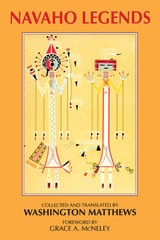
Navaho Legends
Washington Matthews
University of Utah Press, 1994
Navaho Legends is one of the earliest collections of Navajo oral traditions in English, and still the best. Originally published in 1897, Washington Matthews’s sensitive translation contains extensive versions of the Original Legend and two other tales. These richly detailed legends remain among the most complete sources of Navajo cultural, ritual, and ceremonial information.
This edition is fully faithful to the original, containing Matthews’s introduction, extensive notes, interlinear prayer translations, musical notations, and index, plus a new note on orthography by Robert Young.
Navajo Architecture
Forms, History, DistributionsStephen C. Jett and Virginia E. Spencer
University of Arizona Press, 1981
Stephen C. Jett and Virginia E. Spencer have devoted years of fieldwork to studying the origin, evolution, and construction of Navajo buildings: not only hogans, houses, and summer dwellings, but also numerous other structures related to activities such as food preparation, hunting, sweat-bathing, and funerary observation. In addition, they have defined the geographic distribution of dwelling forms to reveal both utilization of local resources and local differences in degree of acculturation.
Navajo Courts and Navajo Common Law
A Tradition of Tribal Self-GovernanceRaymond D. Austin
University of Minnesota Press, 2009
The Navajo Nation court system is the largest and most established tribal legal system in the world. Since the landmark 1959 U.S. Supreme Court decision in Williams v. Lee that affirmed tribal court authority over reservation-based claims, the Navajo Nation has been at the vanguard of a far-reaching, transformative jurisprudential movement among Indian tribes in North America and indigenous peoples around the world to retrieve and use traditional values to address contemporary legal issues.
A justice on the Navajo Nation Supreme Court for sixteen years, Justice Raymond D. Austin has been deeply involved in the movement to develop tribal courts and tribal law as effective means of modern self-government. He has written foundational opinions that have established Navajo common law and, throughout his legal career, has recognized the benefit of tribal customs and traditions as tools of restorative justice.
In Navajo Courts and Navajo Common Law, Justice Austin considers the history and implications of how the Navajo Nation courts apply foundational Navajo doctrines to modern legal issues. He explains key Navajo foundational concepts like Hózhó (harmony), K'é (peacefulness and solidarity), and K'éí (kinship) both within the Navajo cultural context and, using the case method of legal analysis, as they are adapted and applied by Navajo judges in virtually every important area of legal life in the tribe.
In addition to detailed case studies, Justice Austin provides a broad view of tribal law, documenting the development of tribal courts as important institutions of indigenous self-governance and outlining how other indigenous peoples, both in North America and elsewhere around the world, can draw on traditional precepts to achieve self-determination and self-government, solve community problems, and control their own futures.
Navajo Kinship and Marriage
Gary Witherspoon
University of Chicago Press, 1996
"Witherspoon . . . clarifies problems pertaining to Navajo kinship and marriage through his skillful use of the concepts of cultural and social systems. He adds to the body of knowledge on the Navajo by his own fieldwork and unique life experiences." —R. S. Freed, Sociology
"Not only can Witherspoon's book on Navajo kinship help unravel the web for the Anglo willing to concentrate, it can also bring to Navajo readers an understanding of why Anglos don't understand Navajo family relationships." —Joanne Reuter, Navajo Times
"This is an important work on Navajo kinship and marriage." —David F. Aberle, American Anthropology
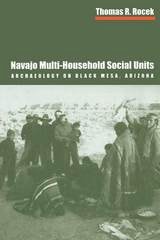
Navajo Multi-Household Social Units
Archaeology on Black Mesa, ArizonaThomas R. Rocek
University of Arizona Press, 1995
Rocek explores a neglected but major source of social flexibility in these societies. While many studies have focused on household and community-level organization, few have examined the flexible, intermediate-sized, "middle-level" cooperative units that bind small groups of households together. Middle-level units, says the author, must be recognized as important sources of social flexibility in many such cultural contexts. Futhermore, attention to middle-level units is critical for understanding household or community-level organization, because the flexibility they offer can fundamentally alter the behavior of social units of a larger or smaller scale.
In examining the archaeological record of Navajo settlement, Rocek develops archaeological methods for examing multiple-household social units (variously called "outfits or "cooperating groups") through spatial analysis, investigates evidence of change in middle-level units over time, relates these changes to economic and demographic flux, and compares the Navajo case study to the broader ethnographic literature of middle-level units. Rocek finds similarities with social organization in non-unilineally organized societies, in groups that have been traditionally described as characterized by network organization, and particularly in pastoral societies. The results of Rocek's study offer a new perspective on variability in Navajo social organization while suggesting general patterns of the response of social groups to change.
Rocek's work will be of significant interest not only to those with a professional interest in Navajo history and culture, but also, for its methodological insights, to a far broader range of archaeologists, social anthropologists, ethnohistorians, ethnoarchaeologists, historians, cultural geographers, and political scientists.
Navajo Nation Peacemaking
Living Traditional JusticeEdited by Marianne O. Nielsen and James W. Zion
University of Arizona Press, 2005
Navajo Places
Laurance D. Linford
University of Utah Press, 2000
Navajoland is the heart and soul of the American Southwest. While the Navajo Reservation incorporates portions of Arizona, New Mexico, and Utah, this is only about half the traditional homeland of 220,000 Diné, the People. In one way or another, nearly all of it, including the original homeland, is sacred to them. Before Spaniards and Americans affixed their own names to the land, every topographic feature had at least one Navajo name. Many of these made their way onto maps—in various forms—or are still in use among Navajo speakers.
Navajo Places is the most ambitious attempt yet to preserve this rich legacy. Through years of research, interviews, and consultation with Navajo authorities, Laurance Linford has compiled a place-name guide that goes beyond reservation boundaries to include the entirety of the traditional Navajo homeland. The volume contains over 1,200 entries, plus a pronunciation guide and sections on Navajo history and the relation of ritual and sacred legend to landscape.
An invaluable resource for anyone interested in the Four Corners region.
Navajo Sovereignty
Understandings and Visions of the Diné PeopleEdited by Lloyd L. Lee; Foreword by Jennifer Nez Denetdale
University of Arizona Press, 2017
The last few decades have given rise to an electrifying movement of Native American activism, scholarship, and creative work challenging five hundred years of U.S. colonization of Native lands. Indigenous communities are envisioning and building their nations and are making decolonial strides toward regaining power from colonial forces.
The Navajo Nation is among the many Native nations in the United States pushing back. In this new book, Diné author Lloyd L. Lee asks fellow Navajo scholars, writers, and community members to envision sovereignty for the Navajo Nation. He asks, (1) what is Navajo sovereignty, (2) how do various Navajo institutions exercise sovereignty, (3) what challenges does Navajo sovereignty face in the coming generations, and (4) how did individual Diné envision sovereignty?
Contributors expand from the questions Lee lays before them to touch on how Navajo sovereignty is understood in Western law, how various institutions of the Navajo Nation exercise sovereignty, what challenges it faces in coming generations, and how individual Diné envision power, authority, and autonomy for the people.
A companion to Diné Perspectives: Revitalizing and Reclaiming Navajo Thought, each chapter offers the contributors’ individual perspectives. The book, which is organized into four parts, discusses Western law’s view of Diné sovereignty, research, activism, creativity, and community, and Navajo sovereignty in traditional education. Above all, Lee and the contributing scholars and community members call for the rethinking of Navajo sovereignty in a way more rooted in Navajo beliefs, culture, and values.
Contributors:
Raymond D. Austin
Bidtah N. Becker
Manley A. Begay, Jr.
Avery Denny
Larry W. Emerson
Colleen Gorman
Michelle L. Hale
Michael Lerma
Leola Tsinnajinnie
Navajo Women of Monument Valley
Preservers of the PastRobert S. McPherson
University Press of Colorado, 2021
"McPherson, through this oral history of Navajo Women living in Monument Valley, provides a unique story of cultural understanding specific to the area. From personal experience and a shared heritage, these women explain their early struggles in life, religious beliefs and sacred teachings, daily activities of a traditional family, and later, battling against cultural loss. Today's rapidly changing world challenges these elders while enticing the young to forget what it means to be Diné. Here, these women share what they want the youth to know. I highly recommend this book to those who wish to learn about the past, understand the present, and consider the future."
—Ronald P. Maldonado, Navajo Nation Cultural Resource Supervisor
"The teachings and stories presented here are fascinating and important. When reading them, I heard my granmother's and aunt's voices, connecting me to the past while strengthening my understanding of Navajo culture. It is the women who are the heard and soul of preserving this information as they guide youth into the future. Here that wisdom becomes real. Those interested in a balanced presentation of the difficult, yet rewarding live of Navajo elders will be highly rewarded by learning from this book"
—Charlotte Nez Lacy, Heritage Language Educator/Translator
Navajo and Photography
James C Faris
University of Utah Press, 2003
"Our God Tscorenci was our Father and created the sun, which is like a mirror. He sees us from up on high and makes photographs of our reflection. When we die the photograph disappears. Many have been lost."
—Kenchori, an Asháninka from Peruvian Amazonia, when asked to tell a story concerning cameras (From W. Baker, Backward: An Essay on Indians, Time, and Photography).
Historically photographs say less about the Navajo than about photographers of Navajos. In Navajo and Photography James Faris calls attention to the inability of photographs of Navajo by non-Navajo to communicate either the lived experiences of native people or their history. Beginning with the earliest photographs of Navajos in captivity at Bosque Redondo and including the most recent glossy picture books and calendars, Faris’s survey points out assumptions that have always governed photographic representation of the Navajo people. Full of the work of photographers such as Edward S. Curtis and Laura Gilpin, as well as photographs by many less-well known figures, readers will find Navajo and Photography an enlightening juxtaposition of cultures.
Navigating Artificial Intelligence for Cultural Heritage Organisations
Edited by Lise Jaillant, et al.
University College London, 2025
As artificial intelligence reshapes the cultural heritage sector, libraries, archives, and museums face novel opportunities and pressing ethical challenges. Navigating Artificial Intelligence for Cultural Heritage Organisations brings together leading experts from digital humanities, computer science, and information science to explore how AI-driven technologies transform the management and interpretation of digitized and born-digital records.
Through an examination of real-world case studies from the UK, US, and beyond, this volume provides significant insights into AI’s role in record management and text and data mining, while addressing issues of trust and risk in automated systems. Designed for heritage professionals, researchers, and information specialists, this book offers a timely guide to leveraging AI while also safeguarding the integrity and accessibility of cultural archives for the future.
Navigating Gendered Terrain
Stereotypes and Strategy in Political CampaignsKelly Dittmar
Temple University Press, 2014
Navigating Gendered Terrain addresses how gender is used to shape how campaigns are waged by influencing insider perceptions of and decisions about effective campaign messages, images, and tactics within party and political contexts. Dittmar uses survey information and interviews with candidates, political consultants, and other campaign professionals to reveal how gender-informed advertising, websites, and overall presentation to voters respond to stereotypes and perceptions of female and male candidates.
She closes her book by offering a feminist interpretation of women as candidates and explaining how the unintended outcomes of political campaigns reinforce prevailing ideas about gender and candidacy.
Navigating Interracial Borders
Black-White Couples and Their Social WorldsChilds, Erica Chito
Rutgers University Press, 2005
Is love color-blind, or at least becoming increasingly so? Today’s popular rhetoric and evidence of more interracial couples than ever might suggest that it is. But is it the idea of racially mixed relationships that we are growing to accept or is it the reality? What is the actual experience of individuals in these partnerships as they navigate their way through public spheres and intermingle in small, close-knit communities?
In Navigating Interracial Borders, Erica Chito Childs explores the social worlds of black-white interracial couples and examines the ways that collective attitudes shape private relationships. Drawing on personal accounts, in-depth interviews, focus group responses, and cultural analysis of media sources, she provides compelling evidence that sizable opposition still exists toward black-white unions. Disapproval is merely being expressed in more subtle, color-blind terms.
Childs reveals that frequently the same individuals who attest in surveys that they approve of interracial dating will also list various reasons why they and their families wouldn’t, shouldn’t, and couldn’t marry someone of another race. Even college students, who are heralded as racially tolerant and open-minded, do not view interracial couples as acceptable when those partnerships move beyond the point of casual dating. Popular films, Internet images, and pornography also continue to reinforce the idea that sexual relations between blacks and whites are deviant.
Well-researched, candidly written, and enriched with personal narratives, Navigating Interracial Borders offers important new insights into the still fraught racial hierarchies of contemporary society in the United States.

Navigating White News
Asian American Journalists at WorkDavid C Oh
Rutgers University Press, 2023
Combining critical race studies with cultural production studies, Navigating White News: Asian American Journalists at Work is the only academic book to examine the ways that racial identification and activation matters in their understanding of news. This adds to the existing literature on race and the sociology of news by examining intra-racial differences in the ways they navigate and understand White newsrooms. Employing in-depth interviews with twenty Asian American journalists who are actively working in large and small newsrooms across the United States, Navigating White News: Asian American Journalists at Work argues that Asian American reporters for whom racial identities are important questioned what counted as news, questioned the implicitly White perspective of objectivity, and actively worked toward providing more complex, substantive coverage of Asian American communities. For Asian American reporters for whom racial identity was not meaningful, they were more invested in existing professional norms. Regardless, all journalists understood that news is a predominantly and culturally White institution.

Navigating the African Diaspora
The Anthropology of InvisibilityDonald Martin Carter
University of Minnesota Press, 2010

Navigating the Cultures of Health Care and Health Insurance
Highly Skilled Migrants in the U.S.Nina Zeldes
University College London, 2023
What are the barriers preventing migrants from accessing and successfully using health care in their new home country? Do these barriers vary based on the migrants’ country of origin? And are they a problem for highly skilled migrants, who often have well-paid jobs and health insurance provided by their employers? Based on field research conducted in the Washington DC area, Navigating the Cultures of Health Care and Health Insurance brings together mixed methods, qualitative, and quantitative approaches to the study of foreign patients’ utilization and assessment of health care in the United States. Through interviews with both health care providers and patients, attitudes toward health insurance and medical treatment are compared for migrants from three countries with very different cultural backgrounds and health insurance systems: Germany, India, and Japan.
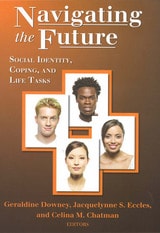
Navigating the Future
Social Identity, Coping, and Life TasksGeraldine Downey
Russell Sage Foundation, 2005
Navigators of the Contemporary
Why Ethnography MattersDavid A. Westbrook
University of Chicago Press, 2008
Navigators of the Contemporary describes the changing nature of ethnography as anthropologists use it to analyze places closer to home. Westbrook maintains that a conversational style of ethnography can help us look beyond our assumptions and gain new insight into arenas of contemporary life such as corporations, financial institutions, science, the military, and religion. Westbrook’s witty, absorbing book is a friendly challenge to anthropologists to shed light on the present and join broader streams of intellectual life. And for those outside the discipline, his inspiring vision of ethnography opens up the prospect of understanding our own world in much greater depth.

Ne me quitte pas
A Song by Jacques Brel and Interpreted by Nina Simone and OthersMaya Angela Smith
Duke University Press, 2025
Neandertal Lithic Industries at La Quina
Arthur J. Jelinek
University of Arizona Press, 2013
This study of the significance of changes through time revealed by an analysis of the chipped stone at La Quina reports on the excavations of the Cooperative American–French Excavation Project from 1985 to 1994. It moves beyond the largely descriptive and subjective approaches that have traditionally been applied to this kind of evidence and applies several important quantitative analytical techniques. These new approaches incorporate the history of previous excavations at the site, the results of the work of the Cooperative Project, and the most recent scientific understanding of relevant climatic changes.
This is a major contribution to our understanding of Neandertal behavior and industry. It adds new dimensions and perspectives based on innovative techniques of analysis. The analytic methods applied to lithic artifacts that form the heart of the book are the product of considerations about how to best interpret a sequence of multiple contextual samples. The author concludes the book with an extraordinarily useful chapter that places his findings into the larger context of our contemporary knowledge of Neandertal life in the region.
The book comes with a compact disc, which includes coded observations used in the analysis in as many as 47 data fields for the more than 11,500 artifacts that will allow professionals and students to further explore the collection of lithic artifacts.

Near Black
White-to-Black Passing in American CultureBaz Dreisinger
University of Massachusetts Press, 2008
In the United States, the notion of racial “passing” is usually associated with blacks and other minorities who seek to present themselves as part of the white majority. Yet as Baz Dreisinger demonstrates in this fascinating study, another form of this phenomenon also occurs, if less frequently, in American culture: cases in which legally white individuals are imagined, by themselves or by others, as passing for black.
In Near Black, Dreisinger explores the oft-ignored history of what she calls “reverse racial passing” by looking at a broad spectrum of short stories, novels, films, autobiographies, and pop-culture discourse that depict whites passing for black. The protagonists of these narratives, she shows, span centuries and cross contexts, from slavery to civil rights, jazz to rock to hip-hop. Tracing their role from the 1830s to the present day, Dreisinger argues that central to the enterprise of reverse passing are ideas about proximity. Because “blackness,” so to speak, is imagined as transmittable, proximity to blackness is invested with the power to turn whites black: those who are literally “near black” become metaphorically “near black.”
While this concept first arose during Reconstruction in the context of white anxieties about miscegenation, it was revised by later white passers for whom proximity to blackness became an authenticating badge. As Dreisinger shows, some white-to-black passers pass via self-identification. Jazz musician Mezz Mezzrow, for example, claimed that living among blacks and playing jazz had literally darkened his skin. Others are taken for black by a given community for a period of time. This was the experience of Jewish critic Waldo Frank during his travels with Jean Toomer, as well as that of disc jockey Hoss Allen, master of R&B slang at Nashville's famed WLAC radio. For journalists John Howard Griffin and Grace Halsell, passing was a deliberate and fleeting experiment, while for Mark Twain's fictional white slave in Pudd'nhead Wilson, it is a near-permanent and accidental occurrence.
Whether understood as a function of proximity or behavior, skin color or cultural heritage, self-definition or the perception of others, what all these variants of “reverse passing” demonstrate, according to Dreisinger, is that the lines defining racial identity in American culture are not only blurred but subject to change.
Near Eastern Archaeology, volume 84 number 3 (September 2021)
The University of Chicago Press
University of Chicago Press Journals, 2021
Near Eastern Archaeology, volume 84 number 4 (December 2021)
The University of Chicago Press
University of Chicago Press Journals, 2021
Near Eastern Archaeology, volume 85 number 1 (March 2022)
The University of Chicago Press
University of Chicago Press Journals, 2022
Near Eastern Archaeology, volume 85 number 2 (June 2022)
The University of Chicago Press
University of Chicago Press Journals, 2022
Near Eastern Archaeology, volume 85 number 3 (September 2022)
The University of Chicago Press
University of Chicago Press Journals, 2022
Near Eastern Archaeology, volume 85 number 4 (December 2022)
The University of Chicago Press
University of Chicago Press Journals, 2022
Near Eastern Archaeology, volume 86 number 1 (March 2023)
The University of Chicago Press
University of Chicago Press Journals, 2023
Near Eastern Archaeology, volume 86 number 2 (June 2023)
The University of Chicago Press
University of Chicago Press Journals, 2023
Near Eastern Archaeology, volume 86 number 3 (September 2023)
The University of Chicago Press
University of Chicago Press Journals, 2023
Near Eastern Archaeology, volume 86 number 4 (December 2023)
The University of Chicago Press
University of Chicago Press Journals, 2023
Near Eastern Archaeology, volume 87 number 1 (March 2024)
The University of Chicago Press
University of Chicago Press Journals, 2024