Results by title
28164 books match the query 'History' and 647 start with n
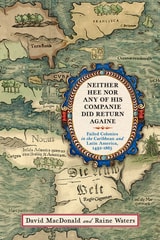
Neither Hee Nor Any of His Companie Did Return Againe
Failed Colonies in the Caribbean and Latin America, 1492–1865David MacDonald
Westholme Publishing, 2023
In Neither Hee Nor Any of His Companie Did Return Againe: Failed Colonies in the Caribbean and Latin America, 1492–1865, historians David MacDonald and Raine Waters examine the European, and later American, failures to establish permanent settlements in the region. Beginning with Columbus’s ill-conceived ventures, the authors discuss the efforts, from German claims in Venezuela and Scottish attempts in Panama to defeated Confederates fleeing to Mexico, Brazil, and elsewhere. For each colony, the primary source information is contextualized and evaluated. Along the way, the authors determine commonalities across these ill-fated colonies as well as underscore the fact that while Indigenous peoples of the region often vigorously resisted predatory European colonization, their numbers were decimated by relentless warfare, slave raids, and European diseases. As Indian populations declined, colonists imported African slaves in large numbers. The brutal treatment of slaves resulted in those who escaped creating their own settlements that existed in a state of endemic warfare with European colonists. An important contribution to Atlantic World studies, this volume reveals the fine line between colonies that thrived and those that failed.
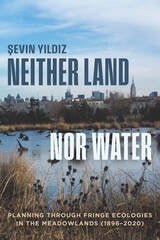
Neither Land nor Water
Planning Through Fringe Ecologies in the Meadowlands (1896–2020)Sevin Yildiz
University of Chicago Press, 2026
An urban and environmental history of the New Jersey Meadowlands, where marsh meets megamall.
The New Jersey Meadowlands, the vast marshes across the Hudson River from New York City, are a mysterious and complex wetland. Both strange and well-known to the millions of people who traverse the northeast corridor every year, this landscape is not well understood despite its familiarity. Seemingly natural and unnatural, human and nonhuman, the Meadowlands has long been shaped by urban development, industry, infrastructure, and countless dreams.
In Neither Land nor Water, Şevin Yıldız offers a close look at the planners, scientists, developers, politicians, industrialists, and others who have engaged with, dreamed about, or damaged this transitional ecology in different ways over the decades. She traces key periods in the area’s rich histories of urban planning and ecological thought, from the dispossession of the Lenape natives, through the dawn of ecological science, and onto both intensive industrial developments and environmental resistance to them. She examines as well how the Meadowlands exposes the inadequacies of today’s approaches to planning in the face of climate change and how they perhaps offer clues to a better future.

Neither Separate Nor Equal
Congress in the 1790sKenneth R. Bowling
Ohio University Press, 2000
Scholars today take for granted the existence of a “wall of separation” dividing the three branches of the federal government. Neither Separate nor Equal: Congress in the 1790s demonstrates that such lines of separation among the legislative, executive, and judicial branches, however, were neither so clearly delineated nor observed in the first decade of the federal government's history.
The first two essays describe the social and cultural milieu attending the movement of the republican court from New York to Philadelphia and the physical and social environment of Philadelphia in the 1790s. The following section examines the congressional career of New York's Egbert Benson, the senatorial career of Robert Morris as an expression of his economic interests, the vigorous opposition of Rep. William Branch Giles to the Federalist policies of the Washington administration, and finally the underappreciated role of congressional spouses.
The last five essays concentrate on areas of interbranch cooperation and conflict. In particular, they discuss the meaning of separation of powers in the 1790s, Washington as an active president with Congress, the contrast between Hamilton's and Jefferson's exercise of political influence with Congress, and John Adams's relationship with Congress during the Quasi-War crisis.
The essays in this collection, the second volume of the series Perspectives on the History of Congress, 1789-1801, originated in two conferences held in 1995 and 1996 by the United States Capitol Historical Society.

Nels Anderson’s World War I Diary
Allan Kent Powell
University of Utah Press, 2013
Nels Anderson’s World War I Diary provides a rare glimpse into the wartime experiences of one of the most well-respected sociologists of the twentieth century, the renowned author of The Hobo (1920) and Desert Saints: The Mormon Frontier in Utah (1942). Anderson, a keen observer of people, places, and events his entire life, joined the U.S. Army in 1918 at the age of 29 and was sent to Europe to fight as part of the Allied Expeditionary Force (AEF) under General Pershing. Because keeping a journal was strongly discouraged among American forces during WWI, particularly among the rank-and-file soldiers, Anderson’s diary stands as a rare gem. Furthermore, it is the only known account of war service during WWI by a member of the LDS Church. Anderson joined the Mormon faith after accepting the hospitality of an extended Mormon ranching family during his travels throughout the American West as a working hobo.
Anderson’s accounts of the St. Mihiel and Meuse-Argonne offensives are particularly remarkable given the challenges of keeping a detailed journal amidst the chaos and suffering of the war’s Western Front. His insights into the depravity and callousness of war are buttressed with intimate human portraits of those to whom he was closest. The war years provided many formative experiences that would prove to have a lasting influence on Anderson’s views regarding the working poor, authority, and human values; this would come to bear heavily on his later work as a pioneering sociologist at the University of Chicago, where he helped establish participant observation as a research method. The many introspective entries contained in this volume will be of reat interest to military historians and history buffs as well as to those in the social sciences looking to find the intellectual origins of Anderson’s later work in the burgeoning field of sociology.
Winner of the Army Historical Foundation Distinguished Writing Award for Journals, Memoirs, and Letters.

Neo-Babylonian Trial Records
Shalom E. Holtz
SBL Press, 2014
New translations of fifty transliterated texts for research and classroom use
This collection of sixth-century B.C.E. Mesopotamian texts provides a close-up, often dramatic, view of ancient courtroom encounters shedding light on Neo-Babylonian legal culture and daily life. In addition to the legal texts, Holtz provides an introduction to Neo-Babylonian social history, archival records, and legal materials. This is an essential resource for scholars interested in the history of law.
Features
- Fifty new English translations
- Transliterations for use in advanced Akkadian courses
- Background essays perfect for courses dealing with ancient Near Eastern history and law
- Explanatory essays preceding each text and its translation
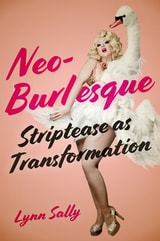
Neo-Burlesque
Striptease as TransformationLynn Sally
Rutgers University Press, 2022
Performance studies scholar and acclaimed burlesque artist Lynn Sally offers an inside look at the history, culture, and philosophy of New York’s neo-burlesque scene. Revealing how twenty-first century neo-burlesque is in constant dialogue with the classic burlesque of the nineteenth and twentieth centuries, she considers how today’s performers use camp to comment on preconceived notions of femininity. She also explores how the striptease performer directs the audience’s gaze, putting on layers of meaning while taking off layers of clothing.
Through detailed profiles of iconic neo-burlesque performers such as Dita Von Teese, Dirty Martini, Julie Atlas Muz, and World Famous *BOB*, this book makes the case for understanding neo-burlesque as a new sexual revolution. Yet it also examines the broader community of “Pro-Am” performers who use neo-burlesque as a liberating vehicle for self-expression. Raising important questions about what feminism looks like, Neo-Burlesque celebrates a revolutionary performing art and participatory culture whose acts have political reverberations, both onstage and off.

Neodomestic American Fiction
Kristin J. Jacobson
The Ohio State University Press, 2010

Neoliberal Apartheid
Palestine/Israel and South Africa after 1994Andy Clarno
University of Chicago Press, 2017
After a decade of research in the Johannesburg and Jerusalem regions, Andy Clarno presents here a detailed ethnographic study of the precariousness of the poor in Alexandra township, the dynamics of colonization and enclosure in Bethlehem, the growth of fortress suburbs and private security in Johannesburg, and the regime of security coordination between the Israeli military and the Palestinian Authority in the West Bank. The first comparative study of the changes in these two areas since the early 1990s, the book addresses the limitations of liberation in South Africa, highlights the impact of neoliberal restructuring in Palestine, and argues that a new form of neoliberal apartheid has emerged in both contexts.
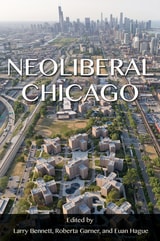
Neoliberal Chicago
Edited by Larry Bennett, Roberta Garner, and Euan Hague
University of Illinois Press, 2017
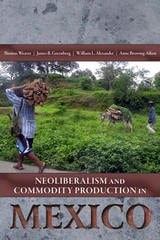
Neoliberalism and Commodity Production in Mexico
Thomas Weaver
University Press of Colorado, 2012
Detailed ethnographic fieldwork shows how foreign investment, privatization, deregulation, and elimination of welfare benefits have devastated national industries and natural resources and threatened agriculture, driving the campesinos and working class deeper into poverty. Focusing on specific commodity chains and the changes to production and marketing under neoliberalism, the contributors highlight the detrimental impacts of policies by telling the stories of those most affected by these changes. They detail the complex interplay of local and global forces, from the politically mediated systems of demand found at the local level to the increasingly powerful municipal and state governments and the global trade and banking institutions.
Sharing a common theoretical perspective and method throughout the chapters, Neoliberalism and Commodity Production in Mexico is a multi-sited ethnography that makes a significant contribution to studies of neoliberal ideology in practice.

Neoliberalism and Contemporary American Literature
Edited by Liam Kennedy and Stephen Shapiro
Dartmouth College Press, 2019
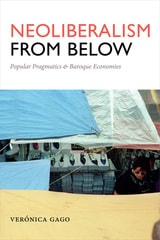
Neoliberalism from Below
Popular Pragmatics and Baroque EconomiesVerónica Gago
Duke University Press, 2017

Neoliberalism in Vietnam, Volume 20
Ann M. Leshkowich and Christina Schwenkel
Duke University Press, 0
Contributors draw their conclusions from ethnographic fieldwork in contemporary urban spaces. They link neoliberalism in Vietnam to a set of globally diverse technical practices, institutions, modes of power, and governing strategies; for example, in its shifting currency regimes and its anticorruption campaigns. Contributors also explore the growing emphasis on self-improvement and modernization through studies of architecture, changing beauty standards, and the impact of in vitro fertilization. Biopolitical logics and the self-regulation of moral personhood are also addressed in essays on HIV/AIDS and transnational adoption. The issue highlights the ways in which the socialist past is integral to the present in Vietnam, even as it is remade and newly configured.
Contributors: Erik Harms, Nina Hien, Ann Marie Leshkowich, Li Zhang, Ken MacLean, Alfred John Montoya, Melissa J. Pashigian, Christina Schwenkel, Allison Truitt
Guest editors: Christina Schwenkel (Associate Professor, Department of Anthropology, University of California at Riverside) and Ann Marie Leshkowich (Associate Professor and Chair, Department of Sociology and Anthropology, College of the Holy Cross).
Neolithic Childhood
Art in a False Present, c. 1930Edited by Anselm Franke and Tom Holert
Diaphanes, 2018
Resonating at the heart of Neolithic Childhood. Art in a False Present, c. 1930 is the question whether art has present, past, and future functions. The modernist assertion of the autonomy of art was intended to render superfluous art’s social and religious functions. But what if the functionlessness of art comes under suspicion of being instrumentalized by bourgeois capitalism? This was an accusation that informed the anti-modernist critique of the avant-garde, and particularly of Surrealism. The objective throughout the crisis-ridden present of the 1920s to the 1940s was to reaffirm a once ubiquitous, but long-lost functionality—not only of art.
The publication accompanying the exhibition examines the strategies deployed in this reaffirmation. These include the surrealist Primitivism of an “Ethnology of the White Man” together with the excavation of the deep time of humanity—into the “Neolithic Childhood” mapped out by the notoriously anti-modernist Carl Einstein (1885-1940) as a hallucinatory retro-utopia. The volume brings together essays by the curators and academics involved in the project, primary texts by Carl Einstein and a comprehensive documentation of the exhibition including lists of works, texts on as well as images of numerous exhibits and finally installation views. At the center of the volume, a glossary discusses Carl Einstein’s own theoretical vocabulary as well as further associated terms, such as Autonomy, Formalism, Function, Gesture, Hallucination, Art, Metamorphosis, Primitivisms, Totality.
With contributions by: Irene Albers, Philipp Albers, Joyce S. Cheng, Rosa Eidelpes, Carl Einstein, Anselm Franke, Charles W. Haxthausen, Tom Holert, Sven Lütticken, Ulrike Müller, Jenny Nachtigall, David Quigley, Cornelius Reiber, Erhard Schüttpelz, Kerstin Stakemeier, Maria Stavrinaki, Elena Vogman, Zairong Xiang, Sebastian Zeidler
With reproductions of artworks by:
Jean (Hans) Arp, Willi Baumeister, Georges Braque, Brassaï, Claude Cahun, Lux T. Feininger, Max Ernst, Florence Henri, Barbara Hepworth, Hannah Höch, Heinrich Hoerle, Paul Klee, Germaine Krull, Helen Levitt, André Masson, Alexandra Povòrina, Gaston-Louis Roux, Kalifala Sidibé, Louis Soutter, Yves Tanguy, Toyen, Jindřich Štyrský, Raoul Ubac, Paule Vézelay and others.
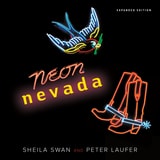
Neon Nevada
Expanded EditionSheila Swan
University of Nevada Press, 2023
Sheila Swan and Peter Laufer take readers on a journey, not only along the Las Vegas Strip, but down quiet, two-lane rural roads punctuated occasionally by a neon sign—those glistening beacons that represent civilization in our vast Great Basin. The photographers’ stunning work captures the argon violets, krypton purples, helium golds, and xenon blues that glow amidst the nighttime desert sky.
The book makes clear that neon is not just a medium for casino advertising. The colorful images of cowboys and cowgirls, animals, desert landscapes, and countless other creative designs all illuminate an aspect of Americana—the neon sign—that helps define Nevada and its businesses, from bars and casinos to hardware stores, restaurants, motels, and theaters that line the streets of the Silver State’s cities and towns, and those rural areas that are barely a blip on the map. With a compelling blend of striking full-color photographs and fascinating historical commentary, the book celebrates an artform that wholly embraces the state’s unique personality.
First published in 1994, this newly updated and expanded edition of Neon Nevada explores the resurgence of this artform during the last decade, which has resulted in an appreciation of Nevada neon that is not likely to fade. Swan and Laufer’s project, this survey of neon, casts the new edition as a defining source for neon scholars and attracts neon aficionados to what can only be defined as a medium as distinctive and interesting as Nevada itself.

Nervous Systems
Art, Systems, and Politics since the 1960sJohanna Gosse and Timothy Stott, editors
Duke University Press, 2021
Contributors. Cristina Albu, Amanda Boetzkes, Brianne Cohen, Kris Cohen, Jaimey Hamilton Faris, Christine Filippone, Johanna Gosse, Francis Halsall, Judith Rodenbeck, Dawna Schuld, Luke Skrebowski, Timothy Stott, John Tyson
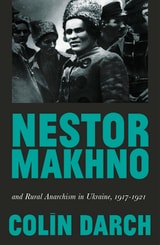
Nestor Makhno and Rural Anarchism in Ukraine, 1917-1921
Colin Darch
Pluto Press, 2020
Between 1917 and 1921, the Makhnovists fought German and Austrian invaders, reactionary monarchist forces, Ukrainian nationalists and sometimes the Bolsheviks themselves. Drawing upon anarchist ideology, the Makhnovists gathered widespread support amongst the Ukrainian peasantry, taking up arms when under attack and playing a significant role - in temporary alliance with the Red Army - in the defeats of the White Generals Denikin and Wrangel. Often dismissed as a kulak revolt, or a manifestation of Ukrainian nationalism, Colin Darch analyses the successes and failures of the Makhnovist movement, emphasising its revolutionary character.
Over 100 years after the revolutions, this book reveals a lesser known side of 1917, contributing both to histories of the period and broadening the narrative of 1917, whilst enriching the lineage of anarchist history.

Nestor Makhno and Rural Anarchism in Ukraine, 1917-1921
Colin Darch
Pluto Press, 2020
Between 1917 and 1921, the Makhnovists fought German and Austrian invaders, reactionary monarchist forces, Ukrainian nationalists and sometimes the Bolsheviks themselves. Drawing upon anarchist ideology, the Makhnovists gathered widespread support amongst the Ukrainian peasantry, taking up arms when under attack and playing a significant role - in temporary alliance with the Red Army - in the defeats of the White Generals Denikin and Wrangel. Often dismissed as a kulak revolt, or a manifestation of Ukrainian nationalism, Colin Darch analyzes the successes and failures of the Makhnovist movement, emphasizing its revolutionary character.
Over 100 years after the revolutions, this book reveals a lesser known side of 1917, contributing both to histories of the period and broadening the narrative of 1917, whilst enriching the lineage of anarchist history.
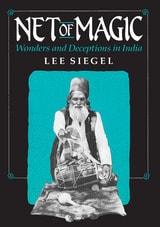
Net of Magic
Wonders and Deceptions in IndiaLee Siegel
University of Chicago Press, 1991
Siegel's journeys take him from ancient Sanskrit texts to the slums of New Delhi to find remnants of a remarkable magical tradition. In the squalid settlement of Shadipur, he is initiated into a band of Muslim street conjurers and performs as their shill while they tutor him in their con and craft. Siegel also becomes acquainted with Hindu theatrical magicians, who claim descent from court illusionists and now dress as maharajahs to perform a repertoire of tricks full of poignant kitsch and glitz.
Masterfully using a panoply of narrative sleights to recreate the magical world of India, Net of Magic intersperses travelogue, history, ethnography, and fiction. Siegel's vivid, often comic tale is crowded with shills and stooges, tourists and pickpockets, snake charmers and fakirs. Among the cast of characters are Naseeb, a poor Muslim street magician who guides Siegel into the closed circle of itinerant performers; the Industrial Magician, paid by a bank, who convinces his audience to buy traveler's checks by making twenty-rupee notes disappear; the Government Magician, who does a trick with condoms to encourage family planning; P. C. Sorcar, Jr., the most celebrated Indian stage magician; and the fictive Professor M. T. Bannerji, the world's greatest magician, who assumes various guises over a millennium of Indian history and finally arrives in the conjuring capital of the world—Las Vegas.
Like Indra's net—the web of illusion in which Indian performers ensnare their audience—Net of Magic captures the reader in a seductive portrayal of a world where deception is celebrated and lies are transformed into compelling and universal truths.
Nettl's Elephant
Bruno Nettle
University of Illinois Press, 2010

Networked
Business and Politics in Decentralizing Indonesia, 1998-2004Wahyu Prasetyawan
National University of Singapore Press, 2018
Networked Business and Politics in Decentralizing Indonesia evaluates three cases of deep-seated political conflict and intrigue including central government, local governments, and multinational companies. It looks at how the structure of the national political economy has changed as the result of local politicians becoming involved in disputes with the national government over control of natural resources. It also analyzes how these changes will affect the distribution of wealth in the country as well as Indonesia’s evolving democratic politics and modes of governance.

Networking China
The Digital Transformation of the Chinese EconomyYu Hong
University of Illinois Press, 2017
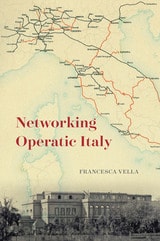
Networking Operatic Italy
Francesca Vella
University of Chicago Press, 2022
Opera’s role in shaping Italian identity has long fascinated both critics and scholars. Whereas the romance of the Risorgimento once spurred analyses of how individual works and styles grew out of and fostered specifically “Italian” sensibilities and modes of address, more recently scholars have discovered the ways in which opera has animated Italians’ social and cultural life in myriad different local contexts.
In Networking Operatic Italy, Francesca Vella reexamines this much-debated topic by exploring how, where, and why opera traveled on the mid-nineteenth-century peninsula, and what this mobility meant for opera, Italian cities, and Italy alike. Focusing on the 1850s to the 1870s, Vella attends to opera’s encounters with new technologies of transportation and communication, as well as its continued dissemination through newspapers, wind bands, and singing human bodies. Ultimately, this book sheds light on the vibrancy and complexity of nineteenth-century Italian operatic cultures, challenging many of our assumptions about an often exoticized country.
Networking the World, 1794-2000
Armand Mattelart
University of Minnesota Press, 2000
Networking
Communicating with Bodies and Machines in the Nineteenth CenturyLaura Otis
University of Michigan Press, 2011
The interdisciplinary sweep of this book is impressive. Otis focuses simultaneously on literary works by such authors as George Eliot, Bram Stoker, Henry James, and Mark Twain and on the scientific and technological achievements of such pioneers as Luigi Galvani, Hermann von Helmholtz, Charles Babbage, Samuel Morse, and Werner von Siemens.
This unique juxtaposition of physiology, engineering, and literature reveals the common thoughts shared by writers in widely diverse fields and suggests that our current comparisons of nerve and computer networks may not only enhance but shape our understanding of both neurobiology and technology.
Highly accessible and jargon-free, Networking will appeal to general readers as well as to scholars in the fields of interdisciplinary studies, nineteenth-century literature, and the history of science and technology.
Laura Otis is Associate Professor of English, Hofstra University. In 2000, she was awarded a MacArthur Foundation Fellowship for her interdisciplinary studies of literature and science. Her previous books include Membranes: Metaphors of Invasion in Nineteenth-Century Literature, Science, and Politics and Organic Memory: History and the Body in the Late Nineteenth and Early Twentieth Centuries.
Neurasthenic Nation
America's Search for Health, Happiness, and Comfort, 1869-1920Schuster, David G
Rutgers University Press, 2011
As the United States rushed toward industrial and technological modernization in the late nineteenth century, people worried that the workplace had become too competitive, the economy too turbulent, domestic chores too taxing, while new machines had created a fast-paced environment that sickened the nation. Physicians testified that, without a doubt, modern civilization was causing a host of ills—everything from irritability to insomnia, lethargy to weight loss, anxiety to lack of ambition, and indigestion to impotence. They called this condition neurasthenia.
Neurasthenic Nation investigates how the concept of neurasthenia helped doctors and patients, men and women, and advertisers and consumers negotiate changes commonly associated with “modernity.” Combining a survey of medical and popular literature on neurasthenia with original research into rare archives of personal letters, patient records, and corporate files, David Schuster charts the emergence of a “neurasthenic nation”—a place where people saw their personal health as inextricably tied to the pitfalls and possibilities of a changing world.

Neuromatic
Or, A Particular History of Religion and the BrainJohn Lardas Modern
University of Chicago Press, 2021
In Neuromatic, religious studies scholar John Lardas Modern offers a sprawling examination of the history of the cognitive revolution and current attempts to locate all that is human in the brain, including spirituality itself. Neuromatic is a wildly original take on the entangled histories of science and religion that lie behind our brain-laden present: from eighteenth-century revivals to the origins of neurology and mystic visions of mental piety in the nineteenth century; from cyberneticians, Scientologists, and parapsychologists in the twentieth century to contemporary claims to have discovered the neural correlates of religion.
What Modern reveals via this grand tour is that our ostensibly secular turn to the brain is bound up at every turn with the religion it discounts, ignores, or actively dismisses. In foregrounding the myths, ritual schemes, and cosmic concerns that have accompanied idealizations of neural networks and inquiries into their structure, Neuromatic takes the reader on a dazzling and disturbing ride through the history of our strange subservience to the brain.

Neutral Accent
How Language, Labor, and Life Become GlobalA. Aneesh
Duke University Press, 2015
Nevada Mountains
Landforms, Trees, and VegetationDavid Alan Charlet
University of Utah Press, 2020
Divided into three parts, the book presents a simple system recognizing the primary landscape features of Nevada. Part I describes the methods used to define the boundaries of the ranges and divides the state into meaningful landforms. Part II describes the ecological life zones and their vegetation types. Part III describes the individual mountain ranges. Each mountain range entry contains a descriptive narrative and a data summary that includes the county or counties in which the range occurs, whether the author has visited and collected plants there, the highest point, the base elevation, a brief discussion of the geology, any historic settlements or post offices located in the range, the distribution of life zones, and a list of all conifers and flowering trees.
The result of over thirty years of exploration and study throughout the state, this is a long-overdue compendium of Nevada’s mountains and associated flora. This book is a required reference for anyone venturing out into the Nevada wilds.
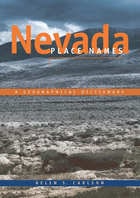
Nevada Place Names
A Geographical DictionaryHelen S. Carlson
University of Nevada Press, 1974
Author and researcher Helen Carlson spent almost fourteen years searching for the origins of Nevada’s place names, using the maps of explorers, miners, government surveyors, and city planners and poring through historical accounts, archival documents, county records, and newspaper files. The result of her labors is Nevada Place Names, a fascinating mixture of history spiced with folklore, legend, and obscure facts. Out of print for some years, the book was reprinted in 1999.
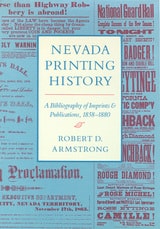
Nevada Printing History
A Bibliography Of Imprints And Publications, 1858-1880Robert D. Armstrong
University of Nevada Press, 1981
A detailed look at Nevada's printing history from 1858 through 1880. Includes proclamations, pamphlets, menus, government publications, church programs, and more. For Nevada historians, bibliographers, book collectors, and people who are interested in the printed records produced in Nevada toward the end of the nineteenth century.
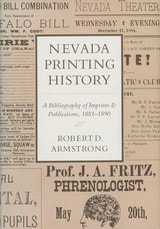
Nevada Printing History
A Bibliography Of Imprints And Publications, 1881-1890Robert D. Armstrong
University of Nevada Press, 1991
A detailed look at Nevada's printing history from 1881 through 1890. With over 1400 entries describing books, pamphlets, broadsides, state and local documents, fraternal and church publications, and a variety of other printed matter, this intriguing compilation serves as the companion volume to Armstrong's Nevada Printing History, 1858-1880. Armstrong includes annual summaries of events affecting the printing trade in Nevada as well as the locations and kinds of printing technology in use. This second volume also documents the planning and erection of a state printing office. Of particular interest are the summaries of individual publications that provide the reader with a picture of social, economic, and political viewpoints of the period. The author's research led him to more than 125 public institutions over a period of nearly twenty years. Historians, bibliographers, students of printing history and practice, collectors of Western Americana, antiquarian booksellers, and librarians will find this book to be an invaluable guide to Nevada's printing, its printers, and its history.
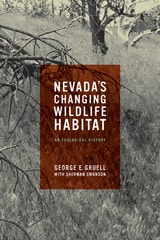
Nevada's Changing Wildlife Habitat
An Ecological HistoryGeorge E. Gruell
University of Nevada Press, 2013
For millennia the ecology of the Great Basin has evolved because of climate change and the impacts of human presence. Nevada’s Changing Wildlife Habitat is the first book to explain the transformations in the plants and animals of this region over time and how they came about. Using data gleaned from archaeological and anthropological studies, numerous historical documents, repeat photography, and several natural sciences, the authors examine changes in vegetation and their impact on wildlife species and the general health of the environment. They also outline the choices that current users and managers of rangelands face in being good stewards of this harsh but fragile environment and its wildlife.
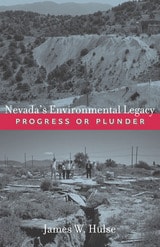
Nevada's Environmental Legacy
Progress or PlunderJames W. Hulse
University of Nevada Press, 2009
Nevada's relatively brief history (it became a state in 1864) has been largely a story of the exploitation of its natural resources. Mining has torn down mountains and poisoned streams and groundwater. Uncontrolled grazing by vast herds of sheep and cattle has denuded grasslands and left them prey to the invasion of noxious plant species and vulnerable to wildfire. Clear-cut logging practices have changed the composition of forests and induced serious soil erosion. More recently, military testing, including hundreds of atomic blasts to determine the efficacy of nuclear weapons, has irreversibly polluted expanses of fragile desert landscape. And rampant development throughout the state over the past four decades, along with the public's growing demand for recreational facilities, has placed intolerable demands on the arid state's limited water resources and threatened the survival of numerous rare plant and animal species. Veteran historian and Nevada native James W. Hulse considers the state's complex environmental history as a series of Faustian bargains between the state's need for economic development and the industries, government agencies, and individuals that have exploited Nevada's natural resources with little concern for the long-term consequences of their activities. His survey covers all these issues, and examines public attitudes about the environment and the role of federal and state agencies in creating, interpreting, and enforcing environmental policies.
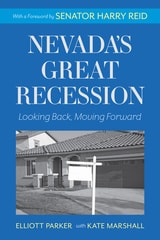
Nevada's Great Recession
Looking Back, Moving ForwardElliott Parker
University of Nevada Press, 2017
This is a different kind of economics book. Parker uses his expertise from doing research on the East Asian fiscal crisis to give profound insights into what happened and how to avoid future catastrophes. Marshall personalizes it by providing vignettes of what it was actually like to be in the trenches and fighting the inevitable political battles that came up, and counteracting some of the falsehoods that certain politicians were spreading about the recession.
Parker and Marshall’s book should be required reading for not only every single elected official in Nevada, but for any private citizen who cares about the public good.

Nevada's Historic Buildings
A Cultural LegacyRonald M. James
University of Nevada Press, 2009
Nevada’s Historic Buildings highlights ninety of these buildings, describing them in the context of the state’s history and the character of the people who created and used them. Here are reminders of mining boomtowns, historic ranches, transportation, the divorce and gaming industries, the New Deal, and the innovation of Las Vegas’s post-modern aesthetic. These buildings provide a cross-section of Nevada’s rich historic and cultural heritage and their survival offers everyone the experience of touching the past.
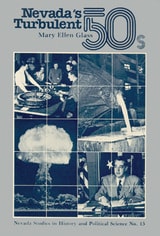
Nevada's Turbulent 50's
Decade Of Political And Economic ChangeAl Glass
University of Nevada Press, 1981
The 1950s marked a period of significant changes for Nevada--gambling came under national and local scrutiny, atomic bombs were tested regularly near Las Vegas, and labor disputes made national headlines. Glass examines the events of the decade and their impact on Nevada and on the rest of the country.
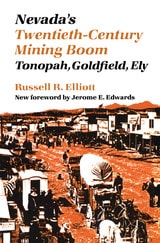
Nevada's Twentieth-Century Mining Boom
Tonopah, Goldfield, ElyRussell R. Elliott
University of Nevada Press, 1966
Nevada
A HistoryRobert Laxalt
University of Nevada Press, 1991
Nevada
A History of the Silver StateMichael S. Green
University of Nevada Press, 2015
Michael S. Green, a leading Nevada historian, provides a detailed survey of the Silver State’s past, from the arrival of the early European explorers, to the predominance of mining in the 1800s, to the rise of world-class tourism in the twentieth century, and to more recent attempts to diversify the economy.
Of the numerous themes central to Green’s analysis of Nevada’s history, luck plays a significant role in the state’s growth. The miners and gamblers who first visited the state all bet on luck. Today, the biggest contributor to Nevada’s tourist economy, gaming, still relies on that same belief in luck. Nevada’s financial system has generally been based on a “one industry” economy, first mining and, more recently, gaming. Green delves deeply into the limitations of this structure, while also exploring the theme of exploitation of the land and the overuse of the state’s natural resources. Green covers many more aspects of the Silver State’s narrative, including the dominance of one region of the state over another, political forces and corruption, and the citizens’ often tumultuous relationship with the federal government. The book will appeal to scholars, students, and other readers interested in Nevada history.

Nevada
A History of the Silver State, 2nd editionMichael S. Green
University of Nevada Press, 2024
Michael S. Green, a leading Nevada historian, provides a detailed survey of the Silver State’s past, from the arrival of the early European explorers, to the predominance of mining in the 1800s, to the rise of world-class tourism in the twentieth century, and to more recent attempts to diversify the economy.
Of the numerous themes central to Green’s analysis of Nevada’s history, luck plays a significant role in the state’s growth. The miners and gamblers who first visited the state all bet on luck. Today, the biggest contributor to Nevada’s tourist economy, gaming, still relies on that same belief in luck. Nevada’s financial system has generally been based on a “one industry” economy, first mining and, more recently, gaming. Green delves deeply into the limitations of this structure, while also exploring the theme of exploitation of the land and the overuse of the state’s natural resources. Green covers many more aspects of the Silver State’s narrative, including the dominance of one region of the state over another, political forces and corruption, and the citizens’ often tumultuous relationship with the federal government. The book will appeal to scholars, students, and other readers interested in Nevada history.

Never Again? Never Gone!
Old and New Anti-SemitismMichael Wolffsohn
St. Augustine's Press, 2026
Michael Wolffsohn charges head-on the varying reactions to the Hamas "murder orgy" of 7 October 2023. Political leaders proclaim that anti-Semitism has no place in Germany, but Wolffsohn identifies a dangerous resurgence in the wake of these atrocities. On the 85th Anniversary of the November pogrom of 1938, Wolffsohn delivered a passionate speech before the Berlin House of Representatives. Two versions of this speech exist--one written prior the Hamas attacks and another written after the event. The variances highlight the depth of rupture that the responses to the attacks provoked. Both speeches are contained in this book, and they give evidence to the reality that antisemitism was never eradicated, it is simply "old or new." Interwoven with deeply personal reflections, Wolffsohn offers a scathing critique of attempts to cover antisemitism in Europe and questions the authenticity of the vow to eliminate it. This German bestselling account of the cyclical reoccurrence of anti-Semitic campaigns reveals repeated and worsening political and social consequences globally, but especially in Germany where the presumption is that historical memory condemns such thinking.

Never Alone, Except for Now
Art, Networks, PopulationsKris Cohen
Duke University Press, 2017
Never Ask "Why"
Football Players' Fight for Freedom in the NFLBy Ed Garvey; Edited by Chuck Cascio
Temple University Press, 2023
When pro football players formed a union to stand up against the NFL for their own interests, they chose lawyer Ed Garvey as their Executive Director. The NFL Players Association (NFLPA), would take on the NFL over player contracts, collective bargaining agreements, and antitrust suits. It lobbied for players’ free agency, contract rights, and impartial arbitration of disciplinary disputes. Garvey navigated strikes, lockouts, scabs, stooges, lies, as well as the sports media complex—to maintain players’ dignity. According to the league, the players were to take what they were given and “never ask why.”
In Never Ask “Why,” journalist Chuck Cascio presents the late Garvey’s rich account of the early years of the NFLPA, taking readers among the players as they held the league accountable to play fair. Learning from their mistakes, the NFLPA would succeed in curbing commissioner Pete Rozelle’s disciplinary power and striking down the Rozelle Rule’s absolute control over free agency.
Garvey tells the intimate stories of how pro football players, rivals on the field, rallied together to stand up for themselves. He worked tirelessly to change a system that exploited players and even controlled the media. In the end, Garvey shows how the NFLPA transformed the state of pro sports leagues today and how, even still, they work to keep down the players on whose backs they profit.
Never Done
A History of Women’s Work in Media ProductionHill, Erin
Rutgers University Press, 2016
Histories of women in Hollywood usually recount the contributions of female directors, screenwriters, designers, actresses, and other creative personnel whose names loom large in the credits. Yet, from its inception, the American film industry relied on the labor of thousands more women, workers whose vital contributions often went unrecognized.
For more information: http://erinhill.squarespace.com
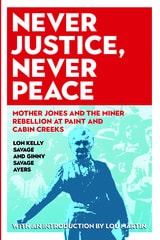
Never Justice, Never Peace
Mother Jones and the Miner Rebellion at Paint and Cabin CreeksGinny Savage Ayers
West Virginia University Press, 2018
In 1986 Lon Savage published Thunder in the Mountains: The West Virginia Mine War, 1920–21, a popular history now considered a classic. Among those the book influenced are Denise Giardina, author of Storming Heaven, and John Sayles, writer and director of Matewan. When Savage passed away, he left behind an incomplete book manuscript about a lesser-known Mother Jones crusade in Kanawha County, West Virginia. His daughter Ginny Savage Ayers drew on his notes and files, as well as her own original research, to complete Never Justice, Never Peace—the first book-length account of the Paint Creek–Cabin Creek Strike of 1912–13.
Savage and Ayers offer a narrative history of the strike that weaves together threads about organizer Mother Jones, the United Mine Workers union, politicians, coal companies, and Baldwin-Felts Detective Agency guards with the experiences of everyday men and women. The result is a compelling and in-depth treatment that brings to light an unjustly neglected—and notably violent—chapter of labor history. Introduced by historian Lou Martin, Never Justice, Never Peace provides an accessible glimpse into the lives and personalities of many participants in this critical struggle.

Never Make a Spy Out of Me
An Epistolary Story from the Romanian Secret Police Archives (1947-1962)Valentina Glajar
Central European University Press, 2027
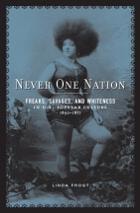
Never One Nation
Freaks, Savages, and Whiteness in U.S. Popular Culture, 1850-1877Linda Frost
University of Minnesota Press, 2005
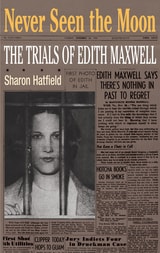
Never Seen the Moon
THE TRIALS OF EDITH MAXWELLSharon Hatfield
University of Illinois Press, 2004
Immediately granted celebrity status by the powerful Hearst press, Maxwell was also championed as a martyr by advocates of women's causes. National news magazines and even detective magazines picked up her story, Warner Brothers created a screen version, and Eleanor Roosevelt helped secure her early release from prison. Sharon Hatfield's brilliant telling of this true-crime story transforms a dusty piece of history into a vibrant thriller. Throughout the narrative, she discusses yellow journalism, the inequities of the jury system, class and gender tensions in a developing region, and a woman's right to defend herself from family violence.
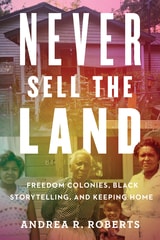
Never Sell the Land
Freedom Colonies, Black Storytelling, and Keeping HomeAndrea R. Roberts
University of Texas Press, 2027
Chronicling the stories and resilience of Texas freedom colonies facing erasure, and of the efforts of descendant community members to safeguard them.
Since Emancipation, Deep East Texas has been a place where Black Texans have experienced oppression yet also have created free Black communities. Well into the Jim Crow era, the area was home to communities where formerly enslaved people farmed their own land and ran their own affairs, now called freedom colonies. At one point, more than five hundred such communities existed in the state. Yet only a handful of these freedom colonies remain today, and they are in danger of disappearing from the record and from historical memory.
Never Sell the Land is a work about Black agency—specifically, how agency is secured through bottom-up planning and preservation in the face of unequal access. Andrea Roberts traces the efforts of descendant community members to safeguard the land and heritage of settlements in Jasper and Newton Counties, which abut the Louisiana border. She follows the descendants of these Black-built places as they deploy creative approaches to education and revitalization built on traditional community practices. Never Sell the Land tells the origin story of The Texas Freedom Colonies Atlas and Study and shows how preservation becomes self-determination—and how grassroots projects are exhuming the freedom colonies from history books, personal archives, and oral histories, and fighting to physically cement them within the landscape of Texas today.