Results by title
28164 books match the query 'History' and 647 start with n
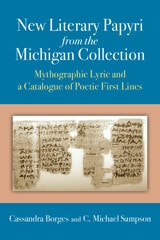
New Literary Papyri from the Michigan Collection
Mythographic Lyric and a Catalogue of Poetic First LinesCassandra Borges and C. Michael Sampson
University of Michigan Press, 2012
New texts from Greek antiquity continue to emerge on scraps of papyrus from the sands of Egypt, not only adding to the surviving corpus of classical and Hellenistic literature, but also occasionally offering a glimpse into how these poems were studied in antiquity. New Literary Papyri from the Michigan Collection: Mythographic Lyric and a Catalogue of Poetic First Lines presents three such new texts: an innovative lyric poem on the Trojan cycle, a scholarly anthology of lyric verses, and a brief but enigmatic third text. Cassandra Borges and C. Michael Sampson offer the original Greek text of these pieces, along with their scholarly commentary, analyzing their features in a variety of contexts—historical, cultural, poetic, mythological, religious, and scholarly.
The fragments collected here are of considerable antiquity (late third to second century BCE) a fact that is significant inasmuch as it places them among the oldest Greek papyri, but all the more so because in this period, a scholarly community was thriving in Ptolemaic Alexandria, the political and cultural capital of Hellenistic Egypt. The fragments bear witness to that scholarly activity: not only is their anthology of poetic verses consistent with other scholarly selections, but the very survival of these texts may well be at least partially indebted to the work of the Alexandrians in studying and propagating Greek literature in Egypt.
This edition supplements the 1970s work of Reinhold Merkelbach and Denys Page. Recent digitizing for the APIS project revealed a previously unsuspected join with other material, however, which alone warrants a new, comprehensive edition and analysis.
New Lives for Ancient and Extinct Crops
Edited by Paul E. Minnis
University of Arizona Press, 2014
New Lives for Ancient and Extinct Crops profiles nine plant species that were important contributors to human diets and had medicinal uses in antiquity: maygrass, chenopod, marshelder, agave, little barley, chia, arrowroot, little millet, and bitter vetch. Each chapter is written by a well-known scholar, who illustrates the global value of the ancient crop record to inform the present. From eastern and western North America, Mesoamerica, South America, western Asia, and south-central Asia, the contributors provide examples of the unexpected wealth of information available in the archaeological record about ancient and extinct crops.
New Maricón Cinema
Outing Latin American FilmBy Vinodh Venkatesh
University of Texas Press, 2016
Recent critically and commercially acclaimed Latin American films such as XXY, Contracorriente, and Plan B create an affective and bodily connection with viewers that elicits in them an emotive and empathic relationship with queer identities. Referring to these films as New Maricón Cinema, Vinodh Venkatesh argues that they represent a distinct break from what he terms Maricón Cinema, or a cinema that deals with sex and gender difference through an ethically and visually disaffected position, exemplified in films such as Fresa y chocolate, No se lo digas a nadie, and El lugar sin límites.
Covering feature films from Argentina, Chile, Cuba, Ecuador, Mexico, Peru, the United States, and Venezuela, New Maricón Cinema is the first study to contextualize and analyze recent homo-/trans-/intersexed-themed cinema in Latin America within a broader historical and aesthetic genealogy. Working with theories of affect, circulation, and orientations, Venkatesh examines key scenes in the work of auteurs such as Marco Berger, Javier Fuentes-León, and Julia Solomonoff and in films including Antes que anochezca and Y tu mamá también to show how their use of an affective poetics situates and regenerates viewers in an ethically productive cinematic space. He further demonstrates that New Maricón Cinema has encouraged the production of “gay friendly” commercial films for popular audiences, which reflects wider sociocultural changes regarding gender difference and civil rights that are occurring in Latin America.
New Masters, New Servants
Migration, Development, and Women Workers in ChinaYan Hairong
Duke University Press, 2008
Yan analyzes how the migrant women workers are subjected to, make sense of, and reflect on a range of state and neoliberal discourses about development, modernity, consumption, self-worth, quality, and individual and collective longing and struggle. She offers keen insight into the workers’ desire and efforts to achieve suzhi (quality) through self-improvement, the way workers are treated by their employers, and representations of migrant domestic workers on television and the Internet and in newspapers and magazines. In so doing, Yan demonstrates that contestations over the meanings of migrant workers raise broad questions about the nature of wage labor, market economy, sociality, and postsocialism in contemporary China.
New Materials
Towards a History of ConsistencyAmy E. Slaton
Lever Press, 2020
New Media Futures
The Rise of Women in the Digital ArtsEdited by Donna J. Cox, Ellen Sandor, and Janine Fron
University of Illinois Press, 2018

New Mexico and the Pimería Alta
The Colonial Period in the American SouthwestJohn G. Douglass
University Press of Colorado, 2017
Focusing on the two major areas of the Southwest that witnessed the most intensive and sustained colonial encounters, New Mexico and the Pimería Alta compares how different forms of colonialism and indigenous political economies resulted in diverse outcomes for colonists and Native peoples. Taking a holistic approach and studying both colonist and indigenous perspectives through archaeological, ethnohistoric, historic, and landscape data, contributors examine how the processes of colonialism played out in the American Southwest.
Although these broad areas—New Mexico and southern Arizona/northern Sonora—share a similar early colonial history, the particular combination of players, sociohistorical trajectories, and social relations within each area led to, and were transformed by, markedly diverse colonial encounters. Understanding these different mixes of players, history, and social relations provides the foundation for conceptualizing the enormous changes wrought by colonialism throughout the region. The presentations of different cultural trajectories also offer important avenues for future thought and discussion on the strategies for missionization and colonialism.
The case studies tackle how cultures evolved in the light of radical transformations in cultural traits or traditions and how different groups reconciled to this change. A much needed up-to-date examination of the colonial era in the Southwest, New Mexico and the Pimería Alta demonstrates the intertwined relationships between cultural continuity and transformation during a time of immense change and highlights contemporary thought on the colonial experience.
Contributors: Joseph Aguilar, Jimmy Arterberry, Heather Atherton, Dale Brenneman, J. Andrew Darling, John G. Douglass, B. Sunday Eiselt, Severin Fowles, William M. Graves, Lauren Jelinek, Kelly L. Jenks, Stewart B. Koyiyumptewa, Phillip O. Leckman, Matthew Liebmann, Kent G. Lightfoot, Lindsay Montgomery, Barnet Pavao-Zuckerman, Robert Preucel, Matthew Schmader, Thomas E. Sheridan, Colleen Strawhacker, J. Homer Thiel, David Hurst Thomas, Laurie D. Webster
New Mexico's Buffalo Soldiers
1866-1900Monroe Lee Billington
University Press of Colorado, 1991
New Migrants in the Marketplace
Boston's Ethnic EntrepreneursMarilyn Halter
University of Massachusetts Press, 2013
Using an ethnographic, comparative approach, New Migrants in the Marketplace: Boston's Ethnic Entrepreneurs examines the economic culture and small business activity of a range of new migrant groups in the Greater Boston Area, including Jews from the former Soviet Union, British West Indians, Greeks, Puerto Ricans, Dominicans, Khmers, and Haitians.
Contributors are Mehdi Bozorgmehr, Claudia Der-Martirosian, Marilyn Halter, Violet Johnson, Peggy Levitt, Ivan Light, Caesar Mavratsas, Georges Sabagh, and Nancy Smith-Hefner. The book includes a photo essay by Steven J. Gold.
New Narratives for Old
The Historical Method of Reading Early Christian Theology: Essays in Honor of Michel Rene BarnesAnthony Briggman
Catholic University of America Press, 2022
New Observations on the French Language, with Praises of Illustrious Learned Women
Marguerite Buffet
Iter Press, 2023
According to the few historical records that mention Marguerite Buffet, she lived her entire life in seventeenth-century Paris where she taught French to aristocratic women. Buffet’s vivid example of proper language use in New Observations on the French Language offers a rare glimpse into the life, habits, and culture of seventeenth-century France. She describes common errors in contemporary language use and gives examples of correct expressions for speaking and writing all the while encouraging women to aspire to higher levels of intellectual achievement.
In addition, her Praises of Illustrious Learned Women, a catalog of biographies of women who displayed exemplary intellect, wit, and conversation, includes a number of the author’s contemporaries such as Anna Maria van Schurman and Madeleine de Scudéry. Buffet’s collected praises of these women, many of whom were connected to the court of Louis XIV, show her unique position as both a participant in and historian of the intellectual and social world of the French salon.
This volume presents Buffet’s work in its near entirety for the first time in English, bringing to light Buffet’s unique contribution to the centuries-long debate concerning the status of women known as the querelle des femmes.
New Orleans Sports
Playing Hard in the Big EasyThomas Aiello
University of Arkansas Press, 2019
Tracing that history from the early nineteenth century to the present, while also surveying the state of the city’s sports historiography, New Orleans Sports places sport in the context of race relations, politics, and civic and business development to expand that historiography—currently dominated by a text that stops at 1900—into the twentieth century, offering a modern examination of sports in the city.
New Orleans Style and the Writing of American Jazz History
Bruce Boyd Raeburn
University of Michigan Press, 2009
New Orleans and the Creation of Transatlantic Opera, 1819–1859
Charlotte Bentley
University of Chicago Press, 2022
New Orleans and the Creation of Transatlantic Opera, 1819–1859 explores the thriving operatic life of New Orleans in the first half of the nineteenth century, drawing out the transatlantic connections that animated it. By focusing on a variety of individuals, their extended webs of human contacts, and the materials that they moved along with them, this book pieces together what it took to bring opera to New Orleans and the ways in which the city’s operatic life shaped contemporary perceptions of global interconnection. The early chapters explore the process of bringing opera to the stage, taking a detailed look at the management of New Orleans’s Francophone theater, the Théâtre d’Orléans, as well as the performers who came to the city and the reception they received. But opera’s significance was not confined to the theater, and later chapters of the book examine how opera permeated everyday life in New Orleans, through popular sheet music, novels, magazines and visual culture, and dancing in its many ballrooms. Just as New Orleans helped to create transatlantic opera, opera in turn helped to create the city of New Orleans.
New People in Old Neighborhoods
The Role of Immigrants in Rejuvenating New York's CommunitiesLouis Winnick
Russell Sage Foundation, 1990
New Perspectives in American Jewish History
A Documentary Tribute to Jonathan D. SarnaEdited by Mark A. Raider and Gary Phillip Zola
Brandeis University Press, 2021
Widely regarded as today’s foremost American Jewish historian, Jonathan D. Sarna had a huge impact on the academy. Sarna’s influence is perhaps nowhere more apparent than among his former doctoral students—a veritable “Sarna diaspora” of over three dozen active scholars around the world. Both a tribute to Sarna and an important collection in its own right, New Perspectives in American Jewish History was compiled by Sarna’s former students and presents previously unpublished, neglected, or rarely seen historical documents and images that illuminate the breadth, diversity, and dynamism of the American Jewish experience. Beginning with the earliest known Jewish divorce in circum-Atlantic history (1774) and concluding with a Black Lives Matter Haggadah supplement (2019), the collection travels across time and space to shed light on intriguing and generative moments that span the varieties of Jewish experience in the American setting from the colonial era to the present. The materials underscore the interrelationship of myriad themes including ritual observance, Jewish-Christian relations, civil rights, Zionism and Israel, and immigration. While not intended as a comprehensive treatment of American Jewish history, the collection offers a chronological road map of American Jewry’s evolving self-understanding and encounter with America over the course of four centuries. A brief prefatory note sets up the analytic context of each document and helps to unpack and explore its significance. The capacious and multifaceted quality of the American Jewish experience is further amplified here by a sampling of artistic texts such as photographs, advertisements, cartoons, and more.
New Perspectives on Etruria and Early Rome
Sinclair Bell
University of Wisconsin Press, 2009
Paying tribute to Richard Daniel De Puma, a scholar who has made significant and influential contributions to Etruscan and Roman studies, the contributors to this collection echo the ambition and creativity of his work while offering an up-to-date survey of contemporary Etruscan scholarship. In surveying new developments in both fields, the work collected here represent the diverse, interdisciplinary interests of De Puma as well as areas of recent groundbreaking research.
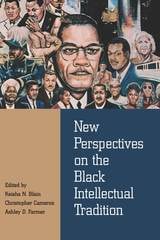
New Perspectives on the Black Intellectual Tradition
Edited by Keisha N. Blain, Christopher Cameron, and Ashley D. Farmer
Northwestern University Press, 2018
The book examines four central themes within the black intellectual tradition: black internationalism, religion and spirituality, racial politics and struggles for social justice, and black radicalism. The essays identify the emergence of black thought within multiple communities internationally, analyze how black thinkers shaped and were shaped by the historical moment in which they lived, interrogate the ways in which activists and intellectuals connected their theoretical frameworks across time and space, and assess how these strains of thought bolstered black consciousness and resistance worldwide.
Defying traditional temporal and geographical boundaries, New Perspectives on the Black Intellectual Tradition illuminates the origins of and conduits for black ideas, redefines the relationship between black thought and social action, and challenges long-held assumptions about black perspectives on religion, race, and radicalism. The intellectuals profiled in the volume reshape and redefine the contours and boundaries of black thought, further illuminating the depth and diversity of the black intellectual tradition.
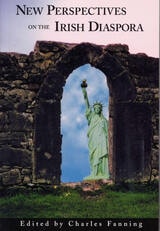
New Perspectives on the Irish Diaspora
Edited by Charles Fanning
Southern Illinois University Press, 2000
In New Perspectiveson the Irish Diaspora, Charles Fanning incorporates eighteen fresh perspectives on the Irish diaspora over three centuries and around the globe. He enlists scholarly tools from the disciplines of history, sociology, literary criticism, folklore, and culture studies to present a collection of writings about the Irish diaspora of great variety and depth.
New Perspectives on the Origins of Americanist Archaeology
Edited by David L. Browman and Stephen Williams
University of Alabama Press, 2002
In this landmark book, experienced scholars take a retrospective look at the developing routes that have brought American archaeologists into the 21st century.
In 1996, the Society for American Archaeology's Committee on the History of Archaeology established a biennial symposium
named after Gordon R. Willey, one of the fathers of American archaeology, to focus on the history of the discipline. This volume grew out of the
second symposium, presented at the 1998 meeting of the Society for American Archaeology.
Interest in the intellectual history of the field is certainly nothing new—the first such volume appeared in 1856—but previously, focus has been on individuals and their theories and methods, or on various government agencies that supported, developed, or mandated
excavations in North America. This volume, however, focuses on the roots of Americanist archaeology, including its pre-1915 European connections, and on some of the earliest work by women archaeologists, which has been largely overlooked.
Full of valuable insights for archaeologists and anthropologists—both professional and amateur—into the history and
development of Americanist archaeology, New Perspectives will also inspire and serve as a model for future research.
David Browman is Professor of Anthropology and Chair of the Interdisciplinary Program in Archaeology at Washington University. Stephen Williams is Professor Emeritus of Anthropology at Harvard University.
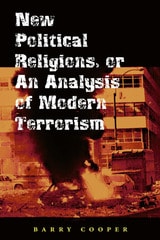
New Political Religions, or an Analysis of Modern Terrorism
Barry Cooper
University of Missouri Press, 2004
In New Political Religions, or an Analysis of Modern Terrorism, Barry Cooper applies the insights of Eric Voegelin to the phenomenon of modern terrorism. Cooper points out that the chief omission from most contemporary studies of terrorism is an analysis of the “spiritual motivation” that is central to the actions of terrorists today. When spiritual elements are discussed in conventional literature, they are grouped under the opaque term religion. A more conceptually adequate approach is provided by Voegelin’s political science and, in particular, by his Schellingian term pneumopathology—a disease of the spirit.
While terrorism has been used throughout the ages as a weapon in political struggles, there is an essential difference between groups who use these tactics for more of less rational political goals and those seeking more apocalyptic ends. Cooper argues that today's terrorists have a spiritual perversity that causes them to place greater significance on killing than on exploiting political grievances. He supports his assertion with an analysis of two groups that share the characteristics of a pneumopathological consciousness—Aum Shinrikyo, the terrorist organization that poisoned thousands of Tokyo subway riders in 1995, and Al-Qaeda, the group behind the infamous 9/11 killings.Cooper applies the Voegelinian terms first reality (a commonsense goal regarding legitimate political grievances) and second reality (a fantastic objective sought by those whose rationality has been obscured) to show the major divide between political and apocalyptic terrorist groups. Osama Bin Laden's "second reality" was the imaginary goal that the 9/11 attack was supposed to achieve, and the commonsense reality was what truly happened (the deaths of nearly 3,000 people and the United States's subsequent military response). Cooper shows how such spiritual perversity enables a human being, imagining himself empowered by God, to go on a campaign of mass destruction.
Cooper concludes with a chapter on the uniqueness of terrorist networks, their limitations, and the means by which they can be dealt with. In the ongoing conversations among specialists in terrorist studies, as well as the ordinary discourse of citizens in western democracies wishing to understand the world around them, this book will add a distinctive voice.
New Science, New World
Denise Albanese
Duke University Press, 1996
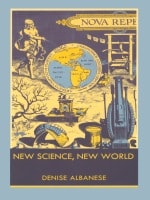
Albanese reads the inaugurators of the scientific revolution against the canonical authors of early modern literature, discussing Galileo’s Dialogue on the Two Chief World Systems and Bacon’s New Atlantis as well as Milton’s Paradise Lost and Shakespeare’s The Tempest. She examines how the newness or “novelty” of investigating nature is expressed through representations of the New World, including the native, the feminine, the body, and the heavens. “New” is therefore shown to be a double sign, referring both to the excitement associated with a knowledge oriented away from past practices, and to the oppression and domination typical of the colonialist enterprise. Exploring the connections between the New World and the New Science, and the simultaneously emerging patterns of thought and forms of writing characteristic of modernity, Albanese insists that science is at its inception a form of power-knowledge, and that the modern and postmodern division of “Two Cultures,” the literary and the scientific, has its antecedents in the early modern world.
New Science, New World makes an important contribution to feminist, new historicist, and cultural materialist debates about the extent to which the culture of seventeenth-century England is proto-modern. It will offer scholars and students from a wide range of fields a new critical model for historical practice.
New South African Keywords
Nick Shepherd
Ohio University Press, 2008
New Spain, New Literatures
Luis Martín-Estudillo
Vanderbilt University Press, 2010
New Studies in Philosophy, Politics, Economics, and the History of Ideas
F. A. Hayek
University of Chicago Press, 1978
Following on F. A. Hayek's previous work Studies in Philosophy, Politics, and Economics (1967), New Studies in Philosophy, Politics, Economics and the History of Ideas collects some of Hayek's most notable essays and lectures dealing with problems of philosophy, politics and economics, with many of the essays falling into more than one of these categories. Expanding upon the previous volume the present work also includes a fourth part collecting a series of Hayek's writings under the heading 'History of Ideas.'
Of the articles contained in this volume the lectures on 'The Errors of Constructivism' (chapter 1) and 'Competition as a Discovery Procedure' (chapter 12) have been published before only in German, while the article on 'Liberalism' (chapter 9) was written in English to be published in an Italian translation in the Enciclopedia del Novicento by the Istituto della Enciclopedia Italiana at Rome.
New Technologies and Renaissance Studies
Edited by William R. Bowen and Raymond G. Siemens
Iter Press, 2008
The first volume of the series, New Technologies and Renaissance Studies, presents a collection of contributions to one ongoing forum for the dialogue which lies at the heart of the book series, the annual "conference within a conference" of the same name which takes place during the Renaissance Society of America gathering, dedicated specifically to the intersection of computational methods and Renaissance studies. Papers in this volume exemplify those fruitful and productive exchanges, from their inception at the 2001 meeting in Chicago to the 2005 meeting in Cambridge.
New Technologies and Renaissance Studies II
Edited by Tassie Gniady, Kris McAbee, Jessica Murphy
Iter Press, 2014
In the fourth volume of the New Technologies in Medieval and Renaissance Studies series, volume editors Tassie Gniady, Kris McAbee, and Jessica Murphy bring together some of the best work from the New Technologies in Medieval and Renaissance Studies panels at the Renaissance Society of America (RSA) annual meetings for the years 2004–2010. These essays demonstrate a dedication to grounding the use of “newest” practices in the theories of the early modern period. At the same time, the essays are interested in the moment—the needs of scholars then, the theories of media that informed current understanding, and the tools used to conduct studies.
New Technologies and Renaissance Studies III
Edited by Matthew Evan Davis and Colin Wilder
Iter Press, 2022
New Terrains in Southeast Asian History
Abu Talib Ahmad
Ohio University Press, 2003
At a watershed moment in the scholarly approach to the history of this important region, New Terrains in Southeast Asian History captures the richness and diversity of historical discourse among Southeast Asian scholars. Through the perspectives of scholars who live and work within the region, the book offers readers a rare opportunity to enter into the world of Southeast Asian historiography. Individual chapters subject the dominance of national narratives to critical reflection and deconstruction, while others highlight the need to go beyond essentially political narratives to seek out deeper cultural, economic, and social structures by utilizing new sources, methodologies, and concepts. Taken as a whole, the book contends that new terrains in Southeast Asian history may be found “at the interstices and on the margins” where nations, societies, or cultures engage the unending processes of historical change.
The contributors are Abdul Rahman Haji Ismail, Abu Talib Ahmad, Andrew Hardy, Badriyah Haji Salleh, Brenda S. A. Yeoh, C. J. W.-L. Wee, Ni Ni Myint, Dhiravat na Pombejra, Hong Lysa, Huang Jianli, Kobkua Suwannathat-Pian, M. R. Fernando, P. Lim Pui Huen, Paul H. Kratoska, Tan Liok Ee, Thongchai Winichakul, and Yong Mun Cheong.
New Territories, New Perspectives
The Religious Impact of the Louisiana PurchaseEdited & Intro by Richard J. Callahan, Jr.
University of Missouri Press, 2008
With the doubling of America’s territory that came with the Louisiana Purchase, American culture was remapped in the bargain. The region’s indigenous inhabitants had already been joined by Catholic missionaries, both French and Spanish, along with Africans brought as slaves to the Caribbean islands and North America; now all were met by a predominantly Protestant culture rushing westward.
New Territories, New Perspectives marks the first study to take the Louisiana Purchase as the focal point for considering the development of American religious history. The process of transforming the Louisiana Territory into U.S. territory meant shaping the space to conform to American cultural and religious identity, and this volume investigates continuities, disruptions, and changes relating to religion in this context.
The contributors ask what might happen to our understanding of religion in America if we look at it through the lens of this annexation. Initial chapters offer fresh perspectives on the new territory by those who settled it, primarily easterners, exploring such topics as the built environment of the region as seen in such settings as frontier camp meetings and communitarian societies, ideas of destiny amid the clash of cultural groups, and religiously significant aspects of African American life.
Subsequent essays take up the religious history of the region from the perspective of New Orleans and the Caribbean. They include an exploration of the roots of Pentecostalism in the mix of black and white cultures in the Mississippi Delta, the “vodou” link between New Orleans and Haiti, and the African-Creole performances of Mardi Gras Indians.
Together, these essays invite readers to consider intersecting histories that are too often neglected in our understanding of America’s religious development, particularly issues that stand apart from traditional histories of religion in the Midwest. By exploring the unexpected, they also promote different ways of thinking about American religious history as a whole.
New Thought, Ancient Wisdom
The History and Future of the New Thought MovementGlenn Mosley
Templeton Press, 2006
In this book, Glenn R. Mosley chronicles the history of the movement, including biographical sketches and the philosophies of pioneers and influential leaders linked to the movement's development and growth. These include Charles and Myrtle Fillmore, the founders of Unity; Ernest Holmes, founder of the Science of Mind; Mary Baker Eddy, founder of the Church of Christ Science; Ralph Waldo Trine, philosopher, mystic, teacher, and early mentor of New Thought; Joel Goldsmith, founder of The Infinite Way, among others.
New Troy
Fantasies Of Empire In The Late Middle AgesSylvia Federico
University of Minnesota Press, 2003
Examines the political and literary uses of the Trojan legend in the medieval period
England in the late fourteenth century witnessed a large-scale social revolt, a lingering and seemingly hopeless war with France, and fierce factional conflicts in royal politics and London civic government—struggles in which all parties sought to justify their actions by claiming historical precedent. How the Trojan legend figured in these claims—and in competing assertions of authorial legitimacy, nationhood, and rule in the later Middle Ages—is the complex nexus of history, myth, literature, and identity that Sylvia Federico explores in this ambitious book.
During the late medieval period, many European political and social groups took great pains to associate themselves with the ancient city; the claim on Troy, Federico asserts, was crucial to nationhood and was always a political act. Her book examines the poetry and prose of several late medieval authors, focusing particularly on how Chaucer’s use of the Trojan legend helped to set the terms by which the Ricardian and Lancastrian periods were distinguished, and further helped to establish English literary history as a noble precedent in its own right. Federico’s book affords remarkable insight into the workings of the medieval historical imagination.
New Visions of Community in Contemporary American Fiction
Tan, Kingsolver, Castillo, MorrisonMagali Cornier Michael
University of Iowa Press, 2006
New Ways of Looking at Old Texts, VI
Papers of the Renaissance English Text Society 2011-2016Edited by Arthur F. Marotti
Arizona Center for Medieval and Renaissance Studies, 2019

New Women, New Novels
Ardis, Ann
Rutgers University Press, 1990
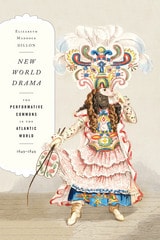
New World Drama
The Performative Commons in the Atlantic World, 1649-1849Elizabeth Maddock Dillon
Duke University Press, 2014
Audiences in London eagerly watched the royal slave, Oroonoko, tortured on stage, while audiences in Charleston and Kingston were forbidden from watching the same scene. Audiences in Kingston and New York City exuberantly participated in the slaying of Richard III on stage, enacting the rise of the "people," and Native American leaders were enjoined to watch actors in blackface "jump Jim Crow." Dillon argues that the theater served as a "performative commons," staging debates over representation in a political world based on popular sovereignty. Her book is a capacious account of performance, aesthetics, and modernity in the eighteenth-century Atlantic world.
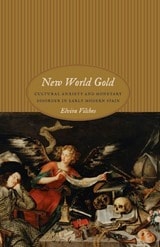
New World Gold
Cultural Anxiety and Monetary Disorder in Early Modern SpainElvira Vilches
University of Chicago Press, 2010
The discovery of the New World was initially a cause for celebration. But the vast amounts of gold that Columbus and other explorers claimed from these lands altered Spanish society. The influx of such wealth contributed to the expansion of the Spanish empire, but also it raised doubts and insecurities about the meaning and function of money, the ideals of court and civility, and the structure of commerce and credit. New World Gold shows that, far from being a stabilizing force, the flow of gold from the Americas created anxieties among Spaniards and shaped a host of distinct behaviors, cultural practices, and intellectual pursuits on both sides of the Atlantic.
Elvira Vilches examines economic treatises, stories of travel and conquest, moralist writings, fiction, poetry, and drama to reveal that New World gold ultimately became a problematic source of power that destabilized Spain’s sense of trust, truth, and worth. These cultural anxieties, she argues, rendered the discovery of gold paradoxically disastrous for Spanish society. Combining economic thought, social history, and literary theory in trans-Atlantic contexts, New World Gold unveils the dark side of Spain’s Golden Age.
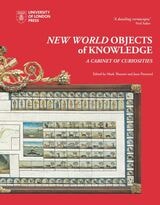
New World Objects of Knowledge
A Cabinet of CuriositiesEdited by Mark Thurner and Juan Pimentel
University of London Press, 2021
From the late fifteenth century to the present day, countless explorers, conquerors, and other agents of empire have laid siege to the New World, plundering and pilfering its most precious artifacts and treasures. Today, these natural and cultural products—which are key to conceptualizing a history of Latin America—are scattered in museums around the world.
With contributions from a renowned set of scholars, New World Objects of Knowledge delves into the hidden histories of forty of the New World’s most iconic artifacts, from the Inca mummy to Darwin’s hummingbirds. This volume is richly illustrated with photos and sketches from the archives and museums hosting these objects. Each artifact is accompanied by a comprehensive essay covering its dynamic, often global, history and itinerary. This volume will be an indispensable catalog of New World objects and how they have helped shape our modern world.
New World Orderings
China and the Global SouthLisa Rofel and Carlos Rojas, editors
Duke University Press, 2022
Contributors. Andrea Bachner, Luciano Damián Bolinaga, Nellie Chu, Rachel Cypher, Mingwei Huang, T. Tu Huynh, Yu-lin Lee, Ng Kim Chew, Lisa Rofel, Carlos Rojas, Shuang Shen, Derek Sheridan, Nicolai Volland
New World, Known World
Shaping Knowledge in Early Anglo-American WritingDavid Read
University of Missouri Press, 2005
New York City Politics
Governing GothamBerg, Bruce F
Rutgers University Press, 2018
New York City Politics focuses on the impact of these three forces on the governance of New York City’s political system including the need to promote democratic accountability, service delivery equity, as well as the maintenance of civil harmony. This second edition updates the discussion with examples from the Bloomberg and de Blasio administrations as well as current public policy issues including infrastructure, housing and homelessness, land use regulations, and education.
New York Recentered
Building the Metropolis from the ShoreKara Murphy Schlichting
University of Chicago Press, 2019
The history of New York City’s urban development often centers on titanic municipal figures like Robert Moses and on prominent inner Manhattan sites like Central Park. New York Recentered boldly shifts the focus to the city’s geographic edges—the coastlines and waterways—and to the small-time unelected locals who quietly shaped the modern city. Kara Murphy Schlichting details how the vernacular planning done by small businessmen and real estate operators, performed independently of large scale governmental efforts, refigured marginal locales like Flushing Meadows and the shores of Long Island Sound and the East River in the late nineteenth and early twentieth centuries. The result is a synthesis of planning history, environmental history, and urban history that recasts the story of New York as we know it.
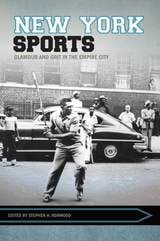
New York Sports
Glamour and Grit in the Empire CityStephen Norwood
University of Arkansas Press, 2018
New York has long been both America’s leading cultural center and its sports capital, with far more championship teams, intracity World Series, and major prizefights than any other city. Pro football’s “Greatest Game Ever Played” took place in New York, along with what was arguably history’s most significant boxing match, the 1938 title bout between Joe Louis and Max Schmeling. As the nation’s most crowded city, basketball proved to be an ideal sport, and for many years it was the site of the country’s most prestigious college basketball tournament. New York boasts storied stadiums, arenas, and gymnasiums and is the home of one of the world’s two leading marathons as well as the Belmont Stakes, the third event in horse racing’s Triple Crown.
New York sportswriters also wield national influence and have done much to connect sports to larger social and cultural issues, and the vitality and distinctiveness of New York’s street games, its ethnic institutions, and its sports-centered restaurants and drinking establishments all contribute to the city’s uniqueness.
New York Sports collects the work of fourteen leading sport historians, providing new insight into the social and cultural history of America’s major metropolis and of the United States. These writers address the topics of changing conceptions of manhood and violence, leisure and social class, urban night life and entertainment, women and athletics, ethnicity and assimilation, and more.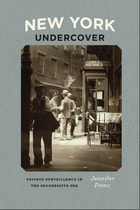
New York Undercover
Private Surveillance in the Progressive EraJennifer Fronc
University of Chicago Press, 2009
To combat behavior they viewed as sexually promiscuous, politically undesirable, or downright criminal, social activists in Progressive-era New York employed private investigators to uncover the roots of society’s problems. New York Undercover follows these investigators—often journalists or social workers with no training in surveillance—on their information-gathering visits to gambling parlors, brothels, and meetings of criminal gangs and radical political organizations.
Drawing on the hundreds of detailed reports that resulted from these missions, Jennifer Fronc reconstructs the process by which organizations like the National Civic Federation and the Committee of Fourteen generated the knowledge they needed to change urban conditions. This information, Fronc demonstrates, eventually empowered government regulators in the Progressive era and beyond, strengthening a federal state that grew increasingly repressive in the interest of pursuing a national security agenda. Revealing the central role of undercover investigation in both social change and the constitution of political authority, New York Undercover narrates previously untold chapters in the history of vice and the emergence of the modern surveillance state.
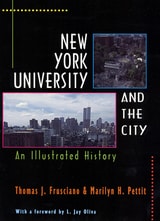
New York University and the City
An Illustrated HistoryFrusciano, Thomas J
Rutgers University Press, 1997
In New York University and the City, Thomas J. Frusciano and Marilyn H. Pettit situate the history of a unique urban university within the context of the social, political, and economic history of New York City. The authors trace the movement northward on Manhattan Island of both university and city, from the commercial hustle and bustle around City Hall, where the first classes were held in 1832, to the rural environs of Greenwich Village, and ultimately even farther north in 1894 to the undergraduate extension on the "secluded hilltop" of University Heights in the Bronx.
Vividly illustrated with both historical and contemporary images, New York University and the City explores various themes in the history of higher education and how NYU responded to changes in urban demographics, curriculum demands, and physical space during critical periods in the city's development. The relationship between university and city is further examined through extensive biographical portraits of the many historical personalities who made contributions to the development of both city and university.
The founding of New York University in 1831 is a watershed in the history of higher education in the United States. Albert Gallatin, former secretary of the treasury, led a group that proposed the creation of an institution of higher learning in New York City that would "correspond with the spirit and wants of the age and country," a nondenominational institution that would enlarge the opportunities of education for those qualified and inclined. NYU was expected to educate not only gentlemen scholars but also the sons of the great commercial metropolis. It also reflected and symbolized the aspirations of the city. By 1931, NYU was the nation's largest private university. Frusciano and Pettit chronicle the university's growth and struggles to its ultimate position as one of the most prestigious academic research institutions in the world.
New York in Quotations
Compiled by Jaqueline Mitchell
Bodleian Library Publishing, 2014
New York, Chicago, Los Angeles
America’s Global CitiesJanet Abu-Lughod
University of Minnesota Press, 2001

New Zealand Cinema
Interpreting the PastEdited by Alistair Fox, Barry Keith Grant, and Hilary Radner
Intellect Books, 2011
New Zealand has produced one of the world’s most vibrant film cultures, a reflection of the country’s evolving history and the energy and resourcefulness of its people. From early silent features like The Te Kooti Trail to recent films such as River Queen, this book examines the role of the cinema of New Zealand in building a shared sense of national identity. The works of key directors, including Peter Jackson, Jane Campion, and Vincent Ward, are here introduced in a new light, and select films are given in-depth coverage. Among the most informative accounts of New Zealand’s fascinating national cinema, this will be a must for film scholars around the globe.
Newark's Little Italy
The Vanished First WardImmerso, Michael
Rutgers University Press, 1997
Newborn Socialist Things
Materiality in Maoist ChinaLaurence Coderre
Duke University Press, 2021