Results by title
1787 books match the query 'Literary Collections' and 58 start with o
OBERIU
An Anthology of Russian AbsurdismEugene Ostashevsky
Northwestern University Press, 2006
Some called it the last of the Russian avant-garde, and others called it the first (and last) instance of Absurdism in Russia. Though difficulty to pigeon-hole, OBERIU and the pleasures of its poetry and prose are, with this volume, at long last fully open to English-speaking readers. Skillfully translated to preserve the weird charm of the originals, these poems and prose pieces display all the hilarity and tragedy, the illogical action and puppetlike violence and eroticism, and the hallucinatory intensity that brought down the wrath of the Soviet censors. Today they offer an uncanny reflection of the distorted reality they reject.
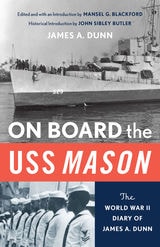
ON BOARD THE USS MASON
THE WORLD WAR II DIARY OF JAMES A. DUNNMANSEL G. BLACKFORD
The Ohio State University Press, 2016
Dunn kept a day-to-day diary during his spare time on board the Mason. Such diaries are a rarity, for the navy (and other armed services) forbade the keeping of diaries, fearful lest secret information fall into enemy hands. The diary chronicles the Mason’s wartime activities, from the first convoy to the final return to the United States. It captures the feeling and meaning of life on board with an immediacy not fully found in retrospective accounts. The diary accurately records the mortal danger Dunn and his shipmates were in while attacking enemy submarines or dealing with extreme weather conditions in the North Atlantic. It conveys the boredom the men encountered while confined on long, tedious convoys and the joy of shore leaves. Here is the daily life aboard ship—the duties and the pastimes that made shipboard life endurable.
Equally interesting, the diary reveals what it meant to be an African American in a white navy within a segregated American society, the shipboard tensions, and the shipboard cooperation and sense of unity. It also portrays the life of an African American onshore in the United States, Great Britain, and North Africa and the love story that unfolded between James and his wife, Jane.
Supplemented by additional sources, including interviews with Dunn, this diary is a personal view into an important part of American history. Like the Tuskegee airmen, the men of the USS Mason paved the way for desegregation in America’s armed forces, contributing to a civil rights movement that changed the face of a nation.
Obsession
Sestinas in the Twenty-First CenturyEdited by Carolyn Beard Whitlow and Marilyn Krysl
Dartmouth College Press, 2014

Octave Mirbeau
Two Plays: "Business is Business" and "Charity"Translated and Adapted by Richard J. Hand
Intellect Books, 2012
Octave Mirbeau was one of the most prolific literary figures of France’s storied Belle Époque, and his innovative theatrical works are only recently being rediscovered and appreciated by modern audiences. Here for the first time in English-language translation are his two most celebrated and successful plays: Business is Business, a classical comedy of manners recalling Molière; and Charity, a satirical comedy centered around the exploitation of adolescents in a dubious charity home. In addition to the play texts, this volume also includes an introduction contextualizing the works and the translation and adaptation process.
Odes and Epodes
Horace
University of Chicago Press, 1960
In 23 B.C., when he published the first three books of his lyrics, Horace was 42 years old, secure in the favor of the emperor Augustus, and living in ease and comfort as a country gentleman on his Sabine farm. Serenity is reflected in these lyrics, certainly, but so are other experiences, for Horace had lived through three major political crises in a society that was the center of the world, that was sophisticated, refined—and beginning to decay. A worldly, high-spirited, cultivated man, Horace responds in his poetry to the myriad elements of Roman life he knew so well.
The Odes and Epodes of Horace collects the entirety of his lyric poetry, comprising all 103 odes, the Carmen Saeculare ("Festival Hymn"), and the earlier epodes. Joseph P. Clancy has achieved a mirroring of the originals that is worthy in its own right as English verse, and his introductions to each book of lyrics are both lively and informed.
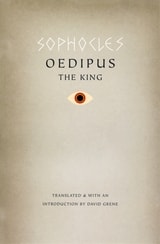
Oedipus the King
Sophocles
University of Chicago Press, 2010
Available for the first time as an independent work, David Grene’s legendary translation of Oedipus the King renders Sophocles’ Greek into cogent, vivid, and poetic English for a new generation to savor. Over the years, Grene and Lattimore’s Complete Greek Tragedies have been the preferred choice of millions of readers—for personal libraries, individual study, and classroom use. This new, stand-alone edition of Sophocles’ searing tale of jealousy, rage, and revenge will continue the tradition of the University of Chicago Press’s classic series.
Praise for David Grene and Richmond Lattimore’s Complete Greek Tragedies
“This is it. No qualifications. Go out and buy it everybody.”—Kenneth Rexroth, Nation
“The translations deliberately avoid the highly wrought and affectedly poetic; their idiom is contemporary. . . . They have life and speed and suppleness of phrase.”—Times Education Supplement
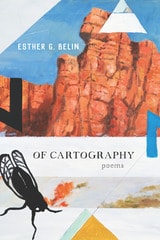
Of Cartography
PoemsEsther G. Belin
University of Arizona Press, 2017
In this long-anticipated collection, Belin daringly maps the poetics of womanhood, the body, institution, family, and love. Depicting the personal and the political, Of Cartography is an exploration of identity through language. With poems ranging from prose to typographic and linguistic illustrations, this distinctive collection pushes the boundaries of traditional poetic form.
Marking territory and position according to the Diné cardinal points, Of Cartography demands much from the reader, gives meaning to abstraction, and demonstrates the challenges of identity politics.
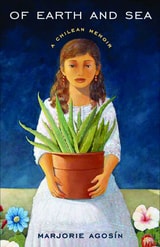
Of Earth and Sea
A Chilean MemoirMarjorie Agosín
University of Arizona Press, 2008
This collection of prose vignettes and free verse draws upon her experiences as a child in Chile, an expatriate abroad, and a minority Jew—even in the land she calls home—to create a striking portrait of a life of exile. The tone of the book varies as it lyrically explores the geography of Chile and weaves into it the themes of exile and oppression. At times the words become hymns to the physical beauty of her country, evoking the grandeur of this land extending to the southernmost tip of the world. At times they are intimate and melancholy, exploring personal and familial history through miniature portraits that reveal the pain of being different. Finally the tone becomes angry as she denounces the injustices committed against her friends and against the families of the disappeared during the seventeen-year dictatorship of Augusto Pinochet.
Combining themes of memory, childhood, minority issues, Judaism, and political oppression, this collection contains some of Agosín’s strongest work. Of Earth and Sea is a poetic autobiography that explores the world of Chile with eyes that see both despair and hope.
Of Forgotten Times
Marisela Rizik
Northwestern University Press, 2003
Of Interest to the General Public
About a Coronation Cloak from EthiopiaMaaza Mengiste
Diaphanes, 2026
The work of Maaza Mengiste draws from voices and stories that have been excluded, from gaps that seem inexplicable, from images, objects, and places that pulse with pasts unresolved. While exploring the African collections at the Ethnological Museum of Berlin, she was struck by an elaborate coronation cloak from Ethiopia on display. Inspired by the history of the 1868 British Expedition to Abyssinia (now Ethiopia) and the burning of the palace fortress at Magdala, Of Interest to the General Public uses photography and words to reimagine the journey of the royal mantle—out of battle, through fire, over mountains, to cross the waters into Berlin.
Ojo en Celo / Eye in Heat
PoemsMargarita Pintado Burgos; Translated by Alejandra Quintana Arocho
University of Arizona Press, 2024
Aflame with desire, the eye conjures, dreams, invents itself, sees what it wants. The eye sees what it is able to see.
Ojo en celo / Eye in Heat brings into sharp relief the limits of our gaze. It shows us what it is to escape the mirror and move beyond mirages. Margarita Pintado Burgos invites us to ponder the impasse while showing us ways to see better, to break the habit of lying, and to confront images along with language.
With devastating clarity, Pintado Burgos’s poems, presented in both Spanish and English, give voice to the world within and beyond sight: the plants, the trees, the birds, the ocean waves, the fruit forgotten in the kitchen, the house’s furniture. Light takes on new dimensions to expose, manipulate, destroy, and nourish. Alejandra Quintana Arocho’s sensitive English translation renders the stark force of these poems without smoothing over the language of the original.
This collection is for anyone who has felt the weight of beauty that remains hidden. It is for those who have left behind a mother, a father, a country. It is for those who know that there is no way out of the poem, for those who have had to live off a house of words and need that house to be as real as possible. Pintado Burgos writes as a woman, exile, daughter, sister, lover, and artist empowered by the restorative potential of the creative phenomenon.
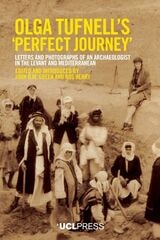
Olga Tufnell's “Perfect Journey”
Letters and Photographs of an Archaeologist in the Levant and MediterraneanEdited by John D.M. Green and Henry Ros
University College London, 2021
Olga Tufnell was a British archaeologist working in Egypt, Cyprus, and Palestine in the 1920s and 1930s—a period often described as a golden age of archaeological discovery. For the first time, this book presents Tufnell’s account of her experiences in her own words. Based largely on letters, the text is accompanied by dozens of photographs that shed light on her personal experiences of travel and dig life at this extraordinary time. Introductory material by John D.M. Green and Ros Henry provides the social, historical, biographical, and archaeological context, as the letters offer new insights into the social and professional networks and history of archaeological research in Palestine under the British Mandate. They provide insights into the role of foreign archaeologists, relationships with local workers and inhabitants, and the colonial framework within which they operated during turbulent times. This book will be an important resource for those studying the history of archaeology in the Eastern Mediterranean, particularly for the sites of Qau el-Kebir, Tell Fara, Tell el-‘Ajjul and Tell ed-Duweir (ancient Lachish). Moreover, Tufnell’s lively style makes this a fascinating personal account of archaeology and travel in the interwar era.

On Becoming Filipino
Selected Writings of Carlos BulosanE. San Juan
Temple University Press, 1995
On Benefits
Lucius Annaeus Seneca
University of Chicago Press, 2011
Lucius Annaeus Seneca (4 BCE–65 CE) was a Roman Stoic philosopher, dramatist, statesman, and advisor to the emperor Nero, all during the Silver Age of Latin literature. The Complete Works of Lucius Annaeus Seneca is a fresh and compelling series of new English-language translations of his works in seven accessible volumes. Edited by world-renowned classicists Elizabeth Asmis, Shadi Bartsch, and Martha C. Nussbaum, this engaging collection restores Seneca—whose works have been highly praised by modern authors from Desiderius Erasmus to Ralph Waldo Emerson—to his rightful place among the classical writers most widely studied in the humanities.
On Benefits, written between 56 and 64 CE, is a treatise addressed to Seneca’s close friend Aebutius Liberalis. The longest of Seneca’s works dealing with a single subject—how to give and receive benefits and how to express gratitude appropriately—On Benefits is the only complete work on what we now call “gift exchange” to survive from antiquity. Benefits were of great personal significance to Seneca, who remarked in one of his later letters that philosophy teaches, above all else, to owe and repay benefits well.
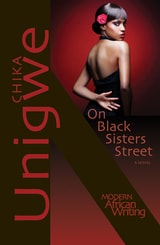
On Black Sisters Street
A NovelChika Unigwe
Ohio University Press, 2012

On Emerson
The Best from American LiteratureEdwin H. Cady and Louis J. Budd, eds.
Duke University Press, 1988
Presented in order of their first appearance, the articles in each volume constitute a revealing record of developing insights and important shifts of critical emphasis. Each article has opened a fresh line of inquiry, established a fresh perspective on a familiar topic, or settled a question that engaged the interest of experts.
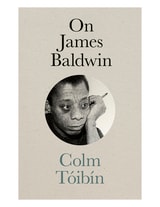
On James Baldwin
Colm Tóibín
Brandeis University Press, 2024
Acclaimed Irish novelist Colm Tóibín first read James Baldwin just after turning eighteen. He had completed his first year at an Irish university and was struggling to free himself from a religious upbringing. He had even considered entering a seminary and was searching for literature that would offer illumination and insight. Inspired by the novel Go Tell It on the Mountain, Tóibín found a writer who would be a lifelong companion and exemplar.
From On James Baldwin
Baldwin was interested in the hidden and dramatic areas in his own being, and was prepared as a writer to explore difficult truths about his own private life. In his fiction, he had to battle for the right of his protagonists to choose or influence their destinies. He knew about guilt and rage and bitter privacies in a way that few of his White novelist contemporaries did. And this was not simply because he was Black and homosexual; the difference arose from the very nature of his talent, from the texture of his sensibility. “All art,” he wrote, “is a kind of confession, more or less oblique. All artists, if they are to survive, are forced, at last, to tell the whole story, to vomit the anguish up.”
On James Baldwin is a magnificent contemporary author’s tribute to one of his most consequential literary progenitors.
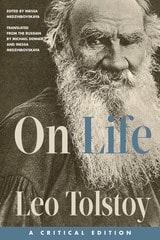
On Life
A Critical EditionLeo Tolstoy, Edited by Inessa Medzhibovskaya, Translated from the Russian by Michael Denner and Inessa Medzhibovskaya
Northwestern University Press, 2018
After its completion, On Life was suppressed by the tsars, attacked by the hierarchs of the Russian Orthodox Church, and then censored by the Stalinist regime. This critical edition is the first accurate translation of this unsung classic of Russian thought into English, based on a study of manuscript pages of Tolstoy's drafts, and the first scholarly edition of this work in any language. It includes a detailed introduction and annotations, as well as historical material, such as early drafts, documents related to the presentation of an early version at the Moscow Psychological Society, and responses to the work by philosophers, religious leaders, journalists, and ordinary readers of Tolstoy's day.
On Metaphor
Edited by Sheldon Sacks
University of Chicago Press, 1979
Because of its comprehensive scope, the volume is useful both as a resource for those interested in contemporary philosophy and theories of language and as a text for courses in such areas as the philosophy of language, critical theory, and the philosophy of knowledge. Originally published as a special issue of Critical Inquiry, the present collection includes two new contributions by Max Black and Nelson Goodman, along with a comprehensive index to the work.
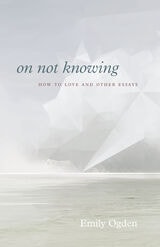
On Not Knowing
How to Love and Other EssaysEmily Ogden
University of Chicago Press, 2022
Moments of clarity are rare and fleeting; how can we become comfortable outside of them, in the more general condition of uncertainty within which we make our lives? Written by English professor Emily Ogden while her children were small, On Not Knowing forays into this rich, ambivalent space. Each of her sharply observed essays invites the reader to think with her about questions she can’t set aside: not knowing how to give birth, to listen, to hold it together, to love.
Unapologetically capacious in her range of reference and idiosyncratic in the canon she draws on, Ogden moves nimbly among the registers of experience, from the operation of a breast pump to the art of herding cattle; from one-night stands to the stories of Edgar Allan Poe; from kayaking near a whale to a psychoanalytic meditation on drowning. Committed to the accumulation of knowledge, Ogden nonetheless finds that knowingness for her can be a way of getting stuck, a way of not really living. Rather than the defensiveness of willful ignorance, On Not Knowing celebrates the defenselessness of not knowing yet—possibly of not knowing ever. Ultimately, this book shows how resisting the temptation of knowingness and embracing the position of not knowing becomes a form of love.
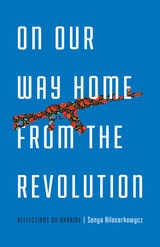
On Our Way Home from the Revolution
Reflections on UkraineSonya Bilocerkowycz
The Ohio State University Press, 2019
In 2014 Sonya Bilocerkowycz is a tourist at a deadly revolution. At first she is enamored with the Ukrainians’ idealism, which reminds her of her own patriotic family. But when the romantic revolution melts into a war with Russia, she becomes disillusioned, prompting a return home to the US and the diaspora community that raised her. As the daughter of a man who studies Ukrainian dissidents for a living, the granddaughter of war refugees, and the great-granddaughter of a gulag victim, Bilocerkowycz has inherited a legacy of political oppression. But what does it mean when she discovers a missing page from her family’s survival story—one that raises questions about her own guilt?
In these linked essays, Bilocerkowycz invites readers to meet a swirling cast of post-Soviet characters, including a Russian intelligence officer who finds Osama bin Laden a few weeks after 9/11; a Ukrainian poet whose nose gets broken by Russian separatists; and a long-lost relative who drives a bus into the heart of Chernobyl. On Our Way Home from the Revolution muddles our easy distinctions between innocence and culpability, agency and fate.
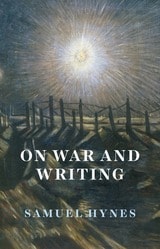
On War and Writing
Samuel Hynes
University of Chicago Press, 2018
Samuel Hynes knows war personally: he served as a Marine Corps pilot in the Pacific Theater during World War II, receiving the Distinguished Flying Cross. He has spent his life balancing two careers: pilot and professor of literature. Hynes has written a number of major works of literary criticism, as well as a war-memoir, Flights of Passage, and several books about the World Wars. His writing is sharp, lucid, and has provided some of the most expert, detailed, and empathetic accounts of a disappearing generation of fighters and writers.
On War and Writing offers for the first time a selection of Hynes’s essays and introductions that explore the traditions of war writing from the twentieth century to the present. Hynes takes as a given that war itself—the battlefield uproar of actual combat—is unimaginable for those who weren’t there, yet we have never been able to turn away from it. We want to know what war is really like: for a soldier on the Somme; a submariner in the Pacific; a bomber pilot over Germany; a tank commander in the Libyan desert. To learn, we turn again and again to the memories of those who were there, and to the imaginations of those who weren’t, but are poets, or filmmakers, or painters, who give us a sense of these experiences that we can’t possibly know.
The essays in this book range from the personal (Hynes’s experience working with documentary master Ken Burns, his recollections of his own days as a combat pilot) to the critical (explorations of the works of writers and artists such as Thomas Hardy, E. E. Cummings, and Cecil Day-Lewis). What we ultimately see in On War and Writing is not military history, not the plans of generals, but the feelings of war, as young men expressed them in journals and poems, and old men remembered them in later years—men like Samuel Hynes.
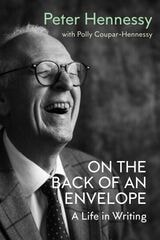
On the Back of an Envelope
A Life in WritingPeter Hennessy
Haus Publishing, 2025
As one of Britain’s foremost constitutional experts and contemporary historians, Peter Hennessy has spent his professional life unpicking the arcane world of Whitehall and Westminster. He began his career as a journalist for the Times, the Economist, and the Financial Times, developing a network of insider contacts who helped him shine a light on some of the dustiest corners of the British establishment. As a journalist, prize-winning contemporary historian, and political commentator, he has chronicled the workings of the British state with wit, affection, and a healthy sense of the absurd over a five-decade career. Now a crossbench peer, he has, in his own words, “moved in with his exhibits.” Hennessy is also a stalwart of BBC election night coverage and a regular commentator on BBC Radio 4, bringing a historical and constitutional perspective on current events.
In this new volume, he brings together selected journalism, unpublished lectures, and new writing alongside personal recollections and reflections on his time observing postwar Britain, how it is governed, and those who do the governing. He reflects on the making and unmaking of prime ministers from Attlee to Truss, life in the House of Lords, and the changing constitutional landscape in the wake of Brexit and amid uncertainty about the future of the Union. Interspersed with lectures, journalism, and new pieces, Hennessy also looks back at a fascinating career, reflecting on his own experiences as a young green graduate navigating the hard-nosed world of Fleet Street in the 1970s, bringing to life a cast of characters from a world now largely gone. He revisits his time as a public historian, academic, and crossbench peer with a levity reflected in his belief that history is “gossip with footnotes.”
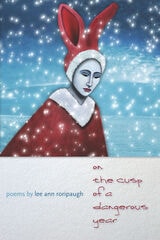
On the Cusp of a Dangerous Year
Lee Ann Roripaugh
Southern Illinois University Press, 2009
Lady Murasaki wrote in The Tale of Genji that thirty-seven is “a dangerous year” for women. Evoking the styles of Murasaki and other women writers of the Heian-period Japanese court, Lee Ann Roripaugh presents a collection of confessional poems charting the course of that perilous year. Roripaugh, in both an homage to and a dialogue with women writers of the past, explores the trials of women facing the treacherous waters of time while losing none of the grace and decadence of femininity. Often calling upon the passing of the seasons and revelations of nature, these lyrically elegant poems chronicle the dangers and delights of a range of issues facing contemporary women—from bisexuality and biracial culture and identity, to restless nights and lingering memories of the past. The pleasures of the senses collide with parallels of time and the natural world; tangible solitude lies down beside wistful memories of relationships gone by. What is ultimately revealed is both heartbreaking and illuminating. At once provocative, humorous, and bittersweet, On the Cusp of a Dangerous Year is a pillow book for the twenty-first century, providing a candid and whimsical look into the often tumultuous universe of the modern woman.
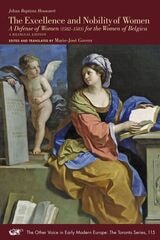
On the Excellence and Nobility of Women
A Defense of Women (1582–1583) for the Women of Belgica. A Bilingual EditionJehan Baptista Houwaert
Iter Press, 2025
Jehan Baptista Houwaert’s Excellence and Nobility of Women constitutes the eighth book of his Plain of the Nine Muses, or The Pleasure Garden of Virtuous Women (1582–1583), an immense conduct book for women in rhymed verse based on the many querelle texts of the French and Burgundian tradition but especially, in its French translation, on the pathbreaking Declamation on the Nobility and Preeminence of the Female Sex (1529) by Henricus Cornelius Agrippa von Nettesheim.
Like its model, Houwaert’s work asserts not merely the equality but the superiority of women. It is unique in that it is addressed not to a wealthy noblewoman or princess, as were most such defenses, but more democratically to the “girls, unmarried women, wives, and widows of Belgica”—all of them!
On the Run
Finding the Trail HomeCatherine Doucette
Oregon State University Press, 2021
For over a decade, Doucette chased winter around the world to ski, from the White Mountains of her native New Hampshire to the slopes of Alaska, British Columbia, California, Argentina, Switzerland, and beyond. But she always kept one eye toward living a more settled life and putting her heart on the line if someone would just ask her to. Like other women who choose or yearn to be in the wilderness, she wrestled to reconcile her outdoor ambitions with society’s expectations of women.
The personal essays collected in On the Run touch on the author’s origins in New Hampshire while focusing on the lure of big mountains in the West. They celebrate the comfort, challenge, and community found in expanses of wilderness while confronting the limitations and sacrifices that come with a transient, outdoor lifestyle. In a voice both searching and deeply grounded, Doucette contends with avalanches and whitewater along with the less dramatic but equally important questions of belonging. Anyone who has searched to define home, who has been called by mountains, or by movement, will feel at home in these pages.
On the Shoreline of Knowledge
Irish WanderingsChris Arthur
University of Iowa Press, 2012
Bringing a diverse range of material into play, from fifteenth-century Japanese Zen Buddhism to how we look at paintings, and from the nature of a briefcase to the ancient nest-sites of gyrfalcons, Chris Arthur reveals the extraordinary dimensions woven invisibly into the ordinary things around us. Compared to Loren Eiseley, George Eliot, Seamus Heaney, Aldo Leopold, V. S. Naipaul, W. G. Sebald, W. B. Yeats, and other literary luminaries, he is a master essayist whose work has quietly been gathering an impressive cargo of critical acclaim. Arthur speaks with an Irish accent, rooting the book in his own unique vision of the world, but he addresses elemental issues of life and death, love and loss, that circle the world and entwine us all.
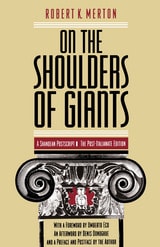
On the Shoulders of Giants
The Post-Italianate EditionRobert K. Merton
University of Chicago Press, 1993
"This book is the delightful apotheosis of donmanship: Merton parodies scholarliness while being faultlessly scholarly; he scourges pedantry while brandishing his own abstruse learning on every page. The most recondite and obscure scholarly squabbles are transmuted into the material of comedy as the ostensible subject is shouldered to one side by yet another hobby horse from Merton's densely populated stable. He has created a jeu d'esprit which is profoundly suggestive both in detail and as a whole."—Sean French, Times Literary Supplement
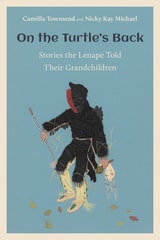
On the Turtle's Back
Stories the Lenape Told Their GrandchildrenCamilla Townsend
Rutgers University Press, 2023
The Lenape tribe, also known as the Delaware Nation, lived for centuries on the land that English colonists later called New Jersey. But once America gained its independence, they were forced to move further west: to Indiana, then Missouri, and finally to the territory that became Oklahoma. These reluctant migrants were not able to carry much from their ancestral homeland, but they managed to preserve the stories that had been passed down for generations.
On the Turtle’s Back is the first collection of Lenape folklore, originally compiled by anthropologist M. R. Harrington over a century ago but never published until now. In it, the Delaware share their cherished tales about the world’s creation, epic heroes, and ordinary human foibles. It features stories told to Harrington by two Lenape couples, Julius and Minnie Fouts and Charles and Susan Elkhair, who sought to officially record their legends before their language and cultural traditions died out. More recent interviews with Lenape elders are also included, as their reflections on hearing these stories as children speak to the status of the tribe and its culture today. Together, they welcome you into their rich and wondrous imaginative world.
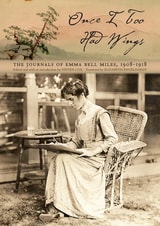
Once I Too Had Wings
The Journals of Emma Bell Miles, 1908–1918Emma Bell Miles
Ohio University Press, 2014
Emma Bell Miles (1879–1919) was a gifted writer, poet, naturalist, and artist with a keen perspective on Appalachian life and culture. She and her husband Frank lived on Walden’s Ridge in southeast Tennessee, where they struggled to raise a family in the difficult mountain environment. Between 1908 and 1918, Miles kept a series of journals in which she recorded in beautiful and haunting prose the natural wonders and local customs of Walden’s Ridge. Jobs were scarce, however, and as the family’s financial situation deteriorated, Miles began to sell literary works and paintings to make ends meet. Her short stories appeared in national magazines such as Harper’s Monthly and Lippincott’s, and in 1905 she published Spirit of the Mountains, a nonfiction book about southern Appalachia. After the death of her three-year-old son from scarlet fever in 1913, the journals took a more somber turn as Miles documented the difficulties of mountain life, the plight of women in rural communities, the effect of disparities of class and wealth, and her own struggle with tuberculosis.
Previously examined only by a handful of scholars, the journals contain both poignant and incisive accounts of nature and a woman’s perspective on love and marriage, death customs, child raising, medical care, and subsistence on the land in southern Appalachia in the early twentieth century. With a foreword by Elizabeth S. D. Engelhardt, this edited selection of Emma Bell Miles’s journals is illustrated with examples of her painting.
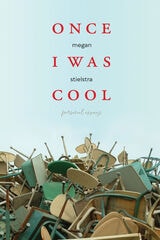
Once I Was Cool
Personal EssaysMegan Stielstra
Northwestern University Press, 2021
With conversational flourishes and on-the-mark descriptions, Stielstra’s essays evoke the richness of her everyday life and the memories that are never far away. She remembers learning how to shoot a gun, a cancer scare, and—in a piece that was anthologized in The Best American Essays 2013—the time she eavesdropped on another new mother using her son’s baby monitor. “I shouldn’t have listened,” she writes. “But it was the first time since my son was born that I didn’t feel alone.” Combining footnotes, electric sentences, and uproariously funny anecdotes (have you ever run into an ex while rolling on ecstasy?), Stielstra shows us that maturity is demanding, but its rewards are a gift.
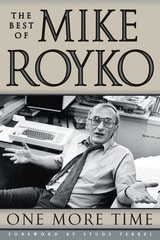
One More Time
The Best of Mike RoykoMike Royko
University of Chicago Press, 1999
"A treasure trove lies between these covers. Royko was in a class by himself. He was a true original."—Ann Landers
"The joy of One More Time is Royko in his own words."—Mary Eileen O'Connell, New York Times Book Review
"Reading a collection of Royko's columns is even more of a pleasure than encountering them one by one, and that is a large remark for he rarely wrote a piece that failed to wake you up with his hard-earned moral wit. Three cheers for Royko!"—Norman Mailer
"Powerful, punchy, amazingly contemporary."—Neil A. Grauer, Cleveland Plain Dealer
"This crackling collection of his own favorite columns as well as those beloved by his fans reminds us just how much we miss the gruff, compassionate voice of Mike Royko."—Jane Sumner, Dallas Morning News
"A marvelous road map through four decades of America."—Elizabeth Taylor, Chicago Tribune Books
"Royko was an expert at finding universal truths in parochial situations, as well as in the larger issues—war and peace, justice and injustice, wealth and poverty—he examined. Think of One More Time as one man's pungent commentary on life in these United States over the last few decades."—Booklist
"Royko was one of the most respected and admired people in the business, by readers and colleagues alike. . . . Savor [his sketches] while you can."—Jonathan Yardley, Washington Post Book World
"Book collections of columns aren't presumed to be worth reading. This one is, whether or not you care about newspapering or Chicago."—Neil Morgan, San Diego Union-Tribune
"A treasure house for journalism students, for would-be writers, for students of writing styles, for people who just like to laugh at the absurdity of the human condition or, as Studs Terkel said, for those who will later seek to learn what it was really like in the 20th century."—Georgie Anne Geyer, Washington Times
"Full of astonishments, and the greatest of these is Royko's technical mastery as a writer."—Hendrik Hertzberg, New Yorker
"A great tribute to an American original, a contrarian blessed with a sense of irony and a way with words."—Bob Minzesheimer, USA Today
"In this posthumous collection of his columns, journalist Royko displays the breezy wit that made him so beloved in the Windy City."—People
One Story, Thirty Stories
An Anthology of Contemporary Afghan American LiteratureZohra Saed
University of Arkansas Press, 2010
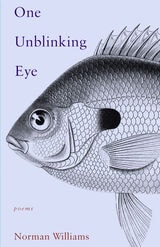
One Unblinking Eye
PoemsNorman Williams
Ohio University Press, 2003
The poems in One Unblinking Eye cast a steady and serious gaze at life outside the beltways. Whether testifying at a prayer meeting in Indiana, tramping the backwoods of northern New England, or working on an oil derrick in the Gulf, the inhabitants of these poems live on the margins of society. “They are the left-behind, odd-manneredones/Who speak in starts,” Norman Williams writes of the last residents of a West Virginia mining town. Describing the woods of central Maine, he speaks of “lives … scraped from sides/Of deer and garden plots; where double-wides,/On concrete pads abut a hard-pan road.”
It is the art of these poems to convince the reader that these lives matter. There is desperation here, and madness, but there is an equal measure of determination and faith. In one poem, Mr. Williams writes of a fisherman haunted by his daughter’s death, who “casts his line/In hopes a flash and strike will draw him back.” These words describe the poet’s method as well. The work in this collection is built on a supple metrical foundation; it is filled with glancing rhymes and wordplay; and it is touched off by striking images. It is, in other words, composed with care, and it richly rewards a careful reading.
Norman Williams writes in Burlington, Vermont, where he works as an attorney. His first book, The Unlovely Child, was published by Alfred A. Knopf to enthusiastic reviews. Anthony Hecht wrote that “the voice of these poems is marvelously modulated, low-key in its acceptances, modest in its exultations, steady and unintoxicated in its long vision. It is my fixed conviction that with his first book he has fashioned a landmark in our literature, and sounded a uniquely American note with beautiful certainty.”
With his second book, more than fifteen years in the making, Norman Williams reafirms the truth of that assessment.
Opera, Sex and Other Vital Matters
Paul Robinson
University of Chicago Press, 2002
The essays on opera gathered here explore how masterpieces like Fidelio and The Magic Flute reflect the intellectual currents of their day. Be it the work of Verdi or Mozart, Wagner or Strauss, Robinson compels us to search for meaning not just in the lyrics of opera but also in the music. In melody, not libretto, we are more likely to discern key historical complexities and appreciate the way opera transcends language and time. The essays on sexuality, meanwhile, are ruminative, funny, and even moving. At one moment, Robinson measures whether homosexuality is the result of destiny or free choice. In another, he shares a touching exchange of letters with a gay student in the process of coming out. The final essays that encompass "other vital matters" find Robinson at his most incisive. Whether defending Freud as the most influential thinker of the twentieth century, attacking the dreaded use of semicolons, reflecting on his own mortality, or even meditating on the nature of cats, Sex, Opera, and Other Vital Matters is an eclectic work that will appeal to any reader interested in the continuing relevance of ideas to life.
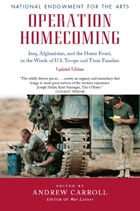
Operation Homecoming
Iraq, Afghanistan, and the Home Front, in the Words of U.S. Troops and Their Families, Updated Editionedited by Andrew Carroll
University of Chicago Press, 2008
“One of the chanted mantras of our time is, ‘But I support the troops.’ Terrific. Now read Operation Homecoming to find out who they are, what they think, feel, want, have learned, won and lost in Iraq and Afghanistan.”—Daniel Henninger, Wall Street Journal
“This anthology is the honest voice of war. . . . In the end, they are all one voice, a voice we must hear, and must not forget.”—Jeff Shaara
“These voices are stirring, chilling, and unforgettable.”—Bobbie Ann Mason
“[Captures] what journalists cannot, no matter how close they get—firsthand accounts from the warriors and the families they leave behind.”—Chicago Tribune
Opposing Poetries
Part One: Issues and InstitutionsHank Lazer
Northwestern University Press, 1996
Volume One examines the shift in the governing assumptions of contemporary poetic practice. Lazer inspects the key critical works addressing poetries in the 1980s and 1990s, as well as the political and aesthetic impact of modern critics, poetry reading programs, and of the publishing industry and libraries on contemporary poetic practice.
Opposing Poetries
Part Two: ReadingsHank Lazer
Northwestern University Press, 1996
In Volume Two, Lazer presents a series of sustained readings of important experimental texts. Included are the poets Susan Howe, Lyn Hejinian, Bruce Andrews, and James Sherry. Lazer places these poets in the context of contemporary literary theory, and inspects both the successes and failures of said theory to interpret these works.
Ordinary Language Criticism
Literary Thinking after Cavell after WittgensteinKenneth Dauber and Walter Jost
Northwestern University Press, 2003
Resisting master formulations and overarching theories, Ordinary Language Criticism does not so much dismiss the excitement of the last two decades of literary theorizing as it reminds us of the excitement of the shared common enterprises to which theory may still contribute. In this, the volume and the model it offers have wide implications for the academy, in which a widespread ersatz-sophistication has shorted the circuit between literary works and the real lives of those reading and teaching them.
With a definitive introduction by editors Kenneth Dauber and Walter Jost, and elaborations and practical examples by major figures such as Cavell himself, Martha Nussbaum, Marjorie Perloff, Anthony Cascardi, and Charles Altieri, among others, this volume clearly shows and explains how ordinary language criticism differs from current trends and what it exactly it can accomplish in theory and practice. These essays prove that by attending more faithfully to what we actually do when we read, we can make reading more productive--can reveal how extraordinary and rich, how really sophisticated, the ordinary actually is.
Original Stories from Real Life
With Conversations Calculated to Regulate the Affections, and Form the Mind to Truth and GoodnessMary Wollstonecraft. Edited by Valerie Hotchkiss. Illustrated by William Blake. Introduction by Eileen Hunt Botting.
University of Illinois Press, 2016
This beautiful facsimile of the 1791 edition includes the original illustrations by William Blake. A commentary by Eileen Hunt Botting puts the text in context and hints at influences on Wollstonecraft's daughter Mary Shelley and the pedagogical philosophy behind Shelley's novel Frankenstein.
Like all volumes in the Women in Print series, Original Stories from Real Life is provided as an open access book and downloads to a wide variety of platforms and online e-readers.
Orphan Girl
A Transaction, or an Account of the Entire Life of an Orphan Girl by way of Plaintful Threnodies in the Year 1685. The Aesop EpisodeAnna Stanislawska
Iter Press, 2016
Barry Keane's idiomatic and inventive verse translation brings to life this half-forgotten poetic account of a remarkable tale of triumph in the face of overwhelming oppression and allows Anna Stanislawska to take her place among the women poets of early modern Europe.
Orphan Girl
The Olesnicki Episode: One Body with Two Souls Entwined: An Epic Tale of Married Love in Seventeenth-Century PolandAnna Stanislawska
Iter Press, 2021
Written in 1685, Transaction or the Description of the Entire Life of an Orphan by Way of Plaintful Threnodies, often referred to as Orphan Girl, is a valuable, long-lost, seventeenth-century poetic text that documents women’s writing in the early modern period. In this autobiographical account, Anna Stanislawska speaks confessionally and unsparingly about her life, from her infancy to her widowhood and withdrawal from the world. Stanislawska was an incomparable memoirist, revealing the depths of her private life in a manner not to be matched until modern times. One Body with Two Souls Entwined brings together this spirited poetic account with an in-depth introductory and literary commentary by Barry Keane. Together the book offers a remarkable piece of scholarly, translational, and dramaturgical work and puts it in context amid the backdrop of Polish history.
Osip Mandelstam
Selected EssaysTranslated by Sidney Monas
University of Texas Press, 1977
Osip Mandelstam, who died anonymously in a Siberian transit-camp in 1938, is now generally considered to be among the four or five greatest Russian poets of the twentieth century. The essays in this volume, presented in an exceptionally scrupulous and true translation, were selected because they represent Mandelstam's major poetic themes and his thought on literature, language and culture, and the work and place of the poet. Mandelstam's views on literature are profound and original, and they are expressed in striking and dramatic, if sometimes difficult, prose. These essays deal with such topics as the poetic process and the relationship of poetry to politics, culture, the traditions of the past, and the demands of the present.
Sidney Monas's lively introduction to the work and life of Mandelstam combines the virtues of both the critical essay and detached scholarship. Keeping biographical detail to a minimum, Monas concentrates on the pattern that runs through the essays and lends them that coherence often noted in Mandelstam's poetry.
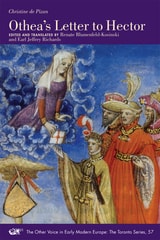
Othea’s Letter to Hector
Christine de Pizan
Iter Press, 2017
Other Inquisitions, 1937-1952
By Jorge Luis Borges
University of Texas Press, 1964
This remarkable book by one of the great writers of the twentieth century includes essays on a proposed universal language, a justification of suicide, a refutation of time, the nature of dreams, and the intricacies of linguistic forms. Borges comments on such literary figures as Pascal, Coleridge, Cervantes, Hawthorne, Whitman, Valéry, Wilde, Shaw, and Kafka. With extraordinary grace and erudition, he ranges in time, place, and subject from Omar Khayyam to Joseph Conrad, from ancient China to modern England, from world revolution to contemporary slang.
Other Letters to Milena / Otras cartas a Milena
Reina María Rodríguez
University of Alabama Press, 2014
A parallel translation of a mixed-genre work by acclaimed Cuban writer Reina María Rodríguez in which poetry merges into creative nonfiction, culminating in a series of essays.
Published in Spanish as Otras cartas a Milena, Other Letters to Milena shows Rodríguez confronting pressing issues at the turn of the twenty-first century. These involve a new post-Soviet world and the realities of diasporic existence, which have a profound effect even on people like Rodríguez who have not migrated but continue to live and work in their home nation. The book’s title references Franz Kafka, whose Letters to Milena was published after his death in 1952. This signals that Rodríguez participates in her city’s long cosmopolitan tradition asserted by Cuban writers and scholars of Cuban literature. Rodríguez’s youngest daughter, featured most prominently in the letters making up the collection’s centerpiece, “A Girl’s Story,” was named after Milena Jesenská, the recipient of Kafka’s letters.
With the poems provided in a bilingual format, the collection will be of interest both to English readers in general (this will be the first English translation of a complete Rodríguez collection not excerpted from a larger work) and to Spanish readers unable to obtain the collection in any form, given the difficulty of distributing Cuban literature outside that country.
As an introduction to the book, Dykstra has included a critical commentary. It clarifies many of the author’s references, such as details pertaining to her family history—items Dykstra learned during lengthy discussions with the author about her work—and influences about her choices in the translation.
Other People's Mail
An Anthology of Letter StoriesEdited & Intro by Gail Pool
University of Missouri Press, 2000
While the art and craft of letter writing have declined in this century, letter stories have thrived. Cast as love letters and Dear John letters, as thank-you notes and suicide notes, as memos, letters to the editor, and exchanges with the United States Post Office, examples of epistolary fiction have been published by the hundreds, among them the work of many of our most notable authors. Why has this form of fiction writing remained so popular? As Gail Pool answers, "Who, after all, is immune to the seduction of reading other people's mail?"
Although epistolary fiction enjoyed its greatest popularity in the eighteenth and nineteenth centuries, a time when letters were central to daily life, this style of writing has a decidedly postmodern air. Letter stories are about communication, and they are effective in framing our modern concerns: the struggle to find meaningful stories, relationships, and lives amid the social and moral disarray of the era and the blurred boundaries between fact and fiction, artist and audience, private and public domains. These are the themes of our time, and the themes of the stories in Other People's Mail.
Offering seventeen stories written by a culturally diverse group of authors, Other People's Mail represents what letter tales, at their best, can do. They may be written from the Canadian wilderness, a private school in Geneva, a concentration camp, or beyond the grave. They may be comic or satirical, poignant or tragic, but all are united in their distinctive format.
The first collection of its kind, Other People's Mail is a unique and important anthology. Pool's highly informative introduction explores the nature of letter fiction, and her individual preface to each story provides background information on both the author and the tale. A select listing additional letter stories rounds out the anthology. Literature and writing instructors in search of a fresh approach to stories and readers looking for an anthology with a lively theme will enjoy this collection.
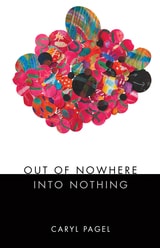
Out of Nowhere Into Nothing
Caryl Pagel
University of Alabama Press, 2020
Where ghosts speak and memory listens, nothing becomes everything
The ghosts—literal and figurative—that drive our deepest impulses, disturb our most precious memories, and haunt the passages of our daily lives are present in this collection of sublime meditations on the unbelievable, the coincidental, and the apparitional. Often containing reflections on the art of storytelling, Caryl Pagel’s essays blend memoir, research, and reflection, and are driven by a desire to observe connections between the visual and the invisible. The narrator of Pagel’s essays explores each enigma or encounter (a football coach’s faked death, the faces of women walking, historical accounts of hallucinations, a city’s public celebration gone wrong) as an intellectual detective ascending a labyrinthine tower of clues in pursuit of a solution to an unreachable problem: always curious, and with a sense of profound wonder.
Out of Nowhere Into Nothing is a sprawling, highly associative consideration of the ways in which the observed material world recalls us to larger narrative and aesthetic truths. Interspersed with documentary-style photographs, Pagel’s first collection of prose is a radiant, obsessive investigation into the mysteries at the center of our seemingly mundane lives.
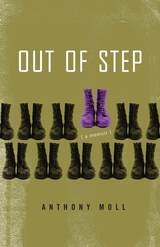
Out of Step
A MemoirAnthony Moll
The Ohio State University Press, 2018
What makes a pink-haired queer raise his hand to enlist in the military just as the nation is charging into war? In his memoir, Out of Step, Anthony Moll tells the story of a working-class bisexual boy running off to join the army in the midst of two wars and the “Don’t Ask, Don’t Tell” era. Set against the backdrop of hypermasculinity and sexual secrecy, Moll weaves a queer coming-of-age story.
Out of Step traces Moll’s development through his military service, recounting how the army both breaks and builds relationships, and what it was like to explore his queer identity while also coming to terms with his role in the nation’s ugly foreign policy. From a punk, nerdy, left-leaning, poor boy in Nevada leaving home for the first time to an adult returning to civilian life and forced to address a world more complicated than he was raised to believe, Moll’s journey isn’t a classic flag-waving memoir or war story—it’s a tale of finding one’s identity in the face of war and changing ideals.
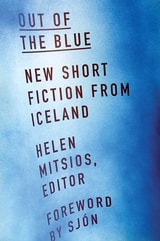
Out of the Blue
New Short Fiction from IcelandHelen Mitsios
University of Minnesota Press, 2017
A groundbreaking collection of fiction from Iceland’s best contemporary authors
This extraordinary collection, the first anthology of Icelandic short fiction published in English translation, features work by twenty of Iceland’s most popular and celebrated living authors—including Andri Snær Magnason, Jón Kalman Stefánsson, Kristín Ómarsdóttir, and Auður Jónsdóttir—granddaughter of Halldór Laxness, who won the 1955 Nobel Prize in Literature.
Celebrated in Europe and Scandinavia but less known in the English-speaking world, these writers traverse realms of darkness and light that will be familiar to readers who have fallen under the spell of Scandinavian fiction. While uniquely Icelandic in topography and tenor, with a touch of the island’s supernatural charm, the stories traffic in the enduring and universal complexities of human nature. Here is a fictional universe where the ghosts of Vikings and spirits tread, volcanoes grumble underfoot, and writers trip the Northern Lights fantastic across the landscape of the Icelandic imagination.
At long last, readers can enjoy award-winning stories now expertly rendered into English by the country’s most renowned translators. In “Killer Whale” a father contemplates euthanasia for a terminally ill child, in “Self Portrait” a vacationing family in Spain crosses paths with migrants, in “Escape for Men” a woman searches for an ex-lover in the South of France, and in “The Most Precious Secret” the nature of artists and the art world is mercilessly revealed. Both the Viking myths of Iceland’s forefathers and the cutting-edge modern world of the country today are brilliantly alive in these remarkable and original stories.
This collection is an excursion to an island where almost two million travelers descend yearly on a population of 345 thousand natives. Iceland is the place Björk calls home, the location where Game of Thrones was filmed—a place with open lava fields, glaciers, and iceberg lagoons among other natural wonders that is becoming one of the “hottest” tourist destinations on earth.
Out of the Blue transports readers to Iceland’s timeless and magical island of Vikings and geographical wonders, and it promises to be a seminal collection that will define Icelandic literature in translation for decades to come.
Contributors: Auður Ava Olafsdóttir, Kristín Eiríksdóttir, Þórarinn Eldjárn, Gyrðir Elíasson, Einar Örn Gunnarsson, Ólafur Gunnarsson, Einar Már Guðmundsson, Auður Jónsdóttir, Gerður Kristný, Andri Snær Magnason, Óskar Magnússon, Bragi Ólafsson, Kristín Ómarsdóttir, Óskar Árni Óskarsson, Magnús Sigurðsson, Jón Kalman Stefánsson, Ágúst Borgþór Sverrisson, Guðmundur Andri Thorsson, Þórunn Erlu-Valdimarsdóttir, Rúnar Helgi Vignisson.