Results by title
1927 books match the query 'Technology & Engineering' and 43 start with o
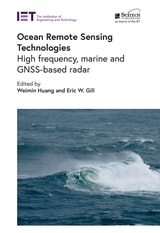
Ocean Remote Sensing Technologies
High frequency, marine and GNSS-based radarWeimin Huang
The Institution of Engineering and Technology, 2022
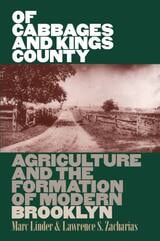
Of Cabbages and Kings County
Agriculture and the Formation of Modern BrooklynMarc Linder
University of Iowa Press, 1999
No one today thinks of Brooklyn, New York, as an agricultural center. Yet Kings County enjoyed over two centuries of farming prosperity. Even as late as 1880 it was one of the nation's leading vegetable producers, second only to neighboring Queens County.
In Of Cabbages and Kings County, Marc Linder and Lawrence Zacharias reconstruct the history of a lost agricultural community. Their study focuses on rural Kings County, the site of Brooklyn's tremendous expansion during the latter part of the nineteenth century. In particular, they question whether sprawl was a necessary condition of American industrialization: could the agricultural base that preceded and surrounded the city have survived the onrush of residential real estate speculation with a bit of foresight and public policies that the politically outnumbered farmers could not have secured on their own?
The first part of the book reviews the county's Dutch American agricultural tradition, in particular its conversion after 1850 from extensive farming (e.g., wheat, corn) to intensive farming of market garden crops. The authors examine the growing competition between local farmers and their southern counterparts for a share of the huge New York City market, comparing farming conditions and factors such as labor and transportation.
In the second part of the book, the authors turn their attention to the forces that eventually destroyed Kings County's farming—ranging from the political and ideological pressures to modernize the city's rural surroundings to unplanned, market-driven attempts to facilitate transportation for more affluent city dwellers to recreational outlets on Coney Island and, once transportation was at hand, to replace farms with residential housing for the city's congested population.
Drawing on a vast range of archival sources, the authors refocus the history of Brooklyn to uncover what was lost with the expansion of the city. For today, as urban planners, ecologists, and agricultural developers reevaluate urban sprawl and the need for greenbelts or agricultural-urban balance, the lost opportunities of the past loom larger.
Of Time and the Enterprise
North American Family Farm Management in a Context of Resource MarginalityJohn Bennett
University of Minnesota Press, 1982

Of Two Minds
Hypertext Pedagogy and PoeticsMichael Joyce
University of Michigan Press, 1996

Off the Network
Disrupting the Digital WorldUlises Ali Mejias
University of Minnesota Press, 2013
The digital world profoundly shapes how we work and consume and also how we play, socialize, create identities, and engage in politics and civic life. Indeed, we are so enmeshed in digital networks—from social media to cell phones—that it is hard to conceive of them from the outside or to imagine an alternative, let alone defy their seemingly inescapable power and logic. Yes, it is (sort of) possible to quit Facebook. But is it possible to disconnect from the digital network—and why might we want to?
Off the Network is a fresh and authoritative examination of how the hidden logic of the Internet, social media, and the digital network is changing users’ understanding of the world—and why that should worry us. Ulises Ali Mejias also suggests how we might begin to rethink the logic of the network and question its ascendancy. Touted as consensual, inclusive, and pleasurable, the digital network is also, Mejias says, monopolizing and threatening in its capacity to determine, commodify, and commercialize so many aspects of our lives. He shows how the network broadens participation yet also exacerbates disparity—and how it excludes more of society than it includes.
Uniquely, Mejias makes the case that it is not only necessary to challenge the privatized and commercialized modes of social and civic life offered by corporate-controlled spaces such as Facebook and Twitter, but that such confrontations can be mounted from both within and outside the network. The result is an uncompromising, sophisticated, and accessible critique of the digital world that increasingly dominates our lives.

Offshore Energy Hubs
Generation technologies, offshore grids, market economics and civil worksDamian Flynn
The Institution of Engineering and Technology, 2026
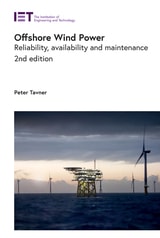
Offshore Wind Power
Reliability, availability and maintenancePeter Tavner
The Institution of Engineering and Technology, 2021
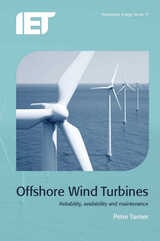
Offshore Wind Turbines
Reliability, availability and maintenancePeter Tavner
The Institution of Engineering and Technology, 2012
Ohio Farm
Wheeler McMillen
The Ohio State University Press, 1997
Uncomplicated when compared with the task of managing today's highly mechanized agricultural complexes, life on the early twentieth-century small farm entailed hard work and afforded simple pleasures that brought satisfaction and enjoyment to the farm and family. Farming on that scale and in the same manner has now become almost completely infeasible, yet in those times a good farmer could prosper and become independent. Wheeler McMillen’s father, Lewis, did both.
Relying frequently on his father’s account books and concise diaries, for this is primarily his father’s story, McMillen recounts the immense labor that farming demanded before the advent of the tractor and the combine harvester. He evokes the special excitements of having company for Sunday dinner, attending the annual oyster supper at the Grange Hall, and gathering on the Fourth of July with the interminable wait for darkness to fall. McMillen also portrays the quiet peace and ineffable joy of private moments, such as resting the horses during spring plowing to watch bronzed grackles search for food in the freshly turned furrows.
Wheeler McMillen’s slice of history will speak to those interested in what rural life was once like in the Midwest and to Ohioans who would like to learn more about their state’s recent past.
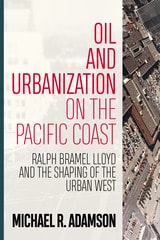
Oil and Urbanization on the Pacific Coast
Ralph Bramel Lloyd and the Shaping of the Urban WestMichael R. Adamson
West Virginia University Press, 2018
Oil and Urbanization on the Pacific Coast tells the story of oilman Ralph Bramel Lloyd, a small business owner who drove the development of one of America’s largest oil fields. Lloyd invested his petroleum earnings in commercial real estate—much of it centered around automobiles and the fuel they require—in several western cities, notably Portland, Oregon. Putting the history of extractive industry in dialogue with the history of urban development, Michael R. Adamson shows how energy is woven into the fabric of modern life, and how the “energy capital” of Los Angeles exerted far-flung influence in the US West.
A contribution to the relatively understudied history of small businesses in the United States, Oil and Urbanization on the Pacific Coast explores issues of interest to multiple audiences, such as the competition for influence over urban development waged among local growth machines and outside corporate interests; the urban rivalries of a region; the importance of public capital in mobilizing the commercial real estate sector during the Great Depression and World War II; and the relationships among owners, architects, and contractors in the execution of commercial building projects.
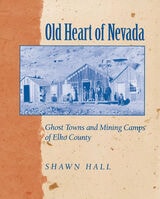
Old Heart Of Nevada
Ghost Towns And Mining Camps Of Elko CountyShawn Hall
University of Nevada Press, 1998
Elko County, in the old heart of Nevada, is rich in historic sites, many of them hitherto uncharted and some verging on disappearing. For the first time, historian Shawn Hall identifies and locates the ghost towns and old mining camps of Elko County and recounts their colorful histories. Following a guidebook format, Hall divides the county into five easily accessible regions, then lists the historic sites within each region and provides directions to reach them. He offers a brief history of each site as well as a description of its extant structures and their present condition. The result is a lively compilation of local history and mining and ranching lore that records the dramatic past of Nevada’s northeast corner, its pioneers and prospectors, its towns and mines, its outlaws, ranchers, merchants, mining concerns, and civic leaders. The book offers never-before available information about the old heart of Nevada and the people who settled there. It will be of enduring value to tourists and weekend explorers, historic preservationists, and all those interested in the history and artifacts of this region.
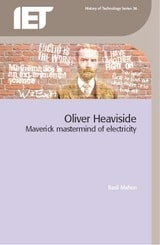
Oliver Heaviside
Maverick Mastermind of ElectricityBasil Mahon
The Institution of Engineering and Technology, 2009
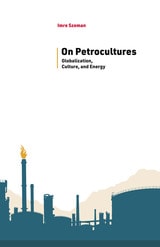
On Petrocultures
Globalization, Culture, and EnergyImre Szeman
West Virginia University Press, 2019
On Petrocultures brings together key essays by Imre Szeman, a leading scholar in the field of energy humanities and a critical voice in debates about globalization and neoliberalism. Szeman’s most important and influential essays, in dialogue with exciting new pieces written for the book, investigate ever-evolving circuits of power in the contemporary world, as manifested in struggles over space and belonging, redefinitions of work and individual autonomy, and the deep links between energy use and climate change.
These essays explore life lived in the twenty-first century by examining critically the vocabulary through which capitalism makes sense of itself, focusing on concepts like the nation, globalization, neoliberalism, creativity, and entrepreneurship. At the heart of the volume is the concept of “petrocultures,” which demands that we understand a fundamental fact of modern life: we are shaped by and through fossil fuels. Szeman argues that we cannot take steps to address global warming without fundamentally changing the social, cultural, and political norms and expectations developed in conjunction with the energy riches of the past century. On Petrocultures maps the significant challenge of our dependence on fossil fuels and probes ways we might begin to leave petrocultures behind.
On Posthuman War
Computation and Military ViolenceMike Hill
University of Minnesota Press, 2022
Tracing war’s expansion beyond the battlefield to the concept of the human being itself
As military and other forms of political violence become the planetary norm, On Posthuman War traces the expansion of war beyond traditional theaters of battle. Drawing on counterinsurgency field manuals, tactical manifestos, data-driven military theory, and asymmetrical-war archives, Mike Hill delineates new “Areas of Operation” within a concept of the human being as not only a social and biological entity but also a technical one.
Delving into three human-focused disciplines newly turned against humanity, OnPosthuman War reveals how demography, anthropology, and neuroscience have intertwined since 9/11 amid the “Revolution in Military Affairs.” Beginning with the author’s personal experience training with U.S. Marine recruits at Parris Island, Hill gleans insights from realist philosophy, the new materialism, and computational theory to show how the human being, per se, has been reconstituted from neutral citizen to unwitting combatant. As evident in the call for “bullets, beans, and data,” whatever can be parted out, counted, and reassembled can become war materiel. Hill shows how visible and invisible wars within identity, community, and cognition shift public-sphere activities, like racial identification, group organization, and even thought itself, in the direction of war. This shift has weaponized social activities against the very notion of society.
On Posthuman War delivers insights on the latest war technologies, strategies, and tactics while engaging in questions poised to overturn the foundations of modern political thought.
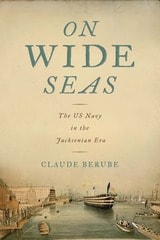
On Wide Seas
The US Navy in the Jacksonian EraClaude Berube
University of Alabama Press, 2022
An analytical study of naval policy, expansion, and maritime strategy in the formative Jacksonian era.
The 1830s is an overlooked period in American naval history and is usually overshadowed by the more dramatic War of 1812 and the Civil War. Nevertheless, the personnel, operations, technologies, policies, and vision of the Navy of that era, which was emerging from the “Age of Sail,” are important components of its evolution, setting it on the long path to its status as a global maritime power. On Wide Seas: The US Navy in the Jacksonian Era details the ways in which the US Navy transformed from an antiquated arm of the nation’s military infrastructure into a more dynamic and effective force that was soon to play a pivotal role in a number of national and international conflicts.
By Andrew Jackson’s inauguration in 1829, the Navy had engaged with two major powers, defended American shipping, conducted antipiracy operations, and provided a substantive, long-term overseas presence. The Navy began to transform during Jackson’s administration due in part to the policies of the administration and to the emerging officer corps, which sought to professionalize its own ranks, modernize the platforms on which it sailed, and define its own role within national affairs and in the broader global maritime commons. Jackson had built his reputation as a soldier, but he quickly recognized as president the necessity for a navy that could foster his policies. To expand American commerce, he needed a navy that could defend shipping as well as conduct punitive raids or deterrence missions.
Jackson developed a clear, concise naval strategy that policymakers and officers alike could seize and execute. He also provided a vision for the Navy, interceded to resolve naval disciplinary challenges, and directed naval operations. Also, given Jackson’s own politics, junior officers were emboldened by the populist era to challenge traditional, conservative thinking. They carried out a collective vision that coincided with the national literary movement that recognized America’s future would rely upon the Navy.
On the Eve of the Cybercultural Revolution
Black Power and Capitalism in the 1960sBrian Bartell
University of Minnesota Press, 2025
Uncovering the Black Power movement’s contributions to theorizing the politics of automation
On the Eve of the Cybercultural Revolution offers a comprehensive look at the Black Power movement’s theoretical work and insights into the entanglement of capitalism, technology, and racism. Drawing upon James and Grace Lee Boggs’s expanded notion of the cybercultural era, Brian Bartell demonstrates how a range of artists, writers, and activists from the 1960s prefigured the wider discourse around automation and made it a central concern of their politics.
Rather than reducing automation to an isolated technical phenomenon, theorists of the Black radical tradition identified its important historical antecedents in colonialism and plantation slavery, emphasizing how the emerging cyberculture joined with issues such as the reorganization of labor, ecological harm, and racial inequality. Examining the work of Martin Luther King Jr., Noah Purifoy, the Black Panthers, and others, On the Eve of the Cybercultural Revolution outlines the new forms of social reproduction conceived outside of the dominant structures of racial capitalism.
Bartell synthesizes a wide range of source texts, including political speeches, literature, and activist archives, to show how the Black Power movement sought to create a postscarcity, more-than-capitalist economy. By shedding light on the movement’s underexplored engagement with theories of technology, he provides a crucial key to understanding the historical dynamics responsible for our technocapitalist present.
Retail e-book files for this title are screen-reader friendly.
One Shot for Gold
Developing a Modern Mine in Northern CaliforniaEleanor Herz Swent
University of Nevada Press, 2021
An account of the creation of a modern, environmentally sensitive mine as told by the people who developed and worked it.
In 1978, a geologist working for the Homestake Mining Company discovered gold in a remote corner of California’s Napa County. This discovery led to the establishment of California’s most productive gold mine in the twentieth century. Named the McLaughlin Mine, it produced about 3.4 million ounces of gold between 1985 and 2002. The mine was also one of the first attempts at creating a new full-scale mine in California after the advent of environmental regulations and the first to use autoclaves to extract gold from ore.
One Shot for Gold traces the history of the McLaughlin Mine and how it transformed a community and an industry. This lively and detailed account is based largely on oral history interviews with a wide range of people associated with the mine, including Homestake executives, geologists, and engineers as well as local neighbors of the mine, officials from county governments, townspeople, and environmental activists. Their narratives— supported by thorough research into mining company documents, public records, newspaper accounts, and other materials—chronicle the mine from its very beginning to its eventual end and transformation into a designated nature reserve as part of the University of California Natural Reserve System.
A mine created at the end of the twentieth century was vastly different from the mines of the Gold Rush. New regulations and concerns about the environmental, economic, and social impacts of a large mine in this remote and largely rural region of the state-required decisions at many levels. One Shot for Gold offers an engaging and accessible account of a modern gold mine and how it managed to exist in balance with the environment and the human community around it.
Open Electromagnetic Waveguides
T. Rozzi
The Institution of Engineering and Technology, 1997
Open Resonator Microwave Sensor Systems for Industrial Gauging
A practical design approachNathan Ida
The Institution of Engineering and Technology, 2018
Open combined protective and neutral (PEN) conductor detection devices (OPDDs)
OPDDs for use in electric vehicle charging applications for household and similar installations (IET 01:2024)The Institution of Engineering and Technology
The Institution of Engineering and Technology, 2024
Operatic Infrastructures
Materiality and Meaning in 1890s London, Paris, and New YorkFlora Willson
University of Chicago Press, 2026
An exploration of the fundamental relationship between opera and urban modernity in three iconic cities: London, Paris, and New York.
At the end of the nineteenth century, London, Paris, and New York were quintessential modern metropolises and vital centers for opera. In Operatic Infrastructures, Flora Willson examines opera’s roots in the material worlds of these cities. Reaching beyond histories of opera as spectacle, she investigates the physical underpinnings of opera at the century’s end as an inter-urban, multimedia network.
Operatic Infrastructures considers emergent technologies such as the telephone and the subway, but it also retrieves the hidden, forgotten, and otherwise effaced traces of systems such as storage facilities and colonial trade routes. It takes seriously the mundane aspects of materiality, from the blandest clichés of newspaper columns to the fine print of insurance certificates. In doing so, the book reveals just how far these interfaces with modern urban life reached into opera’s own systems of meaning-making and performance in the 1890s—making it impossible to demarcate neatly between “opera” and its “context.” Without such operatic infrastructures, Willson shows, there would be no opera at all.
Optical Fibers and RF
A natural combinationMalcolm Romeiser
The Institution of Engineering and Technology, 2004

Optical MEMS for Chemical Analysis and Biomedicine
Hongrui Jiang
The Institution of Engineering and Technology, 2016
Optimal Adaptive Control and Differential Games by Reinforcement Learning Principles
Draguna Vrabie
The Institution of Engineering and Technology, 2012

Optimal Design Exploiting 3D Printing and Metamaterials
Paolo Di Barba
The Institution of Engineering and Technology, 2022
Optimised Radar Processors
A. Farina
The Institution of Engineering and Technology, 1987
Ordinary and Extraordinary Harms in the City
A Green Criminological AnalysisKajsa Lundberg
Rutgers University Press, 2026
This book, based on original research in Melbourne, Australia, explores the spatial politics of urban expansion both upwards and outwards as the city continues to colonize non-urban areas around its fringes. The everyday decisions and tools bound up in urban growth accelerate a malign colonization of land, resources, air and water, thereby exacerbating a broad variety of social and environmental harms. In addition to the quotidian nature of urban growth, this book also explores the ‘crisis’ in the form of extreme fire events in urban areas. Moving between local planning and national and international climate change mitigation policies and approaches, this book highlights various 'necropolicies’ - policies causing harm and death to more-than-human populations. Such death-bound policies are the result of neoliberal urban development, fueled by state-corporate relations and prosperity concerns. In sum, this book connects green and urban criminology, urban studies and planning to reveal how ordinary and extraordinary challenges are entangled in urban design, harm and, most importantly, imagining alternative futures and cities.
Oregon Gold
A History of Mining from the Civil War into the Progressive EraWilliam F. Willingham
Oregon State University Press, 2025
Following the discovery of gold in 1862 at Auburn and Canyon City, new communities and prospects were established in eastern Oregon. Just as the lure of free land attracted homesteaders and livestock raisers in search of new opportunities, so did the possibility of finding wealth in gold and silver throughout the region. Based on exhaustive research and a wealth of sources—federal census and mining records, newspapers, mining periodicals, county land records, maps, and federal government reports—Oregon Gold offers a comprehensive study of mining in Oregon between 1862 and 1910. From carefully examining the eastern portion of the state to exploring the economic expansion and political development of Portland, William Willingham highlights what is unique about the Oregon gold mining experience and places Oregon’s precious metal mining in the context of mining throughout the American West.
Willingham shows how mining was an important aspect of the state’s history, far greater than has been traditionally understood. He provides special attention and analysis to the role Chinese miners played in the story of eastern Oregon mining and to the demographic makeups of two major mining communities, Susanville and Granite, that thrived during the period. The attention to detail and thorough reporting in Oregon Gold will captivate both scholars and general readers interested in western mining and Oregon history during the nineteenth century.
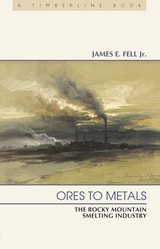
Ores to Metals
The Rocky Mountain Smelting IndustryJames E. Fell
University Press of Colorado, 2009
Although mining holds more of the glamour for those in and interested in the minerals industry, smelters have continuously played a critical role in the industry’s evolution since their introduction in Colorado in the 1860s. At that time, miners desperately needed new technology to recover gold and silver from ores resistant to milling. Beginning as small independent enterprises, progressing to larger integrated firms working in urban centers, and finally following a trend toward mergers, the entire industry was absorbed into one large holding company—the American Smelting and Refining Company. Over time, fortunes were won and lost, business success was converted to political success, and advances were made in science and metallurgy. Drawing on archival material, Fell expertly presents the triumphs and troubles of the entrepreneurs who built one of the great industries of the West.
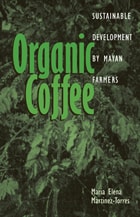
Organic Coffee
Sustainable Development by Mayan FarmersMaria Elena Martinez-Torres
Ohio University Press, 2006
Maria Elena Martinez-Torres explains how Mayan farmers have built upon their ethnic networks to make a crucial change in their approach to agriculture. Taking us inside Chiapas, Mexico's poorest state and scene of the 1994 Zapatista uprising, she examines the anatomy of the ongoing organic coffee boom and the fair-trade movement. The organic coffee boom arose as very poor farmers formed cooperatives, revalued their ethnic identity, and improved their land through organic farming. The result has been significant economic benefits for their families and ecological benefits for the future sustainability of agriculture in the region.
Organic Coffee refutes the myth that organic farming is less productive than chemical-based agriculture and gives us reasons to be hopeful for indigenous peoples and peasant farmers
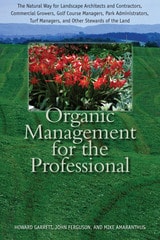
Organic Management for the Professional
The Natural Way for Landscape Architects and Contractors, Commercial Growers, Golf Course Managers, Park Administrators, Turf Managers, and Other Stewards of the LandBy Howard Garrett, John Ferguson, and Mike Amaranthus
University of Texas Press, 2012
Can you manage the landscape of a golf course, city park, or corporate campus without synthetic fertilizers and toxic pesticides? Absolutely! Organic landscaping is not only possible on a large scale, but it also makes sense both economically and environmentally. It promotes healthy soils and plants, which require less water and sequester more carbon—a winning combination for both your bottom line and the planet’s fight against resource depletion and global warming. Organic programs on a commercial scale have enormous potential to make a difference in the quality of our environment, our use of fuels, and our climate. And as those who have already converted to organics have discovered, they also cost a lot less over the long term.
Organic Management for the Professional is the first comprehensive guide to “going green” in large-scale landscaping. Nationally recognized organic gardening expert Howard Garrett, with associates John Ferguson and Mike Amaranthus, not only explains in detail how to manage projects with natural organic techniques, but also presents the material in clear, simple terms so that commercial and institutional property owners can understand what to ask of their landscape architects, contractors, growers, and maintenance people. They give detailed, proven instructions for the key components of organic landscaping—soil building, correct planting techniques, fertilizing, pest control, compost, and mulch. Then they show how to apply these organic methods in large-scale landscaping, commercial growing (orchards, tree farms, nurseries, and greenhouse operations), and recreational properties (golf courses, parks, and sports fields).
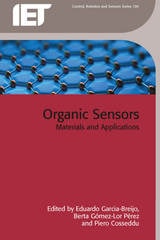
Organic Sensors
Materials and applicationsEduardo Garcia-Breijo
The Institution of Engineering and Technology, 2017

Oscillator Circuits
Frontiers in design, analysis and applicationsYoshifumi Nishio
The Institution of Engineering and Technology, 2017
Oscillator Design and Computer Simulation
Randall W. Rhea
The Institution of Engineering and Technology, 1995
Osiris, Volume 21
Global Power Knowledge: Science and Technology in International AffairsEdited by John Krige and Kai-Henrik Barth
University of Chicago Press, 2006
Osiris, Volume 38
Beyond Craft and Code: Human and Algorithmic Cultures, Past and PresentEdited by James Evans and Adrian Johns
University of Chicago Press Journals, 2023
Perceptively explores the shifting intersections between algorithmic systems and human practices in the modern era.
How have algorithmic systems and human practices developed in tandem since 1800? This volume of Osiris deftly addresses the question, dispelling along the way the traditional notion of algorithmic “code” and human “craft” as natural opposites. Instead, algorithms and humans have always acted in concert, depending on each other to advance new knowledge and produce social consequences. By shining light on alternative computational imaginaries, Beyond Craft and Code opens fresh space in which to understand algorithmic diversity, its governance, and even its conservation.
The volume contains essays by experts in fields extending from early modern arithmetic to contemporary robotics. Traversing a range of cases and arguments that connect politics, historical epistemology, aesthetics, and artificial intelligence, the contributors collectively propose a novel vocabulary of concepts with which to think about how the history of science can contribute to understanding today’s world. Ultimately, Beyond Craft and Code reconfigures the historiography of science and technology to suggest a new way to approach the questions posed by an algorithmic culture—not only improving our understanding of algorithmic pasts and futures but also unlocking our ability to better govern our present.
Othermindedness
The Emergence of Network CultureMichael Joyce
University of Michigan Press, 2001
Michael Joyce's new collection continues to examine the connections between the poles of art and instruction, writing and teaching in the form of what Joyce has called theoretical narratives, pieces that are both narratives of theory and texts in which theory often takes the form of narrative. His concerns include hypertext and interactive fiction, the geography of cyberspace, and interactive film, and Joyce here searches out the emergence of network culture in spaces ranging from the shifting nature of the library to MOOs and other virtual spaces to life along a river.
While in this collection Joyce continues to be one of our most lyrical, wide-ranging, and informed cultural critics and theorists of new media, his essays exhibit an evolving distrust of unconsidered claims for newness in the midst of what Joyce calls "the blizzard of the next," as well as a recurrent insistence upon grounding our experience of the emergence of network culture in the body.
Michael Joyce is Associate Professor of English, Vassar College. He is author of a number of hypertext fictions on the web and on disk, most notably Afternoon: A Story.
His previous books are Of Two Minds: Hypertext Pedagogy and Poetics and Moral Tale and Meditations: Technological Parables and Refractions.
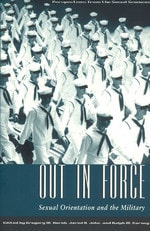
Out in Force
Sexual Orientation and the MilitaryEdited by Gregory M. Herek, Jared B. Jobe, and Ralph M. Carney
University of Chicago Press, 1996
Both sides base their views on assumptions about the consequences of integration. Even defenders of the ban grudgingly acknowledge that homosexuals are fully capable of serving with distinction. Few question gay service members' abilities or patriotism; justifications for the ban are now predicated on heterosexuals' negative reactions.
Out in Force refutes the notions that homosexuality is incompatible with military service and that gay personnel would undermine order and discipline. Leading social science scholars of sexual orientation and the military offer reasoned and comprehensive discussions about military organizations, human sexuality, and attitudes toward individuals and groups. They demonstrate forcefully that the debate is really about the military as an institution, and how that institution will adapt to larger social changes. The contributors show that the ban could be successfully eliminated, and set forth a program for implementation. In sorting opinion from fact, myth from reality, Out in Force stands as an invaluable guide for the military, lawmakers, and the courts as they continue to grapple with this question of institutional and societal change.
Out of Print
Mediating Information in the Novel and the BookJulia Panko
University of Massachusetts Press, 2020
This innovative study chronicles how the print book has fared as both novelists and the burgeoning profession of information science have grappled with unprecedented quantities of data across the twentieth and twenty-first centuries. As the novel's archival project took a critical turn from realism to an investigation of the structures, possibilities, and ideologies of information media, novelists have considered ideas about how data can best be collected and stored. Julia Panko pairs case studies from information history with close readings of modernist works such as James Joyce's Ulysses and Virginia Woolf's Orlando and contemporary novels from Jonathan Safran Foer, Stephen King, and Mark Z. Danielewski that emphasize their own informational qualities and experiment with the aesthetic potential of the print book.
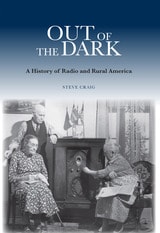
Out of the Dark
A History of Radio and Rural AmericaSteve Craig
University of Alabama Press, 2009
From the Grand Ole Opry to the National Barn Dance, how radio changed life in rural America
Out of the Dark: A History of Radio and Rural America shows how radio—especially clear channel network stations—brought news, markets, weather, religion, and entertainment into isolated farm homes between the 1920s and 1950s, narrowing rural–urban divides while also sustaining distinctly rural tastes (e.g., barn dance music). Craig argues that battery “farm radios,” high power stations, and national networking transformed daily life, work rhythms, consumer habits, and political participation, making radio the central domestic technology of the Depression era and beyond.
Craig blends regulatory and industry milestones, such as the Radio Act of 1927, with sociological studies, USDA extension records, FCC surveys, census tables, and rich case studies including WLS Chicago’s “National Barn Dance,” WSM Nashville’s “Grand Ole Opry,” and others. He mines audience research, diaries, program schedules, and tables that track the spread of radio. The book’s distinctive contributions include detailed charts (ownership by region; clear channel assignments) and vivid narratives of stations, formats, and personalities that connected farm families to national culture while preserving local identity.
The book is ideal for scholars and students of US social, rural, and media history; communication policy and political communication; country and bluegrass music history; agricultural extension; and American studies. It will also engage librarians, curators, and public historians seeking context for rural collections; journalists and podcasters tracing the roots of today’s information ecosystems; and general readers interested in how radio re made community life long before the internet.
Overhead Electric Power Lines
Theory and practiceSurajit Chattopadhyay
The Institution of Engineering and Technology, 2021
Overpotential
Fuel Cells, Futurism, and the Making of a Power PanaceaEisler, Matthew
Rutgers University Press, 2012
It sounds so simple. Just combine oxygen and hydrogen in an electrochemical reaction that produces water and electricity, and you’ll have a clean, efficient power source. But scientists have spent decades—and billions of dollars in government and industry funding—developing the fuel cell. There have been successes and serendipitous discoveries along the way, but engineering a fuel cell that is both durable and affordable has proved extraordinarily difficult.
Overpotential charts the twists and turns in the ongoing quest to create the perfect fuel cell. By exploring the gap between the theory and practice of fuel cell power, Matthew N. Eisler opens a window into broader issues in the history of science, technology, and society after the Second World War, including the sociology of laboratory life, the relationship between academe, industry, and government in developing advanced technologies, the role of technology in environmental and pollution politics, and the rise of utopian discourse in science and engineering.

Overvoltage Protection of Low Voltage Systems
Peter Hasse
The Institution of Engineering and Technology, 2000