Results by title
1296 books match the query 'Women authors' and 42 start with o
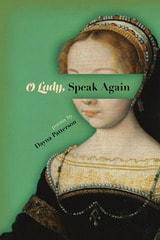
O Lady, Speak Again
Patterson, Dayna
Signature Books, 2023
In these pages you’ll meet Cordelia, third wife of polygamous Lear. You’ll meet Miranda, sailing away from her father and his faith. You’ll encounter Ophelia, who enters an amphibious torpor when buried, and is reborn as forest ecologist, far from her father’s ghost. Lady Macbeth and the weird sisters get a retrial, and Juliet finds her way to a different ending. Shadowy goddesses like Hecate, mother of witches, are invoked and act within these pages. Rosalind from As You Like It is given the final word. These poems delve into faith crisis, queerness, abandonment, transgressive power, rebirth, and dream. Prepare to be entranced.
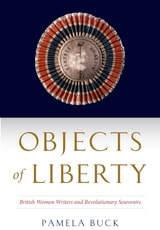
Objects of Liberty
British Women Writers and Revolutionary SouvenirsPamela Buck
University of Delaware Press, 2024
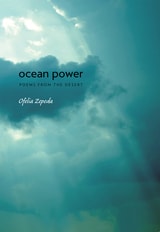
Ocean Power
Poems from the DesertOfelia Zepeda
University of Arizona Press, 1995
Poet Ofelia Zepeda centers these poems on her own experiences growing up in a Tohono O'odham family, where desert climate profoundly influenced daily life, and on her perceptions as a contemporary Tohono O'odham woman. One section of poems deals with contemporary life, personal history, and the meeting of old and new ways. Another section deals with winter and human responses to light and air. The final group of poems focuses on the nature of women, the ocean, and the way the past relationship of the O'odham with the ocean may still inform present day experience. These fine poems will give the outside reader a rich insight into the daily life of the Tohono O'odham people.
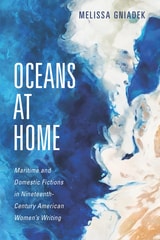
Oceans at Home
Maritime and Domestic Fictions in Nineteenth-Century American Women's WritingMelissa Gniadek
University of Massachusetts Press, 2021
Melissa Gniadek explores the role of the ocean, with particular attention to the Pacific, in a diverse range of literary texts spanning the late 1820s through the mid-1860s from Lydia Maria Child, Caroline Kirkland, Harriet Beecher Stowe, Elizabeth Stoddard, and Harriet Prescott Spofford. Oceans at Home shows that authors employed maritime plots and stories from distant locations to probe contemporary concerns facing the continental United States, ranging from issues of gender restrictions in the domestic sphere to the racial prejudices against indigenous peoples that lay at the heart of settler colonialism.
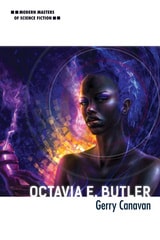
Octavia E. Butler
Gerry Canavan
University of Illinois Press, 2016
Gerry Canavan offers a critical and holistic consideration of Butler's career. Drawing on Butler's personal papers, Canavan tracks the false starts, abandoned drafts, tireless rewrites, and real-life obstacles that fed Butler's frustrations and launched her triumphs. Canavan departs from other studies to approach Butler first and foremost as a science fiction writer working within, responding to, and reacting against the genre's particular canon. The result is an illuminating study of how an essential SF figure shaped themes, unconventional ideas, and an unflagging creative urge into brilliant works of fiction.
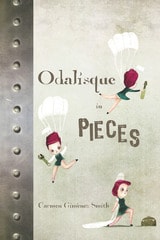
Odalisque in Pieces
Carmen Giménez Smith
University of Arizona Press, 2009
In these poems we encounter such strange beauties as a girl assembling and disassembling, a moth trapped in a glass of water, new-age fairy godmothers, and a lark who sings for the milkman. Yet we are also made aware of how these beauties reflect the speaker’s troubles—her effort to employ, in the words of one of her most memorable poems, “Only the invisible post where she writes the encounters / with air’s lusters. Only the imagined hour / with which she’s made a fragile craft.”
Vivid and charged with an inner light, these are poems that linger and expand in the mind and memory.
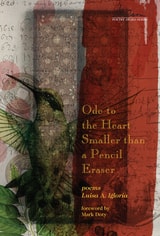
Ode to the Heart Smaller than a Pencil Eraser
Luisa A. Igloria
Utah State University Press, 2014
“When Luisa Igloria cites Epictetus—‘as soon as a thing has been seen, it is carried away, and another comes in its place’—she introduces the crowded and contradictory world her poems portray: a realm of transience, yes, where the vulnerable come to harm and everything disappears, but also a scene of tremendous, unpredictable bounty, the gloriously hued density this poet loves to detail. ‘I was raised / to believe not only the beautiful can live on / Parnassus,’ she tells us, and she makes it true, by including in the cyclonic swirl of her poems practically everything: a gorgeous, troubling over-brimming universe."
—Mark Doty, judge for the 2014 Swenson Award
The May Swenson Poetry Award, an annual competition named for May Swenson, honors her as one of America's most provocative and vital writers. During her long career, Swenson was loved and praised by writers from virtually every school of American poetry. She left a legacy of fifty years of writing when she died in 1989. She is buried in Logan, Utah, her hometown.
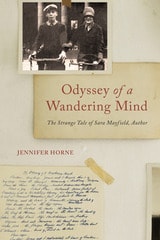
Odyssey of a Wandering Mind
The Strange Tale of Sara Mayfield, AuthorJennifer Horne
University of Alabama Press, 2024
A carefully rendered portrait of a brilliant but troubled daughter of the Old South who struggled against the conventions of gender, class, family, and ultimately of sanity, yet survived to define a creative life of her own
Sara Mayfield was born into Alabama’s governing elite in 1905 and grew up in a social circle that included Zelda Sayre, Sara Haardt, and Tallulah and Eugenia Bankhead. After winning a Goucher College short story contest judged by H. L. Mencken, Mayfield became friends with Mencken and his circle, then visited with Scott and Zelda Fitzgerald and hobnobbed with the literati while traveling in Europe after a failed marriage. Returning to Alabama during the Depression, she briefly managed the family landholdings before departing for New York City where she became involved in the theater. Inventing a plastic compound while working on theatrical sets, she applied for a patent and set her sights on a livelihood as an inventor and businesswoman. With the advent of World War II, Mayfield returned to her family home in Tuscaloosa where she expanded her experiments, freelanced as a journalist, and doggedly pursued a bizarre series of military and intelligence schemes, prompting temporary hospitalization. In 1945, she mingled with a host of cultural figures, including Frida Kahlo, Diego Rivera, Orson Welles, Rita Hayworth, and even a young John F. Kennedy, while reporting on the creation of the United Nations from Mexico and California. Back in Tuscaloosa after the war, however, she struggled to find her way with both work and family, becoming increasingly paranoid about perceived conspiracies arrayed against her. Finally, her mother and brother committed her to Bryce Hospital for the Insane, where she remained for the next seventeen years.
Throughout her life, Mayfield kept journals, wrote fiction, and produced thousands of letters while nursing the ambition that had driven her since childhood: to write and publish books. During her confinement, Mayfield assiduously recorded her experiences and her determined efforts—sometimes delusional, always savvy—to overturn her diagnosis and return to the world as a sane, independent adult. At 59, she was released from Bryce and later obtained a decree of “having been restored to sanity,” enabling her to manage her own financial affairs and to live how and where she pleased. She went on to publish noteworthy literary biographies of the Menckens and the Fitzgeralds plus a novel based on the life of Mona Lisa, finally achieving her quest to become the author of books and her own life. In Odyssey of a Wandering Mind, noted writer Jennifer Horne draws on years of research and an intimate understanding of the vast archive Sara Mayfield left behind to sensitively render Mayfield’s struggle to move through the world as the person she was—and her ultimate success in surviving to define the terms of her story.
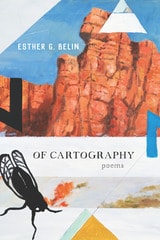
Of Cartography
PoemsEsther G. Belin
University of Arizona Press, 2017
In this long-anticipated collection, Belin daringly maps the poetics of womanhood, the body, institution, family, and love. Depicting the personal and the political, Of Cartography is an exploration of identity through language. With poems ranging from prose to typographic and linguistic illustrations, this distinctive collection pushes the boundaries of traditional poetic form.
Marking territory and position according to the Diné cardinal points, Of Cartography demands much from the reader, gives meaning to abstraction, and demonstrates the challenges of identity politics.
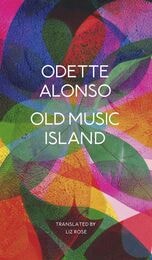
Old Music Island
Odette Alonso
Seagull Books, 2026
A translated collection from one of the defining poetic voices in Cuban and Mexican literature.
Old Music Island is a sensuous, dreamlike poetry collection by Odette Alonso, a leading voice in contemporary Cuban and Mexican literature. Born in Santiago de Cuba and living in Mexico since 1992, Alonso is an award-winning poet whose work transforms exile, desire, and memory into sites of lyrical and emotional intensity.
These poems move to the rhythm of nostalgia and smoke. The collection begins with a dream of light and song. The intimate encounter, always an island, is surrounded by the sea experience, and an exchange of glances is but a threshold into the vast expanse. Then comes fear, the fuss of hands, brackish tongue, a conflagration. Only those daring to enter will learn the patterns of the tide and the arrhythmia of the heart. The collection is a somatic encounter of tastes, touch, comings and goings, surprise, and seduction.
Translated by Liz Rose, whose work bridges lyric practice, trans theory, and feminist thought, Old Music Island offers an English-language rendering that honors the book’s lush musicality and charged physical presence. This is poetry of fleeting contact and lasting imprint—an invitation to listen closely, and to cross the threshold.
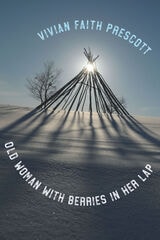
Old Woman with Berries in Her Lap
Vivian Faith Prescott
University of Alaska Press, 2022
Vivian Faith Prescott’s use of language is both a celebration of the richness of the Sámi languages and a mourning of the loss of language that occurs when a population is displaced and forced to exist in a totally foreign language space. According to Sámilinguist, professor, and politician Ole Henrik Magga, the Sámi languages have “very easily . . . one thousand lexemes with connections to snow, ice, freezing, and melting.” These lexemes frame many of Prescott’s poems, introducing ideas and feelings around the loss of language and culture.
A compelling insight into the Sámi culture from a contemporary poet’s eye, Old Woman with Berries in Her Lap juxtaposes past and present in an act of reclamation.

Omitting All That Is Usually Said
Robin Caton
Omnidawn, 2024
In Omitting All That is Usually Said, Robin Caton explores the nature of light, form, language, meaning, and thought, alongside the complexity of their interwoven relationships. Caton interrogates the workings of the human mind and explores the way we integrate disparate perceptions. Caton questions whether we can be certain that things really exist and that all we experience isn’t simply a play of light and shadow. She considers how we live with all the limitations and emotional turmoil imbedded in humanity, while also maintaining a sense of something we call perfection. The poems of Omitting All That is Usually Said investigate how we might capture the depths of conflicting experiences and lived knowledge in ways that we can comprehend, and they marvel at how we find delight in all of it.
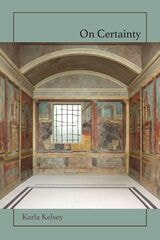
On Certainty
Karla Kelsey
Omnidawn, 2023
In the poems of On Certainty, an unnamed woman in a strangely familiar dystopia narrates a story of power and decline, where the Tyrant has gained ascendency and the Philosopher is dying. Here, the Tyrant rules over a decimated ecology filled with android deer, burnt towns, and exhausted individuals dependent on virtual reality augmentation. In choosing whether to take the Philosopher’s place in a struggle against the Tyrant, the narrator must consider how her decision may perpetuate the currently existing catastrophic systems.
Weaving together speculative fiction, philosophical aphorism, lyric fragment, and documentary technique, On Certainty echoes the contemporary world that can feel simultaneously quotidian and strange.
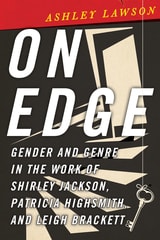
On Edge
Gender and Genre in the Work of Shirley Jackson, Patricia Highsmith, and Leigh BrackettAshley Lawson
The Ohio State University Press, 2024
Honorable Mention, 2025 PCA Emily Toth Award For Best Single Work In Women’s Studies
Finalist, 2025 Mystery Writers of America's Edgar Awards, Best Critical/Biographical Category
Finalist, Bouchercon New Orleans 2025 Anthony Awards, Best Critical/Non-Fiction
Nominated for the 2025 Macavity Awards, Best Mystery-related Nonfiction/Critical
Ashley Lawson’s On Edge presents a new picture of postwar American literature, arguing that biases against genre fiction have unfairly disadvantaged the legacies of authors like Shirley Jackson, Patricia Highsmith, and Leigh Brackett. Each of these women navigated a male-dominated postwar publishing world without compromising their values. Their category-defying treatment of gender roles and genre classifications created suspense in their work that spoke to the tensions of the “Age of Anxiety.” Lawson engages with foundational voices in American literature, genre theory, and feminism to argue that, by merging the dominant mode of literary realism with fantastical or heightened elements, Brackett, Jackson, and Highsmith responded to the big questions of their era with startling and unnerving answers. By elevating genre play to a marker of literary skill, Lawson contends, we can secure these writers a more prominent place within the canon of midcentury American literature and open the door for the recovery of their similarly innovative peers.
On Not Knowing
How to Love and Other EssaysEmily Ogden
University of Chicago Press, 2022
Moments of clarity are rare and fleeting; how can we become comfortable outside of them, in the more general condition of uncertainty within which we make our lives? Written by English professor Emily Ogden while her children were small, On Not Knowing forays into this rich, ambivalent space. Each of her sharply observed essays invites the reader to think with her about questions she can’t set aside: not knowing how to give birth, to listen, to hold it together, to love.
Unapologetically capacious in her range of reference and idiosyncratic in the canon she draws on, Ogden moves nimbly among the registers of experience, from the operation of a breast pump to the art of herding cattle; from one-night stands to the stories of Edgar Allan Poe; from kayaking near a whale to a psychoanalytic meditation on drowning. Committed to the accumulation of knowledge, Ogden nonetheless finds that knowingness for her can be a way of getting stuck, a way of not really living. Rather than the defensiveness of willful ignorance, On Not Knowing celebrates the defenselessness of not knowing yet—possibly of not knowing ever. Ultimately, this book shows how resisting the temptation of knowingness and embracing the position of not knowing becomes a form of love.
On the Desire to Levitate
PoemsAlison Powell
Ohio University Press, 2014
On the Desire to Levitate is the first collection of poems by Alison Powell. This striking collection includes vivid, unflinching meditations on aging, mythology, poetry, and family. In tight, elegant lines that alternate between homage and elegy, these poems explore known subjects with a rebellious eye: a defeated Hercules and a bitter Eurydice, a sympathetic Lucifer, and generations of adolescent girls as mythical adventurers moving within a beloved but confining Midwest. Yet in Powell’s skillful hands, hardship never overtakes: as judge Charles Hood writes, “There’s often a delicious humor in this work, and always a deep and lasting integrity.”
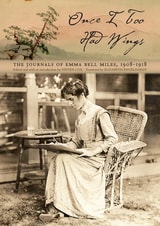
Once I Too Had Wings
The Journals of Emma Bell Miles, 1908–1918Emma Bell Miles
Ohio University Press, 2014
Emma Bell Miles (1879–1919) was a gifted writer, poet, naturalist, and artist with a keen perspective on Appalachian life and culture. She and her husband Frank lived on Walden’s Ridge in southeast Tennessee, where they struggled to raise a family in the difficult mountain environment. Between 1908 and 1918, Miles kept a series of journals in which she recorded in beautiful and haunting prose the natural wonders and local customs of Walden’s Ridge. Jobs were scarce, however, and as the family’s financial situation deteriorated, Miles began to sell literary works and paintings to make ends meet. Her short stories appeared in national magazines such as Harper’s Monthly and Lippincott’s, and in 1905 she published Spirit of the Mountains, a nonfiction book about southern Appalachia. After the death of her three-year-old son from scarlet fever in 1913, the journals took a more somber turn as Miles documented the difficulties of mountain life, the plight of women in rural communities, the effect of disparities of class and wealth, and her own struggle with tuberculosis.
Previously examined only by a handful of scholars, the journals contain both poignant and incisive accounts of nature and a woman’s perspective on love and marriage, death customs, child raising, medical care, and subsistence on the land in southern Appalachia in the early twentieth century. With a foreword by Elizabeth S. D. Engelhardt, this edited selection of Emma Bell Miles’s journals is illustrated with examples of her painting.

Once, This Forest Belonged to a Storm
Austen Leah Rose
University of Massachusetts Press, 2023
Does history live inside of us? Are we capable of transcending the past or are we destined to repeat it? With understated humor and grace, Once, This Forest Belonged to a Storm wrestles with questions of inheritance, spiritual unrest, the integrity of the self, and humanity’s relationship to the natural world. Excavating both personal and historical trauma and the rippling effects of the Holocaust, Austen Leah Rose writes of “the silence that follows after silence.” The poems in this debut collection map a surreal journey from alienation to belonging, as our speaker floats across the night sky over Los Angeles, communes with Shakespeare in a hotel room, attends a dinner party in outer space, and drifts down a river for fourteen years with her sister.
One More World Like This World
Carlie Hoffman
Four Way Books, 2025
Approaching adaptation as a coping mechanism against perpetual exile, Hoffman recasts female archetypes as contemporary women, drawing a throughline between the narrative past and present circumstances. Persephone follows her captor “deeper inside the replica of girlhood,” and Eurydice in New Jersey “knew where she was going” as she made her way to death across “the parking lot and graveyard’s / fertile grass.” Rather than simply retelling a familiar tale, Hoffman’s poems illuminate mythology as a discourse with time and recognize solidarity between women as a conversation that continues beyond the grave.
The timeless wisdom of this collection is how it unveils the constant and concurrent tragedies taking place everywhere around us while salvaging the irreducible pleasure of living from the wrecks of perception. Despite it all, we want to live. Perhaps, Hoffman seems to say, we were expelled from the garden not once but again and again, and, each time we exit, we go out searching for one more world like this world. “The apple’s a for-sale sign swaying from the tree,” she writes in the collection’s final poem “Borges Sells Me the Apple, Sells Me the World.” Or, to revisit the stage set in “Teaching the Persona Poem at Ramapo College of New Jersey,” “Outside the classroom window, snow falls, unencumbered / by a wind from nowhere the night Eurydice chooses to stay.”
Only
Rebecca Foust
Four Way Books, 2022

Only Efficient Instrument
American Women Writers And Periodical, 1837-1916Aleta Feinsod Cane
University of Iowa Press, 2001
Many farsighted women writers in nineteenth-century America made thoughtful and sustained use of newspapers and magazines to effect social and political change. “The Only Efficient Instrument”: American Women Writers and the Periodical, 1837-1916 examines these pioneering efforts and demonstrates that American women had a vital presence in the political and intellectual communities of their day.
Women writers and editors of diverse social backgrounds and ethnicities realized very early that the periodical was a powerful tool for education and social reform—it was the only efficient instrument to make themselves and their ideas better known. This collection of critical essays explores American women's engagement with the periodical press and shows their threefold use of the periodical: for social and political advocacy; for the critique of gender roles and social expectations; and for refashioning the periodical as a more inclusive genre that both articulated and obscured such distinctions as class, race, and gender.
Including essays on familiar figures such as Margaret Fuller, Harriet Beecher Stowe, Kate Chopin, and Charlotte Perkins Gilman, “The Only Efficient Instrument” also focuses on writings from lesser-known authors, including Native American Zitkala-Sä, Mexican American María Cristina Mena, African American Frances Ellen Watkins Harper, and the Lowell factory workers. Covering nearly eighty years of publishing history, from the press censure of the outspoken Angelina Grimké in 1837 to the last issue of Gilman's Forerunner in 1916, this fascinating collection breaks new ground in the study of the women's rights movement in America.

Opera
Christine Byrne
University of Iowa Press, 2027
Original Copy
Ekphrasis, Gender, and the National Imagination in Nineteenth-Century American LiteratureChrista Holm Vogelius
University of Massachusetts Press, 2025
When critics of poet Phillis Wheatley, the first African American to publish a collection of poetry, dismiss her work as derivative, they fail to see her writing as part of a new creative pantheon, sitting alongside other works that, like the popular copybooks in antebellum America, are structured as a conversation between artistic allies. Different kinds of copying in this period were distinctly feminized practices, such as artistic copying, pedagogical recitation, and literary imitation. Ekphrasis, the literary description of a work of visual art, reveals a particularly interesting form of copying, as the artwork in question becomes a kind of mediated space between author and reader; this practice, then, becomes the emblematic form of literature as collective production.
Original Copy frames ekphrasis and other forms of literary and visual copy-work as key concepts for understanding the discussions of nationalism, originality, and gender that dominated US literary circles during the first half of the nineteenth century. Christa Holm Vogelius focuses on four major writers of the period—Phillis Wheatley, Margaret Fuller, Sophia Hawthorne, and Henry Longfellow—to offer a narrative of a self-consciously feminine antebellum literary culture that was equally invested in literary nationality and convention. The explicitly feminized forms of the copy between and within media, she argues, became a productive means by which writers across a variety of genres interrogated the ill-defined but ubiquitous idea of an “original” American literature. Original Copy bridges three bodies of scholarship that have remained largely distinct—studies of literary nationalism and transnationalism, scholarship on gender in nineteenth century literary culture, and aesthetic and media theory—to argue for the significance of both imitation and intimate author-reader relations to the development of an American literature.
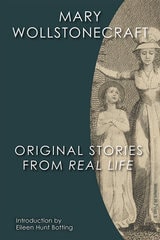
Original Stories from Real Life
With Conversations Calculated to Regulate the Affections, and Form the Mind to Truth and GoodnessMary Wollstonecraft. Edited by Valerie Hotchkiss. Illustrated by William Blake. Introduction by Eileen Hunt Botting.
University of Illinois Press, 2016
This beautiful facsimile of the 1791 edition includes the original illustrations by William Blake. A commentary by Eileen Hunt Botting puts the text in context and hints at influences on Wollstonecraft's daughter Mary Shelley and the pedagogical philosophy behind Shelley's novel Frankenstein.
Like all volumes in the Women in Print series, Original Stories from Real Life is provided as an open access book and downloads to a wide variety of platforms and online e-readers.
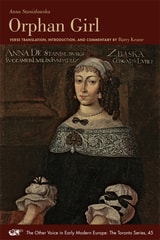
Orphan Girl
A Transaction, or an Account of the Entire Life of an Orphan Girl by way of Plaintful Threnodies in the Year 1685. The Aesop EpisodeAnna Stanislawska
Iter Press, 2016
Barry Keane's idiomatic and inventive verse translation brings to life this half-forgotten poetic account of a remarkable tale of triumph in the face of overwhelming oppression and allows Anna Stanislawska to take her place among the women poets of early modern Europe.
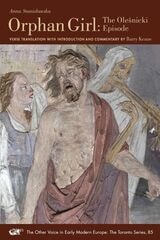
Orphan Girl
The Olesnicki Episode: One Body with Two Souls Entwined: An Epic Tale of Married Love in Seventeenth-Century PolandAnna Stanislawska
Iter Press, 2021
Written in 1685, Transaction or the Description of the Entire Life of an Orphan by Way of Plaintful Threnodies, often referred to as Orphan Girl, is a valuable, long-lost, seventeenth-century poetic text that documents women’s writing in the early modern period. In this autobiographical account, Anna Stanislawska speaks confessionally and unsparingly about her life, from her infancy to her widowhood and withdrawal from the world. Stanislawska was an incomparable memoirist, revealing the depths of her private life in a manner not to be matched until modern times. One Body with Two Souls Entwined brings together this spirited poetic account with an in-depth introductory and literary commentary by Barry Keane. Together the book offers a remarkable piece of scholarly, translational, and dramaturgical work and puts it in context amid the backdrop of Polish history.
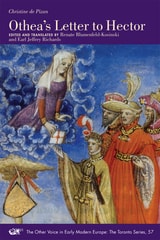
Othea’s Letter to Hector
Christine de Pizan
Iter Press, 2017
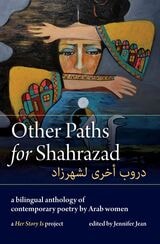
Other Paths for Shahrazad
an Arabic/English Anthology of Contemporary Poetry by Arab WomenEdited by Jennifer Jean
Tupelo Press, 2026
A project of the Her Story Is (HSI) collective, led by Iraqi and American women writers and artists, Other Paths for Shahrazad features poems curated by the Iraqi contingent of HSI. Each poem was cotranslated by HSI members and collaborators from Iraq, Syria, Jordan, Egypt, Canada, and the United States.
The anthology is arranged so that the poems are in dialogue with each other, rather than separated into stark sections according to theme, region, or author, so that the reader experiences it as they experience a standard collection of poetry: as a potent journey, as poems speaking to poems.
Contributors include Muna Alaasi, Laila Alahdab, Marwa Abo Daif, Omaima Abd Shafy, Samia Abdulrahman, Violette Abu Jalad, Huda Aldaghfaq, Hanaa Ahmed, Souzan Ali, Huda Almubark, Iman Alsebaiy, Samira Baghdadi, Salwa ben Rhouma, Fatima Bennis, Suzanne Chakaroun, Mejda Dhahri, Rasha Fadhil, Hannan Haddad, Susana Hajjar, Jackleen Salam, Salma Abdul Hussein al-Harba, Faleeha Hassan, Azhar Ali Hussein, Asmaa Hussin, Ataf Janem, Nadia Al-Katib, Nesrin Ekram Khoury, Dima Mahmod, Hoda AbdelKader Mahmoud, Fatima Mansor, Zakia Al-Marmuq, Eman Masrweh, Raghda Mostafa, Nermeen Al Mufti, Khawla Jasim Alnahi, Amira Salameh, Layla Al Sayed, Sumia al Shaybani, Zizi Shosha, Mariam Soliman, and Elham Nasser Al-Zabedy.

Other Sisterhoods
LITERARY THEORY AND U.S. WOMEN OF COLOREdited by Sandra Kumamoto Stanley
University of Illinois Press, 1998
The fifteen contributors to Other Sisterhoods: Literary Theory and
U.S. Women of Color examine the ways that women writers of color have
contributed to the discourse of literary and cultural theory. They focus
on the impact of key issues, such as social construction and identity
politics, on the works of women writers of color, as well as on the ways
these women deal with differences relating to gender, class, race/ethnicity,
and sexuality. The book also explores the ways women writers of color
have created their own ethnopoetics within the arena of literary and cultural
theory, helping to redefine the nature of theory itself.
"A sophisticated resource that will do much to carry us through
to the next century. Great work!" -- Alvina E. Quintana, author of
Home Girls: Chicana Literary Voices
CONTRIBUTORS:Sandra Kumamoto Stanley, AnaLouise Keating, Dionne
Espinoza, Kimberly N. Brown, Marilyn Edelstein, Tomo Hattori, Robin Riley
Fast, King-Kok Cheung, Timothy Libretti, Renae Moore Bredin, Jennifer
Browdy de Hernandez, Kimberly M. Blaeser, Kathryn Bond Stockton, Eun Kyung
Min, Cecilia Rodriguez Milanes
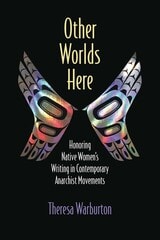
Other Worlds Here
Honoring Native Women’s Writing in Contemporary Anarchist MovementsTheresa Warburton
Northwestern University Press, 2021
All is not lost, however. Rather than centering a critical indictment of contemporary anarchist politics, Other Worlds Here maintains that a defining characteristic of New Anarchism is its ability to adapt and transform. Through close readings of texts by Native women authors, Warburton argues that anarchists must shift the paradigm that another world is possible to one that recognizes other worlds already here: stories, networks, and histories that lay out methods of building reciprocal relationships with the land and its people. Analyzing memoirs, poetry, and novels by writers including Deborah Miranda, Elissa Washuta, Heid E. Erdrich, Janet Rogers, and Leslie Marmon Silko, Other Worlds Here extends the study of Native women’s literatures beyond ethnographic analysis of Native experience to advance a widely applicable, contemporary political critique.
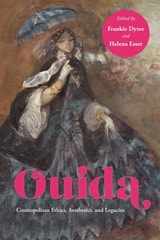
Ouida
Cosmopolitan Ethics, Aesthetics, and LegaciesFrankie Dytor and Helena Esser
Ohio University Press, 0
Outspoken, extravagant, and internationally celebrated in her lifetime, Ouida (Marie Louise de la Ramée, 1839–1908) was one of the nineteenth century’s most successful and controversial writers. Her fiction, essays, and cultural criticism captivated readers across Europe and beyond, yet her polemical politics, cosmopolitan outlook, and opulent style left her at odds with the modernist critical traditions that shaped later literary scholarship. As a result, despite her considerable influence, Ouida has remained on the margins of Victorian literary history. Ouida: Cosmopolitan Ethics, Aesthetics, and Legacies offers the first sustained examination of the ethical and aesthetic commitments that underpin Ouida’s work and its effect on nineteenth-century culture. Bringing together an international group of established and emerging scholars, the collection explores her writing through frameworks including psychogeography, ecocriticism, decadence studies, celebrity studies, and adaptation studies. Contributors reveal how Ouida challenged conventional boundaries of nation, gender, class, and species while shaping contemporary debates about art, politics, and society. Opening with a conversation between Victorian literary scholars Pamela K. Gilbert and Talia Schaffer, the volume traces Ouida’s influence across literary networks, media forms, and historical periods, from her impact on fellow authors and feminist modernists to her afterlives in adaptation, fandom, and participatory culture. Positioning Ouida as a profoundly cosmopolitan thinker and writer, the collection reconsiders the boundaries of Victorian studies itself, demonstrating how nineteenth-century literature can be understood through dynamic exchanges across genres, borders, media, and time. In doing so, it restores Ouida to a central place in literary history while highlighting the enduring relevance of her global legacy. Contributors Katja Anderson Natasha Anderson Joseph Bristow Lorraine Dubuisson Frankie Dytor Jesse R. Erickson Helena Esser Pamela K. Gilbert Andrew King Jane Jordan Crescent Rainwater Talia Schaffer Margaret D. Stetz Joanna Turner
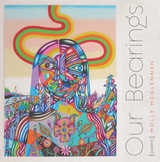
Our Bearings
PoemsMolly McGlennen; Foreword by Ben Burgess
University of Arizona Press, 2020
While working with both traditional and contemporary form, McGlennen’s unique use of space and rhythm creates poetry that is both captivating and accessible. Our Bearings does not attempt to speak for a population; rather it offers vibrant stories and moments that give voice to pieces of a large and complex tapestry of experiences. Through keen observation and a deep understanding of Native life in Minneapolis, McGlennen has created a timely collection that contributes beautifully to the important conversation about contemporary urban Native life in North America and globally.
Our Body of Work
Embodied Administration and Teachingedited by Melissa Nicolas & Anna Sicari
Utah State University Press, 2022
Open exchanges enable complex and nuanced conversations about intersectionality and how racism, sexism, classism, and ableism (among other “isms”) create systems of power. Contributors examine how these conversations are framed around work, practices, policies, and research and identify ways to create inclusive, embodied practices in writing programs and classrooms. The collection is organized to maximize representation in the areas of race, gender, identity, ability, and class by featuring scholarly chapters followed by narratively focused interchapters that respond to and engage with the scholarly work.
The honest and emotionally powerful stories in Our Body of Work expose problematic and normalizing policies, practices, and procedures and offer diverse theories and methodologies that provide multiple paths for individuals to follow to make the academy more inclusive and welcoming for all bodies. It will be an important resource for researchers, as well a valuable addition to graduate and undergraduate syllabi on embodiment, writing instruction/pedagogy, and WPA work.
Contributors: Dena Arendall, Janel Atlas, Hayat Bedaiwi, Elizabeth Boquet, Lauren Brentnell, Triauna Carey, Denise Comer, Joshua Daniel, Michael Faris, Rebecca Gerdes-McClain, Morgan Gross, Nabila Hijazi, Jacquelyn Hoermann-Elliott, Maureen Johnson, Jasmine Kar Tang, Elitza Kotzeva, Michelle LaFrance, Jasmine Lee, Lynn C. Lewis, Mary Lourdes Silva, Rita Malenczyk, Anna Rita Napoleone, Julie Prebel, Rebecca Rodriguez Carey, Ryan Skinnell, Trixie Smith, Stacey Waite, Kelsey Walker, Shannon Walters, Isaac Wang, Jennie Young
Our Lady Of Victorian Feminism
The Madonna in the Work of Anna Jameson, Margaret Fuller, and George EliotKimberly VanEsveld Adams
Ohio University Press, 2000
Our Lady of Victorian Feminism is about three nineteenth-century women, Protestants by background and feminists by conviction, who are curiously and crucially linked by their extensive use of the Madonna in arguments designed to empower women.
In the field of Victorian studies, few scholars have looked beyond the customary identification of the Christian Madonna with the Victorian feminine ideal—the domestic Madonna or the Angel in the House. Kimberly VanEsveld Adams shows, however, that these three Victorian writers made extensive use of the Madonna in feminist arguments. They were able to see this figure in new ways, freely appropriating the images of independent, powerful, and wise Virgin Mothers.
In addition to contributions in the fields of literary criticism, art history, and religious studies, Our Lady of Victorian Feminism places a needed emphasis on the connections between the intellectuals and the activists of the nineteenth-century women's movement. It also draws attention to an often neglected strain of feminist thought, essentialist feminism, which proclaimed sexual equality as well as difference, enabling the three writers to make one of their most radical arguments, that women and men are made in the image of the Virgin Mother and the Son, the two faces of the divine.

Our Lady of Thread
Patterson, Dayna
Signature Books, 2027
In Dayna Patterson’s third collection, she weaves together three threads: poems in the voice of God the Mother, prayer poems in the Catholic “Our Lady” tradition, and poems about mothering her own two kids through these fluctuating and anxious times. Our Lady of Thread pushes the boundaries of what a poetry collection can be—it includes embroidered collages, poembroideries (poem + embroidery), and a QR code that links readers to a stop-motion videopoem. In these inventive and experimental pieces, Patterson continues to wrestle with Mormon theology and history as she meditates on the feminine divine, motherhood, and the urgencies of our complex world.
Our Sisters' Keepers
Nineteenth-Century Benevolence Literature by American WomenEdited by Jill Bergman and Debra Bernardi
University of Alabama Press, 2005
American culture has long had a conflicted relationship with assistance to the poor. Cotton Mather and John Winthrop were staunch proponents of Christian charity as fundamental to colonial American society, while transcendentalists harbored deep skepticism towards benevolence in favor of Emersonian self-reliance and Thoreau’s insistence on an ascetic life. Women in the 19th century, as these essays show, approached issues of benevolence far differently than their male counterparts, consistently promoting assistance to the impoverished, in both their acts and their writings.
Out of Nowhere Into Nothing
Caryl Pagel
University of Alabama Press, 2020
Where ghosts speak and memory listens, nothing becomes everything
The ghosts—literal and figurative—that drive our deepest impulses, disturb our most precious memories, and haunt the passages of our daily lives are present in this collection of sublime meditations on the unbelievable, the coincidental, and the apparitional. Often containing reflections on the art of storytelling, Caryl Pagel’s essays blend memoir, research, and reflection, and are driven by a desire to observe connections between the visual and the invisible. The narrator of Pagel’s essays explores each enigma or encounter (a football coach’s faked death, the faces of women walking, historical accounts of hallucinations, a city’s public celebration gone wrong) as an intellectual detective ascending a labyrinthine tower of clues in pursuit of a solution to an unreachable problem: always curious, and with a sense of profound wonder.
Out of Nowhere Into Nothing is a sprawling, highly associative consideration of the ways in which the observed material world recalls us to larger narrative and aesthetic truths. Interspersed with documentary-style photographs, Pagel’s first collection of prose is a radiant, obsessive investigation into the mysteries at the center of our seemingly mundane lives.
Out of the Mountains
Appalachian StoriesMeredith Sue Willis
Ohio University Press, 2010
Meredith Sue Willis’s Out of the Mountains is a collection of thirteen short stories set in contemporary Appalachia. Firmly grounded in place, the stories voyage out into the conflicting cultural identities that native Appalachians experience as they balance mainstream and mountain identities.
Willis’s stories explore the complex negotiations between longtime natives of the region and its newcomers and the rifts that develop within families over current issues such as mountaintop removal and homophobia. Always, however, the situations depicted in these stories are explored in the service of a deeper understanding of the people involved, and of the place. This is not the mythic version of Appalachia, but the Appalachia of the twenty-first century.
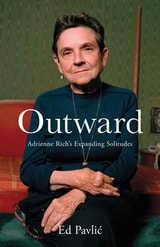
Outward
Adrienne Rich’s Expanding SolitudesEd Pavlic
University of Minnesota Press, 2021
The first scholarly study of Adrienne Rich’s full career examines the poet through her developing approach to the transformative potential of relationships
Adrienne Rich is best known as a feminist poet and activist. This iconic status owes especially to her work during the 1970s, while the distinctive political and social visions she achieved during the second half of her career remain inadequately understood. In Outward, poet, scholar, and novelist Ed Pavlić considers Rich’s entire oeuvre to argue that her most profound contribution in poems is her emphasis on not only what goes on “within us” but also what goes on “between us.” Guided by this insight, Pavlić shows how Rich’s most radical work depicts our lives—from the public to the intimate—in shared space rather than in owned privacy.
Informed by Pavlić’s friendship and correspondence with Rich, Outward explores how her poems position visionary possibilities to contend with cruelty and violence in our world. Employing an innovative framework, Pavlić examines five kinds of solitude reflected in Rich’s poems: relational solitude, social solitude, fugitive solitude, dissident solitude, and radical solitude. He traces the importance of relationships to her early writing before turning to Rich’s explicitly antiracist and anticapitalist work in the 1980s, which culminates with her most extensive sequence, “An Atlas of the Difficult World.” Pavlić concludes by examining the poet’s twenty-first century work and its depiction of relationships that defy historical divisions based on region, race, class, gender, and sexuality.
A deftly written engagement in which one poet works within the poems of another, Outward reveals the development of a major feminist thinker in successive phases as Rich furthers her intimate and erotic, social and political reach. Pavlić illuminates Rich’s belief that social divisions and the power of capital inform but must never fully script our identities or our relationships to each other.
Oyster Saloon
Desirée Alvarez
Omnidawn, 2026
Poetry that considers art, family history, and creativity.
This collection charts the life of an artist and her passion for nature through the making of a painting. Poems revel in the space humans occupy within the natural world, considering ways of living that range from harmonious to extractive. Alvarez reflects on petroleum, plastic, robots, monsters, and a swath of art history and family history—from her Latino father's time working as an artist in Andy Warhol’s Factory to the teachings of Hokusai. Acting asa séance conjuring the voices of the dead as a guide, the book is part elegy to the poet’s mother, who was a painter and gardener. Steeped in the rural New England countryside of the poet’s childhood and the lore of her indigenous ancestral family in Puerto Rico and Mexico, Oyster Saloon straddles contrasting heritage and landscapes and considers what it means to live a creative life.
of Women
20 Japanese Female Poets / 20 Waka PoemsEdited by Naoko Fujimoto
Tupelo Press, 2026
Of Women is a collection of translations of Japanese waka-poems from the seventh century to the twelfth century, featuring twenty female poets from this period, when Japanese women’s literature flourished. This book includes poems by famous writers from the era, such as Sei Shonagon (The Pillow Book) and Murasaki Shikibu (The Tale of Genji), and introduces some lesser-known female poets as well.
Waka compacts much information in a short form: words with double meanings, unfamiliar phrases, habits foreign to non-Japanese speakers, and hidden historical backgrounds. Direct translations would fail to capture the author’s full intent, so Of Women takes several approaches to capture the original sensory images, including text collage and haibun, short essays that provide historical context and introduce the author before each waka.
or, on being the other woman
Simone White
Duke University Press, 2022