Results by title
28164 books match the query 'History' and 581 start with o
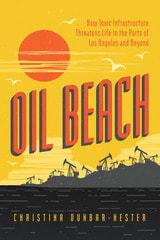
Oil Beach
How Toxic Infrastructure Threatens Life in the Ports of Los Angeles and BeyondChristina Dunbar-Hester
University of Chicago Press, 2023
San Pedro Bay, which contains the contiguous Ports of Los Angeles and Long Beach, is a significant site for petroleum shipping and refining as well as one of the largest container shipping ports in the world—some forty percent of containerized imports to the United States pass through this so-called America’s Port. It is also ecologically rich. Built atop a land- and waterscape of vital importance to wildlife, the heavily industrialized Los Angeles Harbor contains estuarial wetlands, the LA River mouth, and a marine ecology where colder and warmer Pacific Ocean waters meet. In this compelling interdisciplinary investigation, award-winning author Christina Dunbar-Hester explores the complex relationships among commerce, empire, environment, and the nonhuman life forms of San Pedro Bay over the last fifty years—a period coinciding with the era of modern environmental regulation in the United States. The LA port complex is not simply a local site, Dunbar-Hester argues, but a node in a network that enables the continued expansion of capitalism, propelling trade as it drives the extraction of natural resources, labor violations, pollution, and other harms. Focusing specifically on cetaceans, bananas, sea birds, and otters whose lives are intertwined with the vitality of the port complex itself, Oil Beach reveals how logistics infrastructure threatens ecologies as it circulates goods and capital—and helps us to consider a future where the accumulation of life and the accumulation of capital are not in violent tension.
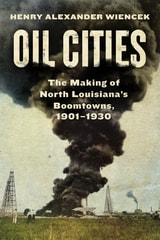
Oil Cities
The Making of North Louisiana’s Boomtowns, 1901-1930Henry Alexander Wiencek
University of Texas Press, 2024
How international oil companies navigated the local, segregated landscape of north Louisiana in the first decades of the twentieth century.
In 1904, prospectors discovered oil in the rural parishes of North Louisiana just outside Shreveport. As rural cotton fields gave way to dense, industrial centers of energy extraction, migrants from across the US—and the world—rushed to take a share of the boom. The resulting boomtowns, most notoriously Oil City, quickly gained a reputation for violence, drinking, and rough living. Meanwhile, North Louisiana’s large Black population endured virulent white supremacy in the oil fields and the courtrooms to earn a piece of the boom, including one Black woman who stood to become the wealthiest oil heiress in America.
In Oil Cities, Henry Wiencek uncovers what life was like amidst the tent cities, saloons, and oil derricks of North Louisiana’s oil boomtowns, tracing the local experiences of migrants, farmers, sex workers, and politicians as they navigated dizzying changes to their communities. This first historical monograph on the region’s dramatic oil boom reveals a contested history, in which the oil industry had to adapt its labor, tools, and investments to meet North Louisiana’s unique economic, social, political, and environmental dynamics.

Oil Culture
Ross Barrett
University of Minnesota Press, 2014
In the 150 years since the birth of the petroleum industry oil has saturated our culture, fueling our cars and wars, our economy and policies. But just as thoroughly, culture saturates oil. So what exactly is “oil culture”? This book pursues an answer through petrocapitalism’s history in literature, film, fine art, wartime propaganda, and museum displays. Investigating cultural discourses that have taken shape around oil, these essays compose the first sustained attempt to understand how petroleum has suffused the Western imagination.
The contributors to this volume examine the oil culture nexus, beginning with the whale oil culture it replaced and analyzing literature and films such as Giant, Sundown, Bernardo Bertolucci’s La Via del Petrolio, and Ben Okri’s “What the Tapster Saw”; corporate art, museum installations, and contemporary photography; and in apocalyptic visions of environmental disaster and science fiction. By considering oil as both a natural resource and a trope, the authors show how oil’s dominance is part of culture rather than an economic or physical necessity. Oil Culture sees beyond oil capitalism to alternative modes of energy production and consumption.
Contributors: Georgiana Banita, U of Bamberg; Frederick Buell, Queens College; Gerry Canavan, Marquette U; Melanie Doherty, Wesleyan College; Sarah Frohardt-Lane, Ripon College, Matthew T. Huber, Syracuse U; Dolly Jørgensen, Umeå U; Stephanie LeMenager, U of Oregon; Hanna Musiol, Northeastern U; Chad H. Parker, U of Louisiana at Lafayette; Ruth Salvaggio, U of North Carolina, Chapel Hill; Heidi Scott, Florida International U; Imre Szeman, U of Alberta; Michael Watts, U of California, Berkeley; Jennifer Wenzel, Columbia University; Sheena Wilson, U of Alberta; Rochelle Raineri Zuck, U of Minnesota Duluth; Catherine Zuromskis, U of New Mexico.
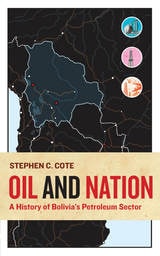
Oil and Nation
A History of Bolivia's Petroleum SectorStephen C. Cote
West Virginia University Press, 2016
The book advances chronologically from Bolivia’s earliest petroleum pioneers in the nineteenth century until the present, inserting oil into historical debates about Bolivian ethnic, racial, and environmental issues, and within development strategies by different administrations. While Bolivia is best known for its tin mining, Oil and Nation makes the case that nationalist reformers viewed hydrocarbons and the state oil company as a way to modernize the country away from the tin monoculture and its powerful backers and toward an oil-powered future.
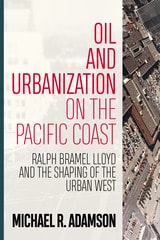
Oil and Urbanization on the Pacific Coast
Ralph Bramel Lloyd and the Shaping of the Urban WestMichael R. Adamson
West Virginia University Press, 2018
Oil and Urbanization on the Pacific Coast tells the story of oilman Ralph Bramel Lloyd, a small business owner who drove the development of one of America’s largest oil fields. Lloyd invested his petroleum earnings in commercial real estate—much of it centered around automobiles and the fuel they require—in several western cities, notably Portland, Oregon. Putting the history of extractive industry in dialogue with the history of urban development, Michael R. Adamson shows how energy is woven into the fabric of modern life, and how the “energy capital” of Los Angeles exerted far-flung influence in the US West.
A contribution to the relatively understudied history of small businesses in the United States, Oil and Urbanization on the Pacific Coast explores issues of interest to multiple audiences, such as the competition for influence over urban development waged among local growth machines and outside corporate interests; the urban rivalries of a region; the importance of public capital in mobilizing the commercial real estate sector during the Great Depression and World War II; and the relationships among owners, architects, and contractors in the execution of commercial building projects.

Oil and Water
Being Han in XinjiangTom Cliff
University of Chicago Press, 2016
With Oil and Water, anthropologist Tom Cliff offers the first ethnographic study of Han in Xinjiang, using in-depth vignettes, oral histories, and more than fifty original photographs to explore how and why they became the people they are now. By shifting focus to the lived experience of ordinary Han settlers, Oil and Water provides an entirely new perspective on Chinese nation building in the twenty-first century and demonstrates the vital role that Xinjiang Han play in national politics—not simply as Beijing’s pawns, but as individuals pursuing their own survival and dreams on the frontier.
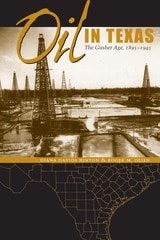
Oil in Texas
The Gusher Age, 1895-1945By Diana Davids Hinton and Roger M. Olien
University of Texas Press, 2002
As the twentieth century began, oil in Texas was easy to find, but the quantities were too small to attract industrial capital and production. Then, on January 10, 1901, the Spindletop gusher blew in. Over the next fifty years, oil transformed Texas, creating a booming economy that built cities, attracted out-of-state workers and companies, funded schools and universities, and generated wealth that raised the overall standard of living—even for blue-collar workers. No other twentieth-century development had a more profound effect upon the state.
In this book, Roger M. Olien and Diana Davids Hinton chronicle the explosive growth of the Texas oil industry from the first commercial production at Corsicana in the 1890s through the vital role of Texas oil in World War II. Using both archival records and oral histories, they follow the wildcatters and the gushers as the oil industry spread into almost every region of the state. The authors trace the development of many branches of the petroleum industry—pipelines, refining, petrochemicals, and natural gas. They also explore how overproduction and volatile prices led to increasing regulation and gave broad regulatory powers to the Texas Railroad Commission.
Oil, Banks, and Politics
The United States and Postrevolutionary Mexico, 1917–1924By Linda B. Hall
University of Texas Press, 1995
Mexico was second only to the United States as the world's largest oil producer in the years following the Mexican Revolution. As the revolutionary government became institutionalized, it sought to assure its control of Mexico's oil resources through the Constitution of 1917, which returned subsoil rights to the nation. This comprehensive study explores the resulting struggle between oil producers, many of which were U.S. companies, and the Mexican government.
Linda Hall goes beyond the diplomacy to look at the direct impact of a powerful, highly profitable foreign-controlled industry on a government and a nation trying to recover from a major civil war. She draws on extensive research in Mexican archives, including both government sources and the private papers of Presidents Alvaro Obregón and Plutarco Elías Calles, as well as U.S. government and private sources.
Since the North American Free Trade Agreement has expanded United States business ties to Mexico, this study of a crucial moment in U.S.-Mexican business relations will be of interest to a wide audience in business, diplomatic, and political history.
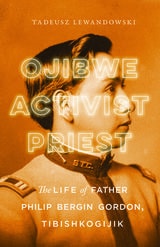
Ojibwe, Activist, Priest
The Life of Father Philip Bergin Gordon, TibishkogijikTadeusz Lewandowski
University of Wisconsin Press, 2019
Drawing on previously unexplored materials, Tadeusz Lewandowski paints a portrait of a contentious life. Ojibwe, Activist, Priest examines Gordon's efforts to abolish the Bureau of Indian Affairs, his membership in the Society of American Indians, and his dismissal from his Ojibwe parish and exile to a tiny community where he'd be less likely to stir up controversy. Lewandowski illuminates a significant chapter in the struggle for Native American rights through the views and experiences of a key Native progressive.
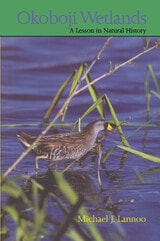
Okoboji Wetlands
A Lesson in Natural HistoryMichael J. Lannoo
University of Iowa Press, 1996
Lake Okoboji in northwest Iowa is the jewel of the Iowa Great Lakes. A region of wetlands formed by prairie potholes, the area is rich with lakes, sloughs, fens, creeks, prairies, and kettleholes. In this readable and beautifully illustrated volume, Michael Lannoo presents an extensive natural history of Okoboji and its cherished wetlands that examines that world of our grandparents, compares it to today's world, and extrapolates to the world of our grandchildren.
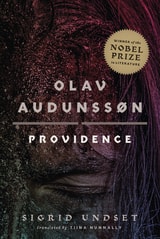
Olav Audunssøn
II. ProvidenceSigrid Undset
University of Minnesota Press, 2021
The second volume in the Nobel Prize–winning writer’s epic of medieval Norway, finely capturing Undset’s fluid, natural style in a new English translation, the first in nearly a century
As Norway moves into the fourteenth century, the kingdom continues to be racked by political turmoil and bloody family vendettas that serve as the backdrop for Sigrid Undset’s masterful story about Olav Audunssøn and Ingunn Steinfinnsdatter. Betrothed as children and raised as foster siblings, their unbridled love for each other sets in motion a series of dire events—with a legacy of betrayal, murder, and disgrace that will echo for generations. In Providence, the second of Olav Audunssøn’s four volumes, Olav settles in at his ancestral estate of Hestviken and soon brings Ingunn home as his wife. Both hope to put their troubles behind them as they start a new life together, but the crimes and shameful secrets of the past have a long reach and a tenacious hold. The consequences of sin, suspicion, and familial obligations may prove a greater threat to the pair’s happiness than even their long years of separation.
Set in a time when royalty and religion vie for power, and bloodlines and loyalties are effectively law, Providence summons a powerful picture of Northern life in the medieval era, as the Swedish Academy noted in awarding Undset the Nobel Prize. Conveying both the intimate drama of Olav and Ingunn’s marriage and the epic sweep of their story, it is at once a moving and vivid recreation of a vanished world tainted by bloodshed and haunted by sin and retribution.
As with her classic Kristin Lavransdatter, Sigrid Undset immersed herself in legal, religious, and historical writings to create in Olav Audunssøn an astoundingly authentic and compelling portrait of Norwegian life in the Middle Ages. And as in her translation of Kristin Lavransdatter, Tiina Nunnally does full justice to Undset’s fluid prose. Undset’s writing style is by turns straightforward and delicately lyrical, conveying the natural world, the complex culture, and the fraught emotional territory against which Olav’s story inexorably unfolds.
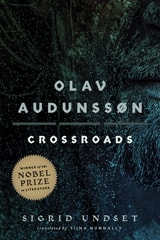
Olav Audunssøn
III. CrossroadsSigrid Undset
University of Minnesota Press, 2022
The third volume in the Nobel Prize–winning writer’s epic story of medieval Norway, finely capturing Undset’s fluid, natural style in the first English translation in nearly a century
In the early fourteenth century, Norway is a kingdom in political turmoil, struggling with opposing forces within its own borders and drawn into strife with neighboring Sweden and Denmark. Bloody family vendettas and conflicting loyalties sparked by the irrepressible passion of a boy and his foster sister (also his betrothed) have now set in motion a series of terrible consequences—with a legacy of betrayal, murder, and disgrace that will echo down through the generations. Crossroads, the third of Olav Audunssøn’s four volumes, finds Olav heartbroken by loss and further estranged from his son. To escape his grief, Olav leaves his home estate of Hestviken and agrees to serve as captain on a small merchant ship headed to London. There, separated from everything familiar to him, Olav begins a visionary journey that will send him far into the forest and deep into his soul. Questioning past decisions and future plans, Olav must grapple with his own perceptions of love and guilt, sin and penitence, vengeance and forgiveness.
Set in a time and place where royalty and religion vie for power, and bloodlines and loyalties are law, Crossroads summons a powerful picture of Northern life in medieval times, as the Swedish Academy noted in awarding Sigrid Undset the Nobel Prize in 1928. Conveying both the intimate drama and epic sweep of Olav’s story as grief and guilt drive him to ever more desperate action, Crossroads is a moving and masterly re-creation of a vanished world tainted by bloodshed and haunted by sin and retribution.
As with Kristin Lavransdatter, her earlier medieval epic, Undset immersed herself in the legal, religious, and historical documents of the time while writing Olav Audunssøn to create astoundingly authentic and compelling portraits of Norwegian life in the Middle Ages. And as in her translation of Kristin Lavransdatter, Tiina Nunnally does full justice to Undset’s natural, fluid prose, in a style that delicately and lyrically conveys the natural world, the complex culture, and the fraught emotional territory against which Olav’s story inexorably unfolds.
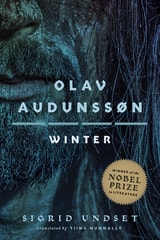
Olav Audunssøn
IV. WinterSigrid Undset
University of Minnesota Press, 2023
The fourth and final volume in the Nobel Prize–winning writer’s epic of one man’s fateful life in medieval Norway
Set in thirteenth-century Norway, a land racked by political turmoil, bloody family vendettas, and rising tensions between secular powers and an ascendant church, Sigrid Undset’s spellbinding masterpiece now follows the fortunes of Olav Audunssøn to the final, dramatic chapter of his life as it unfolds in Winter, the last volume of the tetralogy. When the orphaned Olav and his foster sister Ingunn became betrothed in their youth, a chain of events was set in motion that eventually led to violence, banishment, and a family separation lasting years. The consequences fracture their marriage and threaten the lineage for generations. Now, at the end of his life, Olav continues to grapple with the guilt of his sins as he watches his children, especially Eirik, make disastrous choices and struggle to find their rightful place in a family haunted by the past.
With its precise details and sweeping vision, Olav Audunssøn summons a powerful picture of Northern life in medieval times, as noted by the Swedish Academy in awarding Undset the Nobel Prize in 1928. Conveying both the intimate drama and the epic proportions of Olav’s story at its conclusion, Winter is a moving and masterly recreation of a vanished world tainted by bloodshed and haunted by sin and retribution—yet one that might still offer a chance for redemption.
As with Kristin Lavransdatter, her earlier medieval epic, Sigrid Undset wrote Olav Audunssøn after immersive research in the legal, religious, and historical writings of the time to create an astoundingly authentic and compelling portrait of Norwegian life in the Middle Ages. And as in her translation of Kristin Lavransdatter, Tiina Nunnally does full justice to Undset’s natural, fluid prose—in a style by turns plainspoken and delicately lyrical—to convey the natural world, the complex culture, and the fraught emotional territory against which Olav’s story inexorably unfolds.
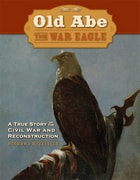
Old Abe the War Eagle
A True Story of the Civil War And ReconstructionRichard Zeitlin
Wisconsin Historical Society Press, 1986
The story of Old Abe, the bald eagle that became the mascot of the Eighth Regiment of Wisconsin Volunteer Infantry. It is also the story of the men among whom Old Abe lived: the farmers, loggers, clerks, and immigrants who flocked to the colors in 1861.
Reissued in 2012 with a new cover.
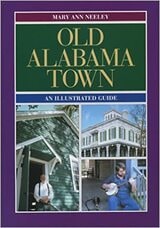
Old Alabama Town
An Illustrated GuideMary Ann Neeley
University of Alabama Press, 2002
Old Alabama Town is a visual and historical chronicle of one of the South's important architectural landmarks—four blocks of 19th-century buildings restored to their original condition, collectively forming an educational village that preserves and displays life as it was lived in Alabama from the 1830s through the 1890s. A creation of the Landmarks Foundation of Montgomery, a nonprofit organization developed in 1967, Old Alabama Town displays the lifestyles and environment of the time period through architecture, decorative arts, and living history. The "town" has been made available for students, secondary school educators for field trips, and to tourists for entertainment and family excursions.
More than 50 historic structures, all formerly in danger of demolition, have been transported from around central Alabama and restored on site. The Living Block of the village allows visitors to explore a log cabin, dogtrot house, carriage house, "shotgun" house, pole barn, schoolhouse, tavern, grange hall, and grocery. The Working Block allows patrons to visit a blacksmith's shop, drugstore, grist mill, cotton gin, woodcarver's shop, print shop, and cookhouse. Additional regions of the village present some of the most significant historic homes to be preserved in the state: the Cram-Lakin House, Thompson Mansion, and the Ordeman-Mitchell-Shaw House, among others.
Designed in full color, this paperback guide is introduced by the author's historical, sociological, and cultural overview of Montgomery. The 45 individual entries detail the history and features of each structure and are supplemented by a map, archival photographs of the buildings, and 60 contempo-rary color photographs. This book will be useful to tourists, preservationists, students and scholars of Alabama history and architecture, and all those interested in an interpretive museum of southern life.
Old Birch Island Cemetery and the Early Historic Trade Route
Georgian Bay, OntarioEmerson F. Greenman
University of Michigan Press, 1951
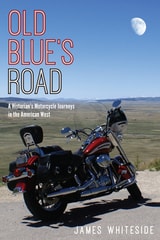
Old Blue's Road
A Historian's Motorcycle Journeys in the American WestJames Whiteside
University Press of Colorado, 2014
In 2005, Whiteside bought a Harley Davidson Heritage Softail, christened it “Old Blue,” and set off on a series of far-reaching motorcycle adventures. Over six years he traveled more than 15,000 miles. Part travelogue and part historical tour, this book takes the reader along for the ride. Whiteside’s travels to the Pacific Northwest, Yellowstone, Dodge City, Santa Fe, Wounded Knee, and many other locales prompt consideration of myriad topics—the ongoing struggle between Indian and mainstream American culture, the meaning of community, the sustainability of the West's hydraulic society, the creation of the national parks system, the Mormon experience in Utah, the internment of Japanese Americans during World War II, and more.
Delightfully funny and insightful, Old Blue’s Road links the colorful history and vibrant present from Whiteside’s unique vantage point, recognizing and reflecting on the processes of change that made the West what it is today. The book will interest the general reader and western historian alike, leading to new appreciation for the complex ways in which the American West's past and present come together.
Old Burial Grounds of New Jersey
A GuideJanice Kohl Sarapin
Rutgers University Press, 1994
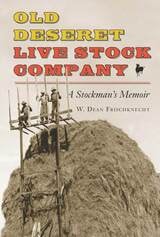
Old Deseret Live Stock Company
A Stockman's MemoirW. Dean Frischknecht
Utah State University Press, 2008
In the high country of the northern Wasatch Mountains, lies what is left of one of the West’s largest ranches. Deseret Live Stock Company was reputed at various times to be the largest private landholder in Utah and the single biggest producer of wool in the world. The ranch began as a sheep operation, but as it found success, it also ran cattle. Incorporated in the 1890s by a number of northern Utah ranchers who pooled their resources, the company was at the height of successful operations in the mid-twentieth century when a young Dean Frischknecht, bearing a recent degree in animal science, landed the job of sheep foreman. In his memoir he recounts in detail how Deseret managed huge herds of livestock, vast lands, and rich wildlife and recalls through lively anecdotes how stockmen and their families lived and worked in the Wasatch Mountains and Skull Valley’s desert wintering grounds.

Old Farm Country Cookbook
Recipes, Menus, and MemoriesJerry Apps
Wisconsin Historical Society Press, 2017
Inspired by the dishes made by his mother, Eleanor, and featuring recipes found in her well-worn recipe box, Jerry and his daughter, Susan, take us on a culinary tour of life on the farm during the Depression and World War II. Seasoned with personal stories, menus, and family photos, Old Farm Country Cookbook recalls a time when electricity had not yet found its way to the farm, when making sauerkraut was a family endeavor, and when homemade ice cream tasted better than anything you could buy at the store.
Old Farm
A HistoryJerry Apps
Wisconsin Historical Society Press, 2013
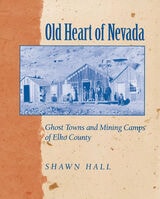
Old Heart Of Nevada
Ghost Towns And Mining Camps Of Elko CountyShawn Hall
University of Nevada Press, 1998
Elko County, in the old heart of Nevada, is rich in historic sites, many of them hitherto uncharted and some verging on disappearing. For the first time, historian Shawn Hall identifies and locates the ghost towns and old mining camps of Elko County and recounts their colorful histories. Following a guidebook format, Hall divides the county into five easily accessible regions, then lists the historic sites within each region and provides directions to reach them. He offers a brief history of each site as well as a description of its extant structures and their present condition. The result is a lively compilation of local history and mining and ranching lore that records the dramatic past of Nevada’s northeast corner, its pioneers and prospectors, its towns and mines, its outlaws, ranchers, merchants, mining concerns, and civic leaders. The book offers never-before available information about the old heart of Nevada and the people who settled there. It will be of enduring value to tourists and weekend explorers, historic preservationists, and all those interested in the history and artifacts of this region.
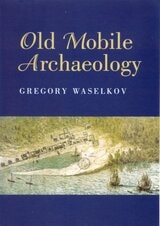
Old Mobile Archaeology
Gregory A. Waselkov
University of Alabama Press, 2005
An archaeological guide to the earliest French settlement on the northern Gulf Coast. Archaeological excavations since 1989 have uncovered exciting evidence of the original townsite of Mobile, first capital of the Louisiana colony, and remnants of the colony's port on Dauphin Island.
Old Mobile
Fort Louis de la Louisiane, 1702-1711Jay Higginbotham
University of Alabama Press, 1991
“Higginbotham has given to American historiography a microcosmic view of one of the earliest and most important outposts in the colonial new world. The Latin South can henceforth not be ignored.” —Alabama Historical Quarterly
“The definitive account . . . superbly recounted.” —Journal of Southern History
“Meticulously documented. . . . Recommended for libraries interested in the colonial period.” —Choice
“Mind-boggling . . . a stupendous job of research. It is amazing that Higginbotham can recreate in such detail the lives of these people. All history books should be written like this.” —BirminghamMagazine
Old Orchard Farm
The Story of an Iowa BoyhoodHugh Orchard
University of Iowa Press, 2010

Old Paint
A Medical History of Childhood Lead-Paint Poisoning in the United States to 1980English, Peter C.
Rutgers University Press, 2001
In the early twentieth century lead had many domestic uses: in solder for cans, as a gasoline additive to prevent “knocking” in engines, in water pipes, and, most prominently, in interior paint prized for its durability and ability to hold color. Far from being the toxic hazard we recognize today, lead was a valuable commodity. However, by the end of the century, lead had largely disappeared from our environment as physicians discovered the threat it posed to children’s health and mental development.
Old Paint documents the history of lead-paint poisoning in the United States and the evolving responses of public health officials and the lead-paint industry to this hazard up to 1980, by which time lead had been banned from gasoline and paint. Peter C. English traces lead poisoning from a rare, but acute problem confined to a small group of children to the discovery by the end of the 1940s of the dangers of the crumbling lead-painted interiors of inner-city dwellings. He draws on a wide range of primary materials not only to illuminate our understanding of how this health hazard changed over time, but also to explore how diseases are constructed and evolve.

Old Province of Quebec
Alfred Leroy Burt
University of Minnesota Press, 1933
Old Province of Quebec was first published in 1933. Minnesota Archive Editions uses digital technology to make long-unavailable books once again accessible, and are published unaltered from the original University of Minnesota Press editions.
Old Riot, New Ranger
Captain Jack Dean, Texas Ranger and U.S. MarshalBob Alexander
University of North Texas Press, 2018
Old South, New South, or Down South?
Florida and the Modern Civil Rights MovementEdited by Irvin D. S. Winsboro
West Virginia University Press, 2009
How does a state, tarnished with a racist, violent history, emerge from the modern civil rights movement with a reputation for tolerance and progression? Old South, New South, or Down South?: Florida and the Modern Civil Rights Movement exposes the image, illusion, and reality behind Florida’s hidden story of racial discrimination and violence. By exploring multiple perspectives on racially motivated events, such as black agency, political stonewalling, and racist assaults, this collection of nine essays reconceptualizes the civil rights legacy of the Sunshine State. Its dissection of local, isolated acts of rebellion reveals a strategic, political concealment of the once dominant, often overlooked, old south attitude towards race in Florida.
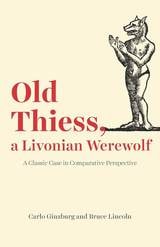
Old Thiess, a Livonian Werewolf
A Classic Case in Comparative PerspectiveCarlo Ginzburg and Bruce Lincoln
University of Chicago Press, 2020
In this book, eminent scholars Carlo Ginzburg and Bruce Lincoln offer a uniquely comparative look at the trial and startling testimony of Old Thiess. They present the first English translation of the trial transcript, in which the man’s own voice can be heard, before turning to subsequent analyses of the event, which range from efforts to connect Old Thiess to shamanistic practices to the argument that he was reacting against cruel stereotypes of the “Livonian werewolf” a Germanic elite used to justify their rule over the Baltic peasantry. As Ginzburg and Lincoln debate their own and others’ perspectives, they also reflect on broader issues of historical theory, method, and politics. Part source text of the trial, part discussion of historians’ thoughts on the case, and part dialogue over the merits and perils of their different methodological approaches, Old Thiess, a Livonian Werewolf opens up fresh insight into a remarkable historical occurrence and, through it, the very discipline of history itself.
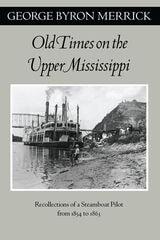
Old Times on the Upper Mississippi
Recollections of a Steamboat Pilot from 1854 to 1863George Byron Merrick
University of Minnesota Press, 2001
A long-awaited new edition of the steamboating classic.
George Byron Merrick chronicles the entire panorama of steamboat life he experienced in the mid-1800s, where he started as a cabin boy and worked up to cub pilot on the mighty Mississippi. Originally published in 1909, Merrick’s narrative matches lively stories about gamblers, shipwrecks, and steamboat races with rich descriptions of river life and steamboat operations.
Fesler-Lampert Minnesota Heritage Series
Old Wine
Phyllis Bottome
Northwestern University Press, 1998
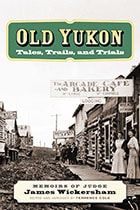
Old Yukon
Tales, Trails, and TrialsJames Wickersham
University of Alaska Press, 2009
In this humorous and upbeat memoir, James Wickersham describes his career as a pioneer judge and later as a congressional representative assigned to a vast, snow-covered district, extending over 300,000 square miles in the undeveloped Alaska Territory. Wickersham’s many adventures include traveling by dogsled over hundreds of miles through snow-covered mountains; serving as judge for the trials of many famous outlaws in the midst of the gold strikes; and hunting, mining, and climbing in his local Alaska wilderness. Though he was instrumental in the early history of Alaska, and his legacy is evident throughout the state—for example, he named the city of Fairbanks—this is the first and only work to focus on Wickersham’s life during this pivotal time in Alaska’s history.
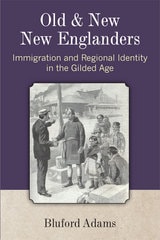
Old and New New Englanders
Immigration and Regional Identity in the Gilded AgeBluford Adams
University of Michigan Press, 2014
In Old and New New Englanders, Bluford Adams provides a reenvisioning of New England’s history and regional identity by exploring the ways the arrival of waves of immigrants from Europe and Canada transformed what it meant to be a New Englander during the Gilded Age. Adams’s intervention challenges a number of long-standing conceptions of New England, offering a detailed and complex portrayal of the relations between New England’s Yankees and immigrants that goes beyond nativism and assimilation. In focusing on immigration in this period, Adams provides a fresh view on New England’s regional identity, moving forward from Pilgrims, Puritans, and their descendants and emphasizing the role immigrants played in shaping the region’s various meanings. Furthermore, many researchers have overlooked the newcomers’ relationship to the regional identities they found here. Adams argues immigrants took their ties to New England seriously. Although they often disagreed about the nature of those ties, many immigrant leaders believed identification with New England would benefit their peoples in their struggles both in the United States and back in their ancestral lands.
Drawing on and contributing to work in immigration history, as well as American, gender, ethnic, and New England studies, this book is broadly concerned with the history of identity construction in the United States while its primary focus is the relationship between regional categories of identity and those based on race and ethnicity. With its interdisciplinary methodology, original research, and diverse chapter topics, the book targets both specialist and nonspecialist readers.
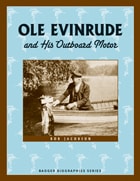
Ole Evinrude and His Outboard Motor
Bob Jacobson
Wisconsin Historical Society Press, 2009
Wisconsin entrepreneur Ole Evinrude will inspire children in this addition to the Badger Biographies series for young readers, where the story of Ole's invention, from drawing board to factory floor, is told in a reader-friendly format that includes historic images, a glossary of terms, and sidebars explaining how an outboard motor works.
Ole Evinrude was born in Norway in 1877 and immigrated to the United States when he was five years old. The Evinrude family settled in Wisconsin and began farming, but it was clear from a very young age that Ole would not follow the family tradition. Ole Evinrude was meant to work with boats.
Building an outboard motor was not easy, though - Ole suffered numerous mechanical and financial setbacks along the way. After years of hard work and persistence, the Evinrude motor company was founded and Ole's outboard motors were an instant hit around the world. Ole continued to improve the design of his motor and attracted other entrepreneurs to the area, making Wisconsin the center of the outboard motor industry for decades.

Ole Hendricks and His Tunebook
Folk Music and Community on the FrontierAmy M. Shaw
University of Wisconsin Press, 2020
Such tunebooks, popular during the nineteenth century, rarely survive and are often overlooked by folk scholars in favor of commercially produced recordings, published sheet music, or oral tradition. Based on extensive historical and genealogical research, Amy Shaw presents a grounded picture of a musician, his family, and his community in the Upper Midwest, revealing much about music and dance in the area. This notable contribution to regional music and folklore includes more than one hundred of Ole's dance tunes, transcribed into modern musical notation for the first time. Ole Hendricks and His Tunebook will be valuable to readers and scholars interested in ethnomusicology and the Norwegian American immigrant experience.
Olimpismo
The Olympic Movement in the Making of Latin America and the CaribbeanAntonio Sotomayor
University of Arkansas Press, 2020
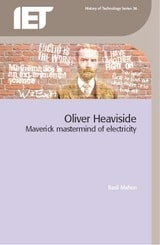
Oliver Heaviside
Maverick Mastermind of ElectricityBasil Mahon
The Institution of Engineering and Technology, 2009
Olmsted's Riverside
Stewardship Meets Innovation in a Landmark VillageCathy Jean Maloney
Southern Illinois University Press, 2024
WINNER, Certificate of Excellence in “Scholarly Publications” from the Illinois State Historical Society’s 2025 Best of Illinois History Awards!
Honorable Mention, 2025 Society of Midland Authors Award in History!
The challenge to preserve Chicagoland’s unique haven
Just outside the bustling metropolis of Chicago lies the unlikely green oasis of Riverside, Illinois, a small village that has continued to directly influence American landscapes and suburbs since the 1870s. Once farmland, the location provided a blank canvas for preeminent designers Fredrick Law Olmsted and Calvert Vaux’s manifestation of a truly democratic society. Olmsted’s Riverside details the village’s historical significance, harmony with nature, and its nearly 150-year impact on American suburbs today.
Cathy Jean Maloney explores how Riverside’s layout and design presaged today’s urban planning goals of walkability, green space, public transportation access, sustainability, and resiliency. Houses in Riverside are set back from the road, sidewalks meander along gently curving roads, and public green spaces abound. Maloney shows how Riverside’s leaders and residents struggled with stewardship of Olmsted’s ideals by balancing competing interests in suburban development and Chicago sprawl from the 1870s to the 2020s. She details in chronological chapters how the village adapted to tragedies such as the Great Fire of 1871 and the Panic of 1873, as well as advancements in transportation, local civic life, urban policy, and environmental thought, all while staying true to the framework inherited from Olmsted and Vaux.
Olmsted’s Riverside provides engaging examples of how citizen involvement can protect a community’s ideals. This richly illustrated volume combines landscape architecture, regional history, and urban design to show how audacious civic planning and thoughtful conservation can provide a model for future American suburbs.
Omar Nelson Bradley
America's GI General, 1893-1981Steven L. Ossad
University of Missouri Press, 2017
Omar Nelson Bradley was the youngest and last of nine men to earn five-star rank and the only army officer so honored after World War II. This new biography by Steven L. Ossad gives an account of Bradley’s formative years, his decorated career, and his postwar life.
Bradley’s decisions shaped the five Northwest European Campaigns from the D-Day landings to VE Day. As the man who successfully led more Americans in battle than any other in our history, his long-term importance would seem assured. Yet his name is not discussed often in the classrooms of either civilian or military academies, either as a fount of tactical or operational lessons learned, or a source of inspiration for leadership exercised at Corps, Army, Group, Army Chief, or Joint Chiefs of Staff levels.
The Bradley image was tailor-made for the quintessential homespun American heroic ideal and was considered by many to be a simple, humble country boy who rose to the pinnacle of power through honesty, hard work, loyalty and virtuous behavior. Even though his classmates in both high school and at West Point made remarks about his looks, and Bradley was always self-conscious about smiling because of an accident involving his teeth, he went on to command 12 Army Group, the largest body of American fighting men under a single general.
Bradley’s postwar career as administrator of the original GI Bill and first Chairman of the Joint Chiefs of Staff during the Korean War ensures his legacy. These latter contributions, as much as Bradley’s demonstrable World War II leadership, shaped U.S. history and culture in decisive, dramatic, and previously unexamined ways.
Drawing on primary sources such as those at West Point, Army War College and Imperial War Museum, this book focuses on key decisions, often through the eyes of eyewitness and diarist, British liaison officer Major Thomas Bigland. The challenges our nation faces sound familiar to his problems: fighting ideologically-driven enemies across the globe, coordinating global strategy with allies, and providing care and benefits for our veterans.
Omens of Adversity
Tragedy, Time, Memory, JusticeDavid Scott
Duke University Press, 2014
On "A Being" and "An Essence" (<i>De ente et essentia</i>)
Thomas Aquinas
Catholic University of America Press, 2026
On Addiction
Insights from History, Ethnography, and Critical TheoryDarin Weinberg
Duke University Press, 2024
On Any Given Sunday
A Life of Bert BellRobert S. Lyons, Foreword by Don Shula
Temple University Press, 2009
Bell, who arguably saved the league from bankruptcy by conceiving the idea for the annual player draft, later made the historic decision to introduce “sudden death” overtime—a move that propelled professional football into the national consciousness. He coined the phrase “on any given sunday” and negotiated the league’s first national TV contract. Lyons also describes in fascinating detail Bell’s relationships with leading figures ranging from such Philadelphia icons as Walter Annenberg and John B. Kelly to national celebrities and U.S. Presidents. He also provides insight into Bell’s colorful personal life—including his hell-raising early years and his secret marriage to Frances Upton, a golden name in show business.
On Any Given Sunday is being published on the 50th anniversary of Bell’s death.

On Art
Ilya Kabakov
University of Chicago Press, 2018
Devoted to themes that range from the “cosmism” of pre-Revolutionary Russian modernism to the philosophical implications of Moscow’s garbage, Kabakov’s handmade booklets were typed out on paper, then stapled or sewn together using rough butcher paper for their covers. Among these writings are faux Socialist Realist verses, theoretical explorations, art historical analyses, accompaniments to installation projects, and transcripts of dialogues between the artist and literary theorists, critics, journalists, and other artists.
This volume offers for the first time in English the most significant texts written by Kabakov. The writings have been expressly selected for this English-language volume and there exists no equivalent work in any language.
On Baltic Slovenia and Adriatic Lithuania
A Qualitative Comparative Analysis of Patterns in Post-Communist TransformationZenonas Norkus
Central European University Press, 2012

On Behalf of the Family Farm
Iowa Farm Women's Activism since 1945Jenny Barker Devine
University of Iowa Press, 2013
Focusing on women in four national farm organizations in Iowa—the Farm Bureau, the Farmers Union, the National Farm Organization, and the Porkettes—Devine highlights specific moments in time when farm women had to reassess their roles and strategies for preserving and improving their way of life. Rather than retreat from the male-dominated world of agribusiness and mechanized production, postwar women increasingly asserted their identities as agricultural producers and demanded access to public spaces typically reserved for men.
On Benefits
Lucius Annaeus Seneca
University of Chicago Press, 2011
Lucius Annaeus Seneca (4 BCE–65 CE) was a Roman Stoic philosopher, dramatist, statesman, and advisor to the emperor Nero, all during the Silver Age of Latin literature. The Complete Works of Lucius Annaeus Seneca is a fresh and compelling series of new English-language translations of his works in seven accessible volumes. Edited by world-renowned classicists Elizabeth Asmis, Shadi Bartsch, and Martha C. Nussbaum, this engaging collection restores Seneca—whose works have been highly praised by modern authors from Desiderius Erasmus to Ralph Waldo Emerson—to his rightful place among the classical writers most widely studied in the humanities.
On Benefits, written between 56 and 64 CE, is a treatise addressed to Seneca’s close friend Aebutius Liberalis. The longest of Seneca’s works dealing with a single subject—how to give and receive benefits and how to express gratitude appropriately—On Benefits is the only complete work on what we now call “gift exchange” to survive from antiquity. Benefits were of great personal significance to Seneca, who remarked in one of his later letters that philosophy teaches, above all else, to owe and repay benefits well.
On Borrowed Time
The Art and Economy of Living with DeadlinesHarald Weinrich
University of Chicago Press, 2008
Weinrich’s analysis of the roots of the word time connects it to the temples of the skull, demonstrating that humans first experienced time in the beating of their pulses. Tracing this corporeal perception of time across literary, religious, and philosophical works, Weinrich concludes that time functions as a kind of sixth sense—the crucial sense that enables the other five.
Written with Weinrich’s customary narrative elegance, On Borrowed Time is an absorbing—and, fittingly, succinct—meditation on life’s inexorable brevity.
On Broadway
Art and Commerce on the Great White WaySteven Adler
Southern Illinois University Press, 2004
At a critical, transitional moment in the history of Broadway—and, by extension, of American theatre itself—former Broadway stage manager Steven Adlerenlists insider perspectives from sixty-six practitioners and artists to chronicle the recent past and glimpse the near future of the Great White Way. From marquee names to behind-the-scenes power brokers, Adler has assembled a distinctly knowledgeable cast of theatre’s elite, including Stephen Sondheim, Arthur Laurents, Des McAnuff, Frank Rich, Robin Wagner, Rocco Landesman, Robert Longbottom, Todd Haimes, Bernard Gersten, and Alan Eisenberg.
On Broadway: Art and Commerce on the Great White Way spotlights the differing vantage points of performers, artists, writers, managers, producers, critics, lawyers, theatre owners, union leaders, city planners, and other influential players. Each details his or her firsthand account of the creative and economic forces that have wrought extraordinary changes in the way Broadway theatre is conceived, produced, marketed, and executed. Once the paramount site of American theatre, Broadway today is becoming a tourist-driven, family-friendly, middle-class entertainment oasis in Midtown, an enterprise inextricably bound to the larger mosaic of national and international professional theatre.
Accounting for this transformation and presaging Broadway’s identity for the twenty-first century, Adler and his interviewees assess the impact of the advent of corporate producers, the ascendance of not-for-profit theatres on Broadway, and the growing interdependence between regional and Broadway productions. Also critiqued are the important roles of the radical urban redevelopment staged in Times Square and the changing demographics and appetites of contemporary theatre audiences in New York and around the globe.
Actors and administrators, performers and producers, theatre students and theatregoers will all benefit from the perceptive insights in this authoritative account of theatre making for the new millennium.