Results by title
18284 books match the query 'United States' and 384 start with o

Our National Park System
Caring for America's Greatest Natural and Historic TreasuresDwight F. Rettie
University of Illinois Press, 1995
Rettie agrees, as many critics have claimed, that the system is in disarray; he proposes in detail stronger management operations, clearer and more stringent measures of personnel performance, and training of park rangers to help them become professionals knowledgeable about the scientific management and protection of resources.
For a concerned public as well as for policy-makers and students of government, this comprehensive analysis and outline may provide hope--and a future--for the invaluable legacy that is our national park system.

Our National Parks
John Muir
University of Wisconsin Press, 1981
The book, long out of print, was originally published in 1901, its ten essays having previously appeared as articles in the Atlantic Monthly. Muir wrote them with a single purpose—to entice people, by his descriptions, to come to the parks, to see and enjoy them. If enough people did so, reasoned Muir, they would surely love the wilderness as he did, and the parks would be preserved.
Muir carried out his public relations mission with remarkable success. Every page of this book carries his unbridled and irresistible enthusiasm. Our National Parks is part reminiscence, part philosophy, and mostly enticing description. It is all vintage Muir.
Although the book treats Yellowstone, Sequoia, General Grant, and other national parks of the Western U.S., Muir devotes the bulk of the work to his first love—Yosemite, settled into the heart of the Sierra Nevada. Indeed, six of the book’s chapters are devoted to Yosemite, treating the forests, wild gardens, fountains and streams, animals, and birds of the park. The concluding essay is an impassioned plea to save American forests.
All visitors to the great western national parks—and all who will one day visit them—will be captivated by Muir’s descriptions. The grandeur of this wilderness is reflected in the very spirit of John Muir. Both shine through every page of this remarkable book.

Our National Parks and the Search for Sustainability
By Bob R. O'Brien
University of Texas Press, 1999
"Yosemite Valley in July of 1967 would have had to be seen to be believed. There was never an empty campsite in the valley; you had to create a space for yourself in a sea of cars, tents, and humanity.... The camp next to ours had fifty people in it, with rugs hung between the trees, incense burning, and a stereo set going full volume."
Scenes such as this will probably never be repeated in Yosemite or any other national park, yet the urgent problem remains of balancing the public's desire to visit the parks with the parks' need to be protected from too many people and cars and too much development. In this book, longtime park visitor and professional geographer Bob O'Brien explores the National Park Service's attempt to achieve "sustainability"—a balance that allows as many people as possible to visit a park that is kept in as natural a state as possible.
O'Brien details methods the NPS has used to walk the line between those who would preserve vast tracts of land for "no use" and those who would tap the Yellowstone geysers to generate electricity. His case studies of six western "crown jewel" parks show how rangers and other NPS employees are coping with issues that impact these cherished public landscapes, including visitation, development, and recreational use.

Our Nazi
An American Suburb’s Encounter with EvilMichael Soffer
University of Chicago Press, 2024
Reinhold Kulle seemed like the perfect school employee. But in 1982, as his retirement neared, his long-concealed secret came to light. The chief custodian at Oak Park and River Forest High School outside Chicago had been a Nazi, a member of the SS, and a guard at a brutal slave labor camp during World War II.
Similar revelations stunned communities across the country. Hundreds of Reinhold Kulles were gradually discovered: men who had patrolled concentration camps, selected Jews for execution, and participated in mass shootings—and who were now living ordinary suburban lives. As the Office of Special Investigations raced to uncover Hitler’s men in the United States, neighbors had to reconcile horrific accusations with the helpful, kind, and soft-spoken neighbors they thought they knew. Though Nazis loomed in the American consciousness as evil epitomized, in Oak Park—a Chicago suburb renowned for its liberalism—people rose to defend Reinhold Kulle, a war criminal.
Drawing on archival research and insider interviews, Oak Park and River Forest High School teacher Michael Soffer digs into his community’s tumultuous response to the Kulle affair. He explores the uncomfortable truths of how and why onetime Nazis found allies in American communities after their gruesome pasts were uncovered.

Our Neck of the Woods
Exploring Minnesota's Wild PlacesDaniel J. Philippon
University of Minnesota Press, 2009
What are the odds of finding Minnesota's tiniest orchid? Why take a Breathalyzer test to study frogs? How does ice fishing warm the heart? Who would live in such a cold, lean region? Our Neck of the Woods takes on these and other urgent (and sometimes quirky) questions, showcasing writers' own experiences in the best-loved places in Minnesota, including the North Shore, Lake Bemidji, the western prairies and grasslands, the Boundary Waters, and the Mesabi Iron Range.
The outdoor experiences described here range from sweeping natural history observations to adventurous tales of coming-of-age camping and hunting trips. We follow notable writers and conservationists Sigurd F. Olson, Paul Gruchow, Bill Holm, Jan Zita Grover, Greg Breining, Laurie Allmann, and many others as they descend a frozen river toward Lake Superior, explore a crystalline palace at minus 20 degrees, and trace a family's history along the Mississippi River. Writing on such themes as embracing winter, making camp, and finding wildness even amid development, these authors tell of hunting, fishing, birding, canoeing, and other great outdoor activities that help define what it means to be Minnesotan.
Drawn from the pages of Minnesota Conservation Volunteer magazine-published by the Department of Natural Resources since 1940-these writings evoke a strong sense of place and suggest that the outdoor experiences we share with others come to mean the most to us. With rich observations and spirited tales, Our Neck of the Woods beckons Minnesotans to work, play, and explore in the natural places close to their homes and hearts.
Our Oldest Task
Making Sense of Our Place in NatureEric T. Freyfogle
University of Chicago Press, 2017
Passionate and pragmatic, extraordinarily well read and eloquent, Freyfogle details a host of forces that have produced our self-defeating ethos of human exceptionalism. It is this outlook, he argues, not a lack of scientific knowledge or inadequate technology, that is the primary cause of our ecological predicament. Seeking to comprehend both the multifaceted complexity of contemporary environmental problems and the zeitgeist as it unfolds, Freyfogle explores such diverse topics as morality, the nature of reality (and the reality of nature), animal welfare, social justice movements, and market politics. The result is a learned and inspiring rallying cry to achieve balance, a call to use our knowledge to more accurately identify the dividing line between living in and on the world and destruction. “To use nature,” Freyfogle writes, “but not to abuse it.”
Our People, Our Journey
The Little River Band of Ottawa IndiansJames M. McClurken
Michigan State University Press, 2009
Our People, Our Journey is a landmark history of the Little River Band of Ottawa Indians, a Michigan tribe that has survived to the present day despite the expansionist and assimilationist policies that nearly robbed it of an identity in the late nineteenth century.
In his thoroughly researched chronicle, McClurken documents in words and images every major lineage and family of the Little River Ottawas. He describes the Band's struggles to find land to call its own over several centuries, including the hardships that began with European exploration of what is now the upper Midwest. Although the Little River Ottawas were successful at integrating their economic and cultural practices with those of Europeans, they were forced to cede land in the face of American settlements.
McClurken explains how the Little River Band was forced, in 1858, onto a reservation on the Pere Marquette and Manistee Rivers where they settled with a number of other Ottawa bands. However, the very treaty intended to provide the Grand River Ottawas with a permanent reservation "homeland" eventually allowed non-Indians to acquire title to nearly two-thirds of the land within the reservation by 1880.
Our Politics
Reflections on Political LifeDouglas Kane, with a foreword by Mike Lawrence
Southern Illinois University Press, 2019
In Our Politics Kane reflects on his nearly fifty years of active engagement in state and local politics. In a series of essays, he seeks to understand the forces, motivations, incentives and technologies that shape our politics and produce the consequences that we live with every day. He describes how candidates and officeholders deal with the fundamental contradictions inherent in the democratic process, and how and why the political power structure has changed. He also explores the personal experience of being a legislator, from deciding how to vote to building relationships with party leaders, fellow legislators, the governor, and the voters in the district. Kane concludes by considering the possibility of change, how it might happen, and the steps that candidates, political parties, activists and others might take to better our politics with results more to our liking.
While many journalists record politics from the outside, and numerous political memoirs focus on personalities and what happened to whom and when, this book gives an insider’s view of politics at the level of state government. This book is not about those politicians but about our politics, which together we have created and together we must deal with.

Our Singular Strengths
Meditations for LibrariansMichael Gorman
American Library Association, 1998
Our Sisters' Keepers
Nineteenth-Century Benevolence Literature by American WomenEdited by Jill Bergman and Debra Bernardi
University of Alabama Press, 2005
American culture has long had a conflicted relationship with assistance to the poor. Cotton Mather and John Winthrop were staunch proponents of Christian charity as fundamental to colonial American society, while transcendentalists harbored deep skepticism towards benevolence in favor of Emersonian self-reliance and Thoreau’s insistence on an ascetic life. Women in the 19th century, as these essays show, approached issues of benevolence far differently than their male counterparts, consistently promoting assistance to the impoverished, in both their acts and their writings.
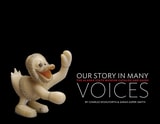
Our Story in Many Voices
The Alaska State Museum Catalog and GuideCharles Wohlforth
University of Alaska Press, 2025
Charles Wohlforth provides three major text sections—an introduction to Alaska, a summary of the museum exhibits, and a history of the exhibit development process—before the catalog of art and artifacts. Richly illustrated and presenting perspectives from Native and non-Native peoples, the book enhances visits to the museum and helps visitors recall and process their experiences, as well as broaden their general understanding of the state.
There is no single history of Alaska. Understanding the place and its peoples can be achieved only by viewing the multiple, complex, and even contradictory ways different people and groups perceive Alaska. Rather than present an official view of the state, Our Story in Many Voices contains independent and critical perspectives that use the extraordinary resources of the museum to consider Alaska’s most challenging cultural issues, reaching toward understanding and reconciliation.
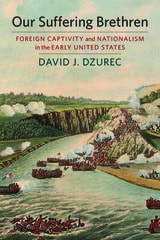
Our Suffering Brethren
Foreign Captivity and Nationalism in the Early United StatesDavid J. Dzurec III
University of Massachusetts Press, 2019
In October 1785, American statesman John Jay acknowledged that the more his countrymen “are treated ill abroad, the more we shall unite and consolidate at home.” Behind this simple statement lies a complicated history. From the British impressment of patriots during the Revolution to the capture of American sailors by Algerian corsairs and Barbary pirates at the dawn of the nineteenth century, stories of Americans imprisoned abroad helped jumpstart democratic debate as citizens acted on their newly unified identity to demand that their government strengthen efforts to free their fellow Americans. Deliberations about the country's vulnerabilities in the Atlantic world reveal America's commitment to protecting the legacy of the Revolution as well as growing political divisions.
Drawing on newspaper accounts, prisoner narratives, and government records, David J. Dzurec III explores how stories of American captivity in North America, Europe, and Africa played a critical role in the development of American political culture, adding a new layer to our understanding of foreign relations and domestic politics in the early American republic.

Our Veterans
Winners, Losers, Friends, and Enemies on the New Terrain of Veterans AffairsSuzane Gordon, Steve Early, and Jasper Craven
Duke University Press, 2022
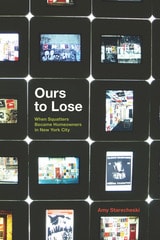
Ours to Lose
When Squatters Became Homeowners in New York CityAmy Starecheski
University of Chicago Press, 2016
Those decades of strife, however, also gave the Lower East Side something unusual: a radical movement that blended urban homesteading and European-style squatting in a way never before seen in the United States. Ours to Lose tells the oral history of that movement through a close look at a diverse group of Lower East Side squatters who occupied abandoned city-owned buildings in the 1980s, fought to keep them for decades, and eventually began a long, complicated process to turn their illegal occupancy into legal cooperative ownership. Amy Starecheski here not only tells a little-known New York story, she also shows how property shapes our sense of ourselves as social beings and explores the ethics of homeownership and debt in post-recession America.
Out Doing Science
LGBTQ STEM Professionals and Inclusion in Neoliberal TimesTom Waidzunas, Ethan Czuy Levine, and Brandon Fairchild
University of Massachusetts Press, 2025
Winner of the American Sociological Association’s Section on the Sociology of Sexualities Distinguished Book Award
Over the past 50 years, lesbian, gay, bisexual, transgender, and queer professionals have organized to achieve greater inclusion into the fields of science, technology, engineering, and mathematics (STEM). This inclusion, however, has come at a cost. In the 1970s, these professionals sought to radically transform STEM fields by confronting the homophobia and sexism embedded within them. Instead, these fields became more corporatized and privatized, and STEM institutions and workspaces—particularly in the spheres of government and business—became dominated by a focus on individualism, self-improvement/advancement, and meritocracy, which are hallmarks of neoliberalism. For many LGBTQ STEM professionals, inclusion now required becoming more apolitical, pro-capital, and focused on professional development.
In Out Doing Science, Tom Waidzunas, Ethan Czuy Levine, and Brandon Fairchild explore this transformation of LGBTQ STEM professionals from oppositional outsiders to assimilationist insiders. Drawing on historical archives, oral interviews, and participant observation of professional societies and workspaces, the authors interrogate the meanings of “inclusion” and why some LGBTQ STEM professionals have benefited from it more than others. They also advocate for a “queer STEM” that challenges and transforms the racism, classism, sexism, cisheterosexism, and imperialism of these fields, institutions, and workspaces. Written in an accessible and engaging style, Out Doing Science will appeal to readers interested in LGBTQ studies, and science and technology studies, as well as anyone who wants to create a more diverse and inclusive work environment.

Out Of The Black Patch
Noel Carmack
Utah State University Press, 1999
Effie Marquess Carmack (1885-1974) grew up in the tobacco-growing region of southern Kentucky known as the Black Patch. As an adult she moved to Utah, back to Kentucky, to Arizona, and finally to California. Economic necessity primarily motivated Effie and her husband's moves, but her conversion to the Mormon Church in youth also was a factor. Throughout her life, she was committed to preserving the rural, southern folkways she had experienced as a child. She and other members of her family were folk musicians, at times professionally, and she also became a folk poet and artist, teaching herself to paint. In the 1940s she began writing her autobiography and eventually also completed a verse adaptation of it and an unpublished novel about life in the Black Patch.

Out Of The Frying Pan
Bill Hosokawa
University Press of Colorado, 1998

Out Of The Jungle
Jimmy Hoffa And The Remaking OfThaddeus Russell
Temple University Press, 2003
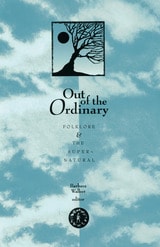
Out Of The Ordinary
Folklore and the SupernaturalBarbara Walker
Utah State University Press, 1995
Out of the Ordinary explores the functions of belief and supernatural experience within an array of cultures, as well as the stance of academe toward the study of belief and the supernatural. The essays in this volume call into question the idea that supernatural experience is extraordinary.
Among the contributors are Shelley Adler, David Hufford, Barre Toelken, and Gillian Bennett.
Out in Culture
Gay, Lesbian and Queer Essays on Popular CultureCorey K. Creekmur and Alexander Doty, eds.
Duke University Press, 1995
Uniquely accessible, Out in Culture presents such popular writers as B. Ruby Rich, Essex Hemphill, and Michael Musto as well as influential critics such as Richard Dyer, Chris Straayer, and Julia Lesage, on topics ranging from the queer careers of Agnes Moorehead and Pee Wee Herman to the cultural politics of gay drag, lesbian style, the visualization of AIDS, and the black snap! queen experience. Of particular interest are two "dossiers," the first linking essays on the queer content of Alfred Hitchcock’s films, and the second on the production and reception of popular music within gay and lesbian communities. The volume concludes with an extensive bibliography—the most comprehensive currently available—of sources in gay, lesbian, and queer media criticism.
Out in Culture explores the distinctive and original ways in which gays, lesbians, and queers have experienced, appropriated, and resisted the images and artifacts of popular culture. This eclectic anthology will be of interest to a broad audience of general readers and scholars interested in gay and lesbian issues; students of film, media, gender, and cultural studies; and those interested in the emerging field of queer theory.
Contributors. Sabrina Barton, Edith Becker, Rhona J. Berenstein, Nayland Blake, Michelle Citron, Danae Clark, Corey K. Creekmur, Alexander Doty, Richard Dyer, Heather Findlay, Jan Zita Grover, Essex Hemphill, John Hepworth, Jeffrey Hilbert, Lucretia Knapp, Bruce La Bruce, Al LaValley, Julia Lesage, Michael Moon, Michael Musto, B. Ruby Rich, Marlon Riggs, Arlene Stein, Chris Straayer, Anthony Thomas, Mark Thompson, Valerie Traub, Thomas Waugh, Patricia White, Robin Wood

Out in Force
Sexual Orientation and the MilitaryEdited by Gregory M. Herek, Jared B. Jobe, and Ralph M. Carney
University of Chicago Press, 1996
Both sides base their views on assumptions about the consequences of integration. Even defenders of the ban grudgingly acknowledge that homosexuals are fully capable of serving with distinction. Few question gay service members' abilities or patriotism; justifications for the ban are now predicated on heterosexuals' negative reactions.
Out in Force refutes the notions that homosexuality is incompatible with military service and that gay personnel would undermine order and discipline. Leading social science scholars of sexual orientation and the military offer reasoned and comprehensive discussions about military organizations, human sexuality, and attitudes toward individuals and groups. They demonstrate forcefully that the debate is really about the military as an institution, and how that institution will adapt to larger social changes. The contributors show that the ban could be successfully eliminated, and set forth a program for implementation. In sorting opinion from fact, myth from reality, Out in Force stands as an invaluable guide for the military, lawmakers, and the courts as they continue to grapple with this question of institutional and societal change.
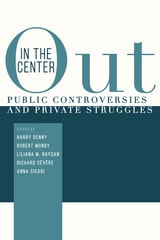
Out in the Center
Public Controversies and Private StrugglesHarry C. Denny
Utah State University Press, 2018
A diverse group of contributors interweaves personal experience with writing center theory and critical race theory, as well as theories on the politics and performance of identity. In doing so, Out in the Center extends upon the writing center corpus to disrupt and reimagine conventional approaches to writing center theory and practice. Out in the Center proposes that practitioners benefit from engaging in dialogue about identity to better navigate writing center work—work that informs the local and carries forth a social and cultural impact that stretches well beyond academic institutions.
Contributors:
Allia Abdullah-Matta, Nancy Alvarez, Hadi Banat, Tammy S. Conard-Salvo, Michele Eodice, Rochell Isaac, Sami Korgan, Ella Leviyeva, Alexandria Lockett, Talisha Haltiwanger Morrison, Anna Rita Napoleone, Beth A. Towle, Elizabeth Weaver, Tim Zmudka
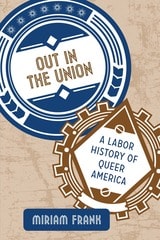
Out in the Union
A Labor History of Queer AmericaMiriam Frank
Temple University Press, 2015
Out in the Union tells the continuous story of queer American workers from the mid-1960s through 2013. Miriam Frank shrewdly chronicles the evolution of labor politics with queer activism and identity formation, showing how unions began affirming the rights of lesbian, gay, bisexual, and transgender workers in the 1970s and 1980s. She documents coming out on the job and in the union as well as issues of discrimination and harassment, and the creation of alliances between unions and LGBT communities.
Featuring in-depth interviews with LGBT and labor activists, Frank provides an inclusive history of the convergence of labor and LGBT interests. She carefully details how queer caucuses in local unions introduced domestic partner benefits and union-based AIDS education for health care workers-innovations that have been influential across the U.S. workforce. Out in the Union also examines organizing drives at queer workplaces, campaigns for marriage equality, and other gay civil rights issues to show the enduring power of LGBT workers.
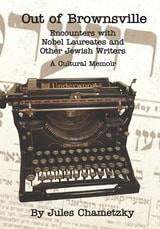
Out of Brownsville
Encounters with Nobel Laureates and Other Jewish Writers: A Cultural MemoirJules Chametzky
University of Massachusetts Press, 2012
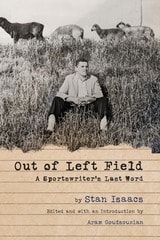
Out of Left Field
A Sportswriter’s Last WordStan Isaacs. Edited and with an Introduction by Aram Goudsouzian
University of Illinois Press, 2024
“Stan Isaacs is directly responsible for my television career--and much of how I approached what I’ve said and whom I’ve said it about.” --Keith Olbermann
Iconoclastic and irreverent, Stan Isaacs was part of a generation that bucked the sports establishment with a skepticism for authority, an appreciation for absurdity, and a gift for placing athletes and events within the context of their tumultuous times. Isaacs draws on his trademark wink-and-a-grin approach to tell the story of the long-ago Brooklyn that formed him and a career that placed him amidst the major sporting events of his era. Mixing reminiscences with column excerpts, Isaacs recalls antics like stealing a Brooklyn Dodgers pennant after the team moved to Los Angeles and his many writings on Paul Revere’s horse. But Isaacs also reveals the crusading and humanist instincts that gave Black athletes like Muhammad Ali a rare forum to express their views and celebrated the oddball, unsung Mets over the straitlaced Yankees.
Insightful and hilarious, Out of Left Field is the long-awaited memoir of the influential sportswriter and his adventures in the era of Jim Brown, Arthur Ashe, and the Amazin’ Mets.
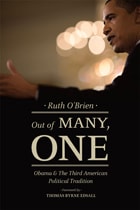
Out of Many, One
Obama and the Third American Political TraditionRuth O'Brien
University of Chicago Press, 2013
Bearing traces of Baruch Spinoza, John Dewey, and Saul Alinsky, Obama’s progressivism embraces the ideas of mutual reliance and collective responsibility, and adopts an interconnected view of the individual and the state. So, while Obama might emphasize difference, he rejects identity politics, which can create permanent minorities and diminish individual agency. Analyzing Obama’s major legislative victories—financial regulation, health care, and the stimulus package—O’Brien shows how they reflect a stakeholder society that neither regulates in the manner of the New Deal nor deregulates. Instead, Obama focuses on negotiated rule making and allows executive branch agencies to fill in the details when dealing with a deadlocked Congress. Similarly, his commitment to difference and his resistance to universal mandates underlies his reluctance to advocate for human rights as much as many on the Democratic left had hoped.
Out of One, Many Africas
Reconstructing the Study and Meaning of AfricaEdited by William G. Martin and Michael O. West
University of Illinois Press, 1999
By surveying the present predicament and the current grassroots impulse toward reconsidering the meaning of the continent, Out of One, Many Africas gives shape and momentum to a crucial dialogue aimed at transforming the study of Africa
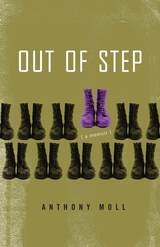
Out of Step
A MemoirAnthony Moll
The Ohio State University Press, 2018
What makes a pink-haired queer raise his hand to enlist in the military just as the nation is charging into war? In his memoir, Out of Step, Anthony Moll tells the story of a working-class bisexual boy running off to join the army in the midst of two wars and the “Don’t Ask, Don’t Tell” era. Set against the backdrop of hypermasculinity and sexual secrecy, Moll weaves a queer coming-of-age story.
Out of Step traces Moll’s development through his military service, recounting how the army both breaks and builds relationships, and what it was like to explore his queer identity while also coming to terms with his role in the nation’s ugly foreign policy. From a punk, nerdy, left-leaning, poor boy in Nevada leaving home for the first time to an adult returning to civilian life and forced to address a world more complicated than he was raised to believe, Moll’s journey isn’t a classic flag-waving memoir or war story—it’s a tale of finding one’s identity in the face of war and changing ideals.
Out of Stock
The Warehouse in the History of CapitalismDara Orenstein
University of Chicago Press, 2019
Out of Sync & Out of Work
History and the Obsolescence of Labor in Contemporary CultureBurges, Joel
Rutgers University Press, 2018
Out of Whiteness
Color, Politics, and CultureVron Ware and Les Back
University of Chicago Press, 2002
Vron Ware and Les Back look at key points in recent American and British culture where the "color line" has been blurred. Through probing accounts of racial masquerades in popular literature, the growth of the white power music scene on the Internet, the meteoric rise of big band jazz during the Second World War, and the pivotal role of white session players in crafting rhythm and blues classics by black artists, Ware and Back upset the idea of race as a symbol of inherent human attributes. Their book gives us a timely reckoning of the forces that continue to make people "white," and reveals to us the polyglot potential of identities and cultures.

Out of the Attic
Inventing Antiques in Twentieth-Century New EnglandBriann G. Greenfield
University of Massachusetts Press, 2009
In this era of Antiques Roadshow and eBay, it is hard to imagine a time when Americans did not treasure the home furnishings of elite early American families. But as this book demonstrates, antiquing—particularly the practice of valuing old things for their aesthetic qualities—is a relatively recent invention whose origins can be found in the early years of the twentieth century. Although nineteenth-century Americans did appreciate heirlooms, they saw them as memory markers, tangible representations of honored ancestors or local history.
In Out of the Attic, Briann G. Greenfield traces the transformation of antiques from family keepsakes to valuable artistic objects, examining the role of collectors, dealers, and museum makers in the construction of a new tradition based on the aesthetic qualities of early American furnishings. While recognizing the significance of antiques as symbols of an enduring American culture, Greenfield also delves behind popular rhetoric to examine the development of a retail structure specifically designed to facilitate the buying and selling of old wares. With antique shops proliferating all over New England, pickers going door-to-door in search of “finds,” and forgers taking illicit advantage of growing demand, antique owners and collectors found themselves trying to navigate a retail market characterized by escalating prices and high stakes purchases. In this sense, antiques functioned as more than remnants of a treasured past; they became modern consumer goods.
The book is divided into a series of case studies, each intended to illuminate some aspect of “the dynamic of consumer history.” One chapter examines the role of Jewish dealers in promoting American antiques; another profiles Jessie Baker Gardner, a small-time collector and would-be museum maker from Providence, Rhode Island. Greenfield also looks at the institutionalization of antiques, with chapters focusing on Henry Flynt of Deerfield, Massachusetts, who embraced the “aestheticization of antiques” in the 1940s and 1950s, and on Smithsonian curator C. Malcolm Watkins, who challenged the decorative art market during the 1950s and 1960s by purchasing old tools and crude furniture for the nation's museum.

Out of the Closets and into the Courts
Legal Opportunity Structure and Gay Rights LitigationEllen Ann Andersen
University of Michigan Press, 2004
Out of the Closets and into the Courts explores both the promise and the limits of using legal mobilization to effect social change. Crossing disciplinary boundaries, Ellen Andersen draws on the accumulated knowledge of political science, law, and sociology to explain the origins and outcomes of gay rights litigation. The resulting book is essential reading for anyone interested in gay rights, legal change, and social movements.
Out of the Dark
A History of Radio and Rural AmericaSteve Craig
University of Alabama Press, 2009
From the Grand Ole Opry to the National Barn Dance, how radio changed life in rural America
Out of the Dark: A History of Radio and Rural America shows how radio—especially clear channel network stations—brought news, markets, weather, religion, and entertainment into isolated farm homes between the 1920s and 1950s, narrowing rural–urban divides while also sustaining distinctly rural tastes (e.g., barn dance music). Craig argues that battery “farm radios,” high power stations, and national networking transformed daily life, work rhythms, consumer habits, and political participation, making radio the central domestic technology of the Depression era and beyond.
Craig blends regulatory and industry milestones, such as the Radio Act of 1927, with sociological studies, USDA extension records, FCC surveys, census tables, and rich case studies including WLS Chicago’s “National Barn Dance,” WSM Nashville’s “Grand Ole Opry,” and others. He mines audience research, diaries, program schedules, and tables that track the spread of radio. The book’s distinctive contributions include detailed charts (ownership by region; clear channel assignments) and vivid narratives of stations, formats, and personalities that connected farm families to national culture while preserving local identity.
The book is ideal for scholars and students of US social, rural, and media history; communication policy and political communication; country and bluegrass music history; agricultural extension; and American studies. It will also engage librarians, curators, and public historians seeking context for rural collections; journalists and podcasters tracing the roots of today’s information ecosystems; and general readers interested in how radio re made community life long before the internet.

Out of the Dead House
Nineteenth-Century Women Physicians and the Writing of MedicineSusan Wells
University of Wisconsin Press, 2001
Susan Wells combines studies of medical genres, such as the patient history or the diagnostic conversation, with discussions of individual writers. The women she discusses include Ann Preston, the first woman dean of a medical college; Hannah Longshore, a successful practitioner who combined conventional and homeopathic medicine; Rebecca Crumpler, the first African American woman physician to publish a medical book; and Mary Putnam Jacobi, writer of more than 180 medical articles and several important books. Wells shows how these women learned to write, what they wrote, and how these texts were read.
Out of the Dead House also documents the ways that women doctors influenced medical discourse during the formation of the modern profession. They invented forms and strategies for medical research and writing, including methods of using survey information, taking patient histories, and telling case histories. Out of the Dead House adds a critical episode to the developing story of women as producers and critics of culture, including scientific culture.
Out of the Girls' Room and into the Night
Thisbe Nissen
University of Iowa Press, 1999
Out of the Girls' Room and into the Night is a spirited, offbeat collection of stories, elongated riffs on that thing we call …love. All manner of love stories: thwarted love stories, imaginary love stories, love stories offhand and obsessive, philosophical love stories, erudite and amusing love stories.
“People don't meet because they both like Burmese food,” says one character, “or because someone's sister has a friend who's single and new in town, or because Billy's nose happened to crook just slightly to the left at an angle that made me want to weep…People don't fall in love with each other …they just fall into love.”
Everyone does it: women of fierce independence, men of thin character, rambling Deadheads, gay teenage girls, despondent Peace Corps volunteers, anorexic Broadway theatre dancers, the eager, the grieving, the uncommunicative. Even the confused do it. And they don't just fall in love with each other—they fall in love with certain moments and familiar places, with things as ephemeral as gestures and as evanescent as sunlight.
Quirky, real, idealistic, deluded, bohemian, and true, these are people who can—and often do—fall in love with a pair of ears, August afternoons, saucers of vitamins, New Age carpenters, and dead bumblebees. And if there's something they can teach us, it's how to conceive of alternative worlds and the terror and the exhilaration of venturing outside the confines of the lives we know and making our way into a dark, glittering unknown.
Out of the Gutters
Obscenity, Censorship, and Transgression in American ComicsEdited by Jorge J. Santos Jr. and Patrick S. Lawrence
University of Texas Press, 2025
Comics have long been a subject of moral panics, no doubt thanks to their in-your-face illustrations and their association with young readers. Indeed, the politicians and parents behind today’s book-banning campaigns reserve special ire for graphic novels. What makes today’s controversies different is the content of the alleged obscenity. Instead of targeting sex as such, censors now focus on affirmations of nonheteronormative identity, as in Maia Kobabe’s Gender Queer. And while violence is a constant in comics, stories that acknowledge nationalist oppression and violence, such as Art Spiegelman’s Maus, are also being blacklisted.
Out of the Gutters assembles scholars from diverse disciplines to examine US comics, graphic novels, and cartooning that have been challenged as obscene or transgressive. Covering well-known underground figures like Robert Crumb and Charles Burns, newcomers such as C. Spike Trotman and Emil Ferris, and mainstream creators including Chris Claremont and Archie Goodwin, the collection explores the market economics of transgression, historical representations of graphic violence, the ever-changing meaning of pornography, sex-positive comics by BIPOC authors, and queerness in pop-culture mega-properties like X-Men and The Walking Dead.
Out of the Mouths of Slaves
African American Language and Educational MalpracticeBy John Baugh
University of Texas Press, 1999
Winner, A Choice Outstanding Academic Book
When the Oakland, California, school board called African American English "Ebonics" and claimed that it "is not a black dialect or any dialect of English," they reignited a debate over language, race, and culture that reaches back to the era of slavery in the United States. In this book, John Baugh, an authority on African American English, sets new parameters for the debate by dissecting and challenging many of the prevailing myths about African American language and its place in American society.
Baugh's inquiry ranges from the origins of African American English among slaves and their descendants to its recent adoption by standard English speakers of various races. Some of the topics he considers include practices and malpractices for educating language minority students, linguistic discrimination in the administration of justice, cross-cultural communication between Blacks and whites, and specific linguistic aspects of African American English. This detailed overview of the main points of debate about African American language will be important reading for both scholars and the concerned public.
Out of the Northwoods
The Many Lives of Paul Bunyan, With More Than 100 Logging Camp TalesMichael Edmonds
Wisconsin Historical Society Press, 2009
Every American has heard of the lumberjack hero Paul Bunyan and his big blue ox. For 100 years his exploits filled cartoons, magazines, short stories, and children's books, and his name advertised everything from pancake breakfasts to construction supplies. By 1950 Bunyan was a ubiquitous icon of America's strength and ingenuity. Until now, no one knew where he came from—and the extent to which this mythical hero is rooted in Wisconsin.
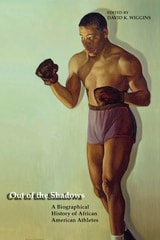
Out of the Shadows
A Biographical History of African American AthletesDavid K. Wiggins
University of Arkansas Press, 2008
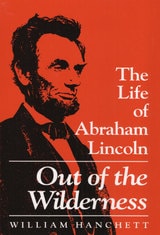
Out of the Wilderness
THE LIFE OF ABRAHAM LINCOLNWilliam Hanchett
University of Illinois Press, 1994
follows Abraham Lincoln from his birth and chronicles his thirst for education,
his achievements as a lawyer and congressman, his presidency, and his
assassination.
Hanchett gives readers a deeper understanding of how Lincoln's self-directed
study and clear thinking offset his lack of a formal education, enabling
him to become a respected and successful attorney. He also shows how Lincoln's
uncanny leadership helped him to end slavery and still keep the divided
North sufficiently united to win the Civil War. By focusing on a variety
of roles and settings, Hanchett invites readers to get to know Lincoln
as a president, as well as a lover, husband, father, and friend.
"Excellent! Hanchett is a fine writer, and his biography of Lincoln
is succinct and thought-provoking."
-- Frank J. Williams, president, Abraham Lincoln Association
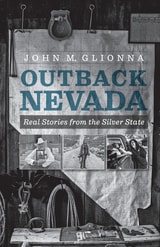
Outback Nevada
Real Stories from the Silver StateJohn M Glionna
University of Nevada Press, 2022
Glionna’s interest in Nevada’s rugged, isolated landscape and the people who choose to live in this often-harsh environment was born of his own wanderings into the “outback.” Through his stories, he shares intimate portraits of rural and small-town lifestyles not many understand. Readers meet men with names like Flash and Mr. Cool; will listen to a cowboy minister preach the word of God to his parishioners; will walk with an antiques dealer from Genoa as he hunts for denim in Nevada’s abandoned nineteenth-century mine shafts; and will learn from an ex-paramedic– turned–coffee-shop–owner who provides Boulder City with a true sense of community. Full of humor, eccentricities, and compassion, these stories reveal the state’s true nature and extend an invitation to get lost “somewhere out there” in the real Nevada.

Outbreak
Foodborne Illness and the Struggle for Food SafetyTimothy D. Lytton
University of Chicago Press, 2019
With Outbreak, Timothy D. Lytton provides an up-to-date history and analysis of the US food safety system. He pays particular attention to important but frequently overlooked elements of the system, including private audits and liability insurance.
Lytton chronicles efforts dating back to the 1800s to combat widespread contamination by pathogens such as E. coli and salmonella that have become frighteningly familiar to consumers. Over time, deadly foodborne illness outbreaks caused by infected milk, poison hamburgers, and tainted spinach have spurred steady scientific and technological advances in food safety. Nevertheless, problems persist. Inadequate agency budgets restrict the reach of government regulation. Pressure from consumers to keep prices down constrains industry investments in safety. The limits of scientific knowledge leave experts unable to assess policies’ effectiveness and whether measures designed to reduce contamination have actually improved public health. Outbreak offers practical reforms that will strengthen the food safety system’s capacity to learn from its mistakes and identify cost-effective food safety efforts capable of producing measurable public health benefits.
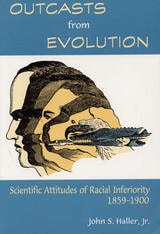
Outcasts from Evolution
Scientific Attitudes of Racial Inferiority, 1859 - 1900John S. Haller, Jr.
Southern Illinois University Press, 1996
In the only book to date to explore the period between the 1859 publication of Darwin’s Origin of Species and the discovery in 1900 of Gregor Mendel’s experiments in genetics, John S. Haller, Jr., shows the relationship between scientific "conviction" and public policy. He focuses on the numerous liberally educated American scientists who were caught up in the triumph of evolutionary ideas and who sought to apply those ideas to comparative morality, health, and the physiognomy of nonwhite races.
During this period, the natural and social scientists of the day not only accepted without question the genetic and cultural superiority of the Caucasian; they also asserted that the Caucasian race held a monopoly on evolutionary progress, arguing that "inferior races" were no more than evolutionary survivors doomed by their genetic legacy to remain outcasts from evolution.
Hereditarians and evolutionists believed that "less fit" human races were perishing from the rigors of civilization’s struggle and competition. Indeed, racial inferiority lay at the very foundation of the evolutionary framework and, remaining there, rose to the pinnacle of "truth" with the myth of scientific certainty.

Outcomes Book
Debate and Consensus after the WPA Outcomes Statementedited by Susanmarie Harrington, Keith Rhodes, Ruth Fischer, & Rita Malenczyk
Utah State University Press, 2005
The WPA Outcomes Statement is important because it represents a working consensus among composition scholars about what college students should learn and do in a composition program. But as a single-page document, the statement cannot convey the kind of reflective process that a writing program must undertake to address the learning outcomes described.
The Outcomes Book relates the fuller process by exploring the matrix of concerns that surrounded the developing Statement itself, and by presenting the experience of many who have since employed it in their own settings.

Outcomes of Engaged Education
From Transfer to TransformationLinda Flower
University Press of Colorado, 2025
Outed
LBJ’s Confidant and the Arrest That Transformed a PresidencyTimothy Stewart-Winter
University of Chicago Press, 2026
The story of the scandal in the LBJ administration that first brought queer life into the national political conversation in the 1960s.
In 1964, Lyndon B. Johnson’s longest-serving and most trusted advisor, Walter Jenkins, was arrested for soliciting sex in a YMCA bathroom near the White House. The scandal blasted across the front pages of major US newspapers, was dissected and analyzed by the FBI, and became a watershed in making straight America aware of queer life. In Outed, historian Timothy Stewart-Winter reveals that the effects of antigay policing were felt not only by the men but by their colleagues, families, and, in this case, the First Family.
Walter Jenkins’s political banishment had long-ranging effects, from how Johnson conducted the remainder of his presidency to how media coverage of political and sexual scandals became more explicit and salacious. Stewart-Winter reveals Jenkins’s influence and legacy, encompassing but also looking beyond the scandal. Jenkins had a significant impact on Johnson’s career and how it is remembered, including both his signal accomplishment—the programs and laws that constituted the Great Society—and his signal failure: his catastrophic judgment, after Jenkins’s exile, regarding the Vietnam War.
Drawing on Jenkins’s previously unexamined personal papers, including hundreds of letters he received in the aftermath from ordinary Americans and government officials alike, Stewart-Winter shows how antigay policies and the revelations around them continue to reverberate today.
Outlaw Style
PoemsR. T. Smith
University of Arkansas Press, 2007
Outliers and American Vanguard Art
Lynne Cooke
University of Chicago Press, 2017
The art works in Outliers and American Vanguard Art come from three distinct periods when the intersections between mainstream and outlier artists were most dynamic and productive, ushering in exhibitions of art based on various degrees of co-existence, inclusion, and assimilation. Works by such diverse artists as Charles Sheeler, Christina Ramberg, and Matt Mullican are set in conversation with a range of works by such self-taught artists as Horace Pippin, Janet Sobel, and Henry Darger. Cooke also examines a recent increase of radically expressive work that challenges what it means to be an outlier today. She reveals how these distinctions have been freighted with a particularly American point of view as she investigates our assumptions about creativity, artistic practice, and the role of the artist in contemporary culture.
Outliers and American Vanguard Art is the most comprehensive show ever to examine outliers in dialogue with their established peers. It is sure to inspire vigorous conversation about how artists and the work they make are represented.
Outpost Kelly
A Tanker's StoryJack R. Siewert, with a foreword by Paul M Edwards
University of Alabama Press, 2006
Heavy rains turned the mountainous terrain around Outpost Kelly into shin-deep mud and muck. At the height of the fighting, Siewert was able to bring to bear the guns of only one of his five tanks against the enemy. Forced to abandon traditional tank warfare doctrine, he improvised. Allowing members of the 15th Infantry to retake Outpost Kelly, Siewert offers an excellent analysis of how theory and experience come together in a point-of-the-spear military situation.
Outpost Kelly also paints a fascinating picture of the type of fighting, often overlooked, that characterized the second and third years of the Korean War. With truce talks proceeding in Panmunjom, both sides fought to claim incremental pieces of real estate along the demarcation line between North and South.