Results by title
1049 books match the query 'English, Irish, Scottish, Welsh' and 53 start with p
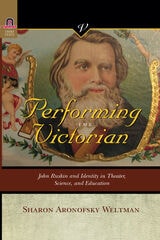
PERFORMING THE VICTORIAN
JOHN RUSKIN AND IDENTITY IN THEATER, SCIENCE, AND EDUCATIONSHARON ARONOFSKY WELTMAN
The Ohio State University Press, 2007
PLOTS OF OPPORTUNITY
REPRESENTING CONSPIRACY IN VICTORIAN ENGLANDAlbert D. Pionke
The Ohio State University Press, 2004
The working classes, colonial subjects, European nationalists, and Roman Catholics—these groups generated intense anxiety for Victorian England’s elite public, which often responded by accusing them of being dangerous conspirators. Bringing together a wide range of literary and historical evidence, Albert D. Pionke argues that the pejorative meanings attached to such opportunistic accusations of conspiracy were undermined by the many valorized versions of secrecy in Victorian society.
After surveying England’s evolving theories of representative politics and individual and collective secretive practices, Pionke traces the intersection of democracy and secrecy through a series of case histories. Using works by Thomas Carlyle, Wilkie Collins, Charles Dickens, Benjamin Disraeli, John Henry Newman, and others, along with periodicals, histories, and parliamentary documents of the period, he shows the rhetorical prominence of groups such as the Freemasons, the Thugs, the Carbonari, the Fenians, and the Jesuits in Victorian democratic discourse.
By highlighting the centrality of representations of conspiracy in every case, Plots of Opportunity shows for the first time the markedly similar strategies of repression, resistance, and concealment used by competing agents in the democracy debate.
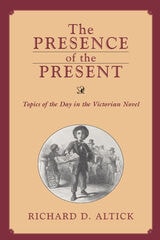
PRESENCE OF THE PRESENT
TOPICS OF THE DAY IN THE VICTORIAN NOVELRichard D. Altick
The Ohio State University Press, 1991
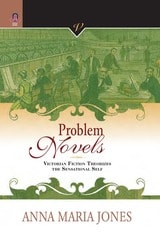
PROBLEM NOVELS
VICTORIAN FICTION THEORIZES THE SENSATIONAL SELFAnna Maria Jones
The Ohio State University Press, 2007
PUNCH
The Lively Youth of a British InstitutionRichard D. Altick
The Ohio State University Press, 2010
Paper Minds
Literature and the Ecology of ConsciousnessJonathan Kramnick
University of Chicago Press, 2018
Opening with a discussion of how literary scholarship’s particular methods can both complement and remain in tension with corresponding methods particular to the sciences, Paper Minds then turns to a series of sharply defined case studies. Ranging from eighteenth-century poetry and haptic theories of vision, to fiction and contemporary problems of consciousness, to landscapes in which all matter is sentient, to cognitive science and the rise of the novel, Kramnick’s essays are united by a central thematic authority. This unified approach of these essays shows us what distinctive knowledge that literary texts and literary criticism can contribute to discussions of perceptual consciousness, created and natural environments, and skilled engagements with the world.
Patron to Painter
Elizabethan Programs for Five Allegorical PaintingsDavid Evett
Arizona Center for Medieval and Renaissance Studies, 2020
Patterns of Epiphany
From Wordsworth to Tolstoy, Pater, and Barrett BrowningMartin Bidney
Southern Illinois University Press, 1997
After explaining his new methodology, Bidney identifies and discusses epiphanies in the works of William Wordsworth, Samuel Taylor Coleridge, Matthew Arnold, Alfred Lord Tennyson, Walter Pater, Thomas Carlyle, Leo Tolstoy, and Elizabeth Barrett Browning. Taking his cue from the French philosopher Gaston Bachelard, Bidney postulates that any writer’s epiphany pattern usually shows characteristic elements (earth, air, fire, water), patterns of motion (pendular, eruptive, trembling), and/or geometric shapes. Bachelard’s analytic approach involves studying patterns of perceived experience—phenomenology—but unlike most phenomenologists, Bidney does not speculate on internal processes of consciousness. Instead, he concentrates on literary epiphanies as objects on the printed page, as things with structures that can be detected and analyzed for their implications.
Bidney, then, first identifies each author’s paradigm epiphany, finding that both the Romantics and the Victorians often label such a paradigm as a vision or dream, thereby indicating its exceptional intensity, mystery, and expansiveness. Once he identifies the paradigm and shows how it is structured, he traces occurrences of each writer’s epiphany pattern, thus providing an inclusive epiphanic portrait that enables him to identify epiphanies in each writer’s other works. Finally, he explores the implications of his analysis for other literary approaches: psychoanalytical, feminist, influence-oriented or intertextual, and New Historical.
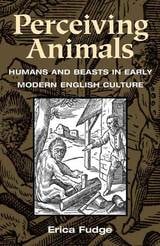
Perceiving Animals
Humans and Beasts in Early Modern English CultureErica Fudge
University of Illinois Press, 2000
In Perceiving Animals, the British scholar Erica Fudge traces the dangers and problems of anthropocentrism in texts written from 1558 to 1649. Meticulous examinations of scientific, legal, political, literary, and religious writings offer unique and fascinating depictions of human perceptions about the natural world.
Views carried over from bestiaries--medieval treatises on animals--
posited animals as nonsentient beings whose merits were measured solely by what provisions they afforded humans: food, medicine, clothing, travel, labor, scientific knowledge. Without consciences or faith, animals were deemed far inferior to humans.
While writings from the period asserted an enormous biological superiority, Fudge contends actual human behavior and logic worked, sometimes accidentally, to close the alleged gap. In the Bear Garden, even a man of the lowest social rank had power over a tortured animal, sinking him, though, below the beasts. The beast fable itself fails to show a true understanding of animals, as it merely attributes human characteristics to beasts in an attempt to teach humanist ideals. Scholars and writers continually turned to the animal world for reflection. Despite this, scientists of the period used animals for empirical and medical knowledge, recognizing biological and spiritual similarities but refusing to renege human superiority.
Including an insightful reexamination of Ben Jonson's Volpone and fascinating looks at works by Francis Bacon, Edward Coke, and Richard Overton, among others, Fudge probes issues of animal ownership and biological and spiritual superiority in early modern England that resonate with philosophical quandaries still relevant in contemporary society.

Performance Art in Ireland
A HistoryEdited by Áine Phillips
Intellect Books, 2015
Perspectives
Modes of Viewing and Knowing in Nineteenth-Century EnglandLinda M. Shires
The Ohio State University Press, 2009
Perverse Attachments
Reading Fiction Around 1800Anastasia Eccles
University of Chicago Press, 2026
This new theory of reader response describes “perverse attachment,” or the powerful desire to intervene in a story, even when it is impossible to do so.
Fiction has long inspired resistance in its readers: making them, for example, wish for a different plot, cringe at a moment of social discomfort, or itch to warn a character about an approaching calamity. These are symptoms of a condition that Anastasia Eccles calls “perverse attachment,” in which a person feels an urge to act on something beyond their control. Eccles theorizes this form of frustrated agency as a constitutive part of the experience of reading fiction, especially under the influence of literary sentimentalism in the late eighteenth and early nineteenth centuries. It was also, significantly, a defining aspect of the mass politics that emerged in the same period, which rested on the demands of new political subjects to participate in a process that excluded them.
Perverse Attachments recovers a repertoire of aesthetic responses keyed to the psychodynamics of modern political life: complicity, suspense, historical regret, and cringing. Combining identification and disidentification, immersion and detachment, these experiences challenge deep-seated binaries in our theories of reading and point toward a new account of the political stakes of literary form.
Through readings of works by Charlotte Smith, Walter Scott, Jane Austen, and others Eccles shows how this distinctive aesthetic and political relation shaped the major genres of Romantic fiction and gave rise to some of the novel’s characteristic forms, like the character type of the witness-protagonist and the techniques of free indirect discourse. The result is a major work in the theory of the novel and the history of readerly experience.
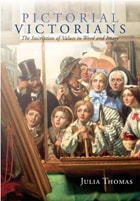
Pictorial Victorians
The Inscription of Values in Word and ImageJulia Thomas
Ohio University Press, 2005
The Victorians were image obsessed. The middle decades of the nineteenth century saw an unprecedented growth in the picture industry. Technological advances enabled the Victorians to adorn with images the pages of their books and the walls of their homes. But this was not a wholly visual culture. Pictorial Victorians focuses on two of the most popular mid-nineteenth-century genres—illustration and narrative painting—that blurred the line between the visual and textual.
Illustration negotiated text and image on the printed page, while narrative painting juxtaposed the two media in its formulation of pictorial stories. Author Julia Thomas reassesses mid-nineteenth-century values in the light of this interplay. The dialogue between word and image generates meanings that are intimately related to the Victorians' image of themselves. Illustrations in Victorian publications and the narrative scenes that lined the walls of the Royal Academy reveal the Victorians' ideas about the world in which they lived and their notions of gender, class, and race.
Pictorial Victorians surveys a range of material, from representations of the crinoline, to the illustrations that accompanied Harriet Beecher Stowe’s novel Uncle Tom's Cabin and Tennyson's poetry, to paintings of adultery. It demonstrates that the space between text and image is one in which values are both constructed and questioned.
Picturing Religious Experience
George Herbert, Calvin, and the ScripturesDaniel Doerksen
University of Delaware Press, 2012
Published by University of Delaware Press. Distributed worldwide by Rutgers University Press.
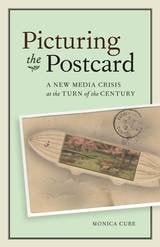
Picturing the Postcard
A New Media Crisis at the Turn of the CenturyMonica Cure
University of Minnesota Press, 2018
The first full-length study of a once revolutionary visual and linguistic medium
Literature has “died” many times—this book tells the story of its death by postcard. Picturing the Postcard looks to this unlikely source to shed light on our collective, modern-day obsession with new media. The postcard, almost unimaginably now, produced at the end of the nineteenth century the same anxieties and hopes that many people think are unique to twenty-first-century social media such as Facebook or Twitter. It promised a newly connected social world accessible to all and threatened the breakdown of authentic social relations and even of language.
Arguing that “new media” is as much a discursive object as a material one, and that it is always in dialogue with the media that came before it, Monica Cure reconstructs the postcard’s history through journals, legal documents, and sources from popular culture, analyzing the postcard’s representation in fiction by well-known writers such as E. M. Forster and Edith Wharton and by more obscure writers like Anne Sedgwick and Herbert Flowerdew. Writers deployed uproar over the new medium of the postcard by Anglo-American cultural critics to mirror anxieties about the changing nature of the literary marketplace, which included the new role of women in public life, the appeal of celebrity and the loss of privacy, an increasing dependence on new technologies, and the rise of mass media. Literature kept open the postcard’s possibilities and in the process reimagined what literature could be.
Plague Writing in Early Modern England
Ernest B. Gilman
University of Chicago Press, 2009
During the seventeenth century, England was beset by three epidemics of the bubonic plague, each outbreak claiming between a quarter and a third of the population of London and other urban centers. Surveying a wide range of responses to these epidemics—sermons, medical tracts, pious exhortations, satirical pamphlets, and political commentary—Plague Writing in Early Modern England brings to life the many and complex ways Londoners made sense of such unspeakable devastation.
Ernest B. Gilman argues that the plague writing of the period attempted unsuccessfully to rationalize the catastrophic and that its failure to account for the plague as an instrument of divine justice fundamentally threatened the core of Christian belief. Gilman also trains his critical eye on the works of Jonson, Donne, Pepys, and Defoe, which, he posits, can be more fully understood when put into the context of this century-long project to “write out” the plague. Ultimately, Plague Writing in Early Modern England is more than a compendium of artifacts of a bygone era; it holds up a distant mirror to reflect our own condition in the age of AIDS, super viruses, multidrug resistant tuberculosis, and the hovering threat of a global flu pandemic.
Planets in Peril
A Critical Study of C. S. Lewis's Ransom TrilogyDavid C. Downing
University of Massachusetts Press, 1992
A critical study of C.S. Lewis's “Ransom Trilogy” which analyses Lewis's methods and meanings, concentrating on this trilogy but also including relevant secondary work. Lewis's literary scholarship and display of Christian values are incorporated into this discussion.
Playing Dirty
Sexuality and Waste in Early Modern ComedyWill Stockton
University of Minnesota Press, 2010
Noting that psychoanalysis has traditionally operated in a paranoid framework that relentlessly produces evidence of the same “truths,” Stockton turns to a minority practice in psychoanalysis—associated with Jean Laplanche—to develop a more “playful” analytic for literary studies. This analytic brings together different discourses of sexuality and the body and allows individual writings to reform psychoanalytic wisdom about sexuality, waste, and comedy. Through original explorations of works by William Shakespeare, Ben Jonson, Sir John Harington, Thomas Nashe, and Geoffrey Chaucer, Stockton further encourages the reconciliation of psychoanalysis and queer historicism. He focuses in large part on the less-often-read texts of the early modern English canon, assessing the ways in which these books have been purged from the canon in the name of generic purity.
Playing Dirty builds on recent calls by Renaissance and medieval queer scholars for a method of literary analysis that is less constrained by the boundaries of periodicity and the supposed exigencies of historicism. To take Playing Dirty seriously is to accept its invitation to “play”—to queerly disrupt the modern divide in moving promiscuously between texts past and present.
Poems and Fancies with The Animal Parliament
Margaret Cavendish, Duchess of Newcastle
Iter Press, 2018
The Other Voice in Early Modern Europe. The Toronto Series: Volume 64
Poems and Meditations
Anne Bradstreet
Iter Press, 2019
Poems by a Sixteenth-Century Gentlewoman, Maid, and Servant
Isabella Whitney
Iter Press, 2023
Isabella Whitney (c. 1547–after 1624) was the first English woman to publish original secular poetry under her own name. She published two poetic miscellanies of poems: The Copy of a Letter (1567) and A Sweet Nosegay (1573), which include her own work as well as a total of six poems by five different male authors. This edition of her writings prints modernized texts of the complete miscellanies and adds to them six poems attributed to Whitney by largely twentieth-century critics. These poems provide a rich portrait of sixteenth-century female courtship and its dangers, a unique view of class and gender in Whitney’s lifetime, and a portrait of London as a burgeoning market of practical goods and luxury items from foodstuffs to imported silk.
Poems, 1922-1961
Donald Davidson
University of Minnesota Press, 1966
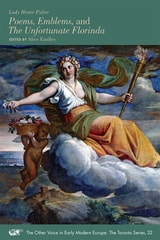
Poems, Emblems, and The Unfortunate Florinda
Lady Hester Pulter
Iter Press, 2014
Poetic Relations
Intimacy and Faith in the English ReformationConstance M. Furey
University of Chicago Press, 2017
As Furey demonstrates, John Donne, George Herbert, Anne Bradstreet, and others describe inner lives that are surprisingly crowded, teeming with human as well as divine companions. The same early modern writers who bequeathed to us the modern distinction between self and society reveal here a different way of thinking about selfhood altogether. For them, she argues, the self is neither alone nor universally connected, but is forever interactive and dynamically constituted by specific relationships. By means of an analysis equally attentive to theological ideas, social conventions, and poetic form, Furey reveals how poets who understand introspection as a relational act, and poetry itself as a form ideally suited to crafting a relational self, offer us new ways of thinking about selfhood today—and a resource for reimagining both secular and religious ways of being in the world.
Poetics Of Plot
The Case of English Renaissance DramaThomas Pavel
University of Minnesota Press, 1985
Thomas Pavel has written extensively on poetics, linguistics, and narratology. In this book he proposes an original theory and methodology of plot analysis—a reading that draws upon the most fruitful aspects of literary structuralism and upon contemporary linguistic models (specifically generative grammar). Theorists have tended to use formal plot analysis to examine relatively simple literary artifacts, like folk tales and short stories; Pavel, however, applies his model to a group of English Renaissance tragedies and demonstrates that plot analysis can make a major contribution to the understanding of sophisticated literary texts.
Pavel leads the reader through step-by-step analyses of increasingly complex plot structures as he explicates Marlowe’s Tamburlaine I, the Jew of Malta, Doctor Faustus and Edward the Second; Kyd’s Spanish Tragedy; The Arden Feversham; and, finally, Shakespeare’s King Lear. He has chosen these plays for their chronological proximity, yet their diversity allows for contrasts and typological considerations. The inclusion of most of Marlowe’s tragedies enables Pavel to gain new insights into a single writer’s strategies of plot construction.The Poetics of Plot moves beyond the establishment and application of a new theory of plot to address broader issues in cultural studies: the role of linguistic models in literary studies, the nature and function of agency in plot advancement and history, the universal features of plot organization, and the relation of plot patterns to period styles and dominant modes of organized knowledge. In his foreword to The Poetics of Plot, Wlad Godzich sketches the historical context in which Pavel’s discussion of plot appears and makes explicit the way that the study of plot challenges both the presuppositions of linguistic analysis and the status of action in philosophical thought.
Poetry Of Resistance
Seamus HeaneySidney Burris
Ohio University Press, 1990
Poetry of Mourning
The Modern Elegy from Hardy to HeaneyJahan Ramazani
University of Chicago Press, 1994
Through subtle readings of elegies, self-elegies, war poems, and the blues, Ramazani greatly enriches our critical understanding of a wide range of poets, including Thomas Hardy, Wilfred Owen, Wallace Stevens, Langston Hughes, W. H. Auden, Sylvia Plath, and Seamus Heaney. He also interprets the signal contributions to the American family elegy of Robert Lowell, Allen Ginsberg, Anne Sexton, John Berryman, Adrienne Rich, Michael Harper, and Amy Clampitt. Finally, he suggests analogies between the elegy and other kinds of contemporary mourning art—in particular, the AIDS Memorial Quilt and the Vietnam Veterans Memorial.
Grounded in genre theory and in the psychoanalysis of mourning, Ramazani's readings also draw on various historical, formal, and feminist critical approaches. This book will be of interest to anyone concerned with the psychology of mourning or the history of modern poetry.
"Consists of full, intelligent and lucid exposition and close reading. . . . Poetry of Mourning is itself a welcome contribution to modern poetry's search for a 'resonant yet credible vocabulary of grief in our time."—Times Literary Supplement
Poetry, Pictures, and Popular Publishing
The Illustrated Gift Book and Victorian Visual Culture, 1855–1875Lorraine Janzen Kooistra
Ohio University Press, 2011
In Poetry, Pictures, and Popular Publishing eminent Rossetti scholar Lorraine Janzen Kooistra demonstrates the cultural centrality of a neglected artifact: the Victorian illustrated gift book. Turning a critical lens on “drawing-room books” as both material objects and historical events, Kooistra reveals how the gift book’s visual/verbal form mediated “high” and popular art as well as book and periodical publication.
A composite text produced by many makers, the poetic gift book was designed for domestic space and a female audience; its mode of publication marks a significant moment in the history of authorship, reading, and publishing. With rigorous attention to the gift book’s aesthetic and ideological features, Kooistra analyzes the contributions of poets, artists, engravers, publishers, and readers and shows how its material form moved poetry into popular culture. Drawing on archival and periodical research, she offers new readings of Eliza Cook, Adelaide Procter, and Jean Ingelow and shows the transatlantic reach of their verses. Boldly resituating Tennyson’s works within the gift-book economy he dominated, Kooistra demonstrates how the conditions of corporate authorship shaped the production and receptionof the laureate’s verses at the peak of his popularity.
Poetry, Pictures, and Popular Publishing changes the map of poetry’s place—in all its senses—in Victorian everyday life and consumer culture.

Poets and Playwrights
Shakespeare, Jonson, Spenser, MiltonElmer Edgar Stoll
University of Minnesota Press, 1967
Poets and Playwrights was first published in 1967. Minnesota Archive Editions uses digital technology to make long-unavailable books once again accessible, and are published unaltered from the original University of Minnesota Press editions.
Poets and Playwrights is a collection of nine essays by the eminent Shakespearean scholar and critic, the late Elmer Edgar Stoll. In this work, which was first published by the University of Minnesota Press in 1930, Professor Stoll presents his maturest consideration of the art of the poets and playwrights of his subtitle—Shakespeare, Jonson, Spenser, and Milton. The most extensive essay, "Shakespeare and the Moderns," includes, in Mr. Stoll's words, "a review of Shakespeare as I conceive him, in order the better to compare him with those who in some respect or other are his peers."
Poets and the Visual Arts in Renaissance England
By Norman K. Farmer, Jr.
University of Texas Press, 1984
In the twentieth century, the pioneering work of such art historians as Erwin Panofsky and Edgar Wind heightened our awareness of the relationship between Renaissance literature and the visual arts. By focusing on that relationship in the work of such poets as Sir Philip Sidney, John Donne, Richard Crashaw, Edmund Waller, and Robert Herrick, Norman K. Farmer, Jr., convincingly shows that they and other writers of the late sixteenth and early seventeenth centuries in England wrote with a lively and creative sense of the visual—a sense richly informed by the theory and practice of Renaissance art.
Farmer begins by describing the powerful visual matrix that underlies the narrative structure of Sidney's New Arcadia. He compares the role of the visual in the poetry of Donne and Ben Jonson, and demonstrates how works by both Thomas Carew and Lord Herbert exhibit poetic invention according to familiar Renaissance pictorial themes. Herrick's Hesperides is shown to be the major seventeenth-century poetic application of the Horatian idea ut pictura poesis.
A special feature of this gracefully written and enlightening volume is Farmer's discussion of Lady Drury's oratory at Hawstead Hall. Published here for the first time are photographs of this uniquely decorated oratory, in which themes from a variety of English and Continental emblem books were painted on the walls of a room apparently designed for private meditation.
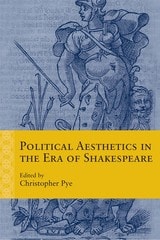
Political Aesthetics in the Era of Shakespeare
Edited by Christopher Pye
Northwestern University Press, 2020
Taking up this expansive conception of aesthetics, Political Aesthetics in the Era of Shakespeare suggests that the political stakes of the literary work—and Shakespeare’s work in particular—extend from the most intimate dimensions of affective response to the problem of the grounds of political society. The approaches to aesthetic thought included in this volume explore the intersections between the literary work and the full range of concerns animating the field today: political philosophy, affect theory, and ecocritical analysis of environs and habitus.
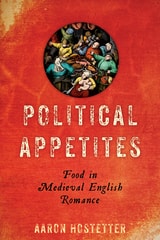
Political Appetites
Food in Medieval English RomanceAaron Hostetter
The Ohio State University Press, 2017
If humanity has attempted through its brief history to render the material world edible, then food and food practice not only influence our aspirations but also shift focus to the limits of human existence on this planet. In studying the foodways of the past as a fundamental economic activity, Political Appetites questions contemporary attitudes towards consumption as their proliferation and abuses create social inequities, menace ecosystems, and threaten to bring about the end of the Anthropocene Era.
Politics and History in William Golding
The World Turned Upside DownPaul Crawford
University of Missouri Press, 2002
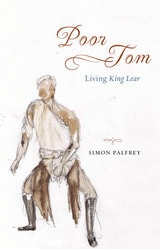
Poor Tom
Living "King Lear"Simon Palfrey
University of Chicago Press, 2014
In Poor Tom, Simon Palfrey asks us to go beyond any such received understandings—and thus to experience King Lear as never before. He argues that the part of Edgar is Shakespeare’s most radical experiment in characterization, and his most exhaustive model of both human and theatrical possibility. The key to the Edgar character is that he spends most of the play disguised, much of it as “Poor Tom of Bedlam,” and his disguises come to uncanny life. The Edgar role is always more than one person; it animates multitudes, past and present and future, and gives life to states of being beyond the normal reach of the senses—undead, or not-yet, or ghostly, or possible rather than actual. And because the Edgar role both connects and retunes all of the figures and scenes in King Lear, close attention to this particular part can shine stunning new light on how the whole play works.
The ultimate message of Palfrey’s bravura analysis is the same for readers or actors or audiences as it is for the characters in the play: see and listen feelingly; pay attention, especially when it seems as though there is nothing there.
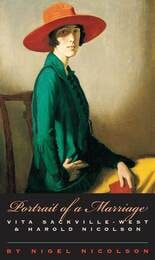
Portrait of a Marriage
Vita Sackville-West and Harold NicolsonNigel Nicolson
University of Chicago Press, 1998
Post-Personal Romanticism
Democratic Terror, Prosthetic Poetics, and the Comedy of Modern Ethical LifeBo Earle
The Ohio State University Press, 2017
Tracing this insight to Hegel’s suggestion that modern subjectivity is in some sense post-individual or even posthumous, Earle argues that signature Romantic lyrics offer a way forward that avoids postmodernism’s wholesale rejection of autonomous selfhood. With chapters on Wordsworth, Blake, Byron, Shelley, and Keats, Earle traces how Romantic lyrics mine this interminability to recover figurative emblems or masks of selfhood from experiences of its inevitable normative failure. This model is of particularly urgent value today when the costs of modern narcissism, economic exploitation, and political imperialism have come to include the normalization of torture, signature drone strikes, and climate change.
Posthumous Love
Eros and the Afterlife in Renaissance EnglandRamie Targoff
University of Chicago Press, 2014
Targoff shows that medieval notions of the somewhat flexible boundaries between love in this world and in the next were hardened by Protestant reformers, who envisioned a total break between the two. Tracing the narrative of this rupture, she focuses on central episodes in poetic history in which poets developed rich and compelling compensations for the lack of posthumous love—from Thomas Wyatt’s translations of Petrarch’s love sonnets and the Elizabethan sonnet series of Shakespeare and Spencer to the carpe diem poems of the seventeenth century. Targoff’s centerpiece is Romeo and Juliet, where she considers how Shakespeare’s reworking of the Italian story stripped away any expectation that the doomed teenagers would reunite in heaven. Casting new light on these familiar works of poetry and drama, this book ultimately demonstrates that the negation of posthumous love brought forth a new mode of poetics that derived its emotional and aesthetic power from its insistence upon love’s mortal limits.
Practical Cues and Social Spectacle in the Chester Plays
Matthew Sergi
University of Chicago Press, 2020
Carefully combing through the plays, Sergi seeks out cues in the dialogues that reveal information about the original staging, design, and acting. These “practical cues,” as he calls them, have gone largely unnoticed by drama scholars, who have focused on the ideology and historical contexts of these plays, rather than the methods, mechanics, and structures of the actual performances. Drawing on his experience as an actor and director, he combines close readings of these texts with fragments of records, revealing a new way to understand how the Chester plays brought biblical narratives to spectators in the noisy streets. For Sergi, plays that once appeared only as dry religious dramas come to life as raucous participatory spectacles filled with humor, camp, and devotion.
Practicing Literary Theory in the Middle Ages
Ethics and the Mixed Form in Chaucer, Gower, Usk, and HoccleveEleanor Johnson
University of Chicago Press, 2013

Prayer and Power
George Herbert and Renaissance CourtshipMichael C. Schoenfeldt
University of Chicago Press, 1991
Before entering the priesthood, Herbert nourished contacts in court, was elected University Orator at Cambridge, and served in Parliament. In turning to God, Schoenfeldt argues, Herbert did not simply turn away from the secular world but also turned its language, particularly the language of courtesy, into the medium for his lyric worship of God. The confluence of courtesy and spirituality in Herbert's poetry provides a fascinating insight into a society searching for an appropriate discourse of reverence in a time of baffling change. The first five chapters investigate the manifold ways in which Herbert's life and works exemplify the interdependence of social and religious behavior in the English Renaissance. The sixth and final chapter extends this investigation into the nervous eroticism of Herbert's poems.
Considering The Temple as well as Herbert's letters, speeches, Latin poems, collections of foreign proverbs, translations, The Country Parson, and less familiar lyrics, Schoenfeldt offers a thorough and detailed reading of Herbert's rich and conflicted corpus. Prayer and Power is not only a bold redefinition of the accomplishment of one of the finest poets of the English Renaissance but also the first sustained study to advance a cultural poetics of the religious lyric.
Precious Bane
Collins and the Miltonic LegacyBy Paul S. Sherwin
University of Texas Press, 1977
During his brief and sorrowful career William Collins wrote a handful of enduring poems, the most powerful and innovative verse of the Age of Sensibility. This study traces Collins' struggle to assimilate or transcend rather than to be overwhelmed by the influence of his Sublime precursor Milton. Collins' achievement is remarkably diverse, his restless experimentation a manifestation of the quest for imaginative autonomy which is the dominant impulse of all his writing. Authoritatively and eloquently, Sherwin interprets Collins' major works including the "Ode to Evening," the poem in which Milton's presence is most enriching, the "Ode on the Poetical Character," "The Passions," "Popular Superstitions Ode," and the "Ode to Fear," Collins' most haunting and painfully burdened poem.
Although Harold Bloom and other prominent theorists of literary influence have recognized that Milton is the chief "daemonic" precursor of the Sensibility poets and the Romantics, Precious Bane represents the first extensive analysis of Milton's power both to daunt and emancipate an aspirant to the Sublime tradition. Bloom writes:
"Paul Sherwin's Precious Bane is at once the definitive study of the poetry of William Collins and also the best informed, most critically acute book yet written upon the Miltonic influence on subsequent poetry. Sherwin's deep learning and original insights illuminate Milton and Keats quite as much as they do Collins and the other tragic poets of Sensibility.
"Readers who seek rich speculation and advanced knowledge on such associated critical and historical problems as Romanticism, the Sublime mode, the agonies of poetic incarnation, and the relation of psychoanalysis to literature, will find abundant recompense in Sherwin's pages. No one in the future will teach, read or write about Collins, or the burdens of Miltonic influence, without starting from Sherwin's achievement."
Pregnancy in the Victorian Novel
Livia Arndal Woods
The Ohio State University Press, 2023
In Pregnancy in the Victorian Novel—the first book-length study of the topic—Livia Arndal Woods traces the connections between literary treatments of pregnancy and the medicalization of pregnancy and childbirth occurring over the long nineteenth century. Woods uses the problem of pregnancy in the Victorian novel (in which pregnancy is treated modestly as a rule and only rarely as an embodied experience) to advocate for “somatic reading,” a practice attuned to impressions of the body on the page and in our own messy lived experiences.
Examining works by Emily Brontë, Charlotte Mary Yonge, Anthony Trollope, George Eliot, Thomas Hardy and others, Woods considers instances of pregnancy that are tied to representations of immodesty, poverty, and medical diagnosis. These representations, Woods argues, should be understood in the arc of Anglo-American modernity and its aftershocks, connecting backward to early modern witch trials and forward to the criminalization of women for pregnancy outcomes in twenty-first-century America. Ultimately, she makes the case that by clearing space for the personal and anecdotal in scholarship, somatic reading helps us analyze with uncertainty rather than against it and allows for richer and more relevant textual interpretation.
Preserving the Self in the South Seas, 1680-1840
Jonathan Lamb
University of Chicago Press, 2001
Lamb contends that European exploration of the South Seas was less confident and mindful than we have assumed. It was, instead, conducted in moods of distraction and infatuation that were hard to make sense of and difficult to narrate, and it prompted reactions among indigenous peoples that were equally passionate and irregular. Preserving the Self in the South Seas also examines these common crises of exploration in the context of a metropolitan audience that eagerly consumed narratives of the Pacific while doubting their truth. Lamb considers why these halting and incredible journals were so popular with the reading public, and suggests that they dramatized anxieties and bafflements rankling at the heart of commercial society.
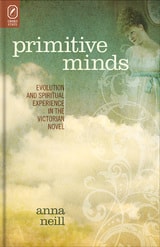
Primitive Minds
Evolution and Spiritual Experience in the Victorian NovelAnna Neill
The Ohio State University Press, 2013
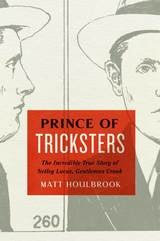
Prince of Tricksters
The Incredible True Story of Netley Lucas, Gentleman CrookMatt Houlbrook
University of Chicago Press, 2016
The lives of Netley Lucas are as flamboyant as they are unlikely. In Prince of Tricksters, Matt Houlbrook picks up the threads of Lucas’s colorful lies and lives. Interweaving crime writing and court records, letters and life-writing, Houlbrook tells Lucas’s fascinating story and, in the process, provides a panoramic view of the 1920s and ’30s. In the restless times after the Great War, the gentlemanly trickster was an exemplary figure, whose tall tales and bogus biographies exposed the everyday difficulties of knowing who and what to trust. Tracing how Lucas both evoked and unsettled the world through which he moved, Houlbrook shows how he prompted a pervasive crisis of confidence that encompassed British society, culture, and politics.
Taking readers on a romp through Britain, North America, and eventually into Africa, Houlbrook confronts readers with the limits of our knowledge of the past and challenges us to think anew about what history is and how it might be made differently.
Print, Manuscript, and Performance
THE CHANGING RELATIONS OF THE MEDIA IN EARLY MODERN ENGLANDArthur F. Marotti and Michael D. Bristol
The Ohio State University Press, 2000
Although canonical literary writers such as Shakespeare, Jonson, and Rochester are discussed, the field of writing examined is a broad one, embracing political speeches, coterie manuscript poetry, popular pamphlets, parochially targeted martyrdom accounts, and news reports. Setting writers, audiences, and texts in their specific historical context, the contributors focus on a period in early modern England, from the late sixteenth through the late seventeenth century, when the shift from orality and manuscript communication to print was part of large-scale cultural change. Arthur F. Marotti’s and Michael D. Bristol’s introduction analyzes some of the sociocultural issues implicit in the collection and relates the essays to contemporary work in textual studies, bibliography, and publication history.
Printed Writings by George W. Russell
A BibliographyGeorge W. Russell; Compiled by Alan Denson
Northwestern University Press, 2019
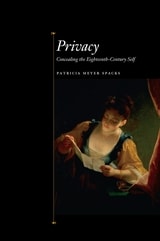
Privacy
Concealing the Eighteenth-Century SelfPatricia Meyer Spacks
University of Chicago Press, 2003
In Privacy, Patricia Meyer Spacks explores eighteenth-century concerns about privacy and the strategies people developed to avoid public scrutiny and social pressure. She examines, for instance, the way people hid behind common rules of etiquette to mask their innermost feelings and how, in fact, people were taught to employ such devices. She considers the erotic overtones that privacy aroused in its suppression of deeper desires. And perhaps most important, she explores the idea of privacy as a societal threat—one that bred pretense and hypocrisy in its practitioners. Through inspired readings of novels by Defoe, Richardson, Fielding, and Sterne, along with a penetrating glimpse into diaries, autobiographies, poems, and works of pornography written during the period, Spacks ultimately shows how writers charted the imaginative possibilities of privacy and its social repercussions.
Finely nuanced and elegantly conceived, Spacks's new work will fascinate anyone who has relished concealment or mourned its recent demise.
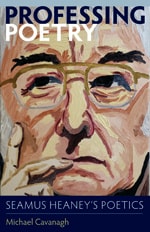
Professing Poetry
Seamus Heaney’s PoeticsMichael Cavanagh
Catholic University of America Press, 2009
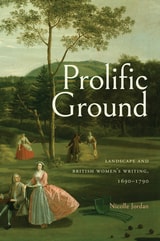
Prolific Ground
Landscape and British Women's Writing, 1690–1790Nicolle Jordan
Bucknell University Press, 2025