Results by title
1832 books match the query 'Essays' and 90 start with p
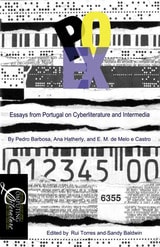
PO.EX
Essays from Portugal on Cyberliterature and IntermediaRui Torres
West Virginia University Press, 2013
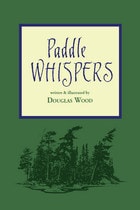
Paddle Whispers
Douglas Wood
University of Minnesota Press, 2005
And so begins a journey—not only an exploration of rapids, lakes, and forests, but also an inner journey of discovery. Through poetic text and drawings, woven gracefully with quotes by John Muir, Walking Buffalo, Sigurd F. Olson, Henry David Thoreau, and others, Douglas Wood traces a journey by paddle and canoe that renews the spirit.
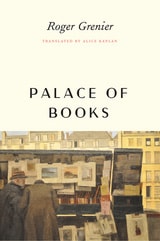
Palace of Books
Roger Grenier
University of Chicago Press, 2014
With Palace of Books, he invites us to explore the domain of literature, its sweeping vistas and hidden recesses. Engaging such fundamental questions as why people feel the need to write, or what is involved in putting one’s self on the page, or how a writer knows she’s written her last sentence, Grenier marshals apposite passages from his favorite writers: Chekhov, Baudelaire, Proust, James, Kafka, Mansfield and many others. Those writers mingle companionably with tales from Grenier’s half-century as an editor and friend to countless legendary figures, including Albert Camus, Romain Gary, Milan Kundera, and Brassai,.
Grenier offers here a series of observations and quotations that feel as spontaneous as good conversation, yet carry the lasting insights of a lifetime of reading and thinking. Palace of Books is rich with pleasures and surprises, the perfect accompaniment to old literary favorites, and the perfect introduction to new ones.
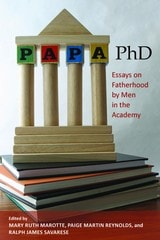
Papa, PhD
Essays on Fatherhood by Men in the AcademyMarotte, Mary Ruth
Rutgers University Press, 2010
In Papa, PhD, Mary Ruth Marotte, Paige Martin Reynolds, and Ralph James Savarese bring together a group contributors from a variety of backgrounds and disciplines. They are white, black, South Asian, Asian, and Arab. They are gay and straight, married and divorced. They are tenured and untenured, at research-one universities and at community colleges. Some write at the beginning of their careers, others at the end. But, perhaps most important they do not look back-they look forward to new parental and professional synergies as they reflect on what it means to be a father in the academy.
The fathers writing in Papa, PhD seek to expand their children's horizons, giving them the gifts of better topic sentences and a cosmopolitan sensibility. They seriously consider the implications of gender theory and queer theory-even Marxist theory-and make relevant theoretical connections between their work and the less abstract, more pragmatic, world of fathering. What resonates is the astonishing range of forms that fatherhood can take as these dads challenge traditional norms by actively questioning the status quo.
Paradise and Method
Poetry and PraxisBruce Andrews
Northwestern University Press, 1996
Addressing poetics from a poet's perspective, Andrews focuses on the ways in which meaning is produced and challenged. His essays aim "to map out opportunities for making sense (or making noise)--both in reading and writing contemporary literature. At the center has been a desire to explore language, as up close as possible, as a material and social medium for restagings of meaning and power." Andrews analyzes poetics and the production of meaning; alternative traditions and canons; and innovative contemporary poetry, particularly its break with many of the premises and constraints of even the most forward-looking modernisms.
Paradoxes of Digital Disengagement
In Search of the Opt-Out ButtonAdi Kuntsman and Esperanza Miyake
University of Westminster Press, 2022
Listen to authors Adi Kuntsman and Esperanza Miyake discuss collective data justice, the rights, refusals and ethics of digital (dis)engagement in this latest podcast from Lateral, the Journal of the Cultural Studies Association.
“The digital now thoroughly saturates our everyday lives to the point where it seems we are drowning. But is it possible to swim on our terms? This book thoughtfully examines this question, critically teasing apart the structures of power that permeate digital relations and charting pathways to a more just digital world. Essential reading for those who want to move beyond personal digital detoxes to challenge and transform our digital society and economy.” - Professor Rob Kitchin, author of The Data Revolution and Data Lives
“The seductions of tech have ushered in the encroachment of technological solutions into policing, law enforcement and ever-widening systems of social regulation across the UK and Europe. This book marks a critical intervention – by conceptualising our understanding of the ways in which data and digital harms are systemically expended against the powerless. It is a must read for those of us who are concerned to resist the (digital) exclusion of the marginalised, and the (digital) banishment of the vulnerable.” - Dr Patrick Williams, author of Data-Driven Policing: The Hardwiring of Discriminatory Policing Practices Across Europe
“While imaginaries of techno futures constructed by the Digital Lords of contemporary societies become self-fulfilling prophecies, we struggle to imagine a present and future free from digital coercion and exclusion. In their powerful interdisciplinary analysis, Adi Kuntsman and Esperanza Miyake delve into the personal, social, political and environmental costs of compulsory digitality. Rejecting a self-defeating naturalisation of digitality and digital inevitability Paradoxes of Digital Disengagement compellingly shows how collective digital justice is imperative in this future/present where the machine rules and people can become marginalized and excluded. A much-needed scholarly intervention that can inspire our collective thinking, research and praxis.” - Dr Benedetta Brevini, author of Is AI Good for the Planet?
“Kuntsman and Miyake have written an engaging book. It offers a readable critique of enforced digitality and broadens the scope of disconnection studies. The detailed analyses of complicated documents are elegantly structured and thought-provoking.” - https://blogs.lse.ac.uk/lsereviewofbooks/2022/11/16/book-review-paradoxes-of-digital-disengagement-in-search-of-the-opt-out-button-by-adi-kuntsman-and-esperanza-miyake/
Life is increasingly governed and mediated through digital and smart technologies, platforms, big data and algorithms. However, the reasons, practices and impact of how the digital is used by different institutions are often deeply linked to social oppression and injustice. Similarly, the ability to resist these digital impositions is based on inequality and privilege. Challenging the ways in which we are increasingly dependent on the digital, this book raises a set of provocative and urgent questions: in a world of compulsory digitality is there an opt out button? Where, when, how, why and to whom is it available? Answering these questions has become even more relevant since the COVID-19 pandemic. In response, the book puts forward the concept of ‘digital disengagement’ which is explored across six key areas of digitisation: health; citizenship; education; consumer culture; labour; and the environment.
Part I examines the difficulty of opting out of compulsory digitality in a world where most things are digital by default. From health apps, algorithmic decision-making to learning analytics, opting out comes with a set of troubling consequences. Part II turns to several examples of disconnection and disengagement. The chapters reveal how phenomena like digital detoxes, time-management apps and online ‘green’ spaces are co-opted by the very digital systems one is trying to resist.
The book critiques issues relating to digital surveillance, algorithmic discrimination and biased tech, corporatisation and monetisation of data, exploitative digital labour, digitalised self-discipline and destruction of the environment. As an interdisciplinary piece of work, the book will be useful to any scholar and activist in Digital, Internet and Social Media Studies; Digital Sociology and Social Policy; Digital Health; Media, Popular and Communication Studies; Consumer culture; and Environment Studies.

Parenting on the Frontlines
Stories of Love, Loss, and WonderKelly Cooper Paradis
Michigan Publishing Services, 2023
Each day of working parenthood is a rollercoaster of success and failure. My child ate a carrot! Then spit it out on the dog. I got to work on time! But there is a mystery stain on my dress shirt and this Tide stick is definitely making it worse. Also yes, that was “Baby Shark” I was humming while accidentally unmuted on the Zoom call, and no, I am not going to be able to sew an octopus costume from scratch by Friday. Please tell me there is something available at Target.
As a parent, we live through levels of both joy and sorrow that we didn’t even know existed before. And we wonder—is it only me? Am I alone in this? In Parenting on the Frontlines, we explore both the lighter and heavier sides of working parenthood. The stories shared here are written by healthcare workers at Michigan Medicine, but all caregivers will find pieces to which they can relate. Most importantly, we want you to know that you are not alone on your journey, no matter where it takes you.
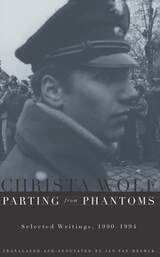
Parting from Phantoms
Selected Writings, 1990-1994Christa Wolf
University of Chicago Press, 1997
"The works in this book constitute an essential document of the history of reunified Germany, and this alone recommends it to scholars and those interested in current European events."— Publishers Weekly
"Christa Wolf was arguably the most influential writer of a nation that no longer exists. . . . Parting from Phantoms traces the fever chart of her anguish. . . . In some ways, the rawness of the present volume is its greatest contribution, and its bona fides—testifying to the human cost of deception and self-deception."—Todd Gitlin, Nation
"A thrilling display of ideological soul-searching."—Ilan Stavans, Newsday, Favorite Books of 1997

Past Imperfect
Essays on History, Libraries, and the HumanitiesLawrence W. Towner
University of Chicago Press, 1993
Towner's essays and talks cover a broad range of topics of continuing relevance to scholarship and the humanities. His writings gathered in Past Imperfect are concerned with such issues as the role of independent research libraries and the politics of funding. A section of historical essays on the common people of New England reveal his concern with neglected fields of history, a theme that guided his career as a librarian. Spanning the range of his experience and expertise, this volume expresses Towner's coherent vision of the place of humanities, libraries, and scholarship in American life.
Lawrence W. Towner (1921-92) taught history at M.I.T., the College of William and Mary, and Northwestern University. In 1962 he was appointed librarian of the Newberry Library and directed the library for the next twenty-four years.
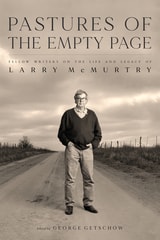
Pastures of the Empty Page
Fellow Writers on the Life and Legacy of Larry McMurtryGeorge Getschow, editor
University of Texas Press, 2023
A collection of essays that offers an intimate view of Larry McMurtry, America’s preeminent western novelist, through the eyes of a pantheon of writers he helped shape through his work over the course of his unparalleled literary life.
When he died in 2021, Larry McMurtry was one of America’s most revered writers. The author of treasured novels such as Lonesome Dove and The Last Picture Show, and coauthor of the screenplays for Brokeback Mountain and Streets of Laredo, McMurtry created unforgettable characters and landscapes largely drawn from his life growing up on the family’s hardscrabble ranch outside his hometown of Archer City, Texas. Pastures of the Empty Page brings together fellow writers to honor the man and his impact on American letters.
Paulette Jiles, Stephen Harrigan, Stephanie Elizondo Griest, and Lawrence Wright take up McMurtry’s piercing and poetic vision—an elegiac literature of place that demolished old myths of cowboy culture and created new ones. Screenwriting partner Diana Ossana reflects on their thirty-year book and screenwriting partnership; other contributors explore McMurtry’s reading habits and his passion for bookselling. And brother Charlie McMurtry shares memories of their childhood on the ranch. In contrast to his curmudgeonly persona, Larry McMurtry emerges as a trustworthy friend and supportive mentor. McMurtry was famously self-deprecating, but as his admirers attest, this self-described “minor regional writer” was an artist for the ages.
Pathways to the Old Northwest
An Observance of the Bicentennial of the Northwest OrdinanceLloyd A. Hunter, et al
Indiana Historical Society Press, 1988

Patient Listening
A Doctor's GuideLoreen Herwaldt
University of Iowa Press, 2008
Herwaldt skillfully pares each narrative down to its most basic elements, rendering them into powerful found poems that she has used successfully in her role as a teacher and in her own practice. Drawing from narratives by writers who are both emerging and well known, including Oliver Sacks, Richard Selzer, and Mary Swander, each poem reveals the experience of illness and treatment from the patient's perspective. Patient Listening includes a detailed general introduction and a how-to guide that will prove invaluable in the classroom and in clinical practice.
This book will inspire thoughtfulness in everyone who reads it. It is also designed to foster discussions about all aspects of the patient experience from ethics to stigmatization to health insurance. Patient Listening is not just about bedside manner but also about how health care providers can gain the most from their interactions with patients and in turn offer more appropriate treatments, develop more cooperative and responsive relationships with their patients, and thus become better doctors.

Pearls, Peaches, and Peddlers
Short Essays on Arkansas’s Amazing HistoryTom Dillard
University of Arkansas Press, 2027
In Pearls, Peaches, and Peddlers: Short Essays on Arkansas’s Amazing History, Tom Dillard offers a lively portrait of Arkansas that reveals how the state was shaped by ordinary people, unexpected industries, and moments of upheaval both grand and small.
The seventy-four essays collected here draw upon Dillard’s career as a historian, archivist, educator, and preservationist to challenge familiar myths, reveal overlooked stories, and demonstrate how the history of one state can illuminate the larger American experience.
Pennsylvania Stories--Well Told
William Ecenbarger
Temple University Press, 2017
A former journalist for the Philadelphia Inquirer Magazine, and author of the bestseller Kids for Cash, Ecenbarger has collected a dozen of his fascinating articles showcasing the Keystone State in Pennsylvania Stories—Well Told. He provides a history of the pencil, and considers why the first day of Pennsylvania’s deer hunting season—the world’s largest participatory sporting event—is an unofficial state holiday, closing schools and state offices. Ecenbarger also profiles George “Boom Boom” Zambelli, the internationally renowned pyrotechnic king, and goes driving with Pennsylvania native John Updike in rural Berks County, PA.
Other fascinating tales unfold in Pennsylvania Stories, from an inspiring tale of Governor Bob Casey’s double organ transplant, to darker essays on the electric chair and the Ku Klux Klan, to a mile-by-mile appreciation of the Pennsylvania Turnpike.
In these weird and wonderful stories, Ecenbarger highlights just what makes Pennsylvania both eccentric and great. His book is a delightfully intriguing read for natives and curious outsiders alike.
Perennial Ceremony
Lessons and Gifts from a Dakota GardenTeresa Peterson
University of Minnesota Press, 2024
Travel through a garden’s seasons toward healing, reclamation, and wholeness—for us, and for our beloved relative, the Earth
In this rich collection of prose, poetry, and recipes, Teresa Peterson shares how she found refuge from the struggle to reconcile her Christianity and Dakota spirituality, discovering solace and ceremony in communing with the earth. Observing and embracing the cycles of her garden, she awakens to the constant affirmation that healing and wellness can be attained through a deep relationship with land, plants, and waters. Dakota people call this way of seeing and being in the world mitakuye owasin: all my relations. Perennial Ceremony brings us into this relationship, as Peterson guides us through the Dakota seasons to impart lessons from her life as a gardener, gatherer, and lover of the land.
We see the awakening of Wetu (spring), a transitional time when nature comes alive and sweet sap flows from maples, and the imperfect splendor of Bdoketu (summer), when rain becomes a needed and nourishing gift. We share in the harvesting wisdom of Ptaŋyetu (fall), a time to savor daylight and reap the garden’s abundance, and the restorative solitude of Waniyetu (winter), when snow blankets the landscape and sharpens every sound. Through it all, Peterson walks with us along the path that both divides and joins Christian doctrine, everyday spiritual experience, and the healing powers of Indigenous wisdom and spirituality.
In this intimate seasonal cycle, we learn how the garden becomes a healing balm. Peterson teaches us how ceremony may be found there: how in the vegetables and flowers, the woods, the hillsides, the river valley—even in the feeding of friends and family—we can reclaim and honor our relationship with Mother Earth. She encourages us to bring perennial ceremony into our own lives, inviting us on a journey that brings us full circle to makoce kiŋ mitakuye: the land is my relative.
Performing Brazil
Essays on Culture, Identity, and the Performing ArtsEdited by Severino J. Albuquerque and Kathryn Bishop-Sanchez
University of Wisconsin Press, 2015
The contributors to the volume are Maria José Somerlate Barbosa, Eric A. Galm, Annie McNeill Gibson, Ana Paula Höfling, Benjamin Legg, Bryan McCann, Simone Osthoff, Fernando de Sousa Rocha, Cristina F. Rosa, Alessandra Santos, and Lidia Santos.
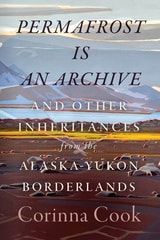
Permafrost Is an Archive
and Other Inheritances from the Alaska-Yukon BorderlandsCorinna Cook
West Virginia University Press, 2026
The Yukon Ice Patch Project reveals ancient lives. A road through the boreal forest reads like a map of climate upheaval. Those houses with broken doorknobs—a legacy of government regulation over Indigenous life. Corinna Cook, who was born white on Áak’w Kwáan Tlingit land in Juneau, Alaska, wrestles with the past and future into Canada’s Yukon Territory. With writing that blends research and reverie, her essays ask how we might come into right relations with our most difficult, shared histories. How can we carry the past together, in a good way, as the land melts? The answers—elusive as they are—carry global resonance, taking shape through a deeply personal lens combined with careful study of local arts, artifacts, maps, and the land we depend on.
Phenomenal Reading
Essays on Modern and Contemporary PoeticsBrian M. Reed
University of Alabama Press, 2012
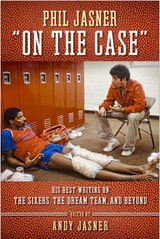
Phil Jasner "On the Case"
His Best Writing on the Sixers, the Dream Team, and BeyondAndy Jasner
Temple University Press, 2017
Allen Iverson loved Philadelphia Daily News basketball beat reporter Phil Jasner, calling him “the best” in the world of sports journalism. From 1981 until his death in 2010, Jasner was always “on the case,” going to great lengths to track athletes down for a quote or a story. He was most known for covering the team’s famous players, including World B. Free and Bobby Jones, Julius Erving and Moses Malone, Charles Barkley, and, of course, Iverson. His tremendous output was beloved by players and fans alike, earning him many honors, including inductions into six Halls of Fame.
Phil Jasner “On the Case” collects the best of Jasner’s writing throughout his illustrious career. Jasner wrote about baseball, the Eagles, and the Philadelphia Atoms’ soccer with the same insight and aplomb he showed in his coverage of The Big 5, the 76ers’ championship season in 1983, and the Dream Team. Lovingly assembled—each chapter is introduced by some of the most prominent figures Jasner covered, from Vince Papale, Doug Collins, and Billy Cunningham to Iverson and Barkley—this collection recounts a distinguished sportswriter’s remarkable career.
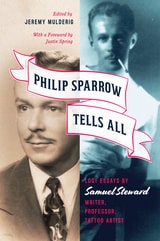
Philip Sparrow Tells All
Lost Essays by Samuel Steward, Writer, Professor, Tattoo ArtistSamuel Steward
University of Chicago Press, 2015
In Philip Sparrow Tells All, Jeremy Mulderig has collected thirty of these engaging but forgotten columns, prefacing them with revealing introductions that relate the essays to people and events in Steward’s life and to the intellectual and cultural contexts in which he wrote during the 1940s. In these essays we encounter such famous friends of Steward as Gertrude Stein, André Gide, and Thornton Wilder. We hear of his stint as a holiday sales clerk at Marshall Field’s (where he met and seduced fellow employee Rock Hudson), of his roles as an opera and ballet extra in hilariously shoddy costumes, of his hoarding tendencies, his disappointment with the drabness of men’s fashions, and his dread of turning forty. We go along with him to a bodybuilding competition and a pet cemetery, and together we wander the boulevards of Paris and the alleys of Algiers. Throughout, Mulderig’s entertaining annotations explain the essays’ wide-ranging allusions and also highlight their gay subtext, which constituted a kind of private game that Steward played with his mostly oblivious audience of Midwestern dentists.
The first collection of any of Samuel Steward’s writings to be republished since his death in 1993, Philip Sparrow Tells All makes these lost essays available to a broad readership that Steward imagined but never actually enjoyed when he wrote them. In doing so, it takes a major step toward documenting his important place in twentieth-century gay literature and history.
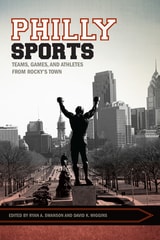
Philly Sports
Teams, Games, and Athletes from Rocky's TownRyan Swanson
University of Arkansas Press, 2016
Philadelphia sports—anchored by the Eagles, Flyers, Phillies, and 76ers—have a long, and sometimes tortured, history. Philly fans have booed more than their share and have earned a reputation as some of the most hostile in the country. They’ve been known, so the tales go, to jeer Santa Claus and cheer at the injury of an opposing player.
Strangely though, much of America’s perception of Philadelphia sports has been shaped by a fictional figure: Rocky. The series of Hollywood films named after their title character has told and retold the Cinderella story of an underdog boxer rising up against long odds. One could plausibly make the argument that Rocky is Philadelphia’s most famous athlete.
Beyond the major sports franchises and Rocky, lesser-known athletic competition in Philadelphia offers much to the interested observer. The city’s boxing culture, influence on Negro Leagues baseball, role in establishing interscholastic sport, and leadership in the rise of cricket all deserve and receive close investigation in this new collection. Philly Sports combines primary research and personal experiences—playing in the Palestra, scouting out the tombstones of the city’s best athletes, enjoying the fervor of a Philadelphia night with a local team in pursuit of a championship title. The essence of Philadelphia sport, and to a certain extent the city itself, is distilled here.
Philosophical Legacies
Essays on the Thought of Kant, Hegel, and Their Contemporaries (Studies in Philosophy and the History of Philosophy, Volume 50)Daniel O. Dahlstrom
Catholic University of America Press, 2008
Philosophical Topics 44.1
Essays on the Philosophy of Frederick StoutlandMartin Gustafsson
University of Arkansas Press, 2016
Contents:
Introduction – Martin Gustafsson
Self-Awareness and Cognitive Agency in Descartes’s Meditations – Lilli Alanen
Why an Aristotelian Account of Truth Is (More or Less) All We Need – Jeff Malpas
The Social Aspects of Aristotle’s Theory of Action – Dorothea Frede
Voluntarism, Intellectualism, and Anselm on Motivation – Tomas Ekenberg
Why Kant is not a Kantian – James Conant
“A Contrast between Two Pictures”: The Case of Perception – Jennifer Hornsby
On What Is in Front of Your Nose – Anton Ford
Expression and Self-Consciousness – Stina Bäckström
Bodily Movement and Its Significance – Will Small
Anscombe’s Bird, Wittgenstein’s Cat: Intention, Expression, and Convention – Martin Gustafsson
Film Noir and Weakly Intentional Actions: An Anscombian Analysis – Elinor Hållén
Theory, Interpretation, and Law: Some Worries about Dworkin’s Account of Their Relation – Lisa Van Alstyne
Stoutland vs. Metaphysics – Lars Hertzberg
Philosophy in the First Person
A ManifestoHelena de Bres
University of Chicago Press, 0
A bold argument and model for how to bring one’s personal voice and experience into philosophical writing.
Contemporary philosophical writing is deeply impersonal: technical, abstract, and stripped of an individual human voice. In contrast, many of the historical philosophers we most admire saw emotion, style, narrative and humor as essential parts of doing philosophy well. What if they were on to something?
Philosophy in the First Person offers a deft and engaging case for the philosophical personal essay, a genre of writing that unites intimate revelation with intellectual depth and literary flair. As a manifesto, the book argues for a return to the more personal forms of philosophy that preceded academic professionalization. As a guide, it provides substantive advice for aspiring personal-philosophical writers, drawing on ideas from creative nonfiction. As a demonstration, the book is itself a set of philosophical personal essays, tracing one philosopher’s sentimental-intellectual journey through a vocation that frustrates and captivates her in equal measure.
Blending memoir, theory, and model, the book offers a roadmap for writing philosophy that’s enlightening as well as moving, gripping, and fun. Along the way, it makes a refreshing argument for reconnecting a philosophical vocation with a fully human way of life.
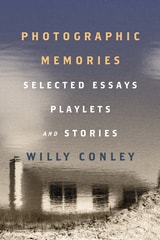
Photographic Memories
Selected Essays, Playlets, and StoriesWilly Conley
Gallaudet University Press, 2023
Original photographs taken by the author accompany his writings and invite the reader to contemplate the often-blurred lines between reality and memory.
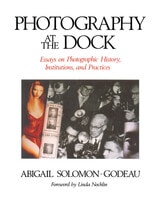
Photography At The Dock
Essays on Photographic History, Institutions, and PracticesAbigail Solomon-Godeau
University of Minnesota Press, 1994
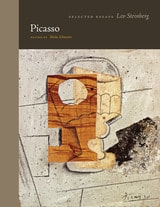
Picasso
Selected EssaysLeo Steinberg
University of Chicago Press, 2022
Leo Steinberg was one of the most original art historians of the twentieth century, known for taking interpretive risks that challenged the profession by overturning reigning orthodoxies. In essays and lectures ranging from old masters to modern art, he combined scholarly erudition with eloquent prose that illuminated his subject and a credo that privileged the visual evidence of the image over the literature written about it. His writings, sometimes provocative and controversial, remain vital and influential reading. Steinberg’s perceptions evolved from long, hard looking at his objects of study. Almost everything he wrote included passages of formal analysis but always put into the service of interpretation.
This volume brings together Steinberg’s essays on Pablo Picasso, many of which have been studied and debated for decades, such as “The Philosophical Brothel,” as well as unpublished lectures, including “The Intelligence of Picasso,” a wide-ranging look at Picasso’s enduring ambition to stretch the agenda of representation, from childhood drawings to his last self-portrait. An introduction by art historian Richard Shiff contextualizes these works and illuminates Steinberg’s lifelong dedication to refining the expository, interpretive, and rhetorical features of his writing.
Picasso is the fourth volume in a series that presents Steinberg’s writings, selected and edited by his longtime associate Sheila Schwartz.
Pick Up the Pieces
Excursions in Seventies MusicJohn Corbett
University of Chicago Press, 2019
Rock. Disco. Pop. Soul. Jazz. Folk. Funk. The music scene of the 1970s was as varied as it was exhilarating, but the decade’s diversity of sound has never been captured in one book before now. Pick Up the Pieces gives a panoramic view of the era’s music and culture through seventy-eight essays that allow readers to dip in and out of the decade at random or immerse themselves completely in Corbett’s chronological journey.
An inviting mix of skilled music criticism and cultural observation, Pick Up the Pieces is also a coming-of-age story, tracking the author’s absorption in music as he grows from age seven to seventeen. Along with entertaining personal observations and stories, Corbett includes little-known insights into musicians from Pink Floyd, Joni Mitchell, James Brown, and Fleetwood Mac to the Residents, Devo, Gal Costa, and Julius Hemphill.
A master DJ on the page, Corbett takes us through the curated playlist that is Pick Up the Pieces with captivating melody of language and powerful enthusiasm for the era. This funny, energetic book will have readers longing nostalgically for a decade long past.
Picture Theory
Essays on Verbal and Visual RepresentationW. J. T. Mitchell
University of Chicago Press, 1994
Pictures, Quotations, and Distinctions
Fourteen Essays in PhenomenologyRobert Sokolowski
Catholic University of America Press, 2022
Pigeon River Country
A Michigan ForestDale Clarke Franz
University of Michigan Press, 2007
The long awaited new edition of a classic offers memories, myths, and meanings of the largest contiguous piece of wild land in Michigan's Lower Peninsula.
This updated edition explores more deeply why and how the outdoors moves and compels us. It’s a book about mice who sing, elk who wear collars, deer who kiss, and birds who could dictate their compositions to Mozart. It's about the human species interacting in generous and sometimes misguided ways with the rest of life. It's about men trying to ripen pinecones into pineapples and women taking better aim with a revolver than expected. It's about poetry—from Mary Oliver, Lao Tzu, and Theodore Roethke—and seeing hawks dive in a night sky or feeling oil geologists shake the earth below. It's about finding fish dead in the river by the thousands and crouching behind a stump to watch beaver build a dwelling. While this book considers life beyond the boundaries of Pigeon River Country, it is steeped in the specifics of a place that lives mostly on its own, instead of human, terms.
The Pigeon River Country is a remote northern forest, ecologically distinct from most of the United States. Laced with waterways, it has a storied past. Dale Clarke Franz has collected personal accounts from various people intrigued with the Pigeon River Country—including loggers, conservationists, mill workers, campers, even the young Ernest Hemingway, who said he loved the forest "better than anything in the world." There are comprehensive discussions of the area's flora and fauna, guides to trails and camping sites, and photos showcasing the changing face of this hidden national treasure.
Pioneers and Caretakers
A Study of Nine American Women NovelistsLouis Auchincloss
University of Minnesota Press, 1965
Pirkei Avot
A Social Justice CommentaryRabbi Dr. Shmuly Yanklowitz
Central Conference of American Rabbis, 2018
Pivotal Voices, Era of Transition
Toward a 21st Century PoeticsRigoberto González
University of Michigan Press, 2017
This book fills a glaring gap in existing poetry scholarship by focusing exclusively on writers of color, and particularly on Latino poetry. González makes important observations about the relevance, urgency, and exquisite craft of the work coming from writers who represent marginalized communities. His insightful connections between the Latino, African American, Asian American, and Native American literatures persuasively position them as a collective movement critiquing, challenging, and reorienting the direction of American poetry with their nuanced and politicized verse. González’s inclusive vision covers a wide landscape of writers, opening literary doors for sexual and ethnic minorities.
Place Envy
Essays in Search of OrientationMichael Lowenthal
The Ohio State University Press, 2026
Growing up in places where his family had no past, and met mostly by silence from his Holocaust-refugee grandparents, Michael Lowenthal longed to be from somewhere. Then he realized he was gay and felt displaced from his own displaced family. Place Envy—his first book of essays after five acclaimed books of fiction—chronicles his quest for orientation in the world: as an agnostic Jew, as a queer traveler and lover, and as a writer who can tell or twist the truth. Yearning for a queer lineage, he obsesses about an uncle who perished at Bergen-Belsen but then finds, in his grandmother’s German hometown, a more surprising legacy. He lives with a Pennsylvania Amish family; accompanies blind gay men on a Mexican cruise; plays jazz with Sun Ra, the Afrofuturist who claimed to hail from Saturn; and pursues a clarifying love affair in Brazil. Collectively, these essays recount Lowenthal’s many journeys of dislocation and relocation: to foreign countries and subcultures and to the riskiest shores of family and self.
Place and Replace
Essays on Western CanadaAdele Perry
University of Manitoba Press, 2013

Places and Purposes of Popular Music Education
Perspectives from the FieldEdited by Bryan Powell and Gareth Dylan Smith
Intellect Books, 2022
This book provides a variety of perspectives on popular music education. With a mixture of rants, manifestos, and punchy position pieces, the volume moves from scholarly essays replete with citations and references to descriptions of practice and straight-talking polemics. The writing is approachable in tone, and the chapters are intended to whet appetites, prime pumps, open eyes, and keep cogs turning for academics of all ages and stages.
The book will appeal to those working in popular music studies, communication studies, and education research. It also holds relevance for researchers of the music industry and music ecosystems around the world. International in reach and scope and edited by recognized voices at the vanguard of progressive music education, this is an eye-opening exploration of education in and through the widespread cultural phenomenon of popular music.
Placing the Academy
Essays on Landscape, Work, and Identityedited by Jennifer Sinor and Rona Kaufman
Utah State University Press, 2007
Twenty-one writers answer the call for literature that addresses who we are by understanding where we are--where, for each of them, being in some way part of academia. In personal essays, they imaginatively delineate and engage the diverse, occasionally unexpected play of place in shaping them, writers and teachers in varied environments, with unique experiences and distinctive world views, and reconfiguring for them conjunctions of identity and setting, here, there, everywhere, and in between.
Contents
I Introduction Writing Place, Jennifer Sinor
II Here
Six Kinds of Rain: Searching for a Place in the Academy, Kathleen Dean Moore and Erin E. Moore
The Work the Landscape Calls Us To, Michael Sowder
Valley Language, Diana Garcia
What I Learned from the Campus Plumber, Charles Bergman
M-I-Crooked Letter-Crooked Letter, Katherine Fischer
On Frogs, Poems, and Teaching at a Rural Community College, Sean W. Henne
III There
Levittown Breeds Anarchists Film at 11:00, Kathryn T. Flannery
Living in a Transformed Desert, Mitsuye Yamada
A More Fortunate Destiny, Jayne Brim Box
Imagined Vietnams, Charles Waugh
IV Everywhere
Teaching on Stolen Ground, Deborah A. Miranda
The Blind Teaching the Blind: The Academic as Naturalist, or Not, Robert Michael Pyle
Where Are You From? Lee Torda
V In Between
Going Away to Think, Scott Slovic
Fronteriza Consciousness: The Site and Language of the Academy and of Life, Norma Elia Cantu
Bones of Summer, Mary Clearman Blew
Singing, Speaking, and Seeing a World, Janice M. Gould
Making Places Work: Felt Sense, Identity, and Teaching, Jeffrey M. Buchanan
VI Coda
Running in Place: The Personal at Work, in Motion, on Campus, and in the Neighborhood, Rona Kaufman
Plaintext
EssaysNancy Mairs
University of Arizona Press, 1986
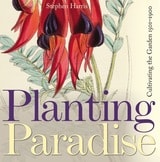
Planting Paradise
Cultivating the Garden, 1501-1900Stephen Harris
Bodleian Library Publishing, 2011
Beautifully illustrated, Planting Paradise charts the evolution of thinking about the cultivation of gardens from the sixteenth to the nineteenth centuries. In this age of discovery, when the world was being explored as never before, gardening itself took on new dimensions. The Renaissance belief in direct observation of nature offered an alternative way of thinking and inspired the scientific approach of the Enlightenment, and soon gardens were no longer just places of beauty, but also laboratories for scientific investigation.
Planting Paradise reveals how the botanic gardens of early modern Europe were largely viewed as a means of supplying surgeons with medicines but by the seventeenth and eighteenth century the interest in gardens and cultivating exotic plants had spread to all levels of society. As global exploration took Europeans all over the world, gardens became a tapestry of many diverse botanical histories—some plants were native, some were introduced from foreign lands, and others were bred in the garden. Planting Paradise shows how the garden became a symbol of human interactions within the botanical world.
A lovely gift book for garden lovers, Planting Paradise showcases the superb collection of botanical illustrations in the Plant Sciences Department and Bodleian Library, University of Oxford, and presents a handsome and fascinating look at the history of the garden from the picturesque to the practical and back again.
Playa Works
The Myth of the EmptyWilliam L. Fox
University of Nevada Press, 2024
In eight brilliant essays, Fox explores many of the major playas of the American West , examining locations as diverse as Nellis Air Force Base and Frenchman Flat, where the federal government has tested experimental aircraft and atomic weaponry; the Great Salt Lake Desert, where land-speed records have been broken; and the Black Rock Desert of Northern Nevada, site of the colorful Burning Man arts festival. He analyzes the geological and climatological conditions that created the playas and the historical role that playas played in the exploration and settlement of the West. And he offers lucid and keenly perceptive discussions of the ways that artists have responded to the playas, from the ancient makers of geoglyphs to the work of contemporary artists who have found inspiration in these enigmatic spaces, including earthworks builder Michael Heizer, photographer Richard Misrach, and painter Michael Moore. The ensemble is a compelling combination of natural history, philosophy, and art criticism, a thoughtful meditation on humankind's aversion to and fascination with the void.
Playback
By Richard "Cactus" Pryor
University of Texas Press, 1995
From the town that brought you Molly Ivins, Liz Carpenter, John Henry Faulk, and Greater Tuna, here's Cactus Pryor. For decades, Cactus' wit and wisdom have delighted radio listeners, as well as the many social, political, business, and philanthropic groups throughout the United States whose functions have been enlivened by this accomplished master of ceremonies and after-dinner speaker.
Now the University of Texas Press takes great pleasure in bringing you this quintessential Texas humorist. Playback gathers over forty of Cactus Pryor's favorite radio essays, translating "ear words into eye words," as he puts it. In these pieces, Cactus paints vivid word pictures of people and places, offering readers the same "you are there" immediacy that makes his radio broadcasts so popular. In them, you'll take a sentimental journey with Cactus and his wife to the Maui grave site of Charles Lindbergh—discover how legendary University of Texas football coach Darrell Royal faced the agony of defeat with humor—meet unsung heroes like the 104-year-old who's teaching himself to read and write—get acquainted with the notable folks Cactus has known, including Lady Bird Johnson, John Wayne, Jane Fonda, and James Michener—and, of course, share Cactus' love of family, friends, and the Texas coast.
As Bailey White's essays on National Public Radio have introduced listeners across the country to the lifeways of the Deep South, so Cactus Pryor offers a humorous, revealing look at how we Texans view ourselves, our neighbors, and the world. Read Playback now, and see what you've been missing.
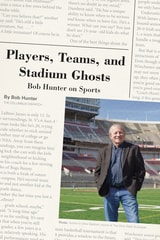
Players, Teams, and Stadium Ghosts
Bob Hunter on SportsBob Hunter
Ohio University Press, 2019
In Players, Teams, and Stadium Ghosts, sportswriter Bob Hunter has assembled a Hall of Fame collection of his best writing from the Columbus Dispatch. Fans will encounter some of the biggest names in sports and relive great moments from games played by amateurs and pros. They’ll encounter forgotten players and teams that struggled.
Hunter shows us LeBron James when he was a 15-year-old high school freshman, already capturing the world’s attention; 20-year-old Derek Jeter’s meteoric rise through the minors, including the Columbus Clippers; a strange encounter with Pete Rose hustling frozen pizzas; and the excitement of watching future WNBA star Katie Smith dominate a Columbus Quest championship game. The common thread is the personal touch that Hunter consistently uses to take readers beyond the final scores and the dazzle of lights. These are the people behind the athletes. They’re remembered for how they played, but Hunter reminds us who they were.
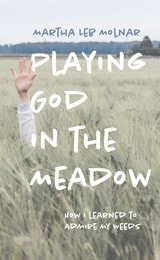
Playing God in the Meadow
How I Learned to Admire My WeedsMartha Leb Molnar
University of Massachusetts Press, 2022
After decades of fantasizing and saving, of working multiple jobs and embracing frugality in the midst of Manhattan, Martha Leb Molnar and her husband had found their parcel of land. Determined to turn an overgrown and unproductive Vermont apple orchard into a thriving and beautiful landscape, they decided to restore this patch of land to a pristine meadow and build a safe haven for their family and nearby wildlife.
Once they cleared the gnarled and dying trees away, Molnar was forced to wage war on the invasive species that had sprung up around the property. Propelled by the heated debates surrounding non-native species and her own complicated family history and migration, she was driven to research the Vermont landscape, turning to scientific literature, experts in botany and environmental science, and locals who have long tended the land in search of answers. At turns funny, thoughtful, and conversational, Playing God in the Meadow follows this big city transplant as she learns to make peace with rural life and an evolving landscape that she cannot entirely control.
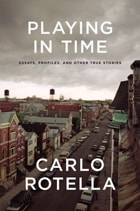
Playing in Time
Essays, Profiles, and Other True StoriesCarlo Rotella
University of Chicago Press, 2012
Rotella is best known for his writings on boxing, and his essays here do not disappoint. It’s a topic that he turns to for its colorful characters, compelling settings, and formidable life lessons both in and out of the ring. He gives us tales of an older boxer who keeps unretiring and a welterweight who is “about as rich and famous as a 147-pound fighter can get these days,” and a hilarious rumination on why Muhammad Ali’s phrase “I am the greatest” began appearing (in the mouth of Epeus) in translations of The Iliad around 1987. His essays on blues, crime and science fiction writers, and urban spaces are equally and deftly engaging, combining an artist’s eye for detail with a scholar’s sense of research, whether taking us to visit detective writer George Pelecanos or to dance with the proprietress of the Baby Doll Polka Club next to Midway Airport in Chicago.
Rotella’s essays are always smart, frequently funny, and consistently surprising. This collection will be welcomed by his many fans and will bring his inimitable style and approach to an even wider audience.
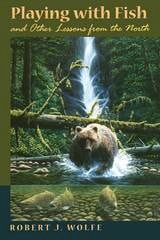
Playing with Fish and Other Lessons from the North
Robert J. Wolfe
University of Arizona Press, 2006
Playing with Memories
Essays on Guy MaddinDavid Church
University of Manitoba Press, 2009
Poe Abroad
Influence Reputation AffinitiesLois Davis Vines
University of Iowa Press, 1999
In Poe Abroad, Lois Vines has brought together a collection of essays that document the American writer's influence on the diverse literatures—and writers—of the world. Over twenty scholars demonstrate how and why Poe has significantly influenced many of the major literary figures of the last 150 years.
Part One includes studies of Poe's popularity among general readers, his influence on literary movements, and his reputation as a poet, fiction writer, and literary critic. Part Two presents analyses of the role Poe played in the literary development of specific writers representing many different cultures.
Poe Abroad commemorates the 150th anniversary of Poe's death and celebrates his worldwide impact, beginning with the first literal translation of Poe into a foreign language, “The Gold-Bug”into French in 1845. Charles Baudelaire translated another Poe tale in 1848 and four years later wrote an essay that would make Poe a well-known author in Europe even before he achieved recognition in America.
Poe died knowing only that some of his stories had been translated into French. He probably never would have imagined that his work would be admired and imitated as far away as Japan, China, and India or would have a lasting influence on writers such as Baudelaire, August Strindberg, Franz Kafka, Jorge Luis Borges, Julio Cortázar, and Tanizaki Junichiro.
As we approach the sesquicentennial of his death, Poe Abroad brings together a timely one-volume assessment of Poe's influence throughout the world.
Poet's Work, Poet's Play
Essays on the Practice and the ArtEdited by Daniel Tobin and Pimone Triplett
University of Michigan Press, 2008
A follow-up to the highly praised Poets Teaching Poets, Daniel Tobin and Pimone Triplett's Poet's Work, Poet's Play gathers together essays by some of the most important voices in contemporary poetry: Carl Dennis, Stephen Dobyns, Tony Hoagland, Heather McHugh, Ellen Bryant Voigt, Eleanor Wilner, Dean Young, and the late Larry Levis and Agha Shahid Ali.
Lively, accessible, and erudite, the pieces range from discussions on syntax and the syllable to an exploration of the complexities of canon formation under the shadow of imperialism, race, and history. Exploring the work of John Donne, William Butler Yeats, Robert Frost, Philip Larkin, Charles Olsen, Ezra Pound, Anne Carson, Robert Herrick, Harryette Mullen, and many others, Poet's Work, Poet's Play---like its predecessor volume---will be an invaluable tool for teachers, students, and poets at every level.
"Much more than a set of essays on poetic craft or aesthetic understandings, this collection takes on two of the most prevalent anxieties about writing poetry in our time: the place of subjectivity in poetry, and how to make a significant shape in language while both affirming and interrogating the poetic I's authority. This is a book for anyone who wants to write better poems, who wants to read with greater passion, and who believes that poetry is an independent category of human consciousness that can be as capaciousness as the world, and as nuanced."
---Tom Sleigh, author of Space Walk and Far Side of the Earth
"Gathering together essays by unquestionably important poets, Poet's Work, Poet's Play has immense pedagogical value in the way it demonstrates how to discover in poetry resources of language and structure often overlooked in first, and ensuing, readings of complex texts."
---Laurence Goldstein, Professor of English, University of Michigan, and Editor, Michigan Quarterly Review
"A valuable document illuminating critical aspects of the contemporary American poetry scene."
---John Koethe, Distinguished Professor of Philosophy at the University of Wisconsin, Milwaukee, and author of Sally's Hair: Poems
Poetic License
Essays on Modernist and Postmodernist LyricMarjorie Perloff
Northwestern University Press, 1990