Results by title
968 books match the query 'Movements' and 67 start with p
Pain, Pleasure, and the Greater Good
From the Panopticon to the Skinner Box and BeyondCathy Gere
University of Chicago Press, 2017
These are questions that have bedeviled scientists, doctors, and ethicists for decades, and in Pain, Pleasure, and the Greater Good, Cathy Gere presents the gripping story of how we have addressed them over time. Today, we are horrified at the idea that a medical experiment could be performed on someone without consent. But, as Gere shows, that represents a relatively recent shift: for more than two centuries, from the birth of utilitarianism in the eighteenth century, the doctrine of the greater good held sway. If a researcher believed his work would benefit humanity, then inflicting pain, or even death, on unwitting or captive subjects was considered ethically acceptable. It was only in the wake of World War II, and the revelations of Nazi medical atrocities, that public and medical opinion began to change, culminating in the National Research Act of 1974, which mandated informed consent. Showing that utilitarianism is based in the idea that humans are motivated only by pain and pleasure, Gere cautions that that greater good thinking is on the upswing again today and that the lesson of history is in imminent danger of being lost.
Rooted in the experiences of real people, and with major consequences for how we think about ourselves and our rights, Pain, Pleasure, and the Greater Good is a dazzling, ambitious history.
Painting US Empire
Nineteenth-Century Art and Its LegaciesMaggie M. Cao
University of Chicago Press, 2024
Painting US Empire is the first book to offer a synthetic account of art and US imperialism around the globe in the nineteenth century. In this work, art historian Maggie M. Cao crafts a nuanced portrait of nineteenth-century US painters’ complicity with and resistance to ascendant US imperialism, offering eye-opening readings of canonical works, landscapes of polar expeditions and tropical tourism, still lifes of imported goods, genre paintings, and ethnographic portraiture. Revealing how the US empire was “hidden in plain sight” in the art of this period, Cao examines artists including Frederic Edwin Church and Winslow Homer who championed and expressed ambivalence toward the colonial project. She also tackles the legacy of US imperialism, examining Euro-American painters of the past alongside global artists of the present. Pairing each chapter with reflections on works by contemporary anticolonial artists including Tavares Strachan, Nicholas Galanin, and Yuki Kihara, Cao addresses important contemporary questions around representation, colonialism, and indigeneity. This book foregrounds an underacknowledged topic in the study of nineteenth-century US art and illuminates the ongoing ecological and economic effects of the US empire.
Painting as a Way of Life
Philosophy and Practice in French Art, 1620–1660Richard Neer
University of Chicago Press, 2025
In this wide-ranging study, Richard Neer shows how French painters of the seventeenth century developed radically new ways to connect art, perception, and ethics. Cutting across traditional boundaries of classicism and realism, Neer addresses four case studies: Nicolas Poussin, renowned for marrying ancient philosophy and narrative painting; Louise Moillon, who pioneered French still life in the 1630s; Georges de La Tour, a painter of intense and introspective nocturnes; and the Brothers Le Nain, specialists in genre and portraiture who inspired Courbet, Manet, and other painters of modern life. Setting these artists in dialogue with Montaigne, Descartes, Pascal, and others, ranging from the studios of Rome to the streets of Paris, this book provides fresh accounts of essential artworks—some well-known, others neglected—and new ways to approach the relation of art, theory, and daily life.

Painting, History and Meaning
Sites of TimeCraig Staff
Intellect Books, 2020
This compelling new study considers contemporary painting’s relationship with time and with events, ideas, and paintings from the past. Following French philosopher Jean-François Lyotard’s determination of painting as entailing a series of temporal sites, Painting, History and Meaning examines works that tendentiously engage with aspects and events derived from the past. Craig Staff explores art that has encompassed strategies of excavation, anachronism, and memorialization, examining key works by artists including Dana Schutz, Tomma Abts, Gerhard Richter, Marlene Dumas, Johannes Phokela, and Taus Makhacheva. A scholarly examination of contemporary painting through an innovative interdisciplinary research methodology, this fascinating study illuminates the complex relationship between art and history.
Parables for the Virtual
Movement, Affect, SensationBrian Massumi
Duke University Press, 2021
This twentieth anniversary edition includes a new preface in which Massumi situates the book in relation to developments since its publication and outlines the evolution of its main concepts. It also includes two short texts, “Keywords for Affect” and “Missed Conceptions about Affect,” in which Massumi explicates his approach to affect in ways that emphasize the book's political and philosophical stakes.
Pastoral’s End
Art, Ecology, and Catastrophe in Renaissance ItalyJames Pilgrim
University of Chicago Press, 2026
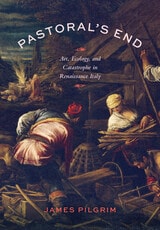
In the sixteenth century, Italian artist Jacopo Bassano painted pictures of herdsmen and animals moving through dark and muddy landscapes. But he also participated in the agricultural development of the region in which he lived, producing topographical maps of local mountains and forests, inventing new methods of drainage and irrigation, and studying the latest techniques of crop rotation and fertilization. The relationship between Bassano’s rustic art and his participation in environmental transformation has, however, never been explored.
One of the first studies of Italian Renaissance art to grapple with the connections between visual culture and the environment, Pastoral’s End explores this crucial, formative relationship. James Pilgrim looks at Bassano’s career holistically, demonstrating how his involvement in a world marked by agricultural expansion, industrialization, resource extraction, environmental degradation, social transformation, and radical philosophical development informed his paintings of country life. Introducing new archival and visual evidence of Bassano’s knowledge of hydrology, agronomy, husbandry, and architecture, Pastoral’s End argues that he transformed the more placid rustic imagery of previous Renaissance artists into visions of dangerous ecological instability.
Patron to Painter
Elizabethan Programs for Five Allegorical PaintingsDavid Evett
Arizona Center for Medieval and Renaissance Studies, 2020
Paul Klee
The Visible and the LegibleAnnie Bourneuf
University of Chicago Press, 2015
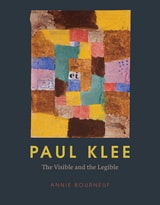
Bourneuf argues that Klee joined these elements to invite a manner of viewing that would unfold in time, a process analogous to reading. From his elaborate titles to the small scale he favored to his metaphoric play with materials, Klee created forms that hover between the pictorial and the written. Through his unique approach, he subverted forms of modernist painting that were generally seen to threaten slow, contemplative viewing. Tracing the fraught relations among seeing, reading, and imagining in the early twentieth century, Bourneuf shows how Klee reconceptualized abstraction at a key moment in its development.
Paul Ricoeur
His Life and His WorkCharles E. Reagan
University of Chicago Press, 1996
"A valuable introduction to Ricoeur; highly recommended."—Library Journal
"[A] lively introduction to the life and thought of one of this century's most notable philosophers."—Norman Wirzba, Christian Century
"Reagan lucidly explains Ricoeur's difficult philosophy while shining overdue light on the personality behind it."—Carlin Romano, Philadelphia Inquirer
"Combines biographical and philosophical essays with a more personal memoir that makes Ricoeur's humane and magnanimous nature abundantly evident. Four revealing interviews, coupled with photographs, and an extensive bibliography of primary and secondary sources, complete this illuminating study."—Choice

Perception, Expression, and History
The Social Phenomenology of Maurice Merleau-PontyJohn O'Neill
Northwestern University Press, 1970
Periodizing Jameson
Dialectics, the University, and the Desire for NarrativePhillip E. Wegner
Northwestern University Press, 2014
For a half century, the American intellectual Fredric Jameson has been a driving force in literary and cultural theory. In Periodizing Jameson, Phillip E. Wegner builds upon Jameson’s unique dialectical method to demonstrate the value of Jameson’s tools—periodization, the fourfold hermeneutic, and the Greimasian semiotic square, among others—and to develop virtuoso readings of Jameson’s own work and the history of the contemporary American university in which it unfolds.
Wegner shows how Jameson’s work intervenes in particular social, cultural, and political situations, using his scholarship both to develop original explorations of nineteenth-century fiction, popular films, and other promiment theorists, and to examine the changing fortunes of theory itself. In this way, Periodizing Jameson casts new light on the potential of and challenges to humanist intellectual work in the present.
Perjury and Pardon, Volume I
Jacques Derrida
University of Chicago Press, 2022
“One only ever asks forgiveness for what is unforgivable.” From this contradiction begins Perjury and Pardon, a two-year series of seminars given by Jacques Derrida at the École des hautes études en sciences sociales in Paris in the late 1990s. In these sessions, Derrida focuses on the philosophical, ethical, juridical, and political stakes of the concept of responsibility. His primary goal is to develop what he calls a “problematic of lying” by studying diverse forms of betrayal: infidelity, denial, false testimony, perjury, unkept promises, desecration, sacrilege, and blasphemy.
Although forgiveness is a notion inherited from multiple traditions, the process of forgiveness eludes those traditions, disturbing the categories of knowledge, sense, history, and law that attempt to circumscribe it. Derrida insists on the unconditionality of forgiveness and shows how its complex temporality destabilizes all ideas of presence and even of subjecthood. For Derrida, forgiveness cannot be reduced to repentance, punishment, retribution, or salvation, and it is inseparable from, and haunted by, the notion of perjury. Through close readings of Kant, Kierkegaard, Shakespeare, Plato, Jankélévitch, Baudelaire, and Kafka, as well as biblical texts, Derrida explores diverse notions of the “evil” or malignancy of lying while developing a complex account of forgiveness across different traditions.
Personal Demons
Possession Narratives of Late LiberalismGrace Lavery
Duke University Press, 2026
Phantasmatic Indochina
French Colonial Ideology in Architecture, Film, and LiteraturePanivong Norindr
Duke University Press, 1996
Analyzing the first Exposition Coloniale Internationale, held in Paris in 1931, Norindr shows how the exhibition’s display of architecture gave a vision to the colonies that justified France’s cultural prejudices, while stimulating the desire for further expansionism. He critiques the Surrealist counter-exposition mounted to oppose the imperialist aims of the Exposition Coloniale, and the Surrealist incorporation and appropriation of native artifacts in avant-garde works. According to Norindr, all serious attempts at interrogating French colonial involvement in Southeast Asia are threatened by discourse, images, representations, and myths that perpetuate the luminous aura of Indochina as a place of erotic fantasies and exotic adventures. Exploring the resilience of French nostalgia for Indochina in books and movies, the author examines work by Malraux, Duras, and Claudel, and the films Indochine, The Lover, and Dien Bien Phu.
Certain to impact across a range of disciplines, Phantasmatic Indochina will be of interest to those engaged in the study of the culture and history of Vietnam, Cambodia, Thailand, and Laos, as well as specialists in the fields of French modernism, postcolonial studies, cultural studies, and comparative literature.
Phenomenology and Deconstruction, Volume Four
SolitudeRobert Denoon Cumming
University of Chicago Press, 2001
After the war Heidegger disavowed Sartre, a move related to Heidegger's renunciation of his association with the phenomenological movement at large, and one that illustrates the dynamics of the history Cumming himself has completed. Serving as convincing punctuation for this remarkable series, this book demonstrates the importance of the history of philosophy in coming to grips with the proclaimed end of philosophy.
Phenomenology and Deconstruction, Volume One
The Dream is OverRobert Denoon Cumming
University of Chicago Press, 1991
In this analysis Cumming deals with how a philosophy can be vulgarized (as Heidegger's was by Nazism but in Heidegger's own view by Sartre), with problems of periodization, with how the history of philosophy can be disinguished as a philosophical discipline from intellectual history. Cumming also elaborates an analogy between a philosophical method and style.
Phenomenology and Deconstruction, Volume Three
Breakdown in CommunicationRobert Denoon Cumming
University of Chicago Press, 2001
history of philosophy demonstrates how frequently one philosopher
misunderstands another. The most notorious such breakdown in
communication in twentieth-century philosophy was between Husserl and
Heidegger. In the third volume of his history of the phenomenological
movement, Robert Denoon Cumming argues that their differences involve
differences in method; whereas Husserl follows a "method of
clarification," with which he eliminates ambiguities by relying on an
intentional analysis that isolates its objects, Heidegger rejects the
criterion of "clarity" and embraces ambiguities as exhibiting
overlapping relations.
Cumming also explores the differences between how
deconstruction—Heidegger's procedure for dealing with other
philosophers—is carried out when Heidegger interprets Husserl versus
when Derrida interprets Husserl. The comparison enables Cumming to
show how deconstruction is associated with Heidegger's arrival at the
end of philosophy, paving the way for the deconstructionist movement.
Phenomenology and Deconstruction, Volume Two
Method and ImaginationRobert Denoon Cumming
University of Chicago Press, 1992
Cumming also shows that conversion is not merely a personal predisposition of Sartre's—further manifest in his later conversions to Heidegger and to a version of Marxism. Conversion is also philosophical preoccupation, illustrated by the "conversion to the imaginary" whereby Sartre explains how he himself, as well as Genet and Flaubert, became writers. Finally, Cumming details how Husserl's phenomenological method contributed both to the shaping of Sartre's style as a literary writer and to his theory of style.
Phenomenology and Theory of Science
Aron Gurwitsch
Northwestern University Press, 1974
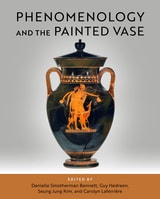
Phenomenology and the Painted Vase
Edited by Danielle Smotherman Bennett, Guy Hedreen, SeungJung Kim, and Carolyn Laferrière
University of Wisconsin Press, 2026
Most people today encounter ancient Greek vases as static, untouchable artifacts safely out of reach behind glass, in the quiet of a museum gallery. Once, however, these vessels were also useful objects, made to be held, filled, and generally used in a variety of settings, from the ritual to the quotidian. This volume considers these ancient vases together with the theoretical frameworks developed by pioneers of phenomenology such as Maurice Merleau-Ponty and Edmund Husserl, helping us encounter Greek vases as they once were. The principles of phenomenology require that we understand objects as active participants in shaping the manner in which humans experience the world. A phenomenological perspective allows us to see how the function and use of Greek vases shaped both their visual appearance and the perceptual experience of them—as well as our continued understanding of them today—while taking into account multisensory perspectives. With this alternative approach to the study of classical pottery, the authors offer new and illuminating insights not just into the objects in question but also into ancient Greek culture and life more broadly.
Phenomenology and the Problem of History
A Study of Husserl's Transcendental PhilosophyDavid Carr
Northwestern University Press, 2009
Phenomenology and the Social Sciences
Maurice Natanson
Northwestern University Press, 1973
Phenomenology in Psychology and Psychiatry
A Historical IntroductionHerbert Spiegelberg
Northwestern University Press, 1972
Phenomenology in Psychology and Psychiatry is a historical introduction to phenomenology in psychology working from the general to the details of the subject.

Phenomenology of Merleau-Ponty
A Search For The Limits Of ConsciousnessGary Brent Madison
Ohio University Press, 1981
The first study of its kind to appear in English, The Phenomenology of Merleau-Ponty is a sustained ontological reading of Merleau-Ponty which traces the evolution of his philosophy of being from his early work to his late, unfinished manuscripts and working notes. Merleau-Ponty, who contributed greatly to the theoretical foundations of hermeneutics, is here approached hermeneutically.
Most commentators are agreed that towards the end Merleau-Ponty’s philosophy underwent a strange and interesting mutation. The exact nature of this mutation or conceptual shift is what this study seeks to disclose. Thus, although Madison proceeds in a generally progressive, chronological fashion, examining Merleau-Ponty’s major works in the order of their composition, his reading is ultmately regressive in that Merleau-Ponty’s earlier works are viewed in the light of the new and enigmatic ontological orientation which makes its appearance in his later work. The merit of this approach is that, as Paul Ricoeur has remarked, it enables the author to expose the “anticipatory, hollowed-out presence” of Merleau-Ponty’s late philosophy “in the difficulties of his early phenomenology,” such that “the unifying intention between his first philosophy of meaning and the body and the late, more ontological philosophy is made manifest.”
This book begins with a detailed study of Merleau-Ponty’s two major early works, The Structure of BehaviorThe Phenomenology of Perception. In the following three chapters, Madison traces the development of Merleau-Ponty’s thought from the beginning to the end of his philosophical career in regard to three topics of special concern to the French phenomenologist: painting, language, philosophy. In the final chapter, he is concerned to articulate, as much as the unfinished state of Merleau-Ponty’s final work allows, the unspoken thought of this work and of The Visible and Invisible in particular. Merleau-Ponty’s notion of “wild being” and his attempt to work out an “indirect” or “negative” ontology are thoroughly analyzed.
In the end the reader will see that through his self-criticism and the development in his own phenomenology Merleau-Ponty has brought phenomenology itself to its limits and to the point where it must transcend itself as a philosophy of consciousness in the Husserlian sense if it is to remain faithful to Husserl’s own goal of bringing “experience to the full expression of its own meaning.” Because Madison submits Merleau-Ponty to the same kind of interpretive retrieval as the latter did with Husserl, Roger Cailloise has said of this “clear and very complete book” that it “goes will beyond a simple exposition and merits being read as an original work.”
Phenomenology of the Social World
Alfred Schutz
Northwestern University Press, 1967
Phenomenology
Between Essentialism and Transcendental PhilosophyJ.N. Mohanty
Northwestern University Press, 1997
This collection of essays traces the themes of essentialism and transcendentalism as they have appeared in the development of phenomenology from Husserl to Derrida. Beginning with Husserl's major phenomenological themes--essence, meaning, transcendental subjectivity, and life-world--Mohanty examines the tensions within phenomenology in general and within Husserl's phenomenology in particular. The accessibility of these essays, coupled with Mohanty's consideration of lesser-known phenomenologists (Ingarden, Scheler, Hartmann, et. al.) mark this as a major updating of phenomenology for a contemporary audience.

Phenomenology
Responses and DevelopmentsEdited by Leonard Lawlor
University of Chicago Press, 2010
From Kant to Kierkegaard, from Hegel to Heidegger, continental philosophers have indelibly shaped the trajectory of Western thought since the eighteenth century. Although much has been written about these monumental thinkers, students and scholars lack a definitive guide to the entire scope of the continental tradition. The most comprehensive reference work to date, this eight-volume History of Continental Philosophy will both encapsulate the subject and reorient our understanding of it. Beginning with an overview of Kant’s philosophy and its initial reception, the History traces the evolution of continental philosophy through major figures as well as movements such as existentialism, phenomenology, hermeneutics, and poststructuralism. The final volume outlines the current state of the field, bringing the work of both historical and modern thinkers to bear on such contemporary topics as feminism, globalization, and the environment. Throughout, the volumes examine important philosophical figures and developments in their historical, political, and cultural contexts.
The first reference of its kind, A History of Continental Philosophy has been written and edited by internationally recognized experts with a commitment to explaining complex thinkers, texts, and movements in rigorous yet jargon-free essays suitable for both undergraduates and seasoned specialists. These volumes also elucidate ongoing debates about the nature of continental and analytic philosophy, surveying the distinctive, sometimes overlapping characteristics and approaches of each tradition. Featuring helpful overviews of major topics and plotting road maps to their underlying contexts, A History of Continental Philosophy is destined to be the resource of first and last resort for students and scholars alike.
Philosophy and Non-Philosophy since Merleau-Ponty
Hugh J. Silverman
Northwestern University Press, 1997
Included in this volume is Silverman's translation of Merleau-Ponty's last course at the Collège de France in 1960-61 and an extensive research bibliography. Originally published in 1988, Philosophy and Non-Philosophy since Merleau-Ponty is a fascinating inquiry into the developments, directions, and ruptures in Continental philosophy since Merleau-Ponty's death in 1961.
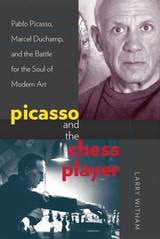
Picasso and the Chess Player
Pablo Picasso, Marcel Duchamp, and the Battle for the Soul of Modern ArtLarry Witham
University Press of New England, 2013
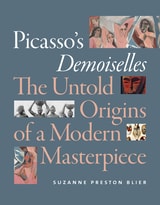
Picasso's Demoiselles
The Untold Origins of a Modern MasterpieceSuzanne Preston Blier
Duke University Press, 2019
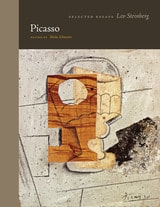
Picasso
Selected EssaysLeo Steinberg
University of Chicago Press, 2022
Leo Steinberg was one of the most original art historians of the twentieth century, known for taking interpretive risks that challenged the profession by overturning reigning orthodoxies. In essays and lectures ranging from old masters to modern art, he combined scholarly erudition with eloquent prose that illuminated his subject and a credo that privileged the visual evidence of the image over the literature written about it. His writings, sometimes provocative and controversial, remain vital and influential reading. Steinberg’s perceptions evolved from long, hard looking at his objects of study. Almost everything he wrote included passages of formal analysis but always put into the service of interpretation.
This volume brings together Steinberg’s essays on Pablo Picasso, many of which have been studied and debated for decades, such as “The Philosophical Brothel,” as well as unpublished lectures, including “The Intelligence of Picasso,” a wide-ranging look at Picasso’s enduring ambition to stretch the agenda of representation, from childhood drawings to his last self-portrait. An introduction by art historian Richard Shiff contextualizes these works and illuminates Steinberg’s lifelong dedication to refining the expository, interpretive, and rhetorical features of his writing.
Picasso is the fourth volume in a series that presents Steinberg’s writings, selected and edited by his longtime associate Sheila Schwartz.
Pictures, Quotations, and Distinctions
Fourteen Essays in PhenomenologyRobert Sokolowski
Catholic University of America Press, 2022
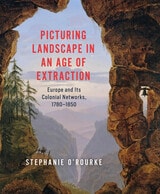
Picturing Landscape in an Age of Extraction
Europe and Its Colonial Networks, 1780–1850Stephanie O'Rourke
University of Chicago Press, 2025
In the late eighteenth and early nineteenth centuries, European artists confronted the emergence of a new way of thinking about and treating the Earth and its resources. Centered on extraction, this new paradigm was characterized by large-scale efforts to transform and monetize the physical environment across the globe. With this book, Stephanie O’Rourke considers such practices, looking at what was at stake in visual representations of the natural world during the first decades of Europe’s industrial revolutions.
O’Rourke argues that key developments in the European landscape painting tradition were profoundly shaped by industries including mining and timber harvesting, as well as by interlinked ideas about race, climate, and waste. Focusing on developments in Britain, France, Germany, and across Europe’s colonial networks, she explores how artworks and technical illustrations portrayed landscapes in ways that promoted—or pushed against—the logic of resource extraction.
Pierre Bourdieu's Political Economy of Being
Ghassan Hage
Duke University Press, 2025
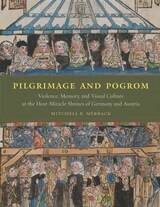
Pilgrimage and Pogrom
Violence, Memory, and Visual Culture at the Host-Miracle Shrines of Germany and AustriaMitchell B. Merback
University of Chicago Press, 2013
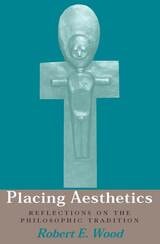
Placing Aesthetics
Reflections on the Philosophic TraditionRobert E. Wood
Ohio University Press, 2000
Examining select high points in the speculative tradition from Plato and Aristotle through the Middle Ages and German tradition to Dewey and Heidegger, Placing Aesthetics seeks to locate the aesthetic concern within the larger framework of each thinker’s philosophy.
In Professor Robert Wood’s study, aesthetics is not peripheral but rather central to the speculative tradition and to human existence as such. In Dewey’s terms, aesthetics is “experience in its integrity.” Its personal ground is in “the heart,” which is the dispositional ground formed by genetic, cultural , and personal historical factors by which we are spontaneously moved and, in turn, are inclined to move, both practically and theoretically, in certain directions.
Prepared for use by the student as well as the philosopher, Placing Aesthetics aims to recover the fullness of humanness within a sense of the fullness of encompassing Being. It attempts to overcome the splitting of thought, even in philosophy, into exclusive specializations and the fracturing of life itself into theoretical, practical, and emotive dimensions.
Playful Letters
A Study in Early Modern AlphabeticsErika Mary Boeckeler
University of Iowa Press, 2017
Drawing on Shakespeare, anthropomorphic typography, figured letters, and Cyrillic pedagogy and politics, this book explores the ways in which alphabetic thinking and writing inform literature and the visual arts, and it develops reading strategies for the “letterature” that underwrites such cultural production. Playful Letters begins with early modern engagements with the alphabet and the human body—an intersection where letterature emerges with startling force. The linking of letters and typography with bodies produced a new kind of literacy. In turn, educational habits that shaped letter learning and writing permeated the interrelated practices of typography, orthography, and poetry. These mutually informing processes render visible the persistent crumbling of words into letters and their reconstitution into narrative, poetry, and image.
In addition to providing a rich history of literary and artistic alphabetic interrogation in early modern Western Europe and Russia, Playful Letters contributes to the continuous story of how people use new technologies and media to reflect on older forms, including the alphabet itself.
Playing with Earth and Sky
Astronomy, Geography, and the Art of Marcel DuchampJames Housefield
Dartmouth College Press, 2016
Poetry in a World of Things
Aesthetics and Empiricism in Renaissance EkphrasisRachel Eisendrath
University of Chicago Press, 2018
In Poetry in a World of Things, Rachel Eisendrath explores how poetry responded to this new detachment by becoming a repository for a more complex experience of the world. The book focuses on ekphrasis, the elaborate literary description of a thing, as a mode of resistance to this new empirical objectivity. Poets like Petrarch, Spenser, Marlowe, and Shakespeare crafted highly artful descriptions that recovered the threatened subjective experience of the material world. In so doing, these poets reflected on the emergence of objectivity itself as a process that was often darker and more painful than otherwise acknowledged. This highly original book reclaims subjectivity as a decidedly poetic and human way of experiencing the material world and, at the same time, makes a case for understanding art objects as fundamentally unlike any other kind of objects.
Points of Departure
Samuel Weber between Spectrality and ReadingEdited by Peter Fenves, Kevin McLaughlin, and Marc Redfield
Northwestern University Press, 2016
Polish Jewish Culture Beyond the Capital
Centering the PeripheryHalina Goldberg
Rutgers University Press, 2023
PIASA's 2024 Anna M. Cienciala Award for Best-Edited Multi-Authored Scholarly Volume
Polish Jewish Culture beyond the Capital: Centering the Periphery is a path-breaking exploration of the diversity and vitality of urban Jewish identity and culture in Polish lands from the second half of the nineteenth century to the outbreak of the Second World War (1899–1939). In this multidisciplinary essay collection, a cohort of international scholars provides an integrated history of the arts and humanities in Poland by illuminating the complex roles Jews in urban centers other than Warsaw played in the creation of Polish and Polish Jewish culture.
Each essay presents readers with the extraordinary production and consumption of culture by Polish Jews in literature, film, cabaret, theater, the visual arts, architecture, and music. They show how this process was defined by a reciprocal cultural exchange that flourished between cities at the periphery—from Lwów and Wilno to Kraków and Łódź—and international centers like Warsaw, thereby illuminating the place of Polish Jews within urban European cultures.
Companion website (https://polishjewishmusic.iu.edu)
Political Myth
On the Use and Abuse of Biblical ThemesRoland Boer
Duke University Press, 2009
Boer elaborates a theory of political myth in dialogue with Ernst Bloch, Theodor Adorno, Alain Badiou, Jacques Lacan, and Slavoj Žižek. Through close readings of well-known biblical stories he then scrutinizes the nature of political myth in light of feminism, psychoanalysis, and Marxism. Turning to contemporary politics, he examines the statements of prominent American and Australian politicians to show how the stories of Creation, conquest, Paradise, and the Promised Land have been distorted into a fantasy of Israel as a perpetual state in the making and a land in need of protection. Boer explains how this fantasy of Israel shapes U.S. and Australian foreign and domestic policies, and he highlights the links between it and the fantasy of unfettered global capitalism. Contending that political myths have repressed dimensions which if exposed undermine the myths’ authority, Boer urges the Left to expose the weakness in the Right’s mythos. He suggests that the Left make clear what the world would look like were the dream of unconstrained capitalism to be realized.
Politics of Legitimacy
State-Society Relations and Patterns of Chinese PoliticsDingxin Zhao
University of Chicago Press, 2026
The Chinese communist state has survived massive social changes, including the introduction of capitalist markets, an ongoing explosion of technological innovation, and an unprecedented jump in wealth and education, accompanied by a major cultural transformation. How has China managed to maintain its power even as the ground has so profoundly shifted? In Politics of Legitimacy, Dingxin Zhao argues that state power can be legitimized in three ideal-typical ways: a set of values upheld by the state (ideological legitimacy), recognized political processes such as regular competitive elections (procedural legitimacy), and the state’s capacity to provide public goods (performance legitimacy).
Building on this theoretical framework, Zhao analyzes different aspects of Chinese politics, including the tragic ending of the 1989 pro-democracy movement, the weak development of mass-based nationalism in post-Mao China, the reasons behind China’s economic success, the anti-establishment tendency of the Chinese mass media and social media, and the sources of political tension in China, despite a superb economy. Moreover, Zhao’s innovative framework is widely applicable beyond China, shifting our attention from regime-type categories to the tools and relationships that determine their survival or collapse, and illuminating the current global emergence of conservatism and religious nationalism.
Pompadour's Medium
Luxury and Reproduction in Eighteenth-Century FranceSusan M. Wager
University of Delaware Press, 2027
Pompadour's Medium reveals the depth of patron, amateur artist, and royal mistress Madame de Pompadour's contributions to the visual arts, long dismissed as superficial and trivial. Her artistic activities centered on an innovative exploration of the relationships between painting, sculpture, and the decorative arts at a moment when advances in reproductive printmaking threatened to flatten the differences between individual mediums. Eighteenth-century France experienced an unprecedented surge in the circulation of images. Increasingly faithful and affordable reproductive prints introduced works of art to ever-widening audiences, while a culture of reproduction was simultaneously thriving at the highest end of the artistic and economic spectrum—in luxury media, such as ceramics, textiles, and metalwork. This book recovers the pivotal role of luxury reproduction in Pompadour’s artistic endeavors, and her essential role in cultivating the intermedial approach of her frequent collaborator, painter François Boucher, who tended to think between media. It is only by restoring the centrality of reproductive media in this artist-patron relationship that we can understand the magnitude of Pompadour’s and Boucher’s contributions to the history of modern art.
Pop Against Empire
Art as Masked Critique in Japan, Okinawa, and the US DiasporaHiroko Ikegami
University of Chicago Press, 2027
How Pop artists confronted the legacies of modern Empire of Japan and post-1945 American imperialism from the 1960s to the present.
Looking at a pivotal period spanning the 1960s to the present, Hiroko Ikegami explores how artists in Japan, Okinawa, and the United States have adopted Pop strategies to critique legacies of imperialism.
Ikegami focuses on locales—Tokyo, Okinawa, Minidoka, and New York—that were deeply impacted by the complex relationship between the Japanese and American empires and considers artists across different situations and generations. The book begins with Tokyo Pop artists and graphic designers, including Shinohara Ushio and Tanaami Keiichi, who critically parodied American Pop during the long 1960s. It then turns to Okinawa, where Tom Max probed Okinawans’ convoluted reality regarding the American Occupation and the Vietnam War. Artists in the second half of the volume confronted legacies of the Asia-Pacific War as a historical condition of the present. Roger Shimomura, the third-generation Japanese American who had been incarcerated in the Minidoka camp as a child, dealt with the subject by appropriating motifs of ukiyo-e woodblock prints. Takashi Murakami, now a global art star, created otaku-inspired art and capitalized on his country’s experience of the atomic bombs in promoting his “Superflat” enterprise. The book concludes with a new generation of artists protesting repercussions of empire in the twenty-first century. This is the first study to treat artists of post-1945 Japan, Okinawa, and the US diaspora in a single volume as mutually independent yet interrelated, using Pop’s criticality as a connecting thread.
Porous Becomings
Anthropological Engagements with Michel SerresAndreas Bandak and Daniel M. Knight, editors
Duke University Press, 2024
Contributors. Andreas Bandak, Jane Bennett, Tom Boylston, Steven D. Brown, Matei Candea, Alberto Corsín Jiménez, David Henig, Michael Jackson, Daniel M. Knight, Celia Lowe, Morten Nielsen, Stavroula Pipyrou, Elizabeth Povinelli, Andrew Shryock, Arpad Szakolczai
Portraits of Remembrance
Painting, Memory, and the First World WarEdited by Margaret Hutchison and Steven Trout
University of Alabama Press, 2020
Although photography and moving pictures achieved ubiquity during the First World War as technological means of recording history, the far more traditional medium of painting played a vital role in the visual culture of combatant nations. The public’s appetite for the kind of up-close frontline action that snapshots and film footage could not yet provide resulted in a robust market for drawn or painted battle scenes.
Painting also figured significantly in the formation of collective war memory after the armistice. Paintings became sites of memory in two ways: first, many governments and communities invested in freestanding panoramas or cycloramas that depicted the war or featured murals as components of even larger commemorative projects, and second, certain paintings, whether created by official artists or simply by those moved to do so, emerged over time as visual touchstones in the public’s understanding of the war.
Portraits of Remembrance: Painting, Memory, and the First World War examines the relationship between war painting and collective memory in Australia, Austria, Belgium, Canada, Croatia, France, Germany, Great Britain, New Zealand, Russia, Serbia, Turkey, and the United States. The paintings discussed vary tremendously, ranging from public murals and panoramas to works on a far more intimate scale, including modernist masterpieces and crowd-pleasing expressions of sentimentality or spiritualism. Contributors raise a host of topics in connection with the volume’s overarching focus on memory, including national identity, constructions of gender, historical accuracy, issues of aesthetic taste, and connections between painting and literature, as well as other cultural forms.
Positions
Jacques Derrida
University of Chicago Press, 1982
The interviews included in this volume offer a multifaceted view of Derrida. "Implications: Interview with Henri Ronse" contains a succinct statement of principles. "Seminology and Grammatology: Interview with Julia Kristeva" provides important clarifications of the role played by linguistics in Derrida's work. "Positions: Interview with Jean-Louis Houdebine and Guy Scarpetta" is a wide-ranging discussion that touches on many of the polemics that Derrida's work has provoked.
Alan Bass, whose translation of Writing and Difference was highly praised for its clarity, accuracy, and readability, has provided extremely useful critical notes, full of vital information, including historical background.
Post-Personal Romanticism
Democratic Terror, Prosthetic Poetics, and the Comedy of Modern Ethical LifeBo Earle
The Ohio State University Press, 2017
Tracing this insight to Hegel’s suggestion that modern subjectivity is in some sense post-individual or even posthumous, Earle argues that signature Romantic lyrics offer a way forward that avoids postmodernism’s wholesale rejection of autonomous selfhood. With chapters on Wordsworth, Blake, Byron, Shelley, and Keats, Earle traces how Romantic lyrics mine this interminability to recover figurative emblems or masks of selfhood from experiences of its inevitable normative failure. This model is of particularly urgent value today when the costs of modern narcissism, economic exploitation, and political imperialism have come to include the normalization of torture, signature drone strikes, and climate change.
Postmodern Animal
Steve Baker
Reaktion Books, 2000