Results by title
1427 books match the query 'Politics' and 143 start with p
Pain and Shock in America
Politics, Advocacy, and the Controversial Treatment of People with DisabilitiesJan Nisbet
Brandeis University Press, 2021
For more than forty years, professionals in the field of disability studies have engaged in debates over the use of aversive interventions (such as electric shock) like the ones used at the Judge Rotenberg Center. Advocates and lawyers have filed complaints and lawsuits to both use them and ban them, scientists have written hundreds of articles for and against them, and people with disabilities have lost their lives and, some would say, lived their lives because of them. There are families who believe deeply in the need to use aversives to control their children’s behavior. There are others who believe the techniques used are torture. All of these families have children who have been excluded from numerous educational and treatment programs because of their behaviors. For most of the families, placement at the Judge Rotenberg Center is the last resort.
This book is a historical case study of the Judge Rotenberg Center, named after the judge who ruled in favor of keeping its doors open to use aversive interventions. It chronicles and analyzes the events and people involved for over forty years that contributed to the inability of the state of Massachusetts to stop the use of electric shock, and other severe forms of punishment on children and adults with disabilities. It is a long story, sad and tragic, complex, filled with intrigue and questions about society and its ability to protect and support its most vulnerable citizens.
Painting the Town Red
Politics and the Arts During the 1919 Hungarian Soviet RepublicBob Dent
Pluto Press, 2018
Palestine, Israel, and the Politics of Popular Culture
Rebecca L. Stein and Ted Swedenburg, eds.
Duke University Press, 2005
The volume is interdisciplinary, including the work of anthropologists, historians, sociologists, political scientists, ethnomusicologists, and Americanist and literary studies scholars. Contributors examine popular music of the Palestinian resistance, ethno-racial “passing” in Israeli cinema, Arab-Jewish rock, Euro-Israeli tourism to the Arab Middle East, Internet communities in the Palestinian diaspora, café culture in early-twentieth-century Jerusalem, and more. Together, they suggest new ways of conceptualizing Palestinian and Israeli political culture.
Contributors. Livia Alexander, Carol Bardenstein, Elliott Colla, Amy Horowitz, Laleh Khalili, Mary Layoun, Mark LeVine, Joseph Massad, Melani McAlister, Ilan Pappé, Rebecca L. Stein, Ted Swedenburg, Salim Tamari
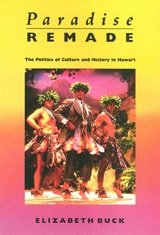
Paradise Remade
The Politics of Culture and History in Hawai'iElizabeth Buck
Temple University Press, 1994
This is a book about the politics of competing cultures and myths in a colonized nation. Elizabeth Buck considers the transformation of Hawaiian culture focusing on the indigenous population rather than on the colonizers. She describes how Hawaii's established religious, social, political, and economic relationships have changed in the past 200 years as a result of Western imperialism. Her account is particularly timely in light of the current Hawaiian demands for sovereignty 100 years after the overthrow of the monarchy in 1893.
Buck examines the social transformation Hawaii from a complex hierarchical, oral society to an American state dominated by corporate tourism and its myths of paradise. She pays particular attention to the ways contemporary Hawaiians are challenging the use of their traditions as the basis for exoticized entertainment.
Buck demonstrates that sacred chants and hula were an integral part of Hawaiian social life; as the repository of the people's historical memory, chants and hula practices played a vital role in maintaining the links between religious, political, and economic relationships. Tracing the ways in which Hawaiian culture has been variously suppressed and constructed by Western explorers, New England missionaries, the tourist industry, ethnomusicologists, and contemporary Hawaiians, Buck offers a fascinating "rereading" of Hawaiian history.

Parliament Buildings
The Architecture of Politics in EuropeEdited by Sophia Psarra, Uta Staiger, and Claudia Sternberg
University College London, 2023
As political polarization undermines confidence in the shared values and established constitutional orders of many nations, it is imperative that we explore how parliaments are to stay relevant and accessible to the citizens whom they serve. The rise of modern democracies is thought to have found physical expression in the staged unity of the parliamentary seating plan. However, the built forms alone cannot give sufficient testimony to the exercise of power in political life.
Parliament Buildings brings together architecture, history, art history, history of political thought, sociology, behavioral psychology, anthropology, and political science to raise a host of challenging questions. How do parliament buildings give physical form to norms and practices, behaviors, rituals, identities, and imaginaries? How are their spatial forms influenced by the political cultures they accommodate? What kinds of histories, politics, and morphologies do the diverse European parliaments share, and how do their political trajectories intersect?
This volume offers an eclectic exploration of the complex nexus between architecture and politics in Europe. Including contributions from architects who have designed or remodeled four parliament buildings in Europe, it provides the first comparative, multi-disciplinary study of parliament buildings across Europe and across history.
Parties under Pressure
The Politics of Factions and Party AdaptationMatthias Dilling
University of Chicago Press, 2024
An illuminating investigation into why some parties evolve with their times while others fall behind.
Around the world, established political parties face mounting pressures: insurgents on the Left and Right, altered media environments, new policy challenges, and the erosion of traditional strongholds, to name just a few. Yet parties have differed enormously in their ability to move with the times and update their offers to voters. This variation matters. While adaptation does not guarantee a party’s electoral success, the failure to modernize can spell its decline, even collapse, and create openings for radical and populist parties that may threaten the future of liberal democracy.
Parties under Pressure examines why some parties adapt meaningfully to social, economic, and political transformations while others flounder, focusing especially on the fate of Western Europe’s Christian democratic parties. Matthias Dilling reveals the under-appreciated importance of party factions. While very high levels of factionalism are counter-productive and create paralysis, more moderate levels of factionalism help parties to adapt by giving visibility to fresh groups and ideas. Dilling draws on extensive archival research in Germany, Italy, and Austria, as well as evidence from France, Japan, and beyond. Taking a comparative-historical approach, Parties under Pressure sheds new light on parties’ varying records of adaptive reforms over more than seventy-five years.
Partisans and Partners
The Politics of the Post-Keynesian SocietyJosh Pacewicz
University of Chicago Press, 2016
Wheels-down in Iowa—that most important of primary states—Pacewicz looks to two cities, one traditionally Democratic, the other traditionally Republican, and finds that younger voters are rejecting older-timers’ strict political affiliations. A paradox is emerging—as the dividing lines between America’s political parties have sharpened, Americans are at the same time growing distrustful of traditional party politics in favor of becoming apolitical or embracing outside-the-beltway candidates. Pacewicz sees this change coming not from politicians and voters, but from the fundamental reorganization of the community institutions in which political parties have traditionally been rooted. Weaving together major themes in American political history—including globalization, the decline of organized labor, loss of locally owned industries, uneven economic development, and the emergence of grassroots populist movements—Partisans and Partners is a timely and comprehensive analysis of American politics as it happens on the ground.
Partisans
Marriage, Politics, and Betrayal Among the New York IntellectualsDavid Laskin
University of Chicago Press, 2001
Partners in Conflict
The Politics of Gender, Sexuality, and Labor in the Chilean Agrarian Reform, 1950–1973Heidi Tinsman
Duke University Press, 2002
Tinsman restores women to a scholarly narrative that has been almost exclusively about men, recounting the centrality of women’s labor to the pre-Agrarian Reform world of the hacienda during the 1950s and recovering women’s critical roles in union struggles and land occupations during the Agrarian Reform itself. Providing a theoretical framework for understanding why the Agrarian Reform ultimately empowered men more than women, Tinsman argues that women were marginalized not because the Agrarian Reform ignored women but because, under both the Frei and Allende governments, it promoted the male-headed household as the cornerstone of a new society. Although this emphasis on gender cooperation stressed that men should have more respect for their wives and funneled unprecedented amounts of resources into women’s hands, the reform defined men as its protagonists and affirmed their authority over women.
This is the first monographic social history of Chile’s Agrarian Reform in either English or Spanish, and the first historical work to make sexuality and gender central to the analysis of the reforms.
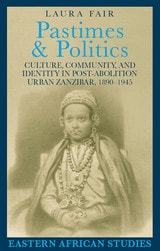
Pastimes and Politics
Culture, Community, and Identity in Post-Abolition Urban Zanzibar, 1890–1945Laura Fair
Ohio University Press, 2001
The first decades of the twentieth century were years of dramatic change in Zanzibar, a time when the social, economic, and political lives of island residents were in incredible flux, framed by the abolition of slavery, the introduction of colonialism, and a tide of urban migration. Pastimes and Politics explores the era from the perspective of the urban poor, highlighting the numerous and varied ways that recently freed slaves and other immigrants to town struggled to improve their individual and collective lives and to create a sense of community within this new environment. In this study Laura Fair explores a range of cultural and social practices that gave expression to slaves’ ideas of emancipation, as well as how such ideas and practices were gendered.
Pastimes and Politics examines the ways in which various cultural practices, including taarab music, dress, football, ethnicity, and sexuality, changed during the early twentieth century in relation to islanders’ changing social and political identities. Professor Fair argues that cultural changes were not merely reflections of social and political transformations. Rather, leisure and popular culture were critical practices through which the colonized and former slaves transformed themselves and the society in which they lived.
Methodologically innovative and clearly written, Pastimes and Politics is accessible to specialists and general readers alike. It is a book that should find wide use in courses on African history, urbanization, popular culture, gender studies, or emancipation.
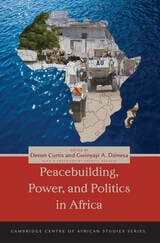
Peacebuilding, Power, and Politics in Africa
Devon Curtis
Ohio University Press, 2012
Peacebuilding, Power, and Politics in Africa is a critical reflection on peacebuilding efforts in Africa. The authors expose the tensions and contradictions in different clusters of peacebuilding activities, including peace negotiations; statebuilding; security sector governance; and disarmament, demobilization, and reintegration. Essays also address the institutional framework for peacebuilding in Africa and the ideological underpinnings of key institutions, including the African Union, NEPAD, the African Development Bank, the Pan-African Ministers Conference for Public and Civil Service, the UN Peacebuilding Commission, the World Bank, and the International Criminal Court. The volume includes on-the-ground case study chapters on Sudan, the Great Lakes Region of Africa, Sierra Leone and Liberia, the Niger Delta, Southern Africa, and Somalia, analyzing how peacebuilding operates in particular African contexts.
The authors adopt a variety of approaches, but they share a conviction that peacebuilding in Africa is not a script that is authored solely in Western capitals and in the corridors of the United Nations. Rather, the writers in this volume focus on the interaction between local and global ideas and practices in the reconstitution of authority and livelihoods after conflict. The book systematically showcases the tensions that occur within and between the many actors involved in the peacebuilding industry, as well as their intended beneficiaries. It looks at the multiple ways in which peacebuilding ideas and initiatives are reinforced, questioned, reappropriated, and redesigned by different African actors.
A joint project between the Centre for Conflict Resolution in Cape Town, South Africa, and the Centre of African Studies at the University of Cambridge.

Peasants Against the State
The Politics of Market Control in Bugisu, Uganda, 1900-1983Stephen G. Bunker
University of Chicago Press, 1991
Focusing on peasant struggles for market control over coffee exports in Bugisu from colonial times through the reign and overthrow of Idi Amin, Bunker shows that these freeholding peasants acted collectively and used the state's dependence on coffee export revenues to effectively influence and veto government programs inimical to their interests.
Bunker's work vividly portrays the small victories and great trials of ordinary people struggling to control their own economic destiny while resisting the power of the world economy.

Peggy Seeger
A Life of Music, Love, and PoliticsJean R. Freedman
University of Illinois Press, 2020

Peking Opera and Politics in Taiwan
Nancy Guy
University of Illinois Press, 2005
When Chiang Kai-shek's Nationalist government and military retreated to Taiwan in 1949, they brought along numerous Peking opera performers. Expecting that this symbolically important art would strengthen regime legitimacy and authority, they generously supported Peking opera's perpetuation in exile. Valuing mainland Chinese culture above Taiwanese culture, the Nationalists generously supported Peking opera to the virtual exclusion of local performing traditions, despite their wider popularity. Later, as Taiwan turned toward democracy, the island's own "indigenous" products became more highly valued and Peking opera found itself on a tenuous footing. Finally, in 1995, all of its opera troupes and schools (formerly supported by the Ministry of Defense) were dismantled.
Performing Commemoration
Musical Reenactment and the Politics of TraumaAnnegret Fauser and Michael A. Figueroa, editors
University of Michigan Press, 2020

Peril in the Ponds
Deformed Frogs, Politics, and a Biologist's QuestJudy Helgen
University of Massachusetts Press, 2012
By the 1990s, wetlands across the United States were endangered from pollution and decades of drainage to convert them into farmland and urban developments. But when deformed frogs—many with missing legs or eyes, footless stumps, or misshapen jaws—began to emerge from Minnesota wetlands, alarm bells went off. What caused such deformities? Pollution? Ultraviolet rays? Biological agents? And could the mysterious cause also pose a threat to humans?
Judy Helgen writes with passionate concern about vulnerable frogs and wetlands as she navigates through a maze of inquisitive media and a reluctant government agency. She reports on the complexity of a growing catastrophe for frogs and broadens the issue as she researches and meets with scientists from around the world. She affirms the importance of examining aquatic life to understand pollution and the need to rescue our remaining wetlands. She also shares the fears expressed by the teachers, students, and other citizens who found these creatures, sensed a problem, and looked to her for answers. Ultimately, this is a story about the biological beauty of wetlands and our need to pay attention to the environment around us.
Perilous States
Conversations on Culture, Politics, and NationEdited by George E. Marcus
University of Chicago Press, 1993
politics, history, comparative literature, and
philosophy—the unprecedented annual publication Late
Editions exposes unsettling dilemmas and unprecedented
challenges facing cultural studies on the brink of the
twenty-first century. Successive volumes will appear
annually until the year 2000, each engaging the predicaments
of particular institutions, nations, and persons at this
point of social, cultural, and political change. The
project will test the limits of scholarly conventions by
finding new ways to expose cultural formations emerging from
the maturation or exhaustion of once-powerful ideas whose
validity is now deeply in question.
Perilous States, the first volume of Late
Editions, presents conversations between American
scholars, most of whom are anthropologists, and individuals
situated amidst political and social upheaval. Pimarily but
not exclusively from Eastern Europe, the cast includes
Russian writers, Hungarian scientists and academics, Armenian
politicians, Siberian religious and medical leaders, a Gypsy
leader, a Polish poet, a French politician, and a white South
African musician who is a self-styled Zulu. Their voices
unite around themes of democracy, market economy, individual
rights, and the reawakened force of suppressed ethnic and
racial identities.
To obtain fresh perspectives on these cultural and social
transformations, the volumes will consist of in-depth
conversations, relayed in essay form, between scholars and
individuals in other cultures with whom they share
affinities. This novel approach blends the immediacy of
interviews, the objectivity of journalism, and the
intellectual rigor of scholarship.
Contributors to this volume are Marjorie Balzer, Sam
Beck, David B. Coplan, Michael M. J. Fischer, Nia Georges,
Bruce Grant, Douglas R. Holmes, Stella Gregorian, George E.
Marcus, Kathryn Milun, Eleni Papagaroufali, Paul Rabinow,
Julie Taylor, and Tom White.

Periodizing Jameson
Dialectics, the University, and the Desire for NarrativePhillip E. Wegner
Northwestern University Press, 2014
For a half century, the American intellectual Fredric Jameson has been a driving force in literary and cultural theory. In Periodizing Jameson, Phillip E. Wegner builds upon Jameson’s unique dialectical method to demonstrate the value of Jameson’s tools—periodization, the fourfold hermeneutic, and the Greimasian semiotic square, among others—and to develop virtuoso readings of Jameson’s own work and the history of the contemporary American university in which it unfolds.
Wegner shows how Jameson’s work intervenes in particular social, cultural, and political situations, using his scholarship both to develop original explorations of nineteenth-century fiction, popular films, and other promiment theorists, and to examine the changing fortunes of theory itself. In this way, Periodizing Jameson casts new light on the potential of and challenges to humanist intellectual work in the present.
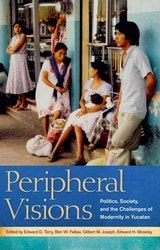
Peripheral Visions
Politics, Society, and the Challenges of Modernity in YucatanEdward D. Terry
University of Alabama Press, 2010
The essays in this collection illuminate both the processes of change and the negative reactions that they frequently elicited
Yucatan has been called “a world apart”—cut off from the rest of Mexico by geography and culture. Yet, despite its peripheral location, the region experienced substantial change in the decades after independence. As elsewhere in Mexico, apostles of modernization introduced policies intended to remold Yucatan in the image of the advanced nations of the day. Indeed, modernizing change began in the late colonial era and continued throughout the 19th century as traditional patterns of land tenure were altered and efforts were made to divest the Catholic Church of its wealth and political and intellectual influence. Some changes, however, produced fierce resistance from both elites and humbler Yucatecans and modernizers were frequently forced to retreat or at least reach accommodation with their foes.
Covering topics from the early 19th century to the late 20th century, the essays in this collection illuminate both the processes of change and the negative reactions that they frequently elicited. The diversity of disciplines covered by this volume—history, anthropology, sociology, economics—illuminates at least three overriding challenges for study of the peninsula today. One is politics after the decline of the Institutional Revolutionary Party: What are the important institutions, practices, and discourses of politics in a post-postrevolutionary era? A second trend is the scholarly demystification of the Maya: Anthropologists have shown the difficulties of applying monolithic terms like Maya in a society where ethnic relations are often situational and ethnic boundaries are fluid. And a third consideration: researchers are only now beginning to grapple with the region’s transition to a post-henequen economy based on tourism, migration, and the assembly plants known as maquiladoras. Challenges from agribusiness and industry will no doubt continue to affect the peninsula’s fragile Karst topography and unique environments.
Contributors: Eric N. Baklanoff, Helen Delpar, Paul K. Eiss, Ben W. Fallaw, Gilbert M. Joseph, Marie Lapointe, Othón Baños Ramírez, Hernán Menéndez Rodríguez, Lynda S. Morrison, Terry Rugeley, Stephanie J. Smith
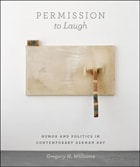
Permission to Laugh
Humor and Politics in Contemporary German ArtGregory H. Williams
University of Chicago Press, 2012
Permission to Laugh explores the work of three generations of German artists who, beginning in the 1960s, turned to jokes and wit in an effort to confront complex questions regarding German politics and history. Gregory H. Williams highlights six of them—Martin Kippenberger, Isa Genzken, Rosemarie Trockel, Albert Oehlen, Georg Herold, and Werner Büttner—who came of age in the mid-1970s in the art scenes of West Berlin, Cologne, and Hamburg. Williams argues that each employed a distinctive brand of humor that responded to the period of political apathy that followed a decade of intense political ferment in West Germany.

Persecution and Rescue
The Politics of the “Final Solution” in France, 1940-1944Wolfgang Seibel
University of Michigan Press, 2016
Drawing on German and French sources, Wolfgang Seibel traces the twisted process of political decision-making that shaped the fate of the Jews in German-occupied France during World War II. By analyzing the German-French negotiations, he reveals the underlying logic as well as the actual course of the bargaining process as both the Vichy Regime and the Germans sought a stable relationship. Yet that relationship was continually reshaped by the progress of the war, Germany’s deteriorating prospects, France’s economic and geopolitical position, and the Vichy government’s quest for domestic political support. The Jews’ suffering intensified when the Germans had the upper hand; but when the French felt empowered, the Vichy Regime stopped collaborating in the completion of the “final solution.” Persecution and Rescue: The Politics of the “Final Solution” in France, 1940–1944 demonstrates the ways in which political circumstances can mitigate—or foster—mass crime.

Persistent Oligarchs
Elites and Politics in Chihuahua, Mexico 1910–1940Mark Wasserman
Duke University Press, 1993
Chihuahua boasted one of the strongest pre-revolutionary elite networks, the Terrazas-Creel family. Wasserman describes this group's efforts to maintain its power after the Revolution, including its use of economic resources and intermarriage to forge partnerships with the new, revolutionary elite. Together, the old and new elites confronted a national government that sought to reestablish centralized control over the states and the masses. Wasserman shows how the revolutionary government and the popular classes, joined in opposition to the challenge of the elites, finally formalized into a national political party during the 1930s.
Persistent Oligarchs concludes with an account of the Revolution's ultimate outcome, largely accomplished by 1940: the national government gaining central control over politics, the popular classes obtaining land redistribution and higher wages, and regional elites, old and new, availing themselves of the great opportunities presented by economic development. A complex analysis of revolution as a vehicle for both continuity and change, this work is essential to an understanding of Mexico and Latin America, as well as revolutionary politics and history.
Pharmocracy
Value, Politics, and Knowledge in Global BiomedicineKaushik Sunder Rajan
Duke University Press, 2017
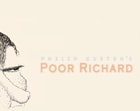
Philip Guston's Poor Richard
Debra Bricker Balken
University of Chicago Press, 2001
A visual narrative of Nixon's life, the drawings trace Nixon from his childhood, through his ascent to power, to his years in the White House. They incorporate Henry Kissinger (a pair of glasses), Spiro Agnew (a cone-head), and John Mitchell (a dolt smoking a pipe). They depict Nixon and his cohorts in China, plotting strategy in Key Biscayne, and shamelessly pandering to African Americans, hippies, and elderly tourists.
As Balken discusses in her accompanying essay, these drawings also reflect a dramatic transformation in Guston's work. In response to social unrest and the Vietnam War, he began to question the viability of a private art given to self-expression. His betrayal of aesthetic abstraction in favor of imagery imbued with personal and political meaning largely engendered the renewal of figuration in painting in America in the 1970s. These drawings not only represent one of the few instances of an artist in the late twentieth century engaging caricature in his work, they are also a witty, acerbic take on a corrupt figure and a scandalous political regime.

Philippe Aries and the Politics of French Cultural History
Patrick H. Hutton
University of Massachusetts Press, 2004
The author of Centuries of Childhood and other landmark historical works, Philippe Ariès (1914–1984) was a singular figure in French intellectual life. He was both a political reactionary and a path-breaking scholar, a sectarian royalist who supported the Vichy regime and a founder of the new cultural history—popularly known as l'histoire des mentalités—that developed in the decades following World War II. In this book, Patrick H. Hutton explores the relationship between Ariès's life and thought and evaluates his contribution to modern historiography, in France and abroad.
According to Hutton, the originality of Ariès's work and the power of his appeal derived from the way he drew together the two strands of his own intellectual life: his enduring ties to the old cultural order valued by the right-wing Action Française, and a newfound appreciation for the methodology of the leftist Annales school of historians. A demographer by training, he pioneered a new route into the history of private life that eventually won him a wide readership and in late life an appointment to the faculty of the prestigious École des Hautes Études en Sciences Sociales. At the same time, he fashioned himself as a man of letters in the intellectual tradition of the Action Française and became a perspicacious journalist as well as a stimulating writer of autobiographical memoirs. In Hutton's view, this helps explain why, more than any other historian, Philippe Ariès left his personal signature on his scholarship.
Philosophical Topics 41.2
Envisioning Plurality: Feminist Perspectives on Pluralism in Ethics, Politics, and Social TheoryJean Keller
University of Arkansas Press, 2015
Contents:
Why a Feminist Volume on Pluralism? – Bonnie Mann and Jean Keller
PLURALISM ’S FAILURES AND CERTAIN CONDITIONS FOR THE POSSIBILITY OF SUCCESS
Indigenous Agencies and the Pluralism of Empire – Scott L. Pratt
What Would Philosophic Pluralism Look Like?: True Dialogue, Epistemic Credibility, Rational Parity, and Death in the University – Jennifer Lisa Vest
Asking Too Much? Civility vs. Pluralism – Alison Reiheld
Attending to Others: Simone Weil and Epistemic Pluralism – Shari Stone-Mediatore
FEMINIST PLURALISM AND RELIGIOUS WORLDVIEWS
Islamic Feminisms and Freedom – Allison Weir
Is an “Islamic Feminism” Possible?: Gender Politics in the Contemporary Islamic Republic of Iran – Paria Gashtili
Beyond the Modern/Religious Dichotomy: The Veil and Feminist Solidarity in Contemporary Turkey – Fulden Ibrahimhakkioglu
Philosophy, Religion, Race, and Queerness: A Question of Accommodation or Access – Kim Q. Hall
FEMINIST PLURALISM AND FUNDAMENTAL VALUES
Value Pluralism, Intuitions, and Reflective Equilibrium – Lisa Tessman
Radical-cum-Relation: Bridging Feminist Ethics and Native Individual Autonomy – Shay Welch

Philosophy, Literature, and Politics
Essays Honoring Ellis SandozEdited by Charles R. Embry & Barry Cooper
University of Missouri Press, 2005

Pistol Packin' Mama
Aunt Molly Jackson and the Politics of FolksongShelly Romalis
University of Illinois Press, 1999
A coal miner's daughter, Jackson grew up in eastern Kentucky, married a miner, and became a midwife, labor activist, and songwriter. Fusing hard experience with the rich Appalachian musical tradition, her songs became weapons of struggle. In 1931, at age fifty, she was "discovered" and brought north. There, she was sponsored and befriended by an illustrious circle of left-wing intellectuals and musicians that included Theodore Dreiser, Alan Lomax, and Charles and Pete Seeger. Along with Sarah Ogan Gunning, Jim Garland (two of Aunt Molly's half-siblings), Woody Guthrie, Leadbelly, and other folk musicians, Jackson served as a cultural broker who linked the rural working poor to big-city, left-wing activism.
Shelly Romalis combines interviews with archival materials to construct an unforgettable portrait of an Appalachian woman who remained radical, raucous, proud, poetic, offensive, self-involved, and in spirit the "real" pistol packin' mama of the song.
Pitching Democracy
Baseball and Politics in the Dominican RepublicApril Yoder
University of Texas Press, 2023
How Dominicans contribute to Major League Baseball and what they receive in return.
From Juan Marichal and Pedro Martínez to Albert Pujols and Juan Soto, Dominicans have long been among Major League Baseball’s best. How did this small Caribbean nation become a hothouse of baseball talent? To many fans, the answer is both obvious and disconcerting: pro teams use their riches to develop talent abroad, creating opportunities for superhuman athletes and corrupt officials, while the rest of the population sees little benefit.
Yet this interpretation of history is incomplete. April Yoder traces how baseball has empowered Dominicans in their struggles for democracy and social justice. While the dictatorship of Rafael Trujillo saw the sport as a means of cementing its power at home and abroad, the Dominican people fashioned an emancipated civic sphere by seeing their potential for democratic success in their compatriots’ baseball success. Later, Dominicans articulated demands for democracy, economic opportunity, and civil rights through successful calls for public support of amateur and professional baseball. Today, Dominicans continue to demand that incentives for the baseball industry foster human as well as economic development. A revelatory and innovative history, Pitching Democracy restores agency to the Dominican people and honors their true love of the game.
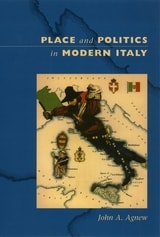
Place and Politics in Modern Italy
John A. Agnew
University of Chicago Press, 2002
For Agnew, place is not just a static backdrop against which events occur, but a dynamic component of social, economic, and political processes. He shows, for instance, how the lack of a common "landscape ideal" or physical image of Italy delayed the development of a sense of nationhood among Italians after unification. And Agnew uses the post-1992 victory of the Northern League over the Christian Democrats in many parts of northern Italy to explore how parties are replaced geographically during periods of intense political change.
Providing a fresh new approach to studying the role of space and place in social change, Place and Politics in Modern Italy will interest geographers, political scientists, and social theorists.
Planning Paradise
Politics and Visioning of Land Use in OregonBy Peter A. Walker and Patrick T. Hurley
University of Arizona Press, 2011
Oregon is one of the nation’s most celebrated exceptions. In the early 1970s Oregon established the nation’s first and only comprehensive statewide system of land-use planning and largely succeeded in confining residential and commercial growth to urban areas while preserving the state’s rural farmland, forests, and natural areas. Despite repeated political attacks, the state’s planning system remained essentially politically unscathed for three decades. In the early- and mid-2000s, however, the Oregon public appeared disenchanted, voting repeatedly in favor of statewide ballot initiatives that undermined the ability of the state to regulate growth. One of America’s most celebrated “success stories” in the war against sprawl appeared to crumble, inspiring property rights activists in numerous other western states to launch copycat ballot initiatives against land-use regulation.
This is the first book to tell the story of Oregon’s unique land-use planning system from its rise in the early 1970s to its near-death experience in the first decade of the 2000s. Using participant observation and extensive original interviews with key figures on both sides of the state’s land use wars past and present, this book examines the question of how and why a planning system that was once the nation’s most visible and successful example of a comprehensive regulatory approach to preventing runaway sprawl nearly collapsed.
Planning Paradise is tough love for Oregon planning. While admiring much of what the state’s planning system has accomplished, Walker and Hurley believe that scholars, professionals, activists, and citizens engaged in the battle against sprawl would be well advised to think long and deeply about the lessons that the recent struggles of one of America’s most celebrated planning systems may hold for the future of land-use planning in Oregon and beyond.
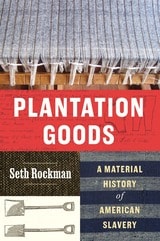
Plantation Goods
A Material History of American SlaverySeth Rockman
University of Chicago Press, 2024
The industrializing North and the agricultural South—that’s how we have been taught to think about the United States in the early nineteenth century. But in doing so, we overlook the economic ties that held the nation together before the Civil War. We miss slavery’s long reach into small New England communities, just as we fail to see the role of Northern manufacturing in shaping the terrain of human bondage in the South. Using plantation goods—the shirts, hats, hoes, shovels, shoes, axes, and whips made in the North for use in the South—historian Seth Rockman locates the biggest stories in American history in the everyday objects that stitched together the lives and livelihoods of Americans—white and Black, male and female, enslaved and free—across an expanding nation.
By following the stories of material objects, such as shoes made by Massachusetts farm women that found their way to the feet of a Mississippi slave, Rockman reveals a national economy organized by slavery—a slavery that outsourced the production of its supplies to the North, and a North that outsourced its slavery to the South. Melding business and labor history through powerful storytelling, Plantation Goods brings northern industrialists, southern slaveholders, enslaved field hands, and paid factory laborers into the same picture. In one part of the country, entrepreneurs envisioned fortunes to be made from “planter’s hoes” and rural women spent their days weaving “negro cloth” and assembling “slave brogans.” In another, enslaved people actively consumed textiles and tools imported from the North to contest their bondage. In between, merchants, marketers, storekeepers, and debt collectors laid claim to the profits of a thriving interregional trade.
Examining producers and consumers linked in economic and moral relationships across great geographic and political distances, Plantation Goods explores how people in the nineteenth century thought about complicity with slavery while showing how slavery structured life nationwide and established a modern world of entrepreneurship and exploitation. Rockman brings together lines of American history that have for too long been told separately, as slavery and capitalism converge in something as deceptively ordinary as a humble pair of shoes.
Plastic Materialities
Politics, Legality, and Metamorphosis in the Work of Catherine MalabouBrenna Bhandar and Jonathan Goldberg-Hiller, editors
Duke University Press, 2015
Contributors. Brenna Bhandar, Silvana Carotenuto, Jonathan Goldberg-Hiller, Jairus Victor Grove, Catherine Kellogg, Catherine Malabou, Renisa Mawani, Fred Moten, Alain Pottage, Michael J. Shapiro, Alberto Toscano

Plato and Aristophanes
Comedy, Politics, and the Pursuit of a Just LifeMarina Marren
Northwestern University Press, 2022
Marren makes this case by delving into Plato’s Republic, a foundational work of political philosophy. While the Republic straightforwardly condemns the decadence and greed of a tyrant, Plato’s attack on political idealism is both solemn and comedic. In fact, Plato draws on the same comedic stock and tropes as do Aristophanes’s plays. Marren’s book strikes up an innovative conversation between three works by Aristophanes—Assembly Women, Knights, and Birds—and Plato’s philosophy, prompting important questions about individual convictions and one’s personal search for justice. These dialogic works offer critiques of tyranny that are by turns brilliant, scathing, and exuberant, making light of faults and ideals alike. Philosophical comedy exposes despotism in individuals as well as systems of government claiming to be just and good. This critique holds as much bite against contemporary injustices as it did at the time of Aristophanes and Plato.
An ingenious new work by an emerging scholar, Plato and Aristophanes shows that comedy—in tandem with philosophy and politics—is essential to self-examination. And without such examination, there is no hope for a just life.
Please RSVP
Questions on Collaborative Aesthetics, Trans-Subjectivity, and the Politics of LoveApril Durham
Dartmouth College Press, 2019

Poetry and Politics in the Play Sir Thomas More
L. Joseph Hebert
Catholic University of America Press, 2026

Poles, Jews, and the Politics of Nationality
The Bund and the Polish Socialist Party in Late Tsarist Russia, 1892–1914Joshua D. Zimmerman
University of Wisconsin Press, 2004

Political Affairs of the Heart
Female Travel Writers, the Sentimental Travelogue, and Revolution, 1775-1800Linda Van Netten Blimke
Bucknell University Press, 2022
Political Complexity
Nonlinear Models of PoliticsDiana Richards, Editor
University of Michigan Press, 2000
Political Descent
Malthus, Mutualism, and the Politics of Evolution in Victorian EnglandPiers J. Hale
University of Chicago Press, 2014
These two traditions, Hale shows, developed in a context of mutual hostility, debate, and refutation. Participants disagreed not only about evolutionary processes but also on broader questions regarding the kind of creature our evolution had made us and in what kind of society we ought therefore to live. Significantly, and in spite of Darwin’s acknowledgement that natural selection was “the doctrine of Malthus, applied to the whole animal and vegetable kingdoms,” both sides of the debate claimed to be the more correctly “Darwinian.” By exploring the full spectrum of scientific and political issues at stake, Political Descent offers a novel approach to the relationship between evolution and political thought in the Victorian and Edwardian eras.

Politics Of Everyday Fear
Brian Massumi
University of Minnesota Press, 1993
The contemporary consumer is bombarded with fear-inducing images and information. This media shower of imagery is equaled only by the sheer quantity of fear-assuaging products offered for our consumption. The contributors address questions raised by the saturation of social space by capitalized fear.
Politics Of Selfhood
Bodies And Identities In Global CapitalismRichard Harvey Brown
University of Minnesota Press, 2003
Looks at the ways social change is expressed through debates over identities and bodies
In bodies and selves, we can see politics, economics, and culture play out, and the tensions and crises of society made visible. The women’s movement, lobbies for the elderly, pro-choice and pro-life movements, AIDS research and education, pedophilia and repressed memory, global sports spectacles, organ donor networks, campaigns for safe sex, chastity, or preventive medicine—all are aspects of the contemporary politics of bodies and identities touched on in this book. Three broad themes run through the collection: how the body is constructed in various ways for different purposes, how the electronic media and its uses shape selves and sensualities and contribute to civic discourse, and how global capitalism acts as a direct force in these processes. By taking a distinctly cross-cultural and comparative approach, this volume explores more fully than ever the political, economic, institutional, and cultural settings of corporeality, identity, and representation.
Contributors: Antonella Fabri, John Jay College and New York Academy of Medicine; Eva Illouz, Hebrew U of Jerusalem; Philip W. Jenks, Portland State U; Lauren Langman, Loyola U; Timothy W. Luke, Virginia Polytechnic Institute and State U; Timothy McGettigan, Colorado State U, Pueblo; Margaret J. Tally, SUNY, Empire State College.
Politics Of The Global
Himadeep Muppidi
University of Minnesota Press, 2004
Examines globalism as a social production, opening up new paths of resistance
Though presented often as an objective process, globalization is frequently analyzed from subjective perspectives that are closed to their own historical and geographical specificity. Refusing the false choice between objectivity and subjectivity, Himadeep Muppidi considers the production of the global as an intersubjective process involving the interplay of meanings, identities, and practices from historically different locations.
Muppidi illustrates how the politics of globalization are played out in two multicultural democracies, India and the United States—particularly rich examples given the increasing interactions between them in the areas of global economy and security. Software experts and skilled professionals flow from India to the United States; the United States outsources service sector jobs to India. Although they differ in their approaches to worldwide regulation of weapons of mass destruction, India and the United States cooperate in opposing terrorism. Treating globalization as an intersubjective process reveals the different political possibilities (e.g., colonial coercion, postcolonial ambivalence, and postcolonial co-option) that are opened by global relays of meanings, identities, and power. Muppidi concludes by exploring a variety of spaces and strategies for resisting the colonization of the global.
Politics Of Women's Health
Susan Sherwin
Temple University Press, 1998
Rather than focusing on types of medical interventions, The Politics of Women's Health asks what feminist health care ethics looks like if we start with women's experiences and concerns. It begins to unravel two key concepts of women's empowerment -- agency and autonomy -- that apply to all areas of concern to women.
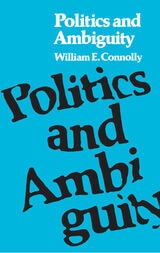
Politics and Ambiguity
William E. Connolly
University of Wisconsin Press, 1987
In a series of stimulating essays, William E. Connolly explores the element of ambiguity in politics. He argues that democratic politics in a modern society requires, if it is to flourish, an appreciation of the ambiguous character of the standards and principles we cherish the most. Connolly’s work, lucidly, presented and intellectually challenging, will be of interest to students and scholars of political science, philosophy, rhetoric, and law, and to all whose interests include the connections between contemporary epistemological arguments and politics and, more broadly, between thought and language.
Connolly criticizes the ways in which contemporary politics extends normalization into various areas of modern existence. He argues, against this trend, for an approach that would provide relief from the rigid identity formations that result from normalization.
In supporting his thesis, Connolly shows how the imperative for growth must be relaxed if normalizing pressures are to be obviated. His, however, is not the familiar antigrowth argument; rather, he ties his thesis to his general antinormalization argument, asking how one could create an ethic that would sustain itself when the growth imperatives are relaxed. Connolly’s chapters on the work of other thinkers (including Michel Foucault, Jürgen Habermas, Richard Rorty, and Charles Taylor) are linked with his main theme, as he shows how various tendencies in the philosophy of the social sciences and in political theory aid and abed the normalizing tendency.
His analyses of Rorty and Taylor are especially important. Connolly shows the significance of antifoundationalism (Rorty’s contribution to the debate on epistemology), while providing a compelling critique both of Rorty’s stance and Taylor's alternative to it.
Especially important to Connolly’s thesis is the ontology on which it rests. He shows how the endorsement of an ontology of discordance within concord—a view that all systems of meaning impose order on that which was not designed to fit neatly within them—can support a more democratizing process. His final chapter, “Where the Word Breaks Off,” vindicates the ontology of discordance, which has governed the argument throughout the text.
Throughout these essays, Connolly builds a consistent argument for the politicalization of normalization, disclosing forms of normalization where others have seen unproblematic modes of communication and problem solving. Original in concept and bold in presentation, Connolly’s work will form the basis for considerable debate in the several disciplines it serves.
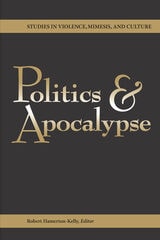
Politics and Apocalypse
Robert Hamerton-Kelly
Michigan State University Press, 2007
Apocalypse. To most, the word signifies destruction, death, the end of the world, but the literal definition is "revelation" or "unveiling," the basis from which renowned theologian René Girard builds his own view of Biblical apocalypse. Properly understood, Girard explains, Biblical apocalypse has nothing to do with a wrathful or vengeful God punishing his unworthy children, and everything to do with a foretelling of what future humans are making for themselves now that they have devised the instruments of global self-destruction. In this volume, some of the major thinkers about the interpretation of politics and religion— including Eric Voegelin, Leo Strauss, and Carl Schmitt— are scrutinized by some of today's most qualified scholars, all of whom are thoroughly versed in Girard’s groundbreaking work.
Including an important new essay by Girard, this volume enters into a philosophical debate that challenges the bona fides of philosophy itself by examining three supremely important philosopher of the twentieth century. It asks how we might think about politics now that the attacks of 9/11 have shifted our intellectual foundations and what the outbreak of rabid religion might signify for international politics.
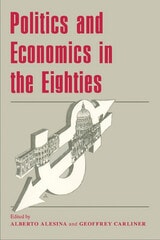
Politics and Economics in the Eighties
Edited by Alberto Alesina and Geoffrey Carliner
University of Chicago Press, 1991
Certain to provoke controversy, this interdisciplinary volume brings together policy experts to provide a coherent analysis of the most important economic policy changes of the 1980s. Through a detailed examination of voting patterns, monetary and fiscal policies, welfare spending, tax reform, minimum wage legislation, the savings and loan collapse, and international trade policy, the authors explore how politics can influence the direction of economic policymaking.
Politics and Foreign Direct Investment
Nathan M. Jensen, Glen Biglaiser, Quan Li, Edmund Malesky, Pablo M. Pinto, Santiago M. Pinto, and Joseph L. Staats
University of Michigan Press, 2012
Politics and Governance in Urban Southeast Asia
Edited by Edward Aspinall, Allen Hicken, Paul D. Hutchcroft, and Meredith Weiss
National University of Singapore Press, 2026
As Southeast Asia’s cities continue to swell, this timely volume analyzes urban politics in the region.
Why have some Southeast Asian cities become laboratories of reform while others remain mired in old patterns of patronage politics and substandard public services? This has become an important question now that over half of Southeast Asia’s population lives in urban areas, transforming the politics of the region. Quintessentially urban problems—traffic congestion, sanitation, public transport, housing, and the like—increasingly preoccupy policymakers, while the region’s swelling urban middle classes expect their mayors and city governments to provide ever-better infrastructure and amenities.
Drawing on close case studies of a diverse set of seventeen urban areas across four Southeast Asian countries—Indonesia, Malaysia, the Philippines, and Thailand—this volume offers fresh insights into how the region’s urban politics are changing. It provides a new framework for understanding why some cities are flourishing and others are not. Exploring the factors that shape distinct local governance regimes in these cities, Politics and Governance in Urban Southeast Asia also throws light on how urban residents use community associations, informal networks, and other political mechanisms to access the public services they want and need.
Politics and History in William Golding
The World Turned Upside DownPaul Crawford
University of Missouri Press, 2002