Results by title
76 books match the query 'Principles' and 40 start with p

Power System Protection
Principles and components, Volume 1The Electricity Training Association Electricity Training Association
The Institution of Engineering and Technology, 1995

Principles Of Interpretation
Continental Thought Series, V5Edward Goodwin Ballard
Ohio University Press, 1983
This is a major phenomenological work in which real learning works in graceful tandem with genuine and important insight. Yet this is not a work of scholarship; it is a work of philosophy, a work that succeeds both in the careful, descriptive massing of detail and in the power of its analysis of the conditions that underlie the possibility of such things as description, interpretation, perception, and meaning.
Principles of Interpretation formulates answers to these questions: How does the interpretative process proceed? What are its fundamentals? What assurance have we that our interpretations are in principal faithful to that which is to be interpreted? What conclusions are indicated concerning the past phases of our history and its present tendencies?
Principles and Applications of Free Space Optical Communications
Arun K. Majumdar
The Institution of Engineering and Technology, 2019
Principles of Adaptation for Film and Television
By Ben Brady
University of Texas Press, 1994
From All Quiet on the Western Front, the Academy Award-winning "Best Picture" of 1929-1930, to Dances with Wolves, the 1991 winner, many of Hollywood's most popular and enduring movies have been screen adaptations of written work, including novels, stories, and plays. In this practical, hands-on guide, veteran TV and screenwriter Ben Brady unlocks the secrets of the adaptation process, showing aspiring writers and writing teachers how to turn any kind of narrative material into workable, salable screenplays for film and television.
Step by step, Brady guides novice screenwriters to the completion of a professional screenplay. He begins with an incisive discussion of how to evaluate a written work's potential as a screenplay. Then he discusses each step of the writing process, showing how to identify the plot and premise of the play, develop character, treatment, and dialogue, and handle camera language and format. Brady illustrates each of these points by developing and writing a complete screenplay of the novel Claire Serrat within the text.
With these tools, beginning screenwriters can draw on the rich resources of words in print to create exciting screenplays for film and television. Written in vivid, entertaining prose, the book will be equally useful in the classroom or at the kitchen table, wherever enterprising writers ply their craft.
Principles of American Nuclear Chemistry
A NovelThomas McMahon
University of Chicago Press, 1970
Principles of Animal Behavior, 4th Edition
Lee Alan Dugatkin
University of Chicago Press, 2020
As Principles of Animal Behavior makes clear, the tapestry of animal behavior is created from weaving all of these components into a beautiful whole. With Dugatkin’s exquisitely illustrated, comprehensive, and up-to-date fourth edition, we are able to admire that beauty anew.
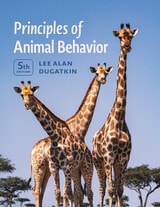
Principles of Animal Behavior, 5th Edition
Lee Alan Dugatkin
University of Chicago Press, 2025
So much has happened in the field of animal behavior since the last edition of this definitive textbook was published in 2020. In this fifth edition, Lee Alan Dugatkin continues to draw on cutting-edge new research not only to update and expand on the studies presented but also to reinforce the previous editions’ focus on ultimate and proximate causation as well as the book’s unique emphasis on natural selection, learning, and cultural transmission in nonhuman animals. The result is an essential update to the leading textbook on animal behavior that explains underlying concepts accessibly and with scientific rigor.
Completely new features include:
- Anthropogenic Connection Boxes. Humans are changing the planet. We are clearing forests, polluting the oceans, irrigating deserts, poisoning the soils, and driving a dramatic increase in global temperatures. All of these changes alter both the habitats where animals live and the species themselves as they evolve in response to our impact on their surroundings. Students will dig deep into how anthropogenic evolution affects animal behavior.
- Social Network Connection Boxes. Researchers have discovered that social networks play a critical role in almost every aspect of animal life: what they eat, how they protect themselves, who they mate with, the dynamics of parent-offspring relations, aggression, navigation, communication, play, cooperation, culture, and more. Students will discover how social network studies enrich our understanding of the wondrous complexity of animal behavior.
Principles of Autonomic-Somatic Integrations
Physiological Basis and Psychological and Clinical ImplicationsErnst Gellhorn
University of Minnesota Press, 1967

Principles of Catholic Theology, Book 1
On the Nature of TheologyThomas Joseph White, OP
Catholic University of America Press, 2023

Principles of Catholic Theology, Book 2
On the Rational Credibility of ChristianityThomas Joseph White, OP
Catholic University of America Press, 2023

Principles of Catholic Theology, Book 3
On God, Trinity, Creation, and ChristThomas Joseph White
Catholic University of America Press, 2024

Principles of Catholic Theology, Book 4
On the Church, Mary, Nature and GraceThomas Joseph White
Catholic University of America Press, 2023

Principles of Catholic Theology, Book 5
No One is More Human Than God: On the Trinitarian Presence of God in the WorldThomas Joseph White
Catholic University of America Press, 2026
Principles of Corporate Renewal
Harlan D. Platt
University of Michigan Press, 2023
Now in its third edition, Harlan D. Platt has revised, updated, and expanded the text. As the first edition did, this new Principles of Corporate Renewal cuts to the heart of the patterns, procedures, and pitfalls of bringing a corporation back to life and health.
Principles of Corporate Renewal, Second Edition
Harlan D. Platt
University of Michigan Press, 2004
Now in its second edition, Harlan D. Platt has revised, updated, and expanded the text to include a new chapter on bankruptcy law, a profile of the turnaround manager, and an overview of the typical turnaround engagement. As the first edition did, this new Principles of Corporate Renewal cuts to the heart of the patterns, procedures, and pitfalls of bringing a corporation back to life and health.

Principles of Geoarchaeology
A North American PerspectiveMichael R. Waters
University of Arizona Press, 1992
CONTENTS
1. Research Objectives of Geoarchaeology
2. Geoarchaeological Foundations: The Archaeological Site Matrix: Sediments and Soils / Stratigraphy / The Geoarchaeological Interpretation of Sediments, Soils, and Stratigraphy
3. Alluvial Environments: Streamflow / Sediment Erosion, Transport, and Deposition / Alluvial Environments: Rivers, Arroyos, Terraces, and Fans / Alluvial Landscapes Evolution and the Archaeological Record / Alluvial Landscape Reconstruction
4. Eolian Environments: Sediment Erosion, Transport, and Deposition / Sand Dunes / Loess and Dust / Stone Pavements / Eolian Erosion / Volcanic Ash (Tephra)
5. Springs, Lakes, Rockshelters, and Other Terrestrial Environments: Springs / Lakes / Slopes / Glaciers / Rockshelters and Caves
6. Coastal Environments: Coastal Processes / Late Quaternary Sea Level Changes / Coastal Environments / Coastal Landscape Evolution and the Archaeological Record / Coastal Landscape Reconstruction
7. The Postburial Disturbance af Archaeological Site Contexts: Cryoturbation / Argilliturbation / Graviturbation / Deformation / Other Physical Disturbances / Floralturbation / Faunalturbation
8. Geoarchaeological Research
Appendix A: Geoarchaeological Studies Illustrating the Effects of Fluvial Landscape Evolution on the Archaeological Record
Appendix B: Geoarchaeological Studies Illustrating Site-Specific Synchronic and Diachronic Alluvial Landscape Reconstructions
Appendix C: Geoarchaeological Studies Illustrating Regional Synchronic and Diachronic Alluvial Landscape Reconstructions
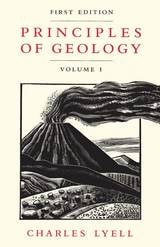
Principles of Geology, Volume 1
Charles Lyell
University of Chicago Press, 1990
Martin J. S. Rudwick's new Introduction, summarizing the origins of the Principles, guides the reader through the structure of the entire three-volume first edition and considers the legacy of Lyell's great work.

Principles of Geology, Volume 2
Charles Lyell
University of Chicago Press, 1991

Principles of Geology, Volume 3
Charles Lyell
University of Chicago Press, 1991
Martin J. S. Rudwick has compiled a bibliography giving full references for the sources Lyell cites in all three volumes of the Principles.

Principles of Grammar and Learning
William O'Grady
University of Chicago Press, 1987
To support this thesis, O'Grady develops a well-articulated, single level, categorial-type grammar that he uses to analyze syntactic categories, extraction, anaphora, extraposition, and quantifier placement in English and other languages. He shows that such grammars can be constructed via general learning strategies from notions such as dependency, adjacency, precedence, and continuity, and that the available acquisition data points to the emergence of the principles he proposes.
While exploratory, this book provides one of the few serious attempts to develop a theory of grammar and learning that does not posit faculty-specific innate principles. Principles of Grammar and Learning is an exemplary attempt to bring together issues and data from syntactic theory, language acquisition, and the more general study of the human mind.
Principles of Green Bioethics
Sustainability in Health CareCristina Richie
Michigan State University Press, 2019
Principles of Instrumental Logic
John Dewey's Lectures in Ethics and Political Ethics, 1895-1896Donald F. Koch
Southern Illinois University Press, 1998
John Dewey delivered two sets of related lectures at the University of Chicago in the fall quarter 1895 and the spring quarter 1896. Designed for graduate students, the lectures show the birth of Dewey’s instrumentalist theory of inquiry in its application to ethical and political thinking.
From 1891 through 1903, Dewey attempted to develop a revolutionary experimentalist approach to ethical inquiry, designed to replace the more traditional ways of moral theorizing that relied on the fixed moral knowledge given in advance of the situations in which they were applied. In the lectures on the logic of ethics, he sets forth and defends the view that the "is" in a moral judgment such as "This is good" is a coordinating factor in an inquiry. Although the subject matter of the lectures is highly technical, its significance is paramount. It provides the key to and opens the door for a theory that preserves the difference between strictly scientific inquiry and moral inquiry even while it provides a "scientific treatment" of the latter.

Principles of Intensive Psychotherapy
Frieda Fromm-Reichmann
University of Chicago Press, 1950
"One is continuously aware that here is a truly human being at work, human in the sense of exquisite awareness, on a profoundly intuitive level, of the workings of the human totality. . . . Because of this she can bridge the vast divide that separates us from the psychotic . . . thereby gaining access to the process of recalling the patient to his lost domain."—Louise E. DeRosis, M.D., American Journal of Psychoanalysis
Principles of Knowledge Representation
Gerhard Brewka
CSLI, 1996

Principles of Microwave Circuits
C.G. Montgomery
The Institution of Engineering and Technology, 1987
Principles of Microwave Measurements
G.H. Bryant
The Institution of Engineering and Technology, 1993
Principles of Modern Radar
Advanced Techniques, Volume 2William L. Melvin
The Institution of Engineering and Technology, 2026
Principles of Modern Radar
Advanced techniques, Volume 2William L. Melvin
The Institution of Engineering and Technology, 2013
Principles of Modern Radar
Advanced techniques, Volume 2William L. Melvin
The Institution of Engineering and Technology, 2013
Principles of Modern Radar
Basic Principles, Volume 1Mark A. Richards
The Institution of Engineering and Technology, 2022
Principles of Modern Radar
Basic principles, Volume 1Mark A. Richards
The Institution of Engineering and Technology, 2010
Principles of Modern Radar
Radar Applications, Volume 3William L. Melvin
The Institution of Engineering and Technology, 2014
Principles of Performance Engineering for Telecommunication and Information Systems
M. Ghanbari
The Institution of Engineering and Technology, 1997
Principles of Planar Near-Field Antenna Measurements
Stuart Gregson
The Institution of Engineering and Technology, 2007
Principles of Planar Near-Field Antenna Measurements
Stuart Gregson
The Institution of Engineering and Technology, 2023
Principles of Soundscape Ecology
Discovering Our Sonic WorldBryan C. Pijanowski
University of Chicago Press, 2024
What do the sounds of a chorus of tropical birds and frogs, a clap of thunder, and a cacophony of urban traffic have in common? They are all components of a soundscape, acoustic environments that have been identified by scientists as a combination of the biophony, geophony, and anthrophony, respectively, of all of Earth’s sound sources. As sound is a ubiquitous occurrence in nature, it is actively sensed by most animals and is an important way for them to understand how their environment is changing. For humans, environmental sound is a major factor in creating a psychological sense of place, and many forms of sonic expression by people embed knowledge and culture. In this book, soundscape ecology pioneer Bryan C. Pijanowski presents the definitive text for both students and practitioners who are seeking to engage with this thrilling new field. Principles of Soundscape Ecology clearly outlines soundscape ecology’s critical foundations, key concepts, methods, and applications. Fundamentals include concise and valuable descriptions of the physics of sound as well as a thorough elucidation of all sounds that occur on Earth. Pijanowski also presents a rich overview of the ecological, sociocultural, and technical theories that support this new science, illustrating the breadth of this amazingly transdisciplinary field. In methods, he describes the principles of data mining, signal processing, and mixed methods approaches used to study soundscapes in ecological, social, or socio-ecological contexts. The final section focuses on terrestrial, aquatic, urban, and music applications, demonstrating soundscape ecology’s utility in nearly all spaces.
Principles of Space-Time Adaptive Processing
Richard Klemm
The Institution of Engineering and Technology, 2006

Principles of Stellar Evolution and Nucleosynthesis
Donald D. Clayton
University of Chicago Press, 1984
Principles of Waveform Diversity and Design
Michael C. Wicks
The Institution of Engineering and Technology, 2011
Pulse Doppler Radar
Principles, technology, applicationsClive Alabaster
The Institution of Engineering and Technology, 2012