Results by title
22279 books match the query 'Social Science' and 1104 start with p

Predatory Welfare
Debt, Race, and Cash TransfersErin Torkelson
Duke University Press, 2026
Predecessors, Et Cetera
EssaysAmy Clampitt
University of Michigan Press, 1991
Preference Pollution
How Markets Create the Desires We DislikeDavid George
University of Michigan Press, 2004
Preferences and Situations
Points of Intersection Between Historical and Rational Choice In.Ira Katznelson
Russell Sage Foundation, 2005

Pregnant Women on Drugs
Combating Stereotypes and StigmaRosenbaum, Marsha
Rutgers University Press, 1998
Sociologists Murphy and Rosenbaum interviewed over 120 women who had children while using drugs. Their interviews reveal how the women became addicted, how they may or may not have modified their behavior to protect their children, and how they have dealt with having children and losing them as a result of their addiction. Not all the women interviewed were from abusive or poor families; there is extensive information on how the study population was selected. Also included are suggestions on how to deal with the problem, including women-centered drug treatment and training programs to help women learn trades as well as parenting skills. Though the interviews are enlightening, readers may wish for more answers to the question of how to deal with the root problem and less about the problems drug-addicted mothers face. For academic libraries, especially those with women's studies and sociology collections.?Danna C. Bell-Russel, Natl. Equal Justice Lib., Washington, DC
Review
A powerful refuation of the media-hype stereotypes of pregnant drug users as selfish and unfeeling, Pregnant Women on Drugs shows the extent to which many drug-using women develop the motivation to achieve their dual goals of improving their children's health and maintaining maternal custody. -- Steven R. Kandall, M.D., F.A.A.P., and author Substance and Shadow: Women and Addiction in the United States
Research-based but intensely personal. . . You will be touched by the poignant descriptions about the real lives of pregnant women on drugs. . . Pertinent reading for researchers, clinicians, and all Americans. -- Loretta P. Finnegan, M.D., researcher and perinatal addiction specialist
Touching and informative. . . Drug-addicted women who have either been ignored or reviled are finally given voice to tell their own stories. Their sad, true, and quintessentially human experiences provide persuasive arguments for compassion and supportive approaches to the problems of substance abuse and pregnancy. -- Lynn Paltrow, civil liberties and reproductive freedom attorney

Pregnant on Arrival
Making the Illegal ImmigrantEithne Luibhéid
University of Minnesota Press, 2013
“State alert as pregnant asylum seekers aim for Ireland.” “Country Being Held Hostage by Con Men, Spongers, and Those Taking Advantage of the Maternity Residency Policy.” From 1997 to 2004, headlines such as these dominated Ireland’s mainstream media as pregnant immigrants were recast as “illegals” entering the country to gain legal residency through childbirth. As immigration soared, Irish media and politicians began to equate this phenomenon with illegal immigration that threatened to destroy the country’s social, cultural, and economic fabric.
Pregnant on Arrival explores how pregnant immigrants were made into paradigmatic figures of illegal immigration, as well as the measures this characterization set into motion and the consequences for immigrants and citizens. While focusing on Ireland, Eithne Luibhéid’s analysis illuminates global struggles over the citizenship status of children born to immigrant parents in countries as diverse as the United States, Hong Kong, and elsewhere. Scholarship on the social construction of the illegal immigrant calls on histories of colonialism, global capitalism, racism, and exclusionary nation building but has been largely silent on the role of nationalist sexual regimes in determining legal status. Eithne Luibhéid turns to queer theory to understand how pregnancy, sexuality, and immigrants’ relationships to prevailing sexual norms affect their chances of being designated as legal or illegal.
Pregnant on Arrival offers unvarnished insight into how categories of immigrant legal status emerge and change, how sexual regimes figure prominently in these processes, and how efforts to prevent illegal immigration ultimately redefine nationalist sexual norms and associated racial, gender, economic, and geopolitical hierarchies.
Prehispanic Settlement Patterns in the Northwestern Valley of Mexico
The Zumpango RegionJeffrey R. Parsons with contributions by Larry J. Gorenflo, Mary H. Parsons, and David J. Wilson
University of Michigan Press, 2008
Prehispanic Settlement Patterns in the Southern Valley of Mexico
The Chalco-Xochimilco RegionJeffrey R. Parsons, Elizabeth Brumfiel, Mary H. Parsons, and David J. Wilson
University of Michigan Press, 1982
Prehispanic Settlement Patterns in the Upper Mantaro and Tarma Drainages, Junín, Peru
The Tarama-Chinchaycocha Region, Vol. 1, Parts 1 and 2Jeffrey R. Parsons, Charles M. Hastings, Ramiro Matos M.
University of Michigan Press, 2000
Prehispanic Settlement Patterns in the Upper Mantaro and Tarma Drainages, Junín, Peru
Volume 2, The Wanka RegionEdited by Jeffrey R. Parsons, Charles M. Hastings and Ramiro Matos M.
University of Michigan Press, 2000
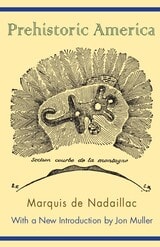
Prehistoric America
Marquis de Nadaillac, with a new introduciton by Jon Muller
University of Alabama Press, 2005
With the settling of the New World, word spread throughout Europe of the native inhabitants, their artifacts, communities, and culturals. Prehistoric America by Marquis de Nadaillac is a prime example of a classic work of the period that addressed the antiquity of humans in the New World, drawing upon the full range of scientific data compiled on the inhabitants and their cultures. The proximity of human remains with those of extinct animals was still a very recent finding, even in the Old World. Nadaillac’s early attempts at cross-cultural comparison and theoretical explanations make this work valid despite the advances of modern-day scholarship. This work was originally published in French in 1883 and translated into English in 1884.
Prehistoric Biological Relationships in the Great Lakes Region
Richard Guy Wilkinson
University of Michigan Press, 1971
Prehistoric Copper Mining in Michigan
The Nineteenth-Century Discovery of “Ancient Diggings” in the Keweenaw Peninsula and Isle RoyaleJohn R Halsey
University of Michigan Press, 2018
Prehistoric Culture Change on the Colorado Plateau
Ten Thousand Years on Black MesaEdited by Shirley Powell and Francis E. Smiley
University of Arizona Press, 2002
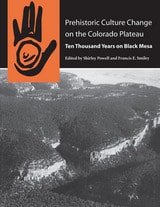
Now a single comprehensive work summarizes the results of this intensive survey, excavation, and analysis. Prehistoric Culture Change on the Colorado Plateau offers the only complete synthesis of Kayenta-area archaeology as well as the single most intensive study of the ancestral Puebloan and Navajo occupation of the Four Corners region. It also provides the human context for more than two decades of theoretical, methodological, and empirical work.
The authors—all associated with the Black Mesa project—synthesize previous analyses of faunal, lithic, ceramic, chronometric, and human osteological data, weaving a coherent and compelling story of the prehistory and ethnohistory of northern Arizona. Through these data, they provide a summary of culture history which emphasizes that organizational variation and other aspects of culture change are largely a response to a changing natural environment.
The volume provides a systematic overview of human occupation on and around Black Mesa through time, beginning with the Paleoindian period, moving through the Archaic and Basketmaker periods, considering the Puebloan dispersion and the magnificent remains of the Pueblo III period, and culminating with Hopi and Navajo perspectives on their history. The authors examine relationships among population density, subsistence strategies, and social organization, and use these data to identify the regional context within which the Black Mesa people may have operated during different time periods.
Broad in scope with a wealth of supporting detail, Prehistoric Culture Change on the Colorado Plateau offers a basic reference on this important project that collects twenty years of analysis into one volume. It is a unique touchstone in Southwest archaeology that will stand as the last word on Black Mesa.
Prehistoric Food Production in North America
Edited by Richard I. Ford
University of Michigan Press, 1985
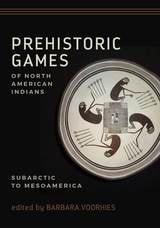
Prehistoric Games of North American Indians
Subarctic to MesoamericaBarbara Voorhies
University of Utah Press, 2017
Prehistoric Games of North American Indians is a collection of studies on the ancient games of indigenous peoples of North America. The authors, all archaeologists, muster evidence from artifacts, archaeological features, ethnography, ethnohistory, and to a lesser extent linguistics and folklore. Chapters sometimes center on a particular game (chunkey rolling disc game or patolli dice game, for example) or sometimes on a specific prehistoric society and its games (Aztec acrobatic games, games of the ancient Fremont people), and in one instance on the relationship between slavery and gaming in ancient indigenous North American societies.
In addition to the intrinsic value of pursuing the time depth of these games, some of which remain popular and culturally important today among Native Americans or within the broader society, the book is important for demonstrating a wide variety of research methods and for problematizing a heretofore overlooked research topic. Issues that emerge include the apparently ubiquitous but difficult to detect presence of gambling, the entanglement of indigenous games and the social logic of the societies in which they are embedded, the characteristics of women’s versus men’s games or those of in-group and out-group gaming, and the close correspondence between gaming and religion. The book’s coverage is broad and balanced in terms of geography, level of socio-cultural organization and gender.
Prehistoric Households at Turkey Creek Pueblo, Arizona
Julie C. Lowell
University of Arizona Press, 1991
Prehistoric Indians of the Southeast
Archaeology of Alabama and the Middle SouthJohn A. Walthall
University of Alabama Press, 1990
This book deals with the prehistory of the region encompassed by the present state of Alabama and spans a period of some 11,000 years—from 9000 B.C. and the earliest documented appearance of human beings in the area to A.D. 1750, when the early European settlements were well established. Only within the last five decades have remains of these prehistoric peoples been scientifically investigated.
This volume is the product of intensive archaeological investigations in Alabama by scores of amateur and professional researchers. It represents no end product but rather is an initial step in our ongoing study of Alabama's prehistoric past. The extent of current industrial development and highway construction within Alabama and the damming of more and more rivers and streams underscore the necessity that an unprecedented effort be made to preserve the traces of prehistoric human beings that are destroyed every day by our own progress.
Prehistoric Life on the Mississippi Floodplain
Stone Tool Use, Settlement Organization, and Subsistence Practices at the Labras Lake Site, IllinoisRichard W. Yerkes
University of Chicago Press, 1987
With a fine-tuned control of the data, Yerkes challenges prevailing theories based on simple classifications of stone tools according to shape or on simple models of diffuse and focal economies. He views environment as a dynamic factor in economic and cultural life, rather than as merely a backdrop to it. Using incident light microscopy, he examines wear patterns on stone tools to determine what activities were performed during each period the site was inhabited—the Late Archaic, the Late Woodland, and the Mississippian. As he documents environmental change at Labras Lake, he analyzes plant and animal remains in context to explore diet and seasonal patterns of subsistence and settlement.
The result is a more accurate and detailed picture than ever before what prehistoric life on the Mississippi floodplain was like. Yerkes shows how to assess the duration and size of occupations and how to determine where and when true permanent settlements arose. What others call "sedentary encampments" he reveals as sequences of small residental occupations for a narrow range of activities during shorter, seasonal periods. His contribution to the study of the development of sedentism is potentially far-reaching and will interest many North American anthropologists and archeologists.
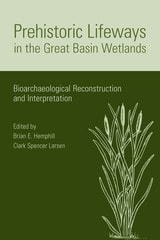
Prehistoric Lifeways in the Great Basin Wetlands
Bioarchaelogical Reconstruction and InterpretationBrian Hemphill
University of Utah Press, 1999
Prehistoric Lifeways of the Great Basin Wetlands examines how the earliest inhabitants of the Great basin in Nevada, Utah, and Oregon made use of ancient marshes and lakes.
When the Great Salt Lake receded in the 1980s from its highest historically recorded levels, it exposed a large number of archaeological and burial sites. Other wetland areas in the region experienced similar flooding and site exposure. The resulting archaeological bonanza resolved long-standing controversy over the role of wetlands in prehistoric Great Basin human subsistence. Previously, archaeologists argued two disparate views: either wetlands offered a wealth of resources and served as a magnet for human occupation and rather sedentary lifestyles, or wetlands provided only meager fare that was insufficient to promote increased sedentism. The exposure of human remains coincided with improved analytic techniques, enabling new conclusions about diet, behavior, and genetic affiliation.
This volume presents findings from three Great Basin wetland areas: Great Salt Lake, Stillwater Marsh (Nevada) and Malheur Lake (Oregon). The evidence presented here does not indicate the superiority of one interpretation over another but offers a more complex picture of variable adaptation, high mobility, and generally robust health among peoples living in a harsh setting with heavy physical demands. It is the first volume to draw together new approaches to the study of earlier human societies, including analysis of mtDNA for population reconstruction and cross-sectional geometric assessment of long bones for behavior interpretation.
Prehistoric Peoples of South Florida
William E. McGoun
University of Alabama Press, 1993
To many people in South Florida, and "oldtimer" is someone who has lived there for more than five years. Prehistoric Peoples of South Florida considers the culture history of the real South Florida "oldtimers" dating from 10,000 B.C. through the invasion by Europeans and analyzes the ways in which they adapted to their environment through time—or caused their environment to adapt to them.
South Florida is a biological island, its plant communities circumscribed by the southern limits of frost. Its peoples were distinct from those to the north and were less studied by scholars. In recent years the pace of research has increased, but there has been no attempt at synthesis since John M. Goggin wrote his still-unpublished manuscript on the Glades nearly half a century ago. Prehistoric Peoples of South Florida assembles the available knowledge and discusses competing theories, and does so in terms that are understandable to the general reader. McGoun outlines a cultural system that maintained an impressive continuity for 10,000 years—before being destroyed by two centuries of European contact.
Prehistoric Quarries and Terranes
The Modena and Tempiute Obsidian SourcesMichael J. Shott
University of Utah Press, 2021
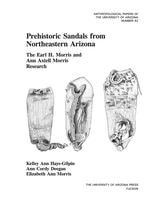
Prehistoric Sandals from Northeastern Arizona
The Earl H. Morris and Ann Axtell Morris ResearchKelley Ann Hays-Gilpin, Ann Cordy Deegan, and Elizabeth Ann Morris
University of Arizona Press, 1998
Prehistoric Settlement Patterns and Cultures in Susiana, Southwestern Iran
The Analysis of the F.G.L. Gremliza Survey CollectionAbbas Alizadeh with a foreword by Henry T. Wright
University of Michigan Press, 1992
Prehistoric Settlement Patterns in the Texcoco Region, Mexico
Jeffrey R. Parsons
University of Michigan Press, 1971
Prehistoric Social, Political, and Economic Development in the Area of the Tehuacan Valley
Some Results of the Palo Blanco ProjectEdited by Robert D. Drennan
University of Michigan Press, 1979
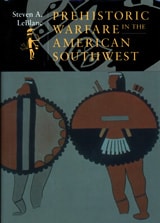
Prehistoric Warfare in the American Southwest
Steven A LeBlanc
University of Utah Press, 2007
Massacres, raiding parties, ambush, pillage, scalping, captive taking: the things we know and sometimes dread to admit occur during times of war all happened in the prehistoric Southwest—and there is ample archaeological evidence. Not only did it occur, but the history of the ancient Southwest cannot be understood without noting the intensity and impact of this warfare.
Most people today, including many archaeologists, view the Pueblo people of the Southwest as historically peaceful, sedentary corn farmers. Our image of the Hopis and Zunis, for example, contrasts sharply with the more nomadic Apaches whose warfare and raiding abilities are legendary. In Prehistoric Warfare in the American Southwest Steven LeBlanc demonstrates that this picture of the ancient Puebloans is highly romanticized. Taking a pan-Southwestern view of the entire prehistoric and early historic time range and considering archaeological and ethnohistorical evidence and oral traditions, he presents a different picture.
War, not peace, was commonplace and deadly throughout the prehistoric sequence. Many sites were built as fortresses, communities were destroyed, and populations massacred. The well-known abandonments of much of the Southwest were warfare related. During the late prehistoric period fighting was particularly intense, and the structure of the historic pueblo societies was heavily influenced by warfare.
Objectively sought, evidence for war and its consequences is abundant. The people of the region fought for their survival and evolved their societies to meet the demands of conflict. Ultimately, LeBlanc asserts that the warfare can be understood in terms of climate change, population growth, and their consequences.
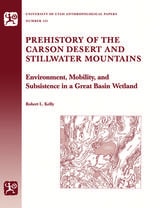
Prehistory Of Carson Desert and Stillwater
Anthropological Paper 123Robert Kelly
University of Utah Press, 2001
University of Utah Anthropological Paper No. 123
This study examines prehistoric use of the Stillwater Marsh in the Carson Desert of western Nevada and the adjacent Stillwater Mountains based on an archaeological survey undertaken in 1980 and 1981, and excavations conducted in 1987. Much of the argument about the use of wetlands revolved around whether they were used be sedentary hunter-gatherers, were just one stop of a family’s seasonal round, or were used only as backup resources. As a result, this report focuses on the issues of hunter-gatherer subsistence and mobility.
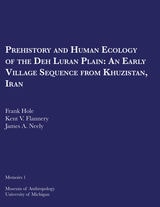
Prehistory and Human Ecology of the Deh Luran Plain
An Early Village Sequence from Khuzistan, IranFrank Hole, Kent V. Flannery, and James A. Neely
University of Michigan Press, 1969
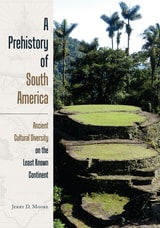
Prehistory of South America
Ancient Cultural Diversity on the Least Known ContinentJerry D. Moore
University Press of Colorado, 2014
For more than 12,000 years, South American cultures ranged from mobile hunters and gatherers to rulers and residents of colossal cities. In the process, native South American societies made advancements in agriculture and economic systems and created great works of art—in pottery, textiles, precious metals, and stone—that still awe the modern eye. Organized in broad chronological periods, A Prehistory of South America explores these diverse human achievements, emphasizing the many adaptations of peoples from a continent-wide perspective. Moore examines the archaeologies of societies across South America, from the arid deserts of the Pacific coast and the frigid Andean highlands to the humid lowlands of the Amazon Basin and the fjords of Patagonia and beyond.
Illustrated in full color and suitable for an educated general reader interested in the Precolumbian peoples of South America, A Prehistory of South America is a long overdue addition to the literature on South American archaeology.
Prehistory of the Central Mississippi Valley
Edited by Charles H. McNutt
University of Alabama Press, 1996
The Central Mississippi Valley, defined as the region along the Mississippi River from where the Ohio River joins in the north to its confluence with the Arkansas River in the south, lies between the two most important archaeological areas of the Southeast: American Bottom/Cahokia and the Lower Yazoo Basin. The valley has been influenced by these major centers and has a complex history of its own. Contributions from experts throughout the region present current, if sometimes conflicting, views of the regional cultural sequences supported by data from recent surveys and excavations, as well as radiocarbon and chronometric determinations. By examining this new information and reevaluating earlier interpretations of local archaeological sequences, this volume provides a comprehensive overview of the valley and defines future research goals.
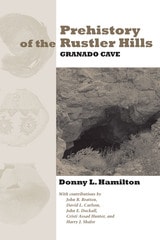
Prehistory of the Rustler Hills
Granado CaveBy Donny L. Hamilton
University of Texas Press, 2001
The Northeastern Trans-Pecos region of Texas is an unforgiving environment for anyone living off the land, yet nomadic hunters and gatherers roamed its deserts and mountains and sheltered in caves and sinkholes from around AD 200 to 1450. This book provides detailed insights into the lifeways of these little-known prehistoric peoples. It places their occupation of the region in a wider temporal and cultural framework through a comprehensive description and analysis of the archaeological remains excavated by Donny L. Hamilton at Granado Cave in 1978.
Hamilton begins with a brief overview of the geology and environment of the Granado Cave area and reviews previous archaeological investigations. Then he and other researchers present detailed analyses of the burials and other material remains found in the cave, as well as the results of radiocarbon dating. From these findings, he reconstructs the subsistence patterns and burial practices of these Native Americans, whom he identifies as a distinct group that was pushed into the environment by surrounding peoples. He proposes that they should be represented by a new archaeological phase, thus helping to clarify the poorly understood late prehistory of the Trans-Pecos.
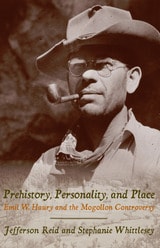
Prehistory, Personality, and Place
Emil W. Haury and the Mogollon ControversyJefferson Reid and Stephanie Whittlesey
University of Arizona Press, 2011
Reid and Whittlesey present the arguments and actions surrounding the Mogollon discovery, definition, and debate. Drawing on extensive interviews conducted with Haury before his death in 1992, they explore facets of the debate that scholars pursued at various times and places and how ultimately the New Archaeology shifted attention from the research questions of cultural affiliation and antiquity that had been at the heart of the controversy. In gathering the facts and anecdotes surrounding the debate, Reid and Whittlesey offer a compelling picture of an academician who was committed to understanding the unwritten past, who believed wholeheartedly in the techniques of scientific archaeology, and who used his influence to assist scholarship rather than to advance his own career.
Prehistory, Personality, and Place depicts a real archaeologist practicing real archaeology, one that fashioned from potsherds and pit houses a true understanding of prehistoric peoples. But more than the chronicle of a controversy, it is a book about places and personalities: the role of place in shaping archaeologists’ intellect and personalities, as well as the unusual intersections of people and places that produced resolutions of some intractable problems in Southwest history.

Prelude to Hospice
Florence Wald, Dying People, and their FamiliesAbel, Emily K.
Rutgers University Press, 2018
Prelude to Protectorate in Morocco
Pre-Colonial Protest and Resistance, 1860-1912Edmund Burke, III
University of Chicago Press, 1977

Premier Issue
Studies in Working-Class History of the Americas, Volume 1Leon Fink
Duke University Press, 0
Contributors. James R. Barrett, Joshua Brown, Leon Fink, Dana Frank, John French, James Green, Julie Greene, Gregory Kealey, Kristen Hill Maher, Steve Meyer

Prepared
The Environmental Politics of the End of the WorldAllison Ford
University of Chicago Press, 0
Shares deep insights into the world of “prepping” and reveals how prepping functions as an environmental practice expressed through right-wing ideology.
Sensationalized in TV shows like Doomsday Preppers, ordinary people who prepare for the end of the world are a subject of fascination. While beginners might keep a few days’ worth of food and water on hand in case of a weather emergency, others truly push themselves to acquire the materials, skills, and knowledge they would need to survive complete societal collapse. Though we might think of them as on the fringe, some estimate that there are as many as 20 million preppers worldwide.
Sociologist Allison Ford’s Prepared: The Environmental Politics of the End of the World shares a behind-the-scenes look at preppers. Ford’s ethnography finds that prepping is a response to environmental risk that originates in right-wing political ideology. Instead of turning to collective action to find a solution, however, preppers approach emergency preparedness as an individual responsibility. Preparedness reasserts and confirms preppers’ self-identification as people who protect their families and maintain self-control, without depending upon others. She argues that preppers adopt the strategies that they do because they are culturally attached to their worldviews, specifically their commitments to liberalism and its unspoken gendered, racial, and class hierarchies, which are being challenged by the failures of modernity that preppers observe. Ultimately, Prepared gives critical insight into how people who do not necessarily identify as environmentalists respond to and deal with environmental risk.
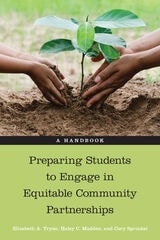
Preparing Students to Engage in Equitable Community Partnerships
A HandbookElizabeth A. Tryon
Temple University Press, 2023
Preparing Students to Engage in Equitable Community Partnerships provides a wealth of valuable resources and activities to help impart ideas of identity, privilege, oppression, bias, and power dynamics to best support students and community in these relationships. Believing that authenticity only comes about in an atmosphere of mutual respect and self-awareness, the authors argue for cultural and intellectual humility.
Each chapter looks at topics and issues through different lenses, complete with underlying theories, and relates those discussions to concrete classroom activities, facilitation strategies, and scholarly frames. In addition, the authors include contributions from a diverse group of practitioners at community colleges, private colleges, historically Black colleges and universities, and minority-serving institutions.
Preparing Students to Engage in Equitable Community Partnerships is a much-needed, comprehensive resource for community-engaged professionals as they prepare students for building relationships when entering a community for learning or research purposes.
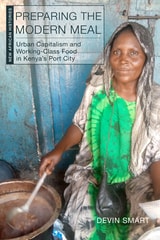
Preparing the Modern Meal
Urban Capitalism and Working-Class Food in Kenya's Port CityDevin Smart
Ohio University Press, 2025
A case study on how urban capitalism created a new working-class food system in the port city of Mombasa during the twentieth century.
In the early twentieth century, East Africans lived primarily in rural areas, cultivating most of the food they consumed. By the start of the twenty-first century, though, millions of people lived in cities, where they purchased their food from markets and eateries. This transformation reflects broader historical shifts in food production, preparation, and consumption throughout the world from a rural subsistence model to a commercial system. Preparing the Modern Meal explores this economic revolution in Mombasa, Kenya, and examines the experiences of those who migrated from rural settings to an Indian Ocean town where they became dependent on the capitalist market for their daily meals.
The change to a commercial food system reshaped the culinary culture of East Africa. In rural communities, diets were diverse and varied with the seasons. Conversely, Mombasa’s commercial supply chains, which steadily delivered staples like maize meal, wheat flour, tea, and meat, led to a more uniform urban cuisine that remained consistent throughout the year.
Urbanization also altered gender roles in cooking. In rural households women prepared the food, but in Mombasa many workers lived in all-male housing and had to cook for themselves. Some even took up cooking as a profession, thus expanding the role of men in the culinary domain. In addition to these themes, Preparing the Modern Meal reviews the emergence of new businesses, particularly those of street food vendors who provided affordable meals in residential neighborhoods and to nearby workplaces. However, these makeshift eateries often clashed with the vision for commerce in a modern city held by municipal officials, who often sought to eliminate these businesses through fines, arrests, and demolition campaigns. Through the lens of food, this book explores the conflicts between elite ideas about urban modernity and the actual ways that poor communities made their lives work in an unequal city.

Prescription TV
Therapeutic Discourse in the Hospital and at HomeJoy V. Fuqua
Duke University Press, 2012
Presence and Desire
Essays on Gender, Sexuality, PerformanceJill Dolan
University of Michigan Press, 1993
This book critically bridges feminist theory and theatrical practice. Dolan examines how performance can subvert normative constructs of gender and sexuality. The collection evaluates mainstream theater, academic stages, subcultural venues, and performance in daily life. It centers sexuality as a primary analytical framework to explore queer visibility and cultural representation. It bridges contemporary feminist theory, poststructuralism, and theatrical practice and places sexuality at the center of its analytical framework to explore how theatrical representation can subvert normative constructs of gender and desire. Dolan evaluates a vast spectrum of performance spaces—ranging from mainstream professional and academic stages to subcultural venues, pornography, and everyday social interactions—to champion queer visibility and claim recognition for women's bodies. Ultimately, the volume functions as a foundational text in performance studies and LGBTQ+ cultural criticism, demonstrating how deliberate theatrical strategies can provoke American culture to actively dismantle and reimagine its traditional social relations

Presence and Resistance
Postmodernism and Cultural Politics in Contemporary American PerformancePhilip Auslander
University of Michigan Press, 1994
Presence and Social Obligation
An Essay on the ShareJames Ferguson
Prickly Paradigm Press, 2021
Present Tensions
European Writers on Overcoming DictatorshipsKristina Kaiserová
Central European University Press, 2009
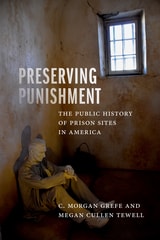
Preserving Punishment
The Public History of Prison Sites in AmericaC. Morgan Grefe and Megan Cullen Tewell
University of Massachusetts Press, 2027
Examining how former prisons became tourist destinations and what that means for past, present, and future carceral spaces
Beginning in the 1970s, the U.S. War on Drugs and tougher crime policies drove incarceration rates to unprecedented levels, leading to severe prison overcrowding and a surge in prison construction. As new facilities opened, many older prisons, some dating to the nineteenth century, were closed and abandoned. Communities faced difficult decisions about their future. Demolition was expensive, and adaptive reuse was often constrained by the distinctive architecture of confinement.
One response, often inspired by the success of institutions such as Alcatraz Island and Eastern State Penitentiary, has been to preserve former prisons as historic sites and tourist attractions, welcoming visitors and using tours and exhibits to shape public understanding of incarceration. Today former prisons operating as such exist in every region of the United States. For many visitors, these sites provide a primary point of contact with the history and realities of imprisonment.
Yet transforming places of confinement into destinations for tourism and heritage raises important questions. How should these sites interpret difficult histories? For whom? What responsibilities do they have to the formerly incarcerated, previous staff, and affected communities? How can they balance education, commemoration, entertainment, and economic development?
Preserving Punishment offers the first sustained historical study of prison museums in the United States. Examining how these institutions preserve, interpret, and present the history of incarceration, C. Morgan Grefe and Megan Cullen Tewell highlight the role of preservationists and public historians in shaping narratives, addressing ethical challenges, and fostering critical engagement with America's past and present systems of punishment. Grounded in local and regional contexts, they argue that historic prison sites are uniquely positioned to encourage informed public conversations about incarceration, memory, and criminal justice.
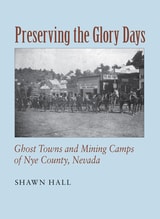
Preserving The Glory Days
Ghost Towns And Mining Camps Of Nye County, NevadaShawn Hall
University of Nevada Press, 1999
Nye County is Nevada’s largest and least populated county, but it is also the site of many of the state’s most colorful ghost towns and mining camps. The county’s economy throughout its history has been largely based on its mines--first, exploiting veins of gold and silver, and more recently deposits of raw materials for modern industry, such as molybdenum and barite. It was here that famous boomtowns like Tonopah and Rhyolite sprang up after the discovery of nearby lodes brought in rushes of prospectors and the merchants who supported them. But the county includes many smaller, shorter-lived camps and numerous abandoned stagecoach and railroad stops associated with defunct mining operations.This book offers a lively, informative record of Nevada’s isolated interior. Hall first published a guide to Nye County’s ghost towns in 1981. Since then, he has continued his research into the county’s past and has uncovered much new information and corrected some errors. To prepare this revised and greatly expanded edition, he revisited all 175 sites recorded earlier and has added more than 20 previously unlisted sites.
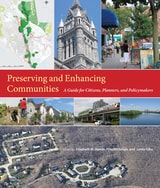
Preserving and Enhancing Communities
A Guide for Citizens, Planners, and PolicymakersElisabeth M. Hamin
University of Massachusetts Press, 2007
This book starts from the premise that each community chooses its future every day, through the incremental decisions made by planning and zoning boards and other citizen volunteers, as well as professional staff. The challenge is to ensure that these decisions support the preservation of what is special about the community, while still fostering necessary and appropriate growth.
In this volume, twenty-nine experts from a variety of fields describe in very practical terms the “community preservation” approach to these issues. As opposed to the top-down regulatory mechanisms that are sometimes used to manage growth, the contributors favor a more flexible, locally based approach that has proven successful in Massachusetts and elsewhere. They show how residents can be empowered to become involved in local decision-making, building coalitions and expressing their views on a wide range of issues, such as zoning, water and land protection, transportation, historic preservation, economic diversity, affordable housing, and reuse of brown-fields. When done properly, development can enhance the sense of place and provide needed homes and jobs. Done improperly, it can generate sprawl and a multitude of problems.
Preserving and Enhancing Communities will be particularly useful to members of planning and other regulatory boards, as well as students of community planning. The book covers not just typical ways of doing things, but also the full spectrum of innovative and emerging practices. Each chapter includes illustrations and case studies, some from Massachusetts and many from other states. The volume concludes with a set of indicators that communities can use to track their progress in community preservation and enhancement.
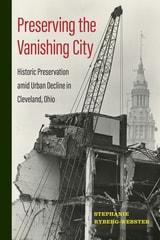
Preserving the Vanishing City
Historic Preservation amid Urban Decline in Cleveland, OhioStephanie Ryberg-Webster
Temple University Press, 2023
Stephanie Ryberg-Webster uncovers the motivations, strategies, and constraints driving Cleveland’s historic preservation sector, led by the public-sector Cleveland Landmarks Commission, nonprofit Cleveland Restoration Society, and a cadre of advocates. She sheds light on the ways in which preservationists confronted severe, escalating, and sustained urban decline, which plagued Cleveland, a prototypical rust-belt industrial city.
Preserving the Vanishing City chronicles the rise of the historic preservation profession in Cleveland and provides six case studies about targeted projects and neighborhood efforts, including industrial heritage, housing preservation and restoration, commercial district revitalization, securing local historic district designations, as well as grassroots organizing, coalition building, and partnerships. Ryberg-Webster also addresses the complexities of historic preservation within the context of rapid racial change in Cleveland’s neighborhoods.
A comprehensive history of preservation within the context of one city’s urban decline, Preserving the Vanishing Cityrecounts the successes, failures, and creative strategies employed to save Cleveland’s built environment.
President Johnson's War On Poverty
Rhetoric and HistoryDavid Zarefsky
University of Alabama Press, 1986
How words waged war—and shaped the fate of a nation’s boldest social crusade.
In January 1964, in his first State of the Union address, President Lyndon Johnson announced a declaration of “unconditional war” on poverty. By the end of the year the Economic Opportunity Act became law.
War on Poverty illustrates the interweaving of rhetorical and historical forces in shaping public policy. Zarefsky suggests that an important problem lay in its discourse. He assumes that language plays a central role in the formulation of social policy by shaping the context within which people view the social world. By terming the anti-poverty effort a war, President Johnson imparted significant symbolism to the effort: it called for total victory and gave confidence that the “war” was winnable. It influenced the definition of the enemy as an intergenerational cycle of poverty, rather than the shortcomings of the individual; and it led to the choice of community action, manpower programs, and prudent management as weapons and tactics. Each of these implications involves a choice of language and symbols, a decision about how to characterize and discuss the world. Zarefsky contends that each of these rhetorical choices was helpful to the Johnson administration in obtaining passage of the Economic Opportunity Ac of 1964, but that each choice invited redefinition or reinterpretation of a symbol in a way that threatened the program.
Presidential Campaigns and Presidential Accountability
Michele P. Claibourn
University of Illinois Press, 2011