Results by title
1325 books match the query 'Psychology' and 89 start with p
Practicing Feminisms, Reconstructing Psychology
Notes on a Liminal ScienceJill Morawski
University of Michigan Press, 1994
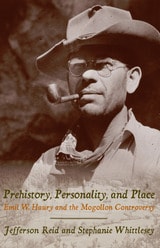
Prehistory, Personality, and Place
Emil W. Haury and the Mogollon ControversyJefferson Reid and Stephanie Whittlesey
University of Arizona Press, 2011
Reid and Whittlesey present the arguments and actions surrounding the Mogollon discovery, definition, and debate. Drawing on extensive interviews conducted with Haury before his death in 1992, they explore facets of the debate that scholars pursued at various times and places and how ultimately the New Archaeology shifted attention from the research questions of cultural affiliation and antiquity that had been at the heart of the controversy. In gathering the facts and anecdotes surrounding the debate, Reid and Whittlesey offer a compelling picture of an academician who was committed to understanding the unwritten past, who believed wholeheartedly in the techniques of scientific archaeology, and who used his influence to assist scholarship rather than to advance his own career.
Prehistory, Personality, and Place depicts a real archaeologist practicing real archaeology, one that fashioned from potsherds and pit houses a true understanding of prehistoric peoples. But more than the chronicle of a controversy, it is a book about places and personalities: the role of place in shaping archaeologists’ intellect and personalities, as well as the unusual intersections of people and places that produced resolutions of some intractable problems in Southwest history.
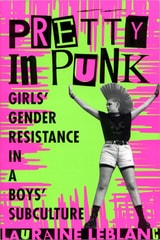
Pretty in Punk
Girl's Gender Resistance in a Boy's SubcultureLeblanc, Lauraine
Rutgers University Press, 1999
Pretty in Punk combines autobiography, interviews, and sophisticated analysis to create the first insider’s examination of the ways punk girls resist gender roles and create strong identities.
Why would an articulate, intelligent, thoughtful young women shave off most of her hair, dye the remainder green, shape it into a mohawk, and glue it onto her head? What attracts girls to male-dominated youth subcultures like the punk movement? What role does the subculture play in their perceptions of themselves, and in their self-esteem? How do girls reconcile a subcultural identity that is deliberately coded “masculine” with the demands of femininity?
Research has focused on the ways media and cultural messages victimize young women, but little attention has been paid to the ways they resist these messages. In Pretty in Punk, Lauraine Leblanc examines what happens when girls ignore these cultural messages, parody ideas of beauty, and refuse to play the games of teenage femininity. She explores the origins and development of the punk subculture, the processes by which girls decide to “go punk,” patterns of resistance to gender norms, and tactics girls use to deal with violence and harassment.
Pretty in Punk takes readers into the lives of girls living on the margins of contemporary culture. Drawing on interviews with 40 girls and women between the ages of 14-37, Leblanc examines the lives of her subjects, illuminating their forms of rebellion and survival. Pretty in Punk lets readers hear the voices of these women as they describe the ways their constructions of femininity—from black lipstick to slamdancing—allow them to reject damaging cultural messages and build strong identities. The price they pay for resisting femininity can be steep—girls tell of parental rejection, school expulsion, institutionalization, and harassment. Leblanc illuminates punk girls’ resistance to adversity, their triumphs over tough challenges, and their work to create individual identities in a masculine world.

Primacies
Experience, Expression, and the Jewish ImaginationMichael Fishbane
University of Chicago Press, 2025
Primacies begins with the assertion that our earliest preverbal experiences are accompanied by a primary language—a universal expression of tears, cries, and laughter offered long before we learn our distinctive, ordinary languages. For Michael Fishbane, these “primacies” release the raw feelings of our existential condition and catalyze our most powerful literary expressions of sorrow, joy, and fulfillment.
In this book, Fishbane explores how ancient, medieval, and modern literature and poetry express and transform these primal sensations. Building on his theological project begun in Sacred Attunement and Fragile Finitude, Fishbane offers here a radically new lived hermeneutics that seeks to do nothing less than redefine the relationship between experience and language.
Principles of Intensive Psychotherapy
Frieda Fromm-Reichmann
University of Chicago Press, 1950
"One is continuously aware that here is a truly human being at work, human in the sense of exquisite awareness, on a profoundly intuitive level, of the workings of the human totality. . . . Because of this she can bridge the vast divide that separates us from the psychotic . . . thereby gaining access to the process of recalling the patient to his lost domain."—Louise E. DeRosis, M.D., American Journal of Psychoanalysis

Prisoner's Dilemma
Anatol Rapoport and Albert M. Chammah
University of Michigan Press, 1965

Private Practices
Harry Stack Sullivan, the Science of Homosexuality, and American LiberalismWake, Naoko
Rutgers University Press, 2011
Private Practices examines the relationship between science, sexuality, gender, race, and culture in the making of modern America between 1920 and 1950, when contradictions among liberal intellectuals affected the rise of U.S. conservatism. Naoko Wake focuses on neo-Freudian, gay psychiatrist Harry Stack Sullivan, founder of the interpersonal theory of mental illness. She explores medical and social scientists' conflicted approach to homosexuality, particularly the views of scientists who themselves lived closeted lives.
Wake discovers that there was a gap--often dramatic, frequently subtle--between these scientists' "public" understanding of homosexuality (as a "disease") and their personal, private perception (which questioned such a stigmatizing view). This breach revealed a modern culture in which self-awareness and open-mindedness became traits of "mature" gender and sexual identities. Scientists considered individuals of society lacking these traits to be "immature," creating an unequal relationship between practitioners and their subjects. In assessing how these dynamics--the disparity between public and private views of homosexuality and the uneven relationship between scientists and their subjects--worked to shape each other, Private Practices highlights the limits of the scientific approach to subjectivity and illuminates its strange career--sexual subjectivity in particular--in modern U.S. culture.
Profiles of Social Research
The Scientific Study of Human InteractionMorton M. Hunt
Russell Sage Foundation, 1985

Promising
William Vitek
Temple University Press, 1993
William Vitek enlarges our understanding by treating the act of promising as a social practice and complex human experience. Citing engaging examples of promises made in everyday life, in extraordinary circumstances, and in literary works, Vitek grapples with the central paradox of promising: that human beings can intend a future to which they are largely blind.
Promising evaluates contemporary approaches to the topic by such philosophers as John Rawls, John Searle, Henry Sidgwick, P.S. Atiyah, and Michael Robbins but transcend their more limited focus on promissory obligation. Vitek's innovative approach moves beyond theories of language, ethics, and law to unveil a complex human activity subject to shifting interpretations and changes in nature.
Promotion of Social Awareness
Powerful Lessons for the Partnership of Developmental Theory andRobert L. Selman
Russell Sage Foundation, 2003

Prospero and Caliban
The Psychology of ColonizationO. Mannoni
University of Michigan Press, 1990
Noted anthropologist Maurice Bloch has written a powerful and critical new foreword to the English translation, which allows the reader to view Mannoni’s unique work in its historical and intellectual context.

Psychiatric Encounters
Madness and Modernity in Yucatan, MexicoReyes-Foster, Beatriz M.
Rutgers University Press, 2019

Psychiatry and Behavioral Science
An Introduction and Study Guide for Medical Studentsedited by David A. Baron and Ellen H. Sholevar
Temple University Press, 2008

Psycho-Marxism
Marxism and Psychoanalysis Late in the Twentieth Century, Volume 97Robert Miklitsch, spec issue ed
Duke University Press, 0
Contributors. Elizabeth Jane Bellamy, Teresa Brennan, Rosaria Champagne, Stathis Gourgouris, Catherine Liu, Kathleen McHugh, Robert Miklitsch, Abdul-Karim Mustapha, Laurence A. Rickels, Eugene Victor Wolfenstein, Slavoj Zizek

Psychoanalysis and the Challenge of Islam
Fethi Benslama
University of Minnesota Press, 2009
Unveils the psychoanalytic undercurrents of contemporary Islam
Fethi Benslama is a psychoanalyst who, although a secular thinker, identifies himself as a person of Muslim culture who rejects ready-made explanations for Islamic fundamentalism. In that spirit, Benslama demythifies both Islam and Western ideas of the religion by addressing the psychoanalytic root causes of the Muslim world’s clash with modernity and subsequent turn to fundamentalism.
Tracing this ideological strain to its origins, Benslama shows that contemporary Islam consists of a fairly recent hybridization of Arab nationalism, theocracy, and an attempt (both naïve and deadly) to ground science in faith. Combining textual analysis and Lacanian and Freudian psychoanalysis, he examines Islam’s foundation, providing fresh readings of the book of Genesis, the Koran, The Arabian Nights, and the work of medieval Islamic philosophers.Refreshingly, Benslama writes without ideological bias and undoes the simplistic, Western view of Islam while refusing to romanticize terrorism or Muslim extremism. This is a penetrating work that reveals an alternate history of the Islamic religion and opens new possibilities for its future development.
Psychoanalysis--A Theory in Crisis
Marshall Edelson
University of Chicago Press, 1988

Psychoanalytic Mediations between Marxist and Postcolonial Reading of the Bible
Tat-siong Benny Liew
SBL Press, 2016
The first sustained conversation between Marxism, postcolonialism, and psychoanalysis in biblical studies
This volume pursues critical readings of the Bible that put psychoanalysis into conversation with Marxist and postcolonial criticism. In these essays psychoanalysis provides a way to mediate between Marxism's materialist groundings and postcolonialism's resistance against empire. The essays in the volume illuminate the way empire has shaped the biblical text by looking at the biblical texts' silences, ruptures, oversights, over-emphases, and inexplicable elements. These details are read as symptoms of a set of oppressive material relations that shaped and continue to haunt the text in the ascendancy of the text in the name of the West.
Features:
- Essays and responses from multiple perspectives and geographical locations, including Africa, Australia, Oceania, Latin America, and North America
- Psychoanalysis that considers how the traumas of colonialism manifest both materially and psychically
- Close readings of biblical texts
Psychoanalytic Theory
An IntroductionAnthony Elliott
Duke University Press, 2002
The book follows major themes, highlighting the similarities and differences among influential thinkers and schools of thought. At the same time, Psychoanalytic Theory is structured so that the chapters can be read in any order. Each one includes an introductory overview and summary, as well as biographical and historical material for each theorist discussed. This book is an essential starting point for any exploration of the contribution of psychoanalysis to contemporary theory.
Psychobiography and Life Narratives
Dan P. McAdams and Richard L. Ochberg, eds.
Duke University Press, 1988
Five chapters show how differing psychobiographical approaches can illuminate the lives of Richard Nixon, Nathaniel Hawthorne, Eleanor Marx (Karl Marx’s youngest daughter), author and feminist Vera Brittain, psychologist Henry Murray, and Sigmund Freud (whose peculiar relationship to Leonardo da Vinci shaped and distorted the first psychobiography every written). Two chapters concentrate on the analysis of life histories collected from contemporary American adults at mid-life crises, and the remaining three chapters provide bold new conceptual and methodological perspectives from which to view the study of individual lives and life stories.
This landmark volume promises to make a major contribution to the growing literature on biography and personality.
Contributors. Irving E. Alexander, James William Anderson, Leslie A. Carlson, Rae Carlson, Alan C. Elms, Carol Franz, Lynne Layton, Dan P. McAdams, Richard L. Ochberg, George C. Rosenwald, William McKinley Runyan, Abigail G. Stewart, Jacquelyn Wiersma, David G. Winter
Psychodynamics and Cognition
Edited by Mardi J. Horowitz
University of Chicago Press, 1988

Psychological Science and Christian Faith
Insights and Enrichments from Constructive DialogueMalcolm A. Jeeves
Templeton Press, 2018
Because Christianity and psychology deal with different levels of truth and speak vastly different languages, efforts to unify them often create more problems than they solve. What is needed is a better way to think about the relationship—an approach that does justice to the emerging insights from psychological science and biblical scholarship and that can enrich our understanding of both. In this volume, two accomplished psychologists show how this complementary dialogue can unfold, giving us a broader, deeper understanding of ourselves, our relationships, and our place in the cosmos.
.

Psychological and Psychoeducational Assessment of Deaf and Hard of Hearing Children and Adolescents
Margery S. Miller
Gallaudet University Press, 2015
Authors Margery S. Miller, Tania Thomas-Presswood, Kurt Metz, and Jennifer Lukomski bring a wealth of knowledge and experience to this in-depth treatment of topics essential to educators and school psychologists. They cover such critical areas as test construction and measurement; the diversity in American Deaf culture; the role of parents in the assessment process; neuropsychological assessments; nonverbal methods for assessing intelligence; and the need for sign language competency when testing cognitive and language skills.
The text concludes with recommendations for the development of valid and reliable tests for all students who are deaf and hard of hearing.

Psychology and Constructivism in International Relations
An Ideational AllianceVaughn P. Shannon and Paul A. Kowert, Editors
University of Michigan Press, 2011
"The conversation between political psychology and constructivism is essential and long overdue. By exploring the interaction of individual cognition and social processes, this 'ideational alliance' more fully explains how ideas work all the way down to shape world politics."
---Theo Farrell, King's College London
"This is a worthwhile and engaging volume. Political psychology is gaining ground as an essential perspective to consider when analyzing international relations, and the book's focus on constructivism provides key insights into the relationship between identity, norms, and behavior---bedrock concepts in understanding the social underpinnings of global politics."
---Mira Sucharov, Carleton University
"An indispensable guide to understanding what distinguishes and what unites psychology and constructivism. A wonderful resource for political psychologists, constructivists, and their critics."
---Jonathan Mercer, University of Washington
Constructivist IR scholars study the ways in which international norms, culture, and identities---all intersubjective phenomena---inform foreign policy and affect the reaction to and outcomes of international events. Political psychologists similarly investigate divergent national self-conceptions as well as the individual cognitive and emotional propensities that shape ideology and policy. Given their mutual interest in human subjectivity and identity politics, a dialogue and synthesis between constructivism and political psychology is long overdue.
The contributors to this volume discuss both theoretical and empirical issues of complementarity and critique, with an emphasis on the potential for integrating the viewpoints within a progressive ideational paradigm. Moreover, they make a self-conscious effort to interrogate, rather than gloss over, their differences in the hope that such disagreements will prove particularly rich sources of analytical and empirical insight.
Jacket illustration © Ocean Photography/Veer
Psychology and Politics
Intersections of Science and Ideology in the History of Psy-SciencesFerenc Eros
Central European University Press, 2019
Psy-sciences (psychology, psychiatry, psychoanalysis, pedagogy, criminology, special education, etc.) have been connected to politics in different ways since the early twentieth century. Here in twenty-two essays scholars address a variety of these intersections from a historical perspective.
The chapters include such diverse topics as the cultural history of psychoanalysis, the complicated relationship between psychoanalysis and the occult, and the struggles for dominance between the various schools of psychology. They show the ambivalent positions of the "psy" sciences in the dictatorships and authoritarian regimes of Nazi Germany, East European communism, Latin-American military dictatorships, and South African apartheid, revealing the crucial role of psychology in legitimating and "normalizing" these regimes.
The authors also discuss the ideological and political aspects of mental health and illness in Hungary, Germany, post-WW1 Transylvania, and Russia. Other chapters describe the attempt by critical psychology to understand the production of academic, therapeutic, and everyday psychological knowledge in the context of the power relations of modern capitalist societies.

Psychology and Society
Radical Theory and PracticeEdited by Ian Parker and Russell Spears
Pluto Press, 1996
Psychology in Human Context
Essays in Dissidence and ReconstructionSigmund Koch
University of Chicago Press, 1999
The broad scope of essays in Psychology in Human Context—which began as the basis for the eagerly anticipated postscript to Koch's seminal Psychology: A Study of a Science—reveals his writings to be as fresh and relevant today as ever. Carefully edited by two of Koch's close associates, this collection places psychological and philosophical issues in the context of twentieth-century thought and provides intellectual and moral signposts for future travelers in what Koch regarded as the irreducibly rich and human realm of the psychological studies.
Sigmund Koch was University Professor of Psychology and Philosophy at Boston University, the editor of the landmark six-volume series Psychology: A Study of a Science (1959-1963) and coeditor of A Century of Psychology as Science. He served as the president of three divisions of the American Psychological Association and was director of the Ford Foundation program in the Humanities and the Arts (1964-1967).
Psychology of the Mexican
Culture and PersonalityBy R. Díaz-Guerrero
University of Texas Press, 1975
In his quest to understand and describe the behavior of the Mexican, the distinguished Mexican psychologist R. Díaz-Guerrero combines a strong theoretical interest in the relationship of culture to personality with a pragmatic concern for methodology. This collection of essays is rooted both in studies of Mexican psychology as an independent phenomenon and in cross-cultural comparisons of Mexicans, Mexican-Americans, and Anglo-Americans.
Dr. Díaz-Guerrero discusses Mexican attitudes toward sex roles and the family, motivations of the Mexican worker, and other topics. He compares Mexican and American concepts of respect and analyzes the relation between neurosis and the Mexican family structure. He attempts to determine the degree of mental, personal, and social health of urban Mexicans. The importance of basic sociocultural premises, such as "The mother is the dearest person in existence," and "The stricter the parents are, the better the children turn out," is explored. In one essay, Díaz-Guerrero notes the differences in typical reactions to stress in Mexico and the United States, concluding that the American pattern involves active response to stress, whereas the Mexican response tends to be more passive.
Psychology of the Mexican deals with a variety of historical, psychological, biological, social, economic, and anthropological variables, attempting to treat them in a scientific way through the use of carefully constructed questionnaires, with detailed statistical analyses of the results. On the basis of data obtained in this way, the author formulates broad conceptual schemes with immediate application to the understanding of human behavior in real situations. He is particularly intrigued by the way the individual relates to the significant people in his environment. For the Mexican, he says, such interpersonal relationships are the most important part of life; in contrast to the American insistence on liberty and equality, Mexican culture emphasizes affiliation and love.
Psychopathology and Politics
Harold D. Lasswell
University of Chicago Press, 1986
Psychopathology
An Empathic Representational Approach; An Integration of Phenomenology and Cognitive NeuroscienceEric Yu Hai Chen
Hong Kong University Press, 2024
Psychopathology: An Empathic Representational Approach retraces the foundations of classical phenomenological psychopathology and integrates them with modern ideas drawn from anthropology, cognitive neuroscience, computational science, and evolutionary biology to synthesize a comprehensive framework and provide fresh insights. It explores key issues in clinical psychopathology coherently and systematically, illustrates advanced topics in an accessible manner using clinical case examples, metaphors, and clarifying diagrams, and directly links advanced conceptual frameworks with pragmatic skills in the clinical dialogue process.
This volume is aimed at a broad audience of mental health professionals, researchers, and students in psychiatry, psychology, and social work. Its interdisciplinary treatment of the subject will also interest biologists, anthropologists, cognitive psychologists, neuroscientists, and philosophers.

Psychophysical Thresholds
Experimental Studies of Methods of MeasurementH. Richard Blackwell
University of Michigan Press, 1953

Psychopolitics
Conversations with Trevor Cribben MerrillJean-Michel Oughourlian
Michigan State University Press, 2012
For thousands of years, political leaders have unified communities by aligning them against common enemies. However, today more than ever, the search for “common” enemies results in anything but unanimity. Scapegoats like Saddam Hussein, for example, led to a stark polarization in the United States. Renowned neuropsychiatrist and psychologist Jean-Michel Oughourlian proposes that the only authentic enemy is the one responsible for both everyday frustrations and global dangers, such as climate change—ourselves. Oughourlian, who pioneered an “interdividual” psychology with René Girard, reveals how all people are bound together in a dynamic, contingent process of imitation, and shows that the same patterns of irrational mimetic desire that bring individuals together and push them apart also explain the behavior of nations.

Psychosis and Schizophrenia in Hong Kong
Navigating Clinical and Cultural CrossroadsEric Yu Hai Chen and Yvonne Treffurth
Hong Kong University Press, 2024
Psychosis and Schizophrenia in Hong Kong covers some of the most serious mental health conditions that top the global disease burden and affect three percent of the general population. However, most research on psychotic disorders is undertaken in the West, and few studies have been systematically carried out in Asia despite global interest in regional differences. This work offers a unique and coherent account of these disorders and their treatment in Hong Kong over the last thirty years.
Chen and his research program’s pioneering work has ranged from the impact of early intervention on outcomes and relapse prevention to the renaming of psychosis to reduce stigma. The studies have contributed to wider international debates on the optimal management of the condition. Their investigations in semantics and cognition, as well as cognition-enhancing exercise interventions, have provided novel insights into deficits encountered in the treatment of psychotic disorders and how they might be ameliorated. The research has also explored subjective experiences of psychosis and elicited unique perspectives in patients of Asian origin.
Each topic is divided into three sections: a global background of the challenges encountered; research findings from Hong Kong; and reflections that place the data in scientific and clinical contexts and offer future directions.

Psychosomatic
Feminism and the Neurological BodyElizabeth A. Wilson
Duke University Press, 2004

Psychotherapy As Religion
The Civil Divine In AmericaWilliam M. Epstein
University of Nevada Press, 2006
A provocative look at America on the couch.In Psychotherapy as Religion, William Epstein sets out to debunk claims that psychotherapy provides successful clinical treatment for a wide range of personal and social problems. He argues that the practice is not a science at all but rather the civil religion of America, reflecting the principles of radical self-invention and self-reliance deeply embedded in the psyche of the nation. Epstein begins by analyzing a number of clinical studies conducted over the past two decades that purport to establish the effectiveness of psychotherapeutic treatments. He finds that each study violates in some way the standard criteria of scientific credibility and that the field has completely failed to establish objective procedures and measurements to assess clinical outcomes. Epstein exposes psychotherapy’s deep roots in the religious and intellectual movements of the early nineteenth century by demonstrating striking parallels between various types of therapy and such popular practices as Christian Science and spiritualism. Psychotherapy has taken root in our culture because it so effectively reflects our national faith in individual responsibility for social and personal problems. It thrives as the foundation of American social welfare policy, blaming deviance and misery on deficiencies of character rather than on the imperfections of society and ignoring the influence of unequal and deficient social conditions while requiring miscreants to undergo the moral reeducation that psychotherapy represents. This is a provocative, brilliantly argued look at America on the couch. Psychotherapy as Religion is essential reading for anyone interested in the history and current state of mental health.

Psychotherapy with Deaf Clients from Diverse Groups
Irene W. Leigh
Gallaudet University Press, 1999
The second edition of Psychotherapy with Deaf Clients from Diverse Groups features the introduction of six new chapters that complement full revisions of original chapters with advances in the field since its initial publication. The first part begins with a new chapter on the current ethical issues relevant to working with deaf clients. In subsequent chapters it provides updated information on the diversity of consumer knowledge, attitudes, beliefs, and experiences. Deaf therapists and their involvement in the Deaf community also are scrutinized in this context.
The revised second part examines psychotherapy for various constituencies, including deaf women; lesbian, gay, and bisexual deaf populations; children of deaf parents; and people with Usher syndrome. Part Three chapters consider interventions with African American deaf clients, American Indians who are deaf, and Asians who are American and deaf. A new chapter expands information on therapy for Latino deaf clients.
The final section incorporates three new chapters on other deaf populations — deaf college students, recipients of cochlear implants, and deaf elderly clients. Also, new information has been added to chapters on the treatment of deaf survivors of sexual abuse and deaf clients with chemical dependency. The last addition to the second edition outlines dialectical behavior therapy for deaf clients, a valuable option for clinicians.

Psychotherapy with Deaf Clients from Diverse Groups
Irene W. Leigh
Gallaudet University Press, 2010
The second edition of Psychotherapy with Deaf Clients from Diverse Groups features the introduction of six new chapters that complement full revisions of original chapters with advances in the field since its initial publication. The first part begins with a new chapter on the current ethical issues relevant to working with deaf clients. In subsequent chapters it provides updated information on the diversity of consumer knowledge, attitudes, beliefs, and experiences. Deaf therapists and their involvement in the Deaf community also are scrutinized in this context.
The revised second part examines psychotherapy for various constituencies, including deaf women; lesbian, gay, and bisexual deaf populations; children of deaf parents; and people with Usher syndrome. Part Three chapters consider interventions with African American deaf clients, American Indians who are deaf, and Asians who are American and deaf. A new chapter expands information on therapy for Latino deaf clients.
The final section incorporates three new chapters on other deaf populations — deaf college students, recipients of cochlear implants, and deaf elderly clients. Also, new information has been added to chapters on the treatment of deaf survivors of sexual abuse and deaf clients with chemical dependency. The last addition to the second edition outlines dialectical behavior therapy for deaf clients, a valuable option for clinicians.

Public Native America
Tribal Self-Representations in Museums, Powwows, and CasinosLawlor, Mary
Rutgers University Press, 2006
The Native American casino and gaming industry has attracted unprecedented American public attention to life on reservations. Other tribal public venues, such as museums and powwows, have also gained in popularity among non-Native audiences and become sites of education and performance.
In PublicNative America, Mary Lawlor explores the process of tribal self-definition that the communities in her study make available to off-reservation audiences. Focusing on architectural and interior designs as well as performance styles, she reveals how a complex and often surprising cultural dynamic is created when Native Americans create lavish displays for the public’s participation and consumption.
Drawing on postcolonial and cultural studies, Lawlor argues that these venues serve as a stage where indigenous communities play out delicate negotiations—on the one hand retaining traditional beliefs and rituals, while on the other, using what they have learned about U.S. politics, corporate culture, tourism, and public relations to advance their economic positions.

Purple Heart and The Infidel
Two PlaysBruce Norris
Northwestern University Press, 2005
Loosely based on a true story, The Infidel tells of a charismatic and well-respected state Supreme Court justice who is faced with disciplinary action after his out-of-control affair with a young Latina junior staffer. He confers with his friend and attorney as he examines the consequences of his behavior and tries to judge the most difficult case of his life-his own. With dark irony and sharp, cutting dialogue, Bruce Norris explores sexual obsession and the legislation of human behavior.

Puta Life
Seeing Latinas, Working SexJuana María Rodríguez
Duke University Press, 2023