Results by title
18284 books match the query 'United States' and 850 start with p

Peace as War
Bosnia-Herzegovina Post-DaytonDrazen Pehar
Central European University Press, 2019
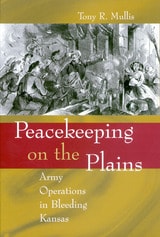
Peacekeeping on the Plains
Army Operations in Bleeding KansasTony R. Mullis
University of Missouri Press, 2004

Pearls, Peaches, and Peddlers
Short Essays on Arkansas’s Amazing HistoryTom Dillard
University of Arkansas Press, 2027
In Pearls, Peaches, and Peddlers: Short Essays on Arkansas’s Amazing History, Tom Dillard offers a lively portrait of Arkansas that reveals how the state was shaped by ordinary people, unexpected industries, and moments of upheaval both grand and small.
The seventy-four essays collected here draw upon Dillard’s career as a historian, archivist, educator, and preservationist to challenge familiar myths, reveal overlooked stories, and demonstrate how the history of one state can illuminate the larger American experience.
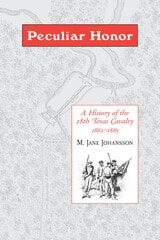
Peculiar Honor
A History of the 28th Texas Cavalry 1862-1865Jane Johansson
University of Arkansas Press, 1998
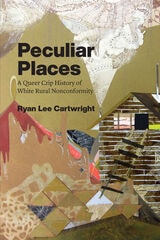
Peculiar Places
A Queer Crip History of White Rural NonconformityRyan Lee Cartwright
University of Chicago Press, 2021
Sensationalized accounts of white rural communities’ aberrant sexualities, racial intermingling, gender transgressions, and anomalous bodies and minds, which proliferated from the turn of the century, created a national view of the perversity of white rural poverty for the American public. Cartwright contends that these accounts, extracted and estranged from their own ambivalent forum of community gossip, must be read in kind: through a racialized, materialist queercrip optic of the deeply familiar and mundane. Taking in popular science, documentary photography, news media, documentaries, and horror films, Peculiar Places orients itself at the intersections of disability studies, queer studies, and gender studies to illuminate a racialized landscape both profoundly ordinary and familiar.
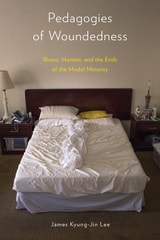
Pedagogies of Woundedness
Illness, Memoir, and the Ends of the Model MinorityJames Kyung-Jin Lee
Temple University Press, 2022
The pressures Asian Americans feel to be socially and economically exceptional include an unspoken mandate to always be healthy. Nowhere is this more evident than in the expectation for Asian Americans to enter the field of medicine, principally as providers of care rather than those who require care. Pedagogies of Woundedness explores what happens when those considered model minorities critically engage with illness and medicine whether as patients or physicians.
James Kyung-Jin Lee considers how popular culture often positions Asian Americans as medical authorities and what that racial characterization means. Addressing the recent trend of writing about sickness, disability, and death, Lee shows how this investment in Asian American health via the model minority is itself a response to older racial forms that characterize Asian American bodies as diseased. Moreover, he pays attention to what happens when academics get sick and how illness becomes both methodology and an archive for scholars.
Pedagogies of Woundedness also explores the limits of biomedical “care,” the rise of physician chaplaincy, and the impact of COVID. Throughout his book and these case studies, Lee shows the social, ethical, and political consequences of these common (mis)conceptions that often define Asian Americans in regard to health and illness.
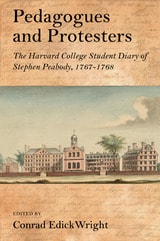
Pedagogues and Protesters
The Harvard College Student Diary of Stephen Peabody, 1767-1768Conrad Edick Wright
University of Massachusetts Press, 2017
Pedagogues and Protesters recounts the year in daily journal entries by Stephen Peabody, a member of the class of 1769. The best surviving account of colonial college life, Peabody's journal documents relationships among students, faculty members, and administrators, as well as the author's relationships with other segments of Massachusetts society. To a full transcription of the entries, Conrad Edick Wright adds detailed annotation and an introduction that focuses on the journal's revealing account of daily life at America's oldest college.
Published in association with Massachusetts Historical Society

Pedagogy of Democracy
Feminism and the Cold War in the U.S. Occupation of JapanMire Koikari
Temple University Press, 2009
Pedagogy of Democracy re-interprets the U.S. occupation of Japan from 1945 to 1952 as a problematic instance of Cold War feminist mobilization rather than a successful democratization of Japanese women as previously argued. By combining three fields of research—occupation, Cold War, and postcolonial feminist studies—and examining occupation records and other archival sources, Koikari argues that postwar gender reform was one of the Cold War containment strategies that undermined rather than promoted women’s political and economic rights.
Pedal To The Metal
The Work Life of TruckersLawrence J. Ouellet
Temple University Press, 1994
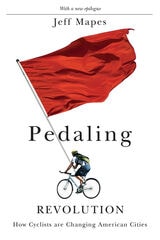
Pedaling Revolution
How Cyclists Are Changing American CitiesJeff Mapes
Oregon State University Press, 2009
In a world of increasing traffic congestion, a grassroots movement is carving out a niche for bicycles on city streets. Pedaling Revolution explores the growing bike culture that is changing the look and feel of cities, suburbs, and small towns across North America.
From traffic-dodging bike messengers to tattooed teenagers on battered bikes, from riders in spandex to well-dressed executives, ordinary citizens are becoming transportation revolutionaries. Jeff Mapes traces the growth of bicycle advocacy and explores the environmental, safety, and health aspects of bicycling. He rides with bicycle advocates who are taming the streets of New York City, joins the street circus that is Critical Mass in San Francisco, and gets inspired by the every-day folk pedaling in Amsterdam, the nirvana of American bike activists. Chapters focused on big cities, college towns, and America’s most successful bike city, Portland, show how cyclists, with the encouragement of local officials, are claiming a share of the valuable streetscape.
“A growing number of Americans, mounted on their bicycles like some new kind of urban cowboy, are mixing it up with swift, two-ton motor vehicles as they create a new society on the streets. They’re finding physical fitness, low-cost transportation, environmental purity—and, still all too often, Wild West risks of sudden death or injury.” —from the introduction
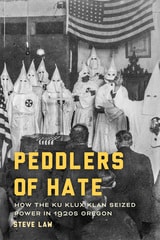
Peddlers of Hate
How the Ku Klux Klan Seized Power in 1920s OregonSteve Law
Oregon State University Press, 2026
The revived Knights of the Ku Klux Klan flourished in Oregon in the early 1920s. With more than sixty chapters established in both large and small communities like Portland, Medford, Astoria, and La Grande, the Klan’s power escalated in the region. Klan salesmen, working on commission, successfully enlisted Oregonians with a message of religious prejudice and racism. At the Klan’s peak, Portland was home to the sixth largest chapter in the country and there were more members per capita in Oregon than in any other state except one.
In Peddlers of Hate, journalist Steve Law draws on published and unpublished sources, new research, and interviews with leading scholars to provide a comprehensive account of how Oregon became one of the Klan’s strongest outposts. Representing the Klan as merely a fraternal lodge, Klan recruiters were trained to vilify Catholics, immigrants, Blacks, and Jews. They gained wide support, toppling an incumbent governor and congressman, persuading voters to ban Catholic schools, and winning control of the legislature and several local governments. From stories of “escaped nuns” to fiery crosses at mass Klan rallies at Salem’s state fairgrounds and Portland’s Mount Tabor Park, Law examines this divisive and forgotten time in Oregon’s history. He shows how it was finally greed, hypocrisy, and corruption that spurred the hate group’s demise—providing historical lessons that will resonate today.
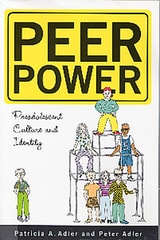
Peer Power
Preadolescent Culture and IdentityAdler, Peter
Rutgers University Press, 1998
The Adlers explore some of the patterns that develop in this social space, noting both the differences in boys' and girls' gendered cultures and the overlap in many social dynamics, afterschool activities, role behaviour, romantic inclinations and social stratification. For example, children's participation in adult-organized afterschool activities - a now-prominent feature of many American children's social experience - has profound implications for their socialization and development, moving them away from the negotiated, spontaneous character of play into the formal systems of adult norms and values at ever-younger ages. When they retreat from adults, however, they still display distinctive peer group dynamics, forging strong ingroup/outgroup differentiation, loyalty and identification. Peer culture thus contains informal social mechanisms through which children create their social order, determine their place and identity, and develop positive and negative feelings about themselves. Studying children's peer culture is thus valuable as it reveals not only how this subculture parallels the adult world but also how it differs from it.

Peerless
Rouben Mamoulian, Hollywood, and BroadwayKurt Jensen
University of Wisconsin Press, 2024
Kurt Jensen’s magisterial volume, extensively researched and filled with trenchant observations, brings to life this charming, flawed, and fascinating man—and demonstrates how the wellspring of his art contained the seeds of his own destruction. Drawing upon Mamoulian’s unfinished memoir and voluminous diaries, as well as interviews with the director’s surviving collaborators, Jensen delivers fresh and informative insider stories from seminal productions. Meanwhile, he explores Mamoulian’s aesthetic principles and strategies as manifested in lighting, choreography, and sound design. A tour de force, Peerless offers readers a multifaceted, in-depth look at an idiosyncratic genius.

Peggy Seeger
A Life of Music, Love, and PoliticsJean R. Freedman
University of Illinois Press, 2020

Pella Dutch
Portrait of a Language in an Iowa Community, An Expanded EditionPhilip E. Webber
University of Iowa Press, 1988
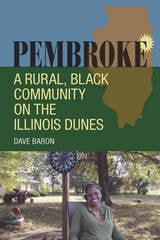
Pembroke
A Rural, Black Community on the Illinois DunesDave Baron
Southern Illinois University Press, 2016
With a population of about two thousand, Pembroke Township, one of the largest rural, black communities north of the Mason-Dixon Line, sits in an isolated corner of Kankakee County, Illinois, sixty-five miles south of Chicago. It is also one of the poorest places in the nation. Many black farmers from the South came to this area during the Great Migration; finding Chicago to be overcrowded and inhospitable, they were able to buy land in the township at low prices. The poor soil made it nearly impossible to establish profitable farms, however, and economic prosperity has eluded the region ever since. Pembroke: A Rural, Black Community on the Illinois Dunes chronicles the history of this inimitable township and shows the author’s personal transformation through his experiences with Pembroke and its people. A native of nearby Kankakee, author Dave Baron first traveled to Pembroke on a church service trip at age fifteen and saw real poverty firsthand, but he also discovered a community possessing grace and purpose.
Baron begins each chapter with a personal narrative from his initial trip to Pembroke. He covers the early history of the area, explaining how the unique black oak savanna ecosystem was created and describing early residents, including Potawatomi tribes and white fur traders. He introduces readers to Pap and Mary Tetter, Pembroke’s first black residents, who—according to local lore—assisted fugitives on the Underground Railroad; details the town’s wild years, when taverns offered liquor, drugs, and prostitution; discusses the many churches of Pembroke and the nearby high school where, in spite of sometimes strained relations, Pembroke’s black students have learned alongside white students of a neighboring community since well before Brown v. Board of Education; outlines efforts by conservation groups to preserve Pembroke’s rare black oak savannas; and analyzes obstacles to and failed attempts at economic development in Pembroke, as well as recent efforts, including organic farms and a sustainable living movement, which may yet bring some prosperity.
Based on research, interviews with residents, and the author’s own experiences during many return trips to Pembroke, this book—part social, cultural, legal, environmental, and political history and part memoir—profiles a number of the colorful, longtime residents and considers what has enabled Pembroke to survive despite a lack of economic opportunities. Although Pembroke has a reputation for violence and vice, Baron reveals a township with a rich and varied history and a vibrant culture.
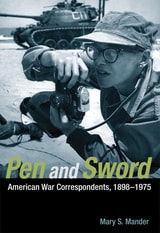
Pen and Sword
American War Correspondents, 1898-1975Mary S. Mander
University of Illinois Press, 2010
Penchant for Prejudice
Unraveling Bias in Judicial Decision-MakingLinda G. Mills
University of Michigan Press, 1999
Pennies for Heaven
The History of American Synagogues and MoneyDaniel Judson
Brandeis University Press, 2018
Pennsylvania Stories--Well Told
William Ecenbarger
Temple University Press, 2017
A former journalist for the Philadelphia Inquirer Magazine, and author of the bestseller Kids for Cash, Ecenbarger has collected a dozen of his fascinating articles showcasing the Keystone State in Pennsylvania Stories—Well Told. He provides a history of the pencil, and considers why the first day of Pennsylvania’s deer hunting season—the world’s largest participatory sporting event—is an unofficial state holiday, closing schools and state offices. Ecenbarger also profiles George “Boom Boom” Zambelli, the internationally renowned pyrotechnic king, and goes driving with Pennsylvania native John Updike in rural Berks County, PA.
Other fascinating tales unfold in Pennsylvania Stories, from an inspiring tale of Governor Bob Casey’s double organ transplant, to darker essays on the electric chair and the Ku Klux Klan, to a mile-by-mile appreciation of the Pennsylvania Turnpike.
In these weird and wonderful stories, Ecenbarger highlights just what makes Pennsylvania both eccentric and great. His book is a delightfully intriguing read for natives and curious outsiders alike.
Pennsylvania
A Military HistoryWilliam A. Pencak
Westholme Publishing, 2016
Westholme State Military History Series
Each state in the United States of America has a unique military history. The volumes in this series seek to provide a portrait of the richness of each state’s military experience, primarily defined by its borders, as well as the important contributions the state has made to the nation’s military history. Written by historians for the general reader, the volumes trace the history of conflict from the original native populations to today. The volumes are well illustrated and include specially commissioned maps, extensive bibliographies, lists of national and state historical sites, and a detailed index.

Penny Loafers & Bobby Pins
Tales and Tips from Growing Up in the ’50s and ’60sSusan Sanvidge
Wisconsin Historical Society Press, 2010
“In the fifties, sleek Mixmasters were replacing rusty eggbeaters, and new pressure-cookers blew their tops in kitchens all over town. There were kids everywhere, and new ‘ranch-style’ houses filled vacant lots. . . . Turquoise Studebakers and dusty-rose Chevy BelAirs with flamboyant fins and lots of chrome replaced dark pre-war cars. Cameras took color snapshots instead of black-and-white. We wore red canvas tennis shoes and lemon yellow shorts, and bright blue popsicles melted down our chins.” —from the Introduction

Pension Plans and Employee Performance
Evidence, Analysis, and PolicyRichard A. Ippolito
University of Chicago Press, 1997
Challenging the accepted view of defined contribution plans, such as the 401k, as merely convenient tax-deferred savings plans, Ippolito argues that these plans can help firms select and pay their best workers without expending monitoring resources. Building on his proposals for managing private pension plans, Ippolito concludes with a blueprint for fixing the social security system that would promote incentives to work and save while at the same time improving the system's financial condition.
Pension Puzzles
Social Security and the Great DebateMelissa Hardy
Russell Sage Foundation, 2007
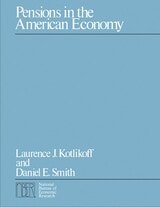
Pensions in the American Economy
Laurence J. Kotlikoff and Daniel E. Smith
University of Chicago Press, 1984
The picture that emerges of the "typical" plan and its significant variations is crucial to all those with a financial stake in pensions. The reader can compare pension vesting, retirement, and benefit provisions by plan type, plan size, industry, union status, and many more characteristics. With this information, workers can evaluate just how generous their employer is; job applicants can compare fringe benefits of prospective employers; personnel directors can judge their competitive edge.
The financial community will find especially interesting the analysis of the unfunded liabilities of private, state, and local pension funds. The investment decisions of private and public pension funds and their return performances are described as well.
Government officials and social scientists will find the analysis of pension coverage, the receipt of pension income by the elderly, cost-of-living adjustments, and disability insurance of special importance in evaluating the proper degree of public intervention in the area of old age income support.
Pensions in the American Economy is comprehensive and easy to use. Every reader, from small-business owners and civil servants to pension fund specialists, will find in it essential information about this increasingly important part of labor compensation and retirement finances.
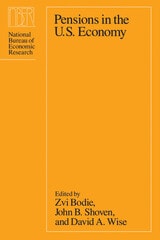
Pensions in the U.S. Economy
Edited by Zvi Bodie, John B. Shoven, and David A. Wise
University of Chicago Press, 1988
Steven F. Venti and David A. Wise offer a careful analysis of who contributes to IRAs and why. Benjamin M. Friedman and Mark Warshawsky look at the reasons more retirement saving is not used to purchase annuities. Personal saving through pension contribution is discussed by B. Douglas Bernheim and John B. Shoven in the context of recent government and corporate pension funding changes. Michael J. Boskin and John B. Shoven analyze indicators of the economic well-being of the elderly, addressing the problem of why a large fraction of the elderly remain poor despite a general improvement in the economic status of the group as a whole. The relative merits of defined contribution versus defined benefit plans, with emphasis on the risk aspects of the two types of plans for the individual, are examined by Zvi Bodie, Alan J. Marcus, and Robert C. Merton. In the final paper, pension plans and worker turnover are the focus of the discussion by Edward P. Lazear and Robert L. Moore, who propose pension option value rather than the commonly used accrued pension wealth as a measure of pension value.
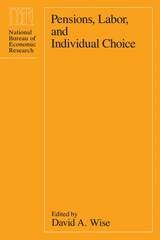
Pensions, Labor, and Individual Choice
David A. Wise
University of Chicago Press, 1985
Previous books on private pensions have largely neglected behavioral implications of the features of pension plans. The papers in this volume, developed from material presented at a recent National Bureau of Economic Research conference, address two aspects of the relation between varieties of labor coverage and participation in the labor force. First, age at retirement may be correlated with kind of pension coverage. The papers, in fact, provide strong evidence that individual decisions about when to retire are directly influenced by pension options. Second, pension plans usually impose a high cost on workers who change jobs, which suggests that pension coverage reduces instances of job change. Pensions, Labor, and Individual Choice quantifies these correlations and proposes a conceptual framework within which to view them.

Pentecostal Currents in American Protestantism
Edited by Edith L. Blumhofer, Russell P. Spittler, and Grant A. Wacker
University of Illinois Press, 1999
Edith Blumhofer uses the Assemblies of God, the largest classical Pentecostal denomination in the world, as a lens through which to view the changing nature of Anglo Pentecostalism in the United States. She illustrates how the original mission to proclaim the end resulted in the development of Bible schools, the rise of the charismatic movement, and the popularity of such figures as Aimee Semple McPherson, Charles Fox Parham, and David Du Plessis. Blumhofer also examines the sect's use of radio and television and the creation of a parallel Christian culture

Penumbra
The Premier Stage for African American DramaMacelle Mahala
University of Minnesota Press, 2013
Penumbra Theatre Company was founded in 1976 by Lou Bellamy as a venue for African American voices within the Twin Cities theatre scene and has stood for more than thirty-five years at the intersection of art, culture, politics, and local community engagement. It has helped launch the careers of many internationally respected theatre artists and has been repeatedly recognized for its artistic excellence as the nation’s foremost African American theatre.
Penumbra is the first-ever history of this barrier-breaking institution. Based on extensive interviews with actors, directors, playwrights, producers, funders, and critics, Macelle Mahala’s book offers a multifaceted view of the theatre and its evolution. Penumbra follows the company’s emergence from the influential Black Arts and settlement house movements; the pivotal role Penumbra played in the development of August Wilson’s career and, in turn, how Wilson became an avid supporter and advocate throughout his life; the annual production of Black Nativity as a community-building performance; and the difficult economics of African American theatre production and how Penumbra has faced these challenges for nearly four decades.
Penumbra is a testament to how a theatre can respond to and thrive within changing political and cultural realities while contributing on a national scale to the African American presence on the American stage. It is a celebration of theatre as a means of social and cultural involvement—both local and national—and ultimately, of Penumbra’s continuing legacy of theatre that is vibrant, diverse, and vital.
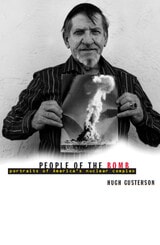
People Of The Bomb
Portraits of America’s Nuclear ComplexHugh Gusterson
University of Minnesota Press, 2004
How the American military-industrial complex has invaded our consciousness to create consent for its programs
“We have had the bomb on our minds since 1945. It was first our weaponry and then our diplomacy, and now it’s our economy. How can we suppose that something so monstrously powerful would not, after forty years, compose our identity?” —E. L. Doctorow
This book tells the story of how—like it or not, know it or not—we have become “the people of the bomb.” Integrating fifteen years of field research at weapons laboratories across the United States with discussion of popular movies, political speeches, media coverage of war, and the arcane literature of defense intellectuals, Hugh Gusterson shows how the military-industrial complex has built consent for its programs and, in the process, taken the public “nuclear.”People of the Bomb mixes empathic and vivid portraits of individual weapons scientists with hard-hitting scrutiny of defense intellectuals’s inability to foresee the end of the Cold War, government rhetoric on missile defense, official double standards about nuclear proliferation, and pork barrel politics in the nuclear weapons complex. Overall, the book assembles a disturbing picture of the ways in which the military-industrial complex has transformed our public culture and personal psychology in the half century since we entered the nuclear age.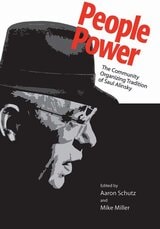
People Power
The Community Organizing Tradition of Saul AlinskyAaron Schutz
Vanderbilt University Press, 2015
--Fred Ross, Cesar Chavez, Dolores Huerta, and the Community Service Organization and National Farm Workers Association
--Nicholas von Hoffman and the Woodlawn Organization
--Tom Gaudette and the Northwest Community Organization
--Ed Chambers, Richard Harmon, and the Industrial Areas Foundation
--Shel Trapp, Gale Cincotta, and National People's Action
--Heather Booth, Midwest Academy, and Citizen Action
--Wade Rathke and ACORN
Weaving classic texts with interviews and their own context-setting commentaries, the editors of People Power provide the first comprehensive history of Alinsky-based organizing in the tumultuous period from 1955 to 1980, when the key organizing groups in the United States took form. Many of these selections--previously available only on untranscribed audiotapes or in difficult-to-read mimeograph or Xerox formats--appear in print here for the first time.
People before Highways
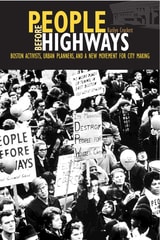
Boston Activists, Urban Planners, and a New Movement for City MakingKarilyn Crockett
University of Massachusetts Press, 2018
In 1948, inspired by changes to federal law, Massachusetts government officials started hatching a plan to build multiple highways circling and cutting through the heart of Boston, making steady progress through the 1950s. But when officials began to hold public hearings in 1960, as it became clear what this plan would entail—including a disproportionate impact on poor communities of color—the people pushed back. Activists, many with experience in the civil rights and antiwar protests, began to organize.
Linking archival research, ethnographic fieldwork, and oral history, Karilyn Crockett in People before Highways offers ground-level analysis of the social, political, and environmental significance of a local anti-highway protest and its lasting national implications. The story of how an unlikely multiracial coalition of urban and suburban residents, planners, and activists emerged to stop an interstate highway is one full of suspenseful twists and surprises, including for the actors themselves. And yet, the victory and its aftermath are undeniable: federally funded mass transit expansion, a linear central city park, and a highway-less urban corridor that serves as a daily reminder of the power and efficacy of citizen-led city making.
People in a Magazine
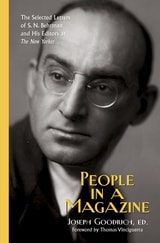
The Selected Letters of S. N. Behrman and His Editors at "The New Yorker"Joseph Goodrich
University of Massachusetts Press, 2018
Playwright, biographer, screenwriter, and critic S. N. Behrman (1893–1973) characterized the years he spent writing for The New Yorker as a time defined by “feverish contact with great theatre stars, rich people and social people at posh hotels, at parties, in mansions and great estates.” While he hobnobbed with the likes of Mary McCarthy, Elia Kazan, and Greta Garbo and was one of Broadway's leading luminaries, Behrman would later admit that the friendships he built with the magazine's legendary editors Harold Ross, William Shawn, and Katharine S. White were the “one unalloyed felicity” of his life.
People in a Magazine collects Behrman's correspondence with his editors along with telegrams, interoffice memos, and editorial notes drawn from the magazine's archives—offering an unparalleled view of mid-twentieth-century literary life and the formative years of The New Yorker, from the time of Behrman's first contributions to the magazine in 1929 until his death.
People of Plenty
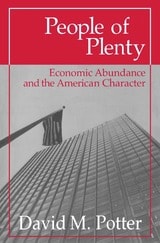
Economic Abundance and the American CharacterDavid M. Potter
University of Chicago Press, 1954
America has long been famous as a land of plenty, but we seldom realize how much the American people are a people of plenty—a people whose distinctive character has been shaped by economic abundance. In this important book, David M. Potter breaks new ground both in the study of this phenomenon and in his approach to the question of national character. He brings a fresh historical perspective to bear on the vital work done in this field by anthropologists, social psychologists, and psychoanalysts.
People of Prowess
Sport, Leisure, and Labor in Early Anglo-AmericaNancy L. Struna
University of Illinois Press, 1996
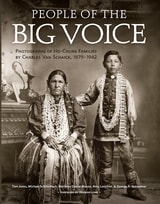
People of the Big Voice
Photographs of Ho-Chunk Families by Charles Van Schaick, 1879-1942Tom Jones
Wisconsin Historical Society Press, 2027
A stunning photographic portrayal of the Ho-Chunk people during a challenging period that presents the resilience of a community whose story continues to this day.
People of the Big Voice tells the visual history of Ho-Chunk families at the turn of the twentieth century and beyond as depicted through the lens of Black River Falls studio photographer Charles Van Schaick. The family relationships among those who sat for the photographer are clearly visible in these images. Sisters, friends, families, and young couples appear and reappear, fleshing out a narrative of the period, from 1879 to 1942, referred to as "the dark ages” in First Nations tribal history.
Following introductory essays from three of the authors are more than three hundred beautifully detailed photographs. Unique to the project are captions that identify over ninety percent of the individuals pictured—made possible by the continuing efforts of tribal members and genealogists—and include both English and Ho-Chunk names.
Also featured are candid shots of Ho-Chunk people on the streets of Black River Falls, outside family dwellings, and at powwows. As author and Ho-Chunk tribal member Amy Lonetree writes, "A significant number of the images were taken just a few short years after the darkest, most devastating period for the Ho-Chunk. Invasion, diseases, warfare, forced assimilation, loss of land, and repeated forced removals from our beloved homelands left the Ho-Chunk people in a fight for their culture and their lives."
A significant contribution to the history of Native peoples, People of the Big Voice is a breathtaking portrayal of a resilient community whose story continues today.
People of the Machine
Computers and Human Reason in the Cold WarJoy Rohde
University of Chicago Press, 0
How Cold War computational experts invested in diplomacy, world peace, and human agency created systems that threatened democratic values.
Beginning in the 1950s, international relations experts and United States government officials built novel computer systems designed to make foreign policy knowledge and practice more scientific. Human reason, they feared, might not be enough to guarantee the survival of American democracy in a nuclear-armed world. They didn’t seek to replace humans with machines; they hoped computers would sift information or provide interactive models that analysts could use to make better decisions. But as they struggled to deliver on their ambitious goals, and as the Defense Department became more involved in their projects after the Vietnam War, their commitments to advancing knowledge, policy agency, and peace gave way to very different computing systems, ones in which correlation replaces causality and prediction replaces understanding.
In People of the Machine, Joy Rohde reveals how even the best-intentioned attempts at fostering political engagement and human autonomy evolved into an anti-democratic nightmare. Her political and intellectual history shows how the subtle and corrosive effects of technological change set the template for today’s political and conceptual regimes. Doing so reveals not just the roots of contemporary inequality and disfranchisement but how thoroughly that antihumanism has been baked into our institutions and norms.
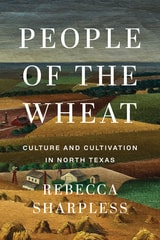
People of the Wheat
Culture and Cultivation in North TexasRebecca Sharpless
University of Texas Press, 2026
How wheat growing, milling, and baking shaped the people and culture of North Texas.
In the national imaginary, America’s amber fields of grain lie in the country’s center, but for more than a century, they also grew across one pocket of the South: North Texas. From the 1840s to the 1970s, the state's agriculture, dominated in lore by cotton in the east and livestock in the open range, was heavily invested in the cultivation, processing, sale, and consumption of wheat. Recalling a forgotten history, Rebecca Sharpless shows how the rhythms of the wheat harvest—and the evolution of the milling, distribution, and baking industries—governed daily life in what is now known as the Dallas–Fort Worth Metroplex.
In the 1840s, Anglo settlers discovered that grain flourished in North Texas and quickly built an economy that included wheat in fields, mills, and kitchens. After the Civil War, hand labor gave way to mechanization, greatly increasing production. Commercial bakeries churned out novel confections, and big cities were built on the bounty of the countryside. In the second half of the twentieth century, as production moved northward, industrial milling and baking declined, but home baking boomed, flour advertising supported regional music, and wheat fortunes financed the region’s cultural life. Sharpless covers 150 years of wheat’s very human history and shows how the labor that cultivated it, the sustenance it provided, and the prosperity it generated left an indelible mark on the people and institutions of Texas.
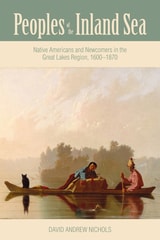
Peoples of the Inland Sea
Native Americans and Newcomers in the Great Lakes Region, 1600–1870David Andrew Nichols
Ohio University Press, 2018
Diverse in their languages and customs, the Native American peoples of the Great Lakes region—the Miamis, Ho-Chunks, Potawatomis, Ojibwas, and many others—shared a tumultuous history. In the colonial era their rich homeland became a target of imperial ambition and an invasion zone for European diseases, technologies, beliefs, and colonists. Yet in the face of these challenges, their nations’ strong bonds of trade, intermarriage, and association grew and extended throughout their watery domain, and strategic relationships and choices allowed them to survive in an era of war, epidemic, and invasion.
In Peoples of the Inland Sea, David Andrew Nichols offers a fresh and boundary-crossing history of the Lakes peoples over nearly three centuries of rapid change, from pre-Columbian times through the era of Andrew Jackson’s Removal program. As the people themselves persisted, so did their customs, religions, and control over their destinies, even in the Removal era. In Nichols’s hands, Native, French, American, and English sources combine to tell this important story in a way as imaginative as it is bold. Accessible and creative, Peoples of the Inland Sea is destined to become a classroom staple and a classic in Native American history.
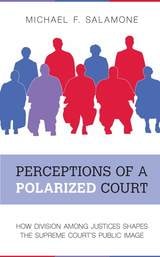
Perceptions of a Polarized Court
How Division among Justices Shapes the Supreme Court's Public ImageMichael F. Salamone
Temple University Press, 2018
Like our divided nation, the Supreme Court is polarized. But does a split among Supreme Court justices—particularly when it occurs along ideological lines—hurt public perception and the Court’s ability to muster popular support for its rulings? Michael Salamone’s Perceptions of a Polarized Court offers the first comprehensive, empirical analysis of how divisiveness affects the legitimacy of the Court’s decisions.
Salamone looks specifically at the Roberts Court years—which are characterized by unprecedented ideological and partisan polarization among the justices—to evaluate the public consequences of divided Supreme Court rulings. He also analyzes both the media’s treatment of Supreme Court decisions and public opinion toward the Court’s rulings to show how public acceptance is (or is not) affected.
Salmone contends that judicial polarization has had an impact on the manner in which journalists report on the Supreme Court. However, contrary to expectation, Court dissent may help secure public support by tapping into core democratic values.
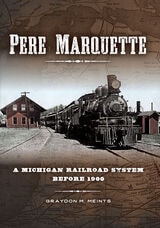
Pere Marquette
A Michigan Railroad System before 1900Graydon M. Meints
Michigan State University Press, 2020

Peregrinations
Walking in American LiteratureAmy T Hamilton
University of Nevada Press, 2018
The land of the United States is defined by vast distances encouraging human movement and migration on a grand scale. Consequently, American stories are filled with descriptions of human bodies walking through the land.
In Peregrinations, Amy T. Hamilton examines stories told by and about Indigenous American, Euroamerican, and Mexican walkers. Walking as a central experience that ties these texts together—never simply a metaphor or allegory—offers storytellers and authors an elastic figure through which to engage diverse cultural practices and beliefs including Puritan and Catholic teachings, Diné and Anishinaabe oral traditions, Chicanx histories, and European literary traditions.
Hamilton argues that walking bodies alert readers to the ways the physical world—more-than-human animals, trees, rocks, wind, sunlight, and human bodies—has a hand in creating experience and meaning. Through material ecocriticism, a reading practice attentive to historical and ongoing oppressions, exclusions, and displacements, she reveals complex layerings of narrative and materiality in stories of walking human bodies.
This powerful and pioneering methodology for understanding place and identity, clarifies the wide variety of American stories about human relationships with the land and the ethical implications of the embeddedness of humans in the more-than-human world.
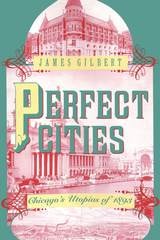
Perfect Cities
Chicago's Utopias of 1893James Gilbert
University of Chicago Press, 1991
"Mr. Gilbert's splendid book opens the door on a conflicted past, and provides an indispensable perspective on the troubled and troubling struggle we face today between old and new, unity and diversity."—Alan Trachtenberg, New York Times
"Perfect Cities is a remarkable account of a struggle for cultural definition. Chronicling the byplay between cultural homogeneity and heterogeneity, unity and diversity, James Gilbert not only throws light on Chicago's past but also provides insight that can be applied to the cultural debates of our own time."—Adria Bernardi, Chicago Tribune
"What Gilbert has done is to enable the reader to experience the grand utopian visions of the times, yet at the same time see the cantankerous reality that made the visions impossible."—Henry Kisor, Chicago Sun-Times
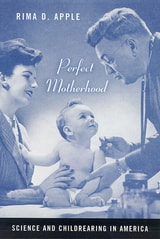
Perfect Motherhood
Science and Childrearing in AmericaApple, Rima
Rutgers University Press, 2006
Parenting today is virtually synonymous with worry. We want to ensure that our children are healthy, that they get a good education, and that they grow up to be able to cope with the challenges of modern life. In our anxiety, we are keenly aware of our inability to know what is best for our children. When should we toilet train? What is the best way to encourage a fussy child to eat? How should we protect our children from disease and injury?
Before the nineteenth century, maternal instinct—a mother’s “natural know-how”—was considered the only tool necessary for effective childrearing. Over the past two hundred years, however, science has entered the realm of motherhood in increasingly significant ways. In Perfect Motherhood, Rima D. Apple shows how the growing belief that mothers need to be savvy about the latest scientific directives has shifted the role of expert away from the mother and toward the professional establishment. Apple, however, argues that most women today are finding ways to negotiate among the abundance of scientific recommendations, their own knowledge, and the reality of their daily lives.
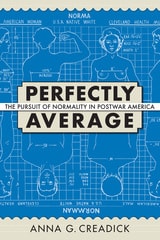
Perfectly Average
The Pursuit of Normality in Postwar AmericaAnna G. Creadick
University of Massachusetts Press, 2010
At the end of World War II, many Americans longed for a return to a more normal way of life after decades of depression and war. In fact, between 1945 and 1963 the idea of “normality” circulated as a keyword in almost every aspect of American culture. But what did this term really mean? What were its parameters? Whom did it propose to include and exclude?
In Perfectly Average, Anna Creadick investigates how and why “normality” reemerged as a potent homogenizing category in postwar America. Working with scientific studies, material culture, literary texts, film, fashion, and the mass media, she charts the pursuit of the “normal” through thematic chapters on the body, character, class, sexuality, and community.
Creadick examines such evidence as the “Norm and Norma” models produced during the war by sexologists and anthropologists—statistical composites of “normal” American bodies. In 1945, as thousands of Ohio women signed up for a Norma Look-Alike contest, a “Harvard Study of Normal Men” sought to define the typical American male according to specific criteria, from body shape to upbringing to blood pressure. By the early 1950s, the “man in the gray flannel suit” had come to symbolize what some regarded as the stultifying sameness of the “normalized” middle class. Meanwhile, novels such as From Here to Eternity and Peyton Place both supported and challenged normative ideas about gender, race, and sexuality, even as they worked to critique the postwar culture of surveillance—watching and being watched—through which normalizing power functioned.
As efforts to define normality became increasingly personal, the tensions em-bedded in its binary logic multiplied: Was normal descriptive of an average or prescriptive of an ideal? In the end, Creadick shows, a variety of statistics, assumptions, and aspirations converged to recast “normality” not as something innate or inborn, but rather as a quality to be actively pursued—a standard at once highly seductive and impossible to achieve because it required becoming perfectly average.
Perforated Indian Crania in Michigan
W. B. Hinsdale and Emerson F. Greenman
University of Michigan Press, 1936
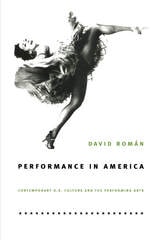
Performance in America
Contemporary U.S. Culture and the Performing ArtsDavid Román
Duke University Press, 2005
The performances that Román analyzes range from localized community-based arts events to full-scale Broadway productions and from the controversial works of established artists such as Tony Kushner to those of emerging artists. Román considers dances produced by the choreographers Bill T. Jones and Neil Greenberg in the mid-1990s as new aids treatments became available and the aids crisis was reconfigured; a production of the Asian American playwright Chay Yew’s A Beautiful Country in a high-school auditorium in Los Angeles’s Chinatown; and Latino performer John Leguizamo’s one-man Broadway show Freak. He examines the revival of theatrical legacies by female impersonators and the resurgence of cabaret in New York City. Román also looks at how the performing arts have responded to 9/11, the U.S. invasion of Afghanistan, and the second war in Iraq. Including more than eighty illustrations, Performance in America highlights the dynamic relationships among performance, history, and contemporary culture through which the past is revisited and the future reimagined.
Performance, Transparency, and the Cultures of Surveillance
James M. Harding
University of Michigan Press, 2018
Performing America
Cultural Nationalism in American TheaterJeffrey D. Mason and J. Ellen Gainor, Editors
University of Michigan Press, 1999
Performing America provides fresh perspectives on the development of visions of both America and "America"--that is, the actual community and the constructed concept--on a variety of theatrical stages. It explores the role of theater in the construction of American identity, highlighting the tension between the desire to categorize American identity and the realization that such categorical uniformity may neither be desirable nor possible. The topics covered include the links between politics and the stage during the Federalist period, the appropriation of "Indian" artifacts, an exploration of early gender roles, and the metaphorical connections between the theater and western expansion. Other essays treat vaudeville's artistically colonized cultures; Chautauqua's attempt to homogenize culture and commercialize American ideals; W. E. B. Du Bois's pageant, The Star of Ethiopia, as a strategy for constructing "African-American" as "Other" in an attempt to promote a vision of black nationalism; and how theater was used to help immigrants form a new sense of community while joining the resident culture.The collection then turns to questions of how various ethnic minorities through their recent theatrical work have struggled to argue their identities, especially in relation to the dominant white culture. Two final essays offer critiques of contrasting aspects of the American male. Throughout, the collection addresses questions of marginality and community, exclusion and inclusion, colonialism and imperialism, heterogeneity and homogeneity, conflict and negotiation, repression and opportunity, failure and success, and, above all, the relationship of American stages at large. It will appeal to readers of a wide range of disciplines including history, American culture, gender studies, and theater studies.
Performing Antiracist Pedagogy in Rhetoric, Writing, and Communication
Frankie Condon
University Press of Colorado, 2017
In Performing Antiracist Pedagogy, Frankie Condon and Vershawn Ashanti Young seek to help create openings to address race and racism not only in course readings and class discussion in writing, rhetoric, and communication courses but also in wider public settings. The contributors to this collection, drawn from a wide range of disciplines, urge readers to renew their commitment to intelligently and publicly deliberate race and to counteract the effects of racism. The book is both theoretically rigorous and practical, providing readers with insightful analyses of race and racism and useful classroom suggestions and examples.
Contributors: Chiara Bacigalupa, Sophia Bell, Susan Leigh Brooks, Frankie Condon, Rasha Diab, John Dean, Thomas Ferrell, Beth Godbee, Dae-Joong Kim, Timothy Lensmire, Calvin M. Logue, Aja Y. Martinez, Rebecca Nathan, Bobbi Olson, Jessica Parker, Charise Pimentel, Octavio Pimentel, Mya Poe, Neil Simpkins, Nathan Snaza, Deatra Sullivan, Vershawn Ashanti Young