Results by title
941 books match the query 'Military' and 30 start with r
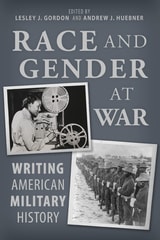
Race and Gender at War
Writing American Military HistoryEdited by Lesley J. Gordon and Andrew J. Huebner
University of Alabama Press, 2024
Beyond the battlefield: How race and gender redefined war, identity, and memory in Civil War America.
Race and Gender at War is a collection of essays that illuminates ways that race and gender have persistently shaped the military history of the United States. Editors Lesley J. Gordon and Andrew J. Huebner showcase historians with varied research agendas in the field of “war and society,” a fertile area of inquiry that shares space (and often overlaps) with operational studies inside the broader field of military history. Chronicling more than 150 years of American history, the essays in this volume demonstrate that the tensions and injustices surrounding race, gender, and the military remain relevant and controversial, and continue to roil American politics, society, and culture to this day.
Spanning the two centuries from the 1830s to the present, the collection examines topics such as Choctaw Natives who served in the Confederate Army, the trailblazing but fraught experiences of Black servicemen from the Civil War through World War I, the hypersexualized images of World War II servicemen, and the varied and mutable roles of women in the armed services. Utilizing diverse methodologies, the book examines how these factors influenced everything from military policy to civilian experiences, encompassing topics like martial rhetoric, citizenship, propaganda, and patriotism.
CONTRIBUTORS
Kevin Adams / Amanda Bellows / Kari L. Boyd-Weisenberger / Michele Curran Cornell / Lesley J. Gordon / Andrew J. Huebner / Gregory Mixon / Caroline Wood Newhall / Heather Marie Stur / Patrick T. Troester / Chad L. Williams / Fay A. Yarbrough
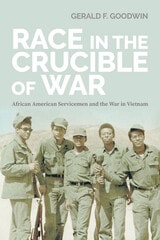
Race in the Crucible of War
African American Servicemen and the War in VietnamGerald F. Goodwin
University of Massachusetts Press, 2023
When African American servicemen went to fight in the Vietnam War, discrimination and prejudice followed them. Even in a faraway country, their military experiences were shaped by the racial environment of the home front. War is often viewed as a crucible that can transform society, but American race relations proved remarkably durable.
In Race in the Crucible of War, Gerald F. Goodwin examines how Black servicemen experienced and interpreted racial issues during their time in Vietnam. Drawing on more than fifty new oral interviews and significant archival research, as well as newspapers, periodicals, memoirs, and documentaries, Goodwin reveals that for many African Americans the front line and the home front were two sides of the same coin. Serving during the same period as the civil rights movement and the race riots in Chicago, Detroit, and dozens of other American cities, these men increasingly connected the racism that they encountered in the barracks and on the battlefields with the tensions and violence that were simmering back home.
Race, Rights, and Rifles
The Origins of the NRA and Contemporary Gun CultureAlexandra Filindra
University of Chicago Press, 2023
An eye-opening examination of the ties between American gun culture and white male supremacy from the American Revolution to today.
One-third of American adults—approximately 86 million people—own firearms. This is not just for protection or hunting. Although many associate gun-centric ideology with individualist and libertarian traditions in American political culture, Race, Rights, and Rifles shows that it rests on an equally old but different foundation. Instead, Alexandra Filindra shows that American gun culture can be traced back to the American Revolution when republican notions of civic duty were fused with a belief in white male supremacy and a commitment to maintaining racial and gender hierarchies.
Drawing on wide-ranging historical and contemporary evidence, Race, Rights, and Rifles traces how this ideology emerged during the Revolution and became embedded in America’s institutions, from state militias to the National Rifle Association (NRA). Utilizing original survey data, Filindra reveals how many White Americans —including those outside of the NRA’s direct orbit—embrace these beliefs, and as a result, they are more likely than other Americans to value gun rights over voting rights, embrace antidemocratic norms, and justify political violence.

Radioactive Ghosts
Gabriele Schwab
University of Minnesota Press, 2020
A pioneering examination of nuclear trauma, the continuing and new nuclear peril, and the subjectivities they generate
Amid resurgent calls for widespread nuclear energy and “limited nuclear war,” the populations that must live with the consequences of these decisions are increasingly insecure. The nuclear peril combined with the looming threat of climate change means that we are seeing the formation of a new kind of subjectivity: humans who are in a position of perpetual ontological insecurity. In Radioactive Ghosts, Gabriele Schwab articulates a vision of these “nuclear subjectivities” that we all live with.
Focusing on the legacies of the Manhattan Project, Hiroshima, and nuclear energy politics, Radioactive Ghosts takes us on a tour of the little-seen sides of our nuclear world. Examining devastating uranium mining on Native lands, nuclear sacrifice zones, the catastrophic accidents at Chernobyl and Fukushima, and the formation of a new transspecies ethics, Schwab shows how individuals threatened with extinction are creating new adaptations, defenses, and communal spaces. Ranging from personal accounts of experiences with radiation to in-depth readings of literature, film, art, and scholarly works, Schwab gives us a complex, idiosyncratic, and personal analysis of one of the most overlooked issues of our time.
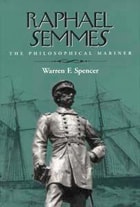
Raphael Semmes
The Philosophical MarinerWarren F. Spencer
University of Alabama Press, 1997
Naval hero for all the South, Raphael Semmes (1809-1877) sailed two famous Confederate raiders. He outfitted CSS Sumter in 1861 and captured 18 Union merchant ships in six months before the raider was blockaded at Gibraltar. Next he took command of CSS Alabama, an English-built raider, and terrorized U.S. merchant vessels on the high seas from August 1862 until the raider was sunk in battle off Cherbourg in June 1864. During that two-year period, he captured more enemy merchant ships than any other cruiser captain in maritime history. He is considered one of the greatest ship's commanders that America has produced.
In this first, full-scale biography that relies on Semmes's private papers, unpublished diaries, and correspondence, Spencer has produced a well-balanced and comprehensive account of the man, as well as the naval officer. The biographer paints a vivid portrait of Semmes—the intellectual, the family man, lawyer, romanticist, nationalist—providing a greater understanding of the man behind the heroic deeds.
Semmes was born in Maryland to a slave-holding family and entered the United States Navy in 1826. In 1849, he moved his family to Mobile, Alabama, to be near the navy base at Pensacola, Florida, and to practice law during leaves. Semmes was an astute student, not only of international and maritime law but also of weather patterns; astronomy; flora and fauna; naval, social, and cultural history; and the classics. His study of constitutional law led him to side with his adopted state in 1861, a move that set the stage for his place in history.
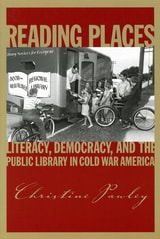
Reading Places
Literacy, Democracy, and the Public Library in Cold War AmericaChristine Pawley
University of Massachusetts Press, 2010
Central to the experiment were well-stocked bookmobiles that brought books to rural districts and the one-room schools that dotted the region. Three years after the project began, state officials and local librarians judged it an overwhelming success. Library circulation figures soared to two-and-a-half times their previous level. Over 90 percent of grade-school children in the rural schools used the bookmobile service, and their reading scores improved beyond expectation.
Despite these successes, however, local communities displayed deeply divided reactions. Some welcomed the book-mobiles and new library services wholeheartedly, valuing print and reading as essential to the exercise of democracy, and keen to widen educational opportunities for children growing up on hardscrabble farms where books and magazines were rare. Others feared the intrusion of govern- ment into their homes and communities, resented the tax increases that library services entailed, and complained about the subversive or immoral nature of some books.
Analyzing the history of tensions between various community groups, Pawley delineates the long-standing antagonisms arising from class, gender, and ethnic differences which contributed to a suspicion of official projects to expand education. Relating a seemingly small story of library policy, she teases out the complex interaction of reading, locality, and cultural difference. In so doing, she illuminates broader questions regarding libraries, literacy, and citizenship, reaching back to the nineteenth century and forward to the present day.
Rebellion in the Backlands
Euclides da Cunha
University of Chicago Press, 1957
Euclides da Cunha's classic account of the brutal campaigns against religious mystic Antonio Conselheiro has been praised by readers around the world as perhaps the greatest book ever written about Brazil. An epic of nonfiction that reads like a novel, it has been hailed by the likes of Stefan Zweig and Elizabeth Hardwick for its prose and its insights into the character of Brazil as the nation was being formed. Da Cunha tells the story of a guerrilla rebellion in the remote village of Canudos that fought the central government from 1893 to 1897, of the challenging conditions that led the people to revolt, and of the violent repression that resulted. A national epic like no other, Rebellion in the Backlands is a lasting classic, a book that has been handed from reader to reader for decades.
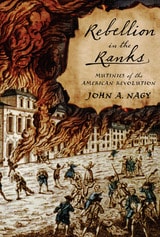
Rebellion in the Ranks
Mutinies of the American RevolutionJohn A. Nagy
Westholme Publishing, 2007
How General Washington Avoided the Peril From Within His Own Forces
"It gives me great pain to be obliged to solicit the attention of the honorable Congress to the state of the army...the greater part of the army is in a state not far from mutiny...I know not to whom to impute this failure, but I am of the opinion, if the evil is not immediately remedied and more punctuality observed in future, the army must absolutely break up."—George Washington, September 1775
Mutiny has always been a threat to the integrity of armies, particularly under trying circumstances, and since Concord and Lexington, mutiny had been the Continental Army's constant traveling companion. It was not because the soldiers lacked resolve to overturn British rule or had a lack of faith in their commanders. It was the scarcity of food—during winter months it was not uncommon for soldiers to subsist on a soup of melted snow, a few peas, and a scrap of fat—money, clothing, and proper shelter, that forced soldiers to desert or organize resistance. Mutiny was not a new concept for George Washington. During his service in the French and Indian War he had tried men under his command for the offense and he knew that disaffection and lack of morale in an army was a greater danger than an armed enemy.
In Rebellion in the Ranks: Mutinies of the American Revolution, John A. Nagy provides one of the most original and valuable contributions to American Revolutionary War history in recent times. Mining previously ignored British and American primary source documents and reexamining other period writings, Nagy has corrected misconceptions about known events, such as the Pennsylvania Line Mutiny, while identifying for the first time previously unknown mutinies. Covering both the army and the navy, Nagy relates American officers' constant struggle to keep up the morale of their troops, while highlighting British efforts to exploit this potentially fatal flaw.
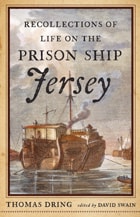
Recollections of Life on the Prison Ship Jersey
Thomas Dring
Westholme Publishing, 2010
“Among the many events which took place during the Revolutionary War from its commencement to its termination [are] the cruelties inflicted upon that unfortunate class of men who had the misfortune to be numbered among the prisoners [of the British] and more particularly those whom the dreadful chance of war had placed on board their prison ships at New York.” So begins the remarkable narrative of Thomas Dring. In 1824, Dring was an aging man of 65, retired in his native state of Rhode Island. Forty-two years before, he, like thousands of other young men, had been caught up in the American cause. In 1782, he had been captured by the British and sentenced to the infamous prison ship Jersey, a demasted hulk anchored in the East River off New York City. It is estimated that more than 11,000 men perished on the British prison ships over the course of the war, and their bones regularly washed up on the shore long after hostilities ceased. Dring survived to tell the tale, and in 1824, he decided to do just that. He was motivated partly because the fate of the prisoners was beginning to be doubted, that their hardships were thought to have been grossly exaggerated, and even that the entire experience had never occurred.
This book publishes for the first time the complete text of Dring’s handwritten manuscript, a major primary-source document, in which he describes the horrible conditions, treatment by guards, and experiences that he and others endured during captivity. Recollections of Life on the Prison Ship Jersey is a plea not to forget but instead to remember the inhumanity of the captors and the sacrifices of the captives—a message that continues to resonate today. Editor David Swain has provided an introductory essay and extensive notes that contain background information and historical documentation to accompany and illuminate the original manuscript.
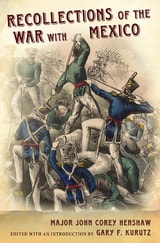
Recollections of the War with Mexico
Major John Corey Henshaw & Edited by Gary F. Kurutz
University of Missouri Press, 2008
Major John Henshaw, a dutiful regimental officer in the American invasion of Mexico, was one of only a handful of eyewitnesses to describe the two major theaters of that war from start to finish. But unlike most of his peers, he did not see himself as a conquering warrior and took pride in never having taken a life. He even wrote, “If I were alone, no earthly power could induce me to lend a helping hand in this base and infamous war.”
This book presents Henshaw’s recollections for the first time, covering all the action from the first skirmish in southern Texas to the collapse of Mexico City. As a member of the Seventh Infantry Regiment, this pugnacious line officer from New England served under both of the war’s principal generals, Zachary Taylor and Winfield Scott, and survived seven major battles. His writings constitute a virtual “minority opinion” report on the Mexican War.
Henshaw’s recollections include a rare and highly descriptive account of the siege of Fort Texas (later Fort Brown), plus rich new details of the storming of the Bishop’s Palace at Monterrey, the bombardment of Veracruz, the assault on Cerro Gordo, and the savage fighting outside the capital. His records of battles, marches, and maneuvers greatly augment what is already known about the campaign, but in addition to reporting daily occurrences and describing combat in graphic detail, Henshaw also reflected on the strategies and tactics—and what he saw as shortcomings—of officers on both sides.
Bitingly critical of those in command, of American volunteers, and of the war’s glory hounds, Henshaw admired the valor of ordinary soldiers on both sides of the fighting. And in the midst of the carnage, he also found time to describe Mexico’s cities and scenery in rhapsodic prose and express considerable empathy for its people. In addition to the “Recollections,” the volume includes vivid passages from letters Henshaw sent back to his wife, which supply additional details of the campaign. Editor Gary Kurutz provides an extensive biography of Henshaw, as well as comprehensive annotations to the text.
What Henshaw may have lacked as an unquestioning officer he more than made up for as an astute observer. Offering a decidedly different view of this war of American expansion, these writings with their balanced approach lend a fresh perspective among other primary sources and paint a startlingly honest picture of both Americans fighting abroad and those they fought.
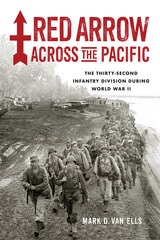
Red Arrow across the Pacific
The Thirty-Second Infantry Division during World War IIMark D. Van Ells
Wisconsin Historical Society Press, 2024
Red Arrow across the Pacific reveals the long-overdue story of the renowned Thirty-Second "Red Arrow" Infantry Division. Discover how this National Guard unit—which originated in Wisconsin and Michigan but soon evolved to include soldiers from California to New England—became one of the first US military units deployed overseas in World War II, eventually logging more combat hours than any other US Army division.
Far more than a traditional battle narrative, Red Arrow across the Pacific offers a cultural history of the Red Arrow's wartime experience, from its mobilization in 1940, to its deployment across New Guinea, Australia, and the Philippines, to its postwar occupation of Japan. Drawing from letters, memoirs, and interviews, author Mark D. Van Ells lets the soldiers speak for themselves, describing in their own words the terror of combat, their impressions of foreign lands, the struggle to maintain their own humanity, and the many ways the war profoundly changed them.
Nuanced and remarkably thorough, this book explores the dramatic evolution of the Thirty-Second Infantry Division and reveals how the story of the Red Arrow reflects the experience of the US military during World War II.
“Exceptionally well researched and engagingly written. This book is a must read for any student of military history.”
—Capt. Florian L. Waitl, Command Historian, Wisconsin Army National Guard
“A superb divisional history. . . . Highly recommended for a general audience, as well as readers interested in the Second World War.”
—Mary Louise Roberts, Lucie Aubrac Distinguished Professor Emerita of History, University of Wisconsin–Madison, and author of Sheer Misery: Soldiers in Battle in WWII
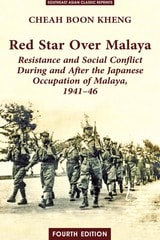
Red Star Over Malaya
Resistance and Social Conflict During and After the Japanese Occupation, 1941-1946Cheah Boon Kheng
National University of Singapore Press, 2012
As Japanese forces withdrew from the countryside, the Chinese guerrillas of the communist-led resistance movement, the Malayan People's Anti-Japanese Army (MPAJA), emerged from the jungle and took control of some 70 per cent of the country's smaller towns and villages, seriously alarming the Malay population. When the British Military Administration sought to regain control of these liberated areas, the ensuing conflict set the tone for future political conflicts and marked a crucial stage in the history of Malaya. Based on extensive archival research, Red Star Over Malaya provides a riveting account of the way the Japanese occupation reshaped colonial Malaya, and of the tension-filled months that followed Japan's surrender. This book is fundamental to an understanding of social and political developments in Malaysia during the second half of the 20th century.
Reflections of a Civil War Historian
Essays on Leadership, Society, and the Art of WarHerman Hattaway & Foreword by Frank E. Vandiver
University of Missouri Press, 2003
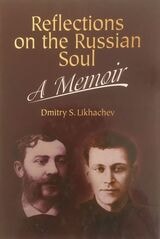
Reflections on the Russian Soul
A MemoirDmitry S. Likhachev
Central European University Press, 2000
This compelling and often traumatic book is the memoir of one of the most important figures in modern Russian history, Dmitry S. Likhachev, revered as ‘a guardian of national culture’. Reflections on the Russian Soul is an incredible account of an intellectual’s turbulent journey through twentieth century Russia. Likhachev re-counts the fortunes of people with whom he came into contact and reproduces the air of passed years in Russia.
Likhachev vividly portrays his childhood years in St. Petersburg and continues into his student life at Leningrad University that led to an agonizing period of imprisonment and near death. He describes how a harmless prank caught the attention of the Secret Police, resulting in his exile and confinement within the infamous prison island of Solovki. He describes his first-hand experience of brutality in prison during the early Stalin years and the incident that not only saved him but also haunted him for the rest of his life.
He reflects on the years after his release from prison and the events leading up to the Second World War. His powerful recollection of the blockade of Leningrad provides the reader with a horrific insight into the harsh effects of war, hunger and survival. Lichachev goes on to describe post-war Russia and how his own livelihood developed from literary editor to a return to Leningrad University as Professor of History. This compelling autobiography finishes with Likhachev’s poignant return to Solovki as a free man.
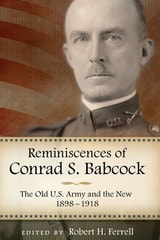
Reminiscences of Conrad S. Babcock
The Old U.S. Army and the New, 1898-1918Edited by Robert H. Ferrell
University of Missouri Press, 2012
Babcock’s original manuscript has been shortened by Robert H. Ferrell into eight chapters which illustrate the tremendous shift in warfare in the years surrounding the turn of the century. The first part of the book describes small actions against Filipinos and such assignments as taking a cavalry troop into the fire-destroyed city of San Francisco in 1906 or duty in the vicinity of Yuma in Arizona when border troubles were heating up with brigands and regular troops. The remaining chapters, beginning in 1918, set out the battles of Soissons (July 18–22) and Saint-Mihiel (September 12–16) and especially the immense battle of the Meuse-Argonne (September 26–November 11), the largest (1.2 million troops involved) and deadliest (26,000 men killed) battle in all of American history.
By the end of his career, Babcock was an adroit battle commander and an astute observer of military operations. Unlike most other officers around him, he showed an ability and willingness to adapt infantry tactics in the face of recently developed technology and weaponry such as the machine gun. When he retired in 1937 and began to write his memoirs, another world war had begun, giving additional context to his observations about the army and combat over the preceding forty years.
Until now, Babcock’s account has only been available in the archives of the Hoover Institution, but with the help of Ferrell's crisp, expert editing, this record of army culture in the first decades of the twentieth century can now reach a new generation of scholars.
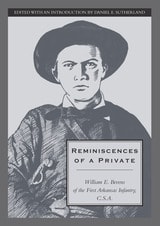
Reminiscences of a Private
William E. Bevens of the First Arkansas Infantry C.S.A.Daniel E. Sutherland
University of Arkansas Press, 1999
Remote Warfare
New Cultures of ViolenceRebecca A. Adelman
University of Minnesota Press, 2020
Considers how people have confronted, challenged, and resisted remote warfare
Drone warfare is now a routine, if not predominant, aspect of military engagement. Although this method of delivering violence at a distance has been a part of military arsenals for two decades, scholarly debate on remote warfare writ large has remained stuck in tired debates about practicality, efficacy, and ethics. Remote Warfare broadens the conversation, interrogating the cultural and political dimensions of distant warfare and examining how various stakeholders have responded to the reality of state-sponsored remote violence.
The essays here represent a panoply of viewpoints, revealing overlooked histories of remoteness, novel methodologies, and new intellectual challenges. From the story arc of Homeland to redefining the idea of a “warrior,” these thirteen pieces consider the new nature of surveillance, similarities between killing with drones and gaming, literature written by veterans, and much more. Timely and provocative, Remote Warfare makes significant and lasting contributions to our understanding of drones and the cultural forces that shape and sustain them.
Contributors: Syed Irfan Ashraf, U of Peshawar, Pakistan; Jens Borrebye Bjering, U of Southern Denmark; Annika Brunck, U of Tübingen; David A. Buchanan, U.S. Air Force Academy; Owen Coggins, Open U; Andreas Immanuel Graae, U of Southern Denmark; Brittany Hirth, Dickinson State U; Tim Jelfs, U of Groningen; Ann-Katrine S. Nielsen, Aarhus U; Nike Nivar Ortiz, U of Southern California; Michael Richardson, U of New South Wales; Kristin Shamas, U of Oklahoma; Sajdeep Soomal; Michael Zeitlin, U of British Columbia.
Revered Commander, Maligned General
The Life of Clarence Ransom Edwards, 1859-1931Michael E. Shay
University of Missouri Press, 2011
Revolt at Taos
The New Mexican and Indian Insurrection of 1847James A. Crutchfield
Westholme Publishing, 2025
On the morning of January 19, 1847, Charles Bent, the newly appointed governor of the American-claimed territory of New Mexico, was savagely killed at his home in Don Fernando de Taos, a small, remote town located north of Santa Fe. Those responsible for Bent’s murder were New Mexican settlers and Indians from nearby Taos Pueblo who refused to recognize the United States occupation. With emotions rubbed raw, the natives continued their bloodbath until five more leading citizens were massacred in Taos. During the ensuing months, American civilians and soldiers, along with scores of New Mexicans and Taos Indians, were killed and wounded throughout the region. Less than a month following Bent’s murder, in a two-day battle, volunteer and regular elements of an American army under the command of Colonel Sterling Price emerged victorious after bombarding the insurrectionists at their refuge in the church at Taos Pueblo. Surviving participants in the earlier Taos murders were arrested, tried in American-dominated courts, and, within weeks, hanged for their actions. The murder of Bent and the others at Taos and the subsequent trials and executions brought with them misunderstanding, controversy, mistrust, and recrimination on both sides of the issue. The events also subjected President James K. Polk’s administration to censure over what some critics believed was an overextension of presidential authority in claiming New Mexico as a territory.
In Revolt at Taos: The New Mexican and Indian Insurrection of 1847, writer and historian James A. Crutchfield explores the fast-moving events surrounding the bloody revolt which left native inhabitants of New Mexico wondering how their neighbors and kinsmen could be legally tried, found guilty, and executed for acts they considered to have been honorable ones committed in defense of their country. These concerns have never been adequately addressed and their struggle has been all but scrubbed from the history of American expansion.
Revolution in the City of Heroes
A Memoir of the Battle that Sparked Indonesia's National RevolutionSuhario Padmodiwiryo
National University of Singapore Press, 2016
alias ‘Hario Kecik,” Revolution in the City of Heroes is an evocative first-hand
account of the popular uprising in Surabaya. It vividly portrays the chaotic swirl
of events and the heady emotion of young people ready to sacrifice their lives
for independence.
Newly liberated from nearly four brutal years under Japanese control, the
people of Indonesia faced great uncertainty in October 1945. As the British
Army attempted to take control of the city of Surabaya, maintain order and
deal with surrendered Japanese personnel, their actions were interpreted by
the young residents of Surabaya as a plan to restore Dutch colonial rule. In
response, the youth of the city seized Japanese arms and repelled the force sent
to occupy the city. They then held off British reinforcements for two weeks,
battling tanks and heavy artillery with little more than light weapons and sheer
audacity. Though eventually defeated, Surabaya’s defenders had set the stage
for Indonesia’s national revolution.
Rise and Fall of the Confederacy
The Memoir of Senator Williamson S. Oldham, CSAEdited & Intro by Clayton E. Jewett
University of Missouri Press, 2006
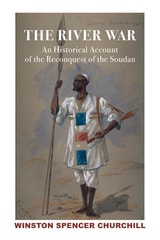
River War 2V
Historical Account of Reconquest of SoudanWinston S. Churchill
St. Augustine's Press, 2021
Churchill, an ambitious young cavalry officer serving with his regiment in India, had already published newspaper columns and a book about fighting on the Afghan frontier. He yearned to join Kitchener’s campaign. But the general, afraid of what he would write about it, refused to have him. Churchill returned to London. With help from his mother and the prime minister, he managed to get himself attached to an English cavalry regiment sent to strengthen Kitchener’s army. Hurriedly travelling to Egypt, Churchill rushed upriver to Khartoum, catching up with Kitchener’s army just in time to take part in the climactic battle. That day he charged with the 21st Lancers in the most dangerous fighting against the Dervish host.
He wrote fifteen dispatches for the Morning Post in London. As Kitchener had expected, Churchill’s dispatches and his subsequent book were highly controversial. The precocious officer, having earlier seen war on two other continents, showed a cool independence of his commanding officer. He even resigned from the army to be free to write the book as he pleased. He gave Kitchener credit for his victory but found much to criticize in his character and campaign.
Churchill’s book, far from being just a military history, told the whole story of the Egyptian conquest of the Sudan and the Dervishes’ rebellion against imperial rule. The young author was remarkably even-handed, showing sympathy for the founder of the rebellion, Muhammad Ahmed, and for his successor the Khalifa Abdullahi, whom Kitchener had defeated. He considered how the war in northeast Africa affected British politics at home, fit into the geopolitical rivalry between Britain and France, and abruptly thrust the vast Sudan, with the largest territory in Africa, into an uncertain future in Britain’s orbit.
In November 1899, The River War was published in “two massive volumes, my magnum opus (up to date), upon which I had lavished a whole year of my life,” as Churchill recalled later in his autobiography. The book had twenty-six chapters, five appendices, dozens of illustrations, and colored maps. Three years later, in 1902, it was shortened to fit into one volume. Seven whole chapters, and parts of every other chapter, disappeared in the abridgment. Many maps and most illustrations were also dropped. Since then the abridged edition has been reprinted regularly, and eventually it was even abridged further. But the full two-volume book, which is rare and expensive, was never published again—until now.
St. Augustine’s Press, in collaboration with the International Churchill Society, brings back to print in two handsome volumes The River War: An Historical Account of the Reconquest of the Soudan unabridged, for the first time since 1902. Every chapter and appendix from the first edition has been restored. All the maps are in it, in their original colors, with all the illustrations by Churchill’s brother officer Angus McNeill.
More than thirty years in the making, under the editorship of James W. Muller, this new edition of The River War will be the definitive one for all time. The whole book is printed in two colors, in black and red type, to show what Churchill originally wrote and how it was abridged or altered later. For the first time, a new appendix reproduces Churchill’s Sudan dispatches as he wrote them, before they were edited by the Morning Post. Other new appendices reprint Churchill’s subsequent writings on the Sudan. Thousands of new footnotes have been added to the book by the editor, identifying Churchill’s references to people, places, writings, and events unfamiliar to readers today. Professor Muller’s new introduction explains how the book fits into Churchill’s career as a writer and an aspiring politician. He examines the statesman’s early thoughts about war, race, religion, and imperialism, which are still our political challenges in the twenty-first century.
Half a century after The River War appeared, this book was one of a handful of his works singled out by the Swedish Academy when it awarded Churchill the Nobel Prize for Literature in 1953. Now, once again, its reader can follow Churchill back to the war he fought on the Nile, beginning with the words of his youngest daughter. Before she died, Mary Soames wrote a new foreword, published here, which concludes that “In this splendid new edition…we have, in effect, the whole history of The River War as Winston Churchill wrote it—and it makes memorable reading.”
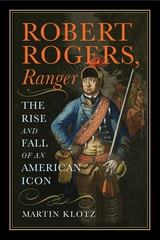
Robert Rogers, Ranger
The Rise and Fall of an American IconMartin Klotz
Westholme Publishing, 2026
Robert Rogers, Ranger: The Rise and Fall of an American Icon by Martin Klotz is a fresh look at the life of this famous, yet highly flawed man. Rogers undeniably had great personal strengths. He was brave nearly to the point of fearlessness. He was physically robust, always the one to cover the retreat, carry the wounded, or go for help when no one else could carry on. He was an intrepid explorer who wrote with eloquence about the splendors of the American frontier. He was bold and unconventional, good at thinking outside the box. He was an outstanding scout and intelligence gatherer who provided invaluable service to a British army inexperienced in woodland warfare. At the same time Rogers had enormous weaknesses that undermined his ability to lead effectively. His boldness was never tempered by judgment, and he was prone to grandiose schemes that came to nothing or, worse, to disaster. His constant self-promotion—including embellishing and lying about his battlefield successes—contributed to his popularity but damaged his reputation with peers and superiors. He succumbed to alcoholism and gambling, was profligate, especially with money—his debts were enormous—and routinely skirted the edges of the law. Rogers never found a comfortable place in America. Instead, his aristocratic patrons in London, who knew him mostly from his own self-description, gave him his most valuable opportunities, including commanding an important military and trading center on the colonial frontier and establishing the Queen’s Rangers to fight alongside Crown forces during the Revolution. But when the British cause failed in America, Rogers became an anathema on both sides of the Atlantic. A fascinating inquiry into an eighteenth-century life, Robert Rogers, Ranger presents this American legend as he lived, crossing the line between fame and misfortune.
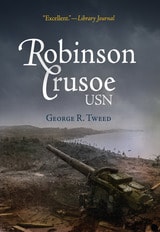
Robinson Crusoe, USN
The Adventures of George R. Tweed Rm1c on Japanese-Held GuamGeorge R. Tweed
Westholme Publishing, 2010
An Inspiring Story of Survival and Friendship
At the same time as the attack on Pearl Harbor, Japan captured American Guam. Given the choice of surrendering or being taken prisoner, George R. Tweed escaped into the countryside. Aided by Chamorro natives who risked their lives to keep him safe, Tweed survived for two and a half years until he was eventually rescued by the U.S. Navy. In Robinson Crusoe, USN, first published in 1945, Tweed recounts his remarkable experiences and the debt of gratitude he held for those who help keep him alive.
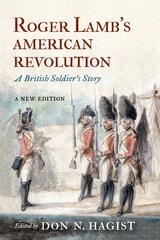
Roger Lamb's American Revolution
A British Soldier's StoryDon N. Hagist
Westholme Publishing, 2022
Of all the British soldiers who served in North America during the American Revolution, none wrote more about his experiences than Roger Lamb. He certainly had a lot to say: his service in two of the most important campaigns—the 1777 Saratoga campaign and the 1781 campaign through the Carolinas to Virginia—put him in the thick of some of the war’s most famous battles. Moreover, he was twice captured and twice escaped, making his way through hostile territory to rejoin the British army. Later in his life he wrote two books chronicling these experiences in great detail. Hundreds of British soldiers went through similar ordeals, sharing in the campaigns, the battles, the captivities, the escapes, but none recounted any aspect of these activities in the level of detail that Lamb did.
The first edition of this book, published in 2004, combined all of Roger Lamb’s first-hand recollections from his two books, An Original and Authentic Journal of Occurrences during the late American War, from its Commencement to the Year 1783 (Dublin, 1809) and Memoir of his Own Life (Dublin, 1811). Since that publication, two more important documents written by Lamb have come to light—an intelligence report written in 1782 recounting details of one of his escapes, and a “commonplace book” kept later in his life to record a vast range of memories, thoughts, and observations. Roger Lamb’s American Revolution: A British Soldier’s Story combines all of the material from these four sources pertaining to Lamb’s career as a soldier, from the time he joined the army to his departure from it, plus his recollections of childhood and post-military life. The result is the most comprehensive first-hand account by a British soldier in the American Revolution, an essential record for understanding the war in its totality.

Roman Military Diplomas VI
Edited by Paul Holder
University of London Press, 2024
Each of the 179 diplomas collected here has been cataloged, transcribed, and reconstructed alongside information relating to its physical description, findspot, state of preservation, current location, and new readings, helping to illuminate everything from the commanders of units to the social lives of soldiers. The volume also includes a revised chronology of the diplomas, appendices providing important criteria in dating the fragments, comprehensive indices of witnesses, persons, places, and units, and—for the first time—a table of concordances enabling concurrent work with previous volumes in the Roman Military Diplomas series. Collectively, the volume offers new insights into Roman military procedures and personnel, the social and legal status of soldiers, and the afterlife of the diplomas. It is an essential reference tool for anyone researching Roman imperial history, the Roman army, and the Roman study of ancient inscriptions.
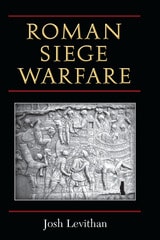
Roman Siege Warfare
Josh Levithan
University of Michigan Press, 2013
Roman siege warfare had its own structure and customs, and expectations both by the besieged and by the attacking army. Sieges are typically sorted by the techniques and technologies that attackers used, but the more fruitful approach offered in Roman Siege Warfare examines the way a siege follows or diverges from typical narrative and operational plotlines. Author Josh Levithan emphasizes the human elements—morale and motivation—rather than the engineering, and he recaptures the sense of a siege as an event in progress that offers numerous attitudes, methods, and outcomes. Sieges involved a concentration of violent effort in space and the practical challenge posed by a high wall: unlike field battles they were sharply defined in time, in space, and in operational terms.
Chapters examine motivation and behavior during a siege and focus on examples from both the Roman Republic and the Empire: Polybius, Livy, Julius Caesar, Flavius Josephus, and Ammianus Marcellinus. Levithan examines the “gadgetary turn,” during which writers began to lavish attention on artillery and wall-damaging techniques, fetishizing technology and obscuring the centrality of the assault and of human behavior.
This volume speaks to classicists and historians of all stripes. All passages are translated, and references are accessible to nonspecialists. Military historians will also find much of interest in the volume, in its treatment both of Roman military conduct and of wider military practice.
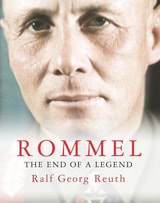
Rommel
The End of a LegendRalf Georg Reuth
Haus Publishing, 2019
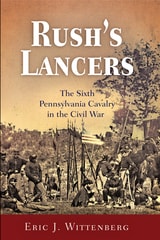
Rush's Lancers
The Sixth Pennsylvania Cavalry in the Civil WarEric J. Wittenberg
Westholme Publishing, 2007
The Sixth Pennsylvania Cavalry, also known as Rush’s Lancers, was a completely volunteer unit and one of the finest regiments to serve in the Civil War. Tracing their history from George Washington’s personal bodyguard during the Revolutionary War, many of the men of the Sixth Pennsylvania were the cream of Philadelphia society, including Richard H. Rush, grandson of Dr. Benjamin Rush, Maj. Robert Morris, Jr., great-grandson of the financier of the Revolutionary War, Capt. Charles Cadwalader, whose great-grandfather was a general under George Washington, Frank H. Furness, architect and Medal of Honor recipient, and George G. Meade, Jr. But it was their actions in battle, not their illustrious family histories, that distinguished Rush’s Lancers. The Sixth Pennsylvania Cavalry earned a reputation for being a highly trained and reliable unit, despite being armed initially with antiquated weapons, leaving their mark on key battlefields, including Antietam, Fredericksburg, Hanover Court House, Chancellorsville, Gettysburg, Brandy Station—where they conducted one of the most famous charges of the war—and Appomattox.
Drawing upon letters, diaries, memoirs, service and pension files, contemporary newspaper coverage, official records, and other primary sources, Rush’s Lancers: The Sixth Pennsylvania Cavalry in the Civil War by distinguished military historian Eric J. Wittenberg is an engrossing account of these young men from both Philadelphia’s social elite and the city’s working classes who, despite not being professional soldiers, answered the Nation’s call to war.
Russia's Imperial Endeavor and Its Geopolitical Consequences
The Russia-Ukraine War, Volume TwoBálint Madlovics
Central European University Press, 2024
Aside from the near-complete devastation of a sovereign state and reversal of the global balance of power, the Russian invasion of Ukraine in 2022 is leading to a radical transformation in the Eastern European and Eurasian regions – including Russia itself.
The 13 chapters in this volume examine the main geopolitical consequences of the resurgent imperialist aspirations of the Russian Federation. They examine the ideological tools of history falsification as an integral part of hybrid warfare. Turning to the economy, the book discusses how the war and economic sanctions imposed on Russia are redrawing the geopolitical map and how economic relations would change following a regime transformation. The book discusses the reactions of members of the international community to the invasion, whether threatened or neutral parties or allies. The collection therefore offers a comprehensive picture of the main consequences of the resurgent imperialist aspirations of the Russian Federation. Equipped with the conceptual tools of the analysis with a focus on the patronal features of the political-economic system, the book considers the aftermath of the war. This collection complements the book entitled Ukraine. Patronal Democracy and the Russian Invasion.