Results by title
18284 books match the query 'United States' and 833 start with r
R&D, Patents and Productivity
Edited by Zvi Griliches
University of Chicago Press, 1984

R. F. D.
Charles Allen SmartCharles Allen Smart
Ohio University Press, 1998
“This book,” the author tells us in his preface, “is intended to be a picture of life on a farm in Southern Ohio in the 1930s.” It is a faithful portrait of farm life as thousands of men and women experienced it from one end of the country to the other and from pioneering times to the present century.
Originally published in 1938 to enthusiastic reviews and commercial success, RFD is the story of one couple’s trials with leaving the comforts of city life for a chance to get back to the land.
From his farm near Chillicothe, Ohio, Charles Allen Smart gives a realistic rendering of what it meant to farm in the 1930s. It is part of the book’s intrinsic honesty that it could not be as good as Walden. Thoreau had worked out a philosophy that suited him and that he was ready to recommend to others. Mr. Smart had no prescription for the general ailments, beyond a belief that creating things is important and that owning, buying, and selling things are unimportant.
What he tells us throughout this unusual book is that for him life on this particular farm, in this particular house, with this particular set-up of friends, neighbors, dogs, sheep, hens, cattle, trees, corn, vegetables, grass, and weather, costs less in human values than life in New York City—or in Chillicothe.
Ohio University Press is especially pleased to reissue this midwestern classic with a new foreword by noted farm writer Gene Logsdon.
RACE & THE CITY
Work, Community, and Protest in Cincinnati, 1820-1970Edited by Henry Louis Taylor, Jr.
University of Illinois Press, 1993
of black Cincinnati. These studies offer insight into both the dynamics of racism and a
community's changing responses to it." -- Peter Rachleff, author of Black Labor in
Richmond

RAGBRAI
Everyone Pronounces It WrongJohn Karras
University of Iowa Press, 2009
RAGBRAI: Everyone Pronounces It Wrong is a celebration, a memoir, an entertainment. The book deals with the first 25 years of the famous bike ride. It describes the genesis of an event that has drawn hundreds of thousands of people to Iowa from all over the world and attempts to explain the ride's continued charm and appeal.
RAGBRAI is different from all other bicycle tours. The others, and there are dozens of cross-state rides held in the United States, attract mostly serious, dedicated cyclists who clench their teeth and ride hard all day. RAGBRAI has its share of these cyclists, but it's more inclusive. It is a huge, week long celebration with dancing in the streets and evening entertainments. It is a love affair between bicycle riders and the people of Iowa. The book captures the essence of all that.
RE-FORMING THE PAST
HISTORY, THE FANTASTIC, & THE POSTMODERN SLAVE NARRATIVEA. Timothy Spaulding
The Ohio State University Press, 2005
In their rejection of mimetic representation and traditional historiography, Spaulding contextualizes postmodern slave narrative. By addressing both literary and popular African American texts, Re-Forming the Past expands discussions of both the African American literary tradition and postmodern culture.
RECIPROCAL INFLUENCES
Literary Production, Distribution, and Consumption in AmericaEdited by Steven Fink and Susan S. Williams
The Ohio State University Press, 1999

REDESIGNING WOMEN
Television after the Network EraAmanda D. Lotz
University of Illinois Press, 2010
Employing a cultural studies framework, Lotz examines whether the multiplicity of female-centric networks and narratives renders certain gender stereotypes uninhabitable, and how new dramatic portrayals of women have redefined narrative conventions. Redesigning Women also reveals how these changes led to narrowcasting, or the targeting of a niche segment of the overall audience, and the ways in which the new, sophisticated portrayals of women inspire sympathetic identification while also commodifying viewers into a marketable demographic for advertisers.

REFORMING JUVENILE DETENTION
IRA M. SCHWARTZ
The Ohio State University Press, 1997
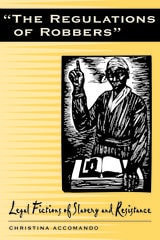
REGULATIONS OF ROBBERS
LEGAL FICTIONS OF SLAVERY AND RESISTANCEChristina Accomando
The Ohio State University Press, 2001
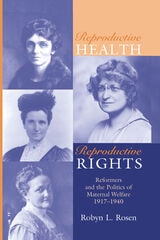
REPRODUCTIVE HEALTH, REPRODUCTIVE RIGHTS
REFORMERS & THE POLITICS OF MATERNAL WELFARE, 1917–1940Robyn L. Rosen
The Ohio State University Press, 2003
In the early twentieth century, shifting attitudes and new public health standards brought an unprecedented interest in and effort to regulate issues affecting reproduction and maternity. Maternal and infant health, nutrition, and medical care came under scrutiny, as did the issue of birth control. While the prior gained public support, the latter remained controversial. Though some reformers saw birth control as an important part of maternal welfare, others sought to separate it from more popular reforms. The careers of the four prominent but usually neglected reformers (Elizabeth Lowell Putnam, Ethel Sturges Dummer, Mary Ware Dennett, and Blanche Ames) examined in this book embody the struggle to define and resolve these tensions.
The study of these reformers offers a new perspective on more recognized leaders in the arena of reproductive health and rights, especially the U.S. Children's Bureau and Margaret Sanger. Putnam's elitism contextualizes the class politics of the Bureau, underscoring its sensitivity to the vulnerable and its innovative approach to public health. Dummer reminds us of roads not taken by policy makers in the Bureau, accentuating the differences between a child-centered and a woman-centered agenda. Dennett highlights the obstacles to women reformers in the formal political sphere, while Ames's penchant toward maternalism and compromise also led to difficulties. Together, they illustrate the complexities of formulating an effective approach to securing reproductive rights and health.

REVISED STANDARDS AND GUIDELINES OF SERVICE for the Library of Congress Network of Libraries for the Blind and Physically Handicapped
American Library Association, 2011
RIGHTEOUS INDIGNATION
Religion and the Populist RevolutionJoe Creech
University of Illinois Press, 2010
This illuminating study shows how Populists wove their political and economic reforms into a grand cosmic narrative pitting the forces of God and democracy against those of Satan and tyranny, and energizing their movement with a sacred sense of urgency. This book also unpacks the southern Protestants’ complicated approach to political and economic questions, as well as addressing broader issues about protest movements, race relations, and the American South.
RSF
The Russell Sage Foundation Journal of the Social Sciences: Climate Hazards and Their Social, Political, and Economic Consequences in the United StatesMax Besbris
Russell Sage Foundation, 2026
As climate change intensifies, weather becomes more extreme and climate hazards like wildfires and hurricanes become more frequent and more destructive. While climate change affects the entire global population, the risk and consequences of experiencing climate hazards are not shared equally. In the U.S. lower socioeconomic status groups and people of color are disproportionately more at risk for experiencing climate hazards and face more difficulty recovering from them. In this issue of RSF, sociologists Max Besbris, Manuel Pastor, and Anna Rhodes, economist Wolfram Schlenker, political scientist Pamela Winston, and an interdisciplinary group of contributors examine the impact of climate change on inequality in the U.S.
The 11 articles in this issue investigate the consequences of climate hazards for inequality, examining impacts on housing, neighborhoods, and employment; the ways inequality emerges in recovery from climate-related disasters; and how politicians and other actors respond to climate change. As flood risk increases in communities across the U.S., local authorities are partnering with federal agencies to implement buyout programs as a tool for managed retreat. James R. Elliott and colleagues find that in majority-White communities, where most buyouts take place, homeowners more commonly opt to sell their homes on the private market instead, which creates a revolving door of risk rather than eliminating it. Property insurance is essential for mediating losses and facilitating hurricane recovery, yet timely and fair claims are not guaranteed. Bad faith claims handling can put residents’ housing stability and financial wellbeing at risk, leading many to file lawsuits to dispute the outcome of their claims. Hannah K. Friedrich and colleagues find that litigation against insurers is more likely in areas that have a higher percentage of Black residents and that case duration is longer for residents in these areas, reflecting that systemic procedural inequalities can amplify disparities in disaster recovery. Cadence Willse finds that in the wake of major climate-related disasters, Democrats are more likely to increase their support for environmental policy issues, while Republicans are less likely to vote in favor of environmental policies.Megan Mullin investigates whether support for managed retreat programs by local governments differ if residents are viewed as wealthy or low-income. She finds that local elected officials are more likely to support buyout programs for low-income homeowners.
This timely issue of RSF expertly enhances our understanding of the intersection of climate disasters and inequality.
Race & Archaeology Of Identity
Charles Orser Jr
University of Utah Press, 2002
Race is not a subject most people associate with archaeological research. Yet because of archaeologists’ interest in long time-spans they are perfectly positioned to investigate the “naturalness” of racial designations through time.
Race and the Archaeology of Identity brings together twelve of America’s most perceptive and talented historical archaeologists. Their focus is on the recent archaeological record—stretching geographically from Jamaica to northern Michigan; their time frame is from colonial days to the late nineteenth century; and their subjects range from frontier fur traders to Victorian city dwellers. Using textual and archaeological sources, contributors explore such topics as the connections of race to economics, the creation and maintenance of institutionalized poverty, the role of race in structuring and guiding intercultural connections, and the importance of race in creating and defining space.
Contributors explore such topics as the connections of race to economics, the role of race in structuring and guiding intercultural connections, and the importance of race in creating and defining space.

Race And Excellence
Dialogue With Chester PierceEzra E.H. Griffith
University of Iowa Press, 1998
Chester Pierce was born in 1927; by 1952 he was a graduate of the Harvard Medical School. He went on to become president of the American Board of Psychiatry and Neurology and president of the American Orthopsychiatric Association. He was elected to the Institute of Medicine at the National Academy of Sciences and had an annual research seminar named after him by the National Medical Association.
Founding chair of the Black Psychiatrists of America, Pierce has profoundly affected American psychiatry and the thinking of African American psychiatrists during the last two decades. While recognized for his substantive scholarship on coping with extreme environments such as the South Pole, he is probably best known for his theories regarding how blacks cope with racism in the United States.
In Race and Excellence, Ezra Griffith, also an African American professor of psychiatry, engages Pierce in a dialogue with the goal of clarifying the inter-connection between the personal and the professional in the lives of both black scholars. The text melds the story of Pierce's life and his achievements, with particular attention to his theories about the predictable nature of racist behavior and the responses of oppressed groups. Having earned his doctorate a generation after Pierce, Griffith approaches his conversation with Pierce as a face-to-face meeting between mentor and student. Retelling Pierce's life story ultimately becomes for Griffith an exercise in conceptualizing his own experience. As he writes, “I never just wanted to tell Chet's story; I wanted to work his story out, to measure it, to try it on, to figure out which parts are good for me and other blacks so earnestly seeking heroes.”
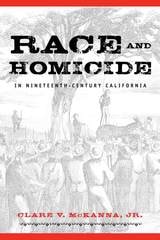
Race And Homicide In Nineteenth-Century California
Clare V. McKanna
University of Nevada Press, 2007
Nineteenth-century California was a society in turmoil, with a rapidly growing population, booming mining camps, insufficient or nonexistent law-enforcement personnel, and a large number of ethnic groups with differing attitudes toward law and personal honor. Violence, including murder, was common, and legal responses varied broadly. Available now for the first time in paperback, Race and Homicide in Nineteenth-Century California examines coroners’ inquest reports, court case files, prison registers, and other primary and printed sources to analyze patterns of homicide and the state’s embryonic justice system. Author Clare V. McKanna discovers that the nature of crimes varied with the ethnicity of perpetrators and victims, as did the conduct and results of trials and sentencing patterns. He presents specific case studies and a vivid portrait of an unruly society in flux. Enhanced with testimony from contemporary sources and illustrated with period photographs, this study richly portrays a frontier society where the law was neither omnipotent nor impartial.
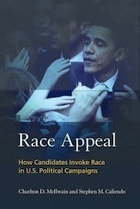
Race Appeal
How Candidates Invoke Race in U.S. Political CampaignsAuthored by Charlton D. McIlwain and Stephen M. Caliendo
Temple University Press, 2011
In our evolving American political culture, whites and blacks continue to respond very differently to race-based messages and the candidates who use them. Race Appeal examines the use and influence such appeals have on voters in elections for federal office in which one candidate is a member of a minority group.
Charlton McIlwain and Stephen Caliendo use various analysis methods to examine candidates who play the race card in political advertisements. They offer a compelling analysis of the construction of verbal and visual racial appeals and how the news media covers campaigns involving candidates of color.
Combining rigorous analyses with in-depth case studies-including an examination of race-based appeals in the historic 2008 presidential election—Race Appeal is a groundbreaking work that represents the most extensive and thorough treatment of race-based appeals in American political campaigns to date.
Race Becomes Tomorrow
North Carolina and the Shadow of Civil RightsGerald M. Sider
Duke University Press, 2015
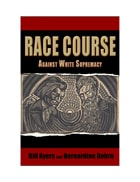
Race Course Against White Supremacy
Against White SupremacyBill Ayers
Northwestern University Press, 2009
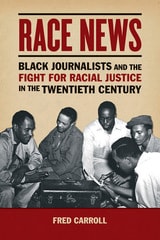
Race News
Black Journalists and the Fight for Racial Justice in the Twentieth CenturyFred Carroll
University of Illinois Press, 2017
Race Struggles
Edited by Theodore Koditschek, Sundiata Keita Cha-Jua, and Helen A. Neville
University of Illinois Press, 2008
These assumptions underlie the organization of the volume, which is divided into three parts: "Racial Structures," which explores the problem of how race has historically been structured in modern capitalist societies; "Racial Ideology and Identity," which tackles diverse but interrelated questions regarding the representation of race and racism in dominant ideologies and discourses; and "Struggle," which builds on the insight that resistance to structures and ideologies of racial oppression is always situated in a particular time and place.
In addition to discussing and analyzing various dimensions of the African American experience, contributors also consider the ways in which race plays itself out in the experience of Asian Americans and in the very different geopolitical environments of the British Empire and postcolonial Africa.
Contributors are Pedro Cabán, Sundiata Keita Cha-Jua, David Crockett, Theodore Koditschek, Scott Kurashige, Clarence Lang, Minkah Makalani, Helen A. Neville, Tola Olu Pearce, David Roediger, Monica M. White, and Jeffrey Williams.

Race Talk in a Mexican Cantina
Tatcho Mindiola
Michigan State University Press, 2021
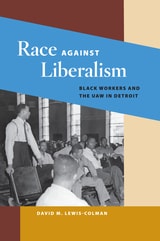
Race against Liberalism
Black Workers and the UAW in DetroitDavid M. Lewis-Colman
University of Illinois Press, 2007
Race against Liberalism examines how black worker activism in Detroit shaped the racial politics of the labor movement and the white working class. David M. Lewis-Colman traces the substantive, long-standing disagreements between liberals and the black workers who embraced autonomous race-based action. As he shows, black autoworkers placed themselves at the center of Detroit's working-class politics and sought to forge a kind of working class unity that accommodated their interests as African Americans. The book covers the independent caucuses in the 1940s and the Trade Union Leadership Council in the 1950s; the black power movement and Revolutionary Union Movements of the mid-1960s; and the independent race-based activism of the 1970s that resulted in Coleman Young's 1973 election as the city's first black mayor.
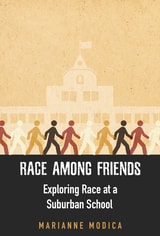
Race among Friends
Exploring Race at a Suburban SchoolModica, Marianne
Rutgers University Press, 2015
This intriguing volume focuses on a “racially friendly” suburban charter school called Excellence Academy, highlighting the ways that students and teachers think about race and act out racial identity. Modica finds that even in an environment where students of all racial backgrounds work and play together harmoniously, race affects the daily experiences of students and teachers in profound but unexamined ways. Some teachers, she notes, feared that talking about race in the classroom would open them to charges of racism, so they avoided the topic. And rather than generate honest and constructive conversations about race, student friendships opened the door for insensitive racial comments by whites, resentment and silence by blacks, and racially biased administrative practices. In the end, the school’s friendly environment did not promote—and may have hindered—serious discussion of race and racial inequity.
The desire to ignore race in favor of a “colorblind society,” Modica writes, has become an entrenched part of American culture. But as Race Among Friends shows, when race becomes a taboo subject, it has serious ramifications for students and teachers of all ethnic origins.
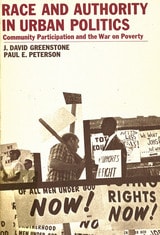
Race and Authority in Urban Politics
David J. Greenstone
Russell Sage Foundation, 1974
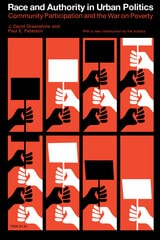
Race and Authority in Urban Politics
Community Relations and the War on PovertyDavid Greenstone and Paul E. Peterson
University of Chicago Press, 1976
In a series of lively chapters, Greenstone and Peterson show how the coalitions that formed around the community action question developed not out of electoral or organizational interests alone but were strongly influenced by prevailing conceptions of the nature of authority in America. The book stresses the way in which both machine and reform structures affected the ability of minority groups to organize effectively and to form alliances in urban politics. It considers the wide-ranging critiques made of the Community Action Program by conservative, liberal, and radical analysts and finds that all of them fail to appreciate the significance and intensity of the racial cleavage in American politics.
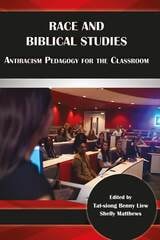
Race and Biblical Studies
Antiracism Pedagogy for the ClassroomTat-siong Benny Liew
SBL Press, 2022
Classrooms as communities are temporary, but the racial effects can be long term.
The biblical studies classroom can be a site of personal and social transformation. To make it a space for positive change, the contributors to this volume question and reevaluate traditional teaching practices and assessment tools that foreground white, Western scholarship in order to offer practical guidance for an antiracist pedagogy. The introduction and fifteen essays provide tools for engaging issues of social context and scriptural authority, nationalism and religious identities, critical race theory, and how race, gender, and class can be addressed empathetically. Contributors Sonja Anderson, Randall C. Bailey, Eric D. Barreto, Denise Kimber Buell, Greg Carey, Haley Gabrielle, Wilda C. Gafney, Julián Andrés González Holguín, Sharon Jacob, Tat-siong Benny Liew, Francisco Lozada Jr., Shelly Matthews, Roger S. Nam, Wongi Park, Jean-Pierre Ruiz, Abraham Smith, and Kay Higuera Smith share their experience creating classrooms that are spaces that enable the production of new knowledge without reproducing a white subject of the geopolitical West.
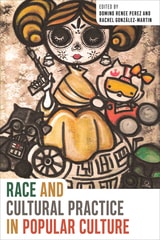
Race and Cultural Practice in Popular Culture
Perez, Domino
Rutgers University Press, 2019
Race and Education, 1954-2007
Raymond Wolters
University of Missouri Press, 2008
In this compelling study, a scholar who has long observed the traumas of school desegregation uncovers the changes and difficulties with which public education has dealt over the last fifty years—and argues that some judicial decisions were ill-advised. Dealing candidly with matters usually considered taboo in academic discourse, Wolters argues that the Supreme Court acted correctly and in accordance with public sentiment in Brown but that it later took a wrong turn by equating desegregation with integration.
Retracing the history of desegregation and integration in America’s schools, Wolters distinguishes between several Court decisions, explaining that while Brown called for desegregation by requiring that schools deal with students on a racially nondiscriminatory basis, subsequent decisions—Green, Swann, Keyes—required actual integration through racial balancing. He places these decisions in the context of educational reform in the 1950s that sought to encourage bright students through advanced placement and honors courses—courses in which African American and Hispanic students were less likely to be enrolled. Then with the racial unrest of the 1960s, the pursuit of academic excellence yielded to concerns for uplifting disadvantaged youths and ensuring the predominance of middle-class peer groups in schools.
Wolters draws on rich historical records to document the devastating consequences of requiring racial balance and sheds new light on America’s legal, social, and cultural landscapes. He reexamines the educational theories of Kenneth Clark and James Coleman, and he challenges statistics that support the results of racial balancing by describing how school desegregation and integration actually proceeded in several towns, cities, and counties.
Race and Education is a bold challenge to political correctness in education and a corrective to the now widely accepted notion that desegregation and racially balanced integration are one and the same. It is essential reading for scholars of law and education and a wake-up call for citizens concerned about the future of America’s schools.
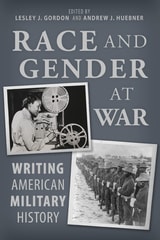
Race and Gender at War
Writing American Military HistoryEdited by Lesley J. Gordon and Andrew J. Huebner
University of Alabama Press, 2024
Beyond the battlefield: How race and gender redefined war, identity, and memory in Civil War America.
Race and Gender at War is a collection of essays that illuminates ways that race and gender have persistently shaped the military history of the United States. Editors Lesley J. Gordon and Andrew J. Huebner showcase historians with varied research agendas in the field of “war and society,” a fertile area of inquiry that shares space (and often overlaps) with operational studies inside the broader field of military history. Chronicling more than 150 years of American history, the essays in this volume demonstrate that the tensions and injustices surrounding race, gender, and the military remain relevant and controversial, and continue to roil American politics, society, and culture to this day.
Spanning the two centuries from the 1830s to the present, the collection examines topics such as Choctaw Natives who served in the Confederate Army, the trailblazing but fraught experiences of Black servicemen from the Civil War through World War I, the hypersexualized images of World War II servicemen, and the varied and mutable roles of women in the armed services. Utilizing diverse methodologies, the book examines how these factors influenced everything from military policy to civilian experiences, encompassing topics like martial rhetoric, citizenship, propaganda, and patriotism.
CONTRIBUTORS
Kevin Adams / Amanda Bellows / Kari L. Boyd-Weisenberger / Michele Curran Cornell / Lesley J. Gordon / Andrew J. Huebner / Gregory Mixon / Caroline Wood Newhall / Heather Marie Stur / Patrick T. Troester / Chad L. Williams / Fay A. Yarbrough
Race and Human Rights
Curtis Stokes
Michigan State University Press, 2008
The terrorist attacks against U.S. targets on September 11, 2001, and the subsequent wars in Afghanistan and Iraq, sparked an intense debate about "human rights." According to contributors to this provocative book, the discussion of human rights to date has been far too narrow. They argue that any conversation about human rights in the United States must include equal rights for all residents.
Essays examine the historical and intellectual context for the modern debate about human rights, the racial implications of the war on terrorism, the intersection of racial oppression, and the national security state. Others look at the Pinkerton detective agency as a forerunner of the Federal Bureau of Investigation, the role of Africa in post–World War II American attempts at empire-building, and the role of immigration as a human rights issue.
Race and Labor in Western Copper
The Fight for Equality, 1896-1918Philip J. Mellinger
University of Arizona Press, 1995
Mellinger's book is the first regional history of these ordinary working people—miners, muckers, millhands, and smelter workers—who labored in the thousands of mountain and desert mining camps across the western heartland early in this century. These men, largely uneducated, frequently moving from camp to camp, subjected to harsh and dangerous conditions, often poorly paid, nevertheless came together for a common purpose.
They came from Mexico, from the U.S. Hispanic Southwest, and from several European countries, especially from Greece, Italy, the former Yugoslavia, and Spain. They were far from a homogeneous group. Yet, in part because they set aside ethnic differences to pursue cooperative labor action, they were able to make demands, plan strikes, carry them out, and sometimes actually win. They also won the aid of the Western Federation of Miners and the more radical Industrial Workers of the World. After initial rejection, they were eventually accepted by mainstream unionists.
Mellinger discusses towns, mines, camps, companies, and labor unions, but this book is largely about people. In order to reconstruct their mining-community lives, he has used little-known union and company records, personal interviews with old-time workers and their families, and a variety of regional sources that together have enabled him to reveal a complex and significant pattern of social, economic, and political change in the American West.
Race and Meaning
The African American Experience in MissouriGary R. Kremer
University of Missouri Press, 2014
In addition to his previously published articles, Kremer includes a personal introduction revealing how he first became interested in researching African American history and how his education at Lincoln University--and specifically the influence of his mentor, Lorenzo Greene--helped him to realize his eventual career path. Race and Meaning makes a collection of largely unheard stories spanning much of Missouri history accessible for the first time in one place, allowing each article to be read in the context of the others, and creating a whole that is much greater than the sum of its parts. Whether you are a student, researcher, or general reader, this book will be essential to anyone with an interest in Missouri history.
Race and Mixed Race
Naomi Zack
Temple University Press, 1994
Race and Nation in Puerto Rican Folklore
Franz Boas and John Alden Mason in Porto RicoRafael Ocasio
Rutgers University Press, 2020
Race and Performance after Repetition
Soyica Diggs Colbert, Douglas A. Jones Jr., and Shane Vogel, editors
Duke University Press, 2020
Contributors. Joshua Chambers-Letson, Soyica Diggs Colbert, Nicholas Fesette, Patricia Herrera, Jasmine Elizabeth Johnson, Douglas A. Jones Jr., Mario LaMothe, Daphne P. Lei, Jisha Menon, Tavia Nyong’o, Tina Post, Elizabeth W. Son, Shane Vogel, Catherine M. Young, Katherine Zien
Race and Police
The Origin of Our Peculiar InstitutionsBen Brucato
Rutgers University Press, 2024
Race and Police corrects the Eurocentrism in the orthodox history of American police and in predominating critical theories of police. That orthodoxy rests on an origin story that begins with Sir Robert Peel and the London Metropolitan Police Service. Predating the Met by more than a century, America’s first police, often called slave patrols, did more than maintain order—it fabricated a racial order. Prior to their creation, all white citizens were conscripted to police all Blacks. Their participation in the coercive control of Blacks gave definition to their whiteness. Targeted as threats to the security of the economy and white society, being policed defined Blacks who, for the first time, were treated as a single racial group. The boundaries of whiteness were first established on the basis of who was required to regulate slaves, given a specific mandate to prevent Black insurrection, a mandate that remains core to the police role to this day.
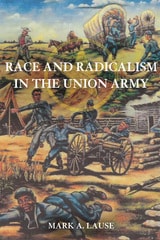
Race and Radicalism in the Union Army
Mark A. Lause
University of Illinois Press, 2013
In this compelling portrait of interracial activism, Mark A. Lause documents the efforts of radical followers of John Brown to construct a triracial portion of the Federal Army of the Frontier. Mobilized and inspired by the idea of a Union that would benefit all, black, Indian, and white soldiers fought side by side, achieving remarkable successes in the field. Against a backdrop of idealism, racism, greed, and the agonies and deprivations of combat, Lause examines links between radicalism and reform, on the one hand, and racialized interactions among blacks, Indians, and whites, on the other.
Lause examines how this multiracial vision of American society developed on the Western frontier. Focusing on the men and women who supported Brown in territorial Kansas, Lause examines the impact of abolitionist sentiment on relations with Indians and the crucial role of nonwhites in the conflict. Through this experience, Indians, blacks, and whites began to see their destinies as interdependent, and Lause discusses the radicalizing impact of this triracial Unionism upon the military course of the war in the upper Trans-Mississippi.
The aftermath of the Civil War destroyed much of the memory of the war in the West, particularly in the Indian Territory (now Oklahoma). The opportunity for an interracial society was quashed by the government's willingness to redefine the lucrative field of Indian exploitation for military and civilian officials and contractors.
Assessing the social interrelations, ramifications, and military impact of nonwhites in the Union forces, Race and Radicalism in the Union Army explores the extent of interracial thought and activity among Americans in this period and greatly expands the historical narrative on the Civil War in the West.
Race and Retail
Consumption across the Color LineBay, Mia
Rutgers University Press, 2015
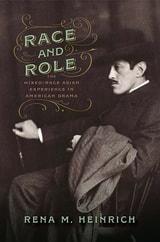
Race and Role
The Mixed-Race Asian Experience in American DramaRena M. Heinrich
Rutgers University Press, 2023
Race and Role: The Mixed-Race Experience in American Drama traces the shifting identities of multiracial Asian figures in theater from the late-nineteenth century to the present day and explores the ways that mixed-race Asian identity transforms our understanding of race. Mixed-Asian playwrights harness theater’s generative power to enact performances of “double liminality” and expose the absurd tenacity with which society clings to a tenuous racial scaffolding.
Race and Science
Scientific Challenges to Racism in Modern AmericaPaul Farber
Oregon State University Press, 2009
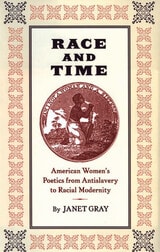
Race and Time
American Women's Poetics from Antislavery to Racial ModernityJanet Gray
University of Iowa Press, 2004
Gray clarifies the cultural roles women’s poetry played in the nineteenth-century United States and also reveals that these poems offer a fascinating, dynamic, and diverse field for students of social and cultural history. Gray’s readings provide a rich sense of the contexts in which this poetry is embedded and examine its aesthetic and political vitality in meticulous detail, linking careful explication of the texts with analysis of the history of poetry, canons, literacy, and literary authority.
Race and Time distinguishes itself from other critical studies not only through its searching, in-depth readings but also through its sustained attention to less known poets and its departure from a Dickinson-centered model. Most significantly, it offers a focus on race, demonstrating how changes in both the U.S. racial structure and women’s place in public culture set the terms for change in how women poets envisioned the relationship between poetry and social power.
Gray’s work makes contributions to several fields of study: poetry, U.S. literary history and American studies, women’s studies, African American studies and whiteness studies, children’s literature, and cultural studies. While placing the works of figures who have been treated elsewhere (e.g., Dickinson and Harper) into revealing new relationships, Race and Time does much to open interdisciplinary discussion of unfamiliar works.
Race and the Foundations of Knowledge
Cultural Amnesia in the AcademyEdited by Joseph Young and Jana Evans Braziel
University of Illinois Press, 2006
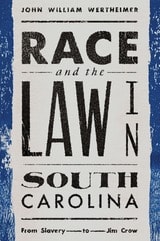
Race and the Law in South Carolina
From Slavery to Jim CrowJohn W. Wertheimer
Amherst College Press, 2023
“Recent arguments in African American History have emphasized the theme of continuity. . . . Race and Law in South Carolina recovers the theme of change over time by showing just how things have changed, and it does so through patient, thick description.” —H. Robert Baker, Georgia State University
“This book and its concomitant student project is an exciting endeavor. . . . The cases are captivating and accessibly written, making this a possible college classroom read.” —Vanessa Blanck, Rowan University
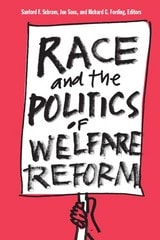
Race and the Politics of Welfare Reform
Sanford F. Schram, Joe Soss, and Richard C. Fording, Editors
University of Michigan Press, 2003
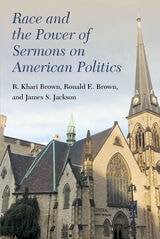
Race and the Power of Sermons on American Politics
R. Khari Brown, Ronald E. Brown, and James S. Jackson
University of Michigan Press, 2021
This book examines the intersection of race, political sermons, and social justice. Religious leaders and congregants who discuss and encourage others to do social justice embrace a form of civil religion that falls close to the covenantal wing of American civil religious thought. Clergy and members who share this theological outlook frame the nation as being exceptional in God’s sight. They also emphasize that the nation’s special relationship with the Creator is contingent on the nation working toward providing opportunities for socioeconomic well-being, freedom, and creative pursuits. God’s covenant, thus, requires inclusion of people who may have different life experiences but who, nonetheless, are equally valued by God and worthy of dignity. Adherents to such a civil religious worldview would believe it right to care for and be in solidarity with the poor and powerless, even if they are undocumented immigrants, people living in non-democratic and non-capitalist nations, or members of racial or cultural out-groups. Relying on 44 national and regional surveys conducted between 1941 and 2019, Race and the Power of Sermons on American Politics explores how racial experiences impact the degree to which religion informs social justice attitudes and political behavior. This is the most comprehensive set of analyses of publicly available survey data on this topic.
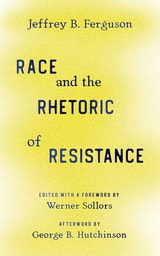
Race and the Rhetoric of Resistance
Jeffrey B. Ferguson
Rutgers University Press, 2021
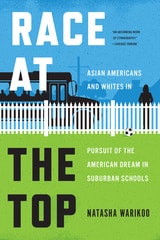
Race at the Top
Asian Americans and Whites in Pursuit of the American Dream in Suburban SchoolsNatasha Warikoo
University of Chicago Press, 2022
The American suburb conjures an image of picturesque privilege: manicured lawns, quiet streets, and—most important to parents—high-quality schools. These elite enclaves are also historically white, allowing many white Americans to safeguard their privileges by using public schools to help their children enter top colleges. That’s changing, however, as Asian American professionals increasingly move into wealthy suburban areas to give their kids that same leg up for their college applications and future careers.
As Natasha Warikoo shows in Race at the Top, white and Asian parents alike will do anything to help their children get to the top of the achievement pile. She takes us into the affluent suburban East Coast school she calls “Woodcrest High,” with a student body about one-half white and one-third Asian American. As increasing numbers of Woodcrest’s Asian American students earn star-pupil status, many whites feel displaced from the top of the academic hierarchy, and their frustrations grow. To maintain their children’s edge, some white parents complain to the school that schoolwork has become too rigorous. They also emphasize excellence in extracurriculars like sports and theater, which maintains their children’s advantage.
Warikoo reveals how, even when they are bested, white families in Woodcrest work to change the rules in their favor so they can remain the winners of the meritocracy game. Along the way, Warikoo explores urgent issues of racial and economic inequality that play out in affluent suburban American high schools. Caught in a race for power and privilege at the very top of society, what families in towns like Woodcrest fail to see is that everyone in their race is getting a medal—the children who actually lose are those living beyond their town’s boundaries.
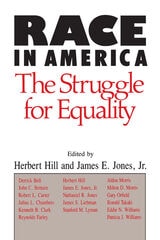
Race in America
The Struggle for EqualityHerbert Hill
University of Wisconsin Press, 1993
Race in America is a multidisciplinary analysis of race and injustice by some of the nation’s foremost scholar-activists who helped shape the course of the struggle for civil rights during the recent past. These essays provide a historical retrospective, an assessment of where we are now, and an outline of possibilities for the future.
The major controversial issues in race relations, in the past and in the present, such as affirmative action, educational segregation, racial practices of labor unions, legal strategies for protest movements, the persistence of racism in American institutions, and the sources of resistance to change are discussed at length by major authorities in their respective fields.
Many of the most important events in recent American history come alive in these pages as the strategies and programs, the victories and defeats of the civil rights movement are rigorously examined. A unique aspect of the book is that the human experience of active participants in this rich history is evoked through personal and often poignant accounts, such as those of Kenneth B. Clark, who in a memorable autobiographical essay describes a long life devoted to the pursuit of racial justice, and Patricia J. Williams, who relates the contemporary struggles of African American women to the historical context of slavery and its aftermath.
As no other book can, this collection provides the basis for the critical insights and historical perspectives that are essential for an understanding of the central issue still confronting American society: race and racism.
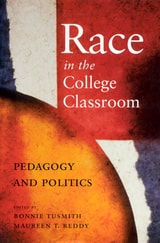
Race in the College Classroom
TuSmith, Bonnie
Rutgers University Press, 2002
Winner of the 2003 American Educational Studies Association Critics' Choice Awards
Winner of the 2003 Gustavus Myers Outstanding Book Award
Did affirmative action programs solve the problem of race on American college campuses, as several recent books would have us believe? If so, why does talking about race in anything more than a superficial way make so many students uncomfortable? Written by college instructors from many disciplines, this volume of essays takes a bold first step toward a nationwide conversation. Each of the twenty-nine contributors addresses one central question: what are the challenges facing a college professor who believes that teaching responsibly requires an honest and searching examination of race?
Professors from the humanities, social sciences, sciences, and education consider topics such as how the classroom environment is structured by race; the temptation to retreat from challenging students when faced with possible reprisals in the form of complaints or negative evaluations; the implications of using standardized evaluations in faculty tenure and promotion when the course subject is intimately connected with race; and the varying ways in which white faculty and faculty of color are impacted by teaching about race.